




Abstract
Background
Hypertension is a worldwide health issue and an independent risk factor for cardiovascular disease. Endothelial dysfunction is an important mechanism for its pathogenesis, thus compromising vascular homeostasis and causing vascular remodeling. It is supported by reduced availability of nitric oxide, increased oxidative stress, and chronic inflammation, all of which contribute to hypertension as well as cardiovascular morbidity.
Purpose
The present narrative review is focused on exploring new pharmacological interventions to target endothelial dysfunction and vascular remodeling in the treatment of hypertension. The review brings molecular mechanisms to the forefront. It discusses new therapeutic drugs to target the reversal of endothelial function and improve vascular health, ultimately resulting in better control of hypertension.
Materials and Methods
A narrative review of the literature was performed, including studies from preclinical studies, clinical trials, and new pharmacological advances. The review is focused on modulation of the nitric oxide pathway, anti-oxidant therapy, angiotensin receptor blockers, and new therapies for oxidative stress. New endothelial progenitor cell function therapies, hydrogen sulfide (H2S) donors, and nanoparticle-based drug delivery systems were discussed.
Results
Recent evidence clearly shows that pharmacologic therapy for reversing endothelial dysfunction is effective for treating hypertension. H2S donors reduce oxidative stress and increase vascular relaxation, and endothelial progenitor cells are explored for vascular repair. Nanoparticles enable targeted delivery of drugs into endothelial cells, with increased therapeutic impact. Further, nitric oxide generation modulating drugs, such as angiotensin receptor blockers, have been reported to improve vascular function and control hypertension.
Conclusion
Pharmacotherapy for endothelial dysfunction is extremely promising in improving hypertension management by targeting the very pathogenesis of the disease. Further research and clinical trials are required to improve these therapies further and establish their long-term clinical benefits.
Keywords
Introduction
Hypertension or high blood pressure is a significant global health issue, and over a billion people are affected worldwide. Hypertension is a decisive risk factor for most of the cardiovascular diseases (CVDs) like stroke, coronary heart disease, heart failure, and kidney disease. 1 Hypertension is one of the significant causes of global disease burden, as estimated by the World Health Organization (WHO), with a mortality of approximately 9.4 million annually. Hypertension burden is rising in the world, particularly in low- and middle-income countries, due to urbanization, unhealthy diet, physical inactivity, and rising stress. 2 Hypertension is a silent disease, but if untreated, it is a significant cause of public health problems. Chronic hypertension causes a cascade of pathological changes in the cardiovascular system, including arterial stiffening, vascular damage, and the development of atherosclerosis. These changes lead to increased workload of the heart, ultimately causing heart failure, stroke, and kidney disease. 3
Endothelial dysfunction is the most important reason for the development of hypertension. Endothelium, a thin layer of cells coating blood vessels, is most importantly implicated in the mechanism of vascular homeostasis. Under physiological conditions, the endothelium secretes vasoactive factors such as nitric oxide (NO) that modulate the dilation of the blood vessels, sustain blood flow, and inhibit clotting. 4 On the contrary, in hypertensive patients, endothelial dysfunction impairs NO generation, causing decreased NO bioavailability, enhanced reactive oxygen species (ROS), and increased oxidative stress. This, in turn, causes vasoconstriction, vascular remodeling, and augmentation of a pro-thrombotic state, which enhances the development of hypertension. 5
The molecular pathophysiology of endothelial dysfunction involves loss of NO, overproduction of ROS, and activation of inflammatory cascades. These synergistically decrease endothelial cell function and vascular injury, further exacerbating hypertension and cardiovascular risk. 6 Thus, therapeutic interventions for endothelial dysfunction have been of most interest since they can potentially treat the underlying causes of hypertension and enhance vascular function. 7
Currently available pharmacologic agents for the treatment of hypertension, such as angiotensin-converting enzyme (ACE) inhibitors, angiotensin receptor blockers (ARBs), calcium channel blockers (CCBs), beta-blockers, and diuretics, are targeted at lowering blood pressure and are effective in managing hypertension. 8 None of these treatments, however, normalizes endothelial function or reverses chronic hypertension-induced vascular damage. This limitation has provoked interest in investigating the potential for using novel pharmacologic approaches to improve endothelial function, lower oxidative stress, and inhibit vascular remodeling. 9
Recent advances have focused on new therapies that directly address endothelial dysfunction in hypertensive patients. Such therapies seek to restore NO bioavailability, inhibit oxidative stress, and promote endothelial repair. For example, hydrogen sulfide (H2S) donors have been shown to enhance vasodilation, promote NO synthase expression, and reduce ROS levels. 10 Similarly, endothelial progenitor cells (EPCs) are being researched for their capacity to regenerate injured endothelial cells, thereby improving vascular integrity. Anti-oxidants are also being explored as a potential therapeutic intervention in scavenging ROS and endothelial cell protection against injury. 11 Although such therapies are still in the infancy of clinical scrutiny, preliminary preclinical and clinical evidence suggests they are hopeful candidates to augment endothelial function and vascular health in hypertensive patients. 12
One such approach is a combination therapy with traditional anti-hypertensive drugs and endothelial-targeted therapy. This will address both the blood pressure and the pathological endothelial dysfunction. 13 Combination of ACE inhibitors or ARBs with EPC-targeted therapy, H2S donors, or anti-oxidants might have the potential to improve endothelial function, reduce oxidative stress, and improve vascular health, with an outcome of better blood pressure control and reduced cardiovascular complications. 14
The rationale for targeting endothelial dysfunction in treating hypertension is that it contributes to vascular remodeling and the development of CVD. Endothelial dysfunction increases vascular resistance, arterial stiffness, and atherosclerotic plaque formation. Restoration of endothelial function is a therapeutic target for new treatments to improve vascular function, inhibit further vascular damage, and reduce the long-term cardiovascular morbidity of hypertension. 15
Several problems must be solved to establish endothelial-targeted therapies, such as effective vascular drug delivery systems, long-term efficacy and safety, and avoiding drug resistance and side effects. There would have to be preclinical and clinical trials to determine the best way to integrate the new therapies with existing protocols for treating hypertension. 16
Personalized medicine is the future of the treatment of hypertension, where the treatment is tailored to the patient according to their genetic makeup, pathophysiology of the disease, and response to therapy. Identifying biomarkers, genetic profiling, and clinical trials will be the primary drivers in designing endothelial-targeted therapy and optimal patient outcomes. 17 A combination of conventional anti-hypertensive treatment and endothelial-targeted treatment will provide an integrated approach in the treatment of hypertension and its complications. With continued research, combination therapies can reduce blood pressure, enhance endothelial function, ultimately enhance patients’ quality of life, and reduce the global burden of CVD. 18
Review of Literature
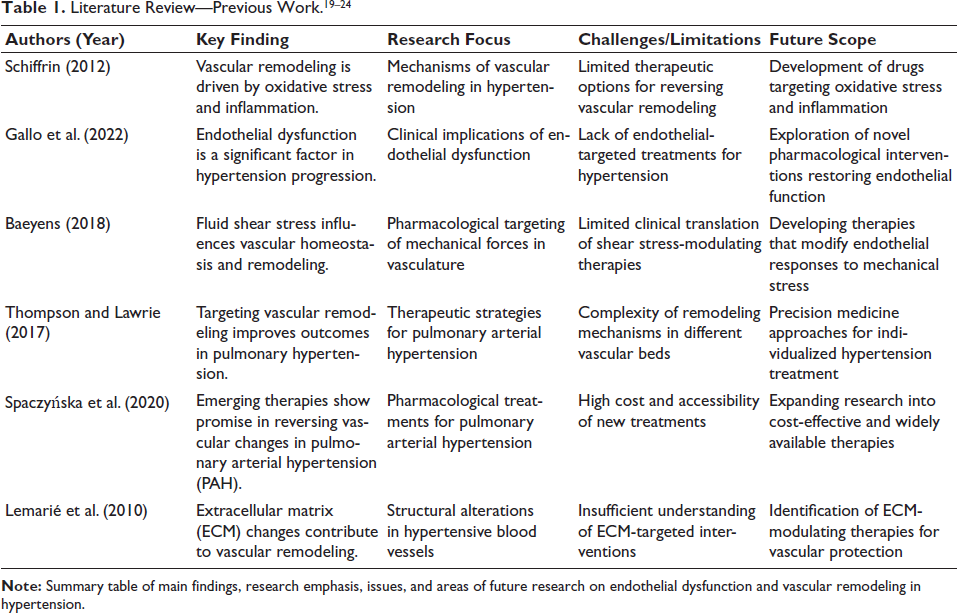
Methodology
Data Locating
A narrative search was conducted using the following academic databases: PubMed, Scopus, Google Scholar, and Web of Science. The search was focused on endothelial dysfunction, vascular remodeling, and hypertension treatment studies. Keywords such as “endothelial dysfunction,” “vascular remodeling,” “hypertension therapies,” and MeSH terms were used to select articles. Peer-reviewed high-quality articles published in peer-reviewed journals were chosen for review.
Data Collection
Articles published between 2010 and 2024 were considered. Journal articles with high impact on pharmacological intervention, endothelial dysfunction mechanisms, and new therapeutic approaches to hypertension were preferred. Review articles, meta-analyses, and clinical trials were selected to provide an overall overview of recent research and advances in this field.
Data Extraction
Key information was derived from the chosen studies, such as study objectives, study types, primary findings, and limitations of the studies. The focus was on molecular mechanisms, drug agents, and the clinical significance of anti-hypertensive treatment, especially in treating endothelial dysfunction. The data abstracted from the chosen studies were presented to emphasize treatment approaches, molecular pathways, and their potential to maximize endothelial well-being in hypertensive individuals.
Data Synthesis
The evidence abstracted was synthesized to provide a rational account that identifies emerging trends, gaps in research, and probable avenues of endothelial-targeted therapies in hypertension. The evidence was critically analyzed to provide an evidence-based and balanced framework. Additional caution was exercised in synthesizing preclinical and clinical research evidence to provide a comprehensive overview of the state of the art in the field.
Results
Endothelial Dysfunction’s Role in the Development of Hypertension
Endothelial dysfunction is an important mechanism of pathogenesis of hypertension and is responsible for vascular homeostasis disruption, vasoconstriction, arterial stiffness, and vascular inflammation. Deficiency in NO, a potent vasodilator secreted by endothelial cells, is a primary cause of endothelial dysfunction. 25 Under normal physiological conditions, NO regulates vascular tone, prevents platelet aggregation, and reduces oxidative stress, ensuring vascular health and function. In hypertensive individuals, endothelial dysfunction of endothelial nitric oxide synthase (eNOS) and excessive overproduction of ROS significantly decrease NO bioavailability. The disequilibrium between NO deficiency and ROS overproduction facilitates augmented vasoconstriction, increases vascular resistance, and results in the development of chronic hypertension. 26
Besides NO deficiency, chronic inflammation and oxidative stress are the prime drivers of endothelial dysfunction. Activation of ROS generation by nicotinamide adenine dinucleotide phosphate (NADPH) oxidase, mitochondrial dysfunction and angiotensin II signaling further reduces NO bioavailability and increases endothelial damage. 27 Inflammatory mediators such as tumor necrosis factor-alpha (TNF-α), interleukins (IL-6, IL-1β), and C-reactive protein (CRP) increase endothelial activation, leading to leukocyte adhesion and vascular remodeling activation. These actions increase vascular permeability, induce smooth muscle proliferation, and lead to arterial wall structural changes responsible for hypertension’s progressive and irreversible nature. 28
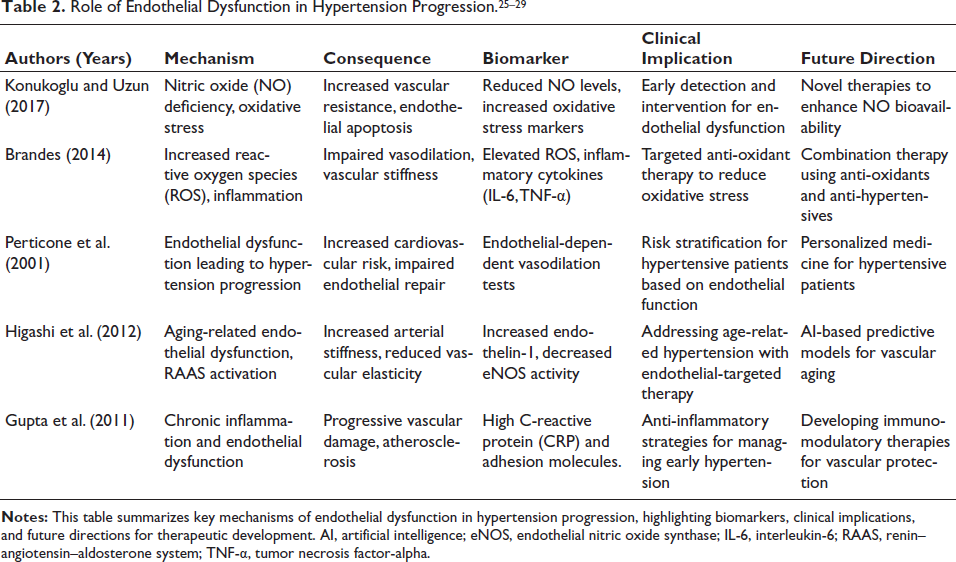
Mechanisms and Consequences of Vascular Remodeling During Hypertension
Pharmacological Treatments Targeting Endothelial Dysfunction
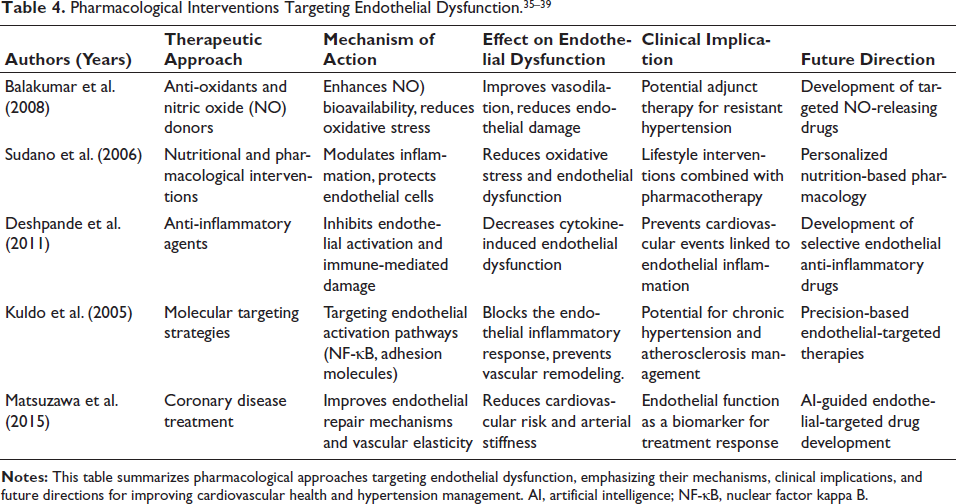
Endothelial dysfunction is a significant cause of hypertension and a primary drug target. Current anti-hypertensive medications, such as ACE inhibitors, ARBs, CCBs, and beta-blockers, primarily reduce blood pressure but also confer some protection to the endothelium. 35 ACE inhibitors and ARBs reduce oxidative stress and inflammation and enhance NO bioavailability and endothelial function. CCBs block vasoconstriction, while beta-blockers reduce sympathetic tone and endothelial stress. These treatments do not, however, fully reverse endothelial dysfunction, suggesting the need for more targeted therapies. 36
New therapies target endothelial protection and restoration directly. H2S donors are of interest due to their potential to enhance NO signaling, reduce oxidative stress, and induce vasodilation. 37 EPCs are also of interest for research due to their potential to restore endothelial function. Anti-oxidants like resveratrol and N-acetylcysteine target ROS to prevent endothelial damage and maintain vascular homeostasis. 38
Comparison of Standard and New Therapies in Hypertension
Traditional anti-hypertensive medications such as ACE inhibitors, ARBs, and CCBs easily reduce blood pressure but do not enhance endothelial function and vascular remodeling, the pathophysiologic substrates of hypertension. Although they reduce vascular stress and endothelial protection, they do not enhance endothelial function or reverse the chronic hypertension-induced damage. 40
On the other hand, newer therapies such as H2S donors and EPCs restore endothelial damage and reverse vasculature remodeling. H2S donors enhance NO signaling, reduce oxidative stress, and cause vasodilation, offering a more direct route to vascular restitution of function. EPCs cause endothelial regeneration to heal and restore damaged blood vessels. 41 New treatments are only just emerging, but have massive potential for vasculature restoration in the long term. Nanotech drug delivery systems enhance such therapies further with targeted delivery to endothelial cells, increased bioavailability, and decreased side effects. While such emerging technologies have the potential to be dazzling, clinical trials need to be conducted to assess their safety and efficacy. 42
Advancements in Reversing Vascular Remodeling
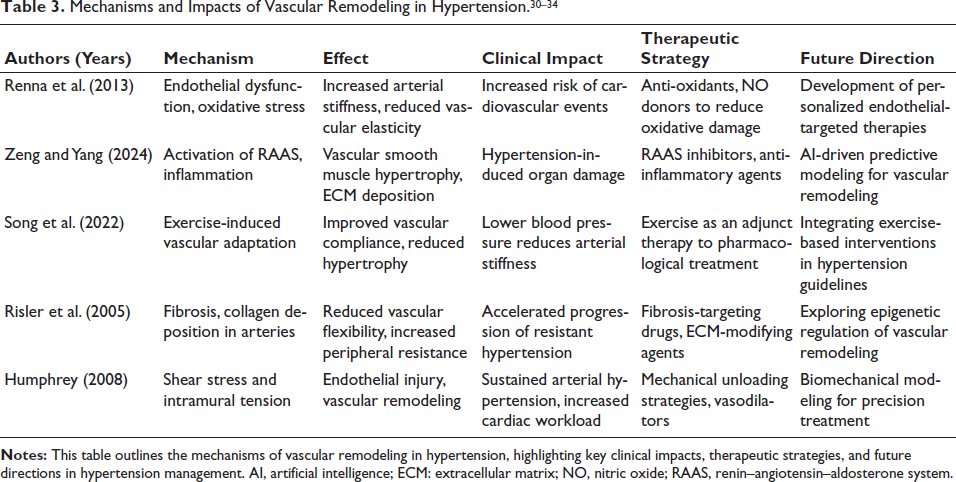
Hypertensive vascular remodeling is the etiology of arterial stiffness, raised vascular resistance, and chronic organ damage, which must be reversed by specific pharmacologic therapy in order to enhance vascular elasticity. 43 The conventional anti-hypertensive drugs, such as ACE inhibitors, ARBs, and CCBs, are partially effective in reversing vascular remodeling by decreasing VSMC growth and ECM deposition. These therapies are ineffective in reversing endothelial integrity and vascular elasticity, warranting more specific pharmacologic therapies. 44
New combination treatments will provide synergistic advantages by pairing blood pressure management with endothelial repair. NO-based therapy with H2S donors enhances vascular compliance and reverses arterial fibrosis. 45 EPC therapy with angiogenic and vascular repair capabilities also holds promise. Nanoparticle-based delivery systems also increase bioavailability and targeted delivery of anti-inflammatory and anti-fibrotic drugs to remodeled vessels. 46
Recent clinical trials have demonstrated regression of vascular remodeling by RAAS blockers, NO donors, and H2S-releasing agents to improve arterial compliance, endothelial function, and vascular stiffness. 47 Recent research targets preventing and reversing hypertension-induced vascular remodeling by pathways like oxidative stress, inflammation, and ECM turnover. Future therapy will most likely include pharmacologic and regenerative medicine approaches for long-term vascular health in hypertensive patients. 48
Challenges and Future Directions in Hypertension Pharmacology
Although there has been extensive progress in the treatment of hypertension, various hurdles continue to restrict the development of effective endothelial-targeted therapies. Vascular accessibility is a significant hurdle, in that most drug delivery systems currently used face difficulties reaching endothelial cells extremely efficiently, thus limiting their therapeutic potential. 49 Drug resistance is another hurdle, especially with long-term anti-hypertensive treatment, as patients become progressively less responsive. In addition, the long-term safety and efficacy of new treatments such as H2S donors, EPCs, and nanotechnology-based treatments necessitate aggressive clinical trials to establish their capability to reverse endothelial dysfunction without causing unwanted effects. 50
Precision pharmacology and personalized medicine are the future of pharmacology in hypertension. This model is centered on personalized therapies based on biomarkers, genetic markers, and endothelial function tests. Specific molecular targets like oxidative stress markers, NO bioavailability, and vascular stiffness should be the highest priority for early detection and monitoring of treatment effects so that the best drug can be chosen and side effects minimized. 51
Additionally, artificial intelligence (AI) and machine learning (ML) can potentially revolutionize hypertension treatment by predicting drug response and identifying high-risk patients. Future studies must explore AI-driven methods to personalize therapy based on real-time patient data, optimize drug repurposing, target identification, and clinical trial design. 52 Combining new therapy with new drugs such as EPCs or H2S donors and traditional pharmacotherapies will most likely have additive effects that would restore endothelial function and clinical features of hypertension. Overall, overcoming these obstacles will allow the design of more efficient, long-term, targeted hypertension therapies to restore vascular function and optimize patient outcomes. 53
Discussion
Hypertension is a worldwide public health issue, with millions of individuals being affected, and is one of the most significant causes of the cardiovascular burden of disease worldwide. Traditional anti-hypertensive treatment, such as ACE inhibitors, ARBs, CCBs, beta-blockers, and diuretics, has been effective in reducing blood pressure and treating hypertension. 54 These medications, however, are primarily focused on symptomatic control of hypertension and not treatment of the pathophysiologic processes of vascular dysfunction and remodeling that are responsible for the development of hypertension. Considering this in mind, although these medications lower blood pressure, they cannot reverse the structural and functional vascular adaptations responsible for cardiovascular morbidity in the long term. 55
Two of the most pivotal processes engaged in the pathogenesis of hypertension vascular remodeling and endothelial dysfunction are the bedrock of the disease pathogenesis. Endothelial dysfunction is triggered by the disruption of the balance between vasoconstrictive and vasodilatory substances across blood vessels, mainly disrupting vascular homeostasis. One of the most pivotal aspects of endothelial dysfunction is impaired availability of NO, an essential molecule to regulate vascular tone, suppress platelet aggregation, and preserve vascular integrity. 56 eNOS malfunction and excessive overproduction of ROS in hypertensive individuals significantly disrupt NO availability. This imbalance sustains increased vasoconstriction, increased vascular resistance, and the establishment of chronic hypertension. 57 Moreover, oxidative stress and inflammation, promoted by mediators angiotensin II (Ang II), TNF-α, IL-6, and CRP, amplify endothelial damage, increase leukocyte adhesion, increase vascular permeability, and amplify VSMC growth. These effects collectively result in vascular remodeling, characterized by ECM deposition, vascular smooth muscle hypertrophy, and fibrosis, further impairing endothelial function, inducing arterial stiffening, and facilitating hypertension development. 58
Conventional anti-hypertensive drugs, while effective in reducing blood pressure, do not reverse significantly the endothelial dysfunction and vascular remodeling that are involved in the pathogenesis of hypertension. ACE inhibitors and ARBs act through the modulation of the RAAS, reduce oxidative stress and inflammation, and increase NO bioavailability. 59 While such treatment confers some protective benefits to the endothelium, it does not reverse endothelial integrity and vascular elasticity to a significant extent. Similarly, CCBs and beta-blockers reduce vasoconstriction and sympathetic tone, thereby conferring partial protection to the endothelium. However, none of these drugs can reverse structural vascular damage due to chronic hypertension. This limitation has generated interest in new therapies that directly target endothelial dysfunction and vascular remodeling, which aim to reduce blood pressure, reverse endothelial function, and avert late cardiovascular complications. 60
Among the promising paths to reverse endothelial dysfunction is the application of H2S donors, which have been documented to enhance NO signaling, decrease oxidative stress, and induce vasodilation. H2S donors such as sodium hydrosulfide (NaHS) and GYY4137 have been documented to increase eNOS expression, enhance mitochondrial function, and suppress pro-inflammatory cytokines, all of which are involved in vascular repair and enhanced endothelial function. 61 EPC therapy is another promising method for correcting endothelial integrity. EPC transplantation or stimulation of endogenous EPC mobilization has been found to induce angiogenesis, repair endothelial cell damage, and prevent endothelial dysfunction. EPCs thus provide a regenerative solution for vascular health by addressing endothelial repair and vascular regeneration at the source. 62
In addition to these treatments, anti-oxidant-based treatments have also been studied as a mechanism of targeting ROS that cause endothelial damage and vascular remodeling. Anti-oxidants resveratrol, N-acetylcysteine, and vitamin C restored NO bioavailability and maintained endothelial function by removing ROS and decreasing oxidative stress. These medications shield the endothelium from damage after injury and thus maintain vascular homeostasis. 63
Another development in endothelial-targeted therapy is drug delivery systems using nanoparticles. Drug delivery systems using nanoparticles enable targeted delivery of drugs to endothelial cells, which increases drug bioavailability and reduces systemic side effects. Nanoparticles with NO donors, RAAS inhibitors, or anti-inflammatory drugs have shown enhanced efficacy in preclinical models and support personalized endothelial-targeted therapy. 64 The drug delivery systems are a novel approach to endothelial dysfunction and vascular remodeling therapy, providing more effective and targeted regimens. Vascular remodeling is also a beneficial target for treating hypertension, irrespective of endothelial dysfunction. Vascular remodeling is characterized by the structural changes of the vasculature, including arterial stiffness, ECM deposition, and smooth muscle hypertrophy, which result in reduced vascular compliance and increased peripheral resistance. 65
Although RAAS inhibitors and NO-based treatments have achieved limited success in reversing vascular remodeling, more potent treatments are necessary. Combination treatment with H2S donors, EPC therapy, and nanotechnology-based treatment has excellent potential for synergistically enhancing vascular elasticity, reducing arterial fibrosis, and inhibiting smooth muscle proliferation. 66 Although potential exists for these novel therapies, various hurdles must be overcome in treating hypertension with endothelium-targeting therapies. Vascular accessibility is one such hurdle because drug delivery systems per se cannot effectively target endothelial cells, thus being ineffective. Furthermore, the blood–brain barrier, vascular permeability, and drug metabolism play a role in the efficacy and biodistribution of these therapies. 67
Furthermore, the long-term efficacy and safety of novel pharmacologic agents such as H2S donors, EPCs, and nanotechnology-based therapies are to be determined. Large-scale clinical trials are needed to determine their long-term impact and endorse them in treating chronic hypertension. Furthermore, drug resistance and compensatory mechanisms are to be overcome because prolonged treatment with some of these therapies results in reduced efficacy. 68
The future pharmacology of anti-hypertension is precision medicine, where therapies are individualized to the patient through biomarkers, genetic testing, and endothelial function testing. This will enable patient-specific pharmacologic therapy to be designed, maximizing drug selection and dosing and reducing side effects. ML and AI are also poised to transform the treatment of hypertension by predicting drug response, discovering new endothelial targets, and streamlining clinical trial designs. AI can also marry large patient databases, hemodynamic variables, and molecular markers to individualize hypertension therapy and maximize the efficacy of endothelially targeted therapy.
In brief, while conventional anti-hypertensive drugs remain the cornerstone in the management of hypertension, new pharmacological strategies for the reversal of vascular remodeling and endothelial dysfunction are promising to reverse vascular function and avert long-term cardiovascular morbidity. A combination of H2S donor therapy, EPC therapy, anti-oxidants, and nanotechnology-based drug delivery systems is a new area of endothelial regeneration and vascular rehabilitation. Drug delivery, long-term efficacy, and clinical validation hurdles are in the way of these therapies becoming a reality. Combination therapies, AI-based pharmacology, and precision medicine strategies will be the solutions to close the gap between endothelial dysfunction and ideal hypertension control and ultimately to improve patient outcomes and reduce the global burden of CVD.
Conclusion
Hypertension is a global health problem, and it contributes significantly to the CVD burden. Traditional anti-hypertensive medications like ACE inhibitors, ARBs, CCBs, and beta-blockers effectively lower blood pressure but are ineffective on the underlying endothelial dysfunction and vascular remodeling. New therapies targeting these mechanisms, like H2S donors, EPCs, and nanoparticle-based drug delivery systems, can potentially reverse vascular injury and promote vascular wellness.
However, initial results suggest that the therapies may restore endothelial function, and long-term clinical trials are required to determine if they are safe and effective. Drug resistance, vascular accessibility, and side effects must be overcome before the therapies can be used routinely in the clinic.
The future is with precision medicine, in which biomarkers and AI are used to deliver patient-specific therapy based on individual patient profiles. Integrating new therapy with established anti-hypertensives will likely deliver optimal therapy for disease management and cardiovascular complication prevention. With continued research, newer modalities can revolutionize the treatment of hypertension and promote long-term cardiovascular health globally.
Key Takeaways
Endothelial dysfunction is the most important determinant of hypertension and is the cause of elevated arterial resistance and vascular stiffness. Traditional anti-hypertensive agents reduce blood pressure without fully reversing vascular remodeling and endothelial dysfunction. New therapeutic strategies like H2S donors, EPCs, and site-specific anti-oxidants hold promise in restoring vascular homeostasis. Nanoparticle-based drug delivery systems improve the efficacy of endothelial-targeted therapy, and AI and biomarker-guided treatments render hypertension treatment personalized. Drug resistance, vascular accessibility, and confirmation of long-term efficacy are the significant challenges for the transformation of hypertension drug treatment.
Footnotes
Abbreviations
ACE, Angiotensin-converting enzyme; AI, Artificial intelligence; ARBs, Angiotensin receptor blockers; CCBs, Calcium channel blockers; CRP, C-reactive protein; CVDs, Cardiovascular diseases; ECM, Extracellular matrix; eNOS,Endothelial nitric oxide synthase; EPCs, Endothelial Progenitor Cells; H2S, Hydrogen sulfide; IL-1β, Interleukin-1 beta; IL-6, Interleukin-6; ML, Machine learning; NaHS, sodium hydrosulfide; NF-κB, Nuclear factor kappa B; NO, nitric oxide; RAAS, Renin–angiotensin–aldosterone system; ROS, Reactive oxygen species; TGF-β, Transforming growth factor beta; TNF-α, Tumor necrosis factor-alpha; VSMC, Vascular smooth muscle cell; WHO, World Health Organization.
Acknowledgments
The authors acknowledge the support of the Datta Meghe Institute of Higher Education and Research (D. U.), Wardha. We also thank researchers whose research has been a step forward in developing endothelial-targeted hypertension therapy.
Declaration of Conflicting Interests
The authors declared no potential conflicts of interest with respect to the research, authorship, and/or publication of this article.
Ethical Approval
This narrative review does not involve direct experimentation with human or animal subjects. All the studies in this review adhere to ethical standards presented in their publications. Confidential data or patient data were not used in this review.
Funding
The authors received no financial support for the research, authorship, and/or publication of this article.
Informed Consent
Not applicable.