




Abstract
Background
Surgical wound healing remains challenging in the clinical setting, bedeviled by infection, inflammation, and dysfunctional tissue regeneration. Present treatments rely on dressings and anti-biotics, whose bioavailability and site-specific delivery limitations necessitate more advanced pharmacological approaches. New trends in nanomedicine, drug targeting, and natural therapeutics are promising to overcome this status by promoting tissue repair and minimizing complications.
Purpose
This review addresses recent advances in pharmacological strategies for facilitating post-surgical wound healing, highlighting the promise of nanotechnology, controlled-release drug delivery, and natural bioactive molecules. Based on recent literature, this review highlights mechanisms, clinical relevance, and potential translational challenges.
Materials and Methods
A comprehensive literature search was conducted on PubMed, Scopus, and Google Scholar from 2013 to 2024. Studies on nanoparticle-based drug delivery, polymeric scaffolds, phytopharmacology, and controlled-release formulations were reviewed. This review integrates preclinical and clinical evidence to present an updated perspective on the efficacy and safety of these interventions.
Results
Nanomedicine-based therapies, including liposomes, hydrogels, and polymeric nanoparticles, improve drug stability, tissue penetration, and controlled release, thereby improving wound closure. Targeted drug delivery by growth factors, cytokines, and gene therapy has been encouraging in preclinical models but awaits clinical validation. Natural bioactive compounds (e.g., curcumin, aloe vera, honey, and flavonoids) exhibit anti-oxidant, anti-inflammatory, and anti-microbial activities that complement pharmacological treatments. However, drug stability, scalability of formulations, and regulatory compliance limit clinical translation.
Conclusion
Advances in nanomedicine, targeted drug delivery, and natural therapeutics have transformed postoperative wound healing by providing improved efficacy and safety. However, clinical trials and regulatory guidelines are needed to enable clinical translation. Future research should emphasize biocompatibility, long-term safety, and cost-effectiveness to optimize patient benefits.
Keywords
Introduction
Postoperative wound healing remains a significant clinical problem, with millions of patients globally suffering from it. Wound healing is a complex biological process that involves multiple overlapping and dynamic phases, including hemostasis, inflammation, proliferation, and remodeling. 1 The success of the process determines the success of surgical procedures in general, with defective healing responsible for complications such as infection, chronic wounds, excessive scarring, and even a systemic inflammatory response. Despite better surgical techniques and postoperative care, a significant percentage of patients still develop delayed wound healing, particularly those with underlying diseases such as diabetes, peripheral vascular disease, or compromised immune status. The increasing incidence of non-healing wounds necessitates the development of novel pharmacological therapies to enhance tissue regeneration, prevent infection, and speed up recovery. 2
The most critical post-surgical wound healing complication is the development of surgical site infections (SSIs), which contribute to a significant percentage of hospital-acquired infections. SSIs not only add to morbidity and mortality, length of stay, and healthcare costs, but also directly affect healthcare costs. 3 Bacterial colonization, biofilm development, and anti-biotic resistance also complicate infection control, rendering conventional anti-biotic therapy ineffective in most cases. Moreover, compromised vascularization of the wound bed decreases oxygen and nutrient delivery, impairing cellular proliferation and collagen synthesis, which are essential for optimal wound closure. Excessive inflammation, fibrosis, and scarring compromise functional and aesthetic results, requiring novel pharmacologic treatments. 4
Current treatment protocols for post-surgical wound healing largely depend on conventional wound dressings, topical anti-septics, systemic anti-biotics, and anti-inflammatory drugs. While these treatments provide symptomatic relief, they are riddled with several disadvantages that inhibit maximum healing outcomes. 5 Excessive use of systemic anti-biotics has spawned multidrug-resistant bacterial strains, significantly reducing the efficacy of conventional approaches. Most anti-biotics and growth factors also suffer from poor bioavailability, as systemic delivery never achieves therapeutic levels at the wound site. 6 Topical delivery, although effective in some cases, is generally inhibited by poor drug penetration, fast degradation, and short residence time, leading to suboptimal therapeutic outcomes. The slow process of natural tissue repair is also a disadvantage, particularly in patients with chronic wounds, where chronic inflammation and reduced fibroblast activity severely inhibit the proliferative phase. 7
In recent years, novel pharmacological approaches, such as nanomedicine, targeted drug delivery systems, and bioactive natural therapeutics, have been investigated as potential agents for post-surgical wound healing enhancement. Drug delivery systems based on nanotechnology have revolutionized wound healing strategies by providing controlled and sustained release of drugs, improved bioavailability, and increased cellular uptake. 8 Various nanomaterials, such as liposomes, polymeric nanoparticles, and metallic nanoparticles, have exhibited excellent wound healing efficacy by providing anti-microbial drugs, growth factors, and anti-inflammatory drugs to the wound. Silver nanoparticles, for instance, exhibit enhanced anti-bacterial activity and are used in wound dressings to prevent infection. Similarly, hydrogel-based nanoplatforms with the loading of bioactive compounds create a moist wound microenvironment, enhance tissue regeneration, and facilitate epithelialization. 9
Targeted drug delivery systems have also been highly well-liked in wound healing research because of the potential to deliver targeted and localized therapeutic action with minimized systemic side effects. Stimuli-responsive drug carriers, such as potential of hydrogen (pH)-sensitive and enzyme-activated nanoparticles, have been designed to deliver drugs based on the specific condition of the wound microenvironment. 10 These systems offer a platform for drug delivery only when and where it is needed, offering maximum therapeutic benefit without side effects. Microneedle patches and biodegradable scaffolds have also been designed for local drug delivery, improving healing by delivering sustained therapeutic action to the wound site. 11
Natural therapeutics have been employed in traditional medicine for centuries to treat wounds, and recent science has established their pharmacological activities. Curcumin, aloe vera, and honey are bioactive plant extracts with high wound-healing potential because of their anti-inflammatory, anti-microbial, and anti-oxidant activity. 12 Curcumin, a polyphenolic turmeric extract, has been studied extensively for its ability to modulate inflammation, stimulate fibroblast proliferation, and enhance collagen deposition. Aloe vera’s cooling and regenerative activity stimulates wound healing by stimulating keratinocyte migration and angiogenesis. Similarly, honey’s anti-bacterial and osmotic activity have been added to various wound-care products to prevent infection and stimulate tissue repair. 13 The convergence of these sophisticated pharmacological modalities in wound therapy has the potential to overcome the limitations of traditional treatments, while revolutionizing patient outcomes. With the convergence of nanomedicine with targeted drug delivery and natural therapeutics, researchers are developing multimodal wound healing therapies that target different aspects of the healing process, from infection control and inflammation modulation to tissue regeneration and prevention of scarring. Incorporating biomaterials and bioengineered skin substitutes further augments these therapies, providing structural support and bioactive cues to enhance wound closure. 14
This review is intended to present a comprehensive overview of the recent pharmacological frontiers of post-surgical wound healing, that is, nanomedicine, targeted drug delivery, and natural therapeutics. Based on a critical assessment of the present drawbacks in wound healing, this review is intended to highlight the role of novel drug delivery systems and bioactive molecules toward tissue repair facilitation, infection rate reduction, and complication minimization. Additionally, it will comment on the translational relevance of these advances, emphasizing the requirement for interdisciplinary collaborative research among pharmacologists, biomedical engineers, and clinicians to take these advances into mainstream medical practice. The results of this review will not only contribute to the existing body of knowledge on wound healing and provide insights into future research and clinical applications.
Review of Literature
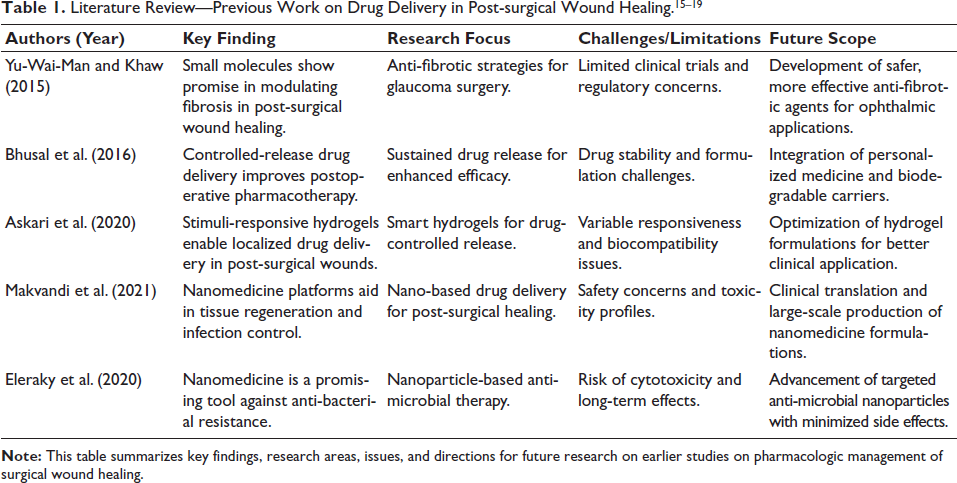
Post-surgical healing of wounds is a significant challenge in many clinical specialties, with ophthalmic surgery, surgical interventions, and pharmacotherapy being prominent. Given the importance of targeted drug administration, Yu-Wai-Man and Khaw investigated the opportunity of small-molecule-based novel anti-fibrotic drugs targeting post-surgical wound healing for glaucoma surgery. 15 Bhusal et al. took a closer look at controlled drug release systems delivering drugs in such a way to enhance post-op pharmacotherapy for sustained release with better therapeutic delivery. 16 Askari et al. investigated localized post-surgical drug delivery from stimuli-responsive hydrogels, ensuring drug delivery while avoiding systemic issues. 17 Makvandi et al. carried the drug delivery platform further toward incorporating nanomedicine for promoting tissue regeneration, infection prevention, and cancer, 18 while Eleraky et al. outlined the use of nanomedicine to counter the problem of anti-bacterial resistance during post-surgery infection prevention, which is a critical condition. 19 These efforts emphasize the potential of advanced pharmaceutical interventions in streamlining wound healing, as shown in Table 1.
Methodology
Locating Data
A thorough literature search was conducted across databases such as PubMed, Scopus, Web of Science, and Google Scholar. The search terms to be used were “post-surgical wound healing,” “nanomedicine,” “targeted drug delivery,” and “natural therapeutics.”
Data Collection
Relevant review articles, peer-reviewed articles, and clinical trials published over the past two decades were chosen. The inclusion was based on studies that reported on pharmacological advancements for wound healing.
Data Extraction
Information on drug mechanisms, efficacy, safety, and limitations was collected and structured. Nanomedicine research, drug-controlled release, and herbal drugs were accorded greater priority.
Synthesizing Information
The collected data were synthesized and critically examined to highlight current trends, concerns, and future research directions in post-surgical wound healing pharmacotherapy.
The references were purposively selected based on innovation, clinical relevance, and impact, focusing on post-2013 integrative advancements in wound healing pharmacotherapy. High-impact studies introducing novel nanocarriers, 18 anti-fibrotic strategies, 15 and anti-bacterial nanotherapies 19 exemplify the review’s translational and preclinical emphasis.
Results
Nanomedicine Breakthroughs in Wound Healing of Postoperative Wounds
Nanomedicine has been a new technique for post-surgical wound healing with controlled release, targeted drug delivery, and enhanced drug bioavailability for therapy. Liposomes, polymeric nanoparticles, and metal nanocarriers are a few of the nanoparticles employed for sustained and targeted drug delivery, with reduced systemic toxicity and enhanced therapeutic effects. Stimuli-responsive nanocarriers provide drug-controlled release, with the drug being active for a longer duration at the site of the wound. 20
The enhanced bioavailability of drugs through nanomedicine is one of the key causes of the enhanced rate of tissue regeneration. Nanoformulations increase drug solubility and stability and enable the deeper penetration of the drug into the wound. In addition, nanoparticles can deliver multiple drug agents, such as anti-biotics, anti-inflammatory agents, and growth factors, in a single drug delivery system, resulting in enhanced wound healing. 21
Case studies have been used to demonstrate the effectiveness of nanomedicine in wound healing. Silver nanoparticles, for example, have improved anti-microbial activity, decreasing the rate of postoperative infection. Polymeric nanoparticles containing embedded growth factors have been found to enhance tissue healing and collagen synthesis in preclinical models. Lipid nanocarriers have also enhanced hydration and epithelialization and facilitated quick recovery. The findings thus confirm the efficacy of nanomedicine as a new strategy in postoperative wound healing. 22
Targeted Drug Delivery for Enhanced Wound Healing
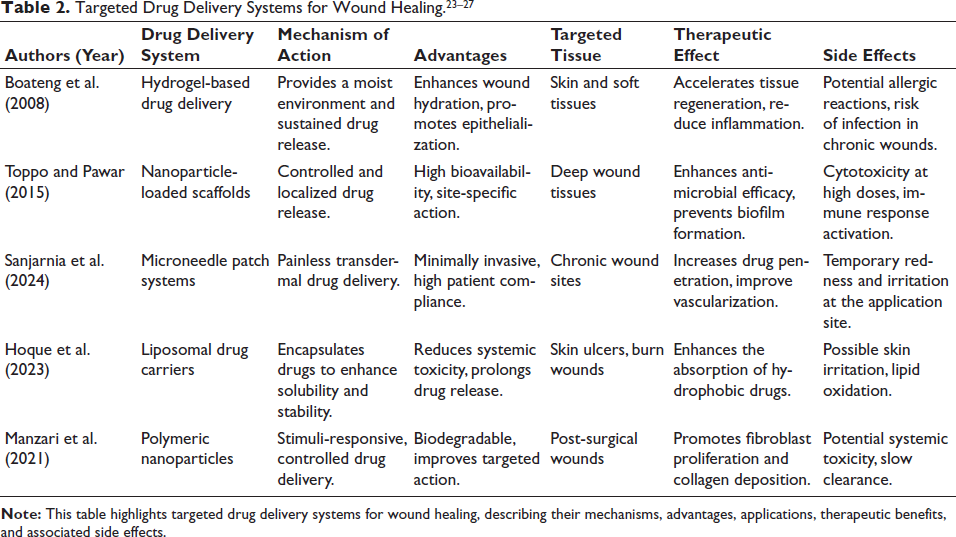
Targeted drug delivery has transformed the post-surgical healing of wounds by ensuring site-specific delivery of the drug with decreased systemic toxicity and enhanced drug effectiveness. Relative to traditional drug delivery, which is predisposed to bring about poor bioavailability and off-targeting, targeted delivery can ensure precise targeting of the drug at the site of the wound with maximum therapeutic effect and the least side effects.23, 24
Intelligent drug delivery systems, like stimuli-responsive hydrogels and microneedle-based systems, have been created with high interest in treating wounds. 25 Stimuli-responsive hydrogels release drugs upon exposure to some physiological stimulants like pH, temperature, or enzymatic activity at the wound site, which in prolonged and sustained drug release. Likewise, microneedle patches offer effective and painless drug delivery in the deeper planes of wound tissues and offer drug permeation without going through systemic circulation, as shown in Table 2.26, 27
Natural Therapeutics and Phytochemical Interventions in Wound Healing
Phytochemical therapy and natural medicines have gained greater interest because of their potential to contribute to postoperative wound healing as cost-effective, biocompatible, and multipotential therapies. Curcumin, aloe vera, Centella asiatica, and honey are some herbs and bioactive molecules that are extensively studied for their wound-healing potential. The phytochemicals enhance angiogenesis, fibroblast proliferation, and collagen deposition, leading to faster tissue formation and better wound closure. 28
Anti-inflammatory and anti-microbial properties of phytochemicals are crucial in the prophylactic prevention of postoperative complications. Curcuminoids, flavonoids, and tannins modulate inflammatory processes by inhibiting excessive cytokine production and oxidative stress at the site of trauma. 29 Anti-microbial phytoextracts like neem (Azadirachta indica) and tea tree oil (Melaleuca alternifolia) possess broad-spectrum anti-bacterial action, successfully controlling wound infections caused by drug-resistant bacteria. These effects make phytochemicals the best option over traditional anti-biotics, as they rectify the problem of anti-biotic resistance and drug side effects. 30
Various clinical trials have explored the efficacy of plant-based pharmacological treatments in wound healing. Studies on C. asiatica preparations revealed improved epithelialization and reduced scar tissue in patients undergoing surgery, and honey dressings were beneficial in reducing bacterial load, pain, and healing time. Integrating natural therapeutics into modern wound healing strategies is an opportunity to develop safer, eco-friendly, and patient-friendly therapies for post-surgical healing. 31
Comparative Analysis of Conventional Versus Modern Pharmacological Therapies in Wound Healing
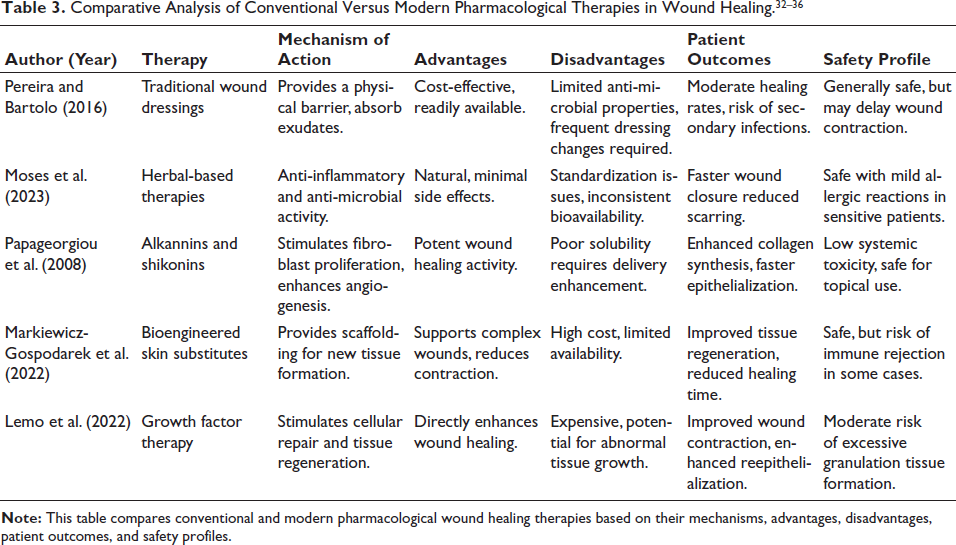
Surgical wound healing has relied on conventional therapy using anti-biotics, anti-septics, and wound dressings. Although highly effective in preventing infection, these therapies carry significant disadvantages, like anti-biotic resistance, poor bioavailability, and healing delay. Further, systemic delivery of drugs will most likely provide suboptimal drug concentrations in the wound bed, leading to ineffective therapy, as well as considerable side effects. 32
On the other hand, sophisticated pharmacological therapies, such as nanomedicine, targeted drug delivery, and bioactive wound dressings, have revolutionized wound management. 33 Nanoparticles, liposomes, and hydrogels deliver controlled release of drugs, allowing drug absorption and retention within the wound site. Targeted therapy minimizes systemic toxicity and maximizes tissue regeneration. Also, natural therapeutics loaded with phytochemicals impart anti-inflammatory, anti-microbial, and anti-oxidant properties, reducing reliance on synthetic drugs. 34
A comparison of patient outcomes and safety highlights the benefits of modern interventions. Experiments demonstrate that nanoparticle-based therapies and bioengineered dressings reduce healing time, enhance fibroblast proliferation, and reduce scar formation compared with conventional treatments. 35 Furthermore, biodegradable dressings with embedded growth factors enhance angiogenesis and collagen deposition, resulting in accelerated wound closure. While cost and regulatory concerns remain, modern pharmacological interventions are efficient, patient-friendly substitutes for conventional wound healing processes, 36 as shown in Table 3.
Pharmacokinetics (PK) and Pharmacodynamics (PD) in Wound Healing Therapies
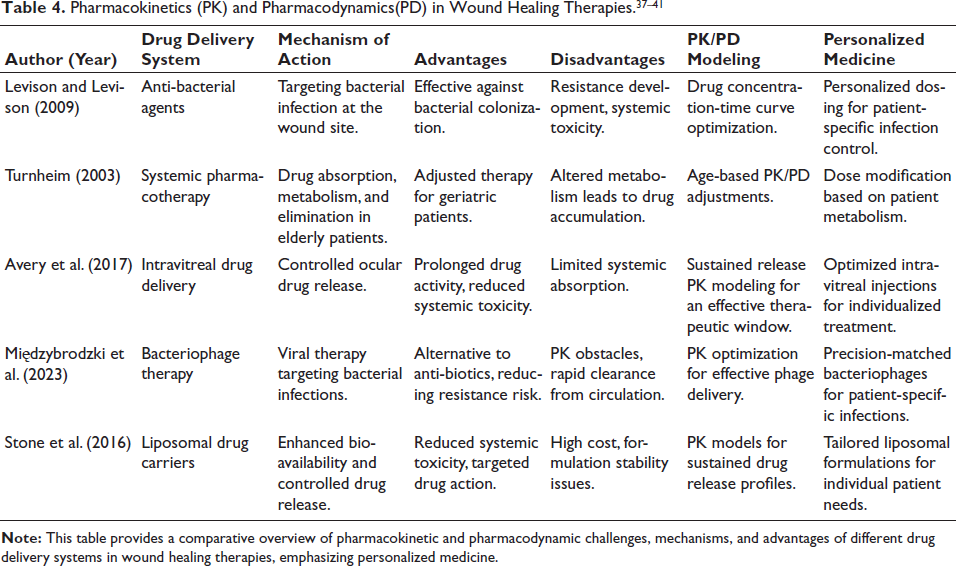
PK and PD are critical to optimize drug effectiveness in wound healing following surgery. Drug absorption, distribution, metabolism, and elimination (ADME) are significant in therapeutic effectiveness, determining how well a drug is delivered and functions at the wound site. 37 Conventional oral and systemic drug delivery is marred by decreased bioavailability and rapid clearance, leading to suboptimal therapeutic effects in tissue repair. To achieve better healing, dosing regimens must be optimized. Controlled and sustained delivery of drugs through formulations such as nanoparticle-based carriers, hydrogels, and liposomes offers localized delivery of drugs, and therapeutic drug concentrations are maintained at the site of the wound. 38 These drug delivery systems reduce the risk of toxicity and increase tissue retention of drugs, and the action is prolonged. Moreover, methods to improve bioavailability, such as lipophilic drug modification, prodrugs, and mucoadhesive carriers, improve drug solubility and penetration into damaged tissues. 39 Targeted delivery through nanocarriers, such as polymeric nanoparticles and lipid vesicles, prevents degradation in the body and offers good drug absorption at the site of injury. 40 PK/PD modeling advances help predict optimal dosing regimens to minimize inflammation and infection risks, and to promote angiogenesis and tissue regeneration. Future research will continue to enhance personalized medicine strategies, tailoring drug delivery based on patient-specific metabolic profiles to achieve optimal wound healing, 41 as shown in Table 4.
Future Directions and Emerging Trends in Wound Healing Pharmacology
Pharmacology in wound healing is evolving very rapidly, supported by new technology and novel treatment technologies. The most promising among these are the application of artificial intelligence (AI) and machine learning (ML) in drug research. 42 These software tools can screen millions of chunks of information, predict drug efficiencies, and seek out new treatment targets for wound healing. AI algorithms also simplify formulations and drug delivery systems of drugs to deliver patient-specific treatment protocols according to a patient’s unique profile. 43 Another critical development is the application of novel biomaterials and three-dimensional (3D)-printed drug delivery technologies. Smart hydrogels, bioactive scaffolds, and tissue-engineered constructs are structured to promote drug release in a controlled fashion and regenerate tissue. 3D bioprinting enables controlled deposition of growth factor-loaded, stem cell-loaded, and anti-microbial agent-loaded dressing to enhance the repair efficiency of the wound. 44 In addition, personalized medicine strategies are transforming wound healing therapy by tailoring treatments to each patient’s needs. Genomics, proteomics, and metabolomics innovations enable the formation of patient-specific drug regimens that optimize healing. New efforts will combine biodegradable nanocarriers, stem cell therapies, and gene editing technologies to maximize therapeutic efficiency and safety in treating wounds. 45
Discussion
Postoperative wound healing is a complex and multifaceted biological process regulated by many pharmacological, molecular, and physiological parameters. The rising rate of postoperative complications, in the form of delayed tissue regeneration, microbial infection, excessive inflammation, and scarring, has generated the demand for novel pharmacological interventions. 46 Traditional wound healing treatments in systemic anti-biotic therapy and general dressings have revealed several limitations, particularly anti-biotic resistance, poor bioavailability, and variable therapeutic efficacy. The advent of nanomedicine, targeted drug delivery, and natural therapeutics has provided new dimensions in the facilitation of wound healing in the form of sustained drug release, enhanced tissue regeneration, and precision-targeted therapy. This review summarizes existing evidence, highlights pharmacological advances, and underscores the challenges and future directions in treating postoperative wounds. 47
One of the most significant drawbacks of traditional wound healing therapy is the non-selective release of therapeutic components, leading to inefficient drug concentration at the wound site and systemic toxicity. The advent of nanomedicine-based drug delivery systems has enhanced the drug’s solubility, stability, and bioavailability. 48 Nanocarriers, such as liposomes, polymeric nanoparticles, dendrimers, and metal nanoparticles, have been capable of providing enhanced encapsulation efficiency for the drug and controlled release behavior with sustained action. 49 Silver and gold nanoparticles have been investigated more recently for anti-microbial wound dressings, and have been shown to significantly inhibit infection by targeting multidrug-resistant pathogens. Lipid-based nanosystems have also effectively penetrated skin layers, offering maximum drug absorption and epithelialization. Although the future is promising, scalability, cost, and the issue of probable toxicity are areas to be explored further. 50
Beyond nanotechnology, targeted drug delivery systems have transformed wound healing by reducing off-target drug exposure and site-specific activity. Stimuli-responsive hydrogels have been a cornerstone, with the ability to deliver drugs based on local wound conditions like pH, enzymatic activity, or temperature changes. Such responsiveness enables controlled therapeutic action, avoiding unnecessary drug loss and side effects. 51 To a similar end, microneedle-based drug delivery systems have also emerged as minimally invasive alternatives to traditional administration strategies. Microneedle-mediated delivery of bioactive molecules to the wound bed enables deep tissue penetration and enhanced therapeutic responses. However, clinical translation of these systems is still in its infancy, with patient compliance, regulatory approval, and large-scale manufacture preventing their overall acceptance. 52
The healing potential of phytochemical and natural therapeutic interventions in wound healing has also received considerable attention. Several medicinal plant bioactive compounds, herbs, and marine animals have shown potent anti-inflammatory, anti-microbial, and regenerative potentials. 53 Curcumin, honey products, aloe vera, and C. asiatica have been extensively studied for collagen-stimulating, anti-oxidant, and angiogenesis-inducing effects. Natural compounds are multifunctional in their activity, stimulating fibroblast proliferation, reepithelialization, and the reduction of oxidative stress. 54 Furthermore, their low toxicity and diminished potential for resistance development make them a desirable choice compared to traditional synthetic drugs. Though promising as therapeutics, batch-to-batch variability, stability, and a lack of adequate clinical trials raise concerns for their complete integration into mainstream medical practice. One of the key determinants of the success of post-surgical wound healing is the PK/PD characteristics of therapeutic drugs. 55 Traditional drug delivery systems are usually poorly absorbed, metabolized rapidly, and cleared from the body, thereby limiting their action at the wound. To overcome this, sustained-release systems have been designed, utilizing biodegradable polymeric carriers, lipid-based vesicles, and bioadhesive matrices to extend the drug residence time. 56
Furthermore, prodrug manipulations, hydrophilic-lipophilic balance optimization, and enzyme-activated drug release have been investigated to maximize bioavailability and therapeutic longevity. 57 PK/PD modeling is increasingly being utilized to forecast optimal dosing regimens, so that drug levels are maintained within the therapeutic window, with a reduced risk of toxicity. Advances in personalized medicine and pharmacogenomics further simplify drug delivery with therapies optimized based on patient-specific metabolic and genetic information. 58
Comparative efficacy between conventional and novel pharmacologic approaches also points to the revolutionary potential of newer treatments. Conventional approaches primarily focus on controlling infection and symptom relief, whereas modern strategies include regenerative medicine, biomaterial-based drug delivery, and targeted therapy. 59 Clinical comparisons have shown that nanocarrier-based drug preparations, particularly growth factors and bioactive peptides, have faster rates of wound closure, reduced fibrosis, and improved quality of scars compared with conventional treatments. 60 Moreover, anti-microbial peptides and hydrogel-treated bioengineered innovative dressings showed a superior reduction in inflammatory cytokine levels and bacterial contamination around the wound than conventional treatments. Despite these developments, cost factors, regulatory hurdles, and lack of standardization remain brakes on mass clinic applications. 61
In the near term, the pharmacological approach to wound healing will be driven by the influence of AI, ML, and regenerative medicine. AI-facilitated drug discovery platforms are accelerating the identification of novel wound-healing drugs, optimizing drug-target interaction, and predicting patient-specific treatment outcomes. Similarly, 3D printing and bioengineered scaffolds are paving the way for designing the next generation of wound dressings to release growth factors, stem cells, and biomolecules in a controlled manner. 62 Gene-editing (clustered regularly interspaced short palindromic repeats-CRISPR associated protein 9 (CRISPR-Cas9)) and ribonucleic acid (RNA)-based therapies are new technologies used to modulate the genetic and molecular processes of abnormal wound healing. Despite these advances, several challenges must be met before novel wound healing therapies can be introduced into clinical practice. 63 Regulatory bodies demand rigorous safety evaluation, large-scale clinical trials, and long-term follow-up studies to determine the efficacy and safety of new treatments. Coordination must also be achieved among biomedical engineers, pharmacologists, and clinical experts to develop patient-specific combined therapeutic approaches. In brief, post-surgical wound healing pharmacology is revolutionizing with the advent of nanomedicine, targeted drug delivery, and natural therapeutics. 64 While conventional therapies remain the cornerstone of wound care, newer technologies offer more therapeutic specificity, fewer side effects, and more significant healing potential. The intersection of AI, personalized medicine, and biomaterial engineering has immense potential to revolutionize wound care. However, more research, clinical trials, and regulatory backing are necessary to translate preclinical advances into clinical reality. With advanced drug delivery technology and interdisciplinary research, the future of post-surgical wound healing is bright, with safer, more efficient, and patient-specific therapeutic candidates on the anvil. 65
Conclusion
Wound healing following surgery is a significant problem in clinical medicine, and new pharmacologic interventions are needed to improve recovery, minimize complications, and maximize patient outcomes. Systemic anti-biotics and conventional dressings have not succeeded, with limitations of anti-biotic resistance, poor bioavailability, and delayed healing. New advances in nanomedicine, targeted drug delivery, and natural therapeutics have transformed the field with controlled drug delivery, site specificity, and multifunctional therapeutic activity. Nanoparticles, polymeric carriers, and bioengineered dressings have arrived with great potential in the acceleration of wound repair, with fewer side effects. Natural therapeutics like phytochemicals and bioactive compounds have also arrived with potential in anti-inflammatory, collagen synthesis-stimulating, and infection-preventing activity.
Although these advances are encouraging, some hurdles remain, including regulatory challenges, standardization, and economic constraints. The future of wound healing pharmacology will probably be driven by AI, personalized medicine, and bioengineered drug delivery systems to enable more effective, patient-specific, and minimally invasive regimens. More interdisciplinary investigation and interaction among pharmacologists, bioengineers, and clinicians will be needed to translate these advances to the bedside. With the convergence of new therapeutic paradigms, the future of post-surgical wound healing looks bright with safer, more effective, and targeted therapeutic interventions in preventing complications and optimizing patient quality of life.
Key Takeaways
Postoperative drug therapy for wound healing is increasingly evolving with nanomedicine advancements, targeted drug delivery, and herbal therapeutic intervention. Microneedles, nanoparticles, and hydrogels are revolutionizing drug delivery through controlled and localized drug release at the lesion site, with minimal potential for systemic toxicity. Natural therapeutics are biocompatible and economical, and stimulate wound recovery while inhibiting inflammation and microbial infection. Personalized medicine and AI-enabled drug discovery drive the next generation of precision-based therapies, maximizing treatment efficacy and patient outcomes. Although these technologies promise a lot, hurdles such as regulatory clearances, cost, and standardization must be cleared. Future studies are bound to focus on interdisciplinary strategies, large-scale clinical trials, and translational applications to deliver safer and more efficacious wound healing therapies.
Abbreviations
ADME: Absorption, distribution, metabolism, and elimination; AI: Artificial intelligence; CRISPR-Cas9: Clustered regularly interspaced short palindromic repeats-CRISPR associated protein 9; DepoDur™: Extended-release epidural morphine; ESG: Extended-release epidural morphine study group; EXPAREL: Liposomal bupivacaine; IKKβ: Inhibitor of nuclear factor kappa B kinase subunit beta; ML: Machine learning; PD: Pharmacodynamics; pH: Potential of hydrogen; PK: Pharmacokinetics; RNA: Ribonucleic acid; siRNA: Small interfering RNA; SPARC: Secreted protein acidic and rich in cysteine; SSIs: Surgical site infections; 3D: Three-dimensional; VEGF: Vascular endothelial growth factor.
Footnotes
Acknowledgments
The authors are thankful to the Department of Shalya Tantra (Surgery), Mahatma Gandhi Ayurved College Hospital and Research Centre, Wardha, for their generosity in providing academic and research sponsorship. The authors appreciate researchers in this field who contributed valuable suggestions, which brought us to this review. Our deepest gratitude is to our mentors, colleagues, and reviewers, whose remarks and suggestions significantly added value to the quality of this manuscript.
Declaration of Conflicting Interests
The authors declared no potential conflicts of interest with respect to the research, authorship, and/or publication of this article.
Ethical Approval and Informed Consent
This narrative review does not involve direct human or animal studies; hence, ethical clearance was unnecessary. However, all data sources were chosen with caution from credible scientific databases, journals, and peer-reviewed publications to uphold ethical standards. The authors have upheld good academic and research ethics by correctly citing all the materials they used and refraining from plagiarism and data manipulation.
Funding
The authors received no financial support for the research, authorship, and/or publication of this article.
