




Abstract
Background
Community pharmacists faced more complex challenges in meeting patients’ medication needs during the pandemic than previously reported in the literature.
Objectives
To explore the perception and abilities of community pharmacists in managing patients’ needs in terms of medication dispensing during the pandemic, and to examine its effect on improving the patients’ situations.
Materials and Methods
A cross-sectional study design, validated by 30 experts, was conducted using an electronic survey (Google Form) to assess the effect of the dispensing practice of Iraqi community pharmacists on the patient’s clinical outcomes during the pandemic. The survey was distributed on professional pharmacist’s social media platforms from December 2021 to June 2022.
Results
It was found that more than 75% of participants agreed that their role in managing mild cases of COVID-19 decreased the strain on other healthcare professionals. The pharmacists perceived that more than 80% of the patients were satisfied with the pharmacist’s advice regarding the COVID-19 treatment plan and recorded significant improvement (p ˂ 0.05) in the signs and symptoms of those patients. This was achieved by dispensing antibiotics, analgesics, and supplements according to the community pharmacists’ opinion. The main reason behind dispensing antibiotics and analgesics in Iraqi pharmacies during the COVID-19 pandemic was to provide the official prescription for patients. In contrast, 90% of the dispensed drugs without a prescription were nutritional supplements and analgesics, with vitamin C and paracetamol accounting for 90.8% and 88.9%, respectively. On the other hand, the antibiotics represented 70.5% of the dispensed drugs without a prescription, with azithromycin accounting for 76.1% of them.
Conclusion
Most of the participants succeeded in dealing with COVID-19 patients and were confident in dispensing analgesics, antibiotics, and supplements to treat mild to moderate cases of COVID-19 patients. Patients who trusted the pharmacist’s advice got significant improvement in their COVID-19 symptoms.
Keywords
Introduction
The indispensable role of community pharmacists during the pandemic (COVID-19 pandemic as an example) was evaluated by many studies in the literature1–6 as they can mitigate and alleviate the stress on the health system.4, 7, 8 This is attributed to the fact that community pharmacists are considered the first contact station with patients, as reported by the International Pharmaceutical Federation (FIP).9, 10 After the declaration of the World Health Organization (WHO) that COVID-19 is a global pandemic on March 11, 2020, 11 the global health care system in most countries, including the Republic of Iraq, faced an unprecedented situation with the involvement of all healthcare professionals. 12
Community pharmacists, who represent one of the main pillars of each healthcare system, have played an important role during this critical time. 13 Their roles were not only focused on dispensing medicines but also on giving the appropriate consultation, wherever possible, regarding health problems. 14
In Iraq, the responsibilities of community pharmacists were far beyond that, and a lot of patients preferred to ask the pharmacists regarding their minor ailments rather than visiting physicians for surgeries.15, 16 This patient’s behavior has widely increased, particularly during the outbreaks, and pharmacists served as professional experts in providing COVID-19 patients with suitable interventions in alignment with various governmental measures.17–19 Although a number of studies have highlighted the impact of outbreaks on the role of community pharmacists and their dispensing practice during the COVID-19 era, particularly the antibiotics (according to the available guidelines at that time), 20 little were focused on the direct pharmacist’s role in supporting COVID-19 patients, as being the most accessible healthcare service. For example, a study by Karlsson and colleagues in Sweden reported that there was an increase in the volume of defined daily doses of prescriptions by less than half. In addition, the dispensing of over-the-counter (OTC) medications rose by 96%, particularly painkillers, vitamins, and cold-related preparations. However, the dispensing was through prescriptions, and there was no direct involvement of the pharmacists with COVID-19 patients. 21 In a study conducted in Australia, the authors focused on the impact of the pandemic on the dispensing of antibiotics, where a reduction in the mean monthly dispensing of antibiotics was reported specifically for roxithromycin, with 69%. 22 In 2023, Latonen et al. demonstrated the role of community pharmacists in crisis management during the pandemic without correlating that to their perception and patients’ outcomes. One of the most important findings in their study was that the community pharmacists had not been trained well to develop crisis management plans during the pandemic until it happened, leading to some difficulties in providing healthcare services to the patients. 23 In another study conducted by Warr et al. in the United Kingdom to study the preparedness of community pharmacists in facing healthcare problems during a pandemic, they found that the community pharmacists faced many challenges. One of these was the unavailability of clear guidelines and support from the authorities. 24 They highlighted the need for and importance of enhancing the legislation that supports and extends the role of community pharmacists during the pandemic to provide better healthcare services to patients.
Challenges in pharmaceutical practice faced by community pharmacists during the pandemic are deeper than what has been mentioned in the literature, especially in developing countries. Dispensing pharmaceutical items directly involved in the treatment of COVID-19 has been underestimated within this cultural context.
In Iraq, there is a paucity of studies regarding the dispensing practices during the pandemic; however, one study conducted among community pharmacists reported an increment in the dispensing of a variety of medicines, particularly common medicines. 16 Therefore, the aim of the present study was to bridge the gap in the literature and explore the community pharmacists’ practices and perceptions toward the dispensing practice regarding antibiotics, analgesics, and nutritional supplements during the pandemic and their impact on the improvement of patients’ signs and symptoms. So, this study will provide a deeper understanding of the actual role of community pharmacists in Iraq in relation to dispensing medicines and their effect on improving patients’ signs and symptoms.
Materials and Methods
Study Design, Participants, and Period
A cross-sectional study design 6 was used in this study, which utilized an electronic survey using a Google Form that was distributed on Iraqi social media platforms from October 2020 to February 2021. The participation in this questionnaire was voluntary and anonymous. The study involved participants from different provinces in Iraq. They were working at community pharmacies either full- or part-time. The Ethical Committee at the University of Baghdad College of Dentistry, Department of Basic Sciences approved this study (Reference number: 377). The required sample size was calculated using the Yamane simplified equation 25 : n = N/(1 + N × e2).
Where n is the sample size, N = population size, and e = (±5) is the level of precision.
Questionnaire Development and Response Collection
In order to establish the content validity of the self-developed questionnaire, the preliminary draft of the questionnaire was designed depending on a thorough revision of related literature and previous work related to this area. Then, it was critically evaluated by a panel of five experts in clinical pharmacy to evaluate its clarity, relevance, and coverage of the subject matter. Improvement in phrasing and reorganization of specific parts of the questionnaire were achieved depending on the experts’ suggestions. Then, the questionnaire was piloted by 30 participants to assess clarity, timing, and respondent interpretation. The responses from the pilot study were not included in the main results and statistical analysis of this study.
After that, the questionnaire got a consensus about its items, which involved three parts: the first one was about collecting the demographic information of each participant, and the second part focused on a group of medications (analgesics, nutritional supplements, and antibiotics) that were dispensed in community pharmacies to manage coronavirus disease in the pharmacy depending on the guidelines of the Iraqi Ministry of Health classification.26, 27 This part consisted of 12 questions, which ranged from closed- and open-ended questions to multiple-choice questions with predefined answers. In addition, the participants were asked to report if they had dispensed any of the above-mentioned medications to COVID-19 patients, and to report patients’ outcomes. This part aimed to evaluate the dispensing pattern and outcomes of each medication type independently based on the pharmacists’ observations over the last 8 months. The evaluation of the patient’s outcomes relied on the pharmacists’ subjective observations and the patient feedback during follow-up visits to the pharmacy (if any).
The last part assessed the perception of pharmacists toward the dispensing practice by using a 5-point Likert agreement scale (Strongly Disagree to Strongly Agree). The survey was distributed to Iraqi pharmacists using closed groups on the Facebook platform. The survey was redistributed weekly to recruit a higher response rate.
Statistical Analyses
Descriptive statistical analyses were achieved for all questionnaire items using the Statistical Package for the Social Sciences (SPSS) software (version 27), while the Kruskal–Wallis test was used to find any statistical difference (p < 0.05) related to the reasons behind drug dispensing and for COVID-19 patients by community pharmacists. Mann–Whitney test (p < 0.05) was used to evaluate the statistical difference in patient clinical outcomes with the dispensed antibiotics by community pharmacists to COVID-19 patients. Median and interquartile range (IQR) were measured for categorical variables.
Results
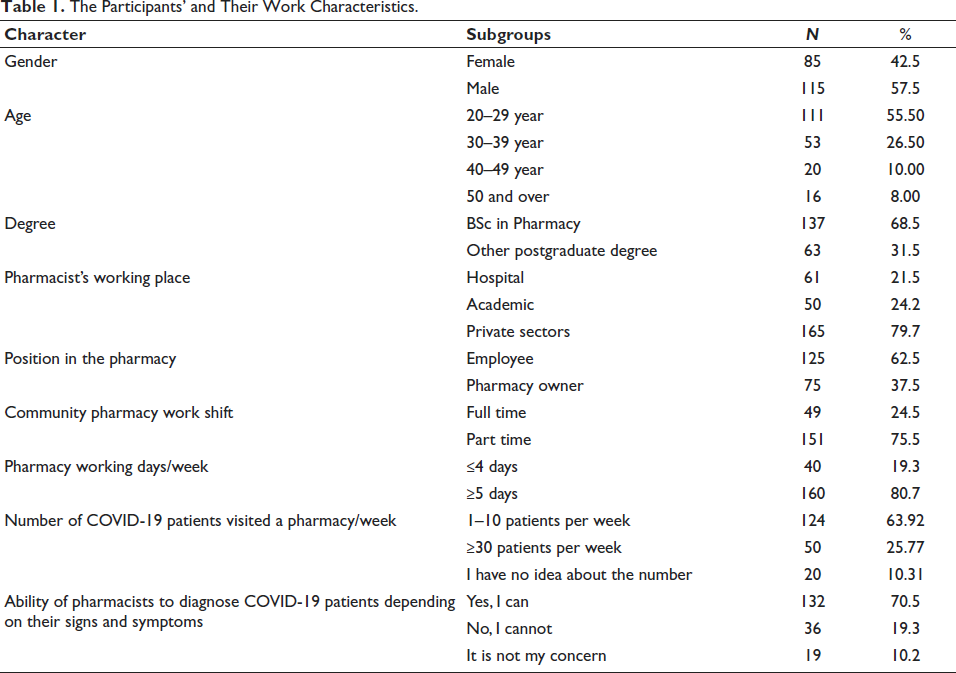
The total number of received completed questionnaires was 201 (42.5% were answered by female community pharmacists, while the males represented 75.5%). More than 90% of the participants were between 20 and 49 years old, and more than two-thirds (68.5%) had a BSc in Pharmacy (Table 1). Approximately 80% of the participants work in the private sector, in part-time shifts, and more than 5 days per week. The position of the participants in the community pharmacies as an employee was accounted to the majority with 62.5%, while the others (37.5%) were the pharmacy owners. In community pharmacies, the pharmacists (64%) were voted that they dealt with 1–10 COVID-19 patients per week in the last 8 months, and 70.5% of the participants were able to diagnose COVID-19 patients depending on their signs and symptoms (Table 1).
The Participants’ and Their Work Characteristics.
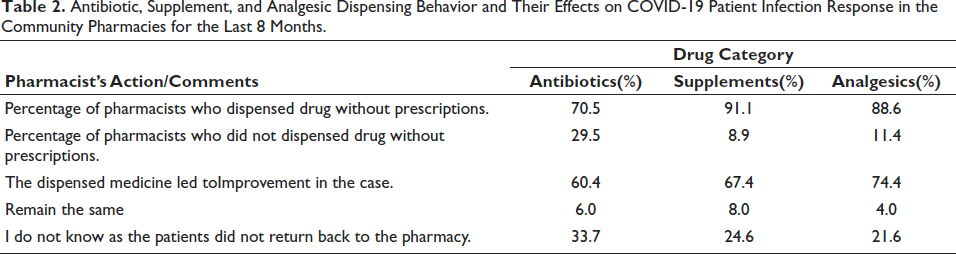
The largest portion (about 90%) of the dispensed drugs without a prescription were for nutritional supplements and analgesics, while the antibiotics represented 70.5% of them. This behavior of dispensing led to improvements in more than 60% of the COVID-19 cases that had visited the community pharmacies (Table 2), as recorded by the participants.
Antibiotic, Supplement, and Analgesic Dispensing Behavior and Their Effects on COVID-19 Patient Infection Response in the Community Pharmacies for the Last 8 Months.
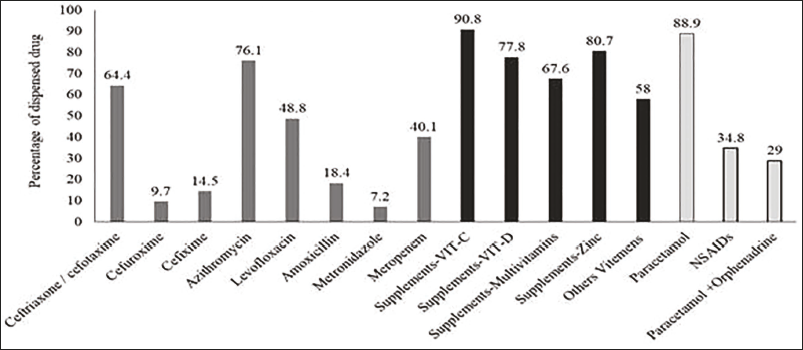
Vitamin C as a nutritional supplant represented the highest dispensed drug (90.8%), while vitamin D and zinc came second with more than 75% for each (Figure 1). Regarding the antibiotic dispensing behavior, azithromycin recorded the highest percentage (76.1%), then the dispensing of ceftriaxone/cefotaxime (64.4%), while metronidazole recorded the lowest (7.2%). Most of the participants recorded that the most dispensed analgesic was paracetamol with 88.9% (Figure 1).
Percentage of Dispensed the Main Medicines During COVID-19 Pandemic.
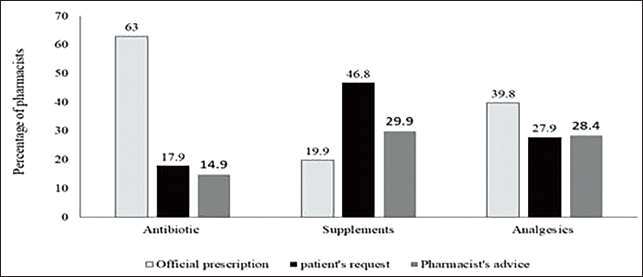
The main reason behind dispensing antibiotics and analgesics in community pharmacies was to provide the official prescription for patients, with 60% and 40%, respectively. On the other hand, the main reason for dispensing nutritional supplements was the patient’s request (47%), while official prescription represented only 20%. The dispensed drugs, according to the pharmacist’s advice, were 15% for antibiotics and 30% for each group of analgesics and nutritional supplements (Figure 2).
Reason Behind Dispensing Medicine for COVID-19 Patients.
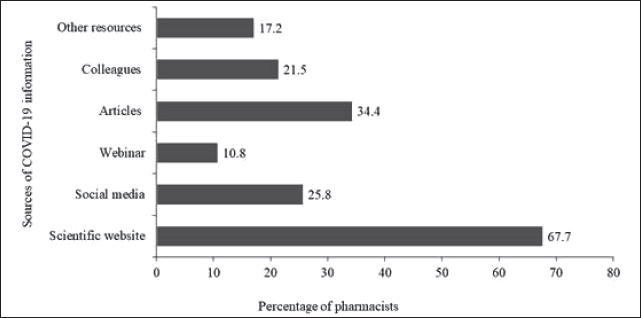
The main sources of information that were based on the dispensing of the above-mentioned group of drugs during the COVID-19 pandemic were the scientific website (67.7%), articles (34.4%), and the webinar (10%) (Figure 3).
Sources of Information That Were Based on When Community Pharmacists Dispensing Drugs for COVID-19 Patients.
Fortunately, just 10% of the pharmacists supplied alternative medicine if the COVID-19 patients did not respond to the treatment, as most of the participants advised those patients to visit either a specialist physician (53%) or a hospital (41%) for further assistance (Figure 4A).
Community Pharmacists and COVID-19 Patients: (A) Pharmacist’s Actions Toward the COVID-19 Patients Who did not Respond to the Treatment; (B) Pharmacist’s Experience Toward COVID-19 Patients in the Community Pharmacy.
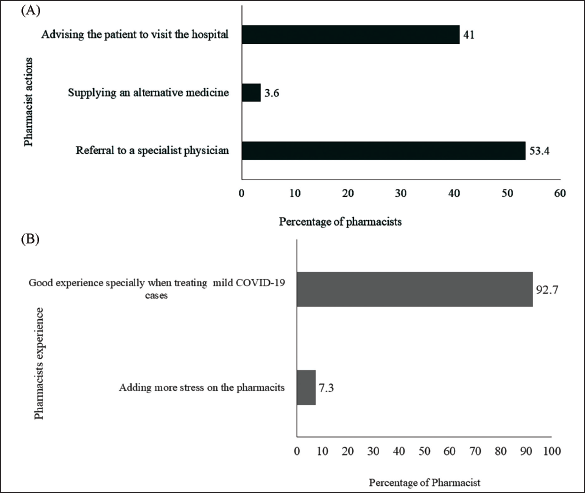
Most of the participants (92.7%) expressed a good experience when they successfully treated the mild cases of COVID-19 patients, while 7.3% of the participants considered treating mild cases of COVID-19 as an extra stress on the pharmacists (Figure 4B).
The survey studied the five pharmacists’ perceptions toward dispensing medications to COVID-19 patients and how these perceptions were affecting this practice, finding that more than 60% of the pharmacists considered their role was crucial during the pandemic, especially in educating patients about how to use the drug correctly. Approximately 60% of the participants mentioned that they had confidence in managing mild to moderate cases of COVID-19 patients. Accordingly, most of the participants (65.5%: 40.2% disagreed and 25.3% strongly disagreed) rejected the idea of protecting themselves by neglecting and not treating the COVID-19 patients who visited their pharmacies (Table 3).
Community Pharmacist’s Perception Toward Drug Dispensing for COVID-19 Patients.
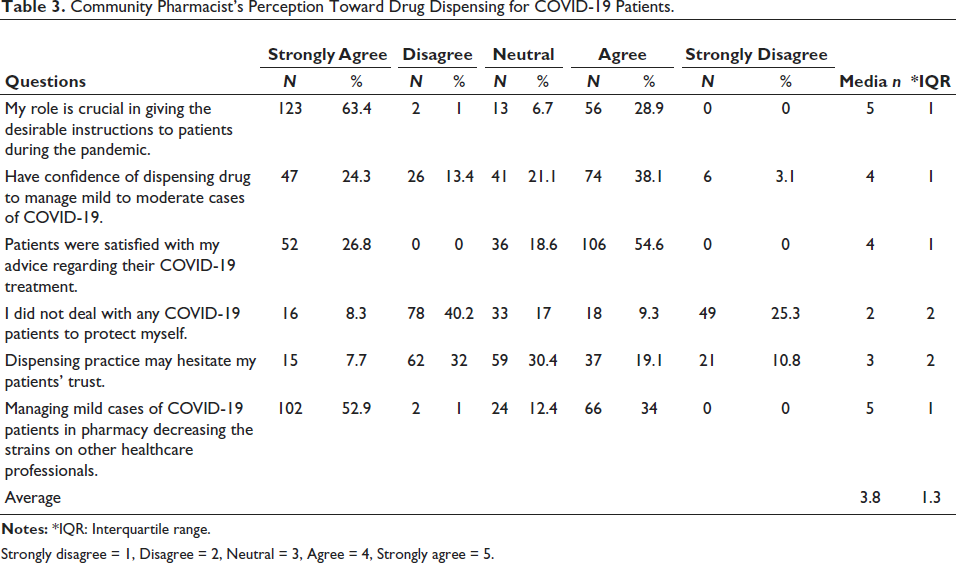
Strongly disagree = 1, Disagree = 2, Neutral = 3, Agree = 4, Strongly agree = 5.
The pharmacists perceived that more than 80% of the patients were satisfied with the pharmacist’s advice regarding the COVID-19 treatment plan, and only 20% of the participants thought that the dispensing practice of drugs could hinder the patients’ trust in the pharmacist’s role during the pandemic (Table 4). Finally, it was found that more than 75% of participants agreed that their role in managing the mild cases of COVID-19 decreased the strain on other healthcare professionals.
The Relationship Between the Reasons for Dispensing and Community Pharmacist’s Perception Toward Drug Dispensing for COVID-19 Patients (Pearson Chi-square Test).
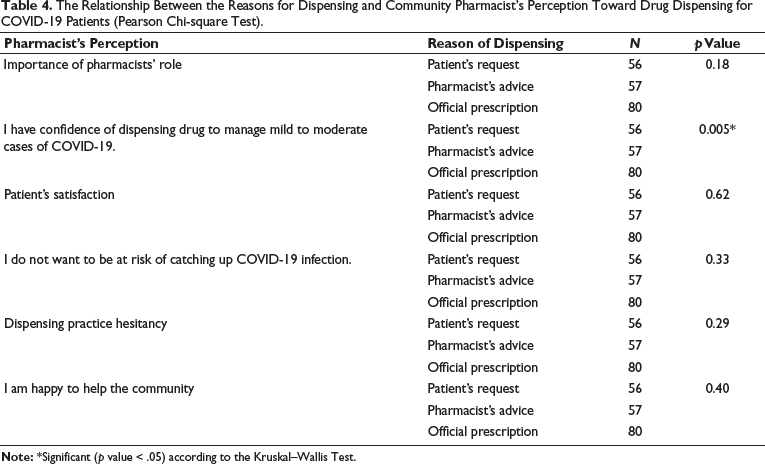
According to the Kruskal–Wallis test, the pharmacies with pharmacists who perceived more confident in their ability to dispense medications for mild and moderate cases, the main significant reason for dispensing medications for COVID-19 was pharmacist advice (Table 4). In other words, the number of medications dispensed in these pharmacies due to the pharmacist’s advice was significantly higher (p < .05) than that due to a prescription or a patient request. This practice supported a statistically significant improvement in patients’ symptoms, as those patients were more satisfied with pharmacists’ advice compared to those who had no improvement in their condition (Table 5).
The Relationship Between the Patient Clinical Outcome with the Dispensed Antibiotics and Community Pharmacist’s Perception Toward Drug Dispensing for COVID-19 Patients.
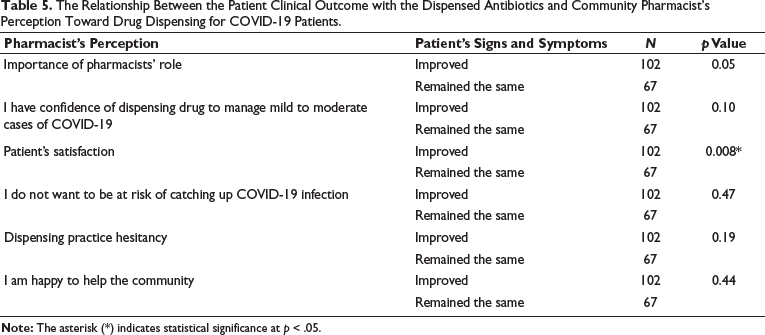
On the other hand, dispensing drugs for COVID-19 patients was not affected by many factors, such as the importance of the pharmacist’s role, whether it was crucial or not, patients’ satisfaction, the pharmacists’ work’s effect on the community, and drug dispensing hesitancy. Moreover, the potential risk of catching COVID-19 infection by pharmacists while dispensing medications to COVID-19 patients did not significantly reflect any effect on the dispensing behavior of community pharmacists in Iraq.
Discussion
The pharmacist’s role has been legally extended in many countries during the COVID-19 pandemic to help reduce the overload on the healthcare system. 28 However, dispensing antibiotics, supplements, and analgesics, depending on the pharmacist’s advice, has not been involved. This may be attributed to the gap in the literature that can support this dispensing behavior. Accordingly, the present study was designed to explore the actual pharmacists’ dispensing of analgesics, antibiotics, and supplements behaviors depending on pharmacists’ advice, patients’ requests, and the availability of authorized prescriptions in relation to the improvement of COVID-19 patients as derived from their satisfaction with the community pharmacists’ recommendations. This could shed light on the pharmaceutical management of COVID-19 patients. The literature has shown that pharmacists with different academic and professional backgrounds were involved in the outpatient management of such patients.18, 28, 29
Dispensing practice during the COVID-19 pandemic seems to focus on three major categories: antibiotics, analgesics, and supplementary medications. This has been reported in the literature to account for most of the dispensing items.30–34 In this study, the dispensing of antibiotics without an authorized prescription represented most of the dispensed drugs during the pandemic. This finding came in line with the findings of Jamal et al. (2024), who reported that the majority of Iraqi community pharmacists dispensed an unauthorized prescription antibiotic, which accounted for the pharmacist’s concern that the patients could get the antibiotic from different pharmacies. 35 However, in comparison with this study, the main reason for antibiotic dispensing was the pharmacist’s confidence in managing mild to moderate cases of COVID-19.
The antibiotics prescribed were both bacteriostatic and bactericidal agents, which are known to influence respiratory tract infections. The highest percentage of azithromycin prescriptions was related to the COVID-19 pandemic guidelines of the Ministry of Health in Iraq. 26 Third-generation cephalosporins were also prescribed due to their effect on respiratory tract infection, being broad-spectrum antibiotics. 27 Meropenem is usually prescribed for anti-bacterial-resistant cases, and it has been recommended for severe coronavirus conditions. 36 This might explain the high percentage of its prescriptions.
With regards to the analgesics, paracetamol was recommended in comparison to non-steroidal anti-inflammatory drugs (NSAIDs). Earlier in the pandemic, a number of studies suggested that NSAIDs, particularly ibuprofen, were found to have a negative influence on the management outcome of coronavirus patients.37, 38 This has inversely reflected upon the dispensing of these agents in community pharmacies. Paracetamol, on the other hand, is considered a safe alternative as recommended by WHO, and it has been shown to improve COVID-19 patients’ symptoms as it relieves fever and reduces the associated pain. 39 In 2023, Azzawi and Masheta reported that the dispensing of analgesics was increased by 60% as people could not differentiate between cold and flu, and COVID-19 infection. In spite of the similarity of their findings with what was found in our study, the reason behind escalating dispensing of analgesics in our study was the community pharmacists’ advice, which led to improvement in more than 85% of COVID-19 cases.
Furthermore, nutritional supplements were considered by pharmacists for coronavirus conditions, as they might address deficiencies in the patient’s diet. Several studies have shown that a deficiency in the dietary supply of some food elements and vitamins might contribute to the development of the COVID-19 pandemic.40, 41 This reflects the high level of vitamin C and zinc dispensed due to their immunomodulatory, anti-inflammatory, and antioxidant effects. Many factors contributed to the increase in the dispensing and use of these types of vitamins and supplements. Mainly, it was attributed to the number of studies that identified the importance of these two supplements’ intake for both prevention and treatment of COVID-19 symptoms.16, 42, 43 In addition, it was supposed that vitamin C, vitamin D, and zinc were extensively used because of their availability, low cost, and the widespread advertisements at that time, which encouraged people to consume these agents. 16 On the other hand, the extensive use can cause vitamin intoxication and side effects, so the role of the community pharmacists was really important to educate patients about the proper dose and uses of these medications without getting side effects that may deteriorate the patients’ health.
As reported in this study, following official prescriptions, patients were behind a considerable number of dispensings, especially for nutritional supplements. Furthermore, in the cases of antibiotics and analgesics, pharmacists did not seem to have a great influence over patients’ recommendations. This might reflect patients’ knowledge about the disease from different sources. During the COVID-19 pandemic lockdown, patients were exposed to a considerable degree of medical information regarding the disease. This allowed them to have reasonable knowledge. This increased the pharmacist’s confidence in managing mild COVID-19 cases, as shown in this study.
Social media exposure also seemed to influence pharmacists’ knowledge and attitudes toward the management of the disease. This has been shown in this study, even though scientific websites and articles remain the main source of information. During the COVID-19 pandemic, different scientific bodies used social media to promote public knowledge on the problem. This knowledge was used by both the public and medical personnel. 44
Of note, continuous awareness of pharmacists toward the pandemic has made them more cautious in managing patients by themselves, as seen in this study.17, 45 Contrary to the usual outpatient pharmaceutical practice in Iraq, pharmacists advised COVID-19 patients to either seek medical advice or go to hospitals according to the severity of the condition. 27 This might explain the reduced level of stress on pharmacists dealing with the pandemic.
The sample collection was the main obstacle that the authors faced due to the reluctance of many pharmacists to participate in the online questionnaire. Despite this challenge, this study yielded many important findings about the crucial role of community pharmacists and their medication dispensing behavior on patients’ health and the healthcare system. These insights can be harnessed in designing more comprehensive studies in these critical aspects.
Conclusion
In conclusion, community pharmacists were confident in dispensing analgesics, antibiotics, and supplements to treat mild to moderate cases of COVID-19 patients. Pharmacists confirmed that resistant cases (that were treated depending on the pharmacists’ advice) should be referred to either hospitals or physicians to save the patient’s life. Finally, patients who trusted the pharmacist’s advice got a significant improvement in their COVID-19 symptoms. These important findings suggest that more efforts are needed to improve the drug dispensing behavior rules by community pharmacists during the pandemic because they can play a crucial role in supporting and relieving stress on the healthcare system.
Footnotes
Abbreviations
Declaration of Conflicting Interests
The authors declared no potential conflicts of interest with respect to the research, authorship, and/or publication of this article.
Ethical Approval and Informed Consent
The ethical approval has been granted by the Ethical Committee at the University of Baghdad College of Dentistry, Department of Basic Sciences approved this study (Reference number: 377).
Funding
The authors received no financial support for the research, authorship, and/or publication of this article.