



Abstract
Background
Diabetes mellitus is a disorder that affects the majority of individuals in the world.
Objectives
The objective of the current study is to estimate the antidiabetic effect of methanol extract of Abutilon crispum entire plant, which is broadly cultivated in India’s arid and desert areas. This current investigation aims to estimate the efficacy of methanol extract of A. crispum to prevent streptozotocin-induced diabetes mellitus in Albino Wistar strain rats.
Materials and Methods
In the current examination, methanol extract of the whole plant of A. crispum with doses of 250 and 500 mg/kg/b.wt (body weight) is administered through the oral route to the streptozotocin-prompted diabetic animals where n = 6. We evaluated the differences in food and water intake, body weight levels, fasting glucose, and oral glucose tolerance test (OGTT). When methanol extract of A. crispum was used to evaluate the OGTT for diabetic animals, levels of glucose were found to be pointedly lower when administered with 500 mg/kg b.wt as this is compared to the control group. A. crispum had specifically declined the levels of glucose elevated in diabetic rats. A. crispum is a vital alternative source for managing blood glucose levels in diabetes mellitus that have increased during the condition and need to be further reduced by oral medications that cause hypoglycemia. Biochemical parameters were estimated as a part of the investigation.
Results
The results demonstrated that the dried methanol extract of A. crispum (250 mg/kg/bwt and 500 mg/kg/bwt) considerably declined those levels of blood glucose during the treatment period when compared to glibenclamide (10 mg/kg), enhanced the metabolism, improved the health of animals and enhanced the OGTT.
Conclusion
As a result, we can conclude that the whole plant of A. crispum methanol extract contains antidiabetic effects, as well as, hypoglycemic activities.
Introduction
According to Chaudhary, diabetes mellitus is a long-term metabolic disorder prompted by an insufficient supply of the hormone insulin. It is characterized by hyperglycemia, altered protein, carbohydrate, and lipid metabolism & also an increased risk of vascular problems. 1 In many parts of the world, diabetes affects around 5% of the population worldwide, and now it is a serious health issue. According to estimates, there will be more than 300 million diabetics worldwide by 2025, and the expenses of treating the condition and complications might reach US$1 trillion annually. 2 Typically affecting young adults and teenagers, the illness is revealed quickly. Low insulin levels result in higher blood glucose levels. 3 Consequently, HbA1c is associated with glucose concentration of blood directly and it is also considered a very complex index for glycemic control. 4 Unrestrained diabetes may cause heart problems, blindness, and renal failure. 5
The genus Abutilon has established distinctive properties that make it an interesting choice as a potential perennial crop. The herb Abutilon crispum is used by tribal Indians in Andhra Pradesh, India, to treat diabetes, piles, ulcers, cough, and asthma. Fruits are used to treat piles in the state of Tamil Nadu. 6 In Araku, roots and leaves are used to cure piles and bronchitis. 7 The extract obtained from the aqueous preparation of A. crispum leaves showed an effective effect on hepatoprotection when tested against CCl4-induced hepatotoxicity. At measured dose levels, the extract from the aqueous leaves of A. crispum considerably lowers paw edema caused by carrageenan. In the acute toxicity test, it was discovered that aqueous leaf extract caused increased urination as well as palpable analgesia. Nevertheless, even after roughly 72 hours of animal observation. 8
Studies have shown that obesity increases adults’ risk of cardiovascular illnesses and significantly correlates with insulin resistance in both those with and without type 2 diabetes. 9 Diabetes mellitus has been treated with allopathic drugs; however, these drugs have side effects, including hypoglycemia, flatulence, weight gain, dyspepsia, confusion, and joint problems. Herbal medicines are a very popular alternative to allopathic treatments because they practically have no side effects or bad effects. 10 Numerous medicinal herbs have antidiabetic effects. The leaves of Azima tetracaine have an antidiabetic effect on diabetic rats instigated by streptozotocin. 11
The objective of the current investigation was to evaluate the antidiabetic action of whole plant A. crispum on normal and STZ-prompted diabetic animals.
Materials and Methods
Glibenclamide and streptozotocin were bought from the Sigma Aldrich firm. The Taidoc Technology Corporation provided the glucose meter kit in San-Chung, Taipei, Taiwan. From E. Merck in Mumbai, chemicals and other solvents were obtained. Albino rats were bought from Mahaveer Enterprises in Hyderabad, India.
Authentication
In July, the whole plant of A. crispum (L.) Medik was acquired and validated in the Andhra Pradesh province’s Chittoor district, India. It belongs to the Malvaceae family. The selected whole plant material of A. crispum (L.) Medik has been authenticated by Dr. K. Madhava Chetty, Department of Botany, Retired Assistant Professor, Sri Venkateshwara University, Tirupathi, India. Then, a sample was preserved in the herbarium with voucher number 0477 for future use.
Extraction by Maceration
A. crispum whole plant material was ground into a coarse powder after being shade-dried. The substance was passed through a sieve and then collected on a plate. By macerating the A. crispum plant material using methanol, ethyl acetate, and chloroform as solvents, the plant material was extracted. The residual extracts were concentrated and dried and then placed in a desiccator for future research after the solvents were removed using a rotating vacuum evaporator. The plant’s starting amount taken for extraction is 500 grams, and the extract plant’s yield is 12%.
Chemicals and Reagent
Analytical-grade chemicals were used in the study.
Test Drug
Streptozotocin was used for the current study.
Standard Drug
The standard drug glibenclamide was used for the current study.
Procurement of Animals and Maintenance
Albino Wistar strain rats 180–200 grams were bought from VAB Biosciences, Bapuji Nagar, Musheerabad, Hyderabad, India. Animals got acclimatized to their surroundings by allowing them to stay in the experimental conditions for around 10 days before the animal studies. Each cage had a different number written on it with a marker to help identify the animals. The cages housing the animals were made of polypropylene, and the bedding was rice. Animals were well-supervised, and given a regular diet and unrestricted access to the water. The temperature range for the animals’ enclosure was 20°C–25°C, in a consistent 12:12 hours cycle of light as well as dark.
CPCSEA Approval
Institutional Animal Ethical Committee accepted the proposed experimental study on December 9, 2022, with a number for Registration CPCSEA/1657/IAEC/CMRCP/COL-22/105. In harmony with the recommendations made by the Committee for Control and Supervision of Experiments on Animals (CPCSEA), the animals were housed traditionally in an animal house at the CMR College of Pharmacy in Medchal, Hyderabad, India.
Methods Used
Acute Toxicity Study
The investigation of experimental animals was accomplished following the guidelines of OECD-423. Doses of diverse composition (10, 50, 300, 2000 mg/kg b.wt) of A. crispum were given to batches comprising three animals by oral route. The animals are under supervision for every hour uninterruptedly and for 4 hours and lastly, every 24 hours for 15 days to detect the toxicity symptoms as well as for mortality. 12
Consequence of A. crispum Methanol Extract on Levels of Blood Glucose of Normal Rats
Albino rats of both sexes of the Wistar strain (180–200 grams) were employed for the contemporary investigation and had access to standard food and water. The dose of the extract was selected based on an intense literature survey and by performing acute toxicity studies (OECD-423 guidelines). Rats were made to fast for 18 hours with only water available before to the test. The rats were separated into four groups comprising six rats each. Group I rats were treated as controls. Group II rats were given the drug glibenclamide as standard at 10 mg/kg b.wt (dose) orally. Rats of Group III were managed with 250 mg/kg b.wt of methanol extract of A. crispum whole plant. Whereas, Group IV rats were administered with A. crispum entire plant extract by 500 mg/kg b.wt.
Samples of blood were withdrawn through the tail vein directly earlier to give the dose and at the 2nd, 4th, 6th, and 8th hours after completion of the final dose. The outcome of glucose in blood was determined using a commercially available glucometer kit and the glucose oxidase technique. Comparing the glucose levels at the first and second hours was necessary to calculate the hypoglycemic response. All data were statistically analyzed using ANOVA and reported as mean S.D. The glucose oxidase method was used to measure the amount of blood glucose by using a commonly available glucometer kit.
Oral Glucose Tolerance Test
Albino Wistar strain rats (180–200 grams) were employed in the current investigation. Animals are given with a consistent diet and unrestricted access to water. Entire rats were kept fasting for about 18 hours before the experimental procedure through just water intake. The experimental animals are separated into four groups, comprising six rats each. Animals of Group I were marked as controls. Group II rats were administered standard glibenclamide orally, at 10 mg/kg b.wt dose. While rats in Group III received oral administration of plant dose at 250 mg/kg b.wt. Rats in Group IV were given an oral dose of whole plant extract at 500 mg/kg b.wt dose. Entire rats received 2 gm/kg of p.o. solution of glucose following 30 minutes of medication management. Immediately before treatment with plant extract, as well as after treatment with plant extract at 30, 60, 90, and 120 minutes, the samples of blood were withdrawn from the tail vein. The glucose oxidase method was used to measure the blood glucose levels using a commonly used glucometer kit. The hypoglycemia was evaluated by analyzing the change in levels of blood glucose between the 0th and subsequent hours. Data was statistically analyzed using ANOVA and reported as mean S.D.
Induction of Diabetes with Streptozotocin in Albino Wistar Strain Rats
Following acclimatization, the rats are subjected to expedited fast. Diabetes was induced with streptozotocin injection through the intraperitoneal route in a quantity of 35 mg/kg b.wt. 13 The injection was prepared to contain a volume of 1.0 mL/kg. The animals were permitted to drink a 6% solution of glucose overnight to get better medication-triggered red hypoglycemia. Following 3 days, the levels of blood glucose were evaluated, and the concentration of glucose in animals with an excess of 250 mg/dL were confirmed diabetic, and a blood sample was collected for the investigation. Administration of A. crispum methanol extract was commenced on day four after injecting STZ and it was considered day one of treatment, that was progressed for 28 days.
Evaluation of in vivo Antidiabetic Effect by Streptozotocin Prompted Model
Albino Wistar strain animals (180–200 grams) of either sex were employed in the contemporary study. Animals were given normally and had unrestricted access to water. For four weeks, the rats were fed a high-energy diet before going without food all night. At a dose of 35 mg/kg body weight, rats were administered diabetes by administering a single intraperitoneal injection of streptozotocin, dissolved freshly in cold (ice) citrate buffer (pH 4.5). Then, it was preceded by the management of a 5% solution of glucose throughout the next 24 hours. For the remainder of the experiment, rats were fed a high-energy diet. Samples of blood were obtained from the tail vein, while the rats were gently sedated with ketamine before starting the streptozotocin medication. Centrifugation was used to separate the serum and a glucometer was used to evaluate the levels of blood glucose of each animal. Animals with blood glucose levels at fasting greater than 200 mg/dL were considered diabetic and subjected to glucometer evaluation. Animals were considered to have diabetes and included in the study if rats’ fasting glucose levels were more than 200 mg/dL.
All rats were subjected to fast for 18 hours before the experimental procedure by providing water. The total number of rats (n = 6) were separated into groups of five, each consisting of six rats, using group I as the standard. Group II standard rats received glibenclamide orally at a dose of 10 mg/kg body weight. Animals in Group III received an oral dose of 250 mg/kg b.wt. of the whole plant extract of methanol of A. crispum. Animals in Group IV received a dose of 500 mg/kg b.wt. of the extract of methanol from the whole A. crispum plant. Blood samples were obtained from the tail vein both before and four hours after treatment. Glucose levels were tested using a glucometer kit and glucose oxidase assay kits that are readily available in the marketplace. The antihyperglycemic responses were calculated using the differences in glucose levels between the first and second hours. Overall, the data remained statistically analyzed using ANOVA and reported as mean S.D. 14
Biochemical Analysis
After the completion of the entire study for 28 days the serum was separated from the samples of blood collected through the tail vein method for various biochemical parameters like lipid profiles of serum (high-density lipoprotein cholesterol, very low-density lipoprotein cholesterol total cholesterol, low-density lipoprotein, plasma glucose) markers of different hepatic enzymes like albumin, total proteins, globulins, alkaline phosphatase, serum glutamic oxaloacetic transaminase, alanine amino transaminase, serum glutamic pyruvic transaminase, markers of the kidney (creatinine & uric acid) and serum insulin & also glycosylated hemoglobin.
Evaluation of Concentration of Glucose in the Blood
The Trinder method was followed for the evaluation of levels of blood glucose. By utilizing the reagents in the reagent pack, the absorbance of stan, dark as well as test in comparison to reagent b, lank was evaluated at 505 nm. The values were indicated in mg/dL.
Evaluation of Concentration of Serum Triglycerides
By applying the GPO-POD model through the proper dilution of diverse reagents comprising a reagent unit, levels of serum triglycerides were evaluated. The absorbance of the standard as well as the test in contrast to the reagent blank at 546 nm were also evaluated. The valuations are indicated in mg/dL.
Evaluation of Concentration of Serum Cholesterol and HDL Cholesterol
Levels of HDL cholesterol, as well as serum, were evaluated by employing the CHOD-POD model. The absorbance of standard and test contrary to reagent blank are assessed at 504 nm. Outcomes were mentioned in mg/dL.
Estimation of Concentration of Very Low-density Lipoprotein Cholesterol
It was evaluated by Friedewald’s equation.
VLDL cholesterol = Triglycerides/5
Estimates are displayed as mg/dL.
Evaluation of Concentration of Serum Low-density Lipoprotein Cholesterol
It was estimated by Friedewald’s equation 15
LDL Cholesterol = Total Cholesterol-VLDL cholesterol- HDL cholestrol
Outcomes are displayed in mg/dL.
Evaluation of Concentration of Serum Total Protein
End end-point assay model was utilized for the evaluation of levels of serum total protein. The absorbance of the standard, as well as the test compared to the blank reagent, were assessed at 578 nm. The assessments obtained from serum were exhibited as g/dL.
Evaluation of Concentration of Serum Albumin
The levels were obtained by following the Bromocresol Green, End-Point Assay technique. Outcomes of both standard and also test in contrast to reagent blank were also projected at 630 nm. The valuations exhibited as g/dL.
Evaluation of Concentration of Serum Globulin
The levels of serum globulin were evaluated by the formula:
Globulins = Total proteins - Albumin
Outcomes are indicated in g/dL.
Evaluation of Concentration of Serum Uric Acid
It was evaluated by applying Uricase-Pap Trinder’s model. The absorbance of the test and standard contrary to blank was assessed at 505 nm. The approximations were mentioned as mg/dL.
Evaluation of Serum Creatinine
The levels of serum creatinine were determined by AGD Biomedicals reagents. The absorbance of the standard, in addition to the test contrary to blank, was appraised at 520 nm. 16 The assessments were displayed as mg/dL.
Evaluation of Serum Urea
It was obtained by utilizing the GLDH/UV-Kinetic model. 17 The absorbance of the standard with the test was projected at 541 nm. Outcomes exhibited as mg/dL.
Assessment of Serum Transaminases
Reitman and Frankel’s model was followed for the estimation of serum transaminases. The absorbance of both standard & test contrary to blank were assessed at 504 nm. Data was indicated as IUL-1.
Assessment of Serum Alkaline Phosphatase
Kind and King model was followed for the assessment of serum alkaline phosphatase. 18 The absorbance of the standard, as well as the test compared to the blank, was valued at 641 nm. Data displayed as UL-1.
Assessment of Serum Alanine Amino Transaminase
It was assessed through the IFCC model by applying a commercial pack (coral/clinical system, India). The absorbance was projected at 541 nm. Evidence indicated as UL-1.
Assessment of Serum Insulin
It was evaluated by the ELISA kit. The data was communicated in µU/mL.
Assessment of Glycosylated Hemoglobin
It was determined by whole blood through units available commercially. Evidence was indicated as % Hb.
Analysis of Statistics
Entire data regarding investigations was specified as mean ± standard error mean. The study of statistics was performed through a one-way ANOVA model and then by the Dunnett test along with the SPSS statistical programming to correlate with that of the control group. p ≤ .001 were evaluated as significant.
Histopathology Study
After 28 days, one animal from every group was sacrificed by mild ether sedation. The pancreas was placed in formalin 10% solution, followed by cleaning with normal saline and the remaining part of the pancreas was subjected to valuations of histology.
Results
Yield of Extract
The yield of the extract of methanol of A. crispum was 12% w/w (percentage)
Acute Toxicity Study
In the investigation, any signs of behavioral changes or mortality were not detected during the 15-day study, with A. crispum up to 2000 mg/kg dose levels.
Consequence of A. crispum on Levels of Blood Glucose in Normoglycemic Rats
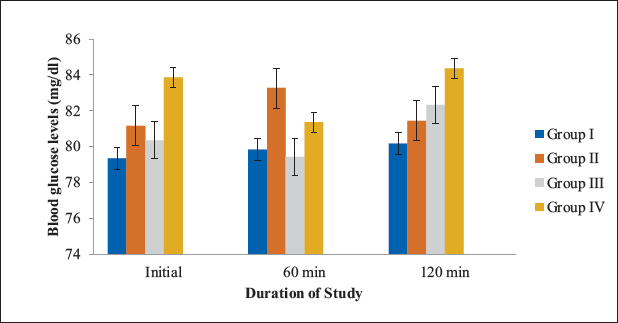
Significant variations in levels of glucose in rats’ blood were seen in all experimental groups after administering methanol extract from the entire A. crispum plant. A high dosage of methanol extract of A. crispum was superior to low-dose treatment and exhibited a further drop in glucose levels. The outcomes obtained by treatment with A. crispum were compared with those of the glibenclamide standard. The results exhibited a reduction in levels of glucose content of blood in a dose-related way by streptozotocin prompted diabetic animals that were managed with the extract of methanol of A. crispum. A. crispum methanol extract was tested for its hypoglycemic effect and antidiabetic efficacy.
Following the administration of A. crispum extract, the AUC of diabetic control rats considerably decreased. These findings showed that the extract from A. crispum improved the bodily tissues’ ability to absorb and tolerate glucose in diabetic rats. It is widely accepted that dyslipidemia and uncontrolled diabetes mellitus are related. It is common knowledge that administering insulin to diabetics raises plasma levels and lipoprotein lipase activity. 19 The potential of the extract may be brought on by an escalation in the stages of insulin, according to the reported enhancement in plasma lipid profiles in diabetic animals fed A. crispum. The levels of blood glucose in Group IV rats significantly decreased following a large dosage of extract of the plant. The effects of antidiabetic action are shown in Table 1 and Figure 1.
Effect of Abutilon crispum Methanol Extract on Diabetic Rats (Hypoglycemic Activity).
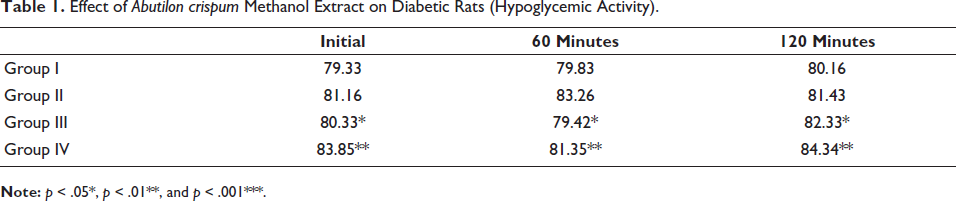
Effect of Abutilon crispum Methanol Extract on Diabetic Rats (Hypoglycemic Activity).
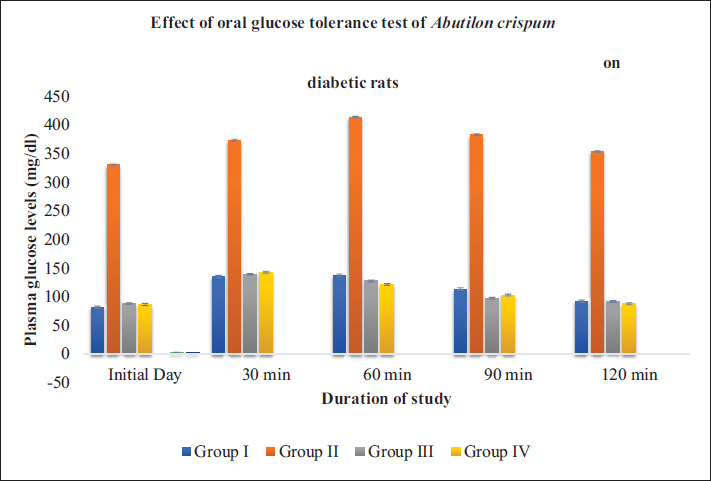
Consequence of A. crispum on OGTT
After 2 hours (from 0 to 30, 60, 90, and 120 minutes, respectively), the extract of methanol significantly diminished the elevated levels of blood glucose, and the severe hypoglycemia condition continued for an additional 2 hours. The blood glucose levels were decreased with methanol extract & reached a peak after five hours, and were then sustained for an additional two hours. The glucose levels of blood in control rats spiked at 60 minutes following the glucose loads and then recovered to normal levels at 2 hours. In control diabetic animals, the extent of blood glucose increased most rapidly after 60 minutes. The standard glibenclamide and methanol extract both effectively lowered blood sugar levels after 60 minutes. Group II and Group IV rats had a higher drop in levels of blood glucose than the other groups. In the control group, rats exhibited no variation. A slight decline in levels of blood glucose was seen in rats in groups III and IV. The outcomes are displayed in Table 2 and Figure 2.
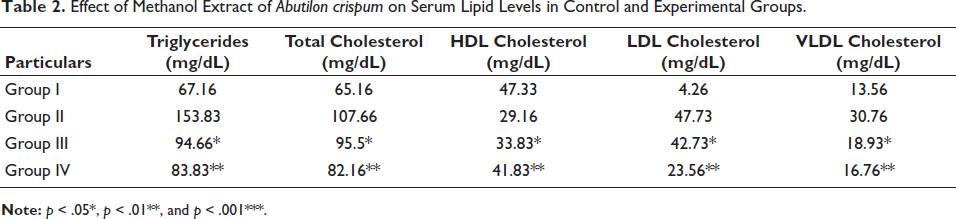
Effect of Methanol Extract of Abutilon crispum on Serum Lipid Levels in Control and Experimental Groups.
Diabetic Rats’ Responses to an Oral Glucose Tolerance Test with Abutilon crispum.
Consequence of A. crispum on Levels of Diverse Biochemical Parameters in Streptozotocin Instigated Model
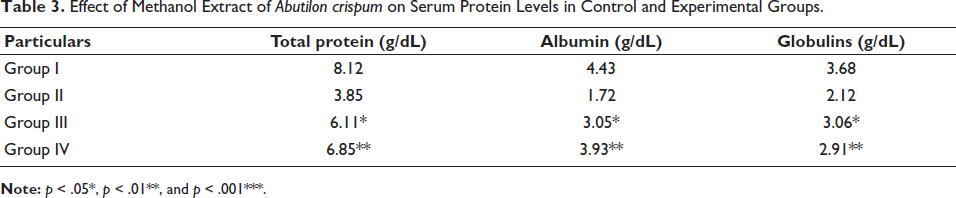
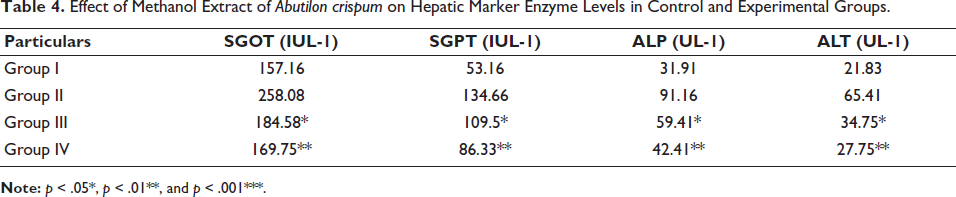
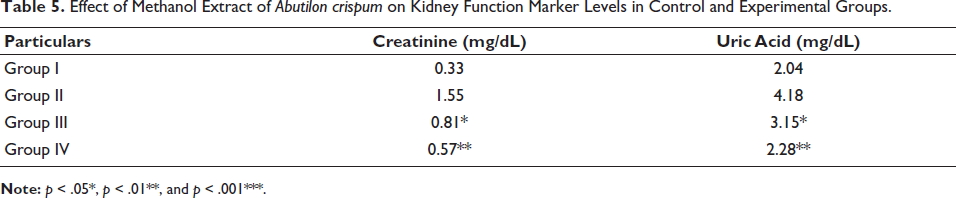
After 5 hours, the blood glucose level significantly decreased (from 0 hours to 2, 4, 6, and 8 hours, respectively), and the methanol extract continued to cause severe hypoglycemia for an additional 2 hours. At the eighth hour, the greatest decline in blood sugar was noted, and it remained for a further 2 hours with the extract of methanol. The extent of blood glucose of the Group II (glibenclamide) and Group IV (high dose) rats decreased more than those of the other rat groups. Rats in group I, the control group, exhibited no change. The levels of glucose in the blood of rats in Groups III & IV (low-dose & high-dose) were moderately reduced. The results are depicted in Tables 3, 4, 5 and Figure 3.
Effect of Methanol Extract of Abutilon crispum on Serum Protein Levels in Control and Experimental Groups.
Effect of Methanol Extract of Abutilon crispum on Hepatic Marker Enzyme Levels in Control and Experimental Groups.
Effect of Methanol Extract of Abutilon crispum on Kidney Function Marker Levels in Control and Experimental Groups.
Effect of Methanol Extract of Abutilon crispum on in Vivo Acute Diabetic Rats.
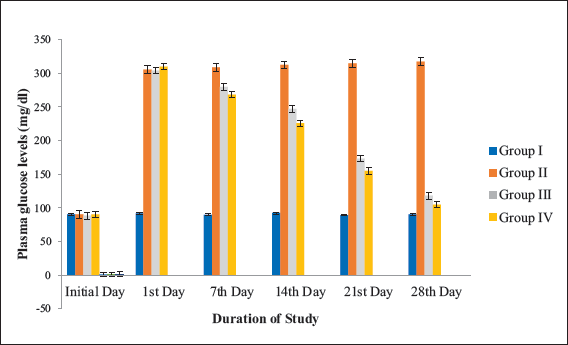
Diabetes is still difficult for the medical system to manage without causing side effects, which drives up demand for natural solutions with tolerable side effects. Traditional botanicals are utilized to treat diabetes mellitus all around the world. A. crispum employed in the preparation of traditional medication, offers antidiabetic qualities, according to our past research. Entire animals were resistant to the activity of the whole plant extract from A. crispum. At four hours, both the short trial of antidiabetic activity and the hypoglycemia state showed the most significant decline in glucose levels. The binding of hemoglobin & augmented levels of blood glucose inside the body may result in the production of reactive oxygen species. The outcomes are displayed in Table 6 and Figure 3.
Effect of Methanol Extract of Abutilon crispum on Serum Insulin and Glycosylated Hemoglobin Levels in Control and Experimental Groups.
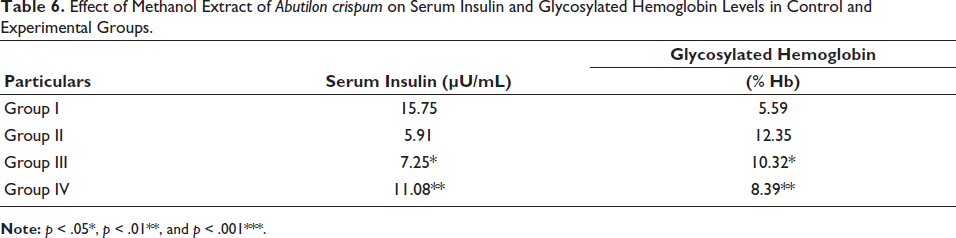
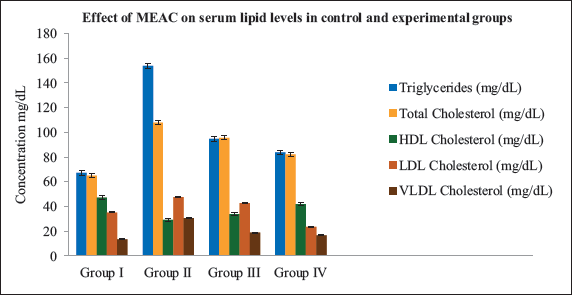
Figure 4 exhibits methanol concentrates of A. crispum repercussion for levels of lipids in serum. The observed outcomes revealed that the rats of the diabetic Group (II) displayed elevated levels of LDL cholesterol, triglycerides of serum, VLDL & total cholesterol and declined the extent of HDL in comparison to Group I normal animals. Oral treatment of A. crispum methanol extract at 250 and 500 mg/kg b. wt (dose) pointedly declined those levels of serum triglycerides, LDL, total cholesterol and VLDL cholesterols & elevated the levels of HDL cholesterol in contrast to control animals with diabetes. These influences display an imprint of being comparable to that of glibenclamide standard at 10 mg/kg quantity.
Effect of Methanol Extract of Abutilon crispum on Serum Lipid Levels in Control and Experimental Groups.
Histopathological Studies
Figure 4 displays the outcomes of the histopathology of streptozotocin-prompted pancreas of diabetic rats of diverse clusters treated through plant extract for about 28 days. The variations in the structure of the pancreas reproduce fluctuations in metabolic cycles for sensitivity and release as well as for insulin regulation. Destruction in the pancreas was indicated by deterioration in the beta cells and collapse of cells. Deposition of amyloid tissue and fat accumulation in the islets, and the extent of beta cells are also radically diminished in the end stages of diabetes. 20 In the contemporary examination, islets of the pancreas were visible without any variation in proportions and structure in control rats. In the pancreas of streptozotocin-prompted diabetic animals, there is destruction of islets and size reduction. In streptozotocin-prompted diabetic animals administered by A. crispum at a high dose and by glibenclamide standard with a dose of 10 mg/kg independently, islets of the pancreas are indistinguishable practically with healthy rats and slight variation in size as well as with slight impairment in the structure were observed.
Discussion
Due to the free radical-scavenging capabilities, therapeutic herbs and their phytoconstituents are becoming more prevalent as natural sources. 21 Some people who take synthetic medications to treat such diseases may experience adverse effects or drug interactions. 22 Inhibitors of the enzyme glucosidase can delay the absorption of dietary carbs and prevent post-lunch blood glucose levels, which may be a valuable strategy in the development of antidiabetic drugs. Glucosidase catalyzes the last stage in the digestion of carbohydrates.23–25A. crispum whole plant extract and its different constituents demonstrated their hypoglycemic effects through different mechanisms, including the consumption of glucose by skeletal and peripheral muscles, glucose uptake inhibition from the intestine, restriction of adipocyte differentiation, stimulation of a crucial enzyme of the HMP shunt pathway and protection of the islet cells. 26 People who use STZ develop diabetes that resembles type 2 diabetes because the drug specifically kills pancreatic insulin-secreting cells. The diabetic mice used in the current study showed high blood glucose levels of 150–350 mg/dL, comparable to diabetes 150–250 mg/dL while having a healthy pancreas. 27 This demonstrates that the complete A. crispum methanol extract may be beneficial for those with type-2 diabetes. Flavonoids are potential antidiabetic agents as they employ manifold actions on β-cells. In this aspect, the functions of flavonoids can be separated into protection against damage of β-cells, the augmented proliferation of β-cells, and also the preservation of insulin signaling by amplified insulin secretion. 28 This is another benefit of the extract above the current drug options. 29 The proposed mechanism for Gmelina asiatica’s hypoglycemic effects was, moreover, an increase in pancreatic insulin secretion from cells or its release from bound insulin. Similar types of hypoglycemic effects were also seen in normal rats. According to the in vivo research, streptozotocin-induced normal and diabetic animals and their levels of fasting glucose content in blood were pointedly inferior in the extract of methanol from the whole plant than in the control group. After injecting streptozotocin into diabetic rats, pretreatment of aqueous root extract from Ichnocarpus fructescens and Pterocarpus marsupium reduced the elevated levels of blood glucose. It was anticipated that the process would increase insulin production from the few remaining cells. According to the findings of a study on OGTTs, ethanol extracts are more effective at increasing glucose tolerance. Methanol extracts exhibit greater glucose tolerance activity, according to an examination of OGTTs.
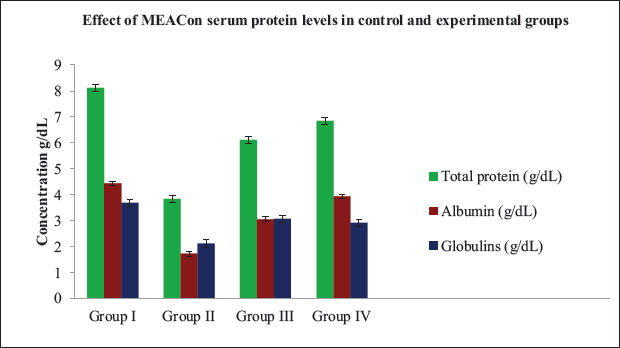
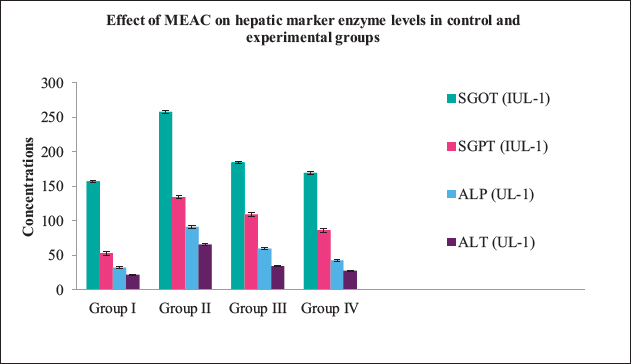
Because of diverse metabolic confusions in diabetes mellitus, the progression of insulin interference may animate lipolysis in the fat tissue and lead to hyperlipidemia. Henceforth, diabetic hyperlipidemia may arise & which is associated with cardiovascular threat. 30 Figure 4 reveals the methanol extract of A. crispum consequences of levels of lipids in serum in rat groups. It was evident that the group II diabetic rats indicated elevated levels of LDL & total cholesterols, serum triglycerides, and VLDL, also declined levels of HDL cholesterol contrary to the group I animals. Low-dose and high-dose treatment with an extract of A. crispum significantly declined the spiked levels of LDL cholesterol, triglycerides, VLDL cholesterol, and total cholesterol and elevated the values of HDL cholesterol in contrast to the control. These impressions produced are analogous to glibenclamide at 10 mg/kg. In this way, results of A. crispum for levels of serum lipid reducing in cardiovascular-related threat that is associated with diabetes. 31 Figure 5 depicts to capability of A. crispum on levels of serum protein. Globulin, total protein, and levels of albumin were found to be pointedly altered in the streptozotocin-induced diabetic rats when compared to healthy animals. The decline in albumin, total protein in serum, and extent of globulin was described for diabetic animals and was confirmed by a development in lipid peroxidation as well as weak antioxidant defense. 32 The contemporary investigation revealed those diabetic animals treated with A. crispum and standard glibenclamide at body weight 10 mg/kg pointedly enhanced the albumin, levels of serum total protein, and levels of globulin in comparison to healthy and control groups with diabetes. In insulin metabolism and homeostasis of glucose, the liver has a vital role. The defective liver results in hepatic insulin resistance and leads to a progression of diabetes. 33 Aminotransferases, SGPT, SGOT, ALT, and ALP are the communal hepatic markers that reflect in the necrosis of hepatic cells as these are transported into the blood after impairment of the cell membrane. 34 The ALT elevated levels and SGOT are clinical components in type 2 diabetes for metabolic syndrome. Figure 6 displays the role of enzymes in hepatic markers. In contrast to the healthy animals, the diabetic rats pointedly (p < .001) elevated SGPT, SGOT, ALT, and ALP levels. In the contemporary examination, A. crispum methanol extract-treated rats at 250 and 500 mg/kg body weight and glibenclamide at 10 mg/kg b.wt (p < .001) declined the elevated levels of SGPT, ALP, SGOT, and ALT in contrary to diabetic animals.
Effect of Methanol Extract of Abutilon crispum on Serum Protein Levels in Control and Experimental Groups.
Effect of Methanol Extract of Abutilon crispum on Hepatic Marker Enzyme Levels in Control and Experimental Groups.
Impairment of the kidney leads to diabetic nephropathy, the reason for the cause is elevated glucose and blood pressure. Streptozotocin-induced animals display the highlights of diabetic nephropathy, like, elevated levels of serum creatinine and uric acid. 35 In the contemporary examination, markers of kidney function, like uric acid and creatinine levels, were pointedly (p < .001) elevated in diabetic animals compared to normal animals. The diabetic rats treated with A. crispum methanol extract and glibenclamide standard suggestively (p < .001) declined the uric acid elevated levels and creatinine & contrary to diabetic control animals. The outcomes give the impression in Figure 7 consequences that markers of kidney function improve the performance of kidneys in treated animals.
Effect of Methanol Extract of Abutilon crispum on Kidney Function Marker Levels in Control and Experimental Groups.
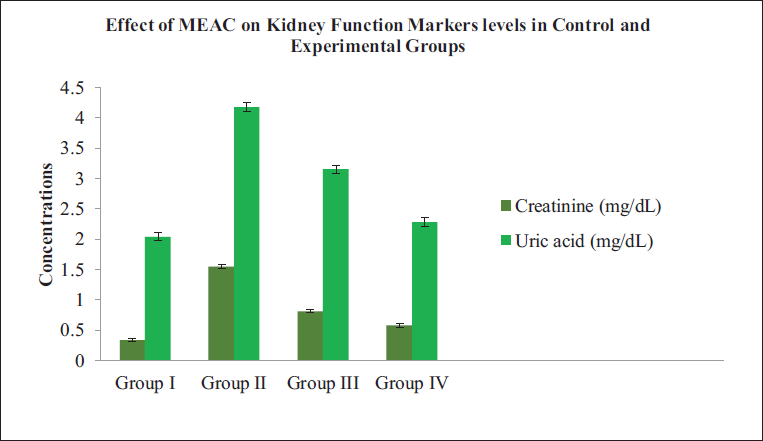
Figure 8 states the capability of the extract on levels of insulin and glycosylated hemoglobin. Streptozotocin induces unbalanced β-cell function by flagging the oxidation of glucose and weakening glucose biosynthesis. 36 The extract-treated animals and glibenclamide-treated animals pointedly (p < .001) elevated levels of insulin. Upsurge in stages of insulin on A. crispum extract-treated animals in streptozotocin-diabetic animals, perhaps due to the protective action against streptozotocin, prompted damage to the β-cells of the pancreas and believable owing to the regaining of injured β-cell or extended insulin release or delivery.
Effect of Methanol Extract of Abutilon crispum on Serum Insulin and Glycosylated Hemoglobin Levels in Control and Experimental Groups.
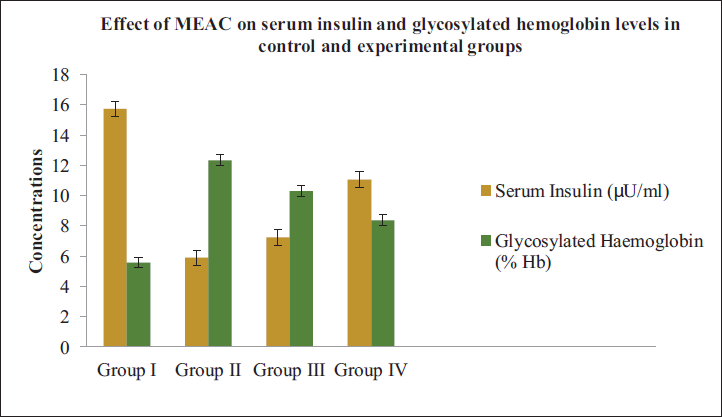
HbA1c is an indicator of an increase of continuing glycemic control in patients with diabetes and forecasts threats for the enhancement of and movement of complications of diabetes. 37 In the contemporary examination, Figure 8 expresses the elevated levels of HbA1c and reveals the event of diabetic rats’ glycosylation for hyperglycemia. A. crispum methanol extract at 250 and 500 mg/kg b. wt and glibenclamide suggestively (p < .001) declined the stages of HbA1c serum analogized with diabetic animals. Later, the impact of A. crispum extract of methanol influences on HbA1c reveals the capability to avoid the enhancement of complications associated with diabetes. Levels of glucose in the blood are stimulated by insulin secreted by the pancreas (β cells), so when β cells are diminished or injured, the insulin production will decline, and the content of glucose available in the blood increases. 38 The plants show a considerable increase in glucose tolerance activity when compared to the normal rats. By intensifying the production of insulin from the pancreas or by releasing it from the bound insulin, it is confirmed from the data above that A. crispum whole plant revealed the likely mechanism.
Conclusion
The above-mentioned investigation found that the whole plant extract of A. crispum has significant in vivo antidiabetic and hypoglycemic effects. It has been found that the extract of methanol from the whole A. crispum plant is efficient in decreasing the elevated glucose levels in the blood of rats. A. crispum whole plant’s methanol extract showed a noticeable in vivo antidiabetic effect by using a Streptozotocin-induced diabetes rat model that is comparable to the glibenclamide standard. The entire plant showed noticeable action in an OGTT using a methanol extract of A. crispum in normal rats. Histopathological things conformed to the activities of A. crispum. The plant was discovered to have significant antidiabetic action in the ongoing research and the reason may be because it stimulates beta cells to produce more insulin and improves peripheral glucose uptake. These results indicate that STZ-induced diabetic rats respond well to the complete A. crispum plant’s potent antidiabetic effects.
Footnotes
Abbreviations
Acknowledgments
The authors are thankful to the management of GITAM (Deemed to be University), Visakhapatnam, Andhra Pradesh, India, for providing the necessary facilities to carry out the research work. We also express our thankfulness to C.M.R. College of Pharmacy, Medchal, Hyderabad, Telangana, India.
Declaration of Conflicting Interests
The authors declared no potential conflicts of interest with respect to the research, authorship and/or publication of this article.
Ethical Approval and Informed Consent
Institutional Animal Ethical Committee accepted the proposed experimental study on December 9, 2022, with a number for Registration CPCSEA/1657/IAEC/CMRCP/ COL-22/105. In harmony with the recommendations made by the Committee for Control and Supervision of Experiments on Animals (CPCSEA), the animals were housed traditionally in an animal house at the CMR College of Pharmacy in Medchal, Hyderabad, India.
Funding
The authors received no financial support for the research, authorship and/or publication of this article.