



Abstract
Calcicoles are never new to the evolutionary life forms in the ecological world. The ramifications of environmental extremes always facilitate the emergence of the functional and structural integrity of plants and calcicoles, which have been exuding through this. The word “calcicole” finds its roots in the writings of Nathaniel Colgan, “The Orchids of Country Dublin,” published in August 1895 in “The Irish Naturalist.” Calcicoles are likely to flourish under calcium-rich soil having a pH of more than five, which otherwise hinders the growth of plant species, causing detrimental effects on their physiology. They are often regarded as lime lovers or acidofuges and are classified based on Ca2+ stress resistance, soluble and insoluble Ca2+ and Mg2+, pH conditions of soil, occurrence, and habitat. There are various variables used to evaluate the calcicoles described in this review, such as the Index of calcifugy, Ellenberg’s indicator values, and Landolt indicator values to predict the influence of environmental factors in determining flora along with changes in vegetation in a particular area considering the ecophysiological or morphological features. Calcicoles have specific in-built mechanisms to cope with stress conditions by producing phytosiderophores (PS) and by involving ecto and ericoid mycorrhizal associations for the absorption of iron and phosphorus, and high control over cytosolic Ca2+ concentrations. Calcicoles are markedly distributed in various plant families like Asteraceae, Brassicaceae, Amaranthaceae, Caryophyllaceae, Ericaceae, Primulaceae, Fabaceae, Gentianaceae, Rubiaceae, Plantaginaceae, Poaceae, Saxifragaceae, etc. The current review focuses on the ecological perspectives, special adaptive features, and phytopharmacological aspects of calcicoles.
Introduction
Franz Unger, an Austrian plant physiologist, accentuated geological formation for plant distribution and proposed substrates in his chemical theory of soil, stating that inorganic compounds present in the soil might be a reason for plant distribution of specific substrates. 1 In contrast to the chemical theory of soil, Thurmann proposed a relationship focusing on the physical attributes of soil rather than the chemical composition. 2 Later, scholars contemplated edaphic factors while explaining this relationship, which encompasses chemical and physical parameters. 3 The presence or absence of specific types of inorganic compounds in the soil is responsible for different floral patterns in distinct habitats. 4 The inorganic compound calcium is a fundamentally required nutrient for optimum plant growth and development. 5 This biomineral 6 has a significant role in maintaining the functional and structural integrity of cell membranes 7 and also serves as an intracellular second messenger in plants. 8 Calcium plays a decisive role in adapting plants in different environmental extremes 9 and abiotic stresses. 10 Calcium deficiency in plants decrease the development of terminal shoot buds and apical root tips, inhibiting plant growth. 11 The calcium excess is also detrimental to plant health. 12 Plants can be classified as calcicoles and calcifuges based on their calcium requirements. 13 Only calcicoles have developed unique adaptive mechanisms to cope with excessive calcium in the soil. 14
Calcicoles
The word calcicole finds its roots in the writings of Nathaniel Colgan, “The Orchids of Country Dublin,” published in August 1895 in “The Irish Naturalist.” He mentioned Orchis pyramidalis as a calcicole plant abundantly distributed in Dublin and he adopted this word from M. Coutejean’s “Geographic Botanique” Paris, 1881. 15 These are calcium-loving plants capable of thriving in elevated calcium levels 16 or soils with high pH and are often regarded as chalk-loving or acidifuge plants. 17 Calcicoles like to flourish under calcareous soil 18 majorly well-drained, 19 whereas calcifuge encompasses lime-avoiding plants. 20 Barkman in 1958 suggested replacing the term for calcium-loving plants “calciphilous” with the term “calciphyte” due to the distinct ecophysiological behavior of plants. 21 However, the term “calcicole” continued to flourish and was also investigated by ecologists as a separate identity or class because of its diverse adaptive characteristics. 22 Plants species belonging to the same genus are found to flourish under different soil conditions, some examples of these vicarious distributions include Achillea atrata, Carex firma, Doronicum grandiflorum, Gentiana clusii, Hutchinsia alpina, Pedicularis rostratocapitata, Primula auricular, Saxifraga moschata predominantly inhabits in calcareous soils whereas Achillea moschata, Carex curvula, Doronicum clusii, Gentiana kochiana, Hutchinsia sulphurea, Pedicularis kerneri, Primula hirsuta, Saxifraga exarata inhabited as calcifuge. 23
Methodology
The current study encompasses a systematic review of calcicoles, concerning their origin, mechanisms, distribution, comparison with calcifuges, and phytopharmacological status. Various databases viz. PubMed, Francis & Taylor, Sci-Hub, SciFinder, Google Scholar, SciELO, and Springer have been thoroughly explored to frame this review article.
Calcicole v/s Calcifuge
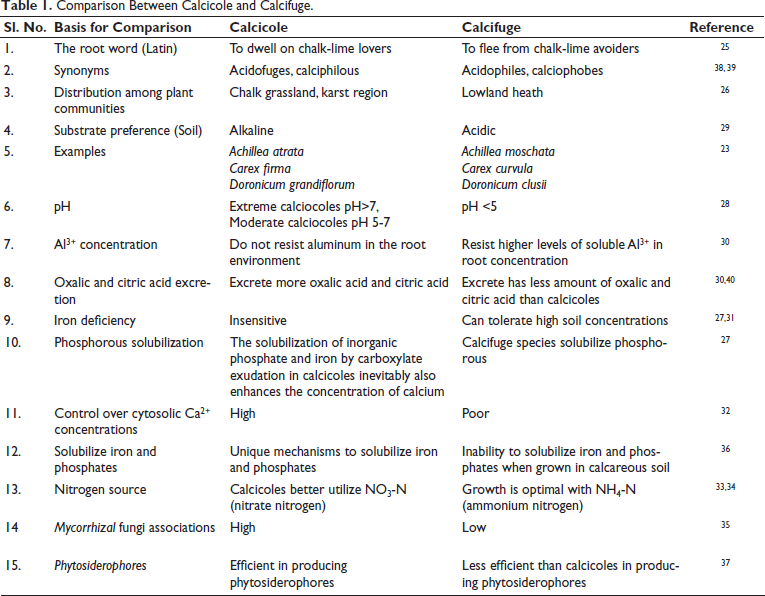
With evolution, plants have developed different mechanisms to counter varying conditions of soil, like pH and calcium concentration. Ecologists designated them as calcicoles and calcifuges based on their endurance in distinct soil conditions. 24 The differences between various aspects of calcicole and calcifuge are summarized as follows:
Calcicoles (acidofuges) are lime lovers and typically dwell on chalk, whereas calcifuge (acidophiles) are lime avoiders predominantly found on lowland heath.25, 26
Calcicoles flourish on alkaline soil with a pH ranging between 5 and 7 (moderate), and greater than 7 (extreme) whereas calcifuges prefer acidic soil with less than pH 5.27–29
Calcicoles usually do not resist aluminum in the root environment compared to calcifuge, which resists the higher soluble Al3+ in root concentration. 30
Most calcicoles are insensitive to Fe concentration in contrast to calcifuge, which can tolerate high Fe soil concentrations.27, 31
Calcicoles have higher control over cytosolic Ca2+ concentrations than calcifuges. 32
Calcicoles better utilize NO3-N (nitrate-nitrogen) when compared against calcifuge which showed optimum growth with NH4-N (ammonium nitrogen).33, 34
Mycorrhizal fungi associations are usually higher in calcicoles than calcifuges. 35
Calcicoles have unique mechanisms to solubilize iron and phosphates whereas this property is absent in calcifuges.27, 36
Root exudates of calcicoles secrete more citric and oxalic acid when compared with calcifuges. 30
Calcicoles are more efficient in producing phytosiderophores (PS) than calcifuges. 37
A brief comparison of calcicole and calcifuge is summarized in Table 1.
Comparison Between Calcicole and Calcifuge.
Classification of Calcicoles
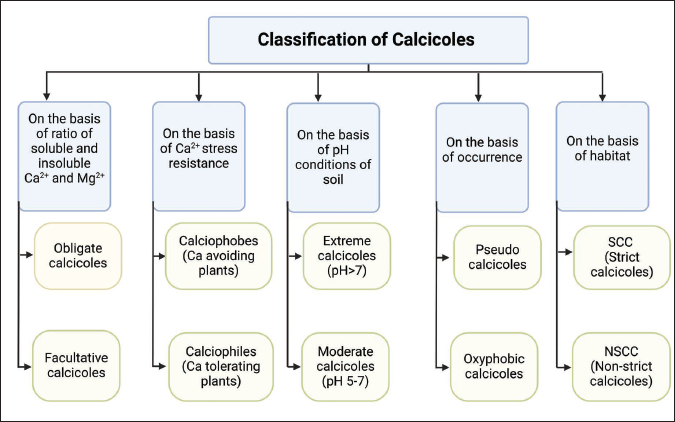
As all calcium-rich soils are not alkaline and calcareous, so calcicoles are not restricted to thriving in calcareous soils.41, 42 investigated several calcicolous habitats and subdivided calcicolous flora based on the environmental occurrence of species into pseudo-calcicolous (frequently found on calcareous soil) and oxyphobic (species intolerant of high soil acidities). 19 investigated different plant communities inhabiting limestones and granite soils and classified calcicoles based on the ratio of soluble to insoluble Ca2+, and Mg2+ in the leaves into obligate and facultative calcicoles. 43 Etherington, 1982 studied the basis of pH conditions of soil into extreme calcicoles (pH >7) and moderate calcicoles (pH 5-7). They are also distinguished plants based on Ca2+ stress resistance in them, that is, calciophobes (calcium-avoiding plants) and calciophiles (calcium-loving plants). 28 Species that occur only in calcareous soils/habitats are strict calcicoles, whereas those that can tolerate siliceous soil but largely prefer calcareous soil are non-strict calcicoles. 44 Calcicoles inhabited in warm and dry conditions of the Mediterranean are termed thermal calcicoles.45, 46 Classification of calcicoles is summarized in Figure 1.
Classification of Calcicoles.
Distribution of Calcicoles
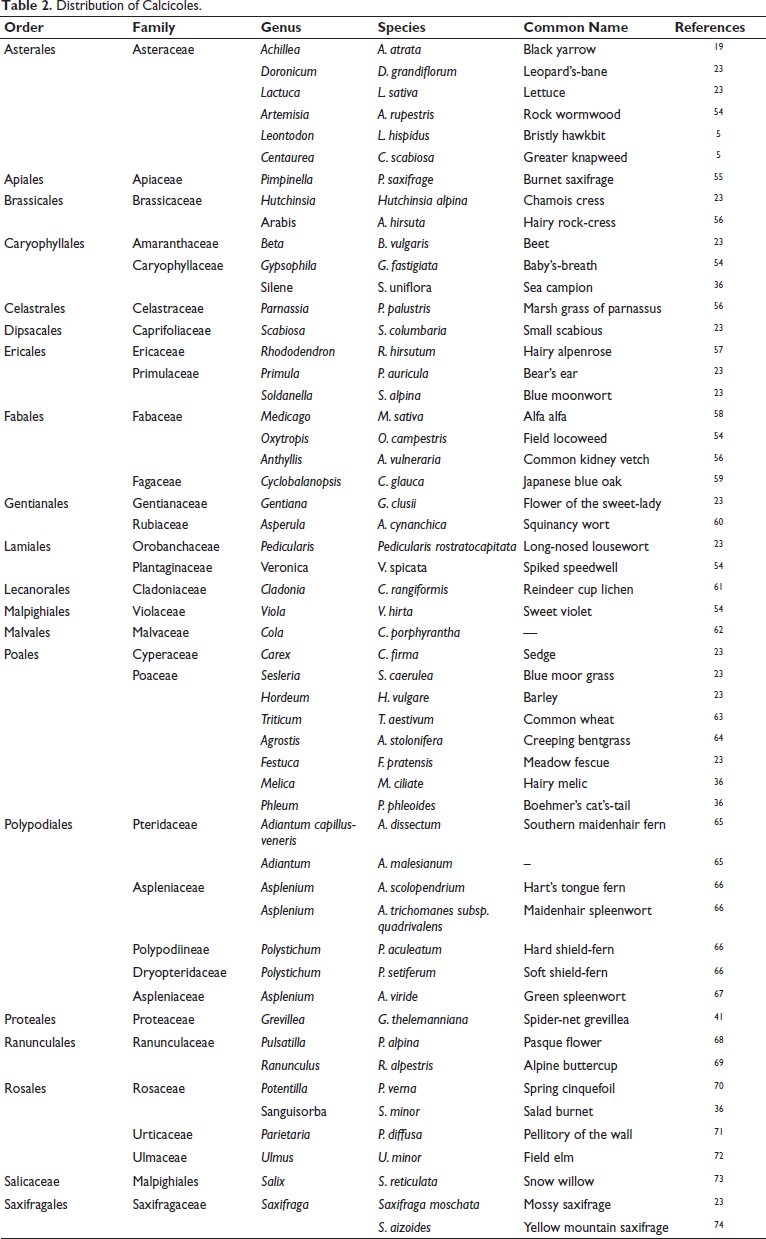
Calcicole distribution is marked by the high calcium solubility in calcareous rocks as they usually thrive in soil rich in calcium carbonate. 47 Calcium in the form of calcium phosphate has commonly been observed in several species belonging to Brassicales, Boraginales, and Malpighiales order. 6 Calcicoles are also well distributed among moss taxa including Tortula mucronifolia, Schistidium apocarpum, Grimmia anodon, Gymnostomum, Bryum argenteum, etc. 47 Karst ecosystem offers a distinct environment that facilitates the growth of calcicole plants with unique characteristics. 48 Several chalkland grassland communities of grasses like Festuca ovina, Avenula pratensis are calcicoles. 49 Several calcicoles viz. cabbage, broccoli, and kale of Brassicaceae have established themselves as food utilized for human consumption. 50 Cucumis sativus, Leiocolea rutheana, and Koeleria gracilis are examples of obligate calcicoles.51–53 The distribution of calcicoles is represented in Table 2, as indicated below in this review.
Distribution of Calcicoles.
Adaptive Mechanism of Calcicoles
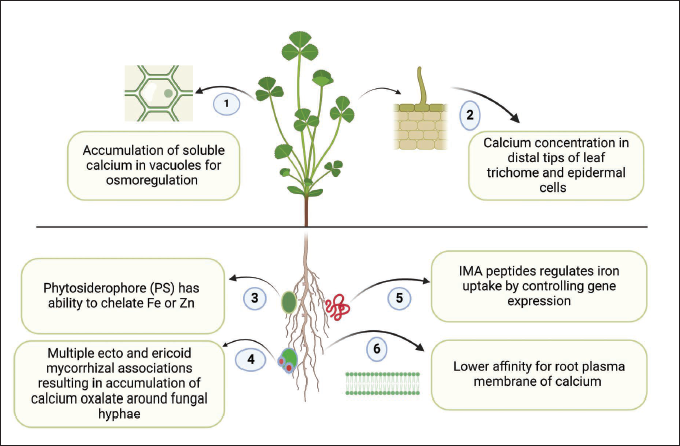
Calcicoles have a unique ability to tolerate and avoid high calcium concentrations in plants. Some of the members of Brassicaceae are calciotrophic, which can accumulate a large amount of soluble calcium in vacuoles, thereby providing a decisive role in osmoregulation, particularly in dry limestone areas. 75 In a few calcicoles, the calcium uptake is more restricted compared to calcifuge species because of less affinity of root plasma membranes for calcium ions. 35 Calcicoles have built adaptive mechanisms to counteract high concentrations of calcium and bicarbonates and flourish under low Fe, Zn availability. 76 Multiple ecto and ericoid mycorrhizal associations were found among calcicoles. Carex sempervirens, Polygonum viviparum, and Festuca pumila are associated with endomycorrhizal infection. 77 Mycorrhizal fungus aids in promoting tolerance in plants inhabited in calcareous soil conditions. 78 The fungus can release siderophores, produce organic acids, and enhance Fe acquisition which aids in dissolving calcium phosphates thereby promulgating adaptive behaviors in plants by removing recessive Ca uptake via precipitating calcium oxalate around fungal hyphae.35, 79–81 These PS can chelate Fe or Zn, thereby increasing their uptake by plants 82 and having a prominent role in the acquisition of Fe and are reported to be produced in various Graminaceous species. 83 PS are organic chelating compounds excreted by the roots of plants like rice, barley, oats, wheat, etc., belonging to the grass family. 84 PS are also secreted by several calcioles thereby promulgating adaptive behavior. 85 Hordelymus europaeus, a calcicole grass can produce PS when grown under Fe, Cu deficiencies. 86 demonstrated the role of PS in Fe-limiting conditions in different calcicole species belonging to Poaceae. 87 PS production significantly increased during Fe deficiency and facilitated their survival in calcareous habitats. successfully demonstrated calcium accumulation in calcicole strain due to ectomycorrhizal fungus Paxillus involutus. 88 Calcicoles can store excess amounts of calcium in the form of crystals 30 ; epidermal cells also play a significant role in Ca sequestration. 17 Calcium concentration is predominantly concentrated in the distal tips of leaf trichomes and epidermal cells. 89 Several studies have reported that the epidermal tissue, particularly the trichome tip cell of calcicoles Centaurea scabiosa and Leontodon hispidus contains a high amount of calcium and serves as a site for its deposition facilitating a protection mechanism in calcicoles. 76 reported improvements in antioxidant defense, osmotic level, water status, and photosynthesis efficiency in calcicole species Cyclobalanopsis glauca upon exogenous administration of Ca2+ when grown under drought stress conditions. 59 reported calcium distribution in Lavandula pinnata and explained its role in gland development. 90 reported that IMA peptides (IRONMAN peptides) are involved in regulating Fe uptake by controlling gene expression in calcicoles, which permits them to adapt in calcareous soil conditions. 91 The above-mentioned mechanisms that are involved are also highlighted in Figure 2.
Adaptive Mechanism in Calcicoles. (1) Accumulation of Soluble Calcium in Vacuoles for Osmoregulation. (2) Calcium Concentration in Distal Tips of Leaf Trichomes and Epidermal Cells. (3) Phytosideophores can Chelate Fe or Zn. (4) Multiple Ecto and Ericoid Mycorrhizal Associations Result in the Accumulation of Calcium Around Fungal Hyphae. (5) IMA Peptides Regulate Iron Uptake. (6) Lower Affinity for Root Plasma Membrane of Calcium.
Indexes and Indicator Values
Ecologists have developed different indexes and indicator values to explain calcifuge/calcicole behaviors of plants, as described in this review.
Index of Calcifugy
A book entitled “An Ecological Atlas of Grassland Plants” authored by J. Philip Grime and Philip S. Lloyd, mentioned autecological comparative studies of common grassland species of (Sheffield) Britain. They critically examined the area’s ecology and presented their work using pH tables, grazing/burning tables, and pH histograms. Later, in 1981, Etherington calculated an Index of calcifugy for different plant species using histograms of species constancy prepared by Grime & Lloyd in 1973. Etherington demonstrated the calcifuge index (IC) as represented below by employing a formula and classifying plants with emphasis on pH, which gave further insights into calcifuge species.
92

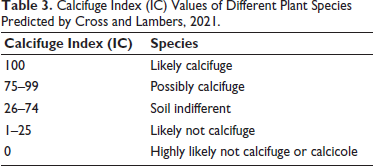
Cross & Lambers critically examined calcicole and calcifuge plant strategies, along with their nutrient-acquisition relationship in around 538 plant species using histograms of species constancy in 0.5 pH unit classes prepared by Grime and Lloyd, 1973 and Etherington calcifuge index, 1981 and they further classified plant species based upon the index as represented in Table 3. Plant species having an IC value of 0 were regarded as calcicoles. 27
Calcifuge Index (IC) Values of Different Plant Species Predicted by Cross and Lambers, 2021.
Ellenberg’s Indicator Values
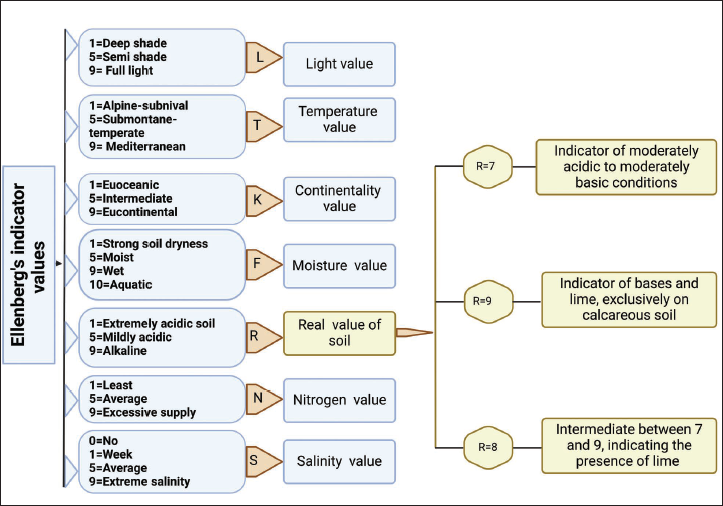
Heinz Ellenberg, a German ecologist, developed nine-point scales for plant preferences and suggested indicator values, and they have been used to predict the influence of several environmental factors in determining flora along with changes in vegetation in a particular area considering the ecophysiological or morphological features like temperature, light, moisture, continentality, soil reaction, salinity, nutrients.93, 94 Ellenberg assigned different numbers from 1 to 5 or (0) 1 to 9 (10) indicating the preferences for increasing the availability of resources. These values established by Ellenberg were particularly in the context of European conditions 22 and have also been validated on different flora belonging to diverse geographical conditions viz. Switzerland, 95 Czech, 96 Britain, 97 Itlay, 98 Sweden, 99 Faroe Islands 100 etc. EIVs can also be successfully employed for monitoring changes in the environment. 101 Ewald employed Ellenberg indicator values of soil reaction (R values) about calcicole species and distinguished calcicoles based on R value. Species with R values 7 and 9 represent moderately acid to moderately basic conditions and indicators of bases and lime, respectively. R value 8, that is, intermediate between 7 and 9, indicating the presence of lime. 102 EIVs have been illustrated in Figure 3, emphasizing the reaction of soil values (pH). 103
Ellenberg Indicator Values.
Landolt Indicator Values
Elias Landolt, a Swiss geobotanist, developed reaction indicator values (RL) 95 and uses the term humidity index considering different conditions, viz. moisture, nutrient availability, acidity, etc., mainly for Switzerland. Landolt assigned an integer between 1 and 5 to plant species depending on their ability to combat stress like water, soil acidity, lack of nutrients, shade, etc. 104 Plant species with RL value 1 (pH 3–4.5) are indicators of excessive acidity and termed strict calcifuges. In contrast, species with RL value 5 (pH > 6.5) are distributed on calcareous soils and indicators of primary reaction, termed strict calcicoles.105, 106 The indicator values developed by Landolt have been successfully tested by several ecologists viz. Nakhutsrishvili et al. developed new indicator values of vascular plants of the Caucasus area by comparing them with Landolt indicator values of alpine plants, and the results showed high overlapping of values (30%–50% congruence). 105
Phytopharmacological Status of Calcicoles
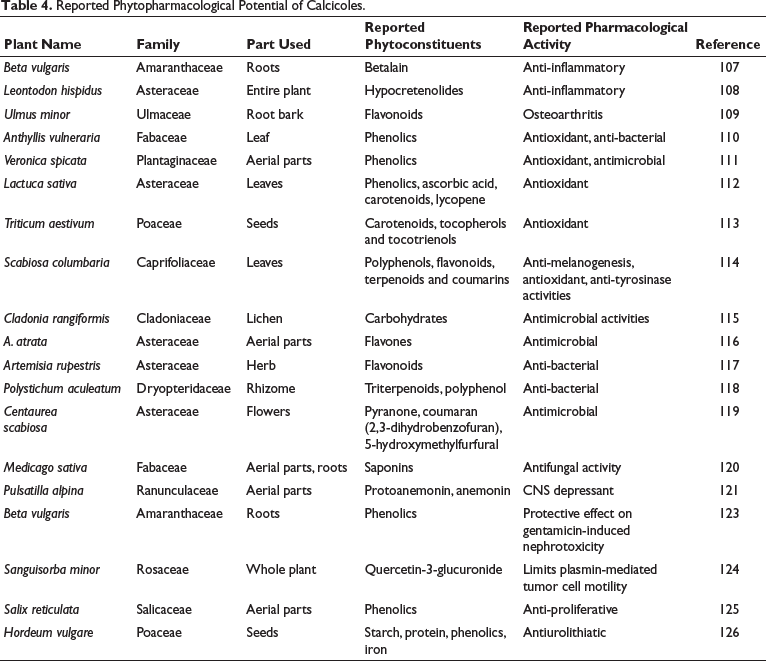
Thorough research on calcicole species is essential for a better understanding of their elevated calcium mechanism and their exploration for pharmacological use. We have reported the phytopharmacological status of various calcicole species here by critically examining the scientific reports from authorized databases in Table 4. This review inculcated anti-inflammatory activity in Beta vulgaris, 107 Leontodon hispidus, 108 Ulmus minor. 109 Antioxidant activity in Anthyllis vulneraria, 110 Veronica spicata, 111 Lactuca sativa, 112 Triticum aestivum, 113 Scabiosa columbaria. 114 Antimicrobial activity in Cladonia rangiformis, 115 A. atrata, 116 Artemisia rupestris, 117 Polystichum aculeatum, 118 Centaurea scabiosa, 119 Medicago sativa. 120 Other pharmacological activities include CNS depressive effects in Pulsatilla alpina, 121 antiurolithiatic activity in Hordeum vulgare etc. 122
Anti-inflammatory Activity
Various pharmacological models were used to evaluate anti-inflammatory activity and mechanism of action of calcicole species crude extracts and isolated compounds. The most acceptable results are described here. Betalain-rich beetroot juice 500 ml/day was reported to alleviate inflammatory mediators (TNF-α, INL-6) in osteoarthritic patients when administered to osteoarthritic patients for 10 consecutive days. 106 Sesquiterpene lactone hypocretenolides isolated from Leontodon hispidus exhibited anti-inflammatory action in croton oil-induced mouse ear edema experimental models. 108 Phytoconstituents isolated from Ulmus minor showed anti-inflammatory activity in the macrophage cell line. 109
Antioxidant Activity
Phenolics isolated from the leaf of Woundwort, Anthyllis vulneraria showed antioxidant activity. 110 Herb Veronica spicata showed free radical scavenging potential when evaluated in different in vitro models viz. DPPH, β-carotene bleaching assay, reducing power assay. 111 Bioactive compounds isolated from lettuce, Lactuca sativa have antioxidant potential. 112 Phenolics, tocopherols, and carotenoids are attributed to the antioxidant capacity of wheat, Triticum aestivum. 113 Leaf extract of Scabiosa columbaria showed anti-melanogenic and antioxidant effects in human foreskin fibroblast (MRHF) cells, ferric reducing antioxidant power (FRAP) assay, respectively. 114
Antimicrobial Activity
Ethanolic and chloroform extract Cladonia rangiformis exhibited moderate antifungal effects when tested against Staphylococcus aureus, Pseudomonas aeruginosa, and Escherichia coli. 115 Flavones and sesquiterpene lactones isolated from aerial parts of A. atrata exhibited antimicrobial activity in Bacillus subtilis, Candida albicans, and E. coli. 116
Flavonoids (artemetin, chrysoeriol, chrysoplenetin, penduletin, pachypodol) isolated from dichloromethane extract of Artemisia rupestris exhibited showed synergistic effect with ciprofloxacin, norfloxacin and oxacillin when tested against fluoroquinolone-resistant Staphylococcus strain (SA1199B). 117 Triterpenoids and polyphenols isolated from methanolic extract of rhizomes of Polystichum aculeatum exhibited anti-bacterial activity against Staphylococcus aureus. 118 Extract obtained from flowers of greater knapweed, Centaurea scabiosa showed antimicrobial activity with a minimum inhibitory concentration between 60 and 120 µg/ml. 119 Saponin-rich fraction isolated from aerial parts and roots of Medicago sativa exhibited antifungal activity when evaluated against Candida albicans. 120
Other Pharmacological Activities
The extract obtained from aerial parts of Pulsatilla alpina exhibited CNS depressive effects in pharmacological screening models. 121 Phenolics obtained from ethanolic extract of roots of Beta vulgaris ameliorates nephrotoxicity induced by gentamicin in experimental rat models. 123 Extract prepared from seeds of Hordeum vulgare exhibited antiurolithiatic activity when evaluated on Wistar albino rats. 122 Ethanolic extract of Sanguisorba minor restricts plasmin-mediated tumor cell motility when evaluated in vitro. 124
Reported Phytopharmacological Potential of Calcicoles.
Conclusion and Future Perspectives
The main objective of this review is to highlight the importance of calcicoles. Calcicoles can be revived in a more described manner so that further exploration can accentuate the usefulness of calcicoles not only from an ecological point of view but also having nutritional sources and pharmacological significance. It has a significant history of evaluating their distribution along with their phytochemical importance which can be a great source of therapeutic uses too. As calcicoles have developed a unique mechanism to survive under extreme conditions, that is, increased concentration of calcium or basic pH in the rhizosphere, they need to be more scrutinized for their functionality. They have consistently been a topic of discussion because of this inherent mechanism for the accumulation of excess calcium. They are classified as varying in parameters responsible for their growth under different conditions of soil and the micronutrients. Edaphic factors like light, temperature, region, pH, moisture content, soil value, etc. are described by different scholars/ecologists in different ways and suggested various indexes for their implications too like the Calicuge index, Ellenberg, indicator value, and Landolt indicator. Classification of calcicoles based on the ratio of soluble and insoluble calcium, stress resistance, and pH condition, are given in this review to narrate calcicoles more systematically. Phytochemicals reported in calcicoles showed promising biological activities when evaluated on different in-vivo and in vitro experimental models like anti-inflammatory, antioxidant, antimicrobial, antifungal, etc. Importantly, based upon the research findings on the calcium tolerance mechanism in calcicoles will facilitate researchers to work on calcicoles with a distinct perspective. In conclusion, calcicoles have immense potential in the field of ecology and their therapeutic potential has to be explored more scientifically to find new drug candidates from them in drug discovery. In this way this present review is significant and need of hour and the work cited here regarding lime lovers is expected to aid in identifying the ecological and pharmacological potential of calcicoles.
Abbreviations
Footnotes
Acknowledgments
The authors sincerely acknowledge Dr. Vivek Sharma, Professor Govt. College of Pharmacy Rohru, and CT University, Ludhiana, Punjab for the support to accomplish this work.
Declaration of Conflicting Interests
The authors declared no potential conflicts of interest with respect to the research, authorship and/or publication of this article.
Ethical Statement
Ethical permission was not applicable for this article, as this is a review article drafted from various research articles and not from patients directly.
Funding
The authors received no financial support for the research, authorship and/or publication of this article.
Informed Consent
Not applicable.
