



Abstract
Background
Anxiety and mood disorders are among the mental health diseases that have exponentially increased in prevalence owing to the hectic and stressful lifestyle. In addition to negatively impacting people’s physical health, this has resulted in a major psychological, social, and financial burden. A lot of emphasis has been placed on dietary and lifestyle modifications in the ongoing search for medication-free treatments. Investigating the connection between the consumption of specific fruits and vegetables and mental health issues such as depression has produced some intriguing and occasionally encouraging results. The genus Citrus with over 1300 species of plants is enriched with a plethora of polyphenolic compounds on the one hand and multicomponent volatile oil content on the other hand.
Purpose
The current work is centered on examining the range of phytoconstituents found in various citrus species—both underutilized and utilized—as promising avenues for future anxiolytic research. The work also details the proposed pharmacological mechanisms of isolated components and clinical trial advancements of selected citrus species.
Methodology
Various databases, including PubMed and ScienceDirect, were used to search and collect relevant literature published in the past 10 years (2014–2024). The Preferred Reporting Items for Systematic Reviews and Meta-Analysis (PRISMA) criteria recommended for drafting methodical reviews were followed.
Results
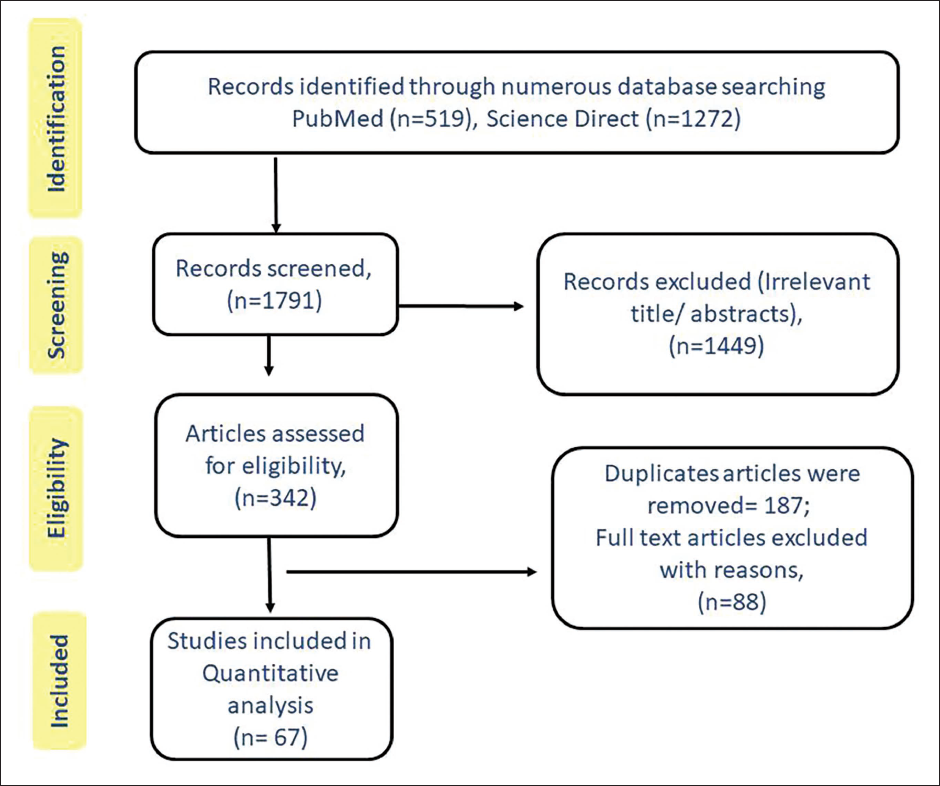
Initially, 1791 articles were collected through an electronic database search, irrelevant titles/abstracts (1449) and other types of articles (05) were excluded. Out of 342 assessed reports, 187 duplicate articles were excluded. Finally, list of 67 articles was included in this narrative review.
Conclusion
Although research and development, as well as the commercial use of several citrus varieties, have attracted some interest recently, analyzing neglected citrus species closely can help to improve their processing into well-known anxiolytic leads by revealing their untapped potential. The work emphasizes the extensive exploration of underutilized citrus species, which have a rich bioactive pro file and enormous potential in pharmaceutical research and development.
Keywords
Introduction
Mental health illnesses are becoming more widely acknowledged as public health concerns on a global scale. Mental health problems include illnesses such as abnormally high levels of anxiety, sadness, stress, insomnia, cognitive impairment, and other conditions. Notably, the working class has seen a rise in the incidence of stress-related symptoms in a wide range of employment. The most common mental health conditions are anxiety and mood disorders, which are linked to a significant psychological, social, and economic burden, as well as an elevated risk of physical illness.1, 2 Increased fruit and vegetable intake significantly impacts how diet and health are related. Research has indicated that those who consume more fruits and vegetables have a lower risk of mental health problems such as anxiety, depression, and poor mood. Polyphenol-rich fruit-based therapies may improve brain function.3–5 Consuming a lot of fruits and vegetables also increases the likelihood of experiencing the best possible mental states, such as happier, more upbeat moods, life satisfaction, and socioemotional flourishing—a phrase used to characterize emotions of fulfilment, meaning, and purpose in life. 6 Several citrus species are significantly effective at reducing depressed symptoms, normalizing neuroendocrine hormone levels, and boosting immunity.7, 8
Genus Citrus
Etymology and Taxonomical Aspects
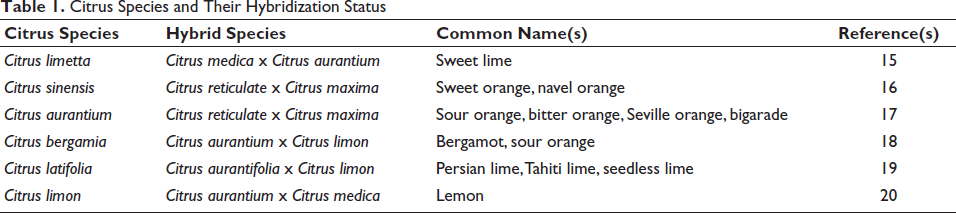
Throughout the world, both tropical and temperate regions produce Citrus, a genus of evergreen fragrant shrubs and tiny trees of the Rutaceae family. A variety of secondary metabolites, including phenolic acids, flavonoids, carotenoids, coumarins, limonoids, glucarate, and essential oils (EOs), are found in abundance in citrus fruits, blossoms, and leaves. 9 Though citrus is one of the evergreen crops, because of the lack of scientific confirmation and incomplete research into citrus taxonomy, the potential medical benefits of the citrus species in India have not yet materialized. 10 The literature is disorganized, even though citrus and its allies appear to have been the subject of a significant amount of research. This is mostly because there is a dearth of fundamental taxonomic work, which has resulted in inconsistent nomenclature. Scientists have been reluctant to study a group of plants for which nearly all herbarium specimens are of cultivated varieties with insufficient ripe fruit preservation in alcohol because mature oranges and lemons do not make acceptable herbarium specimens. Subsequently, the issue is attributed to the emergence of several hybrids of different citrus species as a result of clonal propagation techniques such as apomixes and grafting.11, 12 Prior genetic research had determined that the three original or basic species—the citron (Citrus medica [C. medica]), the pomelo (Citrus maxima [C. maxima]), and the mandarin (Citrus reticulata [C. reticulata])—were where all other species originated. 13 Numerous species were created by extensive hybridization and long-term breeding; each species is distinguished by its unique metabolism, producing various secondary metabolites. 14 Table 1 provides a glimpse of hybridization of different citrus species.
Citrus Species and Their Hybridization Status
Ethnomedicinal Evidence of the Genus Citrus
Constipation, cramps, diarrhea, colic, bronchitis, tuberculosis, cold, cough, obesity, menstruation disorders, angina, hypertension, anxiety, depression, and stress are just a few of the conditions for which the Citrus has been traditionally used. 21 In Ayurvedic pharmaceutics and therapies, many Citrus species are used. C. medica Linn. (Bijapur) is an antiemetic, appetizer, and cardio-stimulant. C. jambhiri helps with digestion and acts as an antidiarrheal. Regarding Rasa Shastra (Ayurvedic pharmaceutics), citrus varieties are helpful in the processes of cleansing, burning, and shaking necessary to prepare various Ayurvedic formulas. 22 C. maxima and C. grandis are commonly used in the traditional Chinese medicine system to aid in digestion and get rid of cough, sputum, acute diarrhoea, and chronic dysentery. The citrus species, such as C. maxima and C. limon, are used as antidotes for venom and poison in the Mediterranean region. 23
Role of the Citrus Species Specific to Anxiety
Methodology for Literature Search and Collection
Various databases, including PubMed and ScienceDirect, were used to search and collect relevant literature published in the past 10 years (2014–2024). The Preferred Reporting Items for Systematic Reviews and Meta-Analysis (PRISMA) criteria recommended for drafting methodical reviews were followed. The major keywords, such as Citrus genus, citrus plant, in vivo and in vitro studies, and preclinical, and clinical trials were used during the search of the literature in various databases. Initially, 1791 articles were collected through an electronic database search, irrelevant titles/abstracts (1449) and other types of articles (05) were excluded. Out of 342 assessed reports, 187 duplicate articles were excluded. Finally, 67 articles were included in this narrative review as represented in the flow chart (Figure 1).
Structural Outline of Search Criteria in Article Selection.
Citrus sinensis
Originating in Asia, Citrus sinensis (C. sinensis) is one of the most widely grown citrus cultivar groupings worldwide, making up over 70% of all citrus species produced annually. Traditionally, it has been used to cure conditions such as colic, constipation, cramps, diarrhea, bronchitis, tuberculosis, colds, coughs, obesity, menstruation disorders, angina, hypertension, anxiety, depression, and stress. Its EOs are included in the list of aromatherapy agents that can help reduce sadness, tension, and anxiety.24, 25 Volatile oil from the C. sinensis, when administered orally, has been shown to have positive benefits on anxiety in a clinical investigation, including individuals with anxiety.26–28 In Wistar rats, sweet orange (C. sinensis oil) scent exhibited anxiolytic-like properties. Following a 5-minute exposure to the orange scent (100, 200, or 400 µL) in a plexiglass chamber, the animals were immediately subjected to behavioral assessments. C. sinensis oil exhibited anxiolytic effects at all dosages. 29 Oral C. sinensis caused anxiolytic and antidepressant-like reactions in mice, suggesting changes in central serotonergic system activity and olfaction are linked to the anxiolytic effect. 30 Research conducted in vitro has demonstrated that EO from its peels has a soothing impact on the neurological system, making it helpful in reducing tension and anxiety. 31 The behavioural assessment of nitrergic system mediation was conducted by co-administering L-arginine (200 mg/kg, i.p.) from Sigma and C. sinensis EO. The anxiolytic-like action of C. sinensis EO was mostly because of nitrergic neurotransmission. 32 In humans, orange scents in the air decreased anxiety and elevated patients’ moods as they awaited dental care. 33
Citrus aurantium
It is said to have originated in Syria and eastern Africa. 26 Compared to other citrus species, C. aurantium has a thicker peel with more EOs and pectin content than sweet orange peel. 34 The most prevalent phenolic chemicals in C. aurantium peel were ferulic and p-coumaric acids, whereas limonene is the main volatile compound discovered in the peel. 14 According to published research, neohesperidin, hesperidin, narirutin, and naringin are the flavonoids that are most prevalent in C. aurantium seeds. 35 Limonene, a common terpene present in citrus fruits, is thought to work through dopamine and γ-aminobutyric acid (GABA) to relieve stress and mood disorders.36–37 It has been observed that oral treatment of Citrus aurantium (C. aurantium) L. oil extract enhances anxiolytic behaviors in mice via the interaction with the 5-HT1A receptor. 38 In a single-blind, randomized controlled experiment, individuals undergoing coronary angiography found that inhaling C. aurantium EO effectively reduced their levels of tension and anxiety. 39 C. aurantium EO inhalation has been reported to significantly lower the heart rate, systolic and diastolic blood pressure, and other critical indicators of anxiety.39–41 A study involving 60 diabetic patients found that bitter orange extract inhalation aromatherapy, compared to the control group, could effectively relieve anxiety and fatigue. 42 A trial using C. aurantium EO nebulization among 51 volunteers showed that EO maintained controlled anxiety levels during the simulated public speaking method compared to the control group. 43 According to a study, 44 C. aurantium had an anxiolytic effect and helped chronic myelogenous leukemia patients’ symptoms of anxiety.
Citrus reticulata
Commonly referred to as mandarins, these are the ancestors of many hybrids citrus cultivars, having either naturally hybridized or through breeding from one of the original citrus species, according to genetic research. 45 They are typically easy to peel and separate into pieces because of their thin, loose peel, and little white mesocarp. Mandarin, in general, can vary from oblate to round to oblate-necked depending on its variety, unlike normally spherical oranges. 46 The fruit helps with vomiting and has laxative, astringent, aphrodisiac, and tonic properties. The fruit peel has long been used as an antiscorbutic, carminative, stomachic, astringent, and tonic. 47 The oral administration of C. reticulata EO reduced anxiety in mice and prolonged sleep induced by ether inhalation. 48 Its EOs have been examined for their anxiolytic impact on adult zebrafish (Danio rerio). The results showed that its EOs tended to alleviate anxiety using the light–dark test. 49 It has been observed that the mixture of the primary active ingredients, p-cymene, α-terpinene, terpinen-4-ol, and α-terpineol cymene, in its EOs, has anxiolytic effects. 50 C. reticulata fruit extract and peel EO exhibited anti-anxiety properties in a chronic mild stress-induced mouse model by modifying the gut microbiome. 51 The dried peel extract of C. reticulata showed the anxiolytic-like effect comparable to fluoxetine in an increased open-platform test anxiety paradigm, suggesting that they may function pharmacologically through the serotonergic neurotransmission route similarly to fluoxetine. Additionally, it suggested that hesperetin, the main chemical component, may have a direct and indirect function as an active principle in the antianxiety-like actions of hesperidin. 52 It is said to relieve the chronic stress of restraint and reduce the damage that lipopolysaccharide causes to the hippocampal and frontal cortex of mice. 53
Citrus bergamia
It is an aromatic citrus fruit that, depending on how ripe it is, can be lime green or yellow in color. Bergamot orange was discovered to be a likely hybrid of bitter orange and lemon through genetic studies into the evolutionary roots of current citrus varieties. 19 According to a number of sources, bergamot was frequently used in traditional medicine as an antipyretic and anti-inflammatory agent and to cure toothaches, burns, varicose veins, furunculosis, and wounds. It has been observed that bergamot EOs have calming/anxiolytic effects in rats during open-field activities. 54 The 5-HT1A serotonergic receptors have been linked to the anxiolytic-relaxant effects of bergamot EO in the open field and elevated plus maze tests. 55 It has been observed that the combination of antioxidant, anti-inflammatory, and GABA-regulatory properties of bergamot EO can reduce the anxiety-like behavior of rats exposed to aluminum trichloride.56, 57 Bergamot oil inhalation significantly reduced anxiety and sleep quality in surgical intensive care unit patients, as evaluated using the “State-Trait Anxiety Inventory” and “Richard–Campbell Sleep Scale.” 58 In a related study, postpartum women’s depression symptoms and sleep quality were both improved by EO inhalation. 59
Citrus latifolia
The Persian lime is a triploid hybrid of the lemon (C. limon) and Key lime (C. aurantifolia). Compared to the Key lime (C. aurantifolia), the Persian lime is bigger, has thicker skin, and has milder citrus aromas. When compared to key limes, Persian limes are more advantageous in commercial agriculture because of their greater size, lack of seeds, hardiness, lack of thorns on the branches, and longer fruit shelf life. Compared to key limes, they are less acidic and lack the bitterness that gives key limes their distinct flavour. 60 Because of its antibacterial, carminative, diuretic, and eupeptic properties, the lemon EO has been utilized since ancient times. 61 To assess its anxiolytic efficacy, C. latifolia EO was put through standard experimental methods using male Swiss mice, such as marble burying tests and light–dark box testing. Positive results on slight-dark box characteristics indicated that the oil was beneficial for treating generalized anxiety. 62
Citrus limon
Before vitamin C was discovered, scurvy was customarily treated with C. limon fruit juice or lemon juice. 20 Lemon juice has other use in traditional medicine, such as treating irregular menstruation, high blood pressure, and the common cold. In addition, C. limon EO is a well-known cough treatment. 63 Its EO’s anxiolytic properties were tested on mice using standard anti-anxiety animal models, and the findings suggested that the anxiolytic properties of the oil could be mediated through benzodiazepine-type receptors. 64 Mice given C. lemon EO orally showed increased dopamine concentrations and decreased dopamine turnover in the striatum and hippocampus, affecting emotions’ neurotransmission pathways. 65 It has been demonstrated that the volatile components of C. limon EO promote the release of monoamines in rat brain slices. 66 High in alkaloids, its leaf extract has been shown to have a potential anxiolytic effect, presumably as a result of its interaction with neurotransmitter systems that regulate anxiety. 67 C. limon has been examined for its behavioral effects in rats at three distinct dosages (0.2, 0.4, and 0.6 ml/kg, regarded as low, moderate, and high doses). The results indicated that C. limon at a moderate dose had the anxiolytic effect. 68 GABA-A receptor modifying qualities of C. limon oil have been linked to its anxiolytic and sedative effects. 69
Citrus maxima
Folk medicine uses C. maxima leaf oil to cure skin conditions, headaches, and stomach aches. 70 Fruit peels are frequently used in traditional medicine to treat epilepsy, cough, edema, and other conditions. They are also used for cosmetic purposes.71, 72 C. maxima fruits are used to treat mental abnormalities, asthma, leprosy, hiccups, coughs, and epilepsy; blooms are used to treat anxiety and sleep difficulties. Its methanolic extract at 400 mg/kg has been reported to exhibit anti-anxiety effects using the hole board and elevated plus maze methods in animal models. 73
Isolated Phytoconstituents from Citrus Species and Theiranxiolytic Effects
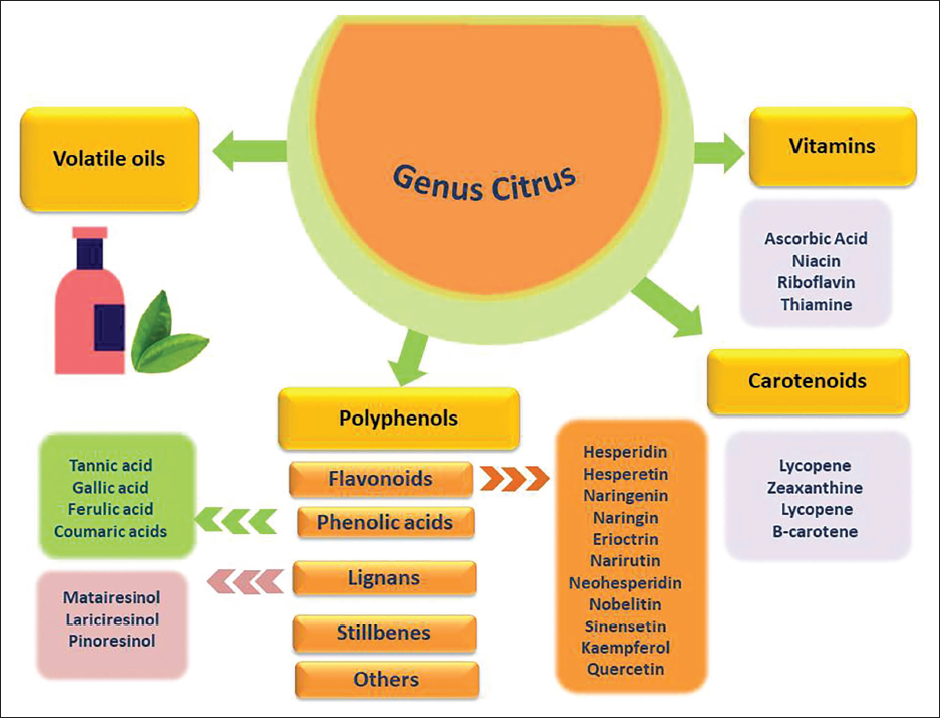
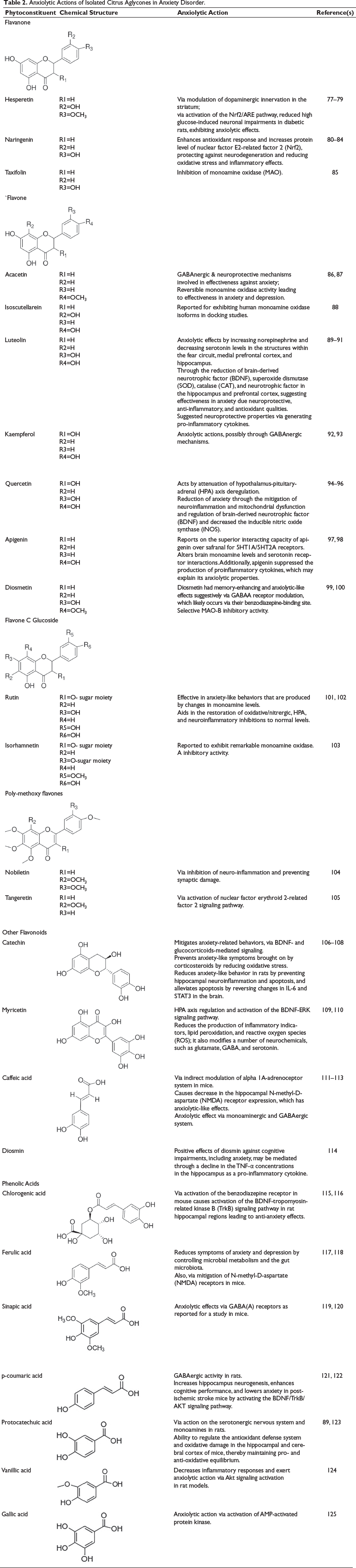
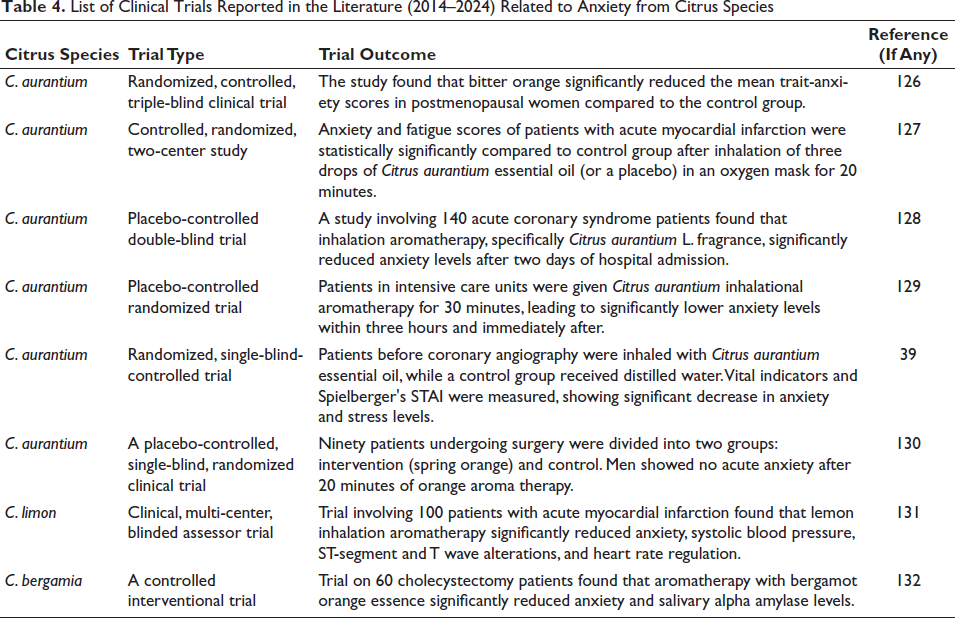
The genus Citrus is known to have extensive phytochemical findings that highlight the presence of both volatile and nonvolatile components in vivid polyphenols, which include phenolic acids, lignans, dihydrochalcones, and flavones, flavanols, and polymethoxy flavones (Figure 2). 74 Citrus fruits are not only high in vitamins C and B but also in minerals and macronutrients such as dietary fibers, carbs, crude proteins, lipids, and phenolic compounds that have significant health benefits. 75 Conversely, EOs derived from citrus species find widespread application in the food and beverage, cosmetic, pharmaceutical, and perfume sectors. 76 Table 2 briefs the anxiolytic Citrus phytoconstituents along with their proposed mechanistic actions, and in Tables 3 and 4, vivid clinical trials of Citrus species in anxiety have been represented.
Overview of Phytochemicals Reported in Genus Citrus.
Anxiolytic Actions of Isolated Citrus Aglycones in Anxiety Disorder
List of Government-Sponsored Clinical Trials Related to Anxiety in Citrus Species
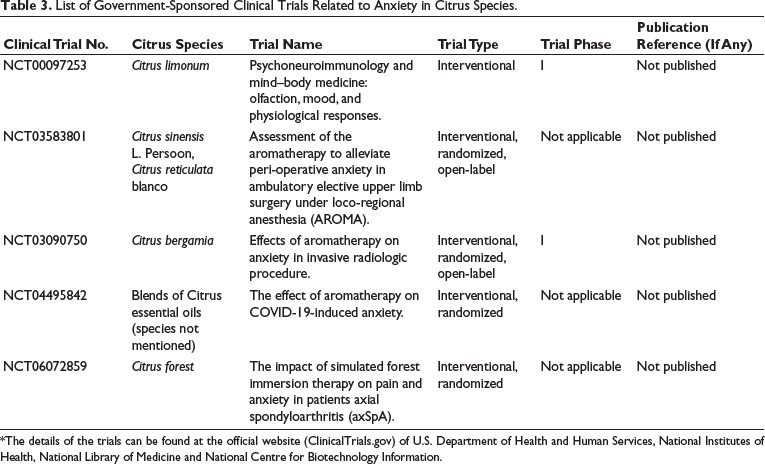
* The details of the trials can be found at the official website (ClinicalTrials.gov) of U.S. Department of Health and Human Services, National Institutes of Health, National Library of Medicine and National Centre for Biotechnology Information.
List of Clinical Trials Reported in the Literature (2014–2024) Related to Anxiety from Citrus Species
Conclusion
There have been several reports of unfavorable and unavoidable side effects from traditional synthetic medications, leading to low patient compliance with treatment regimens. 85 Consequently, as an efficacious treatment for several brain illnesses, herbal medicines are being favored over synthetic pharmacological therapies. About 1300 species are included in the genus Citrus; the most widely consumed are C. limon (lemon), C. reticulata (mandarin), and C. sinensis (orange). Although research and development, as well as the commercial use of several citrus varieties, have attracted some interest recently, analyzing neglected citrus species closely can help to improve their processing into well-known anxiolytic leads by revealing their untapped potential. The information on the anxiolytic phytochemical components of the widely used citrus species has been compiled in this review. Furthermore, it emphasizes the extensive exploration of underutilized citrus species, which have a rich bioactive profile and enormous potential in pharmaceutical research and development.
Footnotes
Abbreviations
Acknowledgments
The authors are thankful to Professor (Dr.) Manjunath Shetty for his guidance during the preparation of this manuscript.
Author Contributions
HK did the literature search, triage and initial manuscript drafting as part of her doctoral research work. UK contributed in conceptualization, review, final drafting of the review work. NC contributed in major revisions.
Declaration of Conflicting Interests
The authors declared no potential conflicts of interest with respect to the research, authorship, and/or publication of this article.
Ethical Approval and Informed Consent
Not applicable.
Funding
The authors received no financial support for the research, authorship, and/or publication of this article.
