



Abstract
Background
A frequent autoimmune condition that results in pigmentation all over the body is vitiligo. It is quite significant from a socio-medical perspective. A lack of melanocytes caused white patches to form on the body. In Ayurveda, it is comparable to Shvitra or Shweta Kushta. Finding some safe and efficient medications from alternative medical sciences is necessary because of the side effects and restrictions of modern contemporary practice. Vitiligo has a significant influence on patients’ quality of life; many of these people experience stigma and depression as a result of their disease. There is a lot of potential for Ayurveda to heal such autoimmune skin conditions. Treatment for Shvitra in Ayurveda includes Panchakarma and Shaman Chikitsa. Here is an example of a 27-year-old female patient with vitiligo who had Ayurvedic treatment, which included oral medication and treatments like vamana and after medicine there was a drastic change in patches.
Methodology
Vitiligo exerts a substantial impact on the quality of life for affected individuals, often inducing stigma and depression. Ayurveda demonstrates promising potential in addressing autoimmune dermatological conditions. Ayurvedic interventions for Shvitra encompass Panchakarma and Shaman Chikitsa.
Results
A recurrent autoimmune disorder leading to systemic pigmentation alterations is vitiligo, which holds considerable significance from a socio-medical standpoint. Depigmentation arises due to the absence of melanocytes, resulting in the manifestation of white patches on the integument. In the context of Ayurveda, vitiligo is akin to Shvitra or Shweta kushta. The exploration of safe and efficacious interventions from alternative medical disciplines becomes imperative due to the limitations and adverse effects associated with contemporary mainstream medical practices.
Conclusion
In this case study, a 27-year-old female patient diagnosed with vitiligo underwent Ayurvedic treatment, incorporating oral medications and therapeutic procedures like Vamana. Post-treatment, a remarkable transformation in depigmented patches was observed, underscoring the potential efficacy of Ayurveda in managing vitiligo.
Keywords
Introduction
The most frequent depigmenting skin disease, vitiligo, which is additionally known as leukoderma, affects between 0.5% and 25% of people worldwide, including both adults and children. In the affected areas of the skin, melanocytes are selectively lost, causing a dilution of colour. The usual lesions are totally amelanotic, non-scaly white patches with definite edges. This illness is referred to as Shvitra in Ayurveda. It is classified as an autoimmune condition brought on by alterations in metabolism, oxidative stress, and cell detachment in addition to inherited and environmental factors. Ayurveda defines Shvitra as a type of kustharoga that is brought on by the vitiation of tridoshas as well as dhatus like rasa, rakta, mamsa, and meda. 1
Kustha is caused by vitiation of three dosha and datus like rasa, rakta, maunsa and meda. Purva karama is also a cause of Shweta kustha.2, 3 Ayurveda states that the sort of Shvitra (vitiligo) that is curable lacks red hair has a centre that is lifted upward, is thin, pale, and recently developed. 4 Kilasa, Daruna, Aruna, and Shweta Kushta represent alternative designations for the condition. The manifestations of Chaya and Prabha in the Twacha (skin), which are governed by the Bhrajaka Pitta function, are observed in the integumentary system. 5 The same basic body tissue (dhatu) levels are impacted by the same causative elements for vitiligo (Shvitra) and skin illnesses (kusta). Shvitra is distinguished from alternative dermatological conditions by inducing cutaneous discolouration (twak vaivarnyata), devoid of exudation (aparisravi), while maintaining the typical physiological operation of bodily tissues apart from the ‘cutaneous tissue’ (twak). 6
In contemporary research, corticosteroids and PUVA (Psoralen + Ultra Violet A exposure) therapy are the pillars of illness treatment. However, these treatments have a number of negative side effects, including skin cancer, photo-aging, burns from ultraviolet light, and nausea. 7
Treatment for vitiligo aims to stop the autoimmune destruction of melanocytes and encourage their migration from adnexal and adjacent skin reservoirs. Presently, systemic, and current Corticosteroids, topical calcineurin inhibitors, topical calcipotriol in combination with corticosteroids, ultraviolet (UV) radiation, phototherapy with UVA and psoralens (PUVA therapy), and surgical therapy are the most popular forms of treatment. Nevertheless, these therapies also have important limitations and downsides depending on the treatment and the degree of the lesions. As an alternative to these disappointing and hazardous methods, traditional medicines may offer some safe, simple, inexpensive, and effective natural cures for the illness.
Ayurveda provides a wide range of effective formulations for the treatment of chronic autoimmune diseases. Ayurvedic therapy was used in this case to treat a female patient who had chronic vitiligo. It was also combined with diet restriction and psychological counselling. 8 Patches of hypopigmentation arise as a result of focal melanocyte loss. It is believed to be caused by the autoimmune destruction of melanocytes by cells. Frequently symmetrical, generalized vitiligo affects the hands, wrists, feet, knees and neck, as well as the skin around bodily orifices. 9
Case Description
A 27-year-old married woman exhibiting Kapha-Pitta prakriti (determined through questionnaire and observation) reported depigmentation of the skin. The condition affected small patches on both hands, presenting no discharge, and persisted for a duration of one year. She visited the OPD of Kaya Chikitsa at the Mahatma Gandhi Ayurveda College and Hospital, Salod Wardha. Using the conventional signs and symptoms, the patient was identified as having Shvitra, also known as Vitiligo.
The patient’s medical history indicates a state of well-being in the past, with no reported illnesses. However, approximately 18 months ago, the patient’s health began to decline as symptoms manifested in the form of depigmented regions on both hands. Gradually, these patches multiplied, enlarged, and extended, eventually encompassing a significant portion of the skin.
The patient initially pursued allopathic care involving topical tacrolimus, oral corticosteroids, and triamcinolone. Despite these interventions, the condition exhibited a progressive deterioration. Subsequently, the patient opted for Ayurvedic treatment due to limited or no clinical relief. Notably, depigmentation of hair was observed in the affected areas.
Past history: No history of above skin complaints before three years.
History of Thyroid disorder from 10 years.
Family history: There was no family history of a similar skin disease.
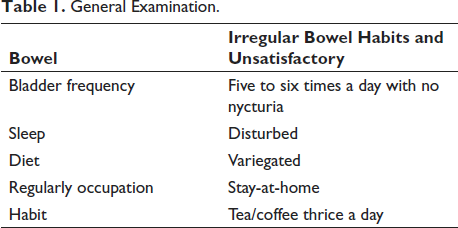
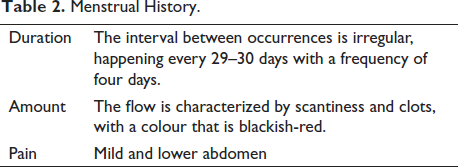
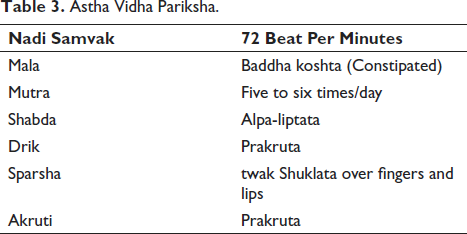
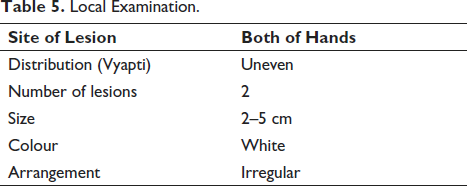
In the below table, we have taken the General examination (Table 1), Menstrual history (Table 2), Astha vidha Pariksha (Table 3), Hetu (Table 4) and Local examination (Table 5).
General Examination.
Menstrual History.
Astha Vidha Pariksha.
HETU (Causative Factors).

Local Examination.
Management
Shvitra is a Kashta sadhya vyadhi so this vyadhi does not easily cure so. We were using not only shaman chikitsa but also, we used shodhan chikitsa. Hence treatment, we was planned in two parts: Shodhan Karma and Shaman Karma.
Shodhan Karma: According to Acharya Vagbhatt Shodhan Chikitsa plays a most important role in any Kashta sadya vyadhi, this chikitsa does not vitiation any dosha again and expels the dhosh from all over the body. So, we are used here to two types. So, before the treatment of Shaman Aushadhi, Shodhan should first be performed to get rid of the poisonous substances in the body.
Vaman chikitsa
Rakt mokshna (Jalauka vidhi)
Vamana Karma: Vaman karma proceeded with the Ayurvedic ethical method. We used three steps of karma like: Purva karma, Pradhana Karma and Pashchat Karma.
Purva karma: Purva karma has three another step Deepan karma, Snehan karma, and Swedan karma which is used for doshan and dhosha Pachan and to collect the dosha in koshath from the all over body. So here we used them as
Dipan pachan: Aushdhi first Chitrakadi Vati 2tb, Trikatu Churna 2 g, TID with warm water for three days.
SnehanKarma: Patient has Vaat-kapha Prakriti and Vikriti have also Vaat-kapha hence we were given both types of Snehan bahya and Abhayanter snehan.
Bahya Snehan [Abhyanga (massage) and Srvangswed (fomentation);
Bala taila was used for abhyanga, followed by Sarvanga swedana twice daily for one day and Vamana later that morning. Bala taila abyanga and sarvanga swedana were concluded.
Abhayanter snehan: As needed, panchtikta gruit was administered in escalating doses for three to seven days until the correct Snehana signs and symptoms were attained.
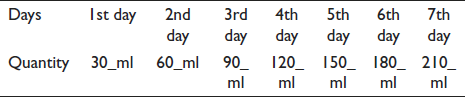
Diet on the Previous Day of Vamana
The patient was advised to drink a lot of milk, curd, sesame, and sweets like jaggary, laddu, jalebi, and khicadi made from black gram, sesame, jaggary and rice, or dahi wada.
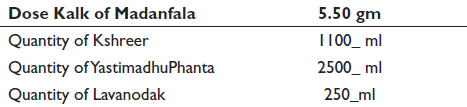
Pradhana Karma: The Pradhan Karma of Vaman vidhi started in the morning. First of all, we collected the kwath of the madan phal, ksheer, yashthimadhu phant, and Lavanodak.
Position of patients: Patients were instructed to take a seat on a plush Vamana chair that was knee-height.
Examination of vital: Blood pressure and pulse were monitored before, during and after Vamana Karma.
Administration of food articles and drugs: Between six and nine in the morning, vamana was induced.
The patient was instructed to consume about 2 litres of milk aakantha pana. Then, to induce emesis, patients are administered vamana yoga, a medical combination of madanaphala pippali (powder made from Randiadumetorum seeds), yashthimadhu (Acorus calamus), rock salt, and honey.
Pt. has 9 vega with 2-litre Vaman dravya till the pittant. It’s Samyak Suddhi without complication and pt. has all the Samyak Lakshna of Vaman karma.
Pashchat Karma: After the Pradhan karma pt. have decreased the pachan shakti due to loss of Agnibal so correction of agnibal by the sansarjan karma for seven days with following diets like Peya, mand, vilepi, and akrit- yush. These helped in the increase of agnibal and maintaining the pachan shakti of the patient.
Shaman chikitsa and raktmokshna
Jalauka vidhi: Jalauka vidhi is a raktmokshna procedure that drains the impure blood from the local diseased site and it is very effective because Jaulaka’s saliva contains biological elements that cause leeches to act. More than a hundred bioactive compounds, including an anaesthetic, anti-platelet aggregation factor, anti-inflammatory, and antibiotic agents, are found in this saliva. These substances widen blood vessels to increase blood flow to the biting site and anaesthetize the wound region to make the leech’s bite at its host painless.
Discussion
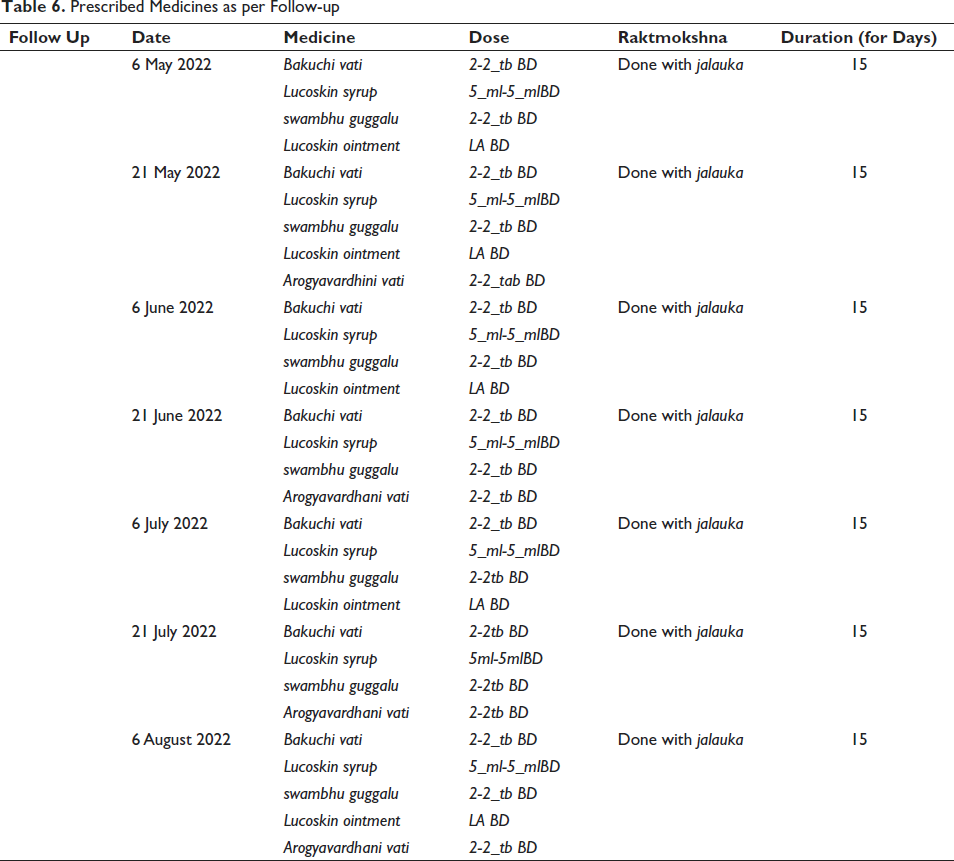
The depigmented patches display prominent kapha doshaja symptoms like shweta (whitish), snigdha (unctous), bahala (excessively dispersed), and kandu (itching) in the patient’s observed Prakriti, which was kapha-pittaja using vaman. In this case, seven time follow-up were taken. And in formation consent was given to the patient.
Bakuchi vati: The katu tikta rasa, ruksha guna, and katu vipaka of the in Shvitra eliminate srotodushti. Components of bakuchi increase melanin, helping the skin’s recovery from vitiliginous conditions. 10
Arogya vardhni vati: The components of the arogyavardhini compound include tamra bhasma (incinerated copper), guggulu, katuki, and triphala, which have the benefits of lekhana (weight-reducing), dipana (improving the digestion and metabolic function), and medadoshahara (correcting the breakdown of lipids and transportation), while lasuna (garlic) has the properties of avaranahara (removal of blockage in microchannels), and quality of rasayan. 11
Lucoskin syrup: This oral liquid contains naag, bakuchi, Krishna tulsi, mandook parni, and kanuach all the drugs are for melanin synthesis, modulating immunity, enhancing blister healing and restoring antioxidants and reducing stress.
Swambhu guggalu: It contains bakuchi, karanja, neem, and khadir, which have kusthaghna characteristics, as well as guggulu, which helps to balance vata dosha. It is recommended for shvitra roga (Bhavprakash kustha chikitsa) and acts on rakta, mamsa, meda, and asthi dhatu. 12
Jaulaka sucks out the impure blood with all the dead cells of the skin and dead melanocytes of the skin and creator enzymes of leukoderma and opens the blood circulatory Channel of the skin and nourishes the skin and melanocytes (Table 6).
Prescribed Medicines as per Follow-up
Conclusion
Shvitra is predominantly brought on by mithya ahara-vihara, especially navanna and viruddh ahara, as well as a diet high in ushna, snigdhaguna, and veg avidharana. Shvitra is a condition that affects both physical and mental well-being. The treatment has given the person a pleasant life by increasing their immune system and self-confidence. Orally prescribed medications also significantly contributed to symptom relief and immunological support.
Ayurvedic treatment helps to remove the disease’s underlying cause and prevents recurrence by returning normality to exaggerated coloration. This therapeutic approach can be used to treat shvitra because the patient experiences significant relief from their symptoms
Vaman karma is Shodhan karma, it has more effective properties such as detoxification of the body and it is more effective in leukoderma because Shvitra has vaatkaph dosha and obstructs the channel so here vaman breaks the obstruction and opens the systemic Channel.
Jalauka vidhi is more beneficial in acute and chronic disease because jalauka has numerous bioactive components like antibacterial, analgesic, antiplatelet aggregation; anti-inflammatory and antiseptic properties which have to fulfil the curable properties of leukoderma.
First Day of Leech Therapy.
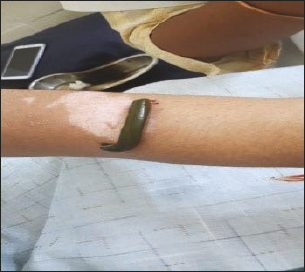
After 45 Days of Leech Therapy and Medication.
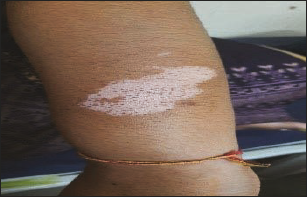
Ninety Days After Medication with Leech Therapy.
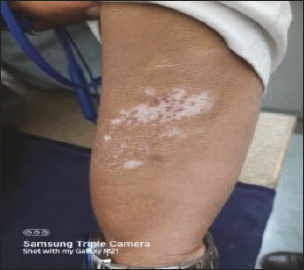
During the Last of the Follow-up.
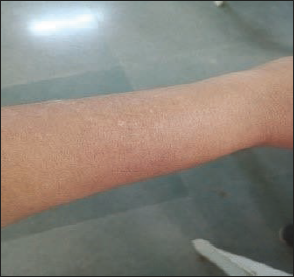
Summary
Vitiligo, an autoimmune condition causing pigmentation changes, has significant socio-medical implications. Traditional practices like Ayurveda offer alternatives to contemporary treatments with potential benefits and fewer side effects. This study focuses on a 27-year-old female with vitiligo undergoing Ayurvedic treatment involving oral medications and Vamana therapy. The objective includes diagnosis, Shodhan Chikitsa, and assessing treatment outcomes. Results highlight the impact of vitiligo on quality of life and the transformative effects of Ayurvedic interventions on depigmented patches, emphasizing Ayurveda’s potential in managing autoimmune skin conditions.
Abbreviations
Footnotes
Acknowledgements
We express our sincere gratitude to all those who contributed to the successful completion of this case study on Ayurvedic treatment for vitiligo. Special thanks to the patients for their participation and trust, as well as to the healthcare professionals involved in the diagnosis and treatment process. We appreciate the support and guidance provided by mentor Bhushan Mhaiskar sir and colleague Pratyendra Pal Singh throughout the study. This research would not have been possible without the collaborative efforts and dedication of everyone involved.
Declaration of Conflicting Interests
The authors declared no potential conflicts of interest with respect to the research, authorship and/or publication of this article.
Ethical Approval and Informed Consent
The necessary ethical clearance and patient consent has been received for the study.
Funding
Datta Meghe Institute of Higher Education & Research
