



Abstract
The current research has been conducted to study the ethnopharmacology research output in the past 10 years (2011–2020) after using Web of Science (WoS) database. The present study has used WoS database to collect the ethnopharmacology research output for the specific period. The retrieved data were analyzed using specific parameters. This study investigates the impact of the most productive institutes, countries, authors, subjects, sources, and keywords. For visualizing purposes, VOSviewer has been used. We retrieved 7,159 papers from WoS, consisting of 84.24% journal articles and 14.23% review articles. The data analysis indicates that consistent growth with increasing multiauthorship is a general trend of research. The Council of Scientific Industrial Research (CSIR) India collaborates with the Indian Council of Agricultural Research (ICAR) and Central Institute of Medicinal Aromatic Plants (CIMAP) in terms of domestic collaboration.
Introduction
Ethnopharmacology is a multidisciplinary field of inquiry investigating the anthropological rationale and the pharmacological basis of the medicinal use of plants, animals, fungi, microorganisms, and minerals by human cultures. 1 Ethnopharmacology is a connected investigation of ethnic gatherings and their utilization of plant compounds. It is connected to therapeutic plant use and ethnobotany, a wellspring of lead compounds for drug disclosure. Accentuation has, for quite some time, been on daily medications, albeit the methodology likewise has demonstrated value to the investigation of present-day drugs. Ethnopharmacology is an essential discipline for developing new medicines that are extremely important for the conservation and enhancement of the traditional use of natural products and undoubtedly is one of the primary sources for the rational development of new medicines.
Related Studies
As already mentioned, many studies have been found to conduct a bibliometric and scientometric assessment of research on ethnopharmacology research. Ragavan et al. 1 performed a scientometric study comparing authors’ productivity and citations from different institutions at the national level during 1973 to 2009 using the Web of Science (WoS) database. A total of 1,265 publications were published nationally. This article indicates that the trend towards collaborative research is increasing. Whereas Mueen and Gupta 2 published a paper on India’s antioxidants research publications using various bibliometric indicators during 2001 to 2010 from Scopus database. Many researchers have also explored studies relevant to medicinal plants.3–14 This study identified India’s contribution in international collaboration documents at the national level and key partners in international collaboration, further analyzing the characteristics of institutions, authors, frequently cited articles, etc.
A scientometric study determined the contribution of Indian researchers to foreign journals (PLOS One). The data was searched in WoS database, from 2012 to 2016. A total of 133,897 articles were published during the period, of which 3,174 (2.37%) articles belonged to India. Data analysis showed that most participants were from developed countries, except for Brazil and India, which accounted for 2.95% and 2.37%, respectively. This study identified CSIR as the topmost institution in India. The writing style has also shown that Indian scholars tend to write together. 15
Puttannanavar and Bagalkoti 16 examined Indian plant research on various criteria including research growth, research relevance in significant journals, the geographical distribution of journals, the proportion of international core journals, both national and thematic, and characteristics of high-performing institutions and authors. This study used the WoS database, focused on India’s published articles during the period 2008 to 2017. Study proposed to build scientific capacities, competencies, and knowledge bases to bridge the scientific and technological gap with leading countries.
Yeung et al. 17 conducted a bibliometric study on research meandering between medicine and food science using the Scopus database. This study identified and analyzed 100 articles in ethnopharmacology. The field has been indexed for 50 years and, although traditionally often associated with “traditional knowledge,” drug discovery, and some areas of pharmacology, this analysis underscores its growing importance in disease prevention (food science). It further studies the development of research-oriented needs and interests of high-growth economies, especially in Asia.
Materials and Methods
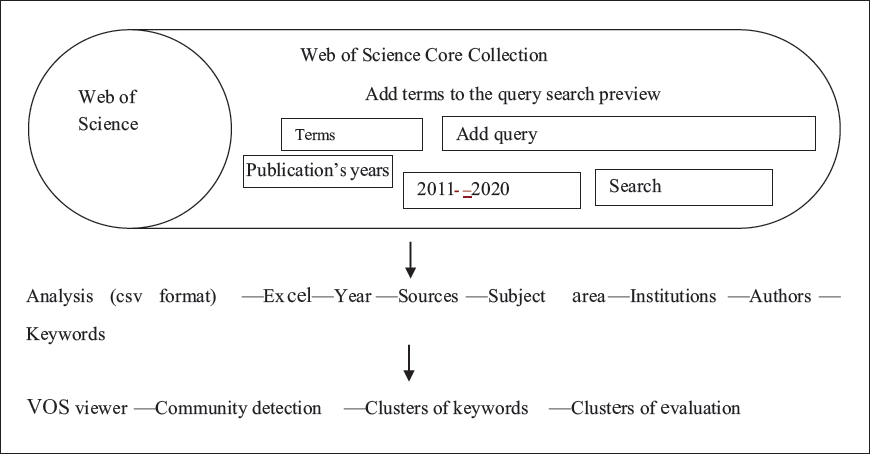
The data analyzed in this work have been obtained through a query in the WoS database, which has been successfully used in many bibliometric studies. 18 It is a study on ethnopharmacology research in India from 2011 to 2020 based on data from the WoS database taking the bibliometric data such as title, author, year, affiliation, and document type. Because of many results, it was necessary to use the WoS, whose methodology has been developed in previous works, to download the data. In this study, the query used was as follows: TS = (ethnopharmacology OR ethnopharmacological OR ethnobotany OR ethnobotanical OR ethnomedicine OR ethnomedical OR medicinal plant OR folk medicine OR traditional medicine OR pharmacognosy). An outline of the methodology used is shown in Figure 1. The analysis of the scientific communities both in terms of keywords and the relationship between authors or between countries was done with the VOSviewer.
Analysis and Results
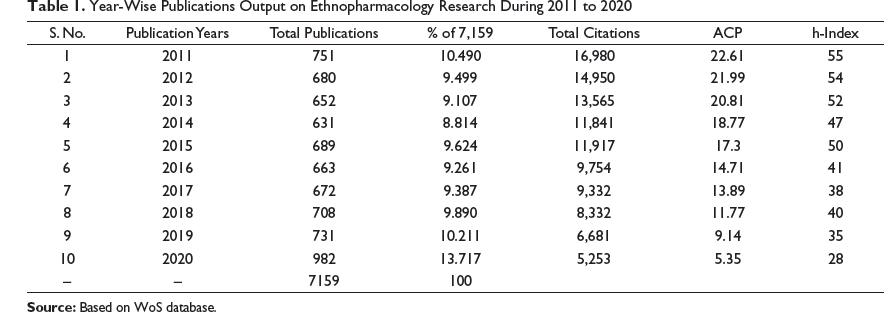
Year-Wise Publication Output
Year-Wise Publications Output on Ethnopharmacology Research During 2011 to 2020
Subject-Wise Distribution of Publications
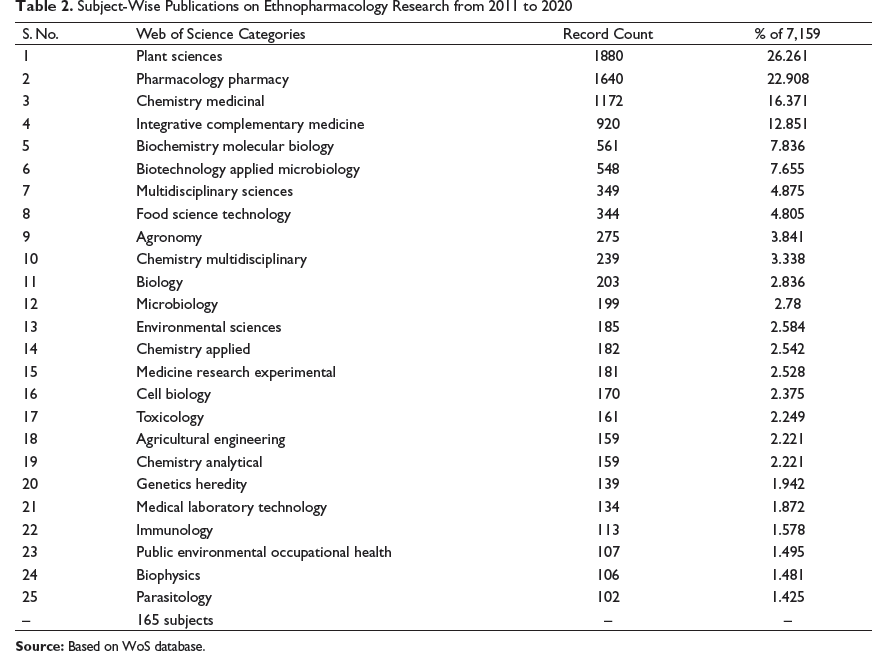
According to WoS data, “ethnopharmacology research” in India is interconnected with 165 disciplines. Of these, Table 2 shows the top 25 subject disciplines. The plant sciences, pharmacology, pharmacy, chemistry, medicinal and integrative complementary medicine have been the preferred areas of research (with a share of 78.4%), followed by biochemistry, molecular biology, biotechnology, applied microbiology, multidisciplinary sciences, food science technology, agronomy, and chemistry multidisciplinary; these disciplines have contributed between 3% and 8% of total publications and the remaining 15 disciplines contributed to less than 3% of the total publications. In four fields, the activity index registered a significant rise, whereas it registered a significant decline in six other disciplines. In 15 different areas, the reduction in activity index was marginal.
Subject-Wise Publications on Ethnopharmacology Research from 2011 to 2020
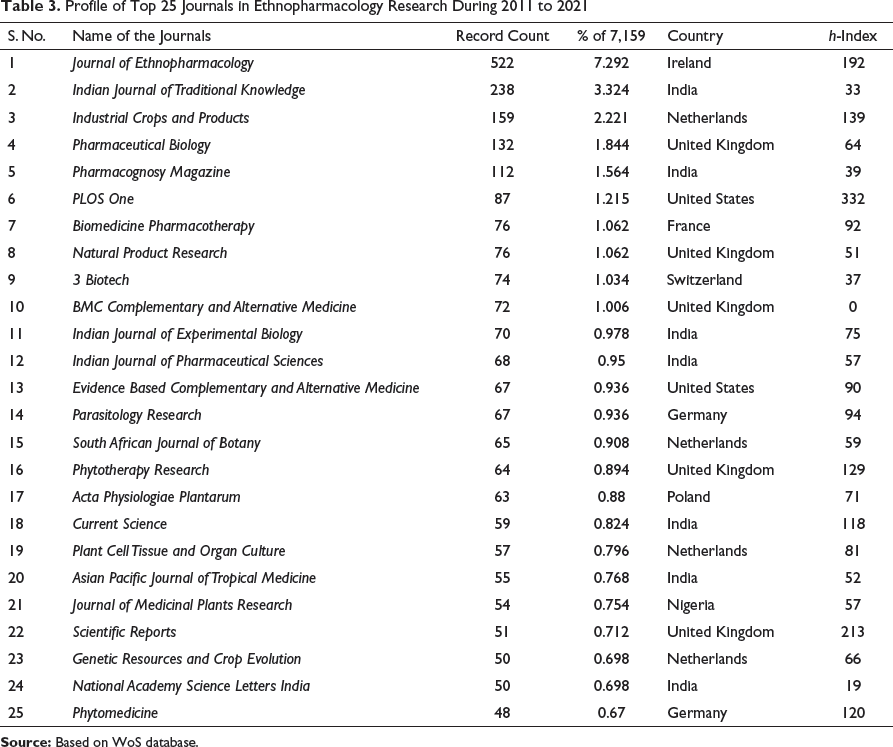
Profile of Top 25 Journals in Ethnopharmacology Research During 2011 to 2020
Profile of Top 25 Journals in Ethnopharmacology Research During 2011 to 2021
Form-Wise Research Output on Ethnopharmacology Research During 2011 to 2021
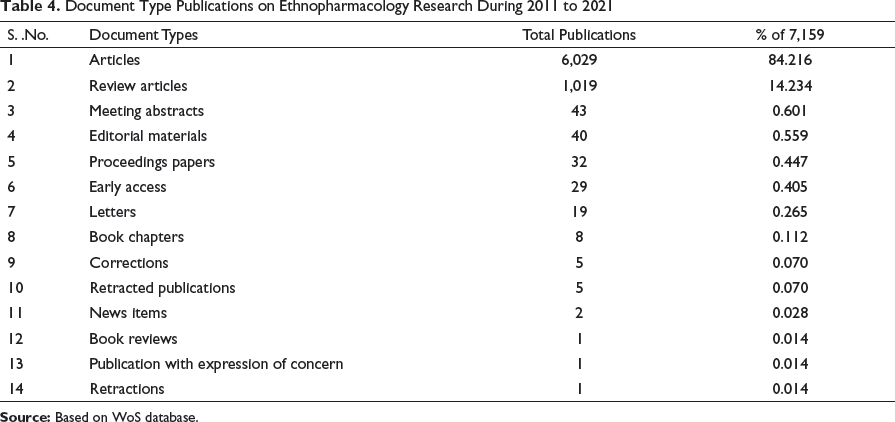
Document Type Publications on Ethnopharmacology Research During 2011 to 2021
Collaboration Linkages Among Top 25 Organizations in Ethnopharmacology Research During 2011 to 2021
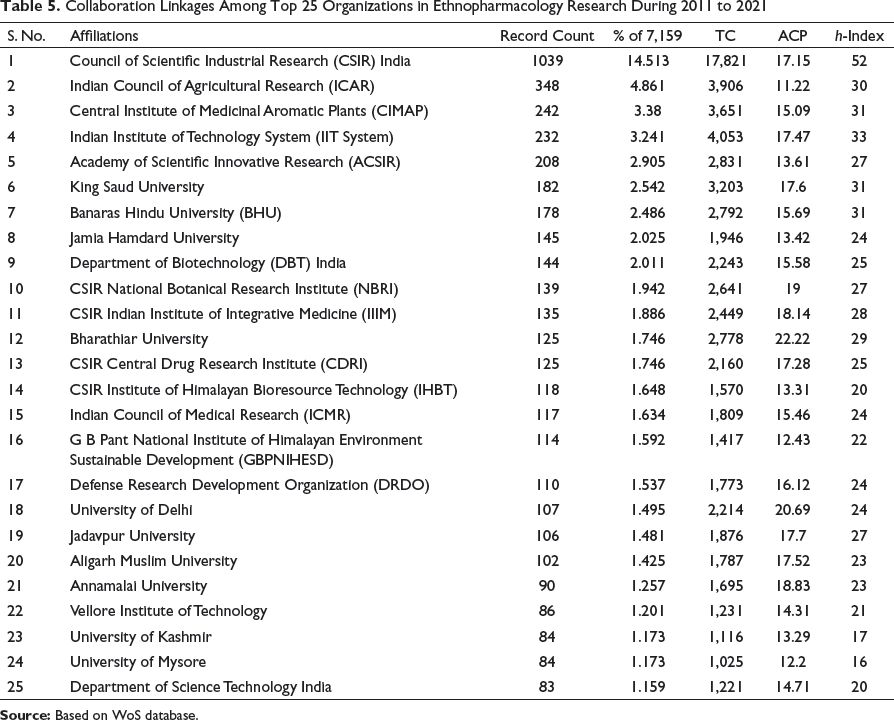
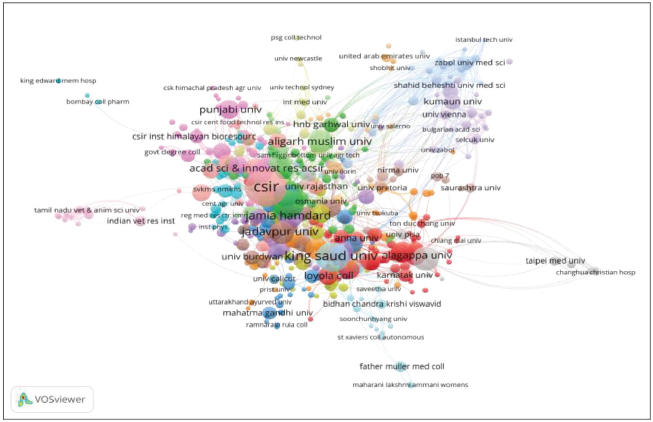
India has contributed 7,159 papers in ethnopharmacology during 2011 to 2021. The top 25 Indian organization’s scientometric profiles that are presented in Table 5. On ranking Indian organizations by publication output, CSIR India tops with 1,039 papers, followed by ICAR India (348 papers), CIMAP (242 articles). In terms of h-index, CSIR India tops the list with h-index value of 52, followed by IIT (33), and CIMAP, King Saud University, and Banaras Hindu University (31 each). The most productive research organizations network map is shown in Figure 2. CSIR India, King Saud University, and Banaras Hindu University are the top three organizations with the most collaborative linkages. The other such organizations with the most minor collaborative links are–University of Kashmir, University of Mysore, Jadavpur University, Bharathiar University, and others. Research organizations from India such as CSIR India, Jamia Hamdard University, ICAR, and Banaras Hindu University were found to be the most productive institutions in collaborative research.
Collaboration Linkages Among Top 25 Organizations in Ethnopharmacology Research During 2011 to 2021
Scientometric Profile of Top Productive and Most Impactful Authors in Ethnopharmacology Research During 2011 to 2021
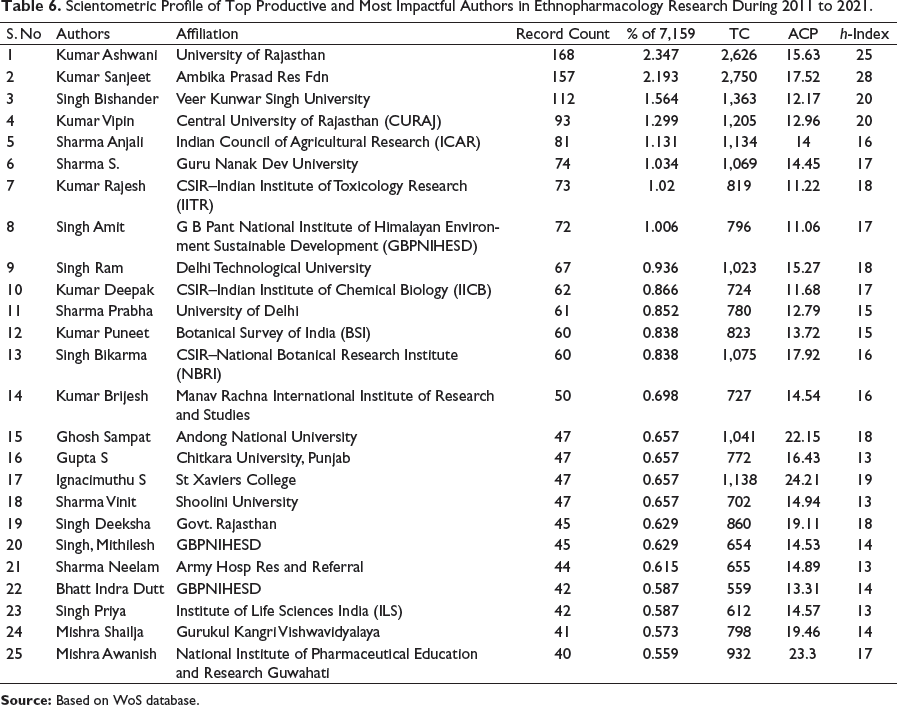
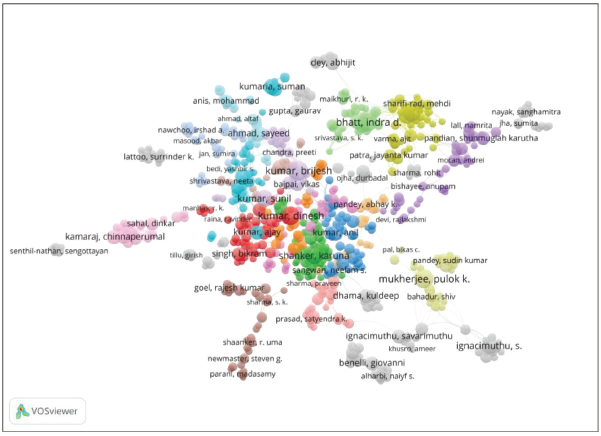
During 2011 to 2021, 16,658 authors contributed to ethnopharmacology research in India. Table 6 shows top 25 most productive authors. These 25 author’s publications varied from 40 to 168 publications per author. Together these 25 authors contributed 1,677 (23.43%) publications share and 25,637 citations. Top three authors contributed 100 or more papers; these are Ashwani Kumar (TP = 168; TC = 2626; h-index = 25), Sanjeet Kumar (TP = 157; TC = 2750; h-index = 28), and Bishander Singh (TP = 112; TC = 1363; h-index = 20). The author’s collaboration visualization network is presented in Figure 3.
Scientometric Profile of Top Productive and Most Impactful Authors in Ethnopharmacology Research During 2011 to 2021.
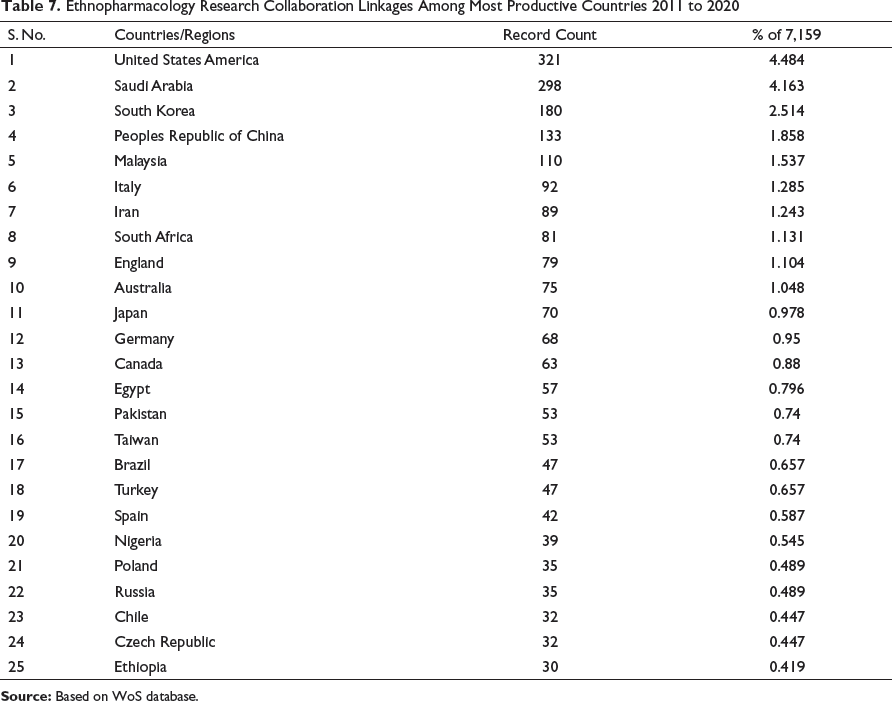
Top 25 Most Productive Countries
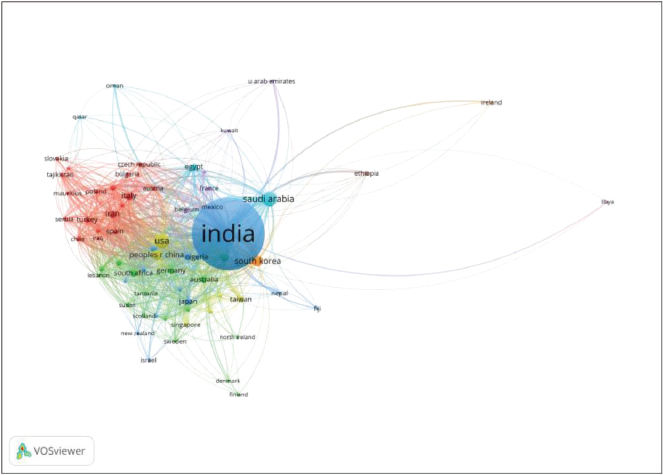
Ethnopharmacology Research Collaboration Linkages Among Most Productive Countries 2011 to 2020
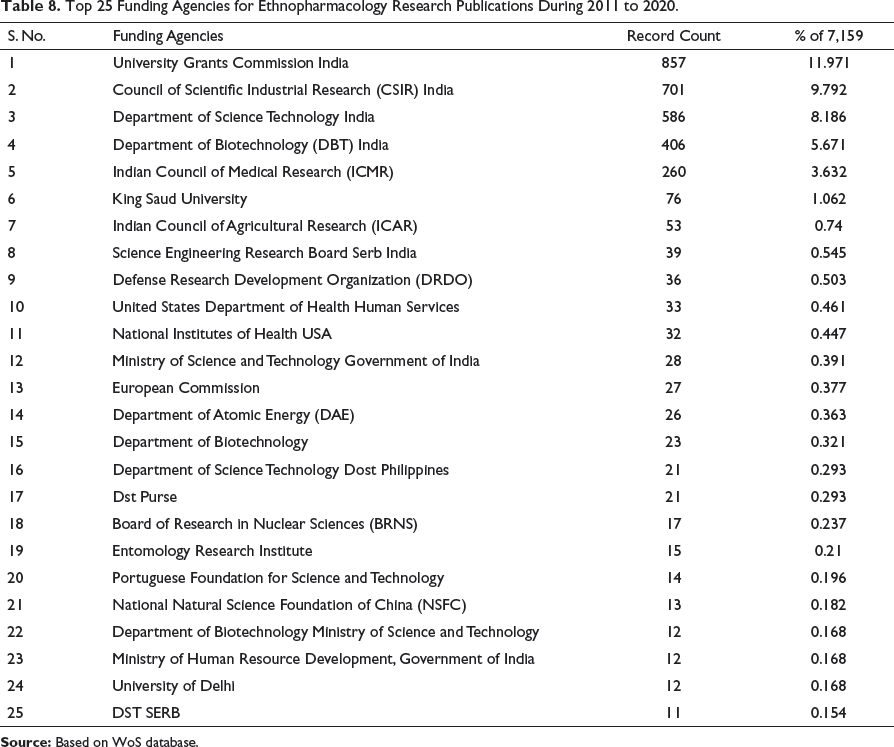
Top 25 Funding Agencies for Ethnopharmacology Research Publications During 2011 to 2020.
Most Frequently Co-occurred Keywords
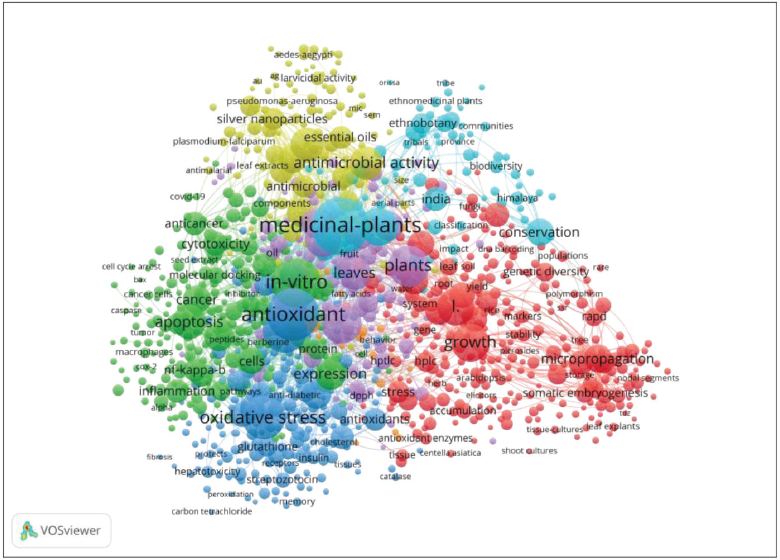
The keywords were analyzed as described in this section better to understand researchers’ current concerns and future research directions. Article keywords can be considered as one of the most important pieces of background information reflecting the main goals of research paper. Therefore, this study collected and examined the keywords plus and keywords provided by the authors and the WoS database. The keywords received the broadest research interest and created subgroups according to different degrees of importance. Figure 5 shows the result of the keywords network map. Five main subgroups were formed. The circle size represents the density of the keyword and distances show the strength of the keywords. The essential keywords are medicinal plants, antioxidant, in-vitro, oxidative stress, antimicrobial activity, micropropagation, etc.
Summary
The WoS database yielded 7,159 publications with 109,035 citations and 15.23% average citations per paper publications during 2011 to 2020 on ethnopharmacology research. Results from research projects funded by 100+ funding agencies received 48,570 citations. The primary funding agencies supporting Indian research in this area are the UGC (857 papers) and the CSIR (701 papers). All publications published in English only accounted for the most prominent publications share (84.216%), followed by review articles (14.23%). The CSIR India collaborates with the ICAR and CSIR CIMAP in terms of domestic collaboration.
Footnotes
Declaration of Conflicting Interests
The authors declared no potential conflicts of interest with respect to the research, authorship, and/or publication of this article.
Funding
The authors received no financial support for the research, authorship, and/or publication of this article.