




Abstract
The devastating effect of COVID-19 on the economy, health and the financial system is well known now. The pandemic has distorted trade as well. In such a situation, trade facilitation (TF) has emerged as an effective tool to mitigate the devastating effect of COVID-19 on trade. Several countries have initiated policy responses to take necessary steps towards TF measures. However, a relevant question arises: Are all these countries prepared for the effective and efficient implementation of the TF measures? This study attempts to answer this question by identifying the major institutional determinants of TF measures (mainly included in the World Trade Organization [WTO] Trade Facilitation Agreement) based on existing theories, such as the ‘theory of institutions’ and the ‘political economy of trade policy’ approach. It utilizes data of many countries for the years 2012, 2015, 2017 and 2019. The findings of this study suggest that the quality of governance has a significant positive impact on all TF measures. Moreover, the study finds that developing and small-sized countries are more responsive to the impact of an institutional factor on their TF performance than developed and large-sized countries. Therefore, it proposes measures to improve TF performance, which is crucial to minimize further disruptions in trade caused by COVID-19.
Introduction
In recent years, eliminating the impediments to the movement of goods across borders (known as trade facilitation [TF]) has emerged as a critical factor in enhancing trade and sustaining economic development. The importance of TF has been recognized at multilateral, regional, bilateral and national levels, owing to increasing volumes of trade and complexity of trade procedures, global production sharing and outsourcing due to supply chain management (Staples, 2002). Apart from its importance in reducing trade barriers and lowering trade costs (Eliason, 2015; Staples, 2002), TF is essential for inclusiveness of growth. The multilateral significance of TF has been recognized with the conclusion of a multilateral Trade Facilitation Agreement (TFA) at the World Trade Organization (WTO) in the year 2017. The WTO TFA has been implemented with the aim to make all countries, especially developing and least developed countries (LDCs), eligible to play a proactive role in the world trading arrangement and employ trade as a tool for growth and poverty reduction (WTO, 2015).
Global organizations like WTO and the Organisation for Economic Co-operation and Development (OECD) had projected potential gains from implementing the WTO TFA before the COVID-19 crisis. World Trade Report 2015 indicated that TF is expected to add to yearly world export growth by about 2.7 per cent and 0.5 per cent to global GDP growth by 2030 (WTO, 2015). More specifically, it would boost export and GDP of developing countries and LDCs by 3.5 per cent and 0.9 per cent annually, respectively. Moïsé and Sorescu (2013) further revealed that all the TF indicators (TFIs) jointly would reduce trade costs by 14.5 per cent for low-income countries, by 15.5 per cent for lower-middle-income countries and by 13.2 per cent for upper-middle-income countries. Beverelli et al. (2015) also reported a sizeable impact of the WTO TFA on export diversification (mainly the number of products exported and the number of destination markets). Furthermore, Shepherd (2016) found that the implementation of the WTO TFA would help sub-Saharan African countries connect to global value chains. Hillberry and Zhang (2017) validated the significant impact of the OECD TFIs on border agencies’ performance. Fontagne et al. (2020) ascertained the impact of OECD TFIs on exports through the extensive and intensive margins and their heterogeneous effect on exporters of different sizes and productivities.
The significance of TF, which was already ascertained in the pre-COVID-19 scenario, has been amplified by multiple times during COVID-19. COVID-19 has led to a downturn of the world economy to an unprecedented level, along with the collapse of international trade, and deteriorated access to goods and critical supplies. WTO estimates indicate a drop of 3 per cent (year-on-year) in world trade in the first quarter of 2020 and a decline of 18.5 per cent in the second quarter of 2020. According to the United Nations Conference on Trade and Development (UNCTAD) global trade update, exports in developing and developed countries have declined by 7 per cent and 3 per cent in the first quarter of 2020, respectively. 1 Developing countries’ exports have declined drastically, by 18 per cent in April 2020, and the decline in exports of developed countries was 14 per cent. According to OECD Economic Outlook, global trade has declined by over 15 per cent in the first half of 2020. 2 Also, the International Monetary Fund (IMF) World Economic Outlook Update (June 2020) confirms a 3.5 per cent reduction in global trade (year-over-year) in the first quarter and forecasts a deeper decline of 11.9 per cent in the year 2020. 3 In response to the severe downturn in trade caused by COVID-19, several initiatives have been taken by all major international organizations, the government of countries and the stakeholders associated with trade for facilitating trade and transport of goods to mitigate the newly emerging challenges and to promote contactless trade in a new-normal scenario. OECD has discussed the significance of TF in making border trade processes faster and safer, which is required in an extremely challenging context. 4 WTO has dedicated a TFA database where records of all the COVID-19 measures notified under the TFA are maintained. As of 29 September 2020, China, the Dominican Republic and the European Union have released notifications on the COVID-19 measures taken by them recently. 5 UNCTAD is also continuously involved in providing solutions to meet the challenges of COVID-19 and recover strongly from the pandemic. For example, an action plan has been issued by UNCTAD for facilitating trade and transport of goods. 6
Although various organizations have suggested adopting TF measures to rebuild trade from the devastating effects of the COVID-19 crisis, the high levels of trade restrictions imposed by countries in the year 2019 and the continuous widespread trade restrictions are a matter of serious concern for the international community. As per WTO Trade Monitoring Report, 102 new trade-restrictive measures have been implemented by WTO members during October 2018–October 2019 which have affected trade worth USD 746.9 billion (the highest since October 2012). 7 These measures include tariffs increment, quantitative restrictions, strict customs procedures and the imposition of import taxes and export duties. In the recent WTO Trade Monitoring Report 2020, it has been revealed that new and accumulated import restriction measures have continued to affect a substantial share of merchandise trade (USD 423.1 billion) between mid-October 2019 and mid-May 2020. 8 In response to the pandemic, WTO members have implemented almost 109 trade-restricting measures; most of them were related to export prohibitions and restrictions. However, the proliferation of such protectionist measures could negatively affect the recovery of world trade from the pandemic and add to the uncertainty surrounding trade. Therefore, to support progress in managing the current crisis, countries need to retract trade restrictions introduced earlier during the pandemic. In a nutshell, the current crisis calls for rejection of protectionism and adoption of trade-facilitating measures like reducing tariffs, export duties and import taxes and simplifying customs procedures.
Therefore, given the significance of TF in the current COVID-19 scenario, the present study intends to consider the practicalities and obstacles in implementing TF measures. The factors affecting various dimensions of TF at a global level are yet ascertained. Grainger (2011) provides an in-depth review of the TF concept and states the need for considering TF from a bottom-up approach, which will look at the factors or conditions essential for improving TF. The present study attempts to fill the literature gap as it establishes the importance of institutional (or political) factors to improve TF. To be more precise, it attempts to explore the linkages between governance and TF. The study is extended further to estimate the relationship between TF and governance indicators at the level of countries’ development and their size.
The rest of this article is organized as follows. The second section discusses measures of TF and governance quality in detail. The third section provides a conceptual framework explaining the significance of TF amidst the pandemic and the linkages of TF with governance. The fourth section examines the existing studies related to the institutional determinants of TF. The fifth section presents the empirical estimation process and a description of the data used in this study, followed by the sixth section that deals with results and discussion in detail. The seventh section provides conclusions and policy implications of the study, while the limitations and future scope of the study are discussed in the eighth section.
Measures of Trade Facilitation and Governance
The main objective of this study is to determine the relationship between TF measures and governance quality. The study employs OECD TFIs as a proxy for TF performance. These indicators measure the extent of implementation of the following 11 dimensions of TF, the score of each ranging between 0 (lowest performance) and 2 (highest performance):
Information availability: Enquiry points; publication of trade information, including on the Internet; Involvement of trade community: Structures for consultations; established guidelines for consultations; publication of drafts; existence of notice-and-comment frameworks; Advance rulings: Prior statements by administrations to requesting traders concerning the classification, origin, valuation method, etc. applied to specific goods at the time of importation; the rules and processes applied to such statements; Appeal procedures: The possibility and modalities of appealing against administrative decisions by border agencies; Fees and charges: Discipline on the fees and charges imposed on imports and exports; Formalities—documents: Acceptance of copies; simplification of trade documents; harmonization in accordance with international standards; Formalities—automation: Electronic exchange of data; use of risk management; automated border procedures; Formalities—procedures: Streamlining of border controls; single submission points for all required documentation (single windows); post-clearance audits (PCAs); authorized economic operators; Internal border agency cooperation: Control delegation to customs authorities; cooperation between various border agencies of the country; External border agency cooperation: Cooperation with neighbouring and third countries; and Governance and impartiality: Customs structures and functions; accountability; ethics policy.
This study employs the World Bank’s Worldwide Governance Indicators (WGI) to measure governance quality. Such indicators measure the perception of governance quality provided by a large number of enterprises, citizens and expert survey respondents. The reasons behind choosing WGI as a measure of institutions are threefold. First, these indicators cover a broad definition of institutions and governance. Second, since these indicators for each country are calculated using multiple sources, they are considered to be more accurate. Third, these indicators also have an influence over government policy decisions (Williams & Siddique, 2008). These indicators cover the following six aspects of governance:
Voice and accountability: This measures perceptions of the extent to which a country’s citizens are able to participate in selecting their government, as well as freedom of expression, freedom of association and freedom of media; Regulatory quality: This measures perceptions of the ability of the government to formulate and implement sound policies and regulations that permit and promote private sector development; Government effectiveness: This captures perceptions of the quality of public services, quality of civil services, quality of policy formulation and implementation, government’s accountability towards policies and political influence in the policymaking process; Rule of law: This captures perceptions of the extent to which agents have confidence in and abide by the rules of society, and in particular, the quality of contract enforcement, property rights, the police and courts, as well as the likelihood of crime and violence; Political stability and absence of violence: This measures perceptions of the likelihood of political instability and politically motivated violence, including terrorism; and Control of corruption: This captures perceptions of the extent to which public power is exercised for private gains, including both petty and grand forms of corruption, as well as capture of the state by elites and private interests.
The score of all these dimensions ranges between −2.5 (weak governance) and +2.5 (strong governance).
Conceptual Framework
This section first provides a detailed explanation of the significance of TF in the COVID-19 pandemic scenario. Then, the plausible linkages between governance measures and TF measures are established.
COVID-19 and Trade Facilitation
TF is an old issue in international trade; however, at the time of the COVID-19 crisis, it has gained new significance, as argued by OECD (2020), Sela et al. (2020), WTO (2020a) and Ugaz and Sun (2020). WTO (2020a) contends that access to information on product requirements, certification requirements and other required documents and procedures for export and import could be crucial to minimize delays at customs points. In response to COVID-19, China has already set up online services to guide traders throughout the process of supplying goods (Ugaz & Sun, 2020). Moreover, the need to have clearer and more transparent communication between government and traders at the time of the pandemic has been emphasized by OECD (2020), as their interaction would result in more effective policy measures to mitigate the impacts of the present situation. OECD (2020) has also pointed out clearly that less strict rules regarding documentation are much needed to minimize the time required for the flow of essential goods at the time of the crisis. In response to COVID-19, Chile, the European Union and India have relaxed guarantees, extended time limits and waived administrative fines (Sela et al., 2020). Given the need for electronic payments and digitalized border procedures at the time of the current crisis, UNCTAD (2020) has issued several guidelines for the adoption/use of ASYCUDA (Automated System for Custom Data) to the COVID-19 situation, as it would reduce the possibility of any kind of physical contact between traders and border officials or among any stakeholders. Furthermore, many countries have relaxed procedures and requirements to prevent supply chain disruptions in order to speed up the delivery of essential commodities. China is one among them, as pointed out by Ugaz and Sun (2020). Cameroon also has relaxed procedures for humanitarian assistance consignments, allowing pre-arrival completion of customs formalities and duty- and tax-free admissions (Sela et al., 2020). Given the significance of cooperation between border agencies, China has established a working group to coordinate the responses to COVID-19 by the General Administration of Customs of China (Sela et al., 2020). At the time of the crisis, strengthening of coordination among border agencies of different countries is also required. Considering its importance, China has made an effort to share information and exchange data among customs authorities in other countries and regions (Ugaz & Sun, 2020).
Such efforts made by different countries imply that TF matters at the time of COVID-19 more than ever. Additionally, the increased significance of TF during the ongoing pandemic can be supported by the fact that most of the proposals submitted by WTO members on COVID-19 are related to TF measures. 9 In these proposals, WTO members have ensured their commitments towards WTO’s TFA and shared their experiences to take full advantage of TF opportunities in the TFA and promote best practices for the implementation of the TFA.
Trade Facilitation and Governance
The policy response to the pandemic focuses on initiating TF measures. However, there is a significant need to turn around the discussion on making the implementation of such measures efficient and successful. The ‘theory of institutions’ proposes that institutions aim to reduce transaction costs to obtain greater economic efficiency (North, 1990; Williamson, 2000). It argues that political actors’ interest is to economize transaction costs, but their self-interest overrides their concern regarding transaction costs. Given the theory, it is more likely that governing institutions will acquire the responsibility to develop and monitor trade policies. Therefore, this study presumes that corruption (as an indicator of institutional quality) will determine how efficiently TF-related policies are formed and implemented. A non-corrupt political system is more likely to build, implement and monitor TF measures in a welfare-enhancing manner, and vice versa. Such hypothesis can also be supported by the ‘political economy of trade policy’ approach, which argues that political institutions play a substantial role in implementing trade policy measures, whether they are related to the business environment, trade agreements or tariffs (Baldwin, 1989; Rodrik, 1995). The effects of political factors on trade policy are evident in a large number of studies (Ehrlich, 2007; Milner & Rosendorff, 1997). Besides, political factors have been attributed to trade liberalization policy (Milner, 1999), signing of trade agreements (Mansfield & Milner, 2018) and trade standard–setting processes (Swinnen & Vandemoortele, 2012). This hypothesis can be sustained by the argument that TF is a political, economic, business, administrative, technical and technological issue (Butterly, 2003).
This study further explains how governance indicators can determine the formation and implementation of TF-related policies. Suppose a country scores low on the governance indicators. In that case, it ensures that the government is likely to form and implement TF policies aimed at improving access to information related to trading procedures, promoting greater involvement of the trading community, increasing transparency of trade procedures, relaxing complexities of trade procedures, improving cooperation among internal border agencies and improving cooperation among external border agencies, based on criteria other than allocative and technical efficiency. Additionally, in a poorly governed country, it is more likely that the pressure groups and political parties channel such measures to fulfil their self-interest other than the whole business community’s interest. In contradiction, an effective governance system acquires technical competence and determines TF-related policies and resource allocation based on technical and allocative efficiency, rather than based on criteria. This results in the effective implementation of TF policies.
The proposed hypothesis of this study is that TF measures are significantly linked with governance quality. This can be further supported by taking into account some of the real-world conditions. To be specific, the study attempts to explain TF–governance indicators linkages with the help of several case studies, discussing the implementation of different TF measures reported by countries to the organizations such as OECD, World Bank, UNECE (United Nations Economic Commission for Europe) and WTO (2020b). In a case study on publication and information submitted by Norway, it is clearly mentioned that all rules and regulations must be notified according to the government’s instructions for official studies and reports (WTO, 2012b). This statement points to the potentially significant impact of governance quality on providing necessary information about rules and regulations.
Lee (undated), in the document ‘Trade Facilitation Best Practices in Use of Advance Rulings, Australia’ focusing on TF best practices in advance rulings by Australia, pointed out that the advance ruling system in Australia was set up by administrative arrangements. Cateau (n.d.), in the document ‘Trade Facilitation Case Study: Implementation of Advance Rulings in Trinidad and Tobago’, explained that customs and the excise division would be involved in issuing advance rulings. Furthermore, a case study on TF best practices in the use of advance rulings (of the United States) also pointed out that government administration is involved in setting the advance rulings regime (‘Trade Facilitation Best Practices in Use of Advance Rulings by the United States’). A case study, ‘A Road Toward Paperless Trade: Senegal’s Experience’, suggested that the success of digitalization of trade procedures and single-window projects was dependent on political will and government commitment (UNECE, 2016). An overview of the PCA system in Chinese Taipei mentioned the regulations to be followed by customs officers during the PCA (WTO, 2012a). It is more likely that a weak governance system would not manage or provide regulations regarding PCA in such a case. In Peru, the Advanced Customs Clearance System is being guided by the new General Customs Law (2008) and its Regulations (2009) (Espinoza, 2011). Moreover, the success of implementing a single-window system in the Republic of Azerbaijan depends on strong political will and determination, along with government support for advanced technology needed to establish a single-window system (UNECE, 2011). One-stop border arrangements between Zambia and Zimbabwe were possible only with an agreement signed by the government of both countries (Nkwemu, 2011).
All this existing information provided by different countries at different points of time regarding their experiences with implementing various TF measures points to a potential connection between the level of governance quality and the successful implementation of these measures.
Literature Review
This section explains the studies focusing on the determinants of TF, in general, and the political determinants of TF, in particular. In the current challenging context, effective implementation of TF measures is essential. Therefore, it becomes imperative to identify the factors hindering or furthering the implementation of TF measures. Some of the studies such as Amin and Islam (2015) and Zaki (2015) have attempted to identify the determinants of TF. However, they have mainly focused on the time taken to clear all procedures to export and import. Zaki (2015) has found the effect of documents of export and import, technology, business environment and institutions on transaction time during export and import. Further, Amin and Islam (2015) have examined the relationship between time costs to trade and documents required to trade, considering countries’ income and population levels. Therefore, these studies have mainly focused on the narrow dimensions of TF, thereby informing policy from a narrow perspective. To the best of our knowledge, no study has been conducted focusing on the broader dimensions of TF. Consequently, this study focuses primarily on OECD TFIs, as such measures include all the customs and regulatory trade procedures discussed in the WTO TFA. Moïsé and Sorescu (2013) affirmed that these indicators were specially constructed based on the relevant provisions of the WTO TFA. Moreover, these indicators are relatively more definite to capture the multidimensionality or soft dimensions of TF. This study provides the first empirical analysis of the major determinants of TF measures provided under the WTO TFA.
In a nutshell, the study’s main focus is to identify the determinants of TF under the purview of the WTO TFA. The identification of the factors affecting TF is critical to implement the WTO TFA effectively and thereby reap the potential benefits of the TFA in achieving enormous trade and welfare gains (Eliason, 2015; OECD, 2018; WTO, 2015). Apart from assessing the TF–governance linkages, this study also analyses the nature of this relationship. It presupposes that this relationship varies depending on the income level and size of a country. As the institutional quality in low-income countries varies significantly more than that in high-income countries (Beverelli et al., 2018), there is a possibility of different impacts of institutional quality on TF in developed countries and developing countries. Moreover, as the availability of resources differs between small and large countries, it is reasonable to assume that the institutional quality and TF linkages may differ depending upon the economies’ size.
Data and Methodology
Model Specification
Based on the conceptual framework and existing literature, the following model has been specified to identify the crucial determinants of TF:
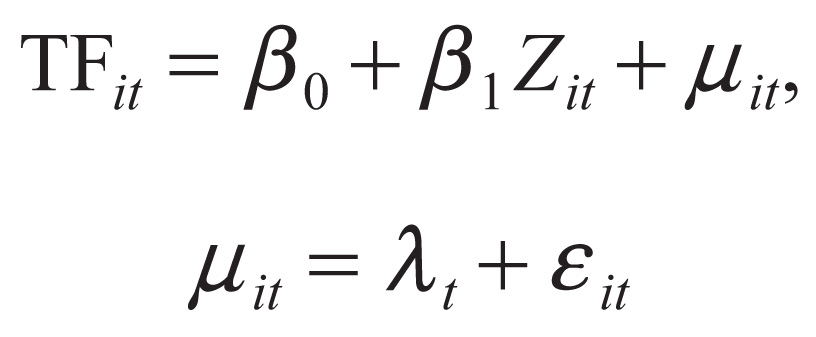
where i = country and t = year.
Zit defines institutional determinants. WGI has been used as an institutional measure. The dependent variable, TF it , is the average of country i’s score in various dimensions of TF. Following Beverelli et al. (2015), the study considers an average of TFIs. Based on the availability of TF data, the study employs a panel of 160 countries for the years 2012, 2015, 2017 and 2019. The list of countries studied is presented in Table A1.
The model specification (1) has been extended by incorporating countries’ income level and the interaction between income level and the institutional factor:

where Yit is GDP (in constant 2010 US dollars) of country i at year t. The interaction term represents the moderating effect of the income level on the relationship between institutional quality and TF performance. Additionally, model specification (1) has been extended by incorporating countries’ population size and its interaction with the institutional factor:

where Nit is the total population of country i at year t (in thousands). The interaction term represents the moderating effect of population size on the relationship between institutional quality and TF performance.
Data
The details of the variables and their sources used in the study are reported in Table 1.
Variables’ Description and Sources
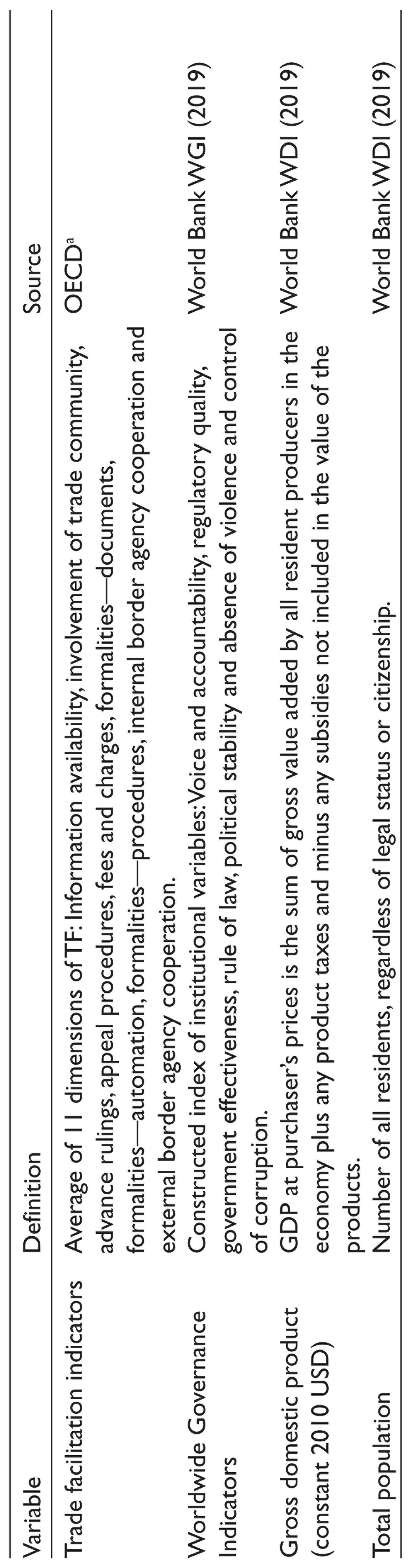
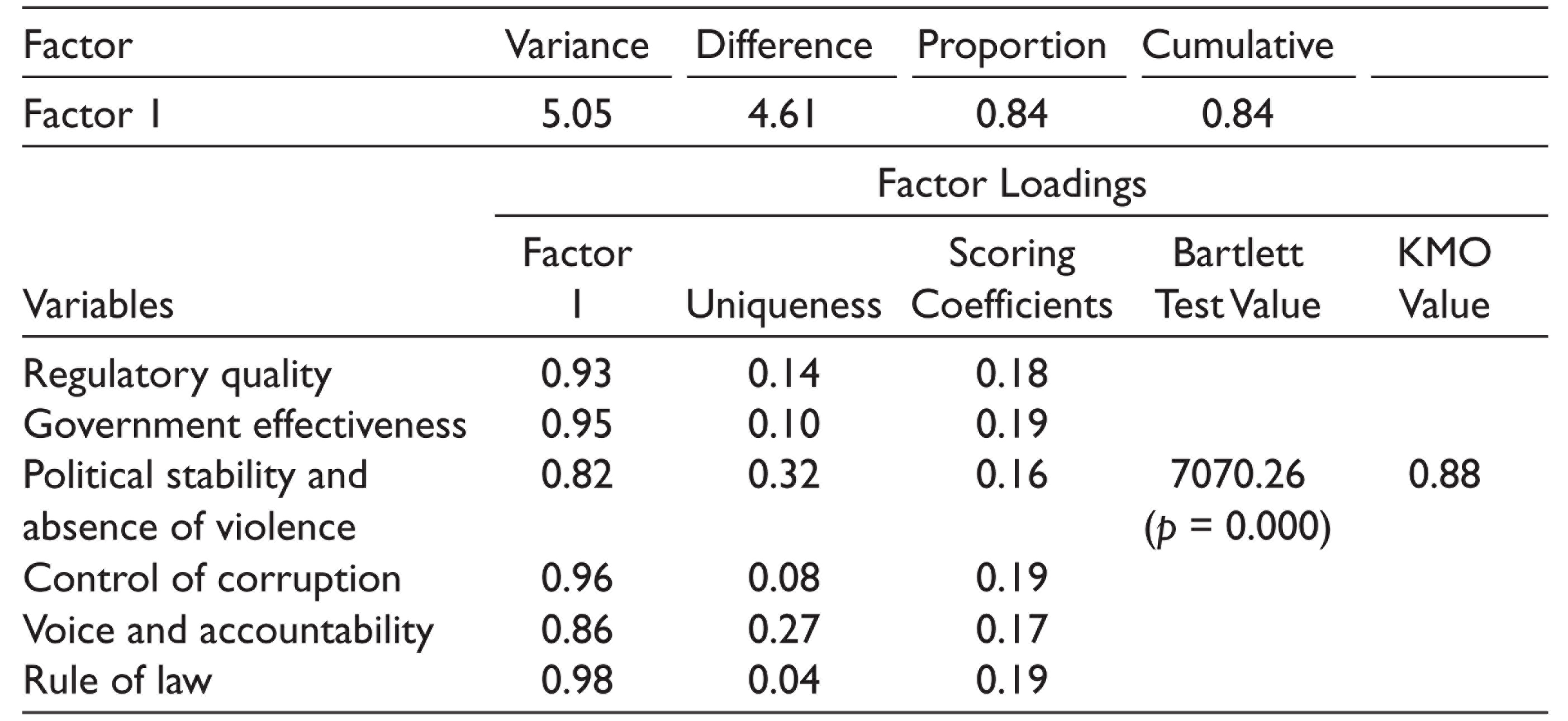
In the study, an index has been constructed, including all the six dimensions of governance. The relevant statistics associated with the construction of the WGI are presented in Table A2. The summary statistics of the main variables are presented in Table 2, which reveals that the mean value of TF indicators is 0.18 and SD is 0.36. Averaging TFIs over the years 2012, 2015, 2017 and 2019 for each country, the score is the highest for Singapore (0.599) and the lowest for Niger (−0.85). Singapore’s excellent performance, which is even better than the average of high-income countries, needs to be highlighted (see Box A). In the case of governance indicators, the best quality of institutions is found in the country New Zealand (−0.01), while the quality is the worst in Yemen (−2.34).
Summary Statistics

Table 3 presents pair-wise correlations between the independent variables. As it is clear from the table that there is a higher degree of correlation between GDP and population (0.76), the model has been estimated including income level and population size separately.
Correlation Between the Explanatory Variables

Estimation Procedures
The purpose of this study is to understand the behaviour of TF by using panel data, which can be analysed through two methods: static panel data and dynamic panel data. However, the regression analysis using the static panel data method tends to suffer from the issues such as dynamicity of the data generated and endogeneity problems. There is a high possibility that past TF may drive current TF. Additionally, causality may run from TF to institutional factors, as a country with better TF is likely to have better institutional conditions. The dynamic specification of the model would be sufficient to account for endogeneity issues. However, owing to a very short (t ≤ 4) length of time series data, the dynamic panel data method cannot be applied for these data. Therefore, the study estimates the specified model for TF using the static panel data method. Following Bell and Jones (2015) and Clark and Linzer (2015), the study uses estimates from the random effects (RE) model for analysis. Bell and Jones (2015) argued that the RE approach is always preferable, based on Monte Carlo simulation. They pointed out that the choice between fixed effects (FE) and RE must be made considering the degree of correlation between residuals and explanatory variables. Furthermore, Clark and Linzer (2015) also preferred RE over FE even with the violation of the assumption, that is, in the absence of correlation between regressors and unit effects. Based on Monte Carlo simulation, they suggested that the RE model is preferable to the FE model if there are few observations per unit and if there is low correlation between the explanatory variable and unit effects. Fewer observations per unit (maximum four observations per unit) in the dataset can justify the superiority of the RE model over the FE or ordinary least squares (OLS) model to explain the behaviour of TF.
Singapore—Best Trade Facilitation Practice
Figure A1 shows that Singapore performs excellently in all areas of trade facilitation (TF). It exceeds or is closest to the best performance for each of the TF areas across all countries. The area where Singapore underperforms is external border agency cooperation.
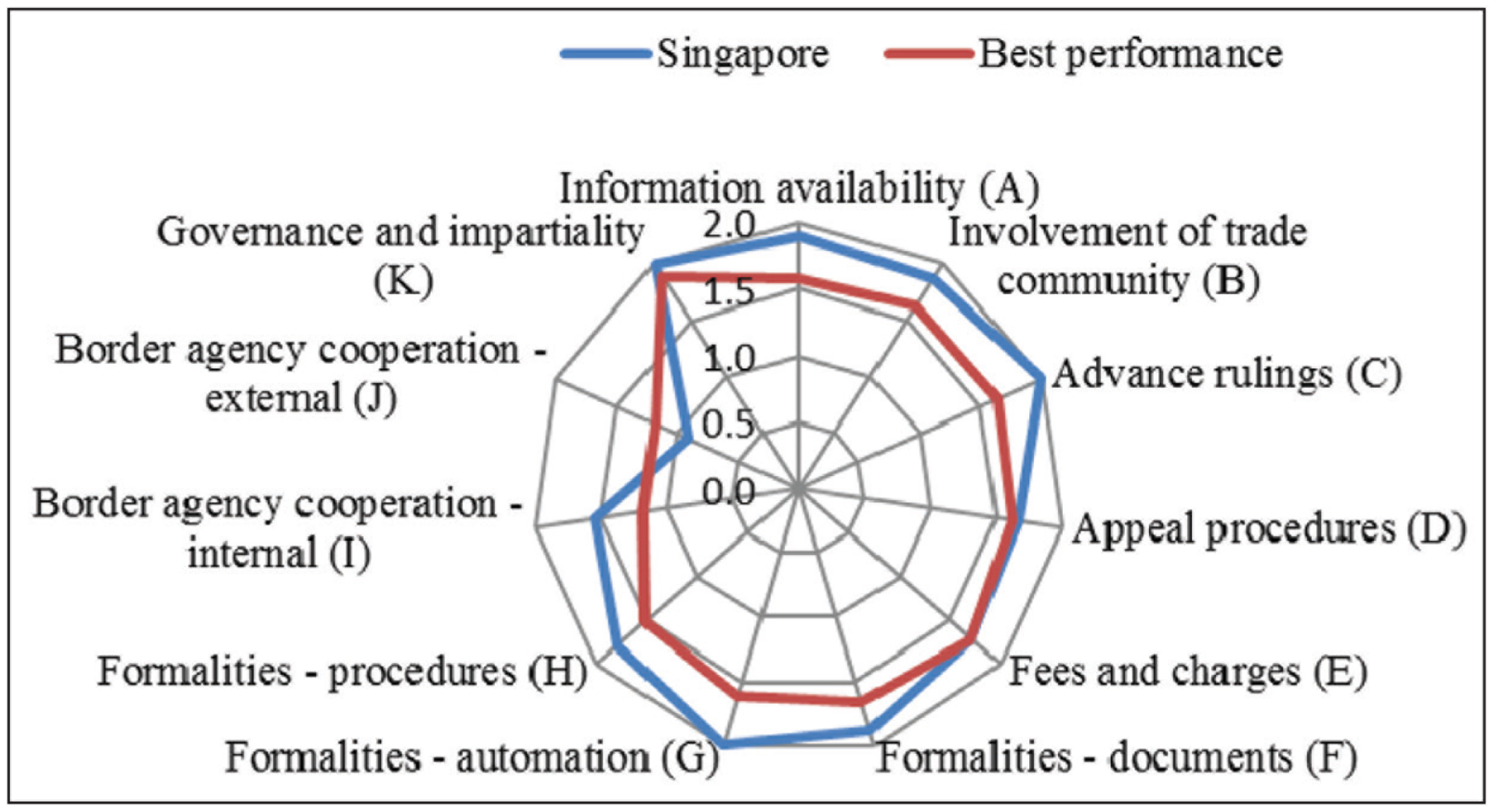
Figure A2 depicts the average score of averaged TF performance (average of all 11 dimensions) over the years 2012 to 2019. Singapore performs better than the average of high-income countries, developed regions like Europe & Central Asia, and North America in terms of average TF score.

Baseline Results
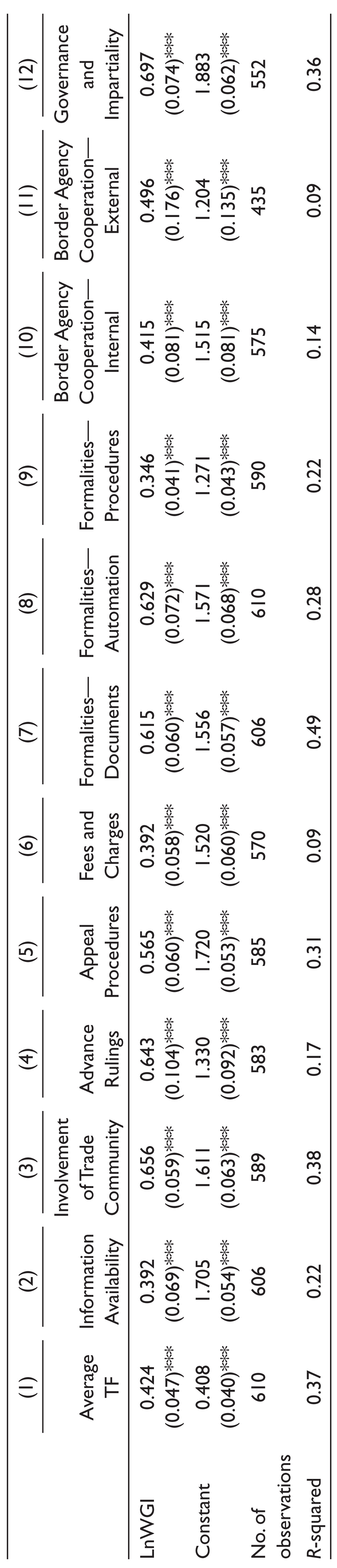
The results for the baseline model (1) are presented in Table 4, with the results of the RE analysis reported in column (1). The result for the governance factor is significant, with an expected positive sign depicting that improved institutional quality improves the TF performance of a country. The analysis has been extended further to investigate whether governance quality impacts each dimension of TFIs.
The estimation results are reported in Table 4. From the table, it is clear that governance quality affects all TF dimensions; however, customs accountability and ethics policy (0.697) get affected by the governance quality the most. This suggests that poor governance at the core reflects poor governance at the border as well. In another way, this result seems consistent with the fact that cross-border corruption will take place only with the discretion of public officials working at the border (Johnston, 1998). The involvement of the trading community (0.656) also depends on the efficiency of governance to a great extent, as the value of the coefficient reveals. Governance measures affect procedural formalities the least (0.346).
Regression Results
Regression Results
Time fixed effects have been included but not reported.
Standard errors are robust and clustered at the country level.
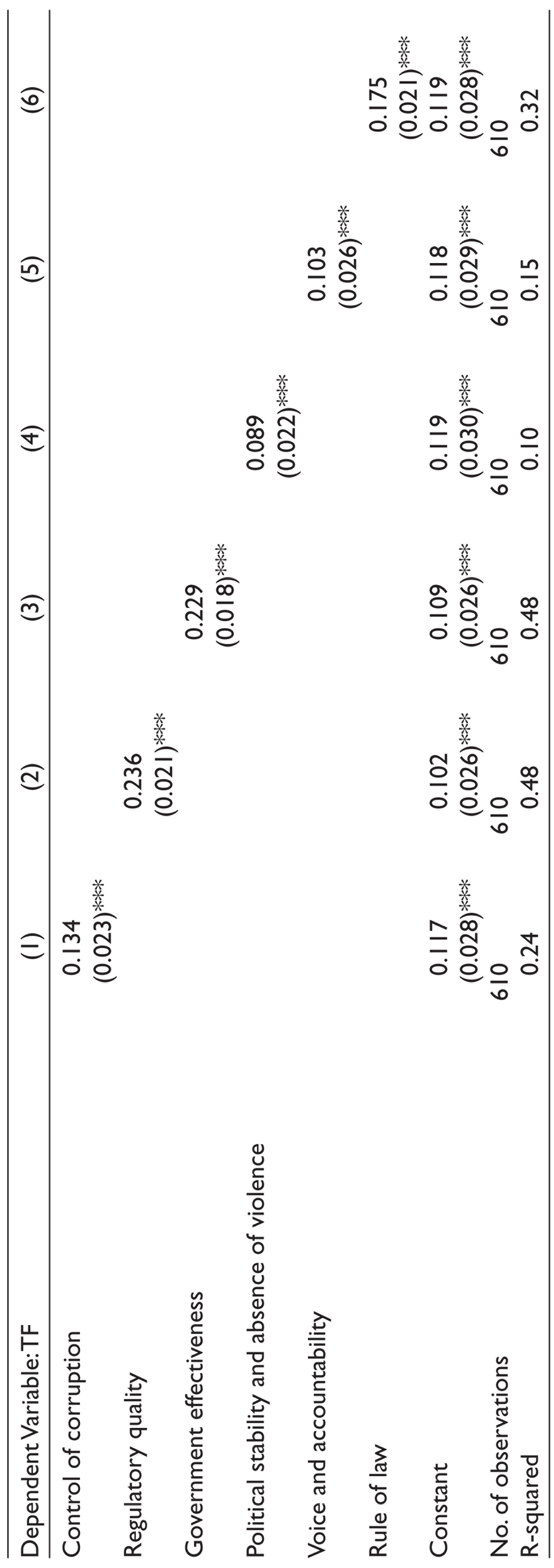
Apart from looking at the impact of governance on each dimension of TF, it seems crucial to identify the relative impact of each dimension of WGI on TF. It is more likely that some of the dimensions will have a higher impact on TF than the others. The estimated results are shown in Table 5.
The results depict that every dimension of WGI has an impact on TF performance. Table 5 shows that government effectiveness and regulatory quality affect the TF performance of a country the most. Therefore, the results imply that a government’s efficiency and ability to form and implement TF policies and regulations would determine the TF performance of that country more strongly than other institutional measures.
Baseline Results by Dimensions of WGI
Time fixed effects have been included but not reported.
Standard errors are robust and clustered at the country level.
Results at the Level of Income and Population
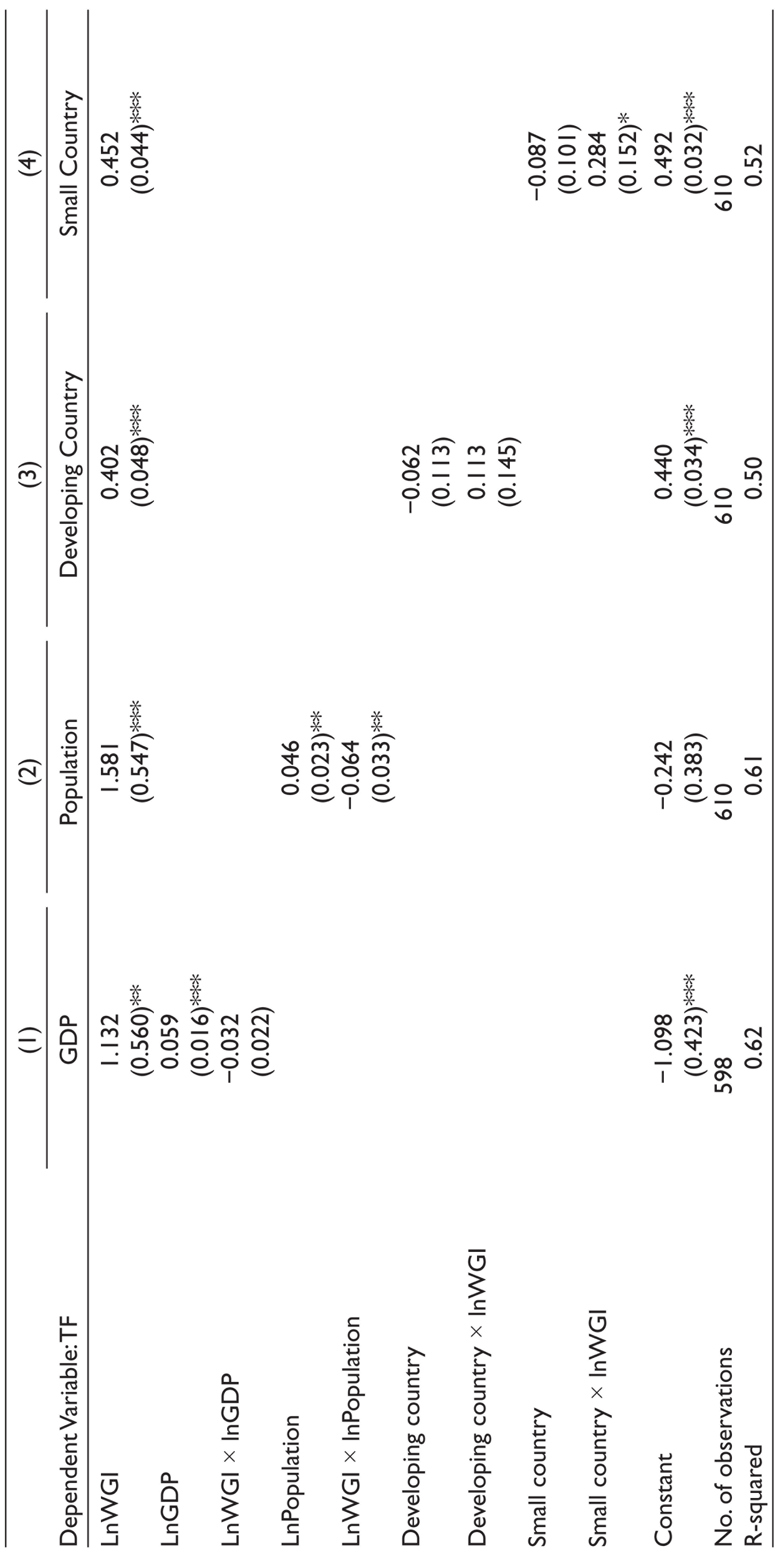
Going further from baseline results, the study also takes into account the countries’ level of income and population in determining the impact of institutional quality on TF. The results of the same are reported in column (1) of Table 6. The results in Table 7 indicate that GDP has a significant positive effect on TF performance when the value of WGI is zero. However, the interpretation of consecutive terms in an interaction model is meaningless (Brambor et al., 2006).
Regression Results at the Level of Income and Population
Time fixed effects have been included but not reported.
Standard errors are robust and clustered at the country level.
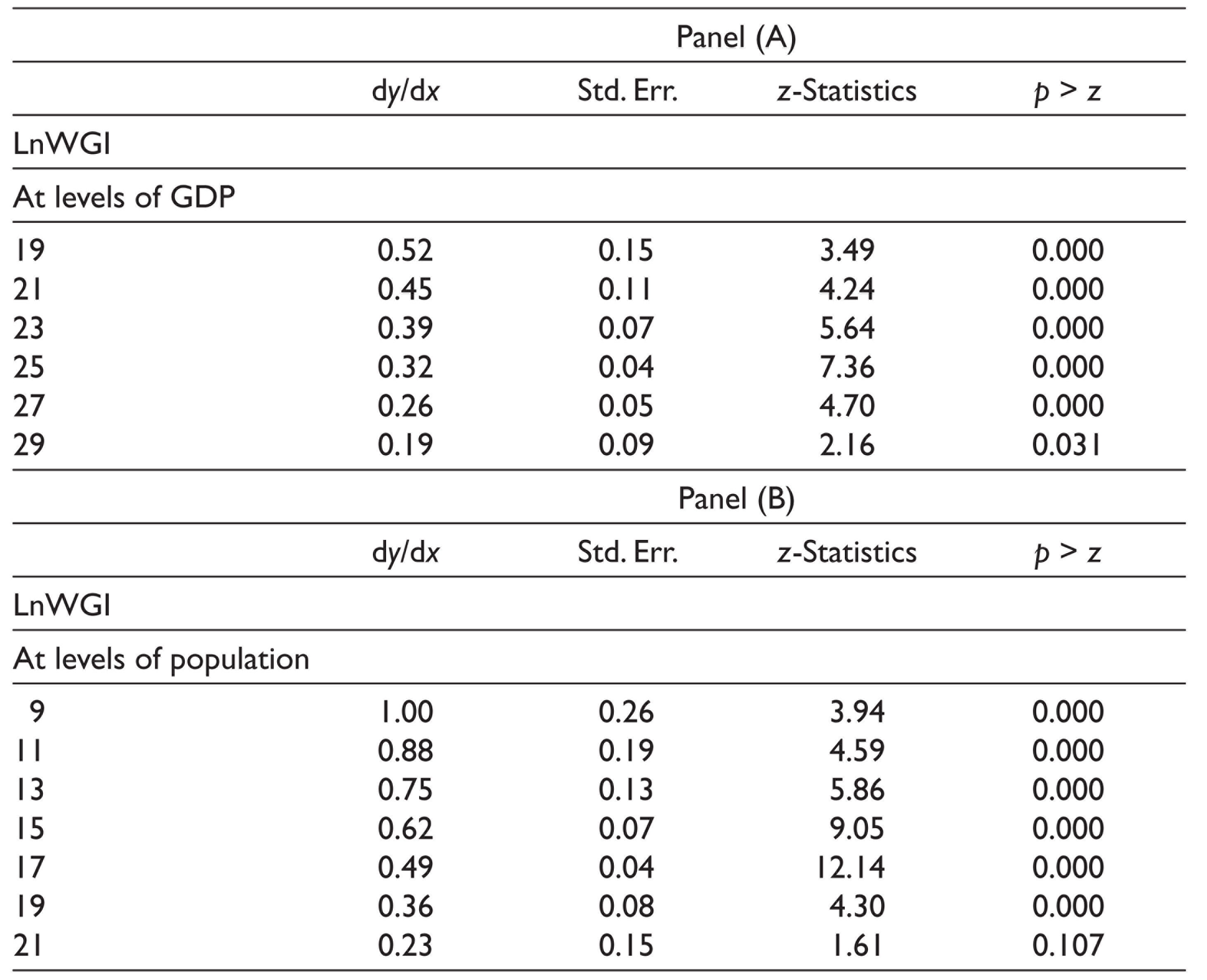
It is interesting to note that the coefficients for interaction terms WGI × GDP and WGI × Population have a negative sign. However, the coefficient for the interaction term WGI × GDP is statistically insignificant. Being more cautious, it would be incorrect to ignore the possibility of the marginal effect of WGI on TF being significant for relevant values of the moderating variable (either GDP or population) even if the coefficient on the interaction term is insignificant (Brambor et al., 2006, 2007). Therefore, the study also reports the marginal effect of WGI on TF for meaningful values of GDP and population in Table 7.
The magnitude of coefficients in panel (A) of Table 7 reveals that the positive effect of WGI on TF decreases as the value of GDP increases. The plausible explanation that can be suggested for such a result is that low-income countries are less likely to invest in combatting governance problems. Therefore, enhanced governance quality leads to a considerable increase in the country’s TF performance. On the other hand, high-income countries are already more advanced in terms of having better institutions. Therefore, TF performance due to improved governance measures would not improve much in these countries. Given the enormous benefits that can be achieved from the TFA, particularly for developing countries (Beverelli et al., 2015; OECD, 2018; WTO, 2015), poor and developing countries must focus on improving institutional efficiency. It would ensure that these countries unlock potential gains from the TF aims at reducing trade costs and achieving sustainable and inclusive growth. The magnitude of coefficients in panel (B) of Table 7 indicates that the positive effect of WGI on TF decreases with the increasing level of a country’s population. In other words, the impact of WGI on TF is significantly larger for economies with a relatively small population size. Our results show that relatively small countries are unable to invest in combatting governance problems owing to financial constraints and lower availability of resources and that larger economies with higher availability of resources are more capable of fighting governance issues. Therefore, enhanced governance quality leads to a larger increase in small economies’ TF performance compared to that of larger economies.
Marginal Effects of WGI on TF at Different Values of GDP and Population
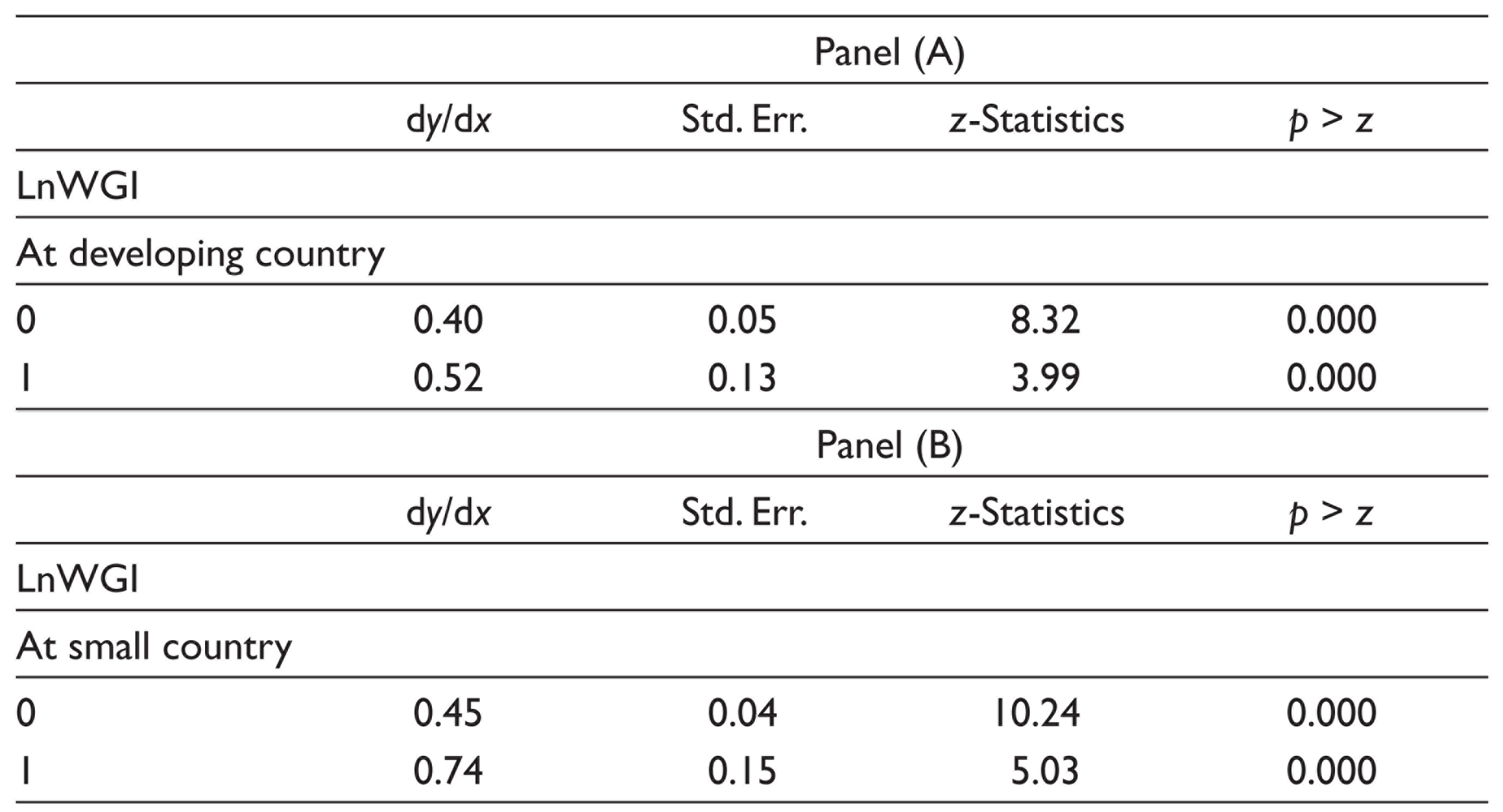
The study also estimates the varying relationship between TF and WGI using dichotomous classifications of developing vs. developed countries and small vs. large countries. The study defines a dummy variable taking the value 1 for developing countries with income below or equal to the 25th percentile value. Similarly, a dummy variable for small countries with a population below and equal to the 25th percentile value takes the value 1. The results replacing GDP with developing country dummy and population with small country dummy are reported in columns (3) and (4) of Table 6, respectively. These results are discussed in a way similar to the discussion of the case of interaction between GDP and WGI and between population and WGI. Table 8 reports the marginal effect of WGI on TF for developing vs. developed countries and small vs. large countries. The magnitude of coefficients in panel (A) of Table 8 reveals that the positive effect of WGI on TF is higher for a developing country (0.52) than for a developed country (0.40). Moreover, the positive effect of WGI on TF is higher for a small country (0.74) than for a large country (0.45), as is clear from panel (B) of Table 8. Therefore, these results are qualitatively similar to the ones discussed earlier.
Marginal Effect of WGI on TF for Developing vs. Developed Countries and for Small vs. Large Countries
Robustness of the Results
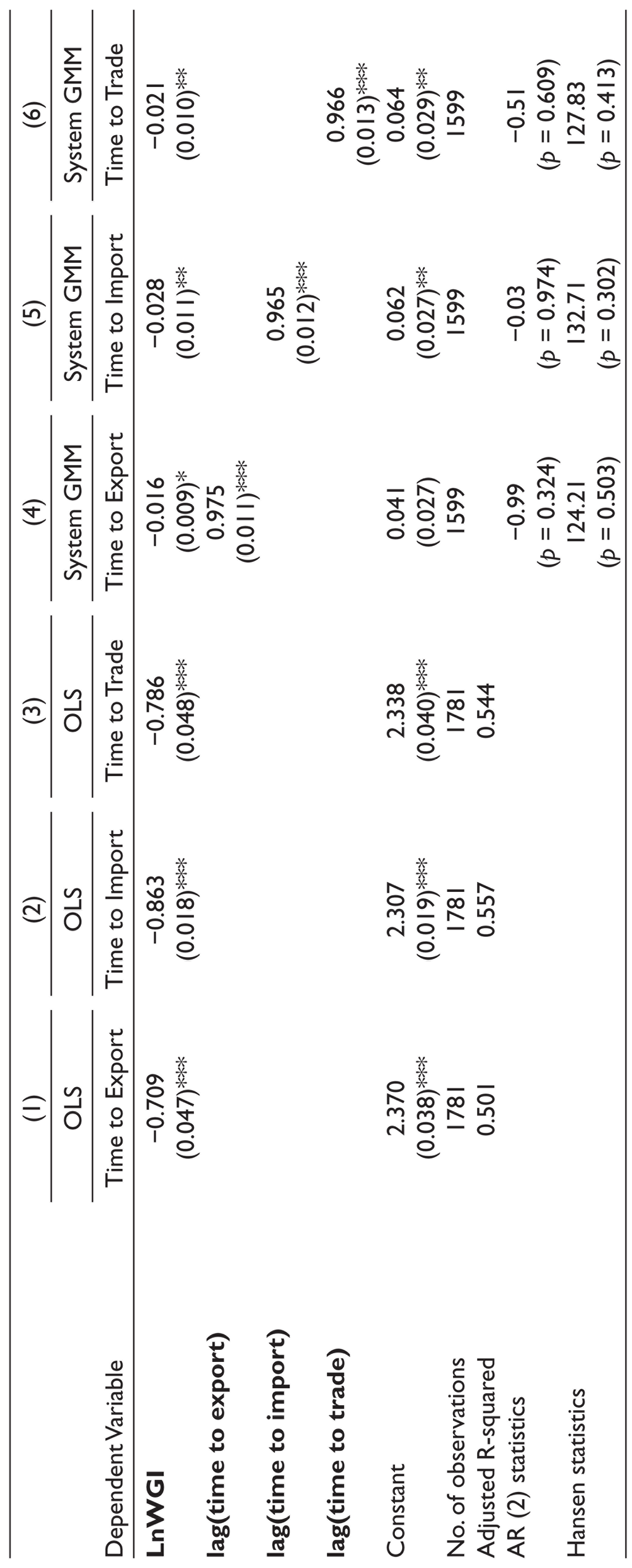
In this section, the robustness of the results is checked through employing an alternative measure of TF, that is, time to complete all procedures to export and import. Such a measure as a proxy for indicating TF performance has been used in several studies (Freund & Rocha, 2011; Persson, 2008). The data for time to export and import have been taken from World Bank Doing Business Reports—Trading across Borders for the period 2006–2015. The choice of the period is based on the availability of World Bank Doing Business data. 10 The model using time to export, time to import and time to trade 11 as the dependent variables has been estimated with OLS for benchmark purposes. Given that OLS regression fails to account for potential endogeneity between regressors and unobserved country-specific factors, the study applies the generalized method of moments (GMM) estimator. The GMM estimator is considered efficient and consistent, as it addresses potential endogeneity between regressors and other country-specific factors. Moreover, our panel consists of a small time dimension (t = 10) and a large cross-sectional dimension (N = 183). Here, the system GMM proposed by Blundell and Bond (1998), rather than the difference GMM, is applied. Blundell and Bond (1998) show that the difference GMM estimator yields biased and inefficient estimates of a lagged dependent variable because untransformed lags are weak instruments for transformed variables. The transformation of instruments rather than regressors and the use of additional instruments under the system GMM estimator results in lower bias and greater efficiency in the estimates. In system GMM, the equation system is composed of a difference equation and a level equation. The difference equation is instrumented with lagged levels, and the level equation is instrumented with lagged differences (Bond et al., 2001). Here, the dynamic panel model has been estimated assuming that endogeneity is present in both the lagged dependent variable and the explanatory variable.
The robustness results are reported in Table 9. The estimation of the model with OLS has been reported first. The results estimated using an alternate measure of TF show that an increase in governance quality decelerates time to export (as shown in column (1) of Table 9), time to import (as shown in column (2) of Table 9) and time to trade (as shown in column (3) of Table 9). The estimations using system GMM also depict the role of governance quality in determining the time to export, import and trade.
Robustness Results (I)
Time fixed effects have been included in models 4, 5 and 6 but not reported.
Standard errors are robust and clustered at the country level.
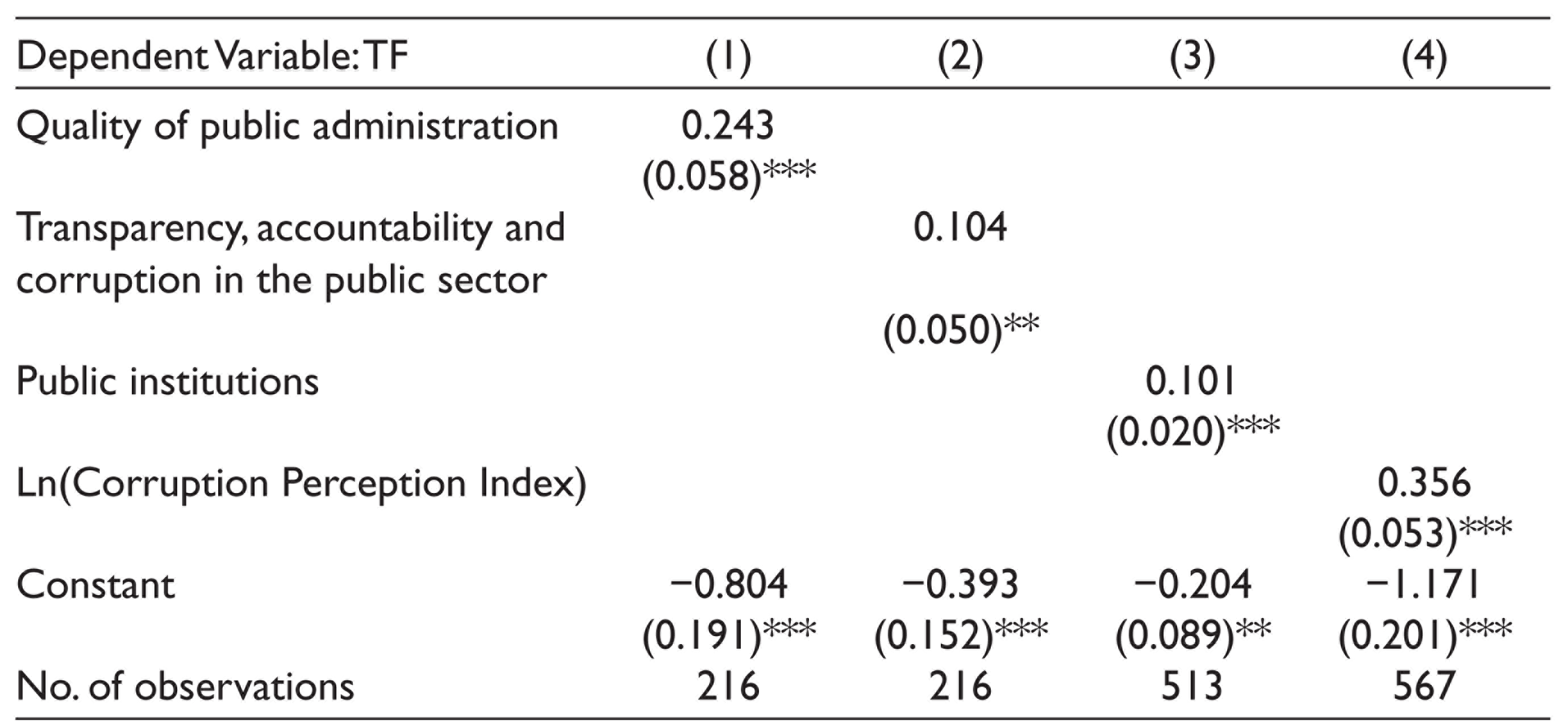
Apart from this, a robustness check has also been performed using alternative measures of institutional efficiency. These measures include: quality of public administration, transparency, accountability and corruption in the public sector (taken from World Bank Country Policy and Institutional Assessment ratings), 12 public institutions (taken from World Economic Forum Global Competitiveness Reports), and Corruption Perception Index (CPI) (taken from Transparency International). Public institutions capture many things, such as public trust in politicians, irregular payments and bribes, judicial independence, efficiency of government spending and transparency of government policymaking. The score ranges between 1 (worst) and 7 (best). CPI measures the perceived level of corruption in the public sector on the range of 0 (highly corrupt) to 100 (clean).
The results in Table 10 indicate that the alternative measures of institutional quality also have a significant effect on TF. Moreover, improved quality of public administration, more transparency and accountability and less corruption in the public sector, efficient working of public institutions and a clean public sector would further improve TF performance.
Robustness Results (II)
Time fixed effects have been included but not reported.
Standard errors are robust and clustered at the country level.
The study attempts to critically investigate the fundamental determinants of TF from a global perspective. To be more specific, it attempts to analyse the determinants of TF theoretically and empirically under the purview of WTO’s multilateral trade agreement, TFA. Upon using unbalanced panel data of 160 countries for the years 2012, 2015, 2017 and 2019, the empirical results show that good governance quality accelerates the implementation of TF measures. These results confirm the hypothesis proposed in the study that good/strong governance fosters TF initiatives by discouraging bureaucratic delays and bureaucratic self-interest, improving the efficiency of public spending and efficiency of resource allocations and promoting more productive use of capital. On the contrary, bad/weak governance impedes the process of improving TF measures, as such governance lacks procedural clarity and technical competence and is likely to introduce criteria other than efficiency into the determination of TF policies. For example, establishing enquiry points and publishing information on product requirements and certification would be much more rapid if the government can effectively formulate and implement sound policies. This study has also found the impact of each dimension of WGI on TF performance, along with the more significant roles of government effectiveness and regulatory quality. From a policy perspective, the study suggests that policies targeting reforms in the area of government effectiveness and regulatory quality are likely to be more effective in improving TF performance than other governance measures.
Moreover, the study extends the analysis by examining the effect of governance measures on TF, considering countries’ income and size level. Merely comparing the level of institutional quality does not give us the picture of which countries perform better in terms of TF. Therefore, the study suggests that the impact of governance indicators on TF may not be a simple negative one and that the efficiency of the underlying system in providing a good governance system is likely to influence the size of the impact. The findings are more promising for developing and small-sized countries, as improvement in their TF performance due to better institutions would be more substantial than for developed and large-sized countries. Therefore, the study suggests that policymakers of developing and small countries should be more conscientious about improving the quality of institutions and alleviating institutional deficiency, as this would pave their way for implementing the TFA effectively. In brief, the main policy implication of the findings is that the various countries involved in improving their TF policy measures to mitigate the impact of COVID-19 on trade should strive to enhance their governance quality to improve TF further. Moreover, this study’s empirical findings highly complement existing studies underlining the significant determinants of TF and future works focusing on assessment of the impact of TF across the world.
Limitations and Scope for Future Research
The major limitation of this research is the unavailability of long-term time series data for the measure of TF. With longer-time-series data, the analysis can be extended to a country-specific basis, which would help establish more accurate implications at the country level. The research could also be extended through studying the moderating impact of income level and size of the population on the relationship between governance measures and each dimension of TF. Barring these limitations, our results would possibly best explain the institutional determinants of TF so far.
Moreover, the study has focused only on the challenges for multilateral trade agreement (WTO TFA), as the latter has gained new significance during the pandemic crisis. However, the importance of bilateral and regional trade agreements cannot be ignored. Wolff (2020) argues that regional trade agreements can be effective in exploring the path forward for rulemaking in response to COVID-19; therefore, these agreements should be fostered. In addition, Matto et al. (2020) have also talked about the role trade agreements will play in the post-COVID-19 world. They have pointed out new measures that can be included in trade agreements (e.g., tariffs, export restrictions, regulatory protectionism) during and after COVID-19. Besides, the significance of free trade agreements has also been revived, as China and ASEAN countries have shown their commitment to sharing information on trade-related measures to tackle COVID-19 under the purview of the China–ASEAN free trade agreement. Moreover, the significance of trade agreements can also be supported by the fact that these agreements are supposed to play a greater role in fostering digital trade in the post-COVID-19 world. Therefore, a future study can be done to identify the challenges facing these bilateral and regional trade agreements, as these agreements can become one of the strategies for policymakers to manage the trade crisis that has occurred due to the pandemic.
Footnotes
Acknowledgements
The authors would like to acknowledge Dr Prabir De, Dr Nisha Taneja, Prof Indra Nath Mukherjee, Prof Shahid Ahmed, Prof Ranajoy Bhattacharya and Dr Meghna Dutta for their constructive comments and useful guidance. The authors are also thankful to Silvia Sorescu, Policy Analyst, Trade and Agriculture Directorate, Organisation for Economic Co-operation and Development (OECD), for providing data on trade facilitation indicators for the years 2012, 2015, 2017 and 2019. The authors would also like to thank the anonymous reviewers of the journal for their valuable suggestions and comments. Their comments helped improve this manuscript to a great extent.
Declaration of Conflicting Interests
The authors declare no potential conflicts of interest with respect to the research, authorship and/or publication of this article.
Funding
The authors disclosed receipt of the following financial support for the research, authorship and/or publication of this article: The authors would like to acknowledge the University Grant Commission (UGC), India, for funding this work under UGC JRF (Junior Research Fellowship) scheme, under grant number [F.15-9 (JUNE 2015)/2015(NET)].
Appendix
Exploratory Factor Analysis of Different Indicators: Loading Factors and Other Statistics
| Factor | Variance | Difference | Proportion | Cumulative | |
| Factor 1 | 5.05 | 4.61 | 0.84 | 0.84 | |
| Variables | Factor Loadings | ||||
| Factor 1 | Uniqueness | Scoring Coefficients | Bartlett Test Value | KMO Value | |
| Regulatory quality | 0.93 | 0.14 | 0.18 | ||
| Government effectiveness | 0.95 | 0.10 | 0.19 | ||
| Political stability and absence of violence Control of corruption Voice and accountability |
0.82 0.96 0.86 |
0.32 0.08 0.27 |
0.16 0.19 0.17 |
7070.26 (p = 0.000) |
0.88 |
| Rule of law | 0.98 | 0.04 | 0.19 | ||