




Abstract
Increased awareness about environmental conservation and global well-being has given way to many initiatives in renewable energy. Hydro, wind, tidal, geothermal, biomass, and solar are the main forms of renewable energy. Solar energy has the largest share of renewable energy and is rapidly increasing because it is feasible and competitive. Many studies have been undertaken to understand the adoption and diffusion of solar energy. This article is a systematic literature review using the TCCM (Theory, Context, Characteristics, Methods) model. It reviewed 95 studies (from 2000 to mid-2023) indexed in top journals on small solar energy installations, primarily in the residential sector. This study discussed well-established product adoption theories, which helped identify various drivers and facilitators affecting solar energy adoption, such as sociocultural, technological, economic, market, and policy. The authors tried to map the facilitators with countries based on income groups, and it was found that the characteristics of solar adoption are similar among countries in an income group.
Keywords
Introduction
The adoption of renewable energy is on the rise. The United Nations Sustainable Development Goals (UNSDG) emphasize exploring renewable energy sources to ensure clean and affordable energy for all by 2030 (UNSDG, 2015). Past research shows a consistent increase in the share of renewable energy sources, especially wind and solar energy, in the energy mix (Kajikawa et al., 2008). Based on outcomes of COP26 deliberations, Adekoya et al. (2023) found that reduction in coal consumption and economic development find a trade-off, and hence, policy designs for low-carbon technologies should be an optimized energy mix of both renewable and nonrenewable energy sources. Successful implementation of these policies requires rampant adoption and diffusion of renewable energy sources (RES) at macro as well as micro levels.
Large-scale renewable energy installations are already growing exponentially in the form of solar farms, wind farms, and floating solar, to name a few (Alipour et al., 2021). However, there is considerable potential for small-scale installations in the residential sector. Rooftop solar energy is the most prominent of the existing RES (Alipour et al., 2021). This study tries to understand residential consumers’ attitudes and preferences toward rooftop solar energy systems, primarily solar photovoltaic (PV) and solar water heating systems. Although many studies are available on the adoption and diffusion of solar products (Ahmed et al., 2022; Faiers & Neame, 2006; Irfan et al., 2021; Karakaya et al., 2014; Palm, 2020; Pathania et al., 2017; Wolske et al., 2017; Zulu et al., 2022), little has been covered regarding context-specific motivating factors.
This study fills this gap and provides a comprehensive list of context-specific motivating factors for adopting solar energy. The motivations to adopt renewable energy are different and context-specific. For instance, pro-environmental attitude in high-income economies motivates people to use solar energy at a higher cost (Walters et al., 2018; Wolske et al., 2017). In contrast, the cost is a primary concern in low-income economies where subsidies are an effective intervention to promote solar products (Cheam et al., 2021; Qureshi et al., 2017). The availability of institutional support, microfinance facilities, and community participation helps in the adoption of solar products. Creating awareness about the benefits of solar power over conventional power also helps in higher diffusion (Kalish, 1985). The availability of electricity helps reduce the dependence on unreliable grids, improving the quality of life in rural areas (Pasten & Santamarina, 2012).
This article is a systematic literature review that dives deep into finding motivators or drivers that could help diffuse this technology in various countries and regions and is based on the TCCM (Theoretical concepts, Contexts, Characteristics, and Methodologies) framework propounded by Paul & Rosado-Serrano (2019). As per Paul and Criado (2020), literature reviews help expand the conceptual, thematic, and methodological domains of the subject being studied. This study is a framework-based review that considers the widely accepted theoretical models and methodologies in different geographical contexts and helps in understanding the various products as well as individual characteristics that are instrumental in the adoption and diffusion of solar energy products. Review of available literature is relevant as well as important since it gives insights on multiple impact factors such as social, geographical, politico-legal, and environmental ones, affecting solar energy adoption. These factors when studied in detail in one context may help in identification of problems in another one and also aid in predictive modeling.
As discussed above, the study contributes to the domain of renewable energy adoption in that it tries to identify the most used approaches and organize them for analyzing and understanding diffusion patterns. This will help policymakers in framing inclusive policies more efficiently and accurately. The study also explored the scalability and transferability of models adopted from one country/region to other countries/regions. The study aims to answer the following research questions (RQ):
RQ1: How has the adoption of solar products in the residential context become important over time? RQ2: Which articles, researchers, and countries are working for the adoption of solar products? RQ3: Which theories, characteristics, context, and methodologies are essential for the adoption and diffusion of solar products?
The study reviewed various research articles and articles to fulfill the desired objectives and identify the research gaps in this domain. Accordingly, our article is divided into nine sections. The second section discussed the methodology; the third section presented the theoretical frameworks (T of TCCM framework); the fourth section classified studies in the Context (first C of TCCM framework); the fifth section identified the Characteristics (second C of TCCM framework) of the literature; the sixth section dealt with the Methods (M of TCCM framework) used in previous studies. General discussions about the study are dealt with in the seventh section, and implications are discussed in the eighth section. Finally, the ninth section concludes the study with the limitations of the study and possible future research.
Methodology
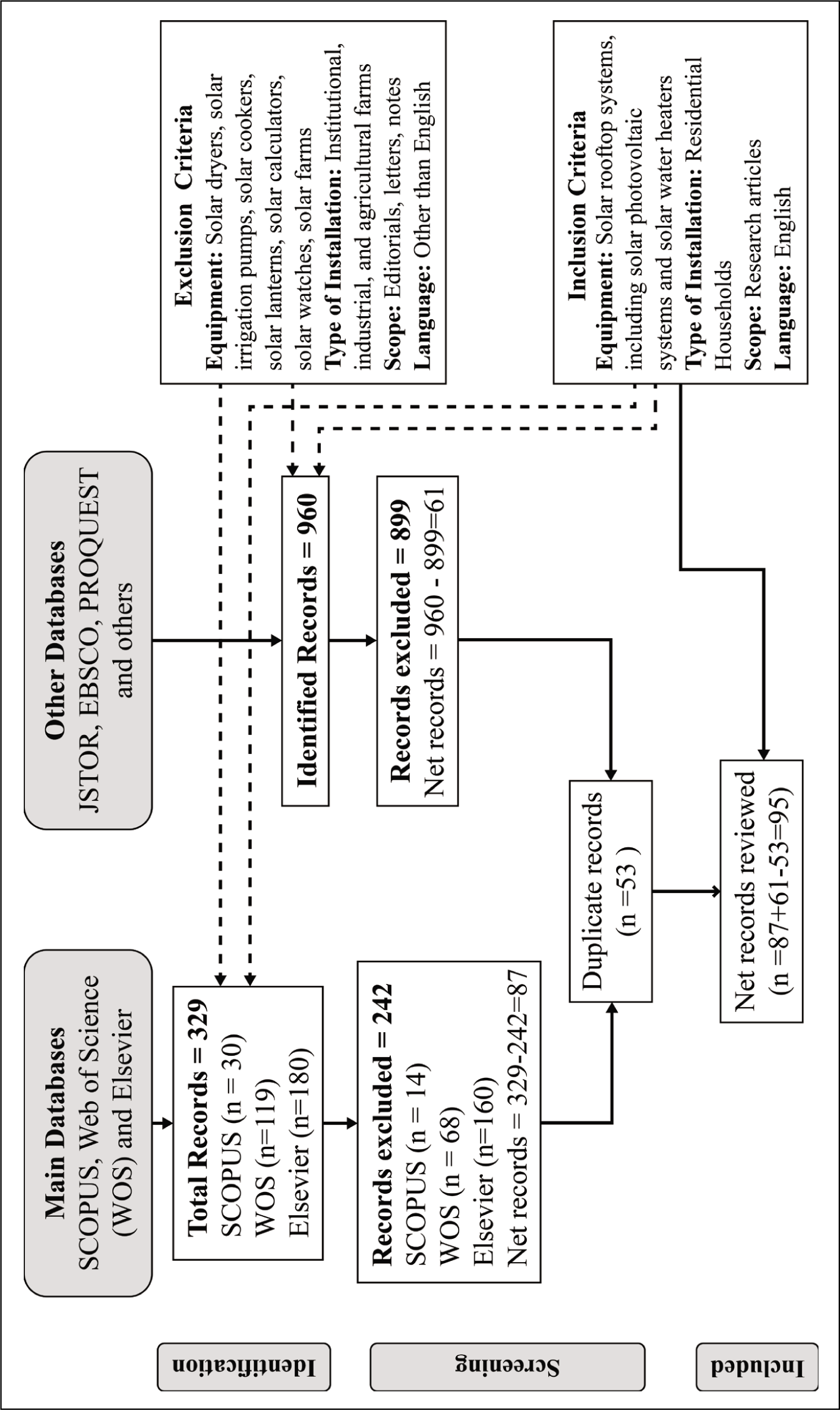
To conduct a systematic review, good impact factor journals and established databases, like Scopus, Web of Science, Science Direct, JSTOR, Taylor and Francis, Google Scholar, EBSCO, ProQuest, and Elsevier, were searched. Also, citations, bibliography, abstracts, and related keywords like adoption, diffusion, solar energy, renewable energy, solar water heater, PV systems, solar products, motivating factors, barriers, consumer behavior toward clean energy, innovation, technology acceptance, sustainability, antecedents, and frameworks were looked for in various combinations. The search phrase “motivating factors for solar energy systems” was considered from 2000 to mid-2023. The articles from low-impact factor journals were excluded from the review. A flowchart depicting the search process steps and search criteria to collect data is shown in Figure 1. The data collection process used the Preferred Reporting Items for Systematic Reviews and Meta-Analyses (PRISMA) framework. The selected studies identified dependent and independent variables that could prove beneficial to marketers who can utilize them in the context and given situations. Future researchers can also use these variables to understand consumer behavior concerning the adoption of solar rooftop systems.
Flowchart of the Study (Using PRISMA).
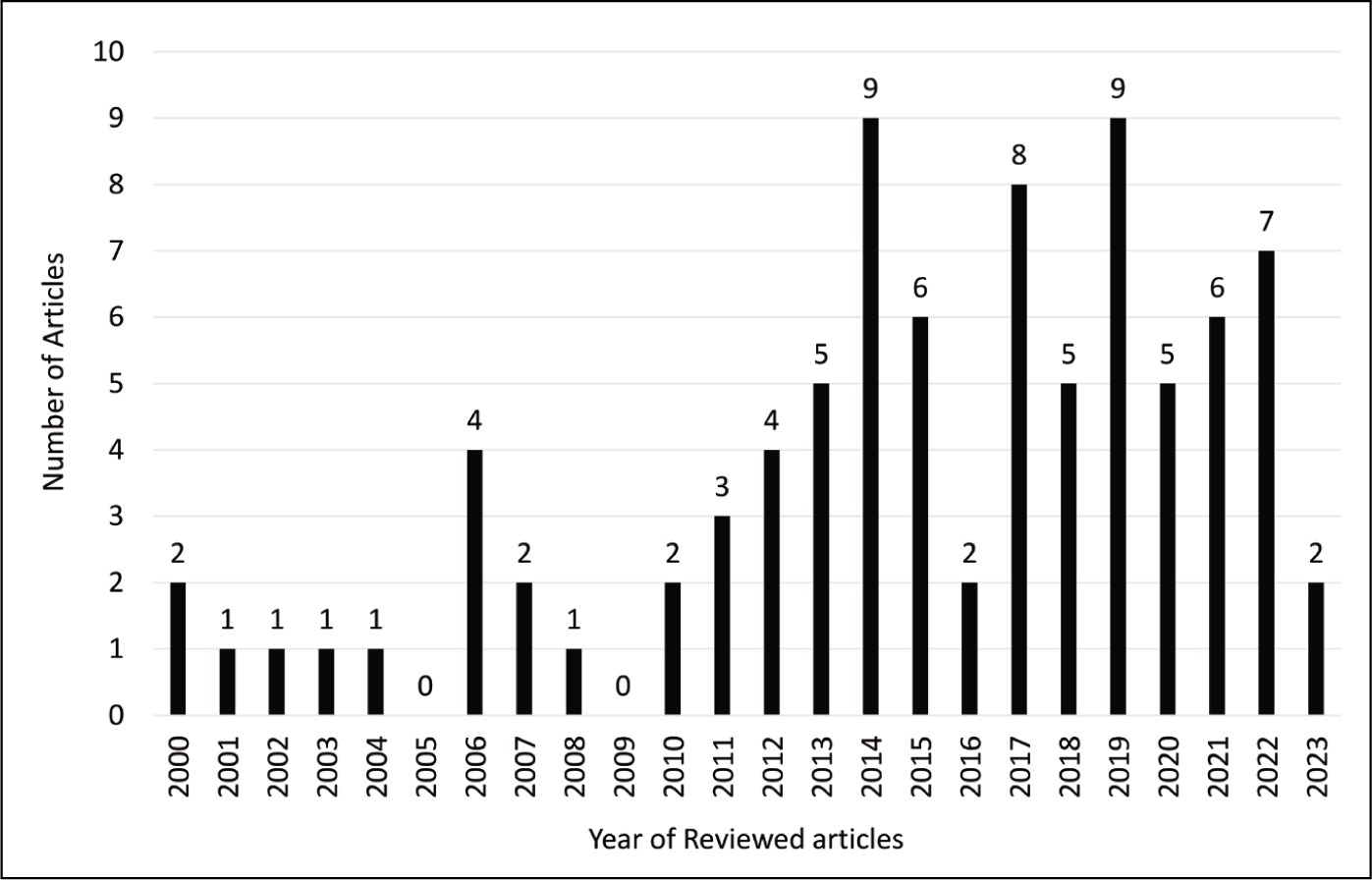
Iskin et al (2013) observed that an increased number of articles on the above topic could be found only after the year 2000 because of increased crude oil prices. Hence, the search was narrowed down to the years 2000 to mid-2023 and a total of 95 articles were selected. Some articles described the development of various theoretical frameworks before 2000. The distribution of articles (including reports from various sources) up to mid-2023 is shown in Figure 2.
Reviewed Publications (2000-mid-2023).
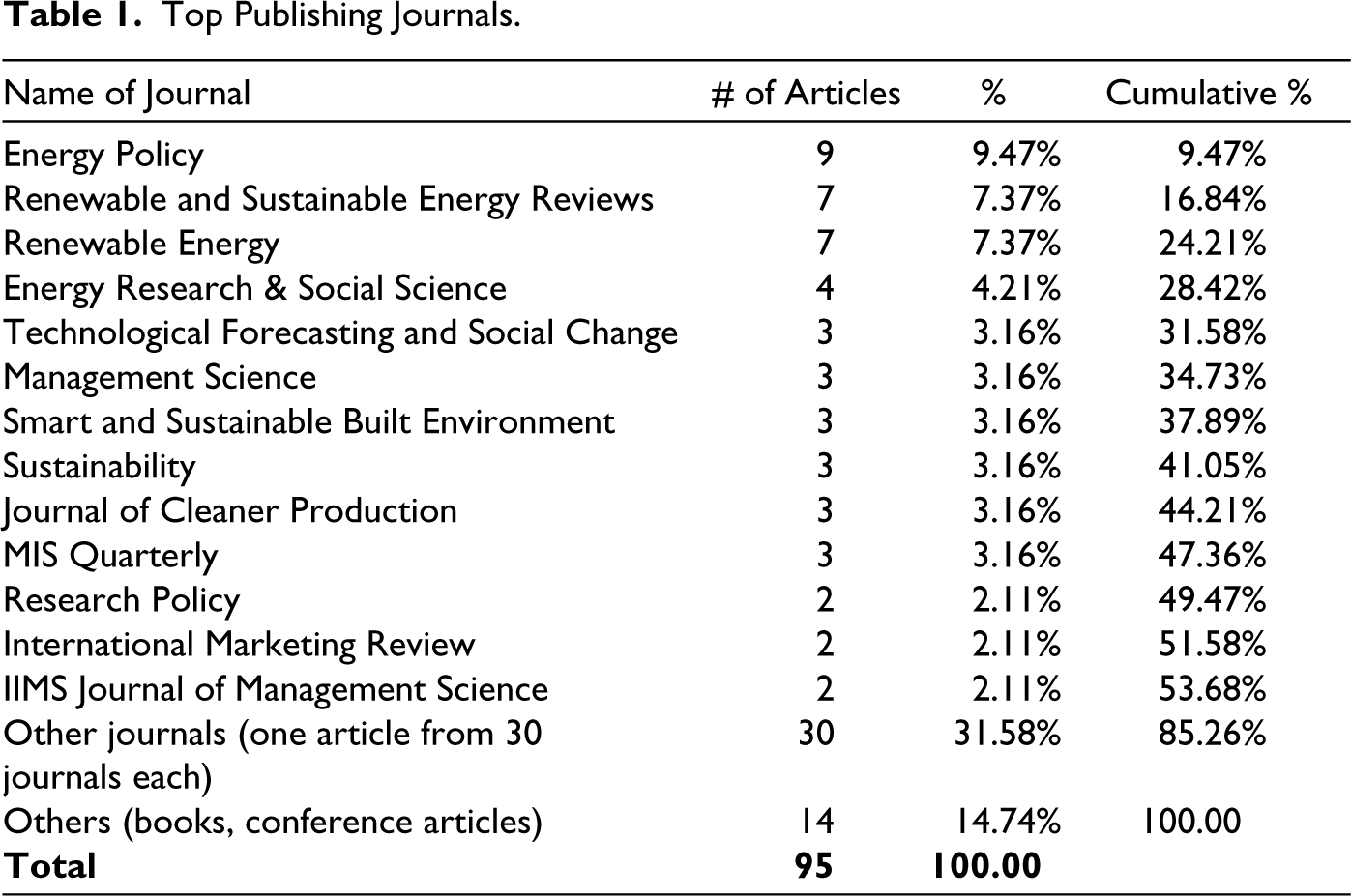
The articles from peer-reviewed journals were analyzed to understand the enabling agents for scaling up solar power usage. Based on the number of articles published, the top journals were Energy Policy, Renewable and Sustainable Energy Reviews, Renewable Energy and Energy Research & Social Science (Table 1).
Top Publishing Journals.
The research articles included empirical articles, reports, and existing reviews, and a snowball methodology was adopted in some cases of cited literature. Also, some articles were studied to understand the framework (TCCM) on which our study is based (Paul & Rosado, 2019; Singh & Dhir, 2019).
The World Bank’s WDI (World Development Index) was used to classify countries according to their gross national income (GNI). Countries are classified as low-income, lower-middle income, upper-middle income, and high-income groups. This context is even more important because, in most studies dealing with the adoption of solar products, income and the cost of the equipment are prominently highlighted as significant variables.
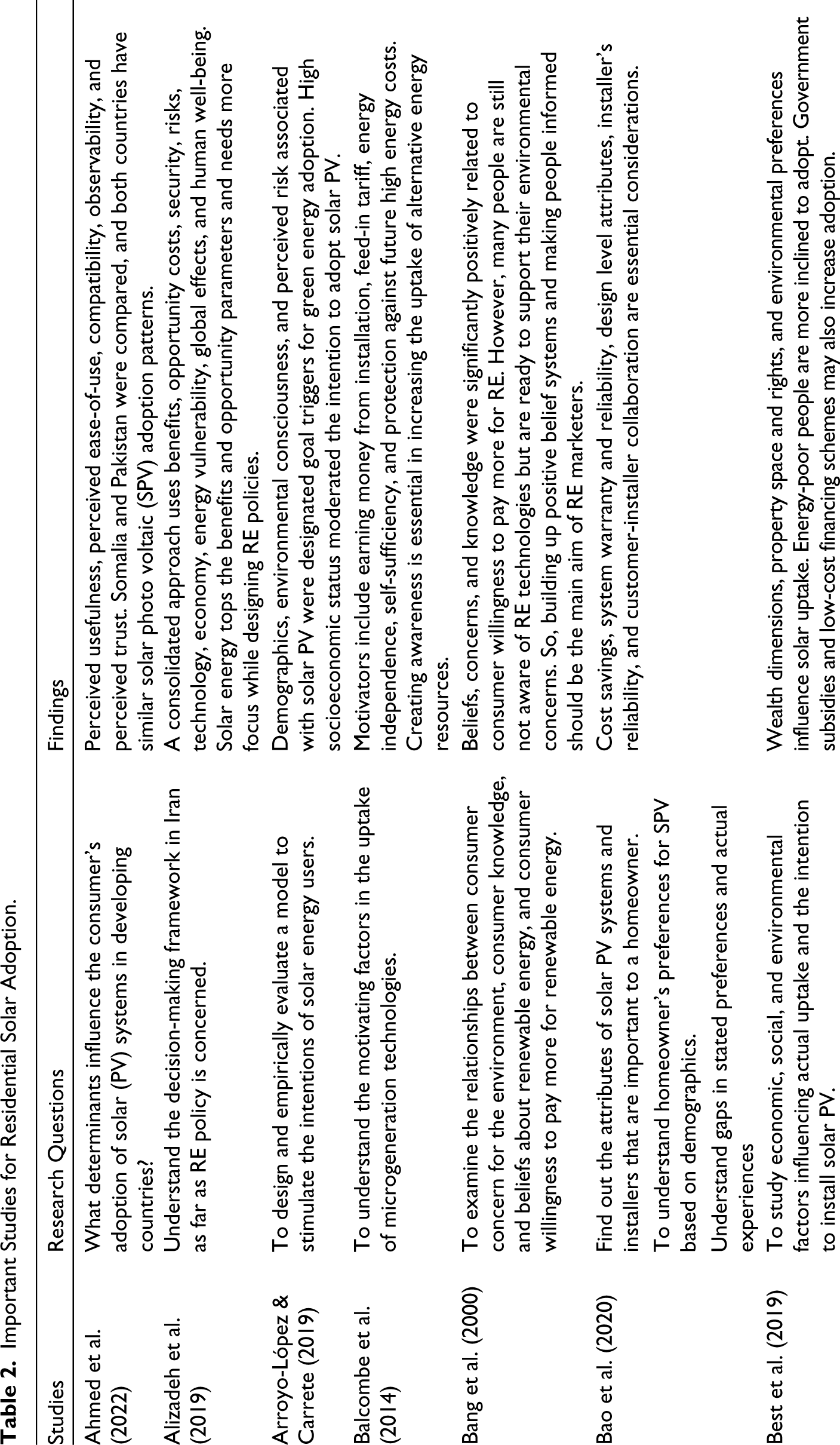
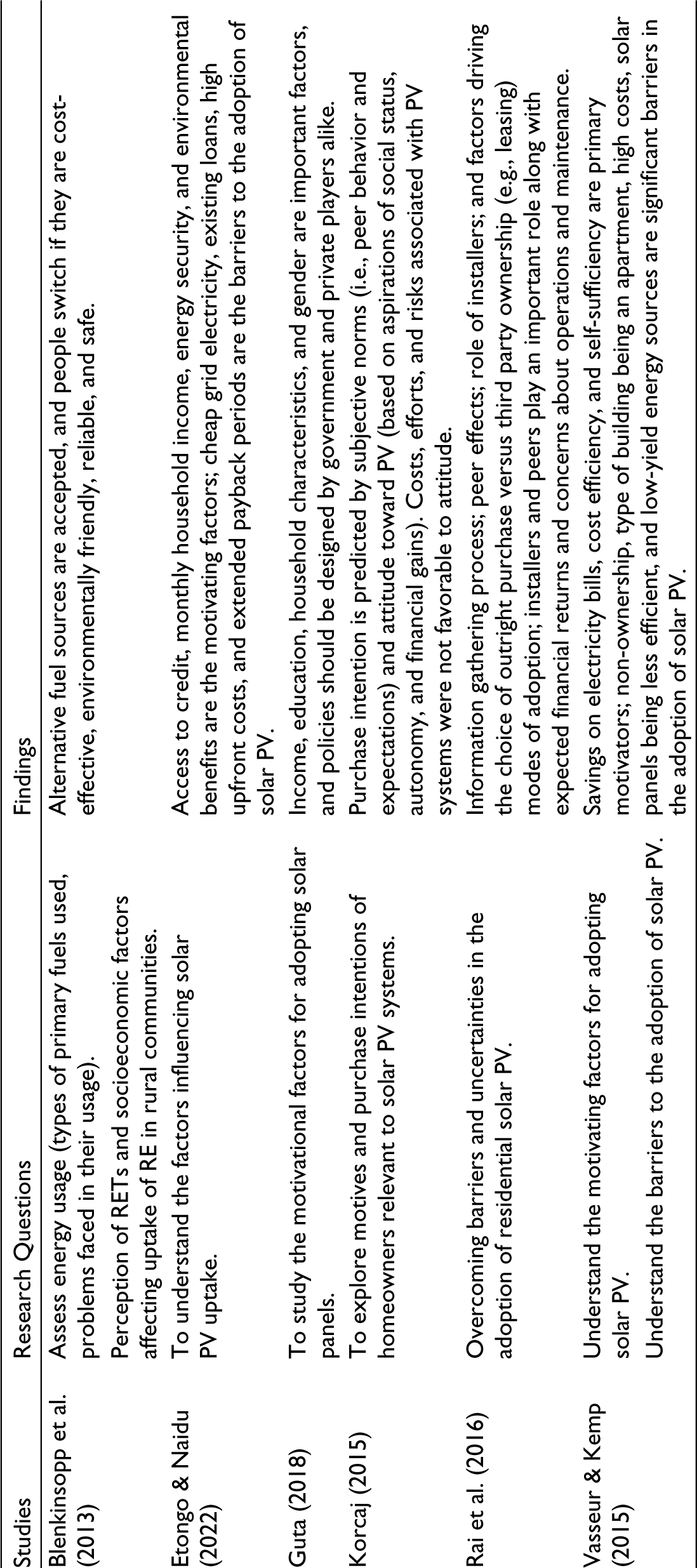
Searching various databases yielded quite a few review articles based on different frameworks. However, no study on solar energy adoption was found regarding the TCCM model. Table 2 summarizes prominent studies in this area, followed by a comprehensive analysis of this article, as given in Figure 3.
Important Studies for Residential Solar Adoption.
Analysis of our Study.
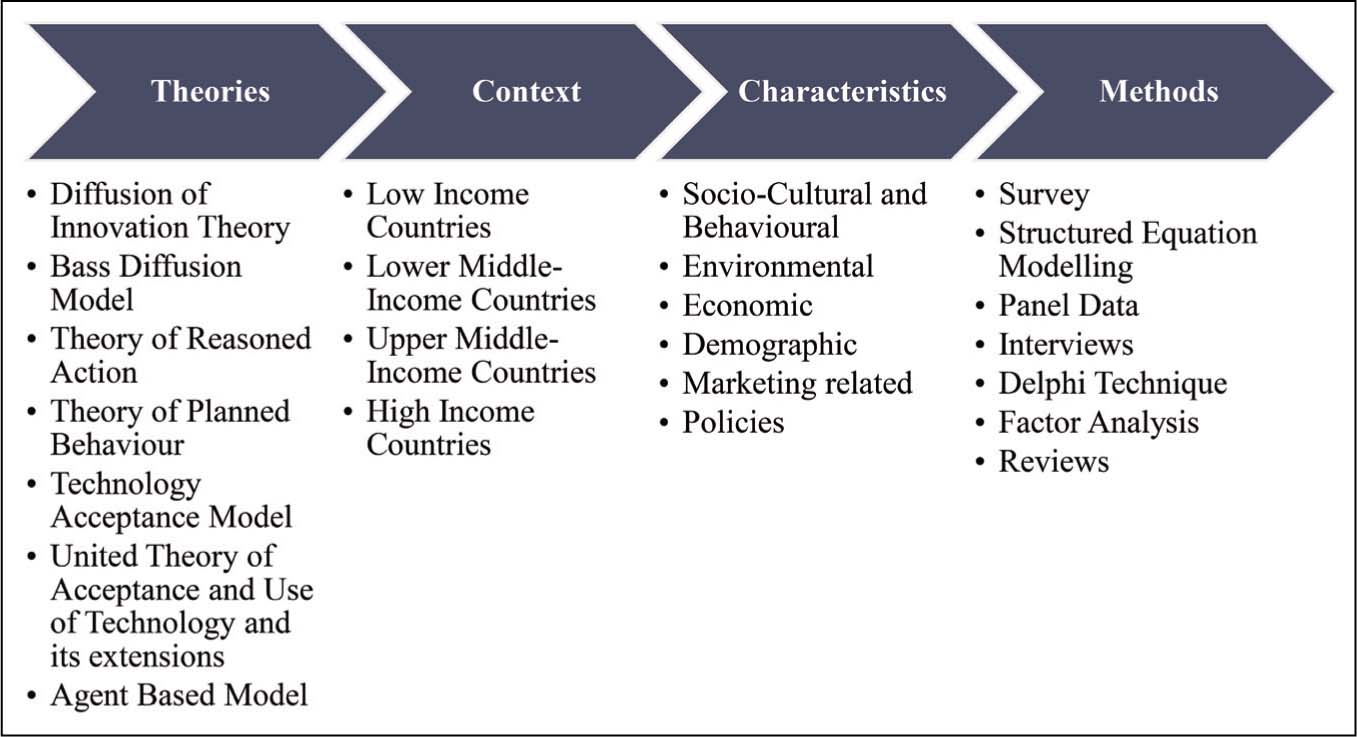
What Is the TCCM Framework?
TCCM is an acronym for Theory, Context, Characteristics, and Methodology. The TCCM framework is a comprehensive model that provides a structured approach to synthesizing, analyzing, and understanding literature. It is frequently used in systematic literature reviews.
Reviews based on the TCCM framework can be done in four steps:
Identification of relevant and dominant Identifying and evaluating Analyzing the Reviewing the
Though many review techniques are available, this framework’s comprehensiveness and easy-to-understand approach made us use it for our study. Further, very few authors have tried to explore this methodology of reviewing residential solar energy adoption. A clear segregation of theories, context, and methods helps synthesize and evaluate existing literature more easily (Paul & Criado, 2020).
Theory (T)
Various theories have been developed over the years on people’s attitudes toward adopting newer ideas, technology, or innovations and how these innovations diffuse through different stages of adoption. This section will explore some commonly applied theories on the diffusion of solar products. The scope of our review is limited to solar PV, solar water heaters, and solar home systems. Solar energy systems are still evolving and remain in the realm of innovation and a niche market (Sharif & Mithila, 2013).
Various studies covering adoption and diffusion of solar energy products have referred to the Diffusion of Innovation Theory (DOI/IDT), given by Rogers (1962). According to the theory of diffusion, a product or an idea gets adopted over time socially due to its innovative attributes such as relative advantage, observability, trialability, compatibility with existing practices, and complexity or simplicity for ease of use. The theory further explains that innovation gets adopted and diffused in stages, which include knowledge or awareness spread among individuals through various communication channels, persuasion levels, the decision to adopt or not adopt after weighing the given attributes, actual adoption or implementation, and finally continuing with the given product or innovation. This innovation diffusion theory has been in use for years in different domains. However, a lack of cohesion, dynamism, and flexibility along with one-directional information flow has led to modified versions of this theory and the emergence of many other concepts like Collaborative Innovation Networks (CoIN), Technology Acceptance Models, and other variants.
Bass diffusion model gives a mathematical equation to understand the adoption process of a product in a population. Bass (1969) gave a diffusion theory based on the concept that an innovative product or idea gets adopted and diffused through two communication channels: mass media and word-of-mouth. The model categorized adopters as external influences who follow mass media and called them innovators. The other category, internal influences, follows word-of-mouth and is called Imitators (Mahajan et al., 1990). However, the original model did not consider factors like seasonality, which led to many variants later. These variants were classified as Fundamental and Flexible Diffusion models by Mahajan and Peterson (1985) and Time and Space diffusion models (Rao & Kishore, 2010).
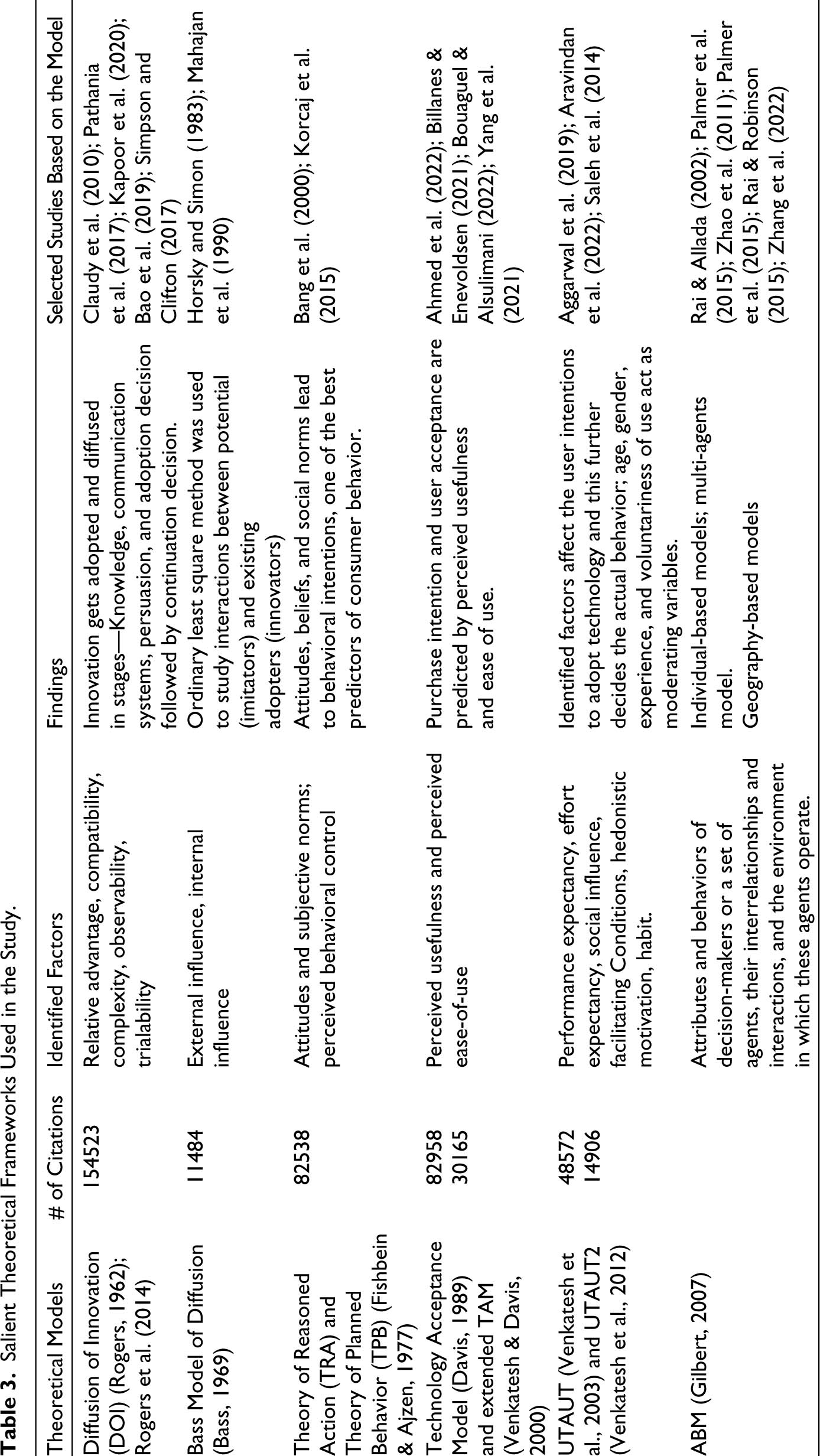
The theory of reasoned action (TRA) by Fishbein and Ajzen (1977) is particularly important in understanding consumer purchase behavior. The authors divided the belief antecedents into behavioral (attitude toward the behavior) and normative (perceived social pressure associated with the behavior) sets. The authors found that behavioral intentions are one of the best predictors of consumer behavior and can be utilized in designing product and market development strategies. Ajzen (1991) gave the theory of planned behavior, which explains that consumers who intend to adopt a product are more likely to purchase and use it in the future. Another significant contribution is made by Davis’s Technology Acceptance Model (TAM) and its extensions in UTAUT and UTAUT2. Table 3 gives an overview of various theoretical frameworks used in the study.
Salient Theoretical Frameworks Used in the Study.
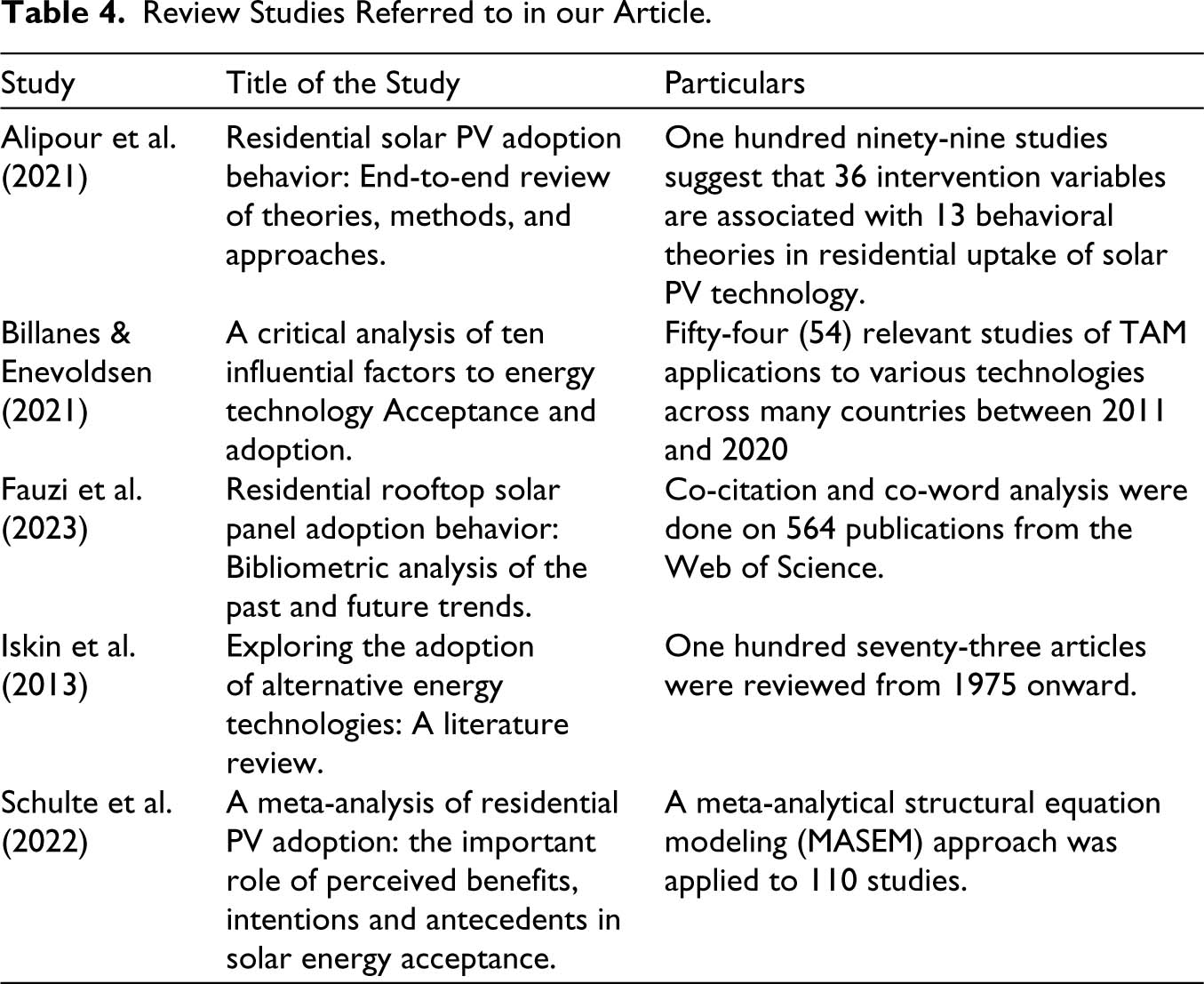
Besides referring to the theoretical frameworks for understanding the conceptual and historical evolution of the adoption and diffusion process of technological innovations, it was very important to understand how various studies contributed to identifying study variables and attaining research objectives. An easier and more understandable method was to analyze the existing review articles. Although there is a slow growth of review studies on solar adoption (Rai et al., 2016), various studies have observed that solar PV adoption is increasing among residential consumers. Table 4 shows some important review studies pertinent to our topic of residential adoption of solar energy systems.
Review Studies Referred to in our Article.
Context (C)
Various studies show that environmental concerns primarily trigger the acceptance of solar power in the case of economically developed countries. Economics is secondary to them (Schelly & Letzelter, 2020). On the other hand, low awareness levels, lack of funds, and low market accessibility result in low diffusion levels of solar products in developing countries (Venkateswaran et al., 2018). One of the main characteristics of low-income countries about energy consumption patterns is the rural-urban divide, wherein rural households mostly use energy to light up their homes and cook (Haselip et al., 2011; Kabir et al., 2017; Komatsu et al., 2011; Tigabu, 2017; Venkateswaran et al., 2018) and the urban population uses the electricity primarily for heating, space cooling, and running other appliances.
Hence, models used in developed countries should not be followed mindlessly in developing countries because their issues regarding social, economic, and cultural setups are pretty different (Painuly, 2001). Gurtu and Goswami (2020) observed that energy consumption patterns vary in the different stages of economic development.
Further, developing countries are in a transitional phase of transforming from an energy-poor state to an energy-sufficient one, which calls for dynamic and flexible models that can be adapted as per the country’s socio-economic indicators. Policies like feed-in tariffs, subsidy plans, and increasing electricity costs can also help in energy transitions. As per a report on the policy on renewable energy, RE growth drivers are classified into five dimensions, namely, resources (availability vs. potential vs. accessible), policy (regulatory frameworks, targets, and enabling mechanisms), economic (competitive advantage of RE vs. traditional resources of energy, cost factors, funding, and investments), and technical (grid capability) (Po, 2014).
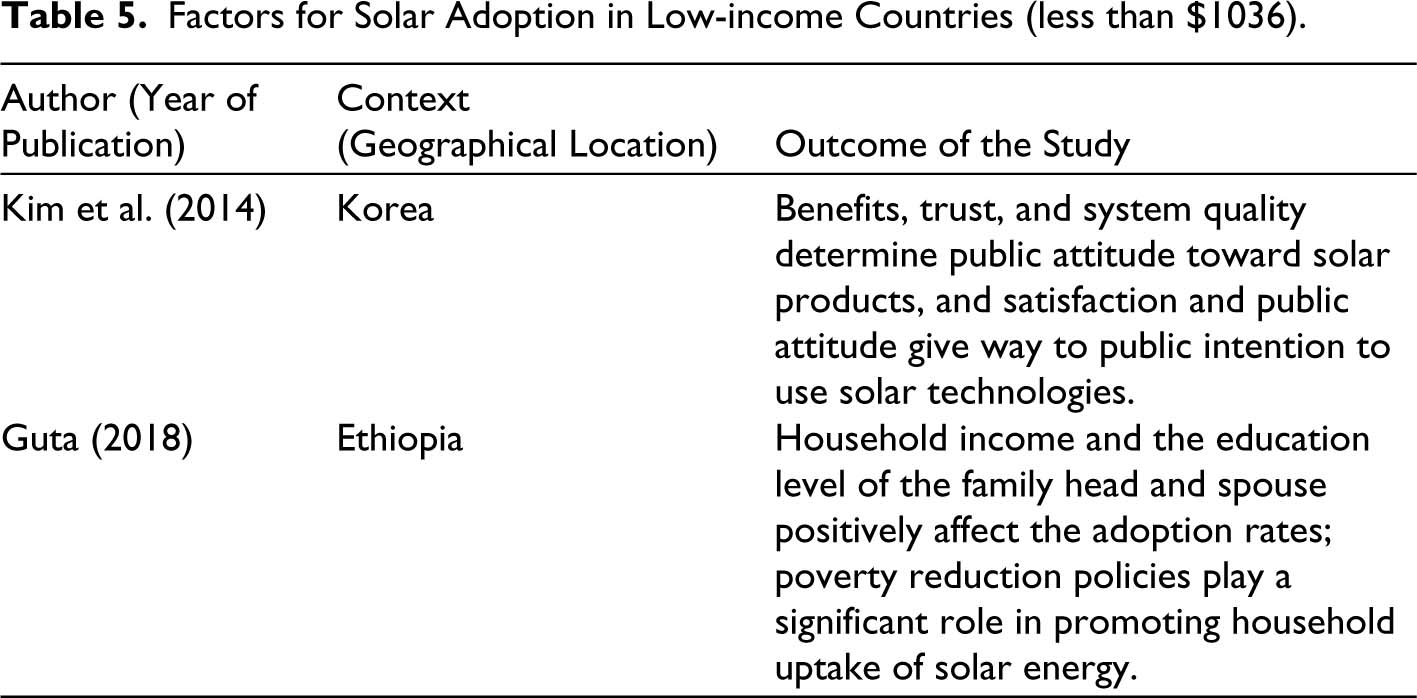
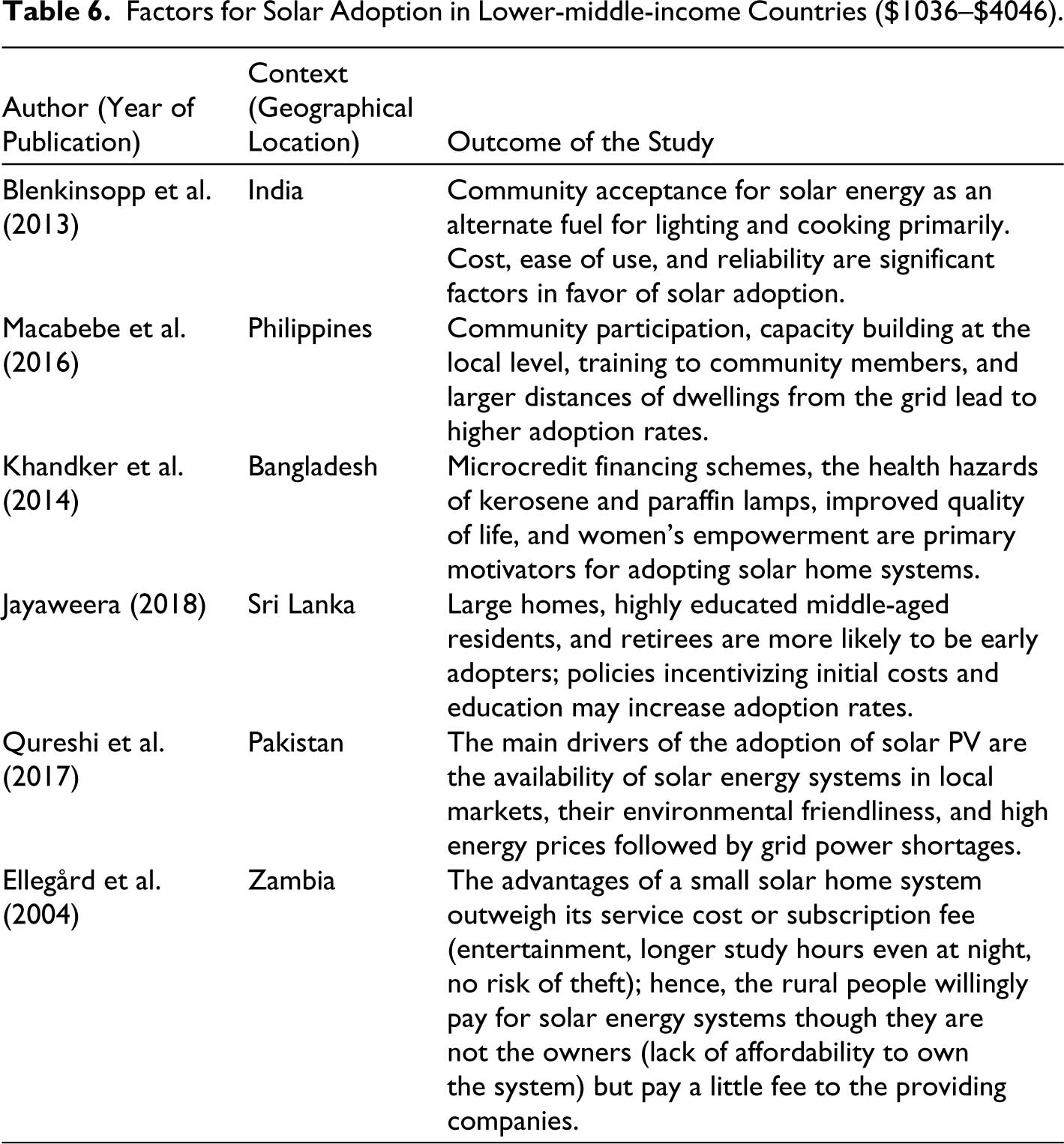
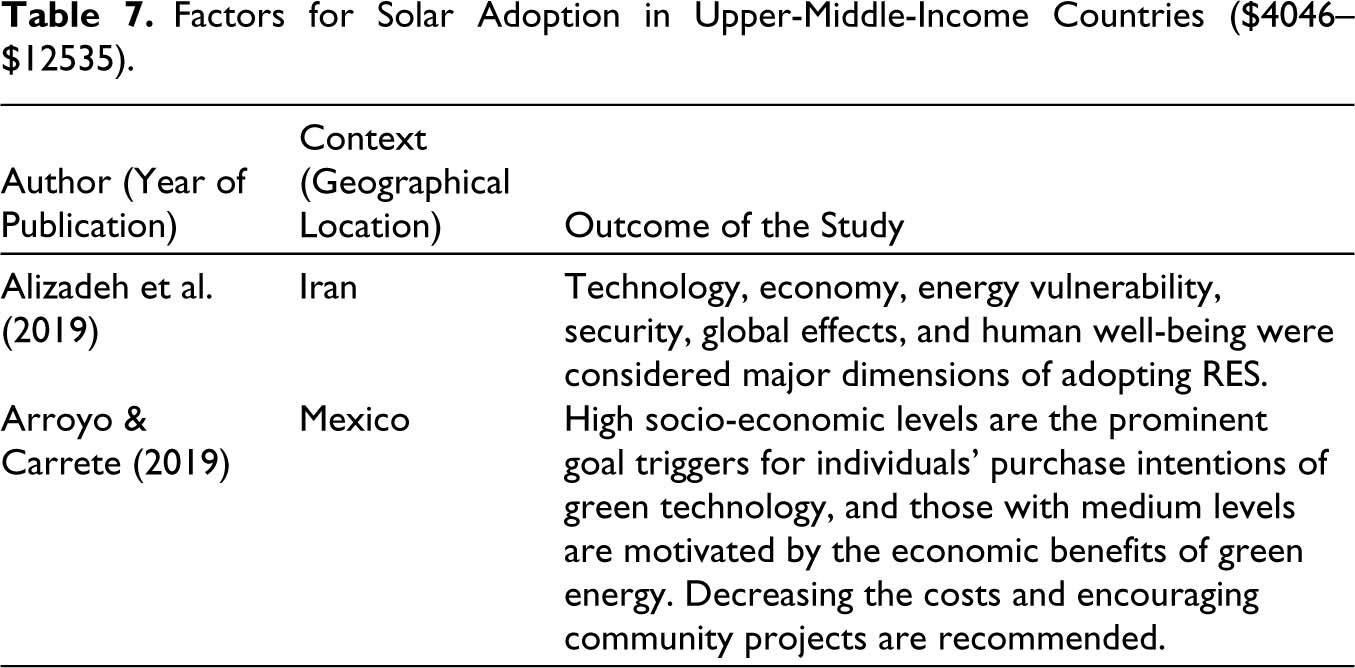
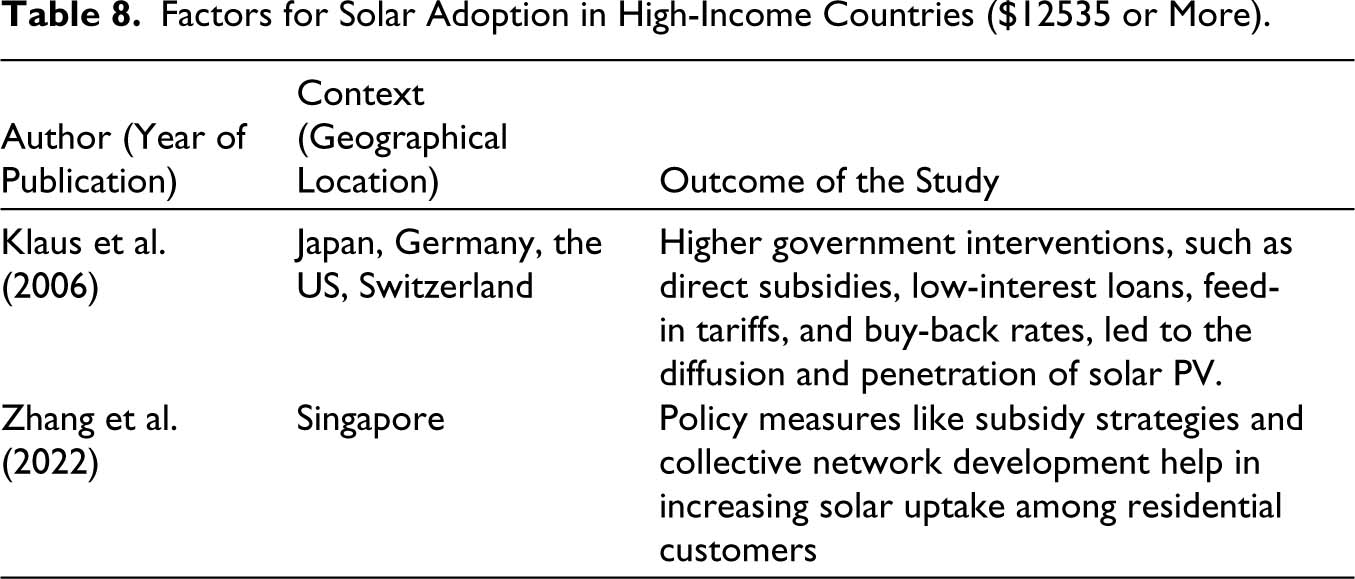
Given the above, some studies were tabulated in Tables 5 to 8. These mentioned driving factors in enabling solar adoption in countries classified as lower-income (Table 5), lower-middle-income (Table 6), upper-middle-income (Table 7), and high-income group countries (Table 8) according to their per capita GNI starting July 1, 2021, as per World Bank (Hamadeh et al., blogpost, World Bank, 2022).
Factors for Solar Adoption in Low-income Countries (less than $1036).
Factors for Solar Adoption in Lower-middle-income Countries ($1036–$4046).
Factors for Solar Adoption in Upper-Middle-Income Countries ($4046–$12535).
Factors for Solar Adoption in High-Income Countries ($12535 or More).
Characteristics (C)
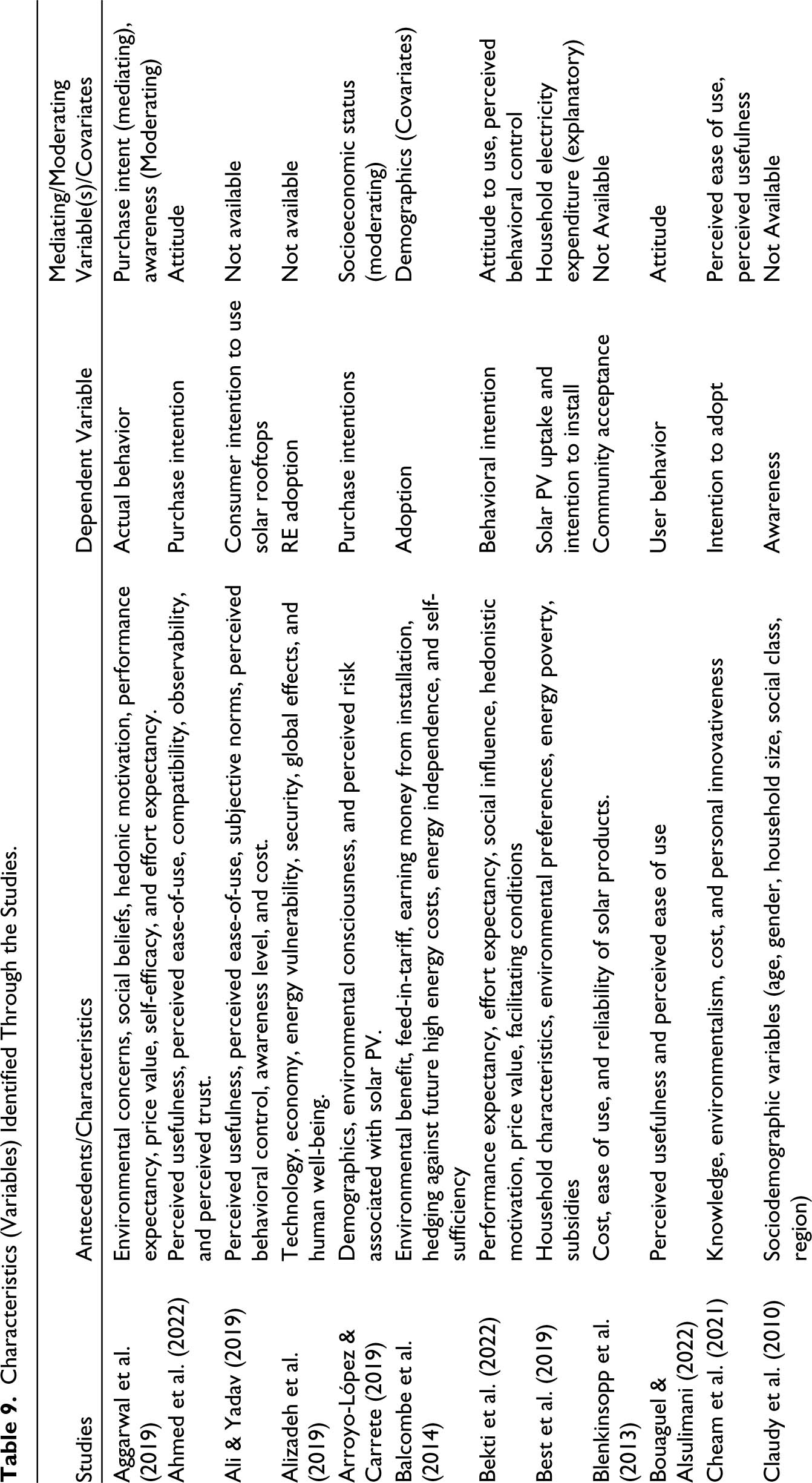
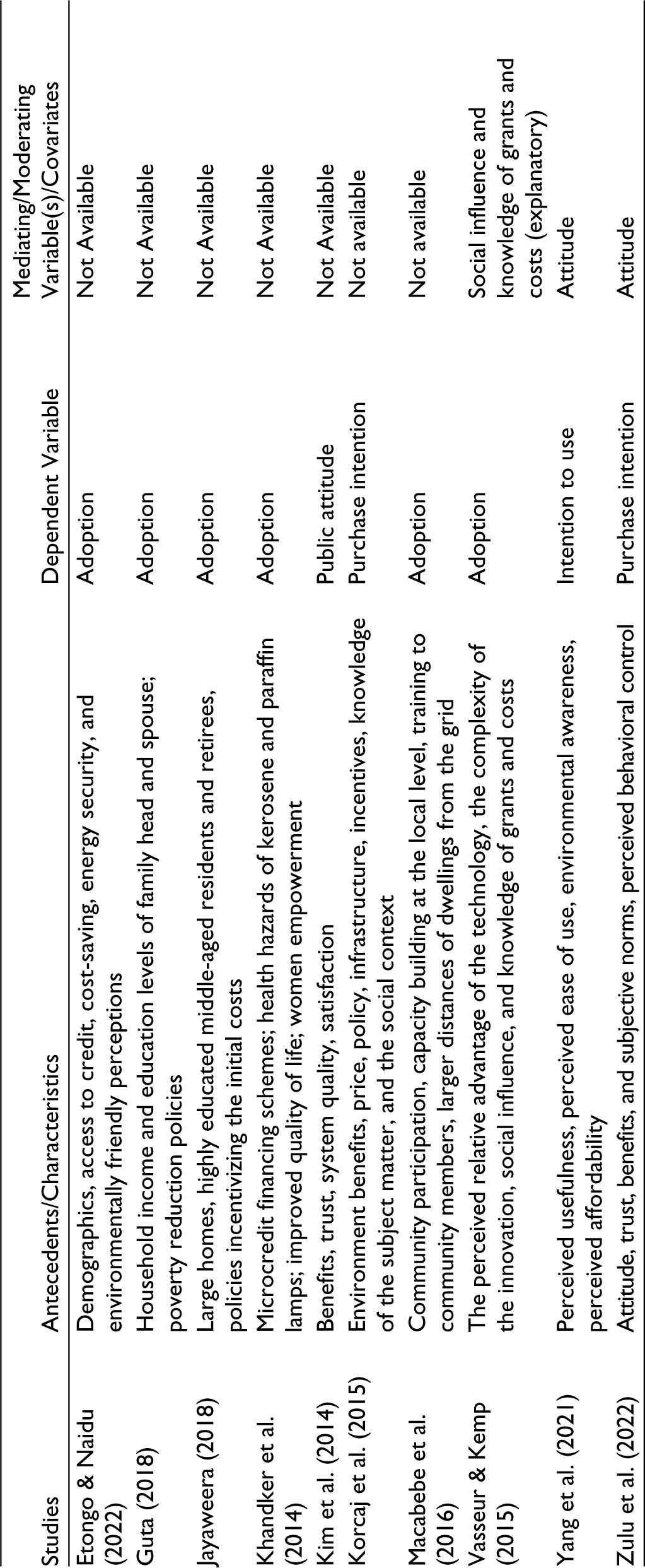
Characteristics (second C of the TCCM framework) specify the variables, features, and dimensions studied while analyzing a topic of interest. In our article, these refer to various variables or antecedents at a consumer or household level leading to the adoption and diffusion of sustainable products, especially solar panels. These refer to what has already been explored and hence pave the way to what can be further explored. Table 9 lists dependent and independent variables and mediating and moderating variables observed through various studies included in this review.
Characteristics (Variables) Identified Through the Studies.
Methods (M)
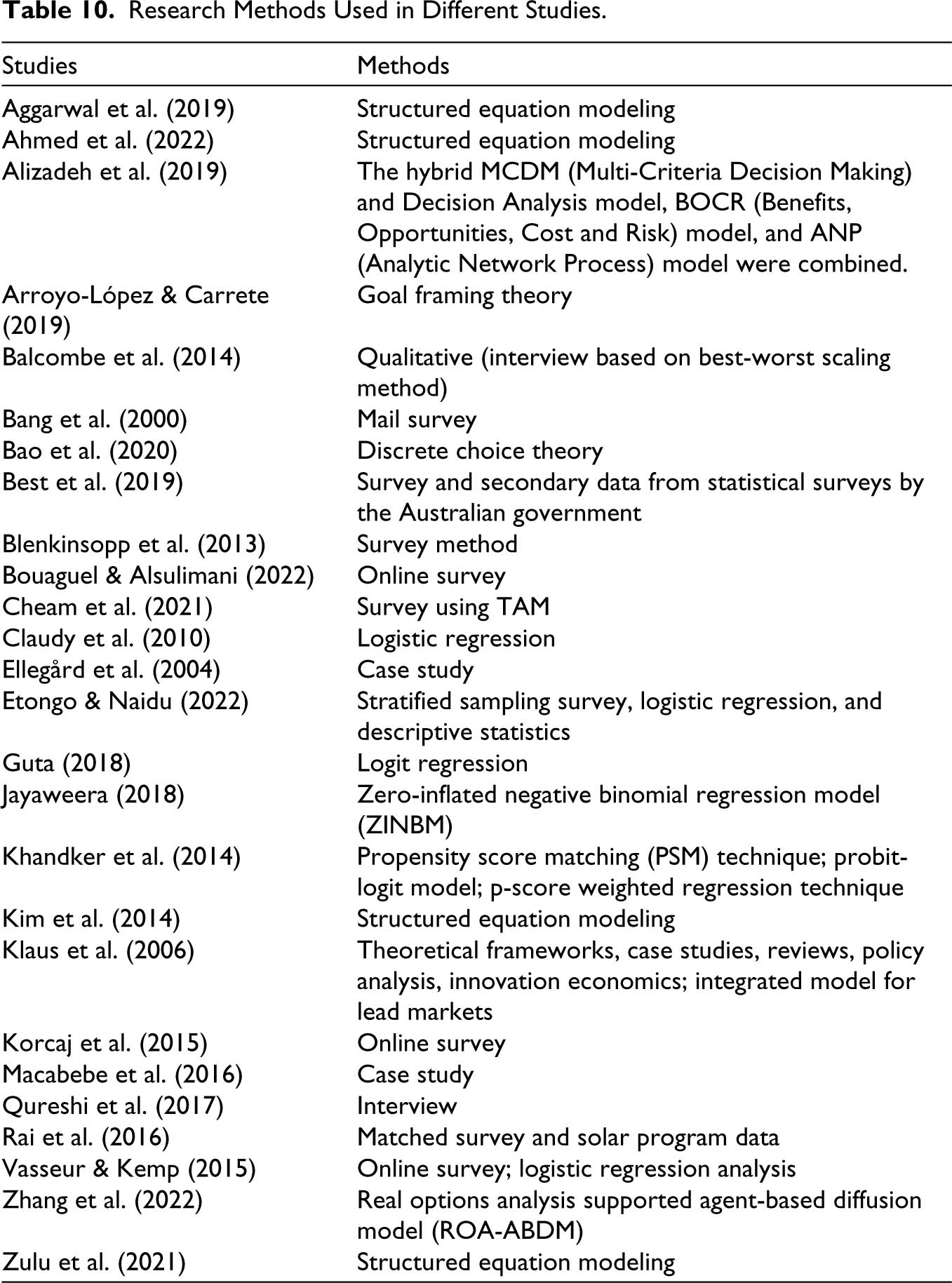
Methods (M in TCCM framework) refer to research approaches like data collection methods and data analytical techniques used to research a topic of interest. Table 10 discusses methods used in some of the studies included in our article. Most of the studies are empirical and use quantitative methods. The survey method is the central data collection tool; some studies are interview-based, and some use mixed methods. Further, data is prominently analyzed using regression and structured equation modeling techniques since the period of review is spread over the last two decades. Some of the studies are also review articles with a bibliometric and meta-analytical approach.
Research Methods Used in Different Studies.
Discussion
This review was done to understand the enablers for adopting solar energy systems in different parts of the world. These enablers or motivations were segregated using various theoretical frameworks in a country-specific context. As per Smith and Raven (2012) and Smith et al. (2014), solar energy systems require nurturing and empowerment to become competitive in the fight against the dominant technologies to achieve grid parity and, if not replaced, at least grab a significant share of energy. This study helped identify a comprehensive list of factors that facilitate deeper penetration of solar products in various segments. For instance, environmental concern can be considered a motivator in high-income economies. In the case of lower-middle-income economies, the role of governments in providing innovative solutions in subsidies, Feed-In-Tariff plans, vendor accessibility, and availability of microfinance are significant motivators. The role of NGOs is also essential in the case of low-income settlements.
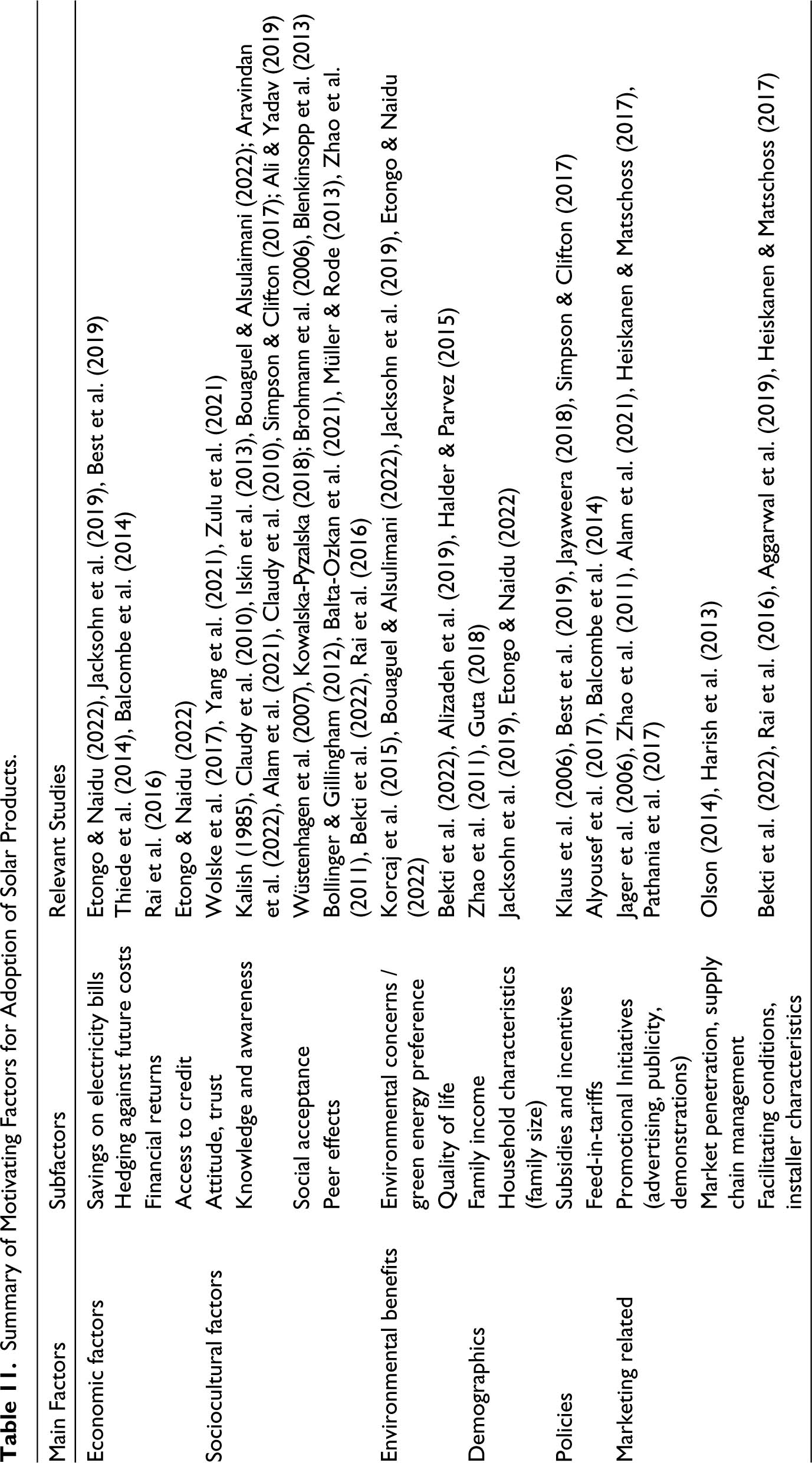
Our review was based on the TCCM framework, which could help us identify the theories and relevant constructs and the methodologies that can be adopted to increase solar energy adoption in areas with defined social, economic, cultural, and environmental characteristics. Table 11 provides a gist of these identified enablers broadly categorized into environmental benefits, economic factors, sociocultural factors, demographic factors, policies, and marketability for solar products.
Summary of Motivating Factors for Adoption of Solar Products.
Considering the perspectives of a given area, a suitable model can be applied based on four criteria of effectiveness, efficiency, equity, and institutional feasibility given by the International Renewable Energy Agency (IRENA, 2014; Po, 2014). Providing much-needed energy security for all requires sustainable energy systems to be economically more viable and affordable energy sources. Access to loans, subsidized products, financial returns, and savings are some of the relative advantages the adopters perceived concerning solar products. Based on these criteria the following proposition can be made:
Communication channels like word-of-mouth, social gatherings, family, friends, and peers are significant in decision-making. Müller and Rode (2013) and Bollinger and Gillingham (2012) studied peer effects on the adoption of solar PV in Germany and California, respectively. They found that social interactions and PV installations in close spatial proximities increase the propensity of newer installations. Jager et al. (2006) observed that the formation of social networks and gatherings led to increased intermingling of adopters (influential people) and potential adopters, leading to increased awareness, reduced complexity, and changes in attitudes toward adopting solar PV systems. Further, many studies show that family size and higher household incomes are other important considerations. Hence, it can be proposed that.
Many studies, especially those done in rural communities and low-income countries, observed that using solar products enhances the quality of life of people by providing them with energy security. Also, the environmental benefits of solar energy are well accepted and studied. This leads to the next proposition.
The policies to change the components of the energy mix must be designed to be effective, measurable, quantifiable, and suitable in most contexts. People are to be convinced that the potential benefits of solar energy shall always exceed the investment made by deployment in the long term. Participation by local communities and other stakeholders in the policy-making process is also called for. Hence, it is proposed that:
Besides awareness and affordability, accessibility is an important factor. Technical and institutional frameworks should be strong enough to cater to remote areas and provide energy to all. Installer reliability and expertise are also observed as important factors in increasing the adoption rates of solar products. Promotional campaigns carried out individually by the installers and as advertising and publicity by the agencies result in increased awareness levels and accessibility. Thus, it can be proposed that.
Implications
It is observed that while making decisions to adopt solar products, individuals majorly go for a cost-benefit analysis (Kamakura & Balasubramanian, 1988; Korcaj et al., 2015). This implies that the advantages of solar products should be highlighted to overshadow the costs involved. All stakeholders, such as the government, financial institutions, and sellers, must work in tandem to motivate individuals to use solar energy products. The study has various implications discussed below. The study and its implications may also be used for other renewable products.
The study highlighted the research wherein the attitudes of individuals affect the intentions to adopt solar products. It is also observed that knowledge and awareness about the benefits of solar products are critical components of attitude formation. Policymakers can run various campaigns at local and national levels to increase awareness. Since installer reliability is a significant motivator, as per the study, a more conducive environment (in the form of laws and policies) can be created for manufacturers and other solar market practitioners. This review may also benefit policymakers while designing and developing infrastructure for Smart cities.
Access to credit or loan facilities boosts solar product adoption, especially in low-income groups. Banks and other financial institutions can develop innovative schemes, such as low-interest or bundled loans, to increase solar uptake and run promotional campaigns.
It is observed that people adopt solar products if they are aware of the benefits of solar products and if the market penetration is high. People tend to adopt more if the products are easily accessible to them (Pradhan & Kar, 2019). The supply chains for solar products need to be strengthened so that the products are accessible to the last mile. Marketing strategies, including advertisements and other promotional activities, can be designed by private as well as government organizations to make the public aware. This study can prove beneficial as an academic source for research scholars in renewable energy, sustainability, and economic development. Further, academicians can play a significant role in developing environmental awareness and consciousness among their students about the benefits of using RES so that they grow up as responsible citizens.
Conclusion
This review article summarizes information about motivating factors for the adoption of solar products, primarily solar rooftops and solar home systems, among residential households. Various studies were analyzed based on the TCCM framework, wherein theoretical models, contextual factors, characteristics, including dependent and independent variables, and methods were studied.
It is observed that over some time, there has been a growing interest in residential households, and increased adoption of solar energy is taking place, as shown by different studies. The motivating factors for increased interest range from cost savings to environmental conservation to increased social status. They vary according to different contexts like sociocultural characteristics, demographics, financial status, political and regulatory environment, and economic standing of the country (as reported by the World Bank). Studies also show that besides generating mass awareness about the advantages of solar products, making them accessible and affordable is equally essential. Increased marketability and commoditization can help reduce costs and thus increase reachability, especially in the case of lower and middle-income group countries.
Using an integrated and inclusive multistakeholder approach, the adoption and diffusion of solar products can be increased if the identified factors are rightly identified and placed. Customized solutions could be designed based on the specific requirements of the building owners, and contagion models could not explain the diffusion of solar products. In some cases, local requirements and conditions define the development of policies at the national level. Further, multiple approaches can be employed on a case-to-case basis; the right interventions by the right parties at the right time can help develop solar markets in synergy with local and shared facilities.
The review is limited to small-scale installations, primarily dealing with studies carried out on individual and residential levels. Further, diffusion of solar PV, solar water heaters, solar lighting systems, and solar rooftops are discussed. Also, the review can be extended to solar water/irrigation pumps, cooking systems, dryers, and other solar heating systems.
Footnotes
CRediT Author Statement
Rupal Chowdhary helped in conceptualization and methodology.
Archana Nag was involved in data curation and writing—original draft preparation.
Amulya Gurtu contributed to visualization and writing—reviewing and editing.
Declaration of Conflicting Interests
The authors declared no potential conflicts of interest with respect to the research, authorship, and/or publication of this article.
Funding
The authors received no financial support for the research, authorship, and/or publication of this article.