



Abstract
Background and Aims:
In today’s time and age, where information is freely available at a click, choosing the right information is the toughest challenge. With increasing use of over-the-counter medicines, lack of knowledge in the community about them and occurrence of adverse events, it is imperative to highlight this healthcare issue. The consumption of these drugs can be unsafe, cause drug-drug or drug-food interactions and lead to significant morbidity. Thus, the aim of the study is to assess the practice of self-medication with OTC drugs, the prevalence of risky practice and its associated factors.
Methodology:
A cross-sectional descriptive study was carried out on the general population in order to assess the prevalence of OTC drug consumption and the knowledge in the community regarding it. The questionnaire was self-designed and self-administered using the Google Forms service. The data were analysed in Microsoft Excel, and further P values and correlation coefficients were calculated.
Results:
The results showed that about 70% of participants have used or still use OTC drugs for various purposes. This fraction decreases in the male population as well as the older population. The most commonly used OTC drugs were cold medications, followed by analgesics. Nearly 25% of participants believed that the drugs that they consumed without prescriptions had no adverse effects.
Conclusion:
Results show a significant disparity between the incidence of OTC drug usage and the knowledge among the general public regarding it. Thus, appropriate steps should be taken to regulate this practice and optimise the safe use of the freely available medicines in order to prevent the occurrence of adverse reactions and interactions.
Introduction
With the advancement in therapeutics and the huge input of resources into the manufacturing of drugs, an extensive selection of drugs has now become available in the Indian market. The Indian pharmaceutical industry produces over 60,000 generic drugs of 60 different categories. The market for FY 2023–2024 is valued at USD 50 billion, with domestic consumption valued at USD 23.5 billion. With an extremely diversified product base covering generic drugs, bulk drugs, OTC drugs, vaccines, biosimilars, and biologics, the industry has a strong presence at the global level.[1]
It is well known that the indications, drug interactions, adverse effects and contraindications of a particular drug have to be taken into consideration before prescribing it to a patient. The drug dosing has to be safe, effective and convenient for the patient.[2] But what happens when consumers start taking medicines that are sold without a prescription, without the proper knowledge?
According to the United States Department of Food and Drug Administration (USFDA), over-the-counter drugs are those drugs that are safe and effective for use by the general public without seeking treatment by a health professional.[3]
Multiple incidents highlighting incidents of drug poisoning due to overdose of medication, uncontrollable adverse hypersensitivity reactions, addiction and dependence on these drugs have come to the forefront over the years.[4] While the majority of the OTC medications are safe, their toxicity is also possible when used in the wrong doses, for the wrong indications or with the wrong intent.[5]
The inability to avail a consultation due to remote location or financial strain may be attributed to such practices, but it is not always the reason.[4] Individuals find the OTC drugs to be a cheaper alternative for treating conditions like the common cold, mild fever, headache, muscle cramps, gastrointestinal issues, etc.[6] Presently, there are no strict policies in place that regulate the sale of commonly used medications through a pharmacy.[5]
In the Indian context, all drugs except those listed in Schedule K of the D&C Rules, 1945, need a licence permitting them to be sold. Schedule K drugs include: Aspirin tablets, Paracetamol tablets, Analgesic balms, Antacid preparations, Gripe water for use in infants, Inhalers, containing drugs for treatment of cold and nasal congestion, Syrups, lozenges, pills and tablets for cough, Contraceptives, Ophthalmic ointments of the tetracycline group of drugs, etc.
While this list is quite comprehensive, in reality, a lot of drugs not included in it are also sold rampantly in pharmacies without a valid prescription. This practice needs rectification, while also narrowing down the existing list of Schedule K drugs as per international standards.
The results obtained are expected to contribute to decreasing the inappropriate use of OTC drugs through highlighting the issue and creating awareness.
Aims and Objectives
Aim
The aim of the study is to assess the practice of self-medication with OTC drugs, the prevalence of risky practices and their associated factors.
Objectives
To determine the prevalence of OTC drug usage using a self-designed questionnaire.
Assess the use of drugs that are most commonly used as over-the-counter medications.
To assess the knowledge of consumers regarding the drug they use.
Materials and Methods
Selection of Participants and Study Design
This is a cross-sectional study of the descriptive type. It is an observational study that analyses data from a population at a single point in time.
The study was started only after receiving approval from the Institutional Review Board of the institute.
Sampling method: non-probability convenience method. Participants who consent and meet the inclusion criteria will be selected at random. The sample size was calculated using the single proportion formula without correction for continuity.
The estimated value for the particular indicator was determined to be 0.85 from a pilot study. The desired confidence level was 95%, and the margin of error was taken to be 5%. The calculated sample size was 197, but a total of 206 participants were obtained for the study. Participants were selected at random, and those satisfying the inclusion criteria were sustained for the study.
Instruments and Variables
The main study variable selected was the prevalence of OTC drug use, as a closed-ended question to indicate the presence or absence of habit. Additionally, types of OTC drugs most frequently consumed, factors that influenced this consumption and knowledge in the consumer regarding the same were assessed by means of closed-ended objective questions.
Economic stability of the participants, health variables (pre-existing conditions, prescription medications) and sociodemographic variables such as age, sex, education, profession and residence were also analysed.
This survey was conducted by means of a validated, self-administered and self-designed questionnaire.
Data Collection
For the creation of the questionnaire, the Google Forms platform was utilised, and social media, in addition to going into the community, was used for the dissemination of the questionnaire. The questionnaire was administered in the same year.
Statistical Analysis
The data obtained was compiled in Microsoft Excel. It was descriptive, with individual answers for each question. The extent of frequency of use of OTC drugs was estimated.
Each factor was correlated with the sociodemographic variables, and the data were organised in tabular form.
Correlation coefficient was calculated using the Spearman correlation test to find the correlation between prevalence of OTC drug use and individual variables like age, gender, education, health conditions, OTC frequency, monthly expense, profession, perceived safety and side effects of these drugs. The P values in its relation were also calculated, and those <.05 were considered significant.
Results
Participants and Sociodemographic Variables
A total of 208 responses to the questionnaire were obtained. Two responses were eliminated due to incomplete answers. Thus, a total of 206 responses were used.
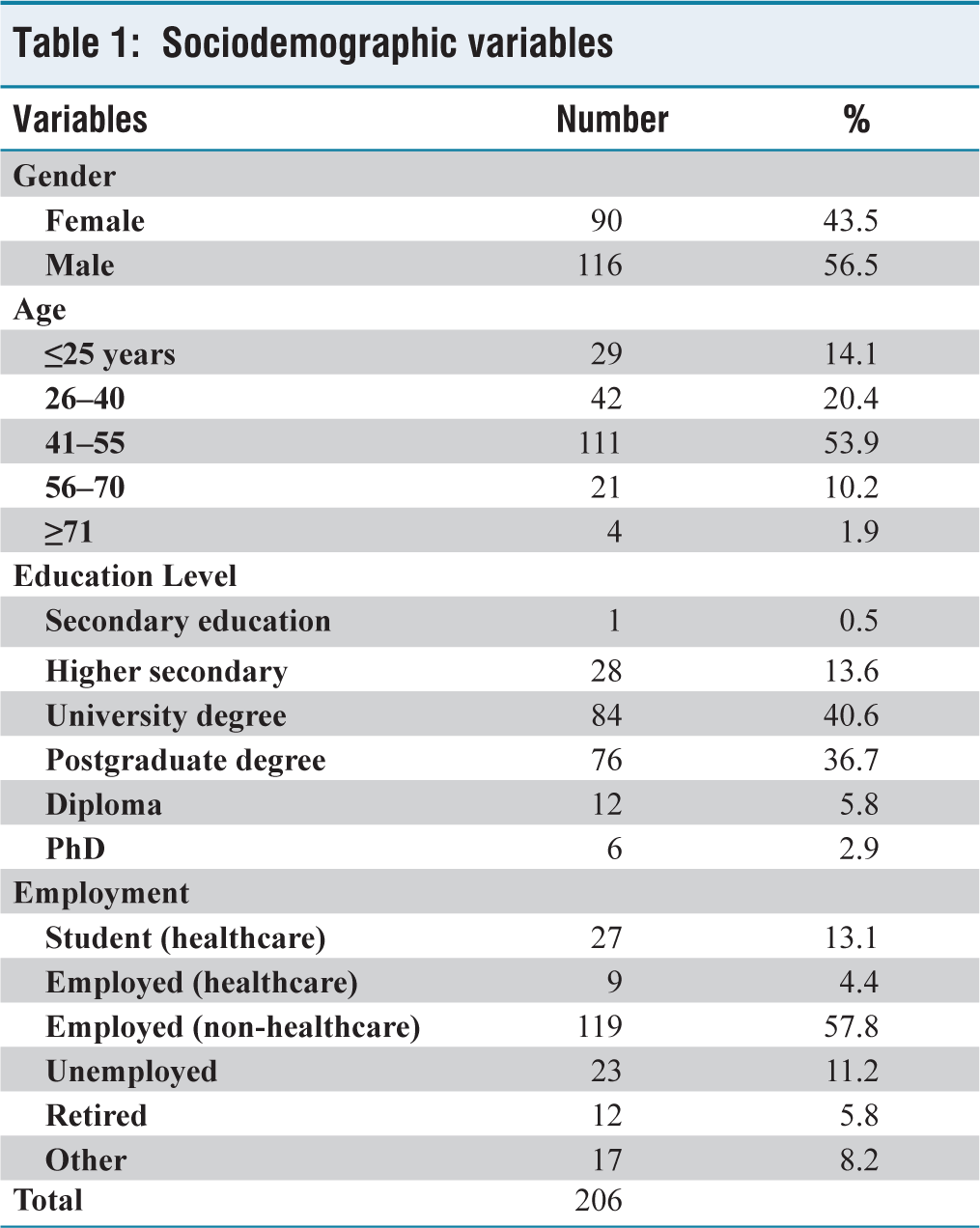
Out of the total 206, 90 (43.5%) were women and 116 (56.5%) were men. Most participants of the study had a university degree (40.3%), while 36.4% had a postgraduate degree. While most of the people (57.7%) were employed in an industry other than healthcare, 4.4% were employed in healthcare. About 13% were students, 11% were unemployed, and 5.8% of participants were retired. The socio-demographic variables of the study population have been elaborated in Table 1.
Sociodemographic variables
Health Status and Medication Use
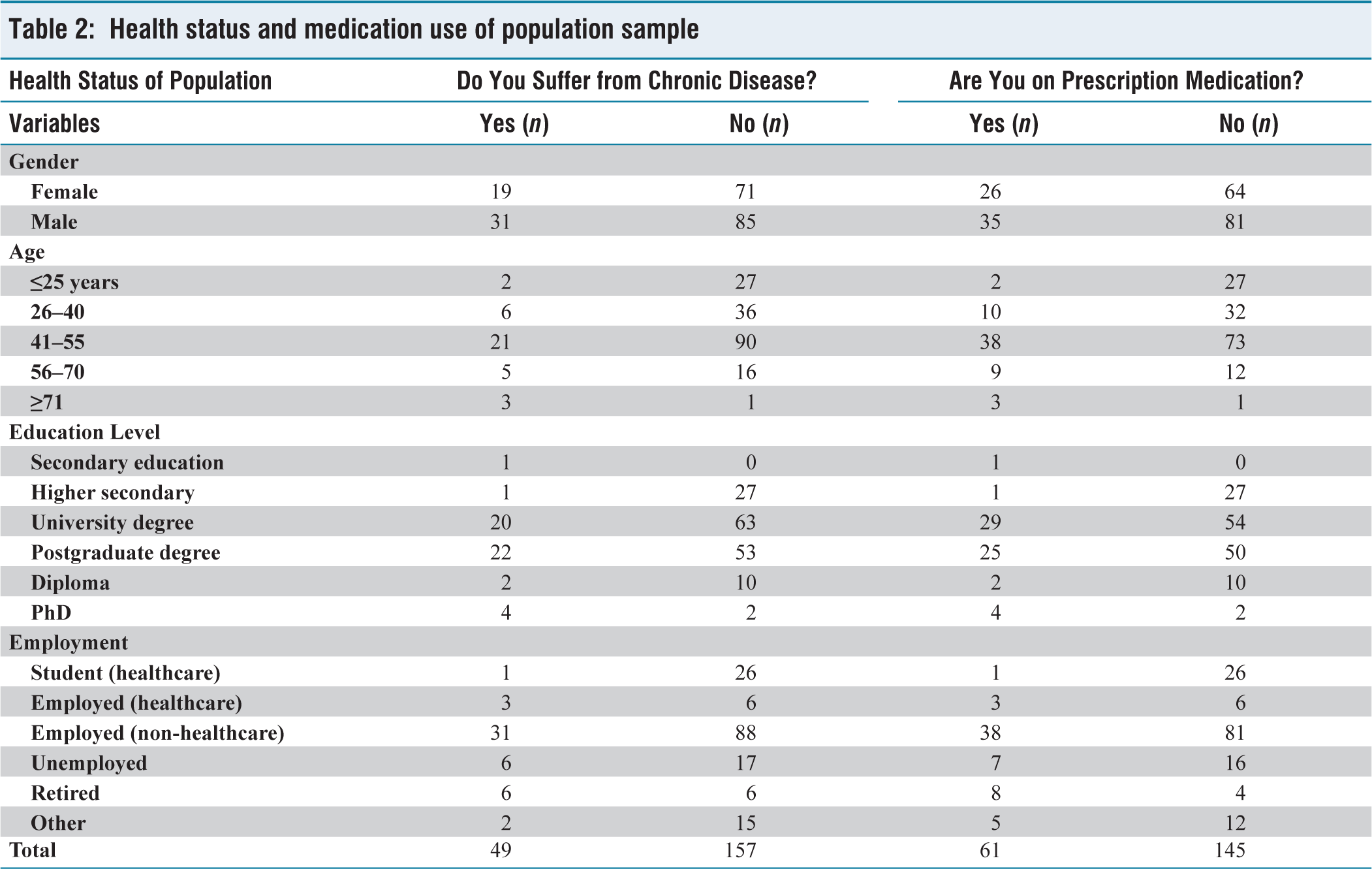
Out of the total population, about 23.7% suffered from pre-existing health conditions such as hypertension, thyroid imbalance, diabetes, etc. Overall, male participants had a higher incidence of chronic health conditions (26.7%) in comparison to female participants (21.1%). Male participants were also more likely in terms of regular consumption of prescription medications (30%) as opposed to female participants (28%). About 75% of the participants from the age group of above 70 had chronic diseases, and 75% were also consuming prescribed medications. The health status and use of prescription medication of the population have been elaborated in Table 2.
Health status and medication use of population sample
OTC Consumption
Out of the total population, 70.4% of participants said that they have consumed OTC drugs at some point in their lives or still do. Consumption of unprescribed medicines is significantly higher in women at 74.4% compared to men at 66.4%. The rate of consumption of OTC drugs decreases as the age of the participant increases. It is 89.6% in participants below the age of 26, which declines as 69% at 26–40 years, 71% at 41–55 years, 38% at 56–70 years and finally to 50% at ages above 70. On the basis of education, 69.3% of post-graduates consume OTC drugs in comparison to 65% of graduates. In terms of employment, 55% of participants employed in the healthcare industry use OTC medications, as opposed to 69.7% of those employed in a non-healthcare setting. A noteworthy point is that the students in healthcare are the maximal users of OTC drugs at 92.5%. The association of various socio-demographic parameters with consumption of OTC drugs has been discussed in Table 3, along with their p-values.
Association of various parameters with OTC drug use
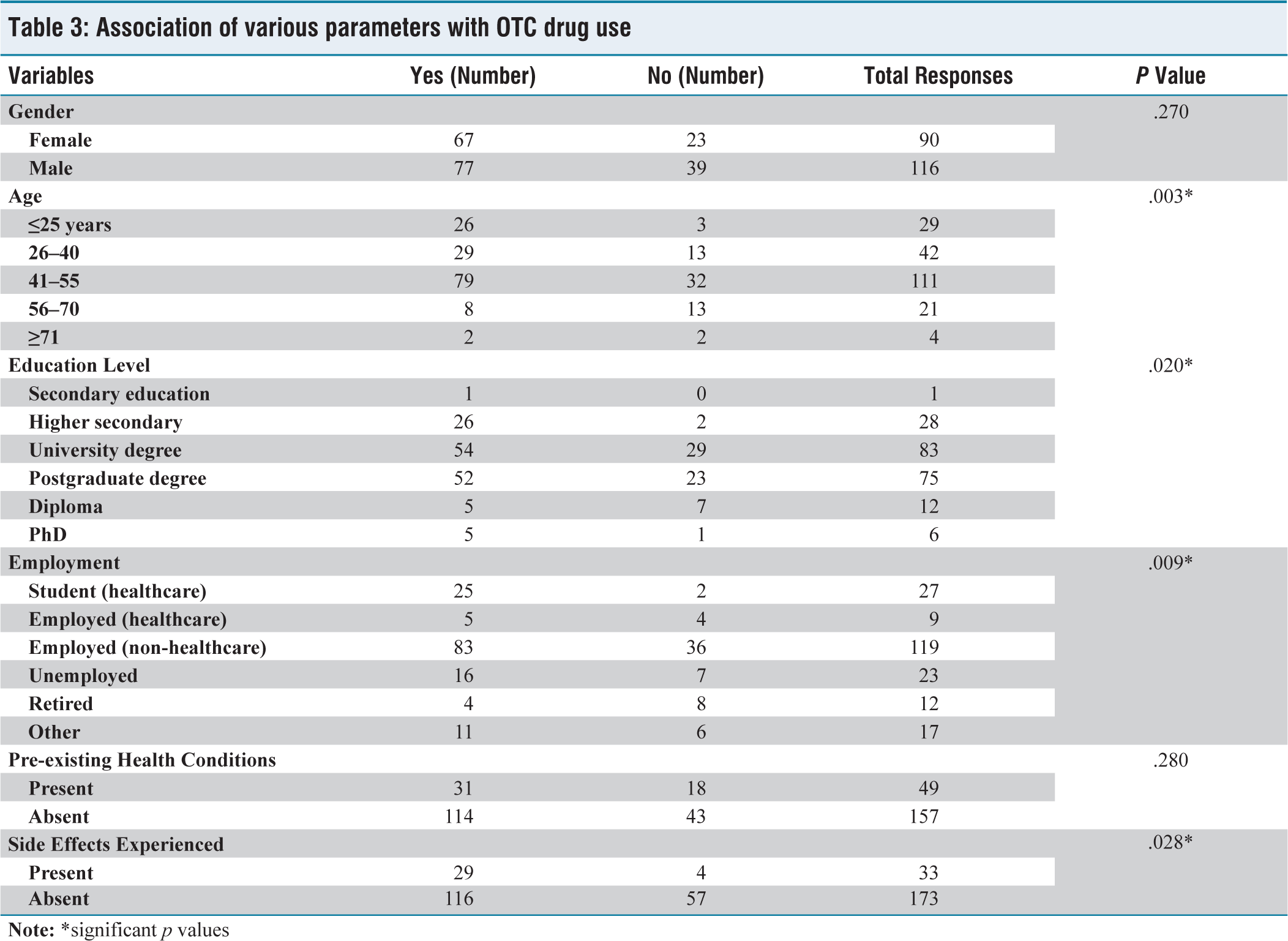
In the present study, chi-square test results showed that gender was not significantly associated with OTC drug use (P = .27). In contrast, a statistically significant association was observed between OTC drug use and age group (P = .003), education level (P = .020) and employment status (P = .009), indicating that OTC drug use varied significantly across different demographic and socioeconomic strata.
Higher OTC use was noted among individuals aged 41–55 years, those with university or postgraduate education, and employed non-healthcare professionals and students. No statistically significant association was observed between the presence of pre-existing health conditions and OTC drug use (P = .28). In contrast, a significant association was found between experiencing side effects and OTC drug use (P = .028), indicating that participants who reported side effects were more likely to be OTC drug users.
These findings suggest that while chronic health conditions did not significantly influence OTC drug consumption, the occurrence of side effects was significantly related to OTC medication use.
Type of OTC Drug Consumed
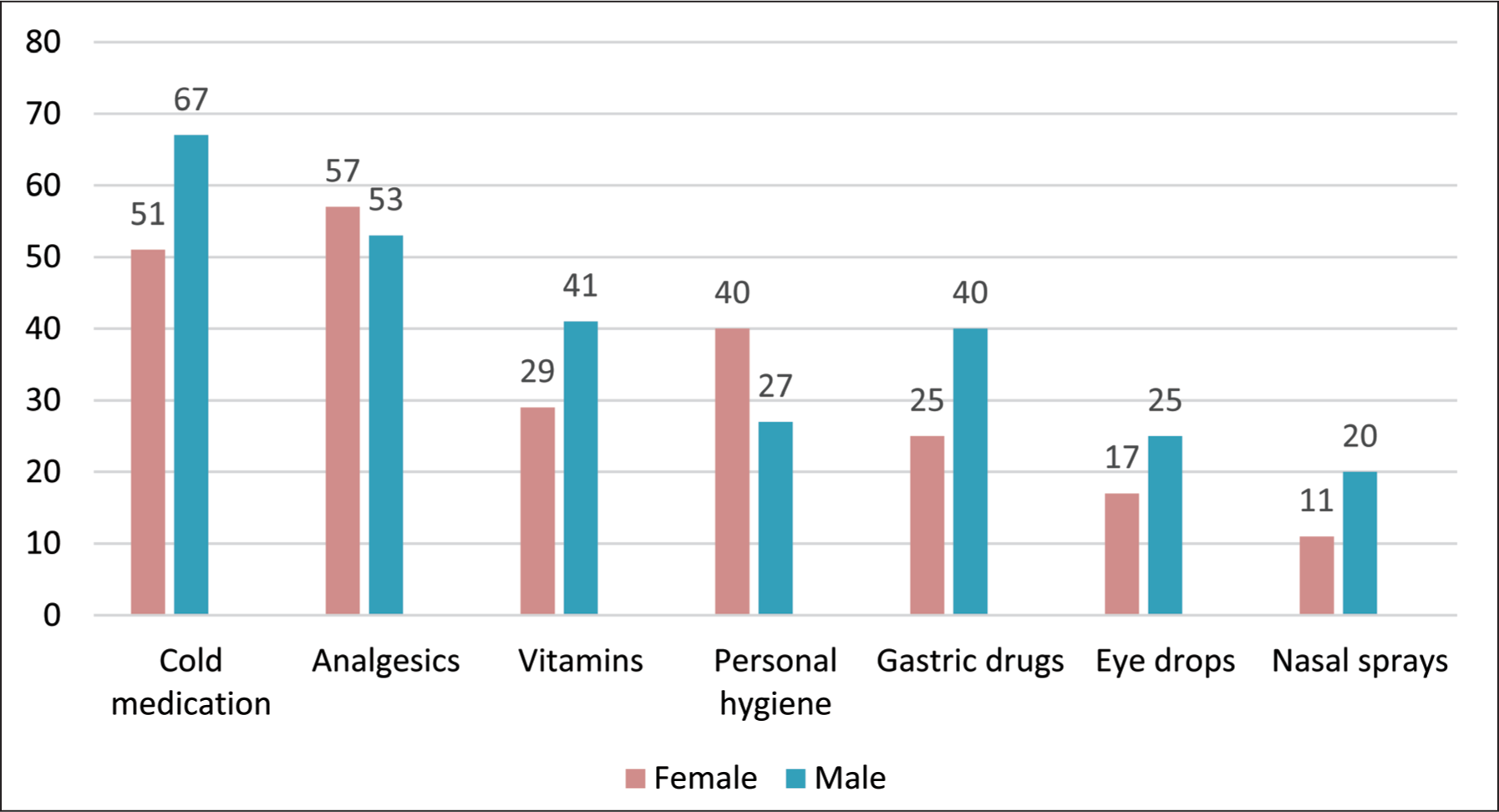
Cold medications were the most frequently used OTC medicines (n = 118, 57.3%), followed by analgesics (53.4%), vitamin supplements (33.4%), medicated personal hygiene products (32.5%), Drugs for gastric problems (31.5%), eye drops for dryness/ eye drops (20.4%) and nasal sprays (15%).
In terms of gender, men consumed more cold medications (57.7%) compared to women (56.6%). But women consumed more analgesics (63.3%) compared to men (45.7%). The comparison between the types of drugs consumed by males and females is shown in Figure 1. In young people aged less than 26, analgesics were the most widely consumed drugs (89.6%), while in the age group of 26–40 years, cold medicines were the most widely used (61.9%). In the oldest age group (above 71 years), vitamins are the most consumed group of drugs (50%). People with a higher secondary school certificate were most commonly seen using OTC drugs, while people with a PhD were the least likely to use OTC drugs. According to profession, students in healthcare were associated with maximum use of OTC drugs, most commonly analgesics (over 90%), while retired personnel were least observed to use OTC drugs. Drugs other than cold medication and analgesics that were less commonly used are vitamins, medicated personal hygiene products, drugs for acidity and indigestion, eye drops for dryness and nasal sprays.
Major types of drugs based on gender
Search for Information
When asked if the advertisements and the internet influenced their decision on the type of medicine to be taken, 26.9% people said that it did a little and 9.2% people said that it influenced them a lot. 9.7% people thought that advertisements were important, while 90.3% people thought that they were not.
Discussion
A total of 206 responses were obtained. The results obtained from this study indicate that the OTC drug consumption prevalence is quite high, about 67% in the male population and 75% in the female population. This result is similar to the one obtained in the study by Alkhalidi et al. in Dubai. While men consume more cold medications, women tend to consume more analgesics in regular practice. This can possibly be due to generalised body pains, which are mainly due to a lack of exercise and increased body weight. It has also been documented, as per Godersky et al.,[7] that the consumption of analgesics, specifically NSAIDs, also has a psychiatric component. The case report highlights how the regular use of ibuprofen can cause dependence, impaired control and craving.
On the basis of age groups, the youngest population (less than 25 years of age) was the foremost consumers of OTC drugs, with about 90% admitting to using unprescribed medication at least once in their lifetime. Younger people generally have more access to knowledge and information, especially due to the internet, leading to greater confidence when buying over-the-counter drugs. The older population are most often already under the care of a prescriber. They therefore do not feel the need to resort to unprescribed medication. This data is in accordance with the study conducted by Alkhalidi et al. in Dubai,[4] where the age group of 20–30 years had the maximum prevalence of OTC drug consumption, while the geriatric population had low prevalence. Education is also one of the important influencers of medicine-buying habits. The level of education has an indirect relationship with the prevalence of OTC drug use. High school graduates consume the maximum amount of OTC drugs, while those with higher qualifications have lower consumption. This could be because people with higher education do not look for quick fixes to possibly serious problems. This result is contradictory to that observed by Wangler et al. in Germany[8] where greater education translated into greater use of OTC medication.
According to profession, students in healthcare were associated with maximum use of OTC drugs, while retired personnel were least observed to use OTC drugs, followed by those employed in the healthcare industry. This could be due to the fact that medical students are exposed to all sorts of information about drugs, while the actual practitioners are cautious about any drug use. These results are similar to the study conducted by Chiappini et al. in Italy.[6] Out of the 49 responders who had existing health issues, 31 admitted to having regular consumption of over-the-counter medicines. When asked if the participants ever experienced any adverse effects post consumption of over-the-counter medications, 29 admitted that they did face side effects, out of which only 24 went to the doctor after having the adverse drug reaction; the other 6 tried to treat the side effects on their own. This implies that they do not perceive the severity these reactions can reach. Out of all 206 responders, over 50 believed that the drugs that they consume do not have any possible adverse effects. Only 72 participants read the adverse effects from the package insert always before taking the drug, while a meagre 37 and 44 people respectively always read the drug interactions and contraindications from the package insert.
The most commonly consumed OTC drug, according to data, is cold medication, including antihistamines and alpha agonists. While antihistamines can cause uncontrollable drowsiness and accidents, alpha agonists like oxymetazoline can be absorbed systemically and cause increased blood pressure in labile hypertensives. Analgesics that are available over-the-counter, the non-steroidal anti- inflammatory drugs (NSAIDs), can cause acute renal failure, heart failure and fulminant hepatitis in case of toxicity. Analgesics like ibuprofen can blunt the antihypertensive action of diuretics and ACE Inhibitors, leading to unregulated hypertension. Regular analgesics used, combined with alcoholism, stress and a bad diet, can precipitate peptic and duodenal ulcers, which can become life-threatening if they start bleeding.[9] Even multivitamins, consumed by a lot of the middle-aged population without prescription, are not without drawbacks. The fat-soluble vitamins (Vitamin A, D, E, and K) can cause hypervitaminosis.[10] Vitamins should not be consumed unless a deficiency is proven by the appropriate blood work.
Even drugs for stomach acidity, mainly proton pump inhibitors (PPIs), are not safe for long-term use. They can cause hypergastrinemia, causing fundal polyps and possible neuroendocrine tumours.[11] They have also caused carcinoid tumours in animals. Consumed with prescription medication. They can also interfere with the metabolism of antiplatelet agents and other drugs. In the long run, they also cause micronutrient deficiencies (vitamin B12, magnesium, calcium, and iron). Eyedrops, often used for dry or itchy eyes, can cause various issues. Doctors warn that unprescribed steroid use in the eyes is a primary reason for vision loss in recent times. Due to dry eyes, people use eyedrops that are not prescribed, or were prescribed a while ago, to be used for a limited duration. These eyedrops, containing steroids or antibiotics, are sold without a prescription, and are even recommended by the pharmacists. In the long run, these people face severe complications, losing their vision partially or even completely.[12] This also highlights the need to clearly mention whether the medicines are supposed to be refilled or not in the prescription, thus limiting the duration of use of such risky therapeutics to just the necessary time. Coming to the personal hygiene products, including anti-dandruff shampoos, antibacterial soaps, acne care products, lotions, ointments, and anti-ageing products with active pharmacological ingredients, etc., are also one of the most commonly consumed OTC drugs. Skin care ingredients like retinoids and retinal, especially in anti-ageing products, can cause abortions and birth defects if used during or just before pregnancy.
The study allows a clear comparison between the usage of OTC medication among people of various demographic groups and offers plausible explanations for the obtained results. It highlights the various types of over-the-counter drugs commonly used and their adverse effects. It emphasises the major healthcare problem of unprescribed medication use and draws attention to its harmful effects, necessitating policy changes.
Limited clinical exposure and involvement of only the middle-class urban population cause bias in results and a lack of data about certain demographic groups. The constraint of time can also compromise study findings. This study can be continued and reproduced in the future by increasing the sample size and conducting a detailed analysis of the adverse effects and their consequences due to over-the-counter drug use.
Conclusion
The prevalence of the practice of over-the-counter drug use is much higher than that of any chronic or acute disease. National health policies regarding the same need to be re-evaluated, and more stringent regulations should be in place to control and prevent unnecessary use of OTC medications. At the same time, regulations should also be placed on the kind of advertising carried out by these drug companies. Moreover, the regulations for prescription-only drugs should also be reviewed, as these are also commonly available over-the-counter in many parts of India.
Supplemental material
Supplemental material for this article is available online.
Footnotes
Acknowledgements
We would like to thank all participants for their honest responses. We would also like to thank the Department of Pharmacology at Smt. NHL MMC for their wholehearted guidance.
Declaration of conflicting interests
The authors declared no potential conflicts of interest with respect to the research, authorship and/or publication of this article.
Funding
The authors received no financial support for the research, authorship and/or publication of this article.
Institutional ethical committee approval number
IRB approval letter attached during submission, as no specific approval number was given.
Informed consent
Only the participants who gave their informed consent online were directed to the survey to fill out the questionnaire.
Credit author statement
Jiya Thosar: Concepts; Design; Definition of intellectual content; Literature search; Data acquisition; Data analysis; Statistical analysis; Manuscript preparation; Manuscript editing; Manuscript review.
Shivangi Shukla: Literature search; Data analysis; Statistical analysis; Manuscript review.
Supriya Malhotra: Concepts; Design; Definition of intellectual content; Manuscript preparation; Manuscript editing; Manuscript review.
Data availability
Data available on request.
Use of artificial intelligence
No artificial intelligence tools were used for this research.
Presentation at a meeting/conference
Yes.