




Abstract

In the dynamic world of health and medicine, biomedical research stands as a pillar of innovation and progress.[1] As we confront complex health challenges like chronic diseases and emerging global health crises, the implications of well-funded research become increasingly evident. From developing life-saving medications to accelerating vaccine production during pressing situations like the COVID-19 pandemic, the success of biomedical research initiatives profoundly relies on one essential element: funding.[2] Through this editorial, we aim to highlight the critical importance of funding in biomedical research, explore the multifaceted nature of funding, and propose pathways to overcome the barriers that hinder access to these vital resources.
Complexities of Biomedical Research
Biomedical research is a complex, time-intensive endeavour that unfolds in multiple stages, including basic research, clinical trials, and the eventual transition to market-ready solutions.[3] Transformative breakthroughs do not materialise overnight; they demand years, often decades, of painstaking research and testing. The landscape from which biomedical research draws its financial nourishment is diverse, encompassing both governmental and private-sector contributions.[4]
Sources of Funding
Funding for biomedical research may be drawn from a diverse array of sources [Figure 1]. US-based agencies like the National Institutes of Health (NIH) and the National Science Foundation (NSF) provide crucial budgetary allocations for innovative research initiatives.
Potential Sources of Funding for Biomedical Research
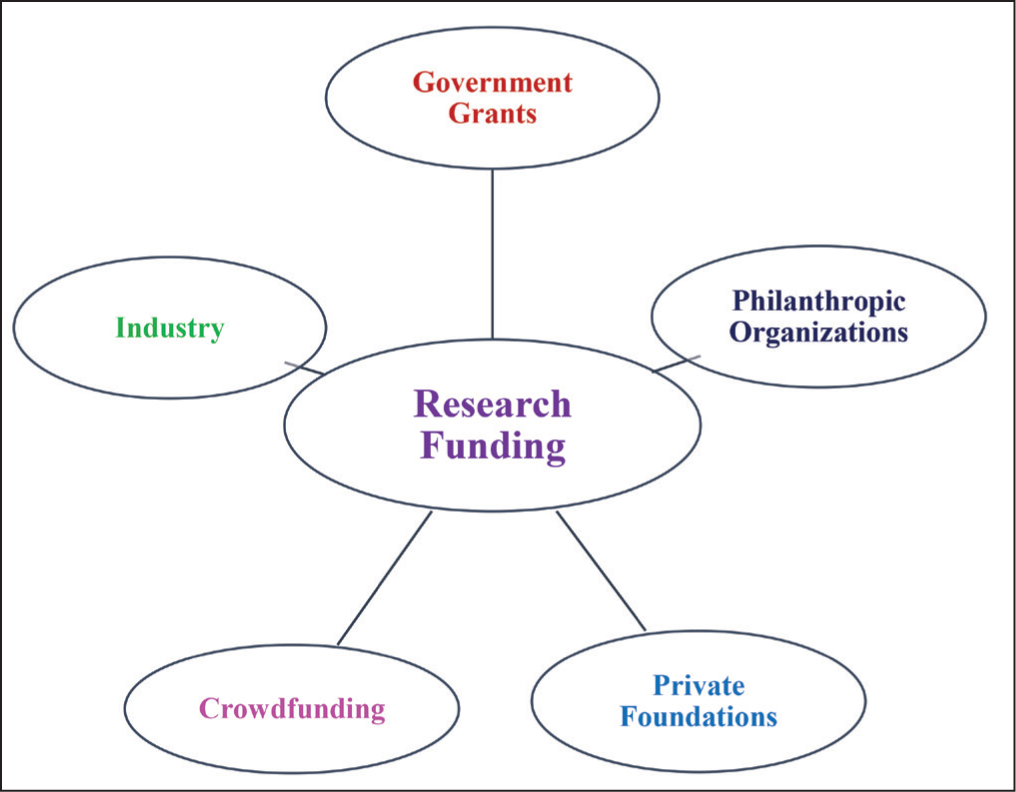
India’s healthcare research funding landscape is driven by a mix of government initiatives, private-sector investments, and international collaborations. The key funding organisations include the Indian Council of Medical Research (ICMR), Department of Biotechnology (DBT), and Department of Science and Technology (DST) and initiatives such as the National Biopharma Mission and the Biotechnology Industry Research Assistance Council (BIRAC). India is becoming a hub for biotech innovation, with startups focusing on drug discovery, genomics, and bioinformatics. Examples include Bharat Biotech, Strand Life Sciences, and Biocon. Also, investors are actively funding digital health platforms (e.g., Practo, 1mg), telemedicine services, and AI-powered diagnostic tools. Companies like Dr. Reddy’s Laboratories, Sun Pharma, and Cipla are heavily investing in R&D for generics, biosimilars, and new drug delivery systems. Organisations like the World Health Organisation (WHO), the Coalition for Epidemic Preparedness Innovations (CEPI), and GAVI (the Vaccine Alliance) are pooling resources to address global health crises. India also collaborates with global organisations like the World Bank, GAVI, and the Gates Foundation on research projects targeting infectious diseases and vaccination programmes.
Challenges in Securing Funding
Whilst the funding opportunities are growing because of expanding funding avenues through digital platforms, leveraging AI to identify and allocate resources effectively and increased collaboration between industry, academia, and governments, the challenges remain.
One of the paramount challenges for biomedical research is the inadequacy of grants to cover the entirety of ambitious projects. Frequently, grants are only partially funded, compelling researchers to hunt for additional resources to fill in financial gaps.[5] This situation places immense pressure on research teams, often stifling creativity and derailing innovative initiatives.[6] The competitive nature of grant applications not only deters seasoned researchers but may dissuade emerging scientists and underrepresented groups from pursuing their research aspirations. Inclusivity in research funding is not merely a nice-to-have; it is a moral imperative and, fundamentally, a catalyst for comprehensive solutions to complex health challenges. Diverse teams, representing varied backgrounds and experiences, bring unique perspectives that drive innovation and enrich the understanding of health challenges.[6] Therefore, it is imperative for funding entities to recognise the impact of diversity in the funding landscape. By ensuring that underrepresented groups gain equitable access to funding opportunities, the biomedical research community can foster an environment ripe for ground-breaking ideas and insights.
Economic Implications of Investment in Biomedical Research
The economic implications of funding biomedical research extend well beyond health benefits. Research in this domain has been shown to yield significant economic returns. For every dollar invested in biomedical research, the NIH estimates a staggering return of approximately $2.70.[7] This statistic is not merely a testament to the fiscal prudence of public investment in research; it underlines the broader economic benefits that arise from such commitments. The link between health research funding and economic vitality is tangible. Moreover, funding for biomedical research catalyses job creation and stimulates economic growth. The expansion of research institutions and the emergence of new projects create employment opportunities for scientists, technicians, and support staff, thereby invigorating local economies. As promising research initiatives transition into successful applications, they have the potential to give rise to new companies, particularly in the biotechnology and pharmaceutical sectors. Alive with innovation and economic promise, these ventures are instrumental to ongoing economic development.[8]
Collaboration and Transparency in Funding Mechanisms
A pressing need emerges for enhanced collaboration and transparency in the funding mechanisms governing biomedical research. By fostering an environment marked by openness and accountability, research stakeholders can foster trust and integrity in the research process. This commitment to transparency will, in turn, make the funding landscape less intimidating for new entrants and underrepresented groups who may face insurmountable challenges in navigating complex funding channels. Institutions and funding organisations must prioritise collaboration—bringing together researchers, funding agencies, and practitioners in health sectors to discuss and delineate the specific needs of the community. Because biomedical research directly impacts public health, researchers must collaborate with policymakers to ensure that funding aligns with societal needs. Additionally, mentoring programmes can be instrumental in addressing funding disparities.[9] By pairing seasoned scientists with early-career researchers, these programmes can bridge knowledge gaps and provide critical insights into the funding landscape. Such initiatives can empower emerging scientists, especially those from underrepresented groups, to confidently navigate the complexities of securing financial resources.[9]
A Call to Action
As we navigate an era defined by unprecedented health challenges, the urgent need for robust funding and innovative collaborative approaches in biomedical research cannot be overstated. Government agencies, private-sector investors, and philanthropic organisations must recognise their role in shaping the future of health through financial support. Policymakers must bolster their commitments to investing in biomedical research, recognising not only the health benefits but also the wider economic implications of such investments.[10] Above all, various forms of funders must come together and provide comprehensive thought leadership in defining priorities, making processes transparent and accessible and ensuring equal opportunity in the distribution of funds.
Conclusion
Biomedical research plays a crucial role in solving some of the most pressing health issues of our time. However, the success of this endeavour is inextricably linked to its funding. By addressing the challenges inherent in the funding landscape, promoting diversity within research teams, and fostering collaboration and transparency, we can catalyse a new wave of innovation in health research. The opportunity to advance human health and well-being is within our grasp, and it begins with collective action in funding biomedical research. Let us not lose sight of the path forward, for the implications of our efforts today will echo through generations to come.
Footnotes
Credit author statement
RV: Conceptualization, Literature review, Manuscript writing, editing and final approval.
RPM: Conceptualization, Literature review, Manuscript writing, editing and final approval.
Data availability
Raw data is available with the corresponding author.
Use of artificial intelligence
We have used Grammarly software to enhance the readability and English grammar of the article.