




Abstract
Background and Aims:
The polymerase chain reaction (PCR) has revolutionised medical research in India by offering a rapid and precise method for amplifying deoxyribonucleic acid (DNA) sequences crucial for various applications in healthcare. It aims to investigate publication growth, leading authors, productive journals, collaborating countries, keywords, institutional affiliations and funding agencies involved in PCR-related research within India.
Methodology:
A scientometric analysis assessed India’s PCR research performance using 10,509 articles from Scopus (2013-2022). Biblioshiny and VOSviewer aided data analysis, while Microsoft Excel facilitated computations.
Results:
The finding reveals the continuous growth in PCR publications, with significant contributions from researchers like Aman Sharma from the Post Graduate Institute of Medical Education and Research (Chandigarh) and journals like the Indian Journal of Medical Microbiology. Notable contributors hail from the All India Institute of Medical Sciences (AIIMS), New Delhi. International collaborations, especially with the United States, underscore the global outreach of PCR research in India. Keyword analysis reveals emerging trends and research themes in PCR, reflecting its evolving role in addressing contemporary health challenges. Funding agencies such as the Indian Council of Medical Research and the Ministry of Science and Technology, India (DBT) are crucial in supporting PCR research endeavours.
Conclusions:
This study provides valuable insights into the dynamics of PCR research in India, highlighting areas for future investigation and collaboration to further advance medical research and healthcare outcomes.
Introduction
The polymerase chain reaction (PCR) is a scientific technique that amplifies a small number of DNA copies to a large number, ranging from thousands to millions, of the same deoxyribonucleic acid (DNA) sequence.[1] This method allows researchers to acquire substantial amounts of DNA needed for various experiments and procedures in molecular biology, evolutionary biology, forensic analysis and medical diagnostics.[2] It was developed in 1983 by Kary B. Mullis, an American biochemist awarded the Nobel Prize in Chemistry in 1993 for his remarkable innovation.[3] Before the advent of PCR, amplifying recombinant DNA fragments was arduous and time-consuming. In contrast, a PCR machine can rapidly replicate DNA fragments through multiple cycles, generating billions of copies within hours.
PCR has a transformative force in medical research across India, serving as a cornerstone in numerous healthcare domains. Its precision and adaptability have rendered it indispensable, catering to various needs within the country’s medical landscape.[4-6] PCR also has revolutionised disease diagnosis, allowing for swift and accurate identification of infectious diseases like tuberculosis, malaria, dengue and human immunodeficiency virus/acquired immunodeficiency syndrome (HIV/AIDS), a critical advancement in a nation where early detection is paramount.[7-9] Moreover, PCR techniques are instrumental in genetic screening programmes, aiding in identifying links to hereditary disorders such as thalassemia and sickle cell anaemia, facilitating early intervention and guiding family planning decisions.[10-12] In cancer research, PCR has enabled the detection of specific genetic anomalies associated with various cancers, guiding personalised treatment strategies and enhancing predictive accuracy.[13-15]
PCR is pivotal in infectious disease epidemiology, providing insights into transmission dynamics and monitoring drug resistance, particularly in pathogens like Mycobacterium tuberculosis and Plasmodium falciparum.[16-18] Its utility extends to forensic medicine, where DNA profiling techniques based on PCR are utilised for identification and criminal investigations, bolstering the capabilities of law enforcement agencies.[19-23]
Furthermore, it contributes to vaccine development efforts, ensuring the safety and efficacy of vaccines produced in India, and is increasingly employed in environmental health research for microbial contaminant detection.[24-26] Additionally, PCR’s widespread availability has facilitated interdisciplinary collaborations and democratised access to advanced molecular diagnostic tools, significantly enhancing healthcare services and research outcomes throughout India.
Despite PCR’s significance, there is a notable gap in the existing literature regarding the scientometric assessment of PCR in the Indian context. The need for a comprehensive analysis of PCR-related research outputs in India is evident to provide insights into the publication trends, citation patterns and collaborative networks within this field. This study aims to address this gap and contribute to the existing body of knowledge by offering a detailed scientometric analysis, which will be highly relevant for policymakers, researchers and institutions. By highlighting the performance and impact of Indian medical research in PCR, this study holds potential implications for shaping future research directions and enhancing the strategic development of PCR-related fields in India.
The study focuses on representing scientific publications, which involves analysing citation patterns, publication trends and collaborative networks in a specific field. Scientometrics is crucial in evaluating bibliographic databases and helps in decision-making policy.[27] Scientific mapping is a comprehensive process that includes analysing and visualising domains using scientometric and visual analytical tools, metrics and indicators.[28,29] These tools can identify potentially significant patterns and trends, greatly assisting in exploring and interpreting visualised intellectual structures and dynamic patterns.[30]
Hence, the following research questions investigate the performance of Indian medical research in the field of PCR.
RQ1. What is the annual publication growth on the topic of PCR in India?
RQ2. Which journals and authors have been the most prolific in publishing PCR-related research, and what are the prominent funding agencies involved?
RQ3. What are the major countries that are collaborating with India in PCR research?
RQ4. How are co-cited references and keywords co-occurring in PCR research in India?
RQ5. How is the co-authorship network among institutions visualised in PCR research in India?
Methodology
This study presents a scientometric analysis of the impact of the PCR on medical research performance in India. A total of 10,509 journal articles were extracted from Scopus using a comma-separated file (CSV) containing complete information. Scopus is the largest abstract and citation database of peer-reviewed literature, including journal articles, books and conference proceedings. Full details of the data include citation information, bibliographic details, abstracts, keywords, funding details and other relevant information.
Specific search criteria are listed as follows:
Keywords: ‘Polymerase Chain Reaction’ OR ‘PCR’ OR ‘PCR Technique’ AND ‘Polymerase’ Publication period: 2013–2022 Document type: Research Article Source: Journal Sub-area: Medicine Language: English Country: India
The data was analysed using the Biblioshiny package[31] and VOSviewer.[32] Biblioshiny is a shiny app that provides a web interface for bibliometrix and supports researchers in data importing, gathering, filtering and conversion.[33]
VOSviewer is a software tool for constructing and visualising bibliometric networks, which include journals, researchers or individual publications.[34] Microsoft Excel was utilised to generate numbers and perform scientometric calculations. The visualisation map mainly consists of nodes and links where each node represents an individual item, such as an author, keyword or institution. The size of the nodes generally indicates frequency, while different colours represent different years.[35] The lines connecting the nodes signify collaborating, co-occurring or co-referencing relationships.
Results
Annual growth of publication and citation
During the study period from 2013 to 2022, India contributed 10,509 research publications retrieved from the Scopus database. The highest publication count was 1,722 in 2021, while the lowest was recorded in 2013, with 723 publications. These numbers indicate a continuous growth in research output during the study period, with a slight decrease observed in 2019 and 2022. The highest positive growth rate was 52.13% in 2021, whereas the highest negative growth rate was –7.18% in 2019. The average annual growth rate was found to be positive at 10.76%. The overall data on the growth of research publications is shown in Figure 1.
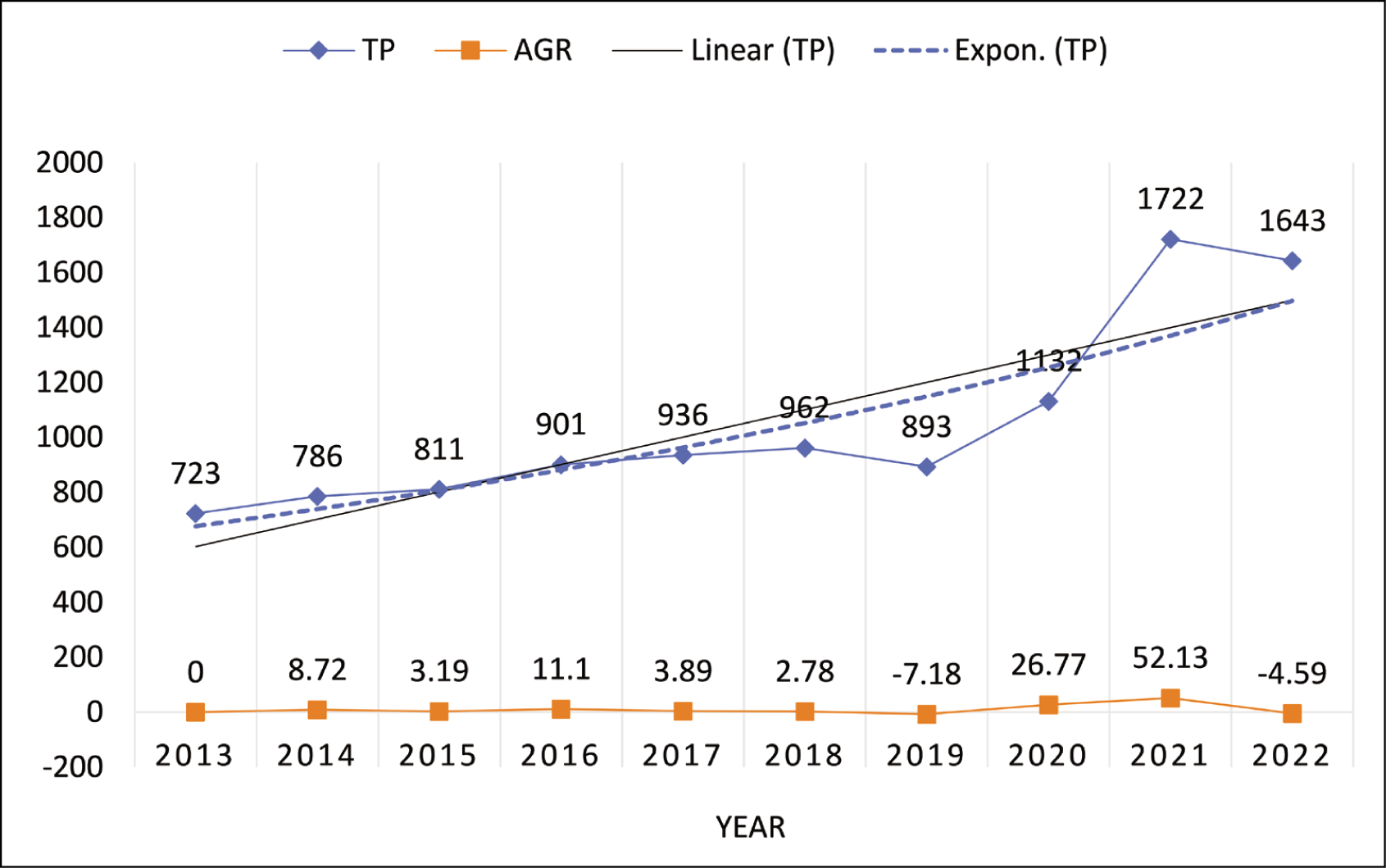
The figure also visually represents data through a scatter plot, which includes linear and exponential regression trendlines to highlight the R² value.[36] The generated data is showcased in two ways: the linear adjustment with the equation y = 99.63× + 502.93 and the exponential plot represented by the equation y = 619.93e0.0882×. The values for the exponential curve (r1) and the linear curve (r2) are considered to evaluate the correlation coefficient. It is observed that R² exponential > R² linear, indicating (R² = 0.7981 > R² = 0.7369). Therefore, the Price Law of exponential growth is adhered to, indicating that the growth of publications is exponential.
The average growth rate (AGR) method, as described by Kumar and Kaliyaperumal[37] is used to evaluate the yearly trends in research productivity.

Leading Authors
Table 1 lists the top 10 productive authors in Indian medical research on PCR. Aman Sharma, from Internal Medicine at the Post Graduate Institute of Medical Education and Research (PGIMER), leads with the highest number of 60 publications, accounting for 12.58% of the total, and has an impressive h-index of 17 with 724 total citations. Following closely is Kusum Sharma from Medical Microbiology at the same institute, contributing 11.11% of the publications, with an h-index of 16 and 632 citations.
Most leading authors
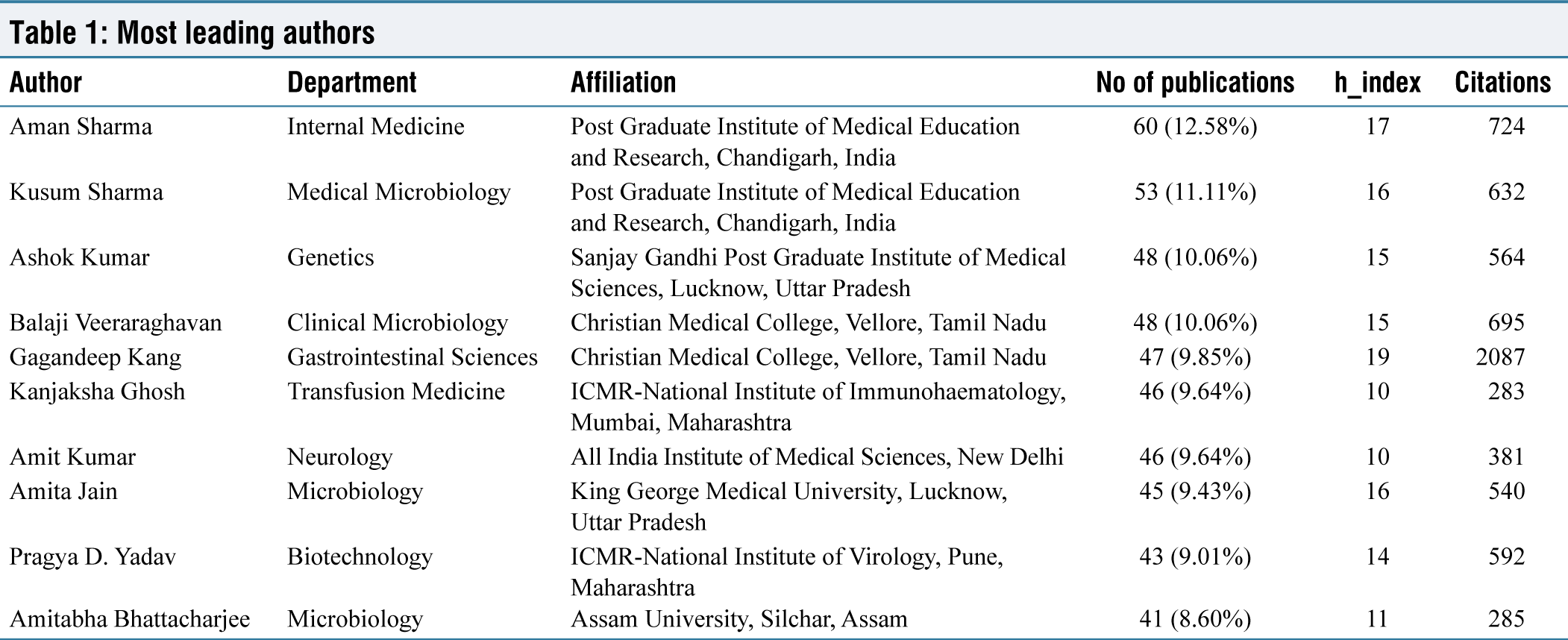
Ashok Kumar from the Department of Genetics at Sanjay Gandhi Post Graduate Institute of Medical Sciences (SGPGIMS) and Balaji Veeraraghavan from Clinical Microbiology at Christian Medical College both have 48 publications (10.06%) with h-indices of 15 and total citations of 564 and 695, respectively. Gagandeep Kang, from the Gastrointestinal Sciences Department at Christian Medical College, has 47 publications (9.85%) and stands out with the highest h-index of 19 and a remarkable 2,087 citations, indicating significant influence in the field.
Other notable contributors include Kanjaksha Ghosh from ICMR-National Institute of Immunohaematology, Mumbai, and Amit Kumar from AIIMS, New Delhi, who each have 46 publications (9.64%) but lower h-indices of 10, with Ghosh having 283 citations and Kumar 381. Amita Jain from King George Medical University, Lucknow, contributes significantly with 45 publications (9.43%), an h-index of 16, and 540 citations. Pragya D. Yadav from ICMR-National Institute of Virology, Pune and Amitabha Bhattacharjee from Microbiology at Assam University are among the lower end of the top 10, with 43 (9.01%) and 41 (8.60%) publications, h-indices of 14 and 11 and citations of 592 and 285, respectively. These authors contributed 477 publications, reflecting their substantial roles in advancing PCR research within the Indian medical research landscape.
Leading journals
Table 2 provides the top 10 leading journals, revealing various publishers and impact factors. Among these, the Indian Journal of Medical Microbiology published the highest proportion of articles, accounting for 21.59%, totalling 1,933 citations and an h-index of 19. Despite its significant output, it has a relatively low impact factor of 0.9. In contrast, Frontiers in Microbiology published 19.18% of articles, achieving 6,569 citations and an impressive h-index of 40, reflecting its substantial influence with a higher impact factor of 4. Meta Gene published 10.49% of articles and 1,315 citations, but its lower impact factor of 0.7 suggests less influence than others.
Highly productive journals
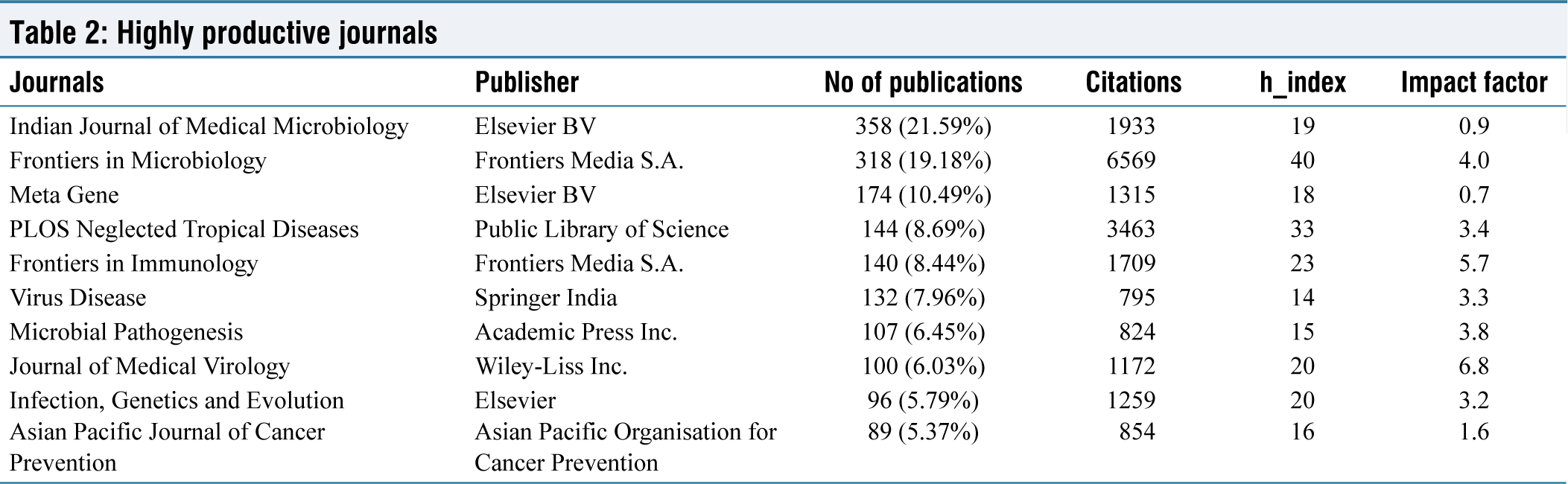
PLOS Neglected Tropical Diseases also demonstrates high productivity, publishing 8.69% of the articles and receiving 3,463 citations, with an h-index of 33 and a substantial impact factor of 3.4. Frontiers in Immunology contributed 8.44% of articles with 1,709 citations and an h-index of 23, showcasing a strong academic influence with an impact factor of 5.7. Other notable journals include VirusDisease, with 7.96% of articles, 795 citations and a moderate impact factor of 3.31, and Microbial Pathogenesis, with 6.45% of articles, 824 citations and a relatively high impact factor of 3.8. The Journal of Medical Virology published 6.03% of articles and 1,172 citations, with a notable impact factor of 6.8, indicating its significant impact in the field. Infection, Genetics, and Evolution published 5.79% of articles with 1,259 citations and an impact factor of 3.2. Lastly, the Asian Pacific Journal of Cancer Prevention published the smallest share, with 5.37% of the articles, 854 citations and an impact factor of 1.6.
Top Indian institutions
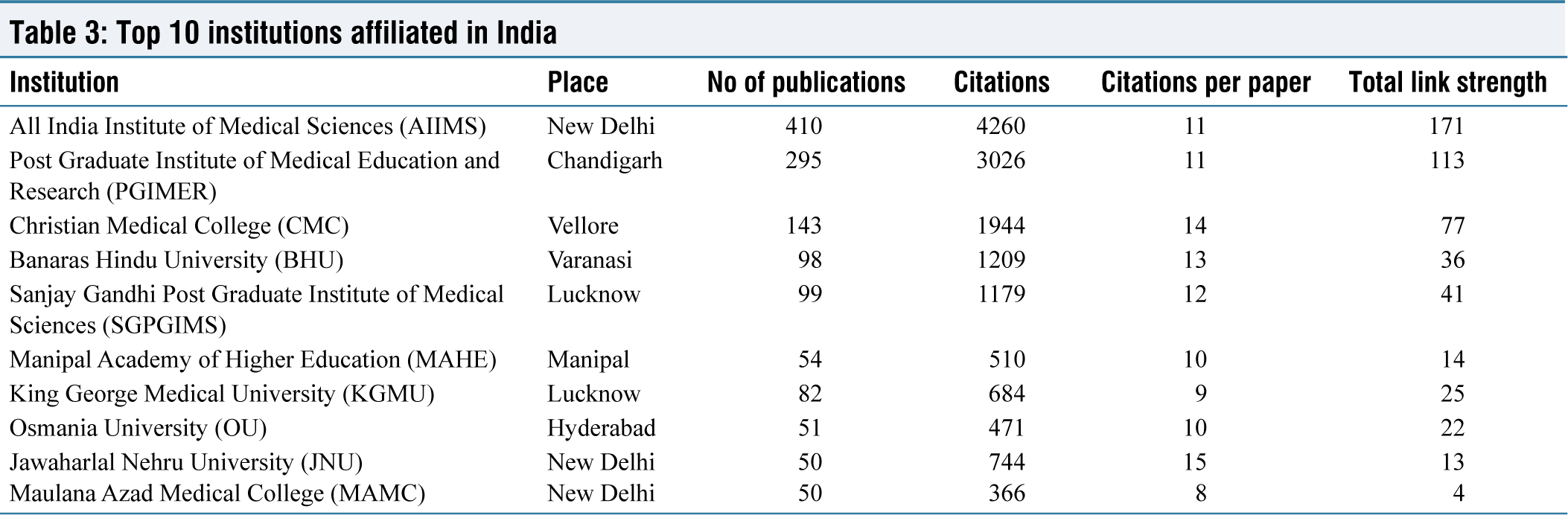
Table 3 listed India’s top 10 institutions affiliated with medical and higher education, ranked by their scholarly output and impact. Among these, the All India Institute of Medical Sciences (AIIMS), New Delhi, leads with the highest number of 410 publications and 4260 citations, reflecting its significant research activity and impact. It maintains a strong average of 11 citations per article, indicating a strong influence within the academic community. Following AIIMS, the PGIMER has 295 publications and 3026 citations, achieving an average of 11 citations per article. Christian Medical College, Vellore, with 143 publications and 1944 citations, has the highest citations per article at 14, showcasing its substantial impact per publication. Banaras Hindu University (BHU) and the SGPGIMS have a similar profile, with BHU producing 98 publications with 1,209 citations (13 citations per article) and the SGPGIMS contributing 99 publications with 1,179 citations (12 citations per article). Manipal Academy of Higher Education, King George Medical University and Osmania University have lower citations per article ratios, ranging from 9 to 10. Despite fewer publications (50), Jawaharlal Nehru University has the highest 15 citations per article, with 744 citations. Conversely, Maulana Azad Medical College has 366 citations, with the lowest average of eight citations per article among the top institutions listed.
Top 10 institutions affiliated in India
Therefore, it highlights the collaborative landscape of medical research in India, reflecting the collective efforts of various institutions and universities towards advancing knowledge and innovation in medicine and healthcare.
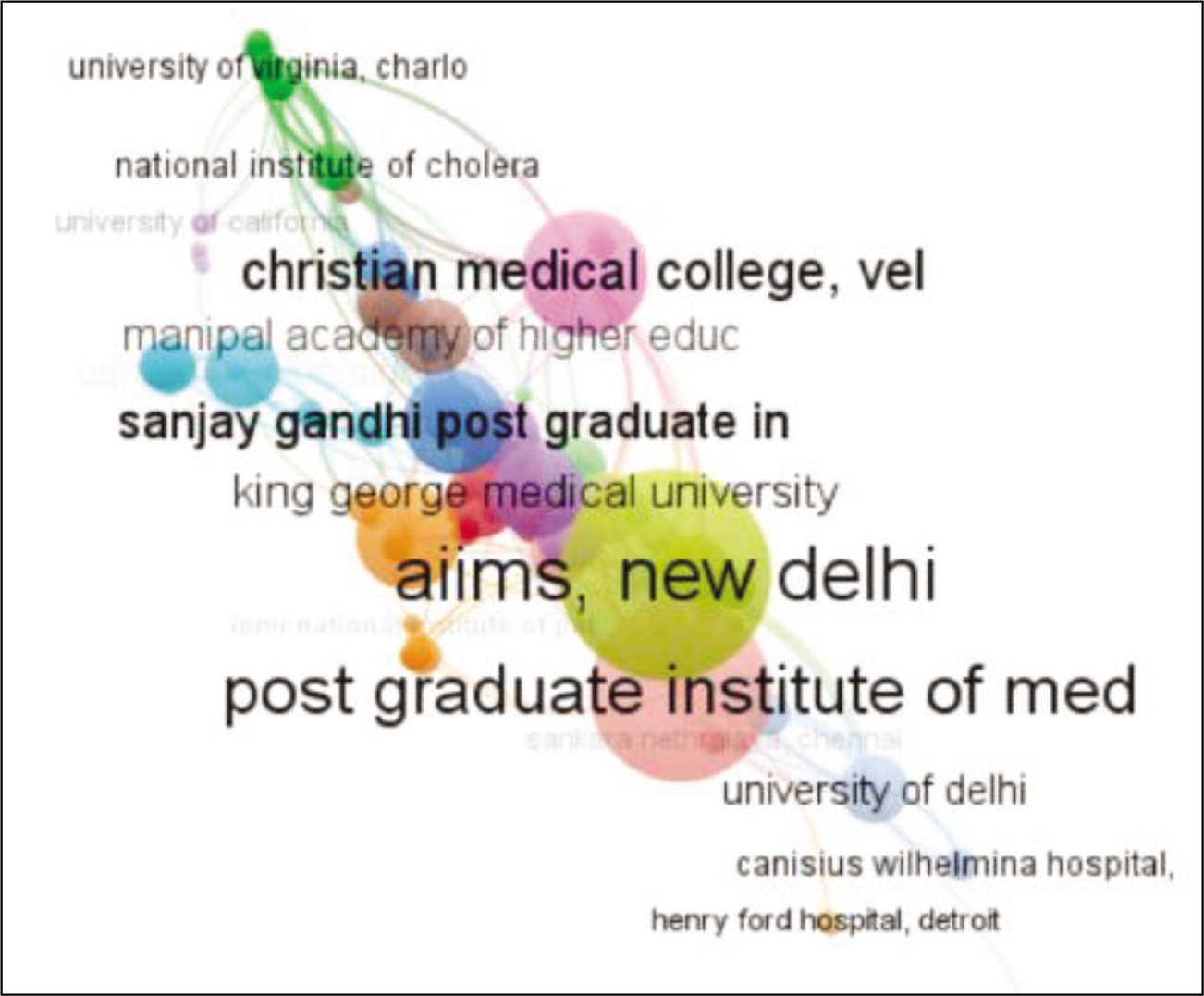
A graphical representation of the co-authorship network of institutions based on the total number of publications is shown in Figure 2. This visualisation reflects the total output of various institutions. Of 28,975 institutions, 308 meet the minimum threshold of having at least three documents each. Among these 308 institutions, 157 are interconnected, forming a complex co-authorship network. These interconnected institutions are grouped into 16 distinct clusters. The network is further characterised by 434 links, indicating the number of direct co-authorship connections between these institutions. The overall strength of these connections is quantified by a total link strength of 1,120, reflecting the cumulative intensity of collaboration among the institutions. These highlight the major collaborators and illustrate the structural relationships and the extent of collaborative research within the academic community.
Visualisation of co-authorship network of institutions
Keywords co-occurrence analysis
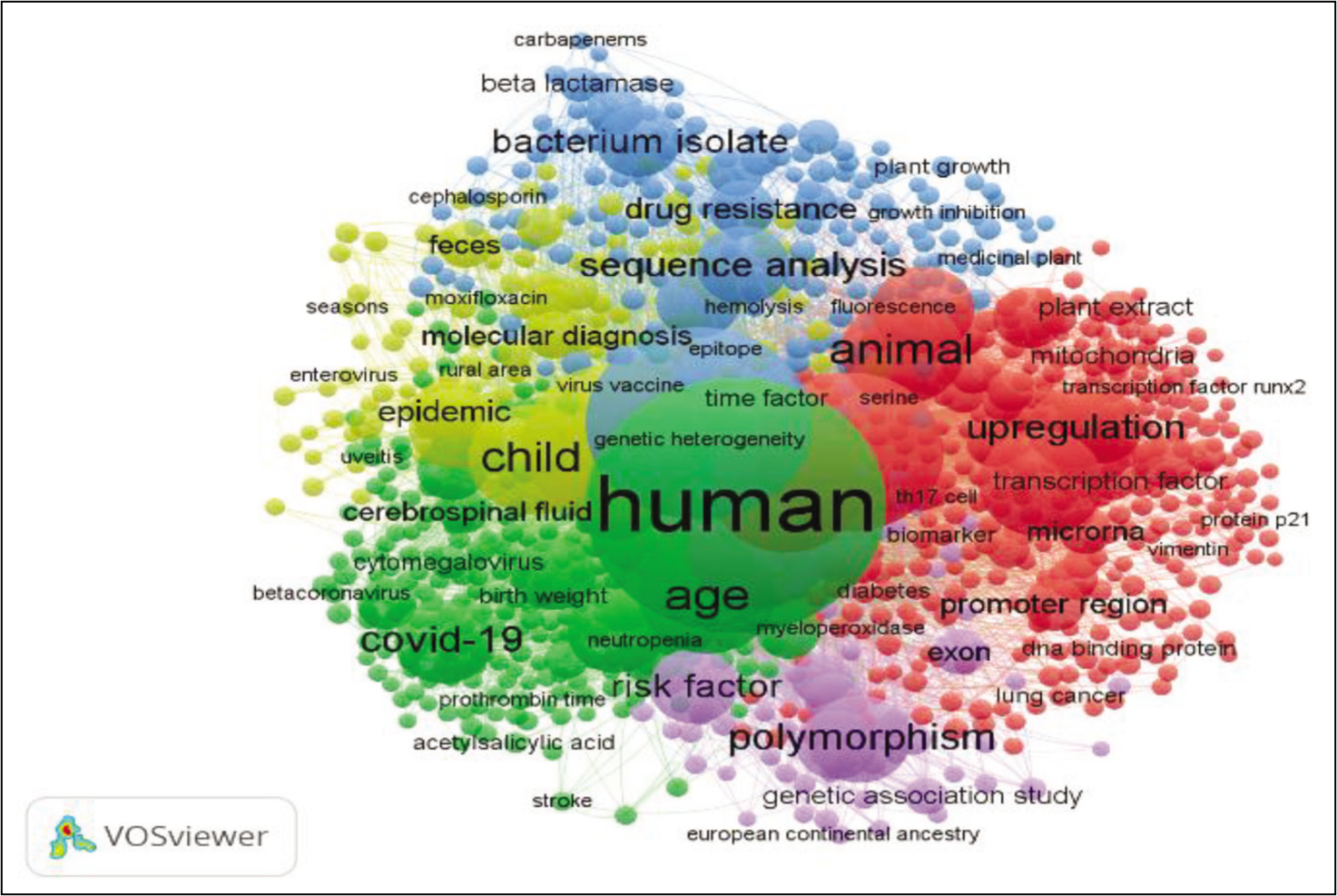
Figure 3 visually represents the keywords network, with each keyword depicted as a circular node. In the analysis, 57,951 unique keywords were identified, each with a minimum co-occurrence of four times. Out of these, 11,978 keywords met the minimum threshold criteria. Further, it refined the data to focus on 1,000 keywords organised into five distinct clusters. These clusters were interconnected by 111,971 links, with a cumulative link strength of 508,226. Among the keywords, ‘human’ and ‘polymerase chain reaction’ had the highest occurrences, appearing at 8,246 and 4,738 respectively. These two prominent keywords were categorised into clusters 2 and 3. Moreover, ‘human’ and ‘polymerase chain reaction’ also demonstrated the highest link strengths, with ‘human’ exhibiting a link strength of 73,886 and ‘polymerase chain reaction’ showing a link strength of 40,074. It indicates their significant roles and strong connections within the keyword network.
Network visualisation of co-occurrence of keywords
Collaborating countries with India
Table 4 displays the top 20 countries collaborating with India based on the total number of publications between them. Academic collaboration among various countries can significantly facilitate knowledge sharing and promote academic exchange. It reveals that the United States is the leading collaborator with India, contributing 987 publications, constituting 20.81% of the total collaborations. It is followed by the United Kingdom and Saudi Arabia, with 307 (6.48%) and 238 (5.02%) publications respectively. Other prominent collaborators include Germany and France, with substantial publications reflecting diverse research interests. Collaboration with China (3.08%) is comparatively lower than with Western countries, indicating varying levels of engagement across regions. Moderate levels of collaboration are observed in countries like Australia, Canada, and Japan. European nations such as Italy, the Netherlands and Switzerland are also notable, showcasing a diverse range of research interests.
Top 20 India’s most collaborated countries
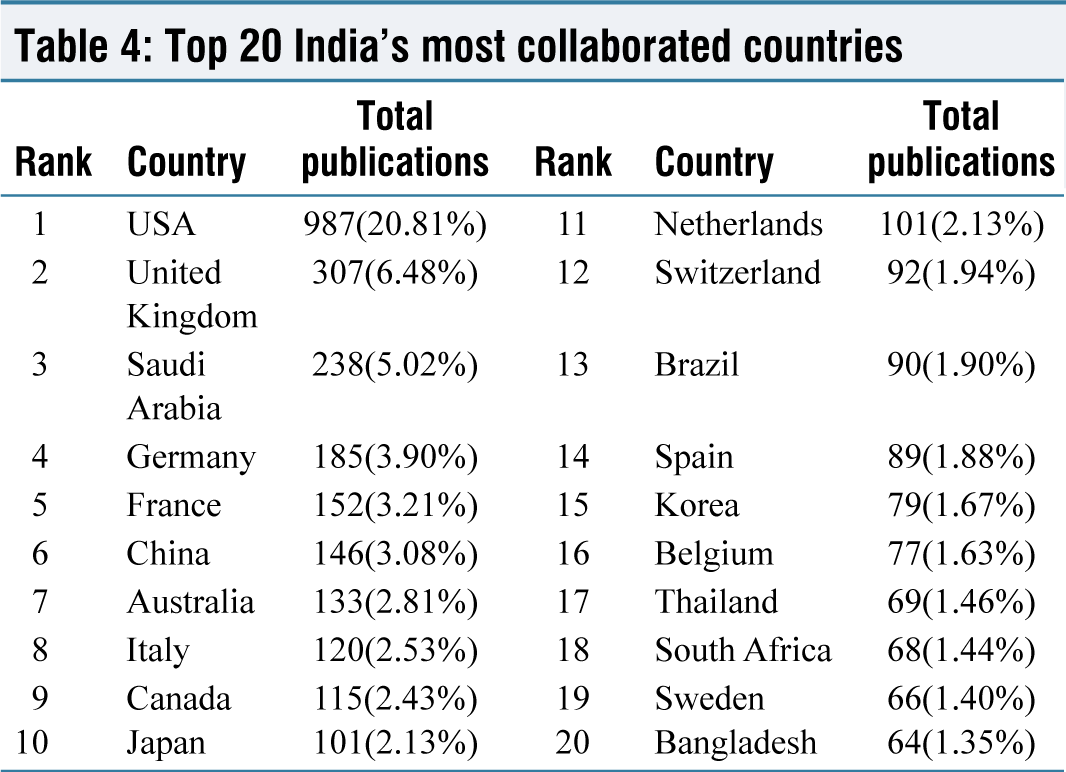
Additionally, collaborations with countries like Brazil, Spain and Korea indicate a global outreach in research efforts. However, some countries like Thailand, South Africa, Sweden and Bangladesh have comparatively fewer publications yet still reflect international research collaborations. Overall, this table underscores the significance of international collaboration in fostering research advancements and knowledge exchange between India and countries worldwide.
Funding agencies
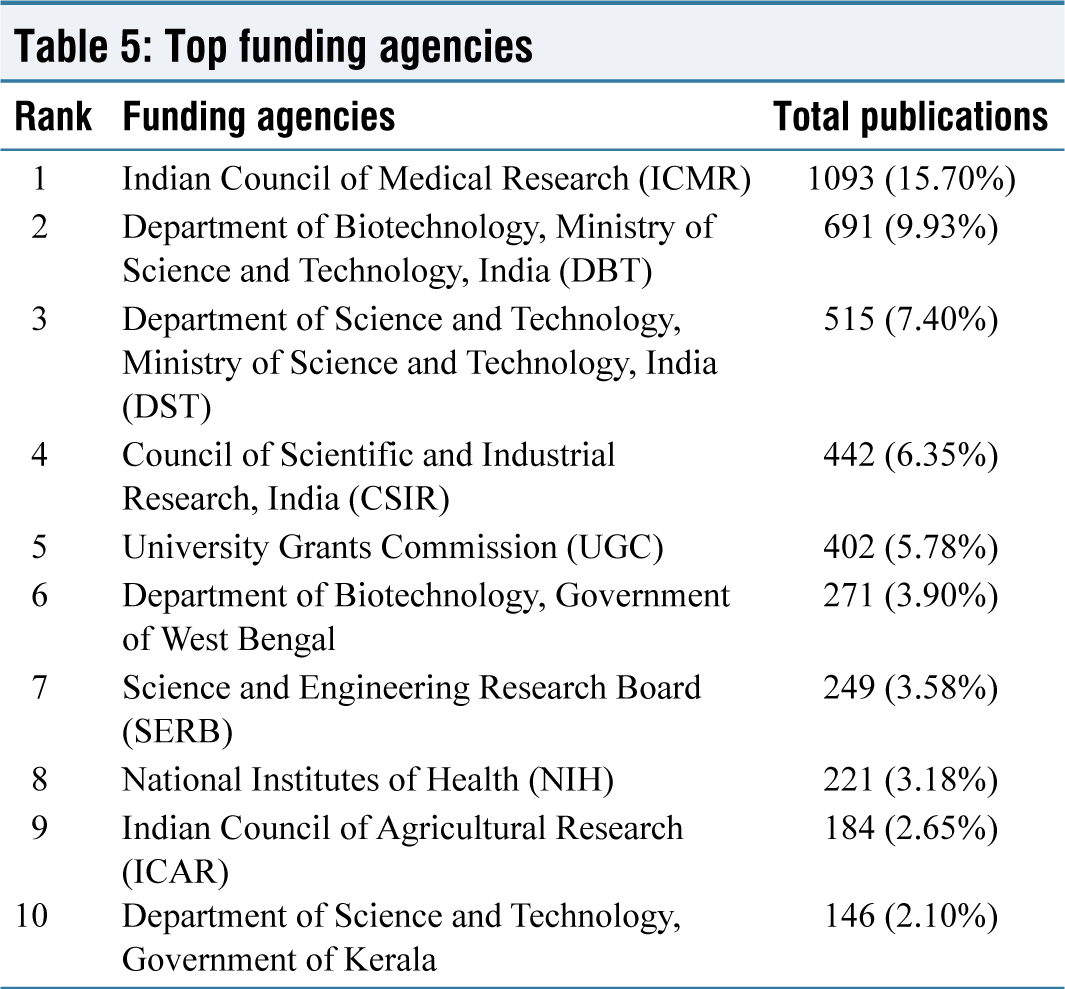
A total of 160 funding agencies supporting PCR research publications in India were identified in the Scopus database. The top 10 highly funded agencies are listed in Table 5, ranking based on the number of publications they have supported, providing insights into the distribution of research funding within the field. The Indian Council of Medical Research (ICMR) emerges as the leading funding agency, with 1093 publications, representing 15.70% of the total, followed by the Department of Biotechnology, Ministry of Science and Technology, India (DBT), with 691 publications, comprising 9.93% of the total, indicating a strong presence of biotechnology-related research. The Department of Science and Technology, Ministry of Science and Technology, India (DST), holds the third position, funding 515 (7.40%) publications and significantly contributing to scientific literature. Additionally, the Council of Scientific and Industrial Research, India (CSIR) and the University Grants Commission (UGC) occupy the fourth and fifth positions, respectively, with 6.35 and 5.78% of total publications each, demonstrating their notable involvement in research funding. The remaining funding agencies, including the Department of Biotechnology, Government of West Bengal, Science and Engineering Research Board (SERB), National Institutes of Health (NIH), Indian Council of Agricultural Research (ICAR), and the Department of Science and Technology, Government of Kerala, contribute to the research landscape with varying percentages ranging from 2.10% to 3.90%. These highlight the diverse funding agencies supporting research endeavours, emphasising health and biotechnology-related research.
Top funding agencies
Discussion
This scientometric analysis provides a comprehensive overview of the landscape of PCR research in Indian medical science from 2013 to 2022, encompassing 10,509 publications. The growth trend is marked by a continuous increase in publication count, peaking at 1,722 publications in 2021, despite slight downturns in publication numbers in 2019 and 2022. This variability may reflect external factors such as funding fluctuations or shifting research priorities that could influence annual publication rates. The exponential growth of PCR research highlights its increasing importance and relevance in the medical field, driven by technological advancements and heightened research interest.
Publication sources reveal that the Indian Journal of Medical Microbiology is the most prolific, contributing 21.59% of the articles, though it has a relatively low impact factor of 0.9. In contrast, Frontiers in Microbiology and PLOS Neglected Tropical Diseases, with higher impact factors, also published a significant proportion of PCR research. This disparity highlights the varied impact of journals within the PCR research domain, with some offering high visibility and influence despite lower publication volumes.
Examining authors and institutions, leading contributors such as Aman Sharma and Kusum Sharma from PGIMER and Gagandeep Kang from Christian Medical College emerged as key figures with significant publication counts and high citation metrics. These authors, alongside institutions like AIIMS, PGIMER and Christian Medical College, represent the forefront of PCR research in India. The highest citations per article ratio observed at Christian Medical College highlight its notable impact per publication, reinforcing its leading role in the field. Institutional analysis reveals that the AIIMS, New Delhi, is at the forefront of PCR research and has the highest publication and citation counts. These highlight AIIMS’s significant role in driving PCR research in India. Other leading institutions, such as the PGIMER and Christian Medical College, also play crucial roles in illustrating a collaborative landscape among prominent medical research centres.
Collaboration patterns indicate strong domestic and international research networks. The United States emerges as the leading international collaborator with India, followed by the United Kingdom and Saudi Arabia. This global collaboration enhances the quality and scope of research, facilitating knowledge exchange and enriching the research through diverse perspectives and resources.
The analysis of keyword co-occurrence and research themes indicates a focus on core areas such as human health and disease diagnostics, with emerging themes reflecting shifts in research interests and advancements in PCR applications. The practical implications of PCR research are profound, contributing to India’s medical diagnostics, treatment and public health. PCR’s role in disease detection, genetic screening and epidemiology demonstrates its transformative impact on the country’s healthcare outcomes and research practices.
Comparing PCR research in India with global trends reveals unique trends and areas for improvement. While India exhibits strong growth and collaborative engagement, certain gaps in research focus and publication volume compared to leading countries highlight areas for potential development. Addressing these gaps can further enhance India’s position in the global research landscape. This provides valuable insight into the state of PCR research in India, highlighting significant growth, influential publications and extensive collaborations. It underscores the importance of continued investment and collaboration to advance the field and enhance its contributions to medical science and public health.
Future Research
This study aims to investigate the impact of PCR research on clinical practice and healthcare outcomes in India. It will focus on translating research findings into practical applications and innovations. Additionally, the study will explore emerging trends and technologies in PCR, such as digital PCR, next-generation sequencing and CRISPR-based techniques, and their implications for medical research and healthcare in India.
Furthermore, it examines interdisciplinary collaborations and partnerships to address complex healthcare challenges and improve patient care through innovative PCR applications. The study will also investigate the socio-economic factors influencing PCR research in India, including funding allocation, research infrastructure and policy frameworks, to enhance research capabilities and create a supportive scientific innovation and development environment.
Conclusion
PCR has emerged as a pivotal tool in medical research in India, facilitating advancements in various healthcare domains, including disease diagnosis, genetic screening, cancer research, epidemiology, forensic analysis, vaccine development and environmental health research. The scientometric analysis provided insights into the growth, productivity, collaborating countries and trending research themes in PCR-related research in India, highlighting the contributions of key authors, journals, institutions and funding agencies. Additionally, the visualisation of co-authorship and co-occurrence networks provided valuable insights into the intellectual structures, collaborative patterns and emerging trends in PCR-related research. The study highlights the significance and impact of PCR in advancing scientific knowledge and healthcare outcomes in India.
Footnotes
Declaration of conflicting interests
The authors declared no potential conflicts of interest with respect to the research, authorship and/or publication of this article.
Funding
The authors received no financial support for the research, authorship and/or publication of this article.
Institutional Ethical Committee Approval Number
Not required.
Ethical approval
Not required.
Credit author statement
RH: Conceptualisation, literature search, data curation and analysis, writing manuscript.
KGS: Conceptualisation, literature search, reviewing, editing and final approval.
Data availability
Raw data is available with the lead author #1 RH.
Use of artificial intelligence
No AI tool was used.