




Abstract
Background and Aim:
Chatbots are computer programs, which are devised to simulate conversations through voice or textual interactive forms. These applications offer multiple benefits in patient education, clinical decision-making, interpersonal communication, research activities, data analysis and administrative affairs. The present scoping review aims to analyse the current role, pitfalls, challenges and future scope of these modalities in diverse fields of medical science.
Methods:
Literature search was made on 9 April 2024, on five databases (PubMed, Scopus, Web of Science, Embase and Google Scholar). A narrative approach was used for the synthesis of results.
Results:
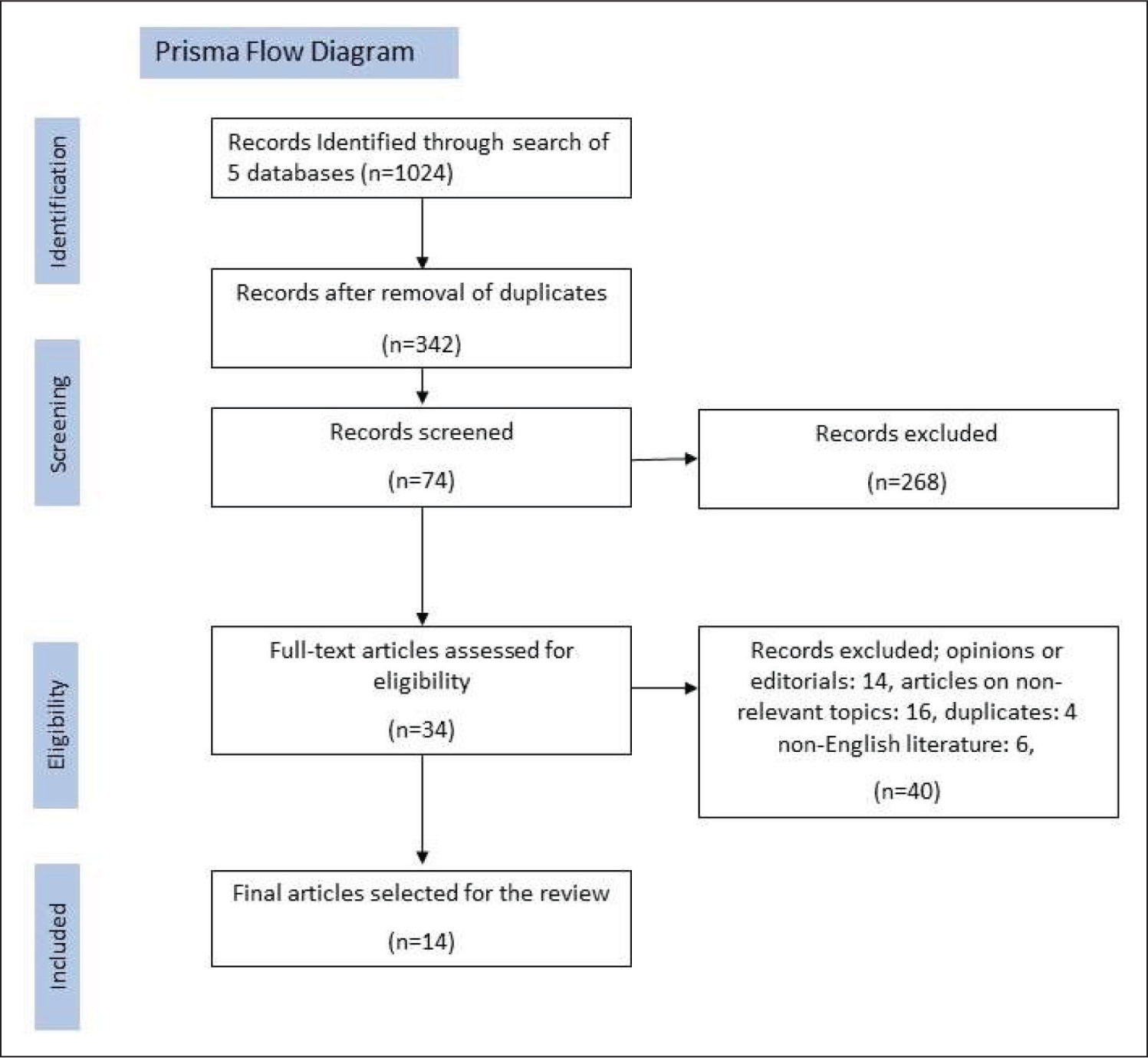
Our literature search yielded 1024 studies. After the de-duplication of manuscripts using Endnote, 342 articles were identified. After title and abstract screening, 74 articles were included for the next round of screening. Finally, 14 articles were selected for this scoping review.Diverse chatbot applications have been developed at a growing rate for use in medical science. There is a gradual shift towards employing machine learning-based strategies to develop chatbot programs. Chatbots have a significant potential to revolutionise diverse aspects of medicine including patient care, academic activities, and research endeavours.
Conclusion:
Artificial Intelligence can be highly effective in streamlining the routine functions and activities in medical care. Chatbots have the potential to meliorate the accessibility, efficiency and standard of medical care. However, the need for further validation through high-quality studies to ensure patient privacy, strategies to conform to patients’ data security, accuracy and precision of the technology and mitigating potential pitfalls in its routine utilisation globally are warranted.
Introduction
Artificial intelligence (AI) has made significant developments in the past years and its utility in the domain of health systems has gained substantial recognition.[1,2] Chatbots are virtual assistants, which simulate human-like interactions and participate in conversations with users. They have emerged as promising applications in a wide range of fields such as education, health care and customer services.[3,4] The growing importance of AI has generally been attributed to multifaceted advancements such as substantial melioration of internet connectivity, consistent improvements in AI technology and extensive availability of smart devices.[5] Some leading chatbots include ChatGPT (Open AI), Bard AI (Google AI), Bing Chat (Microsoft AI) and Claude AI (anthropic AI).[5]
In the realm of healthcare services, chatbots have emerged as excellent tools to improve patient care, provide support for health education, meliorate patient interactions, and streamline administrative workflows. Thus, they help enhance the quality of healthcare, augment patient access to medical information, facilitate personalised guidance, as well as aid the clinician in decision-making process.[6-9] Nevertheless, studies have highlighted the need for evaluating the moral, ethical and accuracy concerns related to integration of chatbots into healthcare systems.[10] The present scoping review delves into the realm of AI; and evaluates the role and future applications of chatbots in medical field.
Methods
Literature Search
A comprehensive literature search was conducted on five databases (PubMed, Web of Science, Scopus, Embase and Google Scholar) on 9 April 2024 to identify studies on the role of chatbots in medical science. The keywords employed in combination with Boolean operators for searching were (((artificial intelligence) OR (AI) OR (Chatbots) OR (ChatGPT) AND (Medical science) OR (Health care) OR (Surgery) OR (Hospital management))). Our search strategy is shown in the PRISMA flow chart (Figure 1).
PRISMA flow diagram
Eligibility
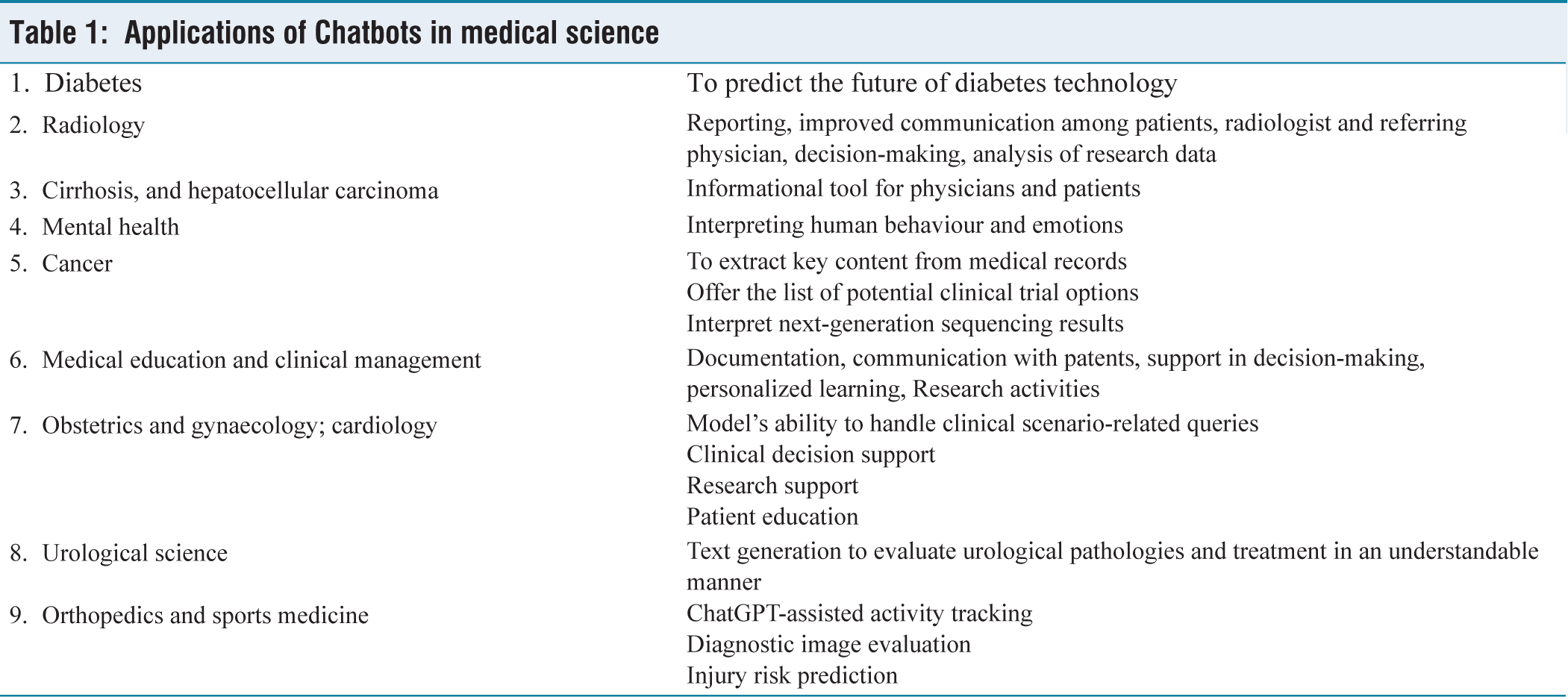
All studies, which reported on chatbots and their applications across diverse medical specialities were considered. Opinions, editorials, letters, case reports and manuscripts published in non-English literature were excluded (Table 1).
Applications of Chatbots in medical science
Data Extraction
The outputs from our database search were extracted in End-note and selected manually after de-duplication. Initially, the titles and abstracts of manuscripts were screened. During the next stage of screening, full articles were reviewed and finally the most relevant manuscripts were selected.
Results
Our literature search yielded 1,024 studies. After de-duplication of manuscripts, 342 articles were identified. After title and abstract screening, 74 articles were included for the next round of screening. Finally, 14 articles were selected (Figure 1).
Chatbot Models
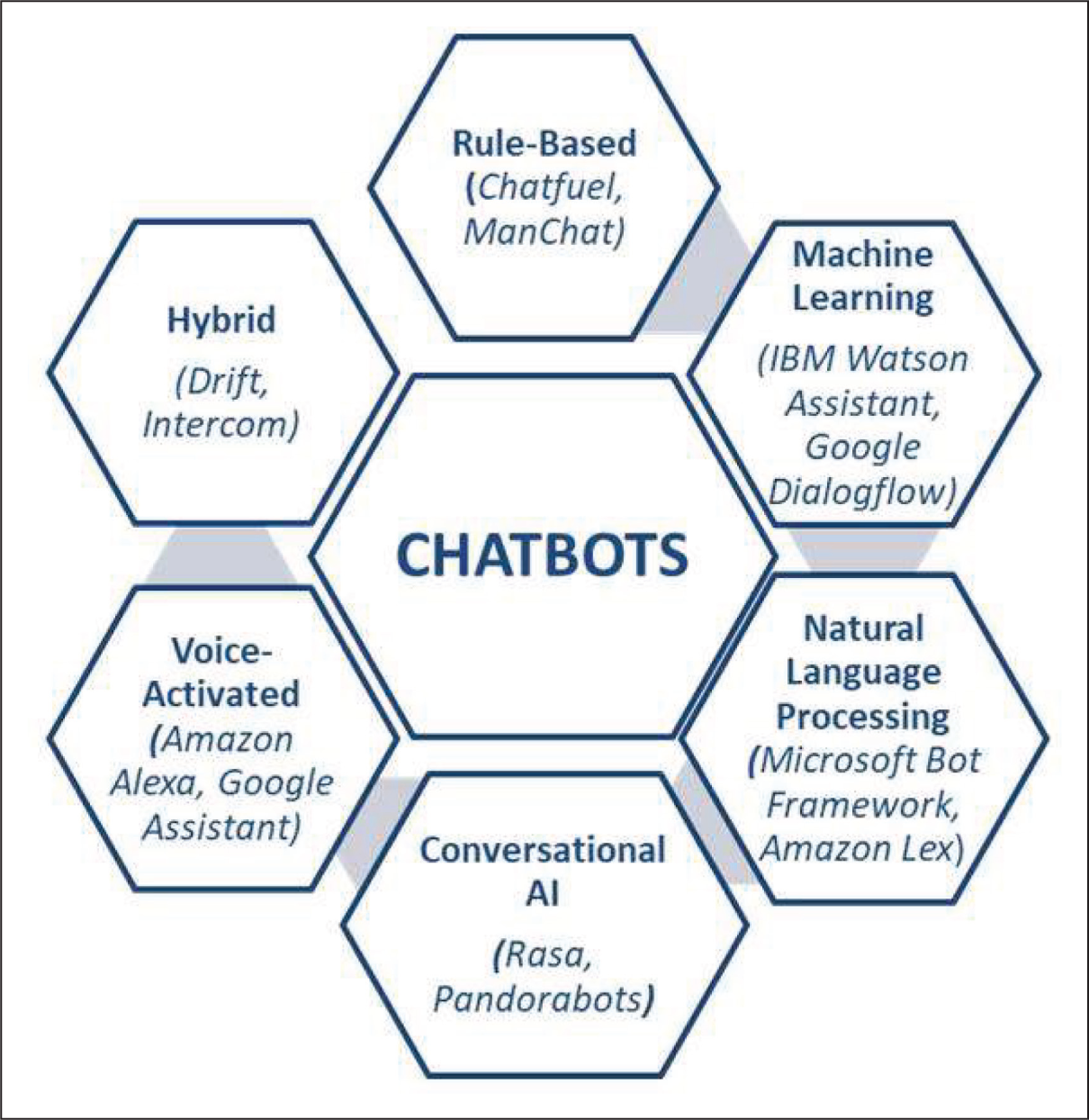
There are different types of chatbots, with individual strengths and limitations. Some commonly used models are presented in Figure 2. The best choice for a chatbot depends upon the specific requirements of application. For example, while a rule-based chatbot may be appropriate for a simple customer support application; conversational AI chatbots are necessary for complex medical diagnosis.
Types of Chatbots with examples
While in the deterministic models, the outcome is entirely determined by the values of initial input; generative models consider the degree of randomness in outcome determination. Such generative models are classified based on the type of data processed: visual [variational auto-encoder (VAE)], language [natural language processing (NLP) like ChatGPT] or combination of both (such as GPT4); or based upon the pattern in which they generate information (implicit or explicit models).[11]
ChatGPT
One of the highly acknowledged categories of AI is the natural language processing (NLP) system.[12,13,14,15] ChatGPT (Chatbot Generative Pre-trained Transformer – Open AI, San Francisco, CA), which was released in 2022, has been recognised as a sophisticated NLP chatbot with multitudinous potentials for supervised and forced learning.[16,17] Incorporating newer models like GPT-4.0, ChatGPT has offered distinct benefits in organising language content, providing translations and offering detailed responses to queries.[5] It has also been growing in popularity in the context of healthcare organisations as a digital diagnostic tool to formulate diverse differential diagnoses; although their accuracy in diagnosing a pathology still needs validation.[18,19]
Clinical Benefits of Chatbots
With their language capabilities, chatbots and AI can be very helpful in scheduling patient appointments, triaging individuals in clinics and emergencies, as well as ensuring appropriate language translations and communications. In addition, they can be of substantial clinical importance in the evaluation of patients’ symptoms and diagnosis of pathology. Such an ability of AI to process data and clinical presentations can be of utmost benefit in the decision-making process. AI can also be useful in organising regular patient surveillance, coordinating post-discharge care, arranging visits; and carrying out remote patient monitoring (telemedicine).
Administrative and Academic Roles of Chatbots
AI can be useful in streamlining the routine tasks of hospital and clinic functioning. Chatbots can also be helpful in hospitality-related activities, patient engagement ventures and coordinated endeavours to improve interpersonal relationships between the provider and patients.
Role of Chatbots in Enhancement of Mental Health and Health Education
Chatbots can be beneficial in meliorating the curriculum for resident and trainee education. These applications can be effective in providing mental health support to patients, as well as enhancing their awareness through patient education strategies. They can be helpful in organising health-related information for the benefit of patients, physicians and general public.
Chatbots in Academic Activities and Research
Although diverse researchers have highlighted the potential for NLP and AI technology to enhance the efficiency of academic writing and research; their potential negative impact on credibility, accuracy and authenticity of published work has also been acknowledged.[20] In a review article by Vaishya et al.,[21] the need for researchers to fact-check all the statements provided by chatbots was emphasised to ascertain the authenticity of their work. Chatbots can organise research endeavours through coordination of activities such as retrieval, organisation, interpretation and analysis of data.
Discussion
Since the development of Eliza as one of the earliest conversational systems, chatbots have evolved as an integral part of diverse application domains.[22] Apart from being used as personal assistants and service marketing tools, the development of state-of-the-art applications such as machine learning (ML) and deep learning (DL) have further expanded their utilities.[23] In the realm of medical science, chatbots such as OneRemission1 (to help cancer survivors), Babylon Health (symptom evaluator) and Wysa (mental health chatbot) have been developed.[24]
Role of Chatbots in Surgical and Non-surgical Specialities
An overview of diverse applications of chatbots in surgical and non-surgical specialities is shown in Table 2.
Inclusion and exclusion criteria

Orthopaedic Surgery
In a recent study by Kuroiwa et al.,[25] the potential for ChatGPT as a self-diagnostic tool in common orthopaedic pathologies was evaluated. Based on their observations, the accuracy and reproducibility of ChatGPT in diagnosing the pathologies were not consistent. In their study, it was shown that the diagnosis of cervical myelopathy had relatively low accuracy, because of the poorly localising and multifocal symptomatology. In another study by Mika et al.,[26] it was demonstrated that chatbots could serve as a valuable tool for pre-THA (total hip arthroplasty) patient education and communication.
In a recent review by Fayed et al.,[27] the roles of AI and ChatGPT in diverse subspecialties of orthopaedics were evaluated. They highlighted the potential use of chatbots in the management of orthopaedic conditions such as fracture detection (including estimation of fracture risk), OA, perioperative care patients undergoing arthroplasty, prediction of cartilage loss based on Magnetic Resonance Imaging (MRI), prognostication of patients undergoing shoulder arthroplasty, spine surgery (such as categorisation of scoliotic and other spinal deformities, diagnosing lumbar compression fractures, hand function evaluation in patients with cervical myelopathy, foot and ankle pathologies (like predicting the progression of foot deformities in progressive Charcot’s arthropathy, hallux rigidus evaluation), develop ML algorithms to predict the dose of perioperative opioid usage, as well as evaluation of skeletal maturity and gait patterns (based on 3D ground reaction force data).[28-33] Coraci et al.[34] demonstrated the use of ChatGPT in developing questionnaires for patients suffering from low back pain.
Oncology
A recent review[35] discussed the role of chatbots in monitoring diverse medical conditions such as oncological care, hypertension, asthma, varicose veins, orthopaedic pathologies and urological problems. They highlighted the fact that none of the reviewed studies examined the safety aspects of chatbot incorporation into healthcare.
The role of AI technology in the management of oncological conditions has been widely acknowledged, especially since the management of these patients requires coordinated efforts of a multidisciplinary team. AI technology can meliorate the diagnostic and management processes, workflow efficiency related to patient monitoring, as well as health promotion and secondary preventive strategies in cancer patients.[36] AI technology has been evaluated in malignancies such as hepatocellular carcinoma, breast cancer, prostate cancer, pancreatic cancer, brain malignancy, lung cancer and cutaneous neoplasms.[37]
Radiology
Chatbots can be very useful in the field of radiology.[11,38] Generative AI models significantly improve the quality of imaging, enhance data security and expedite the acquisition of MRIs. In addition, inversion of generative models allows the editing and manipulation of features within latent space; and provides insights into the latent representations, thereby facilitating control over the generation of data as well as supporting image manipulation functions.[11]
Psychiatry
In a recent review,[39] the role of immense DL potential of GPT, a powerful deep learning-based language model, in the field of psychiatry has been discussed. In addition to its capability to support routine tasks such as completing medical records, enabling research activities, as well improving interpersonal communications; the future potential (with foundational GPT models) to incorporate emotion recognition, empathise with patients, recognise diverse mental health warning signs as well as assess individual personalities has been comprehensively examined.
In this review, the prospective ability to integrate chatbots into telemedicine and academic or training settings has also been comprehensively discussed. Conversational models of AI have been employed through the internet, smartphone and digital gaming mechanisms to teach emotional coping mechanisms to patients, and as intelligent robots for digital psychiatry.[40]
Infectious Disease
Recently, Cheng et al.[39] evaluated the role of ChatGPT in the context of infectious diseases. The role of chatbots in the management of monkeypox and COVID-19 has been previously reported.[41,42] They recognised the huge potential of this technology in different aspects of managing infections, such as awareness creation, dissemination of information, diagnosis, treatment, vaccine development, risk assessment and strategising the protocols for risk mitigation.[41,43] However, they also emphasised the potential challenges including the potential for misinformation, inaccuracies in recommendations, deficiency of human interaction, legal or ethical issues (especially concerning patient confidentiality), patient accessibility and language barriers. Nevertheless, they emphasised that with proper training, validation and surveillance; the aforementioned challenges can be effectively addressed.[44]
Weight Reduction and Lifestyle Modifications
In a recent review article,[45] the effectiveness of AI chatbots in improving general health of individuals through physical activity alterations, diet or weight management programmes and lifestyle modification strategies was evaluated. Based on their observations, although AI chatbots have tremendous potential to streamline such health-enhancing approaches; the standardisation of designing and monitoring the chatbot functioning is of foremost importance to achieve consistent results.
Challenges of Chatbots
In the study by Valencia et al.,[5] ethical and practical challenges regarding the use of chatbots in medicine were discussed. The major considerations regarding the use of chatbots in the medical field include breaches in patient privacy, infringement on patient’s autonomy and decision-making, potential bias, unequal access of patients to chatbots, need for establishing chatbot-based protocols and diagnostic algorithms, medicolegal and ethical concerns of errors in diagnosis, language biases, reduced physician empathy, disrupted interpersonal communications, and inadequate transparency in the decision-making process. They emphasised the need to establish a delicate balance between automated decision-making of digital assistants and the expertise of a healthcare professional. They also highlighted the need to involve a supervising individual, who is insightful and grasps the technical nuances regarding chatbots to ensure an optimal use of the technology.[46] They acknowledged that with continued research and improvements, the huge prospects of the digital communication platforms in meliorating healthcare delivery may be realised in the coming years. In another interesting study, it was concluded that AI applications using LLMs were comparable in terms of performance and knowledge to the first-year orthopaedic resident; and had a low likelihood to clear the Board Examination.[47,48] Ulusoy et al.[49] showed that AI has still not surpassed the traditional approaches for health-related information about reliability, precision and readability.
Limitations
Our study has limitations, which are inherent to non-systematic reviews. No specific inclusion strategy was employed to assess methodological quality of reviewed manuscripts. Retrospective, prospective, non-clinical, narrative reviews and biomechanical studies were included. The sample sizes were small. There are still substantial lacunae in our understanding of the technology and the technology continues to evolve at a rapid pace. Nevertheless, the current review comprehensively discusses the role of chatbots across diverse medical subspecialties.
Conclusion
AI can be highly effective in streamlining routine functioning and activities in medical care across diverse specialities. Chatbots have the potential to meliorate the accessibility, efficiency and standard of medical care; as well as mitigate the expenditure and administrative difficulties in health care delivery. However, the need for validation through high-quality studies to ensure patient privacy, devise strategy to conform to patients’ data security, enhance accuracy; and mitigate potential pitfalls in its routine utilisation is crucial.
Footnotes
Declaration of conflicting interests
The authors declared the following potential conflicts of interest with respect to the research, authorship, and/or publication of this article: Authors Vijay Jain, Madhan Jeyaraman and Karthikeyan P Iyengar are members of the Editorial Board of pollo Medicine. Author Raju Vaishya is Editor-in-Chief at Apollo Medicine. The authors did not take part in the peer review or decision-making process for this submission and have no further conflicts to declare.
Funding
The authors received no financial support for the research, authorship and/or publication
Credit author statement
VKJ, VKV and RV: Conceptualisation, methodology and software.
VKV, VKJ, MJ and AV: Data curation and writing – original draft preparation.
KPI and RV: Supervision.
RV, VKJ, AV, MJ and KPI. RV: Writing – reviewing and editing.
Data availability
Not applicable (narrative review).
Use of artificial intelligence
We used Grammarly and Bard to improve the English and address the grammar and syntax errors of this manuscript