




Abstract
Background and Aims:
Highly cited papers (HCPs) can influence both research and clinical practice. They help to identify core literature and important advances in a field. This study aimed to assess the current status and prospects of South Asia COVID-19 research from the HCPs using bibliometric indicators.
Methodology:
COVID-19 literature from South Asia published between December 2019 and 29 November 2023 in the Scopus database was analysed. The top HCPs, having more than 200 citations, were evaluated. Information about citation counts, authors and organisations and their affiliations, year of publication, source journal, geographical origin, subject, article type, funding details, etc. were retrieved and analysed. Data and visualisation analysis was undertaken using Microsoft Excel and other bibliometric software.
Results:
The 298 South Asia HCPs were published from 2020 to 2023 and were cited 200–3,596 times, with a mean average of 413.9 citations per paper (CPP). Around 24.5% and 51.3% of HCPs received external funding support and were involved in international collaboration, respectively. The most productive organisations were the Postgraduate Institute of Medical Education and Research, Chandigarh, and the Indian Institute of Technology, New Delhi, while the most impactful organisations were Bai Jerbai Wadia Hospital for Children, Mumbai, and Kokilaben Dhirubhai Ambani Hospital & Medical Research Institute, Mumbai. The most productive journals were Diabetes and Metabolic Syndrome: Clinical Research & Reviews.
Conclusions:
This study has identified core and significant authors, organisations, journals, subject fields and significant keywords, collaborators and funding agencies involved in South Asia’s COVID-19 research.
Introduction
The International Health Regulations Emergency Committee of the World Health Organization announced the coronavirus disease outbreak as a global public health emergency on 30 January 2020.1,2 The COVID-19 pandemic continues to impact the world even after three years since its onset, with ongoing mutations posing a significant threat to healthcare systems.3,4 Various global, South Asian academic, scientific and industrial entities have collaborated to comprehend different aspects of the disease, including transmission epidemiology, control measures, disease mechanisms, pathophysiology, testing, treatment, diagnosis and vaccine development. This collaboration has resulted in the creation of preventive vaccines and therapeutic treatments. 5
A substantial increase in publications related to COVID-19 has been observed globally and in the South Asian region, focusing on various disease aspects and vaccine development. 6 While numerous bibliometric studies have been conducted to assess the global research output on COVID-19, 7 the research publications related to South Asia have not been extensively explored.
Considering the extensive research output on COVID-19 in South Asia, with over 60,000 papers published by 29 November 2023, and the importance of COVID-19 research, we have conducted a qualitative and quantitative evaluation of the top 298 South Asian healthcare professionals (receiving 200 or more citations). The aim is to analyse overall trends, funding sources and collaboration patterns; identify key contributors (organisations, authors and journals); explore prevalent themes using significant keywords and create visualisations of co-authorship networks among organisations and authors, keyword co-occurrences and source co-citations. This evaluation aims to serve as a reference for future research endeavours in this field.
Methodology
The South Asia COVID-19 literature was identified through a predefined search strategy in the ‘‘Advanced Research Section’’ of the Scopus database on 29 November 2023. The search utilised various keywords related to COVID-19 in the ‘‘TITLE-ABS-KEY’’ tag and narrowed down the search to India in the ‘‘Affilcountry’’ tag. A total of 56,017 South Asia records were retrieved, which were then sorted in a descending order of citations to identify the top 298 records with 200 or more citations.
These records were further analysed based on subject area, document type, source type, organisations, authors, journals and keywords using the analytical tools provided by Scopus. Each record’s bibliographical information, including citation counts, authors, organisations and affiliations, publication year, source journal, geographical origin, subject, article type, funding details, etc., was recorded and extracted. The 298 records were saved as a CSV file and imported into VOSviewer software for network visualisation analysis, which included bibliographic coupling, co-authorship, co-citation and co-occurrence analysis of publications, countries, organisations, authors, journals and keywords. 7
Among the total of eight South Asian countries, we have included only five countries, namely India, Pakistan, Bangladesh, Nepal and Sri Lanka, in our analysis, as they have made substantial contributions to COVID-19 research. These five South Asia countries are further subdivided into two blocks: ‘India’ and ‘Other South Asia’ countries, which include Pakistan, Bangladesh, Nepal and Sri Lanka. These two blocks were created because India’s published output was much larger than the combined output of the other four South Asia countries and, second, to compare and highlight the contribution of both the blocks separately where required.
The following search strategy was used for this study:
TITLE-ABS-KEY (‘COVID 19’ OR ‘2019 novel coronavirus’ OR ‘coronavirus 2019’ OR ‘SARS-CoV-2’ OR ‘SARS-CoV 2’ OR ‘coronavirus disease 2019’ OR ‘2019-novel CoV’ OR ‘2019 ncov’ OR ‘COVID 2019’ OR ‘corona virus 2019’ OR ‘nCoV-2019’ OR ‘ncov2019’ OR ‘nCoV 2019’ OR ‘2019-ncov’ OR ‘COVID-19’ OR ‘Severe acute respiratory syndrome coronavirus 2’ OR ‘Novel Coronavirus’) AND (LIMIT-TO (AFFILCOUNTRY, ‘India’) OR LIMIT-TO (AFFILCOUNTRY, ‘Pakistan’) OR LIMIT-TO (AFFILCOUNTRY, ‘Bangladesh’) OR LIMIT-TO (AFFILCOUNTRY, ‘Nepal’) OR LIMIT-TO (AFFILCOUNTRY, ‘Sri Lanka’)).
Results
Overall View
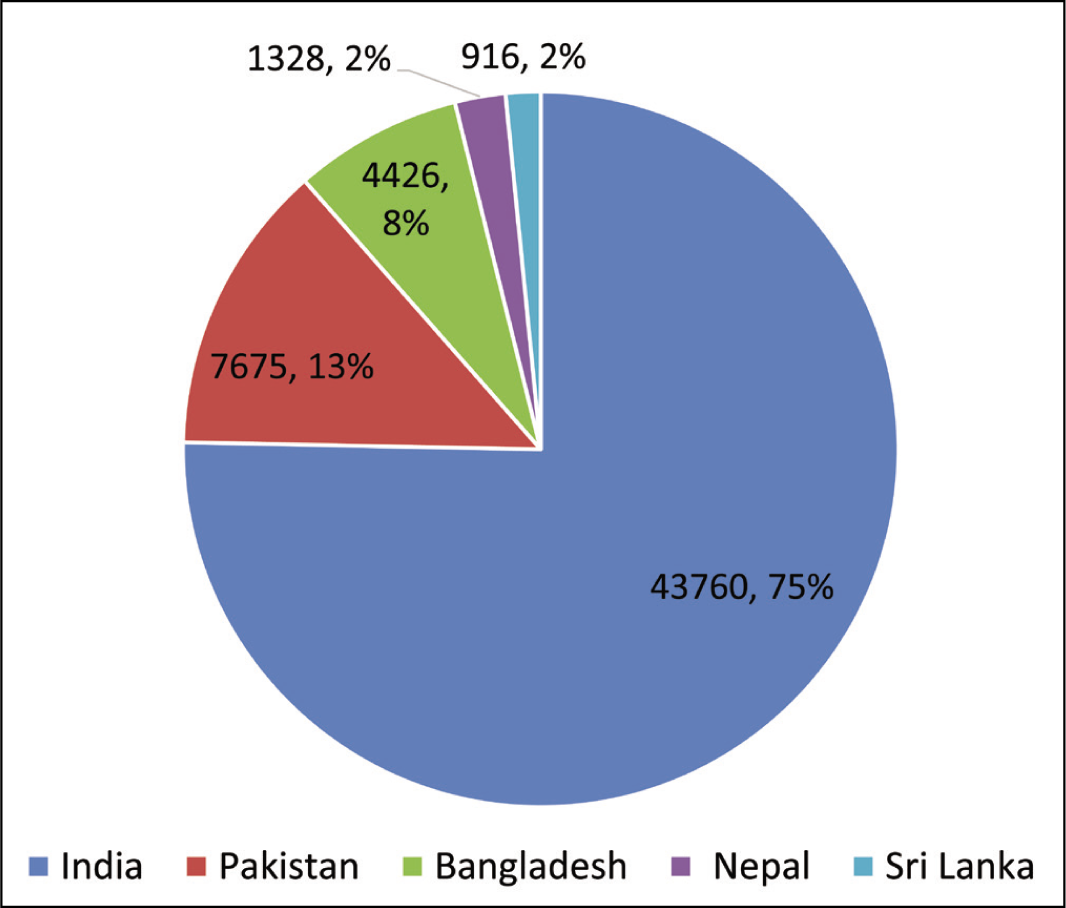
A total of 592,494 global papers on COVID-19 were listed in the Scopus database till 29 November 2023. Out of these, the five South Asian countries together contributed 56,017 papers, and individual contributions were as follows: India (43,760 papers), Pakistan (7,675), Bangladesh (4,426), Nepal (1,328 papers) and Sri Lanka (916 papers) [Figure 1]. Among the 56,017 South Asian papers, 298 HCPs were identified, which have contributed 200–3,596 citations. These were subjected to a detailed bibliometric analysis.
Pattern of Contribution by South Asian Countries to COVID-19 Research
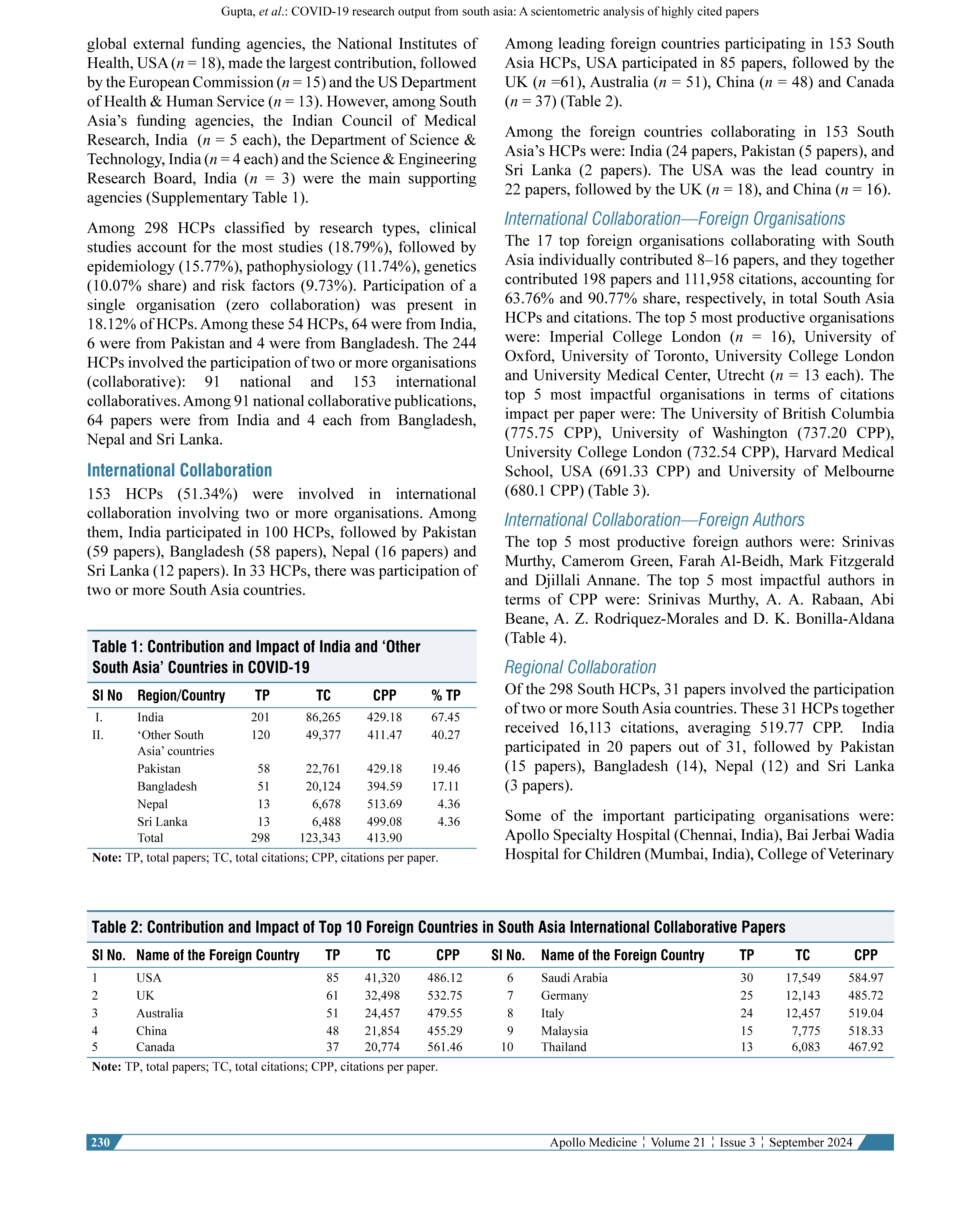
Among 298 HCPs, 201 had at least one author participating from India and 120 from other South Asia countries (58 from Pakistan, 51 from Bangladesh and 13 each from Nepal and Sri Lanka). These papers individually received 200–3,596 citations, with more than 1,000 CPPs received by 16 papers. The 298 papers together received 123,343 citations, averaging 413.90 CPP. These HCPs were mostly published as research articles (n = 195) and reviews (n = 76). The contribution and citation impact made by ‘India’ and ‘other South Asia Countries’ are presented in Table 1.
Only 73 (24.50%) of the HCPs received extramural funding from national and international funding agencies and together registered 36,324 citations, averaging 497.59 CPP. Among global external funding agencies, the National Institutes of Health, USA (n = 18), made the largest contribution, followed by the European Commission (n = 15) and the US Department of Health & Human Service (n = 13). However, among South Asia’s funding agencies, the Indian Council of Medical Research, India (n = 5 each), the Department of Science & Technology, India (n = 4 each) and the Science & Engineering Research Board, India (n = 3) were the main supporting agencies (Supplementary Table 1).
Contribution and Impact of India and ‘Other South Asia’ Countries in COVID-19
Among 298 HCPs classified by research types, clinical studies account for the most studies (18.79%), followed by epidemiology (15.77%), pathophysiology (11.74%), genetics (10.07% share) and risk factors (9.73%). Participation of a single organisation (zero collaboration) was present in 18.12% of HCPs. Among these 54 HCPs, 64 were from India, 6 were from Pakistan and 4 were from Bangladesh. The 244 HCPs involved the participation of two or more organisations (collaborative): 91 national and 153 international collaboratives. Among 91 national collaborative publications, 64 papers were from India and 4 each from Bangladesh, Nepal and Sri Lanka.
International Collaboration
153 HCPs (51.34%) were involved in international collaboration involving two or more organisations. Among them, India participated in 100 HCPs, followed by Pakistan (59 papers), Bangladesh (58 papers), Nepal (16 papers) and Sri Lanka (12 papers). In 33 HCPs, there was participation of two or more South Asia countries.
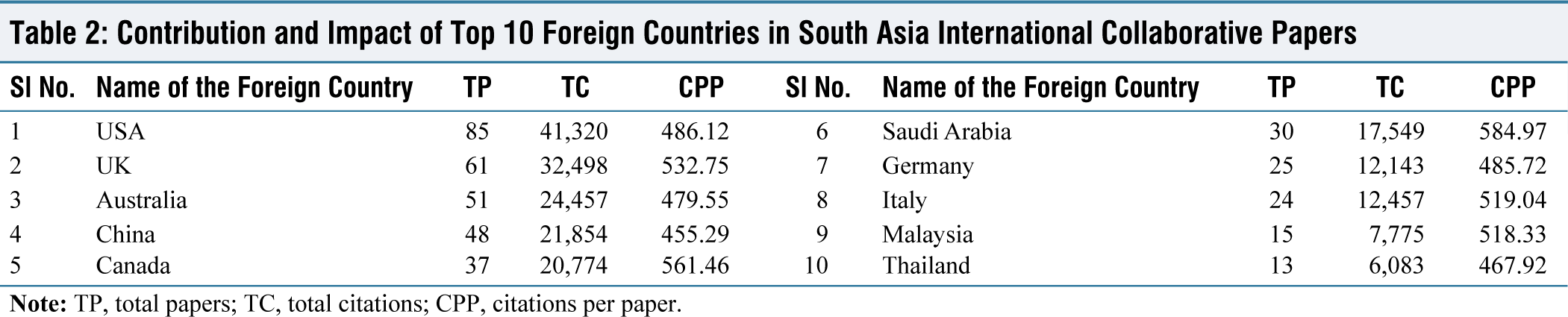
Among leading foreign countries participating in 153 South Asia HCPs, USA participated in 85 papers, followed by the UK (n =61), Australia (n = 51), China (n = 48) and Canada (n = 37) (Table 2).
Contribution and Impact of Top 10 Foreign Countries in South Asia International Collaborative Papers
Among the foreign countries collaborating in 153 South Asia’s HCPs were: India (24 papers, Pakistan (5 papers), and Sri Lanka (2 papers). The USA was the lead country in 22 papers, followed by the UK (n = 18), and China (n = 16).
International Collaboration—Foreign Organisations
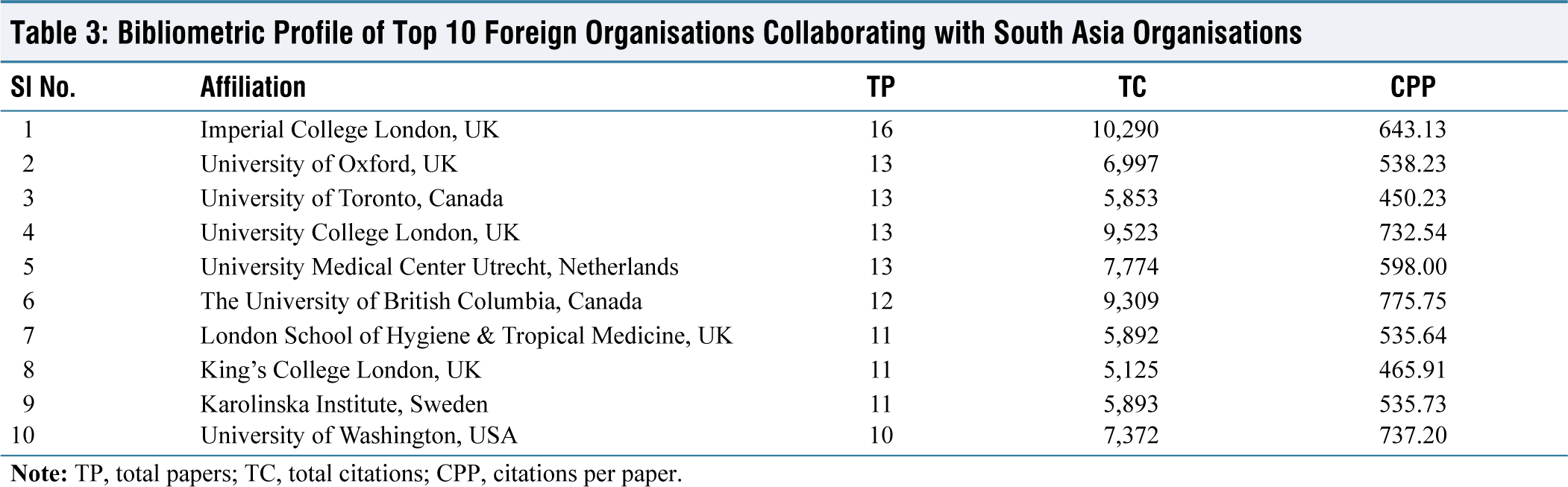
The 17 top foreign organisations collaborating with South Asia individually contributed 8–16 papers, and they together contributed 198 papers and 111,958 citations, accounting for 63.76% and 90.77% share, respectively, in total South Asia HCPs and citations. The top 5 most productive organisations were: Imperial College London (n = 16), University of Oxford, University of Toronto, University College London and University Medical Center, Utrecht (n = 13 each). The top 5 most impactful organisations in terms of citations impact per paper were: The University of British Columbia (775.75 CPP), University of Washington (737.20 CPP), University College London (732.54 CPP), Harvard Medical School, USA (691.33 CPP) and University of Melbourne (680.1 CPP) (Table 3).
Bibliometric Profile of Top 10 Foreign Organisations Collaborating with South Asia Organisations
International Collaboration—Foreign Authors
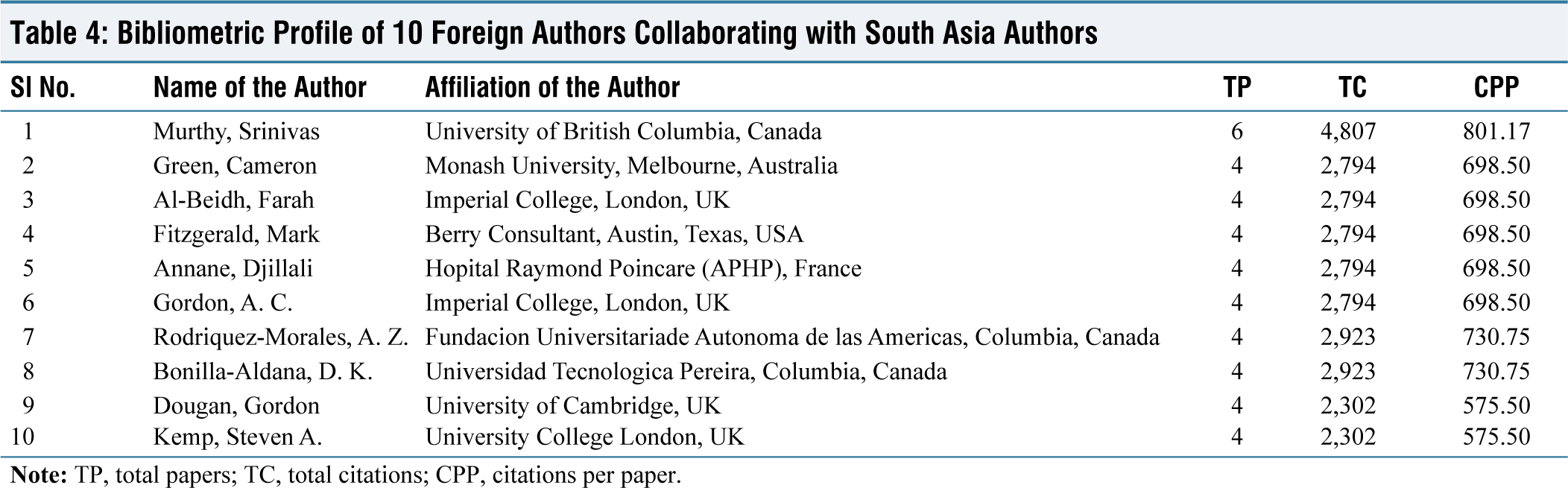
The top 5 most productive foreign authors were: Srinivas Murthy, Camerom Green, Farah Al-Beidh, Mark Fitzgerald and Djillali Annane. The top 5 most impactful authors in terms of CPP were: Srinivas Murthy, A. A. Rabaan, Abi Beane, A. Z. Rodriquez-Morales and D. K. Bonilla-Aldana (Table 4).
Bibliometric Profile of 10 Foreign Authors Collaborating with South Asia Authors
Regional Collaboration
Of the 298 South HCPs, 31 papers involved the participation of two or more South Asia countries. These 31 HCPs together received 16,113 citations, averaging 519.77 CPP. India participated in 20 papers out of 31, followed by Pakistan (15 papers), Bangladesh (14), Nepal (12) and Sri Lanka (3 papers).
Some of the important participating organisations were: Apollo Specialty Hospital (Chennai, India), Bai Jerbai Wadia Hospital for Children (Mumbai, India), College of Veterinary Sciences, (DUVASU) (Mathura, India), Indian Veterinary Research Institute (Bareilly, India) and Tata Memorial Hospital (Mumbai, India).
The 31 HCPs were published in 27 journals, with two papers each in Lancet Psychiatry, New England Journal of Medicine (NEJM) and Science and Science Immunity and one paper each in other 24 journals.
Most Productive and Impactful Organisations
In all, 5,305 organisations participated in 298 HCPs. Of these, 544 were from South Asia: 363 were from India and 181 from ‘Other South Asia’ countries (including 76 from Pakistan, 81 from Bangladesh and 12 each from Nepal and Sri Lanka). Of the top 50 organisations, 27 were from India and 23 were from ‘Other South Asia’ countries (11 from Bangladesh, 8 from Pakistan, 3 from Sri Lanka and 1 from Nepal).
It was observed that 23 organisations contributed more than the average publication productivity (n = 3.96) of all 50 organisations. The top 5 institutions were the Postgraduate Institute of Medical Education & Research, Chandigarh (n = 10); Indian Institute of Technology, New Delhi; Jamia Millia Islamia, New Delhi (n = 8); All India Institute of Medical Sciences, New Delhi; and Indian Council of Medical Research, New Delhi.
The publication profile of the top 27 most productive Indian and the top 23 most productive ‘Other South Asia’ organisations is presented in Supplementary Table 2.
In terms of total link strength (TLS), All India Institute of Medical Sciences, New Delhi, tops the list with 57 linkages, followed by the National Institute of Virology, Pune (n = 36); Indian Council of Medical Research, New Delhi, and the College of Veterinary Science, Mathura (n = 31 each); Postgraduate Institute of Medical Education & Research, Chandigarh (n = 30); Undergraduate Research Organization, Dhaka, Bangladesh (n = 20); Jamia Millia Islamia, New Delhi, and Jahangiragar University, Bangladesh (n = 18 each); Indraprastha Apollo Hospital, New Delhi ( = 17); G.D. Hospital & Diabetes Institute, Kolkata, and Sir Ganga Ram Hospital, New Delhi (n = 16 each).
Most Productive and Impactful Authors
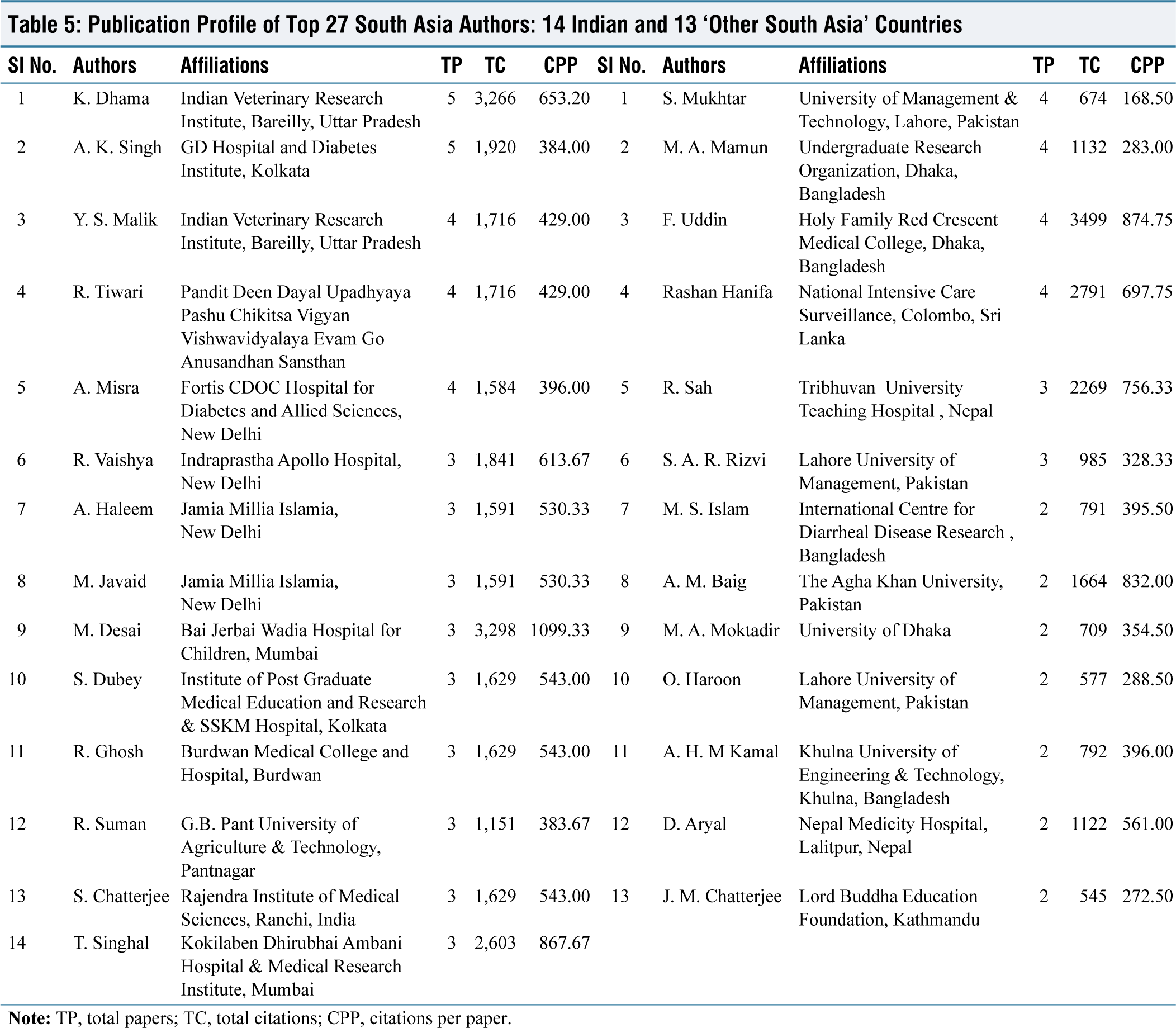
In all, 12,633 authors participated in 298 South Asia HCPs. Of these, 850 were from South Asia: 612 were from India and 238 from ‘Other South Asia’ (112 from Pakistan, 101 from Bangladesh, 12 from Nepal and 13 from Sri Lanka). The top 27 authors contributed two to five papers, and these together contributed 85 papers, which received 4,714 citations, accounting for 28.52% and 36.25% share, respectively, in 298 South Asia HCPs and citations. Of the 27 authors, 14 were from India and 13 from ‘Other South Asia’ (5 from Bangladesh, 4 from Pakistan, 3 from Nepal and 1 from Sri Lanka).
Five authors among the top 27 have contributed more than the average group productivity (n = 3.15). They include K. Dhama, A. K. Singh, Y. S. Malik, R. Tiwari and A. Misra from India.
Fourteen authors among the top 27 have registered CPP more than the group average of 526.05. The top 5 of them were M. Desai, T. Singhal, K. Dhama, R. Vaishya and S. Dubey from India and F. Uddin, A. M. Baig, R. Sah, Rashan Hanifa and D. Aryal from ‘Other South Asia’ countries (Table 5).
Publication Profile of Top 27 South Asia Authors: 14 Indian and 13 ‘Other South Asia’ Countries
Most Productive and Impactful Journals
The 161 journals participated in 298 HCPs, of which the top 16 most productive journals contributed 4– 15 papers. Diabetes and Metabolic Syndrome: Clinical Research & Reviews was the topmost contributing journal, publishing 60 papers, followed by Science of the Total Environment (n = 7), Asian Journal of Psychiatry and the BMJ (n = 5 each) and Nature (n = 3). The most cited journals were NEJM (961.5 CPP), followed by the Lancet (841 CPP), Asian Journal of Psychiatry (703.44 CPP), IEEE Access (554.8 CPP) and Nature (519 CPP). The impact factor of these 16 journals varied from 3.476 to 176.082 (Supplementary Table 3).
Distribution by Subject and Co-occurrence of Keywords
Distribution by Broad Subject
The 298 South Asia HCPs were classified under 15 Scopus subject categories. It was observed that medicine (53.69%) contributed the largest share, followed by biochemistry, genetics & molecular biology and environmental science (14.43% and 10.74%) and immunology and microbiology (8.05%) (Supplementary Table 4).
Significant Keywords
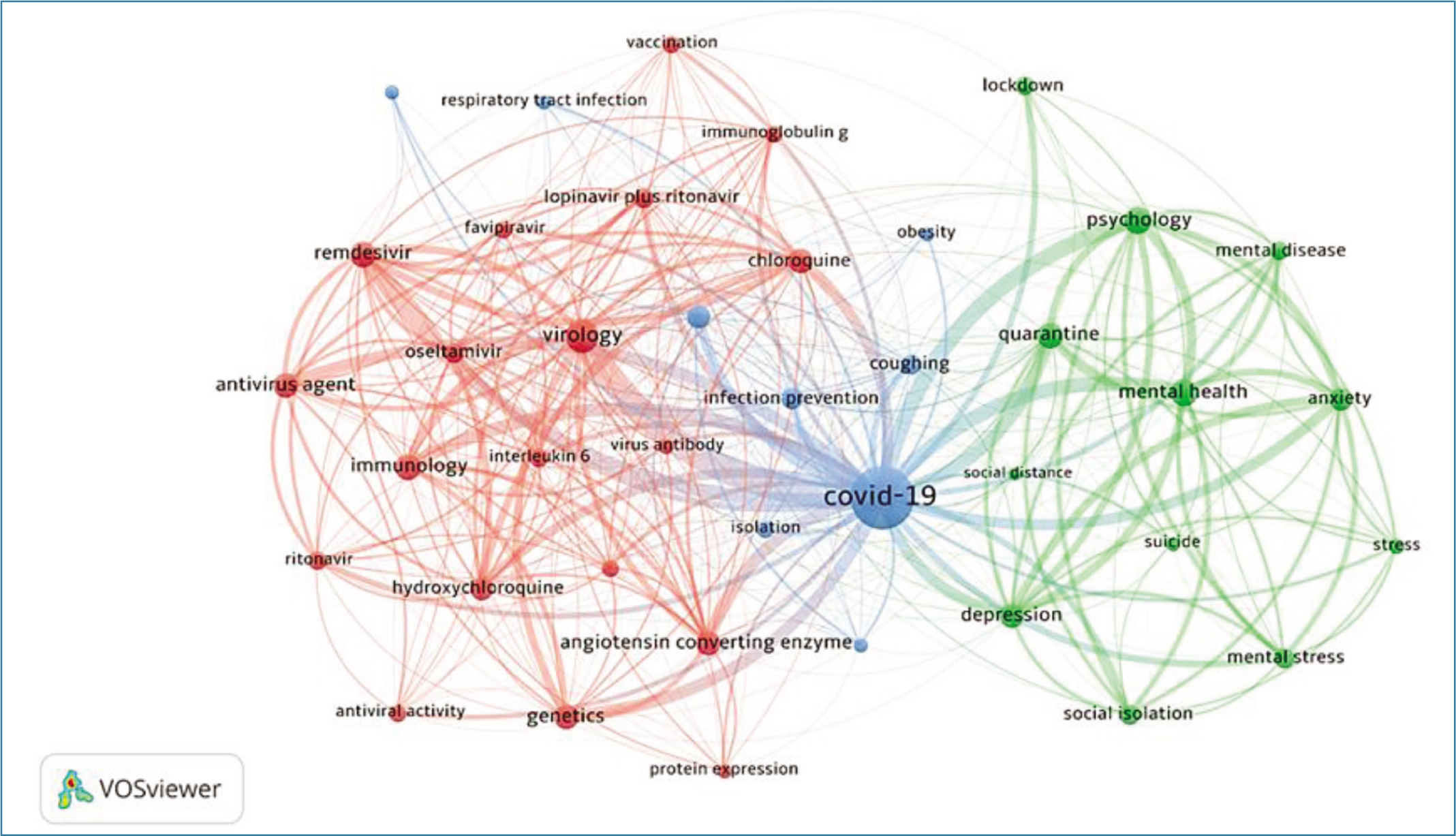
A total of 3,721 author keywords were identified, of which 688 have frequency of occurrence 6 and above. The frequency of occurrence of keywords indicates their importance in this area. The most significant keywords were: ‘COVID-19’ (n = 269), ‘virology’ (n = 54), ‘psychology’ (n = 34), ‘mental health’ (n = 32), ‘remdesivir’ (n = 29), ‘quarantine’ (n = 29), ‘immunology’ (n = 27), ‘angiotensin converting enzyme 2’ (n = 26), ‘depression’ (n = 25), ‘antivirus agents’ (n = 25) and ‘genetics’ (n = 25).
The 40 significant keywords, each with a frequency equal to 5–269, were selected for co-occurrence network analysis and mapping using VOSviewer, which presents the classification of the top 40 keywords into three clusters [Figure 2]. Cluster 1 (red) has the maximum 19 keywords, Cluster 2 (green) has 13 keywords and Cluster 3 (blue) has 9 keywords.
Co-occurrence Network of Top 40 Significant Keywords
Top Highly Cited Papers
The range of citations of the top 15 HCPs falls between a maximum of 3,600 citations to a minimum of 1,008 citations (Supplementary Table 5). Among the 15 HCPs, India participated in 14 papers, Bangladesh and Nepal in 2 papers each and Pakistan in 1 paper. These 15 HCPs together received 23,303 citations, averaging 1,553.53 CPP. Of the 15 HCPs (comprising 8 articles, 6 reviews and 1 note), 2 involve the participation of a single organisation (zero collaborative) and 13 involve the participation of 2 or more organisations. Among these 13 papers, 1 was national collaborative and 12 international collaborative.
Discussion
The bibliometric analysis was limited to HCPs which registered 200 or more citations and were indexed in the Scopus database till 29 November 2023. Among these 298 South Asia COVID-19 HCPs, 201 and 120 papers have at least one author participating from India and ‘other South Asia countries.’ The majority of HCPs were published as research articles (n = 195) and reviews (n = 76). The average CPP of these HCPs was 413.9. External funding was received by 24.5%, and 51.34% were involved in international collaboration. The majority of the external funding came from Europe and North America, but about 25% of funding came from national sources (particularly from India). A substantial number of papers reported collaboration at the national level, but few were among the most productive organisations in all South Asia countries; collaboration among organisations across South Asia countries was comparatively weak. Compared to institutional collaboration, author collaboration at the national level was comparatively less, but author collaboration across countries was weak and few. Only a few papers were published in national journals, and most papers were published in low-impact-factor journals (<5.0).
The South Asia COVID-19 overall research output8-10 and individual South Asia countries research output—India11,12, Pakistan13,14, Bangladesh 15 , Nepal16,17 and Sri Lanka 18 on COVID-19—were assessed previously using bibliometric methods, but most such research remained outdated, being restricted to covering incomplete research output in the initial periods. For example, Gupta et al 8 analysed 4,012 select South Asia publications (including 2,246 publications from Pakistan, 1,203 from Bangladesh, 512 from Nepal and 202 from Sri Lanka published) indexed in the Scopus database between December 2019 and 8 July 2021. Koser 9 analysed 22,808 South Asia publications on COVID-19 indexed in the Scopus database from December 2020 to January 2022, with 17,795 from India, 3,118 from Pakistan, 1,796 from Bangladesh, 624 from Nepal, 284 from Sri Lanka and 32 from Bhutan. Naseer et al 10 examined the top 100 HCPs from South Asia indexed in the Scopus database from December 2019 to October 2022, with 68 articles affiliated with India, 18 with Bangladesh, 12 with Pakistan and 3 with Nepal. Some bibliometric studies conducted in the past on South Asia COVID-19 research were limited in scope regarding the databases used, the period covered and the subject domains identified. The present study revealed the HCPs and cited trends of South Asia researchers, the most productive and impactful organisations, authors and journals, their collaboration trends, subject dispersion and narrow subfields, media of communications and characteristics of HCPs.
COVID-19 has spurred an unprecedented wave of scientific research globally, and South Asia has been no exception. Despite facing unique challenges such as dense population centres, limited healthcare infrastructure and socio-economic disparities, the region has made significant contributions to understanding and combating the pandemic through research and publications. The research on COVID-19 in South Asia has been dynamic and multifaceted, contributing valuable knowledge and interventions to the global fight against the pandemic. However, ongoing efforts are needed to address persistent challenges and ensure equitable access to preventive measures and treatments across the region.
Moving forward, collaborative research efforts, knowledge-sharing, strengthened healthcare systems and targeted public health interventions will be essential in navigating the evolving landscape of COVID-19 in South Asia and effectively combating it and mitigating its impact on societies worldwide.
This research has certain constraints. In this study, only Scopus was utilised to identify significant publications, potentially excluding some publications found in other databases such as WOS, PubMed and Google Scholar. Nevertheless, we maintain that utilising the Scopus database offers a comprehensive perspective on research performance related to COVID-19 research in India, given its coverage of all PubMed/Medline publications. Additionally, combining data from various sources could have introduced heterogeneity, complicating the scientometric analysis and potentially leading to inaccuracies.
Conclusion
As the COVID-19 pandemic continues to unfold, researchers in South Asia have produced a plethora of scientific publications, with India being the leading country followed by Pakistan and Bangladesh. Among these publications, several papers have garnered widespread attention and citations, reflecting their significant contributions to the field. These HCPs represent the collective efforts of researchers in South Asia to address the multifaceted challenges posed by the COVID-19 pandemic. They have advanced the understanding of the virus and also informed public health policies, clinical practices and research priorities in the region and beyond.
Supplemental Material
Supplemental material for this article is available online.
Footnotes
Declaration of Conflicting Interests
The authors declared no potential conflicts of interest with respect to the research, authorship and/or publication of this article.
Funding
The authors received no financial support for the research, authorship and/or publication of this article.
Institutional Ethical Committee Approval Number
Not required for such bibliometric study.
CRediT Author Statement
BMG: Conceptualisation, data curation and analysis, literature search, manuscript writing, editing and final approval.
GMNM: Data curation and analysis, literature search, manuscript writing, editing and final approval.
AV: Data analysis, literature search, manuscript writing, editing and final approval.
RV: Conceptualisation, data analysis, literature search, manuscript writing, editing and final approval.
Data Availability
Raw data is available with the lead author #1 BMG.
Use of Artificial Intelligence
No AI tool was used.
References
Supplementary Material
Please find the following supplemental material available below.
For Open Access articles published under a Creative Commons License, all supplemental material carries the same license as the article it is associated with.
For non-Open Access articles published, all supplemental material carries a non-exclusive license, and permission requests for re-use of supplemental material or any part of supplemental material shall be sent directly to the copyright owner as specified in the copyright notice associated with the article.
