




Abstract
Xenophobia has been described as one of the most endemic life-threatening obstacles confronting foreign nationals in the contemporary South Africa. The spate of this hate crime has increased unabatedly in the Kwa Zulu-Natal province of the country in recent years, diffusing to other regions such as Johannesburg, Pretoria, Limpopo and Cape Town. The study aims at establishing xenophobia as an untreated anti-immigrant violence and potential snag for national development in South Africa. It utilised data collected from previous research inquiries to achieve the expected results. The phenomenon was discussed within a criminological framework. The study projects that until South Africans are drawn back the memory lane to realise the benefits of pan-Africanism, the terroristic culture will continue to recur and eat deep into the socio-economic fabric of the nation.
Keywords
Introduction
Scholars across humanities and social sciences have shown strong inclinations to describe ‘xenophobia’ as a concept originating from two Greek words xeno meaning (‘unknown’ ‘different in origin’ or ‘other’ or ‘stranger’ or ‘foreigner’), and phobia, meaning (‘fear’ or hatred of that which is perceived to be foreign or strange) (Klein 2014). Several scholarly definitions of xenophobia have been premised on these derivatives. Prominent among these scholars include Klein (2014), who defined the concept as ‘distrust of foreigners and strangers’, ‘discrimination against and hatred of foreigners, targeting outsiders and strangers’ or ‘a deep antipathy to foreigners’. Others described xenophobia ‘as a strong dislike for and fear of individuals who are regarded as unknown’—while the word ‘unknown’ connotes the notion that a person is totally not regarded as a citizen of the recipient country or is a foreigner; and thus, some hostility is imposed as a result (Buthelezi 2009; Campbell III 2017; Crush and Ramachandran 2010; Maseko and Maweni 2019; Tafira 2011). Drawing upon the foregoing definitions, the International Encyclopaedia of the Social Sciences (2019) holistically describes xenophobia as severe discrimination against or hatred of foreign nationals, targeting outsiders and aliens, or more often those who are, in effect, part of one’s own society but are perceived as incommensurably disparate from the majority population.
Research revealed that xenophobia has played a significant role in moulding human history for thousands of years. The hate practices took root in the ethnocentric nature of the ancient Greeks and Romans whose cultural imperialism was firmly entrenched towards the enslavement of others, known to be of different origins or racial groups (Hashimi 2021). There is evidence that many nations across the globe have a specific history of xenophobic attitudes towards immigrants and foreign nationals; and this has led to the evolvement of egregious acts, such as violence, hate crime, severe discrimination, genocide, as well as religious and ethnic crises, that become visible across the contemporary global societies (Romero and Zarrugh 2018).
There have been several horrific illustrations of xenophobia around the world. However, the most pointed age-long and widely documented case of xenophobia is that of anti-Semitism, which cumulated in the massacre of six million European Jews and untold others (due to their religious beliefs and cultural practices) during the World War II Holocaust (1939–1945) (Arendt 1951 quoted in Aschheim 2018; Wistrich 2018). Not quite long, a new form of xenophobia that sprang up in Western Europe and North America during the late twentieth and early twenty-first centuries is Islamophobia, which targeted migrant Muslim communities with or without citizenship (Foner and Alba 2018).
Other real-world examples of xenophobic violence on historical record include but are not limited to the internment of Japanese Americans during World War II; the Rwandan genocide (‘ethnic cleansing’ that resulted in the genocide of hundreds of thousands of Tutsi Bantu-minority ethnic group and the rape of Tutsi women between 7 April 1994 and 15 July 1994 during the Rwandan Civil War); Hinduphobia (racially motivated xenophobic hate crimes committed against people from India that occurred in Australia during 2009); the Yugoslavia War between 1991 and 1995 (involved fighting between several ethnic groups that resulted in a massive amount of deaths and the groups involved were the Croats, Serbs, Bosniaks and Slovenes); the hate crimes committed against the Chinese in the late 1800s in the US leading to the hatred of Chinese immigrants and passing into the US Bill ‘Chinese Exclusion Act’ prohibiting Chinese workers from coming to the country; the 2018 riots in Germany resulting from an alleged killing of a German citizen by immigrants from Syria and Iraq; the murder of Black families by the Ku Klux Klan (a white supremacist hate group that targeted Black people); the Holodomor genocide in Ukraine as well as the Cambodian genocide in Southeastern Asia (Allerfeldt 2021; Cheng 2020; Rydgren 2004). Fresh examples of xenophobia which featured in the United States recently include xenophobic attitudes towards Mexican and Latinx immigrants (Romero and Zarrugh 2018). Moreover, the emergence of COVID-19 pandemic was also said to have engendered the reports of xenophobia, such that, it was directed towards the people of East Asian and Southeast Asian descent in nations across the world (AMA 2020).
Within a short span of time, the scourge had diffused to the African continent with a significant reference to xenophobia in South Africa (Marcedo and Panayota 2006). A number of sources have raised concerns on South African xenophobia as post-apartheid anti-immigrant violent reaction that accompanied the emergence of democratic hegemony launched in the country in 1994 (Carien 2009; Cornish 2015; Misago 2009; Wicks 2015). Xenophobic violence in South Africa has been exacerbated with high number of death tolls recorded against the foreign immigrants in provinces, such as Gauteng, Western Cape, Free State and Limpopo; but heightened in the KwaZulu-Natal (KZN) region of the country in recent time (Durokifa and Ijeoma 2017; Landau 2012; Mutanda 2017; Tarisayi and Manik 2020; Tella 2016).
There have been widespread speculations on the causes of the violence in the country. A number of reports have highlighted poor service delivery and competition for resources as various issues contributing to xenophobia in South Africa (Cornish 2015; Tella 2016). By the same token, studies have shown that most incidents of the violent attacks have been perpetrated by the Black South Africans (Nicolson and Simelane 2015). Currently, the issue is no more about the causes of xenophobic violence against foreign nationals and their rights, but the safety and security of the affected individuals tagged as ‘kwerekwere’ (foreigners) in the country. To cap it all, Tella and Ogunnubi (2014), in their excellent analytical framework to analyse the recurrent anti-immigrant attitudes and attacks in South Africa, contend that xenophobia is indeed ubiquitous; and that effective amelioration of this pathology entails a conscious and exhaustive diagnosis of the manifestation of xenophobia at the individual, state and inter-state levels.
Using a constructivist research design, the study found evidence to establish xenophobia as an untreated anti-immigrant violence and potential snag for national development in South Africa. To accomplish the aim of the study, a number of research questions were advanced within a criminological framework to fill in the gap in extant literature on the incidence of xenophobic violence against immigrants in South Africa. These questions include: What is the relationship between government intervention and increased trends of xenophobia in South Africa? What is the link between apartheid and increased xenophobic violence in South Africa? How can socio-economic impacts of xenophobia hinder South Africa’s national development?
Rationale for the Study
One of the major problems confronting foreign nationals in the contemporary South African societies is anti-immigrant violence popularly known as xenophobia. The gravity of this hate crime was accentuated in a recent report on hate crime in the Democratic Republic of South Africa (Wicks 2015). Xenophobic attacks and attitudes are not a new, but a recurrent phenomenon in South Africa. For instance, in 1998, a Mozambican immigrant was thrown from a moving train, coupled with the incident of two Senegalese who were electrocuted in a bid to escape the violence unleashed on them by a group of South Africans returning from an ‘Unemployed Masses of South Africa’ rally in Pretoria (Tella 2016).
The xenophobic attacks of 11 May 2008 began at Alexandra area of Johannesburg; and by the time, the anti-immigrant violence was curtailed, 62 people had lost their lives and more than 100,000 were displaced (Tlhabi 2017). Since the advent of 2008 anti-immigrant violence, xenophobic attacks on foreign nationals have always been on exponential growth. Second to the 2008 xenophobic attacks, the 2015 spate of xenophobic violence in South Africa, which kicked off in Durban and rapidly spread to other cities, such as Pietermaritzburg, Johannesburg and Pretoria, provides a fresh memory of the severity and magnitude of this menace in the country (Landau 2012; Tella 2016). Xenophobic attacks of April 2015, protruded its horrible head in the rainbow nation and led to the death of seven persons in the cities of Johannesburg and Durban (BBC News 2019a, 2019b). On 25 March 2019, the latest wave of xenophobic attacks erupted a day after the launching of the 5-year National Action Plan to combat Racism, Racial Discrimination, Xenophobia and Related Intolerance. This incident consequently aroused the death of many people in the coastal city of Durban, KZN province (Mavhinga 2019; Powell 2019).
Persistently, there have been widespread assertions that foreigners are accountable for the South African citizens’ unemployment trends, poverty, inadequate service delivery and nationwide lack of socio-economic resources (Tella and Ogunnubi 2014). Moreover, the existing relationship between the apartheid regime and xenophobia in South Africa has not been adequately positioned in the extant literature.
Despite the public agitation for government intervention on social media, no tangible efforts are currently being made to mitigate the increased trends of the menace against the affected population in South Africa. As of today, the terroristic menace has spread like a wildfire across all the nine provinces of the nation. Figure 1 shows the characteristics and spatial distributions of xenophobic violence across the nine provinces of South Africa between 1994 and 2019.
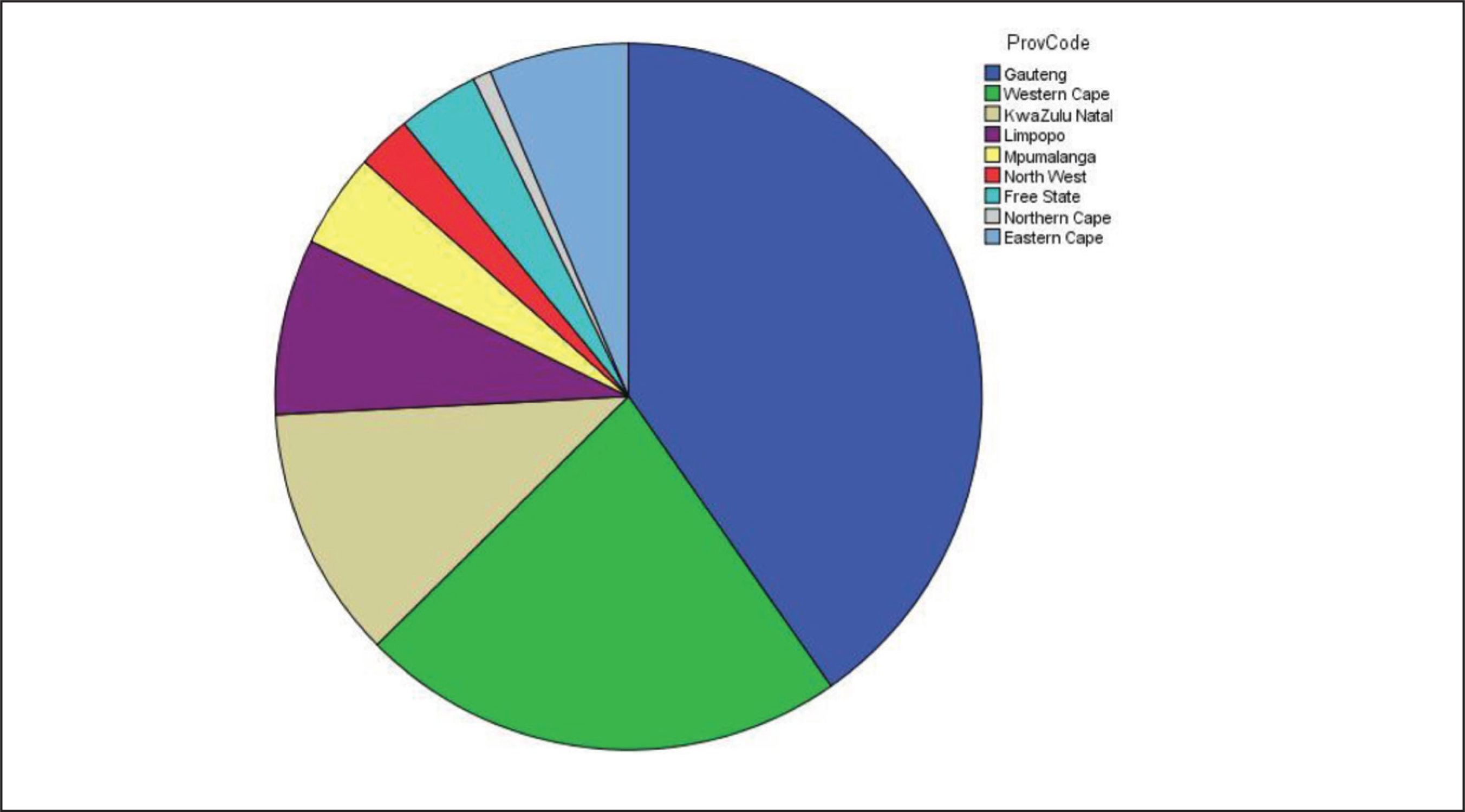
As shown on the pie chart in Figure 1, Gauteng, Western Cape and KZN have the most frequent incidents of xenophobia and have been identified as the hot zone provinces, as indicated by the red spot.
Theoretical Foundation
The theoretical thrust of the study is premised on Freudian political psychology (Marcuse 1966; Freud 1890 quoted in the work of De Sousa 2011) and the General strain theory (Agnew 1992). The theoretical construct forms a blueprint upon which the xenophobic attitudes of South Africans are better understood and analytically explained.
Apartheid and Xenophobic Violence in South Africa: A Freudian Political Psychology Perspective
In the wake of independence in 1994, South Africa began to welcome an influx of immigrants from the continent of Africa and from the South Asian countries like Pakistan and India, both as refugees and economic migrants escaping conflicted areas of their societies (Tella and Ogunnubi 2014). Consequently, the migratory pattern had ushered in a protracted conflict, particularly between immigrants from Africa and indigenous Black South Africans. Nevertheless, these conflicts had precipitated violent attacks, such as brutal murders of immigrants, burning of their houses and valuable property, looting of foreign-owned businesses and various acts of egregious movements from locals (South African Human Rights Commission 2010). Studies revealed that most migrants were enticed by the availability of economic opportunities that cut across both the formal and informal sectors of the South Africa’s economy, shortly after their political emancipation from apartheid, which led to the emergence of democratic leadership in 1994 (Chimbga and Meier 2014).
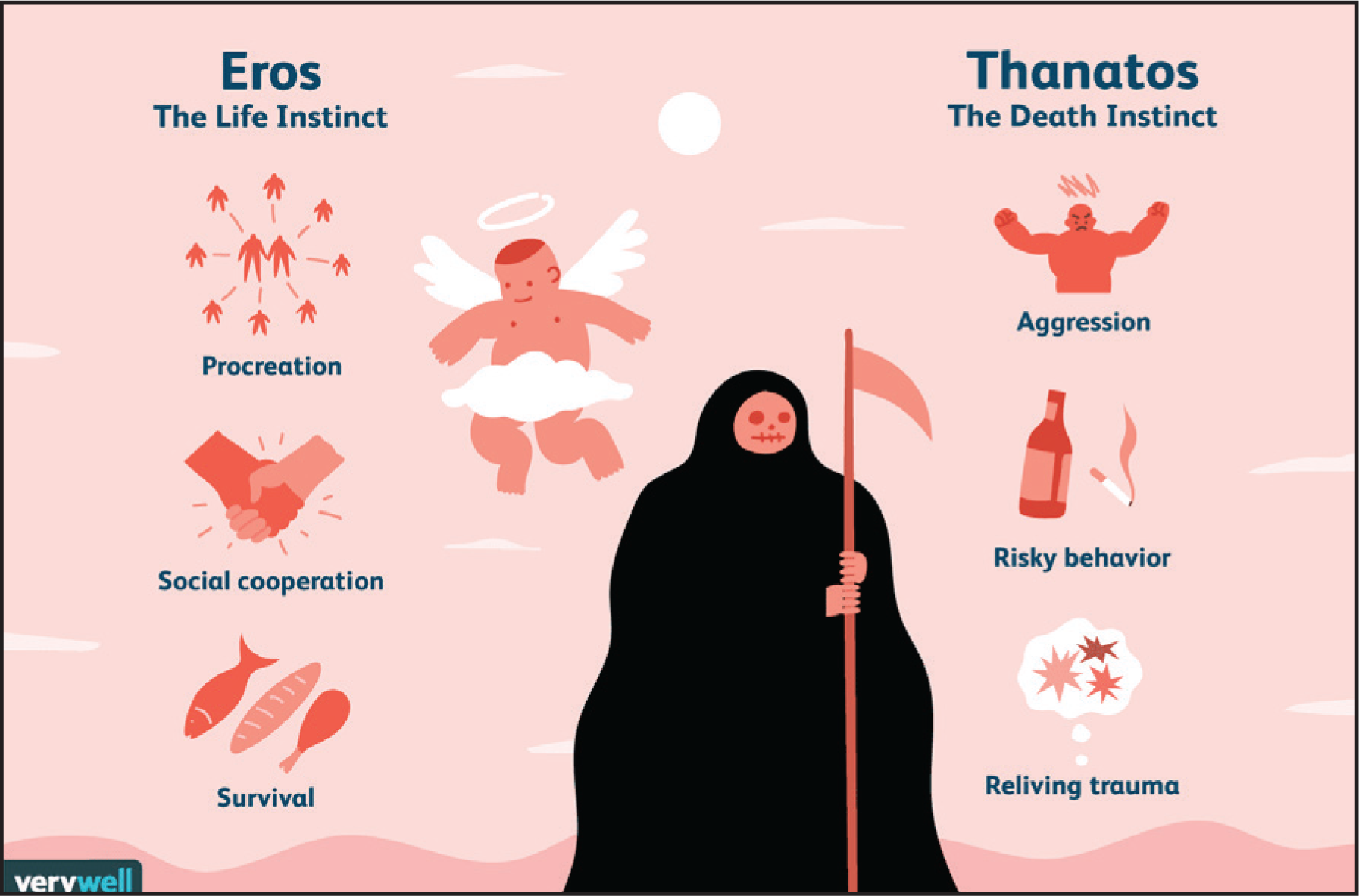
In order to establish a nexus between South African xenophobic violence and the apartheid regime, the contributions of early psychologists (like Freud’s political psychology) in understanding why the people tend to exhibit violent behaviours towards foreign nationals cannot be underestimated. This article is unique because it is the first to apply the Freudian political psychology to the understanding of xenophobic violence in South Africa. The theory postulates that there is a human instinctive impulse called Thanatos, which sometimes instinctively predisposes humans towards aggression, violence, destruction and death. Freud (1940) refers to this as the ‘death instinct’. In contrast, the second instinctive drive, Eros, is a human instinctive impulse that strives for self-preservation, social cooperation, productiveness, pleasure, leisure, friendship and comfort, and it also has an aversion for danger, evil and hostility (Singh 2019). Freud (1940) refers to this as the ‘life instinct’. Furthermore, under certain circumstances, Freud adds that the death instincts could be channelled outwards after gaining ascendancy over the life instinct—a spontaneous mental condition in humans that arouses evil, violence, aggression and absolute destruction. On the other hand, these instincts may be directed inwards after gaining ascendancy—a spontaneous mental condition that leads to self-harm and suicide (see Freud 2014; Jones-Smith 2021).
However, with a particular reference to Thanatos, Marcuse (1966, 29) states that ‘the death instinct is destructiveness not for its own sake, but for the relief of tension, frustration and aggression. The descent towards death is an “unconscious flight” from pain and want. It is an expression of the eternal struggle against suffering and repression’. Thus, from the standpoint of Sigmund Freud–Marcuse thesis, in response to situations of life, the death instinct (Thanatos) always strives to gain dominance and ascendancy over the life instinct (Eros), thereby generating violence in place of peace and harmony (Kli 2018).
This theoretical concept could be well exemplified in response to the post-apartheid South African experience. South African societies had indeed passed through a protracted era characterised with a policy of racial discrimination, such that, it has created a deep post-traumatic wound on the mindset of average South Africans. The frustration–aggression experienced by the Black South Africans during the apartheid regime made us comprehend that the surge in anti-immigrant violence is as a result of many years of racial discrimination, social disintegration, dehumanisation, brutalisation, violation of fundamental human rights as well as deprivation of socio-economic needs, such that defined the Black lives during this political epoch. Subsequently, there would definitely be an attendant consequence of mental imbalance, personality deterioration and frustration emanating from the foregoing events, exacerbated with conditions of youth unemployment and impoverishment of the locals within the current socio-political system. Since the goal of being fulfilled through gainful employments (required to compensate for the past national trauma, meet basic human needs and lead a decent life as law-abiding citizens) has been truncated over time, rather than for South Africans to vent their anger on the political state’s failure to meet the needs of the citizens, the locals resorted to venting out their frustration on African immigrants, whom they opine have come from nowhere, taking their scarce-in-supply job opportunities, which ought to be meant solely for South Africans as a dividend of their struggle for political emancipation (Ogunnoiki and Adeyemi 2019). Evidenced from Freudian political psychology, this article posits that a battered psychological mind frame resulting from apartheid dehumanisation is an intriguing causal factor for the violent behaviour of South African xenophobes towards foreign nationals.
More particularly, South African xenophobia can be further explained within the context of Sigmund Freud–Marcuse thesis rather than through the lens of scapegoat hypothesis (Tella and Ogunnubi 2014), isolation and bio-cultural hypothesis (Harris 2002), poverty–inequality thesis (Gelb 2008), chaos and complexity theories (Sanial 2014), frustration–aggression thesis (Ogunnoiki and Adeyemi 2019) and other theoretical perspectives upon which previous scholars had premised their positions on xenophobic violence in South Africa. In a different perspective, this study finds out that, under memory of the exigencies of oppression or violation of fundamental human rights, such that deem to have shaped the political history of South Africa, the death instinct (Thanatos) in Black South Africans may, as well, always find its way to repress and prevail over the life instinct (Eros) under concrete situations of severe memory of apartheid dehumanisation, coupled with a breach of social contract, social inclusion, national identity and the indignity of social life. Such conditions may then produce, reproduce and sustain the acts of violence displayed by average South Africans towards foreign nationals.
Herbert Marcuse (1966) explains that both sets of instinct are to be understood dialectically. It is expressed that these instincts are shaped by culture which, in turn, influences individual characteristic predispositions (or personalities) as well as social behaviour (Ninalowo 2011, 150). The dynamics of social structure, whether oppressive or liberative, would shape the prevalence of the type of instinctual impulse within the socio-cultural realm (Ninalowo 2011). However, despite that the theory has been discredited by biologists who do not believe that such a mechanism exists, this hypothesis has demonstrated a meaningful attempt to analyse how these two instinctive drives fight each other within the psychological mind frame of average South Africans and how their interaction determines the course of violent lives and xenophobic attitudes of South Africans at every second of their encounter with foreign nationals. In synopsis, this study submits that the painful memory of apartheid is a trigger factor for recurrent xenophobic violence against immigrants in South Africa.
See below a diagrammatic sketch illustrating the interaction between Thanatos and Eros drives in human beings.
Illustrated by JR Bee, Cherry (2020).
A General Strain Perspective on Xenophobic Violence in South Africa
Robert Agnew proposed his general strain theory in the 1980s—a theory that builds upon the foundation of Merton’s strain theory but encompasses a much larger range of behaviours by focussing on the middle, upper and lower classes of society, and can also be applied to societies outside the United States of America (Tibbets and Hemmens 2015).
There are new focuses on the assumption that frustration is an aspect of the daily life of members of all societies, social classes and economic backgrounds, and people’s ability, or lack thereof, to deal with these frustrations and the manner in which they occur becomes an important pillar to the understanding of terroristic violence (Freilich and LaFree 2016). The work of Freilich and LaFree upholds the argument of the current study, which contends that the South African people are living in frustration erupting from poor socio-economic status of their indigenous neighbourhoods and the long-lasting aftermath of a combination of years of apartheid victimisation, human right violations and dehumanisation that characterised the historical development of the democratic South Africa. These situations that engender frustration have predisposed a good number of the citizens to violent behaviour due to the individuals’ inability to achieve the positive goals set out by the society. According to Merton, society teaches its youth to attain these goals by means of hard work, formal education and commitment. Agnew takes this even further by suggesting two additional sources of strain, namely, ‘presentation of noxious stimuli and the removal of positively valued stimuli’ (Tibbets and Hemmens 2015). The reference to noxious stimuli refers to bad events that transpire in the lives of individuals. Such events are usually beyond their control, like an abusive parent or an excessively demanding workplace superior (Tibbets and Hemmens 2015). Such bad experiences then remove positive stimuli which cause the sudden absence of something positive in a person’s life, such as the loss of a job or a loved one, poverty, unemployment, material deprivation and the denial of fundamental human rights. Drawing upon the conceptual arguments of Agnew, the current study thus argues that most South African youths, including those with good educational attainment, have no option than to respond to the rigorous competition for survival with foreign nationals in the country. Such youths include those who cannot secure a job, who have lost their jobs due to the recent political corruption and the socio-economic instability of the country, those who have low educational qualifications, those who come from poor socio-economic backgrounds and those whose lives have been battered by abject poverty.
The general strain theory is exceptionally useful in evaluating South Africans’ susceptibility to xenophobic violence. Young people in South Africa, particularly those from a poor socio-economic background, experience a great deal of strain and frustration due to either of the notion that immigrants are competing with them over their limited economic resources or government’s immigration policies that favour the sustenance of a good number of immigrants in South Africa. This strain is a major factor which contributes to the inclination of xenophobic violence to non-nationals. The theory also accounts for the successful indoctrination and re-orientation of desperate South African youths by some political leaders, who advised them to adopt violence as means of taking back their possessions from foreign nationals.
By the same token, young people who may not live up to societal standards of success may find the promise of glory and honour within anti-immigrant violence as a welcome substitute (Maseko and Maweni 2019). This is in line with the strain theory’s contention that, those who are unable to achieve in society may seek criminal and violent means as an avenue to release their frustration (Tibbets and Hemmens 2015). The underlying factors for xenophobic violence in South Africa are a good illustration of the strain theory, as poor conditions and economic deprivations experienced by individuals in society, south Africans’ notion that foreigners are encouraging drug use among their youths as well as using their girls for sex trade (presentation of noxious stimuli) would likely lead to significant amounts of frustration, anger and resentment. Finally, South African xenophobia can be viewed through Agnew’s theory of the removal of positively valued stimuli, where social acceptance, socio-economic goals, honour and esteem are already removed from the majority of those who lead the violent attacks against immigrants in South Africa.
The Nexus Between Government Intervention and Increased Xenophobic Violence in South Africa
On the question of government intervention in mitigating the trends of xenophobic violence in South Africa, this study shows that the efforts of South African government, political and community leaders have not been clearly defined and productive. This is evident upon the South African government poor response to the xenophobic violence, which has been more of political propaganda to suit and favour their citizens at the detriment of foreign nationals (see also Durokifa and Ijeoma 2017; Masikane et al. 2020). In the same vein, government seems to gloss over any issues that concern xenophobic attacks (Jonathan and Sujata 2014). There is evidence that government denies on a daily basis that citizens are attacking foreigners not because they are foreigners but because the foreign immigrants are depriving the citizens of certain essential necessities of life.
The eruption of xenophobic attacks in 2017 generated a global concern, when Gareth Newham—Head of the Crime and Justice programme at the Institute for Security Studies (ISS), upholds the widespread submissions by members of the South African communities, that political leaders played a significant role in legitimating xenophobic attacks by openly condemning and castigating foreign nationals for encouraging all sorts of crime such as prostitution, human trafficking and drug-dealing (Fabricius 2017). The author also referenced the reaction of Richard Ots (Head of the South African Office of the International Organisation for Migration [IOM]) to the year’s xenophobic attacks, when he urged government on social media to institute more stringent measures to punish political leaders who fuel the fire of xenophobia among the South African populace and its neighbourhood.
Masenya (2017) unfolds how the South African leadership has diplomatically reduced xenophobia to human rights struggle for national entitlement and repossession of economic resources, which the foreign immigrants have dispossessed of the indigenous citizens. However, rather than scold the few unruly members of the civil society, who encourage xenophobia and retract the unlawful acts from their hearts, governments begin to pretend as if nothing were happening and the influential factors for xenophobic violence continue to soar high in the country, while the precipitating factors for the mayhem (abject poverty, unemployment, social exclusion, economic inequality, frustration, inter alia) also remain unaddressed by the political state.
The unabated wave of xenophobia in South Africa is answerable to the involvement of some xenophobic politicians and police officials who are constantly clamouring for ethnic purity in the republic (Minga 2015). Along the same line, Gordon (2015) views that lack of effective leadership is a prime factor in this debate, because it causes nationalistic self-image to run into crisis; and when this occurs, it always generates a collective identity problem that compels people to turn into xenophobia. In furtherance of this submission, Ekambaram (2018) and Landau (2011) are of the opinion that politicians’ and government agents’ reactions and comments on various incidents of ethnic clashes in South Africa are always in favour of their citizens; and these reactions seem to increase the burning fuel of xenophobic attacks. On this note, organizations such as the African Peer Review Mechanism (APRM 2011) have criticized the government of South Africa for its poor or no response to efforts that may be required to combat xenophobia in the country. Gordon (2011) also emphasized that there was a serious denialism of xenophobia by most officials during national deliberations. Scholarly studies by Gordon (2014), Hayem (2013), Landau (2011), Neocosmos (2010) and Desai (2008) have strongly indicated that most South African government officials have expressed a great deal of denialism on xenophobic attacks during the course of public deliberations. Similarly, reactions of prominent figures and traditional leaders in society to xenophobia also worsen the violent attacks on foreigners. For example, the Zulu King Goodwill Zwelithini’s reckless public statement of 20 March 2015 was found to be anti-immigrant in nature. Captured from his words, he said
‘Let us pop our head lice. We must remove ticks and place them outside in the sun. We ask foreign nationals to pack their belongings and be sent back’ (Govender 2015).
This is a worst-case scenario of xenophobia in South Africa, where a traditional ruler would be regarding fellow human beings as a ‘headlice’ that should be removed from existence. In the same vein, a statement uttered by the Mayor of Johannesburg (Herman Mashaba) in December 2016, blaming immigrants for all kinds of crime committed in the city and calling on them to leave the country was another straw that broke the camel’s back. In his words, he said ‘There are too many illegal immigrants in Johannesburg and they are the ones perpetrating all crimes in this city… I think it is time for them to leave … we are fed up!’ (Mavhinga 2019).
Taking more insights from the existing literature, the former president Thabo Mbeki’s reaction to xenophobia in 2008 was acknowledged as the most eloquent expression of denialism. His statement is expressed in the following narrative ‘I heard it said insistently that my people have turned or become xenophobic… I wonder what the accusers knew about my people which I do not know’ (Dodson 2010, 7).
Similarly, the former President Zuma was also quoted expressing some degree of denialism and support for the occurrence of xenophobia in the country in 2013, during a debate in the National Assembly:
I think at times there is a bit of exaggeration where people say xenophobia is a big problem in South Africa. I think that is a bit of an exaggeration, although I am not saying violence is not out there … but is everywhere as well in the world. (Parliamentary Monitoring Group 2013, 3)
Delving more deeply into the question on government intervention in mitigating xenophobic violence in South Africa, there is no point denying the fact that government reaction through public proclamations provides an enabling environment for xenophobia to thrive. Evidence in support of this assertion is captured verbatim in the words of President Cyril Ramaphosa during his campaign trail before the general elections on 08 May 2019: ‘Everybody just arrives in our townships and rural areas and set up businesses without licences and permits, we are going to bring this to an end. And those who are operating illegally wherever they come from must now know the wrong they are doing …’ (DW 2019).
According to Ogunnoiki and Adeyemi (2019), the President’s remark gave birth to a more intense anti-immigrant violence, such that compelled an appreciable number of foreign nationals to seek refuge in the mosques and churches as well as police custodies.
Moreover, based on interviews conducted with 51 people in the three hot zones of xenophobic violence in South Africa: Western Cape, Gauteng and KZN provinces, this study has these reports as follows:
Xenophobic harassment and attacks were instigated by prominent South Africans, including government and law enforcement officials, between March 2019 and March 2020. At that period, mobs of angry rioters throughout South Africa have attacked and harassed non-nationals, blaming them for unemployment, crime, neglect of citizens by the government, among other things. (Human Rights Watch 2020) On some occasions, the law enforcement agents that were deployed to be maintaining peace and order had been found targeting and brutalizing all unregistered immigrants, and those whose business achievements and success stories deem to be a threat to the locals … “they keep saying leave our country and give us an atmosphere to enjoy our wealth”. (Ekambaram 2018)
Based on the critical analysis of the empirical findings, it is evident that South African xenophobia holds its sustenance to supports from government officials, traditional leaders and prominent members of the civil society. This equally suggests that South African government has failed in its constitutional goal of ensuring a peaceful co-existence among all the law-abiding inhabitants of South Africa, particularly between the locals and the non-nationals. This co-existence is essential to avoid such a recurrence of xenophobic incidents that are already on the threshold of damaging the image of the nation. There is much to believe as regards South Africa’s flimsy and pretensive efforts to submerge xenophobic violence in the country. Consequently, it has become established that South African government’s response patterns to xenophobic attacks have negatively shaped the thoughts and the opinion of her citizens towards foreign nationals. As we have seen, based on the conceptual analysis of the existing data, pretext and denialism (as often expressed by government apparatuses and prominent figures in society) are two upholding elements that strengthen the continued trends of xenophobic movement in South Africa.
Socio-economic Impacts of Xenophobia on South Africa’s National Development
On the question of the socio-economic impacts of xenophobia on national development, a study conducted by Bridger (2015) revealed that anti-immigrant violence is gradually ruining the country’s relationship with the rest of the continent. For example, relations between South Africa and Nigeria, one of the region’s largest economies, have deteriorated because of recent attacks on Nigeria. Studies have persistently argued that xenophobia is a hate crime and it seems to have discouraged the long-term integration of international migrants (Gerstenfeld 2017; Murenje 2020). There is relatively scarce literature on the socio-economic impacts of the menace, as most scholars have focussed their interests on the causes and reoccurrence of the scourge. Nevertheless, there are growing speculations that the country’s ability to attract migrants with the skills it needs to drive development and economic growth is being jeopardised day by day.
The adverse consequences of xenophobia are keenly felt across different sectors of the South Africa’s economy. First, the diplomatic ties and cooperation that South Africa signed with other international communities have been severely affected, since xenophobia has become an integral component of South African socio-political system. For example, South Africa and Nigeria have been working towards amending their diplomatic relations since the 2008 anti-immigrant violence but all to avail. This is as a result of the continued trends of the scourge in the country. It was revealed, according to a study conducted by Babalola (2017), that Nigeria and South Africa had revisited the amendment plan in 2013, by signing a Memorandum of Understanding (MoU), aimed at reinforcing their diplomatic ties and forestalling future occurrence of xenophobic attacks.
Second, considering the magnitude of xenophobic attacks on the economic lives of foreign nationals in the country, studies have shown that the spate of xenophobic attacks on foreign nationals dwelling in South Africa and the looting of their shops and stores have led to a gross collapse of their economic powers; and this seems to have produced a reprisal attack on South African-owned companies in foreign countries (Copley 2017; Ismail and Sakariyau 2017; Mbamalu 2017; Unah 2017).
Fourth, the psycho-social impacts of xenophobic attacks have reached a considerable breaking point where the culture has sown the seed of fear, distrust and insecurity in the minds of foreign residents living in the republic. The process of socialisation and networking, which is key to human progress has been adversely jeopardised, as an untold number of foreign nationals have developed phobia in making friendship with the locals as fellow African brothers and sisters with shared history, customs, values and traditions. More importantly, most of the survivors of this violence are now suffering from post-traumatic stress disorder (PTSD), to the extent that they have developed a terrible viewpoint of South Africa as a nation.
Fifth, the fear produced from the incidence and its attendant impacts on tourism, foreign investment, international education and academic exchange programmes are of monumental disadvantage to the economic growth of the nation, chiefly in terms of the influx of visitors into the country for tourist travels, investment and business purposes, educational opportunities and self-development. These situations may be engendered by a drastic reduction in South Africa’s internationally generated revenue (IGR).
Finally, South Africa has a good constitution that caters for the well-being of both citizens and non-citizens. However, xenophobia has tarnished the good image that the ‘rainbow nation’ has built since her independence in 1994.
Concluding Remarks
The sporadic escalation of xenophobia in South Africa is widely subject to underlying socio-economic challenges, psycho-social and politically inclined issues associated with apartheid effects, as well as government’s denial and pretext to deter the cause among its citizens. The study demonstrates that the deficit of political will to submerge xenophobia exacerbates the enigma, especially when leadership keeps disputing its existence in an attempt to exhibit national unity and intercultural integration, as well as protecting the national image—a wide gap in literature that defines xenophobia as an untreated malady and a potential snag for national development in South Africa. From the foregoing statement, South Africa has drawn close to an era of sheer pragmatism when the feasibility of accomplishing the objectives of its National Development Plan 2030 (NDP) in the six cardinal areas (‘positioning South Africa in the world in terms of reversing the spatial effects of apartheid’ [NDP Chapter 7]; ‘enabling human settlements’ [NDP Chapter 8]; ‘securing social protection’ [NDP Chapter 11]; ‘building safer communities’ [NDP Chapter 12]; ‘promoting accountability and fighting corruption’ [NDP Chapter 14]; and transforming society and uniting the country [NDP Chapter 15]), will become a mirage (see NPC 2014). Through a critical review of empirical findings, the characteristics and provincial distribution of xenophobic violence in South Africa were presented. This also suggests that xenophobic violence cuts across all the nine provinces of South Africa, but with some areas denoted as ‘hot spots’ for repeated xenophobic attacks on foreign nationals (see Figure 1). Finally, the review report provides a trend analysis that the terroristic culture will persist and eat deep into the socio-economic fabric of the nation, if government’s responses to the contrary remain unchanged.
Recommendations
The study provides the following policy recommendations to address the incidence of xenophobic violence in South Africa.
The findings of the study have made it clear that government and non-governmental organisations should intensify efforts in the design and implementation of anti-immigrant violence campaign programmes across the nine provinces of South Africa.
There is an urgent need to create programmes that will facilitate proper enlightenment of South African citizens on the dividends of pan-Africanism, which they have been destroying with xenophobic attitudes. Along the line, counselling programmes should be enforced on both indigenous men and women in the country, so that, they can learn through educational re-orientation how to treat foreign immigrants with dignity and affection.
An intensive educational and psychological centre should be developed and located across all provinces. This centre will help reconstruct the violent mind-set and social attitudes of South Africans towards foreign immigrants. A combination of these efforts will help greatly in uplifting and stabilising national development in terms of restoring peace as well as fostering unity and cultural integration across a wide range of African societies.
The South African government should refrain from its philosophy of pretext as well as denial of the occurrence of xenophobia, particularly in public spaces. Rather, they should begin to regard every spontaneous anti-immigrant violence as ‘criminal acts’ that should be taken care of by the rule of law.
Political and community leaders, public figures and traditional rulers must desist from igniting and fuelling the burning flame of xenophobic attacks in South Africa with their reckless, inflammatory, unguarded and discriminatory remarks in public and on social media platforms.
The South African government must embark on a mass recruitment project for all categories of employable and unemployed youths, who are willing to work, but remain unemployed. This is necessary to ease their conditions of abject poverty and severe unemployment, which have been acknowledged as a trigger factor for their xenophobic tendency against foreign nationals. To accomplish this mission, governments at various levels should be called to pioneer massive youth empowerment programmes, aimed at developing the vocational and entrepreneurial skills of the youth and creating more job opportunities that will be moderately sufficient to meet their basic needs. If jobs with appreciable income could be made available to the millions of frustrated unemployed and low-income youths, there is no doubt, this would cause a radical decline in the incidence of anti-immigrant violence across a wide range of South African communities.
South Africa as a charter member of the UN General Assembly should be reminded of fulfilling its international obligation of protecting the rights of her citizens, including immigrants, refugees and asylum-seekers in their country (regardless of their race, gender orientations, national origin, colour and sex) as enshrined and articulated in the ‘1965 International Convention on the Elimination of all Forms of Racial Discrimination (CERD)’; ‘the 1981 African Charter on Human and People’s Rights (ACHPR)’ and the ‘1948 Universal Declaration of Human Rights (UDHR)’.
The intervention of ‘Autonomous Fourth Estate’ (mass media) is vital to play a role of watchdog on matters of xenophobic culture in all its dimensions, whether politically or economically motivated. The autonomous fourth estate is pivotal to nurture and reproduce democratic culture that frowns at xenophobic violence and illicit labelling of foreign nationals as criminals by the locals.
The rule of law must be made sacrosanct against any South Africans (irrespective of status quo) and the law enforcement officials, who may be caught in the act of instigating xenophobic violence and extra-judicial killing of immigrants. Achieving this end would require the South African government to reinforce its criminal justice system in such a way to apprehend, prosecute and convict individuals involved in such illicit acts. Finally, the study will serve as a baseline research for further empirical studies in related fields.
Footnotes
Declaration of Conflicting Interests
The author declared no potential conflicts of interest with respect to the research, authorship and/or publication of this article.
Funding
The author received no financial support for the research, authorship and/or publication of this article.