




Abstract
The academic literature on internal migration in India has been limited to studies which either capture the well-being of migrants at home or destination. With rural–urban (R–U) boundaries blurring and peri-urban areas gaining economic importance, it is imperative to move away from such binaries towards a continuum approach. Using mixed methods, this paper examines the differentiated nature of migration—its drivers and outcomes—across a R–U continuum in Karnataka. Combining household surveys with focus group discussions and life history interviews, across Bengaluru, its periphery and two predominantly rural districts, which are a source of in-migration, we document the variegated nature of migration. We show that while migrants into Bengaluru enter mostly unskilled livelihoods, peri-urban migrants tend to work in the formal sector. We also show how migration decisions are shaped by climate variability, environmental change, and social and class identity; and these factors mediate differentiated outcomes of moving on household well-being. Our findings have implications for interventions aimed at strengthening household capacities to deal with climatic and non-climatic risks and regional climate-resilient development. We also highlight that enabling inclusive, climate-resilient migration requires comprehensive interventions targeting material and subjective well-being of migrating households and individuals.
Introduction: Migration as a Risk Management Strategy in India
Migration for work is a key characteristic of India’s development trajectory making migrants an increasingly important part of the country’s total workforce. According to the census 2011 figures, 454 million people (~37% of the population) are classified as migrants in the country. Of the migrant stock, 13.1% reported to have moved for work or business. 1 More recent data from the annual Periodic Labour Force Survey (PLFS) 2020–2021 pits the migration rate in the country at 28.9%, and 45% of male migrants reported migrating for work or in search of work. Migration takes on multiple forms with individuals and households either migrating permanently, seasonally or commuting daily within rural areas and between rural and urban areas. While jobs, marriage and education have been traditionally considered as primary drivers of such labour movements (Bhagat & Keshri, 2020; Srivastava, 2011a, 2011b) climatic factors such as drought and water scarcity, environmental degradation, floods and extreme heat are increasingly playing a more important role in spurring migration (Kattumuri et al., 2017; Singh et al., 2018; Upadhyay et al., 2015; Viswanathan & Kumar, 2015). At the same time, while there has been a lot of emphasis on the drivers of migration in the scholarship, critical gaps remain in understanding the outcomes of migration. Existing studies typically capture outcomes through remittances (Ozaki, 2012; Sikder, 2013), which have been repeatedly recognised as inadequate proxies for well-being and adaptive capacity (Bettini & Gioli, 2016; Singh & Basu, 2020).
In this paper, we assess the outcomes of internal migration by examining changes in material and subjective well-being of migrants across rural, urban and peri-urban areas, using empirical evidence across a rural–urban (R–U) continuum in South India. We begin by assessing the factors driving migration decisions in rural areas and chart how these result in differential adaptive capacities of migrants in urban areas. Adaptive capacity in urban areas is assessed using self-reported well-being (material well-being captured through income and access to amenities, subjective well-being through perceptions of satisfaction). We also reflect on the relationship between migration and vulnerability, how it changes as people move and the ways in which vulnerability manifests at source as well as destination.
In the next section, we discuss current research characterising semi-arid regions as climate and migration hotspots, with critical knowledge gaps on R–U interfaces. The second section details the research sites and methods. The fourth section reports the findings around the type of migration observed, the drivers of these movements and implications of migration on household well-being. The fifth section discusses these findings against broader discourses of India’s development trajectory and implications for climate change adaptation.
Understanding Migration as Adaptation in Climate Hotspots
Semi-arid Regions as Migration Hotspots
Semi-arid areas (SARs) constitute 70% of India’s arable land (Harriss-White & Garikipati, 2008) and have increased by 10% in recent decades (Ramarao et al., 2019). With agriculture being the predominant livelihood in SARs, climate change and environmental degradation are key stressors to local lives (Hari et al., 2021a). Migration is a common livelihood strategy of people living in SARs as a way to improve incomes, meet aspirations (Choithani et al., 2021; Deshingkar, 2004; Deshingkar & Start, 2003) and manage risk (Deshingkar, 2012; Singh et al., 2018; Warner & Afifi, 2014).
Considering declining agricultural productivity and widespread underemployment in rural areas, out-migration is expected to increase in the coming years due to increasing climate variability (Cundill et al., 2021; Hari et al., 2021b; Viswanathan & Kumar, 2015). Critically, the impacts of climate change and climate variability are experienced differently by different social groups, with certain marginalised groups lacking the resources and agency to adapt and manage increasing risk effectively. This is also reflected in existing migration patterns; certain social groups are more likely to migrate (Chandrasekhar & Mitra, 2018; Chandrasekhar & Sharma, 2015), due to factors such as antecedent inequalities in land ownership, differential information about opportunities in the urban and unequal connectivity to urban centres (Chakravorty et al., 2016; Iyer, 2017; Munshi & Rosenzweig, 2016). Crucially, this ‘progressive disembedding of rural livelihoods from rural spaces’ (Rigg, 2006, p. 189) is often underestimated in official migration statistics, leading to an under-representation or erasure of migration as an increasingly significant livelihood choice in climate-sensitive rural areas.
Urbanisation and the Rural–Urban Continuum
With greater urbanisation and connectivity, the distinction of rural and urban as polar opposites is becoming increasingly blurred (Jodhka, 2023; Sidhwani, 2014). The changing nature of villages with urban-like characteristics being a key feature of India’s urbanisation (Denis et al., 2012) and peri-urban areas are becoming prominent as ‘new emerging spaces that incorporate a mosaic of urban and rural’ (Lerner & Eakin, 2011, p. 311). Denis et al. (2012) propose an approach to urbanisation processes, by considering growth of settlement agglomerations, therefore going beyond the definition of ‘urban’ as defined by the Census of India. 2 Iyer (2017) introduces the concept of ‘localised urbanisation’ to describe the growth of settlements along key transport corridors. Nagendra et al. (2013b) call for the ‘development of more continuous approaches of urban representation’, arguing that in old yet highly dynamic cities like Bengaluru, India, ‘considerable heterogeneities in urbanity and rurality…constitute complex mosaics of rural and urban systems’.
In this light, examining movement across the rural and urban but also at their highly dynamic interface, the ‘peri-urban’ (Moench & Gyawali, 2008; Purushothaman et al., 2016, Singh & Narain, 2020) holds crucial insights into livelihood vulnerability and adaptation. However, vulnerability assessments in India rarely cover rural, urban and peri-urban areas with peri-urban research being repeatedly identified as a knowledge gap (Singh et al., 2017). To address this gap, we examine socio-environmental change along the R–U continuum as an entry point to examine how migration flows shape vulnerability and adaptive capacity, at source, destination and areas in-between.
Recognising the dynamics of urbanisation and gaps in evidence in peri-urban areas, our inquiry is focused on migration along a R–U continuum. The R–U continuum is defined by two-way flows (of people, money, services, resources and information) between rural and urban areas. Such a definition encompasses the tangible aspects of the R–U continuum (market linkages, commodities/labour) as well as the intangible such as flows of ideas that can shape aspirational changes (Singh & Basu, 2020; Tacoli, 2003).
Drawing on experiences of households situated at multiple locations along the R–U continuum—urban, rural and peri-urban—in this study we examine the drivers and outcomes of migration across the following three distinct contexts: (1) migration into Bengaluru, a large metropolitan city in South India; (2) mobility patterns in peri-urban Bengaluru encompassing three districts encircling the city; and (3) drivers of migration and commuting from two rural districts in Karnataka—Kolar and Kalaburgi. By charting out the drivers of migration and their intended welfare impacts across these different geographies, we demonstrate how migration shapes the adaptive capacity of household and households and chart how outcomes differ across different social groups.
Context and Data
Bengaluru’s Rapid Economic Rise and Spatial Expansion
Our inquiry begins in Bengaluru, a ‘destination’ site for migrants from across the country. Bengaluru is the capital of the largely semi-arid state of Karnataka in South India, and the only city with a million-plus population in the state. One of the fastest growing cities in India, it is an economic powerhouse, with rapidly growing Information Technology (IT) and services industries. Spatially, it has grown spatially more than tenfold since 1947 (Sudhira et al., 2007). According to the 2011 population census, Bengaluru (called Bangalore earlier) had a population of 8.426 million people which is expected to increase almost threefold to 23 million by 2031, according to the Revised Master Plan 2031, prepared by the Bengaluru Development Authority (BDA). Greater economic opportunities in the city have attracted a significant number of migrants into the city—in both formal and informal sectors. In fact, the 2011 census suggests 42% of Bengaluru’s population originated from outside the district or state. The city is also seeing exponential spatial growth (at the rate of 60 km 2 per year), though this is also due to changes in the metropolitan boundaries and reclassification of land from rural to urban. This exponential growth coupled with in-migration, haphazard urbanisation and myopic urban planning, has led to growing pressure on services, infrastructure and resources; and a concurrent proliferation of poorly serviced informal settlements (Roychowdhury, 2021). While Bengaluru’s economic growth has connected it to the global economy, this growth has been highly unequal: Benjamin (2000, p. 39) estimates that ‘Half the city’s households shared less than one-quarter of total income’ and ‘almost one-third of the population has only partial or no access to piped water’. Rising price of land in around economic centres has led to gentrification with many of the local residents moving to the more affordable city peripheries (Benjamin, 2003).
Despite the economic opportunities the city provides, migrants employed in low-income and informal employment have precarious livelihoods, with little social security from their employers and poor quality of dwelling (Krishna et al., 2014). These migrants are typically marginal farmers and agricultural labourers, who move predominantly from rural areas within the state and from across India. As per the last census in 2011, almost 64% of the migrants in Bengaluru city were from within the state while the rest have migrated from outside of Karnataka. However, what does not get counted in these numbers is the itinerant workers who often migrate to the city for a shorter duration (ranging from 1 to 6 months, usually in the off-agricultural season) or those who commute daily for work from neighbouring rural districts (Singh et al., 2018). 3 A large share of these poor migrants live in informal settlements and lack access to basic infrastructure and services, critically water, housing, electricity and road access (Chu & Michael, 2019).
Identifying Bengaluru’s Rural–Urban Continuum
With Bengaluru being our primary research site, other districts in Karnataka, which ‘send’ migrants, were identified to reflect rural-to-urban flows. Through several scoping visits in Bengaluru we explored the sources of migration and commuting into the city. We found that Kolar and Kalaburagi, two predominantly rural districts of Karnataka are sources of commuters and circular migrants respectively in the city. Kolar and Kalaburagi are predominantly agrarian rural districts and experience periodic droughts and deepening water scarcity, environmental degradation, transitions away from agrarian livelihoods and large-scale migration to urban centres (Singh et al., 2018). Our Bengaluru sample consists of households in informal settlements, which are often the first place of entry of migrants in a city. Finally, we focused on the peripheral areas of Bengaluru which are highly dynamic transitional zones, characterised by a host of changes in land-use and settlement patterns (Nagendra et al., 2013a). We select urban sites to account for the first destination of migrants. The choice of peri-urban sites rested on the changing landscape of villages around Bengaluru (assessed geospatially by land-use landcover change over three decades) and decline in the share of cultivators. We chose the rural sites based on historical underdevelopment of these districts (Economic Survey of Karnataka, 2021), which has led to them being major sources of out-migration in Karnataka. By covering the set of regions which send (villages) and receive migrants (Bengaluru city) and its agglomeration region, we look at the whole R–U continuum.
Kolar borders Bengaluru on the east and is a primarily agrarian district, situated at the cusp of the three Southern Indian states of Karnataka, Andhra Pradesh and Tamil Nadu. Prominent rail lines and highways pass through the district, making it a site of cultural and linguistic intermingling and interstate migration. Historically, Kolar is renowned for its sericulture, horticulture (mostly mango and now, tomatoes and floriculture) and dairy. Regional livelihoods are strongly dependent on natural resources and, thus, increasing climate variability (drought and increasingly erratic rainfall) has had a profound impact on local lives and livelihoods. More recently, indiscriminate groundwater extraction has exacerbated water scarcity in Kolar, with all blocks categorised as severely stressed (CGWB, 2014).
Map of Karnataka State in India with the Districts of Study Highlighted.
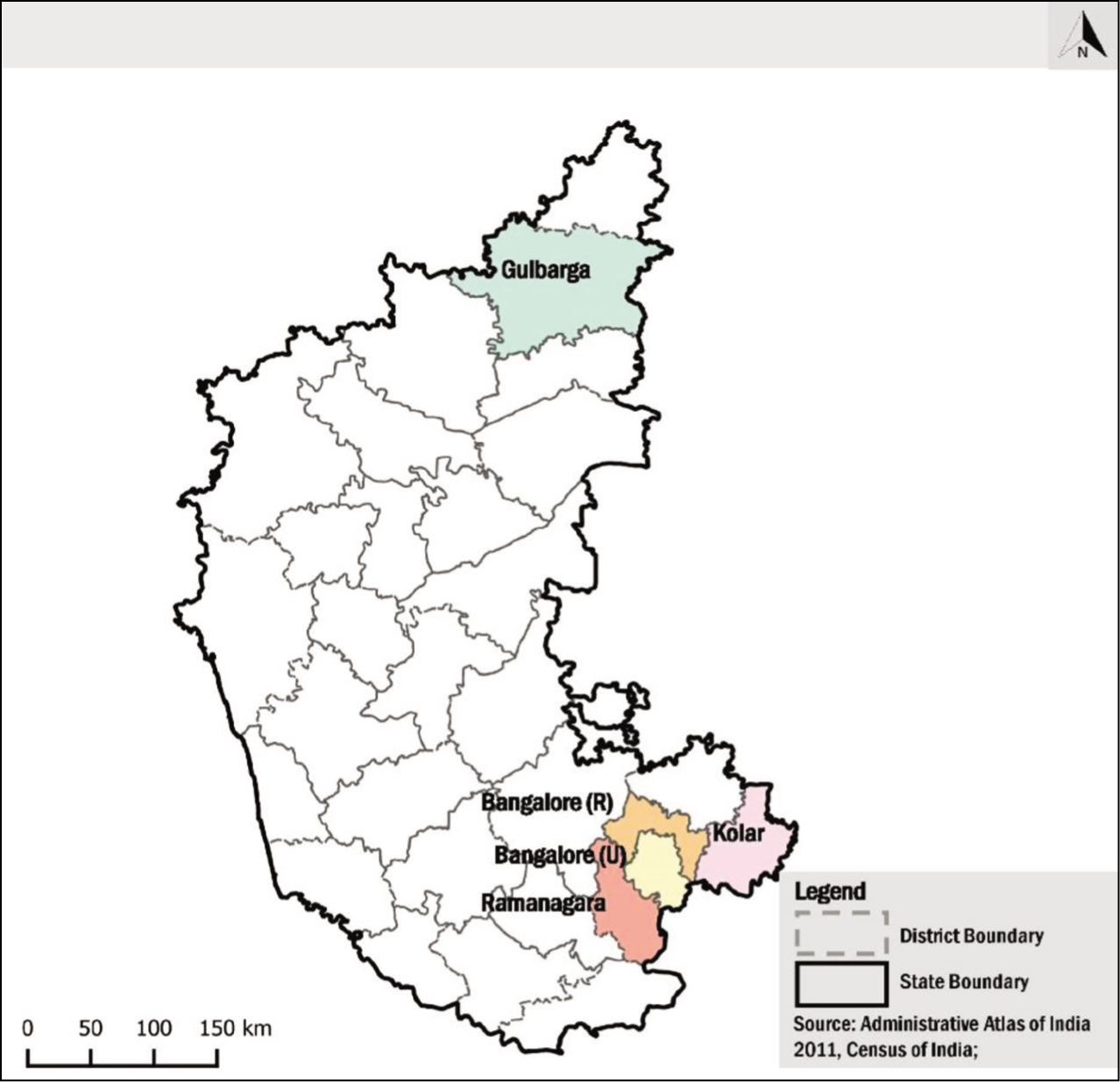
Kalaburagi district (earlier known as Gulbarga) is situated 600 km north of Bengaluru and is consistently ranked as one of the most backward districts in the state in terms of human development (Nanjundappa et al., 2002; Shivashankar & Prasad, 2015). It has had a history of underdevelopment since pre-colonial times, when it was part of Hyderabad Karnataka and is one of the hottest and most arid regions of Karnataka. Historically, Kalaburagi has been the source of migrants to Bengaluru as well as to neighbouring states of Andhra Pradesh and Maharashtra. The nature of migration from Kalaburagi is varied, that is, long-term migration often to brick kilns, seasonal migration to neighbouring urban centres, and circular and permanent migration to Bengaluru, Mumbai and cities in Pune for a range of informal livelihoods such as painters, drivers, hotel staff, etc. Kalaburagi does not have any major urban centres in close proximity to it, making movement to Mumbai, Hyderabad and Bengaluru common.
Study Sample
In the city of Bengaluru, 31 settlements were chosen along the major city corridors, which comprises major infrastructure, transportation, industrial and recent IT clusters (Benjamin, 2000; Sudhira et al., 2007). Within these 31 settlements, we surveyed 1,100 households based upon their population size. Our peri-urban sample consists of 16 villages located in the sub-districts of Anekal, Devanahalli, Hoskote, Nelamangala and Ramnagara situated within Bengaluru Metropolitan Region (BMR) area. We did a detailed semi-structured survey of 800 households within these villages, which are located beyond the municipal city limits of Bengaluru, but within the administrative districts of Bengaluru Urban, Bengaluru Rural and Ramanagara districts. Surveys with within the Bengaluru city and the BMR regions were complemented with detailed settlement histories comprising 17 villages and 31 informal settlements. Similarly, we conducted a semi-structured survey of 825 households in the out-migrant districts of Kolar and Kalaburgi followed by detailed qualitative work. Sampled villages were randomly chosen from four purposively selected sub-districts in each district. In each of these sub-districts, we selected villages through a computer-generated program and the number of households in each village were based upon the probability proportional to size (PPS) strategy to total around 400 households.
The household surveys were standardised across the region to collect information on an array of issues including on a socio-economic profile of households, migration decisions, risks to livelihoods and adaptive responses, and material and subjective well-being. Overall, around 2,725 households were administered quantitative surveys and we supplemented them with insights from Focus Group Discussions (FGDs) and life-history interviews. We conducted 26 gender-differentiated FGDs in Kolar and Kalaburagi, eight FGDs in informal settlements in Bengaluru and five mixed-gender FGDs in the peri-urban sites. In the FGDs, we undertook three participatory exercises: timeline mapping to chart biophysical, livelihoods, socio-economic, institutional and political changes from 1970 onwards; livelihoods risk and response mapping; and an institutional mapping exercise to chart key actors and flows of information and credit.
In-depth life history interviews (Singh, 2018) were conducted with 17 rural and 22 peri-urban individuals to understand risk management pathways migrant households take, that is, how sequential decisions to move or stay shape well-being and capacity to adapt to climate risks (Singh et al., 2019; Singh & Basu, 2020). The life history participants were selected purposively to capture different types of migration, different household types (based on headship and composition) and different livelihoods entered into. The household survey data were analysed using summary statistics linking demographic information, asset holdings and migration drivers to outcomes on material and subjective well-being. The qualitative data were transcribed and coded using qualitative data software (NVivo 11) with a set of descriptive codes based on emerging themes from the transcripts.
Findings
The Nature of Mobility Across the R–U Continuum
Out-migration (either permanent or seasonal) and commuting (daily movement out of one’s own village) are key livelihood strategies across the sampled households (Table 1).
Duration of Out-migration from Villages in Kalaburagi and Kolar (% of Individuals).
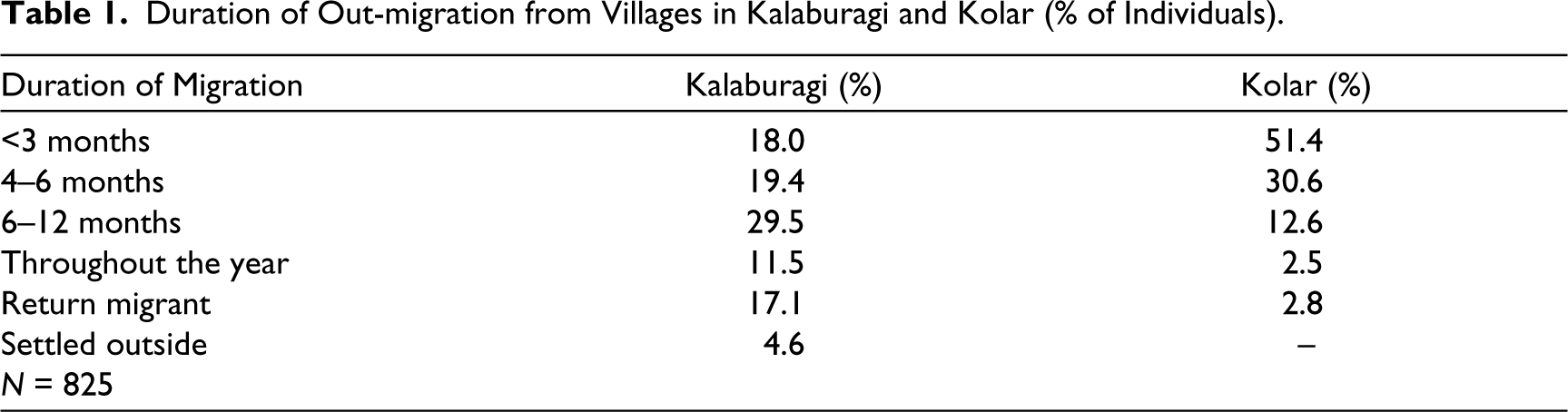
Out-migration from the rural sites is mostly short-term in nature, especially in Kolar, which is 80 km away from Bengaluru, and well-connected by road and rail. The FGDs highlighted that men typically travel to Bengaluru or neighbouring industrial areas to work as daily wage labourers or in factories respectively. Women tend to prefer working in neighbouring villages as agricultural labourers and the study found no examples of women commuting daily to Bengaluru city for work, though several women commuted to peri-urban textile factories for daily work. This gendered aspect of mobility was significantly different in Kalaburagi.
In Kalaburagi, the duration of migration is relatively longer and seasonal in nature, typically taking place in the summer months, when temperatures can soar to over 40°C, and there is no rainfall to support cultivation. Across the households surveyed in Kalaburagi, we found families tended to travel together (often with children) either to brick kilns in Maharashtra or as unskilled or semi-skilled wage labour to Mumbai, Hyderabad and Bengaluru. Migration flows in Kalaburagi tended to build upon historical migration networks where certain communities have been migrating across generations.
Of the rural migrants (n = 825), 78% report urban areas as their destination of migration. As they migrate out to the urban areas, a majority of them work as daily wage labourers and enter the urban informal economy. In total, 35% of migrants to urban areas work in the construction industry. This migration is often circular in nature, with people migrating out of the villages during the summer to work as construction labourers or in brick kilns.
In the highly dynamic transition zone that is peri-urban Bengaluru, various forms of migration processes coexist. While there is significant in-migration to these villages (24% of the 800 households interviewed reported that they had migrated in from elsewhere), there is also a movement away from these villages into Bengaluru city. Daily commuting for work is the preferred form of mobility because of relative proximity to the city. In total, 41% of all household members commute for work in the peri-urban villages. A significant proportion of those who commute, work in the formal sector; 18% report salaried employment in the private sector and 12% report employment in factories. Semi-skilled vocations such as driving (9%) also are common. Interestingly, 18% of those who commute to work, still report farming as their primary occupation, hinting at multiple livelihoods being undertaken to diversify income sources. Both public and private modes of transport are adopted. While 36% commute by public bus, 30% commute on their own two wheelers. A significant number (22%) also walk to work, highlighting inadequacies in terms of connectivity and availability of transport.
In Bengaluru’s informal settlements, 47% of the households reported that they had migrated from outside the city both from within Karnataka state (from drought-prone districts such as Raichur, Bellary and Gulbarga) and other states such as West Bengal and Odisha. These respondents reported facing adverse living conditions, poor access to infrastructure and public services, and prohibitive costs of living. During the FGDs in informal settlements across Bengaluru, many respondents discussed engaging in informal, low-paying jobs with poor security such as daily wage construction labour, waste picking, sweeping, masonry, etc. Women typically worked as cleaners and domestic workers, while some undertook home-based activities such as beedi (local cigarette) and agarbatti (incense stick) rolling and making flower garlands.
Factors Driving Migration
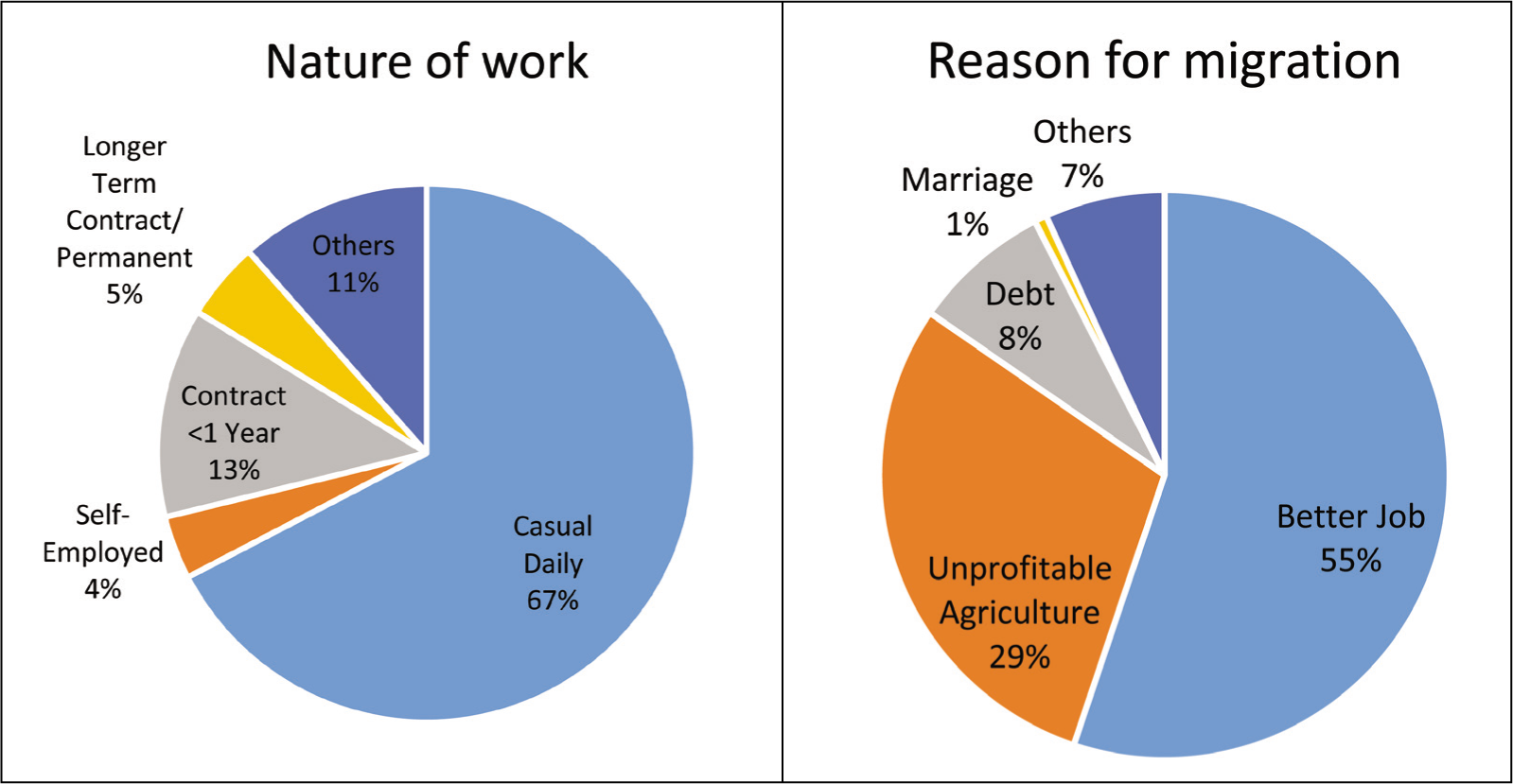
Prospects of better livelihoods, driven partly by aspirational changes and the perceived lack of opportunity in rural areas was reported as the major driver of outward migration (Figure 2). As the village narratives and life histories showed, unprofitable agriculture also serves as a significant driver of migration (Singh et al., 2016, 2018). For example, in a male FGD in Kolar, one farmer noted how price fluctuations have made farm incomes precarious: ‘Yesterday, a sack of cucumbers was worth ₹200 in the morning, spiked to ₹300 at noon, and crashed to ₹100 at 3pm’.
Nature of Work for Rural Migrants and Reason Behind Migration (n = 2,700).
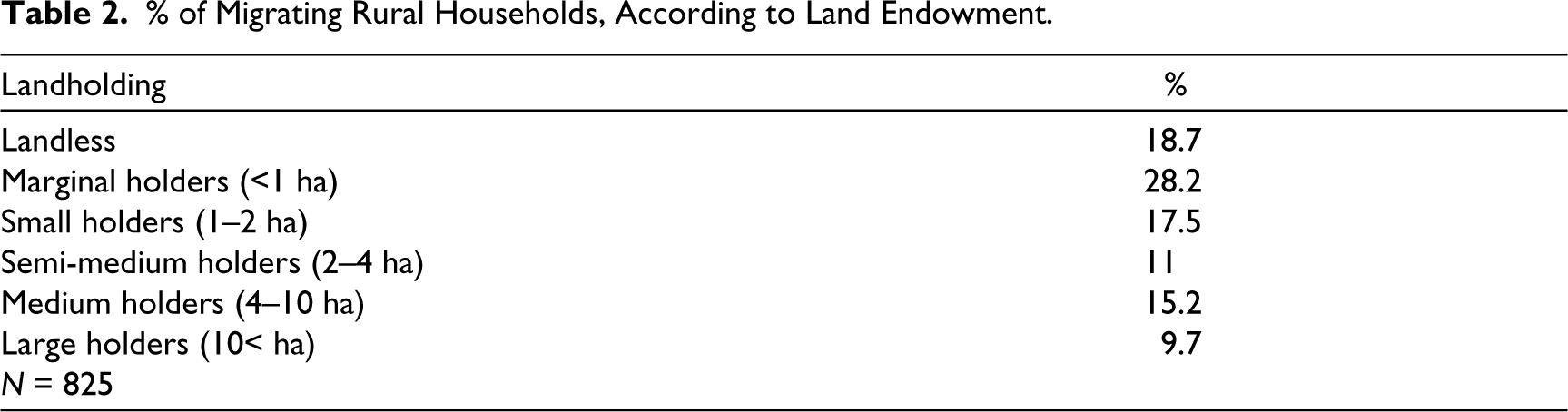
Variability in weather patterns and environmental change have exacerbated risks to agrarian livelihoods. Water scarcity (61% of the households) and untimely rains (26% of the households) were reported as the most significant risks to agriculture (Singh et al., 2016). As one female respondent from Kolar noted, ‘Nowadays, it looks like the womb of rainy clouds is ruptured and instead of regular light rains over four months, we get very heavy rainfall only a few times’. Landholding endowment is another significant determinant of migration status. Migration is more likely among the landless and marginal farmers, for whom agriculture has become an increasingly precarious source of livelihood (Table 2). As one landless peri-urban resident elaborated, ‘If we have land of our own, we can earn well. Since we work as labourers, we do not earn much…we will continue working as labourers, till the end’. In such cases, migration and moving out of farm-based livelihoods was mentioned as the only way to earn better. The size of landholding represents one of the axes of inequality between social groups. Marginalised communities such as Muslims and Scheduled Castes, who have a lower landholding due to historical and antecedent inequalities, are more likely to migrate out (Table 3). This structural inequality is representative of the agrarian distress in general and confirms that certain social groups are more likely to be affected by climate variability.
% of Migrating Rural Households, According to Land Endowment.
% of Rural Households, Within Each Social Group, that Migrate Out.
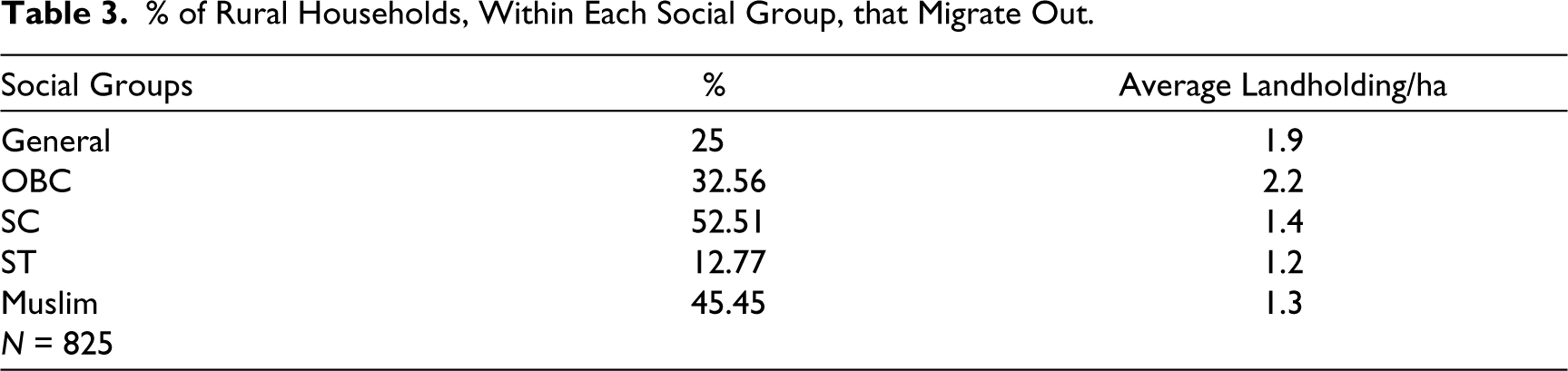
Men are most likely to migrate, though this is increasingly changing. Of our rural sample (n = 825), 74% of the migrating individuals are men. In total, 29% of all adult men migrate out of the villages for work, as compared to 11% of the women. This is reflective of cultural norms that inhibit the mobility of women for work. Similar trends were seen in peri-urban commuting patterns. In total, 68% of all men commute outside their village for work, as compared to only 13% of all women. In rural areas, women have been commuting increasingly for work, either as agricultural labourers in neighbouring villages or, in the case of Kolar, to garment factories in nearby towns (K24_Female FGD). However, in the peri-urban areas, migrant households reported changing norms of caregiving responsibilities. Increasingly, men were also contributing to traditionally female chores, such as collecting water or taking care of young children, to allow women within the household to undertake work and thus contribute to household incomes.
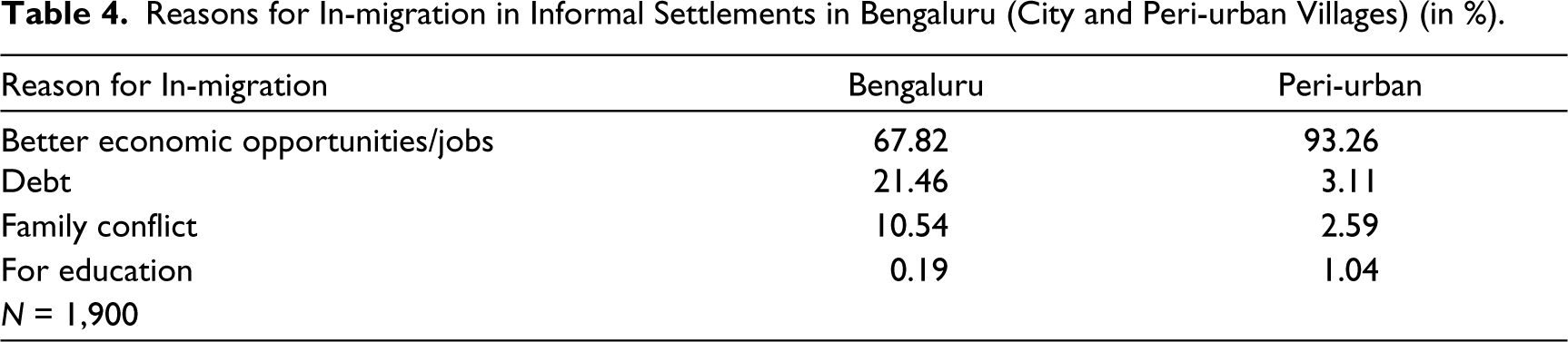
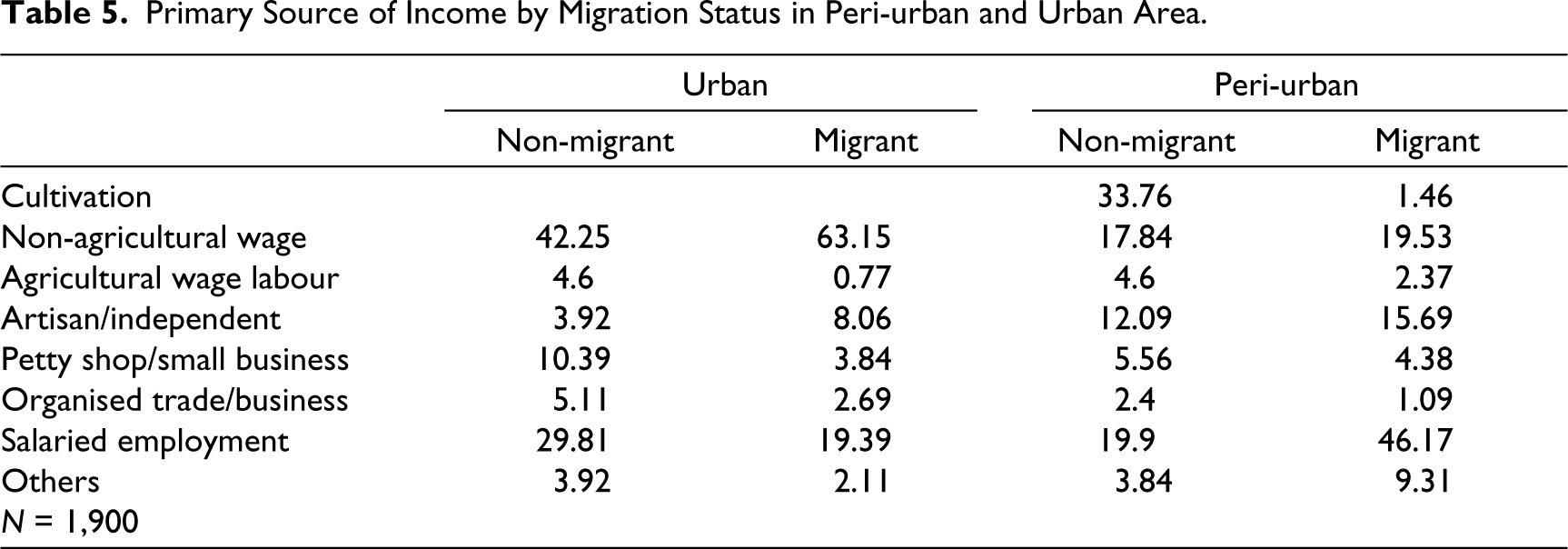
Probing the reason for migration to our respondents in the informal settlements of Bengaluru, we find that migration to urban areas is driven predominantly by economic considerations and livelihood opportunities, followed by repaying of debt (Table 4). Several permanent migrants who were living in Bengaluru for more than 20 years discussed lack of opportunities and recurrent droughts in their villages as factors motivating migration. Migration into peri-urban areas, however, is almost entirely driven by better economic opportunities. We do not observe a debt-induced migration into peri-urban areas. In terms of the nature of work, migrants most end up as working as non-agricultural labourers in Bengaluru, while in peri-urban areas, migrants mostly belong to the salaried class of households (Table 5).
Reasons for In-migration in Informal Settlements in Bengaluru (City and Peri-urban Villages) (in %).
Primary Source of Income by Migration Status in Peri-urban and Urban Area.
Is Migration Enhancing Adaptive Capacity?
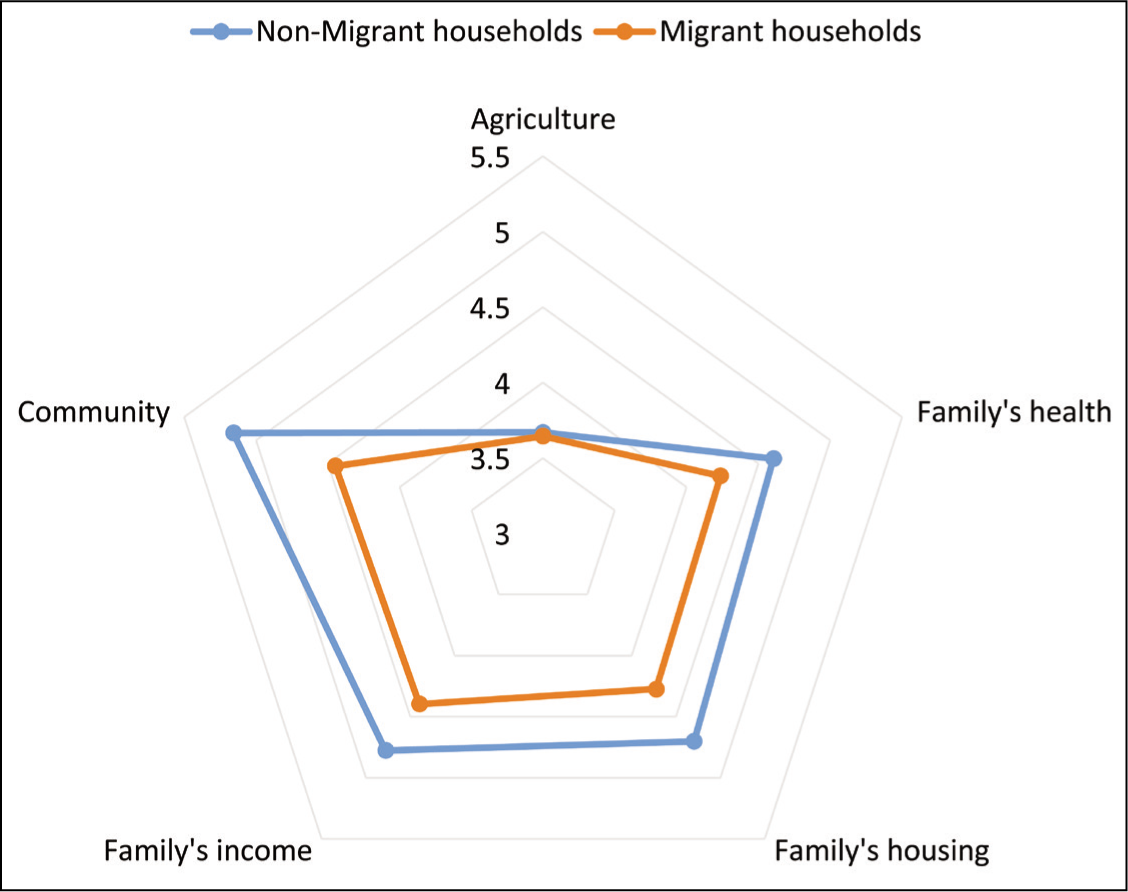
To assess the adaptive capacity of households, we apply a well-being lens (Brown & Westaway, 2011; Rao et al., 2020b) where improvements in subjective well-being are used as a proxy for decreased vulnerability. Through the life histories, we trace intergenerational trajectories of migrant households and assess their risk management strategies and welfare outcomes over time. We assess household subjective well-being through a Cantril Ladder, where respondents were asked to score themselves on a scale of 1 to 10 across various dimensions of well-being such as children’s education, family’s healthcare, quality of housing, income and agriculture.
We find that rural-to-urban migrants assign themselves a lower score on all the dimensions even within rural sites (Figure 3). This is crucial since perceived risks and lack of opportunity drive response behaviour, and relative dissatisfaction with quality-of-life influences household decisions to migrate. Lower subjective well-being is at odds with the fact that migrant households earn a significantly higher income than non-migrant households. The average monthly income for a migrant household stands at ₹2,470, while non-migrants earn almost half of the same (₹ 1,204).
Self-reported Subjective Well-being Scores Across Various Dimensions for Migrant and Non-migrant Households in the Rural Sites (N = 825).
To understand this conundrum, we focus on the urban sample and find that migrants in Bengaluru report being vulnerable because of the precarious nature of their settlements. Potential environmental hazards such as localised urban flooding and high temperatures in the summer months exacerbate their precarious living. Of the 1,100 households surveyed, 71% of the sampled migrant households in Bengaluru reported that their household was affected by flooding in the preceding year; 76% of these households also reported that they were severely impacted by vector-borne diseases. Typically, localised flooding had temporary impacts, for example, respondents in an informal settlement in north Bengaluru said, ‘During heavy rains, the roofs leak in most houses. Some homes in the south east part of the settlement that are low-lying, get flooded for 3–4 days’.
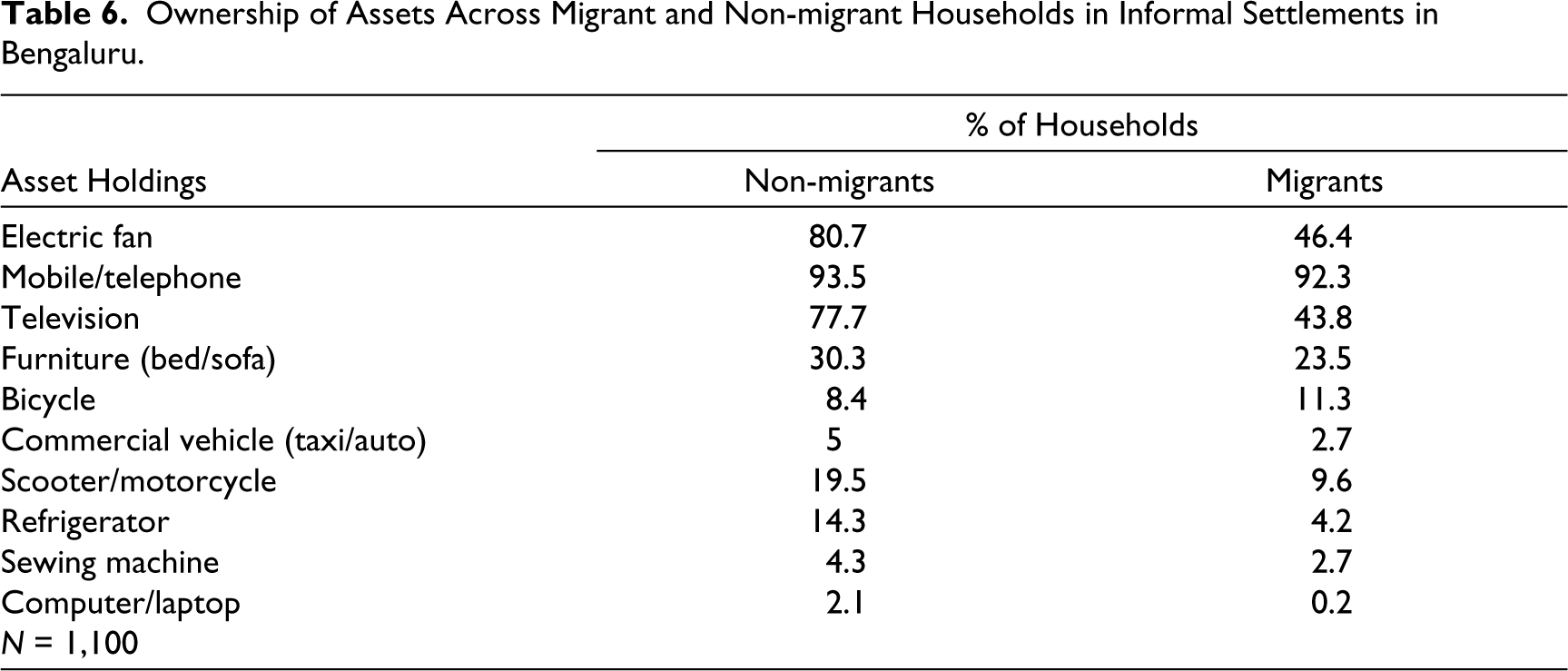
Even in terms of material well-being (assessed through asset ownership), there is a discernible difference between migrant and non-migrant households (Table 6). Consequently, migrant households are likely to report poorer quality of life and have lower adaptive capacity to deal with disruptions to their livelihoods. However, there is no significant difference between the income of the migrants and non-migrants. The differences in the well-being outcomes are primarily due to the migrants’ inability to access infrastructure and public services at the destination. Due to the lack of recognition of their domicile status (which affects welfare entitlements), they often lack access to critical social security services and entitlement, most significantly, the public distribution system (PDS) that offers access to food grains at subsidised prices (Rajan et al., 2020). Across the FGDs conducted in Bengaluru, interstate migrants commonly reported an inability to access subsidised food rations or primary healthcare because of lack of local identity cards. As a female permanent migrant elaborated, ‘Our ration card is in the village and we are scared to approach government services here because we are staying illegally on this land. We’ve heard that they can evict us anytime so we have to live like this, in this anxiety’. Further, access to health services and education is constrained for migrants, as respondents in several FGDs noted. Only 26% of migrant households in informal settlements have access to the PDS. Consequently, their food security is compromised; 41% of these migrant households reported worrying that their household would not have enough food. Due to linguistic diversity across different states in India, the migrants to the city from different states face considerable challenges in terms of assimilation and accessibility to state-sponsored social security services. Michael et al. (2019) have demonstrated how migrants to Bengaluru from West Bengal face marginalisation in terms of living conditions, employment and access to essential services.
Ownership of Assets Across Migrant and Non-migrant Households in Informal Settlements in Bengaluru.
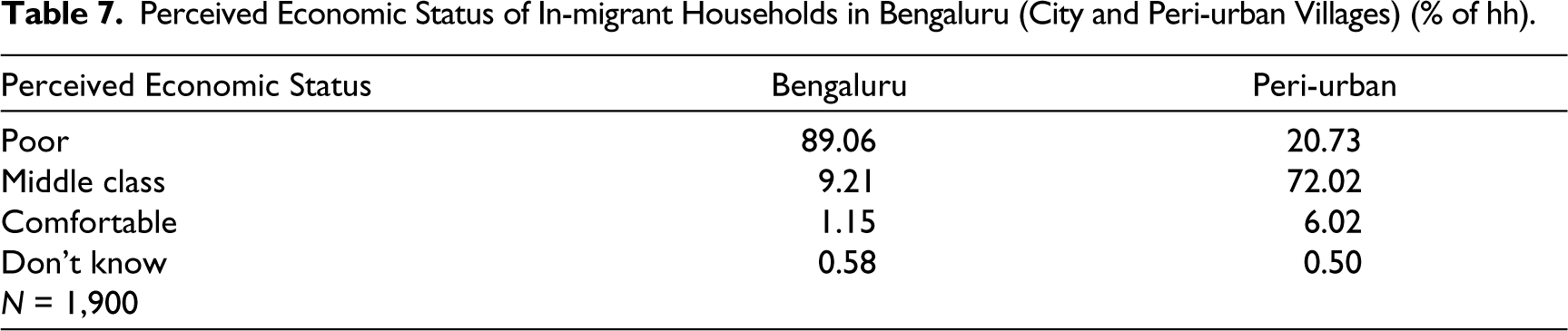
Migrants also score low on indicators of subjective well-being. Of in-migrating households in the city, 89% consider themselves poor, and 25% of them report that their standard of living has declined over the past 10 years (Table 7). However, 52% of these households’ state that they send remittances back home. However, it cannot be established if these remittances are utilised for productive expenditure that may enhance adaptive capacity. In-depth interviews did, however, demonstrate that remittances were used for large expenditures in source areas (e.g., weddings, festivals, repairing houses, digging borewells) but were insufficient to help upward mobility, and in some cases eroded adaptive capacities in rural areas (also see Singh [2020, 2021]).
Perceived Economic Status of In-migrant Households in Bengaluru (City and Peri-urban Villages) (% of hh).
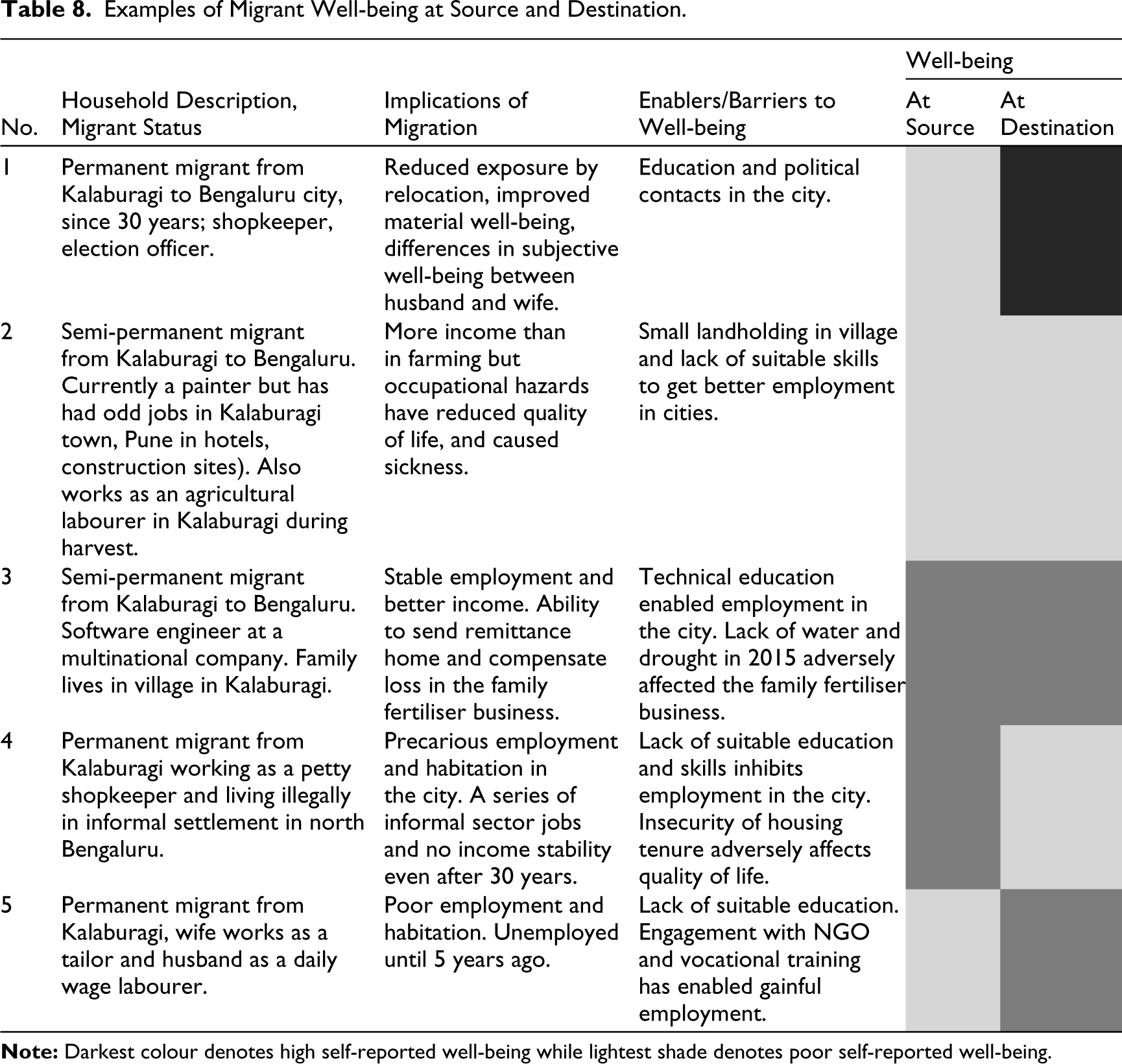
Evidence around migration outcomes were mixed: many migrant respondents in Bengaluru reported wanting to return to their villages if services and infrastructure there improved but noted they would continue living in Bangalore since their villages had few livelihood opportunities and they continued to have debts there. The life histories demonstrated that outcomes of migration decisions can have differential impacts within a household. As Singh and Basu (2019) note, material and subjective well-being differed between old and young and male and female household members. Table 8 details illustrative examples of different livelihood trajectories of migrants based on age, gender, caste, livelihood type, etc.
Examples of Migrant Well-being at Source and Destination.
Among permanent migrants, a consolidation of assets, finances and social networks allowed household members to educate their children, and benefit from social networks and political patronage. They were therefore able to record higher capacities to cope with and adapt to incidences of disease outbreaks or localised extreme events such as monsoonal flooding. On the other hand, seasonal migrants, especially those working in precarious livelihoods such as in brick kilns and as informal wage labourers in the construction sector, tended to have low safety nets, poor asset bases and were highly exposed to idiosyncratic shocks and climatic risks. We found few examples to support the hypothesis that migration strengthens adaptive capacity and found it to be, at best, a coping strategy, which allows people to make adjustments in their response strategies but not overcome chronic poverty or livelihood insecurity.
We illustrate the complex relation between well-being outcomes, adaptive capacity and migration behaviour from the life history interviews (Table 8). Permanent migration, especially accompanied by the accumulation of education, skills and social capital over a period of time, can be potentially adaptive. This was observed in several life histories where migrants living in the city for more than 30 years (e.g., male-headed permanent migrant family who had a pukka house and was a local election officer U3) had mange to leverage political ties, relationships with previous migrants from their villages to lobby for better housing (that was not illegal) and shifting away from low-lying, flood-prone areas). However, we also found instances where permanent migration was detrimental, especially when migrants continued to face inadequate employment or lived in illegal, poorly serviced conditions owing to insecurity of tenure and lack of identity papers (e.g., permanent migrant family from Kalaburagi living in an illegal settlement for the past 25 years U12).
Across the migration trajectory, we observe that certain households’ self-reported well-being improves post migration, but this is dependent upon the specific characteristics of the household. For instance, in the case of respondent U11, his self-reported well-being has actually worsened despite having migrated over ten years ago. On the other hand, some migrants, especially young men working in informal sectors in Bengaluru (e.g., circular male migrant from Kalaburagi working as a painter), spoke of being able to earn better in the city but often spending this towards existing debts and family obligations such as sisters’ weddings. Such men also reported high costs of living and facing grave poverty in case of illnesses. Such narratives highlighted the precarious living conditions of migrants who had little to go back to (in the village) and had not accumulated enough to overcome existing vulnerabilities.
Discussion and Conclusion
Internal migration is increasingly becoming a critical policy issue in India. The Economic Survey of India (2016–2017) devoted an entire chapter to internal migration and used a suite of diverse and innovative methodological tools to estimate the size of the migrant workforce in India. It discussed the process of circular or temporary migration, which is difficult to capture through conventional census data. In 2017, the NITI Aayog set up a Migration Working Group, which used a rights-based approach to argue for adequately recognising and reinforcing ‘the contributions that migrants make to their places of residence and reaffirm the rights of Indians to settle and work anywhere in India’ (Ministry of Housing and Urban Poverty Alleviation, 2017, p. 67). This was followed by the development of a new draft National Migrant Policy by the NITI Aayog, which acknowledges that circular migrants contribute at least 10% to India’s GDP. These policy advancements are welcome, especially in the context of the migrant exodus during the COVID-19 pandemic-associated lockdowns but they remain silent on another crisis underway: climate change. Despite increasing research and policy attention on internal migration, its implications for household welfare and its potential for building adaptive capacities to climate change, remain inadequately acknowledged and assessed.
In this paper, we use empirical evidence on migration with along a R–U continuum in South India to unpack the specific processes and outcomes associated with migration and differential migrant well-being. Adding to a large body of work into the nature of migration in India over the past two decades (e.g., see Rajan & Sumeetha, 2019), this paper attempts to present a cogent narrative to the nature of mobility across the R–U continuum in India against the backdrop of heightening climatic risks, using a unique survey where we study migrants and non-migrants across rural, peri-urban as well as urban areas.
We find migration is often driven by severe agrarian distress and burgeoning debt, making agriculture unproductive. Poorer rural households therefore migrate to urban centres and become a part of the informal economy. With low levels of technical skills, they enter the informal workforce, in often poorly regulated sectors, such as construction, domestic work, transport, etc. In addition to engaging in precarious livelihoods, they also inhabit places at risk of flooding, homes that are exposed to heat, and insecure living conditions (e.g., tenurial insecurity and poor access to basic services), all of which combine to exacerbate their vulnerability.
There is mixed evidence on the benefits of migration on material and subjective well-being, and these are deeply gendered with women reporting lower quality of life after migrating. By demonstrating how vulnerability travels with migrants from the rural to the urban, we argue that migration does not necessarily translate into higher adaptive capacity (i.e., capacity to successfully manage climate risks) and currently, denotes a coping strategy at best. Contrary to the ‘remittances euphoria’ (Bettini & Gioli, 2016, p. 177) in the 1990s and early 2000s, promulgated for example, by the influential UNDP Human Development Reports (United Nations Development Programme, 2009), we find that remittances alone are an insufficient proxy for increased well-being and adaptive capacity, at source and destination. Instead, we show through life history interviews that examine migration outcomes over a larger time period, that migrant households use remittances to reactively cope rather than consolidate assets and proactively adapt to changing climatic and non-climatic risks. These findings resonate with more recent work across similar geographies and pushback against reductionist approaches that focus on remittances alone (also see Singh et al., 2019 for the pros and cons of methodological diversity to understand migration outcomes).
Migration patterns, as we show here, need to be studied within the larger structural transformation of the economy. The extent of agrarian distress and potential climate change effects further increase outward migration from rural areas. While urban incomes and ensuing remittances do help rural households, lack of access to amenities and poor quality of life in urban areas does not necessarily improve their well-being. Migration decisions are mediated by the amount of land endowment and affiliation with specific social groups. Livelihood options and well-being outcomes at the destination are further explained by the skill set of the migrants and the nature of city growth. We highlight this through the relative well-being of migrating households at source (villages) and destination (urban informal settlements). Through the life histories, the study charted trajectories of migrating households across generations, and that migration outcomes are differentiated at an intra-household level as well. Although the well-being and adaptation outcomes vary due to specific circumstances, we found that permanent migrants with an endowment of human and social capital are able to attain a better standard of living over the long run. However, in the short-term, the migrants faced considerable challenges in urban areas, primarily due to their difficulty to access to critical infrastructural and social services. It is only in the wake of COVID-19 that the government realised the need to provide essential social assistance such as food to the interstate migrant with the One Nation, One Ration Card (ONORC) being pushed to the social policy agenda, yet the program’s effectiveness leaves much to be desired (Agarwal & Agnihotri, 2022).
Our findings contribute to nuancing the discourse of migrant remittances shaping adaptive capacity to deal with climate risks. We find strong evidence for the assertion that migrants remain politically socially and economically disenfranchised at the destination. They lack access to health and education, housing and sanitation (Krishna et al., 2014; Kundu, 2009; Kundu & Saraswati, 2012; Michael et al., 2019; Rains et al., 2017), all of which make into sharp relief during the COVID-19 pandemic (Rajan et al., 2020; Rao et al., 2020a). Moreover, remittances are typically used to pay debts, meet familial obligations and do not necessarily build adaptive capacity at the source. Our findings corroborate with De Haas (2010, p. 255), who notes, ‘Development is a complex and multifaceted process, involving and requiring structural social, political and institutional reform, which cannot realistically be achieved by individual migrants or remittances alone, and requires active state intervention’. In order to improve migrant well-being and aid the process of remittances leading to positive adaptive outcomes, there is a concerted need to design policies that improve the functioning of the social, legal and economic institutions, which not only support migration (by supportive policies in the urban) but also allow for remittances to be reinvested productively (in the rural). Further, support in the form of improved connectivity and providing childcare support in the peri-urban are critical interventions to consider.
This research also captures a strong narrative of spatial inequalities, with a strong development deficit in the rural areas resulting in outward migration to urban centres. Migration will continue from the impoverished rural areas, if these disparities persist. The National Rurban Mission in India, announced in February 2016 (revamped later as Shyama Prasad Mukherjee Rurban Mission, SPMRM) aims to address growing rural to urban migration and its consequences: increasing pressure on urban infrastructure and services. It proposes to establish 300 clusters of 20 villages each, across the country to be developed into local economic hubs. While the implementation of the program is still in its initial phases, it has been described as a timely policy intervention that matches changing rural aspirations (Singh & Rahman, 2018). However, it is highlighted that the policy in its current form romanticises the rural and glosses over fundamental issues of severe agrarian distress. Also, the policy does not explicitly acknowledge how it will prevent the recurrence of issues of overstressed urban infrastructure in these new clusters (Singh & Rahman, 2018).
Finally, this work emphasises the need to improve the available data and information on migration patterns, especially temporary and circular migration that are typically not captured in the National Account Statistics. There is a need for building evidence and developing more nuanced insights on the different modes and manifestations of migration and our study repeats the call for leveraging qualitative methods in understanding the social factors that influence the migration process and the intersectional outcomes of moving (Deshingkar, 2006).
Overall, with unequal development and climate risks expected to continue in India, migration is expected to continue and increase. Our study gives early pointers on how to enable safe, inclusive migration by highlighting the importance of initial human endowment (and, education, skills and social networks), the nature of occupation and quality of dwelling or human settlement, which promotes household welfare and builds capacities to deal with climate risks.
Footnotes
Declaration of Conflicting Interests
The authors declared no potential conflicts of interest with respect to the research, authorship and/or publication of this article.
Funding
The authors received no financial support for the research, authorship and/or publication of this article.