




Abstract
The Planetary Health (PH) approach addresses health risks resulting from anthropogenic climate change. It offers an integrative understanding of nature, whereby humans and their health are regarded as part of nature, and individual concerns are situated in relation to the interactions between society and the environment. However, this approach has not yet been incorporated into educational practice. Thus, this article presents the potential of PH for secondary educational measures from the perspective of Geography. Using the concept of system competence, this contribution illustrates how PH can be integrated into the established concept of Education for Sustainable Development. While previous concepts in the context of climate change have focused on mitigation, the examples presented are dedicated to adaptation.
Keywords
Introduction
Multiple crises and threats, such as anthropogenic climate change, loss of biodiversity, scarcity of raw materials, political conflicts and social disparities, increasingly challenge established social, political and economic perspectives and structures. As a result, the need for a transformation towards sustainable development is undisputed. However, there is debate over whether the dimensions of society, politics, economy and ecology should be considered on an equal footing in terms of sustainability (de Haan, 2008, p. 24; Engagement Global, 2016) or whether the ecological dimension should take precedence (German Advisory Council on the Environment, 2008). Furthermore, while changes and crises are largely global in nature, the specific threats and necessary measures are often regionally or spatially specific.
For transformation processes to succeed, it is crucial that they are accepted by the local communities and shaped in a participatory and collaborative manner (Otto et al., 2020; Schneidewind, 2018). The central prerequisites for this are technically sound insights into the various issues of the Anthropocene (Crutzen, 2006) and the tension between society and the environment as well as an analytical understanding of existing social, economic and political conditions, and a recognition of the changeability of seemingly established structures. In this respect, education plays a central role in transformation processes (Mezirow, 2000). Since the 1992 Rio Agenda, the importance of actor-based Education for Sustainable Development (ESD) has been undisputed (de Haan, 2008; Rieckmann, 2022). The Planetary Health (PH) approach is a promising approach to promote climate-appropriate transformation by emphasizing the need for an intact relationship within and between planetary ecosystems as a prerequisite for the well-being of human civilization (Traidl-Hoffmann et al., 2021). This approach adopts an integrative understanding of nature which considers humans and their health-related well-being as part of nature. However, at the same time, it entails an individual level of concern regarding the interactions between society and the environment, which can be experienced by pupils in their own environment. Drawing on the approach of transformative education (Vare & Scott, 2007; Mezirow, 2000) and the significance of system competence in the context of ESD, this article outlines and discusses the potential of PH in the field of education to facilitate discussions about transformation processes and provides examples to clarify these potentials.
On The Necessity of Transformation Processes
For several decades, humankind has persistently transgressed the planetary boundaries (Rockström et al., 2009). Despite this, there is no indication of a decisive turn. The emission of anthropogenic greenhouse, the exploitation of fossil raw material deposits and resources, and the ongoing decline in biodiversity continue unabated (Intergovernmental Panel on Climate Change, 2022). These developments have far-reaching implications, particularly in the context of climate change. Heatwaves, extreme precipitation, flooding, or the emergence of new invasive species that fundamentally alter human livelihoods, serve as stark reminders of the urgent need for a fundamental ecological and social transformation. As the German Advisory Council on Global Change (WBGU) asserts, this transformation is a ‘sustainable and worldwide restructuring of the economy and society as a Great Transformation’ (WBGU, 2011, p. 5). The goal of the ‘Great Transformation’ is to create equal and sufficient opportunities for the present and future inhabitants of this planet, while operating within the confines of the planetary load limits (Schneidewind, 2018, p. 11). In light of these ecological, economic, institutional, technological and cultural challenges, humans are not static entities but actively initiate, shape and exert a crucial influence on these transformations (Schneidewind, 2018, p. 11).
There appears to be a widespread agreement among scholars, policymakers and society about the necessity of a transformative shift. However, the extent, pace and paths of this shift are currently the subject of discourse. This ranges from interpreting the term transformation as a purely technological challenge for qualitative growth (Büchele & Pelinka, 2012), to advocating for ‘post-growth lifestyles and supply systems’ (Paech, 2022, p. 521), to debates between ‘green growth’ and ‘degrowth’ (Schmelzer & Vetter, 2019, p. 148 ff.), or even radical critiques of capitalism (Schmelzer & Vetter, 2019, p. 100 ff.). Against the backdrop of these discussions, negotiation processes at different levels (from local to global) are indispensable. The aim is not to limit transformation to purely technical, economically valuable, or ecologically sustainable measures but rather to focus on collective reflection on common needs and possibilities. Therefore, education plays a pivotal role in the successful management of transformation processes (de Haan, 2008, p. 24; Rieckmann, 2022, p. 10). Education should enable students to confront planetary limits with a problem-conscious mindset, recognize irreversible global developments such as the loss of biodiversity or climate change, and formulate well-informed opinions on sustainability strategies in order to actively participate in shaping a sustainable world and society (Pettig, 2021, p. 6). It is essential to develop an ‘understanding of options for action and approaches to solutions’ through ‘innovations from which a transformative effect can be expected or has already occurred’ (WBGU, 2011, p. 25). In this context, educational institutions have the responsibility of imparting ‘sustainability-oriented knowledge’ on various topics such as climate change, health, nutrition and intergenerational responsibility and thus guide the actions of individuals (WBGU, 2011, p. 374).
Education for Sustainable Development in Geography Lessons
In order to embed the guiding principle of sustainable development in society, ESD has been relevant in the education sector since Agenda 21. The proclamation of the ‘World Decade of Education for Sustainable Development (2005–2014)’ has intensified and accelerated the implementation of ESD. In 2015, the 2030 Agenda was adopted, which formulates the 17 Sustainable Development Goals (SDGs). Achieving these goals is highly dependent on the quality of education (SDG 4) (Schreiber & Siege, 2017, p. 5):
SDG 4: Ensure inclusive, equitable and quality education and promote lifelong learning opportunities for all. […] 4.7: […] by 2030, ensure that all learners acquire knowledge and skills needed to promote sustainable development, including, inter alia, through education for sustainable development and sustainable lifestyles […] (United Nations General Assembly, 2015, p. 18).
The UN World Programme of Action on ESD was launched in the same year, with the aim of permanently and structurally anchoring ESD in all areas of education. In Germany, this programme was coordinated by the Federal Ministry of Education and Research (BMBF) and the German Commission for UNESCO. The strategy for implementation is outlined in the National Action Plan for Education for Sustainable Development.
Studies such as Holst et al. (2020, p. 8) or Hemmer and Reinke (2017, p. 38) have reported that ESD has been widely incorporated into the curricula of the German Länder through numerous initiatives. However, the quantity and quality of these measures vary considerably. While ESD is formulated as a transdisciplinary concern in some education plans, it falls under the responsibility of subjects with an affinity to sustainability, such as geography, in other curricula (Holst et al., 2020, p. 8). As central societal challenges, such as climate change, require a systemic, sustainability-oriented, and subject-related approach (e.g., Otto et al., 2020), continuous strengthening and updating of sustainability-oriented educational concepts are still needed.
The school subject of geography has been recognized as a crucial contributor to implementing the SDGs and driving the desired transformation of our world. In fact, it is widely regarded as a leader in the implementation of climate education in the school subject canon (Action Council Education, 2021; Bagoly-Simó, 2021; Bagoly-Simó & Hemmer, 2017; Brock, 2018; Klüsener & Wittlich, 2023; Mehren, 2020; Siegmund & Siegmund, 2021). Furthermore, geography is distinguished by its systemic thinking and content-related examination of spatial transformation processes, which have been identified as essential criteria for ESD by Wittlich and Brühne (2020, p. 8).
The promotion of system competence through ESD contexts is crucial due to the high complexity of sustainability and transformation topics (Roczen et al., 2021; Schmalor, 2021). In this regard, Mehren et al. (2016) have emphasized the need for a system-oriented preparation of teaching content and a metacognitive reflection of one’s own knowledge. If education can contribute to coping with transformation processes, learners should be enabled to think systemically and behave in a sustainable way. Therefore, teaching should not focus on a didactic reduction of complex transformation processes but should strive to increase the inner complexity of the issues. Hence, instead of thinking in abbreviated causal relationships, students are guided by the teacher to play through complex cause-effect structures and their feedback effects in their minds (Mehren et al., 2016, p. 148; Scheunpflug, 2019, p. 67). The concept of systems is understood as a guiding principle in some teaching subjects, including chemistry (Kultusministerkonferenz (KMK), 2020a), physics (KMK, 2004b; KMK, 2020b), and biology (KMK, 2004a, 2020c). In geography, system competence is a distinguishing feature, serving as a metacognitive strategy and the main basic concept (Figure 1) after the German Society for Geography (DGfG) (2020). Its perspective extends beyond natural systems and encompasses three different types of systems, as proposed by Weichhart (2003): the human-geographical (sub-)systems (e.g., in the topic of sustainable urban development), the physical-geographical (sub-)systems (e.g., fundamentals of climate change), and the human-environment system (e.g., excess mortality rate during heat waves), with the former representing individual subsystems (Mehren et al., 2016).
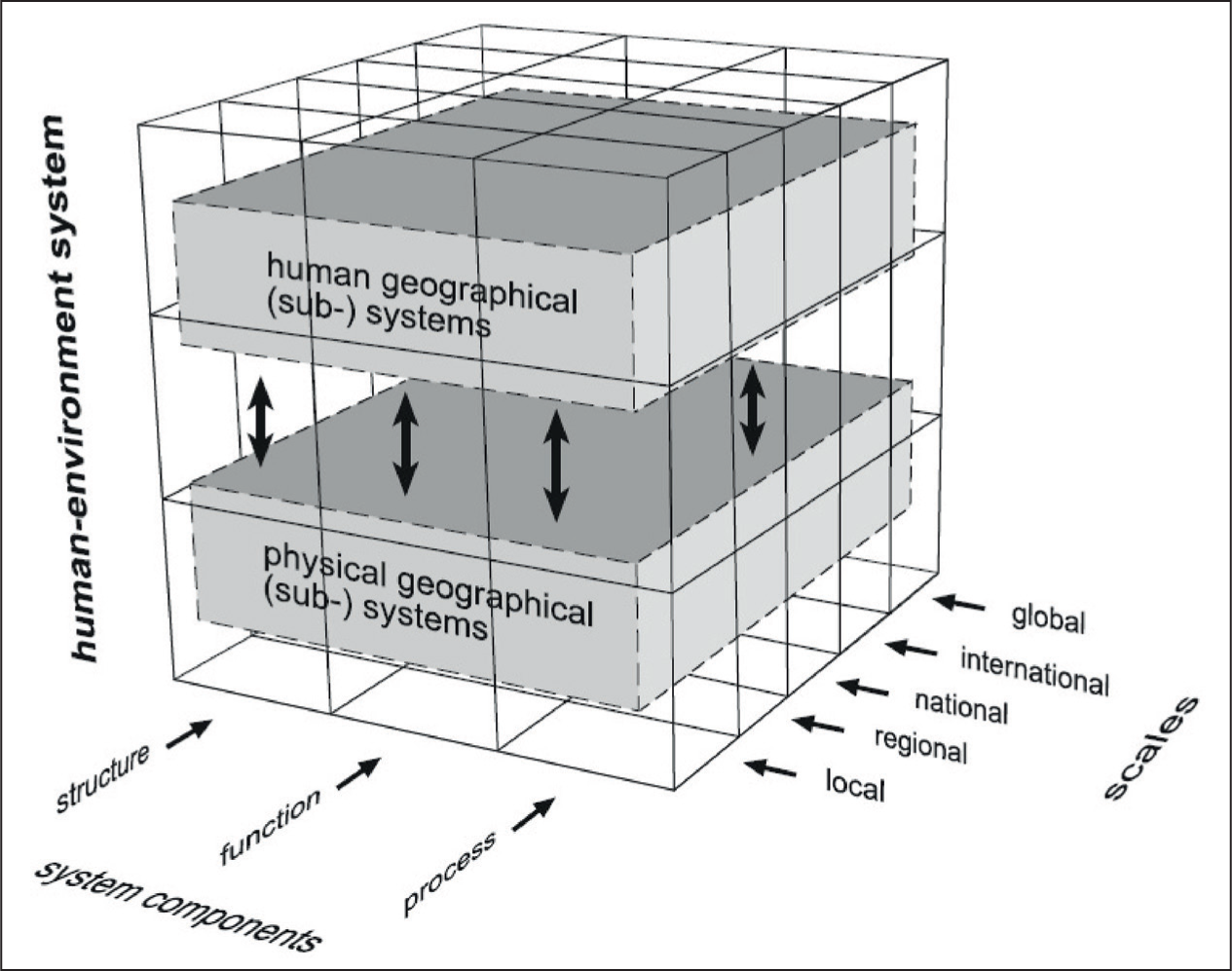
With regard to transformation processes, the systemic approach is extended by the system components structure (e.g., spatial distribution and effects of high temperatures and the differences between urban and rural areas), function (e.g., heat island effects in urban areas versus cooling effects of green areas in rural areas) and process (e.g., increased occurrence of heat-induced illness and deaths) as well as the scale levels (e.g., development of (partial) solutions to the negative impacts of climate change at local, national and global level).
The described basic principles of systems are present in almost all subject areas. The aim is for learners to recognize these principles and transfer them to new and previously unknown issues, ultimately leading to the construction of long-term consolidated knowledge structures (Mehren & Rempfler, 2018). These form the basis of a fundamental understanding that can be flexibly applied to new contexts and situations. Therefore, the development of system competence is of significant importance for pupils’ ability to cope with increasingly complex situations in their present and future lives. This particularly applies to unsustainable developments.
Transformative Learning in the Sense of Transformative ESD
Given the aforementioned developments, there is a need to explore what form a more transformation-oriented education can take, which would maintain the progress achieved in implementing ESD in teaching practice, while also implying further development. However, the concepts of ESD have been subject to controversy. The normative-political nature of ESD, rather than being driven by educational theory, has been highlighted as problematic (Schuler & Kanwischer, 2013). For instance, Pettig (2021, p. 7, translated by the authors) points out that ‘conflicts of interest and power asymmetries [are] hardly taken into account, which creates the danger of conveying simple solutions to global problems instead of promoting a multi-perspective understanding and awareness of their complex interconnections’. The ‘agreement of the sustainability dimensions [are] formulated as a utopian ideal of feasibility and their fulfilment is imposed on the individual’ (Pettig, 2021, p. 7, translated by the authors). This entails the concealment of non-sustainable structures inherent in the system, which in turn fosters simplistic solutions and individual accountability (Pettig, 2021, p. 7). In sustainability-related education, there is a tension between the need to urgently bring about socio-ecological transformation and the desire to dictate necessary ways of thinking and acting to young people (Pettig & Ohl 2023, p. 6). In line with the controversy and indoctrination ban formulated in the Beutelsbach Consensus, such paternalism should be avoided (Wehling, 1977, p. 24). These challenges and tensions can be seen as characteristic of ESD, as they are also reflected in educational plans, teaching examples, and educational policy documents. Vare and Scott (2007) classify these different approaches into three streams (Table 1).
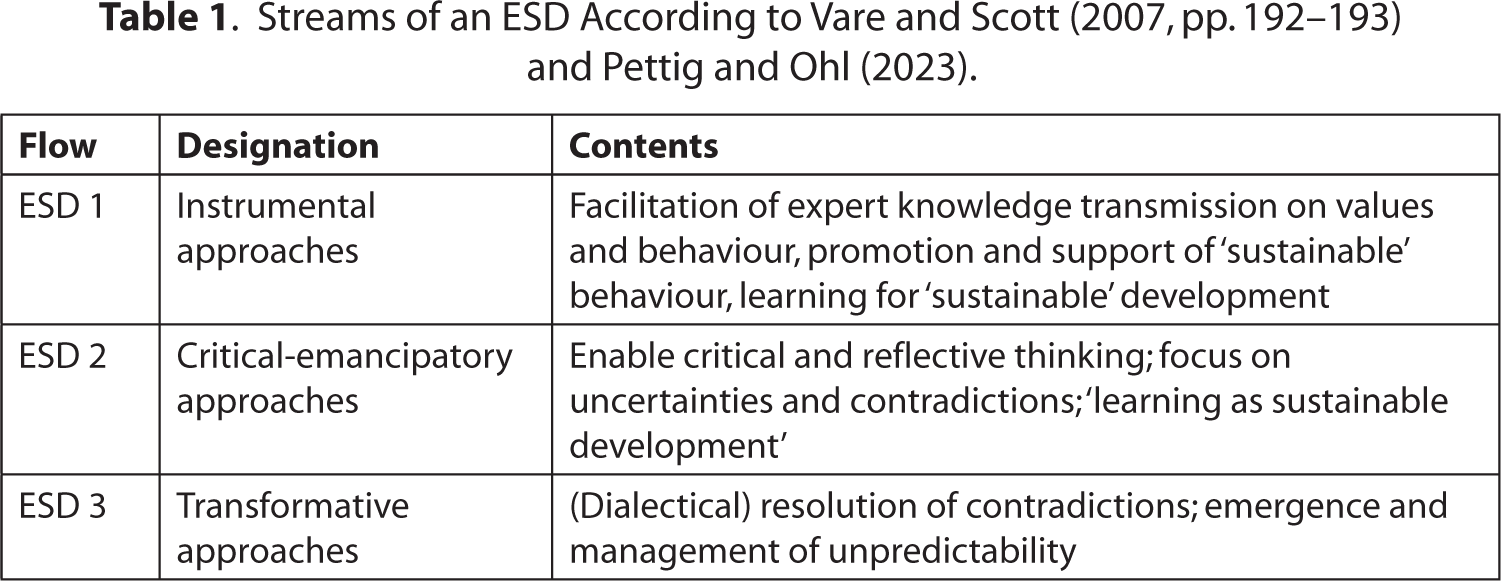
In the long run, the crucial factors for transformative learning are not mere abilities and skills to integrate predefined behavioural patterns, but rather the competence of critically and reflectively committing to the future (Vare & Scott, 2007, p. 194). The perception of the future as open and pliable is a fundamental prerequisite for the successful implementation of ESD 2 and 3. Hence, education should strive to promote active participation, for instance, by deliberately setting self-determination and joint negotiation as learning objectives in the classroom. Transformative learning pertains to a learning environment that is tailored to this objective by fostering critical-emancipative, creative and open-ended discussions and reflections on learners’ visions of the future. Therefore, transformative learning for socio-ecological change is not a specific teaching-learning strategy, but rather a ‘concern to offer learners opportunities to rethink their own ways of thinking and acting and to find new, partly still unknown ways to a future worth living’ (Pettig & Ohl, 2023, p. 7, translated by the authors). Similarly, Blum et al. (2021, p. 16, translated by the authors) define transformative learning as a ‘process in which people recognize, question and change their previous perspectives of meaning as such’ (on this also Mezirow, 1997). It involves a profound qualitative reconstruction of one’s worldview and self-understanding, whereby previously uncritically adopted patterns of behaviour, emotion and thought need to be unlearned (Blum et al., 2021, p. 16).
Pettig (2021, p. 12) provides a didactic model for planning and reflecting on transformative learning within the school context, drawing upon Mezirow (2000) and Freire (1973). The starting point of this model is usually a sustainability-related problem that emerges from the learners’ environment. Initially, the model prompts learners to question traditional ways of behaving and thinking by engaging with different perspectives. During this phase, learners are exposed to divergent perspectives that may challenge their preconceived notions, providing an opportunity to critically examine points of intersection and divergence within the reference group. This is followed by joint reflection: Alternative views are compared and contrasted, and learners critically reflect on their own thinking and its origins (Pettig, 2021, p. 12). To contextualize and critically engage with the facts at hand, (geographical) expert knowledge is required. The ‘experimentation’ phase involves testing out innovative or alternative approaches, actively engaging with the problem and generating new experiences (Pettig, 2021, p. 12). Of particular importance is the transfer of knowledge gained from the project to one’s own lifeworld, as well as engaging in meta-reflection at the end of the project (Figure 2).
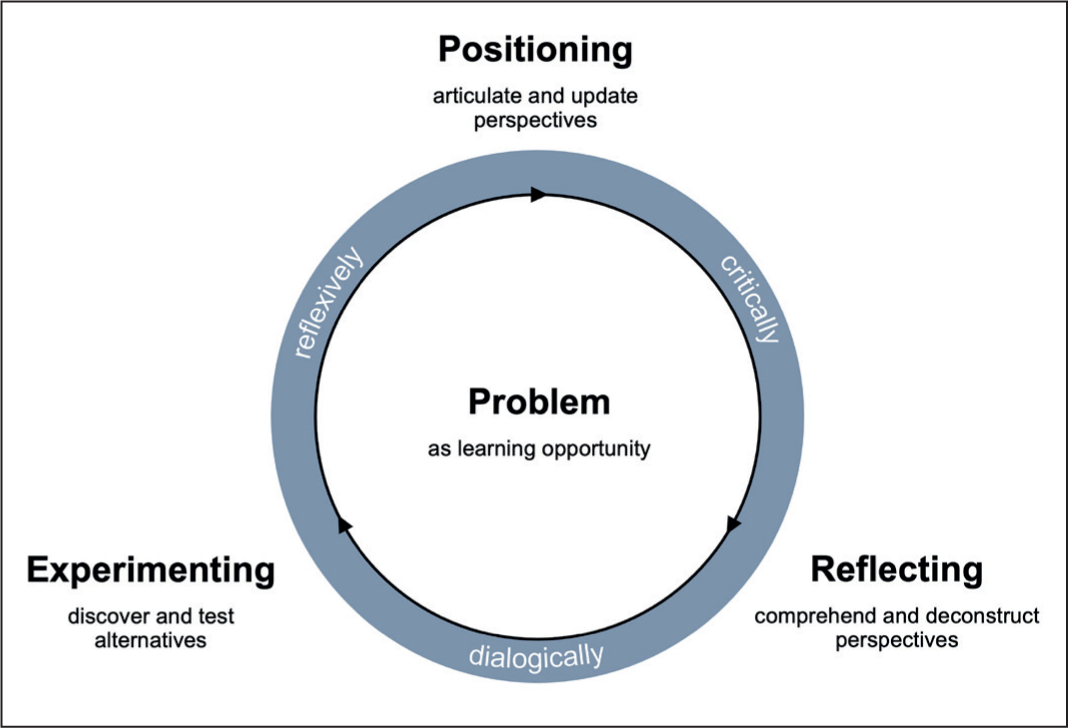
The model proposed by Pettig (2021, p. 13) serves as a recommended planning framework for designing individual lessons as well as longer sequences such as teaching units or for undertaking project weeks. Furthermore, it offers a suitable framework for extracurricular learning, experimental forms of learning, or innovative methods such as design thinking. It is important to note, however, that it is neither ‘realistic for learners to come up with indisputable solutions to the socio-ecological crisis in the shortest possible time, nor is it desirable to abandon the claim of wanting to find them’, given that existing political institutions have been unable to do so for many years (Pettig & Ohl 2023, p. 8, translated by the authors).
Planetary Health—A Complementary Concept for Transformative ESD
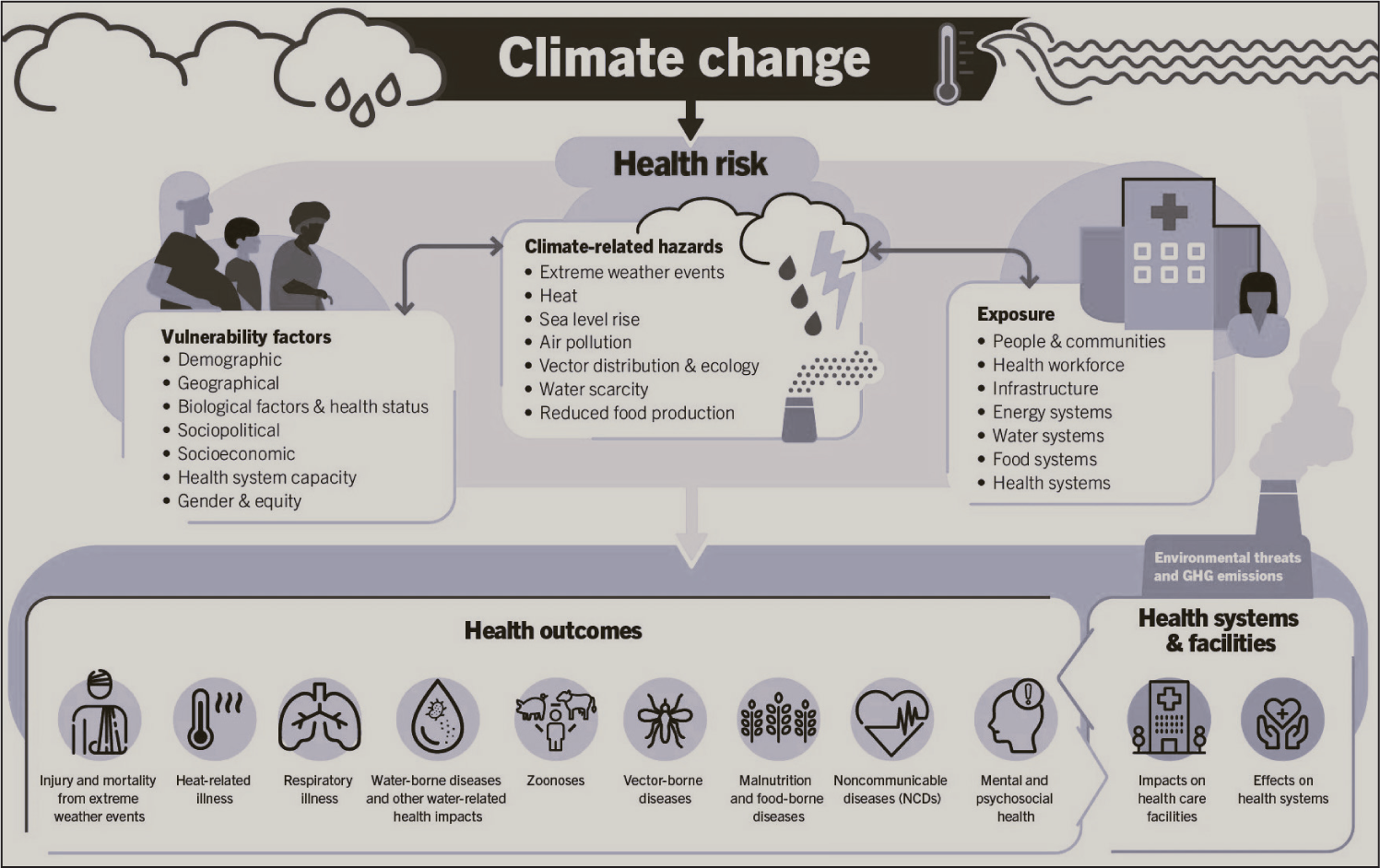
The concept of PH holds significant potential for transformative ESD, as presented in the approaches outlined. The concept operates on the premise that the health of humans is inextricably linked to the well-being of the Earth (Traidl-Hoffmann et al., 2021). Addressing the challenges posed by the overstepping of planetary stress limits represents the most pressing concern of the twenty-first century. Of particular concern are the long-term climatic changes and extreme weather events, such as the extended heat and drought witnessed across large parts of Europe during the summer of 2022. The occurrence of such events raises the probability of adverse health effects (Traidl-Hoffmann et al., 2021). In response, several European countries have implemented emergency protocols; France, for instance, has introduced ‘cold rooms’, while Spain has launched a monitoring scheme for the elderly, the sick and economically disadvantaged populations. Besides heat waves, climate change hazards include flood events (such as the flood event in July 2021 in Central Europe), food insecurities (particularly due to reduced yields in agriculture and forestry) and an increase in pollen-associated allergies, the emergence of threats from neobiota, such as the West Nile virus transmitted by mosquitoes or health risks related to the spread of the oak processionary moth (Traidl-Hoffmann & Trippel, 2021). Figure 3 illustrates a range of impacts of climate change on human health.
Through the PH Alliance, a consortium affiliated with Harvard University, diverse perspectives from medicine, natural sciences, and social sciences have been integrated into the concept of PH. The Alliance advocates an integrative understanding of nature but places people at the centre of its considerations (Faerron Guzmán et al., 2021). In this context, the individual level of awareness of health risks is particularly significant, as the PH approach considers both planetary and individual health (Koplan et al., 2009). By doing so, it aims to develop solutions and adaptation strategies to global health risks, thus aligning with the sustainability goals of the Agenda 2030 (United Nations, 2015). However, a potentially problematic aspect of this approach is that nature conservation is primarily justified with the aim of human well-being. This perspective can be described as anthropocentric, which is also conveyed by the term environment (Bertolini, 2015, p. 5). Such a view, in which nature appears primarily ‘as an instrument of man’ (Bertolini, 2015, p. 6, translated by the authors), contrasts with approaches to environmental ethics that tend to identify nature as having inherent value. However, these positions can also be criticized regarding their normative foundation: ‘To use a so-called intrinsic value alone as an argument for a concern for nature outside of anthropocentric considerations of human utility is insufficient for a rational argumentation, since it can only be grasped intuitively or as a feeling’ (Bertolini, 2015, p. 183, translated by the authors). Despite these philosophical debates, in an educational context, it seems appropriate to familiarize learners with this primarily anthropocentric view of nature and to portray it as one of several justifications for sustainability efforts. The concrete reference to the importance of nature for human health provides significant didactic potential. Accordingly, the call to implement the PH approach in ESD contexts is high.
To avoid the risk of theoretical detachment or disruption of educational practice resulting from a continuous generation of new conceptions of ESD, it is advisable to integrate current developments and perspectives into established (environmental) education concepts and to further develop them pedagogically, didactically and methodologically. One effective way to achieve this is the integration of PH into ESD, as illustrated in Figure 4. The figure highlights several synergies that emerge from the integration of the PH approach into the educational concept of ESD, particularly in the four dimensions of sustainability and at the different scale levels. The dichotomy on the left side of the figure depicts how PH contexts are intertwined with individual health:
Planetary Health and Education for Sustainable Development: An Integrative Approach.
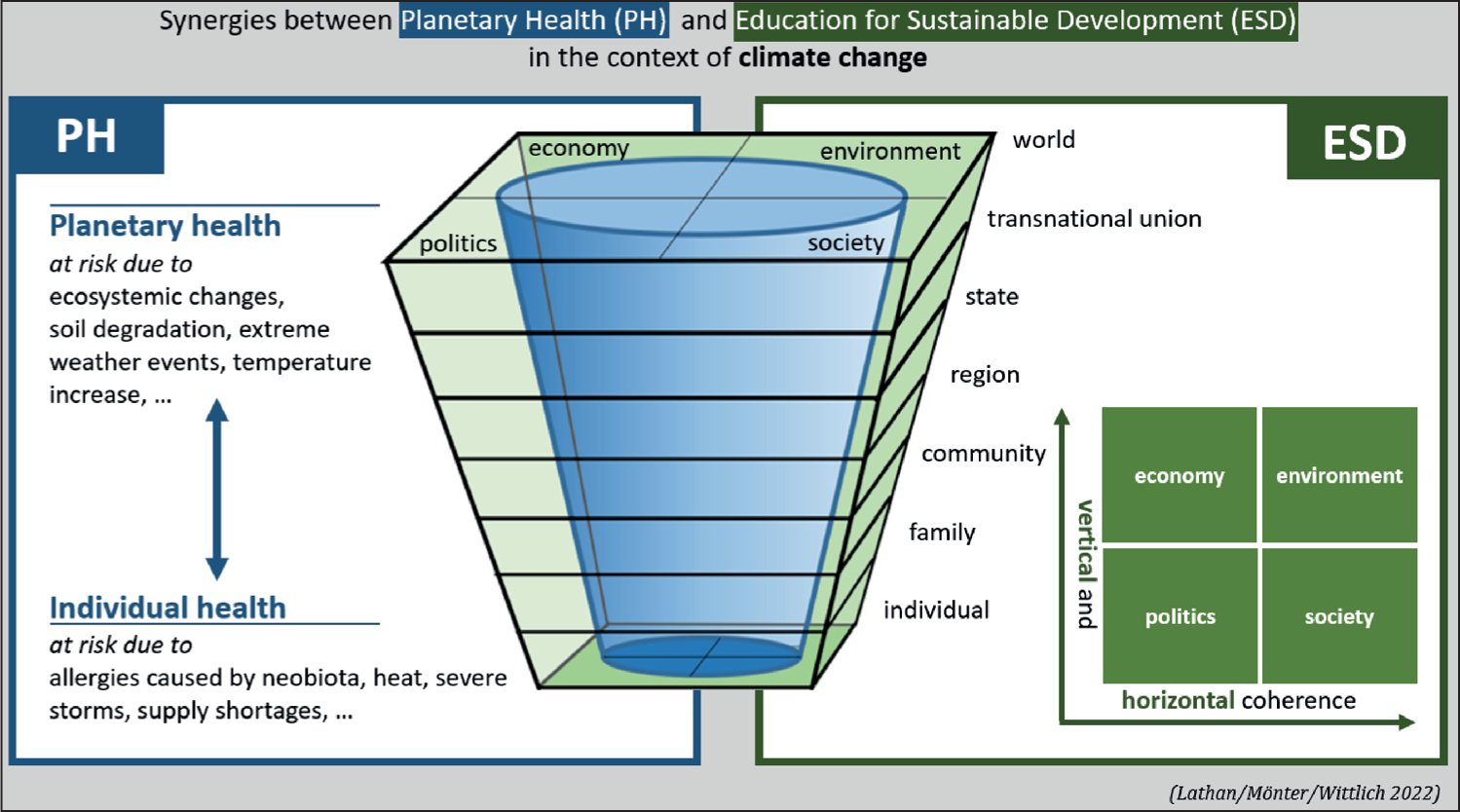
In the event that ecosystemic changes pose a threat to PH, individual health may be at risk due to the influence of neobiota. Similarly, extreme weather events can lead to storm hazards that can have catastrophic consequences for individual households (Schäfer et al., 2021). The integration of the PH concept into ESD presents a new, multi-layered opportunity to contribute to transformative education, as outlined in Pettig’s (2021) model for geography education. In the subsequent section, we will present examples of how this can be implemented in didactic and methodical terms, using the cases of heat and neobiota.
Practical Educational Approaches using the Example of Heat and Neobiota
Building on the discussed concepts, this article outlines a potential didactic-methodical approach for teaching, focusing on two examples: heat (waves) and heat island effects as well as invasive species, specifically the oak processionary moth. These contemporary examples are socially relevant and connect directly to the student’s lifeworld (learner-centred). Action-oriented methods have been successful in teaching practice. When combined with a transformative understanding of ESD (Pettig & Ohl, 2023; Vare & Scott, 2007), which aims to dialectically overcome contradictions, students can be encouraged to break with traditional patterns of thought and action. The approach proposes a three-step process of positioning, reflection and experimentation, which fosters collaborative work on a question that is closely linked to the local context (Pettig, 2021). To initiate participation processes, it is beneficial to incorporate concrete action possibilities in PH learning arrangements. This approach supports the development of new characteristics and system structures and enables students to contribute to the climate change-related transformation. Accordingly, PH learning arrangements should generate the desire and courage to act, following the Handprint concept (Germanwatch, 2023), thereby strengthening the students’ confidence in their own actions, which is also related to the concept of resilience (Hahne & Kegler, 2016).
The first example involves the phenomenon of heat (waves) and urban heat island (UHI) effects in both rural and urban settlement areas. Their emergence occurs more often due to climate change and is an indicator of a decreasing PH (IPCC, 2022; German Weather Service & Extreme Weather Congress Hamburg, 2021). In fact, they have been a prominent topic in recent media coverage (e.g. summer 2018 or 2022) (German Weather Service (DWD), 2022). The phenomenon is attributed to the significant temperature differences between the cooler surrounding countryside and the warmer inner-city area, which reaches its maximum during low cloud cover and low-wind weather conditions. In large cities, this difference can be as much as 10 degrees celsius. The air temperature in urban areas is primarily influenced by the geometry of the buildings, the thermal properties of the building materials, the radiation properties of the surfaces, and human activities that generate heat, such as traffic, road construction, or house fires (Hupfer & Kuttler, 2005). Urban heat islands have various consequences. On hot summer days, there is a considerable increase in the risk of heat stress among residents, particularly older adults, children and those with pre-existing conditions such as cardiovascular weaknesses. Data from the DWD and the Robert Koch Institute (RKI) demonstrate clear positive correlations between above-average hot summer days and heat-related deaths between 1992 and 2021 (Winklmayr et al., 2022).
The second example is the issue of neobiota, which holds significant importance not only in urban areas but also in rural areas. Neobiota refers to alien animals (neozoa) and plant species (neophytes) that have immigrated due to anthropogenic factors. Mobility, globalization and anthropogenic climate change are crucial factors for their immigration (Federal Ministry for Nature Conservation (BfN), 2022). Neobiota possess a unique competitive advantage, as they are usually thermophilic, have high adaptive capacities, and can establish long-lasting populations quickly (BfN, 2022). If they experience high reproductive success and spread uncontrollably, they are known as invasive neobiota. Therefore, the abundance of these species is also a sign of the declining health of our planet (IPCC, 2022). One currently invasive neozoon is the oak processionary moth, which has emerged as a significant injurious insect of oak and pine stands in Central and Southern Europe (Julius Kühn-Institut, 2019; Schröder et al., 2016). The caterpillars of the butterfly species eat the infested tree, making it considerably more vulnerable to other stress factors such as drought or other pests including oak powdery mildew. In addition, there is a major health hazard for humans and animals. The caterpillars’ barbed stinging hairs contain thaumetopoein, a nettle toxin that triggers an overreaction of the immune system (Schwenke, 1978). In windy conditions, the hairs can be transported in the air or stick to the ground vegetation, allowing them to be carried through clothing. This often causes new reactions such as itching or skin inflammations. Furthermore, repeated exposure may cause dizziness or fever.
Both examples are well-suited to promoting system competence in urban and rural areas in an action-oriented manner and to meeting the demands of ESD in a transformative understanding, given their degree of complexity and direct relevance to the living environment (Pettig & Ohl, 2023; Vare & Scott, 2007). From a methodological perspective, the integration of out-of-school places of learning is sensible. As they are significant for ESD intentions by promoting environmental awareness in one’s own living space (Bartsch-Herzog & Opp, 2011; Engagement Global, 2016; Schockemöhle, 2009), fostering competencies (Wilhelm et al., 2011), and bridging the gap between environmental awareness and pro-environmental action through direct encounters (Kuckartz & Rheingans-Heintze, 2006).
By integrating the PH approach, the youths can be sensitized to the individual health risks that result from climate change. This sensitivity can be further supplemented and strengthened through observations, mappings, experiments, or local surveys. Incorporating these results into a systemic analysis of the issues contributes to a better understanding. Through the creation of a cause-and-effect diagram, the method of concept mapping has great potential for promoting systemic thinking. This method allows for the integration of different sub-competencies while also developing individual competencies independently of each other (Brühne & Harnischmacher, 2019; Mehren et al., 2015). Based on this approach, the complexity of sustainability issues can be made manageable, unsustainable structures can be critically questioned and dilemmas of sustainable development can be discussed. In this context, personal involvement in these relationships and processes is critically reflected upon, and the development of a personal stance is encouraged (Pettig, 2021, p. 9). Both aspects strengthen resilience and enable youths to respond to climate change-induced challenges in both urban and rural areas in a responsible and participatory manner.
The handprint concept (Germanwatch, 2023) can be used to illustrate the positive, individual contribution to transformation. The handprint represents sustainable action and the commitment to implement knowledge in local, regional and global contexts. The initiating processes that come from individual actors should not be underestimated. Through positive ripple effects, they can be influential to others, so that the individual handprint gains socio-political significance. At the end of a PH-ESD module, students could participate in a community or city council meeting. In this context, students may present self-collected data on heat island effects and recommend solution-oriented measures, such as tree planting or applying for shading interventions. Depending on the topic, many other participation possibilities are conceivable. This would also address a core competence for action in the Global Development Learning Area: ‘Pupils can and are prepared, based on their mature decision, to pursue SDGs in their private, school and professional lives and to participate in their implementation at the societal and political level (Engagement Global, 2016, p. 95, translated by the authors).
Conclusion
The PH approach offers specific potential for transformative educational measures. In comparison with already established concepts of ESD, the conceptual fusion of PH with ESD shows a synergetic benefit with regard to the development of systemic thinking. By achieving systemic competence and a deeper understanding of complex, unsustainable developments, learners ultimately take initiative, leading to the attainment of a key goal of participatory ESD. The concept of PH has been illustrated in terms of subject matter and didactics using two examples. The article demonstrates which educational contents and contexts are suitable within the framework of the PH approach and how they can be methodically developed to promote transformative learning. The selected climate change-induced problems, along with their partial solutions, have an impact on the individual health of students and, ultimately, that of their social environment. Additionally, there are several other important topics pertaining to the PH concept in each field of transformation (Table 1). The development of learning modules that are tailored to the target group represents an initial step in equipping learners with the knowledge, insights, competencies and skills needed for them to be capable of taking action. The conceptual and educational benefits of expanding ESD to encompass PH are apparent, as high-quality education (SDG 4) has the potential to support a social, sustainable transformation.
Footnotes
Declaration of Conflicting Interests
The new model for the entanglement of Planetary Health and ESD ( ) has been published in an edited volume of the Academy for Spatial Development in the Leibniz Association in German language: Lathan, H. et al. (2024). Planetary Health in der Bildung. Ein Beitrag zur nachhaltigen Transformation in städtischen und ländlichen Räumen. In: Transformationsprozesse in Stadt und Land – Erkenntnisse, Strategien und Zukunftsperspektiven. Hannover, 136–161. = Forschungsberichte der ARL 23. Publisher: im Verlag der ARL.
Funding
The authors have acquired project funding from the German Federal Environmental Foundation (DBU) to develop learning modules for addressing Planetary Health in formal educational contexts and to research their use in educational practice.