



Abstract
This article investigates the influence of appraisal and positive emotions on consumers’ impulse buying behaviour concerning the use of mobile discount sales promotion techniques. Grounded on both attribution and cognitive appraisal theory, hypotheses were devised based on the relationship between sales discounts to positive psychological responses, resulting in impulse purchases. A closed-ended survey involving 251 consumers who had recently made purchases utilising discount promotions was conducted. The study reveals that consumers’ impulse buying behaviour is positively affected by appraisal attributes, specifically price–quality perception, goal interest and goal importance, associated with discount sales promotions. Moreover, positive emotions are identified as a mediating factor in the relationship between these appraisal attributes and impulse buying behaviour. As the scope of the findings is limited to the mobile discount sales promotion technique, various possibilities for further exploration and expansion of these findings are discussed. Insights derived from this study offer a targeted focus and resource prioritisation in terms of theoretical and managerial implications.
Keywords
Introduction
Among various types of marketing stimuli, marketers have heavily employed sales promotion strategies to induce impulsive buying as reflected in the overall share of the marketing budget (Kaur et al., 2021). The proportion of sales promotion expenditure to the overall marketing budget increased from 65.3% in 2020 to 77.9% in 2023 among US companies (Moorman, 2021). Consequently, many retailers prefer to employ various monetary-based sales promotion techniques to boost sales within a shorter timeframe (Wang & Ding, 2022). Previous studies have consistently demonstrated the effectiveness of sales promotions in triggering consumers’ impulse buying behaviour (Aragoncillo & Orus, 2018; Bandyopadhyay et al., 2021). Impulse buying is characterised as an immediate purchase driven by sudden urges that arise from conflicting emotions (Bandyopadhyay et al., 2021).
Past studies in Western countries also revealed that among American consumers who make impulsive purchases, 95% make in-store impulse purchases, while 88.6% make online impulsive purchases (Deval et al., 2013; Soocial, 2023). Besides the increased number of consumers who purchased impulsively, the amount of spending on impulse purchases among American consumers also increased from $276 per month in 2021 to $314 in 2022 (Dickler, 2022). In Southeast Asian countries, a study found that Indonesian consumers are less inclined to plan their purchases effectively (Soelton et al., 2021). Hence, their purchase is mostly considered as impulse buying. From the marketers’ perspective, this phenomenon represents a lucrative opportunity to increase profitability. As such, marketers have improved website quality (Akram et al., 2018), personalised product recommendations (Ampadu et al., 2022) and product presentation (Chen-Yu et al., 2022), to induce impulsive buying. Hence, research related to impulsive buying is getting more important as well.
Nevertheless, the research in this area lacks specificity concerning the sales promotion techniques being studied. To address this gap, this study delves into the influential factors that drive consumers’ impulse buying behaviour when discounts are involved. This study is grounded in the cognitive appraisal theory (CAT) and attribution theory, which explain how behaviours are influenced by individuals’ cognitive processes that shape their emotions. Specifically, the study explores the moderating role of positive emotions between price–quality perception, goal interest, goal importance and impulse buying. By adopting the CAT framework, this research aims to bridge the gap between various factors and consumers’ impulse buying behaviour in the context of discount sales promotions.
Research Context
In the Southeast Asian region, Indonesia is recognised as the country with the largest and fastest growing digital economy (Sanny et al., 2022). Amidst the challenges encountered worldwide due to the COVID-19 pandemic, determining how consumers respond to sales initiatives has become crucial in devising suitable marketing strategies for post-pandemic recovery. Lower-middle income countries are further plagued by scarcer resources, lower spending power and higher unemployment rates. Though Indonesia is no exception to this, the country’s e-commerce remains a highly attractive market for business growth (Firdausy & Fernanda, 2021), with digital platforms such as Tokopedia, Shoppee and Bukalapak performing prominently amidst the pandemic restrictions.
Indonesian consumers have also proven to be more favourable towards mobile sales promotion initiatives, possibly due to marketing strategies that require accommodating a multi-racial demographic (Fam et al., 2019). As such, Indonesia’s e-commerce would prove to be a favourable context specifically for this study, to improve the generalisation and universality of sales promotion and emotion-led relationships (Scherer et al., 2001). Its findings would be of great value in determining suitable sales discount promotion techniques for online vendors and shoppers to mutually benefit from.
Literature Review
Discount
Consumers highly value discounts compared to other promotional strategies (Ismail & Siddiqui, 2019). This perception depends on their existing knowledge and past experiences with the brand (Tybout & Scott, 1983). Discounts are seen as incentives for purchases, with higher discounts leading to increased savings and a greater likelihood of buying (Nusair et al., 2010). Heath et al. (1995) categorised discounts into dollar terms ($ off) and percentage terms (% off). Percentage-based discounts are proven to be more effective and impactful, even though they are more challenging to calculate (Chen et al., 1998; Nusair et al., 2010). Consumers prefer larger percentage discounts over smaller dollar discounts, as they perceive greater value (Heath et al., 1995).
Despite the benefits, there are risks associated with long-term discount use (Nusair et al., 2010). High discount levels can lower consumers’ perceptions of product quality, as they associate price with overall product quality (Lichtenstein & Burton, 1989). Frequent use of discounts may also damage a brand’s value proposition, as consumers’ expectations decrease (Monroe, 1971). Marketers need to find the optimal discount level that attracts consumers without negatively impacting their perceptions of product quality and the brand (Nusair et al., 2010).
Consumers’ mental accounting mode suggests that extrinsic attributes like price have a stronger influence on purchasing decisions than intrinsic attributes such as fit and textures (Lee & Chen-Yu, 2017). Price is a crucial factor in consumers’ purchasing decisions, leading to behaviours such as impulse purchases, stockpiling and increased spending (Nusair et al., 2010). Discounts positively affect consumers’ emotions, making them feel they have found the best bargains (Lee & Chen-Yu, 2017). Although discount-induced impulse buying has been established in prior studies, the studies focused on web quality (Kursan Milaković & Ahmad, 2023), external and internal factors and other discount programmes. There is a paucity of research on consumers’ emotions towards price quality, goal interest and goal importance that drives their impulse buying behaviour when discount is involved.
Cognitive Appraisal Theory
The CAT, proposed by Arnold (1960), studies emotions in response to different situations or events (Scherer et al., 2001). Its application in marketing to analyse consumer behaviours is well-established (Ma et al., 2013). The model explores the psychological process when external stimuli undergo primary and secondary appraisal, leading to specific coping behaviours (Ma et al., 2013).
Primary appraisal occurs when consumers perceive information from external stimuli and engage in unconscious thoughts (Lazarus & Folkman, 1984). This involves dimensions such as novelty, agency, goal congruence and goal relevance. In the secondary primary appraisal, consumers assess the relevance of information and trigger emotional responses when they have a personal stake (Watson & Spence, 2007). Emotions are confirmed as key drivers of consumer buying behaviour, but the determinants of emotions are not widely addressed in marketing literature (Le et al., 2020).
The study adopts the constructs of goal interest, goal importance and positive emotions to explain the usage of discounts, building on the CAT model. Novelty may not be relevant in the discount context, given the established presence of discounts in Indonesia (Mitas & Bastiaansen, 2018). The CAT model has been effectively applied to understand consumer impulse buying behaviour in various contexts (Le et al., 2020; Lim & Yazdanifard, 2015; Ma et al., 2013), particularly towards the uses of sales promotion techniques (Milaković & Ahmad, 2023). It assists in predicting consumer behaviour and the causes of emotions linked to satisfaction (Bagozzi et al., 1999; Cohen et al., 2014; Nyer, 1997).
Attribution
According to Calder and Burnkrant (1977), attribution is an individual’s cognitive process used to find causes and reasons behind events, influencing their expectations for outcomes (Dickson & Sawyer, 1990). The theory analyses the relationship between observed attributions and an individual’s sensitivity to these attributions, as well as the relationship between attributional sensitivity and subsequent behaviour (Calder & Burnkrant, 1977). Past studies on attribution theory mainly focus on how presumption basis impacts attitude change, with unexpected information driving attributional processing more than expected information (Lichtenstein & Bearden, 1988). Motivation and emotion play a key role in attributional processing, guiding emotional reactions (Kelley & Michela, 1980; Weiner, 1985).
Attribution theory is widely used in studying consumer behaviour, including purchase intention and the manipulation of consumers’ beliefs about their purchases (Chakraborty, 2019; Dickson & Sawyer, 1990; Garretson et al., 2002; Ginder et al., 2021; Zgolli, 1999). One prominent area of research related to attribution theory is its application to sales promotional strategies, such as discounts, in manipulating consumers’ beliefs about their purchases (Jee, 2021; Lichtenstein & Bearden, 1988; Pacheco & Rahman, 2015). Different attributions (sales promotional tools) generate different emotions (Weiner, 1985). Attribution theory has been utilised in the past for discount sales promotion technique preferences (Jee, 2021).
Conceptual Framework and Hypothesis Development
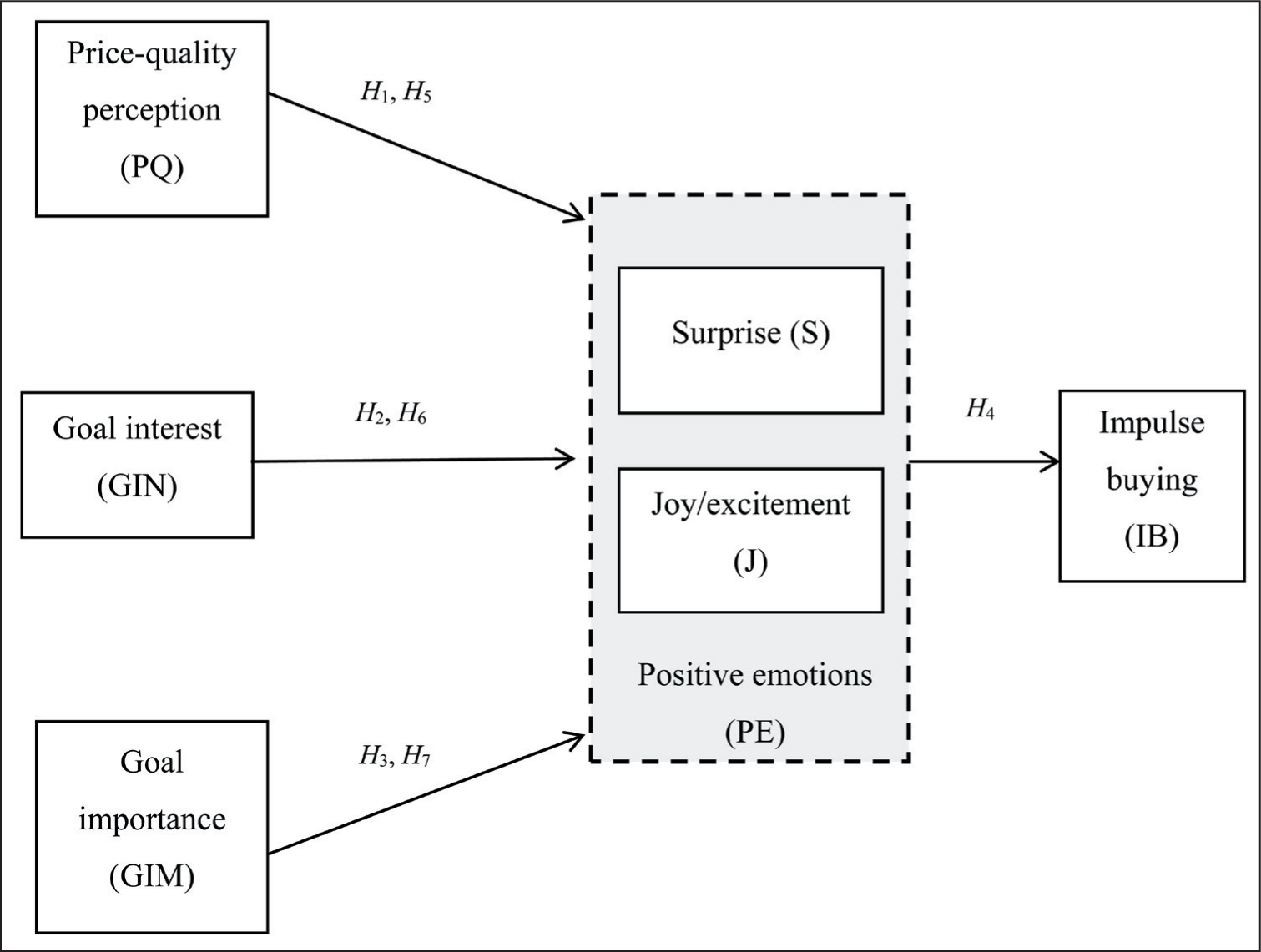
The conceptual model of this study is presented in Figure 1.
Price–Quality Perception and Positive Emotions
Price–quality perception refers to consumers’ judgement of a product’s quality based on its price cues (Lichtenstein et al., 1993). This attribute is influenced by self-perception, derived from attribution theory, and impacts attitude change (Garretson et al., 2002; Zgolli, 1999). Price–quality perception has been extensively studied in relation to product purchases (Dickson & Sawyer, 1990; Ozen & Kaya, 2013). Consumers equate price–quality perception with value perception, as price indicates the monetary sacrifice made to purchase a high-quality product (Campo & Yagüe, 2008). Furthermore, extant studies perceive price quality to be significantly attributed to positive emotions (Bennett et al., 2021; Boyle & Lathrop, 2009; Setiawan & Sri Ardani, 2022). Specifically, past studies have attributed positive consumer emotions with price quality from the perspective of celebrity-sponsored products (Bennett et al., 2021) and sales promotion technique preferences (Jee, 2021).
However, societal norms may influence consumers to perceive spending more than necessary as undesirable (Shimp & Kavas, 1984). When discounts are offered, consumers are excited to receive a discount from the original high price, leading to positive evaluations as they make a reduced monetary sacrifice (Huang et al., 2014). Price–quality perception also correlates positively with enjoyment (Somervuori & Ravaja, 2013). Based on the above, the following hypothesis is proposed:
H1: There is a significant relationship between price–quality perception and positive emotions.
Goal Interest, Goal Importance and Positive Emotions
Nyer (1997) defines goal relevance with two dimensions: goal interest and goal importance. Goal interest pertains to an individual’s personal appeal to a stimulus, motivating high levels of attention and coping with events that elicit positive emotions like enjoyment (Scott et al., 2017). Marketers must assess goal interest in discounts, considering consumers’ selective attention towards their needs and wants amidst numerous marketing stimuli (Chiu & Choi, 2018). Previous studies link goal interest to positive emotions such as delight and satisfaction in consumer behaviour (Le et al., 2020; Ma et al., 2013), indicating that stronger interest leads to more intense emotions.
Goal importance, on the other hand, evaluates the essential value of an event in relation to relevant goals (Nyer, 1997). In the context of discounts, consumers assess goal importance based on the financial benefits, aiming to reach desired financial states by spending less (Ma et al., 2013). Past research has explored goal importance in various contexts, including consumers’ delight, satisfaction and purchase experiences (Le et al., 2020; Ma et al., 2013). Scott et al. (2017) propose that the value or desirability sought affects the appraisal of goal importance and emotion intensity. Expectations of achieving more valuable gains intensify emotions and trigger coping behaviour. In this study, consumers are likely to experience positive emotions if they achieve their goals through discounts while shopping. Therefore, the study proposes the following hypotheses:
H2: There is a significant relationship between goal interest and positive emotions. H3: There is a significant relationship between goal importance and positive emotions.
Positive Emotions and Impulse Buying
Positive emotions are the experience of physiological arousal felt by consumers in the form of joy and surprise (Le et al., 2020). According to Moors et al. (2013), emotions are more than just an automatic response to a stimulus; they are the outcome of subconscious evaluation based on several dimensions such as goal interest and goal importance. The incident emotions from the evaluations lead to subsequent behaviour which are often uncontrolled. Prior studies have established consumers’ positive emotions as potent internal triggers for impulse buying (Andani & Wahyono, 2018; Lo et al., 2016; Park & Kim, 2008). Therefore, impulse buying acts as the coping mechanism undertaken by consumers to manage the emotion-evoking situation. Within the discount sales promotion technique, the effects of such promotion on impulse buying lies on evaluation of factors related to the discount, which resulted in the formation of positive emotions and led to behavioural intentions (Andani & Wahyono, 2018).
Extant literatures have explored the mediating role of positive emotions (Chauhan et al., 2023; Liu et al., 2022). Retailers use promotional activities to establish shopping emotions and influence impulse buying (Soelton et al., 2021). When consumers encounter such promotional activities, like discounts, they experience positive emotions that drive them to make sudden impulsive purchase decisions (Suhud & Herstanti, 2017). Thus, the following hypotheses are proposed:
H4: There is a significant relationship between positive emotions and impulse buying. H5: Positive emotions mediate the relationship between price–quality perception and impulse buying. H6: Positive emotions mediate the relationship between goal interest and impulse buying. H7: Positive emotions mediate the relationship between goal importance and impulse buying.
Methodology
This study utilised a survey questionnaire to investigate the causal relationships proposed in the conceptual framework. The survey employed Likert scales, ranging from ‘(1) strongly disagree’ to ‘(7) strongly agree’, to measure respondents’ perceptions of the advertisements and related items. The research instruments for the survey questionnaire were selected from previous studies on sales promotion. To capture utilitarian consumption, price–quality perception was chosen (Jee, 2021). For hedonic consumption, items on goal interest, goal importance and positive emotions were adopted from a study by Le et al. (2020) to explain the mediating effect between discount promotions and impulse buying. To assess consumers’ impulse buying behaviour, items were adapted from studies by Hayat et al. (2020) and Parsad et al. (2019). Each measure demonstrated composite reliability values above 0.700 and validity values above 0.500, indicating their suitability for the study.
The survey questionnaires were distributed online over all of the major cities in Indonesia. As one of the countries which has the largest and fastest growing digital economy, many Indonesian consumers have experienced shopping through e-commerce and encountered different promotional tools, especially price discounts. This fulfilled the qualifications for respondents to have made a purchase with the use of sales discount promotion. A total of 300 responses 1 were received. However, 49 responses were excluded due to incomplete answers, straight-lining behavior, or failing attention-check questions. As a result, 251 completed and valid questionnaires were retained for analysis, resulting in a valid response rate of 83.7%. This rate exceeds the commonly accepted threshold for survey research in the social sciences (Nulty, 2008). Respondents had to reflect on a past shopping experience where they encountered a discount on their purchase. This is to further capture real-world consumer experiences and buying decision process. Data collection took place from May 2022 to June 2022, using a stratified random sampling method to distribute online survey questionnaires. Due to location restrictions and safety measures required during the COVID-19 pandemic, there was no physical interaction during data collection, whilst adopting online surveys allowed for a higher response and completion rate (de Rada & Domínguez-Álvarez, 2014). Respondents were approached through social media and provided with a link to access the questionnaire on Survey Monkey.
Characteristics of Sample
A majority of respondents were female (57.8%), of which most were in the age range of 18–25 years (73.3%). Most respondents were tertiary educated, with 50.6% acquiring a minimum undergraduate degree, where a majority of respondents were self-employed (16.3%) and private-employed (42.2%) with a monthly average income of 4.999.999 Indonesian Rupiah and below (69.7%).
Data Analysis Technique and Procedure
The study employs partial least squares–structural equation modelling (PLS-SEM) to test various direct and indirect path relationships. Both measurement and structural model assessments are presented using PLS-SEM analysis (Hair et al., 2017). To identify multivariate outliers with extreme values, Mahalanobis distance (D2) was utilised (Tabachnick & Fidell, 2007), resulting in the removal of a single outlier from the data set.
Findings
Manipulation Checks
To identify common method bias, Harman’s single-factor test (Jordan & Troth, 2020) was conducted. The test revealed one factor with a loading lower than the 50.0% threshold, as suggested by previous research (Kock et al., 2021). Moreover, no correlation between the different constructs exceeded the cut-off point of 0.900, with the highest correlation found between goal interest and positive emotions at 0.821 (Bagozzi et al., 1991). Consequently, no common method bias was detected in the data collection process.
Assessment of Measurement Model
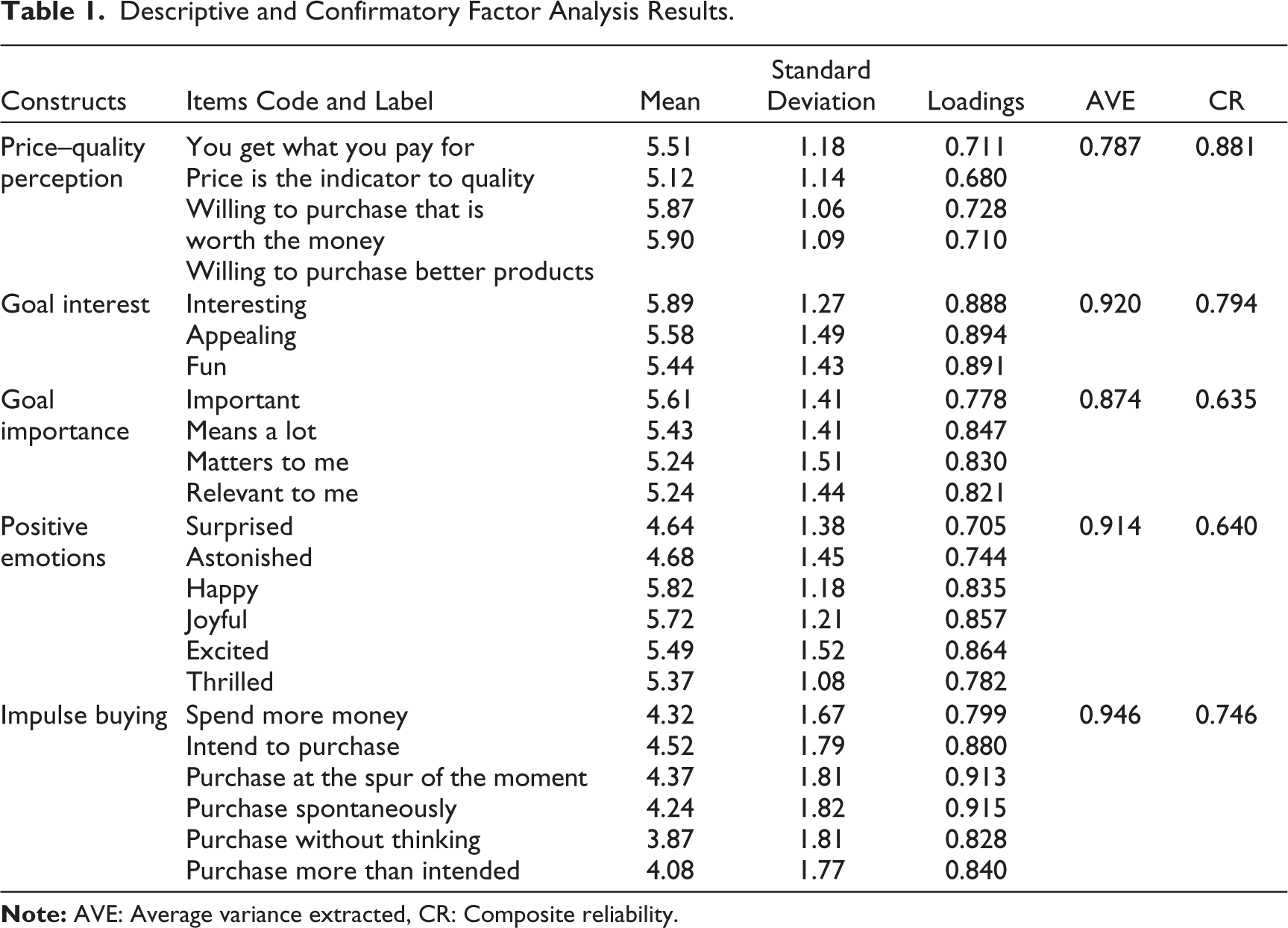
Table 1 depicts all the criteria for factor loadings, composite reliabilities (CR) and average variance extracted (AVE) (Fornell & Larcker, 1981). All the standardised factor loadings in the measurement model were above the accepted threshold at 0.70, which illustrates an adequate reliability level (Hair et al., 2017). Composite reliability for all constructs falls between 0.787 and 0.946, thus establishing satisfactory to good internal consistency reliability within these constructs (Hair et al., 2019). Convergent validity was further calculated using AVE, where the calculated mean value of squared loadings for all items measuring the construct was above 0.500, which explained more than 50.0% of the items’ variances (Hair et al., 2011).
Descriptive and Confirmatory Factor Analysis Results.
The discriminant validity was measured using Fornell and Larcker’s criterion (Fornell & Larcker, 1981) and the heterotrait-monotrait (HTMT) ratio of correlation assessment (Henseler et al., 2015). In Table 2, the square root of AVE values for all constructs was higher than all correlation values with other constructs. Thus, this study met the tests of discriminant validity under the Fornell and Larcker criterion (Fornell & Larcker, 1981).
Fornell–Larcker and Heterotrait-Monotrait (HTMT) Criterion Results.
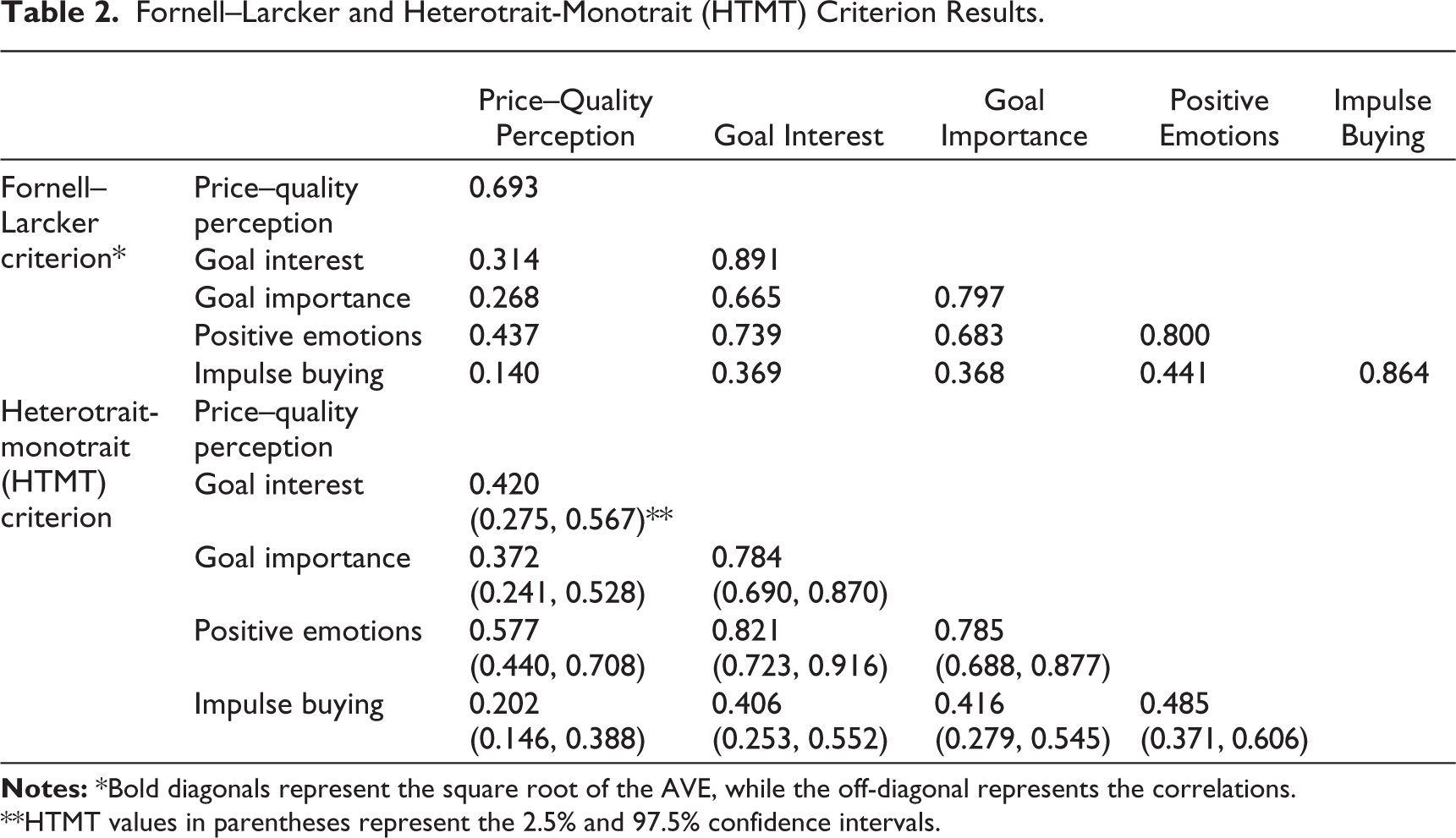
**HTMT values in parentheses represent the 2.5% and 97.5% confidence intervals.
The HTMT ratio of correlation assessment was adopted to provide greater insights into the discriminant validity of the constructs. First, the HTMT ratio is compared to threshold values (<0.900, HTMT0.90 for conceptually similar constructs; <0.850, HTMT0.85 for conceptually distinct constructs). As seen in Table 2, the values within the HTMT ratio meets the criteria required as the values are below 0.850 and 0.900, with the highest HTMT ratio of 0.821. Second, Table 2 shows the HTMT inference that analysed the confidence interval (2.5%, 95.0%) via bootstrapping and compared with the threshold value (<1.000, HTMTInference) (Henseler et al., 2015). As such, no values under bootstrapped confidence interval exceeds 1.000. HTMT ratio and HTMT inference have showed that the constructs under study have established discriminant validity.
Assessment of Structural Model
With the explanatory and predictive power of the model established in the earlier section, subsequently, the study proceeds to evaluate the statistical significance and relevance of path coefficients for the hypotheses. As observed in Table 3, price–quality perception (β value = 0.206, t value = 3.881, p value = .000), goal interest (β value = 0.460, t value = 6.781, p value = .000) and goal importance (β value = 0.321, t value = 5.819, p value = .000) have a positive and significant relationship on positive emotions. Positive emotions (β value = 0.441, t value = 8.046, p value = .000) also have a positive and significant relationship on impulse buying. The present study further indicates that positive emotions mediate the relationship between price–quality perception (β value = 0.091, t value = 3.896, p value = .000), goal interest (β value = 0.231, t value = 4.800, p value = .000), goal importance (β value = 0.142, t value = 4.585, p value = .000) and impulse buying.
Structural Model Assessments.
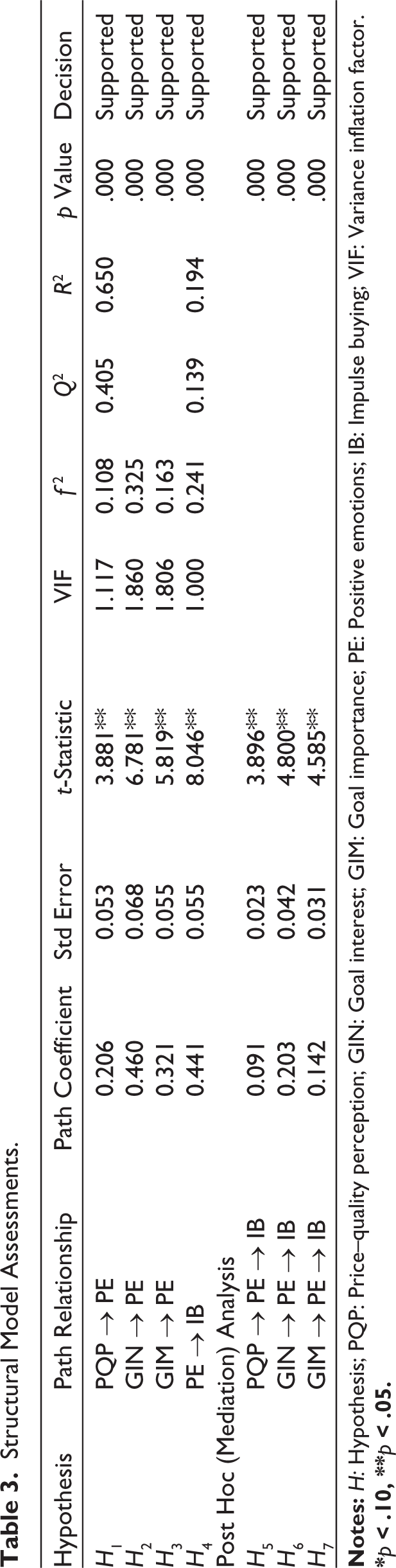
*p <.10, ** p <.05.
The causation between independent and dependent constructs is further indicated via the effective size (f2) (Schirmer et al., 2018). The interpretation of f2 results is adopted from Cohen (1988), where values are classified into small, medium and large (0.020, 0.150 and 0.350) categories, respectively. Table 3 establishes that price–quality perception (f2 = 0.108) has a small impact on positive emotions, whereas goal interest (f2 = 0.325) and goal importance (f2 = 0.163) have a medium impact on positive emotions (endogenous construct). In addition, positive emotions also have a medium impact (f2 = 0.241) on impulse buying (endogenous construct).
In addition, the predictive capability of the structural model under investigation was also assessed through the blindfolding procedure. The procedure includes the assessment of both Stone–Geisser’s predictive relevance (Q2) estimates and coefficient of determination (R2) values (Hair et al., 2014; Jee, 2021). Price–quality perception, goal interest and goal importance (exogenous constructs) have small predictive relevance over positive emotions (endogenous constructs, Q2 = 0.405), while positive emotions (exogenous construct) have a small predictive relevance over impulse buying (endogenous constructs, Q2 = 0.139). From the explanatory power, 40.5% of variances in positive emotions can be explained by its exogenous constructs, while 13.9% of variances in impulse buying can be explained by positive emotions (Cohen, 1988). Both endogenous constructs (attitude and purchase intention, Q2 > 0.000) have an acceptable predictive accuracy level.
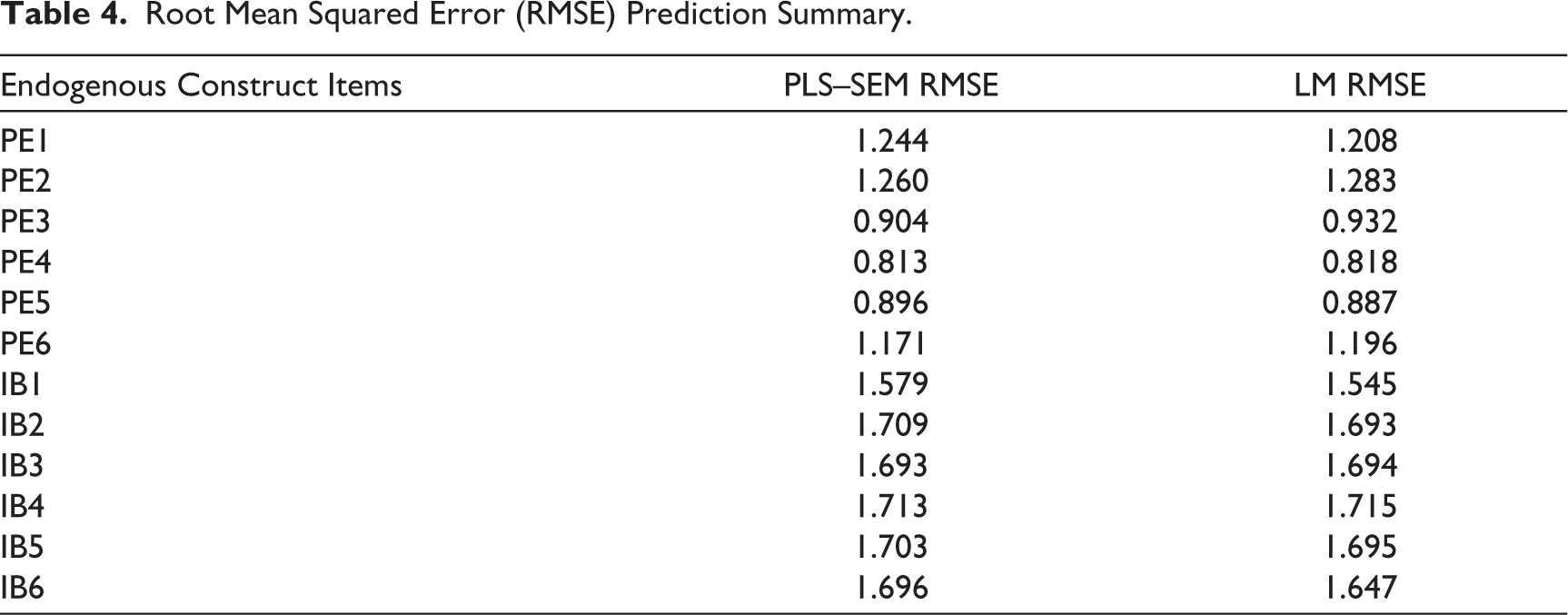
The study pursues PLS predict to evaluate the model’s out-of-sample predictive power (Hair et al., 2019). Given the small sample size deployed, the study adopted procedures outlined by Shmueli et al. (2016) and interpreted using the comparison of root mean squared error (RMSE) between PLS-SEM analysis and benchmark prediction generated via linear regression model (LM) (Hair et al., 2019). As indicated in Table 4, the PLS-SEM RMSE for positive emotion (i.e., PE1 and PE5) is lower than the LM RMSE for positive emotion (i.e., PE2, PE3, PE4, and PE6), which shows that the model has a moderate to strong predictive power for the positive emotion construct. However, the PLS-SEM RMSE for impulse buying (i.e., IB1, IB2, IB5, and IB6) is higher than the LM RMSE for impulse buying (i.e., IB3 and IB4), which indicates that the model has low predictive power for the impulse buying construct. When the majority of PLS-SEM RMSE values are lower than the LM RMSEs, the model is considered to have high predictive relevance, and vice versa. In this case, the model demonstrates moderate to strong predictive power for positive emotion but low predictive power for impulse buying.
Root Mean Squared Error (RMSE) Prediction Summary.
Discussion
The discussion of this study centres on consumers’ impulse buying behaviour concerning the use of discount sales promotion techniques. The findings emphasise that consumer purchase decisions are influenced by factors such as perceived quality, values and emotional appeal associated with the discount sales promotion technique being studied.
The findings reveal that price–quality perception, goal interest and goal importance have a positive impact on positive emotions in the context of discount sales promotion techniques. The findings (refer to Table 3) reveal that goal interest is the most influential factor, explaining 46.0% of positive emotions, followed by goal importance at 32.1% and price–quality perception at 20.6%. This suggests that in the context of discount sales promotions, consumers are more driven by their intrinsic motivations (i.e., personal goals and interests) rather than by the perceived functional value of the discounted product. This aligns with impulse buying behaviour, where hedonic factors play a more dominant role as compared to utilitarian considerations (Soomro & Habeeb, 2024).
These variables show incremental effects on positive emotions related to discount sales promotions. Furthermore, positive emotions are found to influence impulse buying when discount sales promotion techniques are employed. Additionally, positive emotions are shown to mediate the links between endogenous constructs (price–quality perception, goal interest and goal importance) and impulse buying when discounts are used. These findings are consistent with prior empirical studies in consumer buying behaviour (Somervuori & Ravaja, 2013), indicating that Indonesian consumers generally perceive price information as an indicator of quality or sacrifice in their purchases, although in some cases, impulse buying decisions can occur regardless of their perceptions of price and product quality.
Price–quality perception affects positive emotions towards discounts as consumers perceive higher benefits. By utilising discounts for high-priced products, consumers not only receive desired high-quality products but also perceive monetary savings from the original price. Despite expecting better quality when spending more, societal influences suggest that spending more than what is perceived as enough is not considered a good buy (Shimp & Kavas, 1984). Hence, using discounts that offer the most monetary value while maintaining product quality leads to higher satisfaction with the purchase.
These findings confirm that Indonesian consumers, particularly in a collectivist community, highly prefer utilising discounts to achieve common goals (Ndubisi & Chew, 2006). When the benefits of discounts align with consumers’ goals (i.e., goal interest and goal importance), they feel higher positive emotions, which further drives their inclination to purchase the products. This supports the CAT, which indicates that the relevance of stimuli to one’s interest influences positive emotions in satisfying needs and wants (Moors et al., 2013). As more consumers show a common interest in purchasing promotional products, it will make them more attracted and prone towards promotions and increase the likelihood of impulse purchases.
As observed in the findings, positive emotions positively influence impulse buying behaviour. Consistent with previous studies by Lo et al. (2016) and Park and Kim (2008), positive emotions play a significant role in impulse buying, meaning consumers are more likely to make impulsive purchases when they feel positive emotions towards discount promotions. This behaviour is fostered by positive evaluations of higher price–quality perception, goal interest and goal importance. Marketers should focus on these factors to evoke positive emotions among consumers, promoting pleasure and arousal, and utilise these insights to design marketing strategies incorporating discounts to boost short-term sales.
The findings also align with previous studies that evaluate the mediating effect of positive emotions (Le et al., 2020; Ma et al., 2013). Theoretically, this mediation effect aligns with cause–effect interactions within the CAT model (Ma et al., 2013). By incorporating appraisal processes and price–quality perception as the utilitarian variable, this study enhances CAT and attribution theory by recognising that consumer responses to discounts involve emotional appraisals, rational justifications and value assessments (Zielke et al., 2022). Additionally, positive emotions contribute to the appraisal process of consumer purchasing decision-making related to discount utilisation, making decision-making and judgement easier and driving consumers towards coping behaviours, such as deliberate purchases (Song et al., 2021). These attitudes evolve and change based on different stimuli triggered by the cognitive appraisal process, posing challenges for marketers to adapt to the dynamic nature of consumer behaviour in response to market developments, lifestyle changes and emerging competitors.
Theoretical Contributions
From a theoretical perspective, this study introduces an innovative research framework that builds upon existing studies on discount sales promotion. It acknowledges the significance of the CAT and attribution theory in understanding consumer behaviour (Le et al., 2020; Lim & Yazdanifard, 2015). However, this thesis takes a step further by incorporating appraisal processes and an additional utilitarian variable, price–quality perception, within the domain of discount promotions. This expanded framework enhances the explanatory power of both theories, providing a nuanced understanding of how consumers evaluate and justify discount-driven purchases. It advances consumer behaviour research and establishes a foundation for future studies on price perception, promotional effectiveness and impulse buying.
A past study conducted by Ittaqullah et al. (2020) found that consumers begin by evaluating the relevance of their goals (primary appraisal) and justify their purchases based on their perception of price and quality (secondary appraisal). This reinforces the idea that hedonic motivations, such as goal interest and goal importance derived from the shopping experience, can strongly influence consumers’ emotions positively, further elevating their likelihood of making impulse buying decisions. Thus, when a deal is seen as valuable, it elicits emotions such as joy, excitement and surprise, which further encourage impulsive behaviour (Ngo et al., 2024). This appraisal process clarifies how consumers instinctively respond to discounts and promotions. The findings demonstrate that integrating these elements into CAT and attribution theory leads to new insights, distinct from previous studies conducted within separate theoretical frameworks.
Furthermore, the study addresses a gap in the application of the CAT to consumer behaviour, particularly in identifying coping behaviour resulting from emotions. While the CAT model has primarily been used to explain consumer satisfaction and delight in consumption experiences (Cohen et al., 2014), this research contributes to the existing body of knowledge associated with CAT by successfully applying it to phenomena such as purchase intention (Le et al., 2020) and impulse buying (Chih et al., 2012). This integration provides a comprehensive framework for understanding impulse buying driven by discounts, effectively bridging the domains of emotional, cognitive and value-based decision-making.
Moreover, previous studies have mainly focused on impulse buying by looking at either emotional evaluations or attribution justifications separately, missing the opportunity to understand how consumers concurrently evaluate the significance, relevance and perceived value of discounts prior to making impulsive purchases (Burton et al., 2019; Rodrigues et al., 2021). By understanding these dynamics, marketers can create strategies that cultivate positive emotions and stimulate impulse purchases through carefully designed promotional stimuli. These findings offer a basis for future research and extend the potential applications of the CAT model to study other coping behaviours.
Consistent with the role of justification in observed effects (price–quality perception, goal interest, goal importance and positive emotions), the influence of discount promotions on consumer impulse purchases is attenuated under certain conditions: (a) when the discount promotion is contingent on product availability, (b) when purchases made using discount promotions are intended for self-consumption and (c) when consumers can relate to the perceived quality, values and emotional appeal associated with their purchases.
Managerial Contributions
The incorporation of both direct and indirect conditions of cognitive appraisal and positive emotions on impulse buying using discount sales promotion techniques in consumer purchases yields valuable insights for marketers and policymakers seeking to optimise the effectiveness of such promotions (Suhud & Herstanti, 2017). Understanding the contextual factors that influence consumers’ responses to mobile discounts allows companies to tailor their promotional strategies strategically, aiming to elicit stronger positive emotions and encourage impulse buying behaviour (Park & Kim, 2008).
This study sheds light on the intricate interplay between consumers’ cognitive appraisals, emotions and coping behaviours in the context of mobile discounts, contributing to a comprehensive understanding of consumer decision-making processes within the e-commerce realm. Consumers are more likely to experience positive feelings when they encounter discounts due to perceived positive cognitive appraisal attributes, such as goal interest, goal importance and price–quality perception, which, in turn, influence their emotions and lead to impulsive purchase decisions during shopping (Suhud & Herstanti, 2017). Hence, it is crucial for marketers and retailers to focus on enhancing the appeal of sales promotions by tapping into consumers’ personal aspirations and interests rather than emphasising only price reductions or product quality. For example, time-limited offers or exclusive promotions (e.g., Black Friday and Boxing Day sales) that evoke urgency and excitement can be particularly effective in stimulating impulse purchases. Additionally, incorporating gamification elements—such as reward-based discounts or interactive promotions (e.g., ‘buy one, get an additional discount on the second item’)—can further enhance the hedonic appeal of shopping. These strategies not only make the shopping experience more engaging and enjoyable but also strengthen the emotional connection between consumers and their purchasing decisions, ultimately increasing the likelihood of impulsive buying behaviour. By understanding the underlying factors that drive impulse buying, companies can design promotions that resonate with consumers’ emotional responses and, ultimately, enhance the effectiveness of their sales strategies (Park & Kim, 2008).
Limitations and Future Research
The present study pioneers the integration of CAT and attribution theory to explain consumers’ impulse buying behaviour in the context of discount sales promotion techniques. While CAT has been applied in previous studies, its integration with other theories, as demonstrated in this research, is a novel approach that offers fresh insights (Le et al., 2020). These findings call for further articulation and development of a holistic integrated model, and future research could explore the inclusion of other moderating effects such as consumer trust and product category to provide a more comprehensive understanding of the antecedents-to-consequences constructs within the cognitive appraisal process. Future studies can also explore the inclusion of the theory of reasoned action or the theory of planned behaviour to provide a more comprehensive understanding of the antecedents-to-consequences constructs within the cognitive appraisal process.
In this study, goal interest and goal importance from CAT were utilised to examine hedonic consumption, influenced by incidental emotions (Polyportis et al., 2020), while price–quality perception from attribution theory was employed as the sole utilitarian consumption indicator. Since goal interest and goal importance primarily pertain to individual motivations, the connection between collectivist values and these constructs seems less direct. Future research could explore whether collectivist tendencies influence purchasing behaviour through alternative mechanisms, such as social norms, peer influence or group-based decision-making (Procter et al., 2019), rather than through individual goal relevance and perception of quality.
It is important to acknowledge that this research focused solely on mobile discount sales promotion techniques in the specific market context of Indonesia, as it is the most preferred digital promotion among Indonesian consumers. However, this limited scope constitutes a constraint. Future research should consider exploring other monetary and non-monetary-based digital sales promotion techniques to understand their different effects on consumer behaviour. By expanding the scope of study to encompass a variety of sales promotion techniques, a more robust understanding of their unique benefits can be achieved. Additionally, incorporating a cross-cultural perspective could provide valuable insights into how consumer responses to digital sales promotions differ across markets (lower-middle income versus high-income countries) (Alim et al., 2023). For example, while Indonesian consumers may respond favourably to mobile discount promotions, consumers in other high-income countries—such as Australia—might prioritise loyalty-based incentives or experiential rewards. Exploring these cultural differences can help businesses tailor their promotional strategies more effectively.
Footnotes
Declaration of Conflicting Interests
The authors declared no potential conflicts of interest with respect to the research, authorship and/or publication of this article.
Funding
The authors received no financial support for the research, authorship and/or publication of this article.