



Abstract
This study aims to evaluate the empathic brand initiative during the COVID-19 pandemic in Indonesia and analyse the online sentiments toward the philanthropy of corporations, non-profits organisations, citizens and society. Sentiment analysis was conducted on related posts of 15 companies from March to June 2020 with varying preliminary times for each company as the first donor. To complete the perception, the authors conducted a focus group discussion (FGD). Research shows that medium size and small–medium enterprises, such as local cosmetic companies and budget hotel are the first donors, followed by large or multinational companies (MNCs). In contrary with previous research, public perception was not influenced by the amount and the time of giving but was impacted by communication strategies, the empathy of the brand itself, and the company behaviour before COVID-19 period. This research’s novelty is the emphatic communication model to create, maintain and protect a company’s reputation.
Introduction
During a disaster and pandemic, many organisations conduct a corporate social responsibility (CSR) to demonstrate how firms participate and care for each other. CSR, donation, social assistance and philanthropy trusted will positively impact their reputation. Prior research shows that stakeholders give a positive perception and are willing to support organisations providing large donations to the community (Chen et al., 2008; Olsen et al., 2003). Public perception of the company can be influenced by the amount and the time of donation (Gao & Hafsi, 2015). However, the speed of the company in responding to disasters is essential and rapid response to social needs is considered the original embodiment and concern for social needs. Meanwhile the slow response is hated because it is insensitive (Patten, 2008). Corporate giving in dealing with critical issues is an effective way to create value for businesses and communities. The organisation needs to do the CSR properly, but it is also equally important to spread the information on the media. In this competitive market, an organisation must grab adequate attention from their market through media advertising and approach, since it is proven to improve consumer behaviour towards its products or services (Sama, 2019).
Since the pandemic, big companies with excellent financial performance tend to be the first donors (first movers) and give large donations (Gao & Hafsi, 2015; Hoi et al., 2019). Moreover, in Asian countries, an organisation’s willingness to donate food or products to reduce the impact of crisis and pandemic also increases because of surplus food, supply chain efficiency, or other motives (Sert et al., 2018). Indonesia declared a national emergency on 29 February 2020 as COVID-19 rapidly spread, as the number of infected continues to increase every day. The COVID-19 pandemic creates a crisis communication towards the organisation, yet it allows a new social movement trend. The survey has shown that most Jakarta residents get pandemic information from social media instead of the authorised source, such as the government (LKSP, 2020). Digital platform and IoT have proved to be an important factor during COVID-19 pandemic, which not only served as a new way of communication but also helped reduce the impact of COVID-19 (Ajaz et al., 2021).
The emphatic initiative has included new approaches and moved from creative communication approach-based techniques, such as organisational impression management strategy, to influence the public’s perceptions by formulating social media as effective communication strategy (Zaharopoulos & Kwok, 2017). Another example is crowdfunding activities established by individual or social groups aiming at raising the necessary money online from a group of like-minded people supporting the cause or target social problems as a core concept of cultural citizenship (Zheng & Liu, 2017). Word of mouth encouraging particular goods and services, including changing attitudes with an emphatic and persuasive message, also help activities related to an individual’s desire to help a company (Yap et al., 2013).
This study will analyse the empathy initiatives from companies, institutions, NGOs and society as individuals during the pandemic in Indonesia and how the efforts positively impacted the business and economy and enhance the company’s reputation in the digital context. This study also aims to provide an overview of what factors affect people’s perception of empathy initiatives.
Literature Review
The scope of the literature review concerning empathy, reputation and philanthropy framed this study. Besides, this research also needs a thorough understanding related to the topics because practical corporate empathy is a unique and new phenomenon in Indonesia during COVID-19. The review emphasised on philanthropy theory and the case study discussed was based on Indonesian companies and institutions. Furthermore, the review added some condition about the pandemic, social media, Twitter and social media consumption during COVID-19 in Indonesia.
Empathy, Reputation and Branding
Empathy is an essential psychological phenomenon (Batson & Moran, 1999; Davis, 1983); caring in the form of empathy allows one to feel and respond to the emotions of others. The absence of empathy negatively affects both customers and the company as literature shows that the value of empathy can help reputation protection and branding (Allard et al., 2016; Baker, 2017; Windahl, 2017). Empathy also contributes to a better and gentler society (Turley & O’Donohoe, 2017). The benefits of empathy serve individuals, organisations, communities and spread to every level within the company. Empathy will activate a positive response from consumers who affect its branding (Allard et al., 2016). In contrast, negative word of mouth is expressed concerning a particular brand or company.
The characteristic of helping each other, caring and showing empathy during crisis becomes core and fundamental of some organisations, including a large organisation or small and medium-sized enterprise. In a pandemic situation, the business owners react and act in giving (Bin Amran et al., 2007), and in a difficult time, donation enhances the reputation and supports economic conditions (Peterson, 2016). Several Indonesian corporates immediately responded to the crisis by shifting their production to massive support, mainly to the healthcare workers and the public, integrating branding and CSR. The public usually sets high expectations for a business that performs responsibly, concerns environmental sustainability and addresses social issues (Hatch & Mirvis, 2010). Besides, surveys show that 55% of consumers are willing to pay more for products or services committed to positive social issues (Nielsen, 2014).
Previous research argued that branding and CSR practice is inseparable (Hatch & Mirvis, 2010). CSR activities are known as one of the company’s marketing strategies because they help strengthen the image, identity of the organisation and brand (Pérez-Ruiz & del Bosque, 2012). Moreover, CSR activities make the corporation more attractive to various stakeholders, such as employees, business partners, shareholders, governments and customers (Lacey & Kennett-Hensel, 2010). Further, this study explored the initiative as an emphatic movement towards society. Emphatics is conceptualised as performing specific actions that engage the full extent of stakeholders in corporate strategic philanthropy and other positive activities that may specifically help disadvantaged people in this pandemic.
Theory of Philanthropy
Philanthropic endeavours must be supported by philanthropy theory. Internal and external actors ask and resolve essential questions for understanding and play an essential role in improving performance with improving alignment across complex systems. Philanthropy theory emphasises how and why an organisation will use its resources to achieve its mission and vision. Philanthropy theory also provides an approach designed to help basics strategy, governance, operations and accountability procedures, and grant award profiles and policies with resources parallel or in line (Patton et al., 2015). Furthermore, philanthropy theory treats external systems as contexts that organisations need to understand to identify opportunities and leverage for impact. Philanthropy theory also examines how the internal core realises that organisation consists of these elements: history, assets, priorities, procedures. These four aspects provide opportunities and leverage to have an impact so that internal–external relations become a road map to add value to the organisation (Patton et al., 2015; Zeitoun et al., 2020).
Consumption, Buying Behaviour and Philanthropy Programme During COVID in Indonesia
The economics of several Indonesia’s trading partners contracted due to activity restrictions and lockdowns to control the spread of COVID-19. The highest growth during the pandemic was from the financial services and insurance business field, at 10.67% (Badan Pusat Statistik, 2020). Approximately 60% of consumers have recently experienced a reduction in household income and savings, resulting in them reducing their discretionary spending, choosing new habits for saving money and substituting cheaper brands. Earlier research in Indonesia concludes that during the pandemic, there are changes in consumption and buying behaviour, showing a decrease of daily need from 46.9% in 2019 to 36.5% in 2020. Another insight is about the spending on corporate donations in Indonesia that increases to 7.1% compared to the previous year, which was 4.5%.
The Government of Indonesia obligates companies to donate during disasters and pandemics, according to Law No. 40 of 2007 and Government Regulation No. 47 of 2012. The regulation plays a role in regulating companies to share benefits with the local community and the community in general. At the time of the pandemic, many companies were making donations to the community or humanitarian organisations. It increase the companies’ contribution that allocates CSR funds, medical aid and health services, and food aid to the people and communities donation.
Sentiment Analysis for Reputation and Branding
The internet age has changed the way people express their views, emotions, opinions and sentiments. To extract useful information, the study uses sentiment analysis, an analysis based on people’s sentiments related to emotions, reviews and opinions (Shabaz, 2019). Sentiment analysis or opinion mining is applying natural language processing, computational linguistics and text analysis to identify and classify subjective opinions in a source of both documents and sentences (Luo et al., 2013). Sentiment analysis also analyses one’s perception of an issue or event. Information about reputation can be obtained through direct contact with consumers, but information can also be obtained through indirect reports, such as newspapers, magazines, radio, television news and online media (Hornikx & Hendriks, 2015). Sentiment analysis is managed by classifying algorithm. Understanding the qualitative dimension of communication on social media is very useful in critical situations, such as a natural disaster to pandemics currently occurring, as social media is a powerful tool for personal communication about their perception of goods and services (Vyas et al., 2020). The development of the internet allows rapid, widespread and easy dissemination of information, which is utilised by the mass media to meet the needs of the public for information.
eWOM is defined as informal communication between citizens about products, services or organisations carried out on electronic media (Litvin et al., 2008). Jansen et al. (2009) has observed Twitter to be the electronic word of mouth (eWOM). In particular, the study intends to analyse sentiment related to corporate philanthropy reputation and branding. Moreover, sentiment analysis is useful for reputation management/brand monitoring, market research, competitor analysis, product analytics, customer analysis, customer support (Baracho et al., 2014; Dhaoui et al., 2017; Kamal et al., 2016; Neri et al., 2012; Rambocas & Gama, 2013; Rambocas & Pacheco, 2018).
Methodology
Conceptual Framework Development
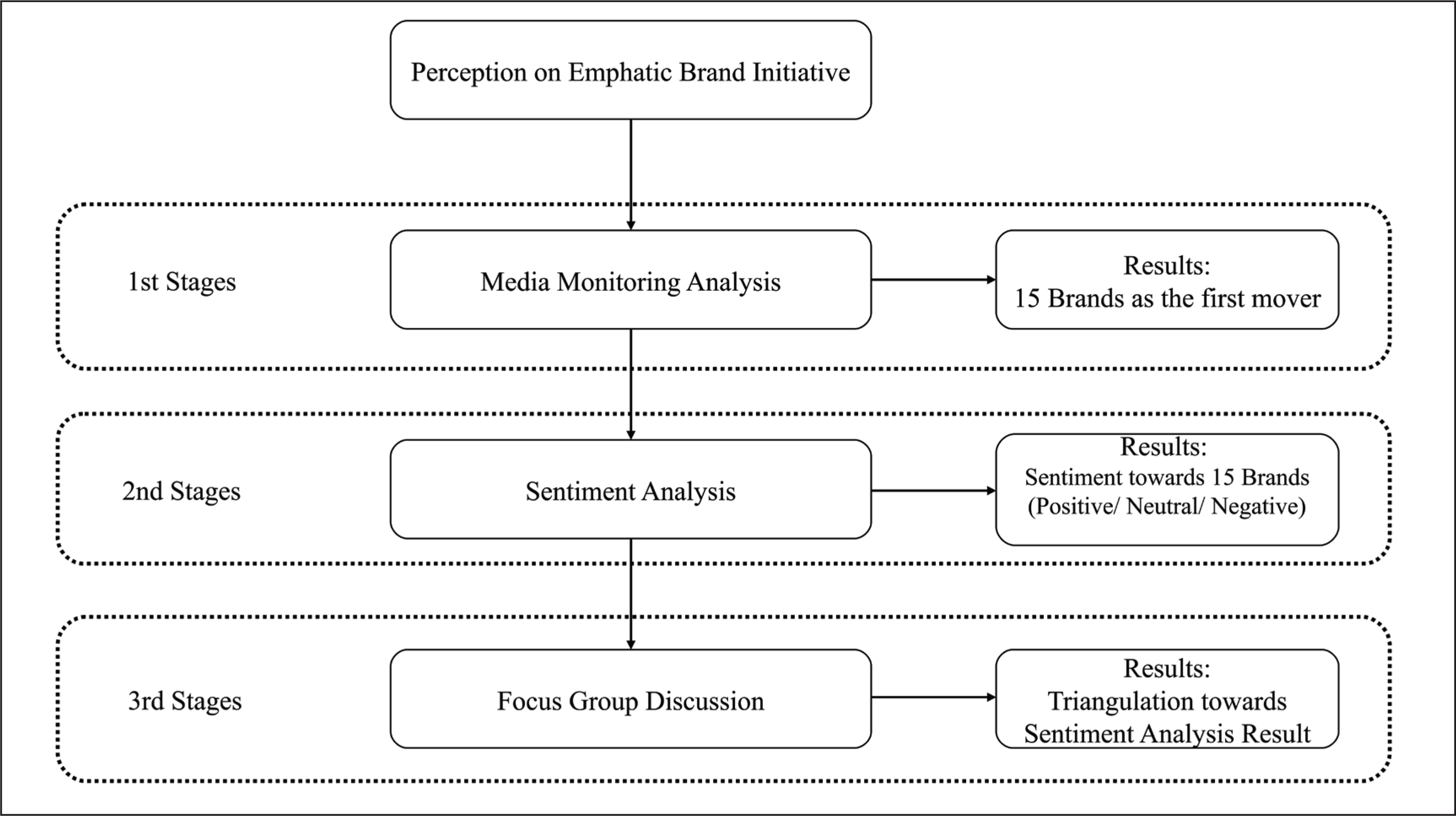
Based on previous studies, philanthropy can increase and generate several profits for corporations. Surveys examining the general public’s attitudes and intentions show that corporate charitable donation can produce tangible benefits for companies, especially in reputation (Liket & Simaens, 2013). Earlier research also explains the corporate aspect of philanthropy from the perspective of the number and time of previous natural disasters (Adams & Hardwick, 1998; Gao & Hafsi, 2015; Sánchez, 2000). The relationship between corporate philanthropy and its brand may be more closely investigated through direct analysis of consumers. The research was conducted through three stages: (a) Media monitoring analysis; (b) Sentiment analysis; and (c) Focus group discussion (FGD).
Media Monitoring Analysis
Media monitoring analysis is the process of reading, viewing, listening to online and offline media content. The data is then identified and analysed, especially content containing ‘keywords’ suiting the needs of the company. The first step is media monitoring analysis compiled from print media sources, online media (local and national); this stage is done to examine the brand or company that conducted philanthropy during the pandemic. The insights are based on query or keyword in conversations about social assistance, donations, CSR and philanthropy during the pandemic. The data collected was 11,040 posts (n = 11,040) from March to June 2020. This data generated 15 brands, consisting of companies, NGOs, startups and communities as the first movers of philanthropy. Furthermore, sentiment analysis was conducted to analyse public perception related to the 15 brands found as the first mover.
Sentiment Analysis
Sentiment analysis is a part of natural language processing that focusses on the big data analysis using the online web content created by the users of different platforms on internet (Kumar & Garg, 2019). Nowadays, the most common communication tool for an organisation is no longer the website but the social media because it has more feature to help organisations to reflect on the image and brand of their organisation (Zaharopoulos & Kwok, 2017). This study selected 15 groups, including companies, NGOs and startup companies that are first donors (first movers). Sentiment analysis is the process of using text analytics to obtain various data from the internet and various social media platforms. The goal is to get opinions from users on the platform. In the study, sentiment analysis was conducted on the social media most widely used in Indonesia, namely Twitter, with 55 million registered people. In many cases, tweets are shared quickly and reach many citizens, especially during a crisis.
The study uses Twitter data and perform sentiment analysis that work better through cloud, then analyses the data using keywords (Shabaz & Garg, 2019). Twitter search is based on keyword trends in Indonesian language (Bahasa): [‘Dana Desa’ (village fund) or ‘Bantuan Sosial’ (donation) or ‘BLT’ or ‘Bantuan Sosial Langsung Tunai’ (cash direct social assistance) or ‘Dana Sosial’ (social fund) or ‘Bantuan Pra Kerja’ (pre-work help) or ‘Bantuan Pangan Non Tunai’ (non-cash food assistance) or ‘Bantuan Non-tunai’ (non-cash assistance) or ‘Bantuan Tunai’ (cash assistance) or ‘Bantuan Kebutuhan Sehari-hari’ (daily needs assistance) or ‘Bantuan Dana’ (financial assistance) and ‘COVID-19’ or ‘Corona’ or ‘COVID19’ or ‘Pandemi’ (Pandemic) or ‘Wabah’ (Disease)]. To find relevant information, topic detection is done using Bahasa language and separated from Malay. This research collect data from March 2020 to September 2020. The total data conversation about donation in media was 11,040 posts and 8,852 Twitter posts, with varying preliminary times for each company as the first donor. The intensity of the online data related to social assistance can be said to be volatile. The research was conducted using machine learning (ML) and natural language processing (NLP) approaches.
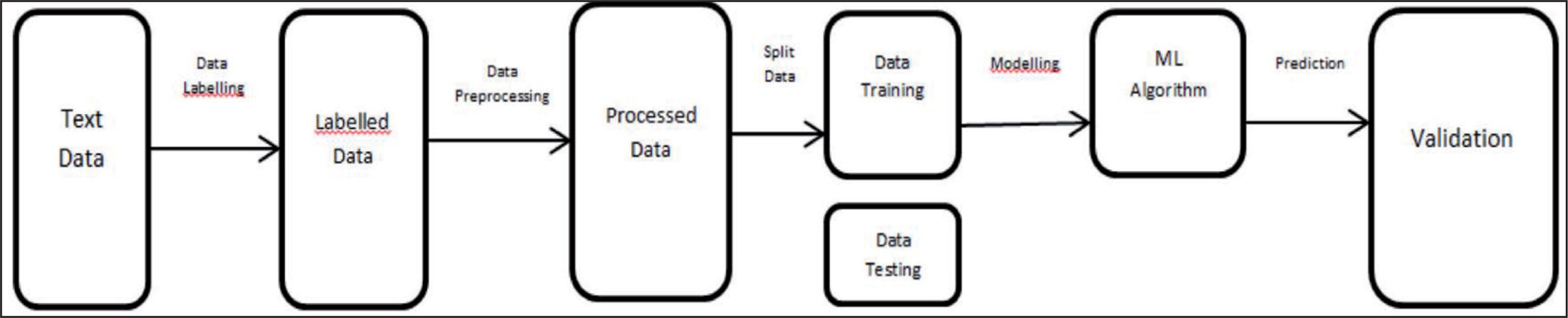
Figure 2 shows the framework for sentiment analysis data crawling. In this process, the company’s data is the first donor based on the earlier date posting in a social media, followed by the analysis of public opinions on Twitter in a dataset containing various tweets. Classification of Indonesian tweets in which two special sub-tasks are performed—term frequency-inverse frequency document (TF-IDF) and Bahasa roots. They have used a dataset with three algorithms and performance has been evaluated based on three different information on the accuracy of precision, recall and F-measure metrics (Table 1). Precision measures the number of positive class predictions that are actually included in the positive class. Recall measures the number of positive class predictions made from all positive instances in a dataset. F-Measure provides a single score that balances precision concerns and recalls in one number. Using 12 topic tweets, the proposed algorithm for achieving high accuracy is by semi-supervised learning method.
Class-Wise Precision, Recall and F-Measure

The methodology in Figure 2 is implemented using the following steps.
Extract data from comments and posts using prepared keywords.
Perform random sampling of comments and posts of different individuals.
Conduct additional processing, such as removing links, emojis, special characters, HTML and references to people starting with ‘@’.
Propose automated rules labelling datasets based on positive, neutral and negative conversation, also hashtag. Positive sentiment is associated with joy, while negative messages are associated with emotions between anger, fear and sadness. Neutral sentiment is associated with flat emotions and tends to be impartial.
For data training, we used three different corpora from the Twitter messages in the experiment. For development and training, we use hashtag datasets (HASH), Corpus and emoticon data sets from
The process of data processing was done using machine learning and the data was then validated. This process used the crawling technique in web scraper (Octoparse).
Focus Group Discussion
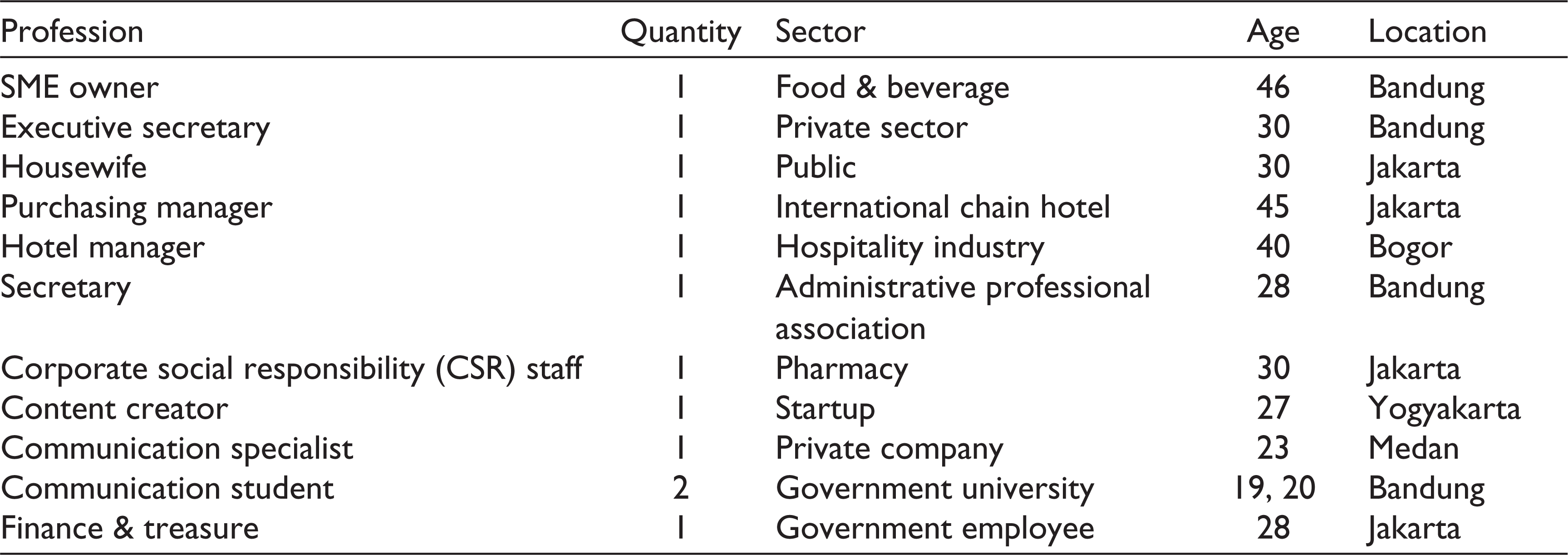
To complement the results of sentiment analysis and data triangulation, we conducted a FGD with several respondents who are part of society and follow philanthropy development in Indonesia. Respondents are also followers of official social media of the 15 samples selected from various sectors to obtain comprehensive results. They were all guided by several broad questions and themes that had been provided in advance to the interviewees and the FGD lasted for approximately two hours. First, the participants are asked about their perceptions and what they think of philanthropy programmes. Furthermore, researchers also present several snapshots of philanthropic programmes. Information from the results of the FGD are supplemented by several documents, such as journals, news and information from social media. The main purpose of this technique is to compare patterns appearing in empirical observations with predicted patterns based on theory. The FGD was conducted on 22 September 2020, utilising the virtual meeting; 12 participants attended the FGD. Table 2 shows FGD respondents.
FGD Respondents Information
Data Analysis
Validity and Reliability
Validity is conceptualised to the extent to which research can explore the desired information. Internal validity relates to the extent to which a study establishes a causal relationship with the purpose of research. Three strategies are carried out to improve internal validity, namely, (a) increasing the convergence of empirical evidence to match results and literature, (b) triangulation is carried out with information experts and academics to ensure the information obtained, (c) matching the results obtained with empirical theory and evidence (Christensen, 2006; Yin, 2009). External validity in qualitative research refers to the extent that the findings in a study can be generalised to other contexts (Christensen, 2006). In order to complement with the statistical data validation, this research implemented the triangulation using qualitative approach to validate each points of data and gathering in-depth conclusion.
Reliability pays attention to the entire process of collecting, analysing data, to the reasoning process used to produce conclusions (Alford, 1995). Research rehabilitation can be overcome by making the research process transparent, providing detailed information about methods, rules, procedures for collecting information and drawing conclusions. Detailed data processing information allows other researchers to understand and evaluate procedures. To improve research reliability, we disclose data sources, source identity, data interpretation, number of data retrieval, topics discussed in FGD and duration of FGD.
Results
Sentiment Analysis Result
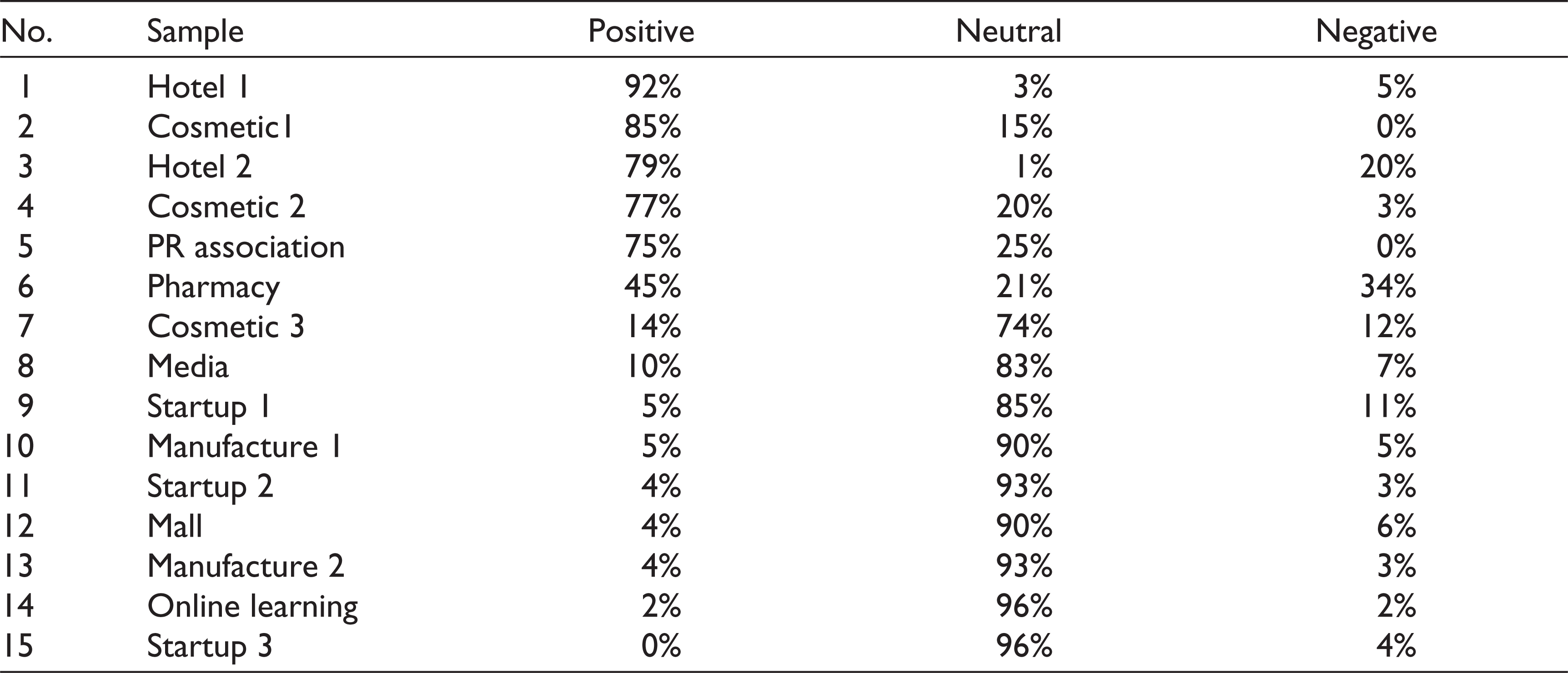
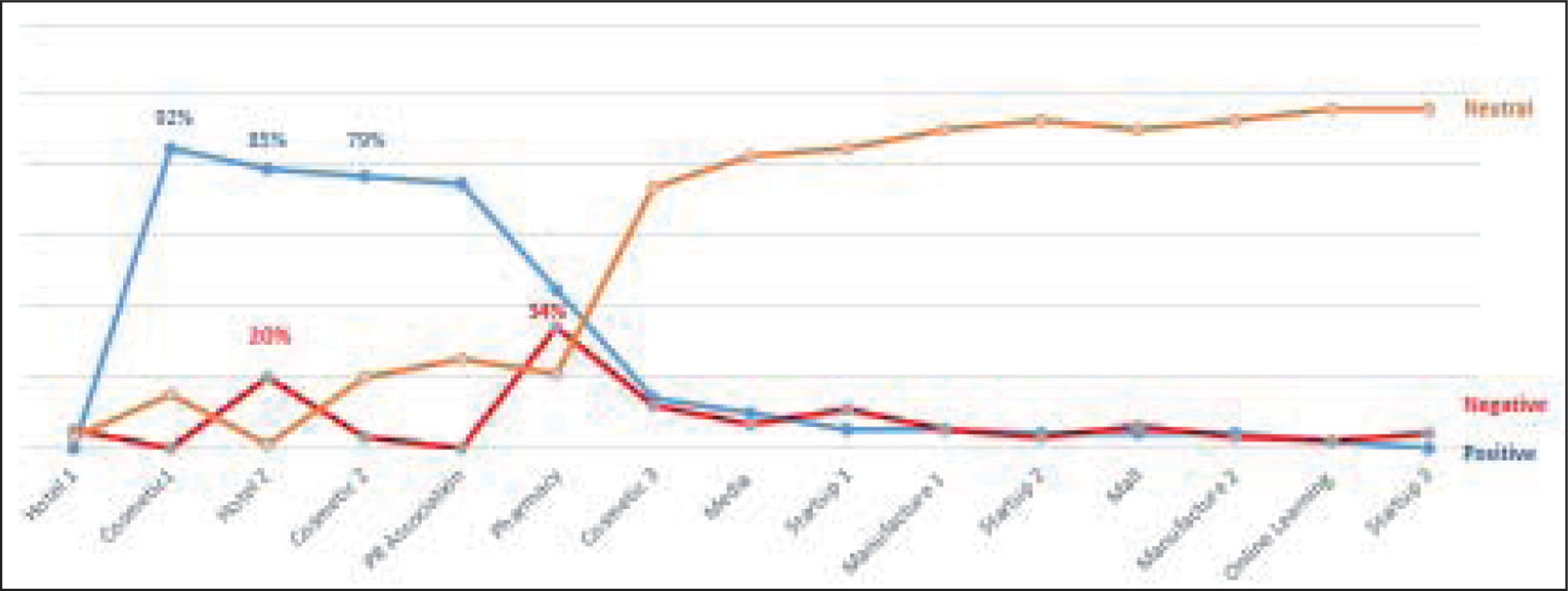
The authors conducted a digital data crawling related to several companies’ philanthropy programmes and recapped the netizen sentiment for the sentiment analysis. The digital data crawling took the data from social media and analysed the comment towards the philanthropy news posted. The sentiment and comment analysis mapped the general response of the news by categorising the comments into three categories: negative, neutral and positive. The analysis results are displayed in a line chart to compare positive, negative and neutral sentiment (Table 3 and Figure 3).
Sentiment Analysis Result
Positive Results
Positive analysis sentiment is mostly found on hotel 1 (92%), cosmetic 1 (85%), hotel 2 (79%), and cosmetic 2 (77%). Cosmetics 1 and 2 are known as local medium-size makeup company in Indonesia. They were the first companies to donate during the COVID-19 pandemic in Indonesia. Both companies also sell products, such as hand sanitiser, to support the COVID-19 spread chain’s disconnection. Cosmetic 1 company made the most donations. On the other hand, cosmetic 2 company opened new jobs for the layoff victims. Hotels are one of the sectors that suffered the most losses during the pandemic, however, budget hotel 1 and 2 still conducted a philanthropy programme. Partnering with the government, hotel 2 shared rooms for health workers, such as doctors, nurses and hospital staff to stay in the centre of Jakarta. This company helped the health workers to have easier access to accommodation while fighting the pandemic.
Based on the results of the analysis, it is known that the positive impression obtained from the brand is due to—(a) Making the most contributions compared to others; (b) Opening new jobs for layoff victims; (c) Selling products related to combating pandemics; and (d) Assisting governments and health workers by providing rooms during pandemics.
Negative Results
Pharmaceutical company, one of the biggest pharmacy chains in Indonesia, and hotel 2 obtained the most negative results. During the COVID-19 pandemic, the pharmaceutical company created a campaign to sell masks for those needed for only 2000 rupiah (13cent USD), while all the competitors increased their price due to high demand and product scarcity in the market. This campaign successfully generated a 45% positive response from netizens and 21% neutral responses. However, 34% of netizens provided negative responses. ‘Low quality’, ‘unreliable’ and ‘not available’ are the common words used in negative statements. From the Twitter conversation, it was found that there is a negative response because the context of the pharmacy business; during the pandemic, pharmaceutical companies gain the most profit. The alleged medicines, masks and vaccines sale to the public is also one of the reasons for negative sentiment.
In contrast to hotel 1, hotel 2 contributed the second most negative results after pharmaceutical companies. Hotel 2 provided the same contribution as hotel 1, which is lending its rooms to support the treatment of COVID-19 patients. However, there are issues related to employee pay cuts and massive layoffs by hotel 2 to keep the business afloat during the pandemic. Based on the information above, negative sentiment from netizens is caused by (a) Public distrust of the brand despite its donations; (b) The issue of layoffs and massive salary cuts due to the pandemic.
Neutral Results
More than 80% of neutral results in Media, startup, manufacturing, mall and online learning companies
category showing a neutral sentiment. The neutral sentiment can be due to the programme considered un-special by the netizens, or they are reluctant to comment on the brand. The neutral results describe an open and impartial sentiment. As with the online learning company, the consumers are elementary, junior high and high school children who are likely not aware of the donations made, so this leads to a neutral sentiment.
Based on the sentiment analysis results, the positive sentiment is in line with a philanthropic theory, where the company that acts as the first mobiliser with the most donation will make a positive impression. The impression of netizens is influenced by time and quantity. On the contrary, although a company contributes a large amount, if the public is distrustful and has no empathy for the company, its impression will be negative. Therefore, a good communication strategy from the company is indispensable. After analysing all the sentiment towards the programmes, a validation measure was conducted to investigate the real sentiment and its root cause. An FGD was conducted by gathering participants of different ages, professions and locations to analyse the perception and discuss their opinion about the philanthropy programmes conducted by brands during the pandemic in Indonesia.
Focus Group Discussion Result
The Perception Toward Philanthropy Programme
The FGD started by asking the general opinion and perception of the participant towards philanthropy programmes. The question such as ‘what do you think about a company that creates a philanthropy programme and post it on the news?’ and ‘what does the first thing come across your mind when seeing a philanthropy programme on the news?’ were asked to stimulate the essential genuine perspective towards philanthropy programme. From these questions, several frequent keywords were used by the participant and the following three words are commonly stated by the participants when discussing the philanthropy programme in general. The first word is ‘generous’: the participants see any brand that could afford a philanthropy programme as generous and does a positive act. The second word is ‘role model’: the participants seem to have a positive sentiment towards philanthropy programme and think that other companies who have not done the philanthropy programme should follow these companies. The third word is ‘helping’: participants see all the philanthropy programme as an effort to help the community in need and the participants perceive that the company should give back to the community.
In the next part of FGD, several snapshots of philanthropy programme news published by several companies were presented to the participants to examine their sentiment towards the news. The first news was about a cosmetic company philanthropy programme that spend 4 billion Indonesian rupiahs to buy ventilator machines and donate them to several hospitals in Jakarta. This programme is one of the first programmes conducted by a company during the COVID-19 pandemic in Indonesia. After seeing the news, the participants were asked a single question, ‘What is the first thing that comes to your mind when seeing the news?’
Several conclusions can be drawn from the participants’ answers. At the first glance, all participants feel amazed by the programme and news, they perceived that it is really generous for a company to spend such a huge sum of money for charity when the economy is slowing down due to pandemic condition in Indonesia. Second, even though the participants admired what these company had done, they doubted the effectiveness of the programme. They started to question several things, such as: Does the programme really benefit the community? Is the programme beneficial for everyone or only a specific group? Is it effective? Those questions are considered normal as there is limited information regarding the programme on the news. Based on the sentiment analysis, these questions often lead to negative comments on social media. However, when the researcher stated that based on the sentiment analysis, people kept giving negative comments towards this news, most participants disagreed with this statement. The participants agreed that despite the questions and doubt, they strongly agree that these kinds of programmes are positive for both the company and community, especially in a pandemic situation.
The second news is about other cosmetic company doing a campaign of shifting their usual products to hand sanitiser. This campaign was created not only to fulfil the needs of community for hand sanitiser, but also to help their beauty advisor suffering from the decreasing makeup sales during the pandemic. The beauty advisors were suggested to sell the hand sanitisers to help them generate profits during pandemic. Thus, this campaign not only contributes to community but also helps their employee to retain their income. When the participants saw this news, generally they gave positive sentiment towards this campaign, seeing this campaign as a way to contribute for the general community and their employees. When the sentiment analysis was showed to the participants, the participants agreed with the results, showing neutral to positive responses. Most of neutral responses were due to people seeing this campaign as only saving the business and not giving for the community.
The third news is about hotel sectors partnering with the government providing free accommodation for health workers in Jakarta. When discussing this news, the comments were slightly different from the previous news. Although participants still saw what this company did as a positive programme, many mentioned that this company could do more than this campaign as limited access to free accommodation was one of the most criticised factors of this campaign. However, FGD participants disagreed with people showing a negative sentiment towards the philanthropy programme. Participants agreed all philanthropy programmes are positive and positively impacts the communities.
The FGD extracts four general discussions. First, although the comments of netizens could be differing on social media, people perceive philanthropy programmes positively. During pandemic, people are suffering from the limitation, and philanthropy programme is one of the reliefs for this situation. Not only it shows empathy and care, but also provides a positive impact on the brand image of a company. This statement is in line with the theory that empathy relates to reputation and branding (Batson & Moran, 1999; Devoldre et al., 2010). The absence of empathy can negatively impact the company itself. Empathy triggers positive consumer responses that are intended to compensate for brands, such as liking brands. This study provides similar results as research conducted by Allard et al. (2016), Baker (2017) and Windahl (2017) that empathy through philanthropy programme can help the reputation protection and branding.
Second, the companies should broadcast the news and report of the philanthropy programme well. Many doubtful, neutral and negative comments are driven by less or no information about the programme: who is the target of the programme, how big is the impact, how sustainable is the programme and how accessible a programme is, is important information for building people’s positive perception. Besides, the company should manage its online reputation and listen to conversations on social media, such as responding and improving communication with stakeholders, so that philanthropy and social campaign programmes will receive positive perceptions.
Third, people tend to give more credits to the pioneer. Thus, companies or business owners should move first in a pandemic. Participants tend to give more attention and positive vibes towards early programmes than later programmes, considered only following the trend. The results are in line with a philanthropic theory where the first company donating will have an advantage compared to the later brand (Allard et al., 2016). The advantage is called the first-mover advantage (FMA) (Liket & Simaens, 2013). Gao and Hafsi (2015) research argues that the first mover will contribute more to disaster relief due to its relatively large size and resources. They will also contribute relatively more because of their excellent finances. Lacking adequate resources, people who are late doing so cannot change the outcome, regardless of their willingness to donate.
Finally, the FGD concludes that no matter what the business is, there is always a way to contribute to the community in any form. Also, any form of programme could impact society, the environment and the company itself. In this case, the public perception is not related to philanthropy theory that the time and amount of giving influence perception.
Model of Empathic Communication
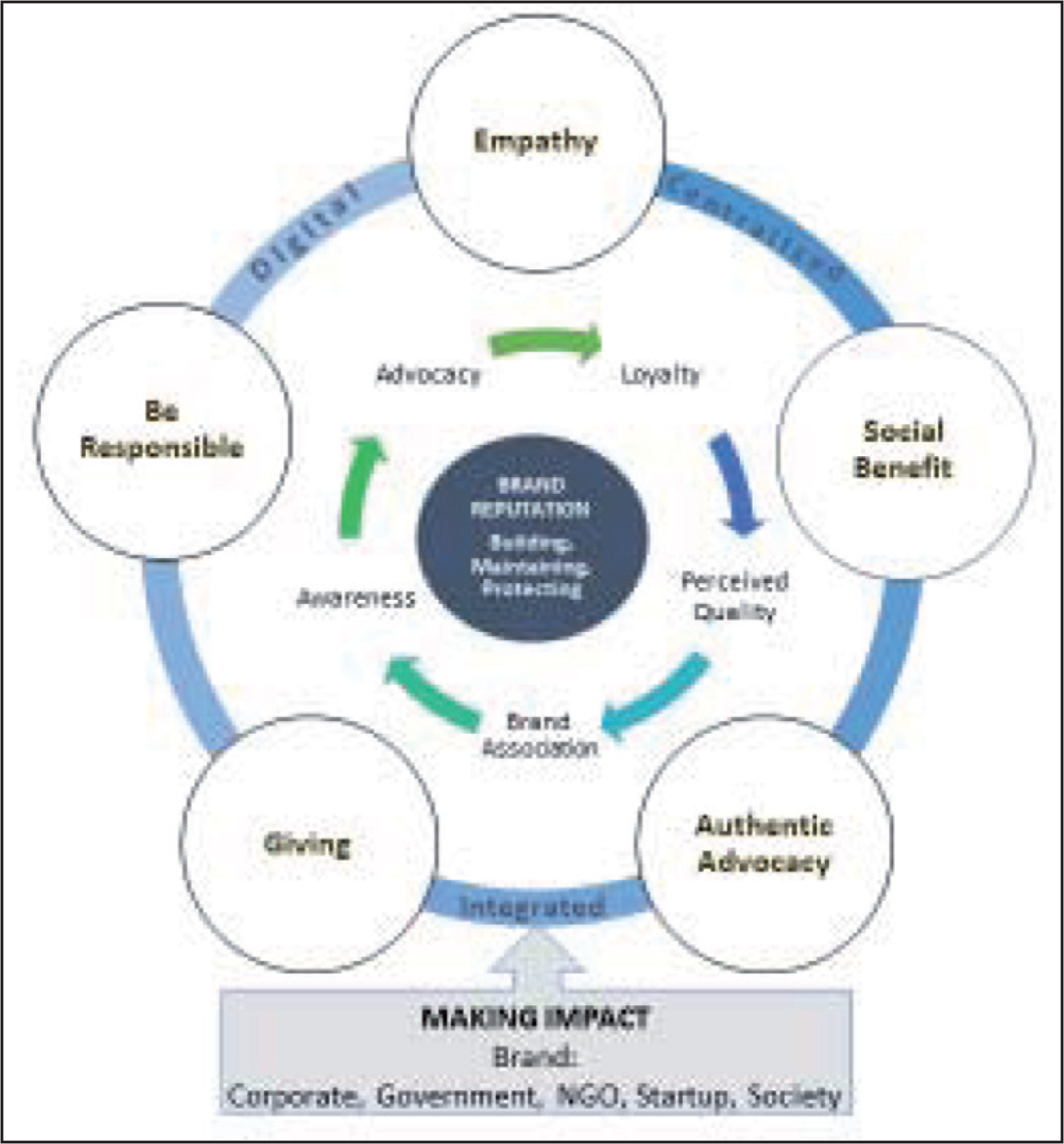
Based on the sentiment analysis and FGD results, the research proposes a model of empathic communication, as shown in Figure 4.0. It captures an empathetic brand communication model and shows that brands can implement digital, centralised and integrated communication programmes to gain brand reputation. A brand also needs to build, maintain and protect its reputation by running its business processes responsibly, being social, and providing assistance and authentic advocacy. The model also shows the transformation from brand awareness to advocacy. Empathy will create consumer awareness and attention; good corporate responsibility will strengthen the brand association. Besides, perceived quality provides concrete benefits amid a crisis and will increase the quality perception of consumers. When a brand can solve consumer problems during a crisis like the COVID-19 pandemic, consumers will remember it for a long time and It will become a solution in case of a communication crisis experienced by the company in the future.
Conclusion
The COVID-19 pandemic has led to Indonesian people being increasingly empathetic. Previous research shows that spending on donations in Indonesia increases during the COVID-19 crisis, such as companies allocating CSR funds, medical aid and health services, and food aid. Besides, the community also donates. The 2018 World Giving Index by the British organisation Charities Aid Foundation (CAF) has placed Indonesia at its top, where three behaviours are used to measure a country’s generosity: donating money, helping others and volunteering in the past month.
The research proves that the COVID-19 disaster has encouraged the formation of a generous society and brands’ empathy, including companies, organisations, NGOs and communities. The sentiment analysis results showed the public perception of company behaviour before the COVID-19 period varied and contributed to negative and positive sentiments associated with phenomena and topics of public conversation. Based on previous research, the most prominent companies with excellent financial performance tend to be the first movers and those that give large donations. On the contrary, medium-sized and small-sized enterprises, such as local cosmetic companies and budget hotels participated in philanthropy as the first donors with huge donations. This study also proves that the amount and time of giving did not affect public perception related to company philanthropy. A model of emphatic brand communication is providing to improve brand reputation through communication programmes, containing five main factors, namely: empathy, social benefit, authentic advocacy, giving and being responsible.
Implications for Theory and Practice
The contribution during COVID-19 shows that all lead to high awareness, regardless of ethnicity, religion, race, social status, or party, to reduce the difficulties faced due to the COVID-19 disaster. Amid this mass difficulty, the community works together, helps, units steps to fight COVID-19. In such a condition, everyone seems to have a shared mission to contribute to fighting COVID-19. Everyone puts forward what they can contribute to other people, rather than the other way around. COVID-19 creates a society that cares, full of love, empathy and compassion.
The company, as a corporate citizen, including the leaders and employees, also showed care and responsibility for the community in distress. People conducting philanthropy are not always in the form of money or goods. The philanthropic theory explains that organisational elements consist of history, assets, priorities and procedures. This is the contribution of this research to theory, new findings discovered during the COVID-19 pandemic show that corporate donations in Indonesia are not based on history but rather provide more based on assets and products. If given based on their needs and conditions, providing services and assets will get enormous attention and make significant impacts and benefits. Therefore, the emphatic initiative is relevant in the company communication strategy because, among others, the public view may perceive a company willing to contribute to the social context and not only focus solely on maximising profit.
Limitation and Future Research
There are limitations to the research. First, the research setting and exploratory data do not allow for all social media findings’ generalisability. This study only focuses on empathy by the brand for the first donation during COVID-19. It does not include companies that donate afterward. Future research could focus the investigation on other social media with more samples. Moreover, participants’ follower demographics would be another exciting indicator for future research to be explored in the social media context.
Footnotes
Declaration of Conflicting Interests
The authors declared no potential conflict of interest with respect to the research, authorship and/or publication of this article.
Funding
The authors disclosed receipt of the following financial support for the research, authorship and/or publication of this article: The research was supported by SBM ITB under P3MI Research Funding.