




Abstract
COVID-19 has brought about changes to the education system that impact teachers in multiple ways. The article discusses the views of affected teachers under the three-gap framework: access, usage, and pedagogical skills gap. Between 29 April 2020, and 29 May 2020, an online survey was administered to 550 Delhi and National Capital Region (NCR) teachers, of which 288 responded. The data show that the inequalities between private schools and government schools are sharpened by the move to online education. This is compounded by the fact that students from economically weaker sections of society have become hard to reach, and teachers do not know how to support hard-to-reach students who are also severely affected by the pandemic.
The data also show that teachers have not been trained in online pedagogies. Ed-Tech companies have been stepping in, presenting themselves as a panacea to the problem with further consequences to teachers’ profession, standing, and livelihoods. However, Ed-Tech solutions are not relevant for hard-to-reach students or teachers in schools that serve hard-to-reach communities. The article first presents the voices of teachers affected by the pandemic and then critically examines the role of Ed-Tech companies, which pertain to fill the online pedagogical gap.
Introduction
This article engages with the effects of COVID-19 on education provision in India, in particular with the digital gap experienced by teachers when they moved their classes online due to the pandemic in March/April 2020. Digital gap exists at learners’ level as well as teachers’ level, not only in India but across the globe. The extent of this gap varies from region to region depending upon the infrastructure, the socio-economic background of stakeholders, and many other local factors like the particular culture of a community.
From March to June 2020, much of the public debate focused on the digital gap in the context of students, meaning that the difficulties faced by teachers on the ground were not given due emphasis. This article aims to give voice to teachers’ experiences. Whilst the data are Delhi-specific and representative of the respondents who agreed to take part, it is evident that the issues discussed here are also faced by teachers elsewhere in India and abroad. Therefore, the conclusions drawn in this article might have broader applicability.
The results of this study indicate that socio-economic inequalities in the physical world have become more pronounced in the digital/virtual world, even in metropolitan cities like Delhi. Beyond the stark differences between government and private schools, the study shows that many teachers are technologically savvy. Still, due to the lack of specialised training, they are mostly unfamiliar with particular issues of online pedagogy and struggle to teach online.
The article goes on to discuss how the online pedagogical issue has been taken up by Ed-Tech companies who promise to fill the gap. Taking advantage of the difficulties faced by teachers, Ed-Tech companies are luring parents to subscribe to their apps and platforms (Biswas, 2020). These companies, however, are not the panacea they promise to be as they are not education and pedagogical specialists. Virtual education cannot replace teachers lest the socio-economic differences between the middle classes and the poorer sections of society are cemented.
Lockdowns and quarantines mean that economically marginalised groups, many of whom are from minority communities and are already disproportionately affected, will suffer both concerning their lack of access to education and the broader inequity brought about by that same education system.
The article concludes that teachers need pedagogical training for online situations and that Ed-Tech companies do not provide the required solutions for all, especially hard-to-reach students. However, teachers should have autonomy and liberty in deciding when and where to integrate technology to support their teaching practices as they alone know the ground situation of their classrooms.
Education in the Time of a Pandemic
Since the coronavirus pandemic in spring 2020 started to disrupt people’s normal lifestyle, the virtual world has come to the rescue. Across the globe, shopping, entertainment, work, and education moved online. The spread of COVID-19 has had profound effects on education globally. As schools and universities closed, many turned to technology to try to continue the teaching and learning process.
Among many institutions, schools have also shifted their base to virtual platforms to conduct classes online. Consequently, catering to the needs of all stages of education from pre-primary to university level, online education has emerged as an alternative to ordinary/regular face-to-face classes. Accordingly, various stakeholders such as government and private organisations have been trying their best to assist each other by sprucing up their existing online platforms, web applications, apps, etc. and providing training to teachers to use these apps and platforms. Moreover, efforts are being made both by the government and non-government organisations including Ed-Tech companies to support the school system to make a smooth transition to the virtual world. Up-skilling and motivating teachers, organising counselling sessions for stakeholders such as teachers, parents, and students are just some of the measures taken by the Indian administration in the past few months. Making a continuous effort to provide customised teaching–learning material suitable for online classes has been another way of facilitating the schooling of children.
Research Context, Methodology, and Analytical Framework
Delhi and National Capital Region Background
Delhi has a stark rich and poor divide, where India’s best educational institutes and a severe lack of primary school education for poor children coexist (Bissoyi, 2018). Delhi has a total of 5,726 schools all across the National Capital Territory (NCT) (Edudel, 2020). The Delhi government runs 1,227 government and government-aided schools, which is 21.30% of the total schools operational in the NCT. The central government runs three categories of schools—the Kendriya Vidyalayas (KVs), the Jawahar Navodaya Vidyalayas, and the Central Tibetan Schools for Tibetan refugees. 1 Since the 1970s and 1980s, there have been two types of government schools, that is, municipal primary schools run by the Municipal Corporation of Delhi (MCD), 2 the New Delhi Municipal Council (NDMC), and the Delhi Cantonment Board and secondary schools run by the state government (Juneja, 2010, p. 20). In the 1990s, two new categories of schools have been set up by the Government of Delhi—the Sarvodaya Schools and the Pratibha Vikas Vidyalayas (PVVs) wherein Sarvodaya Vidyalayas select their students through a lottery, while PVV holds admission tests. Further, quasi-government schools have increased in numbers in Delhi, with new schools for children of defence officers, police officers, and civil servants (Juneja, 2010, p. 20). Since the Aam Admi Party (AAP) came to power in Delhi, they have added five Schools of Excellence in 2018.
The schools run by non-state players in the Indian education system include low-cost private schools, schools run by non-governmental organisations (NGOs), alternative schools, and non-formal schools (Iyer, 2019, p. 15). A news article reported that in this decade, 645 private schools were opened in Delhi, an increase of 31%, showing maximum growth between 2011–2012 and 2014–2015. This increase from 2,026 to 2,656 increased the number of students enrolled in private schools from 1.38 million (2011–2012) to 1.67 million (2014–2015) and 1.86 million (2018–2019) (The Indian Express, 2019; The Times of India, 2019). The Delhi government website (Edudel, n.d.) states that there are 1,356 government unaided schools in Delhi.
In the last 5 years, AAP-led government has increased education funding to improve school education. Some other components of its school reforms include the introduction of new teacher training courses, curricular reforms such as Happiness Curriculum, student learning programmes to improve learning outcomes, and investment in school infrastructure to provide better facilities to the school community (Sharma, 2020c). AAP claims that certain government schools are now as good as or better than private schools. 3
Methodology
In light of the COVID-19 pandemic, a structured questionnaire was developed to assess the extent of the digital gap and its various forms in India, in general, and in Delhi, in particular. All questions follow either nominal or ordinal scale. Therefore, there is no need to compute Cronbach’s alpha to check the internal reliability of items in the instrument (Jain et al., 2019). The measure of central tendency, primarily simple average, has been used for the analysis of aggregated data as well as for cross-analysis based on types of school.
A pilot study was conducted among a few private and government school teachers in Delhi. Based on the feedback received from them, the questionnaire was improved and finalised. The pilot-tested questionnaire-based survey was conducted among teachers in both government and private schools across Delhi and NCR. The questionnaire was developed using Google forms, and the web link to the survey questionnaire was shared with teachers. All ethical guidelines pertaining to the anonymity and confidentiality of respondents and their responses were duly followed.
To begin with, the potential respondents were approached using personal contacts with teachers across Delhi and NCR. Later on, the snowballing method of data collection was used wherein the participants were asked to circulate the questionnaire among their acquaintances. This was done to widen the reach of the survey and thereby reduce the element of biases in the study. We were aware that the the survey would be constrained or limited in its reachability as only teachers possessing or having access to digital device(s) such as smartphone, laptop, tablet would be the potential respondents; an indication of prevailing digital gap among teachers. Those affected by the access gap in terms of hardware would not have been able to take part. However, given the COVID-19 restrictions on movement, it was impossible to access teachers in any other way. By 29 May 2020, the survey was administered to over 550 school teachers across Delhi and NCR; out of these, 288 teachers responded. Teachers were given a choice to respond in either English or Hindi; 12% of them chose to respond in Hindi.
Demographics of Respondents
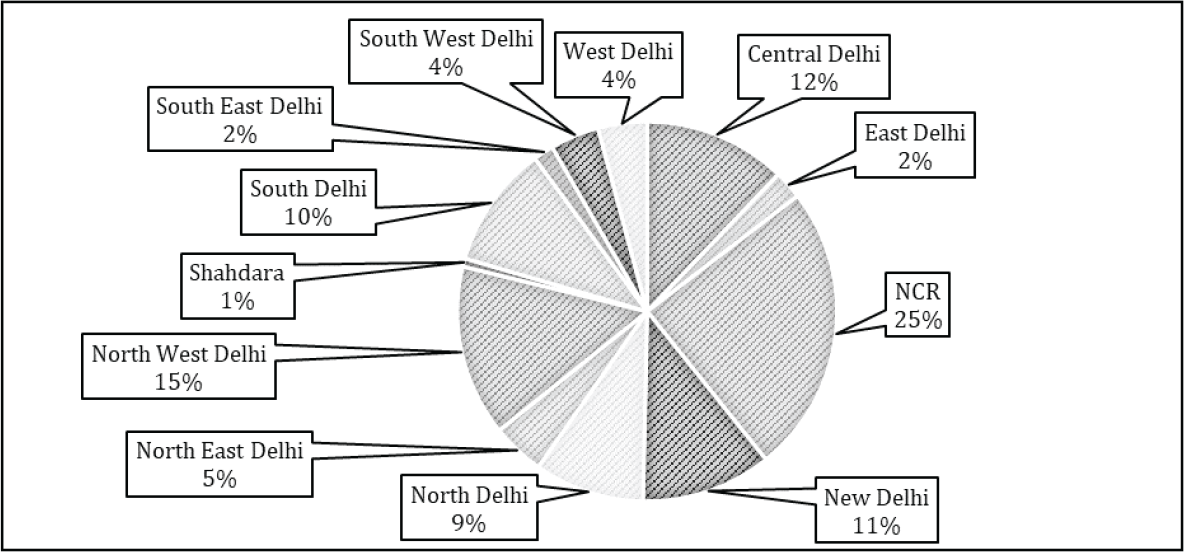
As depicted in Figure 1, respondents are spread across Delhi-NCR.
Approximately 70% of the respondents are from private schools and 30% represent government schools. Approximately three-fourths (73%) of the respondents are permanent teachers. Out of these permanent teachers, 74% are employed in private schools and 25% in the government system.
Over three-fifths (68%) of the respondents lie in the age group of 25–44 years, that is, the majority of teachers belong to the category which, in general, do not resist adapting to the new environment, are relatively flexible, and can quickly embrace changes vis-à-vis their older counterparts. Eighty-five per cent are female teachers, 4 80% belong to the general category, and the remaining 20% represent SC, ST, and OBC categories. Data indicate that the majority of respondents (92%) are Hindus.
The Three-Gap Framework
Issues faced by teachers can broadly be classified under the three categories of the digital gap as detailed in the National Education Technology Plan (US Department of Education, 2017):
The the the
At the outset, teachers were asked if their schools are conducting and facilitating online teaching for students. A vast majority, that is, 97%, responded in the affirmative. In disaggregated terms, 69% represent private schools and 31% government schools. The data collected from the survey were then categorised according to the three-gap framework.
Results, Analysis of the Data, and Thematic Discussion
The Access Gap
Teachers who are providing online classes need to invest money to access technology, which includes possessing the devices, Internet connectivity, and a reliable power source. This leads to an added financial cost, especially in tier 2 or tier 3 cities and rural areas where the salary of teachers is low. This research involving the collection of data from teachers based in Delhi and NCR via an online survey reflects the existence of the access gap; teachers were facing Internet and network issues while responding to the administered questionnaire and teachers without a smartphone or laptop would have been excluded without the research team’s ability to access them.
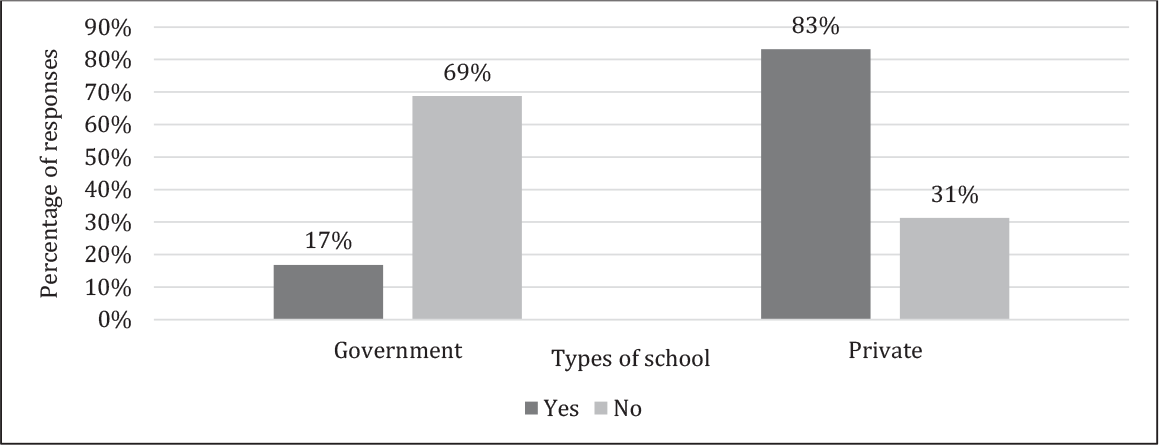
In this survey, 72% of the teachers reported that their schools already had the supporting infrastructure for facilitating online classes. 5 However, the break-up of responses between government and private schools reveals that only 17% of the representative government schools had such facilities (Figure 2). This indicates that government school teachers have not been fully equipped digitally in comparison to their counterparts in private schools.
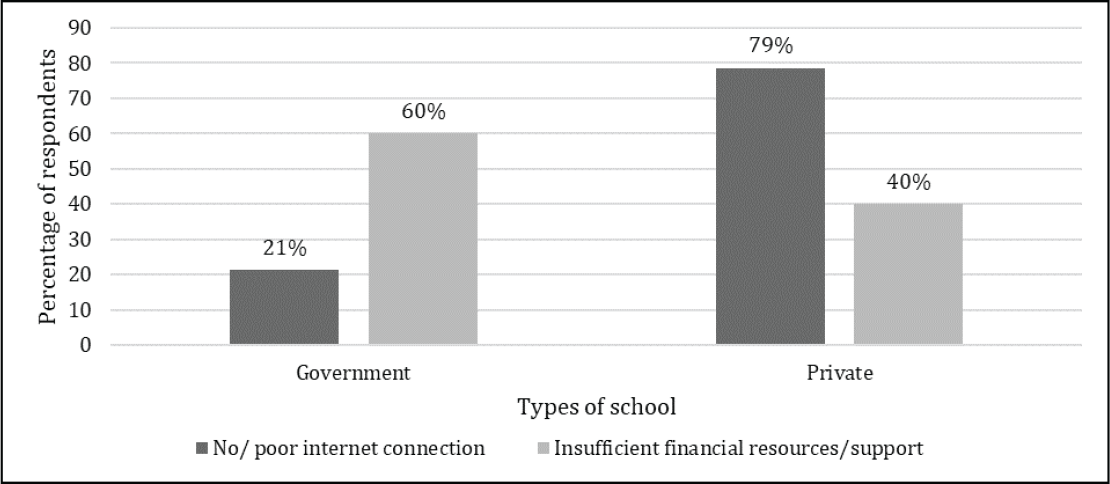
Although the majority of schools are providing online classes, training their teachers, and helping them with online teaching material and assignments, the real plight of teachers comes to the surface when 60% (173 teachers) of them report that they either have poor Internet connectivity or no Internet connection at all. More so, 79% of the above-mentioned 60% teachers (approximately 136) are employed in private schools (Figure 3).
These results indicate that the main hindrance for teachers in their endeavour to provide online education is poor Internet connection. Only a handful of participants (9%) indicated a lack of and/or insufficient financial resources to be a big hindrance in delivering online education. Yet, this is again more visible among teachers from government schools.
The Digital Skills Gap
Teachers have to switch between prepared videos and PowerPoint lessons and hosting live teaching via Google Classroom, Zoom, Microsoft Teams, and others. They need to develop lesson plans as well as adapted worksheets, assessment sheets, and other materials (Kundu, 2020; The Hindu, 2020). However, many are not trained, and it is difficult to become proficient at using technology in such a short period. To fill this gap, some companies are organising training to upskill them in technology (Srikanth, 2020). Though most teachers and students are digitally literate and tech-savvy, full-time online education is still a new experience for them (The Hindu, 2020). The other key issue is that online teaching requires a specialised form of pedagogy, which teachers are not familiar with. As a result, they are accused of being unwilling to adapt (Mudi, 2020).
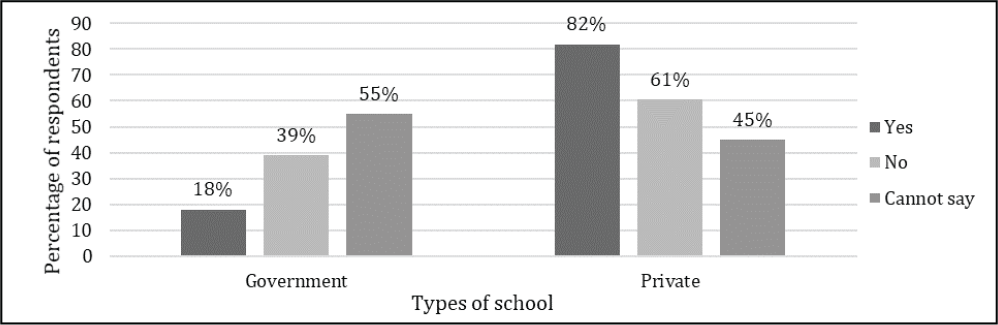
Despite (virtually all) schools conducting online classes and having some supporting infrastructure, only 54% of the total 288 teachers have been trained to deal with the unprecedented situation, like COVID-19 and the resulting lockdown. The rest of the teachers (46%) either responded in no or cannot say category. The disaggregated responses (yes, no, and cannot say) between government and private school teachers have been exhibited in Figure 4. It depicts that the situation is even more difficult for government school teachers, wherein only 18% teachers have received such kinds of in-service or pre-service training (Figure 4); in absolute number, only 28 [18% of (54% of 288)] government school teachers have been equipped with such training support.
This points to a major skills lacuna in teachers, which is more prominent among teachers in the government system; the lockdown situation has made this gap visible and more extensive, necessitating relevant policy measures.
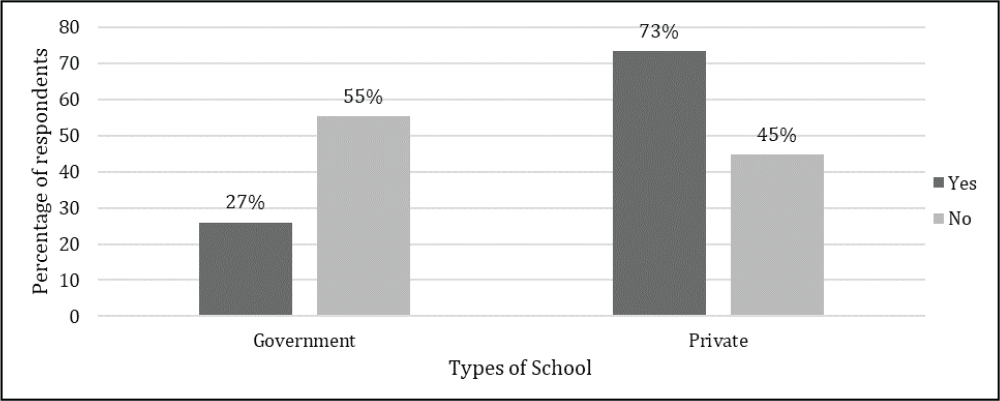
It is heartening to know that over four-fifths (84%) of teachers are receiving support from schools in converting classroom material to make it more suitable for online school education. Out of these, 73% are from private schools and 27% from government schools (Figure 5). 6
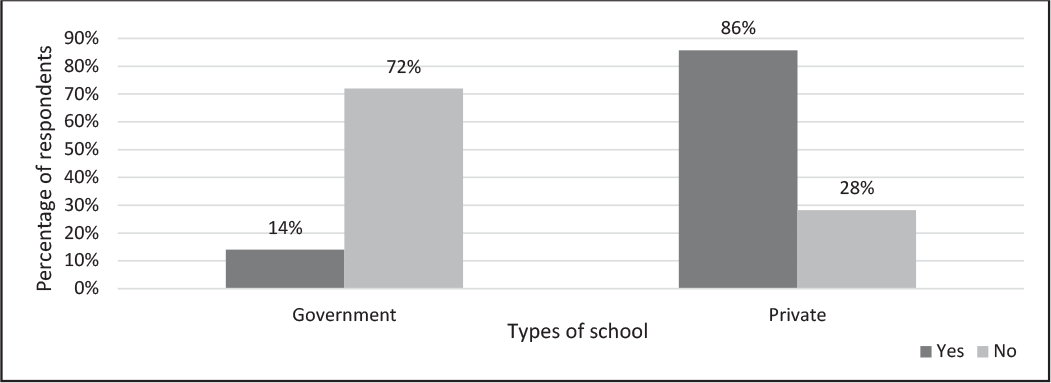
Nonetheless, converting materials is not in itself sufficient to conduct online classes. This is because conversion of material is only a means to an end. The end is the efficient delivery of converted material to ensure the continued teaching and learning in online mode; this does not come naturally and requires dedicated training of teachers. However, when the survey participants were asked whether they have been ‘trained by the school to conduct online classes’, 70% of teachers responded with ‘yes’. Out of these, only 14% teachers are from government schools, and a large chunk—86% of respondents—are from private schools (Figure 6). This still leaves 72% of teachers from the government sector untrained and unprepared.
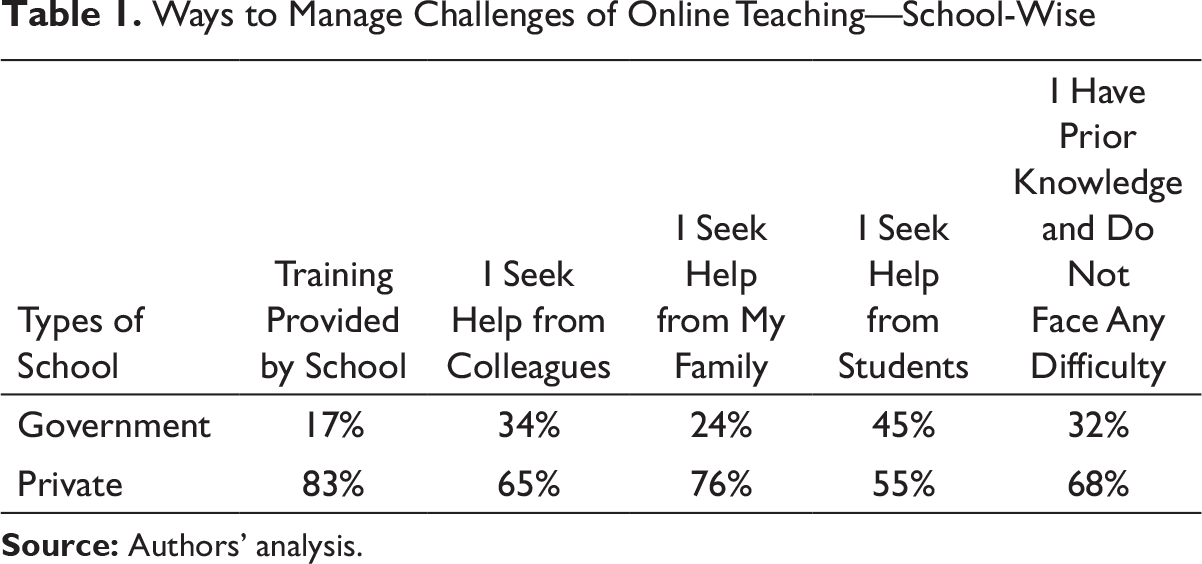
Ways to Manage Challenges of Online Teaching—School-Wise
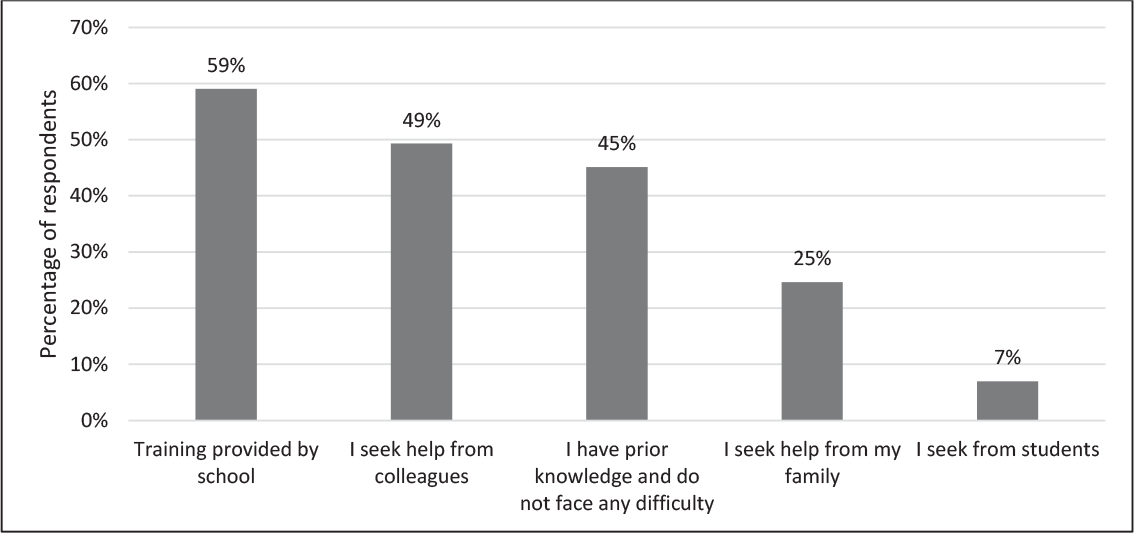
When asked how they ‘manage the challenges of preparing classroom material and assignments for online classes’, 59% of teachers responded that they are getting support from the school for managing any challenges. Forty-nine per cent said they asked colleagues for help (Figure 7).
Forty-five per cent of the respondents said they have prior knowledge and do not face any challenges, and it is encouraging to observe that 32% of such teachers are from government schools, as exhibited in Table 1.
Only 16%–20% of teachers have indicated that they feel they have inadequate digital training, lack of experience, and lack of awareness of digital tools and software. By and large, both government and private school teachers have responded in a similar manner (Figure 8).
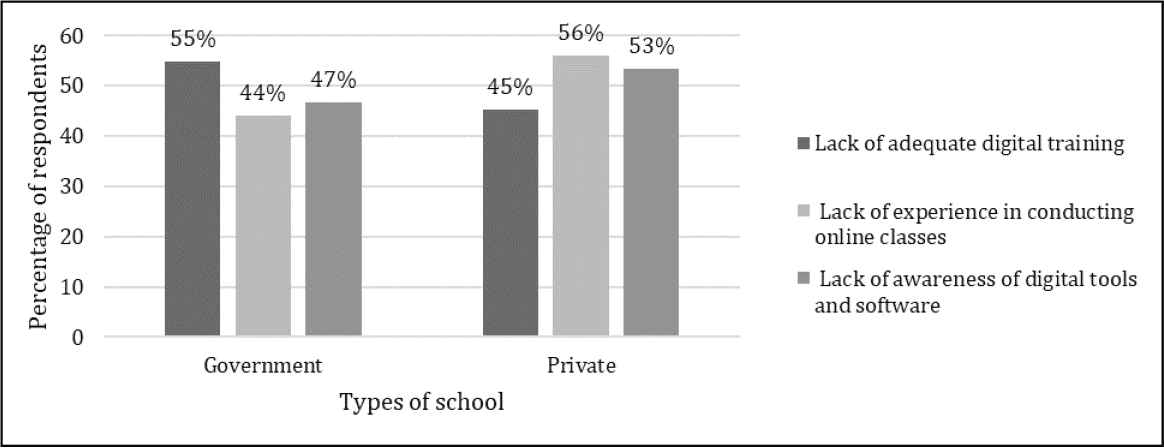
Data indicate that school teachers believe they are digitally skilled. However, it needs to be noted here that being able to use technology is not the same as having the required pedagogical knowledge to teach online. This is further discussed in the next section as the usage gap sheds light on the pedagogical issues hidden by the answers showcasing technical proficiency above.
The Usage Gap
Many teachers who are using online platforms are finding it hard to adapt to new ways of teaching. Taking online classes demands prior preparations, which not only includes lesson plans but also PowerPoint presentations, assessment sheets, and adapted student exercises to create interactive classes (The Hindu, 2020). Online classes are proving more problematic to middle age teachers who are finding it challenging to maintain discipline in the class and are subject to online bullying and harassment from students (Sharma, 2020b). Some teachers have resorted to sending assignments to students and, subsequently, being available to address their needs, rather than conducting classes on an online platform (pilot interview July 2020).
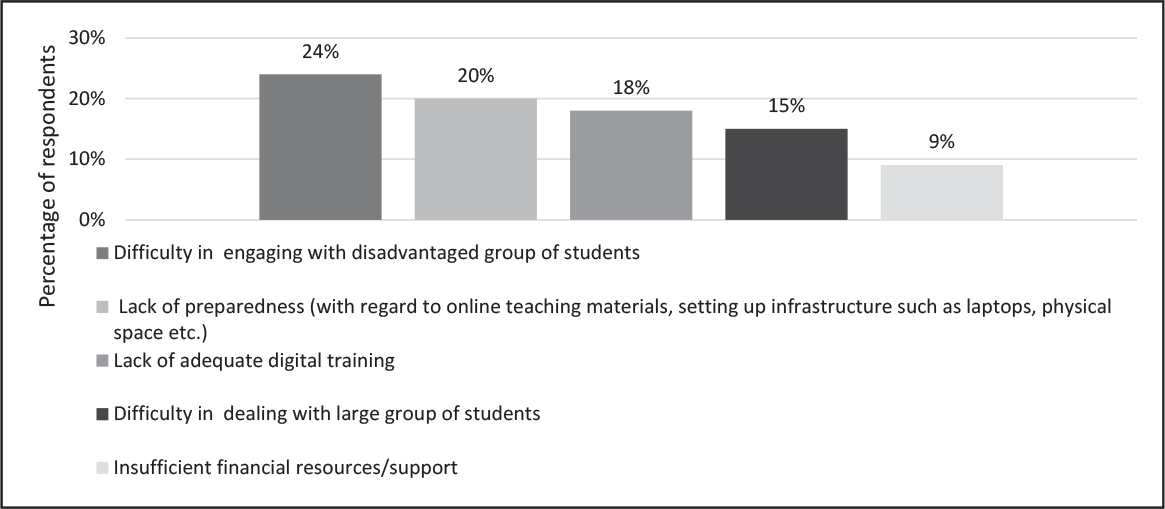
15–25% teachers have not only reported lack or preparedness for conducting online classes but also raised concerns about engaging with disadvantaged group of students as well as large groups of students (Figure 9). Both government and private teachers responded equally.
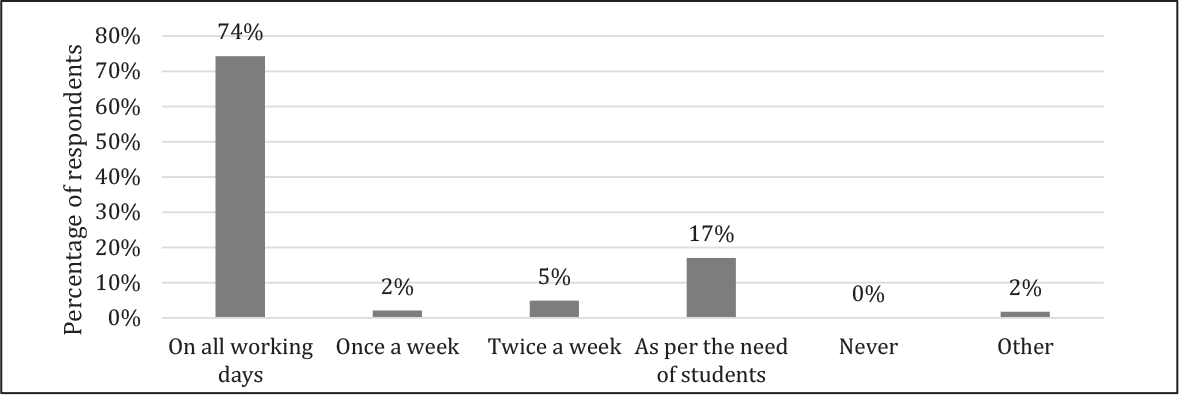
This is supported by a response to ‘How often do you interact/communicate with students during a week?’ Approximately three-fourths (74%) of teachers interact with their students on all working days, as indicated in Figure 10.
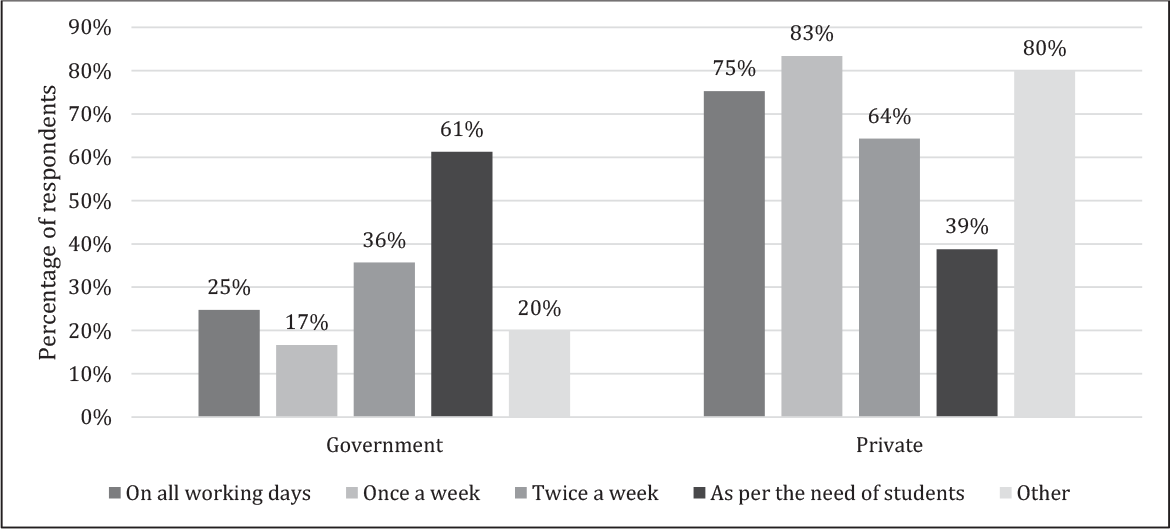
Further, the disaggregated result of this response, as shown in Figure 11, indicates that the data are skewed. A large majority (75%) of teachers who are interacting with their students on all working days are private school teachers, and only 25% of those teachers who are engaging with students on all working days are government teachers (Figure 11). Yet, the majority of teachers—both government and private—communicate with their students in some form, but not necessarily every day.
Teaching Online and the Difficulties
The differences in interaction point to specific difficulties when teaching online. Teachers were asked, ‘How is the lockdown affecting your work as a teacher?’. While Figure 12 exhibits the responses of all teachers taken together, Figure 13 splits these responses into government and private school teachers.
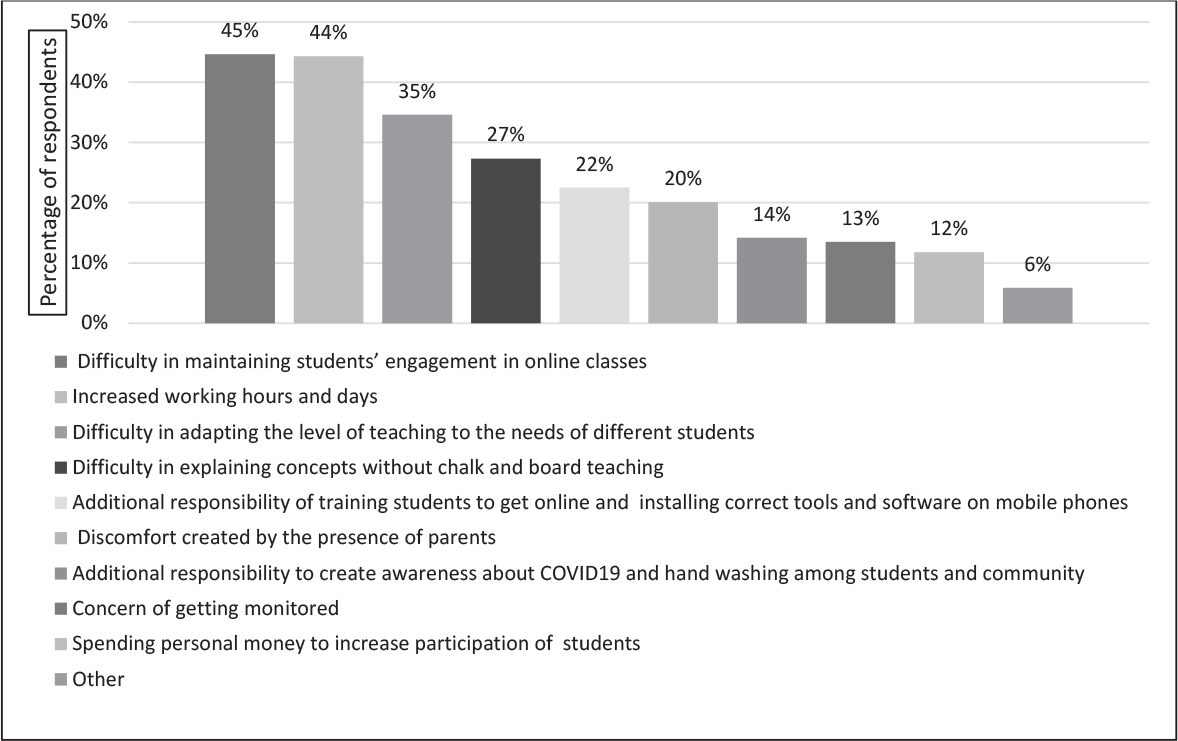
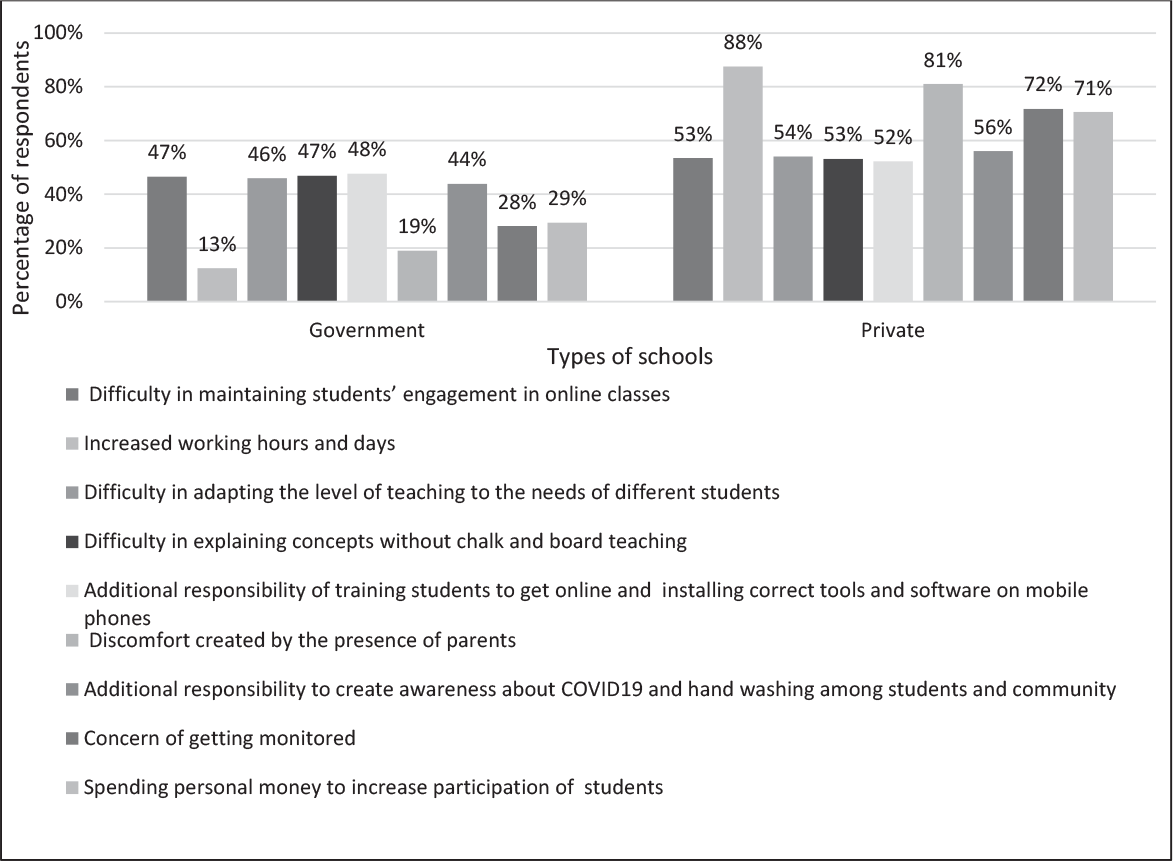
Teachers’ responses in Figures 12 and 13 reveal a variety of challenges and issues faced while conducting online classes. A primary concern for teachers is getting monitored by parents or the head teacher. Private school teachers are more apprehensive than government teachers. This seems to be related to job security. While government teachers are privileged to know their jobs are safe, private school teachers are always under scrutiny and can be fired more easily—as discussed later. Online classes have given parents and school management undue advantage to monitor teachers’ classroom practices. Teachers have reported how family members sometimes log into the virtual classroom to check out what the teachers look like, or in other cases, the teacher can see on a student’s camera how family members walk around the house sparsely clad, causing discomfort and embarrassment (Sharma, 2020b).
More important than the new dynamics between teachers, parents, and management is online pedagogy. Teaching online requires a particular form of pedagogy that teachers have not been trained in. While the data show that teachers believe that they are technically proficient, they mostly just transfer classroom materials onto PowerPoint presentations or give lectures through the online platform of their choice. Rather than being learner-centric, most COVID-19 education has been a series of one-way teacher-centric provision. The response also shows the differences between problems and concerns of government and private school teachers. Government school teachers seem to face fewer instances of increased working hours compared to private school teachers. This difference exists in part because private school teachers are taking online classes more frequently than government school teachers who are often sending assignments through other medium, possibly because of the access gap discussed above.
A large number of articles have been emerging on how teachers find it challenging to keep students engaged over phones and laptops; how much extra work teachers have to do, especially for primary students where it requires many hours to create more innovative kind of teaching aids that the teacher might not need in a regular classroom. The quote below reflects the data in Figures 12 and 13, describing the experience of nursery teachers:
‘For nearly six weeks now, Delhi-based nursery school teacher Meghna Saxena* has spent over five after-work hours a day only on calls with a colleague. The duo brainstorms ideas and plans for their online classes over the Zoom app. A couple of hours more goes into gathering and preparing the items and props. By the time she’s done, it’s often late at night. At 11 am, ready with hand-puppets, paper stars, and smiley-face cut-outs, Saxena hosts a dozen four-year-olds in a virtual classroom. An hour later, her throat is sore, and spirit low as fatigue takes over. Much of the hour-long class involves parents dragging the toddlers back to the computer screens and trying to get them interested in what’s happening’, Saxena told Quartz. ‘These kids don’t understand half our activities even in the real classroom. A teacher on a computer screen would hardly make sense to them.’ (Punit, 2020)
It does not mean that the problems are inexistent at senior level, only the face of them is different. With senior students in large batches-norm in regular physical classes that has become more persistent in online mode- it becomes a daunting task for the teachers to restrain the use of prohibited technological devices such as microphones, cameras; more so, it also becomes difficult to monitor senior students in large batches if they are sleeping. In the same article, a language teacher, teaching middle and senior students at a prestigious school in Gurugram in Delhi NCR, has mentioned that he often works on his laptop or iPad till 3:00 am to correct assignments; in his own words, ‘During the classes, I have no way of knowing who is paying attention and who is not. I am going to have a nervous breakdown if this continues’ (Punit, 2020).
Other teachers interviewed in the press have told of how they have been bullied by the students, even being kicked out of their virtual classrooms and how it is a struggle to keep control. According to a report, many of the teachers have quit the e-classrooms due to bullying, and their disrespect, 7 and teachers agree that the pedagogy used would not work in the long-term—‘What we are missing out on [in online classes] is how the child is growing as an individual. If you look at a typical report card, it will assess communication skills, vocabulary, critical thinking, and scientific aptitude. These attributes are hard to assess remotely’ (Punit, 2020).
Teachers are venting their anxiety and feelings through social media and blog posts, saying that without eye contact and one-on-one interaction, teaching has become challenging even for the best of the teachers (Sarkar, 2020). Many teachers have apprehensions about managing primary school children in virtual classrooms compared to college students, as it is easier to manage college students on digital platforms (Mahesh, 2020). According to some Delhi-based teachers, online classes are ideal to maintain teacher–student connect only if the class strength is less than 15. In particular, teachers need time to adapt to digital learning, as some concepts need visual aids and innovative ideas to make primary school children understand the topics (Mahesh, 2020). But time is in short supply—government teachers in Delhi have also been roped in to perform COVID duties such as distributing ration, conducting area surveys. Meanwhile, many teachers have been infected, and a few of them succumbed to COVID-19, leaving many teachers very upset and angry (Iftikhar, 2020).
The teacher responses discussed above—also underlined by recent press articles cited—show the difficulties of online teaching requiring not only Internet access and knowledge on how to use digital tools but also the knowledge of specialised pedagogy. This has opened up an opportunity for the Ed-Tech sector that is taking advantage of this pedagogical vacuum. The next section engages with the efforts and the effects of Ed-Tech’s involvement in teachers’ jobs in the private and government sectors.
The Role of Ed-Tech Companies
The role of technology in education during the pandemic starts with the government. The Ministry of Education (MoE) has been promoting its various Information Communication Technology (ICT) initiatives such as the National Repository of Open Educational Resources (NROER), 8 e-Pathshala 9 for school books and resources, Diksha, 10 and e-PG Pathshala 11 which provide access to e-content in 80 undergraduate courses. In addition to this, SWAYAM 12 online courses, and UGC MOOCs, 13 are also being promoted through various government websites such as Ministry of Education, National Institute of Open Schooling, Central Board of Secondary Education, University Grants Commission etc., which can be accessed by teachers and students free of cost. MoE also launched the PM e-VIDYA platform, with 12 new DTH channels, one for each class to reach out to all strata of society. The ‘Bharat Padhe Online’ campaign crowdsourced ideas to improve the online education ecosystem of India, Young India Combating COVID with Knowledge, Technology and Innovation (YUKTI), 14 and YUKTI 2.0 15 to keep the teaching–learning process going on.
Ed-Tech companies have seen this as a big market opportunity (Ghosh, 2020). The online/virtual/e-learning education in India is already a booming industry, and with this pandemic, it has witnessed an unprecedented growth in a short span (Ghosh, 2020). Well-established companies such as Vedantu, Toppr, BYJU’S, Simplilearn as well as start-ups like Eupheus Learning are suddenly in demand both from school and students and their families (Verma, 2020). According to media reports, Ed-Tech start-up BYJU’S witnessed 7.5 million new users on its platform, and in April, the firm grossed ₹350 crores. (Medhi, 2020a). Toppr and Vedantu also witnessed a surge in enrolment for their live classes during the lockdown (The News Minute, 2020). Leveraging the limitations emerging out of the pandemic, these start-ups have managed to raise funds. For example, Bengaluru-based online Ed-Tech start-up Vedantu raised US$ 12.56 million from Chinese venture firm Legend Capital in April. In the same month, it raised $ 6.8 million of funding from South Korea-based KB Global Platform Firm. (Medhi, 2020b)
There is also a sudden rise in schools approaching business-to-consumer (B2C) companies to develop digital interventions and curriculum-driven solutions like online reference books and at-home digital learning tools. Some of the Ed-Tech companies like Vedantu are providing free access to their complete learning platform to students, parents as well as teachers in cities of New Delhi, Bengaluru, Kerala, and Hyderabad (Mishra, 2020). Big companies such as Apple, Google, and Microsoft are offering their services like iCloud Google Classrooms and Microsoft Teams, respectively, for free to schools (Chakravarty, 2020). TCS, too, has extended its TCS iON Digital Glass Room for free to schools across the globe (Deccan Herald, 2020). Because of the increasing demand and Asia’s growing youth population, the industry is expected to triple from its 2015 base of just over 100 billion to worth US$350 billion by 2025. (Gilchrist, 2020).
Press interviews with Ed-Tech companies reveal how they see COVID-19 as a massive market opportunity:
A key aspect of coping with COVID-19 is to ensure that the learning remains a continuous process virtually. Connecting students and teachers through digital platforms and necessary software through the use of laptops or phones is the latest transition in education, trying to eradicate the physical need of teachers or classrooms. This is an ideal time to accept technology and its latest offerings to make education delivery to students more efficient and make it more productive through online learning and assessments […] Technology is turning education from teacher-centric education to both teacher and student-centric education. Virtual classrooms and various online tools today allow us to make the engagement between the teacher and students as close to a real, in-classroom like experience, as possible. (Kiran Dham, CEO of Globus Infocom Ltd; Dhawan, 2020)
The article goes on to say that ‘technology-based education makes the education system more transparent and equal’ and that ‘students who learn in virtual classrooms will find that their learning experience is as good as or maybe even better than that of students who sit in classes’ (Dhawan, 2020).
Claims are being made that ‘with technology as an enabler, you can take great quality content, create it in one small part of the country, to all over the world […] What would be easier to do: Give them an internet connection or set up schools and give them good teachers? So the whole digital divide that we talk about, it’s a short-term problem. And it’s easier to solve using technology because technology can solve anything at scale’ (Gokulnath - CO-FOUNDER, BYJU’S) (Gilchrist, 2020). Free access to BYJU’S app caused its total registered users to jump more than 25% to 50 million. The company also offers live classes and localised language to support more students during the outbreak.
As has been mentioned earlier, Ed-Tech companies have come in at three levels—getting parents to subscribe directly, getting schools to subscribe and use their services, and in some cases, offering training to teachers to improve what they offer in the virtual classroom. During the pandemic outbreak, the Ed-Tech firms witnessed a massive level of online learning engagement on their platforms. According to a report by BARC India and Nielsen, there has been a 30% increase in the time spent on education apps since the lockdown commenced (Pandey, 2020). This could have important implications for the future, as discussed by Ben Williamson (2019) in his article on how big technology companies are creating new power networks.
From the perspective/voices of teachers, it appears that they are feeling disempowered. A fact substantiated by Ben Williamson (2020) who delineated upon online education and Ed-tech power networks, which are emerging as active partners in the pedagogic process. In the long run, these companies are going to affect the classroom teaching practices in a very profound manner. According to Williamson, datafication and analytics are going to replace the decision-making power of teachers in terms of needs of students and, consequently, devising learning models for students. But will this work for the highly diverse society across India? The next section engages with the issues faced by teachers who themselves face a digital gap to engage students.
Teaching, Ed-Tech, Increasing Inequalities, and the Weaker Sections of Society
Newspaper articles abound with praise for the Ed-Tech companies, discussing the ‘new normal’ and how students might not need to return to their classrooms. This is highly problematic, not least for poorer students who do not have access to technology. It is well known that not everyone has access to stable electricity, Internet connections, or to a separate room to study, carving out inequalities concerning accessing education and remaining engaged with the syllabus right there.
According to a study conducted by scholarship Ed-tech platform Buddy4Study, of the 25 crore students affected by the lockdown, 80% fall in the economically weaker section category (Mahesh, 2020). Other data cited from Statista 2018 explain that only 27% of the Indian population have smartphones. The same article cites data from the National Sample Survey Office’s 75th round of key household indicators of 2018, which shows that only 23.8% of the households have an Internet facility (Rajeshwari, 2020). For those not able to access the virtual classrooms through phones and laptops, Finance Minister Nirmala Sitharaman announced a line of new initiatives including 12 new TV channels (one for each grade in K12)—‘a step towards increasing the reach of educational content for Indian households, especially the ones which lack access of high-speed internet connection for unhindered consumption of learning content’ (Pandey, 2020). However, as seen below, the data collected showed that teachers often have to reach into their own pockets to facilitate the access of hard to reach students.
Teachers in India have started to use WhatsApp to set students’ work, as phones are more widespread than laptops or computers. Nevertheless, those taught online via Zoom will have a different experience than those who have to rely on their phone, and what happens to those who do not have access to a smartphone, or whose parents cannot help them when they do not understand the instructions. Moving education online presents new dangers as a one-way stream of information, with little option to respond or ask questions.
A cursory glance at the available grey literature shows that only a handful of schools and teachers can reap dividends of the government and Ed-Tech offers mentioned above to participate in the virtual teaching–learning process (Chaudhary, 2020). For most teachers from government and low-fee private schools, the COVID-19 induced online learning has created a plethora of issues, which have long-term implications for them. The pandemic has thus brought forward inequities that a capitalistic private education brings along with it (Mudi, 2020). These exist both in terms of financial constraints and technological constraints. Teachers were asked, ‘How are you facilitating continued education for students (including those from economically weaker sections and living in remote areas) who are unable to attend online classes?’
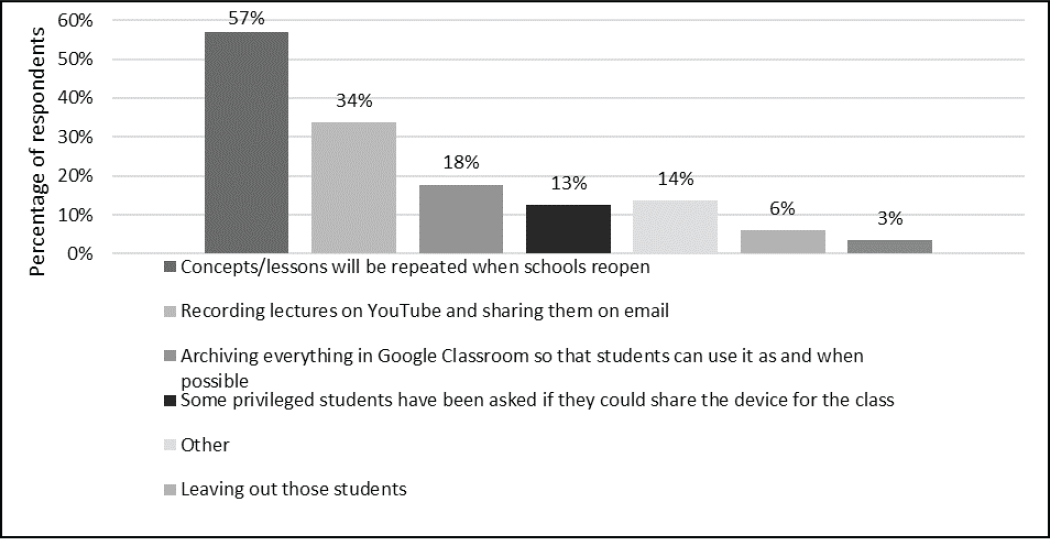
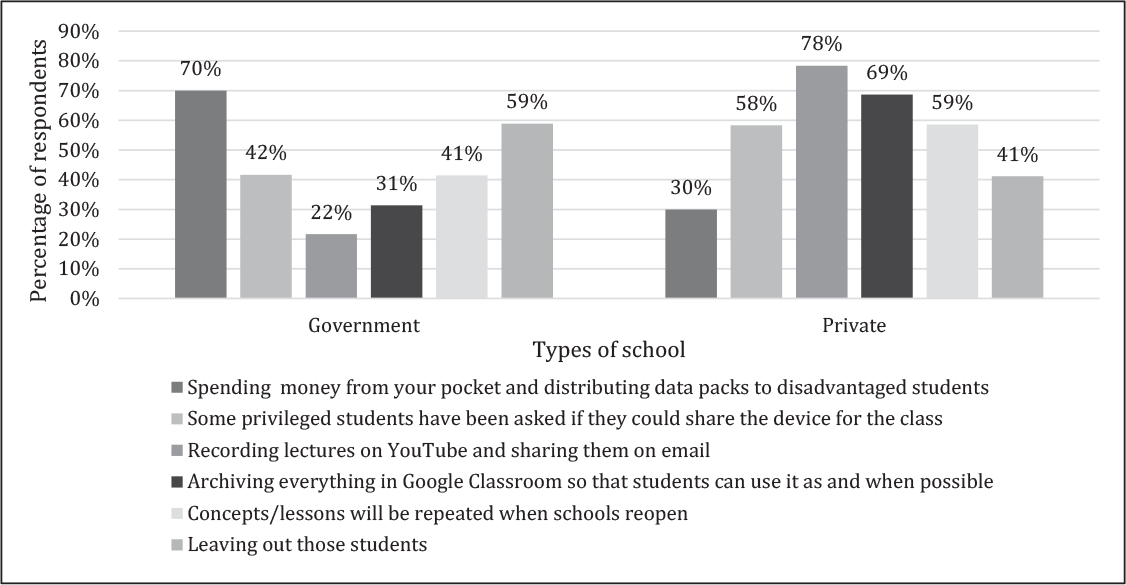
A significant chunk (52%) of teachers are making rigorous efforts in providing education to all groups of students via means such as recording lectures on YouTube (or possibly other platforms) as well as archiving everything in Google Classroom (Figure 14). But various issues are hindering their efforts, such as access to Internet connectivity, ready and reliable electricity connection, and financial constraints. The majority of both government and private school teachers responded that students from disadvantaged communities are being left out from online classes with a hope that the concepts will be repeated at a later date.
Data in Figure 15 reveal that government teachers are spending money from their pockets to help disadvantaged students, and they are also distributing data packs to such students. The data further show that private school teachers are more concerned with recording videos and archiving material to online platforms so that students can use it as and when possible. It implies that they are investing more time and money to make use of Internet facilities. The data also show that the real cause of concern is the access gap for all stakeholders, whether teachers or students.
News articles have interviewed teachers who have tried to engage with those students facing a sharp digital gap: ‘Some students are impoverished. Some failed to respond, so we visited them to see if they needed anything. Many are too poor to afford phones and TV. We helped them by getting their recharge done. Others don’t have electricity and a TV’. Another teacher in the same article also points to the fact of sustained engagement: ‘More than 50 per cent of students are not interested in attending online sessions. We have almost lost mediocre students. We are providing them regular lecturers but we have to constantly coax them to attend the sessions. Some say that their parents carry their phones to work.’ (Banerji, 2020).
The changing nature of the teaching job because of the pandemic and the increased involvement of Ed-Tech companies are creating the perfect storm with regard to salaries and job security across the teaching profession. The next section engages with these issues.
Job and Salary Issues
A report by Central Square Foundation reveals that low-fee private schools are going through a rough phase as they could not collect the fees for the past 4 months due to COVID-19. Since most of these schools depend on the revenue generated through fees, the teachers and supporting staff have not received their salaries for the past 4 months. For instance, in Andhra Pradesh, where teachers of low-fee private schools have not received salaries since March/April (Gopal, 2020). Even among private schools, the worst affected are pre-nursery and primary schools, where no new admissions have taken place. The premier (elite) institutes have also slashed fees by 30– 50% despite having collected fees. The teachers are finding themselves in a quandary as, on the one hand, they are not getting salaries and on the other, they are being asked to conduct online classes, which is an extra burden in terms of financial investment (Thakur, 2020). In other cases, the pandemic has rendered teachers from low-fee private schools and the contract teachers from government schools jobless; they have resorted to menial jobs to survive (Apparasu, 2020; Janyala et al., 2020). Even the teachers from elite and international schools have been forced to resign during the pandemic on the grounds of the economic crisis faced by their employers (Gaikwad & Gehi, 2020).
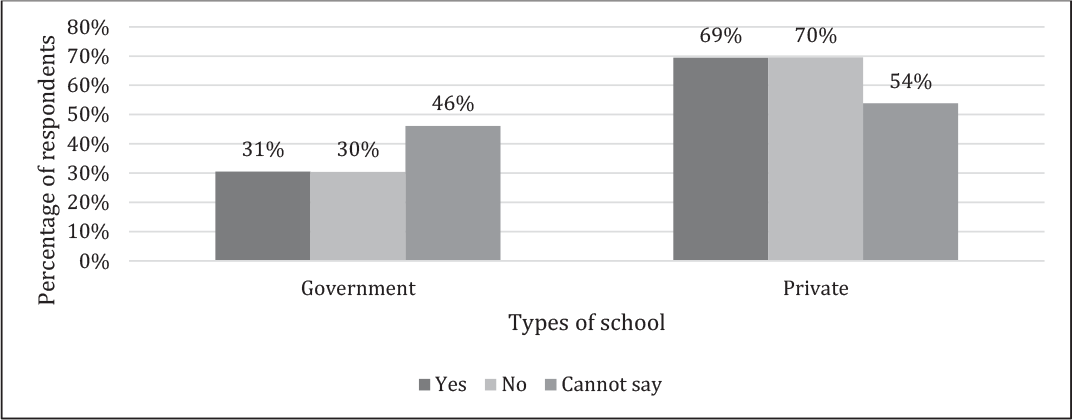
To understand the ground realities in the national capital as well as the neighbouring region, the survey inquired about ‘how has the lockdown situation impacted your salary (remuneration)?’ Under this section, teachers were asked independent yet related questions; the section was deliberately designed to gauge the reliability and consistency in teachers’ responses. At the outset, teachers were asked if ‘they are getting regular salary during the lockdown period?’ A significant majority of teachers (88%) replied with yes; 69% of these teachers are representing private schools and 31% teachers are from government schools (Figure 16).
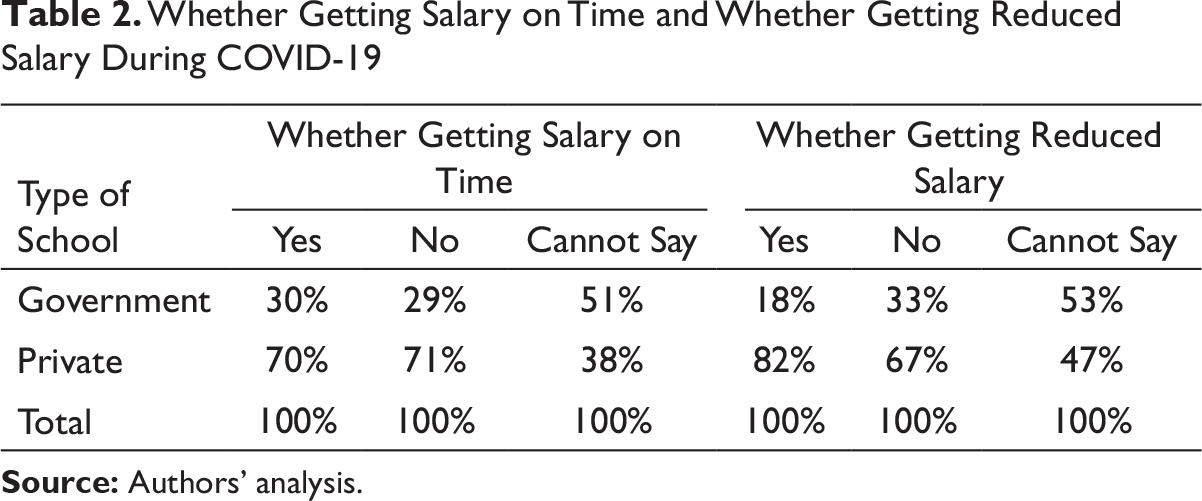
Subsequently, they were asked whether ‘they are being paid a salary on time’. A large chunk of respondents (90%) conceded to receiving salary on time. In disaggregated terms, 70% of these respondents are employed in private schools while remaining 30% speak for government schools (Table 2). By and large, teachers were consistent in their responses to these two questions. Our data show that the majority (over four-fifths) of teachers are getting regular salaries on time. This is perhaps because 73% of respondents are permanently employed, while only 27% have been employed on a contractual basis.
However, when participants were asked whether ‘they are getting reduced salary during the lockdown period’, approximately one-third (27%) of all sample teachers (288 in total) conceded in affirmation to the given statement. Not surprisingly, 82% of these 27% teachers are working in private schools (Table 2).
Whether Getting Salary on Time and Whether Getting Reduced Salary During COVID-19
Moreover, our data about the employment status of teachers have also indicated that 27% are contractually associated with their respective institutions. The data suggest that teachers working on contract have to bear the brunt of lockdown.
Data on these three related questions have provided insightful information on the discrepancy in teachers’ responses. On one hand, 90% of teachers are saying that they are getting regular salary on time. However, on the other hand, approximately 30% are getting reduced salary; this discrepancy in data perhaps shows that even regular teachers are not necessarily getting their full remuneration.
As mentioned at the beginning of the section, the issue of jobs and payment has made headlines outside of Delhi. Private schools depend on fees for the teacher salaries, and in the lockdown, some parents have themselves been out of work and, therefore, unable to pay, or they have engaged Ed-Tech companies, believing that the education received there is better than what their school might be able to provide. Large numbers of children who were in the private sector, therefore, are losing their teachers, and their schools might go out of business and close. This means that at the end of the pandemic, there might be more children needing to access government schools which, in turn, might not have the extra capacity.
News articles have reported how many private schools have reduced their staff to 50% to cope with financial issues. ‘Mostly, 40 per cent of teachers have lost their jobs’ (Sharma, 2020a). Schools claim they cannot function if parents do not pay fees. Some teachers claim they have not been paid salaries for the last 2 months despite conducting online classes (Rodrigues, 2020). ‘In cities and small towns across the country where private schools were seen as a passport to aspiration, teachers are on their knees, with parents unable to pay fees and managements left without money to pay salaries.’ (Janyala et al., 2020). The Telangana private school managements’ association said the private schools were aware of the plight of the teachers. Still, they were also helpless because of the uncertainty in COVID-19 pandemic (Apparasu, 2020). According to the press, teachers are selling vegetables and turning to manual labour to survive.
Government schools might have continued paying their teachers, but para and guest teachers have seen their contracts terminated. According to a report, there are over 20,000 guest teachers across over 1000 government schools in Delhi, who get paid daily (₹1,040–1,400 a day) and are not paid for weekends, vacation, and national holidays. When the schools closed end-March, they were out of work, and many had to look for alternatives (Our Educators Deserve Better, 2020). The Delhi government’s education department issued an order on 5 May, stating ‘All guest teachers shall be paid up to May 8, 2020, and in summer vacation only if they are called for duties’. Shoeb Rana, president of the All-India Guest Teachers’ Association, said that many guest teachers used to get work during the summer break at summer camps for Mission Buniyaad classes and remedial classes (Iftikhar, 2020). But since all schools have had to remain closed, these teachers have not been called.
Conclusion
The article has attempted to investigate the ground realities teachers are facing while taking online classes. It has brought to the fore the multi-layered and multidimensional issues encompassing the infrastructural impediments; the digital divide in terms of access, usage, and skill gaps of both government and private school teachers; and the role of Ed-Tech companies that are trying to replace the teachers rather than assisting them in their work.
The analysis of the data collected has indicated that many teachers are tech-savvy and are comfortable substituting online teaching for physical face-to-face or offline teaching, but only as a remedy to continued teaching and education during the current era of COVID-19. The survey also revealed that teachers in urban areas, including the national capital, belonging to the unreserved strata of society, as well as teaching in private schools, are facing the challenge of access to Internet connectivity. While private school teachers in this survey, on the face of it, seem to have more training and support, the lack of Internet access affects them just as severely as government teachers. If teachers from Delhi are encountering issues, then the situation must be far worse in tier 2 and tier 3 cities. The government therefore needs to focus on providing infrastructural support to all stakeholders so that they are able to use and reap the dividends of technology.
Two major issues have surfaced: firstly, teachers’ pedagogical skills do not cater to the online teaching environment, nor have they been trained for these kinds of situations. The picture that emerged is that even when teachers are digitally skilled, it does not mean that they have the know-how on how to teach online classes and prepare materials appropriate for online education. The sudden and unanticipated switch from face-to-face to online education hardly left them with adequate time to prepare for an alternative mode of teaching. Teachers also do not seem to have been trained in how to support those most disadvantaged, who, in turn, will be suffering most from school closures.
Ed-Tech companies that seem to offer a solution are in reality only offering a solution to the more privileged sections of society. A review of the press reveals that Ed-tech networks are influencing governments through advocacy to integrate data analytics and learning analytics technology into educational policies. Technology should exist to help teachers rather than the other way round, where teachers are being substituted with technology.
The key takeaway of the present study is that teachers need pedagogical training for online situations. While we might think COVID-19 will pass and this will all be over soon, other disasters might warrant more online delivery, such as earthquakes or floods. Hence, it is essential that in today’s digital world, teachers can switch from face-to-face teaching to online when required and that they can support all of their students no matter from which section of society. However, teachers should have autonomy and liberty in deciding when and where to integrate technology to support their teaching practices. These days though, primarily due to pandemic, teachers have to mandatorily resort to technology, which seemingly is going to become a new norm in the future.
Footnotes
Acknowledgement
The authors wish to acknowledge that the funding for this research was provided by Institute for Research and Development in School Education (IRDSE), Modern School, Barakhamba Road, New Delhi, Delhi 110001, India (
Declaration of Conflicting Interests
Funding
The authors received no financial support for the research, authorship and/or publication of this article.
