




Abstract
In the field of migration and development, the role of diasporas has been examined critically because of the political consequences and culturally informed moral norms often attached to their engagement with their country of origin. These shape the nature of their interactions. Drawing on two case studies of diaspora philanthropic interventions in post-war Sri Lanka, this article applies a post-development framework to study the complexities of transnationalism. These cases highlight the complex and uneven relationships between local and diaspora actors, and in doing so illustrate the various kinds of diaspora organizations and their ‘constituencies’. The cases also show that diasporas can have a facilitative effect on local development, but that the process of change is rife with institutional complexities, competing agendas and shifting priorities over time. The article speaks to the need to conceive development as a process, even more so in a post-war context. This requires much time to understand the exact impact of diaspora interventions in any local situation.
Introduction
In the field of migration and development, the role of diasporas has been critically looked at (Page & Mercer, 2018). This is because of the political consequences and culturally informed moral norms often attached to their engagement with their countries of origin, which shape their interactions and interventions (Horst, 2007).
In post-conflict Sri Lanka, the societal rifts caused by the civil war shape the way diasporas position themselves. They also influence how they seek to counteract the impact of the war on people from diasporas’ places of origin. In addition, several government actions, such as the introduction of the discriminatory Sinhala-only Language Act of 1956 (Daniel & Thangaraj, 1995), and the land reform programme of the early 1970s (Samaraweera, 1982), inform the kinds of engagement of the diaspora.
Over time, the attention to ‘diaspora engagement’ with post-war development issues in Sri Lanka has increased. This is in step with the growing general awareness of the envisaged role of diaspora organizations in developmental interventions in their countries of origin (Gerharz, 2014). However, in terms of the scale of operation and duration of projects, this role is contingent on the shifting political perspectives of succeeding governments towards these ‘private’ and ‘external’ interventions (Brun & van Hear, 2012). The government of Sri Lanka has perceived such interventions with certain reservations. This is because of the role diaspora groups might have played in the civil war (1983–2009), and how this might be re-enacted through new diaspora interventions. This particularly applies to organizations with historical ties to the Liberation Tigers of Tamil Eelam (LTTE) (Orjuela, 2011). 1 However, such suspicions by the government extend to other diaspora engagements in Sri Lanka. Tensions about the role of diasporas also arise from discrepancies between the expectations and motivations of diaspora actors and those involved, or influenced, locally in Sri Lanka. In addition, there are general issues of trust between the actors who are affected or involved in the local context where the diaspora interventions take place. While the relationships between diasporas with their immediate families and networks do not seem to be considered problematic, any form of formal collective operation is looked at more critically by the state, since through the diaspora development interventions—also the relationships with local communities affected by war are re-established. In fact, diaspora engagement will inevitably link them, as transnational actors, to domestic societal processes at local and national levels.
Post-war Sri Lanka has witnessed a mushrooming of diaspora-initiated projects, especially in the Northern and Eastern Provinces. However, to date, there are no consolidated data available on the nature of these projects, their objectives, their scale of operations, or the human and financial resources involved. This lack of information is primarily due to restricted communication and coordination between diasporas and the state, both at the local and national levels. To fill this gap, our efforts to map diaspora-initiated projects have resulted in in-depth insights into 20 diaspora projects, in the Northern and Eastern Provinces (Munas, forthcoming). These projects are diverse in their objectives, types of intervention, targeted groups, geographic coverage and internal governance structures. The diaspora projects studied focused on a range of interventions, such as the recovery of livelihood opportunities, enhancement of skills and capacity, housing and rural infrastructure development, preserving and promoting culture, environmental management, peacebuilding and reconciliation, and psychosocial support to deal with war-related trauma. The variety of these themes illustrates the significance of diaspora contributions in contemporary Sri Lanka’s post-war recovery processes, notably at sites where the state falters. Nonetheless, while recognizing the significance in the short and medium term of the many diaspora contributions, a critical analysis is imperative, to assess how these interventions may result in enduring improvements for local actors, notably through improved reciprocal transnational linkages between local communities and diasporas.
Through its specific focus on post-crisis interventions, this article adds to the body of literature on the transnational engagement of diasporas. The goal is to highlight the complexity of (successful) transnational engagement to further local development in a post-conflict governance landscape. The article explores diaspora collectives’ transformative roles in development projects. This article also analyzes the inherent challenges facing diaspora-initiated development projects that seek to bring about social change for local communities. Drawing on two case studies, we show how diaspora-initiated projects influence power relations between the actors involved, both in the design and implementation processes of the projects. To this end, this article focuses on negotiations over ideas, related agendas and priorities, resultant actions and contestations.
The two (still ongoing) projects we focus on in this article were initiated by diaspora organizations based in Australia and the United Kingdom. Both projects focus on the physical construction of amenities, yet their objectives are quite different. While one project concerns the construction of a temple in a rural settlement, the other project seeks to rejuvenate a ‘tank’, a water reservoir, in a small town. Our examination of these projects highlights the complex and uneven relationships between the local communities and the diaspora groups, with an additional complicating role played by the state. The discussion also shows how diaspora organizations and their ‘constituencies’ may be markedly different in the way they view politics and the purpose of the development interventions. The findings demonstrate that the contribution of diasporas to local development is confronted with institutional complexity, competing agendas and changing goals over time of all actors involved.
The article is structured as follows: After a brief outline of our key theoretical points of departure, we discuss the methodology applied and the selection of the case studies. In the next section, drawing on fieldwork conducted in Sri Lanka and the United Kingdom, we provide an in-depth analysis of the two cases to understand the priorities, legitimacy and power relations linked to the diaspora interactions. The section thereafter juxtaposes these two cases, which allows us to bring in the larger discourse concerning the role of diasporas in post-crisis contexts, with a focus on their role in post-war development. Finally, the article concludes with a critical policy analysis, reflecting on diaspora engagement in a complex multi-actor post-war recovery context.
Diasporas, Transnational Engagements and Local Development
A critical analysis of the conceptualization and implementation of local development initiatives by diaspora groups in a post-war environment is imperative to understand the long-term significance of these interventions. Furthermore, the question of legitimacy in a transnational context helps us understand the alterations to social order through development interventions, where development initiatives are conceived from afar and delivered in a remote context. Such a critical perspective helps to analyze the role of power, changing power relations between different actors in the local communities and diasporas, and diasporas gaining legitimacy as the result of diaspora interventions.
In this section, we bring together four different strands of literature to better understand the role of diasporas in post-war processes through engagement in transnational development projects. These are (a) the nature of diaspora interventions in local development; (b) the diaspora interactions with post-war processes; (c) the post-development literature; and (d) actor-oriented approaches in a transnational context.
The Nature of Diaspora Interventions in Local Development
As collective structures, transnational networks and organizations have emerged as significant agents in delivering development to their places of origin (Faist, 2008). At the same time, it is not always clear how they decide how to focus their resources, as organizations may have opaque, hierarchical forms of decision-making. For instance, women’s voices are still heard too little in diaspora collectives. Similarly, we know little about who is involved in instrumental roles at the other end of the transnational corridor (Dhesi, 2010; van Naerssen et al., 2015).
The notion of, diaspora for development, has also received criticism. For one, it is considered a western concept (Sinatti & Horst, 2015) promoted by host governments seeking to bring in migrants and diasporas as co-funders of development initiatives. Several scholars view diaspora support as merely philanthropic that does not lead to long-term sustainable engagement (Sinatti & Horst, 2015). Another important critique is that the enactment of the migration–development nexus is generally top-down, and leans heavily on the perspectives and interests of the diaspora groups rather than (also) focusing on the needs and aspirations of the recipients of the assistance in the places of origin (Gerharz, 2014).
Diaspora philanthropy channelled through faith-based organizations is a common form of developmental assistance and a gift from diasporas to the places of origin that enables the transfer of migrant resources (Viswanath & Dadrawala, 2004). This form of philanthropy, like donations to religious and charitable organizations, is prevalent among Indian diasporas (Kapur et al., 2004)
The Interaction of Diasporas in Post-War Processes
The binary of positive and negative roles of diasporas, 2 as it is often presented in conflict studies, needs to be viewed critically as their roles dynamically shift between diasporas as ‘long-distance nationals’ (Gerharz, 2010; Van Hear & Cohen, 2017) and peacemakers (Cochrane et al., 2009). Diasporas are particularly likely to engage in a post-war context when there is a negotiated peaceful settlement, as opposed to a ‘victor’s peace’, 3 when diasporas may feel defeated (Van Hear & Cohen, 2017, pp. 4–5). In the case of Sri Lanka, the post-war period included a long process whereby ‘the centre of gravity’ of the Tamil diaspora, in terms of leadership and direction (Brun & Van Hear, 2012), shifted. This shift contributed to a change in interest and scope of diaspora support in post-war Sri Lanka. Literature on the Sri Lanka diaspora largely focuses on their refugee status (Fuglerud, 1999), diaspora formation (Fuglerud, 1999; Guribye et al., 2011), nationalism (Fuglerud, 1999), political struggle and political engagement (Brun & Van Hear, 2012; Van Hear & Cohen, 2017), and culture (Canagarajah, 2008). It follows that adding to this body of work, an in-depth account of the engagement of the heterogeneous (Vimalarajah et al., 2011) Sri Lankan diaspora with post-war development will enrich the existing knowledge base.
Post-Development Literature
The development literature has extensively debated the value of the concept of ‘development’ (Crush, 1995; Ferguson, 2015; Gerharz, 2014; Ziai, 2007). The concept of post-development (Escobar, 1995) is relevant in this article as diasporas conceive the places of origin as underdeveloped or less developed or deprived. In a post-development order, it is necessary to look at the assumptions of the diasporas on which transnational development-oriented philanthropic projects are based (Qureshi, 2018), as well as the intended social change in local settings. The two philanthropic interventions of the diasporas discussed in this article employed two different theories of change. These included different assumptions regarding local conditions and the intervention’s (non-linear) approaches as to how change could be brought about. While one project seeks to engage with the delicacies and complexities of society, the other uses a top—down approach to prescribe developments expected to bring about change in post-war zones.
Both diaspora perspectives immediately raise concerns about the role of power. A distinction can be made between economic, social, political and cultural forms of power, even though these are often strongly enmeshed (Crush, 1995). The role of power and asymmetry in positions between actors involved in developmental projects comes to light through the notion of philanthropic ‘gift giving’ (Dekkers & Rutten, 2018). In more everyday social situations, gifts are an elementary form of exchange in social life, also as an attempt to secure continued reciprocal engagement. Yet gifts can also be a means to gain control over others (Gregory, 1982). Gifts attached to religion bring in further complexities, as they may be linked to matters of morality and religiosity, thereby subjecting individual interests to both the concrete and more abstract interests and beliefs of a religious community.
The two cases of diaspora involvement presented in this article can be conceptualized as forms of philanthropic ‘gift giving’ or ‘free gifts’ by external actors, given their outright explicit motivation of wanting to ‘do good’ for the communities to which they are connected in Sri Lanka. Development-oriented, diaspora initiatives can have an impact on local contexts by complementing, substituting or compromising developmental conditions (Laakso & Hautaniemi, 2014). A ‘gift giving’ perspective helps to analyse the motives of the diaspora philanthropy of ‘giving back’ to their places of origin while simultaneously placing this act in a post-development arena. In short, gifting is a complicated form of a social contract that originates from diasporas’ sense of obligation to reciprocate (Mauss, 2002). Yet giving gifts obligates recipients to accept these, often under unspecified conditions, making these gifts potentially hazardous (van Dijk, 1999) if long-term commitments are unknown.
Actor-Oriented Approaches in a Transnational Context
The foregoing section makes clear that ‘doing development’ is a social phenomenon involving various actors through different kinds of interactions that follow from identified mutual interests (but often also involve certain own interests). Doing development is then facilitated through relevant forms of agency assisted by investments of various kinds of capital. Given the emphasis on interaction and agency, we suggest that it is more suitable to use the term ’development interaction’ than ‘development intervention’. This establishes and acknowledges the role of all actors involved. A bottom—up approach to the development process will allow us to learn from the experiences of all actors, including those at the grassroots while incorporating the interests, knowledge and expertize of diasporas (Smith et al., 2014).
Such an approach helps to understand the various interactions at local and transnational levels, as these may well traverse administrative boundaries and territories (Gerharz, 2014). Applying this approach to conflict-affected countries such as Sri Lanka, Gerharz (2014) raises three key areas of concern: First, there is a conflict between global and local development experts when the actors’ development agendas concern changes desired. Second, actor diversification and increased interactions between various actors can affect perspectives on locality, local identity and culture change. Third, development needs have various discursive dimensions, including who takes part in the conceptualization of the desired development.
Methodology and Selection of Case Studies
In this article, we examine the interplay between the local communities and diaspora communities using an actor-oriented approach. This interplay changes constantly and rapidly, in response to changes in the wider local and international contexts. Adopting an actor-oriented approach allows us to look into various social interactions, actions and related outcomes. Through this, we can explore research questions like: What do diaspora organizations imagine as development for post-war Sri Lanka? How do individuals and organizations in the diasporas conceptualize, implement and legitimize development initiatives? And how do diasporas maintain their relevance in post-war contexts?
During the period 2017–2018, an in-depth qualitative approach was used to gather data from different actors involved in development processes in Sri Lanka, the United Kingdom (UK) and Australia. Initially, the actors involved in each case were mapped in order to arrive at a range of perspectives of these actors on the process. This procedure was followed by constructing a snowball sample, allowing us to identify and talk to other actors involved in the selected cases. Semi-structured interviews combined with informal interactions at official events, group discussions and participant observations in formal and informal settings were also used as tools. Through this range of methods, data were collected which helped to clarify the differing perspectives of the actors directly or indirectly involved regarding the diaspora-led development interventions. Thus, interviews were conducted with representatives of diaspora organizations based in the United Kingdom and Australia, and in Sri Lanka with local government officers, representatives of community-based organizations, community leaders and members of the communities living close by the temple and the tank, that is the sites of the two case studies. In total, 40 in-depth interviews were conducted.
In addition, group discussions were held in Sri Lanka with committee members of civil society organizations and religious organizations to gain an in-depth understanding of the context, based on their collective views. Finally, local events, community meetings and festivals in the project locations were attended for observation purposes. While the discussions with representatives of diaspora organizations helped capture the transnational dynamics of carrying out ‘development’, discussions with local actors provided better insight into their perspectives, experiences and expectations about ‘development’, for instance by hearing their views on the implications brought about by transnational philanthropic development initiatives.
For a test of rigour, the data were triangulated by way of presenting the preliminary findings to key stakeholders in the two project locations and also at a conference held in Colombo. This conference was attended by members of various diaspora groups of Sri Lankan origin, policymakers, members of civil society, and local and international academia studying diaspora engagement with local communities. Data gathered from the interviews and observations were systematically recorded and thematically coded using NVivo qualitative analysis software.
For this article, we focus on two cases of diaspora-initiated development projects. The first case concerns the renovation of a small water catchment area called a ‘tank’ in Mannar 4 (Northern Sri Lanka), implemented by an organization called Sri Diaspora 5 based in Australia. The second case focuses on a temple-based economic development project in Batticaloa (eastern Sri Lanka), implemented by a Temple Trust. 6 These two cases are selected for their descriptive and process attributes. First, the two cases appear to be similar as both are typical physical rejuvenation projects for post-war zones. However, they differ in their point of departure: The tank construction emerges as the primary function—the need for flood control—while expecting it to provide an aesthetic value. In contrast, the temple project was launched based on its socio-cultural relevance and its value is less functional in a practical and existential sense.
Regarding the process, we highlight three important elements in understanding how diaspora-led initiatives are conceptualized. The first element concerns the modality of operation: while Sri Diaspora has a strong presence in Sri Lanka, Trust is steered from abroad. Second, the project carried out by Sri Diaspora is a typical ‘development’ initiative to rejuvenate infrastructure, while the temple project is symbolic of religious orientation.
Case 1: ‘Messy Development’, Immersions in and Confrontations of Local Realities
Like other districts in the former war zones, Mannar district also shows typical characteristics of uneven development, even underdevelopment. Data from the United Nations Development Programme (UNDP) show that overall unemployment in the district is high, with 55% of the unemployed being youth. The data also show that there are major differences in the level of welfare between rural and urban regions (UNDP- Sri Lanka, 2017).
In terms of migration and demographic shifts, the town area of Mannar Divisional Secretariat 7 noted a growth of its population during the war, as people moved from the interior into the town seeking temporary shelter. Following the end of the war in 2009, the state initiated a programme to resettle people in their places of origin with the aid of housing projects. However, many chose to return to their current locations in Mannar town for employment and education purposes, and also because many had well-established social networks in the town. This demographic shift affected social relations and led to the emergence of new caste, class and religious dynamics. Tensions and rifts created by these interventions also manifested themselves in community participation and ownership of development initiatives, for instance, in the process of constructing the tank (Figure 1).
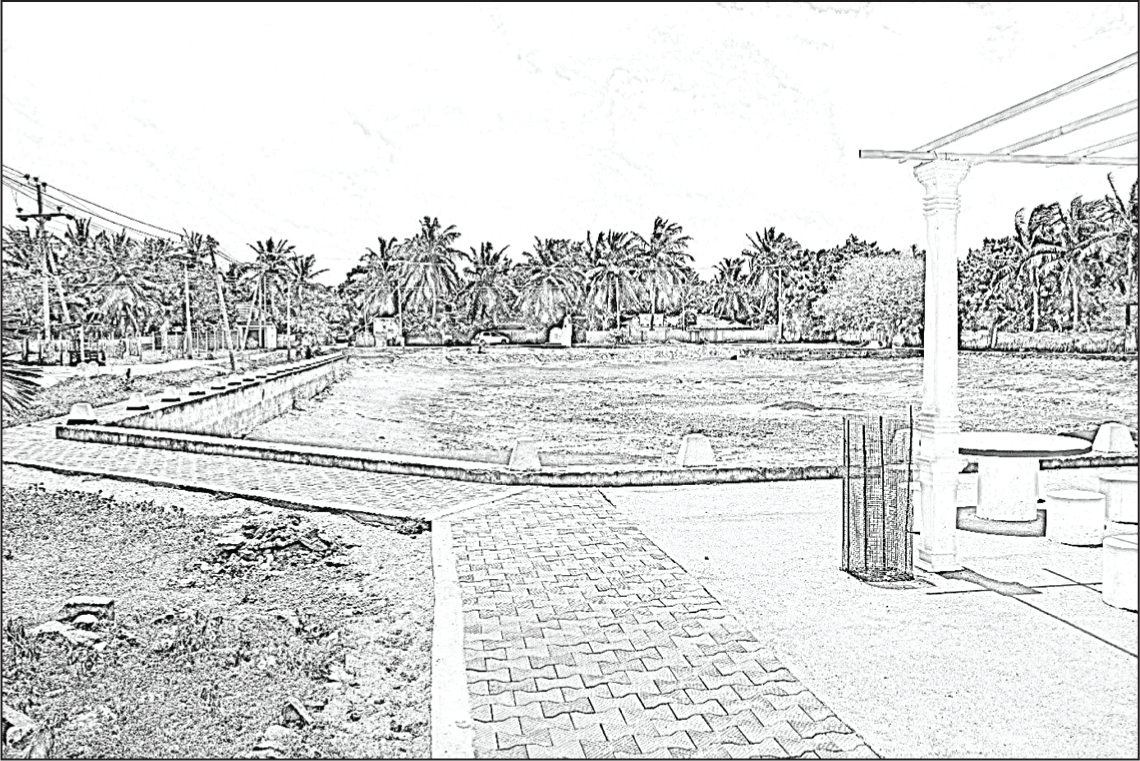
Sri Diaspora is an organization established by a group of people of Sri Lankan origin living in Australia. Membership in the organization is open to people regardless of their ethnicity or religion. The common aim is to improve the lives of the most marginalized communities in Sri Lanka. Subscribing to the notion of sustainability as a basic principle for engagement, Sri Diaspora works on a range of themes, such as urban planning, eco-tourism and sustainable farming and animal welfare, including the rehabilitation of stray donkeys. The organization chose Mannar District because it received little development assistance compared to other districts in the Northern Province. Sri Diaspora introduced various projects intended to bring about societal and economic recovery during the post-war phase in the Mannar district. In this article, we focus solely on Sri Diaspora’s Mannar Town Tank renovation project. Focusing on this specific project allows us to analyse the complex web of actors, their dynamic relationships, the associated actants, and how people give meaning to various actions taking place. The excerpt from an interview below sums up the complicated reality in which this organization works:
‘Look at Katpaham
8
they are probably the largest diaspora organization. When they plan something, it is absolute precision. Ours is messy. We know the dynamic nature of this place. It takes tens and thousands of hours to think and work out what to do. Our kind of immersion here is like, what is this? God, you do not know the issues that we have. Moreover, our staff are just a reflection of what is out there and its long-term struggle to get something real happening.’ (Director, Sri Diaspora, Mannar, June 2018)
Sri Diaspora has put considerable effort into understanding the situation, the context, the problems and the needs. ‘Immersion’ in this context relates to the Sri Diaspora’s notion of development as a long-drawn process to help create meaningful and enduring social change, which they describe as ‘something genuine happening’. This immersion approach requires the organization to physically spend time in the area to gain a deeper understanding of the local culture and understand what local actors need. The next phase is then to enrol and train local staff to find ways of addressing these needs and make sure they are part of the development process. Despite such efforts to understand the local context, some level of elitism was unavoidable. For example, cultural and linguistic incompatibilities were observed when overseas members of the organization were interacting with local communities in English since they did not speak the local language, which was not always followed and understood equally well.
The tank renovation project concerns a tank, or water reservoir, located in a densely populated semi-urban area of the town of Mannar. This particular area has a population of approximately 600 Tamil families who are adherents of the Roman Catholic and Hindu religions. These people were settled in the area through a state-sponsored settlement programme in the 1990s. Today, many people in the area still live on state-owned land, and private ownership of land is limited. Over time the original population increased, as other people moved into the area to seek refuge from the war.
The village tank 9 (which has a depth of about 4 metres) is believed to have been constructed during the sixteenth century by King Sankili of the Jaffna Kingdom, who reigned over Northern Sri Lanka. Many of the tanks that existed before the war were abandoned or not maintained by state authorities or local people. In 2004, a survey to map all the small tanks in the Mannar area was undertaken by Sri Diaspora, the United Nations Office for Project Services (UNOPS), the Mannar Urban Council and the Divisional Secretariat of Mannar. Using these findings, they prioritized 23 tanks that needed immediate attention. They identified the type of action needed and potential actors that could be involved in the renovation process. 10 Given its vision, Sri Diaspora decided to take up the renovation of the tank in Mannar because it provided a ‘good model of development’. They believed that the project would not only help address flooding issues but also provide space for recreational activities like relaxing in the afternoon and activities for children such as paddling boats.
In keeping with the typical steps taken by more traditional development organizations, Sri Diaspora conducted various consultations with representatives of local community organizations to gain insight into their needs. Through this process, the organization soon realized that local people did not seem to value the tank renovation as a development priority. Gradually it emerged that the role of the tanks needed to be understood within a larger array of socio-spatial developments, which we discuss below.
Shifting Priorities
Although Sri Diaspora had sufficient justification to embark on a tank rejuvenation project, not everybody who lived close to the tank agreed on the importance of renovating it, even if they could reasonably be expected to support this given the tank’s function as a water retention facility and as a source of drinking water for animals, such as dogs, donkeys, cows and birds. Although these functions were acknowledged by some residents, for others the tank was primarily suitable as a place to dump household garbage, or the tank area was seen as a valuable piece of land on which houses could be built. In short, among the residents, there was no common view regarding the tank renovation project. In addition, the tank renovation process created anxiety among some people that they might lose their land, something which had occurred in tank renovation projects in other densely populated areas.
Moreover, when local communities were first consulted, they had indicated various other ‘development’ priorities, such as improving local roads, renovating the children’s nursery, and restoring the shrine right next to the tank. This last issue, in particular, led to a request by the local population, represented by the President of the Rural Development Society (RDC), to Sri Diaspora. In June 2018, he said:
‘I said, now you are doing the kulam (tank) work. Can you also do the kovil (shrine) work? For that, he donated more than 70,000.’
While agreeing with the tank renovation effort of Sri Diaspora, the community was able to achieve its objective of renovating the shrine too. As a result, the community became more receptive to the tank project.
The Legitimacy of Sri Diaspora as an ‘Able’ Actor
One concern is whether Sri Diaspora was the right organization to renovate a tank, especially when other technically more capable actors—known for efficiently carrying out large-scale water retention facility improvement in the Mannar district—were present. This was also a question posed by the President of the Women’s Society of Mannar, who argued that Sri Diaspora, as a new organization, had no previous experience, nor specific knowledge, with tank renovation:
‘The multilateral agency [also present in Mannar] has more experience constructing drainages and tanks than Sri Diaspora. But they never opted to work on this tank because Sri Diaspora had already started doing work here.’ (President, Women’s Society, Mannar, November 2017)
Indeed, multilateral agencies are equipped with the human and financial resources to implement large-scale projects of this nature. However, in their approach, these multilateral agencies seldom consulted local communities and limited their participation during the (re)construction processes. In contrast, the approach of the Sri Diaspora was deliberately processual. They saw the tank renovation project as an opportunity to engage with this war-affected community to promote collective empowerment and rebuild social cohesion through joint participation. For initiatives to become sustainable, Sri Diaspora believes in promoting a sense of local ownership in new development projects through ongoing participation but also in-kind contributions, such as shared labour. In this project, local youth were consulted and, at various moments, also involved in the construction and maintenance of the tank.
More fundamental was the mismatch in expectations between the local community and Sri Diaspora. It could well be that those challenging the legitimacy and technical know-how of the Sri Diaspora were people who felt they were not, or not sufficiently, consulted during the initial design and planning phases. For instance, the conceptualization of ‘the community’ by the Sri Diaspora seemed too uncritical, as this was oriented towards organizations for elderly men and male youths. The resulting lack of a gender-inclusive community consultation process may well have led to the dissatisfaction of the community’s women, who had alternative perspectives on the reconstruction, design and purpose of the tank and its immediate surroundings.
‘They (Sri Diaspora) didn’t ask us before, they only told us they are doing the tank renovation. If they have asked, we would have asked for a community hall that is required for our meetings.’ (Women’s Society representatives, Mannar, October 2017)
Sri Diaspora’s legitimacy was also challenged by other key actors, such as government officers, who questioned the ‘technical matters’ of the project. For instance, as illustrated by the quote below, at one point a Council engineer blamed Sri Diaspora for not installing a working water outlet for the tank:
‘Ideally, a tank of this nature should connect with other water bodies in the area. Then only it can take the overflowing water away from the area to prevent further flooding. When I visited the place, though this tank had an outlet, I did not see it connecting with any other source.’ (Local Council Engineer, Mannar, October 2017)
Yet this was hardly a fair assessment, as the original designs of these smaller tanks did not include such outlets. Such concerns, based mainly on technical assessment, led to some friction which, when vented in public spaces, had the effect of casting suspicion on the professional aptitude of the Sri Diaspora. Over time, this framing led to the perception of the Sri Diaspora as being incompetent and undermined their agency, position and reputation.
The concern over the Sri Diaspora’s legitimacy as an implementing agency points to the importance of power relations between actors. Thus, following the survey with respect to all tanks in the Mannar town area, Sri Diaspora decided to renovate one tank, which was prioritized because it would help address flooding in this densely populated area. Only when this particular tank was selected, the local community was informed. Some community members experienced this decision-making process as clearly hierarchical and also that it illustrated limited community engagement. Moreover, although Sri Diaspora continually engaged with the community during the renovation process, this engagement was channelled through particular local community organizations. How well these community organizations represented the views and interests of all segments of the population (i.e. caste, class, generation and religion) was not clear.
Case 2: Development Imposed?
In two villages in the Batticaloa district (in Eastern Province), we studied the construction of a large, brand-new Hindu temple. This project was financed by an overseas charity organization, ‘Trust’, headed by a Chief Trustee based in London, United Kingdom. 11 Trust is an arm of a London-based temple run by people of Sri Lankan origin in the United Kingdom. A portion of the income and donations received by the London-based temple is channelled to assist impoverished villages in Sri Lanka to overcome the impact of the civil war. The Chief Trustee acts as a key figure in making decisions regarding the interventions. Sought to improve socio-economic conditions in the two villages through a range of activities, particularly through the construction of a temple (Figure 2).
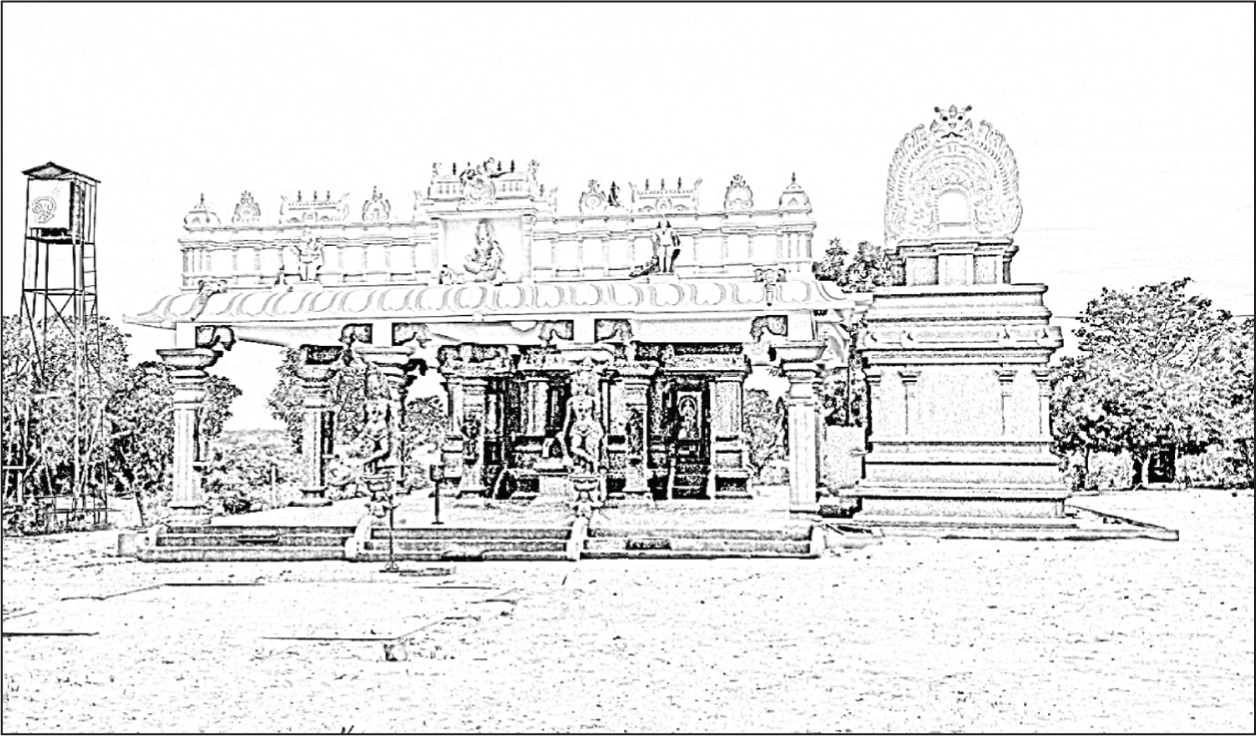
Legitimizing Development: Building a Temple
The decision to devote some of the Trust’s funds to renovate and expand a temple in Batticaloa was mainly because of the Chief Trustee’s close connection with a Member of Parliament (MP) from Batticaloa. This MP had made a strong plea to invest in the Eastern Province. This province was just as affected by the war as the Northern Province but unlike the Northern Province received very little aid. To promote this, the MP connected Trust with the heads of the two villages and with local government representatives. When the members of the UK-based Trust visited the villages in 2016 for an initial assessment, they selected one village for the first project, based on its needs and how severely it had been affected by the war. During the war, this village was under LTTE control and so was deprived of many state services such as education, health and transport. Because of the war, the entire village population was displaced in 2006, to return in 2008. Currently, the village has about 120—130 families, all Tamil and predominantly Hindu. The main livelihood activities are agriculture, animal husbandry, lagoon fishing and labour for daily wages. No one is formally employed in government jobs. According to the Chief Trustee. the lack of water, and the need for a larger temple to replace a temporary structure, were considered critical issues by the villagers:
‘The number one priority was water. Number two, they [people of the village] wanted to make the temple bigger. This temple was a thatched structure before. Number three was economic regeneration.’ (Chief Trustee, London, March 2018)
Although the stated priority of the village people was access to potable water, Trust decided to place the new temple at the centre of their project and to address other needs through the temple. Trust aimed to transform the village temple using their experience with a temple in London to incorporate functions well beyond those of a typical religious nature. They expected the temple to generate income and to serve as the economic hub of the village, notably by providing financial support to establish a large-scale cooperative farm on state land located within the village area. The general idea was that surplus income could then be used for the maintenance of the temple.
As soon as the project activities began, a new temple committee was established to carry out the orders of the Trust and to ensure that the work was implemented as per Trust’s instructions. In this committee, the older generation as well as the youth were represented, as the latter could take on more dynamic roles in the project activities. After a series of covert actions, the priest who had served in the temple before the project began, was ousted because he had protested against the ideas for the ‘new temple’.
As a symbolic representation of this diaspora-led project, a tube well 12 and water tank were installed within the temple premises. Trust ensured that the pump in the tank worked without interruption and that the quality of the water in the tank was good. Furthermore, several tube wells were established in other locations around the village to improve access to water for people living farther away from the temple premises. On an irregular basis, Trust would send a sea container filled with used clothes collected in the United Kingdom to the village temple. On the instruction of the Trust, the temple committee would then sell the clothes and use the money earned to cover part of the temple expenses. In addition, the Trust conducted sewing classes for unemployed girls in the village. Such public actions gave symbolic importance to the new temple among the local population and seemed to help legitimize the activities of the Trust.
Although the original plan was for a smaller-scale temple, Trust’s inclination was to construct a bigger temple in the village as a symbol of progress. This would also extend Trust’s sphere of influence well beyond the periphery of the village. However, not everyone in the community felt that such a big temple would signify progress. Instead, some people argued that a bigger temple seemed to convey Trust’s need to assert its status, rather than to respond to what the village required or could afford to maintain in the long run.
As the quote of the President of the Rural Development Society below also indicates, tensions arose between Trust and the villagers when villagers made suggestions for improvements or proposed alternative ideas about the nature or structure of the temple. The power imbalance was evident in this situation. It derived from the imposed donor-recipient relationship in a war-affected community. In this case, the ‘donors’ compelled the ‘recipients’ to accept the temple project that Trust wanted. The President, Rural Development Society, Batticaloa, said:
‘We are afraid that if we question, it would be considered wrong. So, we are in a condition to accept anything Trust suggests. Ayya (Chief Trustee) is good, but he will not agree with us. I intend to do the right thing with the support of people who can make this possible. If we do not speak up, the next generation will curse us.’ (President, Rural Development Society, September 2018)
However, a segment of the villagers also stated that they expected the temple construction would bring various benefits to the village like employment and demand for construction materials. At the same time, a strong reluctance to criticize or refuse gifts with religious orientations could also have been the cause of the apparent silence and socially acceptable answers we received when we asked about the functionality of the temple.
The alterations to the centrally built structure of the temple shifted its identity from non-Agamic tradition to Aagamic. This subtle Sanskritization process took place with little to no community consultation. Yet this change had major implications for the types of religious practices and rituals performed and the participation of people from different castes. For example, believers from lower caste groups were no longer allowed to perform rituals or ‘feasts’ inside the Aagamic temple, whereas people from the higher caste could. Certain groups from the lower rungs of the caste hierarchy—who used to perform the traditional annual feast (Chadangu) inside the temple—were unable to do so now. So, they performed this traditional, annual feast within the temple premises in temporary huts that separated the main temple from the feast site.
This change asserted the dominance of believers from higher caste groups as temple administrators, extending their dominant role in other domains of rural life.
Uneven Power Relations
The power dynamics between Trust and local communities, who were hesitant to embrace the temple expansion project, can be seen in the disparity between how the local community and Trust envisioned the new temple. These uneven power relations were also manifest in the project implementation process. In order to avoid confrontation with the community, Trust employed a ‘project manager’ who played the role of broker between the community and Trust. Trust initially employed a young man from the village as the project manager. However, he was soon replaced by an outsider because after his appointment it transpired that he also held positions in other community organizations in the village. Trust felt that this could result in a ‘conflict of interests’. The lack of a clear procedure and transparency in the ousting of this manager and the appointment of the new project manager introduced new tensions. Villagers accused the new manager of distorting information to his advantage. They felt that he often manipulated the construction process to appoint his preferred contractors. As a result, over time the community’s concern over the quality and durability of the construction grew.
Trust also deployed the strategy of withdrawing project activities from one village and reallocating the resources from the withdrawn activities to another village to avoid any disagreement related to project activities. This withdrawal was communicated to the villagers through the project manager. As the following excerpt below from the Chief trustee shows, this was a deliberate ploy to ensure compliance. This way of manipulating actions relegates local communities to a passive role where it is made virtually impossible for them to exert their agency in seeking a way out of conflict:
‘Those people [in the previous village] were furious when we started working in the other village because all the resources are now going there. Then they started listening to us so the project could be started again in previous village.’ (Chief Trustee, London, March 2018)
Overall, what emerges here is that initiating collective engagement and responsibility towards achieving a particular community project, as stated in Trust’s vision, has taken on a rather opaque format. The focus on a major temple construction largely ignored the reality and everyday needs of the local population, resulting in a project of a scale financially untenable for the village in the long term (expenses related to the temple, such as cleaning, general maintenance, electricity bills and salaries of employees) given that the income-generating ideas of Trust never materialized. As the temple structure expanded beyond its original plan, it consumed additional financial resources. Also, frictions and tensions that gradually emerged between the community and Trust lengthened the implementation phase of the temple construction. The net result was a temple that did not meet the needs of the local population and was not a sustainable project, but rather increased the local community’s dependence on Trust. As the financial ability of the community to maintain the temple is unlikely to improve soon, the temple may gradually deteriorate as delayed repairs will lead to structural damage.
Discussion: The Role of Diasporas in Post-War Development
Most studies of diaspora engagement in Sri Lanka have focused on the role of diaspora Tamils and how they influenced the conflict and the position of Tamils in Sri Lanka, mostly from a political perspective. It is crucial to broaden the concept of diaspora involvement from this narrow focus to include philanthropic, voluntary, charity-based and development-oriented organizations and networks of youth. The cases of Sri Diaspora operating in the Mannar district, and Trust working in the Batticaloa area, are clear examples of such ‘new forms’ of diaspora organization. Both emerged recently and seek to achieve certain ‘development’ goals while negotiating interests. The discussion of both projects has made clear how differently diaspora organizations conceive development. While Sri Diaspora sought to adopt a processual, bottom–up approach to development, the Trust project used a top–down approach. Yet both approaches showed certain limitations.
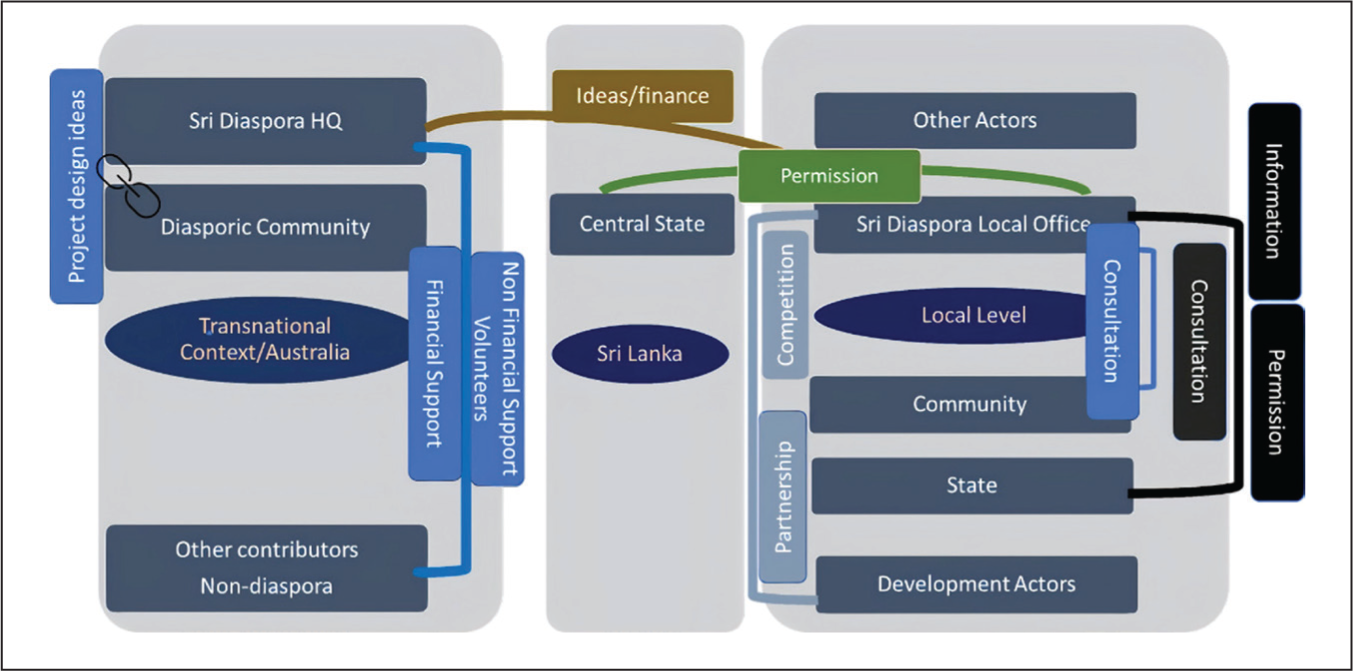
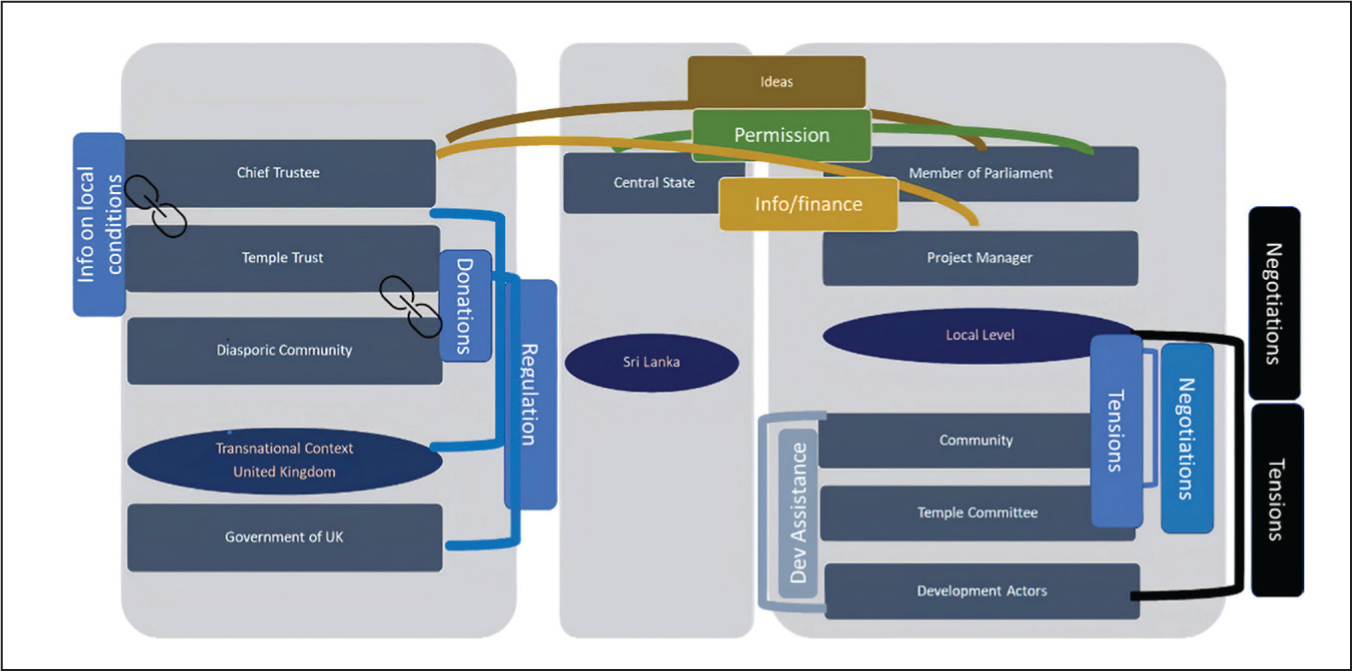
As illustrated by the two models in Figures 3 and 4, the projects adopt different approaches and degrees of consultation with relevant actors in the project locations. For Sri Diaspora, the approach was to consult all parties concerned, accepting that this might lead to certain tensions and conflicts of interest. In contrast, Trust’s overall approach was to work under the theme of religion in its engagement with local communities. The focus on religion gives space for Trust to stifle any underlying tension that emerges due to diaspora engagement in local communities. As these different approaches to development interventions can have varying implications for the socio-political environment, their differing perspectives on development in a post-war situation must be critically analysed. To this end, we employ a post-development lens in analyzing and comparing the two projects by asking three main questions: (a) how were the projects conceived by the diaspora groups, (b) how were they locally understood and (c) how were they implemented.
A Decision-Making Model: Sri Diaspora.
Decision-Making Model: Trust.
Post-development discourses critically engage with notions and assumptions of ‘superiority’ attached to development practices that are driven by global agendas from the North. The critique not only centres on how the set objectives were derived, but also on how in practice development projects may perpetuate inequality, existing hierarchies and regimes of representation. These critics emphasize the discursive practices of development since they help to deconstruct power/knowledge formation (Escobar, 1995). Drawing on the two cases discussed here, we take this discursive practice element forward by problematizing it further and bringing in the complexity of transnationalism. Marchand (2015) argues that even though the issue of post-development is now much debated, it remains underexplored in migration studies (Mazzucato et al., 2006). The pre-established connection that diasporas have with the home country distinguishes them from conventional transnational development agencies, makes them potentially more aware of local issues and needs and more knowledgeable about the relevant processes to bring about change. In that sense, when diasporas engage in ‘doing development’ in a home country, the usual ‘insider-outsider’ differentiation is far more obscure.
Yet, the knowledge of diaspora organizations about local situations and their sense of local development agendas has been much debated, given the evidence of tensions between diaspora organizations and local actors (Gerharz, 2014). Lachenmann (2009) argues that a lack of focus on local knowledge may lead to a ‘system of ignorance’. Lack of knowledge regarding local situations ignores the dynamics arising during the implementation of interventions, notably when they lead to encounters with other social, economic and cultural (including religious) interests. It is not surprising that attempts at initiating social change on the basis of partial knowledge may indeed lead to ‘systems of ignorance’ and the failure of development projects. In the case of diaspora-led development, the (possible) ignorance is often unintentional, since the diaspora organization assumes it has good insight into the local situation. Ignorance may be more intentional if diaspora groups are overly keen to show progress in order to promote their self-esteem or satisfy donors.
In the case of Trust, the very choice of the temple as a development project and the effect of such an intervention on local communities is questionable. This case highlights the diaspora organization’s strategic neglect of the local context to achieve its own project goals. Thus, Trust chose to ignore certain religious practices linked to the temple architecture before the reconstruction. The ‘restructuring’ of the design then had the net effect of also ‘restructuring’ the interaction of people with the temple (and with each other), as villagers from the ‘lower’ castes were excluded from the more sacred areas of the ‘restructured’ temple. As noted earlier in this article, the intended change reflects the London-based temple and the larger global movement on Sanskritizing temples.
Sri Diaspora embodied the hybrid characteristics of being both ‘local’ and ‘foreign’. Even though Sri Diaspora’s approach was much more processual than the approach taken by Trust, Sri Diaspora used its position to manoeuvre its actions in challenging situations, for example, gaining permission from state authorities for certain activities ahead of involving the local community. More subtly, also the choice of diaspora members (including interns from overseas) to be involved in the Sri Diaspora project, who had to communicate with local actors in English in a rather rural setting such as Mannar, suggests that the organization maintained somewhat elitist overtones.
Power Relations and Legitimacy
Regarding the role of power within a transnational space, both initiatives introduced a new/renovated physical/material structure to the villages, thereby altering local power relations as these structures became immersed in larger socio-geographic spaces. This shows how negotiation processes are dynamic and may change significantly over time during the implementation of a project. The temple project had a typical ‘top-down’ approach as its board and local implementers provided little space for negotiation. The social network of Trust further reinforced existing power hierarchies by, for instance, using high-level political connections to manipulate the local government permission process and to deal with local tensions. However, the state’s role in the project design and implementation stages was never substantial, but facilitative at best. In addition, the setting up of new institutions within the village introduced new power imbalances. It seems that there was little room for actors other than Trust. This undermined their agency and curtailed people’s participation in decision-making. Suspending project activities, changing project personnel and creating new institutions were some of the modes of power manipulated by the project implementers.
Power asymmetry is also visible in the development process used in the Sri Diaspora project. As discussed above, when local staff were unable to bring about the desired changes with local, regional and national authorities and sometimes within the community, the diaspora identity was used as a source of power to ‘drive performance’. Access to high-profile contacts, the ability to demonstrate specialized knowledge, and the use of English as the principal language for communication are strategies used in negotiating with the community and other key actors like government and international development agencies. However, this does not mean that the communities were powerless in their dealings with the diaspora partners, since they may be able to exercise power in other ways, for instance, through individual and collective actions (Reed, 1997). They, too, use their agency in negotiating with diasporas. In the case of the temple renovations, the local community subtly resisted the actions of the broker who was appointed by the Chief Trustee, had direct connections with Trust and could influence them. The tensions that emerged within the community resulted from this subtle form of counter-power, which eventually brought Trust to reorient its activities to reduce local tensions. In the case of the Sri Diaspora project, when priorities diverged, the community was able to use their agency to negotiate for projects addressing other needs that had not been prioritized before.
How power is applied varied between the two projects because of their distance (or proximity) to the community. Sri Diaspora’s commitment to the locality was well established. Because of Sri Diaspora’s choice to have its headquarters in the same community, they could always be questioned and challenged by local people as well as by other actors like the local government and religious bodies. In contrast, Trust operated from a distance, which made it more difficult for the local community to hold the organization accountable for its actions. Furthermore, since the community had to turn to designated intermediaries, such as the project manager, they could not channel their grievances directly to the members of the Trust.
Gifts from the Diaspora
A gift from a donor to a recipient community introduces new power dynamics, a sense of obligation to reciprocate, and collective responsibility (Mauss, 2002). The way the temple was reconstructed was a surprise for the local community, who were expecting a modest temple structure like the earlier structure. However, upon seeing the much grander design, they had little option but to accept it since the temple was provided as a religious gift. Socio-religious norms thus made it hard to refuse its reconstruction or to demand that the funds for the building be spent on other community needs. The fact that the gift comprised a temple made it also hard for the local community to communicate their anxiety and discontent about the irregularities and malpractices associated with this project, because of the ‘holiness’ or ‘religiousness’ attached to the temple. The community’s discontent was thus mildly formulated and carefully worded to avoid this being interpreted as a critique of religious activities. Although people agreed with the initial design of the new temple, it also raised concerns because the project engendered a sense of collective responsibility for the management and maintenance of the temple once completed. This would come at a considerable cost in a context where local livelihoods were unsustainable. Reciprocity for the gift is, in this case, not necessarily directed towards the diaspora organization but is transferred to the acceptance of religious responsibility. In this way, Trust put the responsibility on the shoulders of the local population not only to manage the temple but also to make it into an ‘economic centre’ by needing to generate income for the temple’s upkeep. Similarly, the tank also introduced a notion of collective responsibility, as it required the community to contribute to its construction and maintenance, and this collective responsibility would be passed on to others in due course. However, where the temple produced a new financial burden because of its increased scale, the tank merely rejuvenated an old concept.
Conclusion
In this article, we have highlighted the complexities of diaspora engagement from afar and its implications for local everyday realities in post-war Sri Lanka. We critically analyzed the involvement of the diasporas through philanthropic interventions in (re)development, the expectations and objectives of the different actors involved, and how this led to varied perspectives on desired versus actual changes. Using two empirical cases, we have shown that diasporas can positively affect local development, but the process of change is rife with institutional complexities, competing agendas (also at local levels), and shifting priorities over time of the various actors involved. We draw four key conclusions from our analysis:
First, some diaspora organizations have revamped their operations and their nature of interactions to be more sensitive to local community inputs at the various stages of post-war situations. The tensions between the organizations’ concepts of development and local expectations show that the organizations’ ideas may be far removed from the local realities of a post-war society. Diaspora orientation towards their homeland, effected through transnational engagement in the form of specific interventions, provides an additional dimension to current discourses on diasporas and development. It is useful to draw here on post-development studies, which emphasize the need to secure participation from all actors involved with, and affected by, a certain development initiative. This requires careful power-sensitive agenda development exercises (now too often set by the diaspora organization), with its relevance to all actors determined through extended and repeated consultation processes.
Second, diaspora initiatives seeking to bring about development in war-affected regions will always produce mixed outcomes, disturbing existing social orders and/or producing new ones. Particularly in post-war situations, interventions by external actors such as diasporas will be met with certain distrust, apathy or even vigilance. This is not helped by fragmented and weak institutions and a weak government presence to react to, and will give rise to societal tensions. Due to established social norms, projects with a religious orientation are less openly and vocally challenged by local actors than would be the case with more development-oriented initiatives. In addition, diaspora interactions will influence power relations among the actors. The skewed power divisions brought about by developmental interventions will also impact the relevance of existing local social institutions and influence the balance in social relations as affected by caste, class, gender and generation. Such power dynamics become visible during the negotiation process where diaspora organizations come into the local arena with pre-conceived ideas and an initial set of organizing principles regarding the envisaged local developmental project. These power dynamics are then further shaped by the nature of the implementation, dependent on whether the project is process-oriented, outcome-oriented, or both. Particularly when process changes are envisaged, more complex negotiations with all affected actors at the local level are required to produce transformative long-term changes that allow for more negotiation space for each of the involved local actors.
Third, diasporas hold an intriguing insider/outsider position. Nevertheless, for local communities, the meaning attributed by a diaspora organization to a particular intervention, which may have associated moral implications, can be contested. This depends on how development is imagined by the diaspora organization, resulting in a certain conceptualization, and how this is implemented locally, with what contributions from local actors. Given the variation in local engagement and associated sense of ownership, some diaspora philanthropic interventions are seen as sheer gifts provided by outsiders to the local communities, while other interventions are seen as more developmentally relevant and call for key input by local actors. However, even interventions shaped as gifts may come with certain social implications, as the Trust project has clearly shown.
Post-war Sri Lanka is witnessing a realignment of transnational interventions for development through diaspora collectives. This article emphasizes the need for earlier inclusion of local communities in these development processes to create meaningful change that is co-owned. This requires a more inclusive approach from diaspora organizations that takes the notion of transnational engagement as a reciprocal and common learning space to heart. The result may be societally embedded micro-level changes rather than more prestigious, tangible projects.
Footnotes
Acknowledgements
We are thankful to the anonymous reviewers of the Journal of South Asian Development and Professor Carol Upadya for their feedback and suggestions to improve the article further. We extend our heartfelt gratitude to Dr Aria Merkestein for spending her valuable time reviewing and editing this article. Our sincere thanks also go to Ms Chandima Arambepola, who reviewed and edited this article during the early stages of its development. Further, we acknowledge the generous financial support from the Ministry of Foreign Affairs of the Netherlands and the Embassy of the Netherlands in Colombo.
Declaration of Conflicting Interests
The authors declared no potential conflicts of interest with respect to the research, authorship and/or publication of this article.
Funding
The authors disclosed receipt of the following financial support for the research, authorship, and/or publication of this article: This research was supported by the Ministry of Foreign Affairs of the Netherlands [grant number DVB/CU-BPZ-374/15].