




Abstract
Rice is the leading cereal crop in Nepal and an important source of calories and plant protein. Despite the importance of rice, there are reports of widespread cultivation of older varieties with considerably large adoption lags. This warrants further investigation into the factors that influence rice farmers’ adoption decisions. Risk attitude is reported to be an important determinant of farmers’ decisions. However, in Nepal, evidence of the effect of risk attitude on the adoption of improved crop varieties is limited because this important factor is not considered in adoption studies. This article, therefore, connects field experiment, theoretical understanding of farmers’ risk attitudes and empirical models with the aim of investigating determinants of farmers adoption of improved rice varieties in Nepal. The results show that majority of farmers currently grow old varieties. The top four varieties—Sona Mahsuri, Sarju-52, Samba Mahsuri and Radha-4—have an average varietal release age of 27 years. By estimating a binary response regression model, this article shows that risk attitude is a significant determinant of rice farmers’ adoption decision. Specifically, the results show that risk-tolerant farmers have the lowest propensity to adopt new improved rice varieties. This article, therefore, highlights the importance of promoting holistic benefits over making risk-reducing attributes salient when new crop varieties are developed and disseminated to farmers.
Introduction
Farmers’ low level of adoption of new technologies in developing countries has been a long-running concern. Several studies have shown that adoption rates of new technologies in these countries do not meet expectations (Ugochukwu & Phillips, 2018, p. 373). Despite the importance of rice to Nepal, there are reports of widespread cultivation of older varieties with considerably large adoption lags of about 12 years (Thapa et al., 2019, pp. 1–628). One explanation for this outcome is that there are uncertainties with the pay-off of adopting such technologies. The implication is that a decision-maker (hereafter DM) may have little motivation to adopt a technology if the risk DM perceives to be associated with the new technology is greater than the perceived benefit.
Empirical evidence in the agricultural technology adoption literature supports the assertion that risk attitude is an important determinant of farmers’ adoption decision. On one hand, studies show that the likelihood of technology adoption increases as risk aversion increases. On the other hand, there are findings that risk-averse farmers are less likely to adopt new technology, thus uncovering heterogeneity driven by risk attitudes. Crucially, evidence of the effect of risk attitude on the adoption of improved crop varieties in Nepal and across South Asia is limited, as this factor is not given considerable attention in adoption studies.
Farmers frequently make decisions within the confines of uncertainties and risks; thus, understanding risk attitudes are crucial to predicting farmers’ adoption behaviour. The justifications for examining farmers’ risk attitude as a determinant of adoption decision in this article is from two perspectives. First, the introduction of new crop varieties is not without uncertainties and risks, given that external factors such as weather and soil conditions affect crop performance. The implication is that for agricultural technologies clouded by uncertainties and risks, farmers’ risk attitude will be pivotal in such adoption decisions. Second, farmers choose to adopt a new rice variety depending on whether their needs are addressed by the attributes of the improved variety. In this regard, attributes that may be beneficial for one farmer may be perceived as a shortfall by another farmer. Making these choices usually involves a trade-off as no single improved variety can address all the needs of farmers; for instance, many new improved rice varieties are developed for their attributes to withstand abiotic stress. However, under normal conditions, the grain yield and quality are similar to the older improved varieties. Thus, it can be hypothesized that risk attitudes would be one of the major drivers of adoption decision in such an instance.
The summary of results in this article is that most farmers currently grow old varieties, of which the top four cultivated varieties are Sona Mahsuri, Sarju-52, Samba Mahsuri and Radha-4. The majority of farmers reported that they have never changed their varieties since they began growing them. Crucially, the results show that risk attitude is a statistically significant determinant of adoption decision. Specifically, more risk-tolerant farmers are less likely to adopt new improved rice varieties. This finding is attributed to the fact that during dissemination, the salience of the stress tolerance potential of new improved rice varieties possibly masks other desirable attributes. Thus, farmers who can tolerate risk may have less incentive to adopt such varieties.
Literature Review
In order to understand the background and set the context for this article, this section reviews and discusses determinants of adoption decision and risk attitude as a driver of adoption then highlights the importance of rice for Nepal.
Empirical Evidence of Factors Affecting Farmers’ Adoption Decision
Several studies have identified significant determinants of adoption which include age, farm tenure, farm size, labour, access to credit, neighbourhood and membership of an association, information constraints, risk, household assets, training, contact with extension agents and input supply (see Fadare et al., 2014, pp. 45–54; Ghimire et al., 2015, pp. 35–43; Sánchez-Toledano et al., 2018, pp. 1–22; Witcombe et al., 2017, pp. 512–527). Broadly, these determinants could be classified as farmer characteristics, farm structure and management, knowledge and information and resource availability.
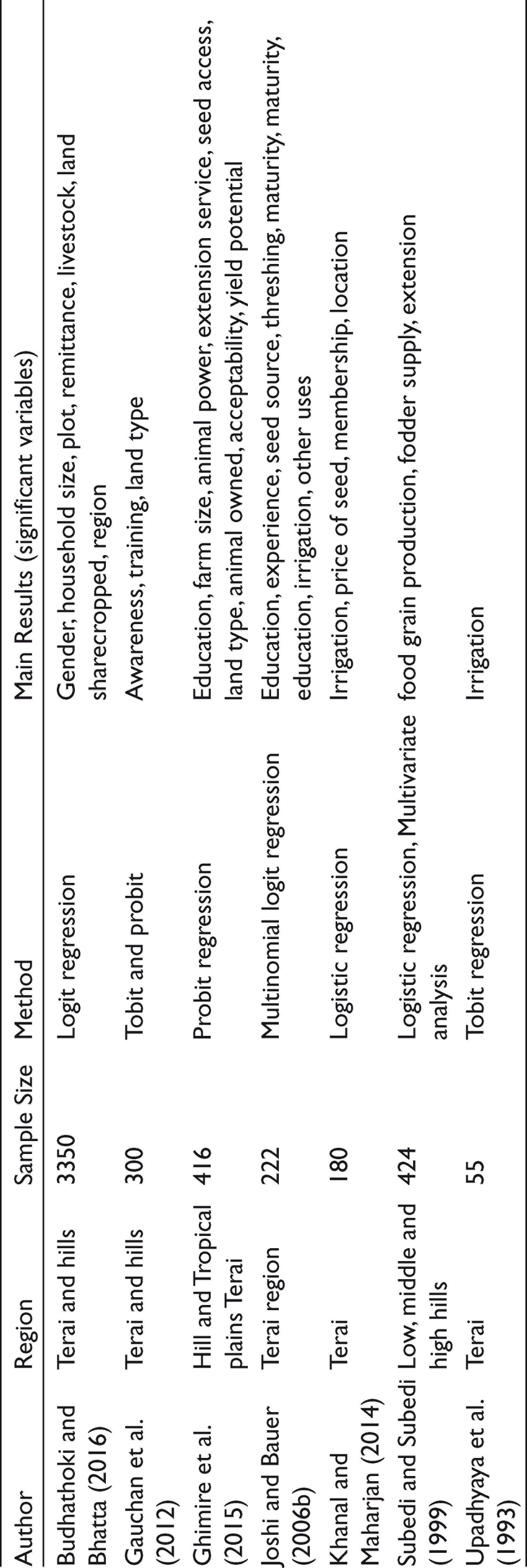
Table 1 summarizes previous findings on the adoption of rice in Nepal. Joshi and Bauer (2006b) find a positive effect of education on adoption, while Ghimire and Huang (2016) and Budhathoki and Bhatta (2016) in different studies find that farm size has a positive effect on the adoption of new rice varieties. In addition, Subedi and Subedi (1999) observed a negative relationship between extension visits and adoption, while Khanal and Maharjan (2014) show that membership to farmers association increases the likelihood of Nepalese farmers’ adopting new rice varieties. Other factors found to influence the adoption of new rice varieties in Nepal are the attributes of the varieties (in Joshi & Bauer, 2006a, pp. 120–138), input prices, sources and availability (e.g., Khanal & Maharjan, 2014, pp. 49–64; Witcombe et al., 2017, pp. 512–527). Notably, none of these studies investigated the effect of risk attitudes despite the distinct role risk plays in the process of adopting new agricultural technologies. Ward and Singh (2014) argue that omitting attitudes to risk from studies examining technology adoption could be a potential source of bias in the estimation.
Studies Examining Determinants of Improved/Modern Rice Varieties Adoption in Nepal
Several studies on technology adoption in developing countries highlighted research gaps and proposed suggestions to improve future adoption studies; for instance, Olum et al. (2018) highlighted the lack of studies that include psychological factors into their adoption models and emphasized the importance of risk aversion, risk awareness and risk perceptions in adoption decisions, while Foster and Rosenzweig (2010) opined that one method to address the limited literature examining the role of risk as a barrier to the adoption of new technologies in developing countries is to determine whether risk differentially affects households in the face of similar a endowment.
Risk Attitude as a Determinant of Adoption
Understanding the risks farmers face is important to understanding risk attitudes as a factor influencing adoption. In the broader literature, the main risks in agriculture are classified into five main groups. First, farmers face production risks arising from uncertain natural growth processes of crops including weather-related factors and susceptibility to pests and diseases. In south Asia, rice is particularly prone to climatic hazards prevalent in the deltas. This is either in the form of frequent floods, droughts or storm surges (Gupta & Seth, 2007). Rice cropping is particularly susceptible to losses following climate hazards (Duncan et al., 2017; Masutomi et al., 2009); for instance, the growth duration and pattern of rice are found to be highly affected by temperature changes such that 1°C rise in temperature can result in approximately 10% decrease in rice yield (ADB, 2009). Second, farmers face price or market risks due to unpredictable changes in prices of both inputs and outputs. Alliot and Fechner’s (2018) findings suggest that rice farmers in Nepal typically bear the consequences of price volatility. Farmers’ position at the bottom of the rice value chain implies that their negotiating power is weak invariably forcing them to be price takers. The third and fourth risks are financial and institutional risks resulting from uncertainties surrounding credit and government actions, respectively. In Nepal, several studies (e.g., Devkota et al., 2018; Joshi et al., 2011) have identified constrained access to formal finance as one risk which farmers constantly face. Fifth, farmers face human or personal risks arising from problems with their health or personal relationships. According to Kaan (1998), the most significant of these uncertainties are prices and yield variabilities which make farmers perceive farming as a ‘gamble’ since, at the onset of the farming season, there is no certainty of how much their efforts will pay off. This article, however, focuses on production risks as its relationship with the adoption of new improved rice varieties is more defined in the context of this article.
There is empirical evidence that risk attitudes influence farmers’ decision to adopt agricultural technologies. According to Shimamoto et al. (2014) risk-averse crop farmers mostly adopted new technologies in Cambodia. Similarly, Asravor (2019) finds that the decision to diversify cropping was significantly dependent on risk aversion. Liu (2013) provides empirical evidence that confirmed that compared to those who are risk-seeking, risk-averse farmers were more likely to adopt agricultural innovation, while Canales et al. (2015) find that risk aversion delayed the adoption of cover crops. These studies all together confirm that in addition to farmers’ specific variables, risk attitude is a significant determinant of technology adoption.
Furthermore, findings from different studies suggest that risk attitude as a determinant of adoption decision is context specific. Barham et al. (2014) investigated the impacts of risk and ambiguity aversion on the adoption of genetically modified (GM) corn and soy seeds and found that while ambiguity aversion encouraged the adoption of GM corn, it had no impact on GM soy. This finding by Barham et al. (2014) provides support for the fact that adoption decision is driven in part by the attributes of the technology. Holden and Quiggin (2016) find similar behaviour among maize farmers for drought-tolerant maize. However, these same group of risk-averse farmers were less likely to adopt other improved maize varieties. This evidence of context specificity draws attention to the need for further research.
Eliciting Risk Attitude
Due to complexities in directly observing risk attitudes, many empirical studies have adopted experimental approaches. These experimental methods have provided the platform to build a deeper understanding of risk attitudes and link the findings with farm decision-making. In the applied economics literature, three methods widely employed to elicit DMs’ risk attitudes are either the choice list procedure, the ranking procedure or the allocation procedure. For the choice list method (as employed in Eckel & Grossman, 2002, pp. 281–295; Freeman et al., 2019, pp. 217–237), DM is presented with a sequence of pairwise choices set out in a list from which DM chooses. As for the ranking procedure, DM is presented with a set of options and is requested to rank the options. The allocation procedure (as applied in Loomes & Pogrebna, 2014, pp. 569–593) is different from the other two methods as DM is given a fixed amount of money and asked to allocate it in any manner of their choosing between different possible states. Other non-experimental methods employed in the literature involves asking DMs to rate their risk tolerance on a scale (Dohmen et al., 2005, pp. 1–59).
Experimental studies relied on either (or both) real or hypothetical monetary lotteries to elicit risk attitude. However, the findings are mixed as to whether real or hypothetical monetary rewards modulate risk taking and decision-making in a similar way. On one hand, studies such as Xu et al. (2016) and Barreda-Tarrazona et al. (2011) found differences in risk attitudes between both methods, while other studies such as Wiseman and Levin (1996) and Gneezy et al. (2015) did not find any difference in the estimated parameters between real and hypothetical lottery tasks on the other. The consensus, however, is that simple hypothetical questions can provide some insights into a DM’s risk attitude. Reynaud and Couture (2012) opined that if the experiment was based on voluntary participation, then participants would show enough interest such that their responses would effectively reflect their real preferences. Drawing on these arguments, this article relies on data obtained from an incentivized single choice list procedure discussed in the third section.
Adoption Rate of Rice Varieties in Nepal
Due to agro-climatic variation across Nepal, there is a very large diversity of both cultivated and wild relatives of rice. Past studies conjecture that there are over 2,000 distinct landraces of cultivated rice, 4 wild Oryza species and 2 wild relatives spread across Nepal (Gupta et al., 1996; Rana et al., 2007). According to Witcombe et al. (2017), the main varieties grown were Sona Mahsuri, Kanchhi Mansuli, Masuli, Radha-11, Sarjoo-52, Radha-4 and Sabitri most of which were released in 1970 and 1980s. Joshi (2003) cited by Joshi and Bauer (2006b) reported that in the Terai region, 33 of the 48 new varieties are regarded as suitable for growing under irrigated condition, while 5 varieties were regarded as suitable for rainfed cultivation in the Terai. This is closely followed by the hill where 18 new varieties have been adapted. However, for the upland ecosystem, only a limited number (two varieties) have been developed and released.
Nepal’s susceptibility to drought and flood also led the government and the International Rice Research Institute (IRRI) to develop improved rice varieties as part of the Stress-Tolerant Rice for Africa and South Asia (STRASA). This resulted in the release of 11 stress-tolerant rice varieties (Gauchan et al., 2012); for instance, one of the varieties tolerant to various abiotic stresses, Swarna-Sub1 (IR05F102), possesses a single major quantitative trait locus (QTL) accountable for the crop’s ability to tolerate submergence for up to 14 days. However, under normal conditions, this variety does not outperform the older varieties with regard to agronomic attributes such as grain yield and quality (Sankar et al., 2006; Septiningsih et al., 2008). Similarly, Yamano et al. (2015) observed that while Swarna-Sub1 was more stress tolerant than the parent Swarna, the average yield of Swarna-Sub1 was slightly lower than that of Swarna under normal conditions. The implication is that those farmers who adopt new varieties may lose the advantages they could otherwise derive from sticking to older improved varieties.
Furthermore, Witcombe et al.’s (2017) findings suggest that rice diversity was low since only a few rice varieties were predominant in large areas; for instance, they found that in western districts, as of 2011, nine varieties occupied a minimum of 75% of the total rice area. Their finding also corroborated that of Gauchan et al. (2012) who found that most of the varieties were released circa 1990s confirming earlier studies of a high average age of the predominant varieties irrespective of region or period considered.
As regards varietal age, Gauchan et al. (2012) and Velasco et al. (2013) reported widespread cultivation of older varieties with considerably large adoption lags of about 12 years and varietal age of 18–20 years from recent studies in Nepal as well as other South Asian countries. The implication is that until approximately a decade after a variety is released, widespread adoption will not be observed. Older varieties also accounted for over 90% of the seed sold (Gauchan et al., 2012). Despite the highlighted concerns, only a limited number of studies have investigated the reason for lags between varietal release and the initiation of adoption. One of the few studies addressing such objectives is Witcombe et al. (2017). However, Witcombe et al. (2017) did not account for risk attitudes.
Importance of Rice for Nepal
From the perspective of area, production and livelihood, rice is the leading cereal crop in Nepal. It is grown in approximately 1.5 million hectares (ha) of land (MoAD, 2013). Approximately, 40% of Nepalese food calorie intake is obtained from rice (CDD, 2015), and it accounts for 20% of protein from plant products in the diet (Khanal & Maharjan, 2014, pp. 49–64). Notably, about two-thirds of agricultural households depend on rice for their livelihood (MoAD, 2013).
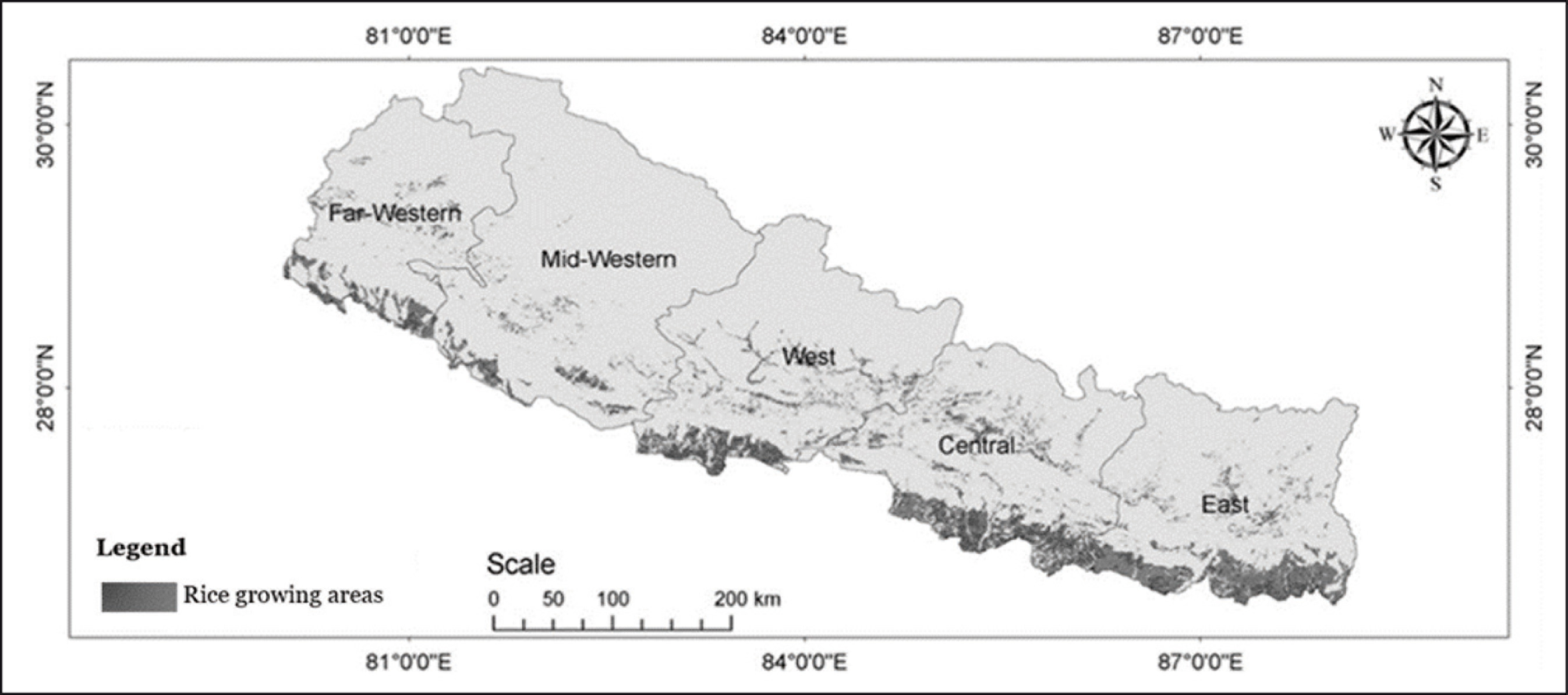
Although rice is grown across different ecological zones in Nepal, the share of rice area, production and yield vary by ecological zones, as shown in Figure 1. The Terai (low land region) is by far the main rice producer with a production share of 73%. The hills and mountain regions account for 24% and 4%, respectively (Tripathi et al., 2019). As regards average yield potential by ecological zones, productivity in the mountains is about 1.7–2.0 T/ha, 1.6–2.3 T/ha in the hills and 1.6–2.9 T/ha in the Terai (Sharma, 2001).
The different agroecological zones have had varieties specifically adapted for them considering the major abiotic stresses that constrain rice production in Nepal (CDD, 2015). Approximately, 15% and 30% of the rice area are frequently liable to flash floods and drought, respectively (ABPSD, 2012). In spite of some rice varieties’ superiority under stress, various reasons are adduced for not adopting newer varieties (see Gauchan et al., 2012). This article postulates that should the unique trait be limited to risk-reducing traits such as stress tolerance, then adoption will be determined mainly by the farmers’ attitudes to risk.
Methodology
The Probit Model
In order to determine the relationship between risk attitudes and the decision to adopt new improved rice varieties, this article estimates a probit regression model. This article assumes an underlying economic theory that hinges on a utility maximizing framework. The postulation is that Nepalese rice farmers act in a rational manner as such adopts new improved rice varieties when the anticipated utility from adopting is greater than that of not adopting.
Assuming Ua and Ub represent the level of utility a rice farmer derives from adopting new improved rice varieties and from not adopting new improved rice varieties, respectively, the adoption decision is specified as
yi = 1 (farmer adopts new improved rice varieties)

yi = 0 (farmer does not adopt new improved rice varieties)

In this case, the utility function is specified as

where Uij refers to utility the farmer derives from adopting the new improved rice variety, that is, j = 1, where X is a vector of exogenous variables, β represents the coefficient of the vectors and ε the random error.
With respect to the choices the ith farmers face on whether or not to adopt the new improved rice varieties, the probit model is specified as

where Y and F represent the discrete adoption choice and the cumulative probability distribution function, respectively. z is the z-score of the βX area under the normal curve. The expected value of the Y conditional on the independent variables in Equation (2) is specified as

where the marginal effect of the respective predictor variable on the probability that the ith farmer adopts the new improved rice varieties is specified as
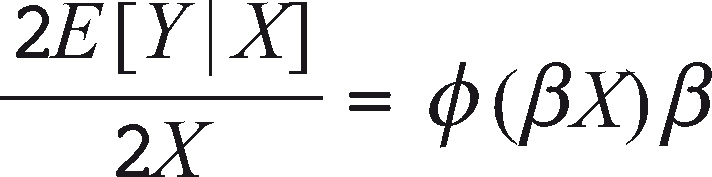
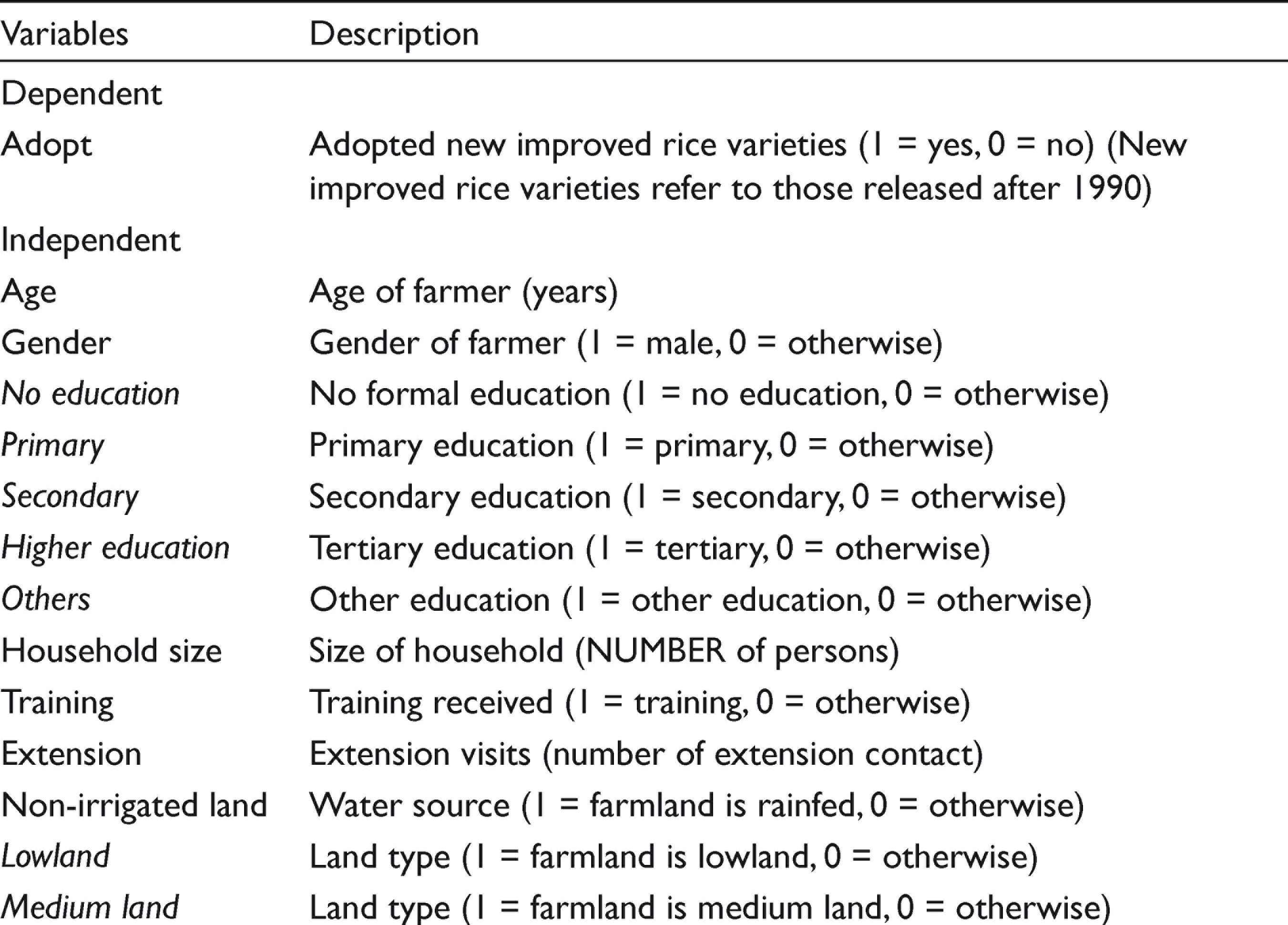
with the standard normal density function denoted by ϕ(.) (Fufa & Hassan, 2006; Thuo et al., 2011). The choice of explanatory variables included in the estimated probit model presented in Table 2 is guided by previous findings that have been discussed in the second section. The dependent variable was whether farmer currently adopts at least one new improved rice variety. This definition of adoption is adapted from the study conducted by Gebre et al. (2019) where farmers are referred to as adopters if they cultivate new improved varieties in all or some of their plots, which they grow either as a stand-alone crop or mixed with other varieties.
Variables Included in the Probit Model
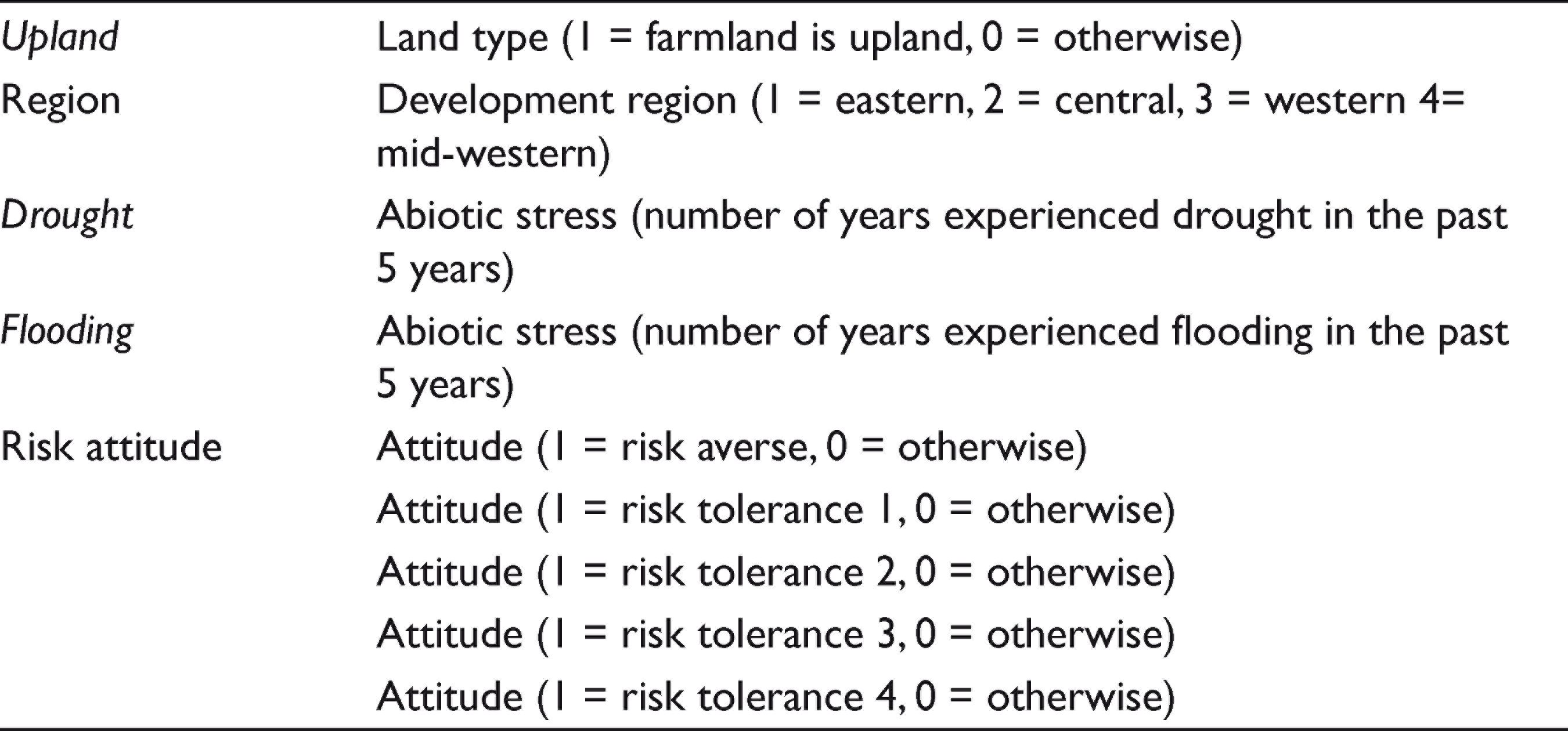
Data
The analysis in this article depends on data obtained from the 2014 IRRI South Asia Rice Monitoring Survey (RMS-SA) household survey data implemented with support from the Bill and Melinda Gates Foundation (BMGF) (Yamano, 2014). The objective of collecting these data was to keep track of the rice system that captures varietal turnovers over time. The sample comprised 1,471 Nepalese farming households. The participants in the risk experiment were farm DMs ranging from household head to spouse or parent. The field experiment used to obtain risk tolerance 3 involved offering farmers a choice between various payment options. Among the five choices presented to farmers, they were allowed to choose only one option in Table 3. Although the choices were hypothetical, the experiment was incentivized.
Hypothetical Monetary Task
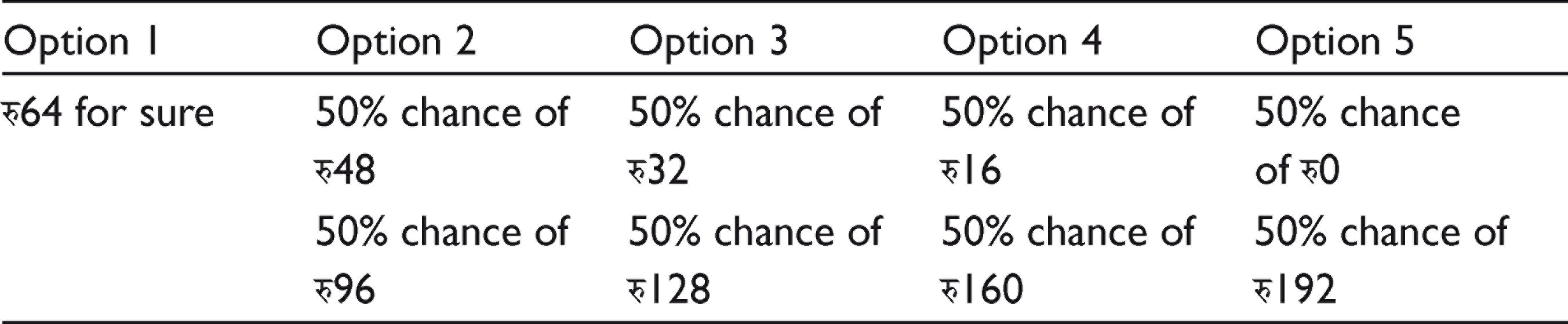
Farmers were informed that they would get actual payment in terms of mobile phone credit; hence, they were advised to think carefully about their choice. At the end of the experiment, payment was determined by throwing a dice. Odd numbers in the dice resulted in a lower pay-off, while even numbers meant a larger pay-off; for example, if either 1, 3 or 5 showed on the face of the dice, a farmer who chose option 2 will get 48, otherwise, the farmer will get 64 worth of mobile phone credit.
The ‘lotteries’ were low-stake with the sure option approximately half of the daily agricultural wage. Considering that there is evidence (see Binswanger, 1980; Yesuf & Bluffstone, 2009) that DMs become increasingly risk averse with larger stakes, these small stakes provided a better reflection of real-world financial decisions and a more realistic measure of risk aversion of Nepalese farmers.
The reliability of the modified Eckel and Grossman (2002) experiment used in this article has been evaluated in a developing country context. Compared to other popular experiments, for example, Holt and Laury (2002), the procedure is easily understood by respondents with low numeracy skills. The predictive accuracy is also found to be good as it generates less noisy behaviour (see Dave et al., 2010).
Results and Discussion
Farmer and Farm Characteristics
The results summarizing the socio-economic characteristics of farmers are presented in Table 4. Rice farmers in the sample are predominantly male. The results showed that the average household size is eight. The average age was 45, with respondents over the age of 40 accounting for the largest proportion, that is, approximately 60%.
Farmer and Farm Characteristics
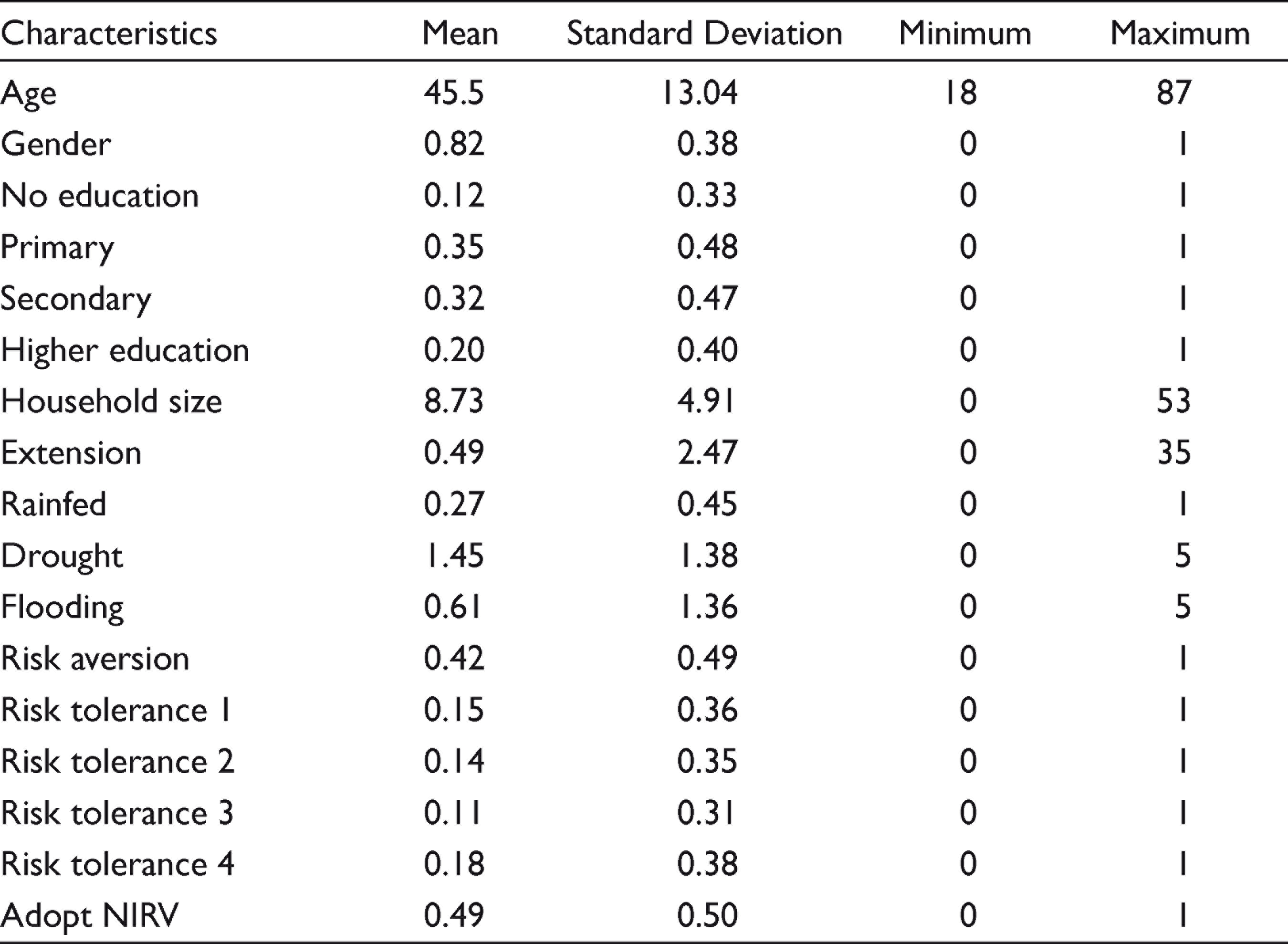
With respect to farm tenure, those farmers who own their plots constituted 87% of the sample. The proportion of farmers with some form of formal education (at least primary level education) was about 65%. During previous growing seasons, respondents experienced some abiotic stress, with 67% reporting that they experienced drought compared to 23% who experienced flooding. The number of days farmers had access to extension services in the previous 12 months varied between 0 and 35. The main source of seed for the season was either from the open market or seed traders accounting for 50% and 21%, respectively. The reasons adduced for patronizing the different seed sources were good quality by 43%, trust by 27% and convenience by 12% of farmers.
Table 5 summarizes old and new improved rice varieties1, 2 in Nepal. This article categorized new improved rice varieties as those varieties developed and released by research institutions after 1990.
Old and New Improved Rice Varieties in Nepal
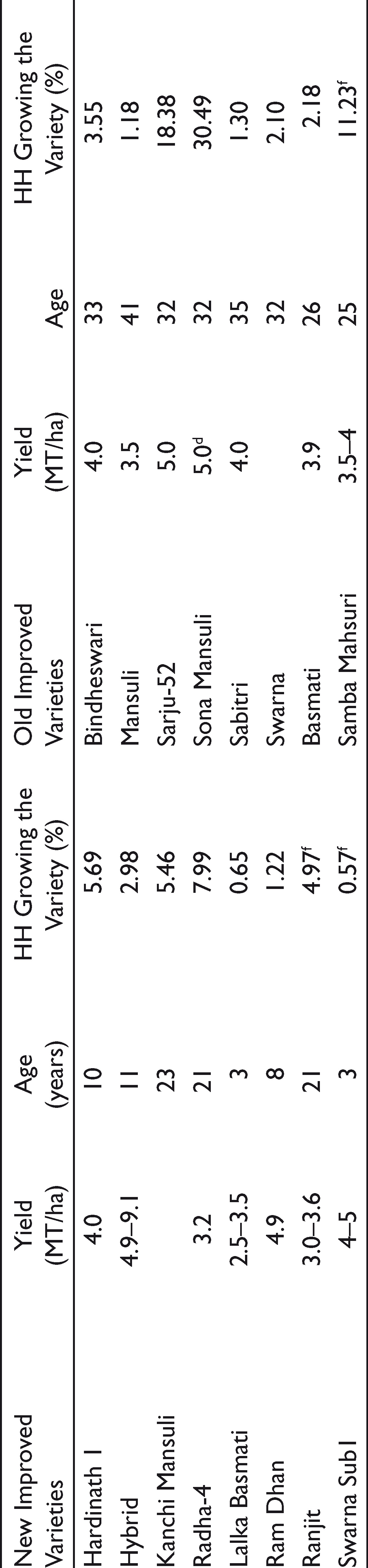
Within the categories of improved rice varieties, the oldest variety still grown by farmers in Nepal is Mansuli. On the other hand, Swarna Sub1 and Lalka Basmati were among the new improved varieties grown by farmers in the sample. The majority of farmers (52%) currently grow old improved varieties. The top four varieties grown consist of three old improved rice varieties, that is, Sona Mahsuri, Samba Mahsuri and Sarju-52, and one new improved rice varieties, namely Radha-4) which jointly had an average varietal release age of 27 years.
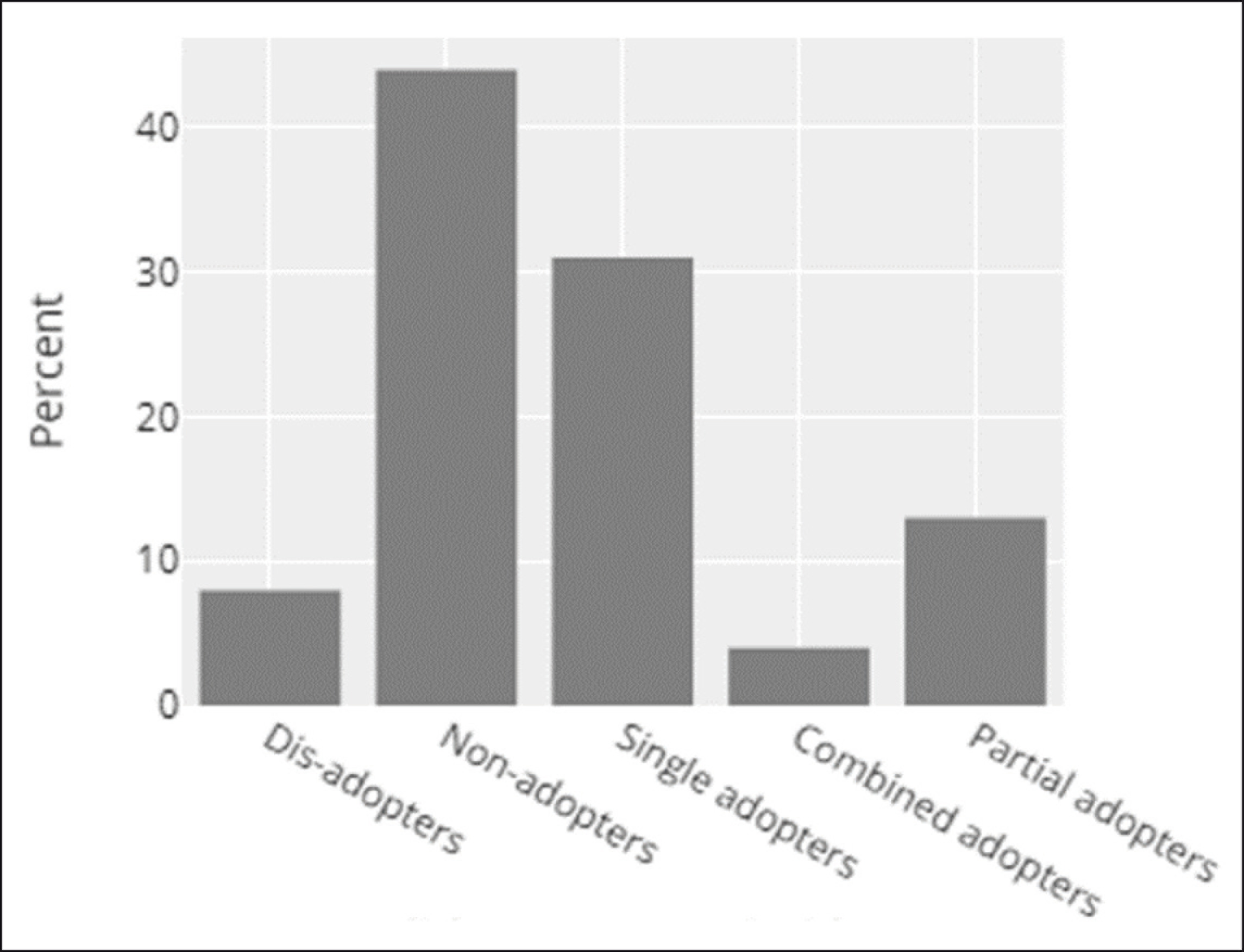
As regards the adoption of new improved rice varieties, Figure 2 shows that 13% are partial adopters as they jointly grow at least one new improved rice variety in combination with old improved rice varieties, 4% are combined adopters (they adopted more than one improved rice varieties) while 31% are single adopters. However, 8% are dis-adopters as they had previously grown at least one improved rice variety but replaced all of it with older rice varieties. The proportion of farmers who never changed their varieties irrespective of whether it is old or new improved rice was 66%. Of the 34% who changed their varieties, the main reasons reported for changing older varieties were ‘not satisfied with yield’, ‘wanted to try something new’ and ‘inconsistent production’.
In terms of desirable attributes, 47% and 23% of farmers identified ‘high yield’ and ‘good for cooking’, respectively, as the main attributes that made them grow their current varieties. As regards seed source, most farmers obtained their seeds from either seed traders which accounted for 21%, market (48%) or fellow farmer (23%). The reasons for patronizing these different sources were reported as quality, trust and convenience, accounting for 40%, 39% and 14%, respectively.
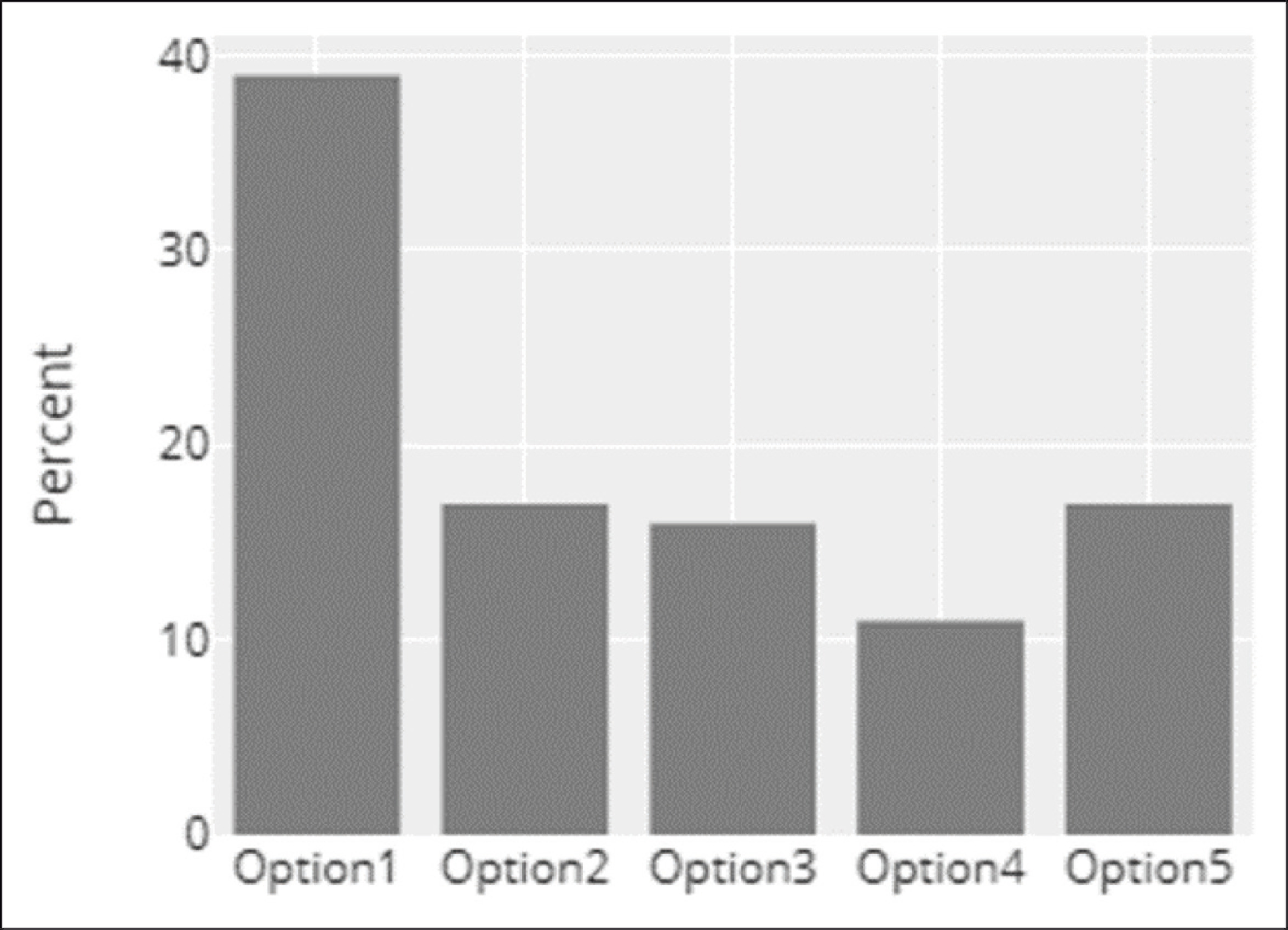
Figure 3 presents the distribution of farmers’ risk tolerance based on their payment choices. The distribution shows the heterogeneity in risk tolerance of Nepalese rice farmers. Thirty-nine per cent picked option one, suggesting that not all farmers are willing to take risks. Seventeen per cent chose option five which involved the highest risk. Overall, these statistics suggest that majority of farmers accounting for 61% will tolerate some level of risk, that is, chose the 50:50 possibility of a lower or higher pay-off over option one which has a fixed assured pay-off. The expected values 4 of the choice tasks were 64, 72, 80, 88 and 96 for options one to five. The implication is that despite having a chance of a higher pay-off, extremely risk-averse farmers will have a higher preference for the assured pay-off over the options with higher expected value.
Probit Regression Results
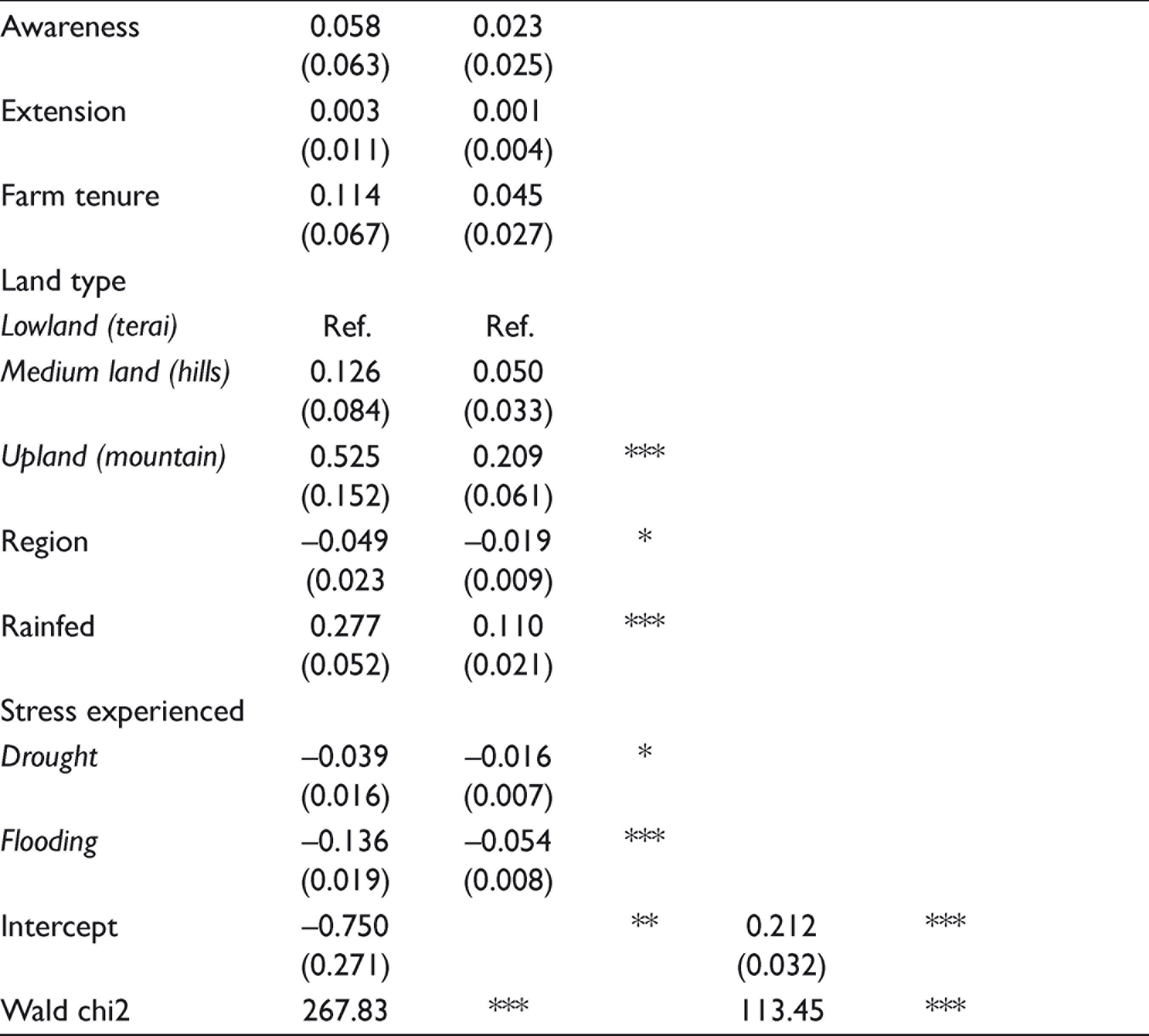
The Wald test was employed to evaluate the hypothesis that at least one of the regression coefficients of the predictors is not equal to zero. The test indicates the overall significance of the probit model. Thus, the conclusions drawn with respect to the determinants of adoption are based on models of good statistical fit (χ2 = 267.8; df = 21; p < 0.000). As discussed in the third section and presented in Table 2, the dependent variable in the probit model estimated in this article is whether or not the farmer adopted a new improved rice variety. In the probit estimation, presented in Table 6, risk attitudes, gender and level of education are most strongly related with farmers adoption decision.
Probit Regression Results of Determinants of Adoption of New Improved Rice Varieties
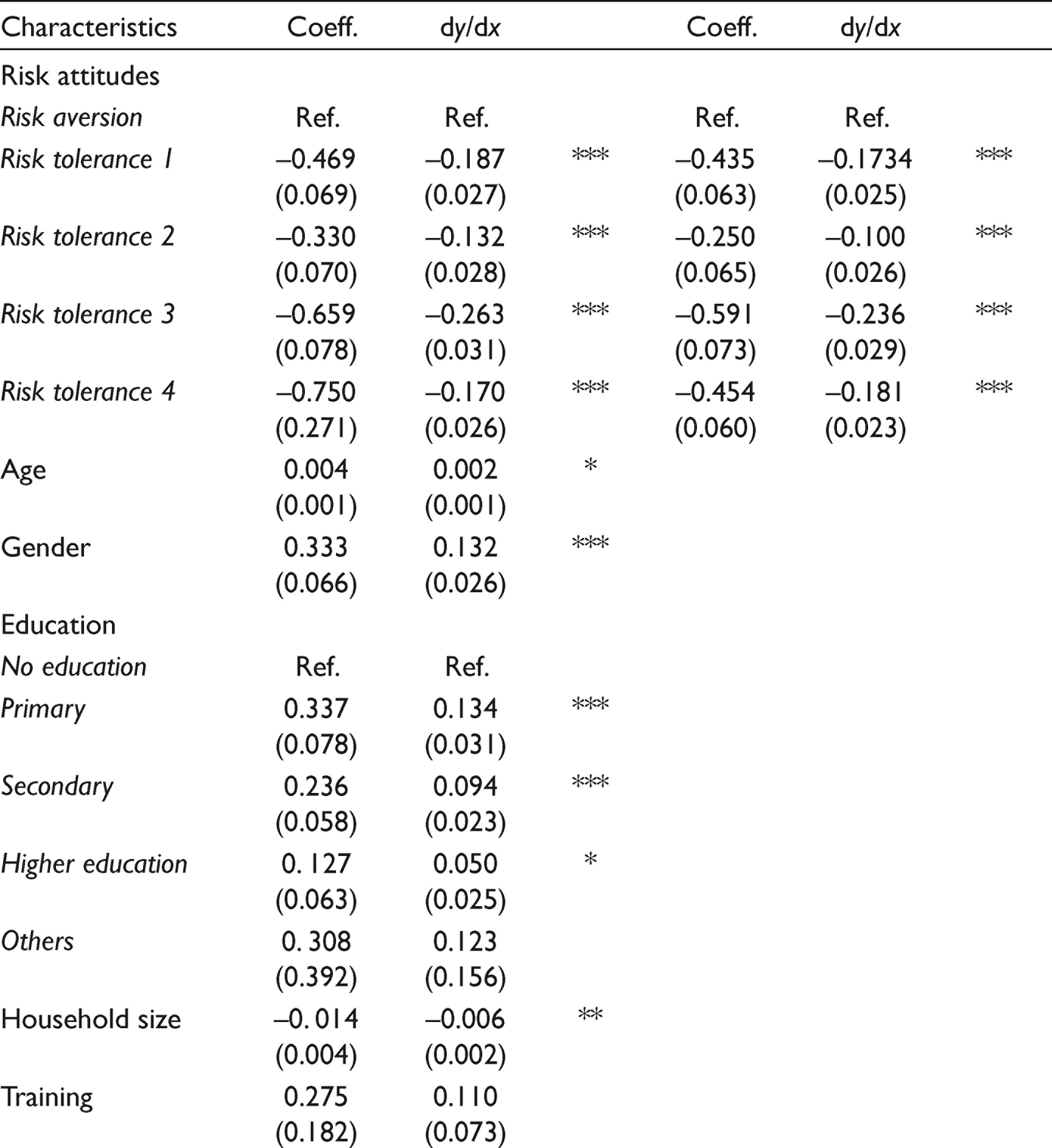
Specifically, risk attitude is found to be an important determinant of rice farmers’ adoption decision. Being risk-tolerant decreases the predicted probability of adopting new improved rice varieties. Compared to risk-averse farmers, risk-tolerant farmers are at least 17% less likely to adopt new improved rice varieties. This finding is similar to Shimamoto et al. (2018) for farmers in Cambodia. The Wald tests performed to evaluate the equality of various risk-tolerant categories against each other show statistically significant difference. Thus, the equality hypothesis is rejected (at 10% level for Risk tolerance 1 = Risk tolerance 2 χ2(1) = 2.99, p = 0.084, 1% for Risk tolerance 2 = Risk tolerance 3 χ2(1) = 14.10, p < 0.001 and 1% for Risk tolerance3 = Risk tolerance 4 χ2(1) = 7.15, p = 0.008).
The results also indicate that males were more likely to adopt new improved rice varieties than females. Findings that highlight gender differences in the management of farm resources and farm decision-making are reported in previous research. There is consonance between this result and the results of Ngokkuen and Grote (2012) who found a significant difference between gender in the adoption of improved technologies among Thai farm households. As regards household size, the results also indicate that larger households are less likely to adopt new improved rice varieties. This corroborates Chandio and Jiang (2018) who found that the number of persons in a farming household is strongly associated with adoption decisions.
Age has a significantly albeit marginally positive effect on adoption decision. The positive sign on the coefficient of age indicates that the predicted probability of adoption of a new improved rice variety is greater among older farmers. This finding contradicts Ghimire et al. (2015) and Gauchan et al. (2012) who find no effect of age on adoption among rice farmers in Nepal. As regards education, the results indicate that compared to farmers without formal education, those farmers who have some formal education are more likely to adopt new improved rice varieties. This may be attributed to the role of formal education in increasing the ability to receive and understand technical information. This corroborates the findings of Chandio and Yuansheng (2018) on the adoption of modern varieties and rice varietal diversity in Pakistan.
Land types have an effect on adoption decision as implied by the statistically significant coefficient to upland. This indicates that compared to lowland rice farmers, upland rice farmers are more likely to adopt new improved rice varieties. This may be explained by the limited number of varieties that have been developed and released for the upland. Relying on rainfed farming also increases the probability of adopting new improved rice varieties. This may be due to the fact that some improved varieties mature early, which makes them ideally suited to rainfed regions. The results also show that the experience of recent abiotic stresses decreases the likelihood of adopting new improved rice variety. This finding does not conform to a priori expectation. Holden and Quiggin (2016) provide evidence that is contrary, that is, the experience of previous natural hazard motivated adoption of DT maize. However, Kuehne et al. (2017) postulate that recent disasters like flood or drought can constrain resources in the short term, thereby limiting adoption.
Discussion
This article investigated the linkage between risk attitude and the adoption of improved rice varieties in Nepal. By employing a field experiment offering farmers a choice between various monetary payment options, rice growers’ risk attitude was elicited. A probit regression model was estimated to address the important question of whether risk tolerance affects adoption of improved rice varieties.
Risk tolerance tends to matter in the decision to adopt new improved rice varieties as heterogeneity in risk attitudes lent support in explaining the variations in the adoption of improved rice varieties in Nepal. The finding that some farmers are partial adopters, that is, combine old and new improved rice varieties, could be explained using their risk tolerance. Farmers may prefer to maintain some status quo due to the uncertainty associated with new improved varieties. Thus, partial adoption may have been used as a ‘risk minimization’ strategy. From a different perspective, the framing effect during dissemination could also have defined risk attitudes. Farmers portray risk-seeking tendencies to avoid losses, particularly for options that are uncertain and negatively framed.
Another credible argument as to why risk-tolerant farmers are less likely to adopt new improved rice variety is that during dissemination, stress tolerance potentials (which is mainly beneficial in the event of abiotic stress) could have been the most salient attributes of some of the new improved rice varieties which sometimes mask other important attributes (such as high yield and cooking quality desired by 70% of farmers). Thus, farmers who can tolerate risk may have less incentive to adopt such varieties. Thus, one solution would be to promote holistic benefits over making risk-reducing attributes salient, as this is likely to have an impact on risk attitude and, consequently, adoption levels. Crucially, in employing risk attitude to explain adoption decisions, consideration should be given to context-specific factors, as the pattern of behaviour will differ across context.
In general, the findings of the present study provide empirical evidence that corroborates previous findings which state that there is a significant adoption lag of new improved rice varieties in Nepal. This is also in consonance with findings across South Asia. One reason for slow adoption is that for many low-income rice farmers, vulnerability to risk is a dominant feature of their livelihoods. This may reduce the ability and willingness to take on additional risks regardless of the potential benefit.
The observation that age, gender, household size and education affect the adoption of new improved rice varieties brings to the fore heterogeneity in farmer-related characteristics associated with adoption and the need for a tailored approach in disseminating new improved rice varieties. Future rice research and development processes should strive to align attributes of the new improved rice varieties to predominant farm and farmers characteristics since preferences for certain attributes are determined by these contextual characteristics. This will encourage adoption and reduce adoption lag overall.
The findings concerning the recent experience of climatic stress (flooding and drought) appear counterintuitive at first glance. To explain such findings, one might argue that perhaps the recent climatic stress resulted in affected farmers being ‘locked’ into the use of older improved rice varieties, as they may be constrained due to the losses incurred during any recent drought or flooding. This constrain may limit their ability to purchase seeds of new improved rice varieties. Repeated exposure to climate hazards has been reported to undermine farmers’ current and future capacity in other studies. If this is the case, input support in the form of seeds may encourage adoption among affected groups.
Conclusion
This article brings to the fore the important role of risk attitude in adoption decisions. The adoption literature in Nepal and across South Asia so far has not paid as much attention to farmers’ attitudes to risk as a determinant of technology adoption. This study serves as an example of how field experiments targeted at eliciting attitude and behaviour can be employed in understanding real-world agricultural decisions with economic consequences. By incorporating risk attitudes in the probit model, the article explains Nepalese rice farmers’ decision to adopt new improved rice varieties. This article confirms previous findings that in Nepal, the adoption of new improved rice varieties is at a rather slow pace.
Given the importance of rice to Nepal, understanding the drivers and barriers to the adoption of new improved varieties is imperative. Specifically, before new varieties are to be developed and released, it is important to understand which categories of farmers likely to adopt such varieties and how to frame the varietal attributes. Considering risk attitude in technology design and dissemination would result in efforts targeted as increasing adoption becoming more successful. Furthermore, collaborative efforts between researchers and farmers could enhance the acceptance of improved varieties. This could be made possible by providing a platform for farmers to discuss their preferences and expectations about a new variety. This will ensure it is in concordance with the attributes targeted by rice research and development institutions. Finally, to enhance the adoption of new improved rice varieties, there is a need to improve farmer education as this has the potential to increase capacity to receive and understand technical information.
Footnotes
Declaration of Conflicting Interests
The author declared no potential conflicts of interest with respect to the research, authorship and/or publication of this article.
Funding
The author received no financial support for the research, authorship and/or publication of this article.