



Abstract
Purpose:
In the past 5 years, there has been a 101.6% increase in mom-influencers on social media. On the other hand, the majority of parents with children below the age of 18 have admitted that they spend too much time online. With this rise of social media use and momfluencers, it was inevitable that parents, especially mothers, would be impacted by the content shared on social media. Additionally, this rise indicates a higher number of children growing up under the anonymous, watchful eyes of social media users. This situation warrants a profound exploration of the area. The aim of this study was to systematically review the literature to identify what is known about how parenting-based social media influencers impact the commercialization of their children and the maternal mental health of their consumers.
Collection and analysis of data:
A search of online research records was conducted from January to March 2024 to collect literature that focused on how social media influencers commercialize their children and their impact on mothers who consume their content. The data collected were tabulated and subjected to thematic analysis. The review was reported using the 2020 Preferred Reporting Items for Systematic Reviews and Meta-Analyses guidelines. Results showed that eighteen papers met the inclusion criteria, and four themes were identified to understand the data extracted: “Perceived authenticity of momfluencers and negative state of mothers,” “Overall well-being of mothers,” “Sharenting,” and “Digital labor of children.”
Conclusions:
Social media influencers who focus on parenting content have a negative impact on maternal mental health and monetize their children by engaging them in digital labor.
Introduction
Momfluencers refer to a group of social media influencers who cater to mothers. In other words, they are individuals who have chosen to monetize their motherhood. With the increase in social media usage among millennial mothers (17 h/week), 1 momfluencers have a large audience of mothers who use them as a means of social comparison to evaluate their own parenting efficacy. This comparison often leaves young mothers with the cognitive schema that they are a “bad mom”. In fact, a survey among 2000 American mothers show that they think they are a “bad mother” 156 times a year, with 65% of them being avid consumers of influencer content. 2 Mothers have also reported a lower self-efficacy regarding their parenting after exposure to momfluencer content. 3 If a mother reports reduced self-efficacy after consuming influencer content, then why does she choose to continue her engagement with such posts? The answer to this question was found in an integrative review, 4 which found that mothers or pregnant women primarily engage with social media content related to parenting to find information; however, they also find socio-emotional support and comfort by sharing and discussing their experiences with other mothers. The need for mothers to find support by sharing their experiences could be explained by the self-in-relation theory, which explains that individuals develop their sense of self through their relationships with others. In this context of mothers, the development of their maternal identity could be facilitated by such social relationships, which are now increasingly taking place in the digital sphere, especially in the post-pandemic climate.
Momfluencers also heavily impact their own children, who are often forced to live in the spotlight, without any concern for their privacy and security. A video that circulated on the internet was uploaded by momfluencer “Jordan Cheyenne,” who accidentally uploaded a video where she forced her son to cry “harder” while he was grieving the death of his pet. Such glimpses into the world of social media influencers reveal the emotional and physical labor borne by their children for the internet fame of their parents.
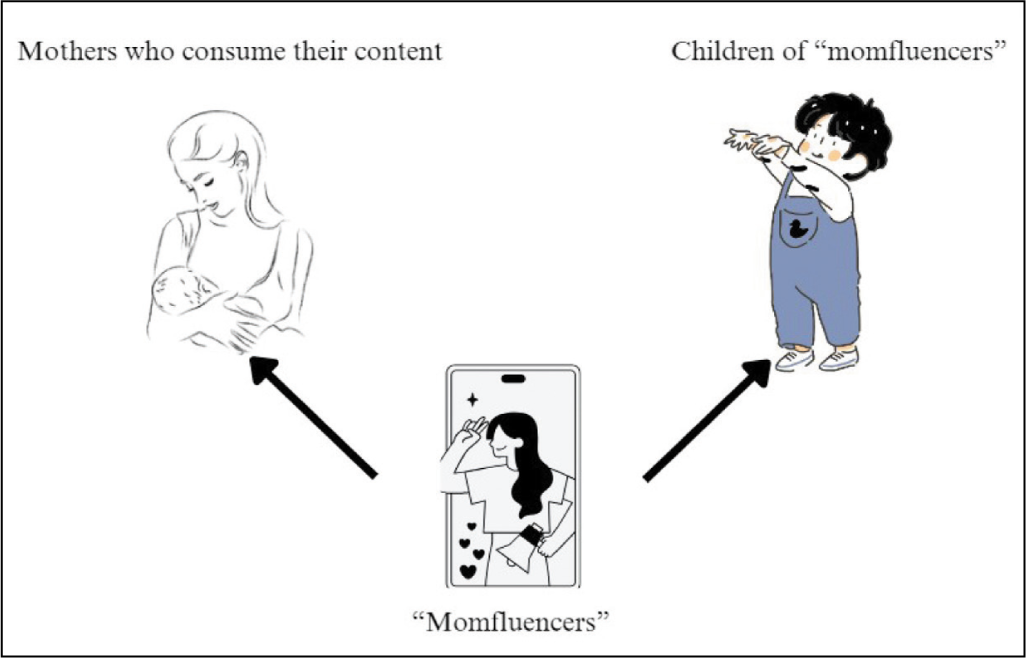
The impact of social media influencers on these two groups of individuals can be understood by Figure 1.
Impact of “Momfluencers” on the Two Groups of People.
While child actors and musicians have laws that protect their rights, the same is not applied to children of influencers, as the child is projected by their own parents. 5 An investigative article by the New York Times shows how mom-run accounts set the stage for sexual predators and pedophiles to laud such content and use it for their own inappropriate pleasures. Through an analysis of 5000 Instamom accounts, it was found that 32 million connections were made to adult male consumers.
Another term associated with the portrayal of a child’s pictures and videos on social media by parents is “sharenting,” the portmanteau of the words “share” and “parenting.” While sharenting can be done by any parent who is a user of social media, this increasing culture of sharenting can be attributed to be instigated, perpetuated, and overall normalized by social media influencers. So not only do momfluencers commercialize and exploit their own children, they also impact the children of their followers. Social media stars are not the only ones to blame for promoting sharenting culture; celebrities also play a role. An article published by the London School of Economics 6 discusses how celebrity parents aim to construct an image of idealized parenthood by staging paparazzi pictures of their own children. Ana Jorge and Lidia Marôpo 7 have studied how the infamous athlete Cristiano Ronaldo engages in sharenting by posting about his then 6-year-old son. They analyzed how his acts of sharenting had opened up his son to a wave of hate, criticism, and public affect. Such studies highlight the need to educate parents about healthy digital media practices surrounding children to protect their rights, privacy, and security in a digital world.
Theoretical Basis for Impact on Maternal Mental Health
The following theories explain how social media influencers impact the mental health of mothers:
Social Comparison Theory by Festinger
8
: It centers on the belief that individuals compare themselves with the others around them to formulate self-evaluations. In this context, mothers compare themselves with their easily available models, social media influencers, to evaluate their parenting abilities. When the influencers project unrealistic, unattainable versions of motherhood, these become the standard for everyday mothers, thus creating a negative self-evaluation and subsequent problems with their mental health. Cultivation Theory by Gerbner
9
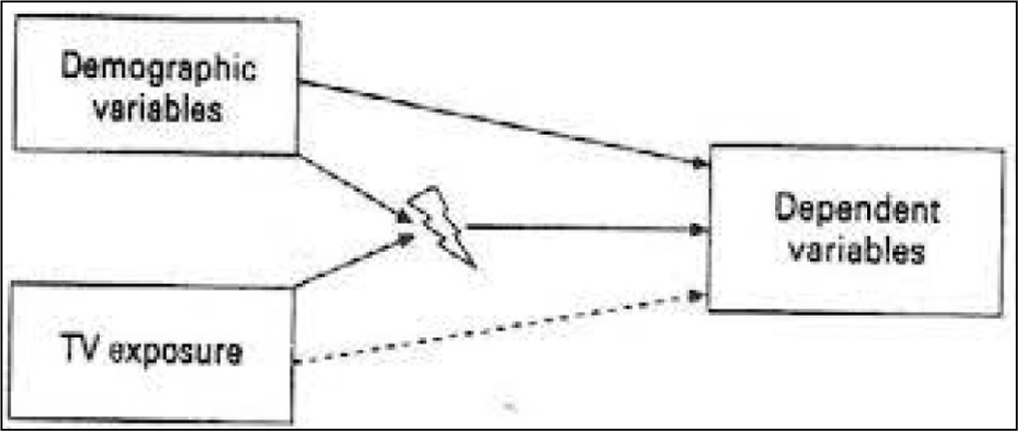
: This theory talks about how individuals generalize the information they view on mass media to their everyday lives and the world around them. Thus, their social perceptions change based on what they view on social media. In the context of this paper, mothers are influenced by the demographic variables around them and the lives they see on social media. These factors collide to form the standard of parenting the mother sets for herself. Figure 2 provides a pictorial explanation of the cultivation theory.
Cultivation Theory. 9
Rationale
With the increasing frequency with which mothers consume influencer content and the rise of exploitation and commercialization of children by their influencer parent, it is highly pertinent that an extensive exploration is made into the nuances of such relationships. This systematic review examines past research conducted in these areas and provides an overview of what is currently known about how the mental health of mothers and the privacy of children are impacted by social media influencers.
Review Question
How do momfluencers play a role in affecting maternal mental health and the digital exploitation of their own children?
Methods
The 2020 Preferred Reporting Items for Systematic Reviews and Meta-Analyses (PRISMA) guidelines guided the formulation of this review. 10
Information Sources
An electronic search for articles and sources for review was undertaken during January to March 2024, using Google Scholar, PubMed, ResearchGate, ProQuest, and ScienceDirect. Additionally, the reference lists of the found articles were manually searched to find supplementary articles. These sources were used to find articles because they are considered to be reliable databases for capturing the most appropriate articles.
Search Strategy
An extensive reading of news articles and blogs pertaining to mom-guilt, influencer mothers, and digital lives of children was undertaken to identify relevant terminology to find appropriate articles for the study. These identified terms were searched on Google Scholar as a preliminary study to narrow down important and relevant articles. Terms that produced relevant results were selected and terms found within the texts found in the preliminary search were also selected.
The final search was driven by the application of the PICO framework:
P (Population)—Mothers, influencer mothers, and influencer children
I (Intervention)—Following social media influencers, projecting children on social media, and decline in mental health
C (Comparison)—N/A
O (Outcome)—The impact of social media influencers on maternal mental health and the commercialization of their own children
An identical search strategy was applied using a combination of terms and was applied systematically through all the databases.
The terms “mother,” “mom-guilt,” “new parent,” “pregnant mother,” “child influencer,” “child commercialization,” “maternal mental health,” “mental health,” and “childhood” were individually combined using the word “AND” with the following terms, “momfluencer,” “instamom,” “family influencers,” “mom blog,” “sharenting,” “social media influencer,” and “social media.”
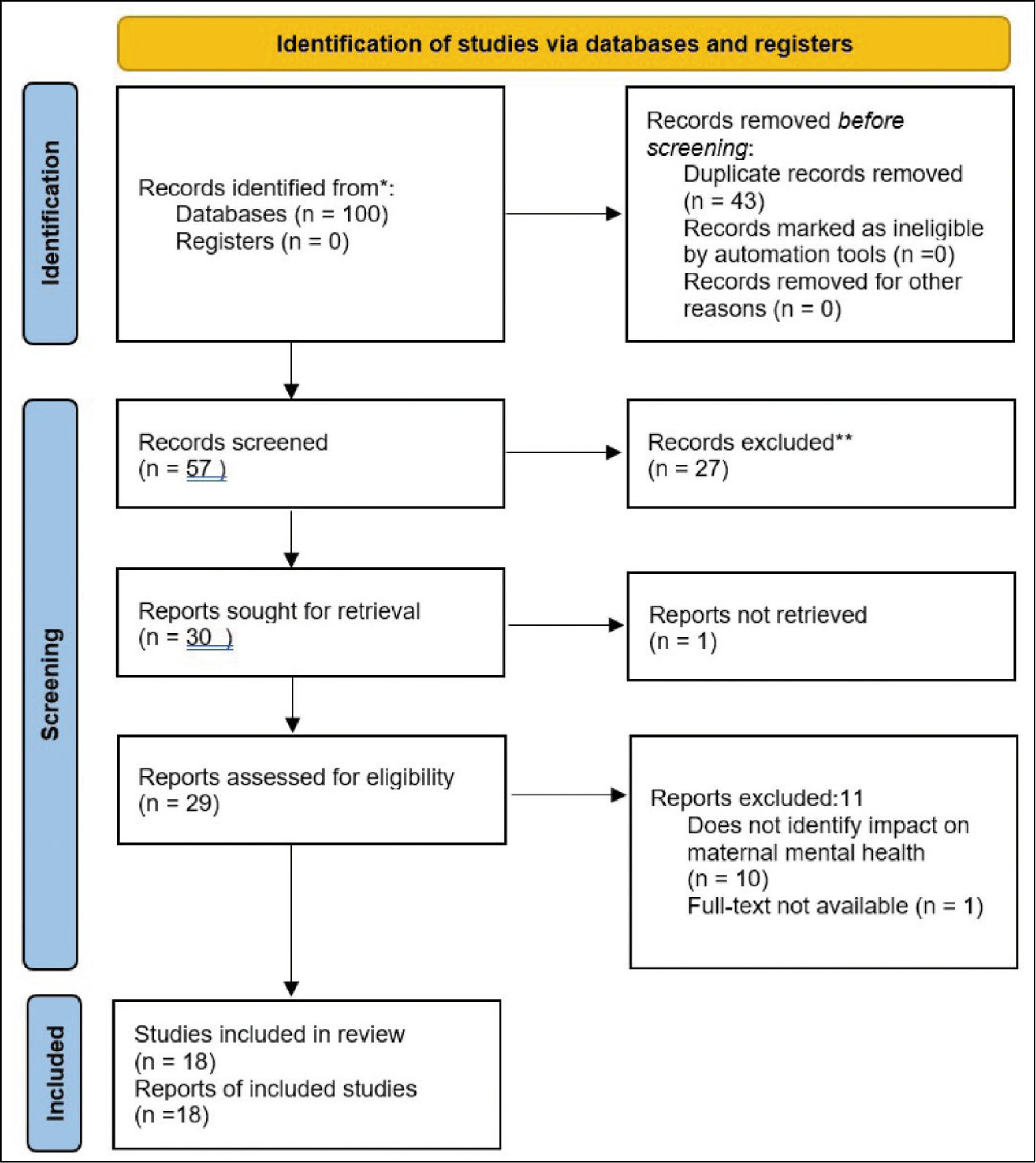
The number of results captured within each database using this identical search strategy is presented in Figure 3.
Study Selection
The search of the databases elicited 100 results, with 43 of them being duplicates. The remaining 57 articles were reviewed manually by the authors of the text. This was done by keeping in mind the eligibility criteria. After the review, 29 articles were selected for full-text assessment. Further to the assessment, 11 articles were removed, and 18 were included for the literature review.
Study Selection Criteria
Types of Studies
For the study, peer-reviewed qualitative, quantitative, and mixed-design studies were accepted under the inclusion criteria. An additional criterion that was implemented was that only articles published after 2015 were included in the study.
The exclusion criteria consisted of articles that did not explicitly focus on the above factors and those that were not considered to be original research.
Types of Participants
Eligible studies included those whose title or abstract specifically indicated the inclusion of social media influencers with a focus on motherhood, family “vlog” content creators in the digital sphere, children of social media influencers and their mental health, mothers who spend time on social media and their mental health, and articles that discussed the relationship between sharenting and children, parents, and social media influencers.
Review Methods
A list of descriptors, as mentioned in the above section, was used to acquire the articles. The abstracts of the found articles were screened according to the selection criteria. If the abstract did not meet the criteria, it was rejected. If the abstract could not be eliminated with certainty, the full article was appraised. From this, the reviewers formed a list of articles that was then appraised for its quality.
Quality Assessment
The reviewers individually graded each paper based on the selection criteria and purpose of the systematic review. Then, the assessments of each reviewer were compared and discussed to select the articles and to resolve discrepancies. Additionally, the methodological quality of quantitative studies was evaluated according to the Downs and Black Checklist.
Risk of Bias Across/Within Studies
The PRISMA 2020 guidelines were used to assess studies for any possibilities of bias. Although a thorough search was undertaken and 18 articles were included for review, the lack of sufficient research in the chosen area poses a risk of bias for the review.
Results
Study Selection
Study Characteristics
Eight out of the 18 chosen studies discuss the influence of momfluencers on the mental health of mothers. The remaining 10 articles discuss the phenomenon of “sharenting” and the impact of commercialization of children on social media. Nine of the studies took place in America,3,11–18 one in the United Kingdom, 19 two in Canada and America,20,21 two in Portugal,7,22 one in Finland, 23 one article focused on Scandinavian individuals, 5 one in Australia, 24 and one in Denmark. 25
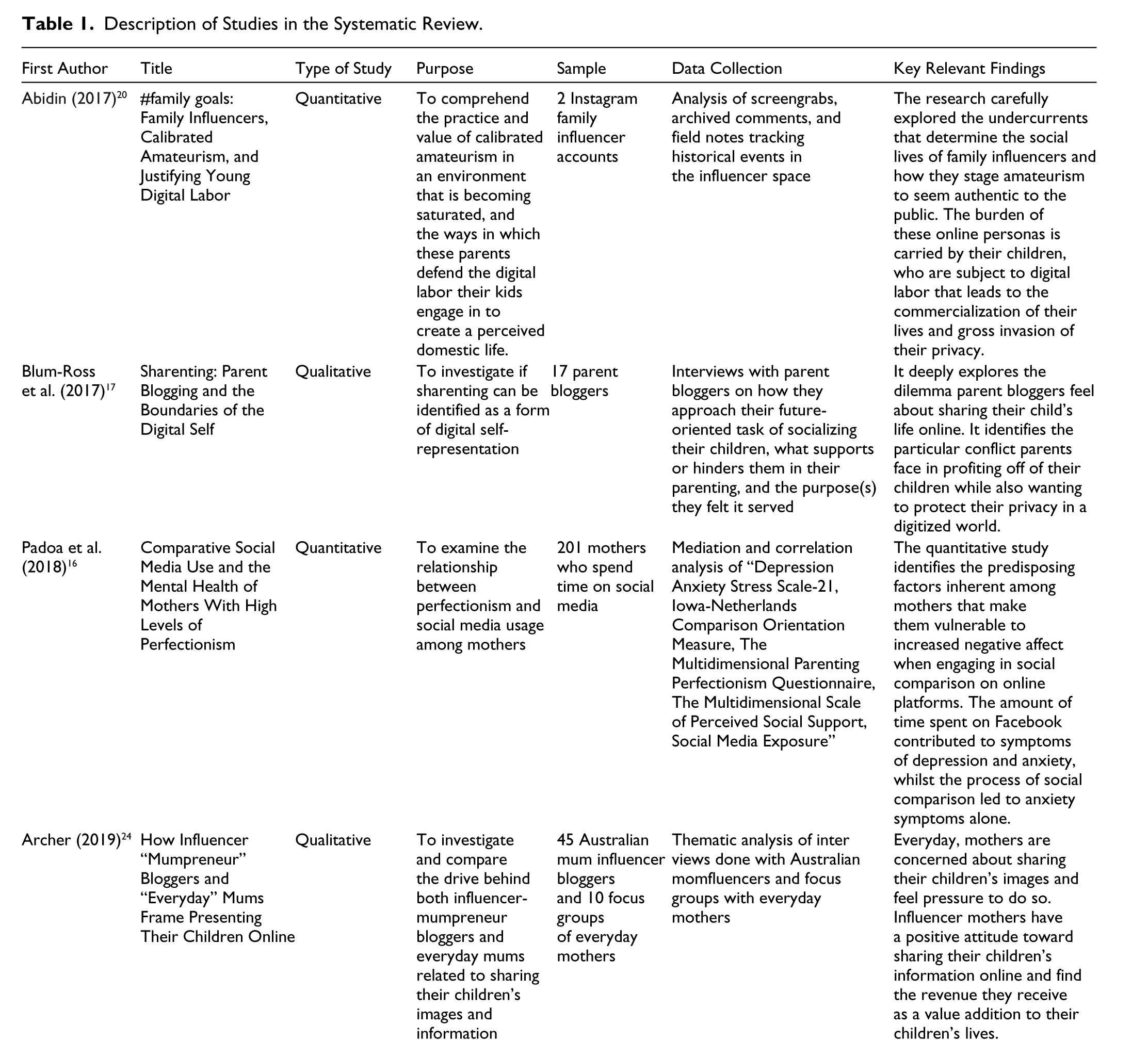
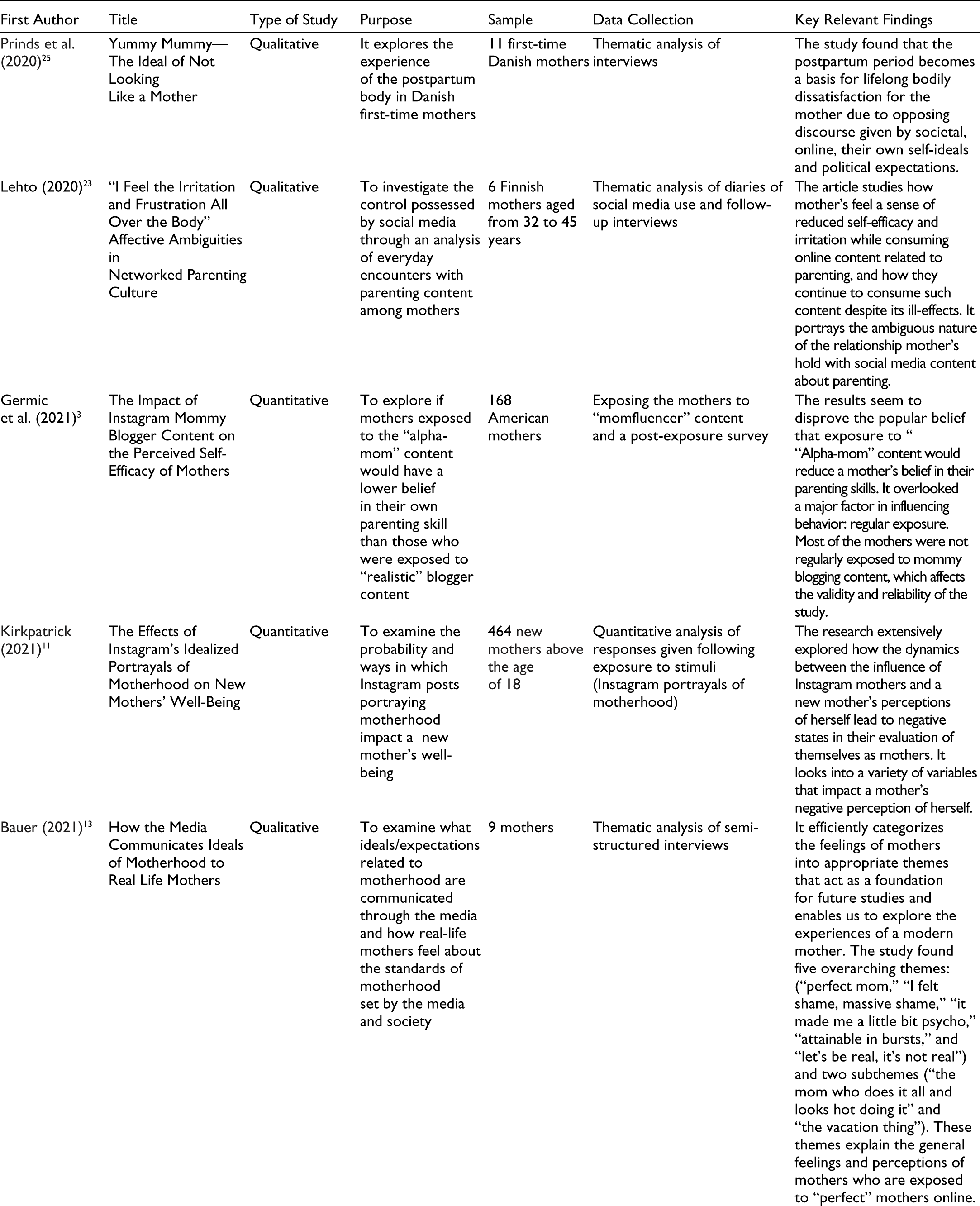
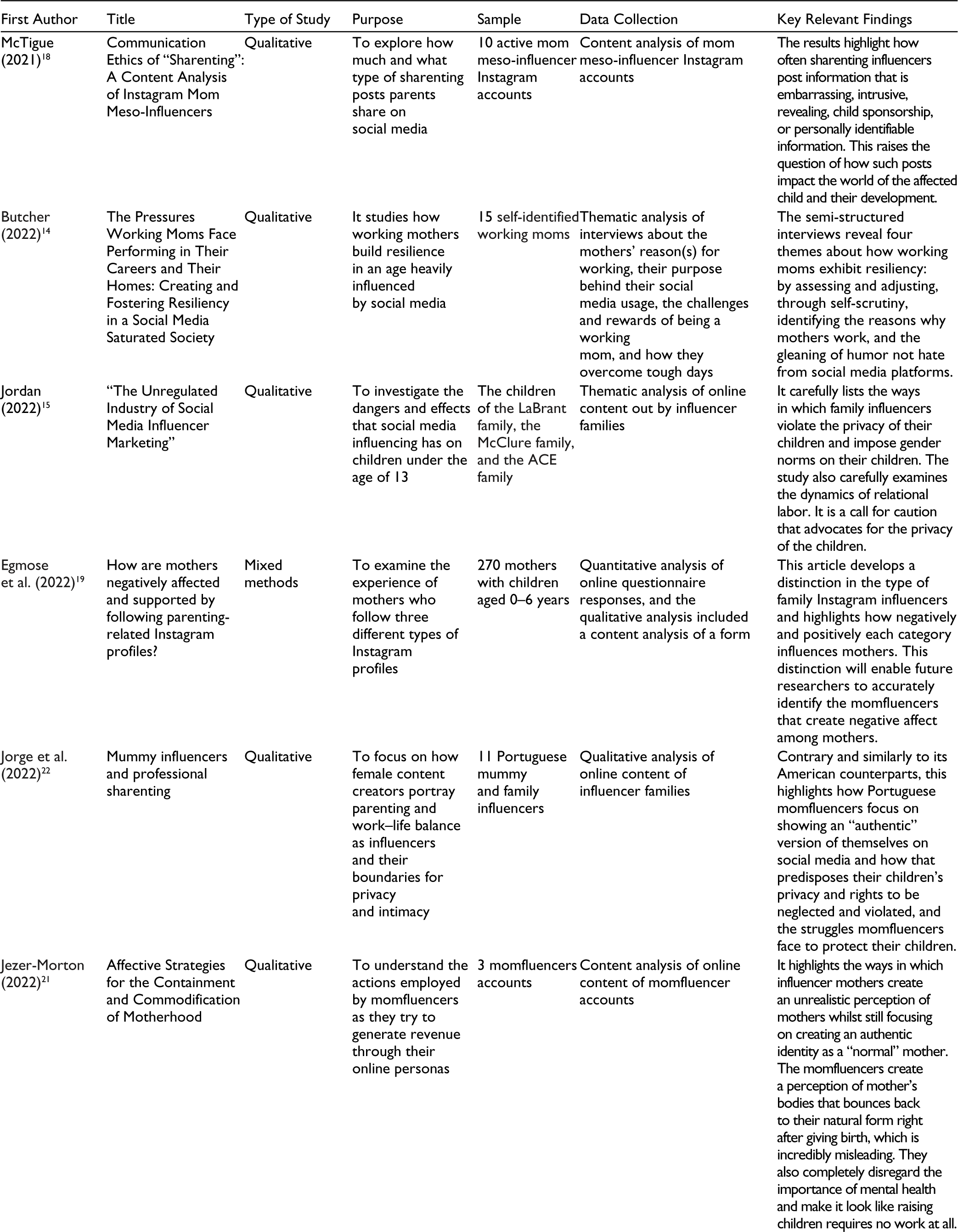
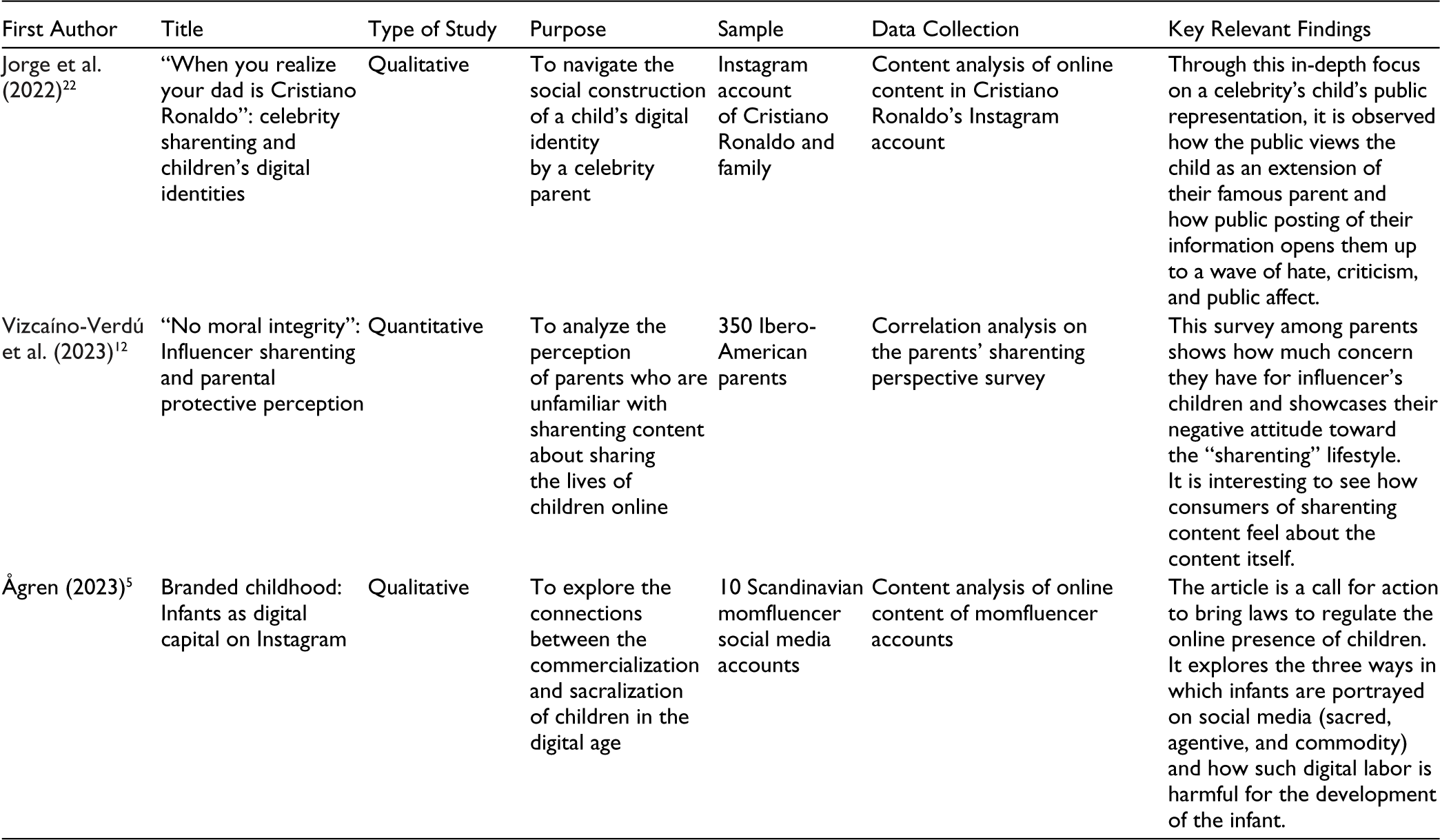
Across the studies, 78 momfluencers, social media accounts, and family vlog accounts were examined, while 1154 mothers and 350 parents were included in the studies. The gender of the participants is predominantly identified to be women, with a part of them being first-time parents. The studies that were reviewed have an acceptable quality and represent a moderate risk of bias. The studies have been explained in detail in Table 1.
Results of Individual Studies
Description of Studies in the Systematic Review.
Themes
Theme 1: Perceived Authenticity of Momfluencers and Negative State of Mothers
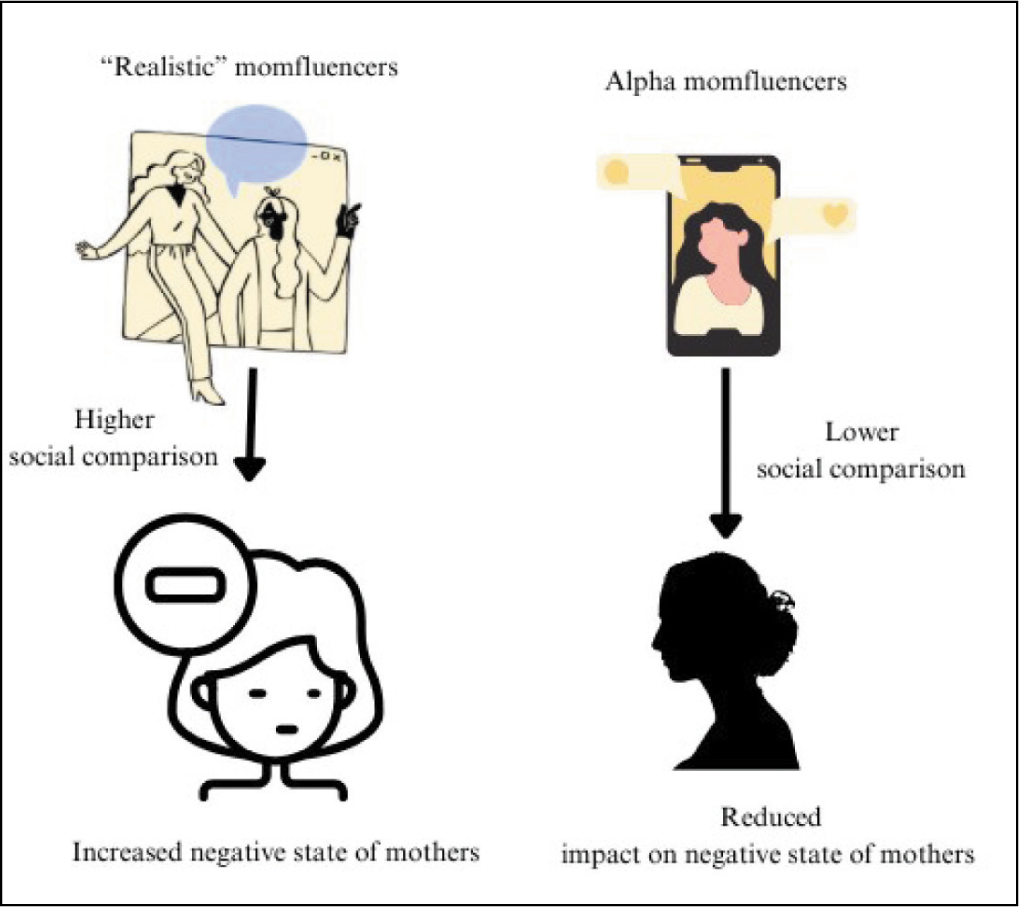
The constructed authentic lives of social media influencers are found to have an increased impact on the negative state of mothers. A study 3 found that mothers were more affected by influencer content that was perceived as authentic, as opposed to “alpha-mom” content on social media. The study finds that mothers engage in higher social comparison with “realistic” content creators, thus increasing their own insecure feelings. However, are the lives of “realistic” content creators actually realistic? Findings suggest that it is quite the opposite; content creators are found to “calibrate amateurism” to seem more relatable to their audiences. 20 This calculated presentation of oneself online has severe influences on the mothers who consume their content and on their children who are projected online. Mothers develop a negative affect about their own bodies, seeing that the bodies of these “realistic” mothers bounce back to “normal” right after giving birth. However, what these momfluencers do not show are the hours they work at the gym because they have the privilege to do so. 21 The comparison between the impact of “realistic” and alpha-mom content creators on mothers is shown in Figure 4. Children of momfluencers also face consequences, caught up in their parents’ need to construct an authentic life online. To seem authentic, parents often violate the privacy of their children and do not seek their consent before sharing their information online.22,21 On a positive note, research finds that consumers of momfluencer content are often aware of the constructed social media identity and build resilience to protect themselves from the webs of such content by using factors such as humor and careful assessment of online content. 13
The Comparison Between the Impact of “Realistic” and Alpha-mom Content Creators on Mothers.
Theme 2: Overall Well-being of Mothers in the Digital Age
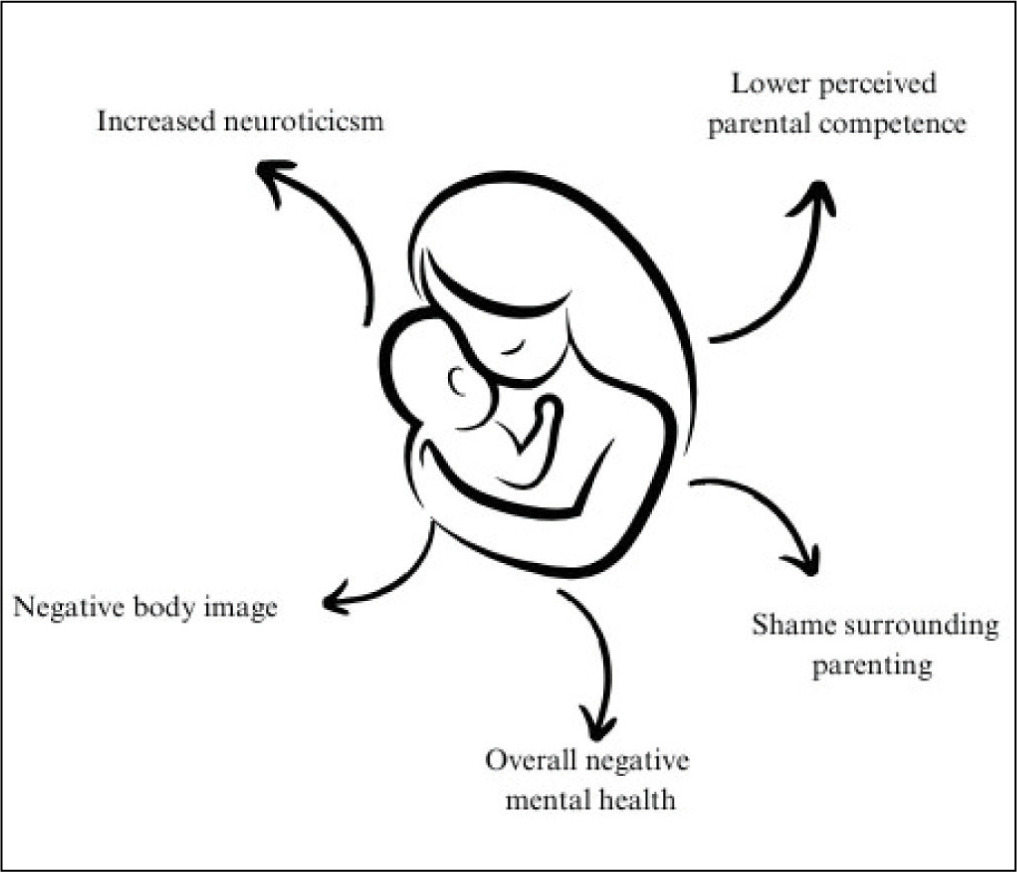
Seven of the 18 studies discuss how influencer and other parent-based social media content contribute adversely to the mental well-being of mothers. When social media creators build a “non-idealized” version of motherhood, mothers who consume their content perceive themselves as more similar to the influencers and engage in social comparison. This results in higher levels of envy and state anxiety, and in lower levels of perceived parental competence and life satisfaction. In short, it negatively impacts all areas of their parenthood. 11 Another study analyzed the feelings of mothers in response to social media content surrounding motherhood. The interviewed mothers communicated that they felt “massive shame” and neurotic when initially dealing with such content; however, they came to the conclusion that such narratives spread online are not real. But such realizations did not significantly improve their mental well-being either. 13 Another aspect that is impacted by momfluencers is the body image of mothers. Momfluencers are found to perpetuate negative feelings surrounding one’s body among mothers. As a result of being exposed to social media content of momfluencers and the expectations upheld by society, mothers report feelings of dissatisfaction about their own postpartum bodies. Momfluencers build an ideal that the bodies of working mothers have the ability to return to their past selves right after giving birth; this fuels the pressure on mothers to uphold such social standards.21,25 The aspects of a mother’s mental health that are impacted by momfluencers are shown in Figure 5.
The Aspects of a Mother’s Mental Health Impacted by Momfluencers.
Theme 3: Sharenting
Parent bloggers commonly state that they engage in practices of sharenting for themselves and as a biographical record for their children. Research highlights that the practice ironically perpetuates the intensity of modern parenting but also provides a way to cope with it. Thus, the problem is providing alternative solutions without removing itself from the narrative. Another aspect to note is that sharenting culture brings up the concept of “spheres of obligation,” which refers to the pressure on parents to share information about their children in the digital community whilst also learning to keep boundaries and respect their child’s privacy. 17 Influencers note that they are happy to share information about their children online and get revenue as a value addition to their child’s lives. Similarly, parents also report that they feel pressured to engage in sharenting as a result of the work of momfluencers.24,23 Celebrities also play a role in promoting sharenting; an explorative study about the digital identity of athlete Cristiano Ronaldo’s son highlights how the parents’ decision to share content about their child online exposed the son to unwarranted comments and hate from internet citizens, or, as they are now known, “netizens.” 22 A study 18 in 2021 showed that sharenting posts were often embarrassing, intrusive, revealing, or contained child sponsorship content and the child’s personally identifiable information. Parents who view this discourse on sharenting express that there is a lack of moral integrity among influencer parents, as they choose to share the private lives of their children online, and they advocate for the digital security of children. 12
Theme 4: Digital Labor of Children
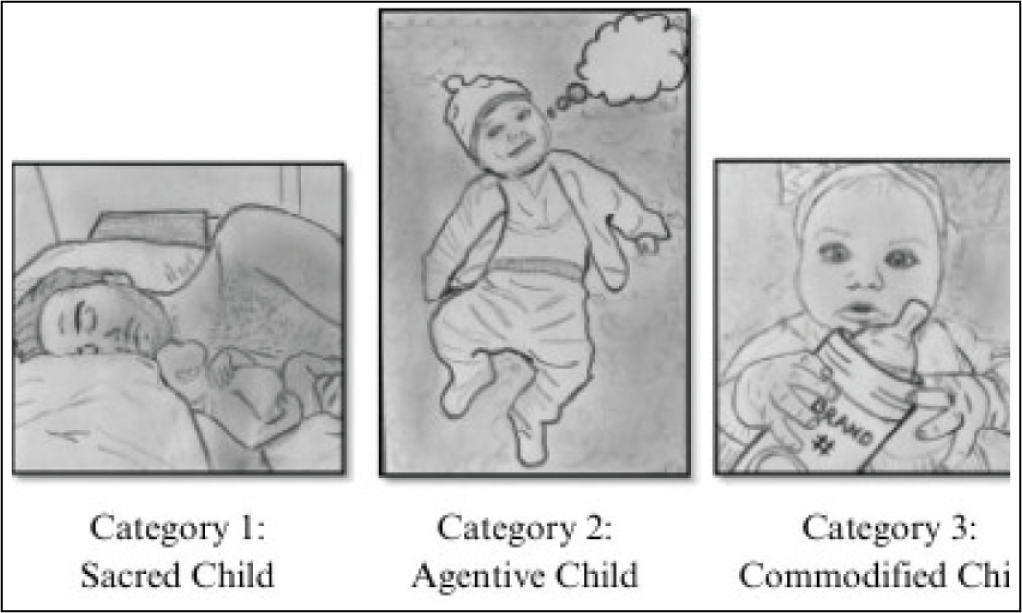
Digital labor of children can be understood as a form of child labor in the digital sphere that results in the privacy invasion of children and impacts their mental health and subjective well-being. Children are often objectified by influencer parents and seen as a commodity used to connect their products and their consumers. They are viewed as digital capital and not as humans with real feelings and real lives ahead of them. This does not only apply to children above a certain age but also to newborn infants, who are promoted as sacred beings, as agents for spreading an agenda, or as a commodity. The categories in which children are portrayed on social media are shown in Figure 6. 5 Children are also burdened with their online personas through the imposition of gender norms by their parents, actively on social media. A study on the children of YouTube influencer families shows how their privacy is grossly violated for views and also discusses “relational labor,” which is generating profit through online portrayals of one’s everyday life without benefit to their consumers. Another factor to note is the habituation of influencer culture among children since infancy, without giving them a chance at a normal childhood. 15 Children also bear the costs of their digital lives through the type of personal content that their parents choose to share on social media. This extensive digital footprint sets the stage for a life under the spotlight, where the children have to be digitally accountable without an ounce of normalcy in their lives. 18
The Categories in Which Children Are Portrayed on Social Media Based on Ågren. 5
Discussion
The 18 studies reviewed in this paper explore how social media influencers commercialize their children and impact the maternal mental health of their consumers. They explore the different ways in which maternal mental health is adversely impacted by consuming momfluencer content and the severity of how the sharenting culture perpetuated by influencers leads to the burdening of children with digital labor.
Just like how the parents from Gen X and its predecessor generations sought books to help them with parenting, the millennial parents and their successors now turn to their most frequented source of help, social media. As social media and the concept of earning money from it arose, social media influencers started to find their niche—their area of “expertise” from which they would generate income. For some, this niche became family and parenthood. They started sharing information about their everyday lives and assumed the position of parenting experts by providing their often unwarranted advice online. New parents seeking help started turning to them to find a sense of belonging in such online spheres, reminding themselves that they were not alone in this unfamiliar and strenuous journey. Social media influencers started to take advantage of these new consumers, and started selling ideal versions of parenthood that would be unattainable for the everyday parent living paycheck to paycheck. On the other hand, social media influencers started sharing content about their children online to generate more income, and children who are highly idolized and praised on the internet started losing their childhood to the lens of a camera. This led to the victimization of two groups of people: the mothers/parents consuming the momfluencer content and the children of the influencers, who were objectified for profit. This review aimed to discuss the impact of social media influencers on these two groups of victims.
From the papers reviewed, a consensus can be derived that increased exposure to social media influencer content focusing on parenting/motherhood has an array of unfavorable influences on mothers, such as feelings of reduced self-efficacy and parental competence. The impact is bolstered by a type of social media content that orbits authenticity—that is, social media influencers who like to present an “authentic” version of themselves to their consumers. However, such renditions are nothing but a calculated move by momfluencers to seem relatable to the common masses. 20 Mothers who consume such content are not unaware of the calibrated amateurism portrayed by influencers. Some feign ignorance whilst continuing to experience negative affect, while others exhibit resilience by building on humor and personal perspectives to protect their own mental health. 14
These momfluencer contents influence maternal mental health in various ways. They generate negative body image, poor sense of parental competency, reduced life satisfaction, and even feelings of envy among everyday working mothers. Such negative feelings can reduce a mother’s happiness and limit how grounded she is in her reality. This impacts all areas of her life, including her personal, social, and professional life. This, in turn, generates a cycle where a mother becomes disheartened by social media content, leading her to have reduced satisfaction in her day-to-day experiences, which then causes her to turn to social media to cope with those stressors. 17
In the digital age, children are often considered as props to accentuate their parents’ fame or to bring relevance and relatedness to an out-of-touch celebrity parent. This causes children to be forced into a practice known as digital labor, which is a form of child labor in the digital sphere. It subjects the child to a slew of comments and criticisms by strangers on the internet. In today’s cybernetic world, once personal information is out in an online domain, it remains there forever as a digital footprint, affecting many facets of one’s personal and professional life, including one’s reputation and chances of employability. 26 However, these children have a digital footprint even preceding their birth, and they have no control over it. As soon as they are born, they are forced into a world of online fame to satiate their parents’ needs.
Parents engage in the practice of sharing their children’s private lives on social media without their consent, and in fact, there are no legal regulatory boards to protect these children either.
Another angle through which the ill effects of this process can be understood is by studying cybercrimes that happen online. Cases such as Korea’s “nth room” show how pedophiles lurk on every corner of the internet, waiting to misuse innocent children for their own inappropriate fantasies. Parents who engage in sharenting are providing open access for these individuals to satisfy their sick needs without any legal backlash.
The articles reviewed emphasize that influencer parents claim to engage in sharenting because they want a biographical record of their children, yet they fail to understand the austerity of the repercussions their child could face as adults because of their parents’ selfishness. This also pushes everyday parents to feel the pressure to share information about their child online as well, while influencer parents enjoy the feeling of sharing content about their children online. 24 However, many parents who are not chronically online understand that the sharenting process lacks moral integrity and recognize the importance of regulating the online presence of children. 12 The content shared online has been found to invade the privacy of children, causing them humiliation and shame just to create sponsored content at their expense. Family content creators impose gender norms on their children, taking away their right to explore their identity, whilst influencing their audience to the same. When influencer parents make such wrong decisions, they cause their audience to hold misperceptions and wrongful judgments.
Acts of sharenting have an increased negative impact on school-going children and adolescents, especially when they feel their parents are sharing private information for the sake of impression management. Sharenting might also impact peer relationships, as children often find it embarrassing that their peers or family have access to private information that they did not want to share. 27
From these observations, it can be highlighted that social media influencers do impact maternal mental health and play a part in the commercialization of children. To combat the problems caused by these influencers, it is recommended that proper psychoeducation be provided to parents, especially mothers, on how to differentiate between “reel” life and real life. They can be educated about support groups for mothers that are systematically organized and held in a healthy manner. Importantly, there is an increasing need for legal regulations surrounding the presence of children on social media. If there is an age limit for children to open a social media account, there should be one for children whose content is posted online by parents as well. The increase in cybercrimes, especially against minors, must be taken into account, and necessary actions must be implemented to prevent these crimes. There should also be laws that protect children from parents who enforce the burden of digital labor on them from a very young age.
Limitations
As social media has only gained relevance in the last 20 years, the volume of research conducted in very specific areas of social media is low; thus, the amount of literature available for review is minimal in comparison to other fields. A significant limitation of this study, specifically, is the exclusion of the role and impact of fathers from the studies chosen. This hinders us from studying how social media impacts all units of a conventional family. Additionally, when discussing the impact of social media influencers on maternal mental health, most relevant research has specifically focused on the impact of momfluencers/parenting influencers on the mental health of mothers. This lack of research makes it difficult to analyze the impact of all influencers on mothers. The lack of quantitative and longitudinal studies on the topic provides the basis for another limitation. Finally, the increased specificity of the review area led to the exclusion of other important articles, which is considered to be a shortcoming.
Implications
This systematic review aims to inspire further research on maternal mental health and commercialization of children. It serves as a basis to identify research gaps in the area to facilitate future research. Additionally, it serves as a call for action to set up child protection laws in the digital sphere.
Footnotes
Acknowledgements
The publication of this article would not have been possible without the guidance of God, the support of my parents (Praveen and Priya) and Danica, whose constant encouragement enabled me to explore this area of research. I would like to express my sincere gratitude to my supervisor, Ms. Dharani M., for her encouragement and unwavering support throughout the progress of this project. I would also like to thank the Department of Psychology at Kumaraguru Institutions for their continuous support of my research endeavors.
Consent for Publication
Not applicable.
Data Availability Statement
Data sharing is not applicable to this article, since no new data were created or analyzed in this study.
Declaration of Conflicting Interests
The authors declared no potential conflicts of interest with respect to the research, authorship, and/or publication of this article.
Funding
The authors received no financial support for the research, authorship, and/or publication of this article