




Abstract
Aim:
Amid the COVID-19 pandemic, education systems worldwide were forced to convert to e-learning, with India’s educational system facing unprecedented hurdles. This study investigates the consequences of the shift, including lifestyle changes, and difficulties associated with e-learning and its advantages. To study the factors associated with e-learning during the COVID-19 pandemic and their correlation with the Unified Theory of Acceptance and Use of Technology (UTAUT) model.
Methods:
The study collected data from 415 students in Pune using a cross-sectional survey method, examining the effects of e-learning on mental health, academic performance, and daily routines using statistical and thematic analytic tools. The UTAUT model’s constructs were used to frame the questionnaire and analyze the data.
Results:
E-learning was viewed as advantageous in understanding course material, lowering travel costs, and making lifestyle adjustments, particularly in eating habits and sleep patterns. However, disadvantages such as space constraints, connectivity issues, and the cost of gadgets were also reported.
Conclusion:
E-learning has many advantages, such as better learning perspectives, reduced travel costs, and saving time. However, it is essential to ensure resource availability and technological support while switching to e-learning, especially in India, where the population is high and there is a vast disparity in socioeconomic status and resource and technological allocation. The involvement of multiple stakeholders is essential, including education experts, public health experts, and digital technologists.
Keywords
Introduction
The COVID-19 pandemic, a worldwide health crisis unlike any other, has had far-reaching consequences in many areas of human existence. The virus’s quick and unchecked spread has had a profound impact on education, which has been one of the most significant effects. The World Health Organization (WHO) swiftly issued preventative measures such as strict hygiene practices and social distancing to control the outbreak. 1 Governments worldwide responded to the threat by enacting comprehensive lockdowns and social distancing measures to limit people’s movement and prevent the virus’s spread. 2 On March 25, 2020, India, for example, imposed a state-wide lockdown, severely restricting public mobility and suspending all nonessential operations. 3
Traditional in-person learning immediately proved unworkable in such a setting, forcing a widespread, almost instantaneous shift to e-learning. 4 The abrupt switch to online learning platforms had an impact on over 900 million students worldwide. 5 Various countries managed the situation through different strategies, including entirely online and blended learning. 6
COVID-19’s influence on schooling is similar to the Spanish Flu and the 2003 SARS pandemic. However, COVID-19 caused unprecedented disturbance. The 1918 influenza forced localized, temporary school closures without modern technology. SARS had little widespread educational influence since it mainly affected certain areas. Historical antecedents emphasize the need for adaptable and resilient education institutions, but COVID-19’s prolonged and pervasive impact on education poses a unique problem that requires unparalleled adaptive techniques and solutions. 7 Unfortunately, access to online learning resources was uneven, emphasizing the existing digital divide. 8 The abrupt transition from traditional classrooms to online platforms had a significant impact on students’ routines and lifestyles, as well as on teachers and parents. 9 The disparity in resource availability, training to use e-learning platforms, teacher support, difficulty, and innovation in using e-learning platforms were also present. 10
The international reaction to COVID-19-related educational difficulties has brought sharp differences to light. Developed nations with robust technology infrastructures, such as Germany and the United States, quickly switched to online learning platforms. 10 On the other hand, different methods were required in many low-income nations because of the absence of broad internet access, unavailability of equipment, and more. 11 Students experienced increased levels of fear, anxiety, depression, and other mental health issues as a result of this isolation. 12 Among the lifestyle changes seen were decreased physical activity, sleep issues, dietary adjustments, and an increasing reliance on electronic devices. 13
Teachers were working rapidly to generate new online educational materials with little assistance and resources. 14 With little guidance and supervision, students, especially those in primary and secondary schools, had to navigate a novel learning environment, frequently finding it challenging to adjust to unexpected changes. 15
India’s distinct socioeconomic and educational backdrop provides a vital insight into the global e-learning debate, particularly in the post-COVID-19 period. The diverse and enormous higher education industry in India, distinguished by varying levels of technological adoption and integration, can make valuable contributions to developing efficient e-learning strategies and best practices. The Unified Theory of Acceptance and Use of Technology (UTAUT) is a conceptual framework in our study to design a thorough questionnaire and effectively evaluate the acquired data. 16
Based on a thorough literature analysis and a quantitative survey, this study explores what influences teenage e-learning owing to COVID-19. It aims to comprehend how these elements affect adolescents’ way of life, mental health, and academic achievement. In addition to providing a foundation for future research in this area, the conclusions from this study are meant to guide parents, educators, and policymakers. 17
Methods
Study Design and Data Collection
Our study used a cross-sectional online survey methodology to assess the influence of e-learning on adolescents’ mental and physical health in Pune district, Maharashtra, India. The survey was done between January 1, 2021 and January 30, 2022. This design was chosen to provide a thorough overview of the target demographic’s experiences and perceptions throughout the stated period, particularly in the context of the COVID-19 pandemic. The questionnaire, offered in English and Marathi to cater to the region’s main languages, aimed to improve accessibility and ensure a more accurate portrayal of the participants’ perspectives.
Ethical Considerations
To ensure content relevance and clarity, the questionnaire was created collaboratively by educational and behavioral studies experts. A pilot test was done to fine-tune the instrument based on an early input. The Institutional Ethics Committee provided ethical approval, guaranteeing compliance with ethical research norms. The poll was conducted using Google Forms. Participants provided informed permission, confirming their comprehension of the study’s objectives and rights. For participants under 18, assent was obtained in addition to parental consent.
Recruitment of Participants and Sampling
The study sought a representative sample of parents and teenagers linked with secondary schools in the Pune district. After an initial list of schools made from official data available in the government database, randomly five schools were selected. We secured varied involvement by employing targeted outreach tactics. Google Forms were circulated through school networks, social media, and email lists to reach both parents and students. This approach ensured a broad and representative sample.
Unified Theory of Acceptance and Use of Technology
Figure 1 depicts the use of UTAUT to analyze e-learning adoption in India during the epidemic. Venkatesh and colleagues’ UTAUT model integrates different models to analyze user intentions and technology adoption. UTAUT’s core elements include performance, effort, social impact, and facilitating conditions. Through an exhaustive literature analysis and UTAUT integration, we sought to address Indian educational challenges. Our investigation revealed the complex link between technology, behavior, and context in e-learning. My research examined how e-learning affects lifestyles, academic performance, and readiness to adopt new learning platforms depending on performance and effort expectations.
Theoretical Framework Based on the Unified Theory of Acceptance and Use of Technology (UTAUT).
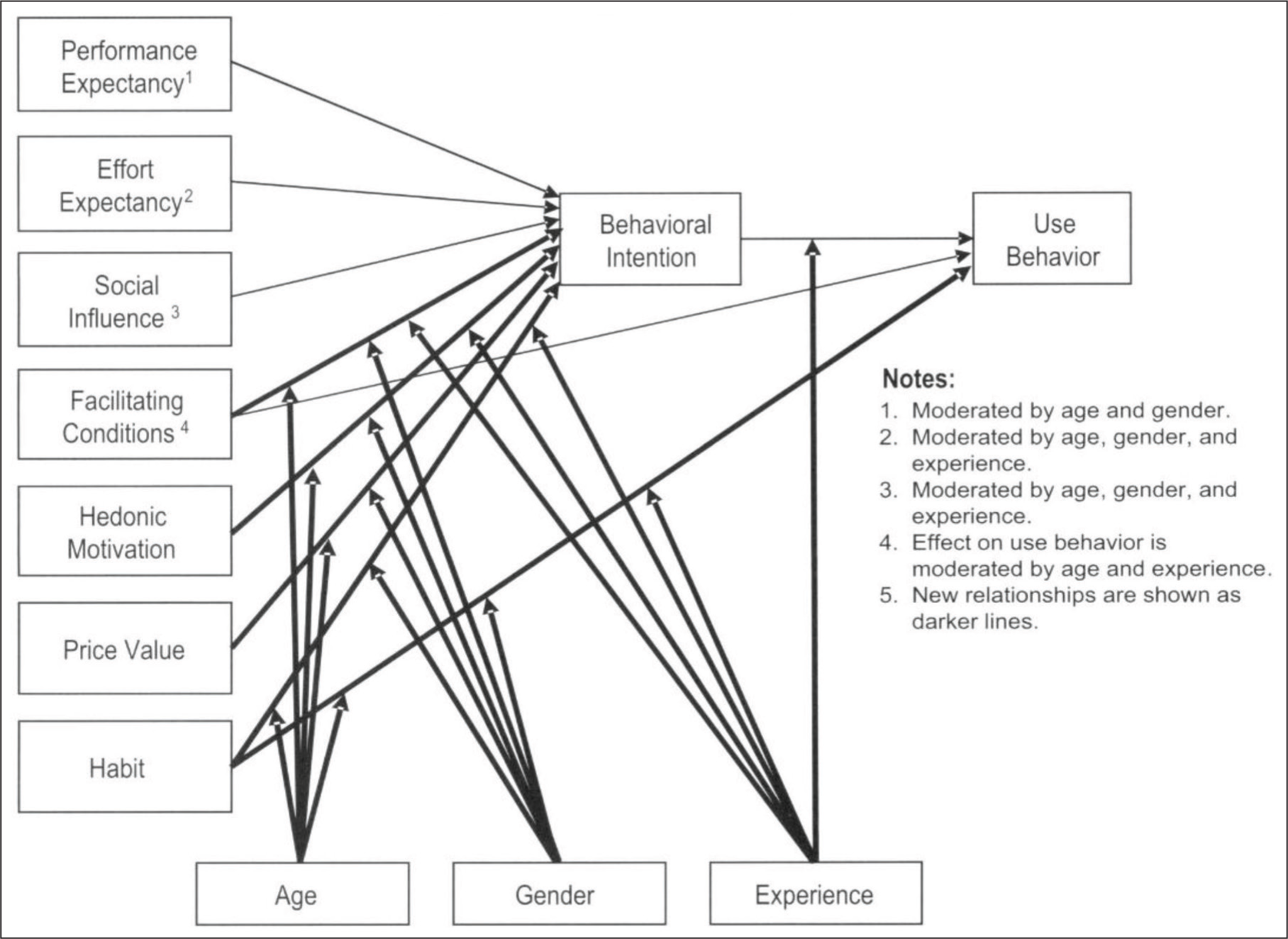
Our research stressed the importance of perceived ease of use and perceived usefulness, human motivation, and decision-making processes in understanding students’ e-learning involvement. We also used social cognitive theory to examine how individual, societal, and environmental factors affect e-learning. UTAUT assessed e-learning uptake comprehensively. The evaluation focused on internet accessibility and digital tool costs. Our research helps stakeholders understand e-learning’s pros and cons. We want to help create solutions that prioritize fair digital resource access, curriculum flexibility, and student support.
The UTAUT model was developed by integrating eight other models, including theory of reasoned action, technology acceptance model, motivational model, theory of planned behavior, combined theory of planned behavior and technology acceptance model, model of personal computer use, social cognitive theory, and diffusion of innovations theory.
The UTAUT model explains how a set of variables interact and decide use behavior in technology. Gender, experience, and age are major factors that influence the variables associated with technology. Performance and effort expectancy along with social influence make an impact on behavioral intention to use technology. Also, facilitating conditions, hedonic motivation, price value, and habits have a correlation with gender, age, and experience. These variables also influence behavioral motivation. Which in turn results in the use behavior. Experience is an important variable which directly and indirectly influences the use behavior. The questionnaire tool is made based on the components of the UTAUT model.
Data Collection Process
The questionnaire consisted of seven sections:
Pilot Study
Our questionnaire is new and developed through a literature review based on the UTAUT model. The questionnaire was validated by experts, including teachers, digital experts, and social scientists, followed by a pilot study of 50 participants. Internal consistency and questionnaire modifications were done before conducting the main survey.
Data Collection Issues and Analysis
Challenges encountered during data collection, such as generating high response rates and overcoming technical issues with the online survey platform, were addressed through clear instructions, technical help, and reminder letters. The obtained data were statistically analyzed for numeric features and thematically analyzed for qualitative replies.
Demographics and Response Rates of Participants
The study involved 415 participants randomly drawn from public and private schools in Pune district. The initial sample size objective of 382, based on a 95% confidence interval, was exceeded by 415 for robustness, resulting in a response rate of 62.5%. Out of 470 initially contacted, 415 participated, representing an 88.3% participation rate.
Data Processing and Statistical Analysis
Data were initially entered into Microsoft Excel and then transferred to SPSS for comprehensive descriptive and inferential statistical analysis. The data were categorical, and a chi-square test for independence was conducted to determine significant variables. The test was run with a 95% confidence interval and a 5% margin of error.
Results
Demographic Characteristics
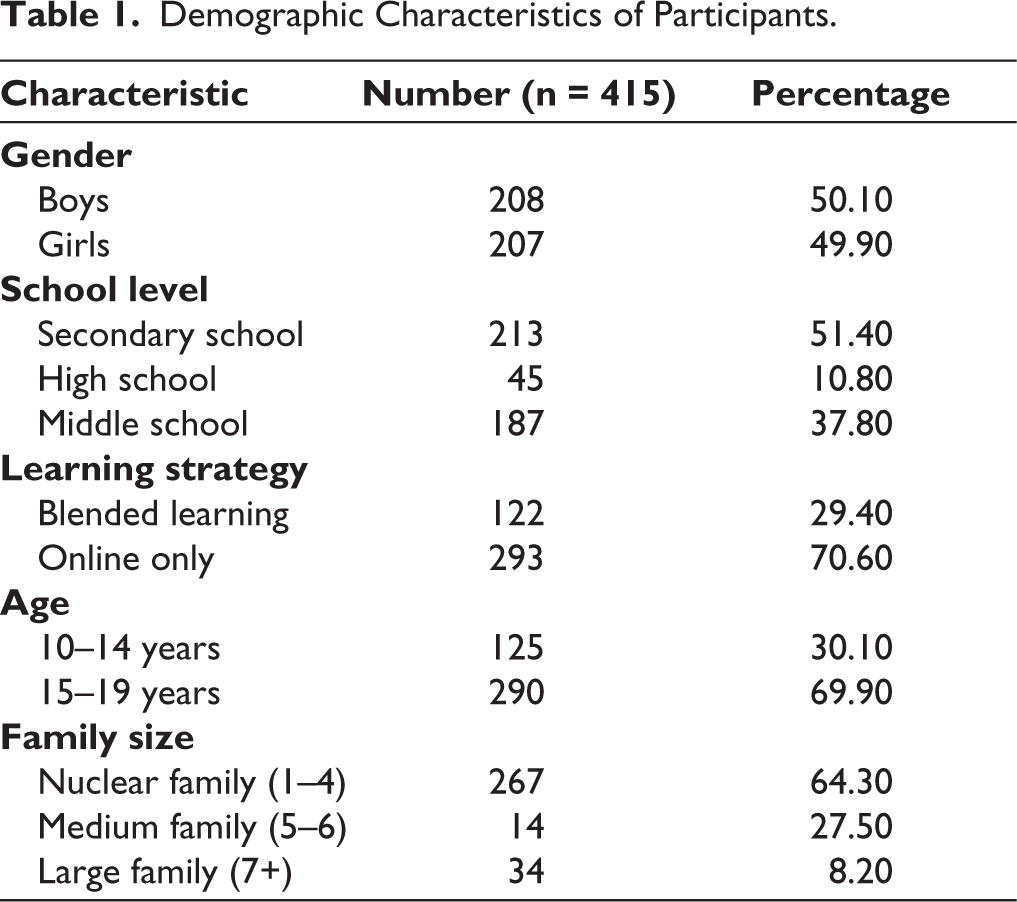
As shown in Table 1, the total number of participants in the study was 415 with a response rate >62%. The gender-wise distribution of participants did not show a significant difference, with boys at 50.10% and girls at 49.90%. The majority (51.4%) of students were in secondary school (grades 11 and 12), followed by 10.8% in high school (grades 8–10), and 39% in middle school (grades 5–7). Among them, 29.40% used a blended learning strategy, while 70.60% only attended school online.
Demographic Characteristics of Participants.
Age and Family Size Distribution
Most participants in our study were between 15 and 19 years old (290, 69.90%), and 30.10% (125) were aged 10–14 years. With a mean family size of 4.38, most participants (64.3%) were from nuclear families of one to four people. Medium-sized families (five to six members) made up 27.5% of the participants, whereas large families (seven or more members) made up a lesser share (8.2%).
Learning Mode Distribution
In the study group, 70.60% of students attended class online and 29.40% in a hybrid setting (i.e., both online and in-person).
Food and Sleep Patterns
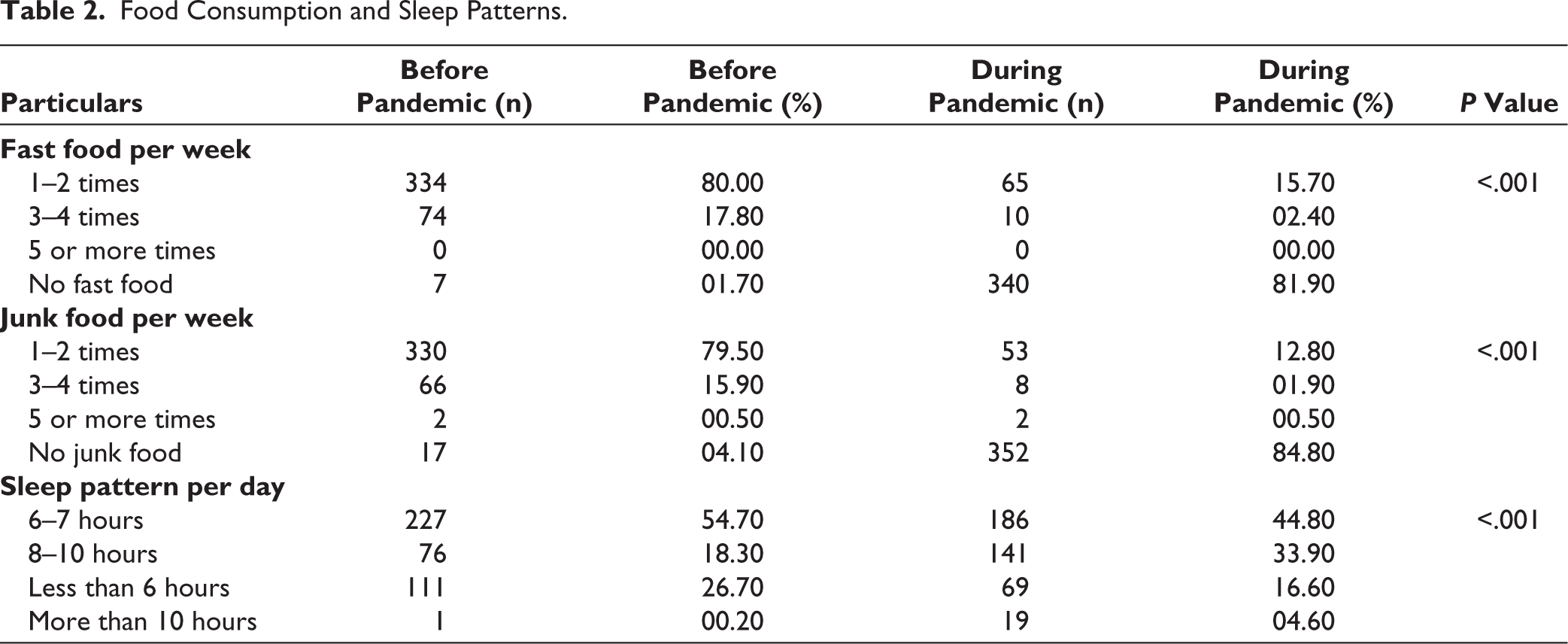
The intake of fast food, junk food, and sleep habits altered significantly during the pandemic. During the pandemic, the proportion of individuals who consumed fast food once or twice a week dropped sharply from 80% to 6.7%. The percentage of people who do not eat fast food jumped from 1.7% to 81.9%. Similarly, the percentage of people who reported eating junk food one to two times per week fell from 79.5% to 12.8%. The percentage of people who avoided junk food rose from 4.1% to 84.8%. The percentage of participants who slept six to seven hours per night fell from 54.7% to 44.8%. The percentage of those sleeping 8–10 hours rose from 18.3% to 33.9% as shown in Table 2.
Food Consumption and Sleep Patterns.
Technology Usage for E-learning
Table 3 shows the proportion of teenagers who utilize technology for online learning differs by age group. While 76.8% of students aged 15–19 years used mobile phones, 75% of pupils in the age group of 10–14 years used laptops. While the age group of 10–14 years had a big increase in laptop use, the age group of 15–19 years saw a significant increase in mobile phone use. The level of significance remained P < .001.
Gadgets Used for E-learning.

Perceived Usefulness of E-learning and Challenges in E-learning
Table 4 depicted a significant association between the perceived usefulness of certain e-learning measures and the age groups of adolescents. Specifically, aspects like “ease of understanding” (P <.001) and “availability of recorded sessions” (P <.001) were significantly correlated with the age of the adolescents. However, the remaining factors, such as “ease of interaction with teachers” (P = .016), “comfortability of learning at home” (P = .838), “saving time on commuting” (P = .086), and “saving on travel costs” (P = .016), did not show a significant correlation with the adolescents’ age groups.
Perceived Usefulness of E-learning.
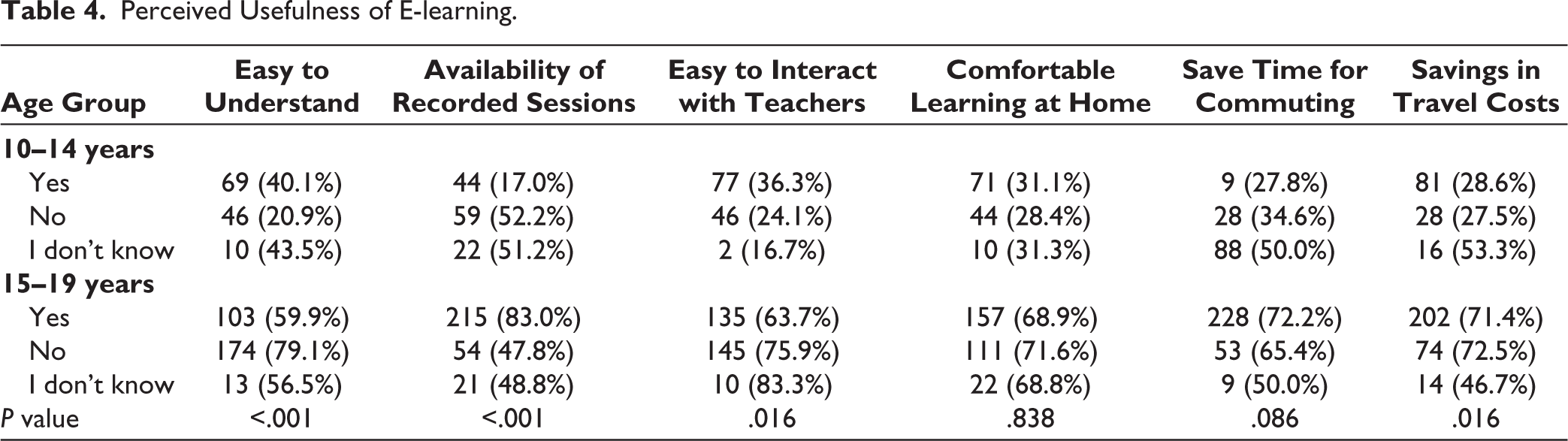
Based on numerous e-learning-related characteristics, the study demonstrates considerable preferences among adolescents about their form of school attendance. With a significance level of (P <.001), it was specifically shown that those who had trouble using technology and did not have enough room at home for e-learning tended to prefer going to school in person.
Challenges Faced During E-learning
Table 5 shows challenges faced during e-learning.
Challenges Faced During E-learning.
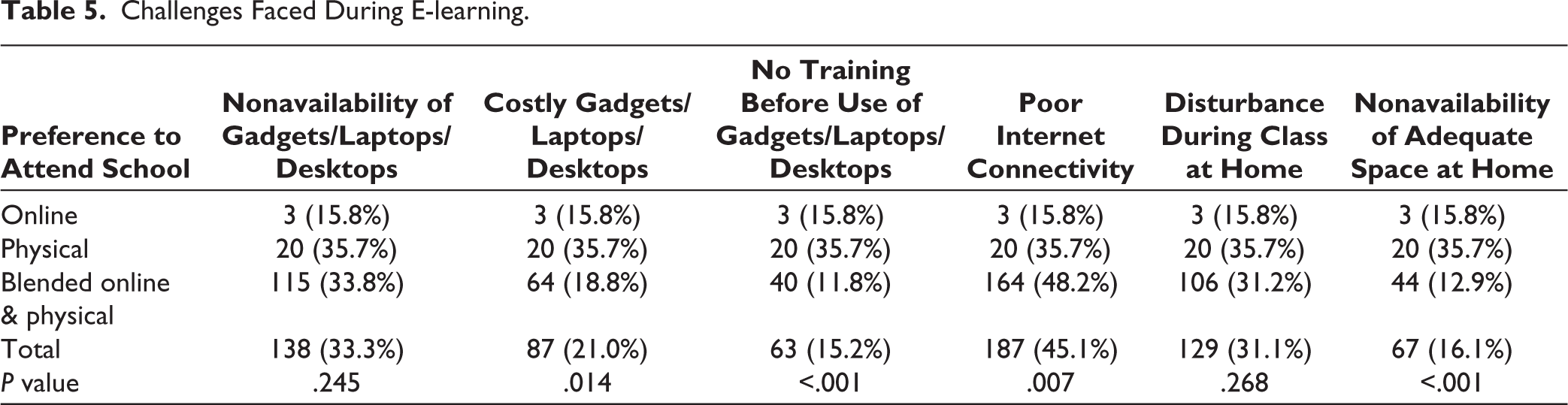
Regarding the nonavailability of gadgets/laptops/desktops, 33.3% issues were reported, with no significant difference across learning modes (P = .245). Also, 21% found gadgets costly, more so in physical attendance settings with a statistical significance (P = .014). Among respondents, 15.2% lacked training, significant across the group (P < .001). In the survey, 45.1% faced connectivity issues, especially in blended learning settings (P = .007), and 31.1% experienced disturbances, but not statistically significant (P = .268). Also, 16.1% lacked space, statistically significant (P < .001).
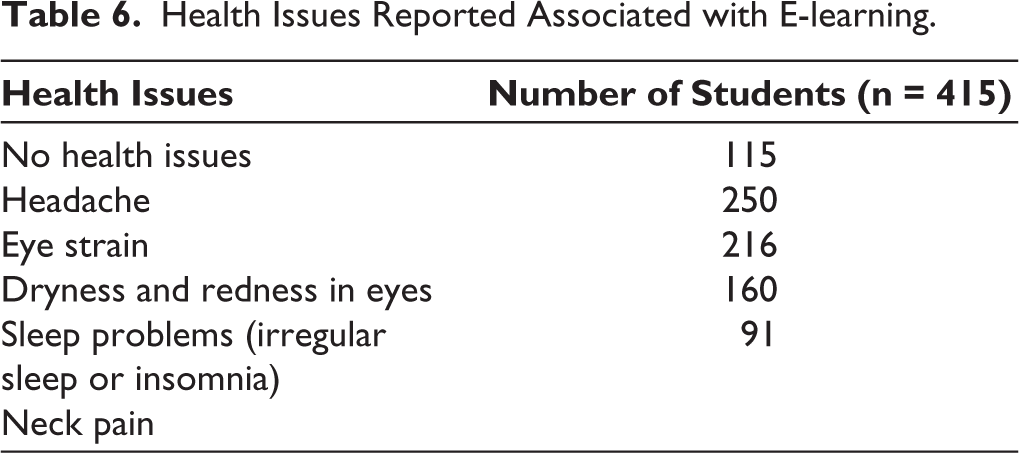
Table 6 depicted reported health issues associated with e-learning. Total 27.7% or participants reported no health issues, 60.2% experienced headaches, 52% reported eye strain, 38.6% experienced symptoms as dryness and redness in eyes, 21.9% had sleep-related issues, and 15.2% reported neck pain.
Health Issues Reported Associated with E-learning.
Discussion
Several essential features of teenage adaptation to e-learning during the COVID-19 pandemic were highlighted in this study. Adolescence is a crucial stage that includes quick physical, psychological, and social changes, such as sexual maturity, shifting educational experiences, and growing social networks. A significant proportion of students (70.60%) were learning fully online during the pandemic. 18
The study identified family size as a significant factor in the e-learning experience. Students from smaller households benefited from fewer distractions and easier access to technological resources. Nevertheless, students hailing from larger families encountered specific obstacles, including financial limitations and a scarcity of personal learning areas. Even in nuclear families, space limitations at home highlight the struggle that many students face. Addressing home environment factors, such as improving nutrition and providing better study spaces, is crucial for their overall well-being. 19
Countries’ responses to sustaining education during the pandemic varied, with some investing in digital infrastructure, while others adopting more basic measures. Comprehensive measures, including technology support and teacher training, increased student engagement but often failed to address equity issues. Students from lower-income families faced larger obstacles, underscoring the need for equitable access to resources. 20
The study highlights significant challenges and health issues faced by students during e-learning. The majority of students reported health issues, particularly headaches and eye strain, likely caused by prolonged screen time. Sleep problems and neck pain were also notable, underscoring the need for ergonomic setups and proper health guidance. These health problems can hinder effective learning and reduce the long-term viability of e-learning. It is important to provide health education on eye and neck exercises, posture correction, and screen usage to mitigate these issues. 21 A substantial number of students reported issues with gadget availability, cost, and lack of training. Poor internet connectivity was a critical barrier, especially for blended learners, indicating the need for better infrastructure. 22
Our research indicated age-related differences in perceptions of e-learning. Older teenagers valued the simplicity of comprehension and availability of recorded sessions, while ease of engagement with teachers and the convenience of learning from home were universally praised across all age groups. 23 This highlights the need for developing very sensitive strategies for different age groups. Younger age groups may require more attention and specific technologies for easy learning. Contrary to expectations, predicted impediments such as technology limits and household disturbances had little effect on preferences for in-person schooling. According to Ferri et al., 24 it can be inferred that students demonstrate resilience and adaptability by identifying the benefits of learning from home, such as the decreased need for transportation and the ability to have a more flexible schedule.
This study provides insights into the diverse effects of the pandemic on adolescent education, highlighting the importance of taking into account demographic factors, promoting fair educational systems, and implementing public health initiatives. The findings highlight the complex interplay between age, home context, and external influences in shaping the e-learning experience. Future studies should investigate broader sociodemographic factors affecting e-learning uptake and efficacy to develop more inclusive educational practices. 25
Considering the UTAUT model, this study’s age is a major influencing factor, which can influence other factors such as performance expectancy and effort expectancy. Facilitating conditions such as technological barriers, space at home, price, and health-related problems have an impact on the acceptance and use of e-learning methods. However, this study shows the faster adaptation, acceptance, and resilience of students toward e-learning. Therefore, it is crucial to recognize and address the obstacles in the implementation of e-learning to enhance the performance of children. 16
Conclusion
This study provides useful insights into Indian adolescents’ adaptation to e-learning during the COVID-19 pandemic. It has emphasized the importance of demographic factors, including age and family size, in molding students’ online learning experiences. The pandemic-forced transition to digital education has highlighted the difficulties of fairness and accessibility in the education industry. Students perceived e-learning as effective and easy to cope with; our findings highlight students’ resilience and adaptation in the face of technical constraints and changed home settings, implying a capability to thrive in new learning modes despite initial challenges. The observed lifestyle alterations among adolescents, such as changes in eating habits and sleep patterns, reflect the pandemic’s broader influence on student well-being. E-learning, while offering flexibility and access, presents significant challenges that need addressing to ensure effective learning experiences.
Key Recommendations
Improving access to affordable technological resources
Providing adequate training for students and teachers
Enhancing internet infrastructure for reliable connectivity
Promoting ergonomic practices and regular health checkups to mitigate physical strain.
Addressing these challenges through targeted interventions can enhance the e-learning experience and support students’ well-being.
Limitations of the Study
Footnotes
Acknowledgements
The authors acknowledge all children and families who participated in this study.
Declaration of Conflicting Interests
The authors declared no potential conflicts of interest with respect to the research, authorship, and/or publication of this article.
Ethical Statement
The study has received ethical approval No. SIU/IEC/322 dated 31st December 2021 from the Institutional Ethics Committee of Symbiosis International University (SIU) and has been conducted in accordance with the guidelines set forth by the committee.
Funding
The authors received no financial support for the research, authorship, and/or publication of this article.
Informed Consent
Written/verbal informed consent was taken from all the participants. The study was conducted in accordance with the principles as enunciated in the Declaration of Helsinki.