



Abstract
Background:
There has been an urgent need for the youths to be furnished with the capacity to apply the use of strategies such as problem- solving and coping skills in other to ameliorate their deliberate self-harming behavior inclinations. It is important to recognize the underlying emotional and psychological underpinnings of these self-harming behaviors.
Methods:
Three data bases; Scopus, Google Scholar advanced search, and PubMed, were searched using keywords such as “problem-solving,” “coping,” “youth,” and “deliberate self-harm.” The articles were then screened to ensure that they all met the inclusion criteria and only those published in the English language were selected and deliberate self-harm.”
Result:
Deliberate self-harm behaviors pose a substantial risk to the mental health of the individuals involved. Integrating emotional regulation and coping skills has been shown to improve mental health outcomes in these youths significantly. Problem-solving and coping skills programs have emerged as effective interventions for addressing deliberate self-harm behaviors in youth. Those who are engrossed in deliberate self-harm often struggle with problem-solving abilities and resort to maladaptive social problem-solving, such as self-harming, as a coping mechanism. Incorporating problem-solving techniques within therapy approaches can be an effective strategy to address deliberate self-harm behaviors and promote healthier coping mechanisms.
Conclusions:
There is the need for structured interventions to meet the unique and diverse need of the youths engaged in this act. Interventions can target the core issues, such as emotional dysregulation, interpersonal difficulties, or trauma history.
Introduction
Deliberate self-harm may be defined “as the deliberate, direct destruction or alteration of body tissue, without conscious suicidal intent but resulting in injury severe enough for tissue damage to occur.” 1 Worldwide, there is a high occurrence of self-inflicted behavior among the youthful populations. 2 While it has traditionally been more predominant in high-income countries, current trends indicate that low- and middle-income countries are also witnessing an advent of self-inflicted harm among youths, leading to disruptions in their health and social well-being.3,4
Several factors contribute to self-inflicted harm among adolescents. These include, “experiences of physical abuse during childhood, substance abuse such as alcohol and tobacco consumption, negative peer influences, family violence, academic disturbances, aggressive behaviour, psychological problems, attention deficit-hyperactivity disorder, and feelings of loneliness.” 5 These factors interact in complex ways, impacting the vulnerability of adolescents to engage in self-inflicted harm and highlighting the need for comprehensive interventions that address the underlying causes and provide support at various levels.
Self-harm and its related risk behaviors among the youth have received little attention from the community, family, and government. 6 Adolescent behavior, including self-harm, has been shaped by cultural and social contexts.7–8 For example, a study found that India’s high socioeconomic inequality has led to an increase in the incidence of self-inflicted harm among children and adolescents, with teenagers from lower social groups being particularly susceptible. 6
Objective of the Review
The aim of this study was to evaluate and synthesize the available literature on problem-solving and coping skills training programs targeted at youth who are engaged in deliberate self-harm behaviors. The review is aimed to assess the effectiveness of these interventions in reducing self-harm incidents and enhancing the mental well-being of youth while identifying key components and gaps in the current knowledge.
What is the effectiveness of problem-solving training (PST) for reducing deliberate self-harm behaviors in youth? How does coping skills training improve mental health outcomes in youth with deliberate self-harm behaviors? What are the key components of problem-solving and coping skills training programs for youth with deliberate self-harm behaviors?
In addressing these thematic areas, we aim to gain a comprehensive understanding of the current state of knowledge regarding problem-solving and coping skills training for youth with deliberate self-harm behaviors.
The authors’ use of the term “problem” in this context concurs with D’zurilla and Goldfried’s 1971 definition, wherein it refers to a specific situation or a set of related situations that necessitate an individual’s effective response for functioning in their environment. 9 This implies that when faced with a challenge, the person does not immediately have a readily available response option. Within this definition, encapsulated are situations that possess novelty, “complexities,” “ambiguities,” or “conflicting stimulus demands,” which require problem-solving behavior due to the failure of “automatic” effective actions. 10
In this context, problem-solving can be described as a behavioral process that encompasses both overt and cognitive aspects. It involves generating a range of potentially effective response options to address a challenging situation and enhances the likelihood of choosing the most optimal response from among these alternatives.
10
In real-life situations, the decision-making component holds significant importance, considering that many problems have multiple viable solutions. This means that these problems can be adequately addressed through various approaches, some of which may be more effective or suitable than others. Figure 1 illustrates the conceptual framework of problem-solving as behavioral processes within the broader context of interventions for deliberate self-harm among youth. As shown in Figure 1, problem-solving can also be viewed as a process of learning, as it facilitates behavioral changes aimed at promoting positive outcomes through reinforcement. Consistent with the aforementioned definition, problem-solving can also be viewed as a process of learning. The inclusion of problem-solving within learning theory has been firmly asserted by
11
in the following manner:
“The solving of a problem is an event which needs to be classified, so far as the individual’s behaviour is concerned, as an act of learning … [since] … the observed events in problem solving comprise a change in human performance, and this in turn leads us to infer a change in human capability”11,12).
Conceptual Framework of the Review.
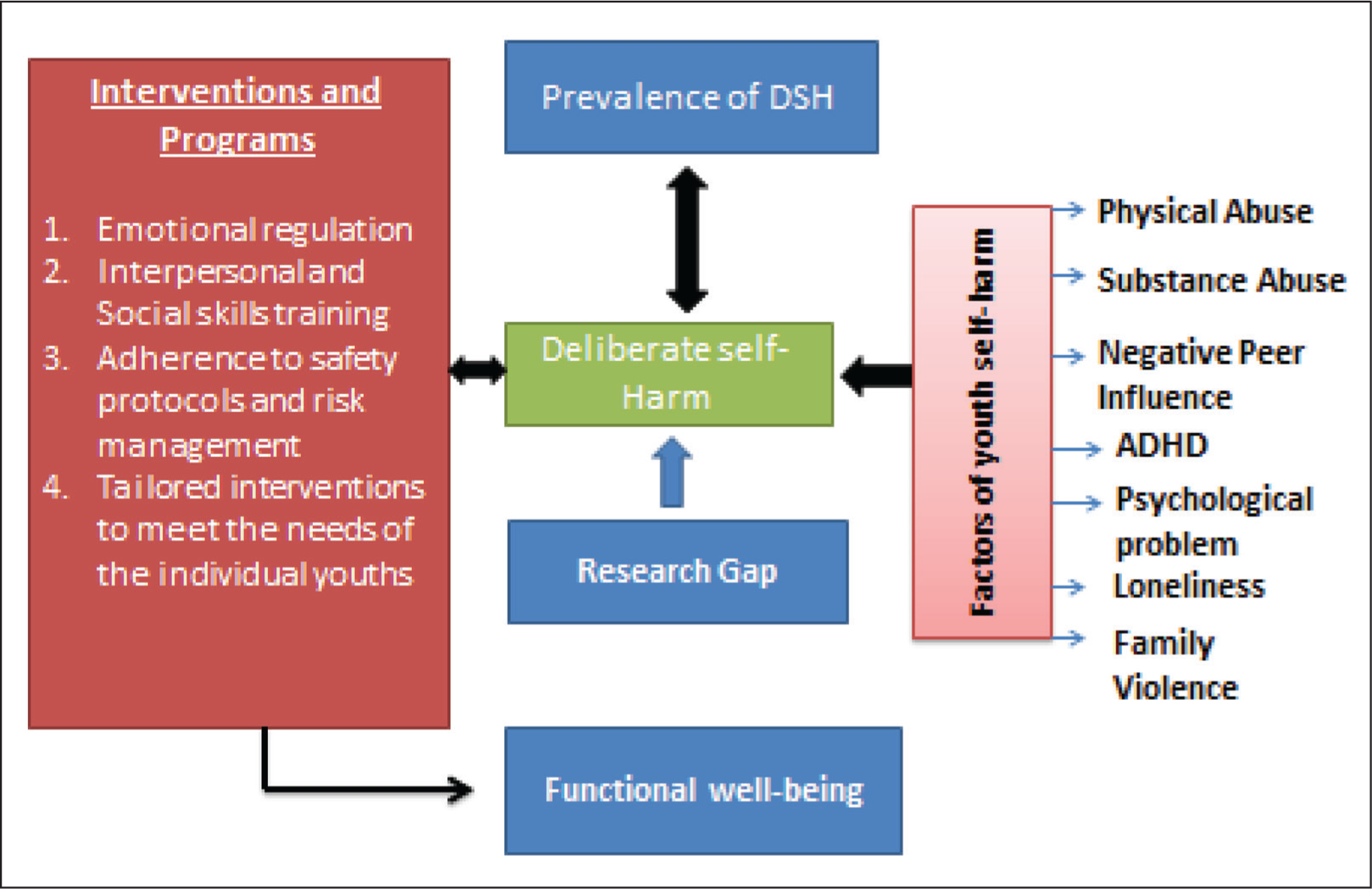
It should now be evident that problem-solving, particularly in the context of deliberate self-harm in youth, shares the same objectives as behavior modification. These objectives aim to promote behaviors that are likely to result in positive outcomes, such as positive reinforcement, while also avoiding negative outcomes, such as negative reinforcement. Thus, PST can be considered as one of the potential techniques within behavior modification approaches that facilitate effective behavior.
Deliberate self-harm behaviors among youth present a significant concern for mental health professionals. To address this issue, problem-solving and coping skills training programs have emerged as potential interventions. This literature review aims to provide a comprehensive analysis of the effectiveness of PST, the impact of coping skills training on mental health outcomes, and the key components of training programs for youth with deliberate self-harm behaviors. This review seeks to inform clinical practice and guide future interventions in this critical area.
Methods
Search Strategy
To identify relevant articles for our review, a literature was conducted search using specific keywords (“problem solving,” “coping,” “youth,” and “deliberate self-harm”). We employed the use of only one Boolean operator, “OR” to make it possible for the search to capture wide dataset. We utilized three databases, namely Scopus, Google Scholar advanced search, and PubMed. The search in Scopus was limited to articles published between 2012 and 2023, resulting in 27 articles. In PubMed, we focused on systematic reviews and meta-analyses, also covering the period from 2012 to 2023, and found 11 articles. Additionally, our search in Google Scholar yielded 17 articles. All these results were merged into one excel file to enable us screen to identify duplicates.
After identifying the articles, we proceeded with a screening process based on our predefined inclusion criteria, which involved removing 12 duplicate entries. Initially, we assessed the relevance of the articles by examining their titles and abstracts, excluding publications that were not in the English language. Subsequently, a full-text screening was conducted to ensure that the included articles directly addressed our research questions and objectives for the review. To enrich the depth and comprehensiveness of our discussion, we expanded our search during the discussion stages, this time without limiting the publication year, to include additional articles.
Inclusion Criteria
Our inclusion criteria focused on selecting original research, randomized control trial, systematic review articles, and qualitative research published articles in the English language.
Publications that were specifically relevant to problem-solving and coping skills training in the context of deliberate self-harm.
Publications between the period 2012 and 2023.
Exclusion Criteria
Publication that fell outside the publication dates, before 2012.
Publication in other languages other than the English language.
Publications with irrelevant content.
Results
Effectiveness of Problem-Solving Training to Reducing Deliberate Self-Harm Behaviors in Youth
Several studies have demonstrated the potential efficacy of PST as an intervention for deliberate self-harm behaviors in youth. A randomized controlled trial and a longitudinal study conducted by Husain et al. and Jutengren et al., respectively, highlighted in their findings that participants who received PST demonstrated a sustained decrease in self-harm behaviors.13,14
PST as an intervention for deliberate self-harming behavior has been identified as one of the most promising, showing consistent effectiveness across multiple studies. 15 A study findings indicated that PST not only reduced self-harm behaviors but also improved problem-solving skills, emotional regulation, and coping strategies, contributing to overall well-being. 16
An online study revealed an indirect effect of self-harm on paternal assessment through perceived problem-solving abilities. This revelation means that there is a symbiotic relationship between low paternal attachment quality which translates into poorer appraisal of problem-solving and an increased likelihood of joining a self-harm group. It, therefore, means that youth who have lower quality of paternal attachment will struggle with problem-solving abilities and consequently increase the risk of belonging to the self-harm group. The finding suggests that problem-solving skills play a significant role in youth with deliberate self-harm behaviors. This finding highlights the importance of parents’ role in attachment as a protective factor against self-harm. 17
Again, promising revelation has been found for problem-solving therapy in reducing repeated self-harm.18–20 In a study of interpersonal PST, 39 patients who had self-poisoned were randomly assigned to five sessions of individual interpersonal problem orientation approach. Although similar improvement was found in levels of hopelessness and presenting problems for both treatment conditions, those assigned to interpersonal problem-solving skills training had a lower rate of repetition and 12 months follow-up compared with the control group. 21 Similarly, effectiveness of brief group problem-solving skills was examined among both younger and older adults who have self-harm. When the PST was previously compared against standard care in the treatment of individuals who have self-poisoned using individual psychotherapy, lower rates of repeated self-harm were reported in the PST group. 21
A study was conducted in China to investigate the relationship between emotional competence, social problem-solving, physical abuse, and adolescent suicidal ideation, specifically focusing on the role of rational problem-solving. The findings revealed interesting gender differences in this association. The study found that rational problem-solving, as a subscale of social problem-solving, exhibited a significant and negative correlation with suicidal ideation among males. However, this association was not observed among females. This meant that rational problem-solving plays a role in reducing suicidal ideation in male adolescents with a history of physical abuse. These findings highlight the significance of problem-solving skills, specifically rational problem-solving, for male adolescents who engage in deliberate self-harm behaviors. Strengthening and promoting problem-solving abilities among males could potentially serve as a protective factor against suicidal ideation. Equipping male adolescents with effective problem-solving skills, will arm them with skills to cope with challenges, manage their emotions, and navigate stressful situations, thereby reducing the risk of engaging in self-harm. 22
Previous studies have provided evidence that individuals who engage in self-injurious behaviors, including adolescents, display difficulties in problem-solving abilities.23,24 In a study aimed at investigating the social problem-solving abilities of individuals who self-injure compared to those who do not, a problem-solving skills test was administered to a group of adolescents aged between 12 and 19 years. The findings indicated that self-injurers tended to generate a significantly higher number of negative solutions. 25 This suggests that adolescent self-injurers tend to employ more maladaptive social problem-solving strategies and perceive themselves as less competent in resolving problems compared to noninjurers. The limited adoption of appropriate problem-solving skills among these individuals may provide an explanation as to why they resort to deliberate self-harm behaviors when faced with distressing situations and emotions.
By way of intervention, problem-solving techniques are cognitive behavioral strategies that help individuals identify and address challenges in their lives. The relevance of these techniques especially within the context of deliberate self-harm is in their ability to help young individuals develop healthier ways to cope with stressors and negative emotions. Problem-solving therapy (PST) is a common approach which involves several steps: problem orientation (recognizing and defining the problem), problem definition (breaking down the problem into manageable parts), generating alternatives (coming up with various solutions), decision-making (evaluating the pros and cons of each solution), solution implementation (putting the chosen solution into action), and solution evaluation (assessing the effectiveness of the solution and making adjustments if necessary). 26 Problem-solving techniques can be taught through structured interventions, such as group therapy sessions or individual counseling, and have been shown to be effective in reducing self-harming behaviors among youth. 27
In other to understand better this intervention under review, a brief dive into some theories is worth noting. One of such is social problem-solving theory as espoused by D’Zurilla and Nezu. 26 This theory is pivotal to the framework of problem-solving interventions. It posits that that individuals’ ability to effectively solve problems is influenced by their cognitive and behavioral skills, as well as their appraisal and response to stressful situations. It offers the individuals skills to maneuver their social problems which otherwise would have led to self-harming behavior. Also, problem-solving interventions draw upon the principles of cognitive behavioral therapy (CBT), emphasizing the role of the mind in shaping emotional behaviors as it targets cognitive distortions and dysfunctional beliefs that contribute to maladaptive coping strategies. 26
Problem-solving interventions empower youth to identify, evaluate, and address the underlying issues contributing to their self-harm behaviors through structured problem-solving steps. These practical problem-solving skills equip the youth to brace themselves to navigate the challenges of live, thereby reducing their likelihood of engaging in self-harm behaviors as a maladaptive coping mechanism.
Coping Skills Training That Can Improve Mental Health Outcomes in Youth with Deliberate Self-Harm Behaviors
In recent years, there has been growing recognition of the critical need for effective interventions to address the challenges faced by youth struggling with deliberate self-harm behaviors. Among the various approaches explored, coping skills training has stood out for improving mental health outcomes in this vulnerable population. Coping skills training holds the potential to not only reduce the incidence of self-harm behaviors but also enhance overall psychological well-being as it offers the youth strategies to manage distressing emotions, navigate challenging situations, and foster resilience. In this review, the role of coping skills training in supporting youth with deliberate self-harm behaviors, examining its theoretical underpinnings, empirical evidence, and practical implications for intervention and prevention efforts, is discussed as follows:
Integration of Emotion Regulation Skills
The integration of emotion regulation skills as a coping skill can significantly improve mental health outcomes among individuals with deliberate self-harm behaviors. Individual effectively regulating emotions can experience reduced distress, enhanced psychological well-being, and improved overall mental health. Emotion regulation skills enable individuals to manage intense emotions in a healthy and adaptive manner, reducing the need for maladaptive coping mechanisms like self-harm.
Research studies have shown the positive impact of emotion regulation skills on mental health outcomes. For instance, individuals who demonstrated greater emotion regulation abilities reported lower levels of self-harm behaviors. 28 These individuals were also less likely to experience symptoms of depression, anxiety, and other psychological distress. Similarly, in a study, the integration of emotion regulation strategies into a treatment program for self-harm resulted in significant reductions in self-harm behaviors and improved psychological functioning. 29
Coping Skills Training
Coping skills training has shown promise as an intervention for improving mental health outcomes in youth with deliberate self-harm behaviors. Several studies have examined the effectiveness of coping skills training programs in reducing self-harm incidents and improving emotional regulation, symptoms of depression, and anxiety.
One study found that participants who received coping skills training demonstrated significant reductions in self-harm behaviors, improved emotional regulation, and decreased symptoms of depression and anxiety. 30 Another randomized controlled trial 31 evaluated a school-based coping skills training program for at-risk adolescents and observed positive effects on mental health outcomes, including decreased self-harm incidents and improved emotional coping.
A systematic review and meta-analysis 32 further supported the efficacy of coping skills training interventions in reducing self-harm incidents and improving mental health outcomes in adolescents. Various approaches, such as CBT and dialectical behavior therapy (DBT), were found to be effective.
Additionally, a study 33 specifically tailored coping skills training to address deliberate self-harm behaviors in adolescents. The structured program aimed to enhance emotional regulation, problem-solving skills, and adaptive coping strategies. The results indicated significant reductions in self-harm incidents and improved mental health outcomes among participants who received the training. These findings underscore the importance of targeting coping skills related to self-harm behaviors to achieve positive outcomes. Coping skills training can be an effective preventive measure for vulnerable youth at risk of self-harm behaviors.
As an intervention measure, coping skills refer to the strategies individuals use to manage stress, emotions, and difficult situations. Coping skills training is aimed at teaching young individuals healthier and more adaptive ways to cope with stressors, leading to a reduction in the likelihood of engaging in self-harm behaviors. 34 Learning to identify and regulate one’s emotions through the teachings of emotion regulation techniques, using problem-solving techniques to address challenges, social support, distraction techniques (engaging in activities that divert attention from negative thoughts or urges) and practicing relaxation methods such as deep breathing or progressive muscle relaxation, all of these strategies form a comprehensive package for individuals facing deliberate self-harm behaviors.
Coping skills training can be incorporated into various therapeutic approaches, such as CBT or DBT, and has been shown to be effective in reducing self-harm behaviors and improving overall psychological well-being among youth. 34 As these youth are equipped with these skills, the urge to engage in self-harm is significantly reduced.
Stress and Coping Theory by Lazarus and Folkman 35 ; and DBT by Linehan 36 are some theories that can be drawn in to explain the relationship between coping and self-harm behaviors. The former theory describes coping strategies as dynamic efforts to manage internal and external demands that exceed one’s resources. Problem-focused coping and emotion-focused coping are seen as interventions most appropriate in this case. The later theory emphasizes the importance of acceptance and change in promoting emotion regulation and interpersonal effectiveness. Coping skills modules within DBT target specific areas such as distress tolerance, emotion regulation, and interpersonal effectiveness, providing youth with a skills to manage distress and reduce self-harm behaviors. 34
Clustering Self-Harm
Categorizing self-harm is important as it paves the way for designing effective treatment interventions. We have clustered self-harm into these categories. Direct self-harm entails actions such as cutting or scratching the skin, burning oneself, biting oneself, hitting or punching oneself, hair-pulling, or trichotillomania. On risk and intervention, this category of self-harm is associated with high risk of physical injury which gives rise to potential for infections. Interventions for this category would often include but not limited to CBT and other therapeutic strategies aimed at “emotional regulation and developing healthier coping mechanisms.” 37
Indirect self-harm on the other hand involves engaging in risky behaviors that have the potential for self-harm, such as reckless driving, substance abuse, self-destructive actions, disordered eating behaviors like binge eating, and neglecting personal hygiene. Long-term health complications, accidents, and further psychological harm are some of the risks linked to this category of self-harm. Interventions may include counseling, psycho-education, and support groups to address underlying issues and promote safer coping strategies.
The third category, self-poisoning or overdosing, refers to activities that include ingesting of harmful substances such as medications, drugs, or toxic chemicals in excess. While these categories cover a wide range of self-harm behaviors, they are not exhaustive and serve as a broader categorization for understanding and addressing the issue. High risk of severe physical harm or death is/are the risk factor(s). Here, immediate medical intervention is required; psychological support and long-term mental health care are also crucial in this scenario.
Each of these categories has a unique underlying motivation, triggers, and associated risk; hence, there is the need for special intervention to address these unique clusters. A study by Clapperton revealed that poisoning accounted for the majority of admissions within all subgroups and cutting with sharp objects accounted for between 18 and 24% of admissions. He posited that several studies have highlighted the significance of this method of self-harm, showing that cutting is a strong predictor of repetition of self-harm. 38 The understanding of these clustering is necessary to both client and the therapist as it will foster a collaborative approach for therapeutic interventions for an improved outcome eventually.
Key Components of Problem-Solving and Coping Skills Training Programs for Youth with Deliberate Self-Harm Behaviors
Problem-solving and coping skills training programs play a crucial role in addressing deliberate self-harm behaviors among youth. Examining the evidence-based strategies and approaches employed in these programs, this review seeks to provide insights and recommendations for effective interventions that promote mental well-being and resilience among vulnerable youth populations.
One crucial component is the development of emotion regulation skills. Studies have emphasize the importance of teaching youth effective strategies to identify, tolerate, and regulate their emotions.39,40 These strategies may include mindfulness exercises, relaxation techniques, and emotional awareness training. Enhancing their ability to manage intense emotions, youth can reduce the urge to engage in self-harm behaviors.
Interpersonal and social skills training are often integrated into these programs. Youths with deliberate self-harm behaviors may struggle with relationships and experience difficulties in social interactions. A study was conducted and the findings emphasized the importance of teaching communication skills, assertiveness, and conflict resolution techniques to enhance their interpersonal functioning. 41 Developing these skills can contribute to improved social support, a sense of belonging, and healthier relationships, which serve as protective factors against self-harm.
Adherence to safety protocols and risk management is another critical component of problem-solving and coping skills training programs. It is important to address the immediate safety concerns and develop strategies to minimize the risk of self-harm during the intervention. This component involves collaboratively creating safety plans, identifying supportive individuals or networks, and implementing crisis management strategies. Emphasizing the importance of consistent monitoring and evaluation of an individual’s safety during the training program is crucial to safeguard their well-being and minimize the chances of self-harm occurrences. 42
Effective programs involve comprehensive assessments to identify the specific factors contributing to self-harm behaviors and develop personalized interventions. As youth participate in these interventions, there is need for assessment and measurement to inform intervention planning and individualized approaches as well as monitoring purposes. Baseline assessment via self-report measures, interviews, and behavioral observations to understand the severity and nature of self-harm behaviors, as well as associated psychological symptoms and risk factors is important. Risk assessment to ascertain past suicidal attempts and abuses is critical to the development of safety plans and to gauge individual heightened risk of self-harm. These risk assessment can be carried out by employing various risk assessment scales, such as Columbia-Suicide Severity Rating Scale (C-SSRS) 43 and or the Suicide Risk Assessment Guide. 44
Rigorous measurement practices are essential for assessing intervention outcomes accurately and ensuring the accountability and quality of services delivered. Key measurements within this context may include outcome measurement, process measurements, longitudinal measurement, and quality of life measurement. Self-report scales (such as Beck Depression Inventory 45 Beck Scale for Suicidal Ideation) 46 or clinician-administered assessments (e.g., the Self-Injurious Thoughts and Behaviors Interview), 47 provide quantitative data on changes in symptoms and functioning over time. Assessing changes in quality of life domains, such as emotional well-being, social functioning, and overall life satisfaction, offers a broader perspective on the impact of interventions beyond symptom reduction. Quality of life measures, such as the Pediatric Quality of Life Inventory (PedsQL), 48 capture subjective perceptions of well-being and functioning, complementing traditional symptom-focused assessments.
Discussion
Deliberate self-harm behavior among youth presents challenges for mental health professionals, and this has made it necessary to find for effective interventions to address the underlying trauma. Problem-solving and coping skills training programs have emerged as potential approaches to mitigate self-harm behaviors and improve mental health outcomes in youth.14,30 This literature review analyzes the effectiveness of PST, the impact of coping skills training on mental health outcomes, and key components of training programs for youth with self-harm behaviors.
Studies have supported the effectiveness of PST in reducing self-harm behaviors in youth.15,21 Randomized controlled trials and longitudinal studies have shown significant reductions in self-harm frequency and severity among adolescents receiving PST. The training also enhances adaptive coping skills and resilience, improving problem-solving abilities, emotional regulation, and coping strategies. 49 These findings suggest that PST offers an all-inclusive approach to addressing immediate self-harm behaviors and underlying issues.
In addition to reducing self-harm behaviors, PST has in addition demonstrated positive effects on adaptive coping skills and resilience. Studies have shown that PST not only decreases self-harm behaviors but also improves problem-solving skills, emotional regulation, and coping strategies.50,51 These improvements contribute to overall well-being and support mental health outcomes in youth with deliberate self-harm behaviors. PST, therefore, offers a holistic approach that addresses both the immediate self-harm behaviors and the underlying issues that contribute to them.
However, limitations exist in the literature, such as reliance on self-report measures and a need for investigation into long-term effectiveness. Research indicates a link between self-harm behaviors and difficulties in problem-solving abilities and maladaptive social problem-solving strategies. If problem-solving skill is improved, individuals can develop healthier coping strategies, reducing the likelihood of self-harm.
Understanding the components of problem-solving and coping skills training programs is crucial for effective interventions. Early studies highlight the integration of problem-solving techniques within therapy approaches, involving problem exploration, alternative response generation, and consideration of consequences. Integrating PST into comprehensive treatment approaches can enhance effectiveness and promote positive outcomes in addressing self-harm behaviors. 52
Implications of the Findings
Problem-solving and coping skills training are undoubtedly effective interventions in reducing deliberate self-harm behaviors among youths. This underscores the need for these interventions in clinical practice. Mental health practitioners should inculcate these interventions in their books to be used during training sessions. These findings points out the need for individualized interventions as this will address specific challenges since the factors that precipitate the individual to self-harm can be unique to each individual.
Moreover, emotional regulation skills as part of coping skills training have emerged as a very effective factor for mental health outcome among the youth who engages in self-harm. The importance of teaching the youth important skills such as emotional regulation to enable them deal with their emotional issues cannot be under estimated.
Research Gap
Paucity of information or research exists on the topic of problem-solving and coping skills training specifically for youth involved in deliberate self-harm behaviors, despite the extensive research conducted on self-harm among adolescents. As a result, the review focusing on problem-solving and coping skills training in this context represents a novel contribution to the field. Addressing this gap will offer researchers and clinicians to designed programs aimed at meeting the unique needs of the vulnerable youth. Filling this gap extends beyond academic curiosity as the findings of well-designed studies can impact on clinical practice and policy-making. It will offer clinicians several interventions measures to work with and offer policy makers the opportunity to design standardized protocols and training manuals for mental health care professionals. The implantation of preventive measures within the educational settings cannot be downplayed.
Future Research Direction
The long-term effectiveness of problem-solving and coping skills training for youth engaging in deliberate self-harm behavior should be the focus of future research. The role of family in promoting the effectiveness of problem-solving and coping skills training for youth who engage in self-harm is worth exploring.
Conclusion
Problem-solving and coping skills training programs show promise in reducing deliberate self-harm behaviors and improving mental health outcomes in youth. These interventions address the underlying causes of self-harm, enhance problem-solving abilities, and promote adaptive coping strategies. Incorporating PST into comprehensive treatment approaches, mental health professionals can provide effective support for youth with deliberate self-harm behaviors, ultimately promoting their well-being and resilience.
The findings from this literature review have important implications for clinical practice and future interventions. Mental health professionals can consider incorporating problem-solving and coping skills training into their therapeutic approaches for youth with deliberate self-harm behaviors. By addressing the underlying emotional and psychological trauma, improving problem-solving abilities, and enhancing adaptive coping skills, interventions can provide comprehensive support and promote long-term well-being.
Future research should continue to explore the effectiveness of PST, incorporate objective measures, and investigate the long-term impact of interventions on self-harm reduction.
Footnotes
Declaration of Conflicting Interests
The authors declared no potential conflicts of interest with respect to the research, authorship and/or publication of this article.
Declaration of Generative AI and AI-Assisted Technologies in the Writing Process
During the preparation of this work, the authors used ChatGPT tool in order to improve the readability of the article. After using this tool/service, the authors reviewed and edited the content as needed and take full responsibility for the content of the publication.
Funding
The authors received no financial support for the research, authorship and/or publication of this article.