




Abstract
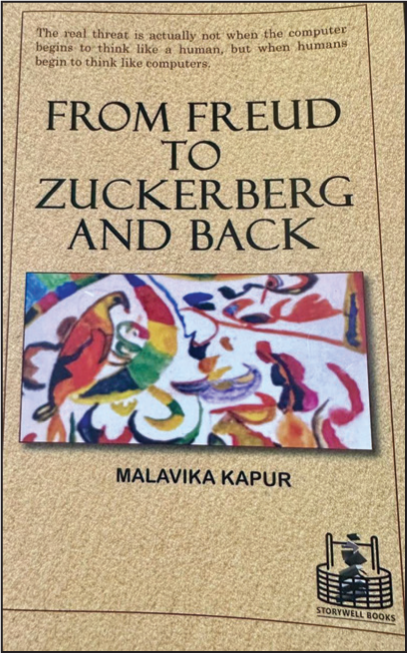
This is an excellent book which we have read with great interest. The key messages of the book are “empowerment and promoting resilience.” The enlightenment that dawns upon the reader after assimilating the content of this book is captured by the metaphor “the grin remains even after the cat has disappeared.” The author herself has used this metaphor to explain the subjective and objective world of the child. Professor Malvika Kapur, one of the leading professionals in the field of developmental psychology, has presented her theoretical knowledge, clinical and community experience, and research findings in an easily digestible form in this exceptional work. We have found the separation of content into three sections, “Child’s World,” “Perils and Joys of Parenting,” and “Reflections” very useful.
The author recapitulates the basic concepts of child development from Western psychology like evolutionary biology, cognition, learning, language, and culture in the first part of the book benefiting the trained professionals and non-professionals interested in child development alike. Renaming the phases of child development as Abhimanyu (in the womb), the scientist (in the cradle), the philosopher (who wanders), and the conqueror by blending her own clinical observation and research spanning over three decades and Western theories is a very original nomenclature which makes much sense in the Indian context. The author also explores how the advent of digital technology in the last three decades has totally changed the environment in which the young brains are programmed. She examines how the “unreality” created by the online games and internet-based social platforms becomes the “reality” for children who are exposed to it without adequate parental controls. The reader will definitely exclaim with the author “The real threat is actually not when computer begins to think like a human, but when humans begin to think like computers!”.
The impact of lockdown imposed by the Covid-19 pandemic is also examined with an incisive mind. The author then brings in her real ground experience in the community by sharing the innovative approaches she and her team introduced in rural Karnataka in the post pandemic years. One of the unique things about this book is, it is not a mere fault finding or blaming exercise, but it is like a manual which offers practical solutions to the present-day challenges. Parenting tips to promote resilience drawing from the wisdom of indigenous systems of child rearing offer an enlightening set of new concepts to the therapists and educators trained in Western systems. Professor Kapur also acquaints the readers with the pros and cons of the new educational policies of the Central Government with a critical mind.
Proper referencing for each chapter, addition of an index, and utilizing the services of a content editor to organize topics and chapters are our suggestions for the next edition.
Considering the content and the contemporary significance of the subject covered, this extraordinary work is highly recommended for study by not only students and practitioners in the field of child mental health but also educationists, policymakers, and parents.