




Abstract
Background:
There is not much known about how speech-language pathology students address the sensory processing issues of children in their clientele. Understanding sensory processing disorders (SPD) will help Speech-Language Pathologists (SLP) to understand the root cause of the behavior, avert meltdowns, how to tackle the situation better, and to give adequate referrals so that better progress can be made in intervention.
Aims:
This study aimed at assessing the awareness knowledge and attitude about sensory processing and its disorders among student SLPs from Tamil Nadu, India.
Methods & Procedures:
A questionnaire was developed and validated, which was used for an online survey among student SLPs. A total of 110 students participated in the study.
Outcomes & Results:
Although students of speech-language pathology have some awareness about SPD, they lacked thorough understanding of sensory difficulties associated with other neurodevelopmental disorders, which interfered with the implementation of sensory-based activities during therapy.
Conclusions and Implications:
This study provides clinical significance in the field of speech-language pathology, particularly for SLP who work with children experiencing developmental difficulties.
Keywords
Introduction
Sensory processing or integration is how our body receives and makes sense of incoming sensory stimuli through our sensory system. The sensory receptors collect inputs from the surroundings through our sensory organs or from our own body; and then, the receptors convert the collected input into sensory information, which is then processed by the brain, resulting in a specific motor and behavioral response. This process is known as Sensory Integration (SI), which was first proposed by Dr. Jean Ayres in the 1970s. 1 When this process of integrating sensory information is impaired, it can lead to Sensory Processing Disorders (SPD), which was first used by Dr. Lucy Miller. SPD are of three types: sensory modulation disorder (SMD), sensory-based motor disorder (SBMD), and sensory discrimination disorder (SDD). 2
Children with SMD may show over-responsivity, under-responsivity, or sensory-craving behaviors. Children with sensory over-responsivity are more sensitive to sensory stimulation and show intolerance to certain food textures and cloth materials, fear of swing activities, unusual responses to bright lights, issues with feeding (picky eaters), moodiness, irritability, lack of social skills, and they get upset by transitions and unexpected changes. While children with under-responsivity are often passive and do not detect sensory stimuli in their surroundings. They tend to be reserved, quiet, apathetic, and unreasonably sluggish in carrying out requests or completing tasks; they do not appear to care if they are touched or have been injured; they do not know when they need to use the restroom; and they do not cry when they have been harmed, even if it is very bad. A child with sensory cravings tends to be constantly moving, jumping, or crashing. On the other hand, children with the SBMD often seem to have difficulty in learning or completing a task given due to their poor motor skills and muscle tone, they also prefer activities that do not insist on active play. While children with SDD often exhibit behaviors such as difficulty in recognizing and discriminating between sounds. They have difficulty following directions and often require repeated instructions to carry out a task. They often have difficulty processing different senses at a time, which leads them to take extra time when compared to other typically developing children.
When an individual has SPD, it often results in emotional, social, attentional, behavioral, or motoric problems, which in turn can affect their self-regulation (sensory, emotional, and cognitive regulation). They may exhibit behaviors that restrict them to perform daily chores or activities such as bathing, clothing, eating, toileting, and recreational activities. Sensory processing difficulties are substantially more common in children with impairments, such as autism spectrum disorders (ASD), attention-deficit hyperactivity disorder, and cognitive disorders when compared to the children without disabilities. Most epidemiological studies conducted in the western population show an unexpectedly high occurrence of SPD among children. 3 In Finland, 8.3% of 8-year-old children had sensory impairments. 4 While in the US, only one out of 20 children have problems with sensory processing. 5 Among children with Attention Deficit Hyperactive Disorder (ADHD), ASD, and Fragile X syndrome, the prevalence of SPD is much higher. Sensory under-responsivity was most prevalent in ASD when compared to sensory over-responsivity. In a parent-reported assessment, 42%–95% of children with autism display sensory processing difficulties.6,7 Also, one out of six children experiences sensory symptoms significant enough to affect aspects of everyday life, which accounted for a prevalence of 16.5% in 7- to 11-year-old school-aged children. 8 In India, 98% of children with ASD exhibit some degree of SPD. 9 Collectively, it was reported that 5%–15% of the general population of otherwise typically developing individuals may have a sensory processing problem. 10
Speech-Language Pathologists (SLP) are among the rehabilitation professionals dealing with individuals who have developmental disabilities. Up to 91% of the SLP have experience working with children with ASD. 11 Sensory issues are prevalent in developmental disorders such as ADHD, down syndrome, intellectual disability, and cerebral palsy.12,13 These issues will affect a child’s behavior, coordination, everyday activities, feeding, language, and social participation. SPD are treated by an experienced occupational therapist or others who are certified in SI training. Often, SLP collaborate with an occupational therapist or a certified SI specialist regarding how to overcome the challenges related to self-regulatory behaviors or issues that arise as a result of sensory processing disorder. Studies and clinical observations have found a positive effect on speech and language development with SI treatment. 14
However, for student SLP, it is often a great challenge to deal with the behavioral and sensory issues of children with developmental disorders. SLP must have a solid understanding of SPD and how to help a child with their sensory needs. Understanding SPD will help SLP to understand the root cause of the behavior, avert meltdowns, allow them to better comprehend, assist, provide more effective intervention, and work with other professionals effectively. It also helps them to give adequate referrals to their clients. However, throughout their training, SLP do not study much about sensory processing and its numerous abnormalities. Hence, this study was planned with a focus on identifying the awareness, knowledge, and attitude about SPD among student SLP.
Methods
This cross-sectional survey study that was carried out from March 2022 to May 2022 and considered a purposive sampling of 110 participants (16 males and 94 females) who were students of speech-language pathology, pursuing their undergraduate internship and post-graduation in different universities in the state of Tamil Nadu, India. The sample size was calculated using the following parameters: z = 1.96, p = 50%, q = 50%, and e = 0.1, where Z is the z score, e is the margin of error, n is the population size, and p is the population proportion. The estimated sample size was 97 (approx.). Before the commencement of the study, ethical clearance was obtained from the Institutional Ethics Committee (reference: 3211/IEC/2022). Permissions were also taken from the head of the departments before contacting the students.
For measuring the awareness, knowledge, and attitude about sensory processing and its disorders among student SLP, a questionnaire was developed and validated. The questionnaire was framed in the English language and consisted of questions across four sections: Section A: demographic details (name, age, gender, name of the institution, and year of study); Section B: questions related to awareness about sensory processing and its disorders; Section C: questions related to knowledge about sensory processing and its disorders; and Section D: questions related to attitude about sensory processing and its disorders. The developed questionnaire was then given for content validation to five occupational therapists and five SLP who had more than five years of experience handling children with neuro-developmental disorders. The validators were asked to rate the questionnaire on a 4-point rating scale (1 – not relevant, 2 – somewhat relevant, 3 – quite relevant, and 4 – highly relevant) for its relevance to the study’s goal, the question’s comprehensibility or clarity, and the question’s ambiguity. The estimated Content Validity Index (CVI) was 0.925 for each item (I-CVI) and 0.962 for overall (S-CVI) respectively which depicts a highly validated questionnaire. The reliability and the homogeneity of the developed questionnaire were assessed for its internal consistency using Cronbach’s alpha measure and the coefficient quotient was found to be 0.767, which indicated a good internal consistency for the developed questionnaire. The final questionnaire consisted of 26 questions and was converted to a Google form, which was circulated among student SLPs for data collection.
Statistical Analysis
The collected data were tabulated in excel and statistically analyzed using the Statistical package for social sciences version 21 (SPSS v21) (IBM Corp. Released 2012. IBM SPSS Statistics for Windows, Version 21.0. Armonk, NY: IBM Corp.). The data were subjected to descriptive and inferential statistics. Pearson chi-square test was used to compare the variables.
Results
The results are discussed under three headings: awareness, knowledge, and attitude. Out of the 110 completed questionnaires collected, 14.5% of the participants were male (n = 16) and 85.5% were female (n = 94). Based on the year of the study, 69.1% were undergraduate interns (n = 76), 10.9% were first-year master’s students (n = 12), and 20% were second-year master’s students (n = 22), who were all pursuing speech-language pathology.
Awareness About SPD
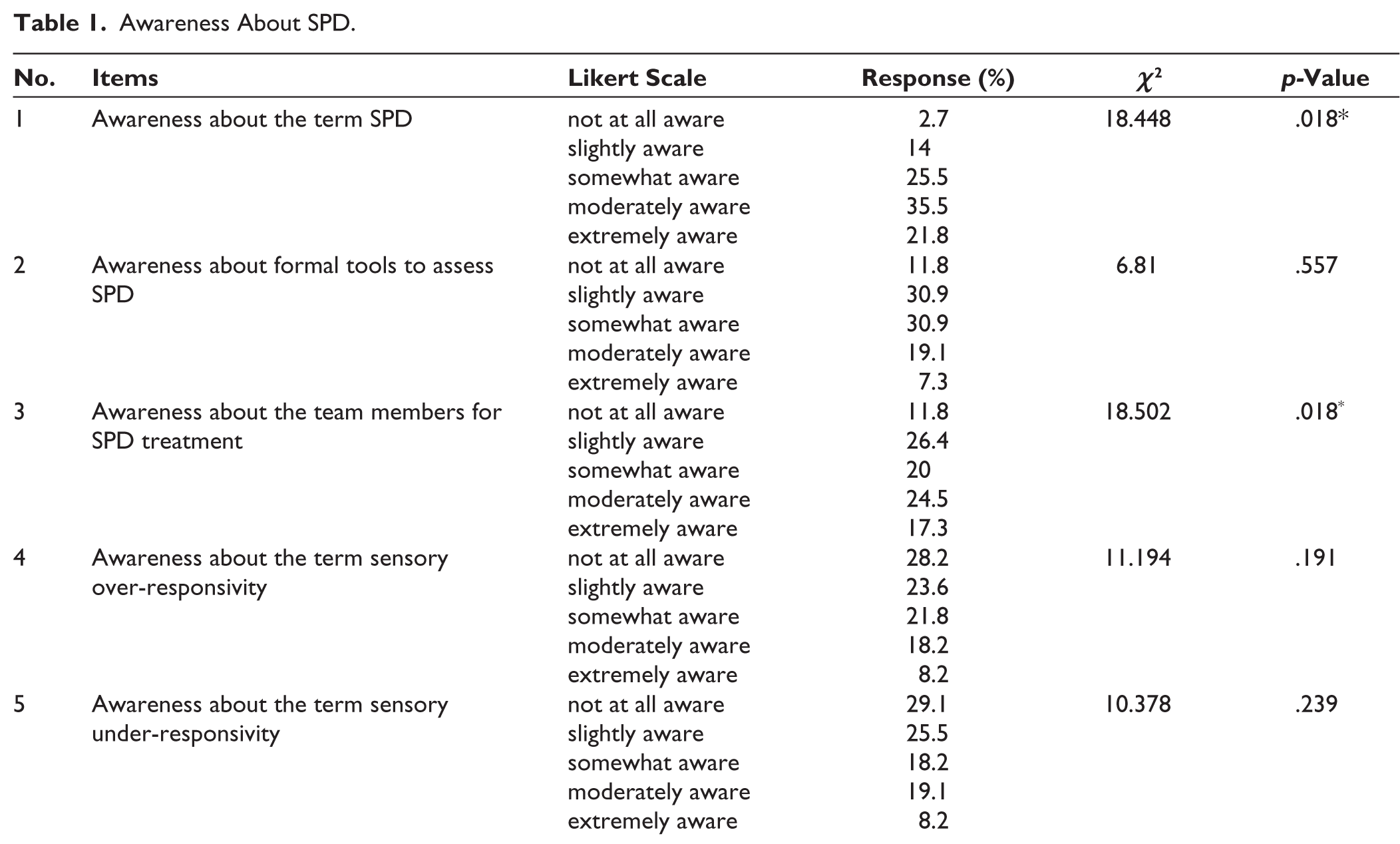
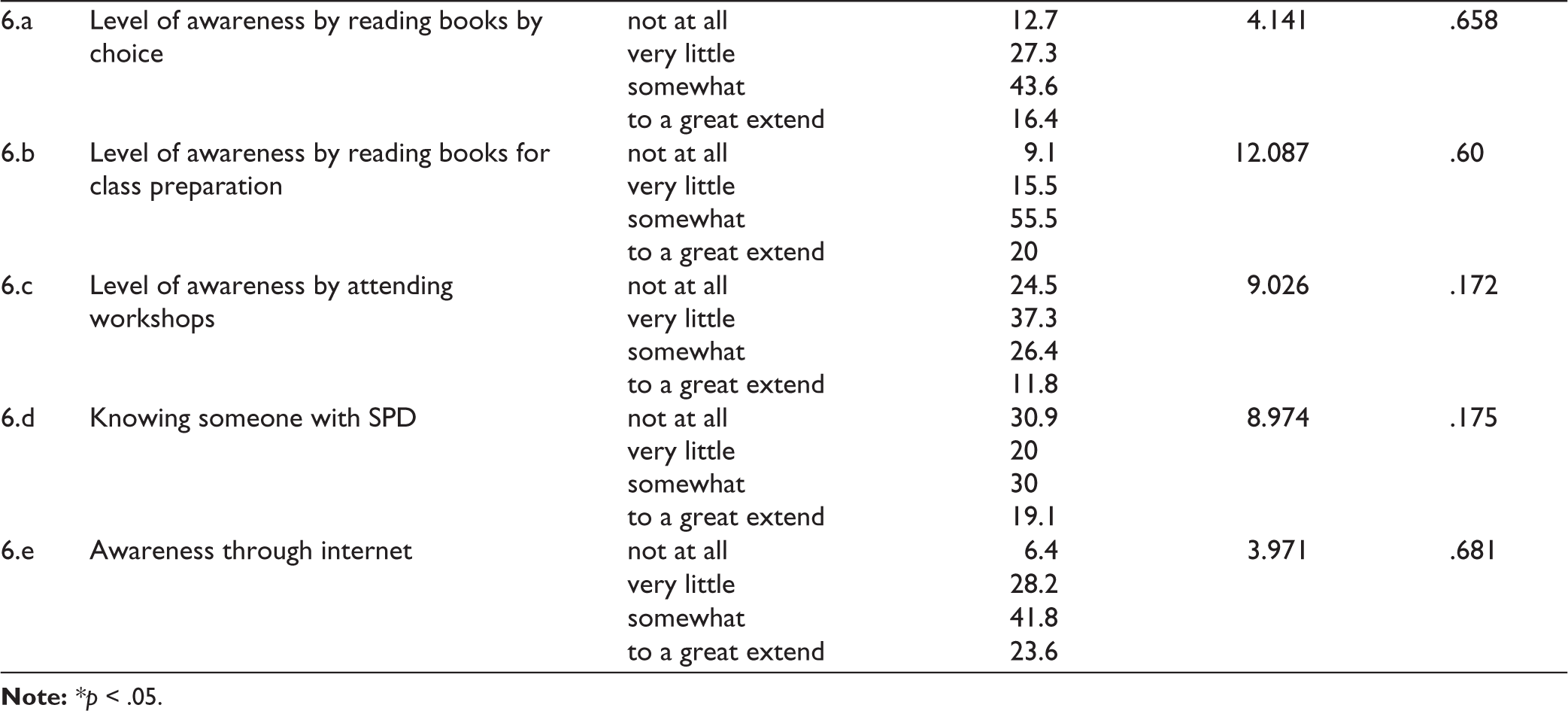
This section of the questionnaire consisted of six questions to assess awareness about sensory processing disorder. The responses of the participants are presented in Table 1. Awareness was evaluated using a 5-point Likert scale for questions 1–5, where 5 indicated highly aware and 1 indicated not at all aware, and a 4-point Likert scale for Question 6 alone, where 4 indicated to a great extent and 1 indicated not at all. For question 1, 21% of the participants responded that they are extremely aware of the term SPD, while 35.5% are moderately aware, and 2.5% are not at all aware. Question 2 was to assess the awareness of the formal test tools that are used to assess SPD in which 7.3% of the participants are extremely aware and 19.1% are moderately aware. Question 3 was regarding the team members who were involved of which 17% of the students were extremely aware and 24% moderately aware of SPD. For the term “sensory over-responsivity,” only 8.2% were very aware, 18.2% were somewhat aware, and 28.2% responded as not at all aware. For the term “sensory under-responsivity,” 8.2% were very aware, 19.1% were somewhat aware, and 29.1% responded as not at all aware. Question 6 was to indicate the level of influence on SPD where 23.6% responded to internet searches and 20% read for class purposes to a great extent.
Awareness About SPD.
Knowledge About SPD
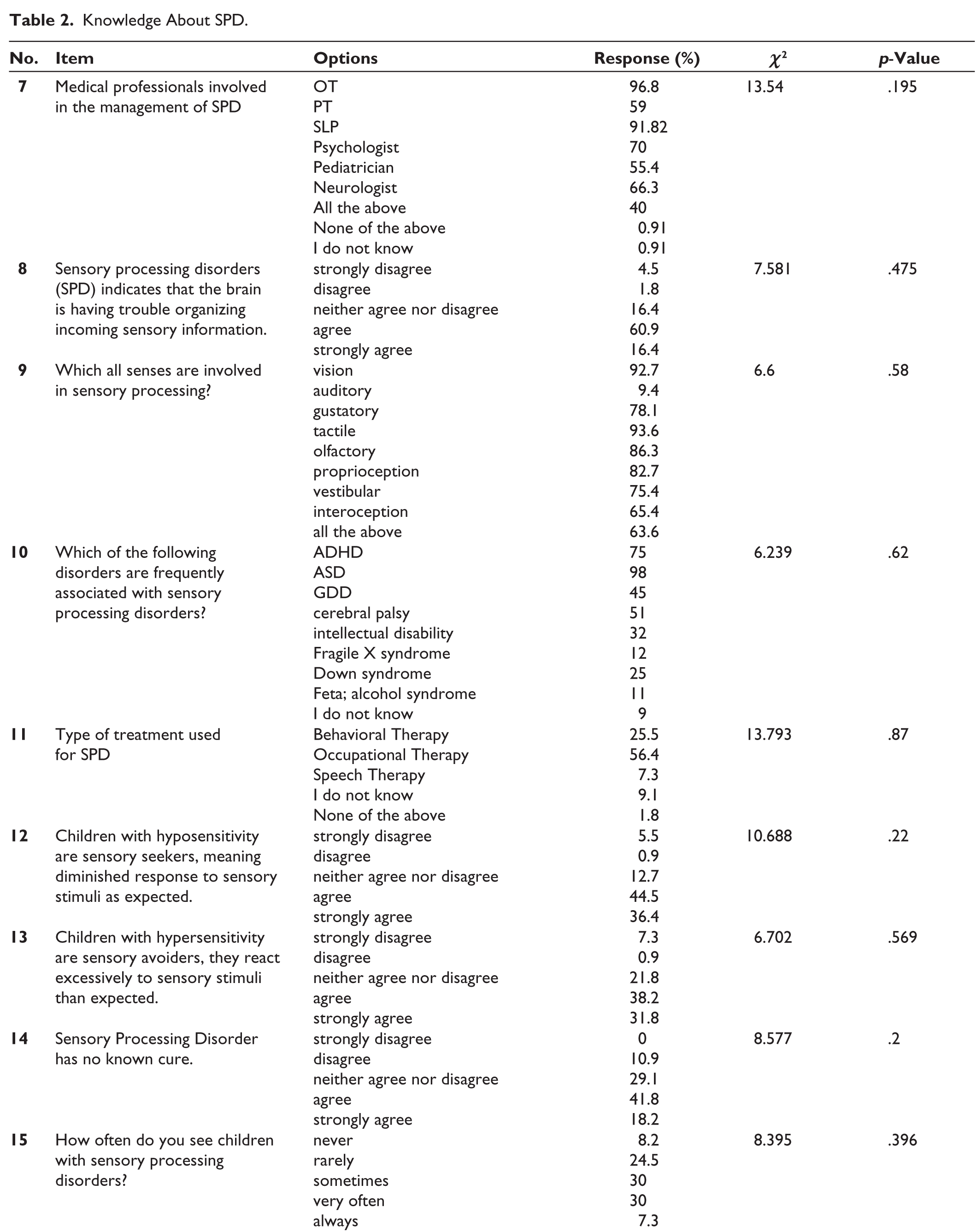
This section of the questionnaire consisted of 11 questions to measure students’ understanding of SPD (Table 2). Six of the 11 questions were graded on a 5-point scale, while the other five questions included multiple-answer options. Question 7 asked participants to select the medical professionals involved in the management of SPD; 96.3% selected an occupational therapist, 91.82% opted for a speech-language pathologist, and 40% of student participants chose all the above. Question 8 was regarding the definition of SPD to which 16.4% of students strongly agreed with the definition of sensory processing disorder, while 60.9% agreed, and just 4.5% strongly disagreed. For Question 9, 63.6% of students selected all the senses involved in SPD, while only 65.4% chose interoception. Question 10 was to identify the disorders usually linked with SPD; 98% of students chose ASD, 75% chose ADHD, and 9% chose I do not know. Question 11 was the treatment plan for SPD, for which 56.4% indicated occupational therapy, 25.5% for behavioral therapy, and 7.3% for speech therapy. In Question 12, 36.4% of the students strongly agreed with the statement given on hyposensitivity and 5.5% strongly disagreed; and for Question 13, 31.8% of the students strongly agreed with the statement given on hypersensitivity, while 7.3% strongly disagreed. In Question 14, only 18.2% of the participants agreed with the statement that sensory processing disorder has no known cure, while 41.8% of the participants responded to neither agree nor disagree and 10.9% of the participants strongly disagreed.
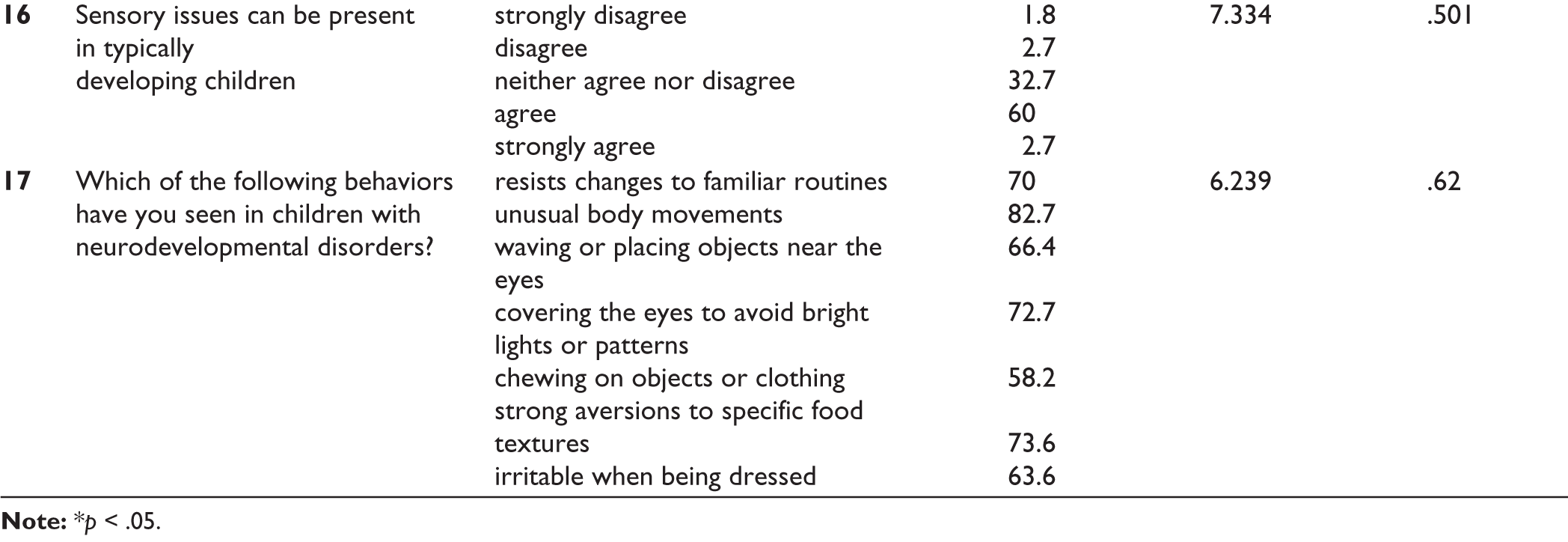
For Question 15, 30% of the students reported that they very often see a child with SPD, 8.2% reported never seeing one, and only 7.3% reported always. In Question 16, 60% of the students agreed with the statement that sensory issues can be seen in typically developing children and 1.8% of the students strongly disagreed. In Question 17, students were asked to choose the behaviors seen in children with neurodevelopmental problems from a list of seven options; their responses are tabulated in Table 2.
Knowledge About SPD.
Attitude About SPD
This section of the questionnaire consisted of eight questions to examine the attitude toward SPD (Table 3). Six questions were graded on a 5-point scale. With regard to this, 61.8% of the participants strongly agreed that SLP should be aware of SPD, 54.5% strongly agreed, and 51.6% agreed that SLP should be aware of strategies to deal with children exhibiting sensory issues. However, only 34.5% of the participants strongly agreed and 53.6% agreed that SLP require special training to deal with SPD. About 46.4% agreed that sensory issues affect a child’s speech and language development. Most students (95.5%) stated that they needed to learn more about SPD for Question 22. Question 23 given in Table 3 shows participants’ level of confidence in dealing with SPD clients. Only 29% of the participants reported that they used sensory-based activities during their sessions. Question 25 was an open-ended question to which only a small number of participants responded. They were asked to name any one sensory-based activity. Only 50% of the participants agreed that they find it challenging to interact with children who have sensory issues for Question 26.
Attitude Towards SPD.
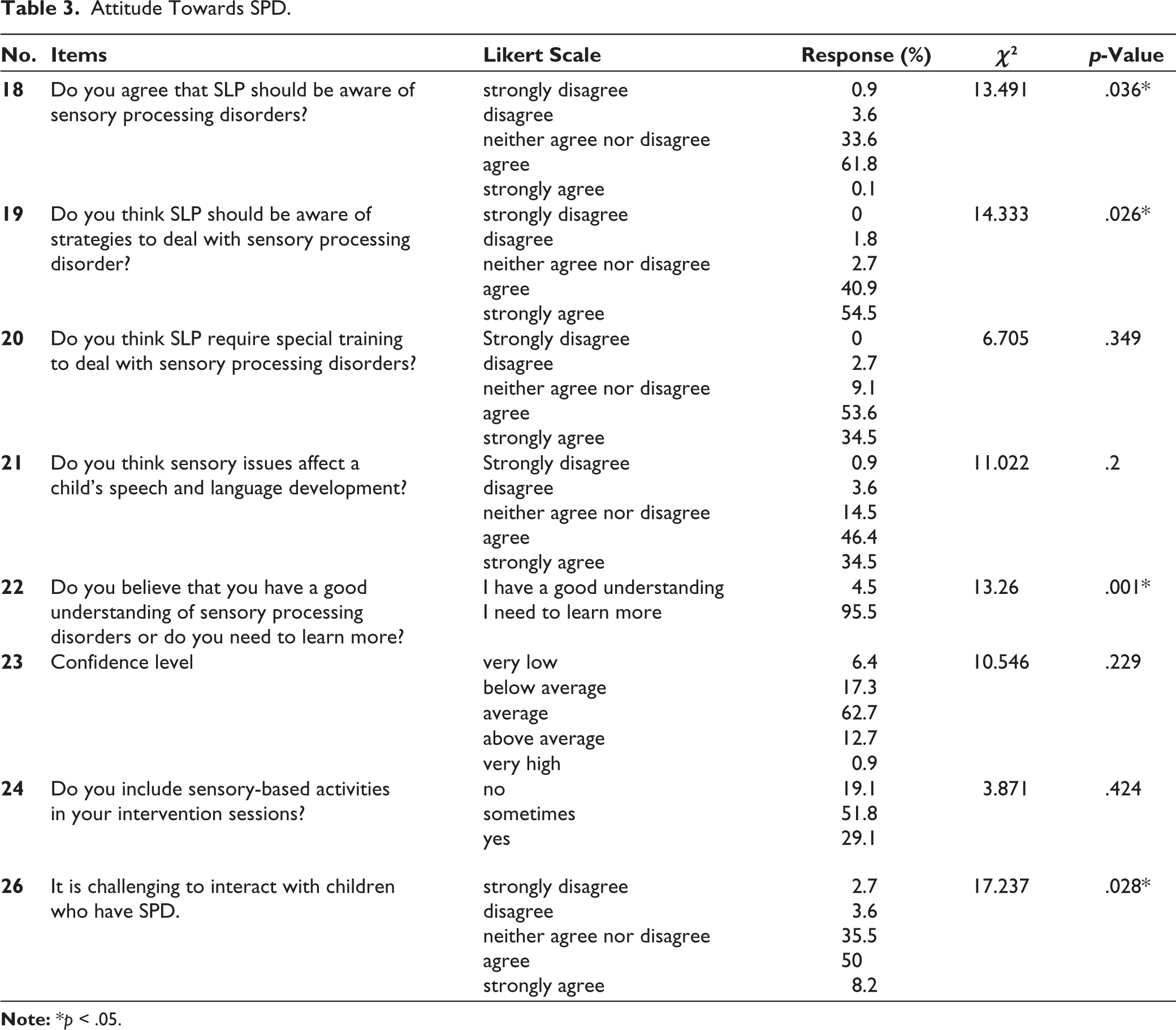
The relationship between each item and year in which student study was evaluated using the Pearson chi-square test in which Questions 1, 3, 18, 19, 22, and 26 showed statistically significant relationship.
Discussion
Sensory processing disorder is a neurological disorder that causes sensory difficulties in children, leading them to function inadequately in their environment. Even though SPD are diagnosed and treated primarily by occupational therapists or those certified in them, other professionals must understand and educate themselves on this condition because SPD co-occur with other developmental disabilities and many professionals struggle to recognize and understand sensory issues, making it difficult to carry out their interventions. SLP work on key areas such as speech, language, feeding, and communication, which can be impacted by the presence of SPD. Children who have oral sensory disorders exhibit poor feeding habits, a dislike for certain food textures and a reluctance to try new foods. 15 These feeding difficulties may be caused by sensory abnormalities since insufficient vestibular and proprioceptive signals along with tactile dysfunction leads to improper articulator coordination, which results in unintelligible speech. Additionally, research has shown that sensory difficulties have an impact on speech and language development. As a result, children who have trouble with both SI and speech and language will benefit from having both SI treatment and speech language therapy. The current research aimed to assess awareness, knowledge, and attitude about sensory processing and its disorders among student SLPs.
In this study, most participants were female consisting of 85.5% (n = 94) and 14.5% (n = 16) male. Getting a balanced ratio of male to female ratio for the study was difficult since this gender imbalance is always there in the field of speech-language pathology across the globe 16 and could be due to factors such as career choice or nature of work associated with the profession. In the study, 16.4% of the students strongly agreed and 60.9% agreed that they are aware of the term sensory processing disorder, whereas the rest of the participants had poor awareness of the term. When asked to choose the senses involved in sensory processing, only 63.6% of the students chose all the senses involved and only 65.4% of the participants chose interoception; this states that most of the participants are not aware of interoception and its role in sensory processing. Half of the students, that is, 56.4% know that occupational therapy is the treatment given for SPD. Though 30% of the students reported that they very often see children with SPD, to the statement “sensory processing disorder has no known cure” only 18.2% of the students agreed while most of the students went with the option neither agree nor disagree (41.8%) and 10.9% strongly disagreed; this shows that majority of the participants are not sure if SPD can be cured or not. Nearly half (50%) of the participants agreed that they find it difficult to interact with children having sensory issues. Most of the participants agreed that SLP should be aware of SPD and know the strategies to deal with children having sensory issues. Also, only 29% of the participants reported that they use sensory-based activities during the intervention, and to the open-ended question asked the responses were very poor and some of the activities mentioned by the participants were not sensory-based.
There was also a statistically significant difference in few questions in two of the domains (awareness and attitude) when compared to the year of study. A significant difference was found in the awareness of the term SPD, awareness of the team members involved, attitude towards the understanding of SPD among SLP, strategies to be used, and difficulty when interacting with children having sensory issues. The findings of this research show that although students of speech-language pathology have some awareness about SPD, they lack a thorough comprehension of sensory difficulties as well as those associated with other neurodevelopmental disorders. They also find it difficult to deal with these children and are unaware of the strategies to be used during the intervention, since most students do not practice sensory-based activities during an intervention. Most students reported their level of influence about SPD came from internet searches and reading for class purposes alone, leading to a lack of practical exposure to dealing with this population, which may explain the poor responses and difficulty they mentioned in understanding and dealing with this population.
SLP deal with various neurodevelopmental disabilities such as ASD, down syndrome, cerebral palsy, ADHD, and intellectual disabilities in which children have trouble processing sensory information and may struggle with communication, social interaction, the task performed daily, academics, and more. Most student SLP find it difficult to understand these issues and work with this population, as they are unaware of the sensory-based activities that can be used in these children. Intentionally organized movement and play activities that cultivate the child’s speech, language, social, and intellectual skills lead to a life that allows the child to operate appropriately and efficiently in any environment, which is why intervention is so important.
Limitations
The current study had a few limitations such as an inadequate sample size that could have biased the estimates and the obtained data did not have a balanced number of participants in each group; thus, the difference of proportions could not be compared across the groups, since there were more interns in the sample than postgraduate students. Also, this preliminary study was conducted only on student SLP, whereas the practicing SLP perceptions in this regard is not known.
Future Directions
This study can be extended to the practicing SLPs to understand the perspectives better. Also, with regard to the findings, an audit survey can be planned to study the SLP programs to confirm the assertion that SLPs do not study much about SPD. Furthermore, these concepts could well be practiced with the help of problem-based self-learning modules about sensory processing disorder.
Conclusion
The study has clinical significance in the field of speech-language pathology, particularly for SLP who work with children who have developmental difficulties. The understanding of SPD will facilitate SLPs knowledge as well as equip them to work in a transdisciplinary team of OTs and other rehabilitation professionals. Therefore, student SLPs need to know more in-depth about sensory processing and its disorders.
Footnotes
Acknowledgements
We would like to thank the Dean Medical and Dr. Savitha V. H., Professor & In-charge Head for their support throughout the study. We would also like to thank Mr. R. Udhayakumar for his help and support with statistical analysis, and Ms. Swathi G. for her support with the questionnaire preparation. We extend our gratitude to all the validators and participants of the study.
Authors’ Contributions
Both authors contributed substantially to the conception and design of the study, data interpretation, and drafting of the manuscript. The first author was responsible for data acquisition and analysis. The second author contributed significantly to manuscript preparation, corrections, and revisions. Both of us agree and approve the final manuscript being submitted.
Declaration of Conflicting interest
The authors declared no potential conflicts of interest with respect to the research, authorship, and/or publication of this article.
Data Availability Statement
The data that support the findings of this study are available on request from the corresponding author. The data are not publicly available due to privacy or ethical restrictions.
Funding Statement
There has been no significant financial support for this work. It is a non-funded student dissertation work.
Statement of Ethical Approval
The study protocol was approved by the Institutional Ethics Committee (reference: 3211/IEC/2022).
Informed Consent
Willingness and consent to participate was obtained from all the participants of this study through google form.