




Abstract
Background:
Executive functions (EFs) are a set of cognitive processes required to select and monitor behaviors that facilitate the achievement of desired goals. Many studies reported that students with learning disabilities appear to have impaired EFs and difficulties in performing school-related and daily activities.
Methods:
This review attempts to focus on identifying different components of executive functioning and its relationship with specific learning disabilities from the published literature. A search using 3 databases identified 37 relevant articles that met the inclusion criteria.
Results:
Many recent studies have found a relation between EFs with specific learning disabilities including meta-analysis and non-experimental comparative studies. Most of the studies were conducted among school children with reading, learning difficulties, and writing difficulties, university students with developmental dyscalculia and adults with or without dyslexia.
Conclusion:
Working memory is the key component affecting performances in children with learning disabilities whereas emotional control and metacognition skills such as organization of material, monitoring, planning, etc have a more specific role in different skills in performing the act of reading, writing, and mathematical operations. They may play a subdued role, but their involvement cannot be segregated because of the complex interplay between them.
Introduction
The wide word that covers a range of learning difficulties is “specific learning disorder” (SLD). It is classified by the DSM V as a biologically based neurodevelopmental disorder that affects academic mastery and causes learning difficulties. Intellectual disabilities, developmental disorders, neurological conditions, or motor disorders are not to blame for these challenges. It is divided into three groups: Specific Learning Disabilities with Impairment in Mathematics, Specific Learning Disabilities with Impairment in Written Expressions, and Specific Learning Disabilities with Impairment in Reading. It is further defined according to severity. (mild, moderate, severe). 1
A broad range of cognitive, behavioral, and adaptive abilities known as executive functions (EFs) aid in the completion of novel tasks, self-reflection, and the creation of plans that are frequently based on prior experiences. These skills are crucial in complex social behaviors, suppressing inappropriate actions and focusing on purposeful information.2–4 Success in school and daily life depends upon efficient EFs. 5
These abilities fall under the categories of behavior management and metacognition.
Shift, emotional control, and inhibition are all aspects of behavior regulation. Initiation, Working Memory, Plan/organizing, Material Organization, and Monitoring are all components of metacognition. 6 The central executive (supervisory system), the phonological loop, and the visuospatial sketchpad are the other two divisions of working memory (WM). WM is the capacity to simultaneously store and manipulate information needed to carry out mental tasks. The EF system and phonological storage (also known as the phonological loop) are 2 important parts. The former is focused on verbal and numerical information storage and rehearsal, whereas the recent is in charge of information integration and the coordination of cognitive processes like switching, inhibition, performances related to dual tasks, and updating. The visuospatial sketchpad caters to visuospatial data, whereas the phonological loop saves verbal content. 7
The three established subdivisions within the domain of phonological processing—phonological awareness, phonological short-term and working memory (ST/WM), and phonological lexical access, that are often lacking in dyslexic individuals. The capacity to actively access and control sublexical phonological segments (phonemes and onsets/rimes) is known as phonological awareness. The lack of semantic memory is correlated with lexical access. 8
Children with learning disabilities have shown difficulties with various aspects of EF involving inefficiency in cognitive flexibility, sorting, organizing, and prioritizing information as well as self-regulatory activities such as monitoring, checking, and revising when learning. 9 The strong conceptual reasoning abilities of these children do not replicate their output and productivity because due to difficulties in prioritizing and organizing plenty of details, analyzing, and altering these details in WM; adjusting between abstract and concrete concepts as well as from major themes to the details. 10 According to studies, these children’s disabilities include widespread WM deficiencies brought on by the executive system’s storage limitations. Additionally, there is no difference between the subtypes’ outcomes on tests of verbal and spatial WM. 11
Specific learning disabilities have been diagnosed and treated from an educational perspective aiming at molding the educational resources to fit the child’s needs. Formulating a treatment approach based on the identified problem and focusing on the components will yield more positive results. 12
The number of studies evaluating EF, particularly WM, and its relationship with academic success has increased significantly. However, there is a gap in the literature that summarizes various components of EFs for their potential involvement in different types of learning disabilities. This literature review’s objective was to ascertain the connection between specific learning disabilities and various EF components. This study also provides guidance for various educational professionals to fully comprehend the impact of these interactions on the performances of students with various learning difficulties or impairments in academic and daily activities.
Method
Search Strategy
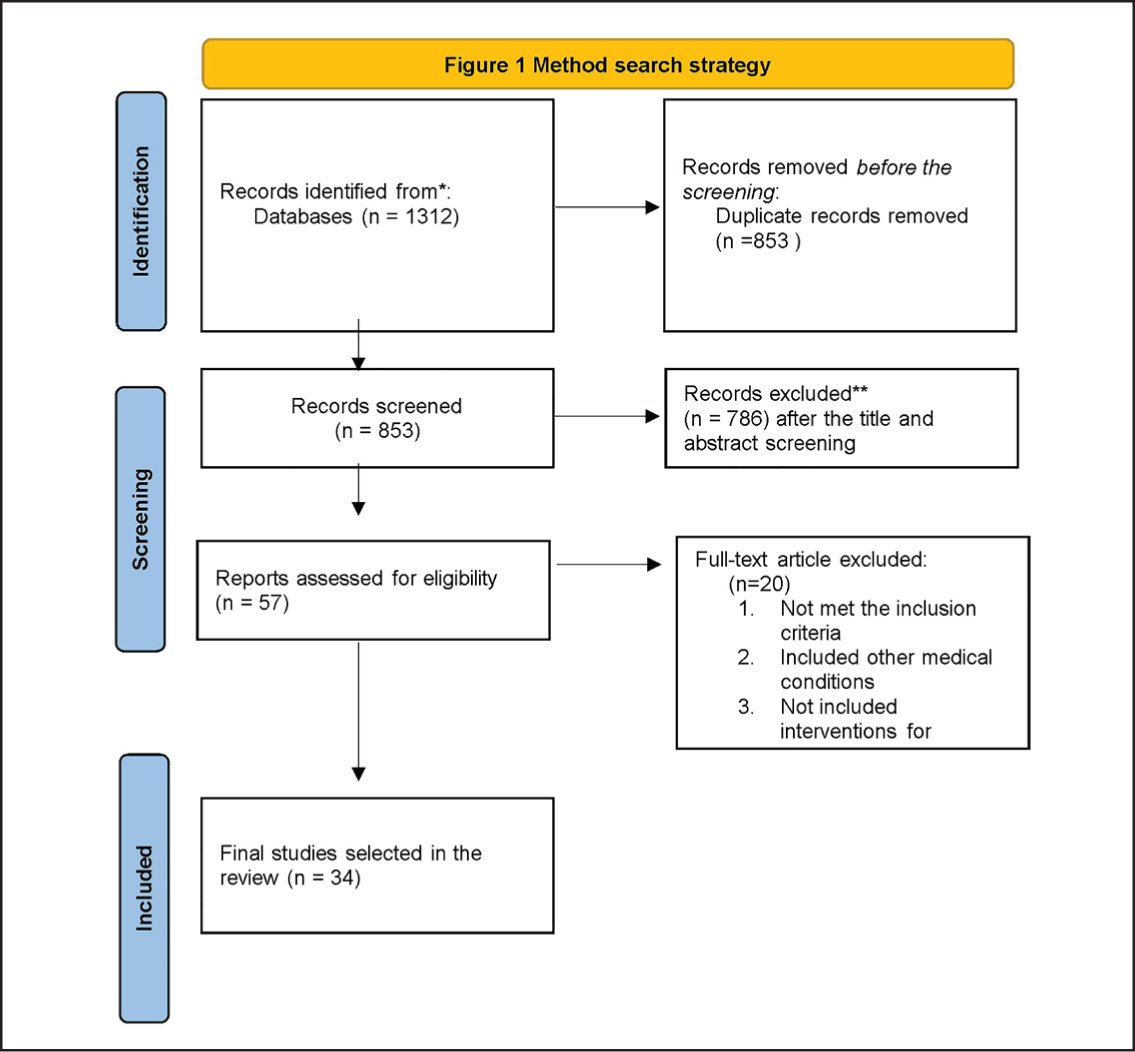
A broad search was undertaken to identify relevant studies for this review. Databases and sites searched included PubMed, CINAHL, ERIC, and EBSCOhost. Search terms were developed by the authors based which included specific learning disabilities, learn, reading, read, write, writing, mathematics, dyslexia, dyscalculia, dysgraphia, EF, metacognition, WM, initiation, planning, organization, monitoring, inhibition, shift, attention, and emotional control (Figure 1).
Study Selection
The participants in the study were mainly young adults and children with diagnosed learning disabilities. Peer-reviewed journals were included if they were: published between 1993 and 2018, written in English, involving human participants, and were assessed for deficits in EFs specific to any types of learning disabilities. Quantitative studies encompassing assessment and treatment were included. Papers were excluded if the participants had any other comorbidities associated with learning disabilities. Some of the internet search engines such as Google Scholar were used to identify grey literature. Hand search strategies were also used to find some articles.
Data Extraction
The authors looked through each study’s title, abstract, and full text for any possible relevant studies that met the requirements for inclusion. The title, author(s), year of publication, aim, study population, method, assessment tools, and study types were charted. Disagreements on study selection and data extraction were done by consensus and discussions.
Results
On searching the literature, 1312 articles matched the search word criteria. 853 articles were examined as relevant after duplication. Finally, 57 articles were found to be related to this study. 37 articles appeared to have relevance and were included in the study based on inclusion criteria.
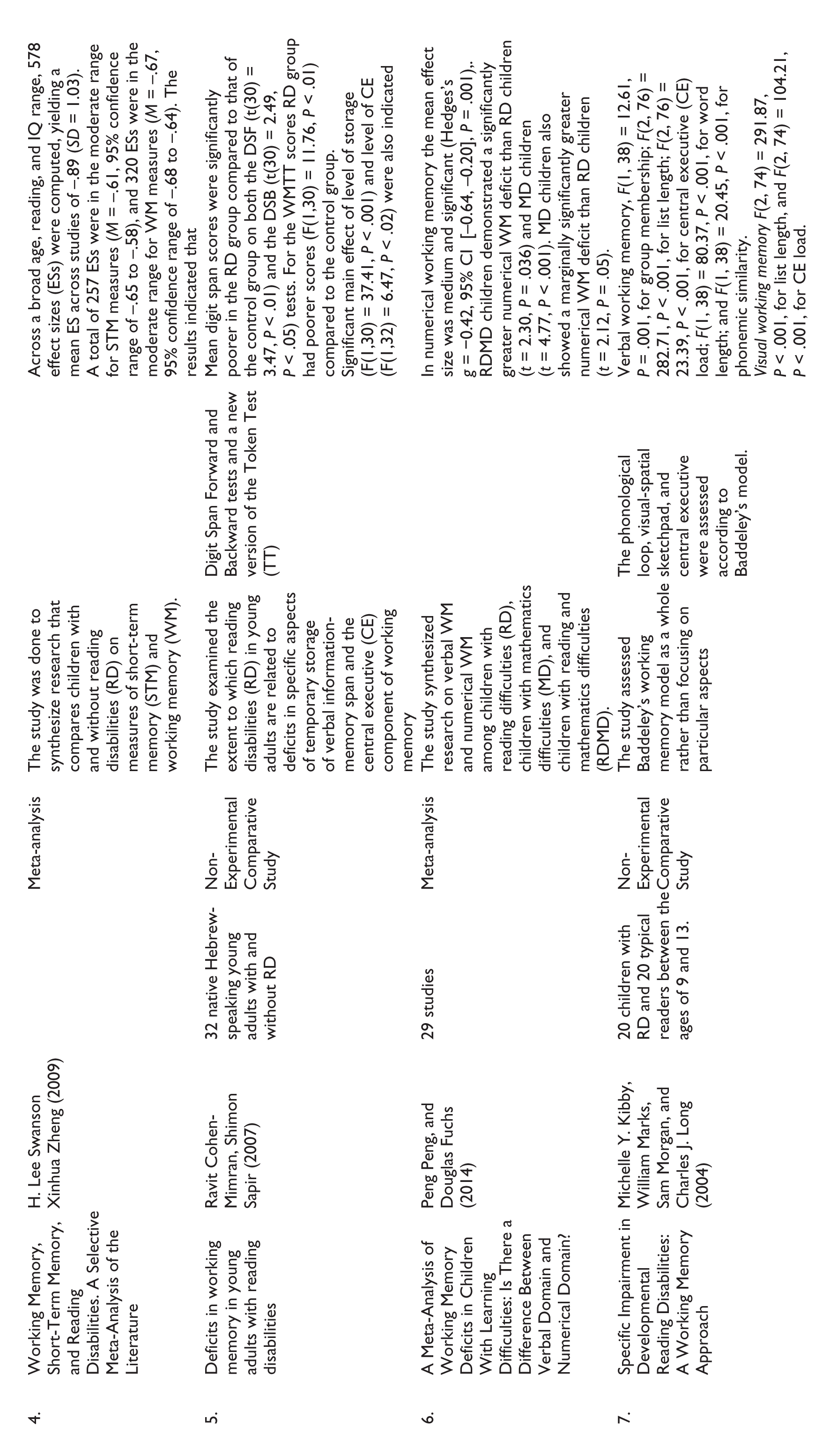
Table 2 presents a summary of the 34 articles reviewed and included: (a) title (b) authors/year (c) population/sample size (d) paper type/study design (e) aim (f) assessment tools and (g) research outcome.
The table represents the components of executive dysfunction in relation to specific learning disabilities.
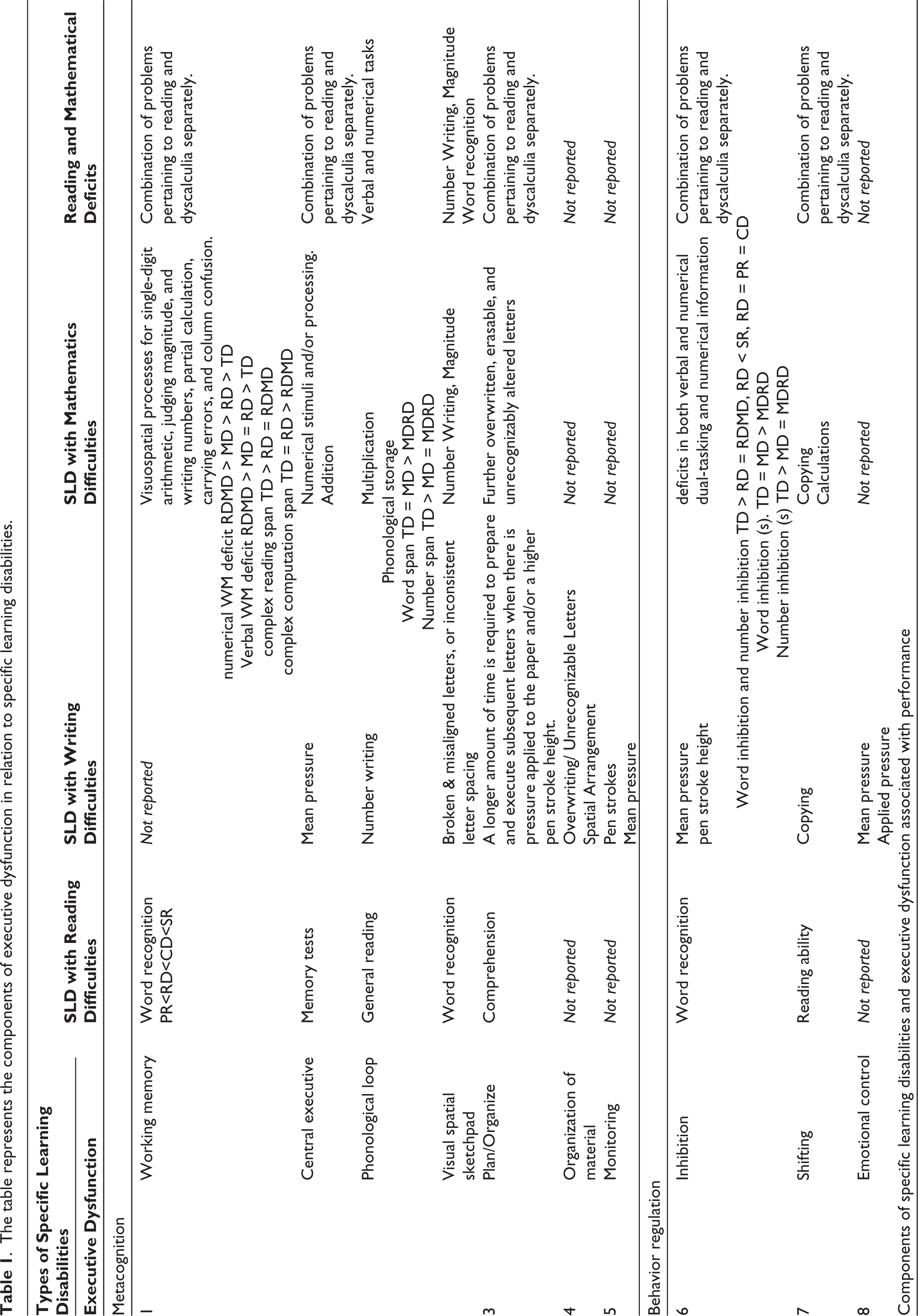
Descriptions of the Included Studies in the Present Review.
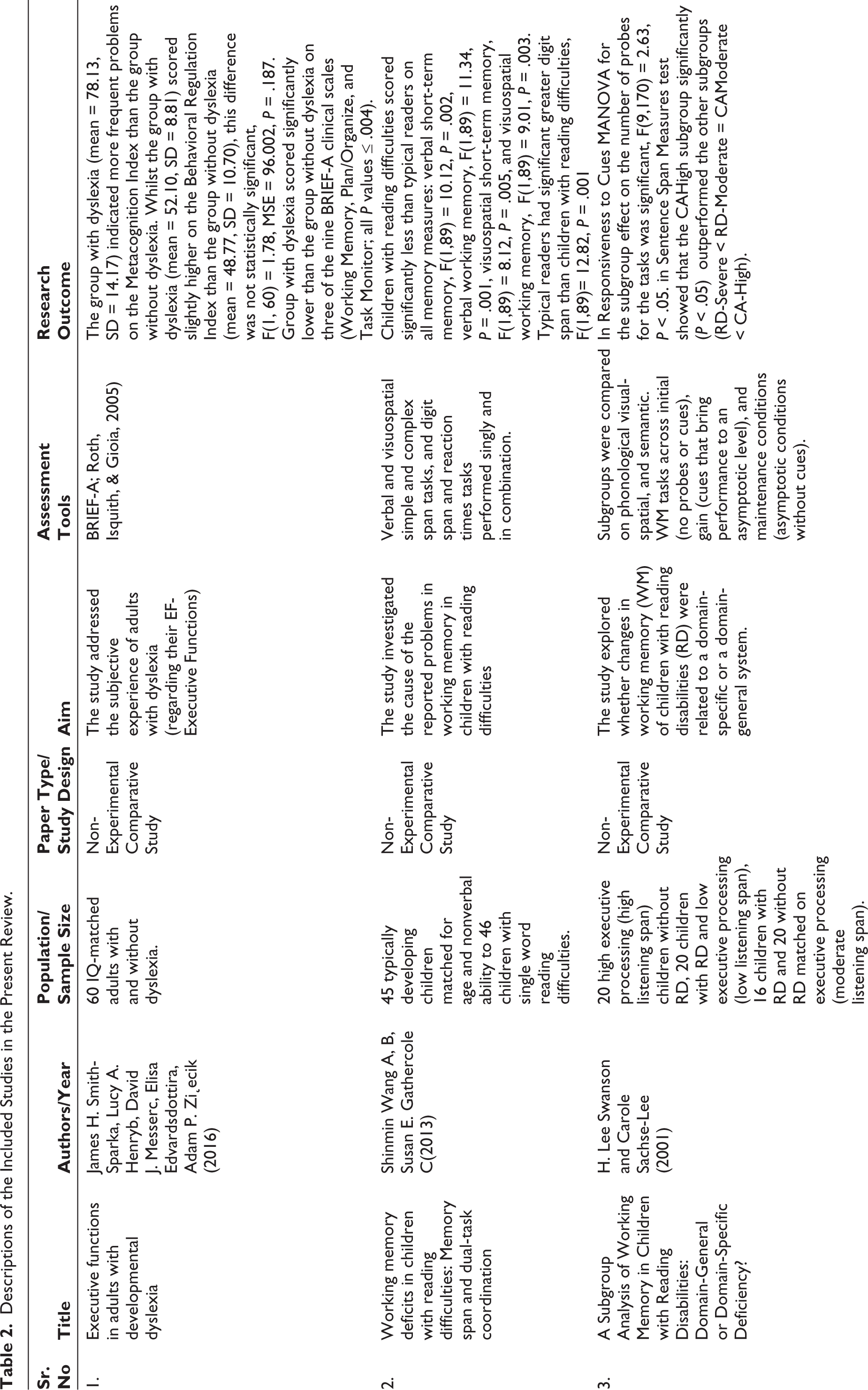
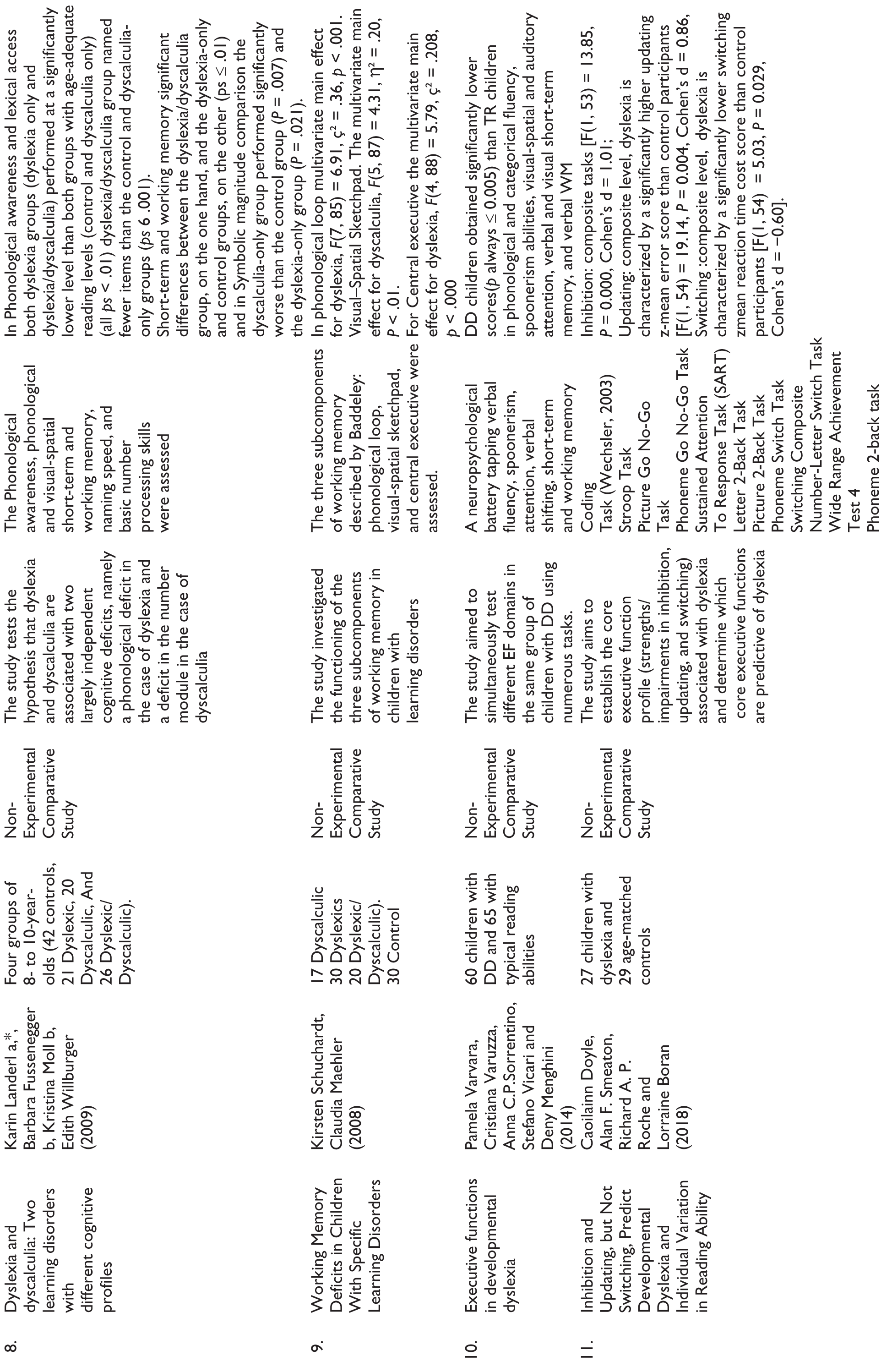
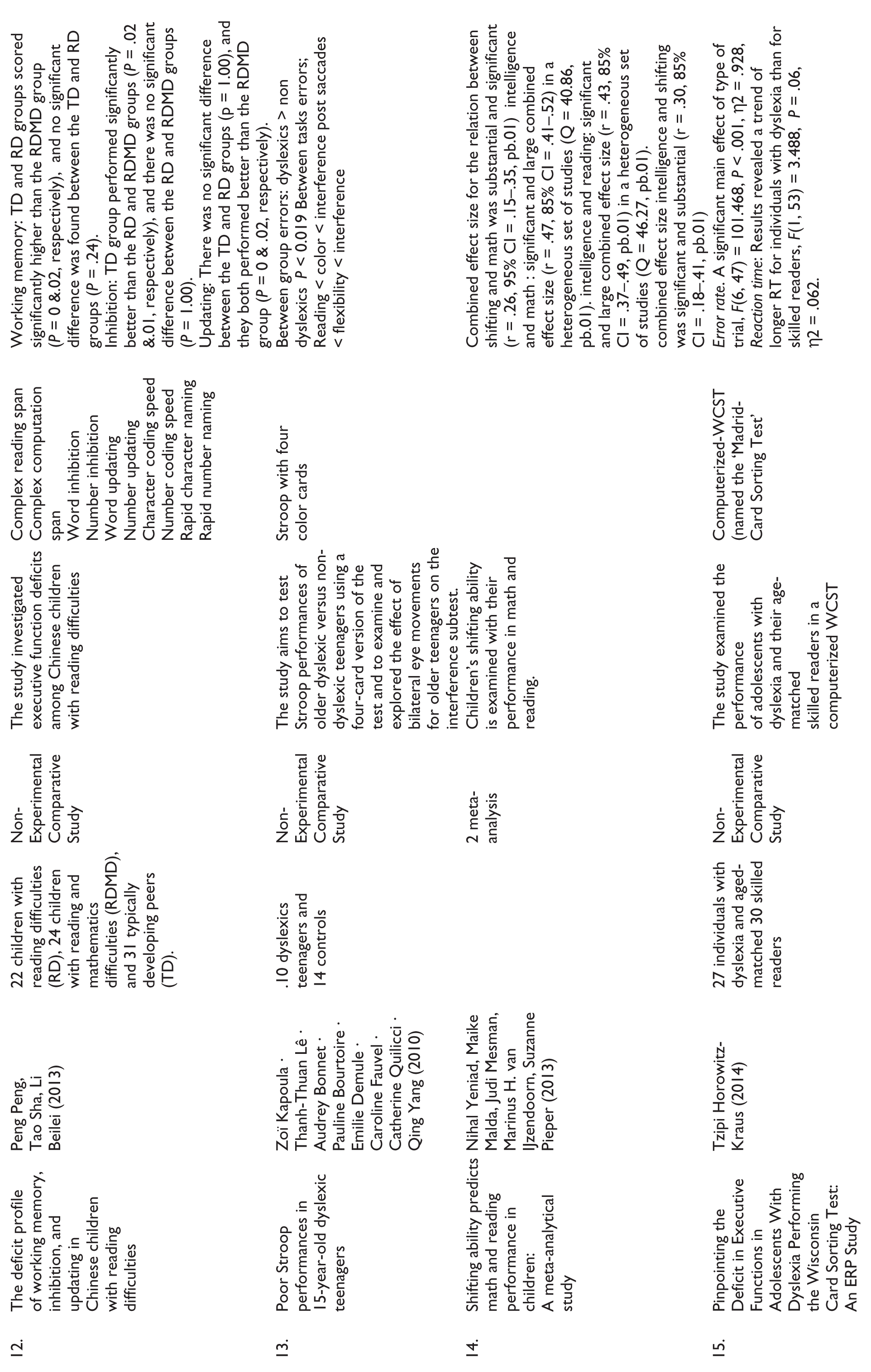
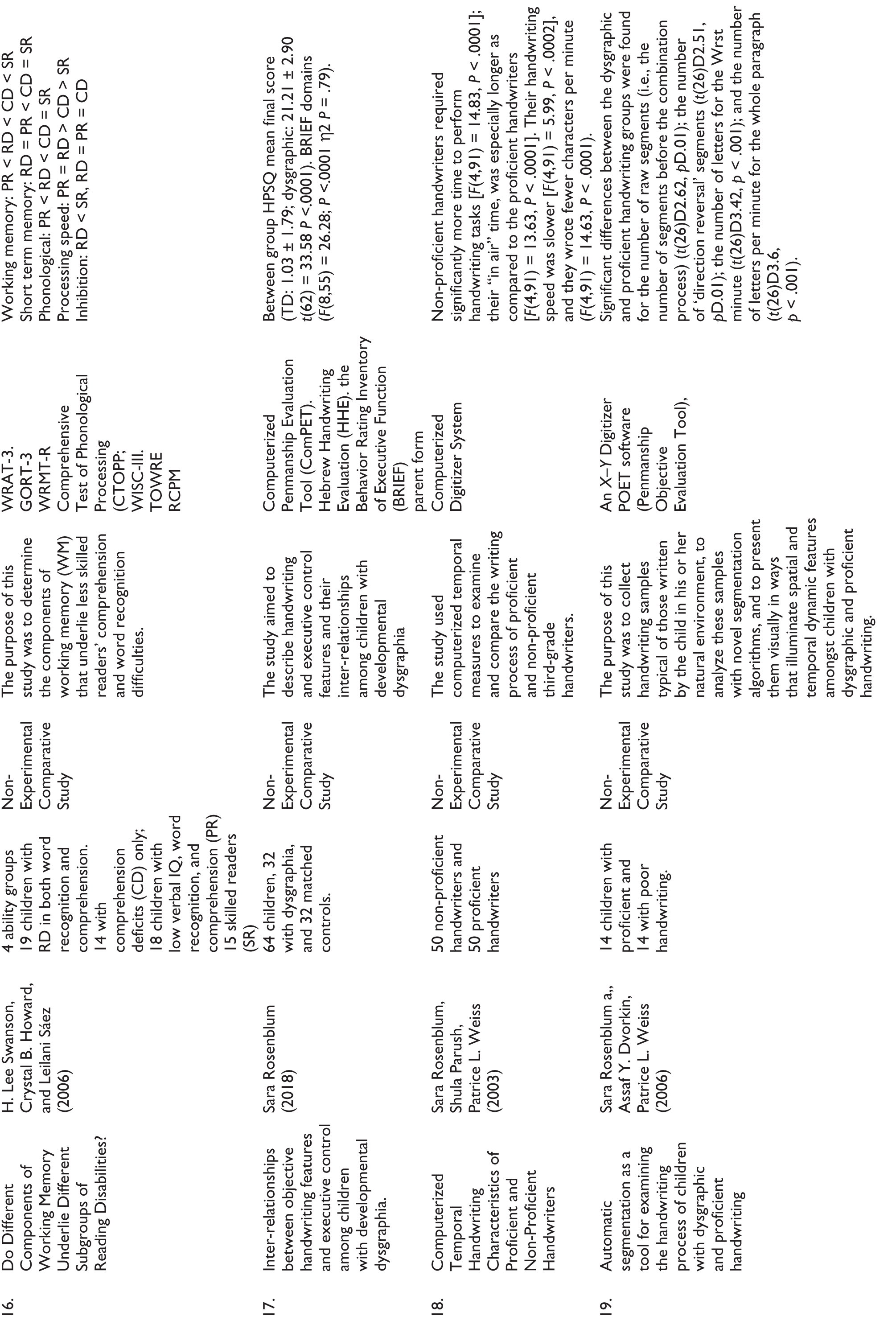
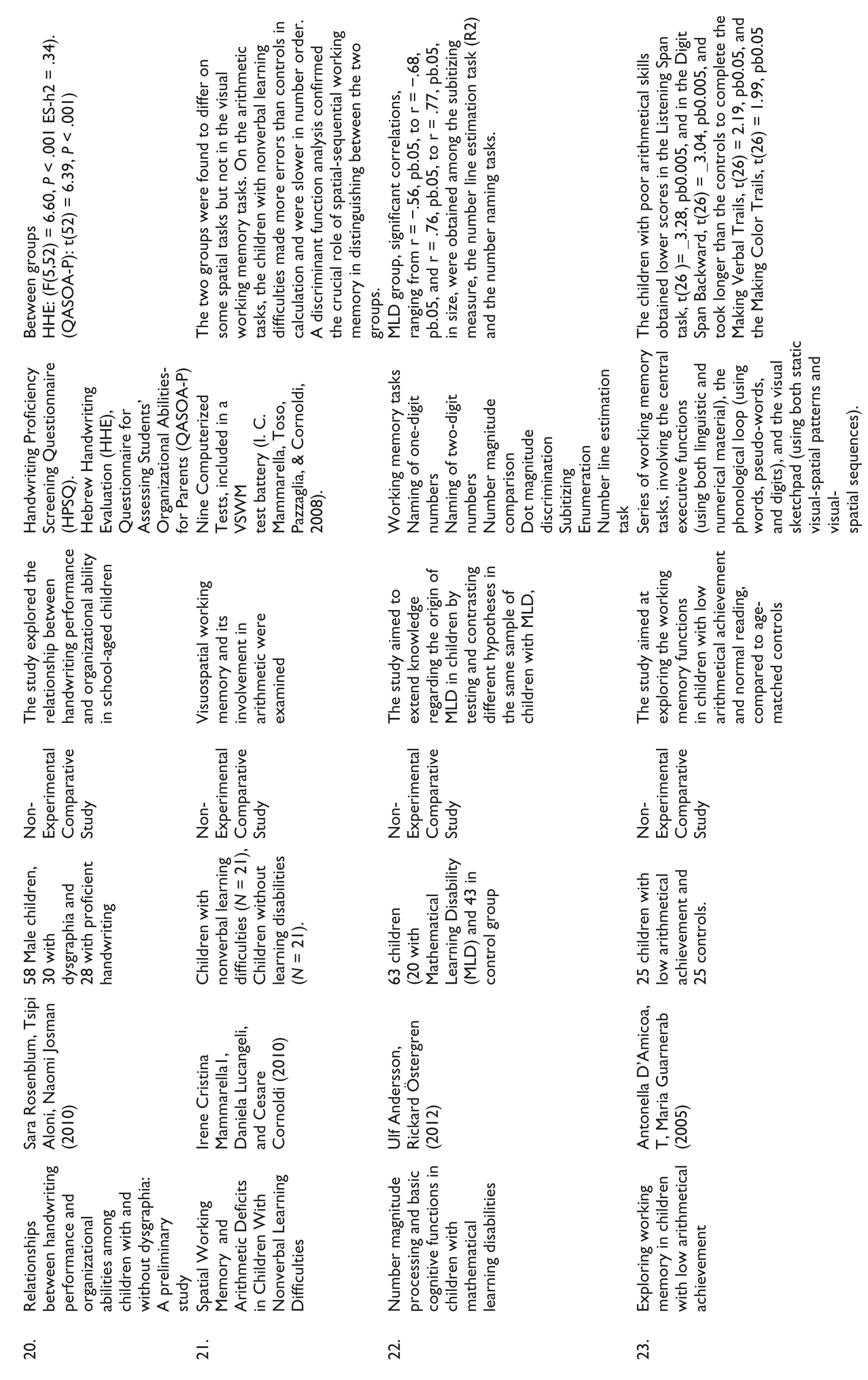
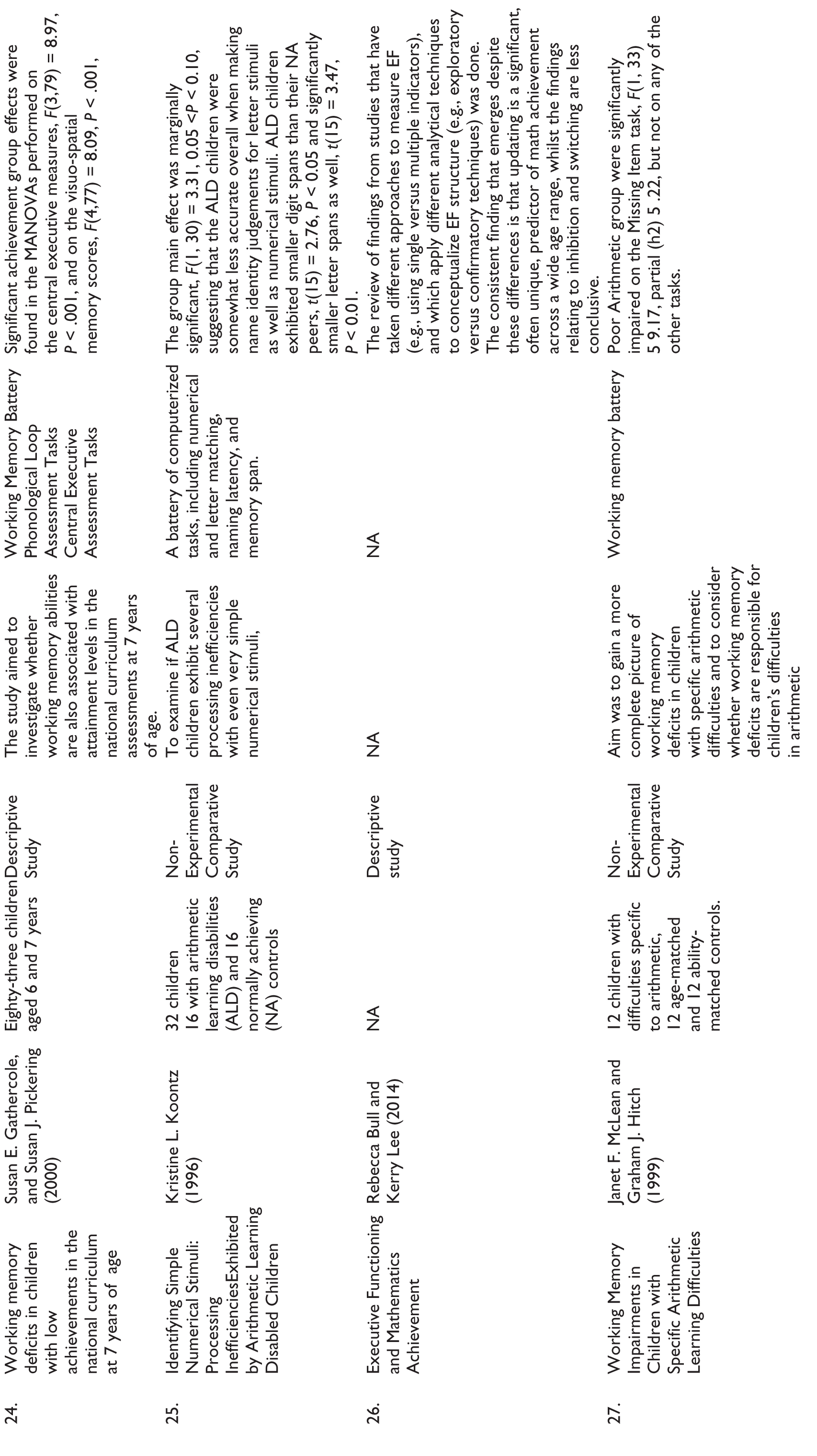
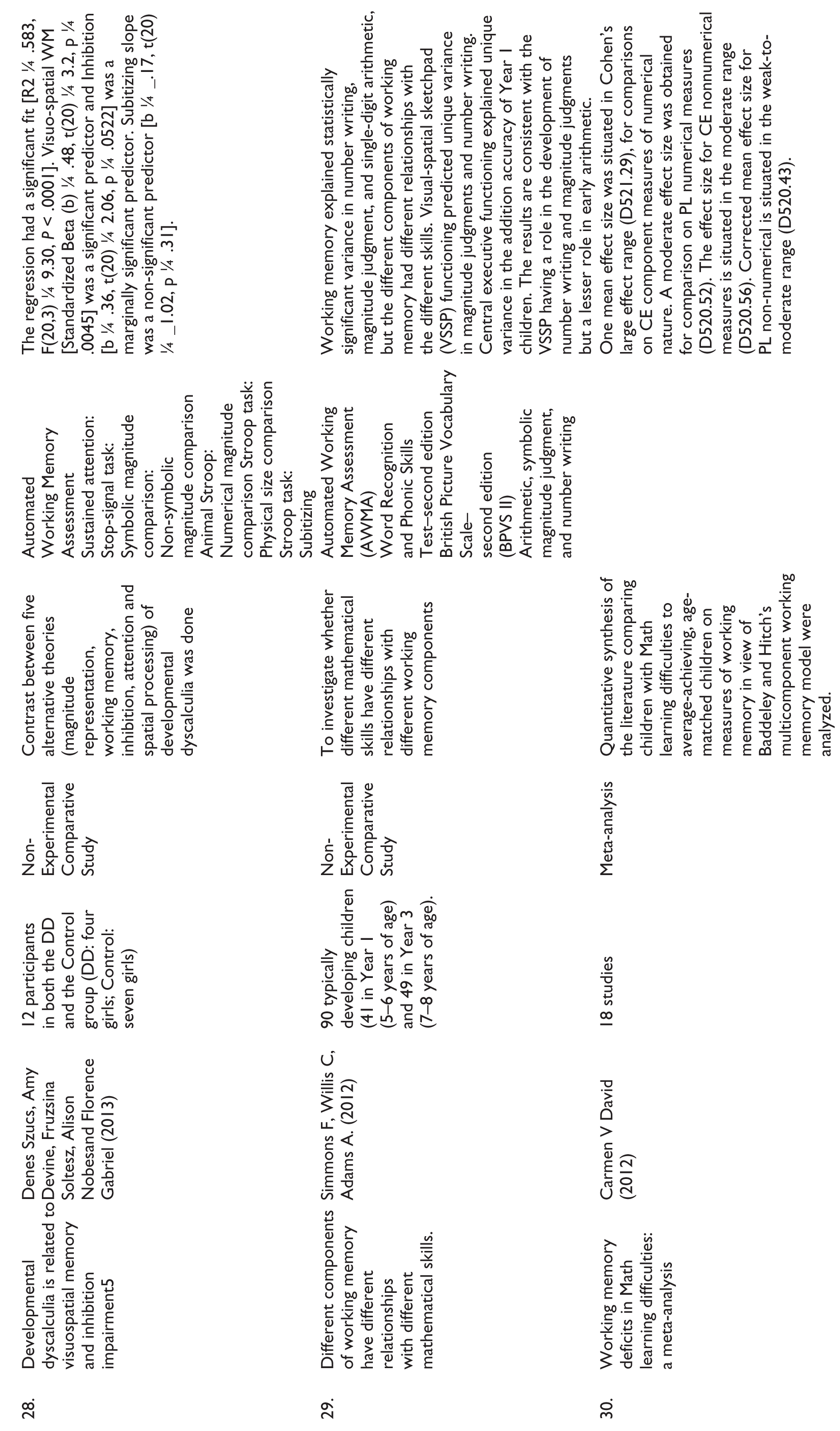
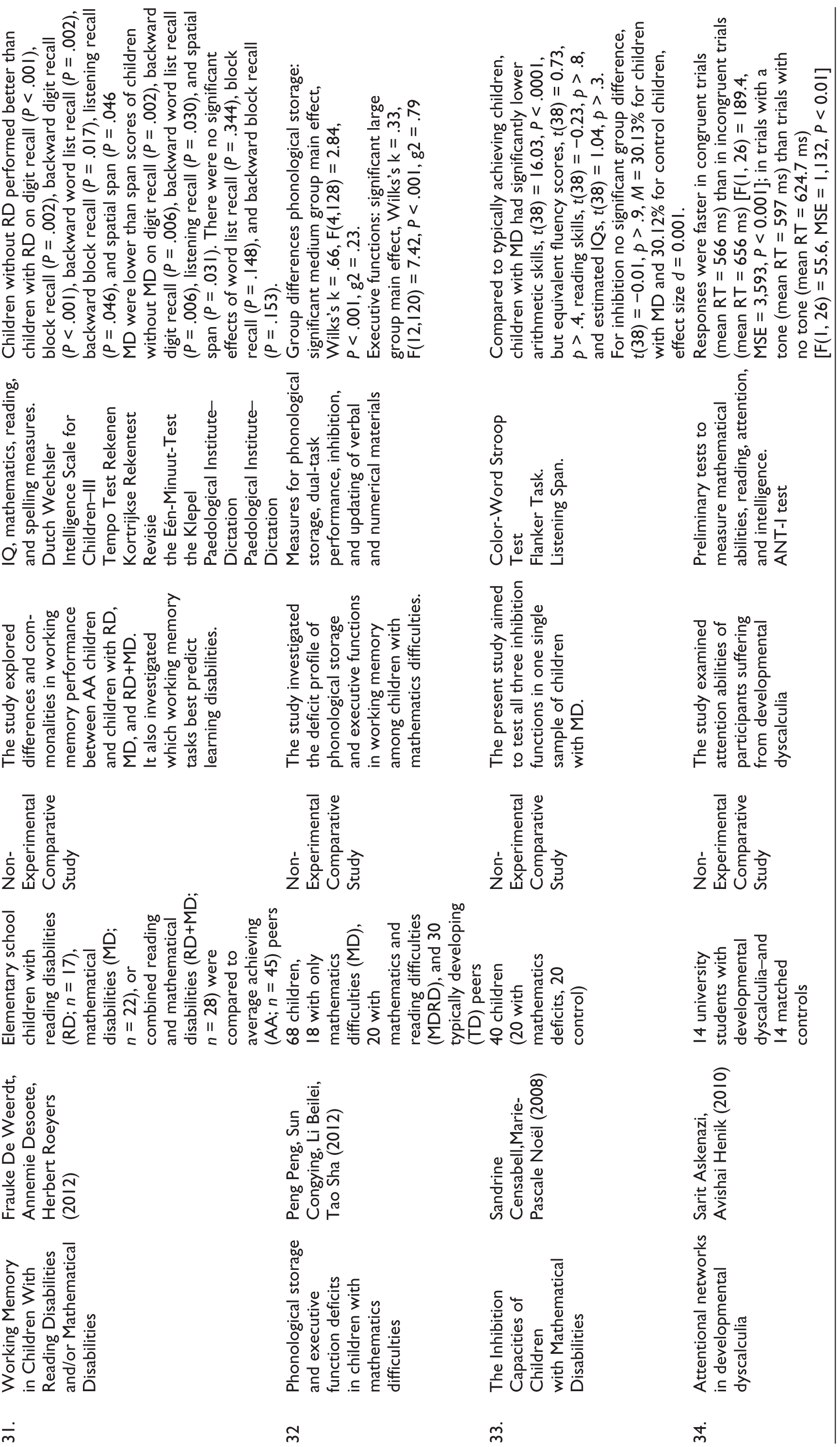
The results were organized and categorized based on the connection between executive dysfunction and specific learning disabilities. Certain elements of EF are found to be common in all subtypes but there is variation in the intensity of an effect in each learning disability.
Discussion
Metacognition underlies all types of learning disabilities. Impairments in metacognition skills (such as initiation, monitoring, etc) are more related to reading disabilities with emotional control having a lesser impact. In specific writing disability central executive (CE), monitoring and organization of materials tend to play a more important role. All components of WM and emotional control predominate in mathematical operations.
Specific Learning Disabilities With Impairment in Reading
While there was no evidence of executive functioning issues in reading-disabled children, it was observed that they were slower at naming letters in activities without executive demands. 13 Nevertheless, there was a minor but substantial correlation between reading and spelling skills and EF. Word and non-word reading deficits are better explained by Spoonerism abilities. 14
During specialist remediation, improvement in reading and spelling abilities could not be established with EF. 15 In another study, adult individuals with dyslexia reported EF issues more frequently, with difficulties focusing on metacognitive functions (WM, planning, task monitoring, and organization) rather than emotional regulation. EF issues were discovered to persist into adulthood across a variety of assessments and to extend beyond issues solely with phonological processing. 1
These children exhibited pervasive deficits in both simple and complex span tasks and have poorer abilities in coordinating two cognitively demanding tasks. Problems with WM frequently indicate a CE deficit, and they persisted long after the applicable short-term memory (STM) domain was under control. 16 Children with RD may have poor WM in part due to their domain-general system, and this system is independent of their reading difficulties. 17 Domain-specific WM variation between ability groups persisted across age. 18 They performed poorly on the memory tests, particularly on CE-taxing tasks, supporting the overall WM deficit hypothesis and indicating that people with RD have both memory span and CE deficits. 19
The phonological store appears to have a deficit in terms of the phonological loop (PL), which is definite. Additional research supports the relationship between PL activity and phonological processing. Deficits in phonological are also seen in children with RD. Deficits in phonological ST/WM have additionally been noted in children with dyslexia.8, 20 Yet, the effect is no longer substantial when the PL’s performance on the CE is controlled. 21
The visual-spatial sketchpad (VSSP) is intact in RD, 20 and to some degree, auditory and visual-spatial attention also played a role in the increased percentage of variation associated with reading disability. 14
The verbal deficit paradigm underlies RD, however, is ineffective at utilizing both the phonological and executive systems. 19 Several EF domains, including verbal categorical and phonological fluency, visual-spatial and auditory attention, spoonerism, verbal and visual STM, and verbal WM, have also been linked to impairments. 14
Domain-specific STM differences persist across ages between ability groups. 19
Inhibition and updating, rather than switching, play a significant role in the prediction of developmental dyslexia and individual difference in reading ability. 8 Deficits are exhibited also in verbal WM, inhibition, and processing speed. 21 For the oral language system, inhibition associated with focused attention predicted outcomes. 14 The inhibitory and attentional processes necessary for the Stroop test were dysfunctional in adults with dyslexia. Yet, the study provides no evidence for any specific flexibility task difficulty, which would be inconsistent with issues with mental switching. 22
Shifting was found to be significantly and equally associated with reading performance 23 ; however, increased rate of errors and slow response times were exhibited in studies of adolescents with dyslexia. In dyslexic individuals, the disparities between the groups in the “shift” compared to the “stay” conditions demonstrated the critical role of WM in fundamental (like shifting) and higher-order (like reading) processes and implied an intact shifting mechanism and WM deficits. 14
A hierarchical regression analysis revealed subgroup differences in a study comparing three subgroups of RD: poor readers (those with low verbal IQ, word recognition and comprehension deficits), reading disabilities (word recognition and comprehension deficits), and comprehension deficit only. A storage system that was not phonological skills-specific moderated WM tasks in less-skilled readers, and STM and updating significantly increased WM above and beyond the contribution made by reading group classification, indicating that between more- and less-skilled readers, certain variations in storage and executive processing arose that were not related to reading. 24
Children with word recognition deficit (WRD) demonstrate problems in verbal WM and inhibitory factors; it was previously believed that the core deficits associated with WRD were the cause of poor performance on EF factors. (EF impairments in this group were eliminated after phonological processing was taken into consideration). 23
When factors that are typically considered to be important for reading comprehension (such as attention, decoding abilities, fluency, and vocabulary) are taken into account, EF still significantly contributes to reading comprehension but not word comprehension. 25 When planning is taken into account following phonological processing, children with specific-reading comprehension deficits do significantly worse. This implies that challenges with comprehension of what is being read are related to ED; in specific, reading comprehension issues may be brought on by ineffective strategic planning or organising. 26 On assessments of WM, STM, phonological processing, and processing speed, children with comprehension problems outperformed those with RD. 24
Spoonerism, verbal categorical and phonological fluency, visual-spatial and auditory attention, verbal and visual STM, and verbal WM all demonstrated deficits.
Nonetheless, visual shifting skills and spatial STM were still present. 20
Specific Learning Disabilities With Impairment in Written Expressions
Executive Functioning components such as shifting, WM, planning and organization, monitoring, and material organization, are basics to effective handwriting transcription performance.
The WM as well as inhibition, emotional control, and monitoring are all highly connected with the average pressure applied to the writing surface. Applied pressure can predict emotional control in some children with dysgraphia whereas pen stroke height can be used to predict monitoring ability in this group. 27 Erased/overwritten and unrecognizable letters can be attributed to organizational abilities.28, 29 Organizational skills and handwriting spatial organization show a significant association in the dysgraphic group. 30 Inattention confirms with measures of written language. There is a link between sustained switching, typing the alphabet by memory on a keyboard or in a manuscript, and quickly reproducing a sentence that contains every letter of the alphabet. 14
Specific Learning Disabilities With Impairment in Mathematics
Children with arithmetic disabilities are observed to name digits and quantities more slowly 13 for activities without executive demands, & tends to make more calculation errors, and go through number order more slowly. 31 They exhibit impaired subitizing, number-line estimation, digit comparison. 29
Several studies proposed that deficits in Executive Functioning32, 33 and WM34–36 are associated with developmental dyscalculia. Deficits in visuospatial WM, visuospatial STM, and inhibitory function (interference suppression) impairment are seen in developmental dyscalculia. The interruption of CE memory function is associated with impairments in inhibition. Developmental dyscalculia often results from STM/WM and inhibition dysfunction, which may cause visuospatial processing and attention issues. 37
There is a significant role of WM in number writing, magnitude judgment, and single-digit arithmetic, however different parts of WM effects distinct skills. 12 These children demonstrate severe numerical WM deficits. There is domain-general nature of WM deficits in Mathematical Disability (MD) in which the numerical WM deficits reflect the domain-specific nature of WM deficits. 34
Math difficulties are attributed to a CE deficit or delay, mostly noticeable for numerical stimuli and/or processing. A strong relationship is seen between math performance and CE component, a moderate relation emerged in the case of CE and PL numerical measures, and a weak relation in non- numerical PL. 38 Children with MD show lower span scores on measures of the PL and the CE. 39 CE functioning is used to explain the difficulty in the addition accuracy of children (5–6 yrs), whereas multiplication can be explained by phonological loop functioning. 12
Moreover, memory retrieval and visual-spatial WM are compromised. 40 The effect of visual-spatial WM deficits more visible in the younger age group. There is a strong relationship between math performance and the visual-spatial sketchpad. 38 Visual–spatial sketchpad functioning indicated difficulties in magnitude judgments and number writing with minor role in early arithmetic. 12
Arithmetic-disabled children are also impaired on measures of inhibition 23 and shifting. 13 In MD, there were deficits in dual-tasking of both verbal and numerical information as well as storage and inhibition of specific numerical information. 41 According to research, updating is a very good indicator of Maths performance; however, the results for inhibition and switching were less clear-cut. 35
In contrast, when Stroop and the flanker tasks were used to evaluate the inhibitory capacity in MD children, the researchers discovered no evidence of low EF in those children. 42 Another study found that performance on the test requiring the ability to suppress extraneous information was within the normal range.43, 46
Reading and Mathematical Deficits (RDMD)
Children who struggle with reading and Maths exhibit a combination of EF issues that distinguish those with a single learning deficit. 13
RDMD showed domain-general WM deficits. 21 On both verbal and numerical tasks, these children displayed severe deficits in phonological storage and executive skills.21, 41 They exhibit the worst WM impairments. Dyscalculia and dyslexia do not significantly interact in terms of WM subcomponents in children who struggle with both reading and maths. 44 Children who had both dyslexia and dyscalculia displayed phonological deficits similar to those of children who had dyslexia only, as well as deficits in processing numbers compared to those of children who had dyscalculia solely. 45
Variation Among Learning Disabilities
When compared to TD children, all LD subgroups had substantial verbal and numerical WM deficits. Children with RDMD exhibited the most significant linguistic and numerical WM deficits. While both RD and MD children had comparable verbal WM deficits, the MD group had significantly severe numerical WM deficits than RD children.
There were no discernible moderating effects for the degree of LD or the type of academic screening assessment. 44
WM tests showed that RDMD children had a much worse verbal and numerical WM deficit than RD and MD children. Moreover, MD children displayed a scarcely significant higher numerical WM deficit than RD children. Similar abnormalities in verbal WM were observed in RD and MD children, in the MD, the correlations between verbal WM and numerical WM and LD were not averaged by low mathematics proficiency.
Regardless of the degree of their LD, children with RD, MD, and RDMD all had verbal and numerical WM deficits. In tasks like complex reading span (WM), word inhibition, number inhibition, verbal and numerical processing speed, the TD group outperformed the RD and RDMD groups (where RD=RDMD). TD group scored better than RD and RDMD group (where RD=RDMD) in task such as complex reading span (WM), word inhibition, number inhibition, Verbal and numerical Processing speed. TD and RD group scored better than RDMD group (where TD=RD) in advanced computation span (WM), word updating and number updating. 21
When it came to tasks like number scan, advanced reading span (WM), advanced computation span (WM), and number inhibition, the TD group performed better than the MD and RDMD group (where MD=RDMD). TD and Mathematical Disability group scored greater than RDMD group (where TD=MD) in word span, word inhibition, word updating and number updating. 41
Variations were also found in different reading ability groups. Skilled readers were comparable to comprehension deficits groups in terms of short term memory and phonological domain, whereas they were better in WM. In inhibition skilled readers have better inhibition than those with reading disabilities. Reading disability, Poor readers and those with comprehension deficits have similar inhibition skills. 15
Future Implications
Future evaluation and tailored treatment will be guided by the relationship between the EF components and particular learning difficulties, which will ultimately save important time spent catering to various components. Future studies could also be conducted to find the effect of protocol designed as per the observations made for clients with specific learning disabilities.
Limitations
The fact that our review was restricted to peer-reviewed English-language material published in the listed databases and may have left out significant non-English literature in other databases and unpublished manuscripts or theses. Since EFs are the interplay of many components working together to attain a goal, evaluation of any single component individually cannot be done,
The interplay of components of EFs was not taken into consideration in this review. It cannot be concluded by the studies alone if treatment aimed at a specific deficient skill set will lead to an overall improvement in academics. Also, Functional assessments of day-to-day executive skills were not correlated with academics. And lastly, the protocol was not registered for the review in any database or registry before its conduct.
Conclusion
EFs have a much complex role as thought in children with learning disabilities with each factor affecting different domains of learning and manifesting itself in their performance. These components also affect their functioning in day-to-day functioning. WM is found to be the key component affecting performance while other components play a subdue role, but their involvement cannot be segregated because of the complex interplay between them. Having appropriate knowledge of the specific area of involvement of EF in particular disability can aid and speed up the intervention process as specific components can be directly targeted.
Footnotes
Acknowledgements
All authors contributed equally to this manuscript. Our review could not have accomplished without the assistance of Ms. Deepshikha Gupta and Dr. Sangeeta Narang. We would like to express our gratitude towards colleagues for their continued support and encouragement. Finally, to our family for their everlasting patience and motivation.
Declaration of Conflicting Interests
The authors declared no potential conflicts of interest with respect to the research, authorship, and/or publication of this article.
Funding
The authors received no financial support for the research, authorship and/or publication of this article.