




Abstract
Background:
Mental disorders continue to be a concern for everyone as the prevalence rate of disorders varies from study to study and sample to sample. As most of the statistics come from Government setups in India, data from private psychiatric clinics/setups are missing.
Aim:
The current study puts forth the data from a private psychiatric child and adolescent center located in New Delhi, India.
Method:
The data from approximately 15 years (2004-2019) were extracted from the record files and analyzed for the most prevalent disorders among different age groups of children and adolescents.
Results:
ASD and ADHD were found to be most prevalent among others along with multiple diagnoses. Most of the patients who visited the setup were from Delhi NCR only.
Introduction
Mental health problems continue to be a primary concern of overall public health around the globe.[1] In 2014, Psychiatric disorders accounted for approximately 13% of the global health burden wherein depression was found to be a leading cause.[2] As per the National Mental Health Survey of India 2015-2016, nearly 150 million individuals suffer from some mental health problem in our country.[3] In 2017, Approximately 197 million Indians had a mental illness with depression and anxiety being the primary two, and the figure has doubled since 1990.[4] Further, the high treatment gap in India which is around 83% poses a serious threat to the well-being of the nation.[5] The actual number of people with a mental disorder may be much more than reported because in a country like India, due to varied reasons such as stigma, myths, and less awareness, people only with major mental illness seek a mental health practitioner and thus majority do not get reported.[6 7] Moreover, literacy about mental disorders was also found to be low, and negative help-seeking behavior was found to be associated with stigma.[8]
With more than 434 million, India has the highest number of children and adolescents in the world.[9] About half of mental disorders begin before the age of 14 years.[10] But, the wide variations in the prevalence of mental disorders data reported from time to time, place to place, makes the population suffer further.[11] As per the national mental health survey (2015–16) of India, 7.3% of adolescents were found to be affected by some or other mental disorder.[12] As the rate of suicide among adolescents is increasing day by day,[13] society needs to be aware and identify a potential mental disorder at an early age so that a possible intervention can be given. Golhar and Srinath reported data on child and adolescent psychiatry from one of the premier tertiary referral centers of India and concluded that the prevalence of child and adolescent disorders is 12.5%, and is lower than in western countries.[14] They found non-organic enuresis, specific phobia, and Attention Deficit Hyperactivity Disorder (ADHD) among others as most prevalent in the community. However, ADHD, Autism Spectrum Disorder (ASD), and Depression were found to be most prevalent among the patients. In another study from 2006 to 2010, Khairkar and colleagues found the overall prevalence rate of psychiatric disorders was more than 20%. What’s alarming was that more than 80% of the parents of children affected have never thought of taking a psychiatric consultation.[15] Chaudhury and colleagues, in their study on a sample of patients aged between 0 to 15 years, found ADHD to be the most prevalent.[16] A 26-year study from a tertiary clinic in north India reported an increase in affective disorder among children and adolescents from 1980 to 2005.[17] While reviewing 16 community-based studies, Malhotra and Patra found 6.46% as an overall prevalence rate of child and adolescent psychiatric disorders.[6] While most of the statistics come from Govt or semi Govt setups, data from private clinics/hospitals/rehabs are still lacking. When it comes to Delhi, the capital of India, where psychiatric setups have flourished for the better care of the people, data on the same is still not conclusive.[18] Sharan and Sagar have emphasized the need for data on the prevalence of child and adolescent psychiatric disorders for better understanding and policy making.[19] Thus, the current study reports the data of 15 years from a renowned psychiatric child and adolescent clinic based in Delhi to fill the gap in the literature and contribute to the total data management.
Centre for Child and Adolescent Wellbeing (CCAW) is a renowned psychiatric clinic for children and adolescents situated in New Delhi. The outpatient service comprises daily walk-ins for fulfilling psychiatric and psychological needs. All children and adolescents (along with their family members) are initially and thoroughly interviewed by a psychologist and/or a psychiatrist trained in child mental health, who also keeps the record after taking a complete history of the patients. The child is then assessed by a child and adolescent psychiatrist, wherein a diagnosis is made after a long semi-structured interview and a complete Mental Status Examination. All psychiatric diagnoses are based on the Diagnostic and Statistical Manual of Mental Disorders (DSM IV TR and DSM 5).[20, 21] The child is then referred to a possible specialist in-house therapist as per need. The center has an in-house record management system that keeps all the data safe and confidential. From time-to-time case studies and data especially socio-demographics, diagnosis, and treatment modalities are discussed during the meetings chaired by the chief child and adolescent psychiatrist.
For the current study, Age, Sex & Diagnosis were retrospectively extracted from the record files of the patients from September 2005 to August 2019. Frequency analysis was made with the help of SPSS v 21 to report the data.
Results
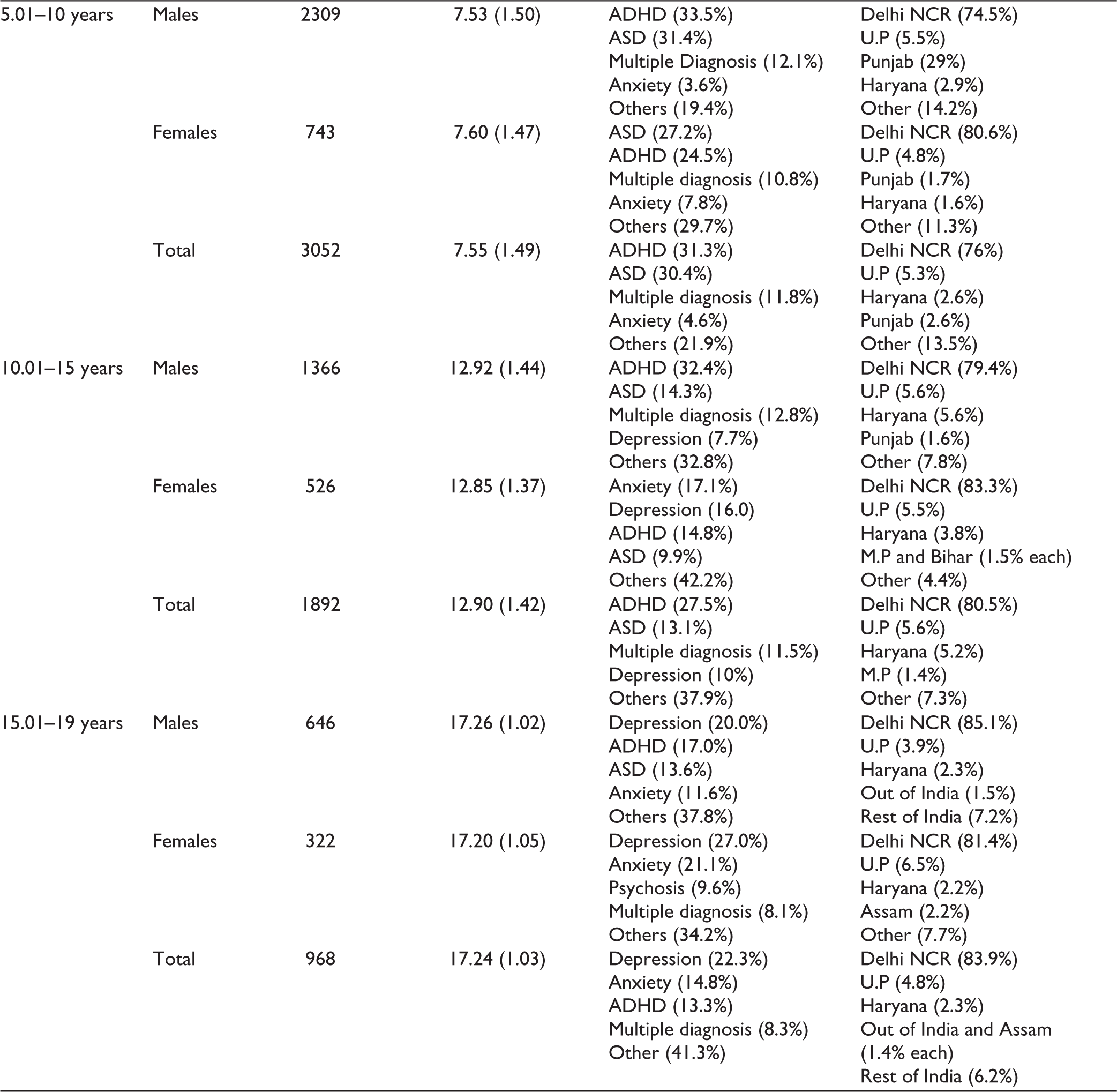
Table 1 shows the descriptives of the data. For the study, only the four most prevalent diagnoses were shown while the remaining were classified as others.
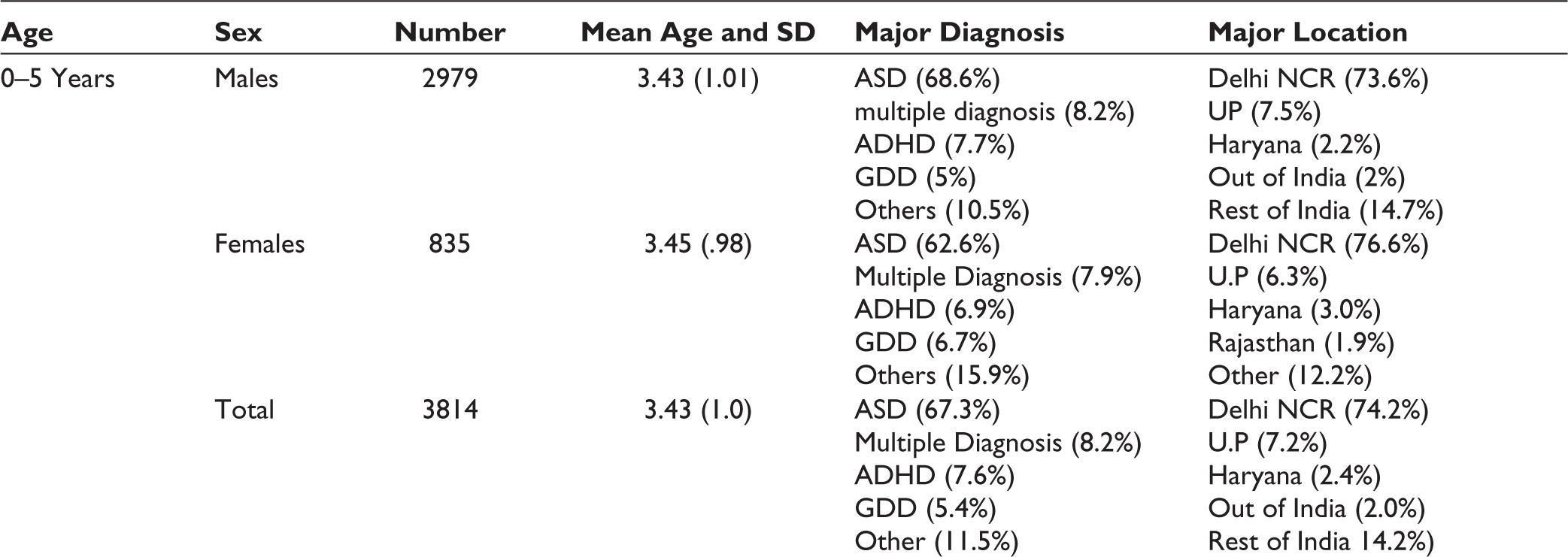
From the table, it can be observed that 3814 patients aged between 0 – 5 years visited the psychiatric clinic. Out of whom, 2979 were males and 835 were females. The mean (M) age of the patients was found to be 3.43 with 1.01 Standard Deviations (S.D) for males, and 3.45 with .98 S.D for females. The most prevalent diagnoses among the males of age 0 to 5 years were found to be ASD (68.6%), Multiple Diagnosis (8.2%), ADHD (7.7%), and Global developmental delay (GDD 5%), whereas in females ASD was found in 62.6%, Multiple Diagnosis (7.9%), ADHD (6.9%) and GDD were found in 6.7%. Most of the patients who visited the clinic were from Delhi NCR followed by Uttar Pradesh (U.P) and Haryana.
A total of 3052 Patients aged between 5 to 10 years visited the clinic out of whom 2309 were males, and 743 were females. The mean age of the males was found to be 7.53 with 1.50 S.D. Most of them were diagnosed with ADHD (33.5%) and ASD (31.4%) followed by Multiple Diagnosis (12.1%) and Anxiety (3.6%). The mean age of females aged between 5 to 10 years was found to be 7.60 with 1.47 S.D. The most prevalent diagnoses among the group were ASD (27.2%) and ADHD (24.5%) followed by Multiple Diagnosis (10.8%) and Anxiety (7.8%). Most of the patients were from Delhi NCR followed by U.P, Punjab, and Haryana.
The total number of patients aged between 10 to 15 years was 1892. 1366 were males, and 526 were females. The mean ages were found to be 12.92 with 1.44 S.D. for males, and 12.85 with 1.37 S.D. for females. Among the males, ADHD (32.4%), ASD (14.3%), Multiple Diagnoses (12.8%), and Depression (7.7%) were found to be most prevalent. Whereas among the females, Anxiety (17.1%), Depression (16.0%), ADHD (14.8%), and ASD (9.9%) were found to be most prevalent among others. The major chunk of patients was from Delhi NCR followed by U.P, Haryana, Punjab, Bihar, and Madhya Pradesh (M.P).
A total of 968 patients were aged between 15 to 19 years. Out of whom, 646 were males and 322 were females. The mean age of the males was found to be 17.26 with 1.02 S.D. whereas for females the mean age was found to be 17.20 with 1.05 S.D. Among the males, Depression (20%), ADHD (17%), ASD (13.6%), and Anxiety (11.6%) were found to be most prevalent. For females, the most prevalent disorders were found to be Depression (27%), Anxiety (21.1%) Psychosis (9.6%), and Multiple Disorders (8.1%). Like other groups, most of the patients were from Delhi NCR followed by U.P, Haryana, and Out of India.
Discussion
The study aimed to report the data to add to the literature on the prevalence and epidemiology of mental disorders. To our best knowledge and literature search, this is the first study to report statistics of child and adolescent mental disorders from a private setup in India.
We divided the study population into four groups based on their age to examine the trend of mental disorders in different developmental stages. Among the age group of 0 – 5 years, the most prevalent psychiatric disorders were found to be ASD, ADHD, and GDD along with a significant number of cases with multiple diagnoses. In the multiple diagnoses category in this age group, the most common were ASD comorbid with either ADHD or GDD. The results were found to be different from past research, for example, Srinath and colleagues found Breath-holding spells, pica, and Behavioral disorder NOS.[22]
On the population of 5 to 10 years, the most prevalent psychiatric disorders were found to be ASD, ADHD, Anxiety, and multiple disorders. The disorders were common for both, males and females. In the multiple diagnoses group, ADHD was frequently comorbid with ASD, Specific Learning Disorder (SLD), and Oppositional Defiant Disorder (ODD).
Male patients aged between 10 to 15 years had ADHD, ASD, Depression, and multiple disorders as most prevalent. However, for females, Anxiety, Depression, ADHD and ASD were most prevalent. The difference in the most prevalent disorder (such as Anxiety) marks the gender difference and could also possibly throw light on issues of a patriarchal society.
As far as the patients of age 15 to 19 years are concerned, Depression and Anxiety are most prevalent followed by ADHD, ASD, and Psychosis. The results are in line with past research as depression and anxiety were found common among adolescents. Jayashree and colleagues, in their study, found depression and anxiety quite common among students of age 15 to 19 years.[23] In another study, Grover and colleagues also highlighted the high prevalence of depression in adolescents.[24]
Among the Anxiety Disorders, the most frequent diagnoses were School Phobia, Examination Phobia, Separation Anxiety Disorder, and Social Anxiety Disorder; Generalized Anxiety Disorder and Panic Disorder were less frequent across different age groups. It is noteworthy that in our sample, there were cases of other neurodevelopmental disorders (Intellectual Disability (ID), SLD, Social Communication Disorder (SCD), Language Disorder), Somatic Symptom Disorder, Obsessive Compulsive Disorder (OCD), Post Traumatic Stress Disorder (PTSD), Eating Disorders, Movement Disorders (Tics and Tourette’s Disorder) and behavioral disorders such as Oppositional Defiant Disorder (ODD) and Conduct Disorder (CD). However, in the current study, we focused on the top four most common disorders only, all other disorders were grouped in the category of ‘Other Disorders’. Another important observation from our study is that the category of ‘Multiple Diagnosis’ appears in almost all groups irrespective of age group and sex. Previous research shows that comorbidity is the rule rather than the exception in child psychiatry[25], our study reinforces the same.
The clinic is based in Delhi, which explains the most inflow of patients from Delhi NCR.
Conclusion and Limitations
The study aimed to provide the clinical profile of patients visiting a renowned private psychiatric child and adolescent clinic located in Delhi NCR. The study reports the data from approximately 15 years, which would eventually help in defining the overall prevalence of childhood and adolescent disorders. Since there are variations in the prevalence of mental disorders reported from time to time and place to place, this study aims to fill the gap in the literature and provide data about various mental disorders in different age groups in children and adolescents.
Although the data may provide help for policymakers and mental health professionals to focus on specific ages and diagnoses in particular age groups, it does have some limitations which need to be highlighted. Since the data is coming from a private setup in an urban locality, whereas the majority of the Indian population resides in rural areas, it cannot be applied to the general population. Longitudinal studies are needed to understand the continuity of symptoms across different developmental phases to examine the pattern of evolution of the disorders.
As the current study is a retrospective chart review comprising data from a total of 9726 patients spanning over fifteen years, consent from patients was not taken. However, their anonymity has been maintained.
Footnotes
Declaration of Conflicting Interests
The authors declared no potential conflicts of interest with respect to the research, authorship, and/or publication of this article.
Funding
The authors received no financial support for the research, authorship, and/or publication of this article.
Ethical Approval
Ethical approval was taken from the center’s ethics committee (Dated 20th June 2021, Refer. No. CCAW/EBC/2021/075).