




Abstract
Background:
Adolescence is a critical period of transition from childhood to adulthood and involves changes in a child’s biological, emotional, and social aspects. An adolescent’s behavior and actions are largely impacted by peer pressure. The Peer Pressure Scale Questionnaire-Revised (PPSQ-r) is a tool for assessing the susceptibility of adolescents to peer pressure.
Aims:
This study aimed to translate and validate PPSQ-r for examining the impact of peer pressure among Malaysian adolescents.
Methods:
A forward-backward translation was executed in accordance with the established guidelines. The face validity of the questionnaire was assessed by a panel of experts from the relevant fields. 25 items of the questionnaire were tested for principal component analysis (PCA), and internal consistency was appraised via Cronbach’s α.
Results:
A total of 143 respondents among selected secondary school students were used in this study. The age range of the respondents was 13 to 18 years, with a mean age of 15 (SD = 1.316). One component was extracted via PCA, and one item was removed because of poor factor loading. 24 retained items exhibited excellent reliability with Cronbach’s α value of 0.932. The mean score for the PPSQ-r Malay version was 42.88 (SD = 16.57).
Conclusion:
PPSQ-r Malay version is reliable and valid as a peer pressure assessment tool among adolescents in Malaysia. However, the development of the norms based on the Malaysian adolescent population is recommended for risk classifications.
Introduction
According to the World Health Organization, adolescence is a transition phase between childhood and adulthood and a crucial stage of development with rapid physical, cognitive, and psychosocial growth. This is the phase where new behaviors develop by adopting new practices through experimentation. 1 During childhood, an individual spends most of the time at home, where family members become the closest people to learn from. However, while growing up as an adolescent, peers tend to become the closest people to spend time together. A major challenge that adolescents are confronted with during this time is withstanding negative influence from peers, ie, peer pressure.
Peer pressure can be defined as encouragement or urge to do something placed on one person from another belonging to a social group of the same age. 2 It refers to the influence that peers can have on each other. Peers play a substantial role in a child’s social and emotional development, which increases during the teenage years. 3 The susceptibility toward peer pressure notably increases during puberty, peaks at around 14 years of age, and declines afterward. 4 This susceptibility can be explained by the fact that teenagers are still in the development phase during adolescence, where they have not yet established their values concerned with human relationships or fully understand the consequences of a particular action or behavior. 5
Peer pressure can be positive or negative. The former can benefit an adolescent to have good academic and cocurricular achievements and amiable behavior. However, peer pressure is mostly viewed negatively as the term “pressure” implies that people feel pressurized to do what they may be resistant to, contrary to good moral norms. 5 Despite many factors that lead to delinquent behaviors, peer pressure is still considered one of the most consequential factors among adolescents. Peers with problematic behavior can set a bad example and become the most important predictor of adolescents’ problematic behavior. 6 The findings of several studies have revealed that peer pressure is a critical factor that could lead to risky sexual behavior.7,8 This was similar to substance use, where peer pressure was noted as the main reason for adolescents to follow such practices. 9 In addition, criminal activities such as theft, robbery, and sexual abuse among adolescents are also associated with peer pressure. The association between peer factor and juvenile crimes has been rigorously investigated, and it has been affirmed that peer factor was at a moderately high level of influence in leading to juvenile crimes. 10 However, resiliency and vulnerability toward peer pressure among adolescents vary the individuals. 11 There are several reasons why peer’s activity and behavior can influence adolescents. It can be because of curiosity, desire to fit into a peer group, insecurity, and the pressure to be accepted among the peer groups. 12
As there is a high likelihood of risky behavior because of peer pressure, the adolescent will be exposed to various health, emotional, and social problems. For example, risky sexual activity can lead to HIV, sexually transmitted disease, or unintended teenage pregnancy. In Malaysia, 87.3% of adolescents who ever had sexual intercourse have reported not using a condom. 13 It could be concluded that sex education is still not sufficiently emphasized among adolescents in Malaysia, and with their vulnerability to a negative peer influence, they are at a very high risk of adverse consequences. At present, there is a lack of a proper instrument to measure individual susceptibility toward negative peer pressure among adolescents in the local community.
Peer Pressure Scale Questionnaire-Revised (PPSQ-r) is an instrument developed in 2016 by Saini and Singh to measure peer pressure susceptibility among adolescents. 14 This is the revised version of the first version of the questionnaire, which was developed in 2010. 15 It comprises 25 items based on scenarios or self-perspectives that describe situations related to negative peer pressure. This instrument is extensively deployed with the primary objective to measure the susceptibility risk of adolescents toward negative peer pressure, and it focuses on the individual itself. Compared to other available tools, such as peer pressure inventory (PPI), PPI gauges how much the respondent’s friends encourage them to do something. 16 However, it does not measure self-resilience toward peer pressure. Another tool, the peer pressure questionnaires and vignettes has some similarities with PPSQ-r, especially in terms of the pattern of the questions. However, the former does not specifically measure peer pressure susceptibility risk. Instead, it also measures the tendency to be popular among peers, which is less relevant in predicting high-risk behavior. 17 In addition, PPSQ-r was recently developed and revised from its original version, and the questionnaire was from India. Malaysia is a multicultural country mainly inhabited by the Malays, Chinese, and Indians, who share certain cultural values with the people of India, and these values have been long adopted and assimilated into the Malaysian people. 18 The objective of this study was to first translate to Malay and then validate the peer pressure scale questionnaire among Malaysian adolescents.
Methods
Study Design and Participants
This was a cross-sectional validation study with PPSQ-r as the assessment tool and conducted in 2 phases. The first phase consisted of questionnaire translation and face validation, while the second involved field testing and psychometric analysis. The inclusion criteria for this study were secondary school students aged 13 to 18 years who could read and write in the Malay language. The students were selected using the convenient sampling technique among 2 schools in the Klang Valley region. A total of 125 respondents were set as the minimum sample size in accordance with the 5:1 respondent to item ratio. 19
Research Ethics
The research was performed with approval by the institution’s Ethics Committee. Consent was also obtained from the Ministry of Education of Malaysia and the state education department to conduct the study among students in secondary school. The permission to translate and validate PPSQ-r into Malay was obtained by the primary author. The requisite permission from the respective schools and consent from parents was also obtained prior to distributing the research questionnaires to the students.
Measures
As remarked earlier, PPSQ-r is an instrument to measure the susceptibility of adolescents toward peer pressure. The questionnaire consists of 25 items scored using a 5-point Likert scale ranging from 1 = strongly disagree to 5 = strongly agree. The score of each item is added to form the total score. Individuals scoring up to 55 are identified as those who experienced low peer pressure. Individuals who scored 56 to 72 experienced a moderate level of peer pressure, while those who attained a score greater than 72 experienced a high level of peer pressure. 14
Procedure for Validating Peer Pressure Scale Questionnaire-Revised (PPSQ-r)
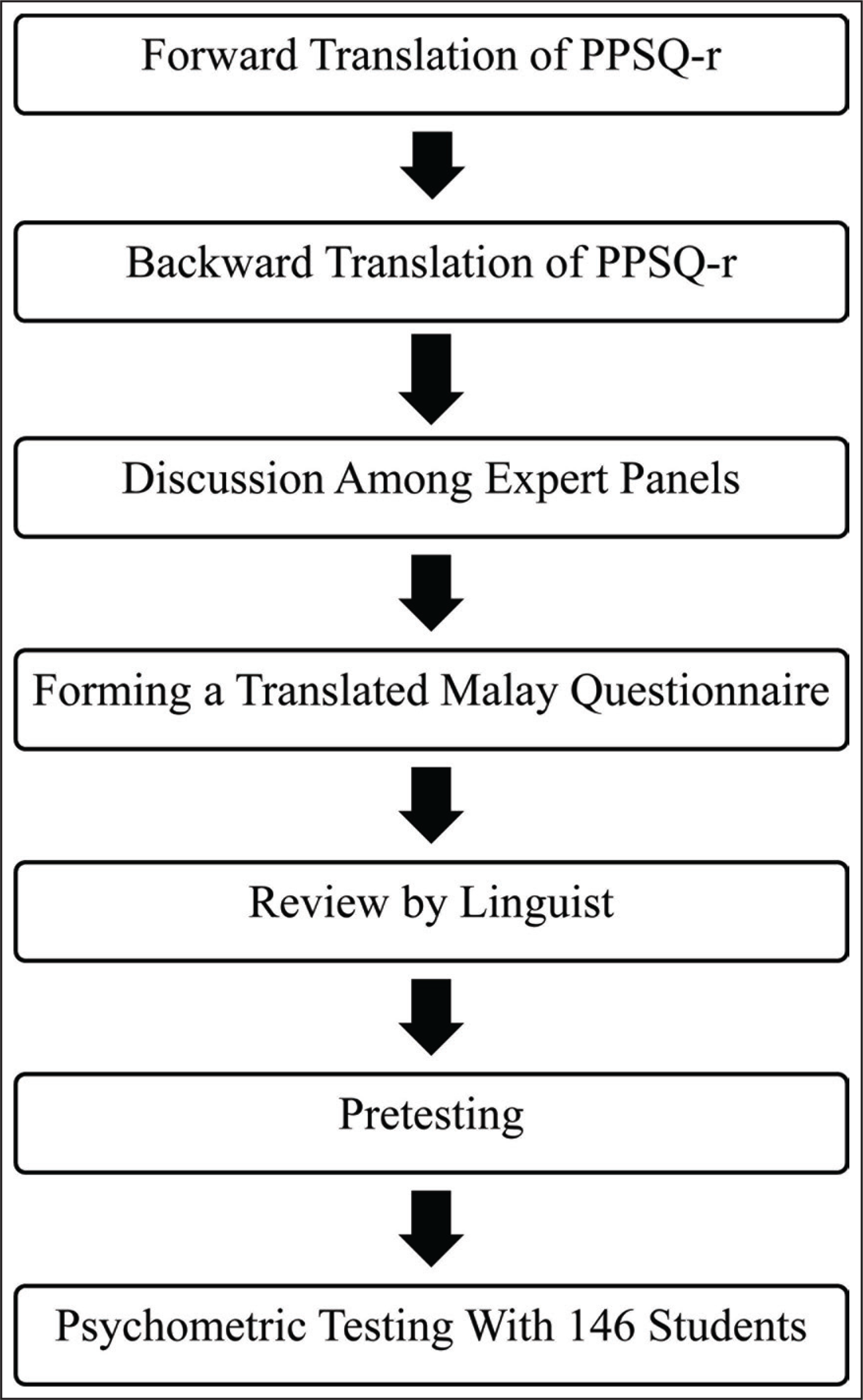
Procedure
Translation
2 translators proficient in both English and Malay language were assigned to translate the English version of PPSQ-r into the Malay language. This process involved adapting the individual items, instructions for the questionnaire, and response options. Subsequently, the 2 Malay-translated versions were translated back to English by 2 other translators with similar English and Malay proficiency. The 2 Malay versions were then assimilated to produce the final version.
Face Validity
A discussion among expert panels consisting of a psychiatrist, public health specialist, and psychologist was held to review the final translated versions. Discrepancies from the original English version, the suitability of word choice, and the comprehension of the overall questionnaire were addressed during this stage. Following the discussion, 2 items: “There is always a peer pressure for dating” and “Sometimes I do violent acts to keep up with peers,” were referred to a linguist for advice on better word usage. The word “dating” was translated to bertemu janji instead of berpacaran because the former is more common and easier to understand for adolescents. The phrase “to keep up with friends” was translated to untuk dilihat setanding dengan rakan sebaya instead of untuk mengikuti rakan sebaya to retain the original English version of the questionnaire as the latter phrase when translated, may also mean “to follow friends.”
Pretest
Following the changes made after the face validity process, the finalized questionnaire was then distributed to a few students for their feedback. It was found that the questionnaire could be understood easily by the students.
Recruitment and Data Collection
The data were collected via an openly accessible online survey platform, Google Form. The form consists of 2 parts: the demographic data consisting of age, gender, race, and the Malay version of the PPSQ-r. The data were amassed over 2 weeks.
Psychometric Analysis
Descriptive statistics and psychometric analysis were conducted using IBM SPSS version 25.0 (Armonk, NY: IBM Corp.). The internal reliability was measured using Cronbach’s α, and a value of 0.7 or greater was deemed acceptable. 20 The construct validity was assessed using principal component analysis.
Results
There was a 100% response rate for the total 143 respondents. The overall mean age of the respondents was 15 years (SD = 1.316), with an age range between 13 and 18 years. More than half of the respondents were female (n = 93, 65%). The respondents were Malay (n = 64, 44.8%), Chinese (n = 68, 47.6%), Indian (n = 10, 7%), and Sikh (n = 1, 0.7%).
Principal Component Analysis
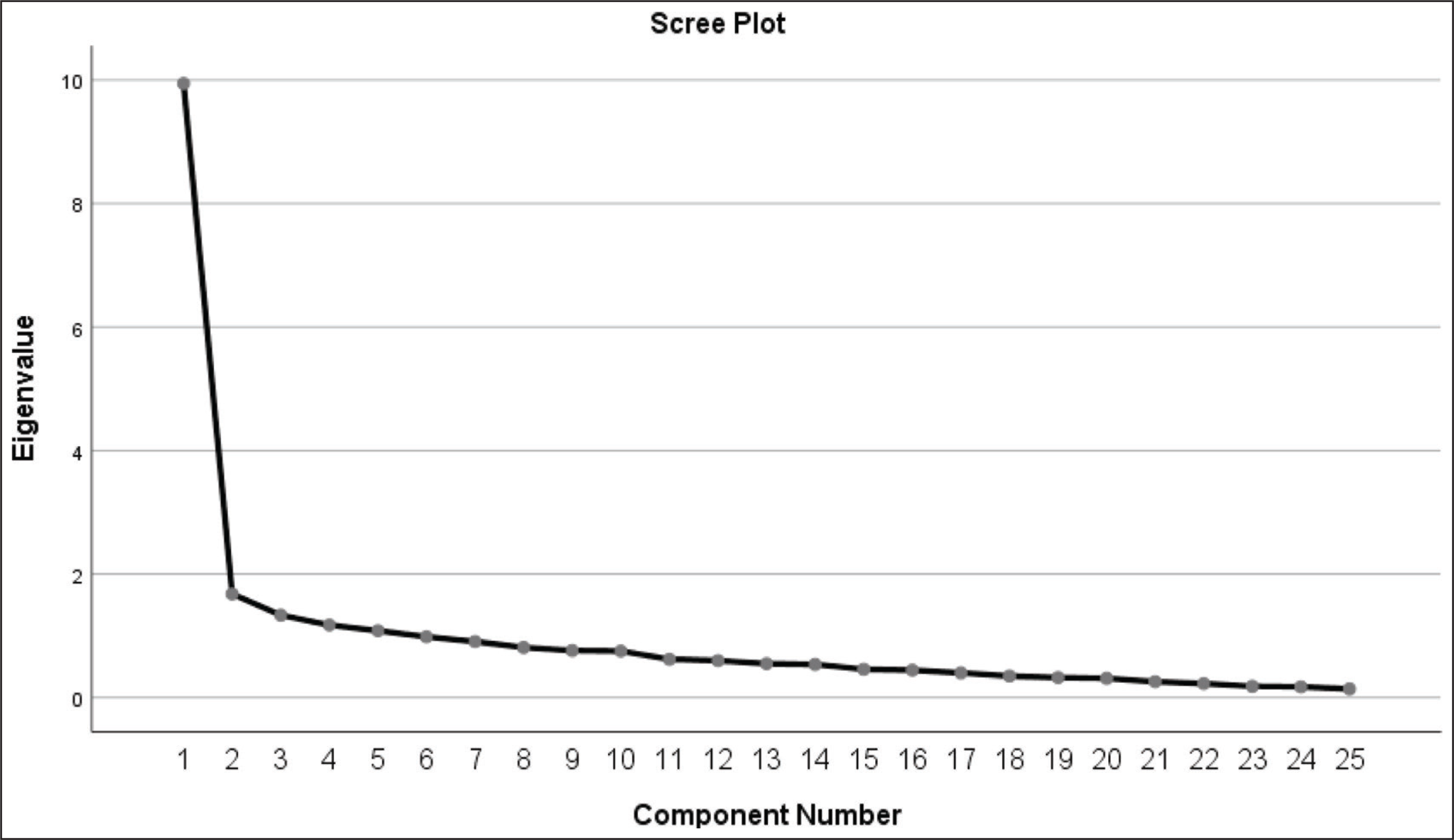
The sampling adequacy measurement using the Kaiser–Meyer–Olkin (KMO) test was 0.897, and Bartlett’s test of sphericity showed a statistical significance with a P value < 0.001. These tests revealed the suitability of the collected data for component analysis. 5 components were extracted based on an eigenvalue greater than 1, which accounted for 60.847% of the variance explained (Table 1). However, based on the results of the scree plot test, only one component was extracted. The component that should be extracted is the one before the graph starts to level off (Figure 2).
Eigenvalues and Variance Explained
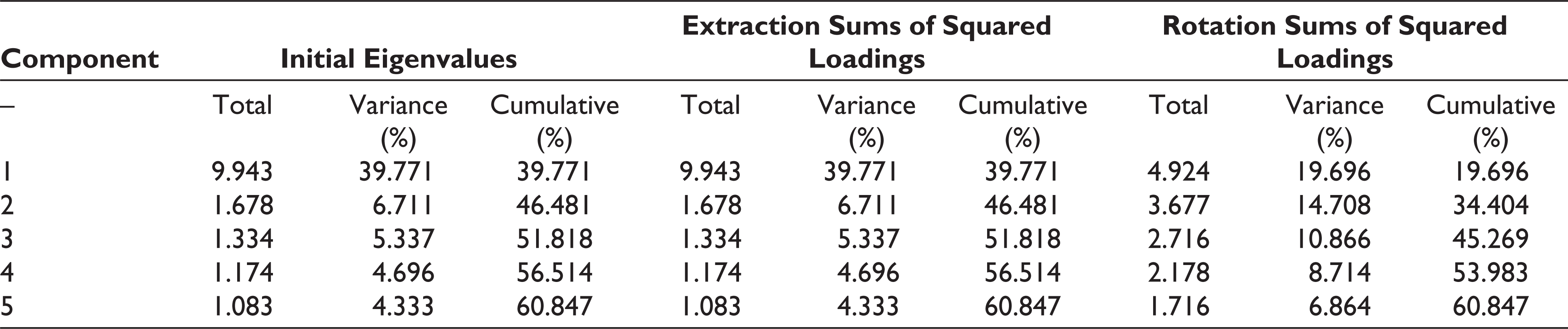
Scree Plot
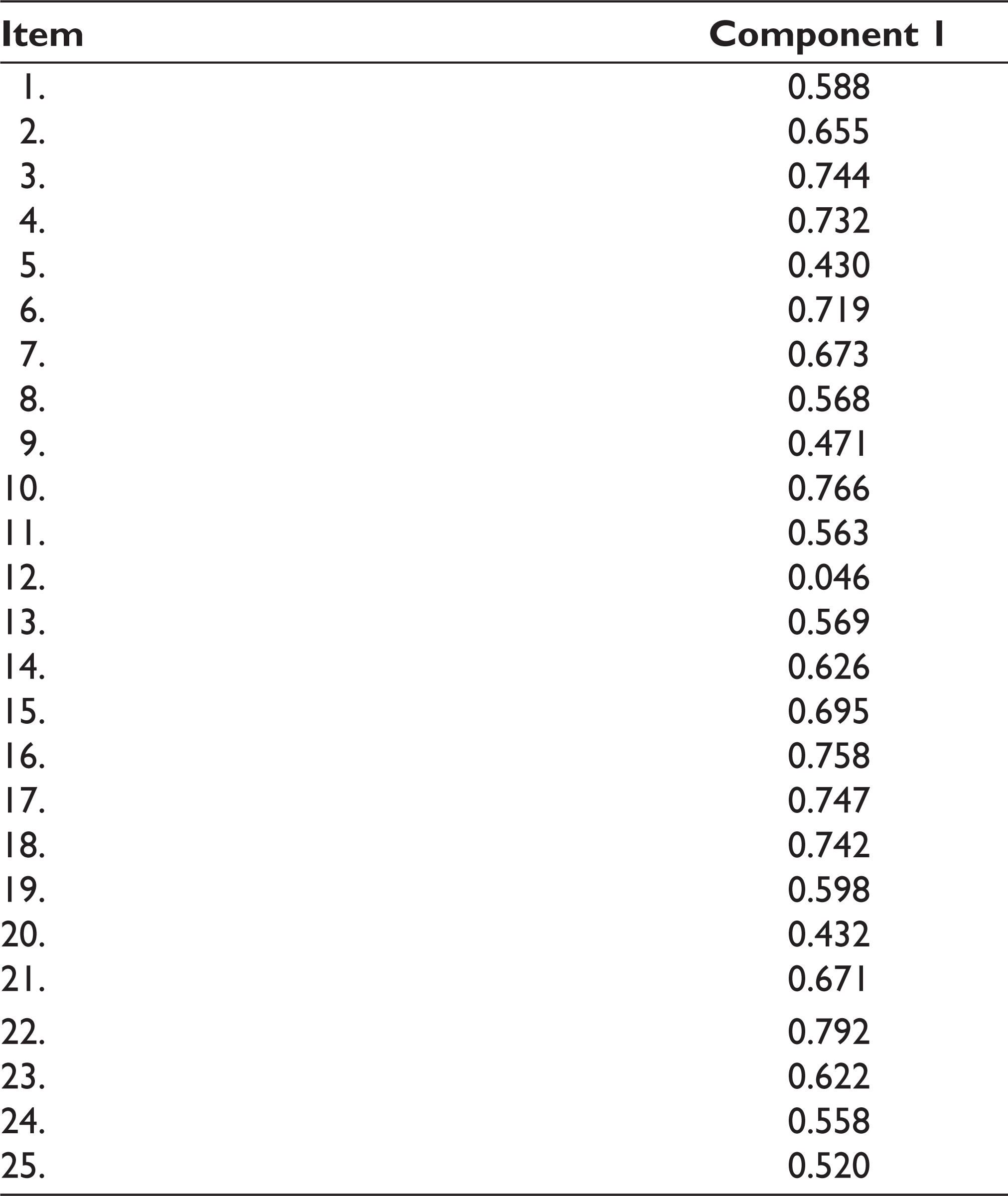
This result follows the original questionnaire, which uses a unidimensional or single-component scale as scoring. From one component extraction, all items had a component loading of more than 0.4, except for one item (“I know my limits when with friends”/Saya tahu had saya ketika bersama rakan-rakan), which only had a component loading of 0.046 (Table 2). Furthermore, it had a very low correlation with other items based on the inter-item correlation matrix, between −0.104 and 0.225. Ultimately, only 24 out of 25 items were retained in this single-component scale.
Component Matrix
Reliability
Cronbach’s α was used to evaluate the internal consistency of the PPSQ-r Malay version. The results showed 24 items PPSQ-r Malay version has excellent internal consistency with Cronbach’s α value equal to 0.932.
Scoring
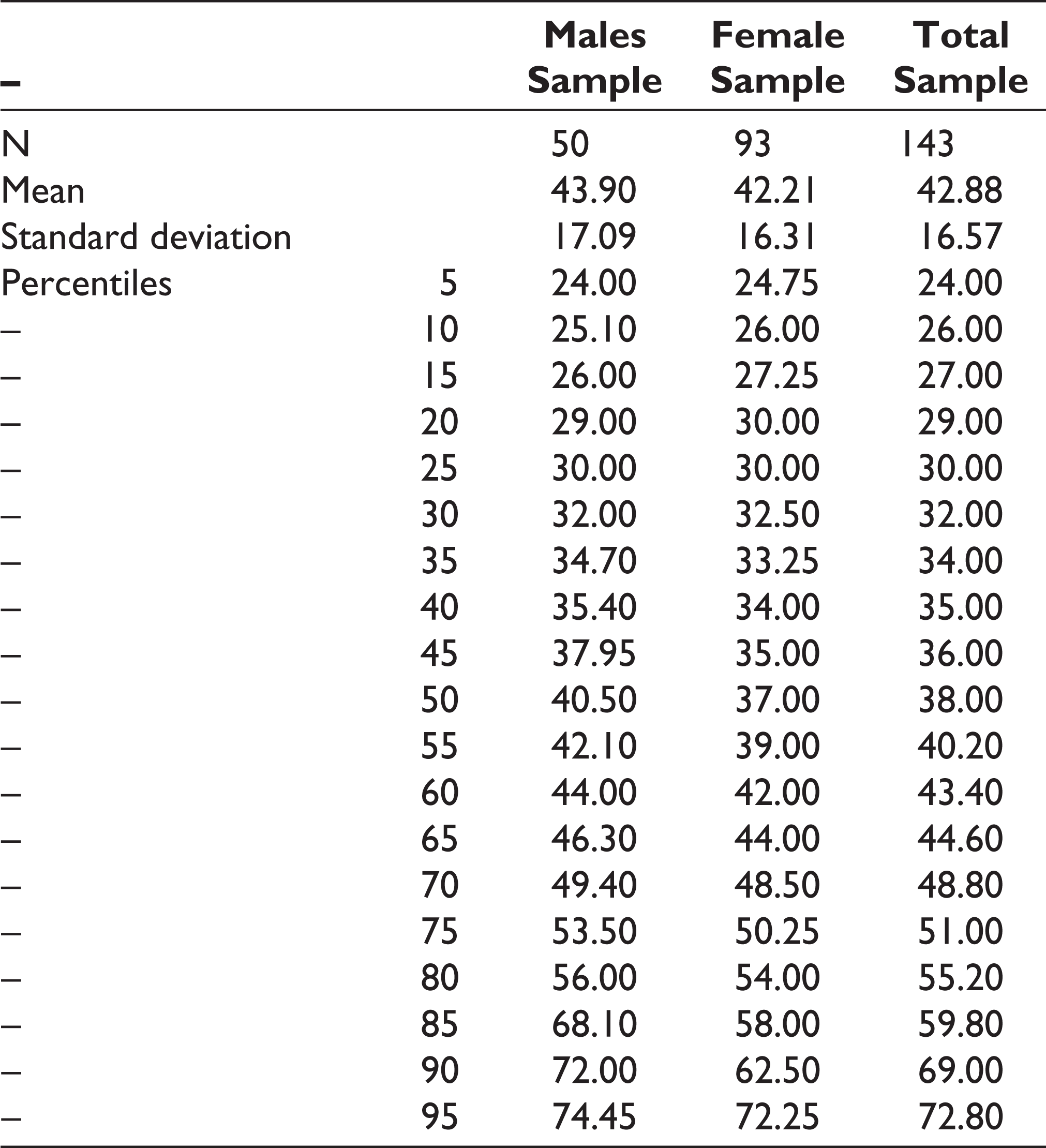
Mean score for 24 items PPSQ-r Malay version for 143 respondents was 42.88 (SD = 16.57) from the total score of 120 (Table 3). There was no significant difference of mean between male (n = 50) and female (n = 93), which were 43.9 (SD = 17.09) and 42.2 (SD = 16.31), respectively. Minimum score obtained was 24, while the maximum was 116. The range for mean values of each item was between 1.43 and 2.42 (SD = 0.86–1.29). It indicated that most respondents answered “disagree” and “very disagree” for all items.
Mean and Percentiles Scoring of Males, Females, and Total Sample
Discussion
This study aimed to ascertain the validity and reliability of the Malay version of PPSQ-r after being translated from English in the original version. The findings of this study revealed that the PPSQ-r Malay version is reliable and valid enough to assess susceptibility toward peer pressure among adolescents in Malaysia. In addition, this study is the first to translate PPSQ-r into another language with psychometric analysis.
During translation, cross-cultural adaptation is imperative to warrant a translated instrument to function as intended and similar to the original instrument. Semantic, idiomatic, experiential, and conceptual equivalence needs to be achieved to have an effectual adaptation process. 21 In this study, cross-cultural relevance for all items was reviewed comprehensively by experts to ensure a sufficient equivalence between the translated and original version. All items from the instrument were appropriate to be enquired from adolescents in the local community. PPSQ-r uses examples such as smoking, watching pornography, late-night parties, missing class, and putting off homework in the items. Of all items, none can be considered rare activities or behaviors as per the local context.
Initially, 5 components whose eigenvalue was greater than 1 were extracted. 22 After a solution was rotated via direct Oblimin, there was difficulty interpreting the component and item retention as there was a high number of cross-loading, ie, item loads at or more than 0.32 on 2 or more components. 23 The items can be considered complex, and thus, a simple structure cannot be achieved. A simple structure refers to when several items load strongly on only a single component, and those items have zero correlation to the other components in the solution. 24 In addition, the presence of some correlation between the components extracted gave further justification to the researchers to oppose retaining those 5 components.
Another approach to retaining the component is based on the scree plot. 25 Based on the result, one component was retained, which followed the previous analysis performed by the authors of the original study. On the basis of the scree plot, they concluded that only one component presents the best fit for the set of the PPSQ-r, and the component explains about 50% of the total variance. 14 However, in this study, the one component we retained explains only 39.77% of the total variance. It may be because of low commonalities on most items. For the data to be run in component analysis, the sample size should be high enough to ensure the reliability of the analysis. There is a widespread opinion among researchers regarding the minimum sample size. According to Gorsuch, the minimum respondents to items ratio is 5:1. 19 We obtained 143 respondents in this study, which was more than the minimum sample size, which is 125. However, the lower commonalities throughout items might indicate that the 143 samples were inadequate. Therefore, we look at the KMO test to measure sampling adequacy. Our findings showed that the KMO test value was more than 0.6, which is the minimum value to consider the component analysis useful for the data. 26 In addition, Bartlett’s test of sphericity was significant (P < .05), which indicated that the items are suitable for structure detection.
We determined from one component extraction that item 12 (“I know my limits when with friends”/saya tahu had saya ketika bersama rakan-rakan) has poor component loading, which is 0.046. It may be because the item does not describe an adolescent situation that is easily influenced by peer pressure. It illustrates that the adolescent is aware of his or her weaknesses and can avoid peer pressure. Upon reverse coding, this item was found to have a component loading of −0.046. Therefore, the item needed to be deleted. Other items had component loading of more than 0.4. On the basis of Stevens’ suggestion, those items can be retained. 27 The deletion of item 12 was also because of a correlation pattern between that item and others. The low inter-item correlation with most other items showed that it could not be put in the same component. Ultimately, we maintained the 24 items PPSQ-r in the Malay version as a unidimensional scale.
Our results showed that the scale consisting of 24 items had a high internal consistency as determined by a Cronbach’s α of 0.932. It was higher than the previous Cronbach’s α for 25 items of PPSQ-r, which was 0.79. 14 Thus, the PPSQ-r Malay version can be affirmed to be reliable in measuring an underlying construct, ie, peer pressure susceptibility.
As stated earlier, PPSQ-r used 3 classifications for its scoring. The classification was based on percentile marks of the population, where Sunil and Singh used 25th and 75th percentiles as cut-off points. 14 It should be noted that the Malay version of PPSQ-r has one less item than the original version. The minimum and maximum scores for the Malay version are 24 and 120, respectively, whereas, for the original version, they are 25 and 125, respectively. Therefore, the scoring and classifications between these 2 versions cannot be compared directly. Because of that, the scoring percentage will be used as a reference for comparison. Mean score of the Malay version was 42.88 (SD = 16.57), which is 35.73% of the total score. It is significantly different from the mean score of the original version, which is 51.53% of the total score (mean score = 64.41, SD = 13.21). The risk classifications based on the original version cannot be directly applied because of the different number of items and findings between previous and current studies. Therefore, the default classification of the 5-point Likert scale can be used in this Malay version. 28 Using the formula, the scores can be classified into 5 groups, namely very low risk (24–43), low risk (44–62), moderate risk (63–82), high risk (83–101), and very high risk (102–120). This study concluded that the average score for PPSQ-r was 42.88 (SD = 16.57), which falls under the “very low risk” category. This may indicate that the population in the study was not influenced by peer pressure, hence protecting them against risky and criminal behaviors. This could be attributed to the selection of schools, as these schools were not among the high-risk schools for disciplinary issues.
Using the PPSQ-r Malay version, prescreening assessment could be done for adolescents who are vulnerable to high-risk activities. Therefore, it will provide them with access to early interventions to prevent further consequences, particularly to their development and general health.
Further study would be beneficial to develop a norm based on the local adolescent population in Malaysia and proper classifications of peer pressure susceptibility risk based on this scale.
This study has several limitations. First, the total variance explained by the component we retained was only 39.77%, which is far from the recommendation (60% and above). Second, the sample size only included adolescents from 2 selected secondary schools. Third, this study did not conduct concurrent validity and test-retest reliability.
Conclusion
To conclude, this study showed that the psychometric properties of the Malay version of PPSQ-r are acceptable based on validity and internal reliability. Therefore, this questionnaire can measure the susceptibility toward peer pressure among adolescents in Malaysia. However, for further studies, the development of the norms based on the Malaysian adolescent population is recommended for this questionnaire to help categorize respondents as low level, moderate level, and high level of peer pressure susceptibility based on scoring.
Footnotes
Acknowledgements
We would like to thank the Ministry of Higher Education Malaysia (LRGS/1/2019/UKM-UKM/2/3) for funding this study, as well as Universiti Kebangsaan Malaysia and the Ministry of Education Malaysia for the support in conducting this study.
Declaration of Conflicting Interests
The authors declared no potential conflicts of interest with respect to the research, authorship, and/or publication of this article.
Funding
The authors received financial support from the Ministry of Higher Education Malaysia for the research and publication of this article.
Statement of Informed Consent and Ethical Approval
Necessary ethical clearances and informed consent was received and obtained respectively before initiating the study from all participants.