



Abstract
Background
Chonglou saponin has been found to have certain tumor suppressor effects in a variety of cancers. However, Chonglou saponin has certain limitations and side effects in clinical application. Therefore, exploring new therapeutic strategies and mechanisms of action of Chonglou saponin is key for the treatment of esophageal cancer.
Purpose
This study explored the mechanism by which mesoporous silica (MSNs)-mediated saponin inhibits the growth of esophageal cancer cells through regulating the FGF19/FGFR4 signaling axis through microRNA-100 (miR-100).
Materials and Methods
Mesoporous silica nanoparticles-loaded polyphyllin (MSNs-PP) materials were prepared and used for Eca-109 cell culture, negative control group (NC group), MSNs-PP group (transfected with MSNs-PP), and miR-100-mimic group, miR-100-inhibitor group, BLU-554 group (transfected with FGFR4 inhibitor), FGFBP1 group (transfected with FGFR4 activator), to observe the anti-esophageal effects of MSNs-PP and the regulatory effect on miR-100, and further explore the changes in the FGF19/FGFR4 signaling axis.
Results
MSNs-PP were successfully prepared, and polyphyllin (PP) was found to have a positive tumor suppressor effect in esophageal cancer, with MSNs-PP being the most prominent. miR-100 has a significant effect on the activity of esophageal cancer cells. In the MSNs-PP group, miR-100-mimic was added for intervention, and the inhibitory effect on Eca-109 cell proliferation was amplified; by successfully interfering with the expression of the FGF19/FGFR4 signaling axis, FGF19 and FGFR4 expression in MSNs-PP group was low, indicating that MSNs-PP can affect the expression of FGF19/FGFR4 signaling axis to a certain extent. Through further verification, downregulating the expression of the FGF19/FGFR4 signaling axis can promote the apoptotic effect of MSNs-PP on esophageal cancer cells to a certain extent. Dual luciferase confirmed the targeting relationship between miR-100 and FGF19. MSNs-PP promotes miR-100 expression, downregulates FGF19/FGFR4, and inhibits the occurrence and development of esophageal cancer Eca-109 cells.
Conclusion
MSNs-PP can promote the expression of miR-100, thereby inhibiting the FGF19/FGFR4 signaling axis and inhibiting the growth of esophageal cancer cells. These findings provide a new strategy for targeted therapy of esophageal cancer based on nano-carriers and lay a theoretical foundation for the clinical application of Chonglou saponin.
Introduction
The occurrence and development of esophageal cancer involve abnormal regulation of multiple signaling pathways (Uhlenhopp et al., 2020). microRNA-100 (miR-100) is abnormally expressed in several tumors and has a certain impact on the tumor cells (Jahangiri et al., 2022). Fibroblast growth factor (FGF) and its receptors are important components of basic cellular processes, and FGF/FGFR signaling is involved in the carcinogenesis process (Xie et al., 2020). FGF/FGFR inhibitors are effective in treating FGFR-altered tumors and represent a promising approach. Non-selective FGF/FGFR inhibitors have been approved for cancer treatment, but their specific application in the treatment of esophageal cancer remains to be explored.
Studies have shown (Liu et al., 2019) that MiR-21 inhibits programmed cell death 4 (PDCD4) expression by binding to 3′UTR, and can also inhibit the expression of B-cell lymphoma 2 (Bcl-2) family member Bcl-2-associated death promoter (BAD) and inhibit cell apoptosis. Another study found (Li et al., 2021) that MiR-34a can also inhibit target genes such as cyclin D1 and protein kinase B (Akt) by binding to 3′UTR, thereby promoting cell apoptosis. MiR-143 can promote cell apoptosis and inhibit cell drug resistance by inhibiting DR6 and the Bcl-2 family member BAD. These studies have shown (Chen et al., 2022) that esophageal cancer is affected by several mRNAs. mRNAs can affect cell activity by affecting the expression levels of different target genes, which also provides a new direction for clinical treatment. In recent years, studies have shown (Caidengbate et al., 2023) that microRNA also regulates the FGF/FGFR signaling pathway and can serve as an important regulator of this signaling pathway. Studies have shown (Juzwik et al., 2019) that some microRNAs can affect the activity of this signaling pathway by regulating related components in FGF/FGFR. Among them, in breast cancer cells, promoting miR-10b expression can effectively inhibit FGF10, thereby inhibiting the activity of tumor cells to a certain extent. Moreover, miR-21 can also inhibit liver cancer cells by inhibiting FGF2 expression. This has some optimistic inspiration for the study of the mechanism of FGF/FGFR in esophageal cancer.
The treatment of esophageal cancer with traditional Chinese medicine is on the rise. Tanshinone can inhibit the production of vascular endothelial growth factor (VEGF), thereby suppressing tumor angiogenesis. Studies have found that the saponins in Chonglou have good therapeutic effects on anti-tumor (Thapa et al., 2022). Mesoporous silica has potential application prospects in anti-cancer treatment. Chonglou saponins, using mesoporous silica as a carrier, are widely used in drug delivery systems and have better stability and biocompatibility (Escriche-Navarro et al., 2022). However, the mechanism by which mesoporous silica mediates the regulation of esophageal cancer cell proliferation by Chonglou saponin remains unclear. This study explored the mechanism by which mesoporous silica mediates saponin’s inhibition of the growth of esophageal cancer cells through regulating the FGF/FGFR signaling axis through miR-100. We will use cell experiments to evaluate the effects of mesoporous silica-mediated saponin on esophageal cancer cells. At the same time, we will also study the expression changes of miR-100 during this process and the regulatory mechanisms of FGF and FGFR genes. This has important clinical significance for further understanding the occurrence and development mechanism of esophageal cancer and providing guidance for the development of new treatment strategies and drugs.
Materials and Methods
Experimental Materials
Esophageal cancer cell line Eca-109 (Shanghai Kunmeng Biotechnology). Chonglou saponin (polyphyllin, purity: ≥98%, batch number: 76296-72-5, Chengdu Mansite); FGFR4 activator FGFBP1 (purity: >95%, batch number: PA1000-1121, Hubei Apti Biotechnology); FGFR4 inhibitor BLU-554 (purity: 99.84%, batch number: 1707289-21-1, Beijing Biolab); FGF19, FGFR4 monoclonal antibodies (Shanghai Bowan Biotech); secondary antibodies (Shanghai Uniview Biotech).
Preparation of MSNs-PP
MSNs were prepared by adjusting the amount of silicon source precursor containing disulfide bonds and selectively etching with sodium carbonate. Mesoporous silica nanoparticles-loaded polyphyllin (MSNs-PP) was prepared by the triethylamine desalting method, observed by transmission electron microscopy (TEM), and the zeta potential was measured.
Experimental Methods
Cell Culture, Grouping, and Transfection
The purchased cells were cultured in the culture medium. When the cell fusion rate reaches 80%, digestion and passage can be carried out. Eca-109 cells are divided into: negative control group (the NC group was cultured for 48 h using the complete medium of Dulbecco’s modified Eagle medium (DMEM) containing 50% phosphate buffered saline (PBS), supplemented with 10% fetal bovine serum (FBS) and 1% double antibodies), MSN-PP group (cultured with 100 µg/mL MSN-PP for 24 h), miR-100-mimic group (transfected with 50 nM miR-100-mimic) (change the medium 6 h later), miR-100-inhibitor group (transfected with 50 nM miR-100-inhibitor). The groups were changed after 6 h: the BLU-554 group (treated with 10 µM FGFR4 inhibitor for 24 h) and the FGFBP1 group (treated with 10 µM FGFR4 activator for 24 h).
Cell Proliferation
Cells were seeded (4 × 10³ cells per well), cultured in a humidified incubator for 12 h, and treated in a humidified environment of 37°C and 5% CO2 for 24 and 48 h. Then discard the culture medium, add 10 µL MTT solution and 100 µL fresh DMEM, and continue culturing for 4 h. Place it on the floor with low-speed shaking for 10 min to dissolve fully. A microplate reader measures the absorbance.
Transwell Chamber Detection
Take 1 × 10⁵ transfected Eca-109 cells, inject them into the upper layer of the medium containing Matrigel-coated culture medium, and add 10% FBS to the lower chamber for culture. Wipe off the upper chamber membrane and incubate for 48 h at room temperature. Cells in the lower chamber were fixed and stained before imaging.
Apoptosis
The cells in each group were made into a single-cell suspension (1 × 10⁷/mL). Take 0.1 mL and add 5 µL of Annexin V-FITC and propidium iodide (PI), respectively, for 10 min in the dark, and observe cell apoptosis using a flow cytometer.
RT-PCR Experiment
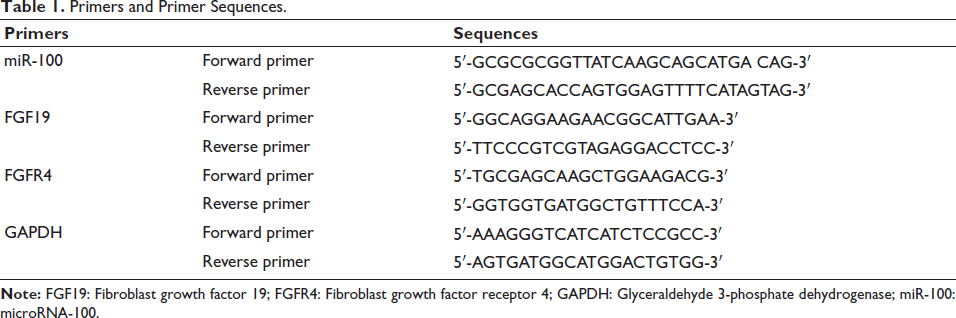
RNA extraction was performed using the Trizol method, and reverse transcription was carried out using the PrimeScript RT kit (Takara). Quantitative polymerase chain reaction (qPCR) reaction system (20 µL): SYBR Green Mix 10 µL, forward and reverse primers 0.5 µM each, cDNA 2 µL. Circulation conditions: Pre-denaturation at 95°C for 5 min; 95°C for 10 s, 60°C for 30 s, 40 cycles. Taking glyceraldehyde 3-phosphate dehydrogenase (GAPDH) as the internal reference, the relative expression levels of genes were calculated by the 2−∇∇Ct method. The primer sequences are shown in Table 1.
Primers and Primer Sequences.
Western Blotting (WB) Analysis of Protein Expression
The total protein after electrophoresis was heated to 100°C, incubated for 5 min, and then electrophoresis was performed with SDS-polyacrylamide gel (120 V, 100 min). Use sodium dodecyl sulfate-polyacrylamide gel electrophoresis (SDS-PAGE) (10%) and transfer. Add the primary antibodies: anti-FGF19 (1:1,000), anti-FGFR4 (1:1,500), and overnight at 4°C. The next day, incubate and wash the membrane three times, and incubate with the secondary antibody (1:10,000) for 1 h (at 37°C). After enhanced chemiluminescence (ECL) development, the gray values of the stripes were analyzed using ImageJ, with GAPDH (1:2,000) as the internal reference.
Dual Luciferase Experiment
After database prediction, FGF19 was determined to be the target of miR-100, and the FGF19 3′UTR WT and MUT sequences were amplified, co-transfected with the NC sequence, and dual-luciferase detection was performed according to the instruction manual.
Statistical Analysis
The obtained research data were analyzed by using SPSS 21.0 software and GraphPad Prism software. Data were expressed as mean ± standard deviation. One-way analysis of variance (ANOVA) and Tukey’s post hoc test were used for comparison between groups. Unless there are special requirements, p < .05 was taken as the test criterion.
Results
MSNs-PP Material was Successfully Prepared
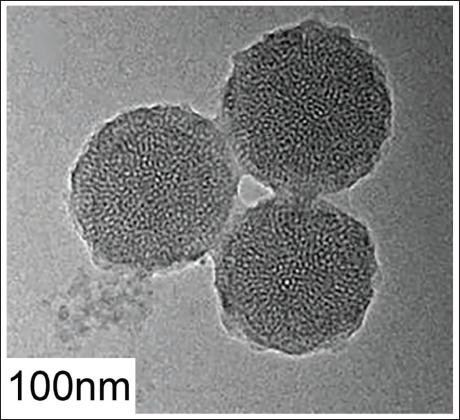
TEM shows (Figure 1) that MSNs-PP is spherical, with an average particle size of 120 ± 15 nm, good dispersion, and a zeta potential of −25 mV, indicating high particle stability and a concentrated pore size distribution at 3.5 nm.
MSNs-PP has a Tumor Suppressor Effect in Esophageal Cancer
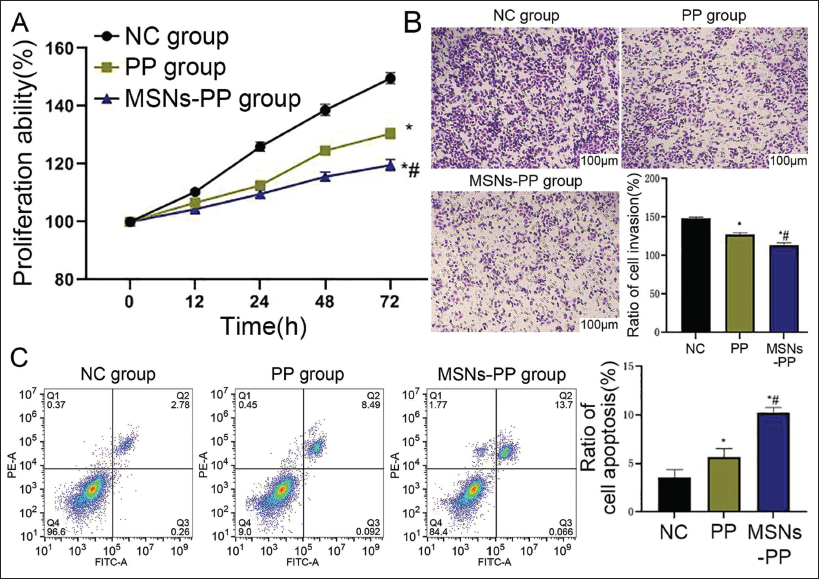
To explore the role of MSNs-PP in esophageal cancer, we found through cell experimental culture that with the extension of intervention time, the proliferation of esophageal cancer under MSNs-PP intervention was inhibited (Figure 2A, vs. other groups, p < .05), and weakened the invasive ability of Eca-109 cells (Figure 2B, vs. other groups, p < .05), apoptosis rate of MSNs-PP group also confirmed this phenomenon (Figure 2C, vs. other groups, p < .05), during this period, we found that polyphyllin (PP) had a positive tumor suppressor effect in esophageal cancer, and MSNs-PP was the most prominent.
MSNs-PP can Affect the Activity of Esophageal Cancer Cells by Promoting miR-100 Expression
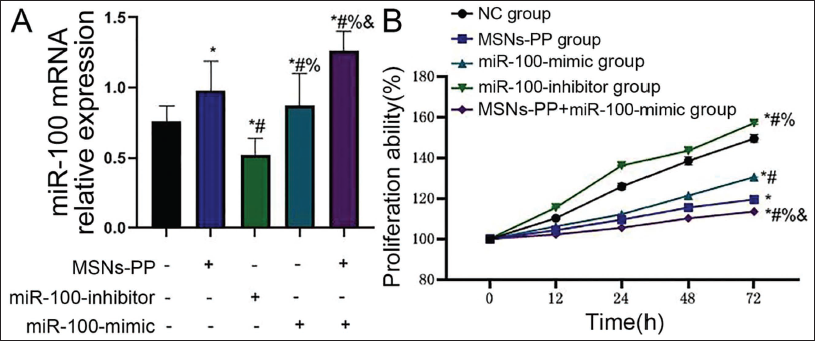
We used miR-100-mimic and miR-100-inhibitor to intervene in Eca-109 cells, respectively, and found a clear trend of increase or decrease in the expression of miR-100 mRNA (Figure 3A, vs. NC group, p < .05), indicating that the miR-100 gene intervention was successful. At the same time, the proliferation ability of Eca-109 cells was changed (Figure 3B, vs. NC group, p < .05), indicating that miR-100 plays a role in food, as it has a certain influence on the activity of cancer cells. Further exploring the role of MSNs-PP found significantly increased miR-100 in Eca-109 cells treated with MSNs-PP (Figure 3A, vs. NC group, p < .05), indicating that MSNs-PP can promote the expression of miR-100. At the same time, we added miR-100-mimic for intervention in the MSNs-PP group, and cell proliferation was inhibited (Figure 3B, vs. other groups, p < .05). The above results reflect that upregulation of miR-100 can enhance the inhibitory effect of MSNs-PP on the activity of cancer cells.
FGF19/FGFR4 Signaling Axis is Involved in MSNs-PP Promoting Apoptosis of Esophageal Cancer Cells
We used the FGFR4 activator FGFBP1 and the FGFR4 inhibitor BLU-554 to intervene in Eca-109 cells. The results showed that in Eca-109 cells, FGF19 and FGFR4 mRNA expression was increased in FGFBP1, while it was effectively inhibited in the BLU-554 group (Figure 4A, vs. other groups, p < .05). At the same time, the protein experiment also showed the same protein change trend. (Figure 4B), demonstrating the successful intervention of the FGF19/FGFR4 signaling axis. During this experiment, it was also found that FGF19 and FGFR4 levels in the MSNs-PP group were low (Figure 4A,B, vs. NC group, p < .05), indicating that MSNs-PP can affect the expression level to a certain extent. FGF19/FGFR4 signaling axis expression.
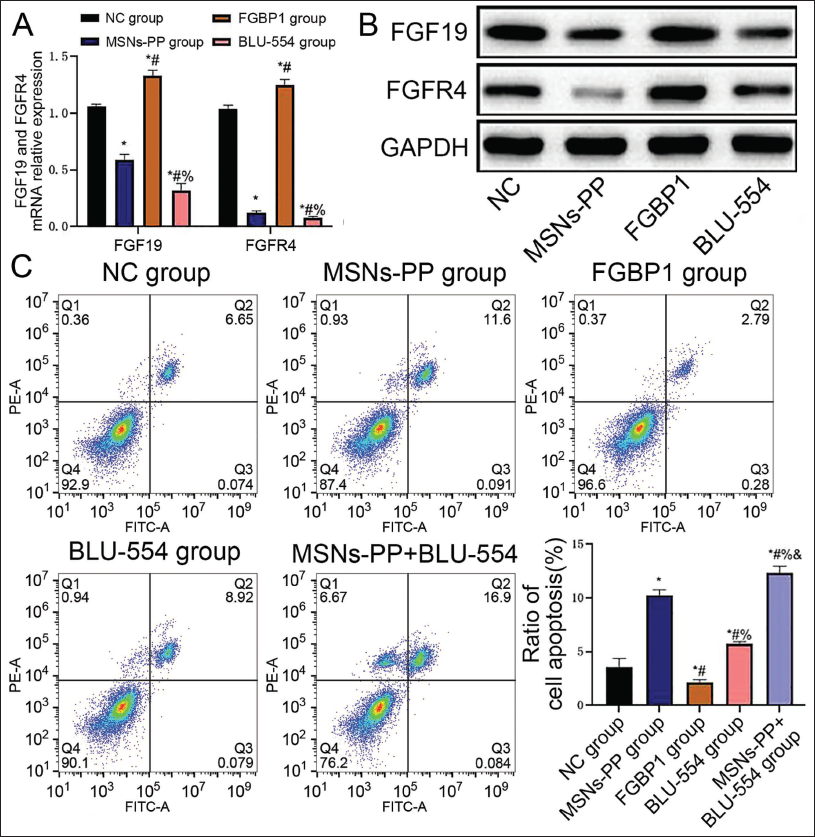
To further clarify its role in the MSNs-PP intervention process, we added BLU-554 to the MSNs-PP group and showed improved cell apoptosis ability after intervention (Figure 4C, vs. other groups, p < .05). The above results reflect that downregulating the FGF19/FGFR4 signaling axis can promote the apoptotic effect of MSNs-PP on esophageal cancer cells to a certain extent.
Detection of the Relationship Between miR-100 and FGF19
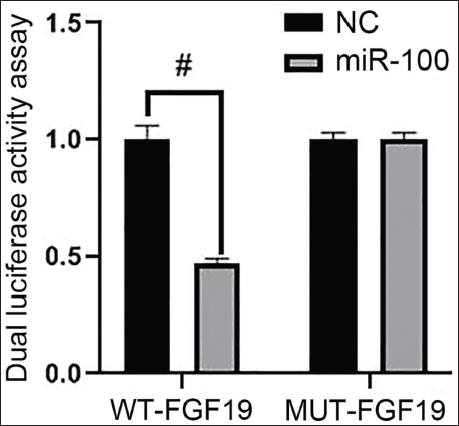
Compared with the NC group, the FGF19 wild-type vector co-transfection group, and the miR-100-mimic and FGF19 mutant vector co-transfection group, the co-transfection group of miR-100-mimic and FGF19 wild-type vector had significantly inhibited luciferase activity, p < .05 (Figure 5).
MSNs-PP Inhibits FGF19/FGFR4 Signal Expression by Promoting the Expression of miR-100, Thereby Inhibiting Esophageal Cancer Cells Growth
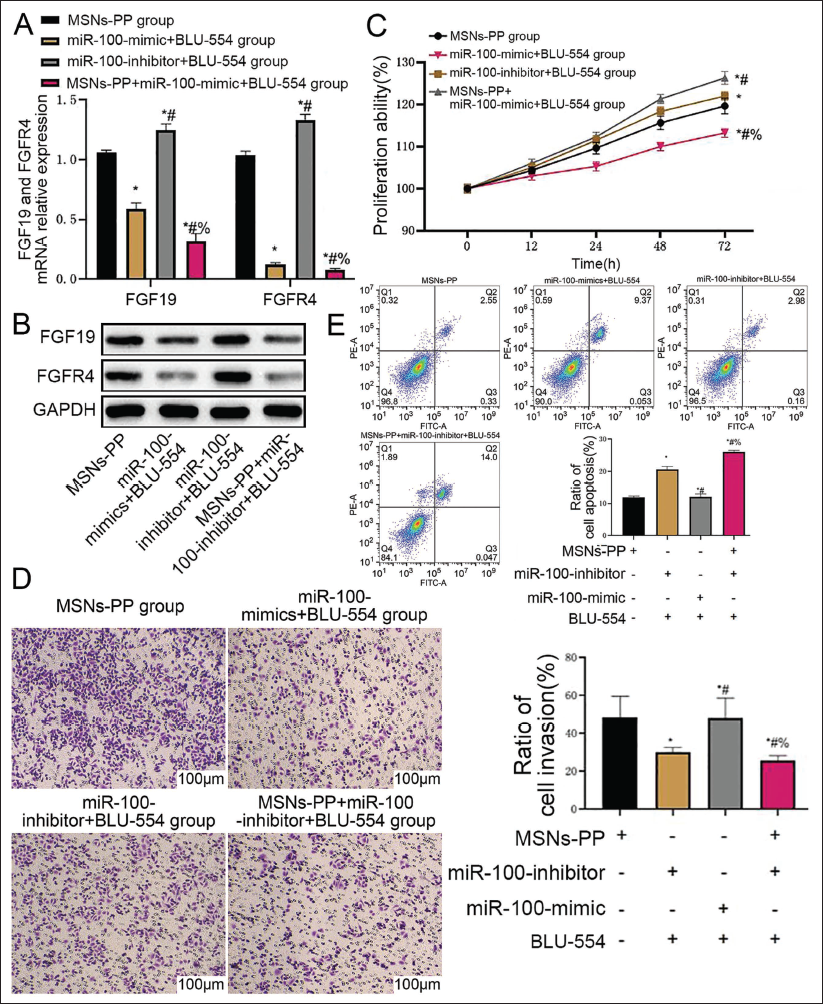
We performed miR-100-mimic and miR-100-inhibitor intervention, respectively on the basis of BLU-554 intervention and showed reduced FGF19 and FGFR4 expression in the miR-100-mimic+BLU-554 group (Figure 6A,B, vs. miR-100-inhibitor+BLU-554 group, p < .05). Meanwhile, further experimental observations showed that proliferation and invasion abilities of Eca-109 cells in the miR-100-mimic+BLU-554 group were significantly inhibited (Figure 6C,D, vs. the miR-100-inhibitor+BLU-554 group, p < .05), and at the same time, the apoptosis ability increased significantly (Figure 6E, vs. miR-100-inhibitor+BLU-554 group, p < .05), indicating that miR-100-mimic can synergize with BLU-55 to further inhibit cell activity. We added MSNs-PP for intervention based on the miR-100-mimic+BLU-554 group. The results showed that Eca-109 cells’ proliferation and invasion ability were reduced more obviously (Figure 6C,D, vs. other groups, p < .05). At the same time, the apoptosis ability was greatly improved (Figure 6E, vs. other groups, p < .05), which further verified that MSNs-PP promotes miR-100 expression, downregulates FGF19/FGFR4, and inhibits the occurrence and development of esophageal cancer Eca-109 cells.
Discussion
Relevant studies have found that (Yao et al., 2022) Chonglou saponin has a good inhibitory effect on anti-apoptotic proteins. At the same time, it can activate caspase-3/7/9, and so on. The protein thereby activates death receptors such as cluster of differentiation 95 (CD95) and TNF-related apoptosis-inducing ligand (TRAIL), thereby triggering programmed cell death. In addition, Chonglou saponin can inhibit extracellular signal-regulated kinase (ERK) activity and regulate expression of apoptotic proteins, thereby promoting cell apoptosis (Zhong et al., 2021). However, Chonglou saponin has low bioavailability and large toxic and side effects. Therefore, to improve its shortcomings, we use mesoporous silica to mediate it, to protect the drug from the influence of the external environment and protect the tissue from overstimulation by the drug. In addition, drug-loaded mesoporous silica is selective for specific cells or tissues, which can improve the local therapeutic effect of drugs and reduce damage to healthy tissues (Schmidt et al., 2022). Based on the above research findings, we constructed MSNs-PP for research.
In order to confirm that MSNs-PP can inhibit esophageal cancer, cell experiments first found that PP can inhibit cell activities and promote apoptosis. Under the intervention of MSNs-PP, this inhibitory effect was significantly improved. This shows that MSNs-PP has a good tumor suppressor effect in esophageal cancer. Studies have pointed out (Yang et al., 2021) that when overexpressed, MIR-100-5P not only targets the insulin-like growth factor 1 receptor (IGF1R), promotes the degradation of IGF1R, and inhibits the phosphoinositide 3-kinase (PI3K)/Akt and mitogen-activated protein kinase (MAPK) signaling pathways mediated by it. In addition, miR-100-5p directly targets and inhibits the expression of adenomatous polyposis coli (APC), a key negative regulator of Wnt signaling, by inhibiting the expression of axis inhibition protein 2 (AXIN2), thereby inhibiting the Wnt/β-catenin pathway to a certain extent, ultimately leading to Wnt/β-catenin signal deactivation in TPC-1 and KTC-1. In terms of nasopharyngeal cancer, some studies have shown that MIR-100 prevents the translation of IGF1R by binding to the 3′UTR of IGF1R; it can also affect the stability of IGF1R mRNA, not only making it easier to be degraded but also affecting the transcription process of the IGF1R gene, thereby reducing its transcription efficiency and the expression of IGF1R. In Hep3B cells, expression of stem cell factors Nanog homeobox (NANOG), octamer-binding transcription factor 4 (OCT4), and SRY-box transcription factor 2 (SOX2) has been seen, which can inhibit the transcription factor responsible for transcribing miR-100, thereby reducing the transcription efficiency of miR-100, thereby inhibiting the AKT/MT pathway activated by this gene, and ultimately Affect the life activities of tumor cells. In this study, under the intervention of miR-100-mimic, cell proliferation was reduced, indicating that MSNs-PP can enhance the inhibitory effect of miR-100-mimic, indicating that nanomedicine carriers have potential in cancer treatment.
In the study, MSNs-PP was added to this basis, and it was found that cell proliferation was less consistent, indicating that MSNs-PP can enhance the inhibitory effect of miR-100-mimic and further inhibit cancer cells. The miR-100-inhibitor group showed opposite results. It has been confirmed that MSNs-PP can affect the activity of esophageal cancer cells by promoting miR-100, and the combined intervention of MSNs-PP and miR-100-mimic may have a certain therapeutic effect in cancer. This discovery will also provide new insights into cancer.
Studies have reported (Garcia-Recio et al., 2020; Zou et al., 2022) that activation of FGFR4 can lead to the activation and phosphorylation of Janus kinase (JAK) protein kinase in the AK/signal transducer and activator of transcription (STAT) signaling pathway, causing conformational changes in the STAT protein, allowing it to form dimers or multimers, and pass through Inhibit Cyclins and cyclin-dependent kinase (CDKs), thereby reducing cell activity to a certain extent. In addition, activation of FGFR4 will lead to the activation of mitogen-activated protein kinase (MEK) and ERK, thereby activating the MAPK/ERK signaling pathway and inhibiting the biological processes of cancer cells (Pashirzad et al., 2021; Wen et al., 2022). In our experiments, we first discovered through apoptosis experiments that FGFR4 can promote cell apoptosis, which provides a theoretical basis for the development of drugs targeting FGFR4 and has potential value for cancer treatment. We used FGFBP1 and BLU-554 to explore their specific performance and found that with the intervention of BLU-554, the apoptosis rate of cancer cells increased significantly, and the pro-apoptotic effect of MSNs-PP+BLU-554 was more obvious, indicating that it can be used as a drug for the FGFR4 signaling pathway and has the value of further research. There is a synergistic effect between MSNs-PP and BLU-554, which further improves the effect of cancer treatment. FGFBP1 showed opposite effects, indicating that it may inhibit the pro-apoptotic effect of FGFR4, which is of great significance for understanding the regulatory mechanism of MSNs-PP through the FGFR4 signaling pathway. Therefore, these comprehensive explanations indicate that FGF19/FGFR4 signaling axis is involved in the process of MSNs-PP promoting apoptosis of esophageal cancer cells. In addition, it can also be found in the dual-luciferase experimental results that there is a relation between miR-100 and FGF19.
Research has found (Jia et al., 2023) that by upregulating Forkhead Box P2 (FOXP2)-related miRNAs, saponin can cause these miRNAs to bind to FOXP2 mRNA, thereby reducing the expression of FOXP2 to a certain extent and further weakening the metastasis and invasion capabilities of tumor cells.
To explore the mechanism of MSNs-PP inhibiting the growth of esophageal cancer cells, we combined BLU-554 and miR-100-mimic. During the process of observing cell activity, we found that after miR-100, the intervention of mimic+BLU-554, cancer cell activities are effectively inhibited, and apoptosis is promoted. And with the intervention of MSNs-PP, this effect is more obvious, which is the target of MSNs-PP. It further proposes a new direction, namely, BLU-554 can be used as a drug to inhibit the FGFR4 signaling pathway, and combined with miR-100-mimic can further enhance the inhibitory effect, providing a basis for drug combination therapy. On the contrary, miR-100-inhibitor+BLU-554 reversed the inhibitory effect on esophageal cancer cells. This leads to the experimental result that MSNs-PP inhibits FGF19/FGFR4 signal expression by promoting miR-100, thereby inhibiting the growth of esophageal cancer cells. MSNs-PP can promote the expression of miR-100 and further enhance the inhibitory effect, indicating that the nanomedicine Vectors have potential in cancer treatment. However, there are still issues such as safety considerations and unknown application prospects in this research, which require further exploration.
Conclusion
In summary, MSNs-PP can inhibit the expression of FGF19/FGFR4 signaling axis by upregulating the expression level of miR-100, thereby inhibiting esophageal cancer cells. These findings provide a basis for the application of mesoporous silica-mediated saponins and reveal the potential mechanism of miR-100 regulating the FGF19/FGFR4 signaling axis.
Footnotes
Abbreviations
Akt: Protein kinase B; ANOVA: Analysis of variance; APC: Adenomatous polyposis coli; AXIN2: Axis inhibition protein 2; BAD: Bcl-2-associated death promoter; Bcl-2: B-cell lymphoma 2; BLU-554: FGFR4 inhibitor; CD95: Cluster of differentiation 95; CDK: Cyclin-dependent kinase; COX-2: Cyclooxygenase-2; DMEM: Dulbecco’s modified Eagle medium; ECL: Enhanced chemiluminescence; ERK: Extracellular signal-regulated kinase; FBF19: Fibroblast growth factor 19; FBF: Fibroblast growth factor; FBFBP1: Fibroblast growth factor binding protein 1; FBFGR: Fibroblast growth factor receptor; FBFGR4: Fibroblast growth factor receptor 4; FBS: Fetal bovine serum; FGF: Fibroblast growth factor; FGFR: Fibroblast growth factor receptor; FGFR4: Fibroblast growth factor receptor 4; FITC: Fluorescein isothiocyanate; FOXP2: Forkhead Box P2; GAPDH: Glyceraldehyde 3-phosphate dehydrogenase; IGF1R: Insulin-like growth factor 1 receptor; JAK: Janus kinase; MAPK: Mitogen-activated protein kinase; MEK: Mitogen-activated protein kinase; miR-100: microRNA-100; MTT: 3-(4,5-Dimethylthiazol-2-yl)-2,5-diphenyltetrazolium bromide; MSNs: Mesoporous silica nanoparticles; MSNs-PP: Mesoporous silica nanoparticles-loaded polyphyllin; MUT: Mutant; NANOG: Nanog homeobox; NC: Negative control; NF-κB: Nuclear factor kappa B; OCT4: Octamer-binding transcription factor 4; PBS: Phosphate buffered saline; PDCD4: Programmed cell death 4; PI: Propidium iodide; PI3K: Phosphoinositide 3-kinase; PP: Polyphyllin; qPCR: Quantitative polymerase chain reaction; RT-PCR: Reverse transcription polymerase chain reaction; SDS-PAGE: Sodium dodecyl sulfate-polyacrylamide gel electrophoresis; SOX2: SRY-box transcription factor 2; STAT: Signal transducer and activator of transcription; TEM: Transmission electron microscopy; TRAIL: TNF-related apoptosis-inducing ligand; UTR: Untranslated region; VEGF: Vascular endothelial growth factor; WB: Western Blotting; WT: Wild type.
Acknowledgments
The authors gratefully acknowledge Shandong Second Medical University Laboratory for providing the necessary equipment for this study.
Declaration of Conflicting Interests
The authors declared no potential conflicts of interest with respect to the research, authorship, and/or publication of this article.
Ethical Approval and Informed Consent
This study was approved by the ethics committee of Shandong Second Medical University.
Funding
The authors received no financial support for the research, authorship, and/or publication of this article.
