




Abstract
Background
Neurological diseases represent a pressing global health concern; the World Health Organization reports that neurological conditions rank as the second leading cause of death worldwide. In the last quarter century, we have witnessed a remarkable 36% surge in global neurological mortality rates. Several factors, including oxidative stress, genetic variability, natural aging process, inflammation, hypertension, diabetes, infections, vitamin deficiencies, metabolic imbalances, chemical exposures, endocrine disorders, and dietary supplements, are implicated in the initiation and progression of various neurological diseases.
Objectives
This comprehensive review aims to shed light on the neuroprotective attributes of distinct Ficus and their phytoconstituents that have been harnessed for treating neurological diseases and demonstrating neuroprotective effects.
Methodology
A literature search was conducted to obtain information about the study of neurological disease and their treatment using database and search engine like Google Scholar, ResearchGate, monograph, reference book, SciFinder, PubMed/Medline, Scopus, and ScienceDirect.
Results
Ficus species have exhibited remarkable neuroprotective qualities through various mechanisms of action. Moreover, these plants contain a diversity of bioactive such as flavonoids, polyphenols, terpenoids, tannins, alkaloids, glycosides, sterols, and vitamins that proven effective in enhancing memory, reducing anxiety, increasing neurotransmitter levels, mitigating neurodegeneration, and playing pivotal roles in neuroprotection.
Conclusion
This review consolidates the promising potential of Ficus species in the treatment of neurological diseases, paving the way for future scientific research in the development of novel herbal neuroprotective medications.
Introduction
Neurological disorders encompass a spectrum of conditions primarily affecting the brain and various components of the nervous system, including the central nervous system, autonomic nervous system, and peripheral nervous system. These disorders can manifest due to a range of risk factors contributing to their development, such as oxidative stress, genetic variations, the aging process, inflammation, hypertension, diabetes, infections, vitamin deficiencies, metabolic issues, exposure to certain chemicals, endocrine abnormalities, and dietary supplements, among others (Ding et al., 2022, p. 952161). These factors play pivotal roles in the initiation and progression of neurological diseases. The global impact of these conditions is substantial, leading to significant disability and loss of life. Notably, the prevalence of neurological diseases is on the rise, making them a major global public health concern. According to the World Health Organization (WHO), neurological conditions rank as the second leading cause of mortality worldwide, resulting in approximately one million deaths annually (Wang et al., 2023, pp. e2141–e2154).
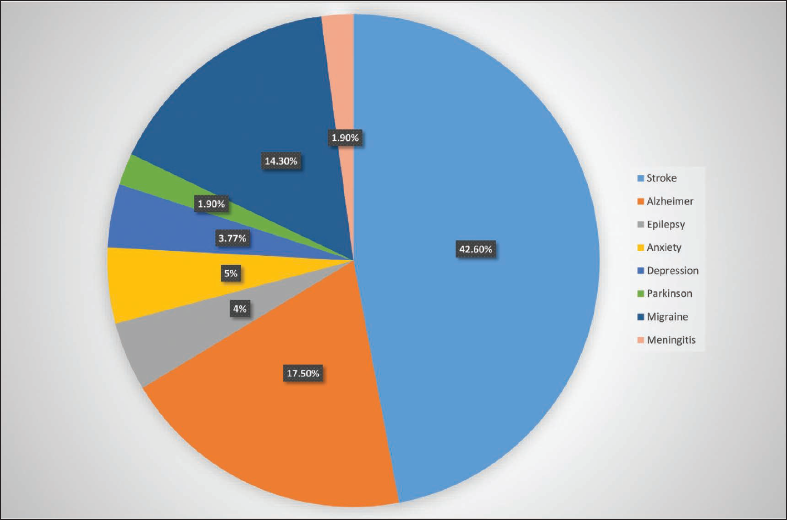
As per the survey report of 2021, WHO data revealed that the primary contributors to neurological illnesses included stroke (42.6%), Alzheimer’s disease (17.50%), migraine (14.3%), anxiety disorders (4.5%), epilepsy (4.1%), depression (3.4%), Parkinson’s disease (1.9%), and meningitis (1.9%) (Figure 1). The analysis indicates that globally, the total burden of disability, illness, and premature death due to neurological conditions, measured in disability-adjusted life years (DALYs), has risen by 18% over the past 31 years. This increase translates to a rise from approximately 375 million years of healthy life lost in 1990 to 443 million years in 2021 (GBD 2021 Nervous System Disorders Collaborators, 2024, pp. 344–381).
Epidemiological Distribution Graph of Neurological Disease Worldwide.
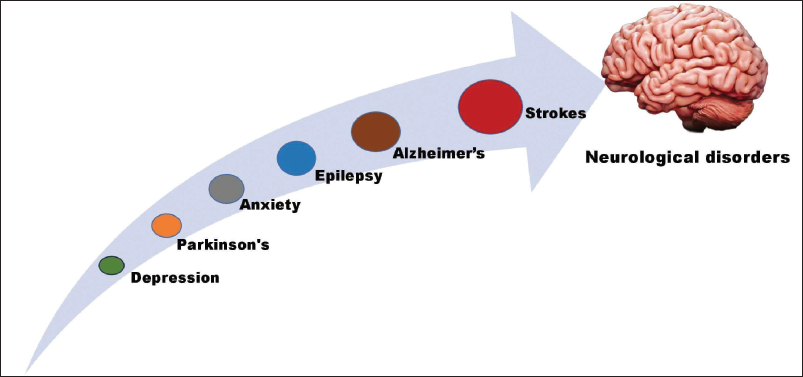
In India, the prevalence of neurological disorders has more than doubled over a span of 29 years (1990–2019), thereby affecting a substantial number of individuals, ranging from 967 to 4,070 cases per 100,000 populations, with an average of 2,394 cases. Multiple research studies have emphasized the notable factors contributing to the burden of such disorders in India in 2019, as measured by DALYs (Figure 2). These factors encompass stroke (37.9%), headache disorders (17.5%), epilepsy (11.3%), cerebral palsy, and encephalitis (5.3%) (India State-Level Disease Burden Initiative Neurological Disorders Collaborators, 2021, pp. e1129–e1144).
Types of Prevalent Neurological Diseases.
Methodology
The data on phytochemicals, identification of active compounds, pathophysiological studies of neurological diseases, clinical trials, and studies of neurological activities of 13 Indian Ficus species were extended by using various databases and search engines, for example, PhD thesis (unpublished data), Google Scholar, ResearchGate, monograph, reference book, SciFinder, PubMed/Medline, Scopus, and ScienceDirect from 2000 to 2024.
Treatment Approaches of Neurological Disorders by Modern Drug System and Herbal Drug System
Nowadays, the treatment of neurological disorders poses a significant challenge due to their inherent complexity. However, modern prototype drugs such as levodopa (used for Parkinsonism), donepezil (for Alzheimer’s), gabapentin (for epilepsy), interferon (for multiple sclerosis), and sumatriptan (for migraines) have been developed for addressing these conditions. It is worth noting that these drugs, while effective, come with a range of side effects, including nausea, dizziness, hallucinations, irregular heartbeats, peripheral edema, chills, muscle aches, redness, chest pain, and shortness of breath (Diener et al., 2003, pp. 1507–1524). Despite these drawbacks, nature has provided us with various medicinal plants that are extensively utilized to treat a wide array of diseases, including neurological complications. Some of these medicinal plants, such as Ginkgo biloba (for Alzheimer’s) (Singh et al., 2019, pp. 666–674), Curcuma longa (for Parkinsonism) (Ma & Guo, 2017, pp. 1799–1805), Passiflora incarnata (for anxiety), Withania somnifera (for depression), and Valeriana officinalis (as a sedative), have shown promise in addressing neurological conditions. However, it is essential to be aware that these herbal remedies may also have side effects, such as bleeding disorders, gastrointestinal discomfort, drowsiness, heartburn, nausea and vomiting, headaches, and potential liver toxicity (Cock, 2015, pp. 2–50).
Ficus, a predominant species found in Southeast Asian countries, has been identified as having medicinal properties that are effective in treating various diseases with fewer side effects and great structural diversity. These species are rich sources of polyphenols, flavonoids, and terpenes, particularly focusing on neurological complications. In this review, we delve into the chemical constituents of Ficus and their respective properties, demonstrating their potential efficacy in the treatment of diverse neurological disorders.
Description and Distribution of Ficus Species
The Moraceae family encompasses the Ficus genus, which comprises both deciduous and evergreen trees. Ficus, with its impressive 800 species and 2,000 varieties, is widely spread throughout tropical and subtropical regions (Deepa et al., 2018, pp. 210–232). Different parts of this plant, such as leaves, roots, barks, fruits, and latex, have a long history of traditional use for medicinal, dietary, decorative, and religious purposes (Donia et al., 2013).
The majority of Ficus species, which accounts for roughly 66% of all species globally, are concentrated in the Asian–Australian region. The highest diversity of this genus can be found in the Asian mainland (170 species), New Guinea (132 species), and Borneo (129 species). Ficus species exhibit a wide distribution across various biogeographic zones, primarily in lowland areas, but some can also be found at elevations of up to 2,000 m (Berg & Corner, 2005, pp. 1–702).
Around 115 taxa of Ficus species have been documented in India. They are dispersed across the entire country, extending from the southern to the northern regions, including the Himalayas, reaching altitudes of approximately 2,000 m. The northeastern region of India stands out as a hotspot due to its remarkable presence of around 43 Ficus species (Chaudhary et al., 2012, pp. 193–216).
The present review summarizes and discusses the updated knowledge of active constituents and neurological activities of 13 Indian Ficus species, but they have not been evaluated for their clinical research. No information is available in the literature about how these species showed a protective effect in neurological conditions. This review also provides some critical insights into current scientific knowledge of pharmacokinetic and pharmacodynamics profiles and its future potential in pharmaceutical research.
Studies Using Ficus Species in Alzheimer’s Disease
According to a literature review, researchers have identified that several Ficus species, including Ficus bengalensis, Ficus carica, Ficus erecta, and Ficus racemosa, have been used for the treatment of Alzheimer’s disease. Studies have demonstrated that the aqueous bark and aerial root extract of Ficus benghalensis possess notable antioxidant effects and acetylcholinesterase inhibitory effects for treating Alzheimer’s disease (Ramasamy et al., 2022, pp. 291–299). A study involving Swiss albino Wistar mice investigated the cognitive effects of the hexane extract of F. carica, finding that higher dosages led to significant behavioral improvements and enhanced learning outcomes (Vasundhara et al., 2013, pp. 109–113). Another study conducted on male Albino rats examined the effect of ethanolic extract of F. carica leaf extract on the hippocampus of aged rats that possess antioxidant, anti-inflammatory, and neuroprotective properties that ameliorate age-related diseases like Alzheimer’s disease (Zeair et al., 2024, p. 15). Additionally, the investigation of an ethanolic leaf extract derived from F. erecta on the aggregation of amyloid-β in mice indicated that the extract was associated with the activation of the CREB/BDNF signaling pathway and an increase in inflammatory cytokines, holding promise for the treatment of Alzheimer’s disease and related neurodegenerative conditions (Sohn et al., 2021, p. 607403). In a Wistar rat model, orally administered aqueous extract of F. racemosa bark significantly increased acetylcholine (Ach) levels in the hippocampi of the rats, with statistically significant implications for its memory-enhancing activity, which may be attributed to the inhibition of acetylcholinesterase (Ahmed et al., 2011, pp. 246–249).
Studies Using Ficus Species in Anxiety
The literature indicated that Ficus thonningii, F. benghalensis, F. carica, Ficus hispida, and Ficus sycomorus alleviate anxiety. In an animal study, ethanolic leaf extract of F. thonningii significantly reduced anxiety-related behaviors, such as stretch-attend posture and head dipping, and increased the frequency and duration of entries into the open arms of the elevated plus maze test, indicating a strong anxiolytic effect (Wadioni et al., 2019, pp. 121–127). Similarly, oral administration of aqueous extract from F. benghalensis aerial roots demonstrated anxiolytic effects in mice assessed via the Open Field Test (Panday et al., 2016, p. 429). Research on F. carica using the elevated plus maze and staircase tests suggested that its aqueous acetonic extract enhances chloride channel opening through GABA receptors, highlighting its potential antianxiety mechanism (Bhanushali et al., 2014, pp. 89–96). Additionally, F. hispida leaf extracts showed anxiolytic effects in Swiss albino mice with corticosterone-induced anxiety (Sivaraman et al., 2012, pp. 467–471). Furthermore, F. sycomorus extract significantly elevated glutathione (GSH) content and reduced the levels of malondialdehyde (MDA) that indicated its neuroprotective and anxiolytic potential in stress-induced behavioral changes and oxidative stress in the rat (Foyet et al., 2017, p. 502).
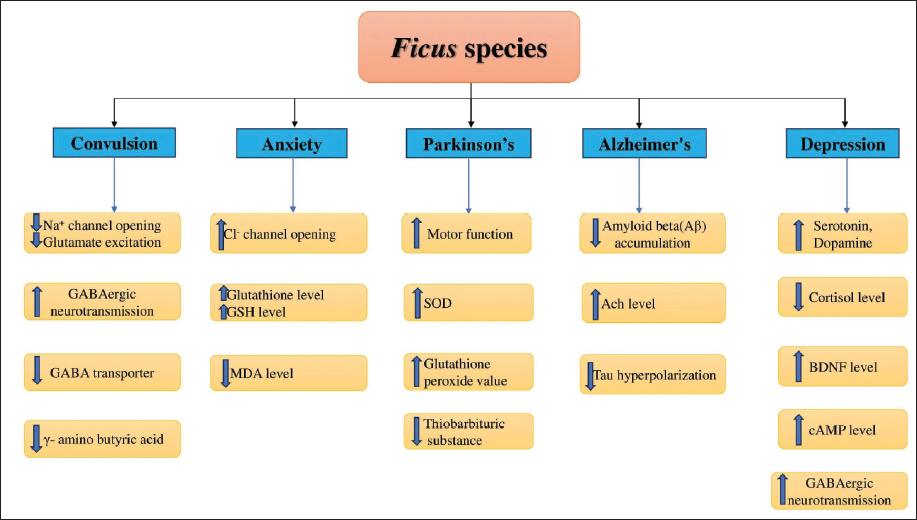
On the base of the available literature Ficus species showed anxiolytic properties by enhancing chloride channel opening, elevated GSH content, and reducing the MDA levels (Figure 3).
Scientific Evaluation of Ficus Species in Various Neurological Disorders and Their Tentative Mechanism.
Studies Using Ficus Species in Convulsion
A review of the existing literature highlights the use of various parts of Ficus species in managing convulsions, including Ficus abutilifolia, F. carica, F. hispida, Ficus platyphylla, F. racemosa, Ficus religiosa, F. sycomorus, and Ficus sur. For instance, the aqueous ethanolic extract of F. abutilifolia showed 40% protection against maximal electric shock-induced seizures in chicks (Danmalam et al., 2012, pp. 234–237). Similarly, the aqueous extract of F. carica fruit exhibited notable effects by inhibiting voltage-dependent Na+ channels and blocking NMDA receptor-mediated glutaminergic excitation (Bhat et al., 2022, pp. 162–165) (Figure 3). F. racemosa bark and methanolic extract of F. hispida altered the GABAergic and glycinergic pathways to show anticonvulsant activity (Chavan et al., 2021). F. platyphylla extract showed central depressant effects and protection against strychnine-induced seizures (Bum et al., 2009). The zinc-rich aqueous root extract of F. religiosa demonstrated anticonvulsant properties by modulating glycine receptors and GABA transporters (Patil et al., 2011, pp. 92–96). F. sycomorus bark extract protected against pentylenetetrazole-induced seizures (Sandabe et al., 2003, pp. 103–110) and F. sur extract exhibited significant anticonvulsant effects, likely involving multiple neurotransmitter pathways (Ishola et al., 2013, pp. 1287–1294).
These findings underscore the potential of Ficus species in developing novel anticonvulsant therapies primarily by enhancing GABAegic neurotransmission and reducing the expression of GABA transporter, as shown in Figure 3.
Studies Using Ficus Species in Depression
The previous literature revealed the use of notable species of Ficus like F. benghalensis, F. carica, and Ficus elastic in curing depression. In a study by Malik et al. (2020), the methanolic extract of F. benghalensis showed significant antidepressant potential. Additionally, in vivo studies of ethanolic extract of F. carica fruits proved antidepressant, anxiolytic, and stress-relief effects at different doses (Gul et al., 2018). Further research involving the administration of aqueous, methanol, and chloroform extracts of Ficus elastica in mice demonstrated potent antidepressant activities in the forced swim test and tail suspension test, as well as anxiolytic activity in the elevated plus maze test and rotarod activity (Koley et al., 2023, pp. 1–10).
Based on these findings, Ficus species exhibit antidepressant activity by modulating levels of cortisol, serotonin, and dopamine (Figure 3). Also, it regulates IL-1β, IL-6, and TNF-α expressions, inhibits pro-inflammatory cytokine expression and NF-κB signaling, and decreases NLRP3 inflammasome activation (Liu et al., 2017, pp. 128–134).
Studies Using Ficus Species in Parkinson’s Disease
The existing literature revealed that various components derived from F. religiosa, Ficus exasperata, and Ficus deltoidea have been employed in the management of Parkinson’s disease. According to Bhangale and Acharya (2016, p. 9436106), the administration of petroleum ether extracts of F. religiosa leaves suppressed disease-related symptoms like cataleptic scores, muscle stiffness, and locomotor activity when compared with marketed medications in rats. Furthermore, the neurorestorative and motor function ameliorating efficacy of saponins-rich fraction of F. exasperata was explored by Adekeye et al. (2020, pp. 183–193) in a vanadium-induced Parkinson mice model. Another study on diabetic rats revealed that oral administration of F. deltoidea leaf extract significantly increased the superoxide dismutase (SOD) and glutathione peroxidase (GPx) values, while notably decreasing oxidative stress (Figure 3). Therefore, a simultaneous enhancement of cortical gyrification, spatial learning, and memory performance was observed (Gautam et al., 2015, pp. 331–339; Nurdiana et al., 2018, pp. 190–202).
According to available literature, Ficus species have been shown to aid in Parkinson’s disease treatment by increasing Park2 mRNA levels and reducing Lrrk2 mRNA levels, protecting dopaminergic PC12 cells and safeguarding dopaminergic neurons by activating the ER-mediated signaling pathway (Elmazoglu et al., 2020, pp. 96–103; Siddique et al., 2021, pp. 198–206).
Common Flavonoids, Polyphenols, and Triterpenoids Present in Ficus Species
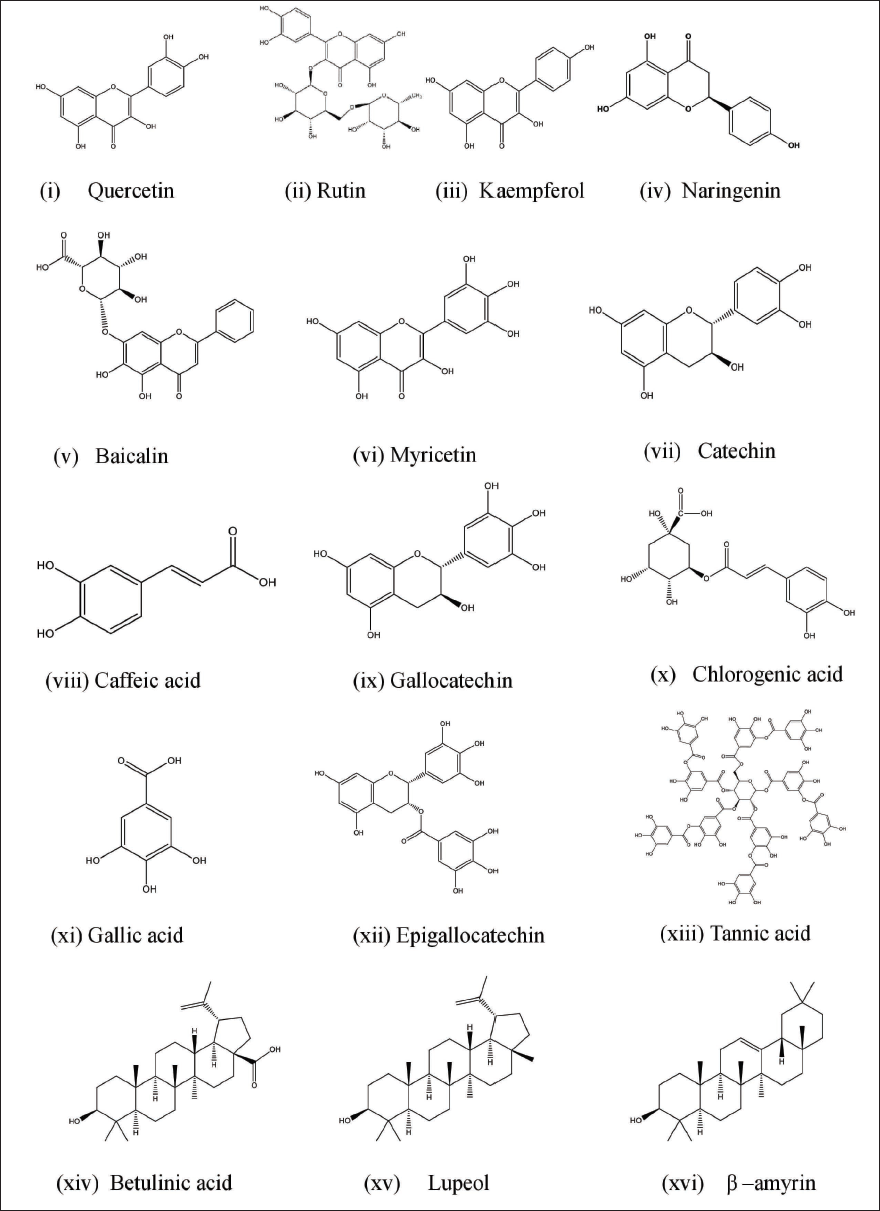
Structures of some common flavonoids, polyphenols, and triterpenoids isolated from different Ficus species have been compiled in Figure 4.
Structure of Some Common Compounds Present in Different Ficus Species.
Pharmacokinetic Profile of Common Phytoconstituents Present in Ficus Species
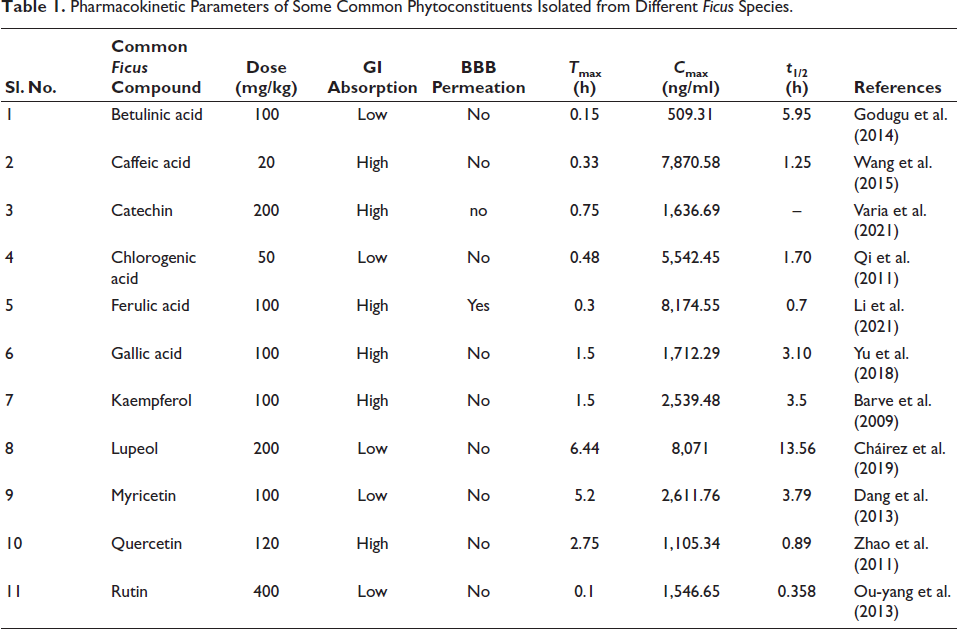
Pharmacokinetic data of common phytoconstituents present in Ficus species demonstrate their absorption, distribution, metabolism, and excretion (ADME) characteristics with the help of an extensive literature survey and using the SwissADME online tool (Table 1). This profiling is essential for understanding the therapeutic potential, safety, and clinical of these phytoconstituents. Moreover, this information will also help to establish their efficacy and toxicity profiles, thereby guiding their rational use in traditional and modern medicine.
Pharmacokinetic Parameters of Some Common Phytoconstituents Isolated from Different Ficus Species.
Effect of Phytoconstituents from Ficus Species on Neurological Activities
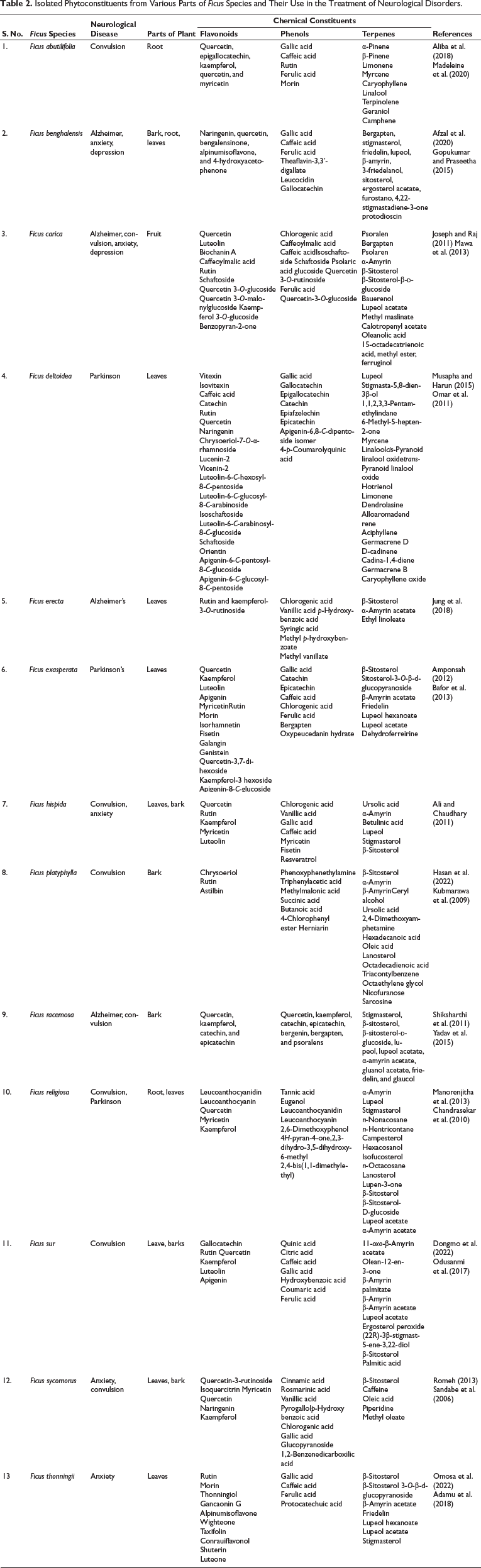
The different neurological activities that are treated by different chemical constituents obtained from various Ficus species have been enumerated and compiled in Table 2.
Isolated Phytoconstituents from Various Parts of Ficus Species and Their Use in the Treatment of Neurological Disorders.
Conclusion
Ficus species are widely distributed throughout the world, and approximately all parts of the plant are used in folklore medicine. There is currently a worldwide increase in interest in herbal remedies, as well as increased laboratory research into the pharmacological properties of bioactive components and their ability to treat various disorders. Recent studies have highlighted the ability of pharmacologically relevant constituents of Ficus species to treat neurological disorders. Hence, this review provides a scientific basis for further studies in association with developing effective neurological drugs from plant sources, especially Ficus species.
Abbreviations
Ach: Acetylcholine; ADME: Absorption, distribution, metabolism, and excretion; BDNF: Brain-derived neurotrophic factor; CREB: Cyclic AMP response element-binding protein; DALYs: Disability-adjusted life years; GABA: Gamma-aminobutyric acid; GPx: Glutathione peroxidase; IL-1β: Interleukin-1β; IL-6: Interleukin-6; iNOS: Inducible-NO synthase; L-DOPA: Levo dihydroxyphenylalanine; Lrrk2: Leucine rich repeat kinase 2; MDA: Malondialdehyde; NLRP3: Nucleotide-binding domain; leucine-rich-containing family, pyrin domain-containing-3; NMDA: N-methyl-
Footnotes
Acknowledgments
The authors would like to acknowledge the Department of Pharmaceutical Sciences & Technology, Birla Institute of Technology, Mesra, Ranchi, India.
Declaration of Conflict of Interests
The authors declared no potential conflicts of interest with respect to the research, authorship, and/or publication of this article.
Ethical Approval and Informed Consent
Not applicable.
Funding
The authors received no financial support for the research, authorship, and/or publication of this article.
