




Abstract
Medicago sativa is the “Father of all herbs” or “King of Herbs,” and Panax ginseng is the “‘Man root” or “Herb for all healings.” Individually, both have copious numbers of phytochemicals and nutrients like flavonoids, saponins, ginsenosides, vitamins, minerals, protein, and so on, and this has already been proven by many scientific studies. This comprehensive review aims to provide an overview of the potential health benefits of M. sativa and P. ginseng as herbs for complete wellness. The review also compares the nutritional profiles of these two herbs and discusses the potential synergistic effects of combining them with some existing scientific evidence. The review highlights the need for further research to validate the efficacy of these herbs as a magical combination for complete wellness and recommends precautions for potential side effects and dosage considerations. Several studies suggest that individually, each herb has various similar clinical significances, like immunomodulating properties, anti-inflammatory properties, antioxidant properties, improved cognitive function, and so on. But in combination, they may show synergistic effects like improved energy and endurance, immune boosters, and cognitive functions. After studying various articles, it is fair to say that both herbs may be considered complete health tonics for complete wellness. Due to limitations and gaps in the current scientific literature, the findings of this review may contribute to further clinical trials and validation of these herbs for improved wellness.
Introduction
In contemporary society, medicinal plants are essential since they provide a healthy, sustainable way of life. These plants offer a rich source of therapeutic chemicals, which are increasingly in demand as people look for alternatives to synthetic pharmaceuticals. Their value comes from their capacity to treat a wide range of illnesses with the fewest possible side effects. From traditional remedies to modern herbal medicine, medicinal plants offer a comprehensive approach to well-being, improving both physical and mental health. Medicago sativa and Panax ginseng are two potent medicinal plants with a long history of use. M. sativa, also known as the “father of all medicinal plants,” has been valued for centuries for its numerous health benefits (Putnam & Orloff, 2014). Its leaves are renowned for being nutrient-dense in vitamins, minerals, and antioxidants, boosting good cholesterol levels, and supporting general well-being (Al-Snafi et al., 2021). P. ginseng, commonly referred to as Asian ginseng, is renowned for its adaptogenic properties. It has been used in traditional medicine to fight fatigue, improve cognitive function, and foster physical endurance. Additionally, it is also believed to strengthen the immune system, reduce stress, and improve overall vitality. The ginsenoside content of P. ginseng, which functions as a natural stimulant and supports numerous biological systems, is thought to be responsible for the herb’s therapeutic properties (Lee et al., 2019; Mehtaet al., 2021). M. sativa and P. ginseng are two examples of traditional medicine’s profound wisdom, providing holistic solutions for optimal wellness. The main purpose of this comprehensive review is to provide an in-depth analysis ofthe potential health benefits of M. sativa and P. ginseng as nature’s gift for improved wellness. The review aims to discuss the individual benefits of these herbs as well as explore the potential synergistic effects of combining them. The scope of the review includes a detailed examination of the phytochemical composition of both herbs, their traditional use in herbal medicine, and the most recent scientific evidence on their health benefits. Additionally, the review will discusspotential side effects, interactions with medications, and recommendations for safe and effective use. Overall, the review intends to provide a comprehensive and evidence-based understanding of M. sativa and P. ginseng as complete fitness and wellness providers, informing and guiding future research, clinical practice, and consumer choices.
While both M. sativa and P. ginseng are generally considered safe when consumed in moderate amounts, it is important to note that they may have potential side effects or interactions with certain medications. These precautions, side effects, and interactions will be further discussed in this review article. Overall, the potential health benefits of these herbs as complete health tonics provide an attractive option for those seeking natural remedies to improve overall wellness.
Medicago sativa
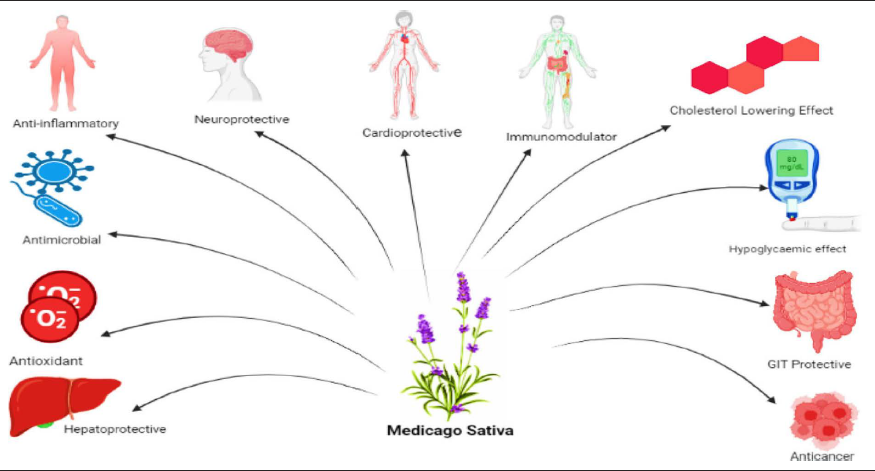
M. sativa, commonly known as alfalfa or lucerne, is a forage crop and perennial flowering plant that belongs to the legume family (Lee & Kim, 2014). M. sativa is believed to be native to Central Asia and the Middle East. It has been cultivated for thousands of years and has been introduced to many other parts of the world, including Europe, Africa, and the Americas. Today, it is widely cultivated as a forage crop for livestock feed, as well as for its medicinal properties and as a source of food for humans (Al-Snafi et al., 2021). M. sativa is rich in vitamins and minerals, including vitamin K, vitamin C, calcium, and magnesium. It also contains flavonoids and saponins, which have anti-inflammatory, antioxidant, and antidiabetic properties. As a health tonic, M. sativa has been found to potentially improve digestion, boost immunity, and reduce cholesterol levels (Bartram, 2013; Sharma, 2011). The pharmacological significance of M. sativa has been diagrammatically represented in Figure 1.
Description of Pharmacological Significances of Medicago sativa.
Phytochemicals and Nutritional Profile
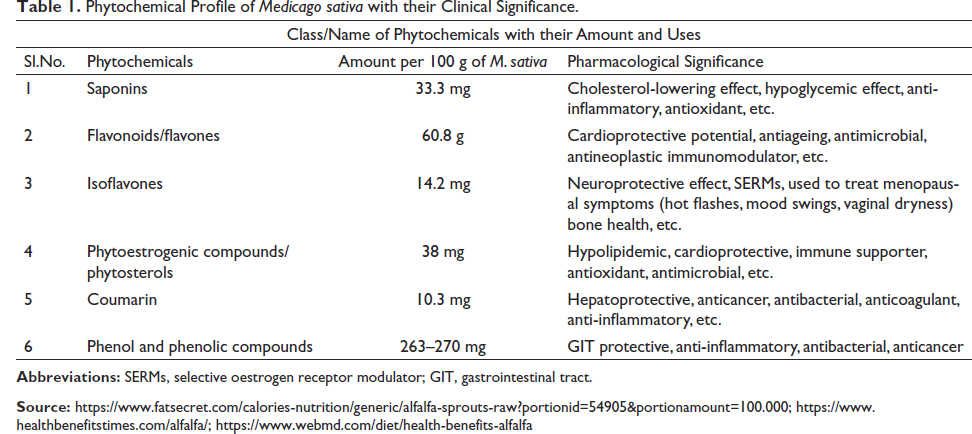
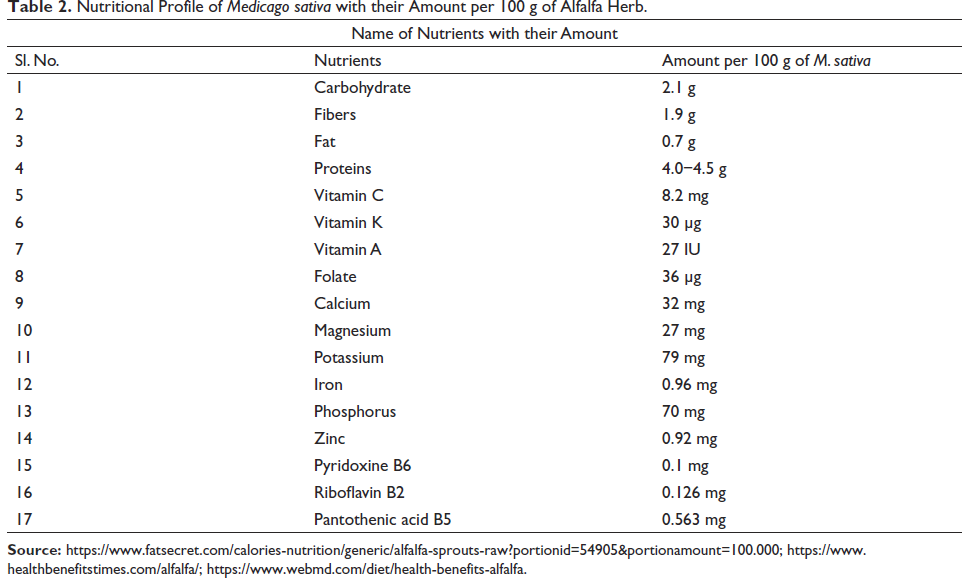
In terms of its nutritional profile, M. sativa is a rich source of vitamins, minerals, amino acids, and antioxidants (Jones, 2023). It is particularly high in vitamin K, vitamin C, and folate. It also contains significant amounts of magnesium, potassium, calcium, and iron. Additionally, M. sativa is a good source of dietary fibers, plant-based protein, and phytochemicals such as flavonoids, isoflavonoids, saponins, lignin, phytoestrogens like coumestrol, alkaloids, some phenolic compounds, and so on (Bora & Sharma, 2011b; Khaleel et al., 2005; Xie et al., 2019). One of the unique characteristics of M. sativa is its high chlorophyll content. Chlorophyll is a green pigment found in plants that is thought to have antioxidant and anti-inflammatory properties. M. sativa is also a source of other beneficial compounds such as coumestrol, which has been shown tohave anticancer properties, and saponins, which may have cholesterol-lowering effects (Al-Snafi et al., 2021; Bora & Sharma, 2011b; Raeeszadeh et al., 2022). It is important to note that the nutritional and phytochemical composition of M. sativa can vary depending on factors such as growing conditions, processing, and storage. Overall, M. sativa is a nutrient-dense herb that provides a range of health-promoting compounds. Its nutritional profile makes it a valuable addition to a healthy diet and a potential ingredient in health tonics. All the phytochemicals and nutritional composition with their amounts per 100 g of M. sativa are provided in Tables 1 and 2, respectively.
Phytochemical Profile of Medicago sativa with their Clinical Significance.
Nutritional Profile of Medicago sativa with their Amount per 100 g of Alfalfa Herb.
Potential Health Benefits of M. sativa
Cholesterol-lowering Properties
M. sativa, contains saponins that have the potential to lower cholesterol levels (Dixit & Jain, 1990; Mölgaard et al., 1987). A scientific study was published in a book called Indian Medicinal Plants, published by Springer-Verlag Berlin, clearly states that M. sativa has been reported to prevent hypercholesterolemia, triglyceridemia, and atherosclerosis in animal subjects (cholesterol-fed rabbit and cynomolgus monkey) and also states that saponin present in alfalfa decreases cholesterol absorption by the intestine in the rabbit. M. sativa is rich in dietary fiber, including soluble fiber. Soluble fiber can bind to cholesterol in the digestive system, preventing its absorption and facilitating its excretion from the body (Kelley et al., 1992; Khare, 2007). Saponins present in M. sativa can inhibit cholesterol synthesis in the liver and increase the excretion of bile acids, which are involved in cholesterol metabolism (Oakenfull, 2020).
Antioxidant Effects
M. sativa is also rich in antioxidants, including vitamins C and E and flavonoids. These compounds have been shown to neutralize free radicals in the body, reducing oxidative stress and protecting against cell damage that can contribute to chronic diseases (Al-Dosari, 2012; Xie et al., 2008; Zagórska-Dziok et al., 2020). M. sativa shows antioxidant effects by scavenging free radicals, inhibiting lipid peroxidation, and chelating metal ions, as well stimulating the activity of various endogenous antioxidant enzymes such as superoxide dismutase (SOD), catalase, and glutathione peroxidase (Boldaji et al., 2012; Raeeszadeh et al., 2022).
Anti-inflammatory Potential
M. sativa may have anti-inflammatory properties as well. In a study published in the Journal of Integrative Medicine, an extract of alfalfa was found to reduce inflammation in rat models. This suggests that M. sativa may have the potential as a natural remedy for inflammatory conditions in humans as well (Seddighfar et al., 2020). Phytochemicals like saponin and flavonoids in M. sativa inhibit the production and activity of pro-inflammatory mediators. These compounds can interfere with the synthesis of inflammatory molecules like prostaglandins, leukotrienes, and cytokines, which are involved in the initiation and progression of inflammatory responses. Also, M. sativa has been found to modulate various signaling pathways involved in inflammation, such as nuclear factor-kappa B and mitogen-activated protein kinase pathways (Wang et al., 2019). These pathways play crucial roles in regulating the expression of inflammatory genes and the production of inflammatory mediators. By interfering with these pathways, M. sativa can attenuate the inflammatory response (Choi et al., 2013; Wang et al., 2019).
Immune-boosting Properties
M. sativa contains a range of vitamins and minerals, including vitamins A, C, and E, as well as zinc, iron, and calcium. These nutrients are essential for immune function and may help to boost overall immune health (Rafińska et al., 2017).
It is also reported that M. sativa has a cerebroprotective effect against ischemia and reperfusion insults (Bora & Sharma, 2011a). And it also has cardioprotective potential due to its hypolipidemic effect (Dixit & Jain, 1990).
Panax ginseng
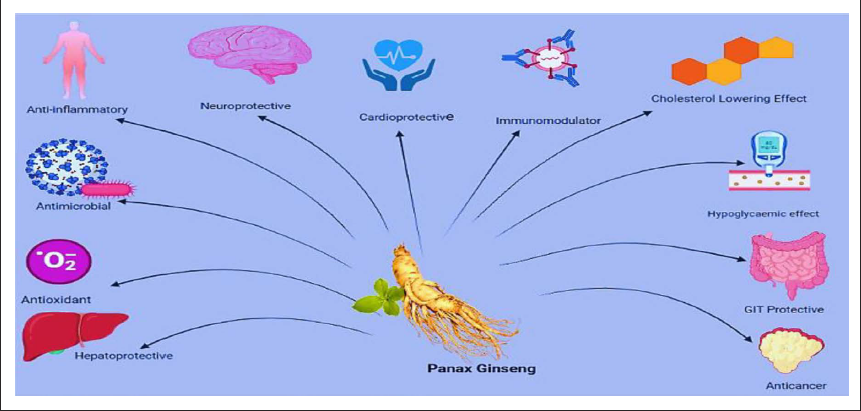
P. ginseng, commonly known as Asian ginseng, Chinese ginseng, or Korean ginseng, is also a perennial plant that belongs to the Araliaceae family (Ratan et al., 2021). P. ginseng is native to China, Korea, and Siberia and has been used for centuries in traditional medicine (Mehta et al., 2021). Ginseng is a very researched herb; there is a copious amount of data available in the Journal of Ginseng Research and other journals. It is widely recognized for its potential health benefits, including improving energy levels, cognitive function, and immune system function (Lee & Kim, 2014). The pharmacological significance of P. ginseng has been diagrammatically represented in Figure 2.
Description of Pharmacological Significances of Panax ginseng.
Phytochemicals and Nutritional Profile
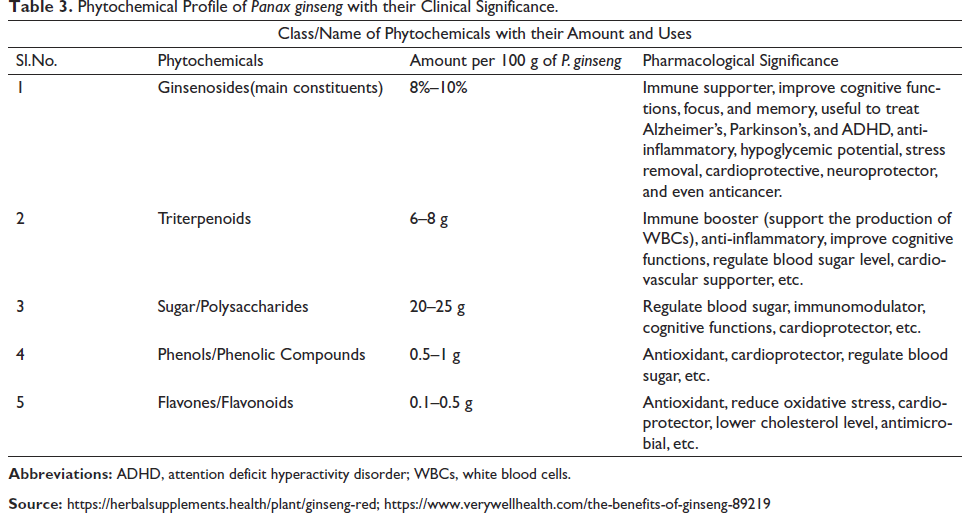
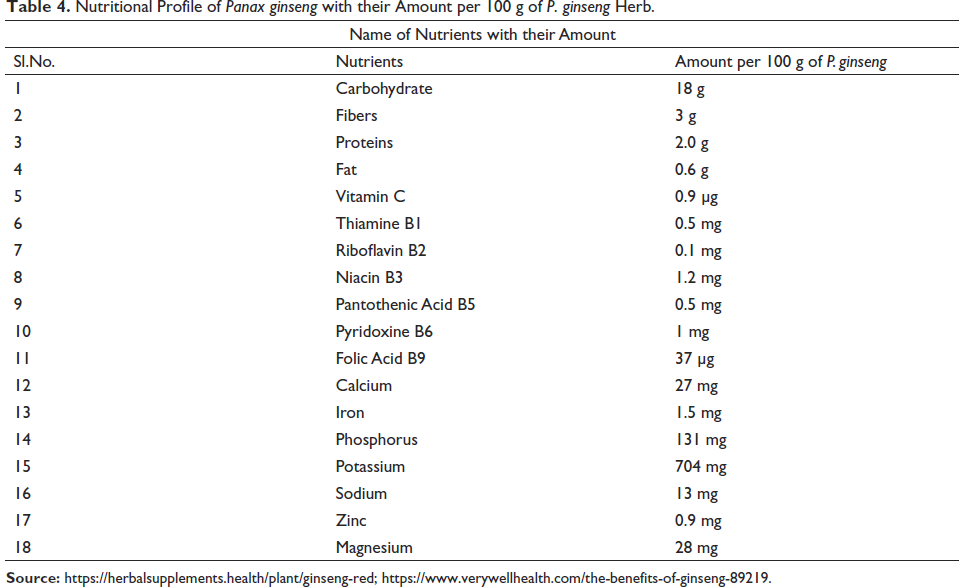
P. ginseng contains copious numbers of phytochemicals like ginsenosides, polysaccharides, flavonoids, and so on. Ginsenosides are the main chemical constituent of P. ginseng and exhibit antioxidant, anti-inflammatory, and even anticancer potential. Polysaccharides and flavonoids present in ginseng exhibit immunomodulating properties and may help to protect against oxidative stress (Kim, 2018; Mehta et al., 2021). In terms of its phytochemical and nutritional profile, P. ginseng is rich in vitamins and minerals like vitamins B1, B2, B12 and calcium, iron, potassium, and so on (Kang & Kim, 2016; Kim et al., 2018; Lee, et al., 2019; Lee & Kim, 2014; Mehta et al., 2021).
It is important to note that the phytochemical and nutritional composition of P. ginseng can vary depending on factors such as growing conditions, processing, and storage. All the phytochemicals and nutritional composition with their amounts per 100 g of P. ginseng are provided in Tables 3 and 4, respectively.
Phytochemical Profile of Panax ginseng with their Clinical Significance.
Nutritional Profile of Panax ginseng with their Amount per 100 g of P. ginseng Herb.
Potential Health Benefits of P. ginseng
P. ginseng is a popular health tonic known for its ability to improve overall health and well-being. Here is an overview of some of the potential health benefits of P. ginseng.
Boosts Immunity
P. ginseng has immune-boosting properties that can help improve the body’s natural defense system against infections and diseases. Studies have shown that ginseng can enhance the production of immune cells and increase the activity of natural killer cells, which are responsible for fighting off viruses and harmful bacteria (You et al., 2022).
Improves Cognitive Function
P. ginseng has been shown to improve cognitive function, including memory, attention, and focus. It is believed that ginsenosides, the active compounds in ginseng, help protect brain cells from damage, improve blood flow to the brain, and enhance neurotransmitter activity, resulting in improved cognitive function (Barnes et al., 2007; Khare, 2007).
Reduces Stress and Fatigue
P. ginseng has adaptogenic properties, which means it can help the body cope with stress and fatigue. Studies have shown that ginseng can help reduce stress levels, improve mood, and increase energy levels, making it a popular choice for people looking to boost their mental and physical performance (Hyun et al., 2022; Ratan, et al., 2021).
Enhances Physical Performance
P. ginseng has been shown to improve physical performance by increasing oxygen uptake and reducing fatigue. Studies have found that ginseng can increase endurance, improve recovery time, and reduce muscle damage following intense exercise (You et al., 2022; Kim et al., 2018).
Regulates Blood Sugar Levels
P. ginseng has been shown to help regulate blood sugar levels, making it a potentially useful herb for people with diabetes. Studies have found that ginseng can improve insulin sensitivity, reduce blood sugar levels, and lower the risk of complications associated with diabetes (Coon & Ernst, 2002; Kim, 2018). Oxidative stress can contribute to the development of insulin resistance and impaired glucose metabolism. P. ginseng possesses antioxidant properties, which can help reduce oxidative stress and potentially improve blood sugar control (El-Khayat et al., 2011; Lee & Kim, 2014).
In a study, it was also found that P. ginseng reduces oxidative stress and acts as a cardioprotector (Hyun et al., 2022; Kim, 2018).
Overall, P. ginseng is a promising health tonic that offers a wide range of potential health benefits, including boosting immunity, improving cognitive function, reducing stress and fatigue, enhancing physical performance, and regulating blood sugar levels.
Comparisons Between the Phytochemical and Nutritional Profile of M. sativa and P. ginseng
M. sativa, also known as alfalfa, is a plant that is commonly used as feed for livestock. It is also consumed by humans as a source of nutrients. P. ginseng, on the other hand, is a medicinal herb that is used for its health benefits. Here is the comparison between the nutritional profiles of these two plants based on the presence of macronutrients, vitamins, and minerals (Barnes et al., 2007; Boon & Smith, 2004; Khare, 2007; Mehta et al., 2021).
In terms of phytochemicals, both herbs contain unique phytochemicals, as M. sativa contains flavones, isoflavones, phenolic compounds, saponin, and so on, whereas P. ginseng contains ginsenosides as its main constituents and also contains flavonoids, polysaccharides, phenolic compounds, triterpenoids, and so on. Both have different phytochemicals, but various clinical significances are similar in both herbs, like antioxidant, anti-inflammatory, immune booster, cardio protector, and so on.
If the comparison is on the subject of macronutrients, then both have copious numbers of macromolecules like proteins, fibers, carbohydrates, amino acids, and so on. The presence of these macronutrients makes them an energy booster, endurance promoter, and immunomodulator.
Concerning the presence of vitamins, both have abundant numbers of vitamins. But M. sativa contains more vitamin C than ginseng. M. sativa is a good source of vitamin K, whereas vitamin K is not present in ginseng. So, M. sativa is richer in vitamins than ginseng.
In terms of minerals, M. sativa and P. ginseng are both excellent sources of minerals, but when we compare them, we can say that in the case of some minerals, M. sativa is richer than P. ginseng, and in the case of others, ginseng is richer than alfalfa. But both are good sources of minerals. A comparison between the phytochemical and nutritional profiles of M. sativa and P. ginseng has been graphically represented in Figures 3 and 4.
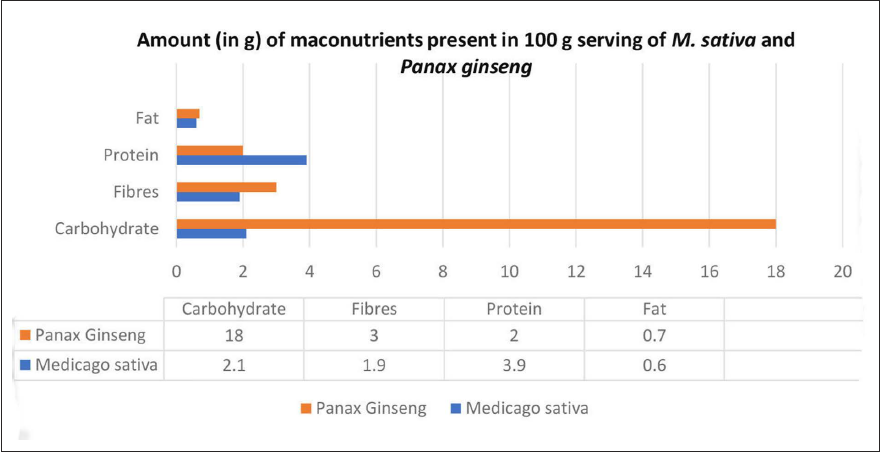
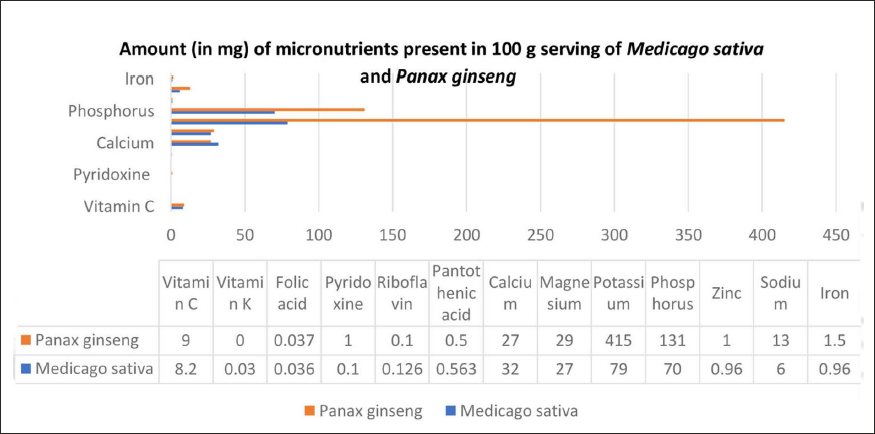
While both M. sativa and P. ginseng are good sources of nutrients and contain beneficial phytochemicals, they have different nutritional profiles. M. sativa is higher in protein and fiber, as well as vitamins K and C, while P. ginseng is higher in potassium, magnesium, and ginsenosides.
Discussion on Potential Synergistic Effects
However, there is limited evidence or studies to prove that M. sativa in combination with P. ginseng exhibits a synergistic effect, but there is also no evidence to prove that both of them interact negatively when used together. Various products are already available on the market in the form of syrup, malt, and so on, that contain alfalfa and ginseng as primary ingredients (Omeo Alfalfa with Ginseng, SBL Alfalfa Malt, Dr Reckeweg Alfalfa Tonic, Schwabe’s Alfalfa Tonic are some of these products). Several studies suggest that, individually, each herb has various similar clinical significances, like immunomodulating properties, anti-inflammatory properties, antioxidant properties, improved cognitive function, and so on.
Improved Energy and Endurance
Individually, both herbs improve physical performance, aerobic capacity, and cognitive functions. P. ginseng helps to enhance aerobic capacity and exercise performance in healthy individuals, and it is usually administered by gym freaks, athletes, sports persons, and various health-conscious individuals (Scaglione et al., 2005; Shergis et al., 2012). On the other side, M. sativa helps to boost exercise endurance and reduce the level of lactate and fatigue in individuals (Barnes et al., 2007; Page, 1997). Due to their similar effects on physical performance, there is no doubt that the combination of M. sativa and P. ginseng may enhance their effects on energy and endurance, potentially leading to improved physical performance.
Immune Support
M. sativa contains a range of antioxidants, including vitamins C and E, beta-carotene, and flavonoids, which can help to reduce inflammation and protect against oxidative damage (Al-Dosari, 2012; Raeeszadeh et al., 2022).
P. ginseng has also been shown to have immune-boosting effects. A few studies have been published in the Journal of Ginseng Research that found that P. ginseng supplementation improved immune function in healthy individuals (Kang & Min, 2012; Ratan et al., 2021). Combining M. sativa and P. ginseng may enhance their antioxidant and immune-boosting effects, potentially improving overall health and reducing the risk of chronic diseases.
Cognitive Function
M. sativa contains various phytochemicals like triterpene, saponin, choline, and so on, which are essential for brain function, including memory and cognitive processing (Bora & Sharma, 2011; Liu et al., 2019). A study published in the Journal of Food Biochemistry found that triterpene saponin found in M. sativa has a potential effect on the treatment of neurodegenerative diseases (Liu et al., 2019). P. ginseng has also been shown to improve cognitive function (Geng et al., 2010; Khare, 2007). A study published in Translational and Clinical Pharmacology found that P. ginseng supplementation improved cognitive performance in healthy adults as well as in individuals with cognitive impairment (Park et al., 2019). Combining M. sativa and P. ginseng may enhance their cognitive benefits, potentially improving mental clarity, focus, and memory retention.
In conclusion, while there is limited research specifically examining the potential synergistic effects of combining M. sativa and P. ginseng, there is scientific evidence to support the individual health benefits of each plant, which may suggest potential synergistic effects. However, it is important to consult with a healthcare professional before adding any new supplements or herbs to your health regimen, especially if you have any underlying health conditions or are taking medications.
Possible Side Effects, Precautions, and Interaction with Medications
The potential side effects of M. sativa and P. ginseng vary depending on the individual and the dose taken. Here are some of the most common side effects associated with these supplements:
Side Effects Associated with M. sativa
M. sativa herb should be avoided in cases of lupus because it has been reported that M. sativa can induce Systemic lupus erythematosus (SLE) like syndrome in a model of female monkey (Barnes et al., 2007; Malinow et al., 1981a). This type of side effect is associated with the presence of Canavanine, which is a structural analog to the amino acid arginine and a non-protein amino acid (Alcocer-Varela et al., 1985; Boon & Smith, 2004). M. sativa seed contains approximately 8.33 to 13.6 mg/kg of canavanine, and this amount is enough to be toxic to all species of animals due to the reduction or blocking of the binding of amino acids to their respective enzymes and their incorporation into proteins (Barnes et al., 2007).
There has been reported a condition called Pancytopenia in those who were taking M. sativa seed up to 80–160 g/day for cholesterol-lowering purposes (Malinow et al., 1981a).
There are some other side effects of M. sativa, such as photosensitivity (sunburn or any other skin reactions), digestive upset (bloating, mild dysentery, or diarrhea), and hypoglycemic effects.
Precautions
M. sativa herb or seed should not be used during pregnancy or lactation (Brinker & Stodart, 2001). Also avoid those who have any history of lupus or any family history of SLE (Barnes et al., 2007; Boon & Smith, 2004; Brinker & Stodart, 2001).
Side Effects Associated with P. ginseng
Scientific evidence related to the side effects of P. ginseng has been published in the Acta Psychiatrica Scandinavica Journal, which states that intake of P. ginseng may lead to manic symptoms. In this study, the author suggested that patients with an antidepressant condition should avoid ginseng administration because it can produce manic symptoms like insomnia, overstimulation, and so on (Vázquez & Agüera-Ortiz, 2002).
Various clinical trials have suggested that there are several side effects related to ginseng that are similar to those with placebo. The most commonly reported side effects are headaches, insomnia, and gastrointestinal tract-related disorders (Coon & Ernst, 2002).
In any case of gender or age, there are some case studies that have reported that potential side effects associated with P. ginseng are uterine bleeding, prolonged QT syndrome, gynecomastia, unwanted elevation in blood pressure, acute lobular hepatitis, and bradycardia during atrial fibrillation (Kim et al., 2008; Paik & Lee, 2015; Ratan et al., 2021; Seo et al., 2017).
Precautions
P. ginseng should not be taken by an individual who is nervous, tensed, hysteric, maniacal, or epileptic/schizophrenic (Kim et al., 2008).
Interactions with Medications
M. sativa may interact with certain medications, and it is important to speak with a healthcare professional before taking these supplements if you are taking any medications. Here are some of the potential interactions to be aware of: blood thinners, hormone replacement therapy, contraceptive medications (birth control pills), and antidiabetic medications (Barnes et al., 2007; Boon & Smith, 2004; Brinker & Stodart, 2001).
P. ginseng may also interact with some medications, and it is important to consult with a healthcare professional before using ginseng if you are on any therapy. Here are some medications that can interact with ginseng: anticoagulants like warfarin, antidiabetic drugs like metformin, and antihypertensive drugs (Cheng, 2005; Choi & Song, 2019).
Conclusion
M. sativa (alfalfa) and P. ginseng (ginseng) are two popular herbal supplements that have been traditionally used as complete health tonics. These supplements contain bioactive compounds that have been studied for their potential health benefits.
One of the potential benefits of M. sativa is its high nutrient content, including vitamins A, C, E, and K, as well as minerals like calcium, magnesium, and potassium. M. sativa may also contain bioactive compounds that offer antioxidant and anti-inflammatory effects, which may protect against chronic diseases such as heart disease and cancer.
P. ginseng, on the other hand, has been shown to improve cognitive function and may offer benefits for mental health. Studies suggest that ginseng may help improve focus, memory, and overall cognitive performance. P. ginseng may also offer benefits for the immune system, potentially helping to reduce the risk of infections and illnesses.
While both M. sativa and P. ginseng offer potential health benefits, it is important to note that they should not be usedas a substitute for medical treatment. It is also crucial tospeak with a healthcare professional before taking these supplements, especially if you have any underlying health conditions or are taking medication.
In summary, with proper usage and guidance, M. sativa and P. ginseng can be valuable additions to a healthy lifestyle and a well-balanced diet. Their potential benefits make them promising candidates for further research and exploration in the field of natural health and wellness.
Discussion of the Limitations and Gaps in the Current Scientific Literature
While there is some scientific literature on the potential health benefits of M. sativa and P. ginseng, there are also limitations and gaps in the current research that need to be addressed.
One limitation is the lack of standardization in the preparation and dosing of these supplements. The bioactive compounds in these supplements can vary widely depending on factors such as the species of plant used, the part of the plant used, and the method of preparation. This makes it difficult to compare results across studies and establish consistent dosing guidelines.
Another limitation is the relatively small number of human studies that have been conducted on these supplements. While there is some evidence to suggest that alfalfa and ginseng may offer potential health benefits, many of the studies have been conducted on animals or in vitro. More human studies are needed to better understand the effects of these supplements on human health and establish safe and effective dosages.
There are also gaps in the literature when it comes to the long-term safety of these supplements. While M. sativa and P. ginseng are generally considered safe when taken in recommended dosages, more research is needed to determine the potential risks of long-term use. This is especially important for people with underlying health conditions or who are taking medications that may interact with these supplements.
In conclusion, while there is some scientific literature on the potential health benefits of M. sativa and P. ginseng, there are also limitations and gaps in the current research that need to be addressed. Further research is needed to better understand the effects of these supplements on human health, establish consistent dosing guidelines, and determine their long-term safety.
Recommendations for Future Research and Clinical Trials
Based on the limitations and gaps in the current scientific literature on M. sativa and P. ginseng, there are several recommendations for future research and clinical trials.
Standardization of preparation and dosing: There is a need for standardized methods for the preparation and dosing of these supplements. This will help to ensure consistency across studies and enable more accurate comparisons of results.
Large-scale human studies: More large-scale human studies are needed to determine the potential health benefits of these supplements in humans. These studies should be well-designed, randomized, and placebo-controlled and should include diverse populations.
Long-term safety studies: While these supplements are generally considered safe, more research is needed to determine their long-term safety. This is especially important for people with underlying health conditions or who are taking medications that may interact with these supplements.
Mechanistic studies: Further research is needed to better understand the mechanisms of action of these supplements. This will help to identify the specific bioactive compounds responsible for their potential health benefits and how they work in the body.
Clinical trials for specific health conditions: There is a need for clinical trials to determine the efficacy of these supplements for specific health conditions, such as cognitive decline, immune system disorders, and inflammation.
Interactions with medications: Further research is needed to determine the potential interactions between these supplements and medications, especially for people who are taking multiple medications.
Finally, further research and clinical trials are needed to better understand the potential health benefits and risks of M. sativa and P. ginseng. Addressing the limitations and gaps in the current literature through standardization, large-scale human studies, long-term safety studies, mechanistic studies, clinical trials for specific health conditions, and interactions with medications will help to establish the safety and efficacy of these supplements for human health.
Abbreviations
M. sativa: Medicago sativa; P. ginseng: Panax ginseng; SERMs: selective oestrogen receptor modulator; GIT: gastrointestinal tract; IU: International unit; ADHD: attention deficit hyperactivity disorder; WBCs: white blood cells; SOD: superoxide dismutase; NF-Κb: nuclear factor-kappa B; MAPK: mitogen-activated protein kinase pathways.
Footnotes
Acknowledgments
The authors are thankful to their parents and the Dean and Director, School of Pharmacy, Graphic Era Hill University, Dehradun for providing support, guidance and valuable data.
Declaration of Conflicting Interests
The authors declared no potential conflicts of interest with respect to the research, authorship, and/or publication of this article.
Funding
The authors received no financial support for the research, authorship and/or publication of this article.
