




Abstract
The state of Gujarat, home to a vibrant network of dairy cooperatives, plays a significant role in milk production, accounting for 7.69% of the country’s total milk output. It ranked fifth in milk production among all Indian states and union territories in 2017–18. The state piloted a unique and specialised dairy extension program for dairy farmers through Dairy Vigyan Kendra (DVK) to promote dairy farming in its Panchmahal district. The DVK aimed to train rural dairy farmers and improve their socio-economic conditions. This study examines how DVK interventions increase the income from dairy, the herd size and milk production of the beneficiary farmers in the Panchmahal district. The result shows that farmers’ participation in DVK training increased their income from dairying. Further, the results highlighted that DVK intervention significantly increased milk production in the Panchmahal district. Our results conclude that the government can replicate the DVK training model in other districts of Gujarat, helping millions of dairy farmers enhance their skills and obtain more output and income from dairy farming.
Keywords
Introduction
Sustainable Development Goals (SDGs) of the United Nations (UN) give significant attention to sustainable agriculture, with SDG (2.4.1) entirely dedicated to this critical issue. Training and capacity building are integral parts of any business model, and the agriculture sector is no exception (Sunderland et al. 2019). In developing and emerging economies, Agriculture Extension Service (AES) is a national agenda (Knierim et al. 2015). AES aims to stimulate the farm sector by motivating farmers to adopt agricultural best practices and help rural households augment livelihood-centric activities (Llewellyn and Brown 2020). Training and capacity-building activities are an integral part of any AES program; they help farmers to learn and adopt good agricultural practices and new technology that helps them to become more productive and earn higher incomes.
Agricultural extension, one of the essential activities in the farming sector, aims to guide farmers and enhance their knowledge through training. In India, as part of its policy, various agencies work for AESs (Kumar et al. 2011). Krishi Vigyan Kendra (KVK), under the principles of the Indian Council of Agricultural Research (ICAR), aims to meet the training needs of Indian farmers. Similar to KVK, Agricultural Technology Management Agency (ATMA) in each district aims to provide converged services, including extension services, for knowledge acquisition on best practices and business models with technology adoption across many areas of agriculture, including dairying (Reddy and Swanson 2006). There is an indirect link between farmers’ awareness (via participation in AES activities) and behavioural change (adoption). According to Kolb’s experiential learning theory (ELT), an individual’s reflection on experience provides the required impetus to learning (Kolb 1984) and AES activities need to pursue this path for the farmers to internalise.
Dairying is one of the critical farm-centric activities in the agriculture sector globally and related interventions need continuous support through AES. Dairy Vigyan Kendra (DVK) was established as a pilot in the Panchmahal district of Gujarat to focus on dairy extension services. Majority of the population of the Panchmahal district is engaged in agricultural activities, including dairying for their livelihood. DVK implemented numerous dairy-related training programmes on various topics, including dairy technology, nutrition, animal health, production, reproduction and dairy management with the consideration that the dairy farmers would be inclined to adopt improved practices as per Kolb’s ELT. The primary aim of the DVK is to train predominantly tribal dairy farmers of various social hues and to improve their socio-economic conditions through enhancement in milk production and subsequent income augmentation. This programme provides hands-on field experience to farmers rather than just providing them with theoretical materials and lectures (Khalid and Sherzad 2019); thus, DVK training programmes provide a conducive platform for experiential learning. This study aims to examine the impact of DVK interventions in the Panchmahal District and mainly looks at its impact on farmers’ per capita income (PCI) and total milk production. The result confirms that milk productivity and dairy income increase due to farmers’ participation in DVK training.
The rest of the article is organised as follows: the second section reviews the literature on the impact of training and technology adoption on enhancing milk production and income from dairy. The third section discusses the study area. In the fourth section, research motivation and sampling strategy are discussed. In the fifth section, the research approach and methodology are discussed. The sixth section presents a descriptive analysis using the survey data. In the seventh section, we discuss the empirical findings. The eighth section analyses the Kolb’s framework-based contextual analysis. The ninth section discusses the study’s major findings, policy suggestions and limitations and the tenth section describes limitations and the way forward.
Literature Review
A few empirical studies show the impact of technology adoption and the role of dairy cooperatives in enhancing milk production and income from the dairy sector in the Indian context. Janssen and Swinnen (2019) examine the impact of technology adoption on the dairy chain in India. The study uses survey data from the following two states: Punjab and Andhra Pradesh and finds that technology adoption improves livestock, better feed and hygienic practices in both states. Kumar et al. (2018) examine the dairy cooperatives’ role in enhancing milk production in Bihar. They suggest that dairy cooperatives play an essential role in increasing milk production and the profit of marginal farmers. Alderman (1987) examines the dairy cooperative’s role in enhancing the dairy farmer’s socio-economic conditions in Karnataka. The results suggest that the dairy cooperative project’s intervention significantly increases household income and expenditure. Mahida et al. (2018) examine the dairy cooperative’s role in enhancing dairy farmers’ technical efficiency. The results suggest that the dairy cooperative is one of the important institutions for dairy development in Gujarat and also enhances farmers’ technical efficiency by providing information and technical support to the dairy farmer. Khode et al. (2021) used the propensity score matching technique to ascertain the effects of training on the knowledge, adoption and income of dairy farmers in Maharashtra. They found that trained dairy farmers had more knowledge and higher adoption of scientific dairy practices than non-trainee farmers. Trained farmers earned twice as much as non-trained farmers from dairy annually. Garai et al. (2017) used an ex-post-facto cause-to-effect research design to show a positive impact of extension interventions in improving knowledge, attitude and adoption of scientific dairy farming practices among dairy farmers of West Bengal. They also found significant improvements in milk production and income from dairying among beneficiary farmers.
Another set of studies shows that introducing technology has significantly increased milk production and household income from dairying. Mullins et al. (1996) examine the intervention of dairy technology on crop-livestock farms in rural Kenya. Results show that dairy technology intervention significantly increases milk consumption and women’s income from dairy production. Ahmed, Jabbar, and Ehui (2000) analyse the effect of the introduction of technology and improved feeding on household income in Ethiopia. The results suggest a positive relationship between the adoption of dairy technologies and household income, implying that household income increases due to the adoption of dairy technologies. Quddus (2012) examines the impact of adoption and non-adoption of dairy technology on high-yielding breeds. The results suggest that the adoption of dairy technologies by literate farmers is 10 per cent higher than that of illiterate farmers. Chagwiza, Muradian, and Ruben (2016) found that the membership of dairy cooperatives enhances dairy farmers’ income from dairying and overall milk production in Ethiopia. The results suggest that a better dairy corporative network simplifies the technological adoption of the dairy sector. Hennessy and Heanue (2012) use discrete choice models to show that farmer participation in extension activities like membership in discussion groups positively impacts technology adoption and profit level in Ireland. Marwa et al. (2020) showed that the use of ICT-based iCow services has increased annual milk production per cow, milk income and household income by 13%, 29% and 22%, respectively, in Kenya. Seble et al. (2020) highlighted that training on dairy husbandry increased milk production, the volume of milk processed and milk income by about 21.7%, 56.5% and 22.5%, respectively, among Ethiopian dairy farmers. Globally, the concept of farmer friend school is significant aiming to improve farmers’ potential through training (Braun and Duveskog 2011).
Dairy Development in India
The livestock sector contributes 25% of gross value added (GVA) in the agriculture sector; in the 11th five-year plan, this sector recorded an average growth of 4.8% per annum. This sector envisaged an average growth of 5%–6% in the 12th five-year plan. The dairy sector contributes significantly to the livestock sector, with 60%–70% in livestock GVA. As per NITI Aayog, total demand, including indirect milk use, will be 219.02 million kilolitres, and that for milk and milk products will be 220 million tons by 2033 (NITI Aayog 2018).
To improve farmers’ livelihoods associated with the dairy sector in India, the National Dairy Plan for Dairy Development proposed two goals for the year 2021–22, that is, (a) to increase milk production and (b) to double farmers’ income. It focuses primarily on building infrastructure, breeding animals and increasing the productivity of animals and the livestock population. It emphasises increasing milk coverage in the organised sector, which contributes a mere 20.8% of total milk production. It emphasises cooperative coverage and the organised private sector while raising producer company coverage and support for the dairy equipment manufacturing industry.
Dairy Vigyan Kendra
DVK aims to train dairy farmers from different areas of operation and improve their livelihoods and socio-economic status in Panchmahal district. The DVK is a relatively newer intervention, it organises specialised training programs and demonstrations for livestock farmers to popularise the use of the latest dairy technologies. Between 2012–13 and 2017–18, DVK, Vejalpur conducted 144 one-day and 70 three-day training sessions on various themes. Approximately 12,634 farmers have already participated in the training programmes. It is noted that approximately 39% of the farmers participating in the training represented the OBC category, reflecting the highest participation, followed by ST (29%), General (20%) and SC (12%). Over the period, training expenses increased from ₹ 3.92 lakh to ₹ 9.49 lakh between 2012 and 2018. Based on the activities of the DVK, this study aims to understand the importance of DVK in the rural areas of the Panchmahal district.
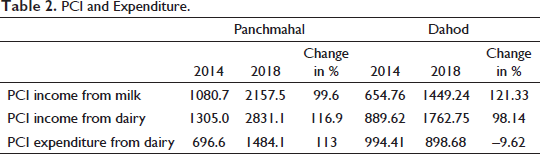
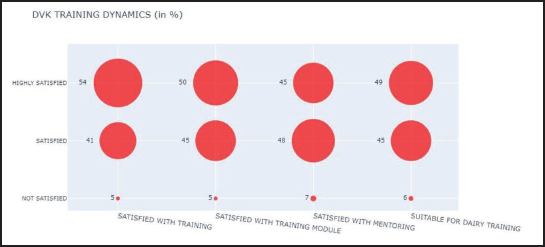
The data confirm that the monthly PCI of households increased in both districts. In the Panchmahal district, the percentage change in monthly PCI was higher than in the Dahod district due to DVK training. However, the monthly per capita consumption in the Dahod district is marginally higher than that of the Panchmahal district. Further data shows that dairy-related expenses rose for the Panchmahal district while they dipped for Dahod between 2014 and 2018. While the monthly PCI and income from agriculture and non-agriculture increased for various social categories, including General, OBC, SC and ST, the General category income percentage change was bigger than that of the OBC, SC and ST categories in the Panchmahal district. In 2018, the monthly PCI for the general category was the highest in the social categories, followed by OBC, ST and SC in the Panchmahal district. In the Dahod district, monthly PCI declined for the general and OBC categories. Also, non-agriculture incomes declined for the OBC category. However, for the SC and ST categories, the monthly PCI and income from agriculture and non-agriculture increased over the same period. From 2014 to 2018, per capita, dairy expenditure and employment increased in all social groups except for the OBC category in the Dahod district. Milk income and dairy expenditure in the Panchmahal district follow the same pattern, although milk income is higher in the ST category than in the SC, general and OBC categories. Moreover, the farmers trained under the programme are highly satisfied with the appropriate training modules.
The data show that the residents of both Panchmahal and Dahod districts have agriculture as their primary occupation, with about 40%–50% of the agricultural land under irrigation. In villages where dairy is an important occupation, fodder crops are widely grown for farmer-owned livestock. Dairy-related information and awareness among farmers increased significantly in 2018 compared to 2014. In both districts, dairy farmers’ level of confidence in dairy-related services provided by the Dairy Cooperative Society (DCS), the state government and the KVK is higher than that of the federation, NGOs and other organisations. In sum, we conclude that DVK intervention helps to increase the income of a dairy farmers in rural Panchmahal districts. The summary statistics of the data set confirm that the average age of the general category male in Panchmahal is higher than in Dahod. For OBC, SC and ST categories in Panchmahal, the average male age is lower than Dahod. Among female farmers, general, and SC’s average age in Panchmahal is lower than in Dahod. The average landholding of male farmers in the general, OBC and ST categories in Panchmahal is lower than in Dahod. Among females, the average landholding in the general, SC and ST categories in Panchmahal is higher than in Dahod.
Study Area
The study area included Panchmahal and Dahod districts. Each district has a KVK and ATMA. Besides, Panchmahal District Cooperative Milk Union (PDCMUL) serves the pooling and milk marketing for both districts and extends dairy farmer-centric services, including animal health care, feeding, breeding and member welfare. Panchmahal is situated in the northern part of Gujarat and has 513,800 hectares used for agriculture. According to the 2011 census, the total population is 23.9 lakhs, where the proportion of the scheduled caste population is 4.2%, and that of the scheduled tribes is about 30.2%. Agriculture is the primary livelihood source, with dairy farming following for the rural tribal population. Cattle wealth plays a pivotal role in the district’s rural economy, providing employment and alleviating rural poverty. According to the 2012 report of the 19th livestock census, there are 673,509 cows and 733,489 buffaloes in the Panchmahal district. The number of cooperative milk societies in Panchmahal, as of 2014–15, has been recorded as 1,434.
In the Dahod district, the household income is primarily from agriculture. It has 203,100 hectares of agricultural land. According to the 2011 census, the total district population is 2,127,086. The scheduled caste population comprises 1.95% and the scheduled tribe 74.32%, with more than 90% of the tribal population engaged in agriculture. After agriculture, dairy farming is the most lucrative occupation of the rural population.
Research Motivation and Sampling
Previous studies show that technology adoption and robust dairy cooperatives networks enhance milk production, feed and dairy income (Alderman 1987; Janssen and Swinnen 2019; Kumar et al. 2018). In addition, Khode et al. (2021) show that trained farmers earned twice as much as non-trained farmers from dairy farming. The mentioned studies highlighted that robust dairy cooperatives, training and technology adoption are essential for increasing milk productivity, income from dairy, better feed and improving livestock breeding. Mainly, in the rural parts of Gujarat, the livelihood of a landless, small and marginal farmer depends on the dairy sector. The local institution plays an essential role in empowering and enhancing their skill for better management of their dairy business. Therefore, training the dairy farmer is essential for better dairy farming in terms of increasing milk productivity and quality, feeding practices, cattle breed management and better technology adoption in the dairy sector. The local level institution, namely DVK, in the Panchmahal district, plays a vital role in boosting the socio-economic status of dairy farmers. The DVK organises extension activities like training, demonstrations, field days, group discussions, etc., which provide a conducive platform for farmers to engage in experiential learning. These activities improve farmers’ dairying-related skills, helping them adopt better technology and enhance their milk production and income from dairying. The Dahod district, however, does not have a DVK. The objective of this study is to examine how the DVK intervention helps improve the socio-economic status of beneficiary farmers of the Panchmahal district. In light of this objective, the study considered two research questions. First, it was to assess the effect of the DVK interventions on the PCI of the beneficiary farmers in the Panchmahal district and the second, it was to determine the effect of the DVK intervention on the herd size and milk production. Based on the author’s knowledge, no such empirical studies have examined how DVK interventions increase income, herd size and milk production in the rural Panchmahal district. For empirical analysis, we collect socio-economic data from 400 households in 40 villages in the Panchmahal and Dahod districts. Out of 400 samples, 200 were in the treatment group from Panchmahal and 200 from the control group from the Dahod district. The sample size included 10 households per 40 villages based on socio-economic criteria.
Methodology
For analytical purposes, we empirically examined the impact of DVK training on farmers’ income, taking into account household and individual covariates and technology adaptation in dairying. The income function for a farmer is presented as follows:

Here, i denotes the household, j the village, PCI is the change in the PCI of the i households in j village between 2018 and 2014, ‘tdvk’ is training provided by the DVK and is equal to 1 otherwise zero, and ‘hs’ denotes the herd size, tech = 1 if household adopts technology for milk production otherwise zero;
In this analysis, we also used a difference of means test to understand the significant difference between the control and treatment groups in the context of household socio-economic conditions. It is also used to test the equality (or difference) between the means of two samples. Based on the difference between the production, consumption and income from milk, herd size and food consumption expenditure between those households as follows:

Here,
Descriptive Analysis
Table 1 shows the PCI and expenditure of Panchmahal and Dahod over two time periods, 2014 and 2018. The total monthly PCI of households is the sum of PCI from agriculture and non-agriculture. In the Panchmahal districts monthly PCI of the households has increased from ₹ 2,550 in 2014 to ₹ 3,538 in 2018 with a percentage change close to 38.7%. Similarly, the monthly PCI from agriculture has increased from ₹ 1,541 to ₹ 1,949, with a percentage increase of 26.5% in the same period.
Average PCI and Expenditure of the Households.
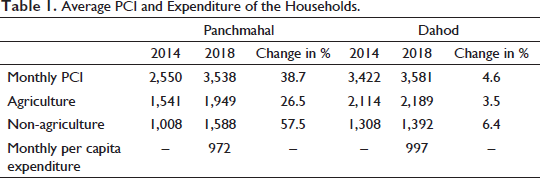
In the Dahod district, the households’ monthly PCI income increased marginally from ₹ 3,422 in 2014 to ₹ 3,581 in 2018, with a percentage change of around 4.6%. By contrast, in the same period, the monthly PCI from agriculture increased from ₹ 2,114 to ₹ 2,189. In 2018, the Panchmahal and Dahod districts’ monthly per capita consumption expenditures stood at ₹ 972 and ₹ 997, in that order. The data shows that the income of the dairy farmer households increased in Panchmahal districts compared to Dahod district as result of training provided by the DVK to Panchmahal farmers.
Table 2 shows the dairy households’ PCI and expenditure in Panchmahal and Dahod for 2014–18. The table shows that the PCI from milk in Dahod increased to ₹ 1,449 in 2018 from ₹ 655 in 2014, showcasing a percentage change of around 121%. On the other hand, the dairy PCI (comprising milk income, income from dung, cattle and value-added products, etc.) increased from ₹ 890 in 2014 to ₹ 1,763 in 2018. In this case, the percentage change in dairy income was 98.14%, which is lower than the change in milk PCI. The dairy per capita expenditure reduced from ₹ 994 in 2014 to ₹ 899 in 2018 by around 9%. In the Panchmahal district, PCI from milk increased from ₹ 1,081 to ₹ 2,158 between 2014 and 2018 (an increase of around 99%). The dairy PCI, too, increased significantly between 2014 and 2018 by nearly 117%. At the same time, per capita, dairy expenditure increased from ₹ 697 to ₹ 1,484 with a percentage change of around 113%. This contrasts sharply with Dahod, where per capita spending fell in 2018.
PCI and Expenditure.
Tables 3 and 4 show the total monthly PCI of different social categories of households in the Panchmahal and Dahod districts over two time periods 2014–18. The monthly PCI is the aggregate PCI from agriculture and non-agriculture. The PCI of all the social classes increased between 2014 and 2018 (see Table 3). However, the general category PCI of farmers in Panchmahal district showcased a maximum change of about 120%; the total monthly PCI increased from ₹ 1711.0 in 2014 to ₹ 3772.3 in 2018. The PCI from non-agricultural activities has increased almost four times between 2014 and 2018, by about 276%. This contributed in large part to the overall income of the general category. Similarly, for farmers in the SC category, the percentage increase in the total monthly PCI was quite marginal, and about 23%. This category’s agricultural income increase was minimal registering an increase of around 1.6% between 2014 and 2018. On the other hand, the non-agricultural income rise compounded registering an increase of approximately 75.5%. The income from agriculture in the ST category increased from ₹ 1486.00 to ₹ 1844.10, an increase of about 24%. The changing configuration of agricultural income in the ST category shows a higher rise compared to the SC category.
Household PCI by Category (Panchmahal District).

Household PCI by Category (Dahod District).

Likewise, the monthly PCI of both the general and OBC categories decreased for the Dahod district, while the PCI rose in the SC and ST categories over the period of 2014–18 (see Table 4). In the general category, PCI decreased from Rs 4953.30 in 2014 to ₹ 4364.30 in 2018, while the PCI declined in the OBC category, from ₹ 3919.60 to ₹ 3898.10. On one hand, the PCI declined in both the general and OBC categories whereas the PCI increased in both the SC and ST categories. Agricultural incomes spiked in all the categories except the general category. Similarly, income from non-agricultural activities increased in all the categories except for the OBC.
Tables 5 and 6 show the PCI of the social category, along with expenditure and incomes related to dairy activities in Dahod and Panchmahal districts over the period 2014–18. The general category in the Dahod district evinces the highest percentage change in milk incomes (see Table 5). The OBC, ST and SC follow suit with the last named evincing the lowest. Changes in income from dairy activities among social categories follow the same pattern. In per capita spending ST households spend more on dairy activities than other social categories, followed by SC and general categories. Interestingly, per capita, spending on dairy activities declined by 54% in the OBC category over the period 2014–18. In the Panchmahal district, income and expenditure for the social categories vary from those of the Dahod district (see Table 6). For example, ST households received more income from milk followed by the general, OBC and SC categories. General households received higher incomes from dairy activities compared to other social categories in the ST, OBC and SC households. In addition, expenditure for dairy activities increased for all household categories.
Household PCI-Dairy in Panchmahal District.

PCI-Dairy in Dahod District.

Apart from income and expenditures of the social categories, Table 7 describes the benefits received by the dairy farmers from the government over the last five years. Ration cards and bank accounts are the most popularly availed benefits from the government in the previous five years followed by the BPL card. Dairy farmers in Panchmahal districts availed more benefits from the MNREGA job cards compared to their counterparts in Dahod.
Benefits Received from the Government.
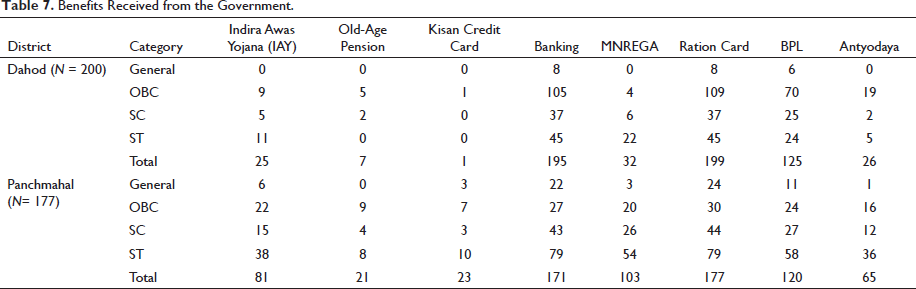
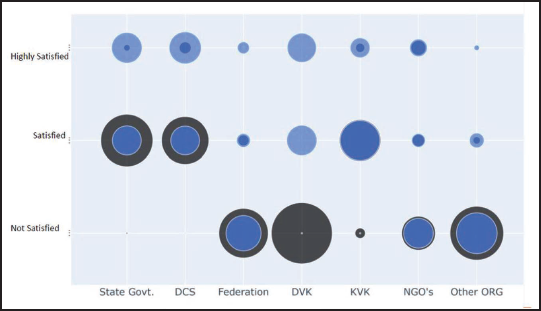
Figure 1 shows that over 93% of farmers are happy with the training programme organised by the Government of Gujarat under the stewardship of Anand Agricultural University (AAU). A larger percentage of the population is highly satisfied with the training and the training-related modules. The bubble size represents the percentage of dairy farmers satisfied with the training (the bigger the higher).
DVK Training Dynamics.
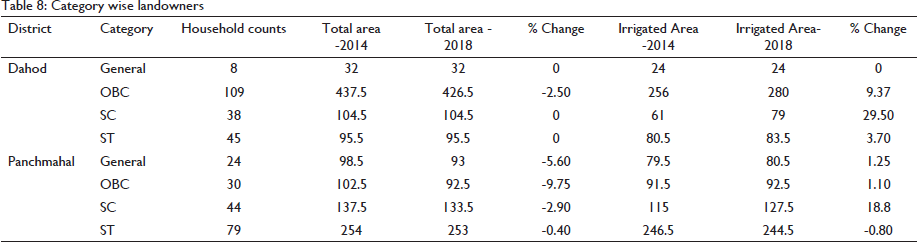
Apart from training programme organised DVK, Table 8 represents the ownership of agricultural land in the Panchmahal and Dahod districts based on social category. Based on the social category, total agricultural land ownership has declined while irrigated land ownership has increased somewhat. Similar trends have been observed for total agricultural land and total irrigated land. In Dahod, the total irrigated land in 2018 in the SC category was 280 bigha, which is approximately 60% of the total irrigated area. In Panchmahal, the ST category, which has a total irrigated land area of 245 bighas, covers about 45% of the total irrigated land.
Category wise landowners
Apart from land owned by different social categories, Figure 2 depicts dairy farmers’ satisfaction with government and non-government organisations. We asked the respondents how satisfied they were with services provided by the different institutions such as the state government, dairy cooperative societies, DVK and KVK. Those organisations provide services to dairy farmers. We measure these responses on three scales: very highly satisfied, some satisfied and no satisfied towards the institutions. In Figure 4, the bubble size denotes the percentages of members with a certain level of satisfaction in the different organisations. For instance, in both the Dahod and Panchmahal districts, farmers have been less satisfied with the NGOs and other organisations involved in dairy services. It further noted that the Panchmahal district dairy farmers had very highly satisfied with DVK, DCS and the state government for their services.
Respondent Satisfaction with the Services Provided by the Organisations.
Results and Analysis
In this section, we examine the impact of training on change in monthly PCI of individuals, taking into account other individual characteristics. The results are shown in Table 9. Model 1 shows that gender and age positively impacted change in the individual monthly PCI. Besides, the training provided by the DVK has significantly increased the monthly PCI of the individuals. Also, the PCI of the general and OBC categories is higher than the ST category. In contrast, the PCI of the SC category is lower than the ST category. Individuals with no educational background and those with primary education earned higher incomes than those with higher educational qualifications.
Effect of DVK Training on Change in PCI of the Households.
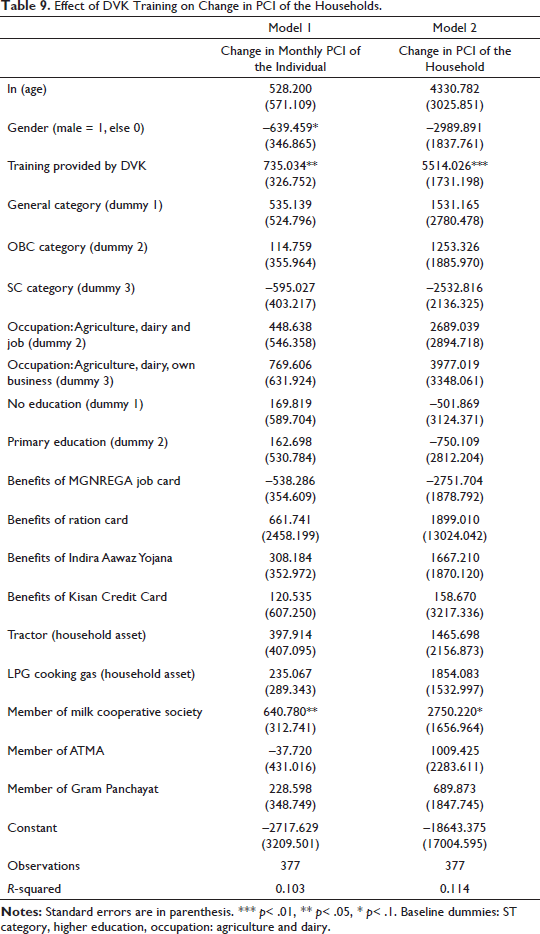
Similarly, farmers who are engaged in agriculture, dairying and self-owned businesses earned higher incomes. Benefits associated with MGNREGA jobs adversely affect the PCI of individuals while benefits received through government schemes (ration card, Indira Awaas Yojana [IAY], Kisan Credit Card) enhance the PCI. It was observed that the PCI of farmers who are members of a cooperative milk society and the Gram Panchayat increased as compared to the PCI of farmers affiliated with ATMA.
For robustness check, we considered Model 2 with the changed PCI of households instead of the PCI of individuals as the dependent variable and the estimated impact of DVK training on the PCI of households while controlling for socio-economic factors of the households. The results are shown in Model 2 of Table 9. The different specification of the dependent variable produces the same results. In sum, both models indicated a significant increase in the overall income of farmers with DVK intervention.
We estimated the mean test for five variables by considering the district as the group variable. The independent sample here is represented by Panchmahal and Dahod, where the 

The null hypothesis
The alternative hypothesis
From Table 10, it can be viewed that the calculated t-value for livestock, income from milk, and food consumption expenditure is statistically significant. This indicates that the difference in the means between Dahod and Panchmahal for these variables is significantly different from 0; we reject the null hypothesis and accept the alternative hypothesis thereby.
t-Statistics.
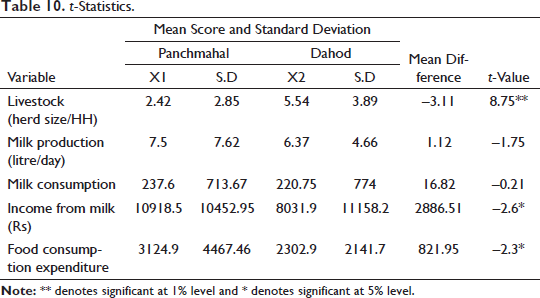
We can make a few inferences from the t-test results. Dahod and Panchmahal dairy farmers are affiliated with only one Union providing services to both for dairy extension, milk pricing, member welfare and animal husbandry. Both districts also have KVKs in place. The DVK intervention has brought a substantial rise in the milk income of dairy farming households in the Panchmahal district, which is higher than those of the Dahod district with farmers benefitting significantly from DVK’s services.
Based on the results, we discussed two hypotheses. Under the first hypothesis, DVK training significantly increases the overall PCI of the household. The results suggested that the current training curriculum was sufficient to boost the socio-economic conditions of the farmers. The t-test supported the argument to accept the second hypothesis that the herd size, milk income and food consumption expenses increase for Panchmahal district’s dairy farmers. The results indicate that the DVK intervention serves to augment the milk incomes of dairy farming households, who also acquire dairy-related facilities from other parallel bodies such as milk unions and other government schemes.
Kolb’s Framework-Based Contextual Analysis
Kolb’s framework advises four stages (Concrete Experience [CE]; Reflective Observation [RO]; Abstract Conceptualisation [AC]; and Abstract Experimentation [AE]) and four learning cycles (diverging; assimilating; converging; and accommodating) for an experiential learning process in the continuum. As per Kolb, the stage and cycle do not follow any sequence and could be initiated at any stage. With this understanding, it was noted that Kolb’s theory aptly applies to the context of the DVK framework adopted for dairy farmers. The dairy framers in the districts are already the recipients of intervention programmes of the NDP (through their respective cooperative societies), ATMA and KVK. The DVK team constituted by expert members and extension officers of the dairy science college of the agriculture university, having in-depth theory and practical exposure to dairy extension services, already knew the interventions, and they had the exposure to the issues to be addressed in stages of CE and RO. The intervention thus started at stage three (AC) by arguing that despite interventions of the NDP, ATMA and KVK, there was scope to provide the farmers with an intensive training programme on technology adoption through DVK and their income status before and after a timeline could reflect on the outcome. The dairy farmers are the recipient of the training through the DVK setup, and these farmers were invited in groups with adequate representation by age, gender and cattle holding in each group. The fourth stage, AE, was executed with pilot training programmes for these groups, keeping the farmers at the centre of learning through local language-driven content, case and situation-based analysis for technologies available and their use. This was followed by exposure visits to the technology centres to appreciate effective use. The pilot group was given the booklet to take home and to practice the tools demonstrated through experiential learning at the training centre by following the styles of Kolb’s framework. After successful piloting, other farmers were invited to attend in groups as per the plan. The piloted groups became the lead groups to share their experiences during training and field demonstrations.
As per Kolb’s stages and styles, it could be inferred that the DVK team had adequate CE and RO to infuse the technology adoption methods in the mindset of dairy farmers. This was possible through a better AC followed by AE. Regarding learning styles, the sequence began with empathising with dairy farmers’ needs and designing training templates, pedagogy, content and delivery schedules. Then converging cycle was challenging to demonstrate the key features of technologies and adoption techniques. Ultimately, the DVK team could help the farmers internalise the interventions.
Conclusion and Discussion
The DVK interventions play an important role in enhancing the economic condition of the dairy farmers in the Panchmahal district. The study examined how DVK training increases milk production, dairy income and herd size. The findings highlight that milk production and income earned from milk increase as a result of training provided by DVK in the Panchmahal district. In addition, income from the dairy of marginalised households (SC, ST and OBC) in the Panchmahal district is higher than in the Dahod district. The regression results indicate that the DVK’s training has impacted farmers’ overall well-being and improved their socio-economic status. Moreover, the interesting finding of the study is that household PCI increases if the household is a member of the milk cooperative society.
Apart from the regression results, this research also raised two questions to investigate if the Panchmahal district dairy farmers could have a better ecosystem due to DVK interventions. It was noted that farmers of both Dahod and Panchmahal districts displayed increased PCI, and there was no supporting hypothesis to confirm the effect of the DVK interventions. However, the answer to the second research question could establish better effects of the DVK intervention on herd size and milk production.
Based on the results, the policy implications of the study are as follows. First, the results provide empirical support to replicate the DVK model in other districts of Gujarat. Second, it gives impetus to strengthening partnerships between different service providers like DCS, DVK and research institutes, so that similar studies can be undertaken in the future. Lastly, the results have practical implications for those involved in designing and delivering training via institutions like DVK. We have the following suggestions for DVK; first, DVK restructures the training module according to the specific needs of different districts. Second, the training focuses on adopting the latest technology in livestock and dairying. Third, it encourages more women and youth to participate in the DVK training programme. Fourth, DVK can conduct training to cultivate fodder crops and create awareness about animal health and nutrition. Fourth, DVK can organise training related to animal health camps, conservation of indigenous livestock and adopting scientific animal husbandry practices. Finally, it should offer various training and awareness programmes for both men and women. From a broader perspective, these programmes should be designed for future planning and for improving the income and quality of life of rural people.
As regards policy implications, the DVK model provides huge scope for embedding it with the AES and related interventions dairy sector. Results from two adjacent districts showed the potential for scaling it up across the state of Gujarat and can be used pan India. With proper design by adopting Kolb’s framework, the approach can be used for other farm and non-farm sectors with convergence.
Limitations and Way Forward
A major limitation in this research work is the lack of a ‘baseline survey’. Besides, the DVK project is in pilot mode. In future work, there is scope for research on how DVK intervention could enhance dairy husbandry skills and the socio-economic conditions of beneficiary dairy farmers and converge with other agencies (KVK and ATMA) engaged in similar services and expertise (Compagnone and Simon 2018). Convergence is highly desirable in such endeavours. Future work provides the scope for more inclusive research to develop a model to predict training outcomes and the role of participating farmers in content design and delivery.
Footnotes
Acknowledgement
We thank anonymous reviewers for their valuable comments and suggestions to improve the manuscript.
Declaration of Conflicting Interests
The authors declared no potential conflicts of interest with respect to the research, authorship and/or publication of this article.
Funding
We thank Verghese Kurien Centre of Excellence (VKCoE) and Institute of Rural Management Anand (IRMA) for providing financial help for collecting households’ data and administrative support respectively.
