




Abstract
Local food entrepreneurship plays a vital role in promoting and distributing regional foods. To link local food with the market, there is a need to develop local food systems that promote and support local food, its distribution and consumption. Local food entrepreneurs are constrained due to various factors prevailing in the entire rural ecosystem, which hinders their prospects of business expansion. This study focussed on identifying the commercially feasible local food products that can be produced and marketed by local entrepreneurs. Also, this study is an effort towards identifying and analysing the challenges perceived by local food entrepreneurs in rural India. The challenges were identified through a literature review and the personal interviews of the rural entrepreneurs and were then modelled through the DEMATEL (decision-making trial and evaluation laboratory) approach. The modelling of challenges helped in identifying the priority areas, based on which focused strategies were suggested for the promotion of local food entrepreneurs. From this study, it emerged that product quality issues, lack of buyers and inconsistent government policies are the most significant challenges perceived by entrepreneurs. This study also includes resource mapping for the local entrepreneurs to present a comprehensive scenario of the prevailing ecosystem.
Introduction
India is a land of varied geographical features, a multitude of cultural and ethnic traditions and an extraordinary variety of local food. Local is a term utilised to explain the origin of food and is frequently connected with the development of a direct relationship between the consumer and the food manufacturer (Markuszewska et al. 2012). Local food may be termed as food that has travelled only short distances or food that is marketed directly by the producer (Feldmann and Hamm 2015). Unfortunately, most of the traditional knowledge related to the production of local food and the preparation of culinary dishes is confined to a specific region, town or village. The knowledge base is restricted to the population of that area leading to disadvantages like the population at large being unable to sample and appreciate the benefits of these traditional foods and also the producers of these exceptional food articles do not get their due in the form of recognition and revenue.
Local food systems are defined as the socio-economic-political system that encourages and assists the localised production, distribution and utilisation of local foods (Mars and Schau 2017). The majority of local foods are shrunk to the markets of their local area or village. The reasons behind this may be a lack of education, awareness and use of scientific methods; small produce which is neither sufficient for the external market nor able to provide sufficient income to the producer. Moreover, the absence of a well-developed streamlined system of agri-markets, including transport, storage and cold chain, also leads to a decline in the supply of local food products. But local food producers often have a small scale of business, which poses major challenges for them on the fronts of logistics, supplier and distributor integration (Bosona et al. 2013). A practical market assessment of the obstacles may help local food producers to overcome their hurdles and challenges. Improving the complete value chain by streamlining the processing and packaging of products, efficient delivery services, improved payment processes, assured markets etc., may support the growth of local food entrepreneurship (Boys and Fraser 2019). Local food entrepreneurs’ efficiency may increase in the financial aspect with scaling up of production, market outlets, ownership of land and better managerial capabilities to handle expenditures (Bauman, Thilmany, and Jablonski 2019). This study concentrated on identifying the challenges and major issues faced by the local food entrepreneurs in the villages of Sonipat district in Haryana, which restricts their efforts towards business expansion. Efforts were made to recognise people who are willing to start their food business/venture and understand the gaps in their existing value chain to come up with some coping strategies.
This study was carried out with the following objectives:
To identify commercially feasible local food products that can be produced and marketed by local entrepreneurs. To identify the major challenges perceived by local food entrepreneurs in the selected region. To suggest strategies to overcome the challenges.
The challenges were identified through personal interviews of the rural entrepreneurs and were modelled through the DEMATEL (decision-making trial and evaluation laboratory) approach. The modelling of challenges helped in identifying the priority areas, based on which focused strategies were suggested for the promotion of local food entrepreneurs.
Literature Review
A local food system is not simply a delineated geography or a flow of consumer goods from production to consumption, it is a natural and social network formed through common knowledge and understanding of particular places rooted in localities (Kremer and DeLiberty 2011). Enhanced clarity can decrease the risks of misunderstanding among different actors and promote local food system development and respond efficiently to consumer demands (Eriksen 2013). Mount (2012) emphasised three concepts: reconnection, direct exchange, shared goals and values and proposed that substitute identity and legitimacy are key components in ensuring extra value and long-term viability of local food systems. The scale of opportunities is matched by the scale of probable difficulties. The potential to reach a wider audience and effect change on a hefty scale is unquestionably appealing (Mount 2012). Coelho, Coelho, and Egerer (2018) concluded that the utilisation of local food, manufactured in ways adapted to the local environment and applying technologies with an ecological source, may be valuable for the environment, economy and society. Lang et al. (2014) concluded that consumers consider other definitional elements as vital as distance in their definitions of local foods. Velayudhan (2021) emphasised that rural markets help in influencing the economic behaviour of consumers by affecting their social structure. Lim and Wuyang (2013) also concluded that there persists a significant variation in the importance customers attach to ‘being local’ for varying food groups and these dissimilarities can be associated with alterations in customer demographics, this being very important for food producers, processors and retailers to know about the consumer’s point of view about local food to cover the diverse consumer groups and elevate profit. Pearson et al. (2011) emphasised that even if supermarkets are making their share big in providing local food items to consumers still many small retail outlets offered consumers an option, both in terms of product offering and shopping experience. Some of the small retailers focused on delivering local food to build their niche. Aprile, Caputo, and Nayga (2016) studied market segmentation investigation to deliver strategies to developing markets for farmers and small food entrepreneurs. This survey proposed a cluster solution based on various aspects demonstrating consumer attitudes towards local food consumption and suggesting that inclination to choose local food products mainly depends on food quality and ethnocentric behaviour. ‘The term “locavore” has emerged recently and refers to individuals who intentionally select locally produced food, to the fullest extent possible’ (Eriksen 2013).
Ratten and Dana (2015) concluded that the economic and social state of indigenous people has been a policy concern for local, state and national governments. Food entrepreneurs found significant outreach and triumph via social media tools which might be better than other paid advertising budgets (Kline, Shah, and Rubright 2014). Santhi and Kumar (2011) recognised an entrepreneur as a businessperson who not only creates and organises ventures but also often takes risks in doing so. The various challenges acknowledged by them were family, social and technological barriers, financial and policy challenges, problems in raising equal capital, difficulty in availing raw materials and increased pollution. Pindado and Sánchez (2017) focused on the analysis of the assets and capabilities, urge to take risks, innovativeness and legitimation affecting the entrepreneurial practice. One of the primary reasons for low income through agriculture-related activities for rural people is poor market linkages (Kumari, Bharti, and Tripathy 2021). Dobryagina (2019) suggested that non-hereditary entrepreneurs contribute more towards rural development than hereditary entrepreneurs (Maestre-Matos et al. 2021). Nemes et al. (2021) studied alternative and local food systems in 13 countries and concluded that boosting social innovation with the help of technological innovation will promote local food consumption at the time of this pandemic when supply chain systems have been badly affected. Toro et al. (2021) established that delivery and direct access between wholesalers and producers with the help of mobile apps facilitate better and faster services.
Kwil, Piwowar-Sulej, and Krzywonos (2020) did an extensive study of local food production and how entrepreneurship can be incorporated as a skill set for the development of this food industry at the local level. The local food sector has been applied as a successful strategy by many local communities for better sustainable growth and economic development. Rural market bases like farmer’s markets, community–assisted agriculture enterprises and hubs for food centres have made a considerable impact on the development of the local food sector with entrepreneurs rising to lead at the front (Deller, Lamie, and Stickel 2017; Sutradhar and Das 2020). Rural producers need strong forward and backward market linkages for getting themselves established (Rantšo and Makhobotloane 2020). The choice of producers for the market space depends on various institutional and channel-related parameters (Adams, Caesar, and Asafu-Adjaye 2021).
Literature states that there is a need to create awareness among rural masses to exploit the available resources by bringing them into the food chain (Ghosh and Ghosal 2021; Gill, Kausahal, and Sharma 2022). This may support enhancing customer acceptance and environmental sustainability. Linking agri-food farms with entrepreneurial initiatives leads to better commercialisation and approachability to local markets (Petrolo et al. 2022). Sen and Kansal (2019) proposed a value chain approach for sustainable planning of a niche crop (large cardamom) in the Indian Himalayas, they elucidated the value chain actor’s perspective on various reasons for the decline as well as possible strategies to improve the cardamom value chain. Along similar lines, Nosratabadi, Mosavi, and Lakner (2020) explained how a product is created and delivered to the final consumers, through a food value chain. Dung et al. (2020) explored how the entrepreneurial orientation (EO) of actors in an agri-food value chain helps procure knowledge and collaborative performance of the value chain. Wageli and Ulrich (2015) surveyed consumers’ perceptions and expectations of local organic food supply chains by focusing on feed origin. Pindado and Sánchez (2017) analysed differences existing between new and established agri-entrepreneurs as well as differences with their counterparts in non-agricultural ventures.
There are several more studies on rural entrepreneurship, their business models, challenges, etc. But there is a dearth of literature exploring challenges and business linkages for local food entrepreneurs in North India. This is where the need for this study arose, where the authors have tried to understand the dynamics of rural food entrepreneurs in North India and the challenges they perceive in expanding their business.
Theoretical Background
The concept of entrepreneurship has a strong theoretical foundation. The resource-based view and concept of EO, the theory of planned behaviour, learning theory and network theory, identity theory, the concept of entrepreneurial decision making and typologies of entrepreneurship have been widely adopted in entrepreneurial research and also in agriculture and rural entrepreneurship research specifically (Fitz-Koch et al. 2018). The agriculture sector provides ample scope for carrying out entrepreneurial research in the domain (Alsos et al. 2011). In this study, the opportunity-based view of entrepreneurship is related to the adoption of local food entrepreneurship by rural people. Previous researchers have related the field of agriculture with opportunity-based entrepreneurship and observed a strong association between the two (Alsos 2007; Alsos et al. 2011). Further, this study utilised the concept of a resource-based view of entrepreneurship to identify the resource mapping for rural entrepreneurs. The concept of entrepreneurial intention and the theory of planned behaviour of entrepreneurship define the base for data collection for this study, to understand the motivation for local food entrepreneurship.
Methodology
This study included the application of the DEMATEL approach and the resource availability mapping technique for analysing and presenting the information.
DEMATEL is an inclusive approach for identifying a causal relationship for a group of interrelated variables and supports interpreting the cause-and-effect interrelationship between the variables and is used prominently in literature in different domains (Lamba and Singh 2018; Wu 2008; Lin and Tzeng, 2009; Shieh Wu and Huang, 2010). The DEMATEL approach involves the following two steps:
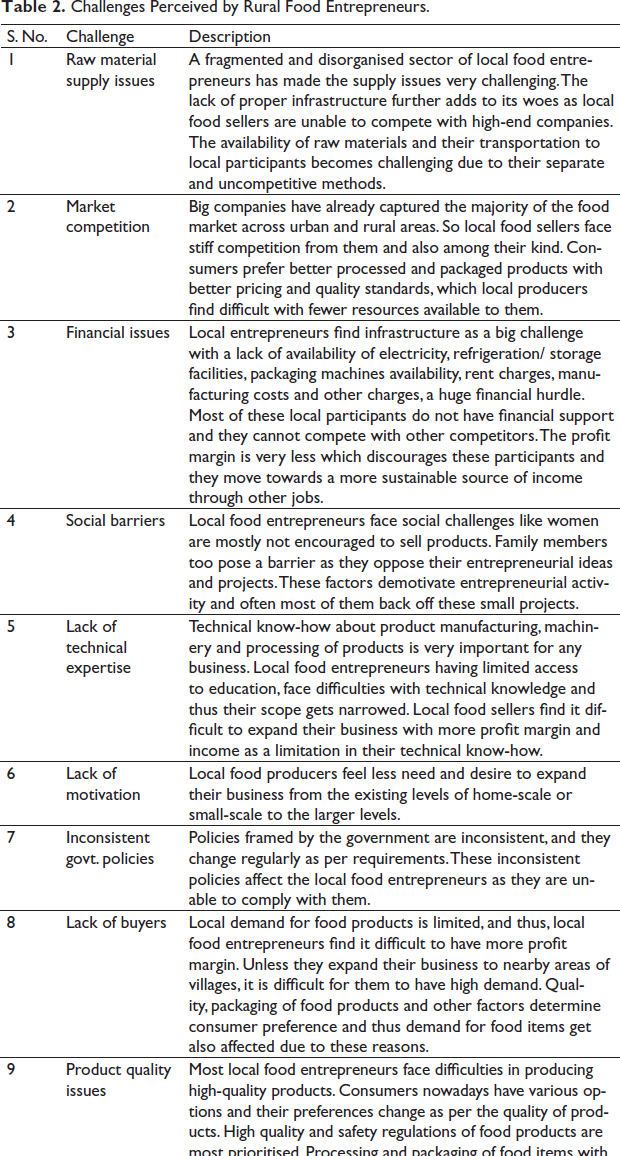
Variable identification: The variables perceived as challenges for local food entrepreneurs were identified from the literature review and personal interviews of respondents. The respondents were rural entrepreneurs engaged in local food production, in the Sonipat district of Haryana. To know the perceived challenges, the respondents were asked to respond to question number 15 of the semi-structured questionnaire placed as Annexure A as a supplementary file in this article. The detailed methodology of data collection and the respondents is mentioned under the subheading of variable modelling in this section. By following this procedure, in total, nine challenges emerged as the most significant and were considered for further analysis (which are mentioned in Table 2 in Subsection Major Challenges Perceived by Rural Food Entrepreneurs of Section ‘Result and Discussion’).
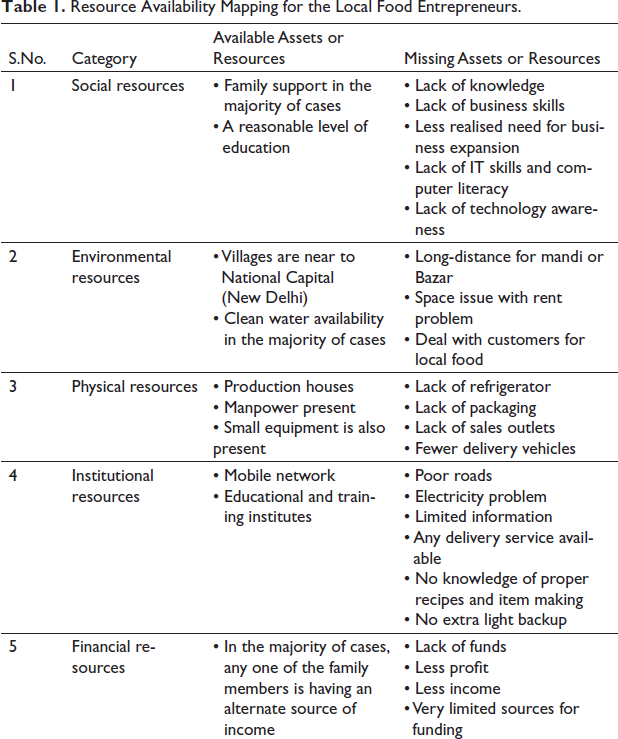
Resource Availability Mapping for the Local Food Entrepreneurs.
Challenges Perceived by Rural Food Entrepreneurs.
Variable modelling: To model the identified variables through the DEMATEL approach, the opinion of experts was required. For getting experts’ opinions, an online group meeting was arranged for seven experts on 20th November 2020. Among these experts, four were faculty members from the domain of entrepreneurship, two were researchers currently doing research in the domain of rural entrepreneurship and one was an active rural entrepreneur. These experts deliberated on the interrelationship between the different variables in the required format for developing the direct relation matrix for the DEMATEL approach. The detailed (step-by-step approach) for the DEMATEL approach is described in Annexure C.
For resource availability mapping, this study included primary data collection from the respondents through personal interviews with the help of semi-structured interviews. The primary data for the study was collected from participants engaged in making local food products in villages of the Sonipat district of Haryana. The data collection was carried out from October 2020 to April 2021. In total, 120 participants were interviewed in 20 villages in the Sonipat district. The research team went to the respective villages and approached the village sarpanch (head) as the first point of contact. From the village sarpanch, contact details were taken of the people who are producing any of the food items either for commercial purposes or for small-scale selling. Then those producers were approached and interviewed through a semi-structured questionnaire. Out of the total respondents, 45 respondents were producing and marketing local food products, and the rest of the 75 respondents were producing the food products only for their home consumption or for their relatives and neighbours and were not participating in any of the larger level marketing activities. The brief demographic details of the respondents and villages covered are placed in Table B1–B3 of Annexure B, respectively, which are provided as supplementary files with this article.
Results and Discussion
The major outcomes of the study are discussed in this section.
Commercially Feasible Local Food Products Produced and Marketed by Local Entrepreneurs
The survey was undertaken in the villages of Sonipat district and such entrepreneurs were approached who were either producing or marketing the local food products. The demography of the respondents portrays more count of male respondents and married ones, with family members ranging from 1 to 10 members. Most of the respondents started their business from 2016 to 2020. The entrepreneurs being small scale do not have more than 5 employees working under them. In total, 20 villages were surveyed in the Sonipat district. It was observed that the majority of rural producers were producing local foods only for their home consumption and were not selling their produce in any of the markets.
The major food products produced or marketed by the respondents are mentioned in Table B4 of Annexure B, which is provided as a supplementary file with this article.
Resource Availability Mapping for the Local Food Entrepreneurs
During the survey carried out under this project, and interactions with the rural people, it came on the front that the local entrepreneurs in these rural areas are being advantaged and disadvantaged due to several factors, which are categorised and described in Table 1 in the form of resource availability mapping. The respondent entrepreneurs shared the availability and scarcity status of the resources under the heads of social, environmental, physical, institutional and financial resources, which showcases the resource scenario at a glance.
Based on resource mapping for the local food entrepreneurs, this may be interpreted that resources are scarce with the entrepreneurs both at their end in the form of physical resources, financial resources and social resources. Further, the insufficiency of institutional and environmental resources also adds up to the problem.
Major Challenges Perceived by Rural Food Entrepreneurs
Based on the discussions with food entrepreneurs, various factors emerged, which were perceived as challenges by rural food entrepreneurs. The same is discussed in Table 2.
Modelling the Challenges through DEMATEL
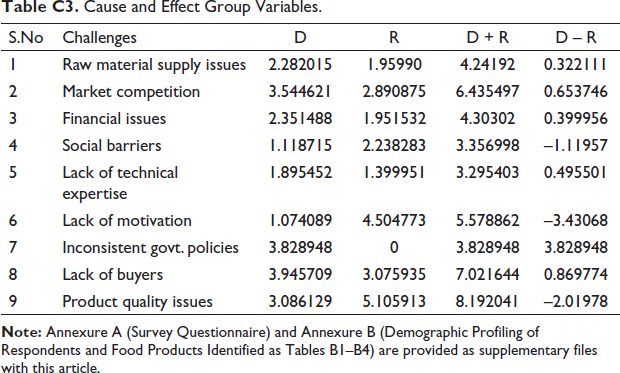
As mentioned in the methodology section, the DEMATEL approach was adopted in this study to get a contextual relationship between the identified challenges/variables. The detailed step-by-step process for the DEMATEL approach is described in Annexure C. As an outcome of DEMATEL, the proposed challenges got arranged as per their relevance and importance to the field under study as well as based on their respective (D + R) values. For each variable, the values of ‘D’ and ‘R’ were calculated, where ‘D’ shows the impact of that variable on other variables while ‘R’ shows the impact of other variables on that variable. Further, the sum of rows (D) and the sum of columns (R) were done, to identify the relative importance of the variable and the degree of relationship between the respective variable with all other variables (D + R) and the type of relationship is judged from values of (D – R). If the value of (D – R) is negative, this shows that the variable belongs to the effect group and if the value of (D – R) is positive, this shows that the variable belongs to the cause group. Accordingly, ‘Product quality issues’ got the highest (D + R) value, followed by ‘lack of buyers’. At the same time, the values of (D – R) being positive or negative, categorise the variables into ‘causal group’ or ‘effect group’. In this study, variables viz ‘inconsistent govt. policies’, ‘lack of buyers’, ‘market competition’, ‘lack of technical expertise’, ‘financial issues’ and ‘raw material supply issues’ with positive values of (D – R), got categorised into the ‘causal group’, whereas variables ‘lack of motivation’, ‘product quality issues’ and ‘social barriers’ with negative (D – R) values emerged as ‘effect group’ variables. The inferences received from the DEMATEL approach are further described in Table 3.
Inferences from DEMATEL Approach.
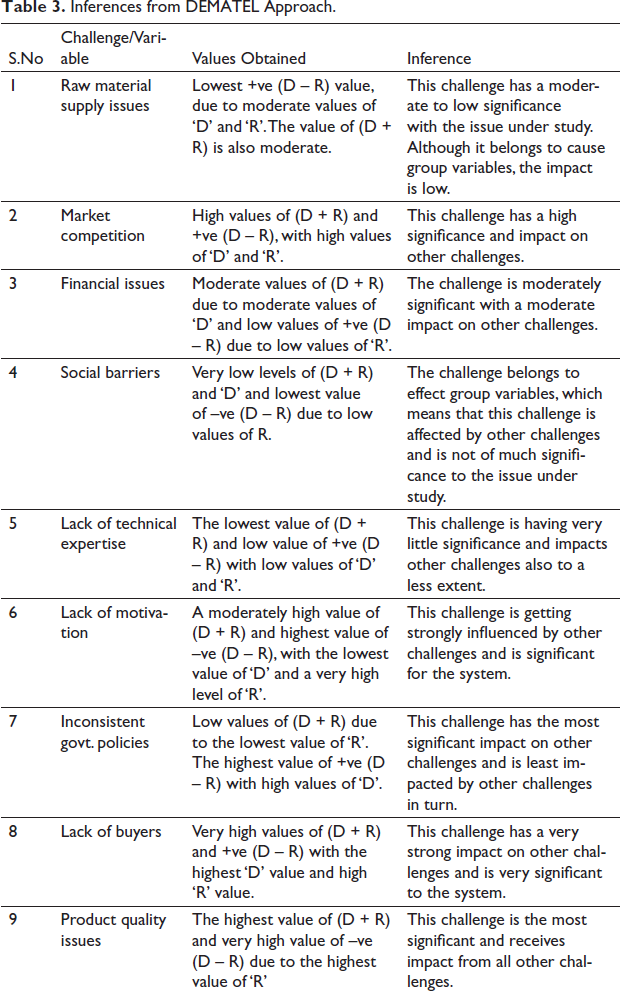
Therefore, this may be concluded that local food entrepreneurs find ‘product quality issues’ as the most significant challenge in promoting their products as compared to established brands in the market. The quality issues are impacted by other associated challenges. Similarly ‘lack of buyers’ is a matter of concern for local food entrepreneurs due to which there is a great hesitation in business expansion. Consumers trust branded products more than non-branded locally produced ones. Although people in the village buy the local food products, demand is not sufficient enough for business expansion decisions. On interviewing the entrepreneurs, it emerged that consumers in urban areas prefer to buy food products from organised retailers and established brands. The team collected information from urban consumers in the Sonipat district through a separate questionnaire and observed that ‘ease of buying and handling’, ‘availability’ and ‘trust for quality’ are the three major factors that impede consumers to prefer local food products over branded food products. Therefore, it becomes difficult for local food entrepreneurs to expand their businesses. Entrepreneurs perceive that ‘inconsistent government policies’ is also one of the major causes for other challenges in the promotion of their business and products. These challenges impact the ‘motivation’ of entrepreneurs from all spheres to continue and progress. Although other challenges like ‘lack of technical expertise, ‘social barriers’, ‘financial issues’, ‘market competition’ and ‘raw material supply issues’ are significant in one or other ways, still they can be managed and controlled if the other significant challenges may be dealt with efficieny.
Proposed Strategies for Addressing the Challenges
In this section of the study, a few of the strategies are proposed by the authors, which may be adopted to address the identified challenges. The same are discussed as follows:
Accessibility of resources: Access to resources will help local food entrepreneurs increase sales and also reach customers through better marketing strategies. They can collaborate with the different networks to access and target new markets where they can apply different mechanisms based on the range and number of local food entrepreneurs’ skill sets and products. A single point of contact can play a major role for local food producers to gain accessibility to larger volume markets like food service providers in public institutions. Price factor: Price is one of the major determinants, which decide the product preference of customers. Offering discounts and the variability of options for food products help attract customers. Consumers are price-sensitive to food products, and the rural market is mainly more aware of prices. Local food entrepreneurs need to consider these points to establish and expand their market. Government policies: Prices can be fixed for locally produced food products. Government can adopt policies to promote purchasing locally produced/prepared food for government-owned canteens in local areas. This will help the entrepreneurs to attract more customers and have more profit margin. Specific schemes can be adopted by the government to promote local food entrepreneurs like traditional food products, which are produced locally for tourists and travellers. Wholesale mandi: Specific locations can be made available for the setup of wholesale mandi for the sale of locally produced foods. This will help local food entrepreneurs to set up different stalls at allocated sites at the mandi showcasing their various products. Customers have various options available at the mandi and will be attracted towards it having their price, preference, quality and other factors. Financial provisions: Most business startups fail within a few years of setup, and the risk factors associated with finances play a major factor for any entrepreneur. Taking note of these factors, the government can promote new schemes to provide funds/loans to local food entrepreneurs without any interest, which will help them to meet their financial requirements to start their business venture. Various loan provisions by different banks and financial institutions can be availed for expanding their businesses. Machinery can be availed at special discounted rates by government schemes for local food entrepreneurs. Education and training: Educational and training programmes can be developed by the government to encourage local entrepreneurs to have a better understanding of the market, products, resources, machinery, marketing strategies, innovative ideas and solution to major challenges. Various training and educational facilities are provided by various institutes to local producers. Government can establish schemes in education and training in educational institutes across the country to develop more local food entrepreneurs. Various intermediaries: The supply chain system can be strengthened with proper coordination between various intermediaries such as producers, sellers and retailers. Community support can be used to promote their products. Cooperative structures for local food entrepreneurs can help out to overcome their challenges like finances, access to raw materials and supply of finished products. They can gain advice and benefits from sharing ownership and having control over activities which will add to their added benefits.
Practical Implications
This study highlights the importance of improved product quality for improving the consumer focus on local food. Product quality largely depends on fair-quality raw materials. But raw material availability becomes a challenge for local participants and along with it, a lack of proper know-how about the different variety of available resources makes them uncompetitive in their field. Inefficiency to stand out in the competitive market makes the local participants more vulnerable as they lose the opportunity to avail basic resources for their food products. There is a need to capture consumer needs effectively. Local food entrepreneurs lack the basic facilities for competition in the market. Market analysis is the most important aspect of any business, which determines, the product range, quality, preferences of consumers, profit margin, demand and supply of the product. Innovative strategies like offers, promotions, advertisements, etc., for selling food products along with considering risk factors may enhance the demand for the local products. Most local food entrepreneurs are not able to attract consumers because of their poor marketing skills, lack of willingness to take risks and also technical know-how. Local food entrepreneurs lack basic skills for promoting their business, and it creates challenges for them to grow their business. The same point is highlighted by Dr Jones Mathew in his article in The Financial Express (Mathew 2020). The marketing of products requires advertisement for better sales and finances play an important role to promote the products to local consumers. Local food entrepreneurs face financial issues to promote their products, which make them vulnerable to market competition. The consumer always prefers products having good prices, which is affordable for them. Promotion is one of the most important strategies to attract consumers. Local food products are not well promoted in the market and thus fewer consumers buy products from them creating a challenge for the local food entrepreneurs. Consumers prefer high-quality food products with safety and health benefits. Local food entrepreneurs find it challenging to meet these requirements, and their products are rejected by the consumers. Some of the local entrepreneurs have permanent sales outlets but they even faced the same challenges like less space and hygiene. Consumers are more concerned about hygiene, quality and basic facilities. Lacking these things will eventually decrease the sales of their products. Better production/packaging with innovative techniques can increase the demand for their products but here majority lack to take the initiative to improve their existing production/packaging. Lack of proper education facilities like schools, and access to training facilities add to their woes. Most of the local food sellers are not educated and so not interested in taking a risk to make their business grow. Even though the government is trying to improve the basic infrastructure, a long road to improvement is needed. FSSAI along with state governments implemented various stricter rules and regulations for food products that need to be followed by food vendors and producers. Local participants face challenges in adhering to complicated regulations as they lack technological advancement to increase the product shelf life. Supply of finished goods becomes more challenging with a lack of cold chain storage and delayed transportation to nearby retail outlets. They get mostly confined to their local villages which reduces their chances to expand businesses. Multiple taxations by state and central government increase the taxes for the local food entrepreneurs. They find it difficult as financial challenges increase with all their manufacturing, processing and supply of finished products where at every stage taxes are regulated. Illiteracy, economic crisis, inadequate skills and intangible skills are a few of the obstacles identified in a recent report by the Data Science Foundation (Viswanathan 2021). Therefore, education and training will benefit the local food entrepreneurs to understand the market requirements and do research on customer preferences. Educational universities like NIFTEM (National Institute of Food Technology Entrepreneurship and Management), EDI (Entrepreneurship Development Institute) and other institutes can help food entrepreneurs to develop their basic knowledge, technical know-how and skill set to better their performance in their business. An organisation named Ruralfoodsindia is working in the direction of providing market linkages to rural food producer women in Maharashtra (Rurals Foods India n.d.). Similar initiatives are required in north India to promote rural food entrepreneurship. The role of government is critical in such a scenario where it can support required networking and capital allowance to entrepreneurs. Necessary support for resources in the form of manpower, material, machinery, money and market may also be provided by the government. On the other end, consumers need to be made aware of the benefits of local food, to create better market opportunities for entrepreneurs. Community support and a cooperative society developed by the local entrepreneurs can help them have basic suggestions and ideas from them to improve their networking along with the supply chain system.
Conclusion
This study aims towards identifying the major challenges perceived by local food entrepreneurs in the rural regions of the Sonipat district in Haryana. Through personal interviews, the responses were collected from rural entrepreneurs with the help of a semi-structured questionnaire. The perceived challenges were then modelled through the DEMATEL approach. This study includes the resource mapping for the local food entrepreneurs based on social resources, environmental resources, physical resources, institutional resources and financial resources. Through resource mapping, it was observed that entrepreneurs lack the motivation to expand their businesses or have some innovation to start something new. Social barriers prevail, which restrict the participation of women in business. Educated youths do not prefer to take risks and thus they take on jobs instead of startup businesses with an innovative approach to the food sector. Government policies need to be changed as people look forward to governmental support in finances and other market issues. The pandemic brought many salaried employees to start their businesses as many companies laid off employees for financial challenges. Out of necessity and in haste, many people started food startups without any proper and detailed planning. Based on the outcomes of the DEMATEL approach, it appeared that lack of product standardisation leads to product quality issues and invites a lack of trust from consumers. Consumers believe the branded and well-labelled products with consistent quality more as compared to the locally produced options, which lack consistent quality and branding. Due to all such reasons, the local food entrepreneurs need to cope with the issue of less number of buyers. Studying these factors, practical solutions have been suggested that will improve the local food sector. Focussing on consumer preferences, value addition along the supply chain has to be done to meet the demand. Collaboration among all the participants from consumers to the end suppliers needs to be efficient with strategic inputs of improving the system. It will enable more expansion of consumer reachability with assured quality of products and reduction of price to attract price-sensitive consumers. Education and training were found to be most effective for local food entrepreneurs to improve their business skills and tap the large potential of the consumer base. Educational institutes are playing a major role to facilitate local entrepreneurs to improve their business in the food sector. Governmental policies to support and motivate our youths to start their businesses is the hour’s need. Machinery, manpower, raw material, other resources and financial aid/ fund from the government will help the rural sector to develop in the food segment where large agricultural background forms the basic backbone of the country. Consumers need to be made aware of the benefits of local food.
Limitations and Future Research Directions
The study outcomes pave the way for future studies by extending the context and gathering more data. This study lacks in collecting primary data on a larger scale from the respondents and then analysing the data with the help of a statistical tool. Future research may therefore focus on applying statistical tools like structural equation modelling, logit regression, etc., for carrying out meaningful interpretations from the collected data. Consumer preferences towards local food items may also be focused upon to understand the market demand for the items.
Annexure C. DEMATEL Methodology
The stepwise methodology of DEMATEL is explained as follows:
For preparing the direct relation matrix, the pair-wise relationship between the identified variables (described in Table 2) is established, based on the opinion and comments of seven experts mentioned in the methodology section.
The list of challenges was provided to the experts and they were asked to assign values to the pair of variables on a scale of 0–4, where value ‘0’ means ‘no impact’ and ‘4’ means ‘extremely strong impact’ of one variable on another. Accordingly, a non-negative matrix (9 × 9) for nine variables is received for each expert. The values from all the experts were then averaged to get the direct relation matrix.
The formula followed for the same is as follows:
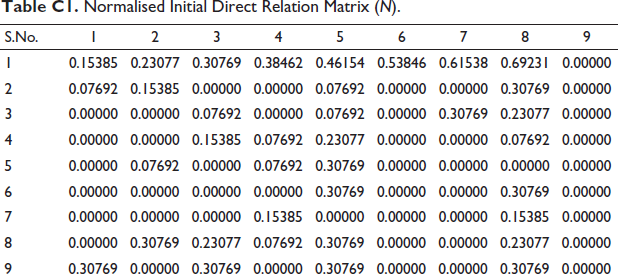
The normalised initial direct relation matrix (N) (Table C1) is obtained by normalising the initial direct relation matrix (M) by using the formula:
N = M/k
where k = max i,j
Normalised Initial Direct Relation Matrix (N).
The total relation matrix (T), which presents how one variable impacts the other variable, was obtained from the normalised matrix by the following formula:
T = N(I – N)–1, where I represent the identity matrix.
Total Relation Matrix (T).
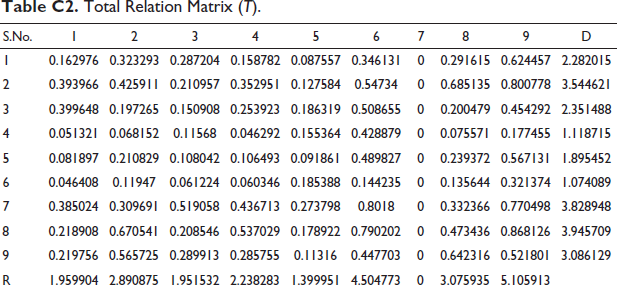
The obtained values of (D + R) and (D – R) are summarised in Table C3.
Cause and Effect Group Variables.
Footnotes
Acknowledgements
This study is an outcome of a research project funded by the National Institute of Food Technology Entrepreneurship and Management (NIFTEM), Kundli, Sonipat, Haryana 131028, India, and the authors are thankful to the institute.
Declaration of Conflicting Interests
The authors declared no potential conflicts of interest with respect to the research, authorship and/or publication of this article.
Funding
Financial assistance for this research was provided by National Institute of Food Technology Entrepreneurship and Management (NIFTEM), Kundli, Sonipat, Haryana 131028, India.
Supplemental Material
Supplemental Material

References
Supplementary Material
Please find the following supplemental material available below.
For Open Access articles published under a Creative Commons License, all supplemental material carries the same license as the article it is associated with.
For non-Open Access articles published, all supplemental material carries a non-exclusive license, and permission requests for re-use of supplemental material or any part of supplemental material shall be sent directly to the copyright owner as specified in the copyright notice associated with the article.
