




Abstract
This case examines the establishment of a small-scale business, Sindh Fruit Traders, owned by Mr Imtiaz and Mr Tehseen. The saturated local market condition is compelling them to look at export markets as means of expansion. The core challenges they face are identifying and selecting an appropriate export country and making the necessary preparations for the expansion. All these decisions have to be made before the next harvest season in July 2017.
This case describes in detail the dates business in Khairpur, Pakistan. It provides information about how an individual commences business at a small scale and then expands with time by learning the techniques of the business.
This case also explains the local trading of crops and traditional ways of conducting business in the date market of Khairpur and looks into ways in which research should be conducted to expand the business for exports. After discussion, the students will be able to understand the production and sales business of dates in general. More specifically, the students will understand how entrepreneurs are attracted to a business, what role research can play in making informed decisions, and the potential means to expand a local business into an international venture.
Discussion Questions
The case offers an opportunity to explore several themes and learning objectives. Some of the main areas that could be explored through this case are listed below. For an actual class, the instructor would need to identify a specific focus area.
Discussion Theme 1: Family Business/Entrepreneurship and Entrepreneurial Research
What are the possible reasons for an entrepreneur to start a business?
Can there be an influence of the family business on an entrepreneur’s (Imtiaz’s) personality?
What characters and behaviours should an entrepreneur possess?
Which option seems more feasible, B2B or B2C? and why?
Should Sindh Fruit Traders (SFT) opt for a research agency to further explore and understand international markets? Or should they initiate exports in India based on their intuition?
What type of research can be more helpful in such a scenario, descriptive or exploratory?
What type of demographic information will be helpful to SFT in order to make an informed decision?
Which data sources can be more helpful in this regard—secondary or primary?
Discussion Theme 2: International Trade
What is a trade agreement, and how is it beneficial to a country?
What information should the new exporters look for before exporting to any country?
How can exporters use macroeconomic variables to assess the potential of a country?
If you were in Imtiaz’s place, which country would you choose? Justify.
What necessary preparations will you recommend to Imtiaz before exporting to India?
On 1 March 2017, Mr Imtiaz Ali Memon, co-owner of SFT and a contractor of edible dates in the market of Khairpur, Sindh, Pakistan, sat with his cousin and business partner Mr Tahseen Ahmed and contemplated whether they should continue to expand their business of getting date farm contracts and trading in the local Khairpur fruit market or should they also start exporting dry dates.
‘The local market has been stagnant for the last few years while the other countries seem lucrative’, Imtiaz shared his concern with Tehseen, ‘expanding into these markets would require a lot of homework plus at least PKR 2 million to finance the expansion’.
Tehseen felt they could arrange the financial resources, but he knew he had to find answers to a number of questions. Will they be able to manage the export business with such limited experience in the export business? If they decide to export, which country would they choose? Which strategy will they select, B2B or B2C? How would they know if a market exists for dates in the selected country? Most importantly, would it be possible to undertake this before July 2017, the time for the next date harvest in Khairpur?
Overview of Dates Market
Date was one of the oldest known fruit crops cultivated in North Africa and the Middle East for at least 5,000 years. It originated in 7000
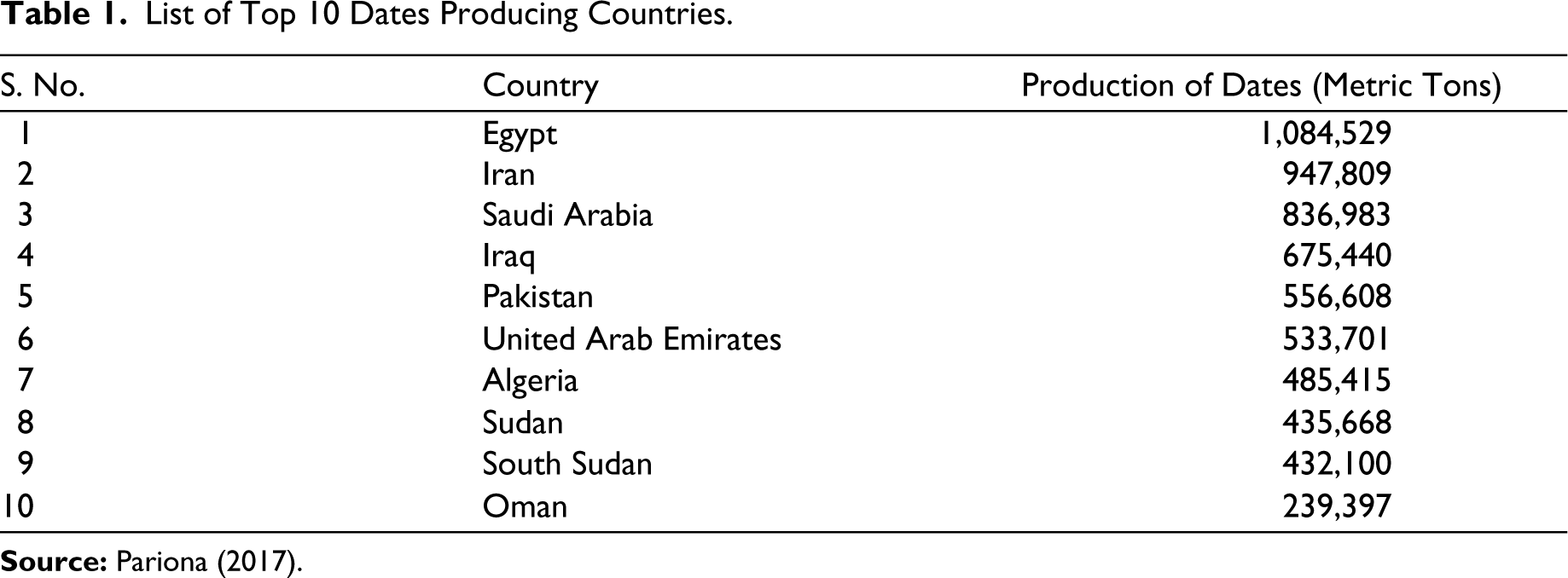
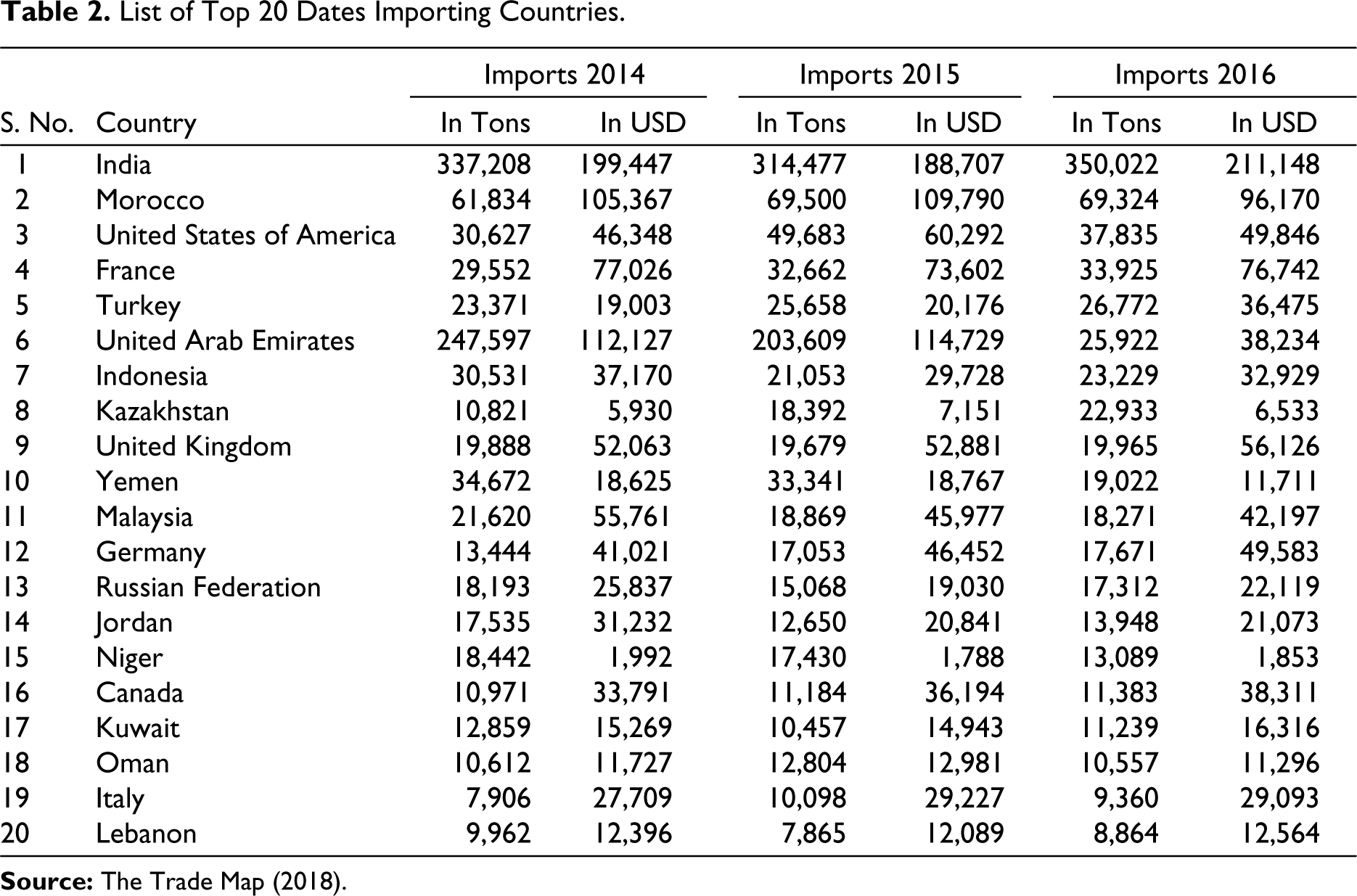
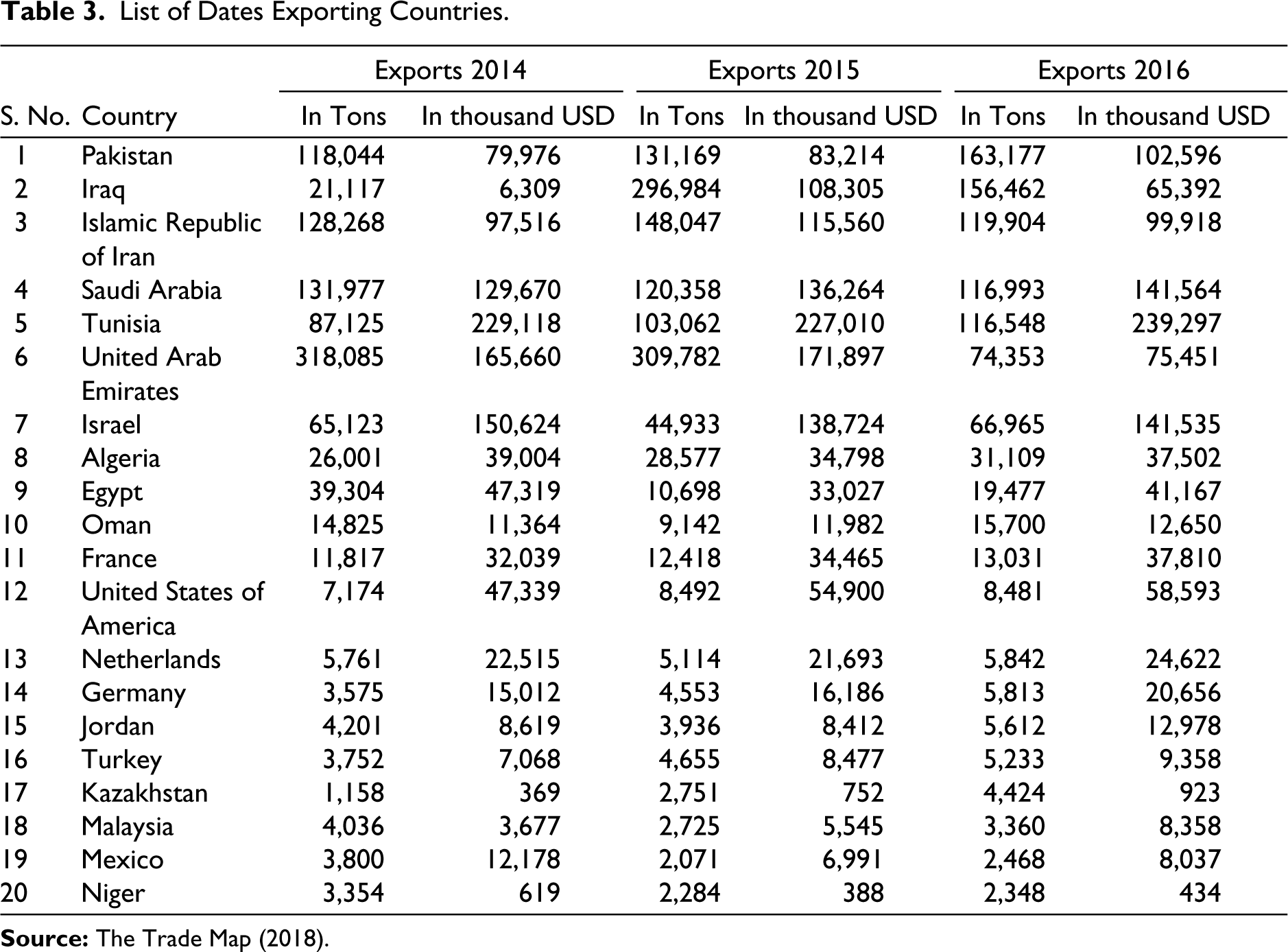
World production of dates was 1,084,529 metric tons in 2017. The major producers of dates were Egypt, Iran, Saudi Arabia, Iraq, United Arab Emirates, Algeria, Sudan, South Sudan, Oman and Pakistan (refer to Table 1). Egypt was the leading country with 17% of the world dates production, but its exports were limited to 3%. It is mainly exported to Morocco, Indonesia and Malaysia, with 53%, 24% and 15% chunks, respectively. Whereas Iran produced 947,809 tons annually, contributing 7.7% to the world exports, mainly exporting to India, Malaysia and Russia with 16%, 11% and 9.9%, respectively. Being the third-largest date producer with perfect growth and cultivation conditions, Saudi Arabia contributed 8.8% of the world exports. Its major trade went to Jordan (19%), Yemen (17%) and Kuwait (15%). Whereas Iraq contributed 7.3% to world exports, mainly exporting to India, Egypt and Morocco with 79%, 8.5% and 3.7% shares, respectively (Pariona, 2017) (refer to Tables 1–3).
List of Top 10 Dates Producing Countries.
List of Top 20 Dates Importing Countries.
List of Dates Exporting Countries.
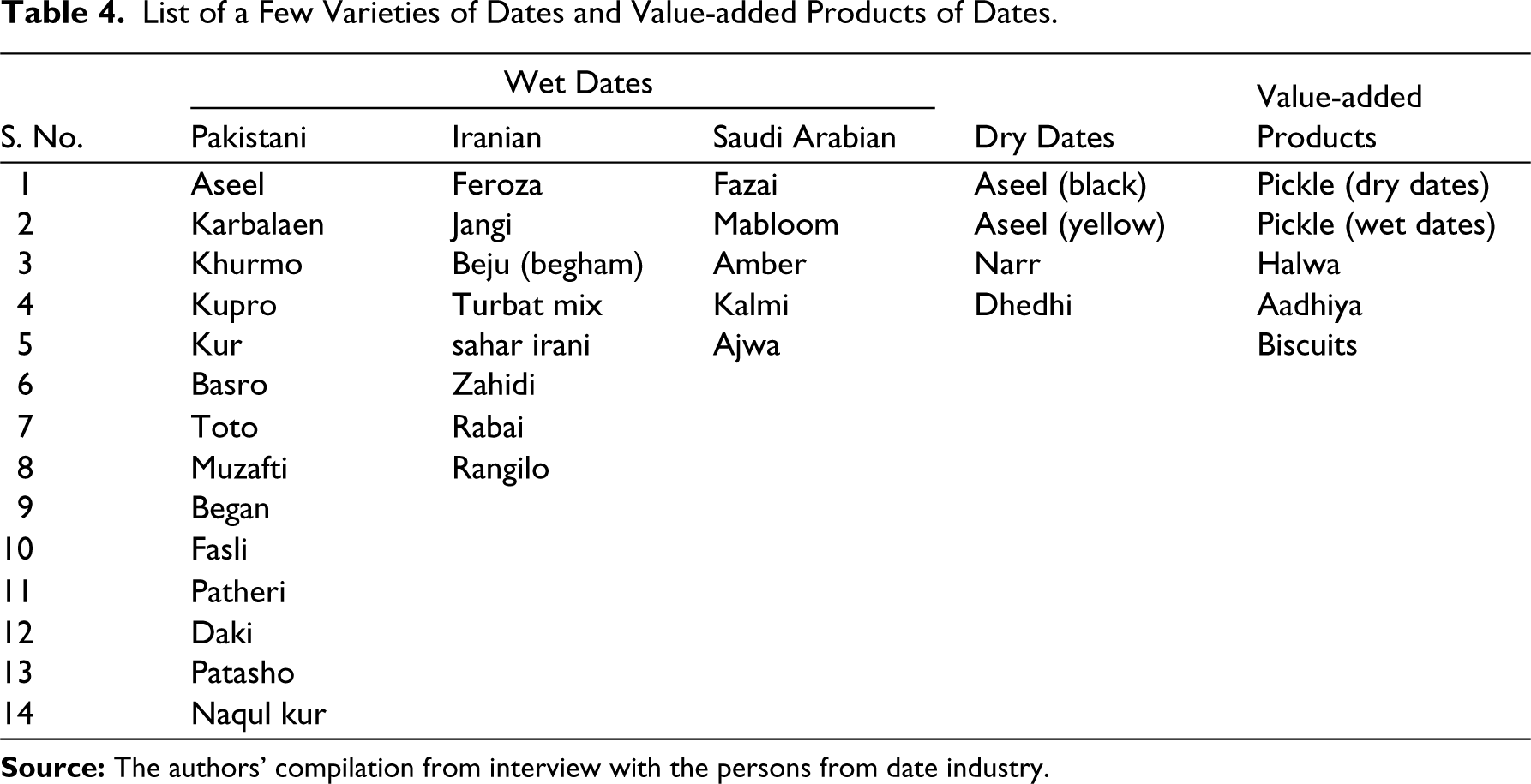
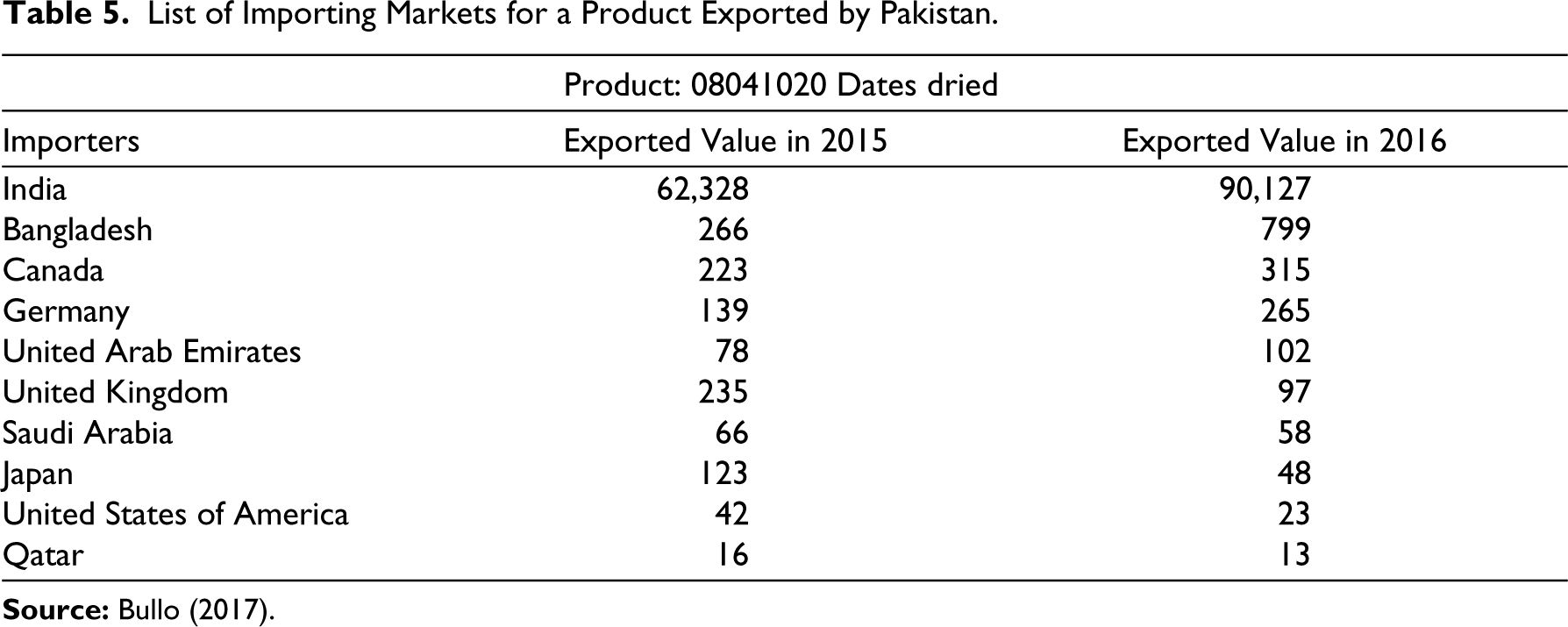
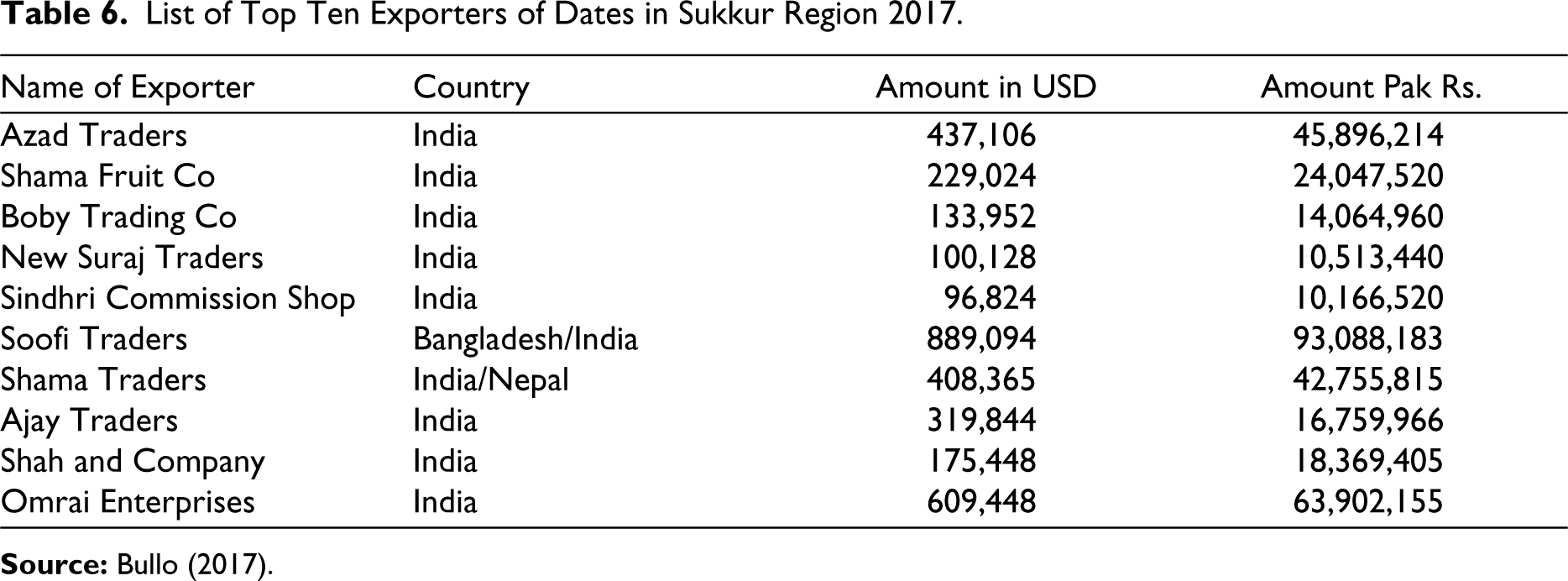
Pakistan was the fifth largest producer (Pariona, 2017) and third-largest exporter of dates (The Nation, 2014) with more than 250 different varieties (refer to Table 4). The annual production of dates in Pakistan was estimated at around 556,608 metric tons, of which only 86,000 Metric tons were exported (Bullo, 2017), and the rest were consumed locally. Almost 20% of fruit perished due to a lack of proper warehousing facilities. Sindh province contributed 40% of the total production of dates in Pakistan, and Khairpur District was the main grower. Pakistani traders mainly exported soft/fresh dates to Bangladesh, Canada, Denmark, Germany, India, Indonesia, Malaysia, South Africa, Sri Lanka, the USA and UK (News Magazine, 2012). While, dried dates were exported to Afghanistan, Bangladesh, Canada, Denmark, Germany, India and Japan (refer to Tables 5 and 6).
List of a Few Varieties of Dates and Value-added Products of Dates.
List of Importing Markets for a Product Exported by Pakistan.
List of Top Ten Exporters of Dates in Sukkur Region 2017.
The demand for dates was primarily concentrated in the month of Ramazan. A local shopkeeper usually sold 10 tons during the other 11 months of a year, while his sales shot up to 50 tons in the month of Ramzan (bdnews24, 2005).
Pakistan Trade Relations with Other Countries
Geopolitically, India and Pakistan had remained adversaries in South Asia. Despite sharing a long border, the magnitude of trade between the two countries remained negligible (State Bank of Pakistan, n.d.). Trade with India mainly took place through three means: the official trade agreements, through illegal porous land borders and third party (other countries) intervention. During the period of political tension between India and Pakistan, exporters mainly traded via a third country. Pakistan and India had signed a free trade agreement, the South Asian Free Trade Agreement (SAFTA), in 2004 to allow free trade and lowered down the tariffs up to 5%. SAFTA replaced SAPTA that was held in 1993. India had remained a major importer of the Pakistani dates. India imported 171,000 tons of dried dates from Pakistan during 2016–2017, whereas fresh Pakistani dates were also shipped to the USA, UK, Germany, South Africa, Denmark and Turkey.
India was a lucrative market for date export (Memon, 2018). The two major groups of populations in India used dates for a variety of reasons. Muslims consumed it as a religious ritual in the holy month of Ramazan, and Hindus used it in their religious rituals as well. It was also consumed as a nutritious fruit.
Despite the huge potential, the geopolitical environment was a major challenge for ordinary traders or small and medium scale owners to export dates in India. Even the businessmen who had been exporting dates to India for several years remained under immense stress. As Mr Jawad, an old exporter of dates, said;
During the export seasons, we pray that the bilateral relations between India and Pakistan remain good so we can easily export to our customers in India; otherwise, the situation breeds losses for us.
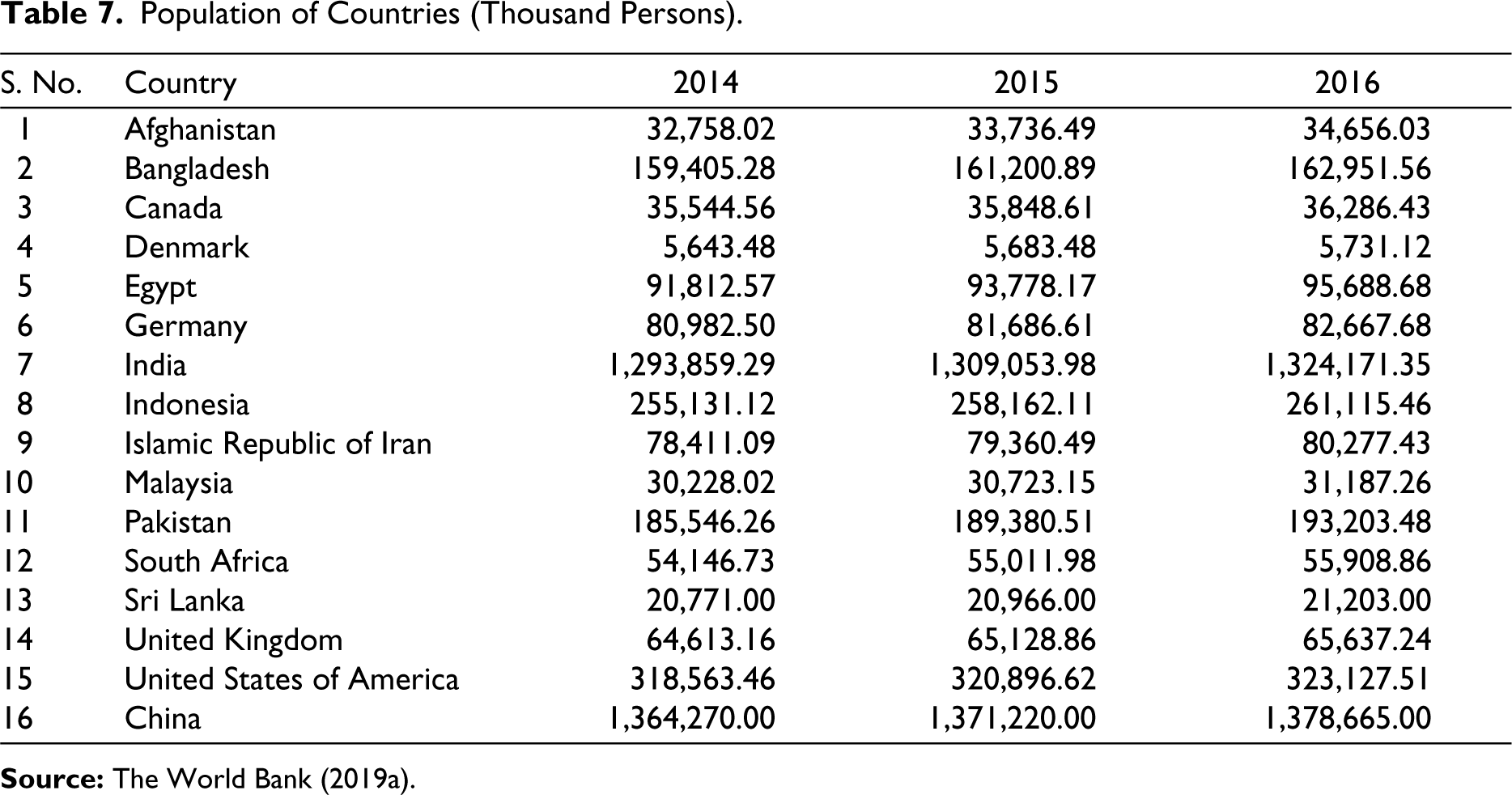
Afghanistan, being landlocked, relied on Pakistan for the land transits. Although not densely populated (see Table 7), Afghanistan was on the traditional trade route connecting European and American civilizations with Asian countries via Silk Road. Nevertheless, due to the changes in technology, the competitive advantage shifted significantly. Afghanistan’s market was relatively small, but its strategic position made it the shortest route to Central Asian countries with relatively larger markets. Pakistan’s official trade relations with Afghanistan had badly suffered due to militancy along the porous common border (Khan, 2016). Afghanistan and Pakistan entered into the Afghanistan–Pakistan Transit Trade Agreement (APTTA) in 2010. However, in October 2017, APTTA expired, prohibiting Pakistani trucks from entering Afghanistan (Omid, 2017). Pakistan’s exports significantly reduced by 27% due to the mistrust between the two countries and the withdrawal of the NATO forces leading to increased instability in Afghanistan (Khan, 2017).
Population of Countries (Thousand Persons).
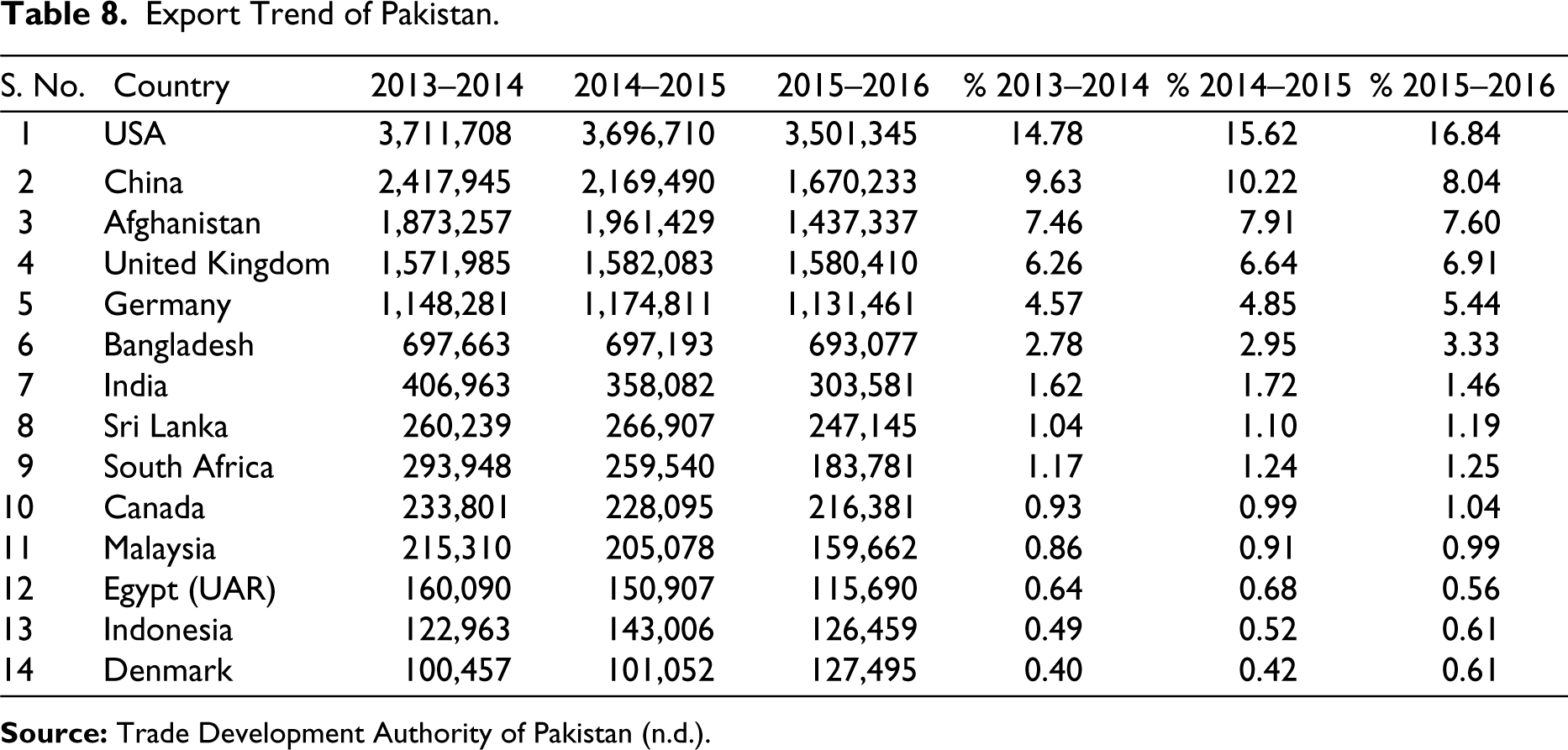
The other important country for Pakistan was Bangladesh. Historically, Bangladesh was a part of Pakistan, but after 1971, Bangladesh separated to form a new country. Nevertheless, the two countries had good trade relations. Pakistan exports to Bangladesh had risen from $14.27 million in 2005 to $48.5 million in 2017. Pakistan primarily exported cotton and woven cloth to Bangladesh (see Table 8). Pakistan took several steps to promote the export of dates to Bangladesh (bdnews24, 2005; Business Recorder, 2004). Few challenges that Pakistan could face due to political shifts included some agreements, for example, Bhutan, India, Nepal motor vehicle agreement, South Asia Subregional Economic Cooperation (SASEC), Bangladesh, Bhutan, India, Nepal (BBIN) and some other agreements of regional connectivity (Ahmed, 2017).
Export Trend of Pakistan.
Similar to that, a variety of bilateral trade interests existed between Canada and Pakistan. This included people to people, human rights, environment protection, regional security, trade and investment, etc. Both the countries were members of Common Wealth. In 2017, Pakistan was the sixth-largest source of immigrants and imports which reached $351 million (High Commission of Canada in Pakistan, n.d.). In 2015 and 2016, Canada remained the third-largest importer of Pakistani dates (refer to Table 5). Canada majorly re-exported the dates to Pakistan after proper value addition (Bullo, 2017). However, the cost of exporting to Canada was relatively high in terms of duties and taxes. Despite having good relations with Canada, visa restrictions on Pakistani businesspersons remained a major challenge for Pakistani exporters.
In 2016, the EU was the largest export market for Pakistan, contributing 34% to the total exports. Germany accounted for 17% of the total EU exports. However, the dates were not part of its top ten exporting goods (The Pakistan Business Council, n.d.). Germany was the sixth-largest importer of Pakistani goods. In Germany, Pakistani traders enjoyed the generalized system of preferences (GSP) Plus status, where traders were granted over 6,000 plus tariff lines (Shafi, 2017). During 2015 and 2016, Germany remained the fourth largest importer of Pakistani dates (refer to Table 5 for dried dates importers).
Japan and Pakistan shared a positive and respectful relationship since the inception of Pakistan. On the trade side, the two countries had potential agreements including ‘Avoidance of double taxation convention 2009’, ‘Agreement for Promotion and Protection of Investment 2002’, ‘Pakistan–Japan Treaty of Friendship and Commerce’ (Pakistan Embassy Tokyo, n.d.). Being the third-largest economy in the world, Japan provided a GSP scheme to the developing economies at reduced duty rates on agriculture, fisheries, and industrial products.
International markets were quite dynamic; Pakistani exporters faced challenges in terms of changing infrastructure, evolving bilateral relations, and competition from other countries.
Dates Traders in Pakistan
A few of the famous established Pakistani ISO certified businesses included Ghulam Nabi and Sons, Sharmeen Group, Assel Dates, and Gilano Trading Company. These businesses had been around for 20 years or more (refer to Appendix B).
A number of local traders from Sukkur exported their dates to other countries. These included Azad traders, Shama Fruit Co., Boby Trading Co. and so on. These companies mainly exported to India (refer to Table 6 for top ten exporters in Sukkur).
Dates Farming
A date tree gave fruit at the age of 6 to 10 years. The number of trees in an acre of land ranged from 60 to 100. The older trees produced more dates than younger trees, but the taste of fruit deteriorated with the tree’s age. Germination of new trees and the pollination of existing trees took place in February, for this experienced germinators were required. Timely germination, pollination, and spread of fertilizers to the trees were some of the important activities to get a quality crop.
The harvest season of dates was from July to August. The harvest took place in three stages. The first stage was picking up the yellow (but unripe) dates for conversion into the dry dates. This was done mainly in July. The contractors harvested the fruit with the help of labour, transported it on tractors trolleys for processing. The second stage was picking the half-ripe dates to be sold in the market. Commonly dates of this stage were called dang. The third stage involved picking the rest of the dates from trees that had converted into soft dates (Exhibit 1).
The key players involved in the dates business were the growers, contractors and traders. The growers planted the trees when trees were ready to give fruit; the growers engaged the contractors for a specific period, who looked after the date farms and labour. Finally, the traders were the ones who served as a bridge between buyers and sellers. Besides being traders, they were also the ones who financed the growers and contractors before the sowing season to meet the requirements of labour, bardana (sacks), fertilizers, germination, pollination, boiling, and warehousing. The only condition traders laid down was that growers or contractors would sell their fruit through the trader, and in return, the trader would charge a 10% commission on each sale.
Dates Processing, Quality Assurance and Warehousing
Dates processing included the conversion of raw dates into edible dry dates and soft dates.
At the first stage of harvest, the fruit was converted into dry dates (chuwara), yellow and dark brown. The yellow fruit was boiled, and chemicals were added to get the yellow dry dates. After boiling, dates were left under the sun to dry for a few days (Exhibits 1.4 and 1.5). The dry dates were not sold in any special packaging for sale; instead, they were transported in bulk to Sukkur and Khairpur, sold in open auctions. The whole process underwent the traditional processes without the use of modern technology. In the second stage, the half ripen dates were removed and sent to the market for retail sale in the local fruit markets.
Soft dates were a common fruit consumed by people all year round. These were harvested at the third stage and were dried under the sun without boiling. When thoroughly dried, dates were polished with mustard oil to maintain moisture, shine, and protection from the fungus. Lastly, they were packed in small 5 or 10 kg packages in plastic boxes with attractive paper.
Raw dates (soft and dry) underwent a quality assurance process before warehousing.
Fumigation: In fumigation, processed raw dates were kept in the storerooms to preserve them from insects.
Pitting: After fumigation, dates were sent to the labour houses for pitting, where the female labour and their families took the seeds out from the dates. This step was only for the pitted (without seed) dates.
Cleaning: In cleaning, raw dates were cleaned one by one with hands.
Grading: Dates were sent for grading in which dates were assigned grades of quality to be sold to their prospect customers (Dates Processing Plants, 2010). Also, refer to Exhibit 1.6.
Following are the grade rankings for dates quality:
Extra class Select – A (c) Select – B Good average quality (GAQ) Fair average quality (FAQ) Industrial grade
Washing: In this step, dates were washed in hot water to remove the oil and other preservatives from the dates.
Drying, fumigation and storage: Afterwards, dates were dried to be fumigated again and sent to cold stores for storage.
Metal detection: Finally, raw dates were passed through metal detectors to ensure there was no metal in the dates.
Packaging: After metal detection, dates were packaged in small packets or bulk and sent for sale or stored in cold stores.
Processing Facilities
There were 14 processing plants in the Khairpur district that bought raw dates from farms in Khairpur or from neighbouring districts. Pakistan’s largest date market, Khairpur, was the major source of raw dates. Although the market traded and processed a variety of dates, including Mazawati and Begum Jangi (varieties from Baluchistan province of Pakistan and Iran) but the Aseel variety of dates was a brand itself for its small size and sweeter taste and shared the biggest chunk in the total exports of the dates from Pakistan (refer to Table 4).
Trading of Dates in Local Markets
The buying and the selling took place in the date market of Khairpur. In the market, the open auction took place by the auctioneers of the traders. The buyers in the auction came from different parts of the country. The prices were determined by the supply and demand and the quality and variety of the dates. Traders in the market served as the bridge between the sellers and the buyers. Their role was to facilitate the transactions (See Exhibit 1.7).
Sindh Fruits Traders’ Background
Mr Imtiaz Memon completed his MSc in statistics in 1991 and decided to look for a job rather than to become part of his family business of dates. Although he managed to get a teaching job with a lower salary, it did not fulfil his everyday needs. When he failed to get any satisfying job in two years, he established his own business of date farm contracting in 1993 instead of joining his family business. He contracted 300 trees at the cost of PKR 150 per tree. He borrowed PKR 50,000 for this purpose from his family. Later close to the harvest season, he obtained an advance of PKR 40,000 from a trader. He incurred the cost of labour, germination, bardana (sacks), cahtayaan (floor carpets made from the furs of the date palm trees especially for drying dates), boiling and packaging. After paying the 10% commission to the traders, he received PKR 115,000. He returned the advance to the trader. The net profit for the year was PKR 25,000. These initial transactions motivated him to establish his own business.
From 1993 until 2006, he developed the required skills and expertise to excel in the market, built networks and grew his business with the help of a sleeping partner. In 2007, he contracted 2,000 trees at the rate of PKR 800 per tree. He paid PKR 1.6 million as the contract money to the growers. Additional expenses incurred were PKR 1 million. Total sales volume for the year was PKR 3.7 million, which provided him with a net profit of PKR 800,000.
Being desirous of growth, he established SFTs in 2008, partnering with Mr Tahseen Ahmed, his cousin and a trader in the Khairpur fruit market. The business kept on making profits, and the two partners were operating only in Pakistan. As time passed, the business became stagnant, and the profits began to decline significantly.
Future Prospects
Due to the increase in inflation and labour costs, doing business as usual was becoming very difficult in the Pakistani market, and SFT was unable to generate reasonable profits. One of the options that Imtiaz looked at was to find a lucrative market abroad for his date business. He was also inspired by Nadeem Dates Factory, their direct competitor, because of the value addition in their business. This motivated him to opt for a change in the existing business model of SFT. His partner, Tahseen, however, was reluctant, particularly with the export idea.
Pakistani suppliers largely exported dates to selected countries such as Bangladesh, Canada, Denmark, Germany, India, Indonesia, Japan, Malaysia, South Africa, Sri Lanka, the USA and the UK. Therefore, Imtiaz had to choose where to commence exports. Which market would be most cost-effective and could provide better profit margins?
Imtiaz’s inclination towards doing business in India was slightly higher than in any of the other countries. In his opinion, India was a densely populated country where the Hindu community and Muslim community both used dates for various reasons. The purpose of dates consumption in India had roots in their religion, culture, and health-related perspectives.
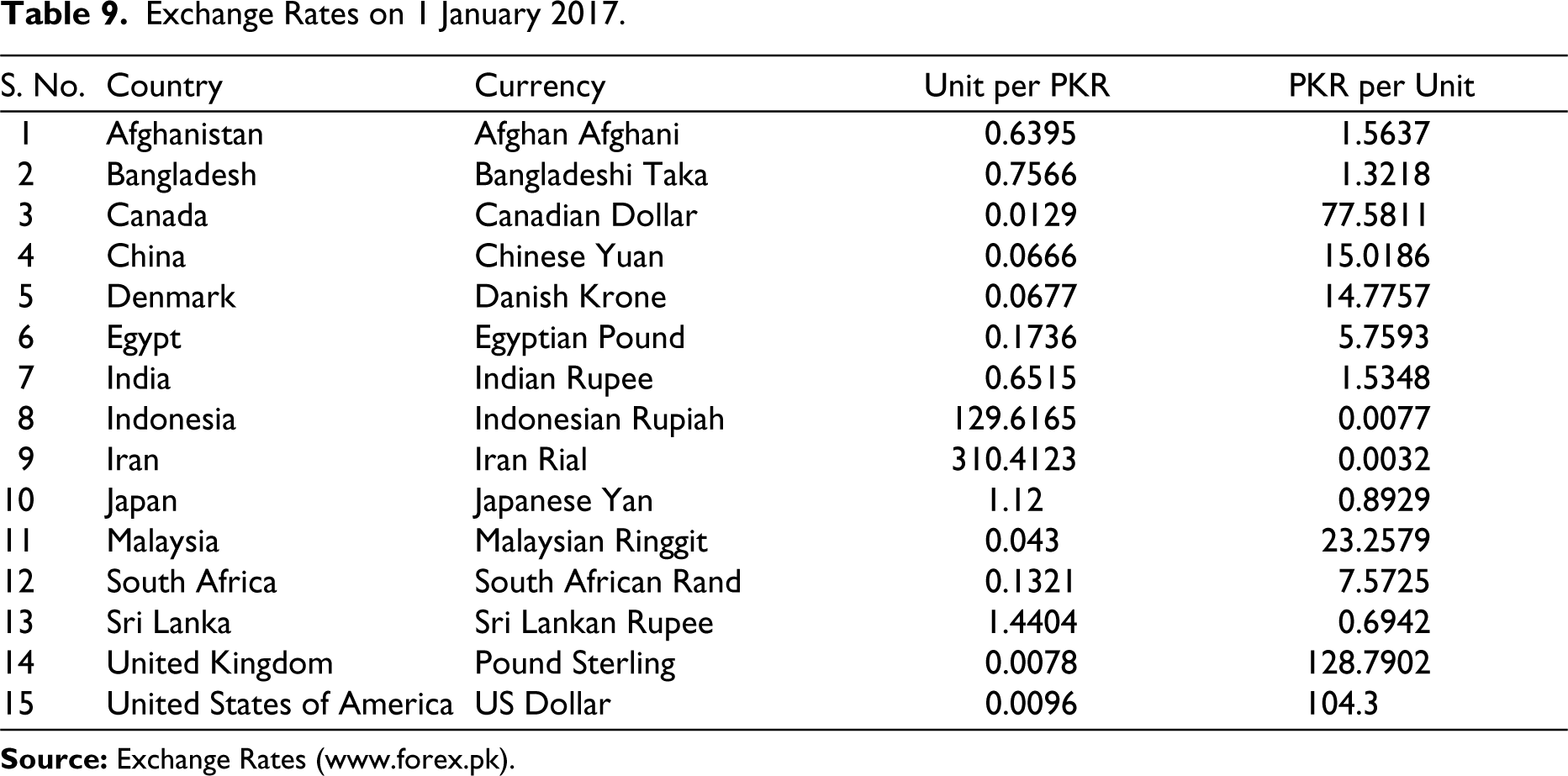
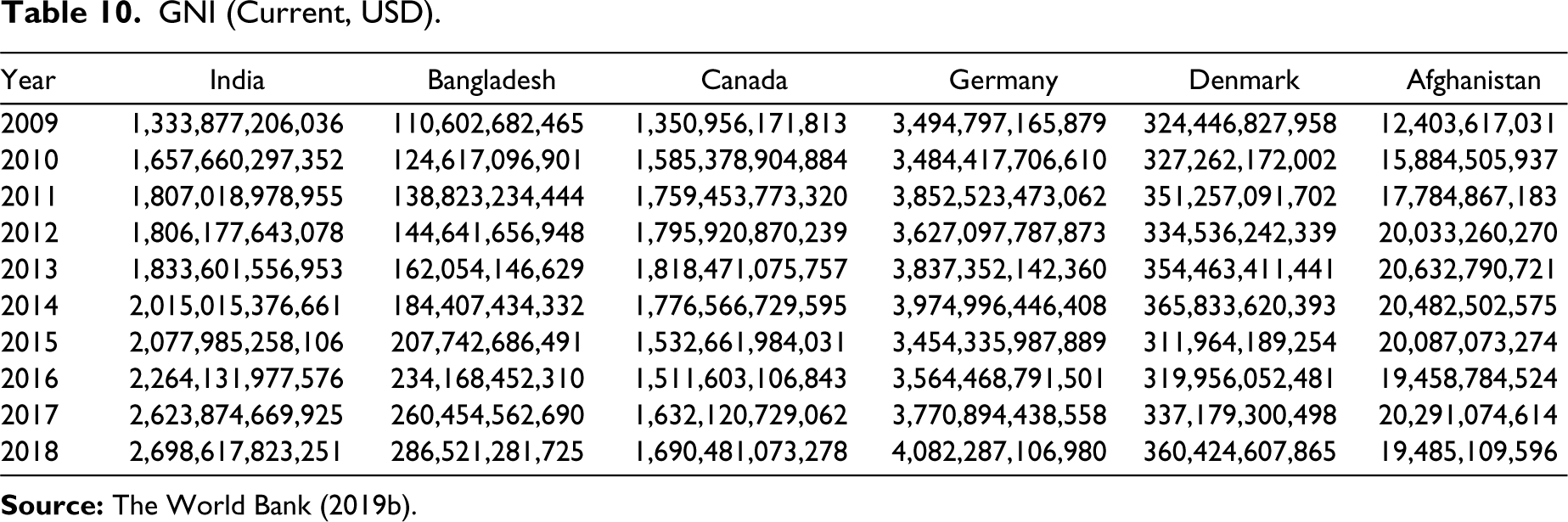
However, Imtiaz and Tahseen needed to do homework to understand the export business to select a country (see Tables 9 and 10). In this case, the time left for the search was very limited as July was the harvesting season.
Exchange Rates on 1 January 2017.
GNI (Current, USD).
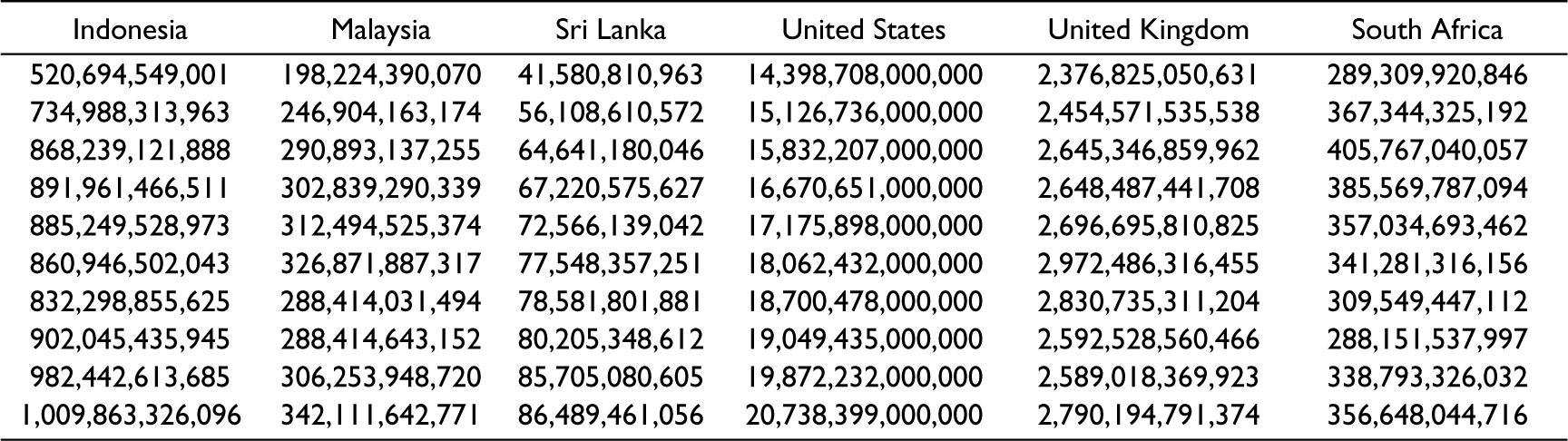
Source: The World Bank (2019b).
The owners had already made payments of up to PKR 2 million to small contractors and growers for the year. Moreover, the business still required an additional PKR 2 million to purchase packaging machines, hire persons, and conduct their trainings. SFT owners also had to anticipate the required cost and efforts for transportation and documentation processes for the export business.
Mr Yaseen was also contemplating the issues related to the registration process with Export Promotion Bureau (Appendix A) and whether they should initiate business to business (B2B) transactions or business to consumer (B2C) transactions. In any case, SFT needed to look for vendors or partners in India who could either facilitate or transact on their behalf.
The owners also required a detailed insight of consumers as these decisions were important to determine product prices. Imtiaz contemplated hiring a research consultant who could guide him and his partner to make an informed decision.
Footnotes
Declaration of Conflicting Interests
The authors declared no potential conflicts of interest with respect to the research, authorship and/or publication of this article.
Funding
The authors received no financial support for the research, authorship and/or publication of this article.