



Abstract
Background
Understanding the complex interplay between emotional intelligence and behaviour patterns among adolescents holds a pivotal role in shaping their developmental trajectories and overall well-being. Adolescence, marked by rapid physical, emotional and cognitive changes, is a critical phase where emotional skills and behavioural tendencies are particularly malleable.
Purpose
The study investigates the interplay between emotional intelligence and behaviour patterns among adolescents in Gujarat and Maharashtra, India. The research objectives encompassed assessing emotional intelligence levels, exploring gender differences and examining the relationship between emotional intelligence and behaviour patterns.
Methods
The research design employed ex post facto methodology, collecting data from 740 adolescents across CBSE schools. Validated measures for emotional intelligence and criminal propensity were utilized.
Results
The results revealed the impact of gender, regions and their interaction on different dimensions of emotional intelligence and criminal propensity. While some dimensions were significantly influenced by these factors, others remained unaffected. The correlation analysis underscored intricate relationships between emotional intelligence dimensions and criminal propensity.
Conclusion
The study contributes valuable insights into the dynamics of Emotional Intelligence and Behaviour Patterns among adolescents, highlighting the need for targeted interventions and support systems. These findings hold implications for educators, parents and policymakers in fostering Emotional Intelligence development and curbing potential Behavioural concerns among adolescents.
Introduction
Background and Context
Understanding the complex interplay between emotional intelligence and behaviour patterns among adolescents holds a pivotal role in shaping their developmental trajectories and overall well-being.1, 2 Adolescence, marked by rapid physical, emotional and cognitive changes, is a critical phase where emotional skills and behavioural tendencies are particularly malleable. 3
Navigating Adolescence’s Maze: Unravelling the Significance of Emotional Intelligence and Behaviour Patterns
Emotional intelligence (EI) is a multifaceted construct that has garnered considerable attention in recent years for its profound implications in human development and well-being. The ability to recognise, understand, manage and utilise emotions effectively has been linked to various aspects of life, including academic achievement, mental health and interpersonal relationships. Within the rich tapestry of human diversity, culture plays an undeniable role in shaping emotional experiences, expressions and perceptions. Consequently, studying EI in culturally diverse contexts can yield critical insights into the intricate interplay between EI and culture.
This research article embarks on a compelling journey into the realms of EI and its association with behaviour patterns, particularly those related to criminal propensity, among adolescents in two culturally vibrant states of India: Gujarat and Maharashtra. The significance of this study is underscored by the multifaceted nature of the adolescent years, which represent a pivotal stage in emotional and cognitive development. During this period, adolescents grapple with the complexities of identity formation, social interactions and emotional regulation, all of which are profoundly influenced by cultural norms and values.
Daniel Goleman’s influential EI framework, comprising sub-scales such as self-awareness, self-regulation, motivation, empathy and social skills, provides a robust foundation for this investigation. However, this study ventures further by considering Dr Ekta’s research related to the sub-scales and cultural perspectives within the specific context of Gujarat and Maharashtra.
The cultural mosaic of India is particularly captivating, characterised by its linguistic, religious and sociocultural diversity. Gujarat and Maharashtra, two states in western India, offer a microcosm of this diversity, each with its unique cultural heritage and practices. Exploring EI and its connection to behaviour patterns, particularly those measured through the Criminal Propensity Scale, in this cultural tapestry provides a distinct opportunity to examine how culture shapes emotional experiences, expressions and behaviour among adolescents.
Dr Ekta’s research, woven into the fabric of this study, delves into the nuances of cultural norms, values and expectations regarding emotional expression, regulation and social interactions, and how these factors may influence behaviour patterns, including criminal propensity, among adolescents in Gujarat and Maharashtra.
As we embark on this exploratory journey, we aim to address critical questions: How do cultural norms and values influence the development and manifestation of EI among adolescents in Gujarat and Maharashtra, and how do these factors correlate with behaviour patterns, particularly in terms of criminal propensity? What implications do these findings hold for educational programmes, interventions and policies aimed at enhancing emotional well-being and reducing negative behaviour patterns among adolescents in culturally diverse regions?
By synthesising Goleman’s EI framework with Dr Ekta’s research within the intricate tapestry of Gujarat’s and Maharashtra’s cultures, this study endeavours to shed light on the cultural dynamics of EI and its profound connection with behaviour patterns, including criminal propensity, among adolescents. The knowledge derived from this research holds the potential to inform culturally sensitive strategies that empower adolescents to harness the full spectrum of their EI and make positive choices that shape the trajectory of their lives within diverse cultural contexts.
Behaviour Patterns and Criminal Propensity
For the purpose of the present study, behaviour pattern is operationally defined as identifying and assessing patterns of behaviour that may be indicative of a person’s likelihood to engage in criminal activities or activities that violate legal and ethical standards, which is criminal propensity. This measurement is typically based on a structured assessment tool like the Criminal Propensity Scale, which evaluates various dimensions of behaviour patterns to provide insights into an individual’s propensity for criminal behaviour. Behaviour patterns can vary widely among individuals, and the assessment through the Criminal Propensity Scale aims to provide a systematic and standardised way of understanding and categorising these patterns for research or intervention purposes. According to Dr Shubhra Sanyal, criminal propensity refers to the tendency of an individual to be inclined towards criminal behaviour; that is, criminals show high on psychoticism, neuroticism and extraversion and low on social desirability on the Criminal Propensity Scale. To measure the behaviour pattern, the Criminal Propensity Scale has been used in this study. The Criminal Propensity Questionnaire developed by Dr (Mrs) S. Sanyal in 2018 has been used in this article. The Criminal Propensity Scale has constantly been used in further national studies on adult criminals and juveniles by the author. The scale consists of four domains: psychoticism, neuroticism, extraversion and lie.
For the sake of the current study, we are trying to understand the behaviour pattern of adolescents who exhibit antisocial tendencies, which is crucial for early intervention and prevention of potential criminal behaviour. It is important to note that not all antisocial behaviours in adolescents will inevitably lead to criminal behaviour, but there is a correlation between untreated antisocial behaviour and an increased risk of criminal involvement. For example, many antisocial adolescents display aggressive and violent behaviours, which can range from verbal abuse and bullying to physical fights. Early signs of aggression should be taken seriously and addressed promptly. Adolescents with antisocial tendencies often engage in persistent rule-breaking behaviour, such as truancy, substance abuse and running away from home. They may also have a history of disciplinary problems at school.
Behaviour patterns and their intricate relationship with criminal propensity offer a nuanced lens through which to understand the complexities of human behaviour. 4 Criminal propensity scales provide a comprehensive framework to explore tendencies that may lead to criminal behaviour, extending beyond the binary notion of right and wrong. Studying criminal propensity delves into the underlying factors that contribute to behaviour patterns associated with delinquency. 5 These factors, including impulsivity, risk-taking and antisocial tendencies, provide insights into the mechanisms that drive behaviour. 6 Understanding these elements allows for the identification of potential interventions that target the root causes of criminal propensity, addressing the factors that contribute to deviant behaviour.
The exploration of criminal propensity goes beyond prediction; it offers a foundation for preventive strategies. 7 By understanding the complex interaction of behaviour patterns and criminal propensities, researchers and practitioners can design interventions that focus on modifying underlying behavioural traits. This proactive approach aims to divert individuals from delinquent pathways, promoting positive behavioural change and reducing the likelihood of engaging in criminal activities. In this interplay between EI, behaviour patterns and criminal propensity, we find a comprehensive framework to unravel the intricacies of human conduct. EI empowers individuals to make informed choices, fostering adaptive behaviours and positive relationships. Simultaneously, the exploration of behaviour patterns and criminal propensity offers a pathway to comprehend the underlying factors that contribute to behaviour, enabling targeted interventions and preventive strategies for a brighter future.
The study on adolescents from Gujarat and Maharashtra stems from the recognition of the unique interplay between cultural contexts, EI and behaviour patterns during this transformative phase of life. The states of Gujarat and Maharashtra have been selected as they possess distinct cultural identities and societal norms that potentially shape the development of EI and behaviour patterns among adolescents.
Gujarat and Maharashtra offer ample research opportunities due to their large and accessible populations. Conducting studies in these densely populated regions enhances the likelihood of recruiting sufficient sample sizes, thus improving the generalisability of findings. Moreover, Gujarat and Maharashtra represent distinct cultural landscapes within India, each with its own rich traditions and social norms. Studying adolescents from these diverse cultural backgrounds can help to gain valuable insights into how culture influences EI and behaviour patterns. Geographically, Gujarat and Maharashtra are situated in different regions of India: Gujarat in the west and Maharashtra in the central-western. This geographic diversity allows researchers to capture variations in EI and behaviour patterns across different regions, contributing to a more comprehensive understanding of adolescent behaviour nationwide.
Gujarat and Maharashtra also boast of vibrant cultural heritages, each with its own unique traditions and values. Gujarati culture emphasises hospitality and family bonds, while Maharashtrian culture celebrates diversity and resilience. Exploring EI and behaviour patterns within these cultural contexts offers insights into how culture shapes adolescents’ emotional experiences and behaviours. Cultural norms, language differences and societal expectations influence adolescents’ interpersonal relationships and decision-making processes. For example, cultural practices such as joint family systems, community festivals and religious rituals play a significant role in shaping adolescents’ social and emotional development. Understanding these cultural nuances is essential for designing interventions that address the specific emotional needs of adolescents in each region. By identifying these cultural differences, researchers can inform policymakers and educators to develop culturally sensitive interventions that promote holistic youth development. Additionally, considering urban–rural dynamics and societal structures helps uncover factors influencing adolescent behaviour. Gujarat’s strong industrial base provides access to vocational training and job opportunities, while Maharashtra’s diverse economy offers a wide array of educational and career options. Moreover, socioeconomic factors such as education, income and urbanisation rates vary between the two states, influencing adolescents’ lifestyles and perspectives. Maharashtra’s higher literacy rates and developed infrastructure compared to Gujarat affect adolescents’ access to education and future prospects. Income disparities and urbanisation rates also differ, with Maharashtra being more prosperous and urbanised. Differences in social structures may affect adolescents’ EI and criminal propensity as they navigate different sociocultural environments. Family dynamics and community norms regarding education and career aspirations vary between Gujarat and Maharashtra, influencing adolescents’ emotional development and propensity for delinquent behaviour. Distinct cultural identities and societal norms in Gujarat and Maharashtra shape adolescents’ perceptions of themselves and others. Adherence to traditional values in Gujarat and cosmopolitan influences in Maharashtra impacts EI and behavioural outcomes differently. Socioeconomic disparities between Gujarat and Maharashtra influence adolescents’ access to resources and opportunities. Variations in education and economic opportunities contribute to differences in emotional well-being and behavioural outcomes among adolescents in the two states.
Research conducted in Maharashtra indicates a noteworthy correlation between adolescents hailing from low socioeconomic backgrounds and low EI, particularly notable among girls compared to boys. Adolescents from low socioeconomic status background show lower scores in the appraisal of both others’ and their own emotions, indicating a decreased ability to recognise and understand emotions in themselves and others. These adolescents also show poorer skills in emotion regulation, suggesting difficulties in effectively managing and responding to their emotions in various situations. This underscores the significant impact of socioeconomic factors on their emotional development and functioning of adolescents.
Moreover, including measures like the Criminal Propensity Scale provides insights into potential risk factors among adolescents. Overall, this research contributes to a deeper understanding of regional youth dynamics and informs strategies for supporting adolescent well-being in Gujarat and Maharashtra.
Objectives
The present study aims to achieve the following objectives:
To assess the level of EI and behaviour patterns among adolescents of Gujarat and Maharashtra.
To investigate potential gender differences in EI and behaviour patterns among adolescents of Gujarat and Maharashtra.
To explore the relationship between EI and behaviour patterns among adolescents of Gujarat and Maharashtra.
Hypotheses
The study’s hypotheses, derived from the research objectives, are as follows:
There would be a significant difference in the level of EI and behaviour patterns among adolescents of Gujarat and Maharashtra.
There would be a significant gender difference in EI and behaviour patterns among adolescents of Gujarat and Maharashtra.
There would be a significant relationship between EI and behaviour patterns among adolescents of Gujarat and Maharashtra.
Methods
Research Design
The research design employed in this study is ex post facto research, enabling the examination of relationships and distinctions among variables in a naturalistic context.
Data Collection
Data was collected from adolescents in Gujarat and Maharashtra, utilising established measures for EI and the Criminal Propensity Scale.
Sample
The study’s sample comprised 740 participants selected from CBSE schools in India. Out of these, 370 participants were from Gujarat, and the remaining 370 were from Maharashtra. The sample was further categorised in terms of gender, with 185 boys and 185 girls each. The inclusion criteria encompassed adolescents aged 14–19 years, enrolled in CBSE English medium schools. To ensure a comprehensive representation, participants were drawn from diverse geographical regions within both states. In the study, the sample size was estimated based on factors to ensure the study’s reliability, statistical power, generalisability of findings, research design, goals of the study, population characteristics and analysis plan.
Procedure
The research methodology followed a systematic approach to ensure rigorous data collection. Validated measures for EI and behaviour patterns, assessed through the Criminal Propensity Scale, were chosen to ensure data accuracy and reliability. Necessary permissions were acquired from relevant authorities to conduct the research within school premises. Participants were provided with clear explanations of the study’s objectives, and an environment conducive to active participation was fostered. Informed consent was obtained from all participants, underscoring their voluntary involvement, data confidentiality and privacy protection. Ethical guidelines were stringently adhered to throughout the research process, ensuring the study’s contribution of valuable insights into EI and behaviour patterns, as measured by the Criminal Propensity Scale, among adolescents in CBSE schools across Gujarat and Maharashtra.
Tools Used
A demographic data sheet was prepared to collect basic information such as age, gender, state and qualification.
The Emotional Intelligence Test (EIT) was constructed by Dr Ekta Sharma in 2011. This test has 60 items, which are categorised into five domains: self-awareness, managing emotions, motivating oneself, empathy and handling relationships. The scoring is based on a Likert-type response pattern with a 5-point range from ‘always’ to ‘never’. The total score is calculated by adding up scores from all five domains. The test is highly reliable. To assess its validity, the relationships between the total EI score and the five aspects were examined, showing positive correlations ranging from 0.64 to 0.83.
The Criminal Propensity Scale was developed in 2018 by Dr (Mrs) Shubra Sanyal. The scale consists of 39 ‘Yes–No’ questions. The scoring is done using a scoring stencil. The stencil consists of four domains—psychoticism, neuroticism, extraversion and lie scale. The total of these scores gives a criminal propensity score. The items scores are reliable at .01 significant levels. The scale was assumed to be valid since it is based on Eysenck’s Personality Questionnaire.
Results
The following section presents the results of the statistical analysis conducted to examine the relationships between various psychological constructs and behavioural patterns among adolescents in the states of Gujarat and Maharashtra. The analysis included both analysis of variance (ANOVA) to explore differences across regions and genders and correlation analysis to understand the associations between different psychological variables and behaviour patterns. These statistical techniques were applied to assess the impact of regional disparities, gender variations and the interplay of these factors in the psychological attributes and behaviour patterns of the study participants.
The data presented in Table 1 involves an in-depth analysis of how gender, regions and their interaction impact various dimensions of EI among adolescents. The dimensions examined include self-awareness, managing emotions, motivating oneself, empathy, handling relationships and the overall EI total score. In terms of self-awareness, the study reveals that neither gender nor regions have a significant impact on this dimension, and the interaction between gender and regions is also non-significant. Similarly, for managing emotions, while gender does not significantly affect it, regions (Gujarat and Maharashtra) do exhibit a significant influence (F = 6.896, p < .01). Moreover, the interaction between gender and regions does not significantly shape this dimension. Moving to motivating oneself, the analysis highlights that gender (F = 10.653, p < .01) and regions (F = 25.363, p < .01) play a significant role, with regions and the gender–region interaction (F = 13.131, p < .01) also exerting significant effects. Additionally, empathy’s assessment indicates that while gender does not significantly influence it, regions (F = 17.485, p < .01) and the interaction between gender and regions (F = 7.334, p < .01) both have significant impacts. Handling relationships, on the other hand, shows a noteworthy gender (F = 17.659, p < .01) effect along with a significant influence of regions (F = 11.925, p < .01) and their interaction (F = 5.018, p < .01). Lastly, the overall EI total score is significantly impacted by gender (F = 12.333, p < .01), regions (F = 25.767, p < .01) and the interaction (F = 12.215, p < .01) between the two.
ANOVA Analysis of Emotional Intelligence for Adolescents of Gujarat and Maharashtra.

Gender * regions- shows an interaction between Gender and Regions (Gujarat and Maharashtra).
The data illuminates the nuanced interplay of gender and regional differences in influencing various facets of EI among adolescents. While some dimensions are distinctly shaped by these factors, others remain relatively unaffected. This comprehensive understanding of how gender, regions and their interaction contribute to the diverse dimensions of EI provides valuable insights into the development and manifestation of EI among adolescents in Gujarat and Maharashtra.
Table 2 provides a comprehensive insight into the impact of gender, regions and their interaction on distinct dimensions of criminal propensity among adolescents. For psychoticism, the statistical analysis reveals that neither gender nor the interaction between gender and regions yields statistically significant effects on psychoticism. However, a significant impact is observed from regions (F = 6.585, p < .01), indicating that regional differences play a role in influencing psychoticism scores. Moving to extraversion, the results show that gender and gender–region interaction do not significantly influence extraversion. In contrast, regions significantly impact extraversion scores (F = 22.907, p < .01), suggesting that geographical distinctions play a substantial role in shaping this dimension of criminal propensity. In terms of neuroticism, the analysis indicates that gender significantly affects neuroticism scores (F = 5.649, p < .01), as do regions (F = 12.137, p < .01). However, the interaction between gender and regions does not yield a significant effect on neuroticism, emphasising the separate roles of gender and regions in influencing this dimension. When considering the total criminal propensity score, regions emerge as a highly significant factor (F = 28.892, p < .01), shaping this composite measure of criminal propensity. In contrast, both gender and gender–region interaction do not exert statistically significant effects on the overall total criminal propensity score.
ANOVA Analysis of Criminal Propensity for Adolescents of Gujarat and Maharashtra.
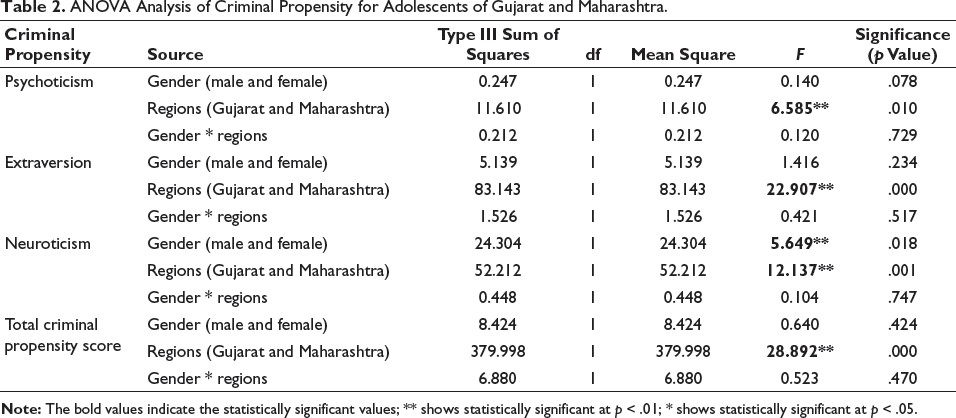
The analysis highlights the complex interplay between gender, regional variations and their interaction in influencing various dimensions of criminal propensity among adolescents. While certain dimensions exhibit significant influences from these factors, others remain less affected. These findings contribute to a nuanced understanding of how gender, regions and their interaction collectively contribute to the intricate landscape of criminal propensity among adolescents in Gujarat and Maharashtra.
The correlation data in Table 3 illustrates the relationships between different dimensions of EI and criminal propensity) among adolescents. The correlation coefficients, along with their associated significance levels (two-tailed), shed light on the strength and statistical significance of these relationships. Starting with self-awareness, Pearson correlation coefficients indicate that there is no statistically significant correlation between self-awareness and psychoticism (r = 0.016, p > .05), a positive and statistically significant correlation with extraversion (r = 0.116, p < .01) and no significant correlations with neuroticism, or the total CP score. For managing emotions, a small and non-significant correlation is found with psychoticism (r = 0.063, p > .05), a positive and statistically significant correlation with extraversion (r = 0.087, p < .05) and no significant correlations with neuroticism and the total CP score. Motivating oneself demonstrates a positive and statistically significant correlation with psychoticism (r = .094, p < .05), a strong and significant correlation with extraversion (r = 0.259, p < .01), a similarly strong and significant correlation with neuroticism (r = 0.176, p < .01), a strong and significant correlation with the lie scale (r = 0.216, p < .01) and a strong and significant correlation with the total criminal propensity score (r = 0.269, p < .01). Empathy exhibits a positive and statistically significant correlation with psychoticism (r = 0.076, p < .05), a strong and significant correlation with extraversion (r = 0.158, p < .01), a similarly strong and significant correlation with neuroticism (r = 0.145, p < .01) and a strong and significant correlation with the total CP score (r = 0.190, p < .01). In the case of handling relationships, there is a positive and statistically significant correlation with psychoticism (r = 0.076, p < .05), a strong and significant correlation with extraversion (r = 0.209, p < .01), a similarly strong and significant correlation with neuroticism (r = 0.120, p < .01) and a strong and highly significant correlation with the total CP score (r = 0.206, p < .01). Finally, the emotional intelligence total score demonstrates a positive and statistically significant correlation with psychoticism (r = 0.098, p < .01), a strong and significant correlation with extraversion (r = 0.253, p < .01), a similarly strong and significant correlation with neuroticism (r = 0.138, p < .01) and a strong and significant correlation with the total criminal propensity score (r = 0.246, p < .01).
Correlation Analysis of Emotional Intelligence Dimensions and Criminal Propensity for Adolescents of Gujarat and Maharashtra Among Total Sample (N = 735).

The correlation analysis provides insights into the intricate relationships between different dimensions of EI and criminal propensity among adolescents. These findings contribute to a deeper understanding of how specific aspects of EI may interrelate with tendencies toward criminal propensity in this demographics.
Table 4 indicates that in adolescents of Gujarat, the correlation analysis reveals that self-awareness, managing emotions, empathy, handling relationships and EI total scores do not significantly correlate with psychoticism, extraversion, neuroticism or total criminal propensity. Motivating oneself shows marginal associations with extraversion and neuroticism but with weak practical significance. Overall, among Gujarat adolescents, these psychological traits do not strongly correlate with the assessed factors.
Correlation Coefficient of Emotional Intelligence Dimensions and Criminal Propensity Among Adolescents from Gujarat (N = 367).

In the case of adolescents of Maharashtra, the correlation analysis reveals several noteworthy relationships. Self-awareness shows significant positive correlations with several other factors. First, self-awareness is positively correlated with extraversion (r = 0.239, p < .01), indicating that those with greater self-awareness also tend to exhibit higher levels of extraversion. These findings suggest that self-awareness plays a role in shaping extraverted behaviour. Self-awareness also demonstrated a significant positive correlation with total criminal propensity (r = 0.194, p < .01).
Motivating oneself shows positive correlations with several factors. There is a positive correlation with psychoticism (r = 0.147, p < .01), extraversion (r = 0.362, p < .01), neuroticism (r = 0.212, p < .01) and total criminal propensity (r = 0.351, p < .01), indicating that adolescents who are better at self-motivation tend to have higher psychoticism, extraversion, neuroticism and total criminal propensity.
Empathy is positively correlated with psychoticism (r = 0.122, p < .05), extraversion (r = 0.226, p < .01), neuroticism (r = 0.202, p < .01) and total criminal propensity (r = 0.262, p < .01). This suggests that adolescents with higher levels of empathy also tend to have better psychoticism, extraversion, neuroticism and total criminal propensity.
Handling relationships correlates positively with psychoticism (r = 0.137, p < .01), extraversion (r = 0.327, p < .01), neuroticism (r = 0.139, p < .01) and total criminal propensity (r = 0.289, p < .01). This indicates that those who excel in handling relationships tend to score higher in psychoticism, extraversion, neuroticism and total criminal propensity.
EI total, which encompasses all aspects of EI measured in the study, correlates positively with psychoticism (r = 0.153, p < .01), extraversion (r = 0.392, p < .01), neuroticism (r = 0.168, p < .01) and total criminal propensity(r = 0.344, p < .01). This reinforces the idea that higher emotional intelligence across the board is associated with higher psychoticism, extraversion, neuroticism and total criminal propensity.
Discussion
The data presented in Table 1 offers a comprehensive examination of how gender and regional disparities impact various dimensions of EI among adolescents. The dimensions encompass self-awareness, managing emotions, motivating oneself, empathy, handling relationships and the overall EI total score. The outcomes shed light on the intricate interplay of these factors and provide insights into emotional development within the context of Gujarat and Maharashtra. Beginning with self-awareness, the results indicate that neither gender nor regional differences significantly affect this dimension. This finding is consistent with previous research emphasising the relatively consistent development of self-awareness among adolescents regardless of gender or regional context. 1 In the case of managing emotions, gender’s impact remains non-significant, while regions (Gujarat and Maharashtra) emerge as influential. This observation suggests that cultural and contextual factors within these regions might contribute to varying emotional management strategies among adolescents. This echoes research 8 which noted that cultural norms can influence how emotions are regulated. Turning to motivating oneself, both gender and regions exert significant effects on this dimension. This is congruent with prior research indicating that motivational patterns and self-drive can vary by gender and geographical context.2, 9 The interaction between gender and regions further highlights the nuanced nature of these influences on motivation. In terms of empathy, the results indicate that gender has no significant impact, while both regions and the interaction between gender and regions significantly affect this dimension. These findings align with the understanding that empathy development is influenced by a complex interplay of various factors, including sociocultural context. 10 Notably, handling relationships displays significant gender, regional and interaction effects. This underscores the combined influence of these factors on adolescents’ abilities to navigate social interactions. Such findings resonate with prior research on the role of gender and cultural context in shaping social skills and relational dynamics among adolescents.11, 12 Lastly, the EI total score showcases the cumulative impact of gender, regions and their interaction on overall emotional development. This aligns with studies indicating that these combined factors contribute to adolescents’ global emotional functioning. 13
The analysis provides valuable insights into how gender and regional distinctions collectively influence the various dimensions of EI among adolescents. These findings contribute to our understanding of emotional development within the context of Gujarat and Maharashtra, emphasising the multifaceted nature of these influences. Cultural contexts have a significant impact on the development of EI and behaviour patterns among adolescents in Gujarat and Maharashtra. These cultural contexts include a variety of factors, including societal norms, religious beliefs, language variation and traditional practices, all of which shape the cognitive, emotional and behavioural experiences of adolescents. Gujarat and Maharashtra have different societal norms and values that govern acceptable attitudes and interpersonal interactions. For example, the culture of Gujarat may emphasise on collectivism, respect for authority and adherence to traditional family structures, whereas the culture of Maharashtra highlights individuality and progressive social values. These societal norms influence adolescents’ perceptions of themselves and others, shaping their emotional awareness, empathy and social skills. Language diversity is an important feature of cultural contexts in Gujarat and Maharashtra. The predominant languages spoken in these regions are Gujarati and Marathi, respectively. Language not only facilitates communication but also influences cultural identity, social connections and cognitive development. Adolescents’ skill in their native language affects their capacity to communicate emotions, create social relationships and handle interpersonal conflicts, all of which influence their EI and behavioural patterns. Both states have a rich cultural past and traditional practices that shape adolescents’ emotional experiences and behaviour patterns. Cultural celebrations allow teenagers to unite, express themselves emotionally and take pride in their culture. Traditional rituals, ceremonies and festivals develop characteristics such as resilience, compassion and community spirit in adolescents, which improve their EI and pro-social conduct. Gujarat and Maharashtra have varying levels of urbanisation, with large cities such as Ahmedabad and Mumbai. Urban locations are more exposed to diversity, modernity and technical advancements, but rural places may retain traditional values, close-knit communities and agricultural lifestyles. These urban–rural dynamics shape teenagers’ access to resources, social networks and possibilities for emotional development and self-expression. In conclusion, cultural contexts have a diverse impact on EI and behaviour patterns across adolescents of Gujarat and Maharashtra. Acknowledging these factors can guide educators and policymakers in fostering EI and enhancing the emotional well-being of adolescents.
The analysis provided in Table 2 offers valuable insights into the complex interplay of gender, regional disparities and their interaction on various dimensions of criminal propensity among adolescents. The dimensions explored include psychoticism, extraversion, neuroticism and the overall total criminal propensity score. For psychoticism, the absence of significant effects from gender and the gender–region interaction suggests that these variables do not have a considerable influence on psychoticism scores. However, the impact of regions on psychoticism underscores the potential significance of regional contexts within Gujarat and Maharashtra. This observation resonates with studies highlighting the role of neighbourhoods in shaping criminal behaviour. 14 In extraversion, while gender and gender–region interaction do not exhibit significant effects, the substantial impact of regions indicates that geographical distinctions play a role in shaping adolescents’ extraverted tendencies concerning criminal behaviours. This aligns with research emphasising the relationship between personality traits and regional variations. 15 For neuroticism, the significant effects of both gender and regions imply that both factors contribute independently to neuroticism scores. The absence of a significant gender–region interaction underscores the unique influences of gender and regional context on this dimension. This aligns with studies highlighting the interaction between gender and contextual factors in emotional experiences. 16 For total criminal propensity, the substantial impact of regions on the total CP score highlights the role of geographical context in shaping this comprehensive measure of criminal propensity. Conversely, neither gender nor gender–region interaction significantly influences the total CP score. This underscores the multifaceted nature of influences contributing to overall criminal tendencies among adolescents. The analysis offers insights into the intricate relationships between gender, regional disparities and their interaction in shaping various dimensions of criminal propensity among adolescents. While some dimensions exhibit noteworthy influences, others remain less affected. These findings contribute to a nuanced understanding of the factors that collectively shape the landscape of criminal propensity among adolescents in Gujarat and Maharashtra.
The correlation analysis presented in Tables 3, 4 and 5 offers a glimpse into the intricate interplay between different dimensions of EI and the inclination towards criminal propensity among adolescents. These correlation coefficients, accompanied by their associated significance levels, provide valuable insights into the strength and statistical significance of these relationships. By contextualising these findings within the existing body of research, a deeper comprehension emerges regarding the potential linkages between EI and criminal tendencies within this demographic.
Correlation Analysis of Emotional Intelligence Dimensions and Criminal Propensity for Adolescents of Maharashtra (N = 367).

Self-awareness
The absence of a significant correlation between self-awareness and psychoticism, coupled with a positive and significant correlation with extraversion, aligns with previous studies highlighting the potential for self-awareness to facilitate positive interpersonal behaviors. 17 This suggests that adolescents who possess a heightened awareness of their emotions might exhibit more extraverted tendencies.
Managing Emotions
The lack of a significant correlation between managing emotions and psychoticism is consistent with the understanding that effective emotion management might not necessarily be linked to psychopathic tendencies. 18 The positive and significant correlation with extraversion aligns with research suggesting that individuals with well-managed emotions might display more sociable and expressive behaviours. 19
Motivating Oneself
The complex pattern of correlations observed for motivating oneself underscores the multifaceted nature of motivation and its connections with criminal propensity. The positive correlation with psychoticism might echo research linking certain motivational traits with psychopathic tendencies. 20 The strong correlations with extraversion, neuroticism and the total CP score further emphasise the intricate interrelationships between motivation and diverse dimensions of criminal behaviours. 21
Empathy
The positive correlation between empathy and psychoticism might seem counterintuitive, but it aligns with studies highlighting the potential dark side of empathy, where overly empathetic individuals might engage in harmful behaviours. 22 The strong correlations with extraversion, neuroticism and the total CP score emphasise the potential complexities within the relationship between empathy and criminal tendencies. 23
Handling Relationships
The positive correlation between handling relationships and psychoticism might echo findings suggesting that individuals with certain psychopathic traits can be adept at manipulating relationships. 24 The strong correlations with extraversion, neuroticism and the total CP score point to the intricate web of influences impacting relationship skills and criminal propensities. 25
EI Total Score
The comprehensive positive correlations between the EI total score and psychoticism, extraversion, neuroticism and the total CP score highlight the potential for a more globally elevated EI to intersect with multiple facets of criminal propensity. This aligns with the notion that individuals with a higher overall EI might navigate both positive and negative behaviours more adeptly. 26 Adolescents of Maharashtra exhibit variations in their levels of EI. Adolescents with moderate and high EI have enhanced overall psychological well-being and proficiency across its various dimensions compared to those with low EI. That observation suggests that individuals with higher EI are better equipped to cultivate robust interpersonal relationships, foster familial bonds, make good decisions and navigate challenging circumstances. Such adolescents are less prone to exhibiting aggressive or impulsive behaviours, thereby highlighting the role of EI in promoting adaptive responses to life situations.
The correlation analysis provides valuable insights into the intricate connections between distinct dimensions of EI and tendencies toward criminal propensity among adolescents. These findings, considered alongside existing research, enrich our understanding of how specific aspects of EI may interact with criminal propensities within this demographic.
Conclusion
This study delves into the intricate connections between EI, behaviour patterns and their correlation with criminal propensity among adolescents in Gujarat and Maharashtra. The findings of this research carry significant implications across various domains, shaping interventions, policies, educational approaches and avenues for further investigation.
The correlations between EI dimensions, behaviour patterns and criminal propensity highlight the importance of understanding these interrelationships for holistic youth development. These correlations underscore the multifaceted nature of adolescent behaviour, emphasising the need for interventions that address EI and behaviour patterns in tandem. This interplay reveals potential entry points for prevention and early intervention strategies to mitigate the risk of criminal behaviours among adolescents.
Implications for policy formulation emerge from the identification of significant correlations. Policymakers can utilise these insights to tailor interventions that address the complex influences of EI and behaviour patterns on criminal propensity. This tailored approach can lead to the development of policies that empower adolescents to make informed choices, fostering a sense of responsibility and contributing to a safer society.
Educational strategies gain from these correlations as well. Integrating EI education into curricula can equip adolescents with essential life skills, helping them navigate emotions, relationships and decision-making. By promoting emotional competencies and positive behaviour patterns, educational institutions can play a vital role in preventing the emergence of criminal tendencies among adolescents.
In a broader context, these implications align with the goal of fostering holistic well-being among adolescents. By addressing EI and behaviour patterns, stakeholders can contribute to a comprehensive approach that nurtures emotional growth, responsible behaviours and positive decision-making, ultimately reducing the likelihood of engaging in criminal behaviours.
In terms of future research, the correlations uncovered here open avenues for deeper exploration. Investigating the underlying mechanisms that drive the relationships between EI, behaviour patterns and criminal propensity can lead to a richer understanding of these dynamics. By delving into cultural, social and psychological factors, researchers can refine interventions and policies for more effective outcomes.
Footnotes
Authors’ Contribution
All authors contributed to the study conception and design. Research conceptualisation, data collection, analysis and plagiarism checks were performed by Divya Dubey, Dr Soni Kewalramani and Dr Shubhra Sanyal. The first manuscript draft was prepared by Divya Dubey, Dr Soni Kewalramani and Dr Shubhra Sanyal. All authors reviewed the results and approved the final version of the manuscript.
Declaration of Conflicting Interests
The authors declared no potential conflicts of interest with respect to the research, authorship and/or publication of this article.
Funding
The authors received no financial support for the research, authorship and/or publication of this article.
Patient Consent
Informed consent was obtained from all participants, underscoring their voluntary involvement, data confidentiality and privacy protection.
Statement of Ethics
Due permission was obtained from the concerned authorities of the institutes where the study was conducted. Confidentiality was maintained by assigning a code to each participating student. The data were stored with a security code.
