



Abstract
Background
Currently, wearable sensors significantly impact health care through continuous monitoring and event prediction. The types and clinical applications of wearable technology for the prevention of mental illnesses, as well as associated health authority rules, are covered in the current review.
Summary
The technologies behind wearable ECG monitors, biosensors, electronic skin patches, neural interfaces, retinal prosthesis, and smart contact lenses were discussed. We described how sensors will examine neuronal impulses using verified machine-learning algorithms running in real-time. These sensors will closely monitor body signals and demonstrate continuous sensing with wireless functionality. The wearable applications in the following medical fields were covered in our review: sleep, neurology, mental health, anxiety, depression, Parkinson’s disease, epilepsy, seizures, and schizophrenia. These mental health conditions can cause serious issues, even death. Inflammation brought on by mental health problems can worsen hypothalamic-pituitary-adrenal axis dysfunction and interfere with certain neuroregulatory systems such as the neural peptide Y, serotonergic, and cholinergic systems. Severe depressive disorder symptoms are correlated with elevated Interleukin (IL-6) levels. On the basis of previous and present data collected utilizing a variety of sensory modalities, researchers are currently investigating ways to identify or detect the current mental state.
Key message
This review explores the potential of various mental health monitoring technologies. The types and clinical uses of wearable technology, such as ECG monitors, biosensors, electronic skin patches, brain interfaces, retinal prostheses, and smart contact lenses, were covered in the current review will be beneficial for patients with mental health problems like Alzheimer, epilepsy, dementia. The sensors will closely monitor bodily signals with wireless functionality while using machine learning algorithms to analyse neural impulses in real time.
Keywords
Introduction
Wearable medical devices are self-contained, safe, and provide continuous medical support and monitoring, incorporating microelectronics, mechanics, and computational power. 1 Wearable medical devices require affordable, compact, lightweight, durable, comfortable, and safe components. 2 Recent advances in wearable technology, like sensors, computing, wireless communication, and computational clothing, meet these requirements effectively. 3 The Global Burden of Disease Study (GBDS) suggests 450 Million globally face mental health issues, exceeding a 10% prevalence rate. 4 Mental health disorders impair people’s physical and mental health and raise the total healthcare expense for society. 5 It is projected that treating mental health problems will cost 16 trillion US dollars worldwide by 2030. 6 Wearables are widely used in healthcare for physical and cognitive conditions like cardiovascular issues, Parkinson’s, Alzheimer’s, and psychological disorders. 7 Smart devices enable seamless interaction with healthcare providers, without disrupting daily life. 8 COVID-19 paused outpatient screenings, but self-testing and home screening provide affordable alternatives for early detection. 9 To prevent mental health problems, early detection is crucial. 10 AI research aims to understand intelligent machines; smart devices mimic human computers, with common applications in production, finance, weather prediction, and autonomous vehicles. 8 AI aids in understanding mental health treatment. Therapy effectiveness is evaluated by comparing traditional and AI methods. 11 Machines learn behaviour and mental health from professionals, using algorithms and datasets for continuous task training. 12 Stress is the body’s reaction to being in a difficult situation and is characterized by intense anxiety or need. 13 Stress can increase the risk of cardiovascular disease, a major cause of death overall when combined with negative emotions. 14 Currently, 264 million face anxiety disorders, highlighting a need for precise identification and better mental health approaches. 15 These devices help patients feel hopeful, reduce healthcare costs, enable early help-seeking, and manage adverse effects 16 persons vital signs, EEGs, ECGs, skin conductance, and body temperature offer vital health insights. 17 The trick is figuring out how to use wearable, imperfectly tested technology (Relates to wearable medical equipment that has not been thoroughly tested to guarantee its safety and effectiveness) that people can tolerate and that has regulatory approval for its intended use to increase the accessibility of this information outside of the therapeutic setting. The last decade saw a surge in wearable technology and health-monitoring smart devices. 18 Smart clothes and pedometers collect non-invasive health data as intelligent wearables. 19 Smartphones and wearables are often used to recognize and track stress, anxiety, and depression due to their role in modern life. 20 AI has limitations, according to a 2019 study only 3% believe it replicates human intelligence. Ethical concerns include consent, safety, transparency, bias, and data security. 21 This article reviews wearables tracking mental states, including sadness, anxiety, and stress using sensors and smart devices.
Methods
Data Sources
We obtained a list of medical devices and their approvals from the FDA and EMA which were publicly available on their websites. The literature survey includes search engines such as Scopus, Science Direct, PubMed, Google Scholar, MEDLINE, Scopus, CINAHL, and PsycINFO.
Classification of Wearable Medical Devices
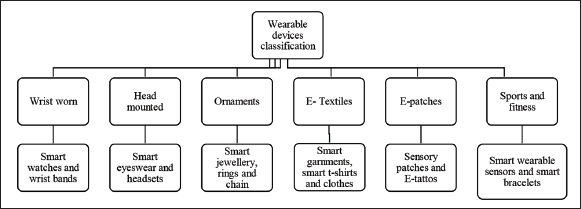
The wearable devices have been divided into a number of categories, including accessories, skin patches with integrated electronics (E-Patches), E-Textiles for textiles, injection systems, implantable devices and prosthesis, and smart devices for oral administration 22 (Figure 1).
Classification of Different Wearable Devices to Detect Mental Health Conditions.
Accessories
Accessories are wearable electronic devices that are not classified as primary apparel and are worn by users remotely. The majority of the current wearable market’s products fall into this category, including smartwatches, wristbands, smart eyewear, chest straps, smart belts, and various clip-ons. 23 According to recent Gartner surveys, among them, smartwatches are one of the most popular wearable gadgets, with rising sales in the wearables market. Over 50 million Bluetooth headsets are anticipated to be sold in the upcoming years. Wristbands, on the other hand, are intended to track particular health and fitness activities. 24 Despite some similarities to smartwatches, they do not have a display screen for notifications or come in a small variety of form factors. Smartphone headsets can be connected with smart glasses and virtual reality helmets. Users of various glass models can manipulate virtual three-dimensional objects, use navigator features, get call and message notifications, and even play video games. In order to incorporate biofeedback, some smart glasses models can additionally gather and analyse the wearer’s bodily data. 25
Garments with Integrated Electronics
Physiological signals and human biomechanics are largely monitored by smart clothes in order to use the gathered information in sports and medicine. They are the clothing with the most electrical capabilities. You can wear a bra, running shorts, or shoe insoles. The fashion business occasionally features such outfits. One illustration is a synaptic garment, which displays the wearer’s emotions through light signals. 26
Skin Patches with Integrated Electronics
Smart patches can be applied as a temporary tattoo or adhered to the skin with glue and contain tiny sensors and electrical circuits. For the most part, they are used to monitor physiological variables and human biomechanics. Some of them are also employed to stimulate the senses through touch. Smart tattoos have some intriguing uses that have been found. They are appropriate for contactless transactions. They can convey physiological data to a suitable device, such as a smartphone, or detect the quantity of UV absorbed. 27
Injection Systems
This group includes wearable injectors and insulin pumps. When and how much of the drug should be injected into the body is decided by the injection system. Usually, a catheter connects the main drug block to the injection site and is hooked to the belt. For instance, a glucose sensor that is not a part of the injection system is attached to the body and wirelessly feeds data to the main module. 28
Implantable Devices and Prostheses
Pacemakers, cardioverter-defibrillators, an additional blood circulation device, and an artificial kidney are implantable medical devices. Among the smart wearables is a prosthetic hand with a GoPro system built in. RFID (Radio Frequency Identification) chips, sometimes known as wearable technology, are implanted in the palms of certain daring persons. However, given that this device does not handle data, this is a little bit of a stretch. 29
Orally Administered Smart Devices
Many businesses are currently developing ‘indigestible sensors’, which are capsules that a user swallows and keeps inside their body for however long is necessary. While some devices are absorbed into the bloodstream, others are retained in the digestive system. Hormone levels, germs, viruses, poisons, and disease markers, including tumour markers, can all be found using sensors. The device can test blood alcohol levels, diagnose diseases or harmful situations in the body, and stop the user from driving if the levels are too high. Another potential use for these capsules is in diagnostic testing. So, with their assistance, a gastroscopy or colonoscopy is carried out. 30
Methods to Detect Mental Health
Machine learning and statistical methods are frequently used to detect mental states. These methods build models that can recognize the mental state of fresh observations using previously gathered and tagged training data. To infer the response variable from the observable predictor variables by learning patterns, detection techniques, unlike association methods, frequently use classification methods like decision trees and Naive Bayes classifiers. For instance, Grunerb employed a Naive Bayes classifier 31 to identify manic and depressive symptoms in bipolar illness patients using phone call logs and audio data from cell phones’ microphones, reaching an identification accuracy of 76%. In the same article, they proposed a state-change discovery method that, without explicitly labelling the new state, recognizes deviations from the initial state and alerts the user to seek medical care for an accurate diagnosis.
Electroencephalogram (EEG)
EEG is a detecting technique that uses many electrodes to be attached to the scalp to capture the electrical activity of the cerebral cortex in order to represent people’s emotional reactions to certain stimuli. 32 The human body’s stress status is determined by alterations in the alpha and delta EEG bands. People’s EEG alpha levels drop and delta levels rise during times of stress, whereas these levels rise and delta levels fall during times of relaxation or inactivity. 33 It was revealed that while employing a binaural hanging device that merged EEG and ECG signals, the accuracy of EEG and ECG signals in continuous stress measurement was 87.5%. Last but not least, EEG can accurately identify a person’s mental exhaustion level when paired with ECG signals, body temperature, and other data. This has supported the widespread use and targeted use of mental health assessments. 34 Recurrent, unprovoked seizures are referred to as epilepsy, which is one of the most prevalent neurological diseases. There are about 50 new instances of epilepsy per 100,000 people each year. The electrical activity of the brain is captured by an EEG. It has the ability to identify aberrant electrical activity, including focal spikes or waves which are consistent with focal epilepsy and diffuse bilateral spike waves which are compatible with generalized epilepsy. A typical EEG should ideally capture all three states of consciousness: awake, sleepy, and drowsy. This is because the prevalence of epileptiform abnormalities changes in each of these states. 35
Galvanic Skin Response (GSR)
A biological fluid called sweat is produced by sweat glands. The level of sweat secretion is the body’s response to tension since sweat glands are practically evenly distributed across the body, with high densities in the palms, soles, and forehead. Sweat glands are only stimulated by sympathetic neurons, which are activated under tension. 36 Sweat has electrical conductance because it contains ions, tiny molecules, and even macromolecules like proteins. As a result, two electrodes are connected to the skin’s surface to create the Electrodermal Activity (EDA) signal, which is then used to monitor stress by measuring the voltage between the electrodes. Evidence suggests that indications such as the galvanic skin response (GSR), heart rate variability (HRV), and body temperature picked up by wearable technology can be used to assess the emotional state of patients with metabolic syndrome. 37
Surface Temperature (ST)
High levels of stress can tighten muscles, increase heart rate, and put more strain on the critical organs. In addition, blood will be diverted from the limbs to directly affect the vital organs. The surface temperature of the body can fluctuate quickly. The majority of research used body temperature measurements to identify mental health disorders. In conclusion, the ST is more effective in identifying emotional shifts and stress levels when paired with other metrics like EDA. 38
Existing Commercial Products
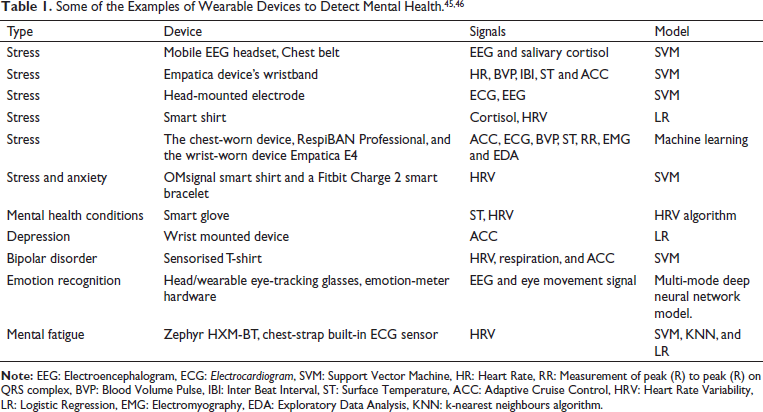
Two-thirds of the studies on wearables for depression patients actigraph units were utilized while other third made use of other devices, including a cutting-edge wearable with three accelerometers, a Parkinson’s KinetiGraph (PKG), 39 the E4 bracelet (Empatica, Boston, MA, USA), 40 as well as wearable commercial technology that was not made with medical applications in mind, like the Fitbit FlexTM (Fitbit). 41 Wearable technology was not employed as a treatment method in any of the trials we examined. Wearable technology was employed in all studies to collect participant data on the connection between biological, activity/sleep, and subjective characteristics, of depression was examined. Wearables that are worn on the wrist are becoming increasingly used as research tools since they are unobtrusive and well-known by most people. PKG and the Empatica E4 bracelet are two examples of appropriate medical gear. The PKG is a watch-like device with a three-axis accelerometer that was initially developed to assess the motor symptoms of Parkinson’s disease patients, such as bradykinesia and tremor. 42 However, it is increasingly used to treat depressed individuals who experience motor symptoms. Contrarily, the Empatica E4 is a wrist-worn device with a Photoplethysmography (PPG) sensor that can detect heart rate, an electrodermal activity (EDA) sensor, an optical thermometer for gauging peripheral skin temperature, and a three-axis accelerometer for estimating motion and sleep characteristics used to monitor alterations in the severity of patients’ depressive symptoms. A wireless physiological monitoring system, the Zephyr Bioharness 43 consists of an attached Bluetooth transmitter module and an adjustable fabric chest strap. The device has the ability to measure physiological signals in real time, including ECG, heart rate, breathing rate, skin temperature, and posture. By detecting chest movements and calculating respiratory rate through an implanted capacitive sensor comprising conductive fabric, foam, and flexible mylar, the system monitors heart rate, breathing pattern, and ST segment changes to discern an individual’s stress levels. Early examples of wearable healthcare systems that use knitted fabrics to monitor vital physiological and biomechanical signals like heart rate, breathing rate, and dehydration to study the progression of mental health in individuals going through certain life events include the WEALTHY project, the Georgia Tech Wearable Motherboard, and ProeTEX31. E-textiles, like smart shoes and colourful apparel, are the main types of clothing that double as wearables. Thync is a stress-relieving sensory patch that measures the wearer’s ECG and respiratory rate. 44 There are more sensory tattoos and patches that can be used to track human mental health issues. These were tabulated in Table 1.
Medical Device Regulation (MDR)
The Medical Device Directive (MDD)-Active Implantable Medical Devices (AIMD) (Council Directive 90/385/EEC, 1990; Council Directive 93/42/EEC, 1993), 32 as well as the new MDR (EU) 2017/745, which imposes more stringent requirements, primarily to demonstrate clinical benefit, must be met by all medical devices, including accessories, to be in compliance with regulations. Manufacturers have a responsibility to guarantee benefits and quality. The demonstration of compliance with these fundamental principles is done using international standards. The design and testing phases of wearable sensor development must adhere to the ISO 14971 (British Standards Institution, 2012) risk management standard. By adhering to this criterion, the wearable sensor is guaranteed to be free of structural flaws that could put the patient at risk or hinder its appropriate operation as judged by technical performance. 45
Clinical Phase: ISO 14155
Developers of wearable medical devices must abide by the legal and regulatory criteria that guarantee the greatest level of human protection in order to demonstrate the potential benefits of these devices. The ISO 14155 standard for acceptable clinical practices for medical device trials on human subjects is one example of this. Trials that are intended to show clinical benefit must first receive preliminary clearance from an ethics committee. To guarantee that enough data is gathered for statistically significant results, the clearance procedure includes examining the device’s risk profile, including electrical safety and software stability. An investigator booklet outlining the risk-benefit profile of the device must also be provided to the main investigator and the Ethics Committee, together with documentation of the device’s compliance with harmonized standards like IEC 60601-1. Additional safety testing may be necessary, such as biocompatibility testing in accordance with ISO 10993 or software verification in accordance with IEC 62304. 46
Legislation and Regulations for Data Privacy: Ensuring Information Security in the Digital Era
Health Insurance Portability and Accountability Act of 1996 (HIPAA): Enacted in 1996, the Health Insurance Portability and Accountability Act (HIPAA) is a federal statute that mandated the establishment of universal guidelines to prevent the unauthorized disclosure of sensitive patient health data, ensuring patient consent and awareness. 47
General Data Protection Regulation (GDPR): The European Union General Data Protection Regulation (GDPR) stands as the most robust law worldwide concerning privacy and security. This regulation enhanced and contemporarised the guidelines outlined in the 1995 data protection directive. It was officially endorsed in 2016 and became enforceable on May 25, 2018. The GDPR enumerates the entitlements of data subjects, referring to the privileges of individuals whose personal information is being handled. 48
Future Prospects
The creation of new diagnostic or treatment methods is made possible by wearable technology. In addition to measuring the aforementioned factors, sensors can also be used to assess the severity of depression and the efficacy of a treatment strategy. The use of sensors like electromyography signals, bending, and inertial sensors allows wearable technology to capture human motion as well. It has been demonstrated that people with depression exhibit motor abnormalities and varying gaits, therefore new wearable technology is expected to be used to study how movement affects depression. Recently, wearable technology for depression treatment at home was developed. According to a study, using home light therapy glasses for 60 minutes every morning can aid with depressive symptoms. Regular eyeglasses with light sensors that monitor a patient’s daily light exposure could help with both the diagnosis and treatment of depression. Wearable technology can be used in customized exercise programs for MDD patients, increase patient physical activity, and enhance medication adherence, according to an ongoing study including patients with heart failure and diabetes mellitus. A similar intervention study for individuals with depression is anticipated to take place in the future. 49 Smart devices for disorders affecting cognitive health can be pricey, making it difficult for developing nations to acquire them. Nevertheless, recent developments in digital mental health have made it possible to deliver mental health services in low-income and middle-income countries (LMICs) via smartphone applications, online programs, text messaging, telepsychiatry, and wearable technology like smartwatches. 50
The following actions can be taken by governments to make this technology available in developing nations:
Promote the creation and accessibility of accessible tools for illness prevention, disease treatment, and health promotion: One of the goals of the US government’s Healthy People 2030 plan of action is to achieve this. 51 Increase financing for mental health services because many low-income nations reported having fewer than 1 mental health worker per 100,000 people, According to recent estimates governments globally spend just over 2% of their health expenditures on mental health. The funding for mental health services can be increased, and more mental health professionals can be trained to work in LMICs. 52 Promote innovation in dementia care by asking the US Secretary of Health and Human Services to take into account choosing a cutting-edge new healthcare payment and service delivery model that is centred on dementia care and would include family carer supports like respite care. Governments in developing nations can help family carers and promote innovation in dementia care. 53
Discussion
Even while many studies have used wearable sensors to measure stress levels, there are few complete analyses of topics like mental health or sickness detection. However, some analyses cover all the bases while skipping key details like machine learning methods, classifications of mental health issues, and the classification of detection signals. To close this gap, this study investigates wearable sensor-based mental health detection in great detail. This article comprehensively analyses wearable sensor-based mental health detection to minimize this gap (Figure 2).
Various Wearable Devices Used to Monitor Mental Stress.
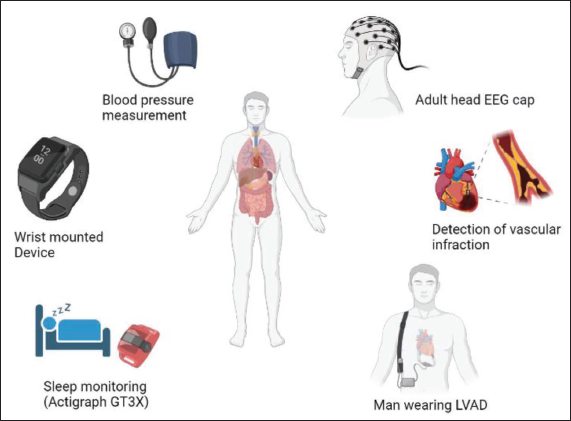
Some key findings from this analysis include the fact that most wearable sensors for data collection are worn on the wrist, chest, or head (e.g., head-mounted devices, smart t-shirts, chest straps, and wristbands). The most reliable indicators of mental health conditions are HRV, EEG, GSR, and ST. Non-invasive brain stimulation techniques have also been shown to reduce Hypothalamic Pituitary Adrenal Axis (HPA) activity and to relieve the symptoms of depression in people with depression or bipolar disorder. The majority of disease types under investigation centred on mental health issues (depression and anxiety) and psychological stress levels. The most popular platforms for data collection are Empatica and Emotion Meter. Some pandemic conditions, like COVID-19, cause symptoms in the mental health of healthcare workers such as insomnia/poor sleep quality, anxiety, depression, somatization, stress/distress, social disintegration, an inadequate sense of identity in the workplace, and fatigue Obsessive-compulsive indications, in addition to phobic signs, are prominent. 54 Prominent players in the wearable technology sector encompass Apple, Fitbit (now under Google), Samsung, Xiaomi, and Garmin. 55 Utilizing alternative sensors like mobile phone activity, body movements, and self-reported surveys can detect shifts in behaviour and emotions. These sensors offer insights into mental health changes, even in the absence of wearable devices. 56 Personal emergency response systems (PERS) represent a prevalent commercial solution, enabling individuals to alert emergency services by pressing a button. 57
Recent Research Studies on Smart Devices for Monitoring Cognitive Health Conditions
In a study from 2021, a detection mechanism centred on Alzheimer’s disease ontology was introduced, utilizing agent-based technology and smart (IoT) devices such as mobile phones and RFIDs. The primary objective of this system is to identify initial indicators of Alzheimer’s disease by observing shifts in behaviour and cognitive capabilities. 58
In a study from 2023, examining the current landscape of stress measurement, each of the showcased sensors holds its own significance. Although ECG and PPG sensors have gained popularity only recently, they exhibit great potential. Notably, HRV stands out as a crucial physiological parameter for effectively identifying stress and anxiety. It’s worth mentioning that Heart Rate (HR) and Galvanic Skin Response (GSR) sensors are the prevailing choices in terms of frequency of use. This preference is owed to their impressive outcomes and high precision in accurately gauging stress and its varying degrees. 59
Conclusion
Wearable technology has had significant success with individualized health concepts and has assimilated into our daily lives. Disrupted sleep, cognitive performance, physical activity, mood swings, heart rate, and breathing patterns are among the useful factors to research when determining mental health. The ability of technology to detect mental disease sooner is widely desired. HRV can be used to identify stress and worry. The greatest tool was HRV and EDA; EEG and physical activity can also be used in machine learning models to detect depression. The most effective physiological signs for identifying mental health disorders are the HRV, EEG, ST, and GSR signals. These devices’ dependability and validity have yet to be performed with complete accuracy; they should uphold specific security regulations, sensor technology, medical chip technology, human-computer interaction technology, and a combination of big data and cloud computing databases to create a full medical ecosystem. Future advancements in wearable technology may fundamentally alter how depression is diagnosed and treated. These developments may enable earlier and more precise depression diagnoses, the development of more individualized treatments for depression sufferers, and the creation of preventative strategies for those at risk of depression. Here, we draw the conclusion that our evaluation can advise scientists to create accurate tools for treating mental health issues.
Footnotes
Acknowledgement
The authors would like to thank the Department of Science and Technology - Fund for Improvement of Science and Technology Infrastructure (DST-FIST) and Promotion of University Research and Scientific Excellence (DST-PURSE) for the facilities provided for conducting the research.
Authors’ Contribution
Vivek Reddy did the planning and supervision of the work, statistical evaluation of data, Rudhresh D, Krushika Dharmendar Jani, Vaishnavi Parimala T writing the manuscript, and Gaddam Narasimha Rao had done proofreading. GNK Ganesh was involved in manuscript editing and overall supervision.
Declaration of Conflicting Interests
The authors declared no potential conflicts of interest with respect to the research, authorship and/or publication of this article.
Funding
The authors received no financial support for the research, authorship and/or publication of this article.
