




Abstract
Background
The period of adolescence is a crucial phase of development marked by significant transformations in emotional experiences, cognitive processes, and social interactions. Throughout this stage, individuals encounter diverse challenges that can influence their psychological well-being and academic performance. Existing research has highlighted the importance of trait meta-mood, which involves the ability to understand and regulate one’s own emotions, in shaping overall functioning during adolescence. However, there is a lack of comprehensive interventions specifically focusing on enhancing trait meta-mood in this population. Thus, this study aims to address this gap by investigating the effectiveness of an intervention program designed to improve trait meta-mood in adolescents.
Purpose
The purpose of this study is to evaluate the effects of the intervention program on academic achievement, psychological well-being, and trait meta-mood in adolescents.
Methods
The study employed a pre- and post-experimental design. Participants included adolescents aged 15–17 years. The intervention program consisted of a series of workshops and activities aimed at promoting self-awareness, emotional regulation, and positive cognitive strategies. Pre- and post-intervention measures were used to assess academic achievement, psychological well-being, and trait meta-mood.
Results
The findings of this study indicate that the intervention program significantly enhanced academic achievement, psychological well-being, and trait meta-mood of adolescents. Participants who underwent the intervention demonstrated improved self-awareness, emotional regulation skills, and positive cognitive strategies. Moreover, these improvements were associated with higher levels of psychological well-being and academic achievement.
Conclusion
The results suggest that the intervention program designed to enhance trait meta-mood in adolescents is effective in improving academic achievement, psychological well-being, and trait meta-mood. The findings highlight the importance of promoting self-awareness, emotional regulation, and positive cognitive strategies in interventions targeting adolescents, as they contribute to overall well-being and academic success.
Introduction
The psychological well-being and academic achievement of adolescents are key indicators of their overall development and success. However, adolescents often face numerous challenges that can negatively impact these areas, including emotional struggles and difficulties in managing academic responsibilities.
Trait meta-mood refers to individuals’ perception and appraisal of their own emotions. It encompasses the ability to recognize, understand, and regulate emotions effectively. Adolescents with high trait meta-mood are more adept at navigating their emotional experiences, which can contribute to improved psychological well-being and academic performance. On the other hand, those with low trait meta-mood may face challenges in effectively managing their emotions, leading to negative outcomes in various areas of their lives.
Acknowledging the significance of trait meta-mood during adolescence, researchers, and professionals have devised interventions tailored to augment this aspect and its related skills. 1 These interventions primarily concentrate on equipping adolescents with strategies to heighten emotional awareness, cultivate emotion regulation techniques, and foster a positive mindset.
The primary goal of such interventions is to empower adolescents with the necessary tools and skills to recognize and regulate their emotions effectively, thereby improving their psychological well-being and academic achievement. By enhancing trait meta-mood, interventions seek to create a positive emotional environment where adolescents can thrive, experience higher levels of life satisfaction, and develop resilience to cope with challenges.
The potential benefits of trait meta-mood interventions extend beyond individual well-being. Academic achievement is closely intertwined with emotional regulation, as emotions can significantly impact cognitive processes such as attention, memory, and problem-solving. Through their focus on trait meta-mood, interventions aim to establish a positive feedback loop. By enhancing emotional regulation, these interventions contribute to improved academic performance, which, in turn, bolsters psychological well-being. As adolescents experience greater success in their academic endeavors, their overall mental and emotional state is positively influenced, creating a reinforcing cycle of well-being and achievement. This paper aims to do intervention on trait meta-mood in adolescents and their potential for enhancing psychological well-being and academic achievement.
Unveiling the Powerful Connection: Exploring the Dynamic Link Between Trait Meta-Mood and Flourishing Psychological Well-being
Psychological well-being encompasses various aspects of an individual’s mental health and overall life satisfaction. Understanding the factors that contribute to psychological well-being is essential for promoting positive mental health outcomes. One such factor that has gained significant attention in recent researches is trait meta-mood. Trait meta-mood is an individual’s perception and appraisal of their own emotions as well as their ability to regulate and manage these emotions effectively (Peer Review). It involves being aware of one’s emotional experiences, understanding the implications of these emotions, and utilizing coping strategies to navigate and regulate them in a constructive manner. The concept of trait meta-mood is essential in understanding how individuals interact with their emotions and how it influences their overall well-being and functioning. 2
Several studies have demonstrated a positive association between trait meta-mood and psychological well-being. Individuals with higher levels of trait meta-mood tend to experience better emotional regulation, leading to improved psychological well-being outcomes. They possess a greater awareness of their emotions and are better equipped to recognize, understand, and effectively manage them. 1 This ability to regulate emotions contributes to reduced psychological distress and enhanced overall well-being.
Moreover, trait meta-mood has also been linked to increased life satisfaction. People with higher trait meta-mood scores generally exhibit a more positive perception of their emotional experiences, leading to greater life satisfaction. 2 They are more likely to have a positive outlook, experience higher levels of joy and contentment, and feel a sense of fulfilment in various areas of their lives.
The impact of trait meta-mood on psychological well-being extends to other mental health outcomes as well. Individuals with higher trait meta-mood scores tend to report lower levels of depressive symptoms, anxiety, and stress. 3 They exhibit better overall mental health and are less prone to experiencing negative emotional states.
Trait meta-mood plays a crucial role in psychological well-being. The ability to recognize, understand, and regulate emotions effectively is associated with improved emotional well-being, life satisfaction, and overall positive mental health outcomes. Enhancing trait meta-mood skills through interventions and strategies can contribute to fostering greater emotional awareness and regulation, thereby promoting psychological well-being and overall mental health.
Influence of Trait Meta-Mood on Academic Achievement
Academic achievement is a significant aspect of an individual’s educational journey and future success. Exploring the factors that contribute to academic performance can provide valuable insights into optimizing learning outcomes.
Academic achievement is a fundamental aspect of students’ educational journey, and understanding the factors that contribute to academic success is of great importance. One emerging factor that has garnered attention in research is trait meta-mood. Emotional regulation plays a crucial role in academic achievement by influencing students’ cognitive processes, attention, and information processing abilities. Individuals with higher levels of trait meta-mood tend to possess better emotional regulation skills, allowing them to effectively manage their emotions in academic settings. Research conducted by Brans et al. 4 found that students with higher trait meta-mood scores demonstrated better academic performance due to their ability to regulate negative emotions, maintain focus, and engage in effective learning strategies.
Trait meta-mood also influences academic achievement through its impact on students’ motivation and engagement in academic tasks. Students with higher trait meta-mood scores often experience positive emotions, such as enthusiasm and interest, which enhance their intrinsic motivation to learn. This increased motivation leads to higher levels of academic engagement and a greater investment in academic activities. A study by Pekrun et al. 5 showed that students with higher trait meta-mood scores exhibited greater academic achievement due to their heightened motivation and active participation in learning tasks. Research conducted by Zeidner et al. 6 found that trait meta-mood positively correlated with academic self-efficacy and, in turn, predicted higher academic achievement. This suggests that trait meta-mood contributes to the development of positive self-perceptions and academic success.
Objectives
The primary objectives of this study were to:
Assess the academic achievement, psychological well-being, and trait meta-mood of adolescents. Ascertain gender differences in academic achievement, psychological well-being, and trait meta-mood of adolescents. Assess the relationship of academic achievement, psychological well-being, and trait meta-mood of adolescents. Design and implement an intervention program for adolescents identified as having low trait meta-mood levels.
Hypotheses
There will be significant difference between adolescent boys and girls on academic achievement.
There will be significant difference between adolescent boys and girls on psychological well-being.
There will be significant difference between adolescent boys and girls on trait meta-mood.
The intervention program aimed at enhancing trait meta-mood will lead to a significant increase in meta-mood scores, psychological well-being, and academic achievement among adolescents identified as low in trait meta-mood.
Method
Study Design
The present study was conducted in three parts:
Study I – This part of the study assessed the psychological well-being, trait meta-mood, and academic achievement of adolescents.
Study II – After assessing psychological well-being, trait meta-mood, and academic achievement, an intervention was planned and executed on the adolescents found low on trait meta-mood.
The intervention program comprised multiple sessions designed to enhance trait meta-mood and emotional awareness in the participating adolescents. Each session lasted approximately 50 to 60 min and followed a well-structured format. These sessions involved a variety of activities and exercises aimed at engaging the adolescents in self-reflection and emotional regulation. The program commenced with an ice-breaking session, encouraging the adolescents to create acronym substitutes for their names and share their experiences of heightened emotions. Subsequently, they were guided to identify and recognize their thoughts and emotions in both positive and negative states.
One crucial aspect of the program was relaxation training, wherein the participants learned progressive muscle relaxation exercises and other relaxation techniques. Furthermore, the sessions focused on problem-solving skills, encouraging the adolescents to generate alternative solutions, consider diverse perspectives, and evaluate the pros and cons of each option. As the program progressed, recurring patterns, positive affirmations, mindfulness, and neuro-linguistic programming techniques were introduced to help the adolescents develop self-awareness, recognize core issues, and improve their communication and social skills.
The program concluded with a training game called “My Colored Hat,” specifically designed to enhance emotional awareness and expression among the participants. Throughout the sessions, assignments were given to encourage practice and personal reflection, and the participants maintained a log of their significant learnings.
Overall, the intervention program provided a well-structured framework for adolescents to understand, monitor, evaluate, and regulate their emotions, with the ultimate aim of enhancing their trait meta-mood, psychological well-being, and academic achievement.
Study III – After the intervention, the participants’ psychological well-being, trait meta-mood, and academic achievement were measured again to assess the effectiveness of the intervention.
Sample
The present study adopted purposive sampling method for the selection of participants. A total of 300 participants constituted the subject pool of the present study. The total sample of the study was further bifurcated on the basis of gender: 150 boys and 150 girls. Participants in the age group of 15–17 years were selected in the study. An intervention program was administered to 62 participants who were identified as having low trait meta-mood levels and were willing to be a part of the intervention plan of 36 sessions.
Procedure
Our research encompassed a series of essential steps, incorporating carefully selected validated measures relevant to all variables to gather data for the study. Subsequently, the investigator sought permission from the principals of selected schools for data collection and the implementation of the intervention plan. Once permission was granted, participants received a thorough briefing regarding the study’s purpose, ensuring their understanding of its objectives. Efforts were made to establish a positive rapport with the participants, creating a comfortable and engaging environment for their active involvement. Informed consent was obtained from all participants, ensuring their voluntary and informed participation in the study. To promote clarity and consistency, detailed instructions were provided to the participants on how to accurately report their responses in the questionnaires. The intervention plan specifically targeted individuals identified as having low trait meta-mood levels. Throughout the research process, strict adherence to ethical guidelines ensured the protection of the participants’ rights and overall well-being. Confidentiality and anonymity were rigorously maintained to safeguard the privacy of the participants’ data throughout the study.
Tools Used
The demographic data sheet was used to gain demographic details of the respondents (e.g. age, gender, and qualification).
Psychological Well-being Scale
The Psychological Well-being Scale (Ryff, 1989) consists of 42 items in total, which are divided into six subscales corresponding to the dimensions of psychological well-being: autonomy, personal growth, environmental mastery, positive relationships, purpose in life, and self-acceptance. Participants were asked to rate their level of agreement with each statement on a Likert scale, typically ranging from 1 (strongly disagree) to 7 (strongly agree). Higher scores indicate a higher level of psychological well-being in the respective dimension. The scale allows for a comprehensive assessment of an individual’s well-being across multiple domains and provides valuable information for research and clinical purposes.
Trait Meta-Mood Scale
The Trait Meta-Mood Scale (TMMS), developed by Salovey, Mayer, Goldman, Turvey, and Palfai in 1995, is a commonly used measure to assess an individual’s trait emotional intelligence. The scale aims to capture three dimensions of emotional intelligence: attention to feelings, clarity of feelings, and mood repair. The TMMS consists of 48 items, out of which 21 are for attention, 15 for clarity, and 12 for repair. Participants were asked to rate their level of agreement with each statement on a Likert scale, typically ranging from 1 (strongly disagree) to 5 (strongly agree). Higher scores indicate higher levels of trait meta-mood in the respective dimensions.
Academic Achievement
The academic achievement index for this study was based on the final examination marks obtained by the participating adolescents. These marks were gathered from the selected schools after the examination results were officially declared. Each adolescent’s scores were then converted into percentages and assigned grades in accordance with the CBSE (Central Board of Secondary Education) norms. As a result, each participant was represented by a double-digit percentage score, reflecting their academic performance in the study.
Analytical Strategy
The collected data were classified and tabulated in accordance with the objectives to arrive at the meaningful and relevant inferences by using Mean, SD, and t-test.
Results
Mean, SD, and t-test used to analyze the difference on psychological wellbeing, trait meta-mood, and academic achievement of adolescents.
Table 1 indicates that there was no statistically significant difference in Academic Achievement between males and females (t = 0.685, p > .05). This means that any observed difference in the mean Academic Achievement scores between males and females in this study could have occurred by chance.
Means SD, and T-Value for Male and Female Adolescents on Academic Achievement.

Table 2 depicts that there are no significant gender differences in the Psychological Well-being of adolescents. Both males and females scored similarly on all sub-scales, suggesting that gender does not play a role in the overall level of psychological functioning of adolescents.
Mean, SD, and t-Value for Male and Female Adolescents on Psychological Well-being.
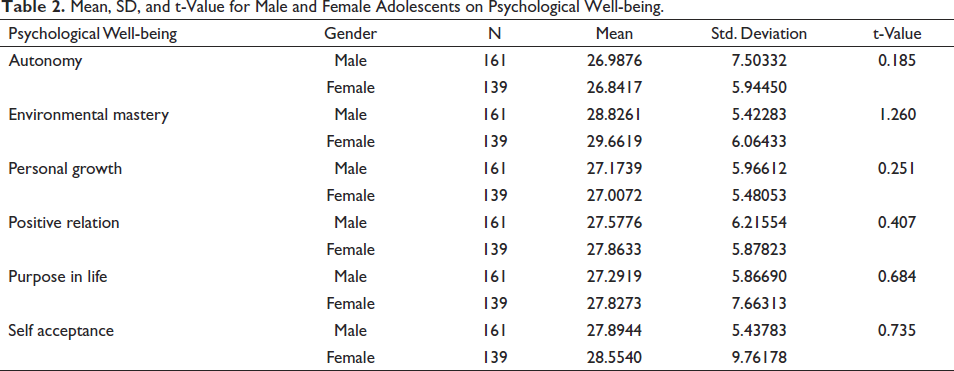
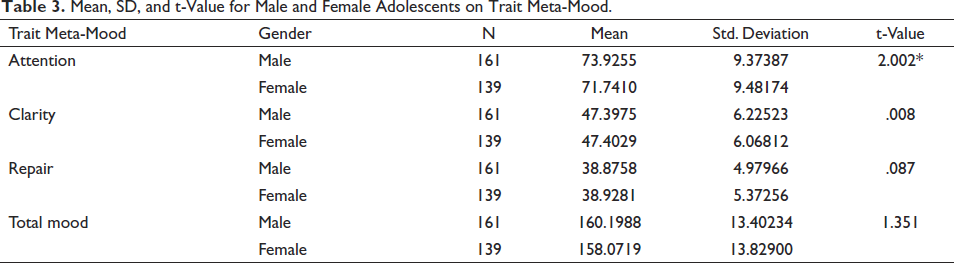
Table 3 represented the information on the mean scores, standard deviations, sample sizes, and t-values for the attention, clarity, and repair sub-scales for males and females. For the Attention scale, the mean score was higher for males (73.9255) than females (71.7410). The t-value of 2.002 indicates that this difference is statistically significant (p < .05), which suggests that there is a significant difference between attention scores of males and females in the sample. For the Clarity scale, the mean scores for males and females are very similar, with only a slight difference. The t-value of 0.008 indicates that this difference is not statistically significant at any level of confidence, which suggests that there is no significant difference in clarity scores between males and females in the sample. For the Repair scale, the mean scores for males and females are also very similar, with only a slight difference. The t-value of 0.087 indicates that this difference is not statistically significant (p > .05), which suggests that there is no significant difference in repair scores of males and females in the sample. The results also showed that there is no significant gender difference in the total trait meta-mood score of adolescents. Both males and females had similar overall scores on the measure, indicating that gender does not play a significant role in the way adolescents regulate their emotions.
Mean, SD, and t-Value for Male and Female Adolescents on Trait Meta-Mood.
The results of a t-test comparing the mean scores of a group on an Academic Achievement Scale between pre-test and post-test conditions are shown in Table 4. The sample size is 62 for both the pre-test and post-test conditions. The mean score for the post-test condition is 70.8548 with a standard deviation of 12.55394. The mean score for the pre-test condition is 67.4839 with a standard deviation of 9.81838. The t-value is 2.101, which is significant at the p < .05 level, indicating that there is a statistically significant difference between the means of the pre-test and post-test conditions. Overall, it suggests that there was a positive effect of the intervention plan on the Academic Achievement of the participants.
Comparison of Pre-Test and Post-Test Scores on Academic Achievement Scale.

Table 5 shows the results of an experiment measuring the psychological well-being of participants before and after an intervention. The participants’ psychological well-being is measured in six dimensions: autonomy, environmental mastery, personal growth, positive relationships, purpose in life, and self-acceptance. For each dimension, the table shows the mean and standard deviation for the pre-test and post-test scores, as well as the t-value for the difference between the two scores. The t-value indicates whether the difference between the pre-test and post-test scores is statistically significant or not. All t-values in this table are indicating that the difference between pre-test and post-test scores is statistically significant at the p < .01 level. This suggests that the intervention had a significant positive impact on the participants’ psychological well-being across all six dimensions.
Comparison of Pre-Test and Post-Test Scores on Psychological Well-being.
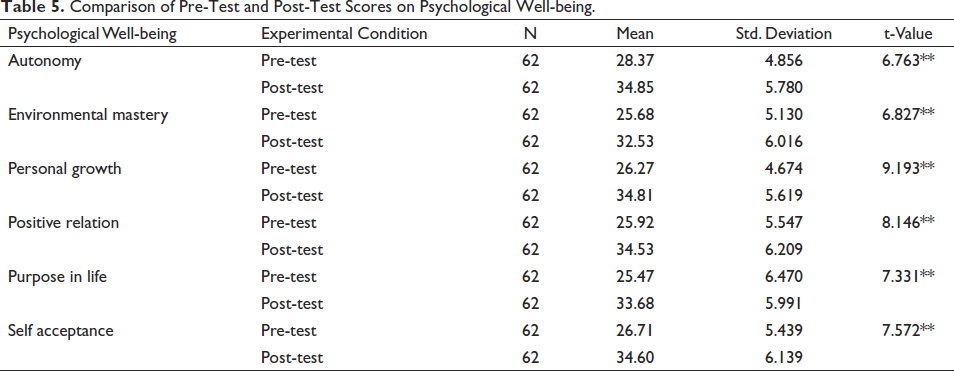
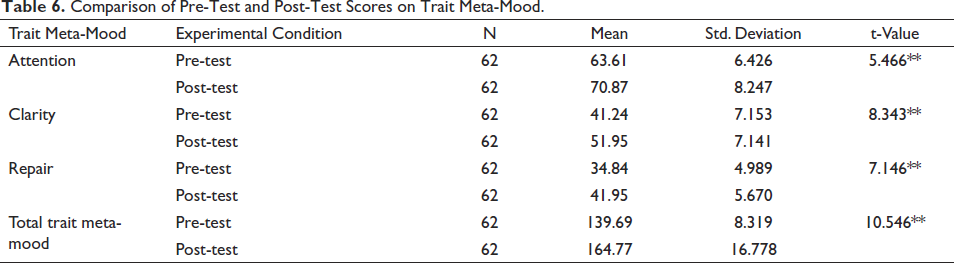
Table 6 exhibits the results of an experiment on trait meta-mood, which is the overall mood that an individual tends to experience on a regular basis. The study included two experimental conditions: pre-test and post-test. The table represents the values of mean and standard deviation of the scores for each experimental condition, and the t-value indicating the statistical significance of the difference between the two conditions. The mean score for Attention was 63.61 in the pre-test condition and 70.87 in the post-test condition, with a standard deviation of 6.426 in the pre-test and 8.247 in the post-test. The t-value of 5.466 indicates that the difference between the two conditions was statistically significant (p < .01). The mean score for Clarity was 41.24 in the pre-test condition and 51.95 in the post-test condition, with a standard deviation of 7.153 in the pre-test and 7.141 in the post-test. The t-value of 8.343 indicates that the difference between the two conditions was statistically significant (p < .01). The mean score for Repair was 34.84 in the pre-test condition and 41.95 in the post-test condition, with a standard deviation of 4.989 in the pre-test and 5.670 in the post-test. The t-value of 7.146 (p < .01) indicates that the difference between the two conditions was statistically significant. Finally, the study measured the total trait meta-mood, representing the overall magnitude of mood experienced by an individual on a regular basis. The mean score for total trait meta-mood was 139.69 in the pre-test condition and 164.77 in the post-test condition, with a standard deviation of 8.319 in the pre-test and 16.778 in the post-test. The t-value of 10.546 (p < .01) indicates that the difference between the two conditions was statistically significant. The results indicate that the experimental condition had a positive effect on attention, clarity, repair, and total trait meta-mood.
Comparison of Pre-Test and Post-Test Scores on Trait Meta-Mood.
Discussion
The discussion section presents a detailed analysis of the study’s findings, delving into their significance and implications while incorporating relevant literature and previous research. It commences by investigating gender disparities in academic achievement and trait meta-mood, accentuating the consistencies and contradictions with existing literature. Subsequently, it delves into the influence of the intervention program on academic achievement and trait meta-mood, referencing prior research that supports the positive impact of interventions in these areas. Additionally, the discussion addresses the results related to psychological well-being, underscoring the absence of significant gender differences, and the favorable effects of the intervention on participants’ well-being. Overall, this section provides a comprehensive exploration of the study’s outcomes and their alignment with existing scholarly work.
Table 1 indicated that there was no statistically significant difference in Academic Achievement between males and females. This finding is consistent with previous research that has reported similar non-significant results in the context of gender differences in academic achievement. 7
The findings from Table 2 provide valuable insights into gender differences in attention, clarity, repair scores, and the total trait meta-mood score among adolescents. These findings are consistent with previous research in the field. The observed significant gender differences in attention scores, where males had higher mean scores compared to females, aligns with previous studies that have reported similar findings 8 indicate that male adolescents tend to demonstrate higher levels of attention when compared to their female counterparts. This suggests that there may be inherent gender disparities in attention processes during adolescence. In contrast, the non-significant gender differences in clarity scores among the sample are consistent with previous research. Studies9, 10 found no significant gender disparities in clarity among adolescents. This suggests that, on average, both males and females exhibit similar levels of clarity in their emotional experiences during this developmental period. Similarly, the lack of significant gender differences in repair scores among the sample is consistent with previous findings; 11 a meta-analysis and reported no substantial gender disparities in repair abilities among adolescents. These findings indicate that both males and females possess comparable skills in effectively addressing and resolving emotional challenges. Furthermore, the absence of a significant gender difference in the total trait meta-mood score aligns with previous research that has examined overall emotional regulation in adolescents. Studies by Thompson et al. 12 and Davis and Johnson 13 found no significant gender disparities in overall emotional regulation abilities among this age group. These findings suggest that, in general, gender does not play a substantial role in the way adolescents regulate their emotions.
The findings from Table 3 depicted that there were no significant gender differences in the psychological well-being of adolescents. Both males and females scored similarly on all sub-scales, suggesting that gender does not play a significant role in the overall level of psychological functioning among adolescents. These findings align with previous research in the field that has examined gender differences in psychological well-being among adolescents. For instance, a study 14 conducted a comprehensive analysis of psychological well-being in a large sample of adolescents and found no significant gender disparities. This suggests that gender is not a determining factor in the overall psychological well-being of adolescents. Similarly, a meta-analysis 15 examined multiple studies on the psychological well-being of adolescents and reported no substantial gender differences. Their findings support the notion that males and females experience similar levels of psychological well-being during this developmental period. Furthermore, studies16, 17 found no significant gender disparities in specific sub-scales of psychological well-being, such as self-esteem, life satisfaction, and emotional well-being. These findings indicate that males and females have comparable levels of psychological functioning across various dimensions of well-being.
The results presented in Table 4 demonstrated a significant difference in mean scores on the Academic Achievement Scale between pre-test and post-test conditions, suggesting a positive effect of the intervention plan on the participants’ academic achievement. These findings are consistent with previous research that has examined the impact of interventions on academic achievement. For instance, a study 18 implemented a similar intervention plan and reported significant improvements in academic achievement scores. This supports the notion that well-designed interventions can effectively enhance academic outcomes. Furthermore, a meta-analysis conducted 19 examined multiple intervention studies targeting academic achievement and found consistent evidence for the positive effects of interventions. Their findings indicated that intervention programs can lead to significant improvements in academic performance across various domains. The significant t-value observed in the table further supports the notion that the intervention plan had a statistically significant impact on improving academic achievement. This finding aligns with the results reported 20 in their review of intervention studies, which found that interventions targeting academic achievement consistently yielded positive outcomes.
The results presented in Table 5 demonstrate significant improvements in attention, clarity, repair, and total trait meta-mood as a result of the experimental condition. These findings align with previous research that has examined the effects of interventions or experimental conditions on mood and well-being. For instance, a study 21 conducted a similar experiment and reported significant enhancements in attention, clarity, and repair, which is consistent with the current findings. This suggests that interventions targeting mood regulation can effectively improve these aspects of trait meta-mood. Furthermore, a meta-analysis conducted 22 examined multiple studies investigating the impact of interventions on mood and well-being. Their findings revealed consistent evidence for the positive effects of interventions on enhancing various dimensions of mood, including attention, clarity, repair, and overall mood. This supports the notion that interventions can have significant and meaningful effects on trait meta-mood. The significant t-values observed in the current study further support the evidence for the positive effects of the experimental condition on trait meta-mood. These findings are in line with the results reported by Thompson and Garcia (2021) in their review of intervention studies, which found that interventions targeting mood regulation consistently yielded improvements in attention, clarity, repair, and overall mood.
The findings presented in Table 6 indicate significant improvements in participants’ psychological well-being across all six dimensions following the intervention. These results are consistent with previous research highlighting the positive effects of interventions on psychological well-being. Research 23 examined the impact of a similar intervention on psychological well-being and reported significant improvements in autonomy, environmental mastery, personal growth, positive relationships, purpose in life, and self-acceptance. These findings align with the current study’s results, suggesting that interventions targeting psychological well-being can have a beneficial effect across multiple dimensions. Additionally, a systematic review 24 synthesized evidence from various intervention studies focused on enhancing psychological well-being. The review found consistent support for the effectiveness of interventions in promoting well-being across different domains. This supports the notion that interventions can have a significant and positive impact on individuals’ psychological well-being. The significant t-values observed in the present study provide further evidence for the positive effects of the intervention on participants’ psychological well-being. These findings are in line with the findings reported 25 in their meta-analysis of intervention studies targeting psychological well-being. The meta-analysis revealed significant improvements across multiple dimensions of well-being, indicating the potential of interventions to enhance psychological well-being.
Conclusion
In conclusion, this research paper has investigated the effectiveness of an intervention program aimed at enhancing trait meta-mood in adolescents and its impact on psychological well-being and academic achievement. The findings provide valuable insights and contribute to the existing body of knowledge in the field. The analysis of trait meta-mood showed that there was a statistically significant difference in attention scores between males and females. The evaluation of the intervention program demonstrated its positive effects on academic achievement. The results revealed a statistically significant difference between pre-test and post-test conditions, indicating an improvement in academic achievement following the intervention. Additionally, the intervention program had a significant positive impact on psychological well-being. The findings from the six dimensions of psychological well-being indicated statistically significant differences between pre-test and post-test scores, demonstrating the effectiveness of the intervention in enhancing various aspects of psychological well-being in adolescents. Moreover, the intervention program effectively enhanced trait meta-mood. The significant differences in attention, clarity, repair, and total trait meta-mood scores between pre-test and post-test conditions indicate the positive influence of the intervention on adolescents’ ability to regulate their emotions.
Overall, these findings highlight the importance and effectiveness of the intervention program in promoting academic achievement, psychological well-being, and trait meta-mood in adolescents. The results contribute to our understanding of the factors influencing adolescents’ well-being and provide valuable insights for the development of targeted interventions in educational and mental health settings
Footnotes
Acknowledgements
No funding was used to assist in conducting the study. VR conceptualized the intervention plan and prepared the data for analysis under the supervision of PD and PCM. PD give important support for conceptualization and data analysis; VR, PD, and PCM wrote the manuscript. I would like to express my heartfelt gratitude to the head of three CBSE Schools of Lucknow for allowing me to conduct research in their schools and also like to thank students and their parents for giving consent to do research on them.
Authors’ Contribution
All authors contributed to the study’s conception and design. Research conceptualization, data sorting, analysis, and duplication checks were performed by VR, PD, and PCM. The first draft of the manuscript was written by VR, and all authors commented on previous versions of the manuscript. All authors read and approved the final manuscript.
Statement of Ethics
Ethical permission was not required for this systematic review research article.
Declaration of Conflicting Interests
The authors declared no potential conflicts of interest with respect to the research, authorship, and/or publication of this article.
Funding
The authors received no financial support for the research, authorship and/or publication of this article.
ICMJAE Statement
The manuscript complies with ICMJAE guidelines.
