




Abstract
Background
COVID-19 has brought many hurdles, and people have had to adjust to new ways. The online class was one such adjustment. Students in health science and engineering streams have more practical learning than theory. The online classes halted the normal teaching-learning processes and brought in unique set of difficulties which was a challenge to both the teacher and the student.
Purpose
This study was undertaken to understand the effect of online learning on achievement motivation among health sciences and engineering students during the COVID-19 pandemic and to find out if there is a significant difference across gender, age, type of internet connectivity, and rural/urban areas.
Methods
This was a survey-based comparative study. The sample size was 440 and consisted of health science and engineering undergraduate college students, both male and female, in the age group of 17–24 years. Data were collected through the Achievement Motivation Scale given online. A descriptive, z-test, and ANOVA were used to analyze the data.
Results
The average need for motivation was shown by 50% of engineering students and 54.55% of health science students. High motivation was shown by only 1.36% of engineering students and 0% of health science students. Females showed better achievement motivation than males, and those having good connectivity and staying in urban areas showed higher achievement motivation.
Conclusion
Lockdowns cannot be predicted, but the government needs to be effective in its planning for the rural population with regards to internet connectivity. Policymakers concerned with education should come up with modified teaching strategies for better student engagement. Even during regular off-line teaching, one day a week should be devoted to online classes so that this becomes part of the regular curriculum.
Keywords
Introduction
Achievement is thought to be an essential source of human motivation. This was conceptualized by the American psychologist Henry Murray in the late 1930s. 1 Achievement means to work with an aimed purpose toward a high and specific goal and to be determined to win. Late, this concept was popularized in 1961 by David McClelland, who asserted that a deciding factor in the level of success in life is the internal desire to achieve. 2 Academic achievement is very challenging and may have many factors promoting it. These can have a positive or negative impact on students’ academic achievement, and they include learning-teaching methods 3 and the circumstances in which students find themselves 4 factors originating from the students themselves 5 and factors originating from the school and teachers. 6 The pandemic was a very stressful event for everybody, including students and teachers, causing stress, but stress is seen as a normal aspect of human existence. 7 According to Khan et al., stress is a common and significant component of academic life. But to perform under stressful conditions, they need to be highly motivated in life. 8 Achievement motivation is the behavior of an individual who endeavors to accomplish something and tries to excel in a performance by doing his best. 9 Rather than achievements themselves, it is said to be the attitude to achieve that is important. 10 Students are driven to a particular task, which they perform voluntarily, because they get a sense of accomplishment. 11 They understand that their performance will be appraised in association with some standard of excellence. Hence, they are known as achievement-oriented. But this happens only when you like what you are doing and are able to overcome all the challenges along the way. The pandemic was a sudden challenge, forcing online studies. Since February–March 2020, when the teaching went online, some of the students were able to adjust to the situation and had all the facilities, but those with some challenges like poor internet connectivity, rural areas that had internet disturbances, and so on could not adjust to situations beyond their control. It can be said that many intrinsic and extrinsic factors are responsible for the achievement motivation construct, 12 which needs to be explored and changed wherever needed. Even good mental and physical health is needed for achievement motivation. 13 The students belonging to medical streams have more practical experience, and their learning is hospital-based. But they could not attend hospital work as hospitals had more COVID-19 cases. The two streams, namely, engineering and health sciences, have skill-based subjects that need practice for better understanding. This includes experiments in laboratories, working in labs, assignments, and projects. Since long, engineering education was based on content, hands-on, and design-oriented, and the aim was to create critical and problem-solving skills. 14 Interest is created in theory when people understand the practical aspects better. Peer groups also help with this understanding. Thus, academic achievement is the knowledge gained not only from college instructions and assignments but also from vast experiences gained from college than family. 15 The difference in family environment and college peer group creates a vast gap in study attitudes. The pandemic brought a holiday-like environment, but with restrictions. On top of that were the experimental online classes, for which even the teachers and professors were not prepared initially. Researchers have talked about the benefits of offline learning 16 that may not remain the same in remote learning.17, 18 Hence, this study was undertaken to find out about the achievement and motivation levels of health science and engineering stream students in the Nagpur region, so as to know the challenges of online learning and come up with solutions for further improvement.
Methods
Objectives
To study the achievement motivation of health sciences and engineering field students in Nagpur region during the COVID-19 pandemic and to find out if there is any significant difference between the students of the two streams with regard to gender, age, area of stay (rural/urban), and quality of internet connectivity.
Hypotheses
H1: There is no significant difference in the levels of achievement motivation of health sciences and engineering field students during the COVID-19 pandemic.
H2: There is no significant difference in the levels of achievement motivation of health sciences and engineering field students with regard to gender during the COVID-19 pandemic.
H3: There is no significant difference in the levels of achievement motivation of health sciences and engineering field students with regard to age during the COVID-19 pandemic.
H4: There is no significant difference in the levels of achievement motivation of health sciences and engineering field students with regard to the quality of internet connectivity during the COVID-19 pandemic.
H5:There is no significant difference in the levels of achievement and motivation of health sciences and engineering field students with regard to area of stay (urban/rural area).
Research Methodology
The study was a survey-based comparative study between two groups. The study participants were from health science and engineering colleges in the Wanadongri area of Nagpur district, Maharashtra, India. The engineering students belonged to Civil, Computer Science, Electrical, Electronics, Electronics and Telecommunication, Information Technology, and Mechanical. The health science students were from Ayurveda, B.Sc. Nursing, General Nursing and Midwifery, and Physiotherapy. The students were selected as clusters from each section of their discipline randomly from the health science and engineering colleges of Nagpur District. The colleges were selected based on their geographic location, which was conveniently accessible to the researchers for data collection. The participating colleges had online teaching during COVID-19. The students belonged to the age group of 17–24 years, both male and female. The sample size was 440. The sampling technique was non-probability-convenient sampling. Only those students were included who had been using online teaching for more than six months and were not suffering from any major diseases or psychiatric issues. Students with any of the following conditions were excluded from this study: Students who were COVID positive or who had major psychiatric issues, and those who had family members with chronic disease conditions. We confirm that all methods of data collection were carried out as per relevant guidelines and regulations. The participants were first contacted on telephone and explained about the study. Their doubts were clarified. Informed consent was obtained from the participants. They were then shared with the online form consisting of the tools. In all, 507 students shared the online data collection tool for achievement motivation. The forms received back were 228 from engineering and 225 from health sciences. 54 participants did not respond. The response rate was 89%. But some of the responses received were not complete, hence excluded. 440 participants had filled out the forms completely.
Tools for Data Collection
Variables
Independent variables: Online teaching.
Dependent variables: Achievement and motivation.
Extraneous variables: Gender, age, area of stay, quality of internet connectivity.
Results
Statistical analysis was done using descriptive statistics, the z-test, and ANOVA, and the software used in the analysis was SPSS 27.0. All analysis was done at a 5% (p <.05) level of significance.
Demographic Information
Table 1 shows the demographic details of the participants. The students had engineering and health science backgrounds. In engineering, males were 45.45% and females were 55.55%. Among health science students, males were 22.73% and females were 77.27%. The age group was from 17 to 24 years. Engineering students belonged to various streams like civil (7.27%), computer science (32.73%), electrical (0.45%), electronics (18.64%), electronics and telecommunications (15.91%), information technology (6.82%), and mechanical (18.18%). The health science students belonged to B.Sc. Nursing (31.36%), GNM (41.82%), physiotherapy (18.64%), and ayurveda (8.18%). Students were from rural and urban areas. A rating scale was given to gather information about internet connectivity, which was categorized as good, satisfactory, and poor.
Demographic Details of the Participants.
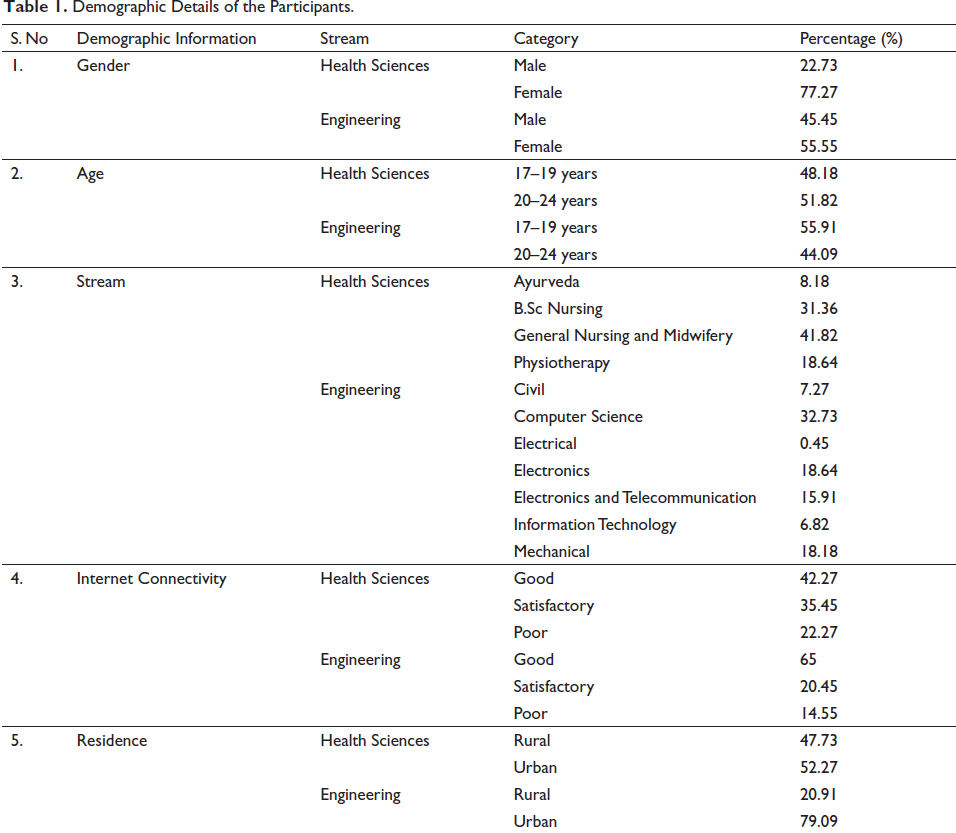
Figure 1 shows the distribution of students according to their level of achievement and motivation. Among engineering students low motivation was seen in 6.82%, average motivation in 50%, below average motivation in 23.18%, above average motivation in 18.64%, and high motivation in 1.36% of students. Among health science students low motivation was seen in 8.18%, average motivation in 54.55%, below average motivation in 18.64%, and above average motivation in 18.64%, but none of the students showed high motivation.
Distribution of Students According to Their Level of Achievement.
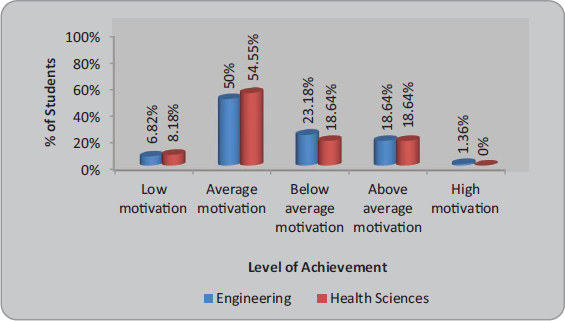
Figure 2 shows the comparison of raw scores among engineering and health science students. Z-test was done for the difference between the two means. The test statistic Z equals 0.63, and the p-value equals 0.52, which is not significant. Thus, hypothesis 1 is accepted: “There is no significant difference in the achievement motivation of health sciences and engineering field students in Nagpur region during the COVID-19 pandemic.”
Z-Test for Difference Between Two Means.
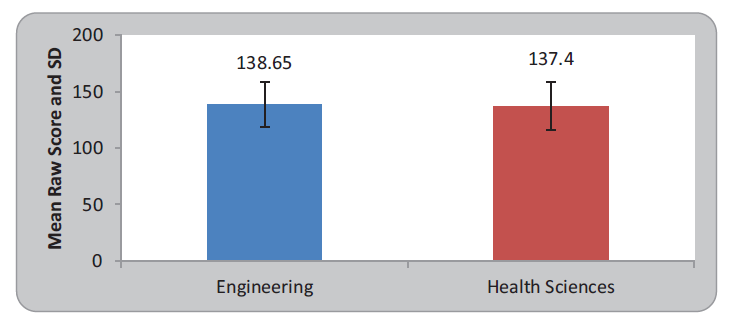
Table 2 shows that for gender, the p-value (.003) is less than.05; hence, we reject hypothesis 2 and say that there is a significant difference between health sciences and engineering field students in their achievement motivation with regard to gender.

Two-Way ANOVA for Gender.

The p-value is greater than for student type, and their interaction effect with gender is.11 or.28 >.05; hence, we conclude that there is no difference in achievement motivation with regard to student type, and the effect of gender in achievement motivation does not depend on the effect of student type (engineering and health sciences) in achievement motivation. It can be seen that the average score of achievement motivation for females (140) is higher than average score for males (135), and the difference is significant as per the ANOVA. Hence, we can conclude that females are better at achievement motivation than males.
Table 3 shows that for age, the p-value (.074) is greater than.05; hence, hypothesis 3 is accepted: “There is no significant difference between health sciences and engineering field students in their achievement motivation with regard to age.”
Two-Way ANOVA for Age Group.

The p-value is greater than for student type, and their interaction effect with age is.61 or.67 >.05; hence, we conclude that there is no difference in achievement motivation with regard to student type, and the effect of age on achievement motivation doesn’t depend on the effect of student type (engineering and health sciences) on achievement motivation.
The average score of achievement motivation for engineering students (139) is not very different from the average score of achievement motivation for health science students (137) in the two age groups. This has been proven by a two-way ANOVA table as well.
Table 4 shows that for internet connectivity, the p-value (.00) is less than.05; hence, we reject hypothesis 4 and conclude that there is a significant difference between health sciences and engineering field students in their achievement motivation with regard to internet connectivity.
Two-Way ANOVA for Internet Connectivity.

The p-value is less than for student type, and their interaction effect with internet connectivity is.001 or.00 <.05; hence, we conclude that there is a difference in achievement motivation with regard to student type, and the effect of interaction on achievement motivation depends on the effect of student type (engineering and health sciences) on achievement motivation.
The average score of achievement motivation for engineering students is higher than the average score of achievement motivation for health science students with regard to internet connectivity, as proved by ANOVA. Hence, we can conclude that engineering students with good connectivity have a higher mean score in achievement motivation.
Table 5 shows that for area type, the p-value (.00) is less than.05; hence, we reject hypothesis 5 and conclude that there is a significant difference between health sciences and engineering field students in their achievement motivation with regard to area of stay (urban and rural area).
Two-Way ANOVA for Rural/Urban Area.

The p-value is less than for student type, and their interaction effect for area of stay is.004 or.012 <.05; hence, we conclude that there is a difference in achievement motivation with regard to student type, and the effect of interaction in achievement motivation depends on the effect of student type (engineering and health sciences) in achievement motivation.
It can be seen that the average score of achievement motivation for engineering students varies by average score of achievement motivation for health science with regard to area. Hence, it can be said that students in urban areas have higher achievement motivation than students living in rural areas.
Discussion
This study highlights the challenges faced by health science and engineering students in remote learning due to the COVID-19 pandemic. It also explored the effect of variables like gender, age, area of stay, and internet connectivity on the achievement motivation of students. Psychological variables were not explored, as some studies done during COVID have explored these and found that students’ anxiety and teachers’ social support, 19 as well as anxiety, stress, and grief during emergency situations and quarantines, have detrimental effects on learning. 20 This was a survey-based comparative study between two professional educational groups, that is, engineering and health science, in which restrictions like home confinement, college closures, and online teaching with no practical learning played an important role in determining achievement motivation. The important finding of this study was the average-to-low achievement and motivation levels of the health science and engineering students during the pandemic. High motivation was seen only in 1.36% of engineering students and none in health science students. The least motivated were the health science students, for whom patient interactions play an important role in their curriculum, which was missed during the pandemic. Clinical discussions are also other interactive methods that allow health science students to understand and analyze an integrative pathway. Even for engineering students, hands-on training and practical experience are important aspects of understanding the concepts. Similar findings are seen in another study done in Italy and Portugal with students during the COVID period. There is a decrease in student motivation, and one of the reasons contributed to this study was the lack of extracurricular activities and student interaction. 21
The poor internet connectivity in rural areas, where many health science students reside, is one of the major reasons for low achievement motivation scores, as per this study. On the contrary, engineering students from urban areas had better internet connectivity and satisfactory educational experiences. Though studies show that medical students are well-versed in both synchronous and asynchronous styles of learning,22–24 having the proper broadband connection and access to materials for learning is necessary. Researchers reported this inconsistency in educational settings where stable internet connections were not available and students were struggling. 25 It was difficult for students to go out where connectivity was good due to COVID-19 restrictions. Rural areas still have poor internet connections, and this is one of the reasons for low achievement motivation, as brought out by this study.
Girls have shown a higher need for motivation than boys. Similar findings have been reported in many other studies.26, 27 But some other studies have reported no differences among genders in the education field. 28 This study shows no significant difference in achievement motivation with regard to age among engineering and health science students. All age groups were equally affected by remote learning. In crisis situations, sudden and unexpected changes may be necessary to ensure the continuity of education and maintain the quality of teaching. These changes should be made while considering the well-being of students and the resources available to them, such as access to technology and internet connectivity. Flexibility and adaptability are important qualities in such situations to ensure that education can continue even under adverse conditions.
Conclusion
The results of studies on the effects of the pandemic on education contribute to a growing body of knowledge on the subject. While there are advantages to face-to-face teaching and learning, online learning has its own unique challenges and limitations. Some students may have negative experiences with online learning, particularly in subjects that require hands-on learning experiences like anatomy or cadaver laboratories. These students may feel that in-person learning is a necessary part of their education and essential for their development as professionals. Lockdowns and other crisis situations can occur at any time, and it is important for educators to be prepared for the possibility of remote learning. The low motivation levels of students in both engineering and health sciences fields are a concern, as online classes may not effectively engage students and capture their interest. These subjects require a combination of theoretical knowledge and practical application, and it can be challenging to deliver this through online classes alone. It is important for educators to find ways to make remote learning more interactive and engaging to ensure that students receive a comprehensive education. Good internet connectivity is crucial for students to fully participate in online classes and receive a quality education. This is especially true for students in rural areas, where access to high-speed internet may be limited. Governments must take steps to ensure that rural areas have access to good internet connectivity to minimize the negative effects of lockdowns and other crisis situations on education. The finding that girls have higher achievement motivation than boys is supported by some studies, and suggests that girls may be more motivated to adjust and move forward toward their goals even in difficult circumstances.
Suggestions
Crises can occur at any time, and the field of education must be able to adapt to changes in order to continue the teaching-learning process. The use of robust interactive technology and innovative platforms can help engage students and keep their attention. Breaking down longer lectures into smaller sections with breaks and interactive sessions can help reduce boredom and loneliness. Encouraging active participation by students through discussions and other interactive activities can create interest and help keep students engaged. Even after the pandemic is over, it may still be beneficial to continue some online classes on a weekly basis to help students adjust to different modes of learning and maintain their engagement with the material.
Limitations
This study was done in mid-2021, when nearly a year of online classes were held. Toward 2022, subsequent studies may give an insight into the gradual adjustment of teachers and students. The sample was taken from a specific region. Larger studies on different graduation streams can be done to find out about the overall achievement and motivation of students. Further studies can be done on rural area students to get empirical evidence about the various issues they face apart from internet connectivity during online classes.
Footnotes
Authors’ Contribution
All authors contributed to the study’s conception and design. Research conceptualization, data collection, analysis, and plagiarism checks were performed by Dr. Shaini Suraj, Sunanda Kolhe, and Dr. Vaishali Tendolkar. The first manuscript draft was prepared by Dr. Shaini Suraj, Dr. Anand Prakash, and Dr. Ujwalla Gawande. All authors reviewed the results and approved the final version of the manuscript.
Statement of Ethics
Due permission was obtained from the concerned authorities of the institutes where the study was conducted. Confidentiality was maintained by assigning a code to each participating student’s document. The data were stored with a security code. Participants were informed of the confidentiality of their responses, and all doubts of the students were clarified before they filled out the online questionnaire.
Declaration of Conflicting Interests
The authors declared no potential conflicts of interest with respect to the research, authorship, and/or publication of this article.
Funding
The authors received no financial support for the research, authorship, and/or publication of this article.
