




Abstract
Post-pandemic, the world of work has changed, and the pandemic has accelerated the responsible business agenda, representing a huge opportunity for the human-centric approach to HRM to transform the world of work. The drive towards responsible and sustainable business demands a new way of thinking, and the old conventional thinking approach addressing piece-meal solutions is an approach of the past. The human resource management (HRM) practices of multinational corporation (MNC) subsidiaries in India in the IT sector are studied within an institutional theory framework to look at how MNCs operating in India are incorporating the Sustainable Development Goals (SDGs). Applying the tenets of DiMaggio and Powell’s (1983) work, we understand that an MNC subsidiary located in India will be influenced by both potentially contradictory pulls from institutional factors in the local environment and international isomorphic processes. With a qualitative approach and primary data collected via in-depth interviews with 52 HR professionals (including host and subsidiaries) from 8 MNCs, our findings indicate that the subsidiaries based in India are mostly adopting the pattern exhibited by larger organizations in their environment that are viewed as successful (mimetic isomorphism) in implementing the SDGs. There is still a huge scope for improvement in these subsidiaries in terms of investing in people’s capabilities for future sustainable work. The research contributes to the bourgeoning literature on HRM practices and how MNC subsidiaries operate in different contexts and cultural settings in the IT sector.
Introduction
The immense societal challenges reflected in the United Nations Sustainable Development Goals (UN SDGs) for a sustainable future have gained prominence in recent years, especially, post-pandemic, as the development of green HRM to address environmental sustainability as well as wider corporate social responsibility (CSR) issues has rapidly emerged. Well-designed HRM practices focus on a human-centric approach that prioritizes the needs and perspectives of human beings to empower them and create synergetic value for organizational growth. It prioritizes employees’ well-being, growth and a sense of belonging. In this article, we examine this human-centric approach to HRM and the barriers to building a sustainable and resilient organization within the IT sector in India. We look at the human-centred agenda for the future of work and how multinational corporations (MNCs) operating in India are incorporating the SDGs. To do this, we take the lens of an institutional theory framework to explore the human resource management (HRM) practices in MNC subsidiaries in the Indian IT sector.
The International Labour Organization Global Commission on the Future of Work (2013) called on governments to commit to a set of measures in order to address the challenges caused by unprecedented transformational change in the world of work, and this focuses on investing in people’s capabilities, institutions of work and decent and sustainable work. Of the recommendations set forward, the focus lies on protecting fundamental workers’ rights, gender equality, an adequate living wage, limits on hours of work and safe and healthy workplaces. Emphasis has been placed on ensuring people’s universal entitlement to lifelong learning that enables them to skill, reskill and upskill, guaranteeing social protection from birth to old age that supports people’s needs over the life cycle.
Research has proven over the years that HRM practices aimed primarily at the recommendations made by the International Labour Organization Global Commission on the Future of Work have shown that these measures have contributed to being very positive in providing a source of competitive advantage (Barney, 1991; Becker & Huselid, 1998). Previous research conducted by, for example, Huselid (1995), Delaney and Huselid (1996), Koch and McGrath (1996), Huselid et al. (1997), Bae and Lawler (2000), Fey and Björkman (2001) and Wright et al. (2003) shows that there is a positive relationship between the extensive use of ‘high-performance’ HRM practices and organizational performance outcomes such as financial performance or market value.
There are considerable differences in HRM practices across subsidiaries for MNCs, due to local and national differences in institutional context between the countries, and in particular, the legacy of the economic system, the importance of the HR department’s role and to what extent the subsidiary was involved in knowledge transfer with other parts of the MNC (Björkman et al., 2007). When operating in different contexts, DiMaggio and Powell (1983) suggested that organizations attempt to acquire legitimacy and recognition by adopting structures and practices viewed as appropriate in their environment, and there are three major types of isomorphisms: coercive, mimetic and normative isomorphism. Applying the tenets of DiMaggio and Powell’s (1983) work, we understand that an MNC subsidiary located in India will be influenced by both potentially contradictory pulls from institutional factors in the local environment and international isomorphic processes. The MNCs operating in the Indian IT sector will be influenced by a constituency (e.g., the Indian government), which will impose certain patterns on how the organization operates (coercive isomorphism). There will be situations of uncertainty (as with the recent COVID-19 pandemic) where organizations will adopt the pattern exhibited by organizations in their environment that is viewed as successful (mimetic isomorphism). Mimetic isomorphism occurs when organizations seek to reduce search costs in the face of uncertainty, like in this case when we discuss the crisis during the pandemic (Cyert & March, 1963), or when practices become so diffused that they are adopted by default (March, 1981), and there will be situations where the organizations act as the disseminators of appropriate organizational patterns, which are then adopted by organizations that are under the influence of the professional organizations (normative isomorphism). The institutional perspective points to local forces that influence organizational practices.
In this article, we investigate the challenges that IT organizations in India face in building a sustainable and resilient organization. The objective is to investigate mimetic isomorphism of MNCs in the IT sector and how they are trying to address the SDGs. In taking the institutional lens, we consider the core argument of how HRM needs to create, maintain or disrupt an institutional setting that facilitates or blocks organizational sustainability. We address the question of how actors (organizations or individuals) transform a sustainable HRM system to address the UN SDGs. The article contributes to the growing literature on HRM and SDGs by studying how MNC subsidiaries operate in different contexts and cultural settings in the IT sector. The article is structured as follows: In the subsequent section, we discuss women in the IT sector in India during the pandemic, followed by a discussion on the choice of the institutional theory lens and how that facilitates the focus on what individuals and organizations can do to create, maintain or disrupt the institutions in a way that suits their interests. Forthwith, we discuss the chosen methodology, our findings and end with a concluding discussion.
Women in IT in India During the Pandemic
COVID-19 expanded the scope of HRM as shaping and keeping productivity and performance of employees became a challenge for organizations when work was shifted into homes and employees, especially women, were caught in myriad role conflicts in the complexity of COVID. Though IT organizations were adept at remote work, the novelty of the pandemic presented a unique complexity and demanded strategic agility from HR professionals. Set in the background of unprecedented ambiguity, HR systems had to evolve strategies to shield employees as well as organizations from the negative impacts and challenges of the COVID crisis. This sensitive balance was attempted by a combination of both hard and soft HRM.
Natural disasters and public health crises have repeatedly demonstrated gender dimensions with a disproportionate impact on women. The global fallout of the COVID-19 pandemic has mirrored this reality in health, behavioural and socio-economic dimensions (Kabeer et al., 2021). The overrepresentation of women as frontline workers placed them at high risk of contracting infections. Globally, women are employed in sectors that have been hardest hit by the pandemic, such as retail, foodservice and hospitality industries, where they have faced huge employment losses (Alon et al., 2020; ILO, 2020). The feminization of labour in the informal sector has also placed women in vulnerable situations, wherein they were devoid of any social security benefits and safety net when the lockdown was announced to contain the spread of the virus (UN Women, 2020). The differential and disproportionate brunt of pandemic fallout on women is attributed to the recurring intersectionality of disadvantages due to their positionality.
Pervasive patriarchal norms also subject women to intersectional disadvantages. Feminist economists have highlighted that women bore the brunt not only at the site of the labour market, but reverberations of the same were pronounced in the domestic sphere too (Kabeer et al., 2021). Coupled with job retrenchments, pay cuts and a high presence in vulnerable contexts with great propensity of exposure to virus, women also confronted multiple challenges on the domestic front. A lockdown on activities and public services led to the closure of schools, crèches and other socially or market-provided care services, which increased the burden of unpaid work on women along with the additional need to take care of those infected with virus (UN Women, 2020). This care burden imposed an aggravated challenge for women who were engaged in paid employment. COVID mandated social distancing and the closure of offices, shifting work within domestic walls of home. This implied a collapse of the demarcation between personal and professional lives, thus endangering work-life balance.
While some sectors had to adopt the emergent norm of remote work as a novel experiment, information technology industries were pre-equipped to readily migrate to the online mode of working. Remote working is a common practice in IT industries. However, the work-from-home (WFH) mandated by the pandemic was unlike WFH before pandemic that offered flexibility and facilitated work-life balance (Donnelly & Proctor-Thomson, 2015). It would be fallacious to assume that the benefits of working from home accrued to women in these unprecedented times. The closure of schools and colleges and disruptions in care services pushed these responsibilities within the domestic walls. Women, being the primary caregivers, juggled with childcare, homeschooling and caring for the elderly in addition to cooking, cleaning and sanitizing tasks while attempting to WFH. Rather than working in a well-appointed home office, women were working in bedrooms and at kitchen tables in the midst of all the distractions from chores, children, siblings, parents, relatives and pets.
The pandemic shock appears to have hit women harder due to the competing demands of conflicting roles and responsibilities (Collins, 2020). It was proposed at the beginning of lockdown and containment measures that it would provide a more feasible environment for male members of the family to share the household work. However, preliminary evidence from various studies has shown that there has been little shift in the redistribution of housework during the pandemic (Kabeer et al., 2021). The resilience of gender norms in the distribution of household labour is attributed to the way gender intersects with various disadvantages received from entrenched patriarchal norms. This intersection produces unique vulnerabilities for women within the complex web of power relations that structure the world and societies around us (Berkhout & Richardson, 2020). These challenges in the domestic context translate into limiting economic opportunities for women, and thus compromising their access to resources for economic independence. This is corroborated by the rapid assessment survey conducted by UN Women in 11 Asia-Pacific countries during the period of lockdown in the month of April–May 2020. The survey revealed a higher likelihood of women losing jobs and a slow recovery post-lockdown (UN Women, 2020; Figure 1).
Research Methodology.
Women form a heterogeneous category, and their lived reality is shaped by a mosaic of unique experiences based on their regional location, (dis)ability, economic independence, caste, class, race and other intersecting attributes producing privileges and prohibitions (Berkhout & Richardson, 2020). Women working in the IT industry represent a section who are relatively privileged with prestigious occupational and social status owing to higher education, intellectual capital and economic independence, which imparts agency (Calitz et al., 2020). The IT industry is marked by a higher presence of women and is posited as a gender-neutral workplace premised on meritocracy. However, research has revealed the subtle and covert forms of patriarchal prejudices that underline the human resource policies that echo in the IT work culture (Berkhout & Richardson, 2020). The issues of the glass ceiling, gender pay gap, discrimination in promotion and onsite opportunities, exclusion of women from networking opportunities, lack of mentorship and sponsorship, meagre representation of women in leadership positions leading to vertical segregation, sexual harassment, prejudice against women with childcare responsibilities and high mid-career dropout rate of women are pertinent concerns in the IT industry (Dwivedi & Mukherjee, 2021).
It is essential to keep in perspective that though remote working has been a common practice in the IT sector, remote working mandated by the pandemic was in a different context with significant changes in home life, family pattern and living arrangements. Management practices for remote work did not have supportive policies, resources and practices in place to suit the changed context, which necessitated remote working (Ralph et al., 2020). Experts have expressed concerns that in the absence of supportive provisions, women may drop out in large numbers and never return to the workforce (Chung, 2020). This will pose a huge setback to the years of efforts and measures taken for gender inclusion and equality by the IT industry.
Institutional Theory, HRM
This study sets out to explore HRM practices in MNC subsidiaries in India in the IT sector within an institutional theory framework. Institutional theory as a theoretical lens has been widely used to study the adoption and diffusion of organizational forms and practices (Björkman et al., 2007). Institutional work was primarily built upon two major theoretical foundations: the sociology of practice and the idea of agency in institutional studies. However, over the years, a direction of increasing importance to HRM scholars has been to explore the top-down and bottom-up flows of influence between an organization’s social environment and the individual within the organization (Ulrich & Brockbank, 2005). The two growing concepts that represent the evolution of institutional theory over the last two decades focus on institutional logics and institutional work (Lawrence et al., 2013). Traditional institutional theory mainly focused on constraint and isomorphism, but current institutional theory emphasizes the importance of the role of agency as well as the dynamic nature of the relationship between organizational actors and their institutional environments (Lewis et al., 2019). Institutional logics provide values and beliefs of institutional actions. Institutional work involves organizational actors going beyond their assigned tasks and, therefore, can increase the reputation of HRM (Lewis et al., 2019). Both the resource-based view of the organization (Wright et al., 1994) and human capital theory (Becker, 1964) suggest that investments in extensive HRM practices will be positively associated with the performance of the organization. However, a universalistic set of high-performance work practices will not be suitable for all situations. There will be variations in different cultural, and social contexts and both organization-specific and host-country specific institutional factors will continue to play significant roles in determining the kind of HRM practices found in the foreign subsidiaries of the MNCs (Ferner & Quantanilla, 1998; Faulkner et al., 2002). This is why institutional theory is likely to be instrumental in explaining how they are trying to achieve the SDGs in different subsidiaries of the MNCs in the Indian IT sector.
The institutional lens will provide an explanation of why and how MNCs make strategic choices (Greening & Gray, 1994) while operationalizing SDGs into their business system. This will help to give more insight on the MNCs and their powerful patterns of action, concerning what they think and how they act based on different social contexts (Granovetter, 1985; March & Olsen, 1984; Meyer & Rowan, 1977; Scott, 2001). It is important for the organizations to create and develop legitimacy, as the host country’s system can be complex (Park, 2017), and from this perspective, it will help to find out the differences in the nature of sustainability activities in both local and global context (Jamali & Neville, 2011).
Methods
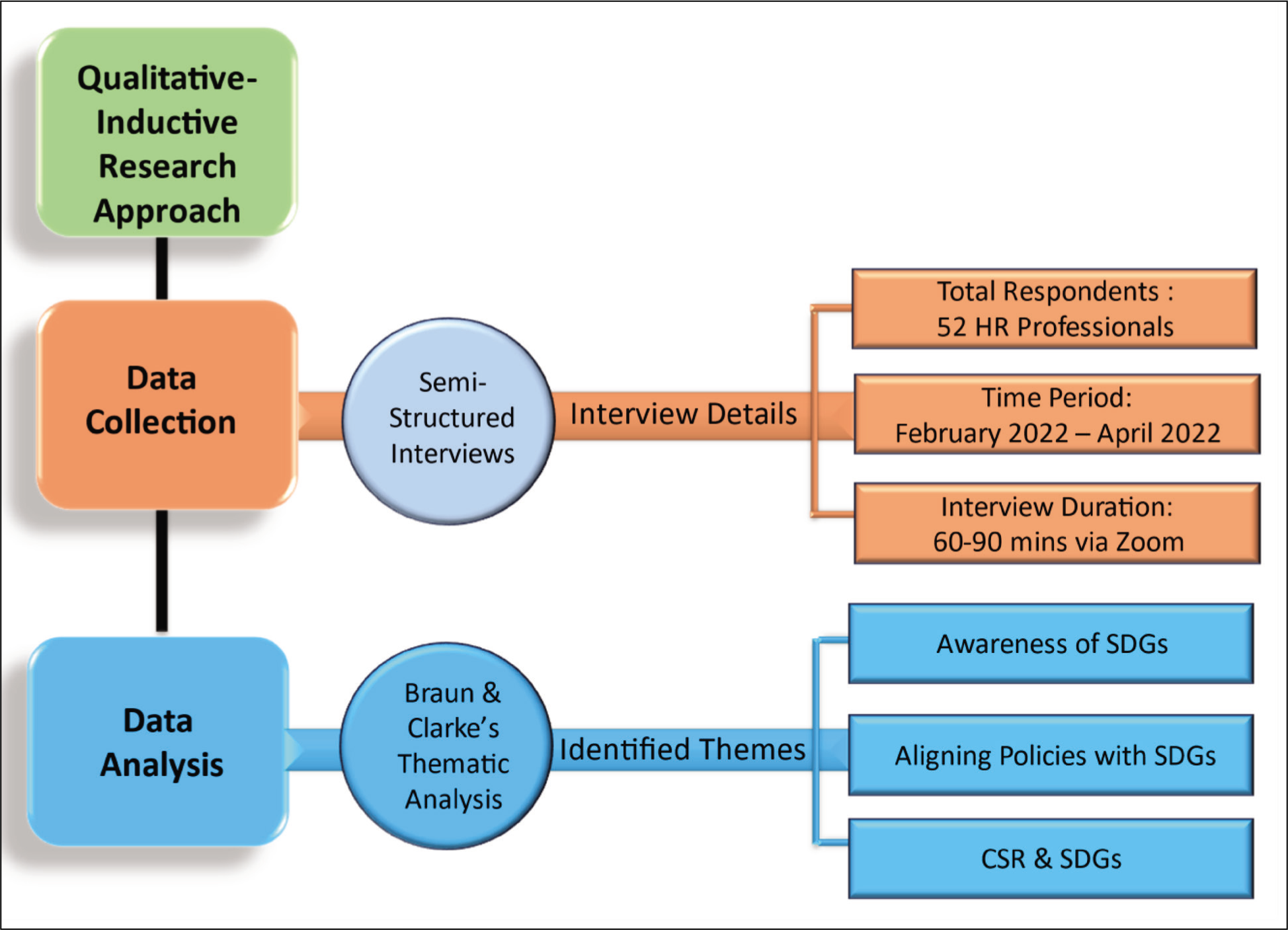
This study explored how HRM practices in MNC subsidiaries in the Indian IT sector are incorporating the SDGs and the barriers they encounter in building a sustainable and resilient organization. The study was rooted in a qualitative-inductive approach, wherein semi-structured interviews were used to capture the perspectives of HR professionals. The interview questions were focused on investigating a range of issues related to the role of HRM in aligning HR practices with SDGs within organizational settings and contexts. The qualitative approach was selected because it allows researchers to delve deeply into the phenomena under study, fostering the creation of fresh insights and a deeper understanding of the topic under investigation (Silverman, 2006).
Selection of Participants
The study focused on Indian MNCs to investigate the adoption of HRM practices towards SDGs. A review of literature indicated that larger companies have more capacity and potential for such alignment, as they are more likely to have dedicated CSR and HRM departments with systematic strategies and elaborate practices (Husted & Allen, 2006). We use the purposive sampling technique to connect with respondents for interviews. To identify the MNCs, the Capri Global Capital Hurun India Impact 50 (2021) database was used, and the websites of the companies were explored to identify their HRM practices for SDGs. Based on this, HR managers of all these organizations were approached, and eight organizations responded to the request for an interview. Thus, semi-structured interviews were conducted with 52 HR professionals (including hosts and subsidiaries) from 8 MNCs.
Data Collection
The research used semi-structured interviews, as this allowed for a deeper understanding of the topic under investigation and enabled in-depth exploration through follow-up inquiries (Gillham, 2000). Drawing from the literature review, the questions were focused on the following areas: understanding the role of HRM in achieving SDGs, the significance of SDGs for HRM, challenges faced and achievements in SDG implementation and other relevant contextual factors. The follow-up questions delved into various aspects concerning the involvement of HR managers in SDGs, the integration of SDGs into HR practices, the scope of organizational structure for this integration and factors that might influence the congruence between SDGs and HRM. The consent form was mailed to interviewees in advance, ensuring they were informed about the research objectives, key questions and anticipated interview duration. In accordance with research ethics, informed consent was obtained from all the participants to use their information and inputs for research. Also adhering to ethics, the confidentiality and anonymity of the respondents have been maintained throughout the study. The interviews were conducted between February and April 2022 via Zoom with audio recording and note taking and ranged from 60 to 90 minutes in duration.
Data Coding and Analysis
The researchers employed Braun and Clarke’s (2006) approach for thematic analysis, a technique widely endorsed in previous qualitative research (e.g., Edwards & Few-Demo, 2016; Spates et al., 2020). The following steps were systematically adopted to arrive at the final themes: First, the interviews were transcribed, followed by repeated reading of the transcripts to grasp the overall meaning of participants’ responses. Second, the researchers marked key words/phrases in the transcripts that summarized the central idea in the responses of the participants. Third, the data were coded into meaningful categories to bring out the patterns (Braun & Clarke, 2006). Additionally, the researchers iterated between the transcripts, codes and categories, as suggested by Braun and Clarke (2006), allowing for potential adjustments to the preliminary analysis and facilitating the emergence of new themes. In the fourth and final step, major categories across interviews were compared to identify commonalities and differences. These steps culminated in a final set of themes that addressed the primary research question. These identified themes are elaborated upon in detail in the subsequent section.
Discussion
Awareness of the SDGs
‘Not everybody is aware of the SDGs and not every corporate Follows SDGs either’ (HR Professional)
Corporations form a significant component of the larger socio-political ecosystem, and their activities resonate beyond the business sphere. It is well known that the adoption of SDGs is likely to have long-lasting effects not only on the employees of the company but also on the goodwill and brand recognition of the company from competitors and customers. Interviews with HR professionals revealed that there was a lack of awareness about the SDGs among many companies working in the IT sphere. They were thus lacking knowledge of how they should follow or incorporate the SDGs into their policies for the well-being of their employees. However, despite being unaware of the SDGs, many IT companies have adopted diversity and inclusion (D&I) policies for gender diversity and inclusion owing to mimetic isomorphism. One such example is the remote working policy in IT companies.
In the wake of COVID-19 mandated lockdown and physical distancing, corporations across sectors resorted to the provision of remote working for their employees. The IT industry, with its pre-equipped digital infrastructure and pre-existing provision of remote working, readily adopted this model to ensure continuity of work (Russell & Frachtenberg, 2021). WFH has been a significant component of flexible work policies under the D&I measures of the IT industry. D&I measures in IT are implemented to build a work environment that embraces diversity via introducing policies that are inclusive for all sections (O’Donovan, 2018). Remote work policy was identified as having potential for retaining women in the company, plugging their mid-career drop-out rate and providing a feasible solution enabling them to continue with jobs while tending to childcare and other domestic commitments. Data have provided prominent insights into the promise that the policy of remote work holds for company’s objectives of D&I (PwC US Remote Work Survey, 2021). Women, especially working mothers and those returning to work after maternity break, have been able to continue their careers in IT by utilizing the provision of WFH (Subramaniam et al., 2015). For others, it has enabled them to manage the competing demands of domestic and work responsibilities on days when they would have to forgo their salary on account of failing to report to work. In these aspects, remote work has facilitated work-life balance for women employees.
However, it would be a fallacy to equate the benefits and experience of working from home under normal circumstances with COVID mandated WFH under remarkably changed circumstances. To understand the remote working experience of women in the background of upheavals created by the pandemic, it is essential to take into perspective that the spatial context of home underwent significant changes during the emergency (Bowlby et al., 1997). The meaning and experience of home for women were substantially changed as socially and market-sponsored care functions were shut down and shoved into homes. Along with increased hygiene and sanitization requirements, the rising need for quarantining the sick, caring for those infected with the virus and social distancing even when indoors transformed homes into places where women faced new role conflicts and strains in everyday life. It is a well-established fact that due to the gender division of labour in families, care responsibilities fall disproportionately on the shoulders of women. For women engaged in paid work, this implied doubling the double burden of work (Fuller & Hirsh, 2018).
While care responsibilities for women increased exponentially, work policies and norms were not aligned with these changes in the context of work. Indeed, it is appropriate to say that HR policies were not adopted to respond to the changed reality. Work policies that expect consistently high productivity from employees, regular reporting and accountability to the manager, frequent conduct of meetings and strict project deadlines have all evolved in the context of the office as workplace. ‘Office’ was designed as a separate and dedicated workspace equipped with all the infrastructure and amenities for employees to perform their jobs with concentration in an undisturbed environment. To replicate the same policies in a drastically different arrangement of home as workplace is impractical and will have a severe impact on the human resources of the company, especially the women workforce (Doling & Arundel, 2022).
Literature on the relationship between WFH and work-life balance has explained that this relationship is moderated by not only work-related factors but also by the various factors related to home and family arrangements (De Ruijter & Van der Lippe, 2007). Due to frequent interruptions on account of various care obligations at home and other distractions from family members, women employees found difficulty in concentrating steadily at work. Instead of work hours being a period of focused, undivided attention on job, they became a succession of interrupted clusters of minutes. Due to the inability to perform with focus and complete the task at hand, women experienced a decline in their productivity, with work being overstretched as they were taking more hours than they did before the pandemic to complete the same task.
Women IT professionals also had to work prolonged hours due to the micromanagement by their managers. The expectation from the managers that employees should be seen online at the company’s server and be readily available round the clock because they were working from home presented a significant challenge for women. Research on flexible working has demonstrated that employees availing of the flexible work option faced increased expectations from the employer related to their productivity, hours of work and meeting punishingly unrealistic deadlines (Caringal-Go et al., 2021). The presumption that since employees were working from home, they could be available round the clock was misplaced, especially in the pandemic. Due to the hard project deadlines and productivity demand from the employees remaining intact with indifference to the changed working environment, women experienced work stress. Work stress was further exacerbated by the news of rampant layoffs and pay cuts, which were some of the common measures taken by companies to manage their balance sheets. This led to heightened anxiety among employees as they felt a constant urge to convince the manager of their performance and commitment to work by being accessible round the clock.
Due to these changed dynamics, studies have demonstrated that more women are considering leaving the workforce, shifting to part-time jobs or converting to less demanding roles. A study by Mckinsey & Company (2020) has reported that women, especially working mothers, are 1.3 times more likely than men to step out of the workforce or slow down their career. Research on the impact of previous epidemics like severe acute respiratory syndrome on working women has shown that women were laid off in high numbers as compared to men (Rao, 2021). Many also had to leave jobs to take care of domestic obligations. Once the situation returned to normalcy, women took longer than men to return to work, and a significant proportion of them were never able to return to the workforce. ILO (2021) has warned that if the current trends are not monitored and contained, this may lead to an irreversible loss in the economic participation of women. This poses a grave challenge for the IT industry, which has been making consistent efforts to increase and retain more women in the workforce.
Aligning Policies with SDGs
‘We Have Practices That Align with SDGs’ (HR Professional)
The United Nations 2030 Agenda for Sustainable Development, consisting of 17 SDGs, is an important benchmark for both business and HRM in addressing global challenges. The SDGs are often referred to as the most inspiring and motivating programme where countries need to challenge and move towards sustainable development (Le Blanc, 2015), and this can only be achieved when there is shared action for each part of society (Hajer et al., 2015). The HR professionals we interviewed shared that their companies have aligned corporate policies and initiatives with the SDGs. The concept of work-life balance is a prime example here, which has garnered considerable attention even before the pandemic occasioned research around the topic. The significance that the topic has attracted since long is embedded in the conceptualization of the fifth SDG, wherein work-life balance forms one of the significant components for the empowerment of women (un.org). In the same vein, it stresses the need to recognize the value of unpaid care and domestic work through the provision of public services, infrastructure, social protection policies and the promotion of shared responsibility within the household and the family. It is interesting to note here that while work-life balance and unpaid care work are factors in the lives of both men and women, these concepts have been closely and distinctly associated with women. This association is an outcome of the gendered structure of our societies, wherein unpaid care work has been exclusively apportioned to women (Rao, 2021). Gender socialization is embedded in the intersection of power relations, and irrespective of the involvement of women in paid labour, the burden of care work is exclusively borne by women. The domain of care work has been spotlighted in the wake of the pandemic as policy actions and measures were taken to ensure that care services were not disrupted when the other institutions greasing the wheels of the capitalized economy came to a grinding halt. Despite the acknowledgement of the strategic significance of care work, it continues to be devalued, and caregivers continue to be neglected. Critical debates in feminist literature have highlighted the importance of socially reproductive work for sustaining our daily lives and for the reproduction of society and economy (Deshpande, 2020).
Under the targets and indicators of SDG 5, corporations and organizations have been called upon to develop an accommodative work environment. An accommodative work environment entails instituting policies, practices and programmes that ensure inclusion and diversity. The IT sector suffers from a meagre representation of women at top management levels, as the women who join at the entry level tend to drop out in large numbers during their mid-career (Dwivedi & Mukherjee, 2021). Studies to identify the problems and plug this gap have explained that as women progress along the stages of their life cycle, their care burden escalates, and they walk a tightrope to balance care work and their jobs (Dwivedi & Mukherjee, 2021). The flexion occurs when there is no social support or alternative arrangement, which thus leads to a high mid-career drop-out rate. Gender norms also glorify women who sacrifice their careers for family needs, and therefore, with such an affirmation, sacrificing or leaving a career for family life has been an accepted practice among women.
During the pandemic, the challenges related to disruption of work-life balance emerged as one of the primary issues for the majority of women. Nuclear families are characterized by household structures that offer more liberty and independence to women as compared to joint families. However, the transition from joint to nuclear families, which sprawled during the period when women started participating in the labour market in large numbers, has shown its fragility in the pandemic period. The absence of extended family members in the same household who could share the domestic labour and provide social support is unavailable in the nuclear family structure. Also, when women are working from home, the social support mechanisms get wiped off, as it is presumed that since they are present at home, they can manage work and home together. This represents a situation of double jeopardy for women due to wrong assumptions and expectations of their employers and family members. On the one hand, employers presume that women will be able to work more in WFH due to the time saved on commute, and, on the other hand, family members expect women to manage chores, childcare and other domestic commitments while they are working remotely.
Working at home can have positive or negative effects depending on various factors, such as demands of the domestic environment, social support at home, the level of organizational support and social connections outside of work. Women have repeatedly faced role conflicts in the roles of an employee, mother, wife and so on, and balancing them has been an age-old challenge for women. This delicate balance was sustained by the grand bargain that was reached between dual-earner couples, that is, we both work while someone else takes care of our child and chores. Due to the closure of institutional care facilities, this grand bargain has been struck off, and women have been forced to substitute for these functions. In the absence of any alternative support mechanism, women have been leaving the workforce in large numbers, and this has jeopardized their financial and economic security. This trend is likely to do irreversible damage to the representation of women in tech, where the picture is already bleak. The pandemic has exposed the fragility of women’s role in the paid economy (Power, 2020). While women are being forced to leave work, their economic independence will be long forgotten. This phenomenon will have repercussions on their health and well-being which is likely to have a long-term impact.
CSR and SDGs
‘My Organisation Has Aligned the CSR Initiatives Towards the UN SDGs’ (HR Professional)
An interesting insight from the interviews of HR professionals was about leveraging CSR initiatives to attain SDGs. It was also noted that the thematic areas of SDGs and CSR overlap comprehensively and thus pose a strong potential for building a cohesive model and providing a pathway for corporations to actively participate in achieving SDGs. It is also possible that if CSR projects are carefully aligned to SDGs, they can be used to evaluate and measure outcomes.
The SDG implementation plans are prepared based on a country’s policies, regulations, programmes and many other activities that aim to achieve SDGs at a national level (Pedersen, 2018). The SDGs are 17 agenda points set by the UN in 2015 for achieving by 2030, and they range from poverty alleviation and promoting health to climate action and social justice. The Indian government’s think tank, NITI Aayog, steers long-term policies and provides technical advice for their implementation, and although it has developed monitoring tools to chart the progress of implementation of the SDGs at state levels and right down to the district levels, our research shows that only some subsidiaries aligned their CSR initiatives towards some UN SDGs (e.g., in taking initiatives to eradicate poverty, develop the girl child and education for all).
The pandemic marked a long bout of uncertainty over the nature, symptoms, treatment, causes and spread of the infection, among many others. The pandemic had a wide-reaching impact on the physical and mental well-being of employees as they encountered job insecurity, layoffs and salary cuts, which induced financial challenges and potentially threatened their financial resources. Enforced home office policies threatened social support from supervisors and colleagues, while social distancing regulations led to losing social support from friends and family. Furthermore, the closing of childcare facilities threatened the energy resources of women caring for children. Among the 74 resources associated with the Conservation of Resource (COR) model, several are of a social nature, including ‘support from co-workers’, ‘understanding from employer/boss’, ‘help with tasks at home’ and ‘intimacy with spouse or partner’ (Hobfall, 1989). In the background of the pandemic, all these resources were depleted, and some were completely unavailable, owing to which women employees faced a huge resource crunch.
It is important to keep in perspective that working in the IT sector has been associated with high work stress even before the pandemic. The IT industry has a fluid and dynamic nature owing to the rapid evolution of technology. The credibility of IT companies lies in their ability to constantly improve and innovate with fast-paced technological growth. Owing to these attributes, the work culture in IT is marked with strict deadlines, fierce competition, long working hours and work pressure. Locating this work culture in the context of the pandemic indicates the explanatory variables that led to women employees facing stress at work. During the pandemic, the demands at work remained intact at a time when the responsibilities in the domestic context multiplied for working women. This posed immense challenge for women in terms of resources (availability of outsourced help, peer support and family support) they had to fulfil or meet those demands. The pressure of demands at a time when resources had contracted threatened the well-being of women in many respects, including physiological, psychological and emotional.
In this context, the initiatives carried out by organizations under the umbrella of CSR were widened and rearranged to address the crises of pandemic. The interviews conducted with HR professionals revealed that the organizations adopted various strategies to ensure the well-being of their employees. For instance, IT companies extended the well-being facilities provided for employees, such as tele-counselling, to their family members as well. Some of the companies also reimbursed the costs incurred in setting a WFH office by their employees. Since working from home can be an isolating experience, online/virtual team entertainment sessions were conducted periodically for the employees, and various tasks were restructured to enable workload sharing. Additionally, managerial training was provided to enable managers to coordinate and work with fully remote teams while being sensitive to the pandemic situation. In the adoption of these HRM strategies, some of these IT companies presented tremendous examples of the work done in aligning policies with SDGs and were featured among 19 companies in the Global Goals Week, which is a shared commitment between civil society, business, academia and other stakeholders to initiate action towards SDGs, especially during the UN General Assembly High-Level Week.
Conclusion
This study set out to explore the human-centric approaches to HRM and the barriers to building a sustainable and resilient organization within the IT sector in India. The pandemic and shift to remote work have resulted in many organizations using more technology as a potential solution for greater inclusion for employee engagement. Prior research by CIPD (2021) shows that organizations that ensure human centricity sits at the heart of working practices will become the most sought-after workplaces in the future, embracing a listen-learn-and-adapt approach with a diverse range of people to meaningfully contribute to strategic decision-making will result in agile businesses and engaged workforces, and this will ensure competitive advantage for business.
Our findings suggest that although there have been unprecedented transformational and technological changes in the world of work due to the pandemic, the subsidiaries based in India are mostly adopting the pattern exhibited by larger organizations in their environment that are viewed as successful (mimetic isomorphism). There is still a huge scope for improvement in these subsidiaries in terms of investing in people’s capabilities for sustainable work. Previous study undertaken by Dhar-Bhattacharjee and Dwivedi (2024) show how equality, diversity and inclusion policies from the West are transformed in the Indian subsidiaries, and how this has implications for women’s work-life balance and retention in transnational organizations in India. Recent research undertaken by Piwowar‑Sulej et al. (2023) shows the importance of strategic HRM in developing organizational resilience and the importance of prioritising employees’ well-being and environmental awareness for competitive advantage.
HRM is considered the guardian of organizational culture, principles and values. These systems are constituted of three pillars: architecture, policies and practices (Becker & Gerhart, 1996). The architecture constitutes of the values, belief and cultural attributes that mobilize organizational performance. Policies refer to objectives and strategies for HRM, and together, both elements establish the parameters or guidelines that lead to the development of HRM practices (Jiang et al., 2012). HR practices are the last component of the HRM system, which are defined as ways in which policies are implemented and employees’ perceptions of these implementations.
The pandemic altered the patterns and conduct of our daily lives, which had disproportionate effects running parallel to the axis of power relations and amplifying existing inequalities. Gender is an axis of power and marked one of the significant fault lines along which the risks and consequences of pandemic-induced remote working were distributed. This research has shown the consequences on various aspects of lives of women tech workers as the demarcation between work and non-work collapsed and women had to shoulder simultaneous performance of their office work and household responsibilities. This is not to state that flexible work should be completely shunned; rather, what this study seeks to suggest is that it should be reshaped to support the labour force participation of women and work-life balance, especially to address and incorporate the SDGs. There are some significant steps that employers can take to optimize WFH experience for women, taking into consideration the aspects of design thinking for a holistic solution rather than a conventional thinking approach addressing piece-meal solutions.
Corporates need to train and sensitize the managers about supervising WFH, as they need to be supportive of women who are juggling paid work and disproportionate burden of unpaid work. Encouraging male employees to share the unpaid work at home and be supportive of women working within families can inspire a change in attitude and help to reverse the gender division of labour within homes. As pandemic-induced remote work was the first large experiment on working from home at this scale, research is needed to guide the formulation of new human-centric policies that would be appropriate to this new work setting. The current human resource policies have been based on extensive research on the significance of work environment, leadership, collegial support and job design for employees.
In the wake of the pandemic, employees experienced role ambiguity due to a lack of clear policies from the organization. Organizations need to clearly define the performance measures, ensure clarity around role expectations, maintain regular communication and allocate appropriate workload and access to HR support. To facilitate boundary management, clarity is required in relation to the expectations of working hours to prevent employees feeling as though they have to be available online throughout the day. Strategies also need to ensure that those who choose to WFH do not experience a negative outcome on their career in terms of not being offered career advancement, training or on-site opportunities. The stigma attached to flexible working should be systematically removed by laying down clear measures on work performance evaluation of employees.
To achieve this and to address the ‘human-centred’ approach to HRM in line with the societal goals as outlined by the UN’s 17 SDGs, which are expected to be achieved by 2030 (United Nations, 2015), MNCs continue to have a crucial role to play. This is essential for achieving a human-centred COVID-19 recovery that is inclusive, sustainable and resilient, as proposed by the ILO (2021).
Footnotes
Declaration of Conflicting Interests
The authors declared no potential conflicts of interest with respect to the research, authorship and/or publication of this article.
Funding
The authors received no financial support for the research, authorship and/or publication of this article.