




Abstract
Following social exchange theory, which claims that a set of dimensions lead to employee satisfaction, we tested a sample of 163 employees from companies operating in the services sector in Portugal. We used a fsQCA approach to identify the configurations of conditions that lead to the presence and absence of satisfaction. The results show that there are several paths leading to high satisfaction, which require the simultaneous existence of three levels of communication: the organization, the leader and peers. Equally, there are a number of paths that lead to low satisfaction. Our findings enrich social exchange theory as a theoretical background to understanding the complex nature of satisfaction and to illustrating which conditions promote reciprocity among employees through higher levels of satisfaction.
Keywords
Introduction
Social exchange theory claims that a set of three dimensions lead to employee satisfaction: the organization, the leader and peers (Wang et al., 2018, 2020). Employees’ relationships with leaders, peers and the organization allow them to exchange intangible resources through communication (Cropanzano & Mitchell, 2005). Communication is a process of mutual influence and reciprocity that leads to interdependent exchanges and contributes to feelings of satisfaction (Mehra & Nickerson, 2019; Men & Yue, 2019). Communication also operates on three levels: the organization, the leader and peers (Alegre et al., 2016). Several conditions contribute to individual positive outcomes (Chiu & Ng, 2013), such as satisfaction (Cropanzano & Mitchell, 2005; Yalabik et al., 2017). Satisfaction is a positive emotion concerned with the achievement of values associated with work (Locke, 1976). Organizations recognize that social exchanges with leaders or peers impact employee satisfaction (Li et al., 2017; Omilion-Hodges et al., 2016; Tang et al., 2014). Satisfaction is an individual positive outcome to which several conditions contribute (Baquero et al., 2019; Cruz et al., 2022; Curado & Santos, 2021; Li et al., 2017; Moslehpour et al., 2022; Omilion-Hodges et al., 2016; Wu & Zhou, 2020). The literature has addressed social relationships and communication contributing to feelings of satisfaction (Mehra & Nickerson, 2019) and the role of communicative leaders in satisfaction among employees (Men, 2015; Men & Yue, 2019). However, studies have yet to address the cumulative contribution of the three dimensions of communication leading to employee satisfaction. We suggest that, from a configurational perspective, satisfaction follows different paths. In this article, we explore the question of how communication contributes to employee satisfaction in service firms. We test a sample of 163 employees from the services sector in Portugal to understand the influence of conditions from the three dimensions on employee satisfaction.
We identify the causal combinations of conditions that contribute to the presence and absence of employee satisfaction in the service sector by examining the contributions of the three dimensions of organization, leader and peers. The organizational dimension is concerned with the organizational culture and work–family balance; the leader dimension involves transactional and transformational leadership styles and the peer dimension is represented by peer support. Additionally, we analyse the contribution of the three levels of communication as identified by Alegre et al. (2016). This study contributes to the literature by showing the complex ways to achieve employee satisfaction, so that managers are cognizant of the 16 alternatives at their disposal. In addition, we reveal the ways that lead to the absence of employee satisfaction, alerting managers to the 15 undesired alternatives that require the exercise of caution. The paths to satisfaction show the importance of the four dimensions—organization, leaders, peers and communication—with special emphasis on the work–family balance and peer support. In contrast, the paths that lead to the absence of satisfaction include communication, but the simultaneous occurrence of the other conditions is not a requirement.
Our findings carry certain theoretical implications for social exchange theory with specific reference to the contribution of the dimensions of the organization, the leader and peers to employee satisfaction (Wang et al., 2018, 2020). We address the contribution of four conditions and communication to employee satisfaction on the three levels of organization, leader and peers. We offer alternative paths to satisfaction and its absence, which enrich social exchange theory by explaining the complex nature of satisfaction and illustrating which conditions promote the presence and absence of employee satisfaction. In terms of its practical implications, this study offers alternative options for managers to develop employee satisfaction by underscoring the role of rich communication, such as the exploration of communication channels that foster employee relationships with organizations, leaders and peers. Managers may also pay due regard to employees’ work and family obligations, providing a pleasant working environment and peer support. Managers may seek to increase employee satisfaction in order to secure higher levels of productivity, efficiency, retention and quality of service. On the other hand, they should avoid configurations leading to the absence of satisfaction because they tend to produce delays, absenteeism and increased turnover.
Organization-related Influence
The employee–organization relationship concerns “the degree to which an organization and its employees trust one another, to agree on who has the rightful power to influence, to experience satisfaction with each other and to commit oneself to the other” (Men & Stacks, 2014, p. 12). A good relationship between employee and organization is mutually beneficial (Mignonac & Richebé, 2013). Consequently, organizational characteristics, such as perceived mission statement quality, management philosophy, psychological ethical climate (Moslehpour et al., 2022), psychological empowerment (Cruz et al., 2022), job autonomy and work–family interference (Wu & Zhou, 2020), influence employee satisfaction.
Work–Family Balance
Work–family balance corresponds to the absence of conflict between professional and personal responsibilities, with a symmetrical amount of time and effort being dedicated to each (Turliuc & Buliga, 2014). Therefore, when organizations provide a balance between work and personal life, the performance and job satisfaction of employees increase (Krishnan et al., 2018; Lamane-Harin et al., 2021). When there is conflict, the level of employee satisfaction obviously decreases (e.g., Vong & Tang, 2017). In certain service industries (tourism and hospitality), the work–family conflict is intensified due to irregular work hours and, consequently, less hours dedicated to leisure (Lin et al., 2014, 2015).
Organizational Culture
Organizational culture is a set of shared values, norms and beliefs among members of an organization that affect the behaviour and decisions of employees (Schein, 1990). Thus, different values inspire different types of social exchange (Di Stefano & Gaudiino, 2019). The type of communication established between employees indicates the type of organizational culture (Men & Bowen, 2017). An open and supportive organizational culture increases the effectiveness of communication practices and creates the conditions for employees to feel satisfied and committed (Meng & Berger, 2019).
Leader-related Influence
Leadership is a process “whereby an individual influences a group of individuals to achieve a common goal” (Northouse, 2016, p. 6). Leadership influences employee satisfaction (Baquero et al., 2019). When leaders support the performance of employees, the latter respond positively through their dedication to work (Rowold et al., 2014). Sageer et al. (2012) argue that more democratic leadership styles promote better relationships and mutual respect, whereas authoritarian leadership generates lower levels of satisfaction. Studies often categorize leadership styles by their focus: either on people and relationships to maximize employees’ potential through creativity and innovation—transformational leadership—or on tasks that encourage performance-based exchanges and rewards—transactional leadership. Transformational leadership fosters procedural justice, whereas transactional leadership promotes distributive justice (Pillai et al., 1999), and both types of justice increase employee trust. According to Cropanzano and Mitchell (2005), trust is a critical social exchange mediator that delivers job satisfaction.
Transactional Leadership
Transactional leadership is associated with exchanges between leaders and subordinates in which leaders reward or punish employees for performance and, in return, expect greater productivity and loyalty (Naidu & Van der Walt, 2005). These leaders demonstrate less involvement in the employee relationship because, for them, it is merely a process of exchange whose sole purpose is to influence their employees’ performance. This focus on organizational objectives and on punishments or rewards can negatively affect employees’ commitment and satisfaction (Saleem, 2015).
Transformational Leadership
Transformational leadership is driven by the inspiration of and commitment to organizational values and goals (Bass, 1985). It is a process of stimulating the performance of subordinates based on values. Charisma and influence are two key characteristics of such leaders. The literature shows that there is a strong correlation between transformational leadership and employee satisfaction (Abelha et al., 2018; Curado & Santos, 2021; Escortell et al., 2020; Sayadi, 2016). The leader may improve both the performance of the team and each individual performance, fostering feelings of reciprocity and high levels of personal investment and involvement in the workplace. In specific terms, employees better understand their jobs, feel safer and have better access to resources (Burch & Guarana, 2014).
Peer-related Influence
The climate among colleagues is an important source of satisfaction and involves cooperative work between groups of interdependent individuals pursuing common goals or outcomes (Bufquin et al., 2017; Sageer et al., 2012). Social interaction develops a sense of belonging and knowledge sharing (Izvercian et al., 2016), which enhances cooperation and employee satisfaction (Hanaysha, 2016). Social support occurs in three ways—from colleagues, supervisors and the organization—and they all exercise a positive effect on employee satisfaction (Brown et al., 2014).
Peer Support
Employees spend more time with their colleagues than with their families. Strong supportive relationships among colleagues enable employees to cope with the stresses of their professional and family responsibilities (Halbesleben & Wheeler, 2015). The perception of receiving peer support enriches work functions and renders an increased level of involvement and satisfaction (Koseoglu et al., 2018). However, the lack of support from colleagues is reflected in a reduced identification with work and stronger feelings of alienation from work and a greater sense of demotivation (Charoensukmongkol et al., 2016).
Communication-related Influence
Communication enables employees to share information, build relationships and absorb organizational culture and values, while building mutually beneficial relationships with their organizations (Men & Bowen, 2017). The framework of social relationships and communication that employees establish contributes to feelings of satisfaction and reciprocity towards the organization (Mehra & Nickerson, 2019; Men & Yue, 2019). Following the three influences under consideration, communication also operates on three levels: the organization, the leader and peers.
Communication with the Organization
Organizational communication involves a flow of messages through a network of interdependent relationships that involves people’s attitudes, feelings and skills (Goldhaber, 1999). The employee–organization relationship becomes stronger through an efficient communication system, and employees achieve high levels of satisfaction (Berger, 2008). There is a positive relationship between symmetrical communication and the quality of the employee–organization relationship (Kang & Sung, 2017). Organizational communication contributes to a sense of community (Uysal, 2016) and facilitates social exchanges and trust between the parties involved in the relationship (Blau, 1964).
Communication with the Leader
Effective communication with the leader requires employees to feel greater involvement and to experience a higher level of satisfaction. Employees value a symmetrical communication system and feel greater satisfaction when they are heard and valued (Men & Yue, 2019). The way the leader communicates influences employee attitudes and their feelings towards the leader. Leaders who show sympathy, compassion, understanding and sincerity in their communication induce greater joy and pride in employees (Men, 2015; Men & Yue, 2019).
Communication with Peers
Communication with peers, coupled with strong group dynamics, influences the effectiveness of teamwork. It is an important dimension of social relations because it influences the sharing of ideas, fosters ties of cooperation and trust between team members, develops a better articulation of functions and destroys the barriers inherent in change processes (Christensen, 2014). Employees appreciate frequent, open, respectful, sympathetic and communicative relationships with peers, and they experience greater satisfaction because they share similar feelings about tasks in the work environment (Robinson & Thelen, 2018). In the service sector, the trend towards specialization and the division of labour requires an effective communication system and structured group dynamics to achieve organizational goals (Mohanty & Mohanty, 2018).
Employee Satisfaction
Satisfaction is a positive emotional state that results from work experiences (Locke, 1976) and the fulfilment of needs, wishes and desires (Sageer et al., 2012, p. 32). Satisfaction involves a sense of pride and accomplishment when performing a particular function (Saleem, 2015). Satisfaction can be influenced by the ability of employees to complete their tasks, the level of communication and the treatment received from superiors. It can be divided into two dimensions: affective satisfaction that concerns the positive emotion associated with work and cognitive satisfaction that is derived from the evaluative appreciation of work-related aspects, such as payment, schedules and benefits (Eyupoglu et al., 2016). Organizations satisfy employees when their work and tasks meet company expectations and values (Sahito & Vaisanen, 2017). Satisfaction leads to positive workplace attitudes, such as loyalty, remaining with the organization and better performance. Satisfied employees are more productive and committed (Oswald et al., 2015; Symitsi et al., 2018; Wen et al., 2019), whereas dissatisfied employees are uninterested in the improvement process and deliver poor quality service that damages the profitability of the organization (Huang & Rundle-Thiele, 2014). Satisfaction is negatively related to delays, absenteeism, exit intentions and turnover (Asrar-ul-Haq & Anwarb, 2018; Eyupoglu et al., 2016; Harrison et al., 2006; Mount et al., 2006).
Methods
The present exploratory study aims to identify the causal combinations of the selected conditions that lead to satisfaction or its absence (represented by the use of a tilde symbol [~] before satisfaction). We follow a configurational approach to the data using a fuzzy-set qualitative comparative analysis (fsQCA) to test our models on employee satisfaction (Baquero et al., 2019; Moslehpour et al., 2022; Wu & Zhou, 2020). The fsQCA identifies configurations of conditions that generate a given outcome (Fiss, 2011) as opposed to correlational methods that estimate the net effect of independent variables on a dependent variable (Alegre et al., 2016). The fsQCA delivers advantages over more traditional analyses: asymmetry (describing solutions that lead to the presence or the absence of the outcome), equifinity (offering multiple paths to the outcomes), causal complexity (identifying causal combinations of an organizational phenomenon) (Gębczyńska & Kwiotkowska, 2018), and dealing with ambiguity (in nonlinear relations) (Curado, 2018). The fsQCA tool is a ‘small N’ and macro-comparative approach because it is associated with a smaller number of cases. Consequently, it accepts purposeful samples (Rihoux & Ragin, 2009), which means the results cannot be generalized and are valid only for the sample under study. The fsQCA permits conditions to relate casually to only one configuration, but there is not necessarily an inverse relation to other configurations (Meyer et al., 1993). It accepts the existence of alternative causal, equifinal and asymmetrical configurations (Fiss, 2011). The fsQCA is a widely accepted technique (Kraus et al., 2018) that various fields, such as sociology, political science, environmental science, medicine, business and economics and governmental administration, have applied (Roig-Tierno et al., 2017).
Sampling and Measurement Scales
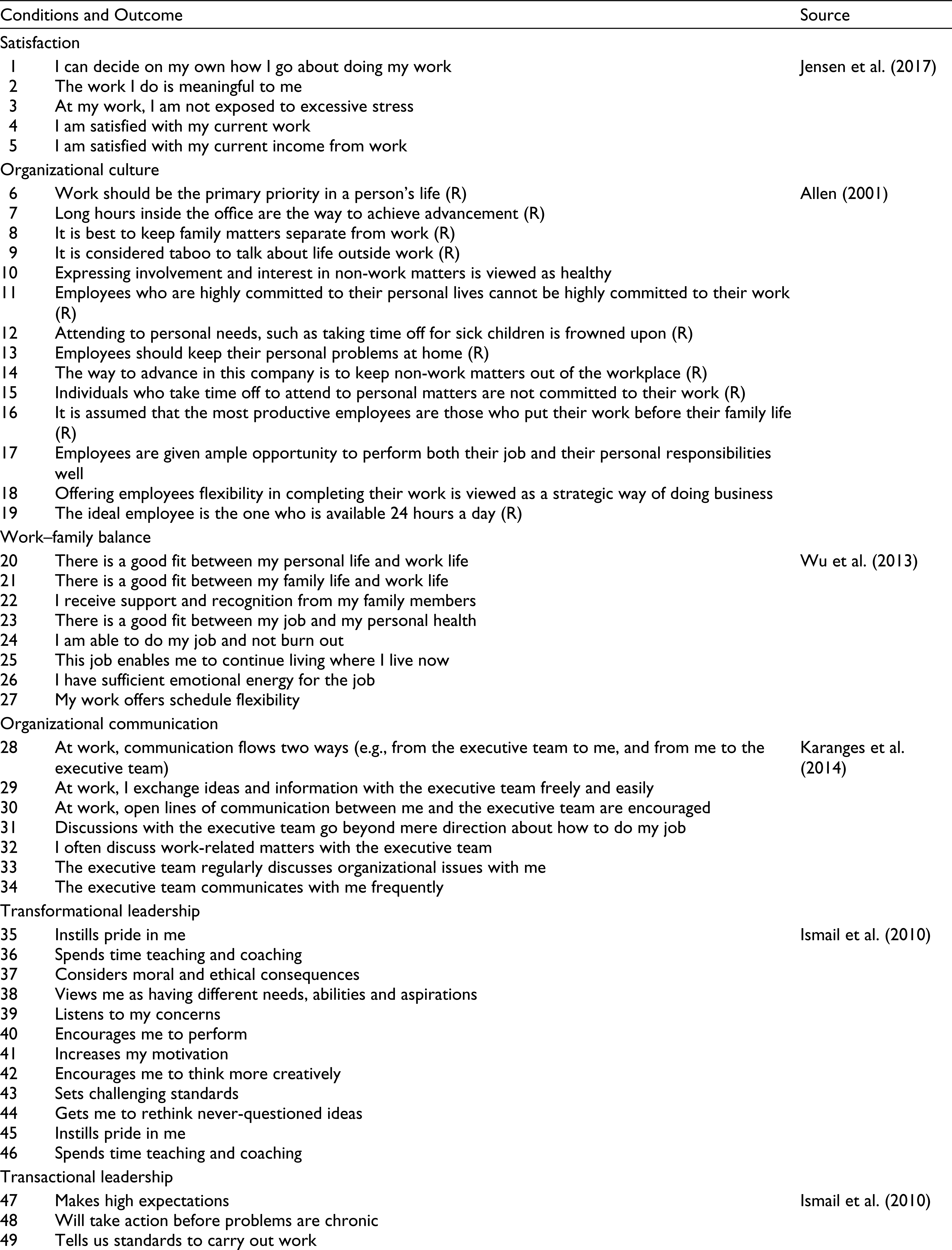
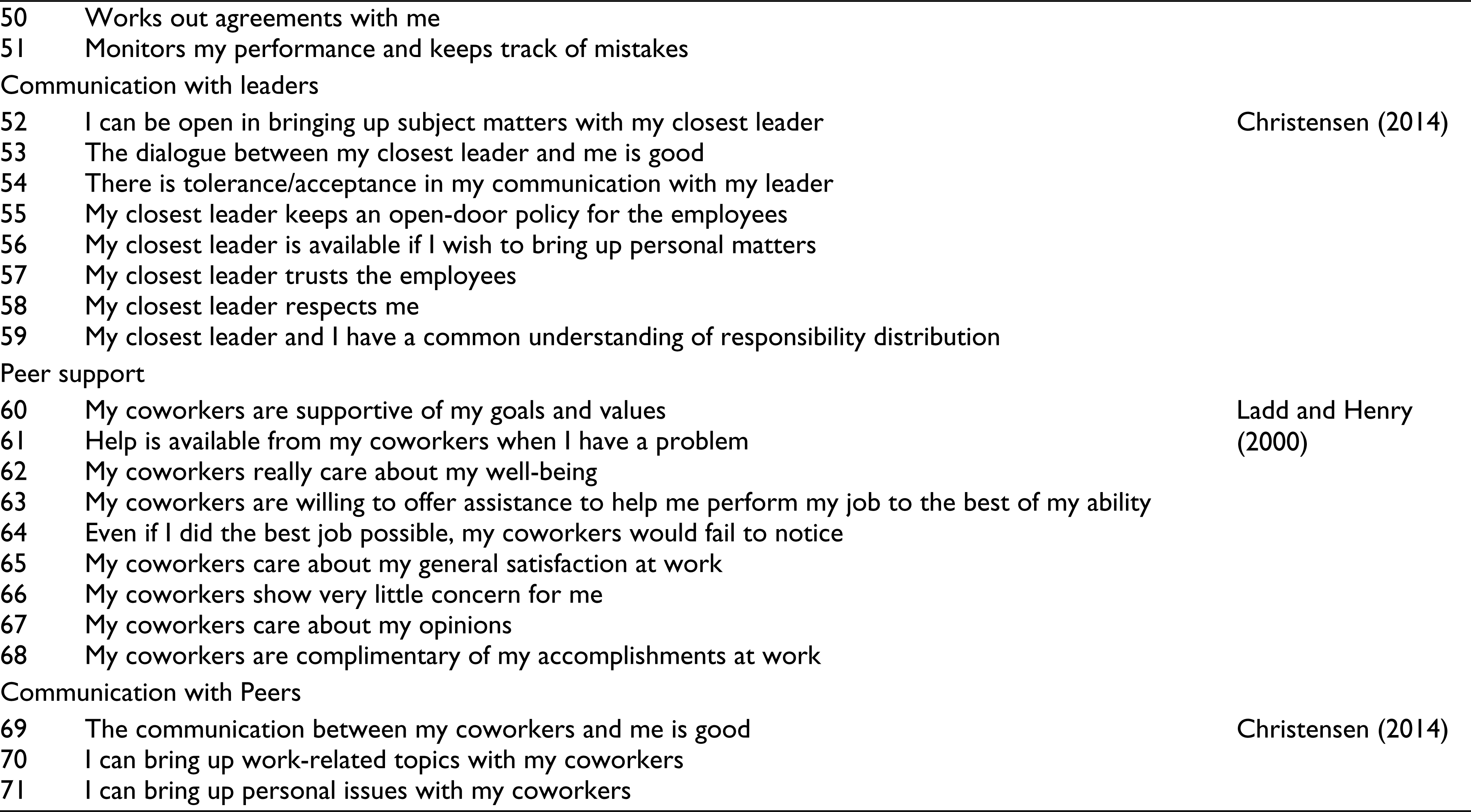
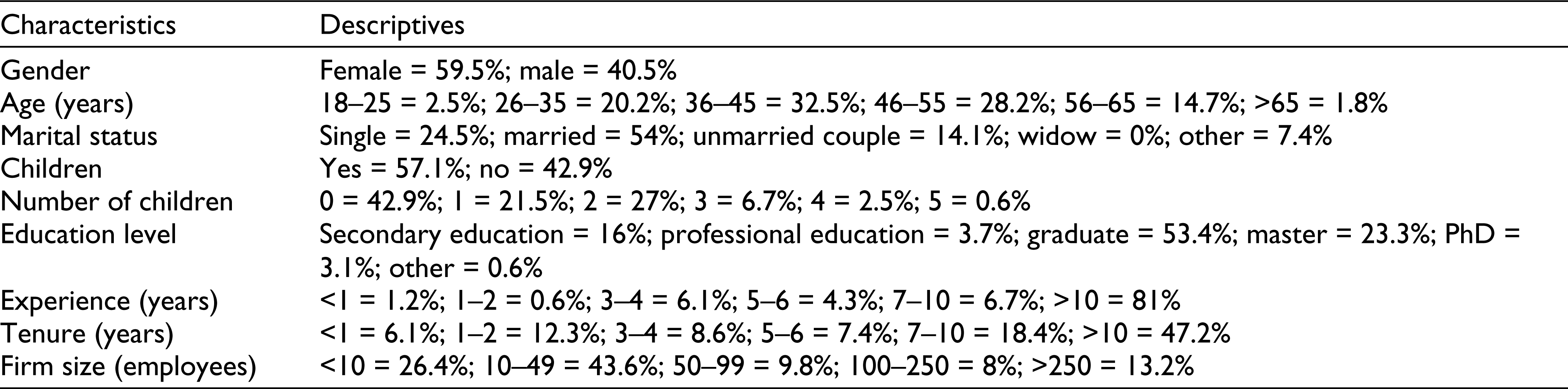
We used an electronic questionnaire to collect the data. A link to the questionnaire was sent in May 2021 by email to 6,487 service sector companies in Portugal (corresponding to the 10,000 largest firms with an active email address). In order to reduce common method bias, we followed the recommendations of Podsakoff et al. (2003) in composing our letter, which presented the research being undertaken and introduced the questionnaire for respondents. We guaranteed that the respondents’ anonymity would be protected, and we explained that there were no right or wrong answers. We obtained 225 responses following the invitation to participate and a reminder 2 weeks later. Of these, only 163 were considered valid—incomplete responses and responses that repeated themselves more than 80% of the time were eliminated (Hair et al., 2010). Following the procedures suggested by Armstrong and Overton (1977), we assessed the non-response bias in the responses by comparing the data in the early responses (first round of emails) with the data collected from the late respondents (second round of emails—we used this group as a proxy for non-responses) (Hair et al., 2017). Data on the responses from the two groups were tested using independent sample t-tests on construct means. No significant difference was found. Therefore, there was no concern that our study showed a non-response bias. The questionnaire used a 5-point Likert scale (ranging from 1 = strongly disagree to 5 = strongly agree) to measure the conditions and outcomes. The measurement scales and their sources are presented in Table 1. The majority of respondents were female (59.5%), had children (57.1%), had a college degree (79.8%), and worked at the organization for longer than 7 years (65.6%) (Table 2).
Conditions and Outcome Scales
Summary of Demographic Information
As part of the statistical evaluation of common method bias (Podsakoff et al., 2003), we used Harman’s single test. The factor solution that emerged from the exploratory factor analysis accounted for 74.13% of the variance in the data, of which the first factor accounted for less than 50% of the total variance (32.71%). Additionally, all variance inflation factor (VIF) test values were under 3.3, thus indicating there was no common method bias (Kock, 2015).
Calibration
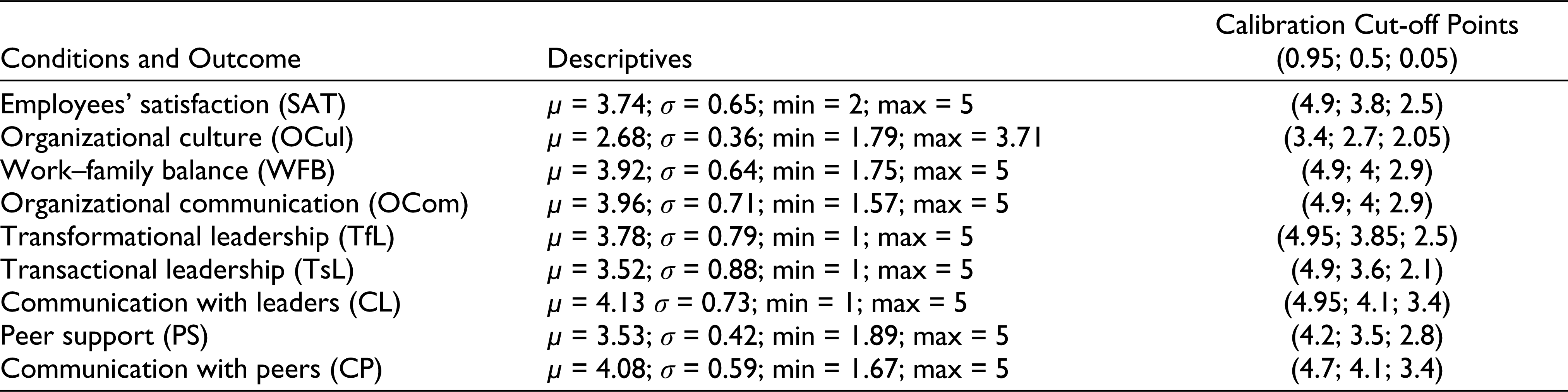
FsQCA requires the use of calibrated data. Calibrated conditions assume various gradations from zero to one (forming a fuzzy database)—that is to say, values are qualified at different degrees of association from total exclusion to total inclusion and a middle point for the maximum ambiguity. The Likert scales are transformed by using the mean values of the items of each condition after adjusting for the cut-off values (Woodside, 2016). Data were calibrated based on theory and their interpretation. Thus, we defined the three anchors by calibrating the conditions as fuzzy set values to 0.95 for the total inclusion limit, 0.5 for the maximum ambiguity point and 0.05 for the limit of total exclusion (Ragin, 2008) (Table 3).
Descriptive Statistics and Calibration Values for Conditions and Outcome
Fuzzy-AND and Fuzzy-OR Functions
In this study, we considered communication in three dimensions—organization (OCom), leader (LCom) and peers (PCom) —grouped into two using fsQCA operations and following SET theory:
Fuzzy AND corresponds to an intersection associative logical operation involving the set that corresponds to the common elements in all subsets. This condition reflects a degree of rich communication, which demands the presence of all three dimensions.
Fuzzy OR corresponds to a union associative logical operation involving the set resulting from all elements in the subsets. This condition represents poor communication, which demands a minimum of at least one dimension.
Therefore, we use the three dimensions and the two logics to create the resulting conditions: Communication AND (CAND) and Communication OR (COR). The logic AND identifies the presence of all three dimensions simultaneously, generating CAND, while the logic OR identifies the acceptance of the presence of at least a single dimension, generating COR.
Sufficiency Analysis
In order to identify the different combinations of causal conditions with the outcome (Fiss, 2011), we use the truth table analysis, which presents all logically possible combinations of fuzzy sets. In the sufficiency analysis, three types of solution are provided—the complex (a less demanding solution), the parsimonious (a more rigorous solution) and the intermediate—in which those with a number of different configurations of causal conditions lead to a given outcome (Fiss, 2011; Ragin, 2008). In line with the literature (Fiss, 2011; Ragin, 2008), we report the intermediate solutions and the parsimonious solutions. Thus, using this dual approach, we identify the core conditions that are present in both parsimonious and intermediate solutions as well as the peripheral conditions, which are those that are only present in the intermediate solutions. Our solutions meet the literature’s consistency thresholds—at least 0.75 according to Ragin (2005, 2009) —and coverage—values between 0.25 and 0.90, following Ragin (2008), Woodside and Zhang (2013) and Woodside (2016). We explore the contribution of communication to satisfaction in different ways. On the one hand, we consider the two logical approaches to communication that have already been presented: CAND and COR. On the other hand, we consider the two leadership styles that have already been presented: transformational leadership (TfL) and transactional leadership (TsL). In addition, we evaluate the contribution of the conditions, peer support (PS), work–family balance (WFB) and organizational culture (OCul). Following best practice (Fiss, 2011), we additionally explore equivalent models that lead to the absence of employee satisfaction (~SAT). Tables 4 and 5 present the models’ solutions that are considered acceptable.
Intermediate Solutions for SAT and CAND
Model 1CAND: SAT = f (CAND, TfL, PS, WFB, OCul)
Overall solution coverage: 0.86; Overall solution consistency: 0.753
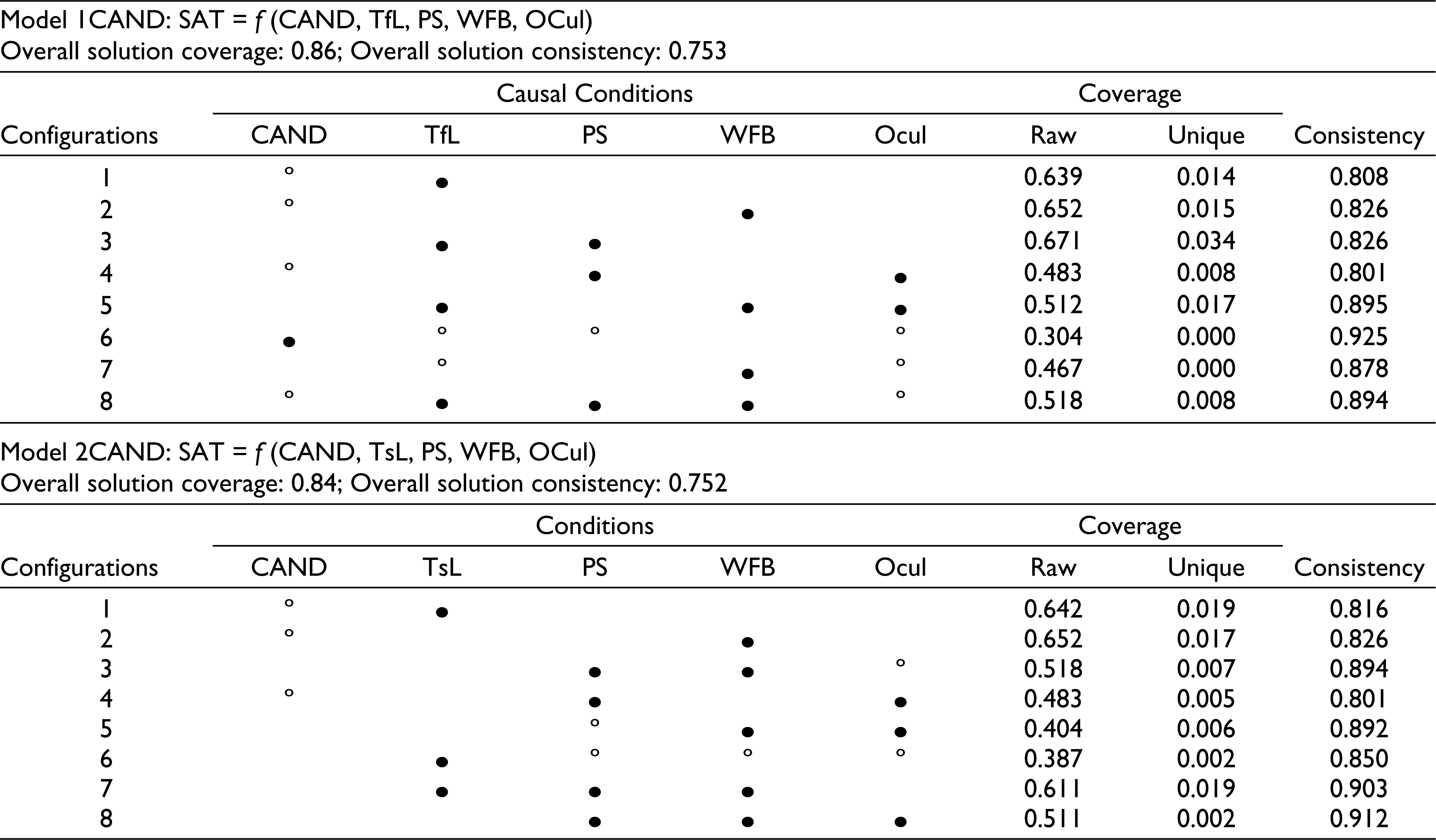
Full black circles () = presence of the condition and blank circles (º) = absence of the condition. Small circles = peripherical conditions; large circles = core conditions
CAND Models
We consider two models for SAT that use CAND. Model 1CAND: SAT = f(CAND, TfL, PS, WFB, OCul) and Model 2CAND: SAT = f(CAND, TsL, PS, WFB, OCul) (Table 4).
Based on Table 4, the two solutions meet the literature’s thresholds of consistency and coverage. Solutions for both models offer various configurations, which indicate that there are several alternative paths to SAT regardless of the leadership style. We also developed models for the ~SAT that considered the contribution of CAND. Model 3CAND: ~SAT = f(CAND, TfL, PS, WFB, OCul) and Model 4CAND: ~SAT = f(CAND, TsL, PS, WFB, OCul). There are no solutions that meet the consistency and coverage requirements in either model. In consequence, there are no configurations that lead to ~SAT using CAND regardless of the leadership style. Such results indicate that environments with very rich levels of communication (CAND) contribute to SAT. These findings are reinforced by the fact that there are no configurations that lead to ~SAT in such settings.
COR Models
Similarly, we have developed two models for SAT using COR. Model 1COR: Sat = f(COR, TfL, PS, WFB, OCul) and Model 2COR: f(Sat = COR, TsL, PS, WFB, OCul). None of the model solutions meets the suggested thresholds in the literature. Therefore, there are no configurations leading to SAT that use COR regardless of the leadership style. Similarly, we tested models for the ~SAT that consider the contribution of COR. Regarding the ~SAT, the two solutions meet the suggested thresholds: Model 3COR: ~Sat = f(COR, TfL, PS, WFB, OCul) and Model 4COR: ~Sat = f(COR, TsL, PS, WFB, OCul) (Table 5).
Intermediate Solutions for ~SAT and COR
Model 3COR: ~SAT = f (COR, TfL, PS, WFB, OCul)
Overall solution coverage: 0.84; Overall solution consistency: 0.769
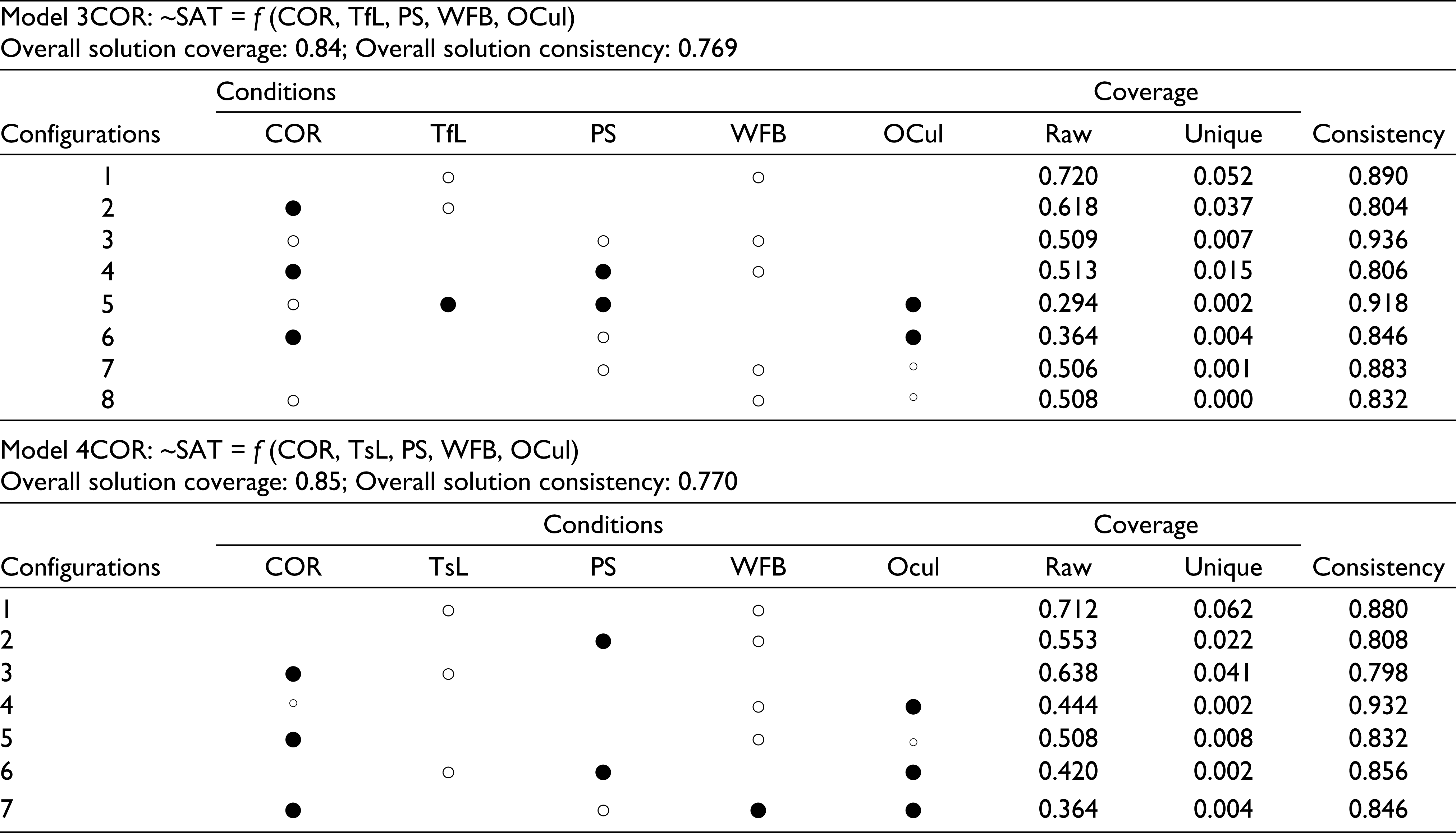
Full black circles (•) = presence of the condition and blank circles (○) = absence of the condition. Small circles = peripherical conditions; large circles = core conditions
Based on Table 5, the two solutions meet the thresholds in the literature, which indicate that there are several alternative paths to the ~SAT regardless of the leadership style. Such findings show that, when considering the contribution of COR, ~SAT occurs. These findings become more relevant when contrasted with the fact that there are no configurations that lead to SAT in such settings.
Discussion
Given that fsQCA generates various combinations of conditions that lead to a given result, we were able to identify a total of 16 paths that led to SAT and 15 that led to ~SAT. According to the results, peer support, work–family balance, organizational culture and leadership (whether transactional or transformational) contributed to numerous alternative configurations that led to SAT when we included the CAND condition in the models. In contrast, there were various alternative configurations that led to ~SAT when we included the COR condition in the models. According to Omilion-Hodges et al. (2016), part of the richness of the communication process is lost when employees’ relations are studied in isolation. This is because they are the foundation of the result—namely, SAT (Men & Yue, 2019; Omilion-Hodges et al., 2016). Equally noteworthy is the presence of the core condition, WFB, in Models 1CAND and 2CAND, which is found in nine of the 16 pathways that led to SAT. Conversely, the core condition of ~WFB in Models 3COR and 4COR is present in nine of the 15 pathways that led to ~SAT. Such results indicate that the employees who are able to balance their family and professional responsibilities experience greater satisfaction (Alegre et al., 2016), while the lack of balance leads to ~SAT (Vong & Tang, 2017). Employing a comparative analysis of patterns between the two models for the presence of SAT (Models 1CAND and 2CAND), we identified three similar configurations with clarifying evidence:
One based on ~CAND and leadership (regardless of style):
Model 1CAND—configuration 1: TfL, ~CAND ≈ Model 2CAND—configuration 1: TsL, ~CAND
One based on ~CAND and WFB:
Model 1CAND—configuration 2 = Model 2CAND—configuration 2: WFB, ~CAND
One based on ~CAND, PS and OCul:
Model 1CAND—configuration 4 = Model 2CAND—configuration 4: PS, OCul, ~CAND
These results show that, despite the lack of rich communication, there are still alternatives that lead to SAT, and they involve (a) leadership, (b) work–family balance, (c) peer support and (d) organizational culture.
Using a comparative analysis of patterns between the two models that led to ~SAT (Models 3COR and 4COR), we identified two similar configurations with interesting results:
One based on ~WFB and the absence of leadership:
Model 3COR—configuration 1: ~TfL, ~WFB ≈ Model 4COR—configuration 1: ~TsL, ~WFB
One based on COR and the absence of leadership:
Model 3COR—configuration 2: ~ TfL, COR ≈ Model 4COR—configuration 3: ~ TsL, COR
Although the literature shows a differentiating effect between the two leadership styles on SAT (e.g., Abelha et al., 2018; Saleem, 2015), the patterns for its presence and its absence, regardless of style, display similar results. These results are confirmed by previous evidence (Sayadi, 2016) and are justified by the individual needs and characteristics of employees. We also highlight the presence of common conditions—PS and WFB—in configurations 3, 7 and 8 (Model 2CAND), which lead to SAT. OCul contributes both to the presence (Model 1CAND—configurations 4 and 5, and Model 2CAND—Configurations 4, 5 and 8) and to the absence of SAT in different configurations (Model 3COR—configurations 5 and 6; Model 4COR—configurations 4, 6 and 7). Such findings show that having high OCul is not enough to reach SAT, indicating therefore the importance of the influences of both leaders and peers (Meng & Berger, 2019).
Social exchange theory is a relationship grounded theory. Consequently, our results on the paths leading to the presence and the absence of satisfaction extend social exchange theory arguments. Organizational communication facilitates social exchanges between the parties involved in the relationship (Blau, 1964). We augment this argument by following social exchange theory dimensions: the organization, the leader, and peers (Wang et al., 2018; Wang et al., 2020) and by exploring the contribution of several conditions to employee satisfaction, including two combinations of different communications—namely (a) organizational communication and communication with leaders and communication with peers (CAND) and (b) organizational communication or communication with leaders or communication with peers (COR). Regarding the paths leading to higher employee satisfaction levels, the existence of alternative configurations (Table 4) shows that communication (CAND), leadership, organizational culture, work–family balance and peer support contribute to employee satisfaction. Social exchange occurs when one party delivers a benefit to the other, and if the exchange is reciprocal, a series of beneficial interchanges takes place, thus creating a mutual obligation to engage in favourable treatment between the parties (Coyle-Shapiro & Shore, 2007; Yalabik et al., 2017). Therefore, our results further enlarge the literature on social exchange theory. Moreover, regarding the paths leading to the absence of employee satisfaction, the existence of alternative configurations (Table 5) that include the contribution of communication (COR) shows that employees may not achieve satisfaction. Therefore, our findings contradict the linearity of previous studies (Li et al., 2017; Omilion-Hodges et al., 2016; Tang et al., 2014). As a result, our evidence helps to enrich social exchange theory by exposing the complexity of the employee satisfaction phenomenon.
Conclusions, Limitations and Future Work
We used a sample of 163 employees from the service sector in Portugal. The evidence from this study shows that, from a configurational perspective, satisfaction follows different paths. Our findings augment understanding of how communication contributes to employee satisfaction in service firms, showing it to be a socially complex phenomenon. In consequence, its presence or absence results from several alternative networks of conditions. Using fsQCA, we were able to identify 16 paths leading to satisfaction and 15 other paths leading to its absence. The paths to satisfaction show the importance of the four dimensions—organization, leaders, peers and communication—with a special emphasis on work–family balance and peer support. In contrast, the paths that lead to the absence of satisfaction include the contribution of communication, yet the simultaneous occurrence of the other conditions is not a requirement. Concerning leadership, whether transactional or transformational, the findings show its contribution to paths that lead to the presence or to the absence of satisfaction. This is likely related to problems of asymmetry.
The findings of this research carry certain theoretical and practical implications. By addressing various conditions, we identify several alternative paths to both outcomes. Knowing the existence of these paths enriches social exchange theory by providing a theoretical background that allows us to understand its complex nature and to illustrate which conditions promote the reciprocity of employees through higher levels of satisfaction. The use of a qualitative comparative study on satisfaction contributes to broadening the scope of a research field predominantly developed through traditional statistical confirmatory methods (e.g., Abelha et al., 2018; Meng & Berger, 2019). In terms of its practical implications, this study offers alternative options for managers to develop employee satisfaction by placing the major emphasis on the role of rich communication. Some options could focus on communication channels (e.g., the Internet and social networks) that foster employee relationships with organizations, leaders and peers. Managers should also develop policies that help employees to reconcile their work with family obligations (Krishnan et al., 2018; Lin et al., 2014; Lin et al., 2015; Tsaur & Yen, 2018; Vong & Tang, 2017). These conditions, combined with a pleasant working environment, promote employee satisfaction (Gębczyńska & Kwiotkowska, 2018). As employees spend more time with their colleagues than with their families, peer support should be another priority (Koseoglu et al., 2018; Yuh & Choi, 2017). Thus, managers should adopt practices that develop paths leading to employee satisfaction in order to anticipate higher levels of productivity, efficiency, retention and quality of service (Oswald et al., 2015; Symitsi et al., 2018; Wen et al., 2019). Equally, they should seek to avoid the configurations that lead to the absence of satisfaction because they tend to generate delays, absenteeism and increased turnover (Asrar-ul-Haq & Anwarb, 2018; Eyupoglu et al., 2016; Harrison et al., 2006; Mount et al., 2006).
Notwithstanding its positive contributions, this study has certain limitations: (a) the reduced sample size to which the length of the questionnaire might have contributed; (b) the impossibility of generalizing the results to other industries (e.g., manufacture) due to the qualitative essence of the study (yet the analysis is replicable without restrictions) and (c) no data on the work environments related to issues such as available technology. Future studies could, therefore, expand our findings and add further weight to the literature. We invite colleagues to follow a configurational approach to the topic and enlarge the conditions used in this study. Additionally, the use of confirmatory quantitative studies to test the models that reflect the configurations for satisfaction identified in this study are most welcome. In order to develop the study on the contribution that communication makes to employee satisfaction, other approaches to communication may bring new research insights. For example, forthcoming studies could adopt different approaches to communication styles between managers and employees. On the one hand, Norton (1983) argued that the communication style indicates the degree to which the message should be taken literally, or how it should be interpreted, filtered and understood. On the other hand, the communication style itself is a powerful tool that influences people to form impressions about the character of others based on their regularity in adopting a certain communication style. Such cognitive constructions may impact job satisfaction and are, therefore, worth exploring. Given the great complexity of the relationship between specific combinations of lexical, syntactic, nonverbal and contextual elements and interpretations (Sanders, 1985), the potential undoubtedly exists to address other dimensions of communication between managers and employees.
Footnotes
Declaration of Conflicting Interests
The authors declared no potential conflicts of interest with respect to the research, authorship and/or publication of this article.
Funding
This work was supported by the FCT- Fundação para a Ciencia e Tecnologia (Portugal), under Grant UIDB/04521/2020.