



Abstract
In light of the current ecosystem of technological advancements in telecommunication and enhanced capability of devices, the present work brings to the fore the changes in consumers’ media consumption. The shift from conventional media to over-the-top (OTT) media, particularly in the lockdown period due to the COVID-19, has resulted in a war between streaming service providers to attract and retain customers. In the light of this change, the present study conducts partial least squares structural equation modeling (PLS-SEM) analysis to examine the impact of two key antecedents, namely, customer engagement (CE) and quality of service experience (QoSE) for their impact on users’ willingness to continue and subscribe (WCS) streaming services in future. The paper also delves into the indirect role of satisfaction and habit in affecting the aforesaid linkages. With the world facing the impact of the pandemic, the implications emerging from the study present an opportunity to the providers of OTT platforms to capitalize on the perceived change to the best of their advantage.
Keywords
Introduction
Digitalization across the globe has changed the way media is consumed. Increase in number of internet connections, better networks, technological innovations and availability of smart devices have resulted in the rise of new OTT media that offers services to viewers directly via the internet. With the 45% estimated growth, India is likely to emerge as the second-biggest OTT market (after US) to reach a value of ₹138 billion by the end of fiscal 2023. Taking into account the Federation of Indian Chambers of Commerce & Industry (FICCI, 2019) report that projects 30–35 million OTT subscribers in India by 2021, there seems a high probability that OTT services will soon circumvent the traditional media distribution channels.
As a result, popular OTT service providers such as YouTube, Netflix and Spotify have seen an instrumental role in the growth of data streaming, recording a staggering 140% rise in video streaming apps in Australia, India, Indonesia, South Korea and Thailand (App Annie, The state of the mobile 2019).These statistics show that there exists a strong opportunity for OTT service providers to capitalize on the digital media as a strong communication channel.
COVID-19 Lockdown and Change in Media Consumption
The crippling effect of COVID-19 pandemic is being reflected in the form of behavioural and lifestyle changes in people, including a change in their media consumption. As reported by Nielson, there has been an 18% increase in television use of all sorts in America in the week ending March, especially for teenagers who could no longer go to school. With respect to India, the Broadcast Audience Research Council (BARC) reported a growth of 38% in TV consumption over the pre-COVID period that is entertaining people by airing fiction tales, historical pieces, mythological stories and supernatural thrills (Livemint, April 19, 2020). Social distancing norms and isolation of people have increased at-home digital consumption, thus creating a surge in the demand for subscription-based streaming services.
It is in the backdrop of this changed consumption behaviour that the present study examines the select relevant factors in influencing consumers’ willingness to continue and subscribe (WCS) for streaming services in future. The study makes a novel contribution by assessing the possibility of ‘habit’ consumption of these services during the period of lockdown and its likely impact on affecting the relationship between consumers’ satisfaction and their future behaviour with respect to these services/service providers.
An Overview of Study Constructs: Review of Literature
From the aforesaid discussion, it can be inferred that the digital era has undeniably opened up avenues for streaming services to connect and engage with customers in real time. In order to remain competitive, it becomes imperative for the service providers to focus on key drivers that impact the customer’s decision to stay connected to the firm and provide it steady flow of sales in future (Viswanathan et al., 2017).
Though past studies conducted in the digital and online context (e.g., Chang & Chen, 2008; Delafrooz et al., 2011) have provided an exhaustive list of such factors that include the quality and usefulness, perceived ease of use, attitude of customers, trust, perceived risk, security, engagement and service experience to mention a few, the present study includes only two primary antecedents, namely, customer engagement (CE) and quality of service experience (QoSE) due to their relevance for streaming services in the current situation of pandemic lockdown. With a number of OTT services to choose from, the way the service provider engages the customers becomes really important for them to attract attention (Gardner, 2020). Further, due to a surge in internet consumption during the lockdown (Madhukalya, 2020), it has become necessary for service providers to search for ways to deal with the problem of increased demand for data without hampering the QoSE, else customers will easily switch to another service providing better quality (Van Daele, 2020). Taking support from these recent studies, the current work devotes attention to the influence of these two factors on customers’ WCS streaming services as well as examines the role of satisfaction and habit in affecting the aforesaid impact. A description of these constructs is provided below.
Engagement
Research in the area of CE seem to have picked up pace in the past decade with researchers defining the concept in numerous ways. While majority of these definitions are based on consumer psychology, a few have captured the impact of CE behaviours from a company’s perspective (e.g., Doorn et al., 2010). An early understanding of the construct by Appelbaum (2001) explained CE as rational loyalty formulations based on three key factors, that is, overall satisfaction, repurchase intention and intent to be an advocate for the brand. Later on, the construct has been posited as the level of a customer’s investment in a brand with cognitive, emotional and behavioural dimensions (Hollebeek, 2011, pp. 555–573); behavioural manifestations of a customer towards a brand beyond purchase (Doorn et al., 2010); customer’s intention to participate in an organization’s activities (Vivek et al., 2012); creation of co-creative customer experiences resulting into a sustainable relationship of the company with its customers (Brodie et al., 2011); and, the physical, emotional and cognitive involvement of a customer with a brand (Patterson et al., 2006).
The above-mentioned varied views incorporating multiple dimensions of the construct led Kuvykaitė and Tarutė (2015) to conclude that the dimensionality of CE depends on the perspective of the construct and the definition for these dimensions would depend on the object of engagement (e.g., brand, website or advertisement). Extending this notion in the online environment, the work by Mollen and Wilson (2010) provides an understanding of online CE and explains it as the way in which a person is engaged with a brand via its website or any other entities that are computer mediated. Following the work of Toor et al. (2017), the present study has conceptualized engagement as ‘customers’ physical, cognitive and emotional presence in their relationship with the service provider’. This active relationship of customers with the organization distinguishes the construct of engagement from customers’ involvement.
Considering sales as one of the ultimate purposes for firms to keep their customers engaged, studies in both offline (e.g., Brodie et al., 2011; Toor et al., 2017; Vivek et al., 2012) and online context (e.g., Chan et al., 2014; Tiruwa et al., 2016) have posited a positive linkage between CE and purchase intentions. The similar linkage is tested for streaming services through the following hypothesis:
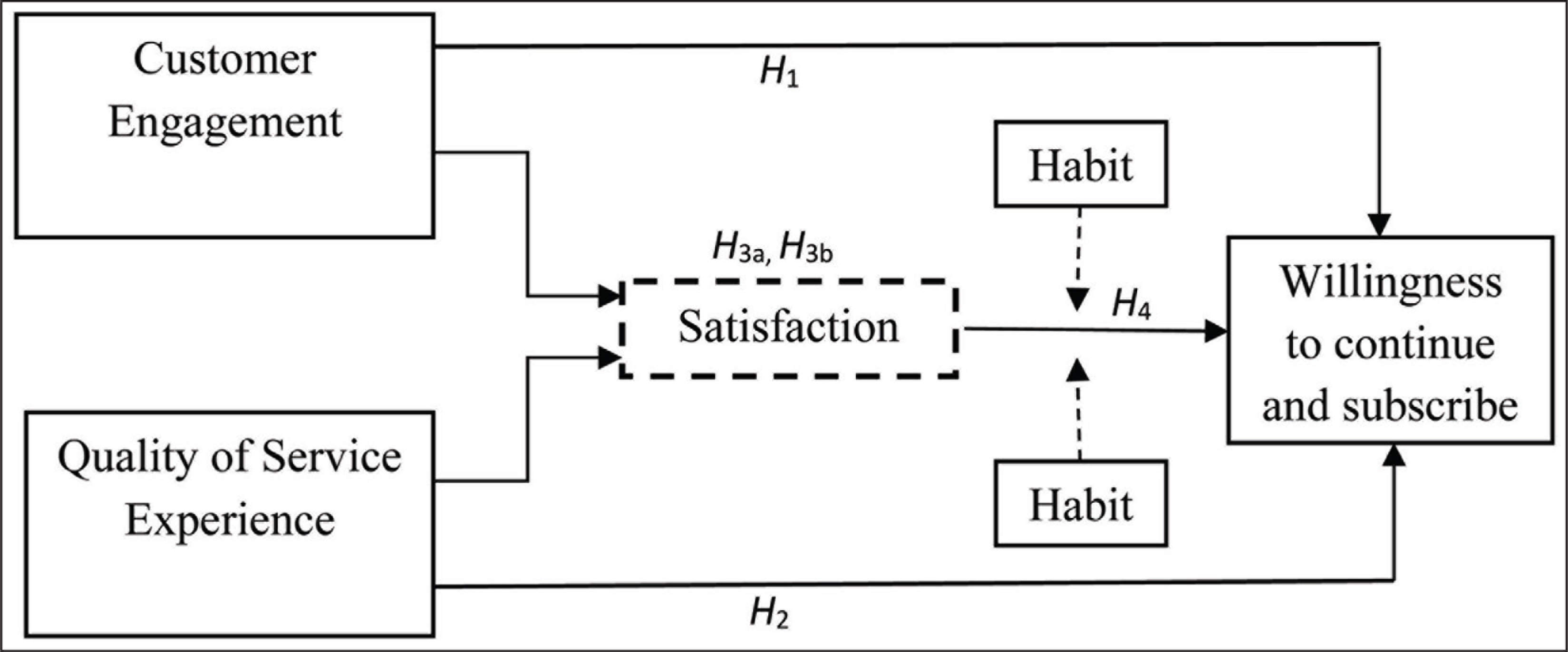
H1: CE has a positive and significant impact on users’ WCS to streaming services.
Quality of Service Experience
If firms want their customers to keep coming back to them, they need to provide them with an experience that compels them to keep returning. This quality of experience (QoE) has largely been understood by researchers as user’s delight or annoyance with the service. This experience, posited as the result of the fulfilment of customer’s expectations and is, in turn, driven by the personality and current state of the user (Qualinet White Paper, 2013). Even though it is an extension of the notion of service quality that deals with the performance of a service, the concept of QoSE tends to be more holistic in nature as it focuses on the assessment of the service performance by the user (Varela et al., 2014).
With respect to media consumption, the study by Reiter et al. (2014) identified and examined three broad factors, namely, human influence factors (that include user characteristics), system influence factors (attributes that determine the technically produced service quality like content type, reliability and data transmission) and context influence factors (that describe the user’s environment by embracing any situation characteristics such as time of the day, cost of service and other people involved in the service) that affect users’ service experience. However, due to lack of consensus, there still remains a need to identify and quantify specific aspects that contribute to an individual’s service experience (Möller & Raake, 2014) and as such can be linked with his/her behavioural intentions. While Sackl et al. (2012) demonstrated that users with higher QoE will have greater willingness to pay, the broader linkages of service quality with behavioural intentions have been well established by numerous previous studies (e.g., Beng, 1999; Jain & Gupta, 2015; Spreng & Mackoy, 1996), thus lending support to the formulation of following hypothesis:
H2: QoSE has a positive and significant impact on users’ WCS to streaming services.
Satisfaction
A well-researched concept in the area of marketing, satisfaction has been defined by Oliver (1980) as ‘a summary psychological state when the emotions surrounding disconfirmed expectations are coupled with the consumer’s prior feelings about consumption experience’. In a further work, Oliver (1997) posited that satisfaction is derived from a comparison of customer’s direct experience with a product/service with their expectations from the same. There also exists the consensus that both cognitive judgments as well as affective experiences are crucial in producing satisfaction.
Though past studies have well established the association between satisfaction and CE, some have reported the impact of satisfaction on CE (e.g., Doorn et al., 2010; Pansari & Kumar, 2017), while others have found satisfaction to be an outcome of CE (e.g., Abror et al., 2019; Brodie et al., 2013). There, however, has been an agreement on the linkages between QoE and satisfaction, with studies considering QoE as a measure of user satisfaction (e.g., Nourikhah & Akbari, 2016, pp. 112–122). The work by Reichl et al., (2015) further reports that changes in several factors such as price can have an impact on QoE, thus, in turn, exerting an impact on user satisfaction.
Putting forth the view that satisfaction from the trial/previous purchase is must for purchase to continue in future (e.g., Seiders et al., 2005; Shankar et al., 2003; Szymanski & Henard, 2001), several studies have also tested the mediating impact of satisfaction in affecting the relationship between different constructs including quality, engagement, trust, value loyalty, purchase intentions (e.g., Cronin et al., 2000; Kant et al., 2017; Srivastava & Sharma, 2013; Vesel & Zabkar, 2009), thereby lending support to the following hypotheses:
H3a: Satisfaction mediates the relationship between CE and WCS to streaming services. H3b: Satisfaction mediates the relationship between QoSE and WCS to streaming services.
Willingness to Continue and Subscribe
Most of the OTT services run on a business model, which involves a free trial period, after which, the customers are given a choice whether they wish to continue to use the service and subscribe by paying a fixed monthly fee which will give them uninterrupted access to unlimited content provided by that streaming platform. The customers are also at a liberty to cancel the subscription anytime. Also, as satisfaction itself would not ensure repeat purchase (Appelbaum, 2001), it becomes imperative for the providers of OTT platforms to continuously improve technology, quality of services and the content offered on their platforms as means to retain existing customers as well as attract new ones.
Ever since the streaming services took over the entertainment industry, researchers started focusing on understanding the factors that drive people to pay/subscribe for these services (e.g., Chen et al., 2018; Lee et al., 2018). Defined by Wertenbroch and Skiera (2002) as ‘the maximum price a customer is willing to pay for a product’ (Kalish & Nelson, 1991; Wertenbroch & Skiera, 2002), studies have opined that an assessment of customers’ willingness to pay/subscribe helps in estimating demand and designing pricing schedules based on the value of product/service as perceived by the customers. In another study, Ye et al. (2004) pointed out that the customers will be willing to pay for online fee-based services only when such services have a quantitative advantage over the free services. Extending this view, Kim et al. (2017) studied the product attributes that have a considerable influence on customers’ willingness to pay for OTT service and found that resolution, recommendation systems and viewing options (in that order) were the most influential attributes.
Habit
A simple conceptualization of habit defines it as ‘a behavioural tendency to repeat responses given a stable supporting context’ (Ouellette & Wood, 1998). It is also posited that the ease and speed with which these responses can be performed motivates repetition of well-practiced behaviours. A later work by De Guinea and Markus (2009) defined the construct in terms of the ‘extent to which people tend to perform behaviours automatically because of learning’. The frequency with which a particular behaviour occurs is taken as the measure for habit strength (e.g., Triandis, 1979).
Previous studies have considered habit as a key interpreter of future behaviour (e.g., Ji & Wood, 2007; Ouellette & Wood, 1998). The view presented by Aarts et al. (1998) that habit alone cannot accurately predict future behaviour and must be supported by intentions, was maintained by Ouellette and Wood (1998) who too reported intentions to mediate the relationship between habit and future behaviour; with conscious intentions becoming less predictive of behaviour as habit strength increases. Later research by Khalifa and Liu (2007) stated that it is necessary to develop habit of using an online channel for satisfaction to have a considerable impact on repurchase intention. Similar results were reported by Hsu et al. (2015) who found that satisfaction exerts a greater influence on repeat purchase intention when habit strength is low. In a study related to B2C website, Liao et al. (2006) also found habit to be one of the significant drivers of customers’ intention to continue.
In addition to the above, the moderating impact of habit has also been examined by a number of researchers. For instance, Limayem and Hirt (2003) revealed the interactive effect of habit in influencing the linkage between intention and usage behaviour. This has been supported by Jolley et al. (2006) who too found habit as a significant moderator that affected the impact of satisfaction on customer retention. However, negative moderating impact was reported in a study by Chiu et al. (2012) who found higher level of habit to reduce the effect of trust on repeat purchase intention. The aforesaid discussion lends to support the following hypothesis:
H4: Habit moderates the relationship between satisfaction and WCS to streaming services.
Research Objectives and Framework
The present study is undertaken with a threefold research agenda. First, with intensifying competition in the streaming services, the paper delves into the role of the two exogenous drivers in impacting consumers’ willingness to continue with a particular service provider. Second, the paper seeks to investigate the mediating role of satisfaction in affecting the aforesaid linkage. Third, the research aims to explore the possible moderating impact of consumers’ increased usage and consumption of streaming services (conceptualized as ‘habit’) during the period of coronavirus lockdown in affecting the association between consumers’ satisfaction and their future behaviour. The hypothesized linkages tested in the present work are presented in the research framework (Figure 1).
Methodology
Sample
An online questionnaire was floated on WhatsApp and Facebook group to collect primary responses for the study. As there is no sample framework or list of such customers, convenience sampling method was used. Further, though the subscription-led streaming services now have a wider audience base, with those in the older age groups (35–44 years, and 45–54 years) showing a higher propensity to pay for content (Brand Equity, 2019), the latest Global Web Index report dated 30 March 2020 reports 89% of Indian users in the age group of 16–35 years (Gen Z and Millennials). Since the highest number of Facebook users in the country also belong to these age groups: 97.2 million users between 18 and 24 years and 81.1 million users between 25 and 34 years of age (Statista, 2019), it was considered appropriate to use digital/social media platforms to connect with possible users of streaming services.
People availing streaming services at present constituted sampling unit for the study. Due to the possibility that they could be using services of more than one OTT platform, respondents were asked to provide their responses with respect to the provider that they use the most. To improve the response rate and encourage greater participation, reminder mails were sent with an assurance of anonymity of responses. A total of 182 responses received during one-week period (24 June–30 June 2020) served as the final data set. Majority of sample respondents were young (87.4%), male (60.1%), unmarried (86.6%) and students (66.8%) with the monthly family income more than one lakh (50.8%). While the data found 85% of users to be paid subscribers; Netflix, Amazon and Hotstar emerged as the top three OTT platforms with, respectively, 59.2%, 29% and 6.3% respondents preferring and using their services over others.
Measures
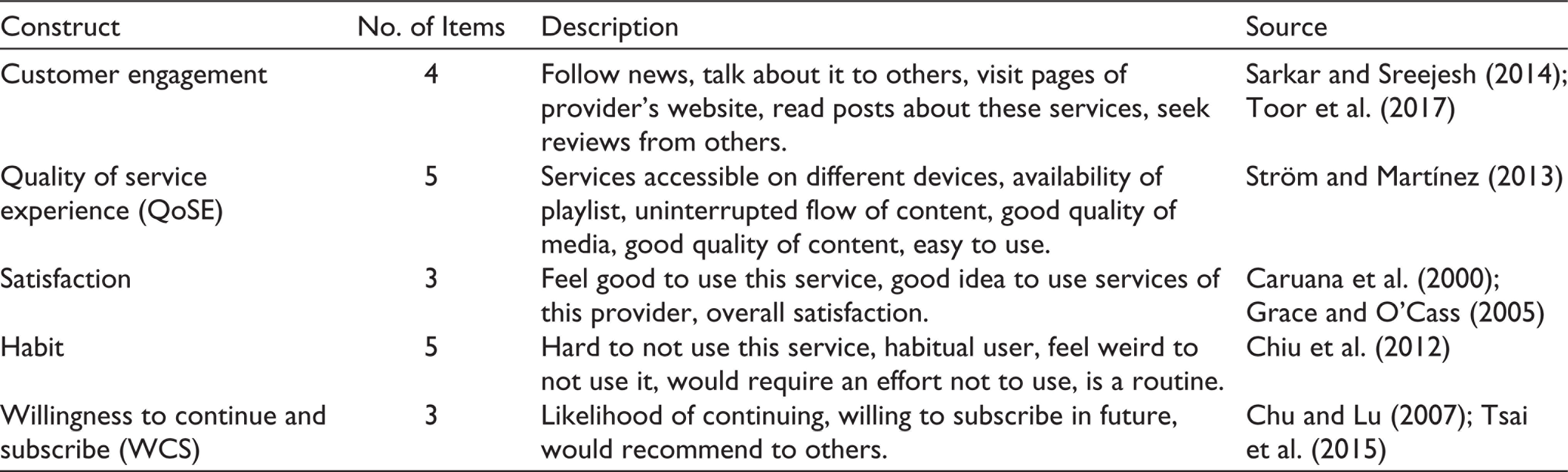
The questionnaire for the study, prepared on Google Docs, was divided into three broad sections. The first section sought information related to users’ chosen service provider and frequency of digital media consumption in addition to their demographic characteristics. The second section included statements related to the two primary antecedents, namely, CE and QoSE. The third section included statements for two outcome variables, that is, satisfaction and WCS as well as statements that tapped consumers’ habit of consuming streaming services during the current period of coronavirus lockdown. For all the measures, the scales used/developed by previous researchers provided necessary validity and were adopted with suitable modification in the present work. A few statements were negatively phrased to avoid response bias that could occur due to the use of five-point Likert format (strongly disagree 1 to strongly agree 5). The details of the description of various measures along with the source are provided in Table 1.
Measures
Findings and Discussion
The study used PLS-SEM in Smart PLS 2.0 to analyse the data. In addition to the merits related to relaxed conditions of data distribution and applicability on relatively small sample size, this technique is less sensitive to potential omission of variables (Chin, 2010, pp. 655–690) and primarily serves the objective of prediction and explanation of target constructs (Hair et al., 2013). Further, this methodology has been defended and endorsed by recent marketing studies to examine the reflective models (e.g., Ali & Omar, 2014, pp. 175–193), thus justifying its application in the current study. The findings with respect to reliability, validity and testing of hypotheses are discussed below.
Reliability and Validity Analysis
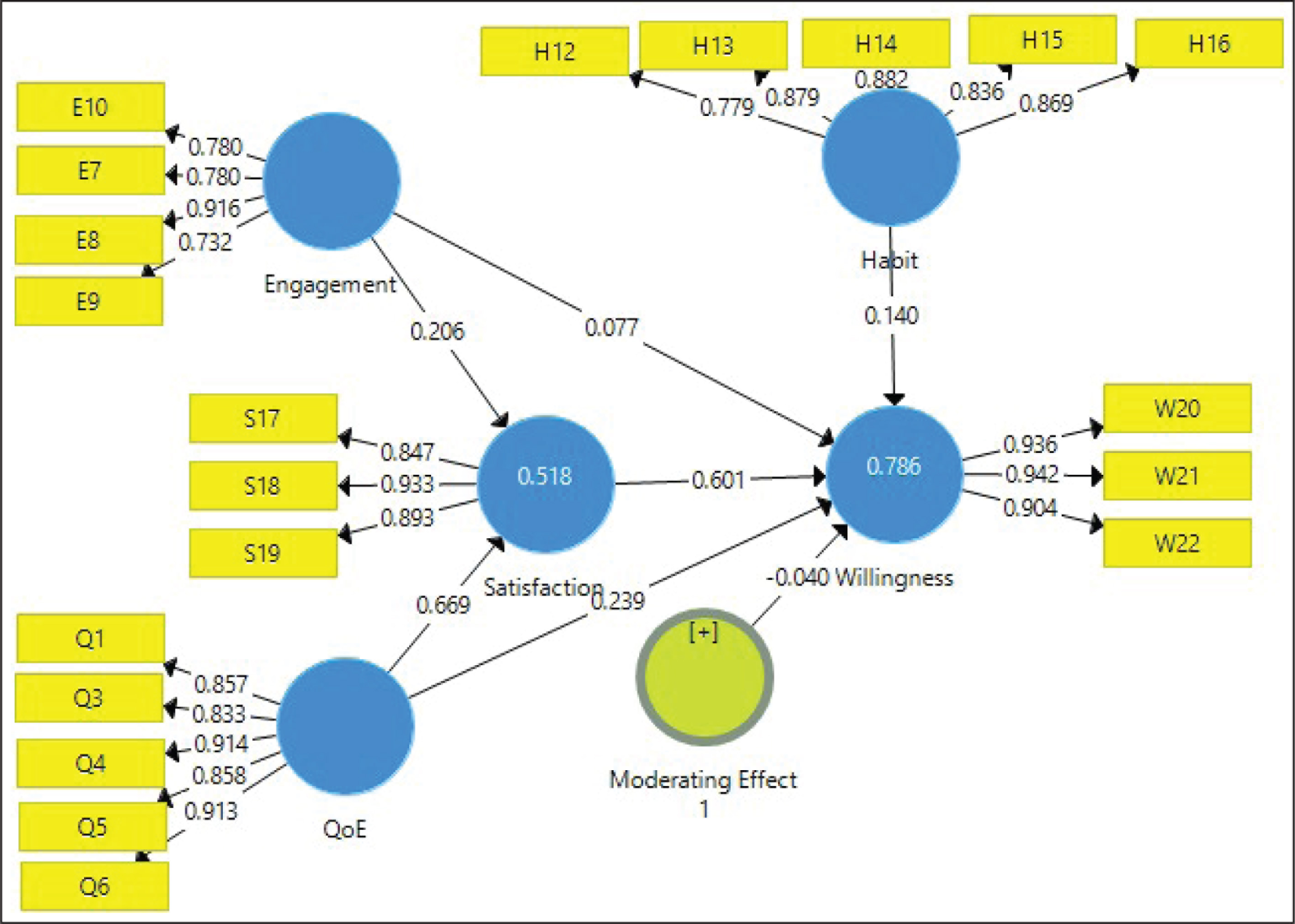
Each of the reflective constructs under investigation was subjected to reliability and validity analysis. To begin with, all item loadings (see Figure 2) were examined to ensure that they fulfil the cut-off limit of 0.70 (Hair et al., 2017). Cronbach alpha values above 0.8, composite reliability more than 0.7 and average variance extracted (AVE) scores higher than 0.5 for all the constructs (see Table 2a) satisfy the threshold acceptance level, thus lending support to internal consistency and convergent validity of the model.
Reliability and Convergent Validity

In the next step, discriminant validity was examined using Fornell and Larcker (1981) criterion as well as the Heterotrait-Monotrait (HTMT) ratio. The values presented in Table 2b show that the square root of AVEs (diagonal values) exceed its corresponding correlation with other latent constructs (below the diagonal), thereby fulfilling the Fornell and Larcker (1981) criterion of discriminant validity. To strengthen the evidence of discriminant validity, HTMT ratio of correlations (ratio of inter-construct correlation and square root of the product of correlation) was computed. The HTMT values below the recommended cut-off of 0.90 (Henseler et al., 2015) in Table 2b exhibit the presence of discriminant validity between all constructs.
Analysis of Discriminant Validity

Model Fit
The PLS algorithm was used to evaluate the reflective structural model presented in Figure 2. The R2 of the endogenous construct (i.e., WCS) is found to be 0.786, reflecting a substantial model fit (Chin, 2010). The value of standardized root mean square residual (SRMR) < 0.08 and NFI > 0.8 are acceptable and support the overall fitness of the structural model. In addition, the goodness of fit (GoF) value = 0.822, calculated as the geometric mean of the AVE and R2 (Tenenhaus et al., 2005) of WCS, well exceeds the cut-off value = 0.36, thus indicating a good model fit (Hoffmann & Birnbrich, 2012, pp. 390–407).
Next, the predictive relevance of the model was examined using the blindfolding procedure. The value of Q2 (representing the cross-validity of the endogenous construct) was generated as per Stone–Geisser cross-validation methodology (Geisser, 1974; Stone, 1974). In the current study, the Q2 value of 0.665 (i.e., value > 0) for the endogenous construct (i.e., WCS) at the omission distance = 8 establishes strong predictive power of the model (Hair et al., 2017).
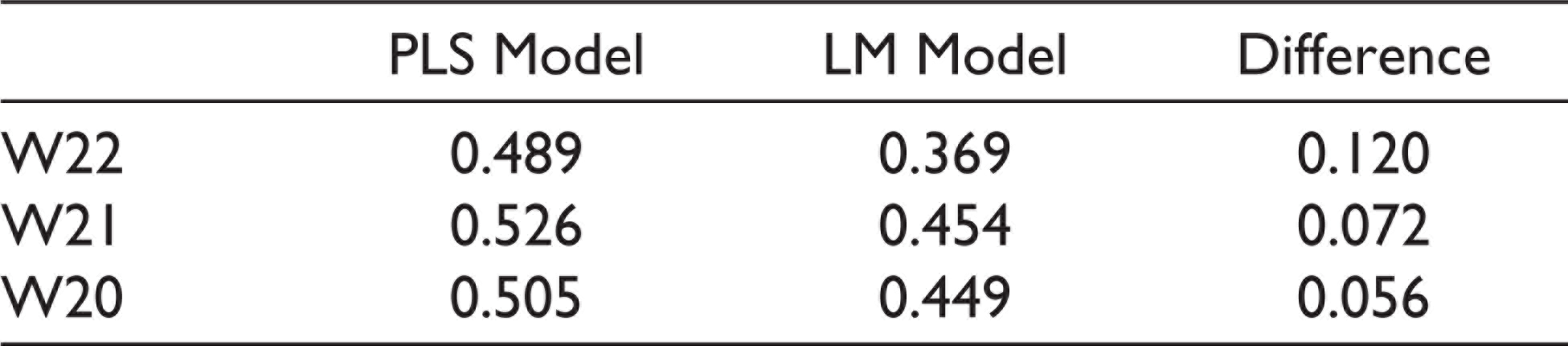
Getting support from the results, the study used PLS predict to predict the item values of the endogenous variable, that is, WCS which are then compared with the predictions from a benchmark linear model (Shmueli et al., 2016). The higher values of Q2 predict of the study model over the benchmark LM model in Table 3 confirms higher predictive ability and usefulness of the former model over the latter.
Values of Q-square Predict
Hypotheses Testing
Using the bootstrapping procedure, the hypothesized linkages among the constructs were tested. The beta value in Table 4 for the direct path linkage between CE"WCS (β = 0.077, p < 0.05) and QoSE"WCS (β = 0.239, p < 0.01) show the positive and significant impact of both the exogenous constructs on WCS, lending support to the acceptance of H1 and H2.
Path Coefficients and Hypotheses Testing
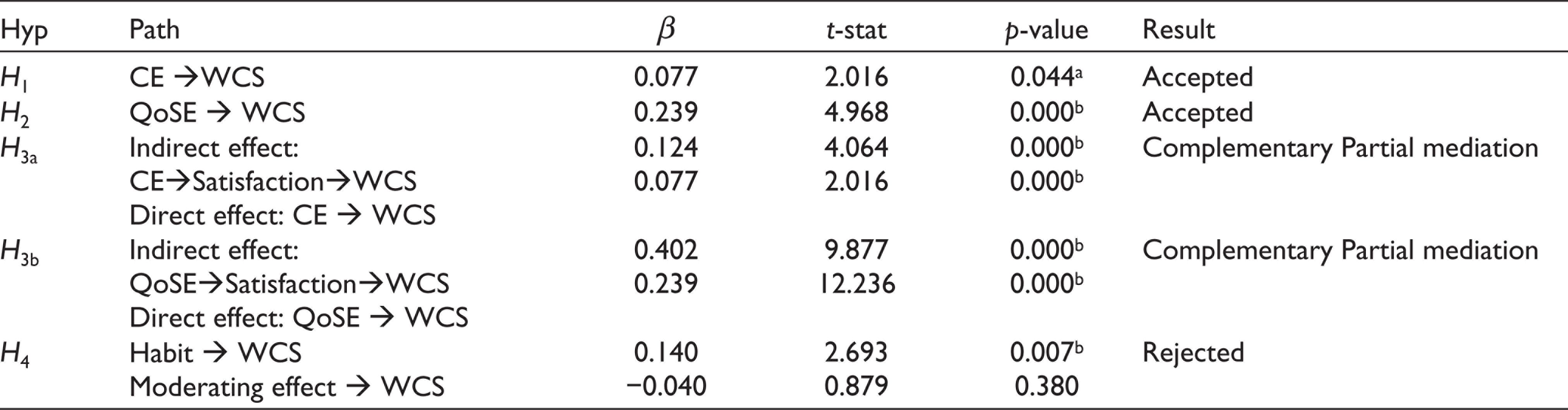
The mediation effect of satisfaction in affecting the aforesaid direct linkages is examined using the systematic mediation analysis suggested by Hair et al. (2017). In addition to a significant direct effect, the introduction of satisfaction generates a significant indirect effect of CE on WCS via satisfaction (β = 0.124, p < 0.01). The results, thus, establish complementary partial mediation of satisfaction in affecting the relationship between CE and WCS (H3a). The findings similarly show a significant indirect effect (β = 0.402, p < 0.01) of QoSE on WCS via satisfaction as well as a significant direct effect of QoSE on WCS, thereby supporting the presence of complementary partial mediation of satisfaction in affecting the linkage between QoE and WCS (H3b).
After testing the mediating impact of satisfaction, the study proceeds to investigate the presence of the moderating impact of habit in transforming customers’ satisfaction into willingness behaviour. An interaction or moderator variable, as the product of satisfaction and habit was introduced in the structural model. While the direct linkage between habit and WCS turns out to be significant (β = 0.141, p < 0.01), the interactive effect is found to be insignificant (β = −0.040, p > 0.05). The results, thus, fail to establish the moderation effect of habit, providing ground for the rejection of H4. However, the negative coefficient of the interaction term (β = −0.04) implies that the association of satisfaction with WCS becomes weaker with habit strength.
Conclusion and Implications
In the context of the disruption caused by COVID-19 that has escalated the at-home digital media consumption, the present study examines the interplay of key factors that affect users’ WCS to these services. From the theoretical perspective, the study adds to the understanding of the constructs investigated and lends explanation to the linkages between them, as established in the marketing literature. By examining consumers’ media consumption behaviour in light of the change induced by the pandemic, the work provides a starting point to context-based theory adaptation in accordance with the changed scenario. The study establishes its theoretical usefulness by pointing towards the relevance of addressing the specific factors (CE and QoSE) that exert an influence on consumers’ consumption behaviour in the current situation. Further, an exploration into the possible moderating role of ‘habit’ consumption, induced due to the pandemic, adds value to the existing body of research.
On the practical front, the results establish a strong impact of both CE and QoSE in influencing customers’ WCS in future. To leverage this linkage, service provides need to provide continuous attention to aspects that enhance engagement and user experience. Some useful implications emerging from the study findings are discussed below.
First, it is suggested that providers devote attention on developing a ‘fan-base’ of customers who are emotionally engaged with the firm and its offerings. To achieve this, greater focus should be laid by providers to post regular information related to new content on their website that would motivate people to look forward to the new uploads. It is also advised that providers make use of social networking sites and apps to engage users and encourage them to develop a user community where they can discuss the content with each other. While doing so, firms should acknowledge individual differences existing among members of their online community and accordingly provide tailored services on their website. A blended mix of these efforts may help the firms in not only keeping their users engaged in terms of the time they spend using the service but would also provide advocacy and continued visibility to streaming services post pandemic.
Second, to provide customers’ with a differential and improved service experience, it is suggested that providers reaggregate or re-bundle their content libraries to include a wide range of offerings, including video, music and gaming services. Though the leading service providers have made progress in this direction, there still remains a scope for delivering customized packages of content to their customers. By providing offers in accordance with customers’ interests and buying behaviour, the providers can further create a distinction and eventually reap additional benefits of target advertising.
Third, consumers can be given an option to accept ad-supported content, that is, advertising in exchange for ‘free’ (non-subscription) content. Although ad-free subscription model like Netflix is preferred by consumers, yet, with more firms joining their own subscription services in future, it may become difficult to sustain a subscription-only model. Collecting data on users’ perception of service quality at regular intervals can help providers in taking future decisions in this regard.
Fourth, the presence of the mediating impact of satisfaction, even though partial, implies that users’ satisfaction with the service cannot be ignored. Lack of variation in consumers’ satisfaction experience across service providers would gradually result in the negligent impact of satisfaction in influencing WCS. To ensure that users not only remain satisfied with the service they receive, but also view it distinct in comparison to that provided by the competing firms, it is suggested that providers deliver personalized content to each user based on the user’s preference record. Steps should also be taken to update data on users’ satisfaction to improve the chances of service recommendation.
Finally, while the present work posits satisfaction to result from a blend of CE and QoSE; it considers the situation stimulus provided by the lockdown as the trigger for habit formation. The difference in the operating mechanism of the two constructs not only supports the assessment of their interactive impact, but also brings to the fore a different perspective of this relationship. The findings reveal habit (of consuming streaming services during the pandemic period) as a possible predictor of users’ decision to continue and subscribe but fail to establish its interactive effect as a moderator. However, though the moderating impact turns out to be insignificant, its negative beta value imply that the focus on users’ satisfaction can be suppressed as the OTT users grow more habitual of using these services. On the other hand, when the users have not developed a habit of using these services, satisfaction would stimulate consumers’ WCS. In the light of this important inference, service providers need to continue with their efforts to deliver services to the satisfaction of their users. It would be worthwhile for them to further analyse the level at which the influence of satisfaction on WCS will decrease or get nullified by the effect of habit. Once the satisfaction reaches a sufficient level, efforts should be made to develop a habit in customers to consume streaming services automatically every time they feel the need to consume media and entertainment services.
In sum, the study provides effective direction to service providers in understanding the changes in consumers’ media consumption habits and suggest practical ways in which streaming service offerings can be modified in accordance with the changed behaviours.
Limitations and Future Research Directions
The limitations of the present research can be addressed by scholars in future. The first constraint pertains to the sample that largely constitutes young respondents. A more diversified sample including people from higher age groups may present a different perspective to the consumption of streaming services and yield a significant population effect. Another aspect that needs attention is the composition of primary constructs, namely, CE and QoSE, both considered unidimensional in the present work. By including the dimensions of CE and adopting a broadened gamut of the concept of experience that incorporates other relevant aspects of service quality such as website quality and perceived usefulness, future researchers would be able to provide a more detailed and holistic assessment of these constructs in furthering user satisfaction with services. Research delving into various antecedents of habit formation would also be useful for providers. Last, there always remains a scope to further improve the psychometric and diagnostic properties of the measures as well as make future studies more comprehensive by including other relevant constructs in the research framework.
Footnotes
Declaration of Conflicting Interests
The authors declared no potential conflicts of interest with respect to the research, authorship and/or publication of this article.
Funding
The authors no financial support for the research, authorship and/or publication of this article.