



Abstract
The shifting trend of businesses and customers towards environmental sustainability has led to increasing interest in green branding among researchers. In order to facilitate these researchers, our study presents a bibliometric analysis of the research on green branding from 2000 to 2019. The Scopus database was screened to identify year-wise publications, most cited papers, most prolific authors, countries and institutions. The VOSviewer software was used to analyse keyword occurrence, co-authorship network and inter-country co-authorship network. Results of the bibliometric analysis show that the largest number of papers on green branding was published in 2017. The most cited paper is ‘Pro-environmental products: Marketing influence on consumer purchase decision’. The most prolific author on green branding is Chung-Shing Chan from The Chinese University of Hong Kong, which is also the most productive university with respect to research on green branding. The Journal of Cleaner Production published by Elsevier and Sustainability (Switzerland) published by MDPI have published the largest number of papers on green branding. This analysis provides direction to researchers venturing into the field of green branding by providing information on the journals, authors, institutions and countries that are prominent in the domain of environmental sustainability as well as keywords that are frequently used in research on green branding.
Introduction
Due to the large extent of environmental contamination closely associated with manufacturing activities worldwide, pioneers of society, governments and corporate houses have paid close attention to sustainable development in recent years. Organizations are compelled to reform their practices considering the safety concerns of society and green guidelines by governments. Corporate houses are willing to adopt a socially responsible and environmentally conscious approach by presenting eco-accommodating items, packaging and production as well as decreasing the negative ecological effect of existing items. Similarly, various companies have built an environmentally responsible image for their sustainable activities.
Environmental awareness has been an important research subject for at least three decades; however, few studies have specifically focused on green branding. Several organizations have comprehended this idea and effectively worked to modify their businesses to adopt an eco-accommodating approach. The definition of green practices has introduced a new regulation that has opened up new possibilities and ideal conditions for organizations. Organizations are aiming to limit the environmental impact of their processes through manageable strategic policies. Customers have become increasingly mindful of ecological issues and numerous organizations have perceived the importance of green branding in business. Corporate houses are producing organic products as part of their environmental marketing strategy as well as developing green promotion practices and green brands.
A green brand is different from the other brand with respect to not only having a specific set of label characteristics but also the advantage of reduced environmental impact. The green brand concept is applicable in industrial goods, consumer goods or services. Industries accept environmental responsibility because society raises the concern of environment pollution at all levels. The attention of customers towards green brands increased after the rise in biological issues profoundly experienced all. In addition, Indian firms are attracted towards green branding because of a shifting trend towards environmental sustainability. These firms understand that to enhance their market share as well as satisfy customers, they have to move in the environmentally conscious direction of green branding (Jain & Kaur, 2004). For the last three decades, firms have been trying to provide environmental protection, safety and security at all the levels by developing new plans, policies and operational procedures to protect the natural environment and ensure customer satisfaction (Baker & Sinkula, 2005). As a result, a four-fold increase in the global market value of green products and services was observed in the last few years (Leonidou & Skarmeas, 2017).
Therefore, green branding is widely used as a key attribute in marketing operations (Huang & Li, 2017), particularly as an effective approach to gain environmental benefits over rival companies (Delgado-Ballester & Munuera-Aleman, 2005). Chen (2010) demonstrates that a customer-perceived green brand image significantly contributes to the development of green brand value, green trust and adds green loyalty. Alwi and Kitchen (2014) stated that brand value is an indicator of the brand’s overall approach. Green branding can be defined as a marketing strategy where consumers associate brands or products with environmental sustainability and conservation.
Increasing environmental issues have contributed to the establishment of green branding. Organizations are aware of these changes and are established to ensure environmental sustainability (Chen et al., 2006; Mehta, 2013). Most industries are presently developing and modifying their promotional and manufacturing practices into eco-friendly forms. For businesses such as telecommunications and data products, green branding is of great importance (Chen & Chai, 2010; Chen & Chang, 2013). However, most businesses are not professionally adaptive enough to sell their sustainable goods to their purchasers. If a business house can positively consider green marketing as a strategic practice, only then will it be able to successfully incorporate all aspects of sustainable green branding. If businesses are willing to contribute to the overall satisfaction of customers by providing eco-friendly products and services, only then will the customers prefer them over their competitors. Customers are willing to purchase environmentally sustainable goods even at double the cost. Corporations wish to gain recognition in a valuable manner. For this reason, organizations build their brand image as companies that satisfy their customers while also paying attention to the climate.
Therefore, green branding is considered an effective strategy to provide sustainable products and services compared to only observable performance attributes. Several previous studies have mostly concentrated on only operational properties while developing a brand image. Suki (2016), states that ‘a green branding involves a lot of properties and advantages with a limited unfavourable natural effect and a favourable influence on customers by enhancing their safety concerns’.
Studies have analysed green branding issues from various perspectives. There are some notable studies that have conducted bibliometric analysis on green branding issues, such as ‘A bibliometric analysis of green innovation’ (Albort-Morant et al., 2017), ‘State of green marketing research’ (Kumar, 2016), ‘An analysis of the green consumer domain within sustainability research’ (Kumar & Polonsky, 2016) and ‘A bibliometric analysis on green supply chain’ (Gong et al., 2018). After screening the literature, we observed that few studies have presented a comprehensive bibliometric analysis on green branding. Our study aims to bridge this gap. The purpose of this study is to provide a broader understanding of the latest trends in green branding research. This study uses bibliometric techniques to explore green branding research patterns and serve academia and professionals as well as guide the decision-making process of companies. This research aims to achieve the following:
Examine the distribution of green branding papers, including the time of publication, country of publication, keyword analysis and number of citations. Examine the relationship between citation and co-citation of green branding papers.
Methodology
The study screened research paper titles and abstracts to identify important publications on green branding. This study examined research papers on green branding listed in the Scopus indexed journals because of its wider coverage of quality journals and its credibility of research information, rigorous indexing and large number of citations (Bergman, 2012). We used ‘green branding’ as a keyword while screening the Scopus database. The field of research used was ‘article title, abstract and key words’. A total of 238 papers comprising 170 articles, 9 review papers, 21 conference papers, 21 book chapters, 9 key books, 3 conference reviews, 3 short surveys, 1 editorial and 1 note were analysed. We comprehensively analysed all these papers. We used bibliometric techniques and literature to examine the research papers on green branding listed in the Scopus index from 2000 to 2019 A bibliometric study is an analytical approach that uses the empirical and quantitative values to explain the distribution dynamics of research papers within a particular topic and a given period (Almind & Ingwersen, 1997; Persson et. al, 2009).
In the last two decades, bibliometric techniques have become a common method used in science and research policy. Many areas of research use bibliometric methods for three reasons: expanding their area of operation, assessing the influence of a research group or determining the effect of a specific study (Pilkington & Meredith, 2009). Therefore, they have become one of ‘the few truly interdisciplinary areas of research that can be extended to almost all fields of science that can be identified’ (Glänzel, 2003, p. 5). Bibliometric analysis enables the collection of tools for quantitatively evaluating literature. It uses citation analysis and analysis of the material as instruments for analytical purposes (De Bellis, 2009). Some researchers describe it as a tool used throughout the production of scientific literature that enables examination of the extent of scientific and technological progress at a specific level. It enables the location of a nation within the world, an organization within a community and even individual researchers within their societies (Okubo, 1997).
Furthermore, this research presents a network map on co-authorship analysis; country–co-author analysis; keyword occurrences and bibliographic coupling with author analysis through the VOSviewer software. It is a network analysis software that facilitates the visualization of the dynamics and structure of information; it was used to perform the coupling of authors, country and co-occurrence of keyword analysis to thoroughly investigate and inspect the logical networks of the addressed research field (Vallaster et al., 2019). The VOSviewer software was selected with the aim of generating a broader and graphic view of the results (van Eck & Waltman, 2010). The software can be used to build connections between the most diverse bibliometric results, placing them on the maps that facilitate visualization of the contents analysed (Laengle et al., 2018).
Results and Findings
Year-Wise Publication on Green Branding
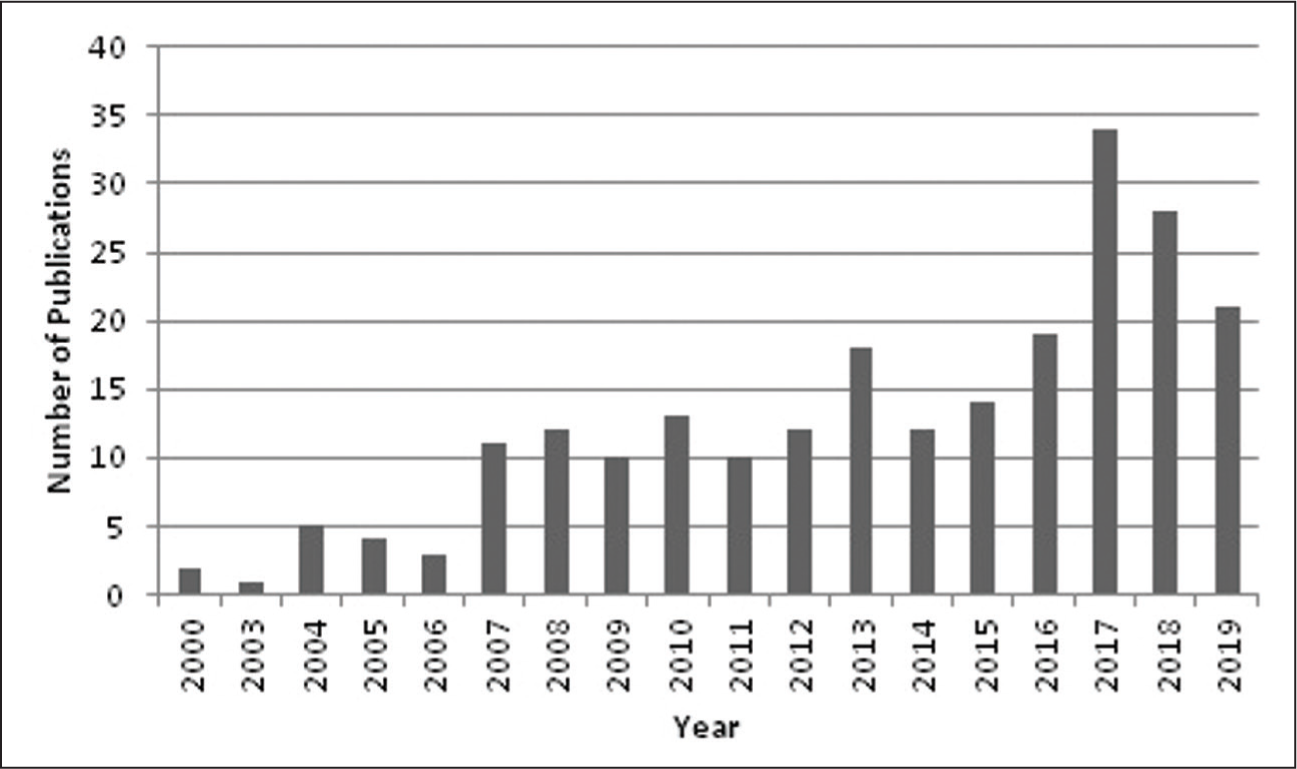
Figure 1 presents the year-wise publications on green branding from 2000 to 2019. The number of papers is minimal from 2000 to 2006, but a large number of papers has been regularly published since 2007. Impressive growth in the research on green branding was observed in 2017, with 34 publications. This increase in the number of papers reflected the growing interest in green branding among scholars. This shows that researchers and scholars remain optimistic that green branding theory and research are being given sufficient attention in academics.
Most Cited Papers
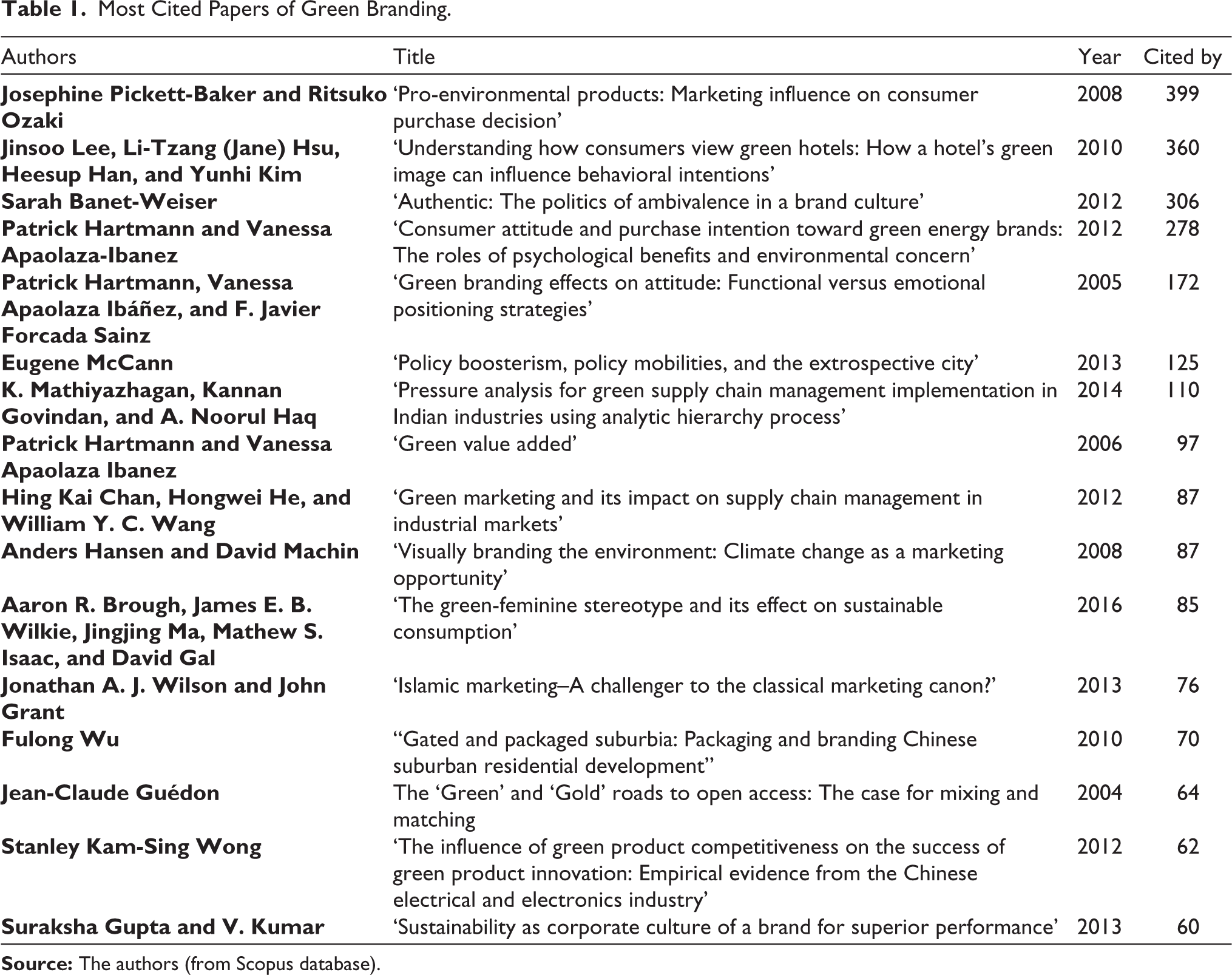
The citation rates indicate the effect of green branding on academics and other fields. The top 16 green branding articles, widely cited in other journals, are listed in Table 1. Details of the top five most-cited papers based on the Scopus search results are as follows: ‘Pro-environmental products: Marketing influence on consumer purchase decision’ has been cited 399 times and is the most cited paper. This paper explored marketing and branding techniques that can help institute green brands and introduce greener patterns of consumption. In addition, it found that although consumers were not able to easily identify green products, they would favour those produced by companies known for their green actions. The second most-cited article is ‘Understanding how consumers view green hotels: How a hotel’s green image can influence behavioural intentions’, cited 360 times. This paper investigated how to build the image and branding of a green hotel using the concepts of cognitive, affective and overall image. The third most-cited literature is a book entitled Authentic: The Politics of Ambivalence in a Brand Culture which has been cited in 306 times. The fourth most-cited paper is entitled ‘Consumer attitude and purchase intention toward green energy brands: The roles of psychological benefits and environmental concern’ and has been cited 278 times. This study proposed that the advertising campaigns which lead to consumer demand for green energy should accentuate environmental concerns, utilitarian benefits and psychological brand benefits. The fifth most-cited paper is ‘Green branding effects on attitude: Functional versus emotional positioning strategies’ and this has been cited 172 times. This paper assessed the impact of green positioning strategies on perceived brand positioning and brand attitude.
Most Cited Papers of Green Branding
Most Prolific Authors and Journals
Figure 2 presents the details of authors who have published more than two papers on green branding. In our analysis, the most prolific author on green branding is Chung-Shing Chan from The Chinese University of Hong Kong. His research interest lies in place branding and marketing, sustainable tourism and recreation planning and management. The second most prolific author with five publications on green branding is Patrick Hartmann. He is the faculty at the Department of Business Economics and Marketing, University of the Basque Country, Spain. The third most prolific author who also has published five papers is Lawal Marafa from The Chinese University of Hong Kong. The fourth most prolific author is Menno D. T. De Jong from the University of Twente, Enschede, Netherlands. Furthermore, five authors who have each published three papers on green branding are Vanessa Apaolaza–Ibanez (University of the Basque Country, Spain), Haiyan Lu (Delft University of Technology, Mekelweg, Netherlands), Angela Paladino (Department of Management and Marketing, The University of Melbourne, Australia), Christian Schulz (professor, University of Luxembourg) and Hui-Ju Wang (Department of Management, Guang University, Taiwan).
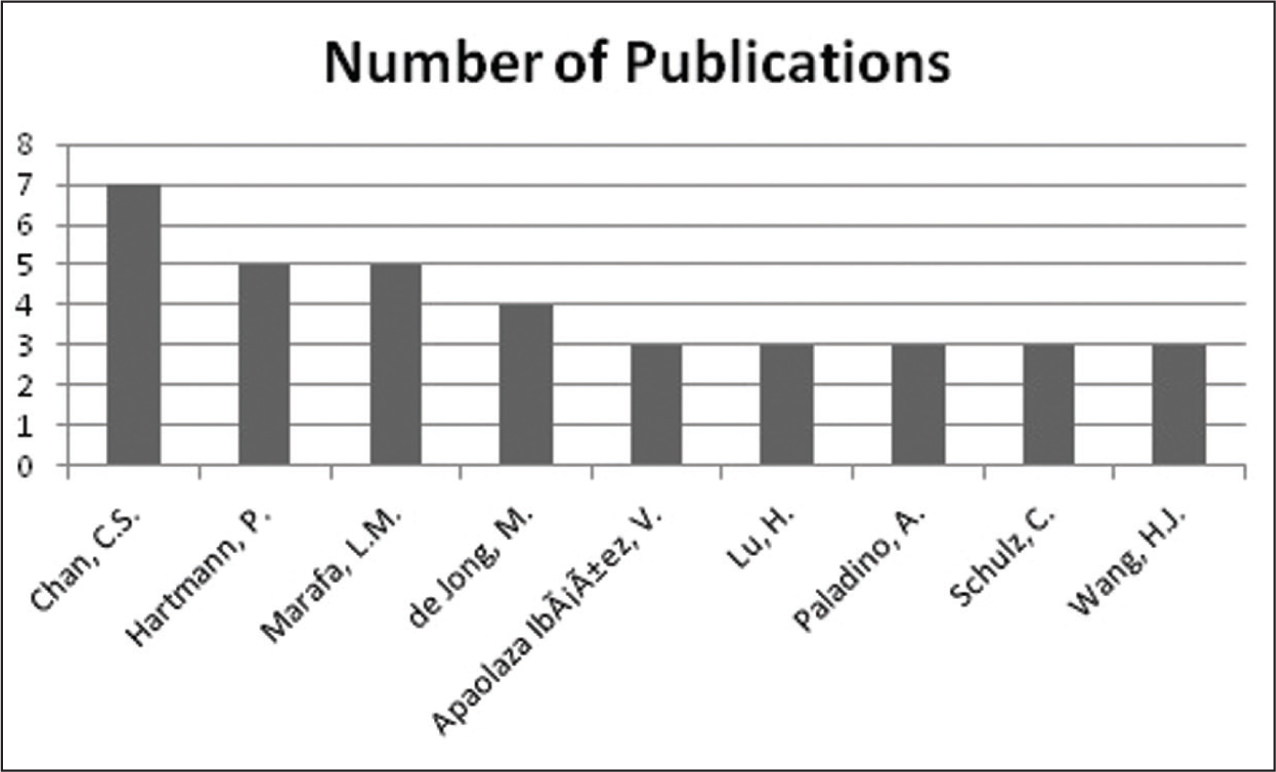
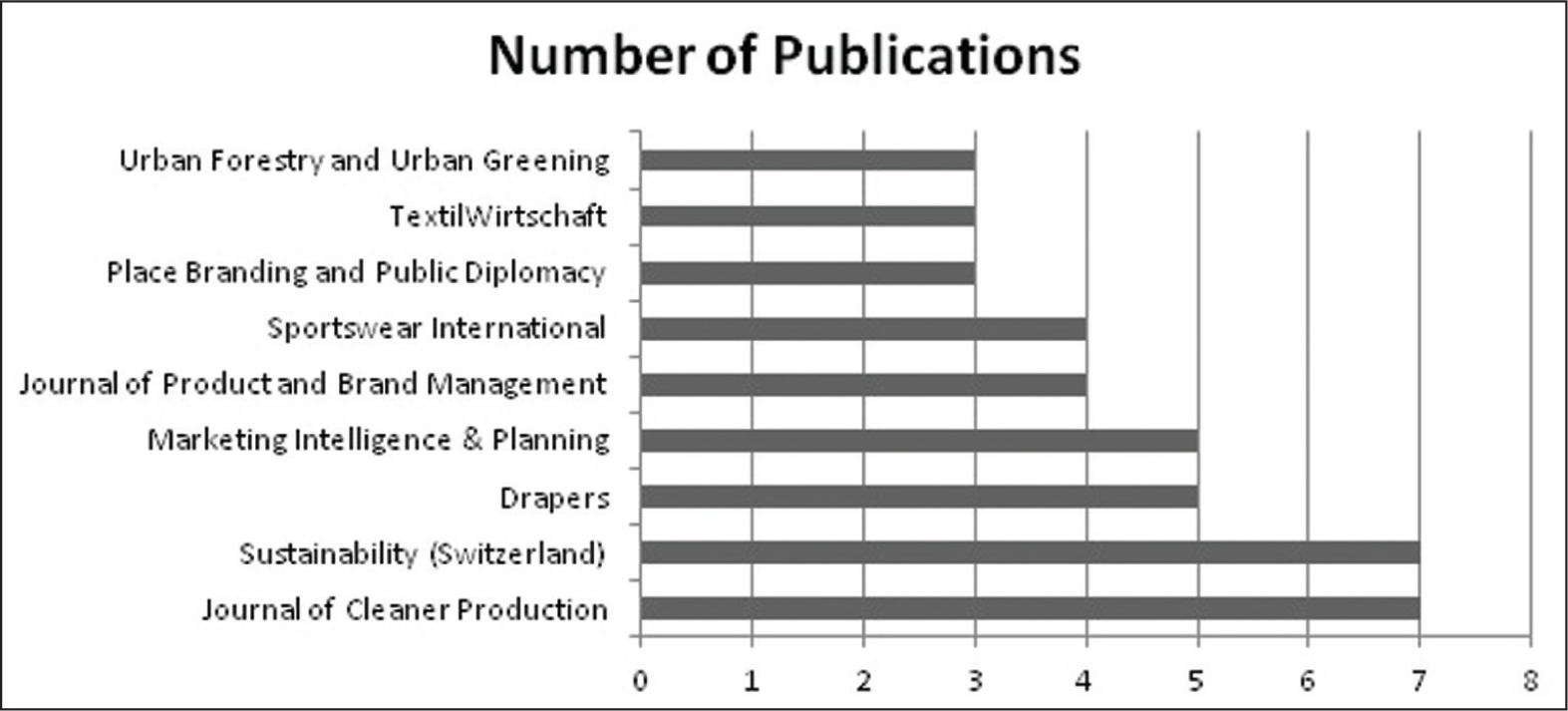
Figure 3 presents prominent and well-known journals that have published green branding research papers. Two journals have published seven papers each from 2000 to 2019. One is the Journal of Cleaner Production published by Elsevier and the other is Sustainability (Switzerland) by MDPI. Furthermore, two journals have each published five papers on green branding: Drapers published by Metropolis International and Marketing intelligence and planning by Emerald publishers. Four papers on green branding have been published in the Journal of Product and Brand Management published by Emerald Publishers and Sportswear International Magazine. Place Branding and Public Diplomacy of Palgrave, TextilWirtschaft of Deutscher Fachverlag GmbH and Urban Forestry and Urban Greening by Elsevier have published three papers each.
Country-Wise Publication of Green Branding
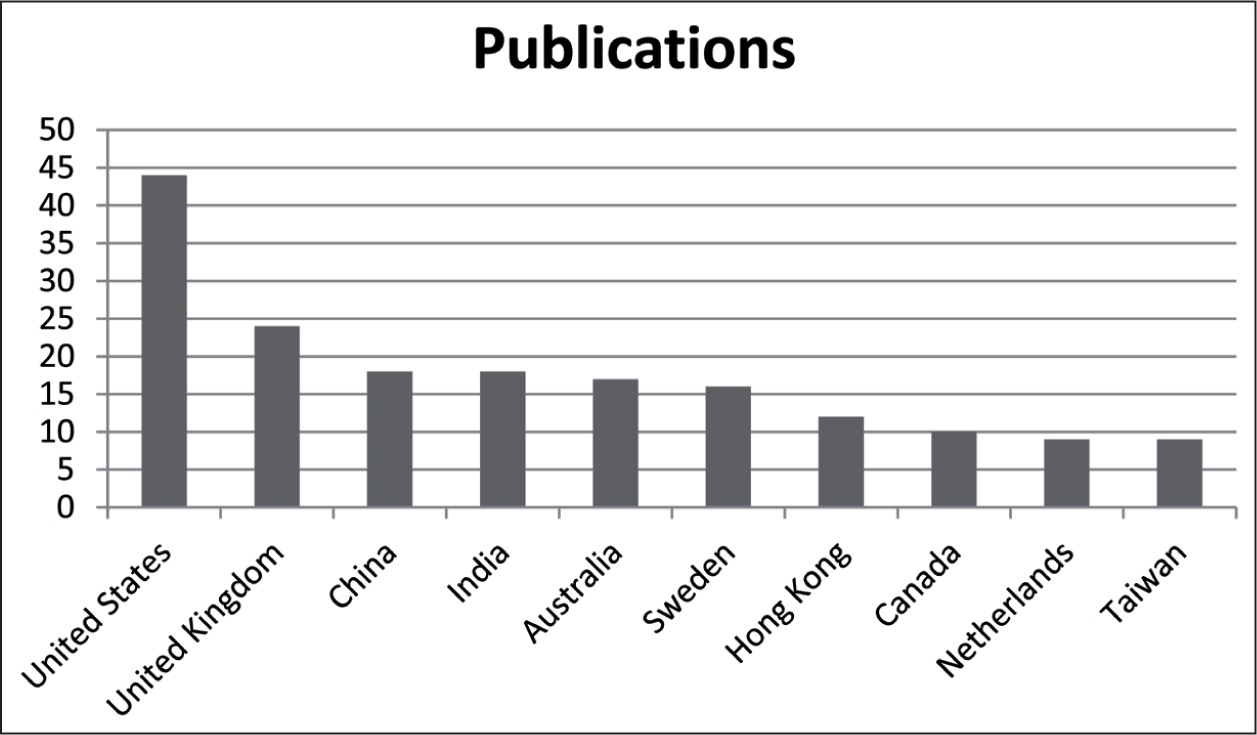
Figure 4 indicates the allocation of the 237 green branding papers according to the researchers’ countries. Based on associations with the researcher, from 2000 to 2019, the analysis listed nations generating the most prolific countries. A total 300 countries’ contribution emerged as a different authors’ position in 237 papers. The United States tops this list with 44 publications, followed by the United Kingdom with 24 papers. China and India published 18 papers each, Australia published 17 papers and Sweden published 16 papers. The remaining four nations among the top ten most prolific nations with green branding research publications are Hong Kong with 12 papers, Canada with 10 papers, Netherlands with 9 papers and Taiwan with 9 papers. It is clear from this analysis that the top five countries in this list have published more than 50% papers on green branding.
Institution-Wise Publication in Green Branding
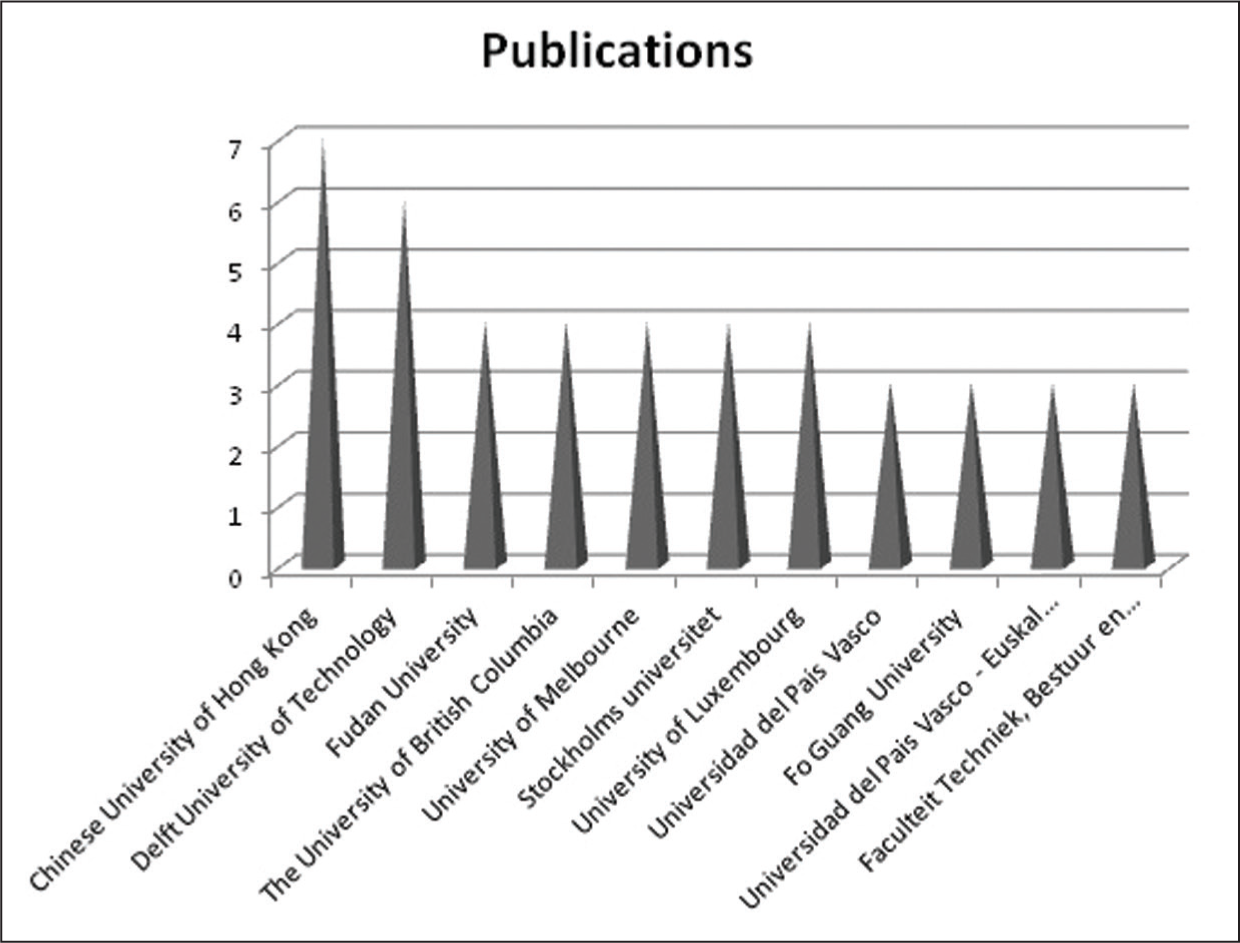
Figure 5 presents the most prolific institutions that have published research on green branding. We have considered only those institutions that have published three or more papers. As Professor Chung-Shing Chan and Professor Lawal Marafa have published a large number of green branding papers, as shown in Table 2, The Chinese University of Hong Kong leads the numbers of publications on green branding with seven papers. Delft University of Technology, Netherlands, is second in the list with six papers on green branding. Four papers have been published by each of the following five institutions: Fudan University, Shanghai, China; The University of British Columbia, Canada; University of Melbourne, Melbourne, Australia; Stockholm University, Stockholm, Sweden and the University of Luxembourg, Luxembourg. The following four institutions in this list have published three papers each: The University of the Basque Country, Spain; Fo Guang University, Taiwan; Universidad del Pais Vasco, Spain and TU Delft Faculty of Technology, Policy and Management, Netherlands.
Keyword Occurrence Analysis
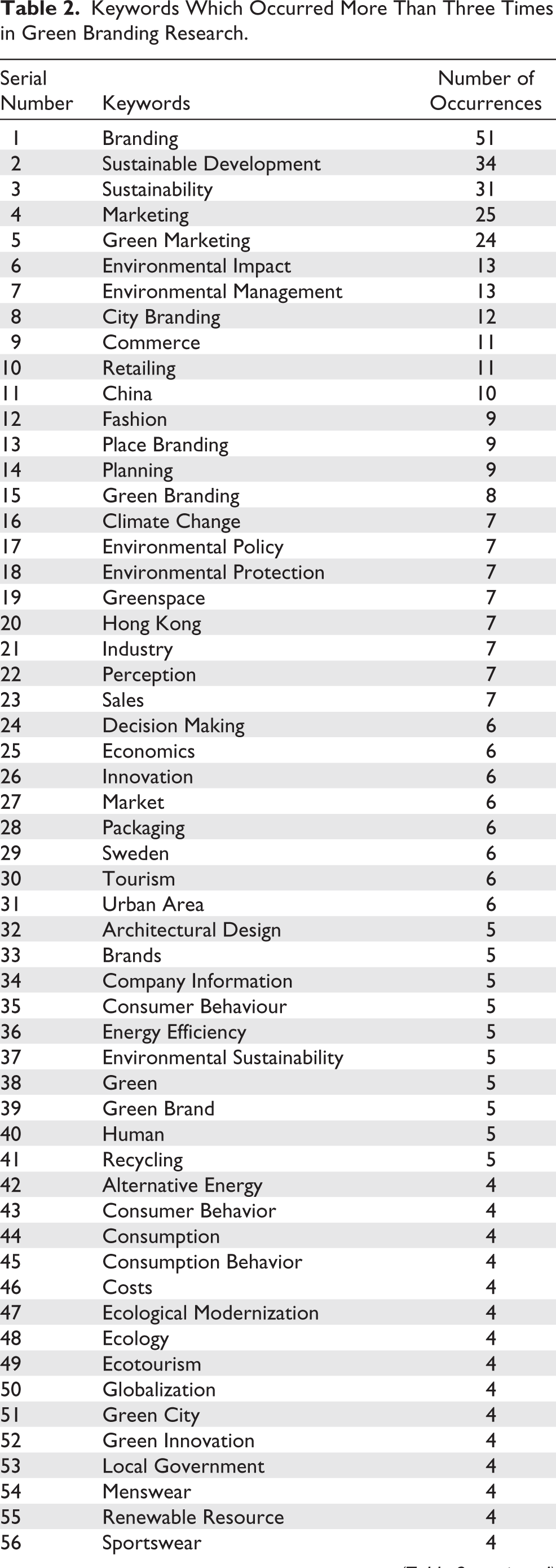
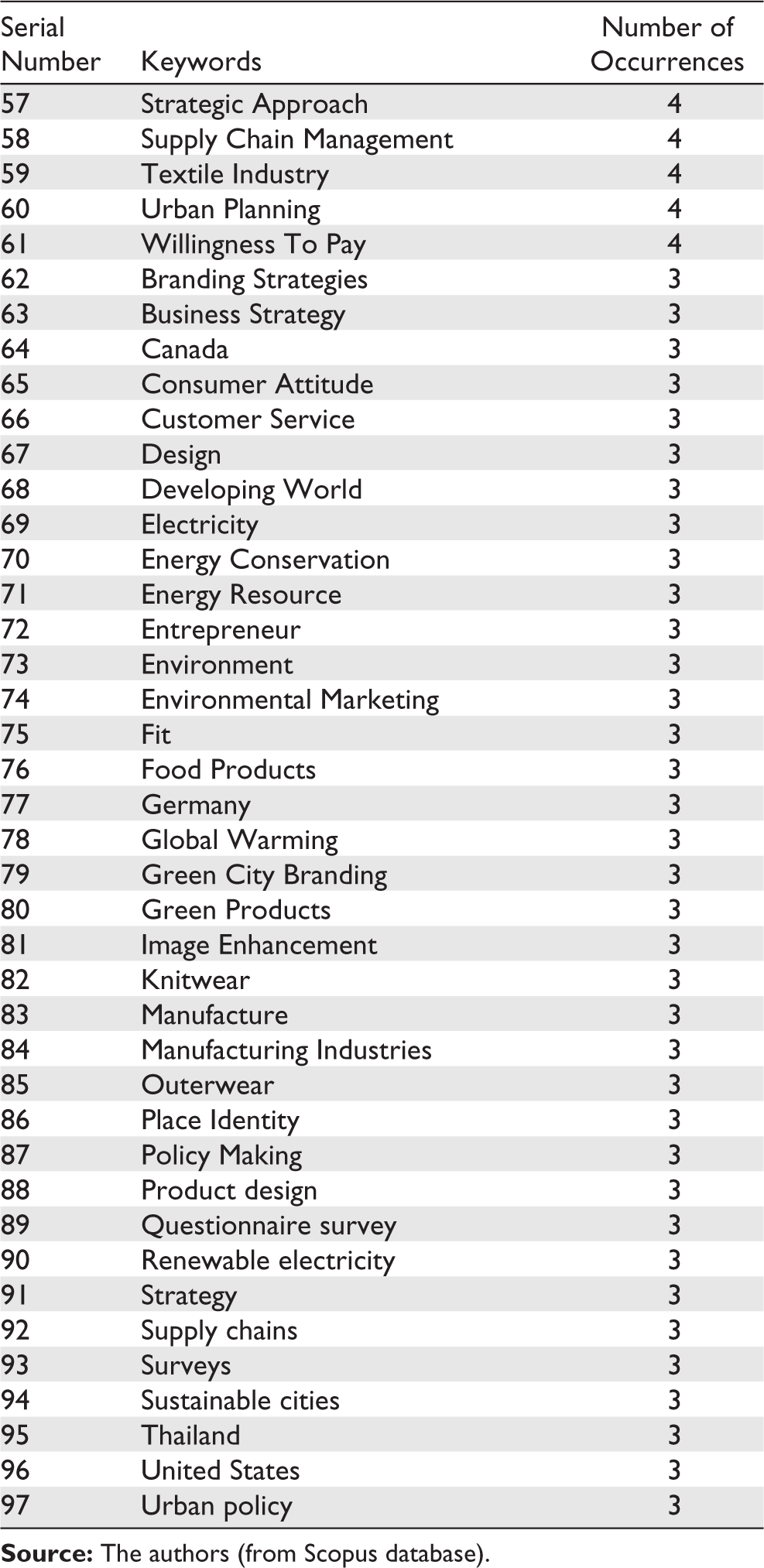
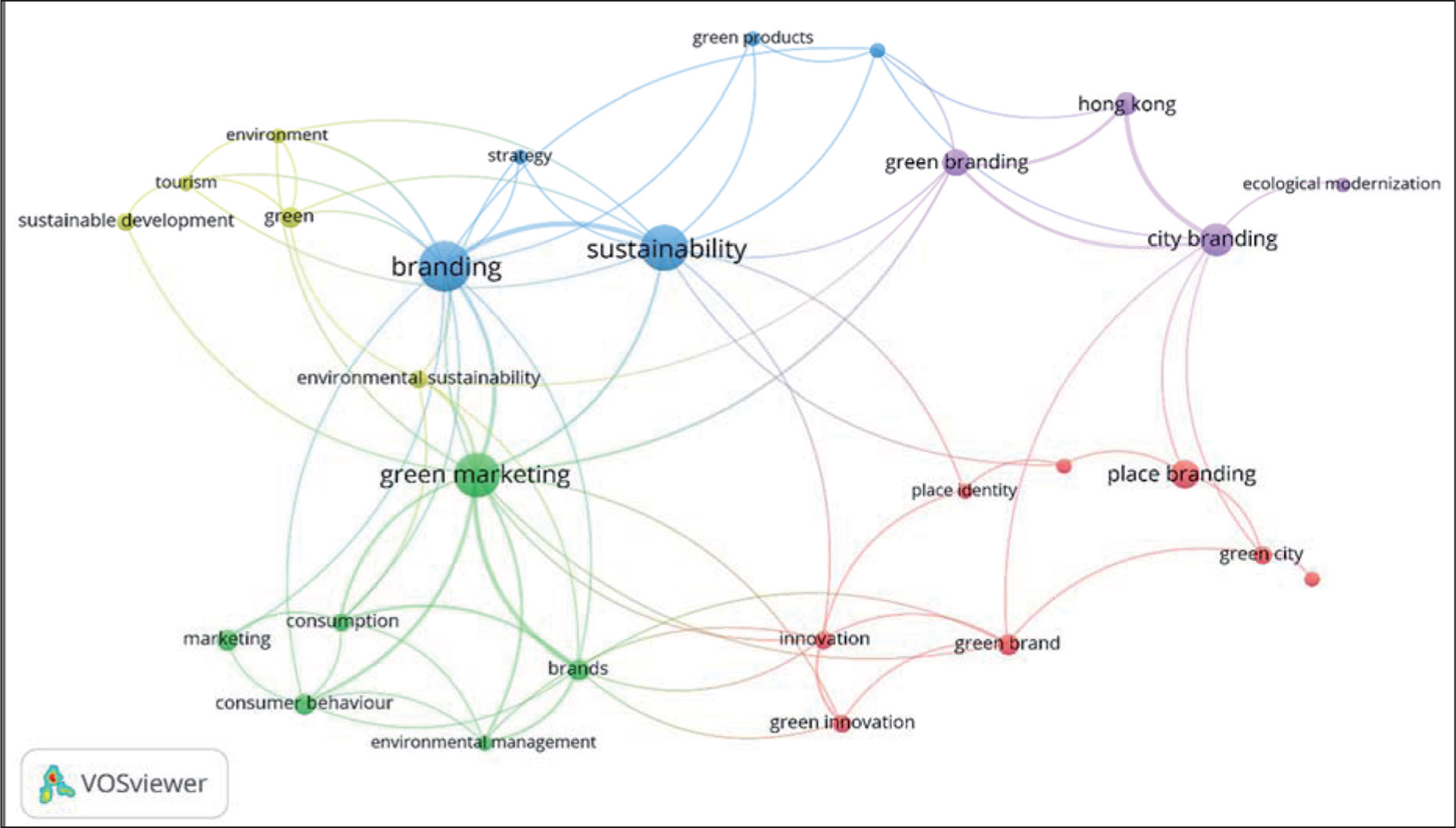
Keyword occurrence analysis is performed to identify how frequently keywords have been used in published green branding papers. Our analysis enables the identification of research themes and topics that have been frequently identified by researchers. Table 2 presents all the green branding keywords that appear three times or more in the Scopus database during the 20-year period. For further investigation, keyword occurrence network analysis was performed. The VOSviewer software presented a map based on text mining, where the relationship between the keywords is calculated through the distance between different terms (Laudano et al., 2018). A shorter distance between two or more terms indicates a stronger relationship between those terms (Dolhey, 2019). Figure 6 presents the keyword co-occurrence network map. A total of 160 keywords have been used in green branding research with a total occurrence of 738. This map presents the connection of various keywords to each other with various lines. These lines signify the co-occurrence of keywords with each other in various papers in the considered data set.
Keywords Which Occurred More Than Three Times in Green Branding Research
Co-Authorship Network Analysis
In order to discover new knowledge and specialization, researchers are determined to collaborate with other experts. This collaboration widens the scope of a research project and fosters innovation (E Fonseca et al., 2016). The co-authorship network analysis is used to visualize the scientific and research collaborations and its patterns identify the authors that have co-authored with the maximum number of other authors in the data set (Dolhey, 2019). In simple words, co-authorship network analysis represents the authors willing to co-operate with other members in the network.
The VOSviewer software 1.6.15 was used to conduct co-authorship network analysis. The total number of authors in the considered data set was 470. The software selected authors who had co-authored with at least two other authors in the considered data set to create this network diagram. Therefore, the software instituted 27 authors, which is the largest set of authors to have co-authored among themselves.
Inter-Country Co-Authorship Network Analysis
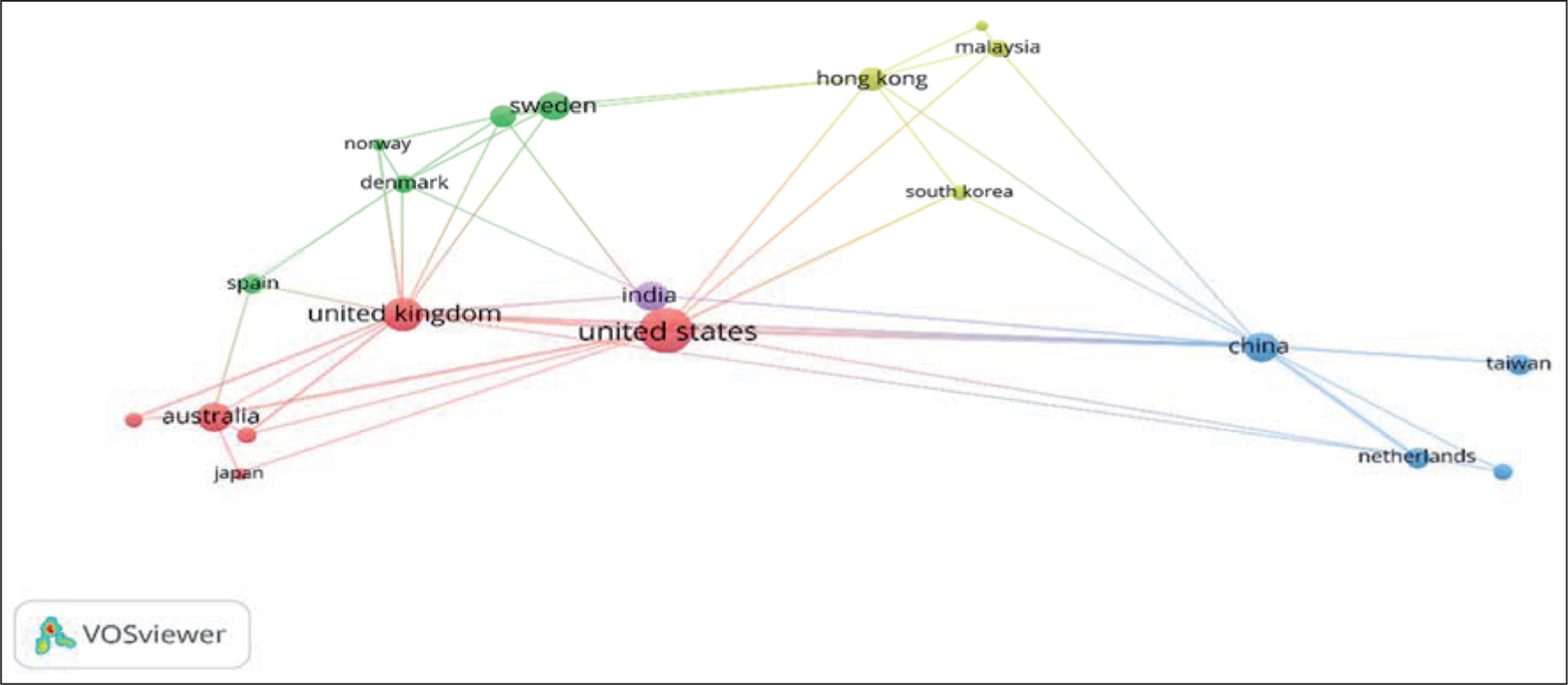
Inter-country co-authorship network analysis is presented in Figure 7. This analysis was performed to investigate which country’s authors have collaborated with the maximum number of authors from other countries. A total of 49 countries were identified in the green branding publication dataset. The VOSviewer software revealed that out of 49 countries, 20 were connected with each other in terms of co-authorship; total link strength was 70. Five clusters were formed cluster-1 (United States, United Kingdom, Australia, Japan, New Zealand and Luxembourg); cluster-2 (Canada, Denmark, Norway, Spain and Sweden); cluster-3 (China, Germany, Netherlands and Taiwan); cluster-4 (Hongkong, Malaysia, Pakistan and South Korea) and cluster-5 (India).
Discussion and Conclusion
This study presents the bibliometric analysis of various studies published on green branding during 2000 and 2019. A total of 238 articles have been selected from the Scopus database. This study focused on the year-wise trend of publication on green branding. It identified the most cited papers and most prolific authors as well as the countries and institutions that are prominently involved in its research. In addition, this study presented keyword occurrence analysis, co-authorship analysis and inter-country co-authorship network analysis. These analyses provide a direction to researchers venturing into the field of green branding by providing information on journals, authors, institutions and countries that are prominent in this domain as well as keywords frequently used in green branding research. Research on green branding is increasing and reached its highest peak in 2017. The most cited paper in green branding literature analysed the influence of green branding on the purchasing decision of consumers (Pickett Baker & Ozaki, 2008). The most prolific author in this field is Chung-Shing Chan from The Chinese University of Hong Kong. Furthermore, this university published the largest number of publications on green branding compared to other universities and institutes. The highest number of green branding papers was published in the Journal of Cleaner Production by Elsevier and Sustainability (Switzerland) by MDPI. Authors from United States contributed to the maximum number of papers; this demonstrates the country’s prominent existence in inter-country co-authorship network. In addition, this study presents keyword occurrence analysis and found that ‘branding’, ‘sustainable development’, ‘sustainability’, ‘marketing’ and ‘green marketing’ were the keywords that appeared more than 20 times in the 237 studies on green branding. Furthermore, this study divides inter-country co-authorship network into five different clusters where the United States, United Kingdom, Australia, Japan, Luxembourg and New Zealand cluster emerges as the strongest while India emerges as the weakest cluster.
There are various unequivocal implications of this analysis that contribute to green branding research. First, the results of the year-wise publication and the most cited articles have garnered increasing interest in this field. These diverse areas of study focus on green branding factors, consumer attitude and purchasing intention in different areas of business among others. Various studies present their conceptual framework by considering different technical, psychological and demographic variables (Chen & Chang, 2012; Leal-Millán et al., 2017; Sharma et al., 2010). Therefore, it is important that future researchers identify the gaps in these conceptual frameworks and explore theories that are needed to broaden the knowledge on green branding.
Second, the analysis of author-wise publications and journals that published a large number of studies on green branding enables research students to identify studies and possible avenues for their future research. Similarly, country-wise publication analysis and institutions-wise research on green branding indicates global interest in this field. Therefore, we believe that this analysis undoubtedly advocates the geographical diversity of green branding research with respect to authorship, journal publication and institutional affiliations. This geographical diversity is important since regions differ in their cultural, sociological, psychological and demographic impact with respect to green branding.
Third, keyword occurrence analysis enables future researchers to identify the research hotspots of green branding. The keyword of an article can represent its main objective, and the frequency of its occurrence reflects the structure and development of green branding themes focused on by researchers as well as the diversity of location in which green branding research has been conducted.
Research is more impactful when it covers a wide geographical area and presents global results. Therefore, in conclusion, co-authorship network analysis and inter-country co-authorship network analysis enable researchers to collaborate with other experts beyond and within the boundaries of a country. These results are valuable for finding research, journals and other prevailing issues over various time periods in the domain of green branding research. However, exploring more dimensions of green branding as a sustainable trend in the business world is the need of the hour.
Limitations and Scope for Future Research
Despite its many advantages, our study has some limitations, which can be considered as scope for future research. First, this study screened the Scopus database for green branding papers. Therefore, the papers not indexed in Scopus were not included in this research. In the future, researchers may consider more databases such as Web of Science and Google Scholar among others. Second, although this study considered many factors for bibliometric analysis, others such as discipline and funding were not considered. Future research may focus on these issues as well as present more network diagrams for a more comprehensive research. Third, future researchers may consider extending the period of study to present a more comprehensive understanding of this topic. Another notable limitation of this study is that the bibliometric analysis focuses more on numbers and exploring the association between authors, affiliations and ideas. Future research could explore meta-analysis, systematic literature review, methodologies and application of green branding theories.
Despite of large number of research on green branding, several avenues remain to be explored. Most previous studies on green branding were conducted in developed economies as observed in the country-wise analysis and inter-country co-authorship network. This provides an opportunity for future studies to analyse green branding research in emerging economies (Khandelwal et al., 2019). We observed that majority of the research generalizes the results of green branding. Thus, future research can explore sectors such as services and manufacturing; industry-specific research such as travel and tourism, FMCG, retail and textile; culture-specific research such as individualistic versus collectivistic and urban versus rural and green branding in low-involvement and high-involvement products.
Footnotes
Declaration of Conflicting Interests
The authors declared no potential conflicts of interest with respect to the research, authorship and/or publication of this article.
Funding
The authors received no financial support for the research, authorship and/or publication of this article.