




Abstract
This article tests a model describing the relationship between organizational cynicism and perceptions of organizational politics (POPS) and the mitigating role of empowerment and interpersonal relationships in satisfaction with work and managers. Data were collected from 361 employees of an Indian information technology (IT) services organization. The analysis of the model showed that empowerment of employees and interpersonal relations among employees alleviated the negative spiral of organizational cynicism and POPS. Lower levels of interpersonal relationships accentuated the organizational cynicism–POPS relationship.
Keywords
Purpose
This article tests a model describing the relationship between organizational cynicism and perceptions of organizational politics (POPS) and examines the factors that might play a role in reducing cynicism and politics in organizations. We hope to show that lower levels of these variables would result in higher satisfaction with work and manager.
Design/Methodology/Approach
Data were collected using a structured questionnaire from 361 participants working in 1 department of an IT services organization. The model was tested using structural equation modelling after controlling for organizational-level effects. We also modelled the interaction effect of interpersonal relations.
Findings
Empowering employees was found to reduce levels of organizational cynicism by decreasing the effects of cynicism on POPS. Higher ratings of organizational cynicism increased POPS. On introducing interpersonal relationships as a moderator, we found that at lower levels, interpersonal relationships accentuated the impact of cynicism on POPS. Lower POPS also led to satisfaction with both work and managers.
Practical Implications
This study offers a mechanism to managers to lower the negative spiral of organizational cynicism and POPS by empowering employees and improving interpersonal relationships in an organization. This also leads to greater satisfaction with work and managers. Improvement in the relationship among employees is likely to build trust and reduce resistance to change efforts, which is very critical for any organization. Greater satisfaction with work and managers also enables managers to draw upon their goodwill with employees at times when meeting customer deadlines and troubleshooting problems are crucial for customer satisfaction.
Research Limitations/Implications
A higher tenure of employees in the dataset might indicate that employees were well versed with the patterns of behaviour and might accept the dynamics within the organization. Those who do not accept the situation would tend to leave the organization (Van Vianen et al., 2013). However, we did not have access to employee turnover data, which might have helped us evaluate this hypothesis. Reluctance in addressing issues related to organizational politics and cynicism openly might result in the data having a certain degree of social desirability bias in the responses. Future research should also expand the complexity of the model as enumerated in recent reviews and meta-analysis studies.
Originality/Value
This article extends prior literature by empirically examining the relationship between organizational cynicism and perception of politics in the Indian IT industry. Further, the article tests the role of empowerment of employees and interpersonal relationships in mitigating the negative impact of cynicism and perception of politics in organizations. This study adds to the empirical literature on the nomological network of relationships of cynicism and politics with other constructs of interests in the organizational behaviour literature.
Introduction
Both environmental and organizational complexity have increased in recent times due to greater globalization, rapidity of technological change and obsolescence and changing customer expectations due to the availability of a more extensive range of products and services (Fabac, 2010). Given the pace and frequency of change, employee acceptance and participation are critical to the success of any change effort since employees are both the recipients and executioners of all organizational changes (Parish et al., 2008). Resistance to organizational change and failure of change efforts are often attributed to cultural and employee factors (e.g., Burnes, & Jackson, 2011; Jones et al., 2005; McLean, & Antony, 2014).
Conversations with managers in Indian IT organizations revealed stories of lack of trust in management, excessive questioning, unnecessary irritating arguments, cynicism and attributions to politics even to well-intentioned change efforts (Dhar, 2009). These behaviours may be attributed to a lack of understanding of challenges faced by management, lack of involvement and empowerment and poor interpersonal treatment. Given this context, this study examines the impact of empowerment and interpersonal relations on the link between cynicism and organization politics and studies its effects on satisfaction with work and managers.
The article will first survey the relevant literature on the variables of interest relevant to this research, as mentioned in the preceding paragraph, and propose the model that will be tested. This will be followed by a description of the research design and testing of the model. Then the article will discuss the findings and implications of those findings for research and practice along with the limitations of the study.
Literature Review
Cynicism and Organizational Change
Cynicism has been studied from a variety of perspectives: (a) from an individual trait perspective (Hochwarter et al., 2004), (b) against people in general or a group of people or some specific objects in an organization (Andersson & Bateman, 1997; Dean et al., 1998), (c) against systems or its subsystems (e.g., Kanter & Mirvis, 1989; Selander & Henfridsson, 2012), and (d) against some action or activity that an organization is undertaking, for example, a change effort (Brown & Cregan, 2008; Reichers et al., 1997). This study is aimed at the last category of cynicism, namely, the impact of cynicism on organizational efforts to change.
Reichers et al. (1997) have defined cynicism against organizational change as ‘cynicism about change involves a real loss of faith in the leaders of change and is a response to a history of change attempts that are not entirely or clearly successful. It arises in spite of the best intentions of those responsible for the change, even rational decision-makers who care about the well-being of employees and value their own reputations’ (p. 48).
Cynicism against change is a learned response based on employee observations and experience of their history in the organization. It stems from lack of clarity around change effort, extrapolation from impressions of past attempts to change, lack of belief in the capacity of the leadership team to bring about successful change and lack of involvement in the present change effort (Stanley et al., 2005). These factors have an effect of organizational members who are detached from the organization and obstruct the current efforts to change (Bernerth et al., 2007; Reichers et al., 1997; Wanous et al., 2000). Failure to address cynicism is likely to cause the derailment of any change effort (DeCelles et al., 2013; Kanter & Mirvis, 1989).
Empowerment, Change and Cynicism
Empowerment is understood in the context of power relations in an organization, being conceptualized as ‘the process by which a leader or manager shares his or her power with subordinates. Power, in this context, is interpreted as the possession of formal authority or control over organizational resources. The emphasis is primarily on the notion of sharing authority’ (Conger & Kanungo, 1988, p. 473). Sharing of power leads to an increase in managerial and organizational effectiveness (Amah & Ahiauzu, 2013), increase in efficacy and willingness to participate in organizational change efforts (Brown & Cregan, 2008; Lamm & Gordon, 2010).
Empowering employees by sharing information and decentralizing decision making helps push decision making to the level where there is a better understanding of customer needs, and the ability to address these needs through appropriate means, which might result in increased organizational performance (Bernoff & Schadler, 2010; Furst & Cable, 2008). Empowerment results from enhanced sharing of information, clarity of actions required, improved teamwork, reduction in organizational politics and greater work satisfaction (Fernandez & Moldogaziev, 2012; Goffee & Jones, 2013; Ji-Eun, 2012). In the Indian context, employee empowerment is an essential determinant of driving change (Cappelli et al., 2010). In their study in the Turkish context, İşçi et al. (2013) found that empowerment of employees led to a reduction of cynicism. Brown and Cregan (2008) also found that employee involvement increased the sharing of information and participation in decision making, thus aligning the interests of employees and management and reducing organizational cynicism towards change.
Organizational Politics, Change and Cynicism
After evaluating multiple perspectives, Rosen et al. (2009) described organizational politics as ‘activities that are illegitimate, self-serving and often harmful to the organization or its members’ (p. 203). Politics is subjective and interpretive and rests in the interpretation of a situation or event being political. Hence, from a measurement point of view, POPS has a greater utility in research. It helps explain several organizational variables such as workplace anxiety, satisfaction, stress and turnover intentions (Ferris et al., 2000, 2018). The relationship between politics and cynicism is likely to be circular and bidirectional, but both variables are likely to influence the success or failure of change efforts (Davis & Gardener, 2004). Conversations with managers showed that cynicism was more critical in controlling POPS. Employees who were more involved with the organization were less likely to be cynical and make attribution of politics. Hence, in the conceptualization of the model and the cross-sectional research design, the researchers tried to test the relationship between empowerment, cynicism and politics. Higher POPS and cynicism have also been found to be negatively related to job dissatisfaction (Naseer et al., 2020; Valle & Perrewe, 2000), which would imply that satisfaction is likely to be higher with lower POPS.
Interpersonal Relationships
Social exchanges, whether within or outside the context of work, help to build relationships and attachment among individuals. This applies to interactions within and between organizational levels and has been studied under labels such as leader–member and team–member exchange (Banks et al., 2014; Graen & Uhl-Bien, 1995; Richards & Hackett, 2012; Richards & Schat, 2011). Relationships among people build trust and promote open communication. This, in turn, leads to perceptions among employees of dignity, concern and respect, which in turn leads to a reduction in negative retaliation and increased citizenship behaviours (Cortina, & Magley, 2003; Cropanzao et al., 2002; Jones, 2009; Roch & Shanock, 2006). Such outcomes are critical in the context of change effort where organization members across hierarchy have to collaborate and be creative to bring about greater organizational effectiveness. These interpersonal interactions are likely to mediate the relationship between cynicism and politics and lead to greater support for organizational change efforts (Kirrane et al., 2019).
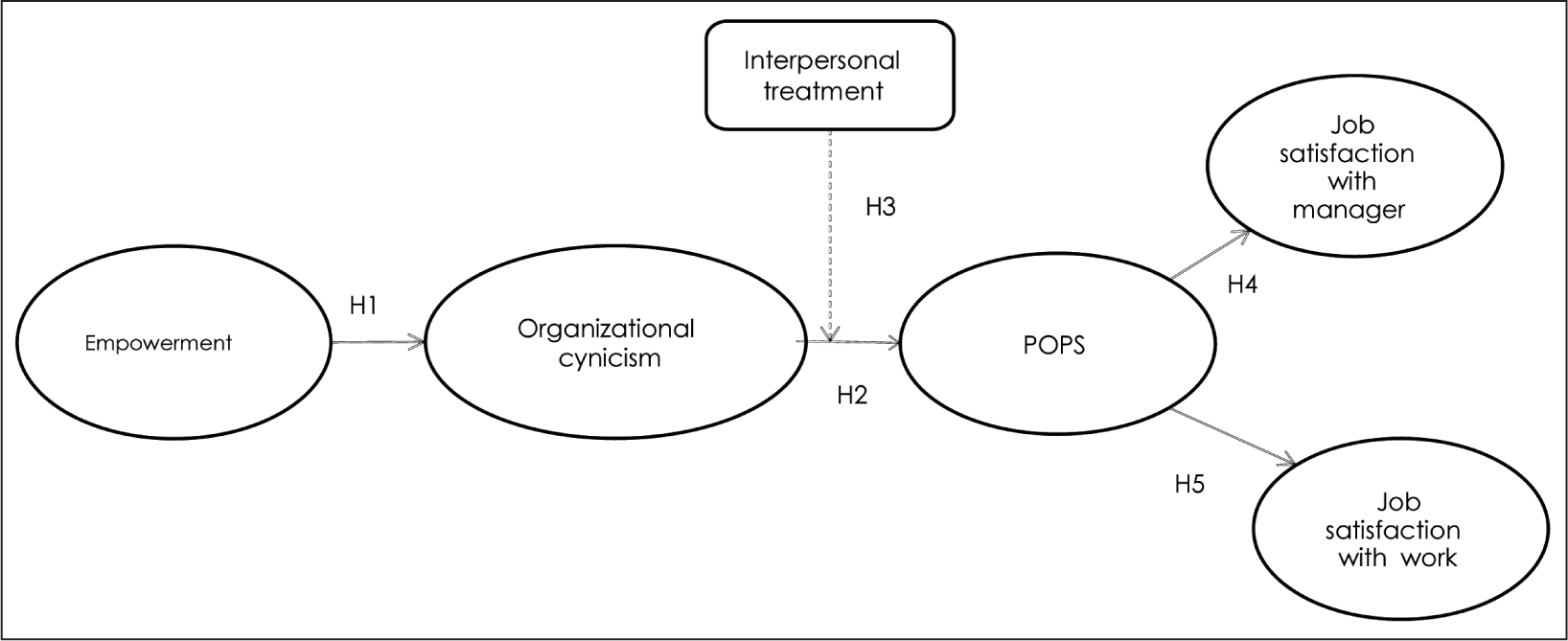
Based on the above literature review, we propose the following hypotheses:
The model describing the relationship between different variables is given in Figure 1.
Methodology
The constructs selected for this article were part of a more extensive study conducted in one department of an IT services organization in India. This helped us control for organizational-level effects. The questionnaire was administered through the internal survey portal of the organization with an introduction by the head of the department explaining the purpose of the survey and ensuring confidentiality. An exploratory factor analysis was conducted on individual scales, and scale reliabilities were calculated for all constructs. All constructs were measured on a 1–5 scale, with 1 representing low agreement and 5 representing higher agreement with the item.
Empowerment was measured using items selected from Denison et al. (2003) with a Cronbach’s alpha reliability of 0.723. Organizational cynicism was measured by a scale proposed by Wanous et al. (2000) with alpha reliability of 0.839. POPS was measured using the scale proposed by Ferris and Kacmar (1992) with alpha reliability of 0.685. Interpersonal treatment was measured using the scale proposed by Donovan et al. (1998) with alpha reliability of 0.911. Job satisfaction with work and with the manager was measured using scales proposed by Roznowski (1989) with alpha reliability of 0.841 and 0.90, respectively.
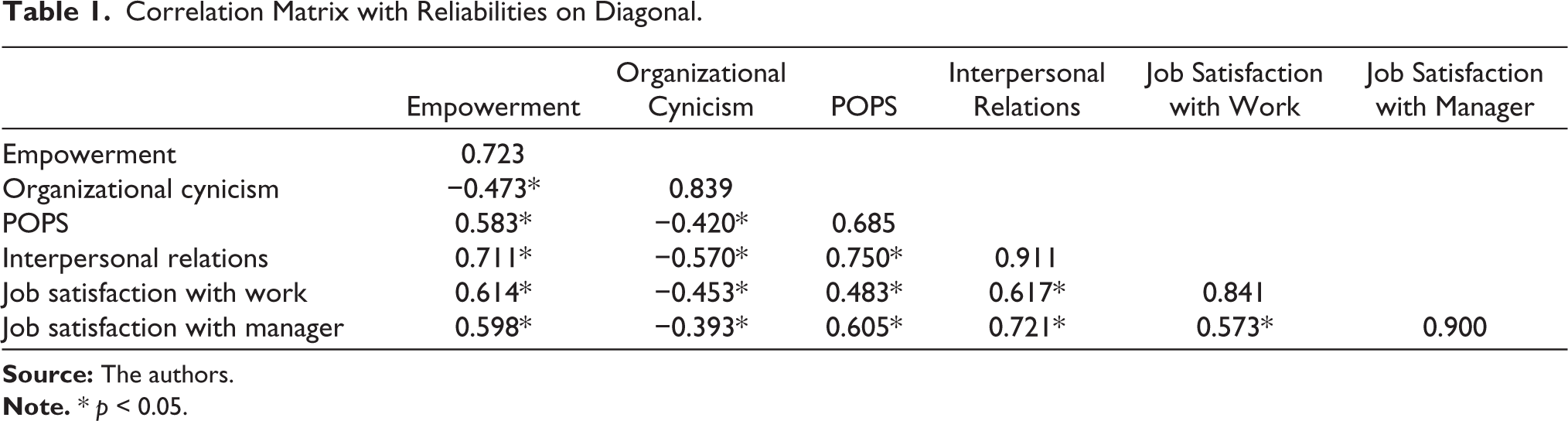
It should be noted that the wordings in the organizational cynicism are negative, and the path coefficient should be interpreted accordingly. Representative items from the organizational cynicism scales are ‘Most of the programs that are supposed to solve problems around here will not do much good’ or ‘Attempts to make things better around here will not produce good results’. Agreement with these items reflects a greater degree of cynicism, which means that a higher rating on these items will be interpreted as representing a higher degree of cynicism. This is reflected in the correlation matrix between the variables relating to organizational cynicism having a negative correlation with other variables. It could be expected that the path coefficients for organizational cynicism may be negative with other constructs.
Similarly, wordings of the items for POPS scale are positive. All the negatively worded items were reverse scored to ensure that higher rankings indicate a less political climate. Representative items from the perception of organizational politics are ‘Favoritism rather than merit determines who gets ahead around here (reverse coded)’ or ‘Employees are encouraged to speak out frankly even when they are critical of well-established ideas’. A higher rating on these items will represent a lower degree of politics. The correlation matrix with scale reliabilities along the diagonal is given in Table 1.
Correlation Matrix with Reliabilities on Diagonal
Data Collection, Analysis and Results
The department had a total of 985 employees out of which 361 usable responses were received from 9 different locations and 5 different levels of hierarchy of the department. A response rate of 36% is acceptable for online surveys (Manfreda et al., 2008). Employees had an average tenure of 4 years and an average age of 31.8 years, ensuring a meaningful response to the survey. Given that data were collected from an IT organization, female respondents represented 11.9% of respondents (Budhwar et al., 2005). The data were checked as per the method outlined by Bande-Vilela et al. (2012), and it was that found that common method variance was not an issue with this study (also see Podsakoff et al., 2003).
Model fitting was performed using structural equation modelling with the help of AMOS v.21 and SPSS v.21. The results of model testing are given in Table 2.
Results of Model Testing
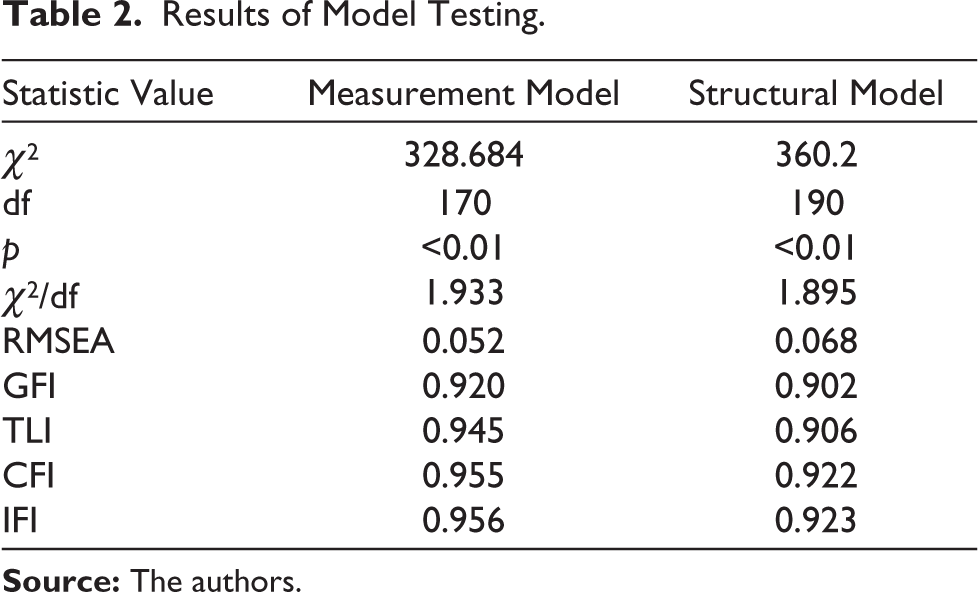
The testing of the model demonstrates a good fit (Hair et al., 2010). Important parameters from the model testing results are as follows:
χ2 = 328.684 with df = 170 and p < 0.01; tucker lewis index (TLI) = 0.945; goodness-of-fit index (GFI) = 0.920; comparative fit index (CFI) = 0.955; root mean square error of approximation (RMSEA) = 0.052; incremental fit index (IFI) = 0.956.
χ2 = 456.059 with df = 176 and p < 0.01; GFI = 0.892; CFI = 0.921; RMSEA = 0.069; TLI = 0.906.
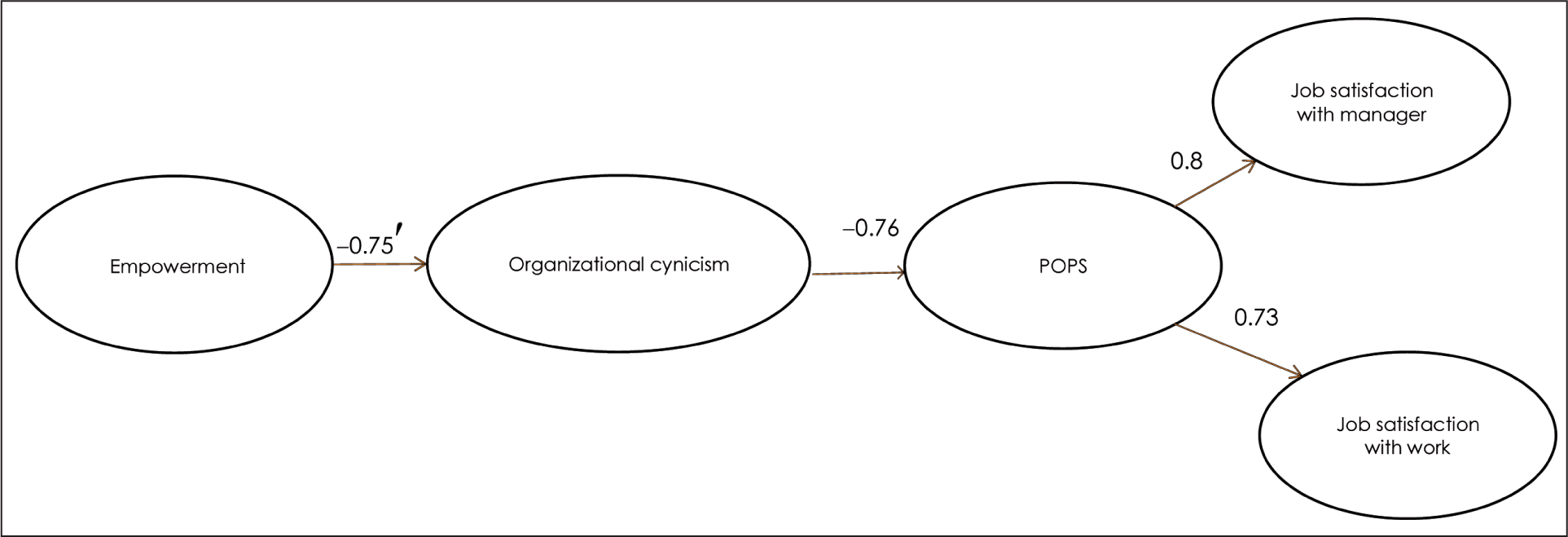
The final model with path coefficients is given in Figure 2.
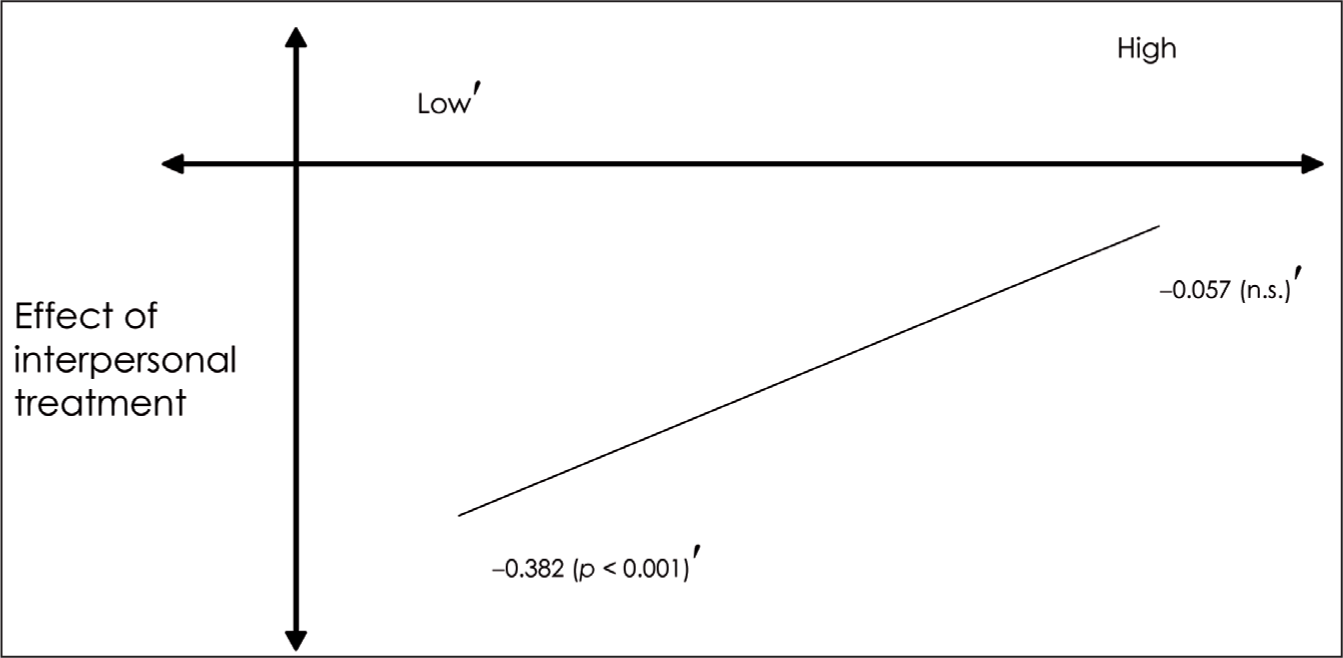
To test the moderating effect of interpersonal relationships, we divided the sample into two groups of low and high, using the median score on interpersonal relationships as the divider, rather than using +/− 1 sd from the mean, which is a stricter test for moderation (Bande-Vilela, et al., 2012). We used pairwise parameter comparison to test the moderating hypothesis. The results showed a z-score of 3.114 at p < 0.01, with a significant chi-square change of 15.52 with df = 1. The effect size for the low group was -0.382 with significance at p < 0.001, whereas the effect size for the high group was -0.057, which was not significant. The moderation effect is shown in Figure 3.
Discussion of Results
The path coefficient between empowerment and organizational cynicism was negative. This shows that as empowerment increases, cynicism decreases. It should be borne in mind that empowerment is a positively worded scale, whereas cynicism is a negatively worded scale. This means that a higher degree of empowerment would connote that cynicism is lower, which is reflected in the negative path coefficient. Thus, the data support Hypothesis 1.
The path coefficient between organizational cynicism and POPS is negative. Again, organizational cynicism is a negatively worded, and POPS is a positively framed and coded scale. A negative path coefficient indicates that higher perceptions of cynicism are resulting in higher POPS, such that with an increase in cynicism, perceptions of politics also increase. We find that the data support Hypothesis 2.
Higher ratings on POPS indicate lower POPS. The positive path coefficients between POPS and satisfaction with work and with manager show that lower POPS lead to satisfaction with both work and manager. Given the wording and measurement of the items, higher ratings on POPS means lower perceptions of politics, which is related to higher satisfaction with work and managers. Hence, the data support Hypotheses 4 and 5.
The results for the moderation effect of interpersonal relations show that at lower levels of interpersonal relations, the negative effect of organizational cynicism is more substantial on POPS. We did not find a significant moderation effect on organizational cynicism and POPS at a higher level of interpersonal relations. We expected that at higher levels of interpersonal relationships, the negative relationship between cynicism and politics might have reversed. The moderation effect was more meaningful and accentuated at lower levels of interpersonal relationships, indicating that poor interpersonal relations tended to make an already bad situation even worst.
Implications of the Study
This study examines one mechanism through which the impact of cynicism and POPS may be mitigated. This study supports other studies that demonstrate that the perceptions of cynicism and perceptions of politics create a reality that has implications on other attitudinal variables, in this case job satisfaction with work and managers. This study also suggests that empowerment and interpersonal relations may help alleviate negative effects of cynicism and POPS. The study adds to the empirical literature on the nomological network of relationships of cynicism and politics with other constructs of interests in the organizational behaviour literature (Chiaburu et al., 2013; Hochwarter et al., 2004, 2020).
From a managerial perspective, the study suggests that the negative spiral of organizational cynicism and POPS may be diminished by empowering employees and improving interpersonal relationships in an organization (Thomas & Gupta, 2018). This also leads to greater satisfaction with work and managers. Improvement in the relationships among employees is likely to build trust and reduce resistance to change efforts. This is essential for any organization where managers may be required to draw upon the goodwill they have with their employees at times when meeting customer deadlines and troubleshooting problems quickly are crucial for customer satisfaction. It is possible that in the high-pressure environment of IT industry, managers might forgo the human aspects of managing, given the stress of project deadlines and revenue pressures. Managers need to continually pay attention to their managerial style and promote improvement of interpersonal relationships among employees and between various organizational levels. This would promote open communication and trust, which would not only mitigate the impact of cynicism and politics, but also help draw positive behaviours from employees at crucial moments when such performance is needed.
Limitations and Directions for Future Research
A higher tenure of employees might indicate that employees were well versed with the patterns of behaviour and might accept the dynamics within the organization. As suggested by research on attraction-selection-attribution (ASA), those who do not accept these dynamics would tend to leave the organization (Van Vianen et al., 2013). However, we did not have access to employee turnover data, which might have helped us test this hypothesis. Future research needs to incorporate this critical variable in the model, especially since we are dealing with variables like politics and cynicism, which have a significant impact on turnover if the employee feels that they are outgroup and fighting the system might not yield results (Byrne, 2005; Sowmya & Panchanatham, 2012).
One variable of interest to examine is the role that interpersonal relations have on perceptions of justice and distributions of rewards. Conversations with managers and employees indicated that the distribution of rewards for work performed was unjust. In many instances, managers were unable to gauge the performance of employees and end up unjustly distributing rewards. This, in turn, has an impact on both politics and cynicism (Arslan & Roudaki, 2019).
This study posited and found support in this dataset for the hypothesis that empowerment of employees leads to reducing organizational cynicism. Future research may also examine empowerment as a possible moderator in the relationship between cynicism and perceptions of organization politics. Higher empowerment may lead to greater collaboration, trust and a better understanding of the imperatives behind managerial decision making, thus leading to lowering the negative impact of cynicism on organizational politics (e.g., Durrani et al., 2017; İşçi et al., 2013). As suggested by various authors, future studies also need to build and test more complex models of cynicism and POPS, including many other variables that have been suggested by them (e.g., Chiaburu et al., 2013; Hochwarter et al., 2020; Thundiyil et al., 2015).
People are generally reluctant to address issues related to organizational politics and cynicism openly. Employees are unwilling to share their true feelings in such matters. Hence, the data may contain a certain degree of social desirability bias.
Data for this study were collected from a single department of an organization which helps control for organizational level effects. Two strategies may be used to establish external validity of this research: (a) to replicate this study in other organizations and (b) to conduct a meta-analysis of studies conducted using POPS, cynicism and other variables to see if similar relationships have been found in other contexts (Chiaburu et al., 2013; Polit & Beck, 2010). However, we could find very few studies conducted in the context of Indian organizations examining cynicism (Biswas & Kapil, 2017; Dhar 2009; Nair & Kamalanabhan, 2010; Sheel & Vohra, 2016), and hence, further studies need to be conducted in other contexts to help establish the external validity of the model.
Further research also needs to re-examine the negative connotations of politics in modern professional service organizations. A large majority of employees and managers accept the presence and play of politics and do not necessarily attach a negative connotation to it (Landells & Albrecht, 2017).
Conclusions
We extend prior literature by empirically examining the relationship between organizational cynicism and perception of politics in the Indian IT industry. We identified some factors like empowering employees and promoting interpersonal relationships among employees that may alleviate the negative consequences of cynicism and perception of politics. This study adds to the empirical literature of the nomological network of relationships of cynicism and politics with other constructs of interests in the organizational behaviour literature. Politics and cynicism are interdependent and present, and academics and managers need to pay attention to both these variables.
Footnotes
Declaration of Conflicting Interests
The authors declared no potential conflicts of interest with respect to the research, authorship and/or publication of this article.
Funding
The authors received no financial support for the research, authorship and/or publication of this article.