




Abstract
People analytics has brought a paradigm shift in the processes, technologies and systems of organizations. Success is driven here through data-driven methodologies. The primary objective of this research is to identify, rank and interrelate challenges affecting the adoption of people analytics in India. The interpretative structural modelling (ISM) approach is applied to rank and interrelate these challenges in the Indian context. MICMAC analysis is conducted to reveal the driving power and dependence of these challenges of people analytics. The MICMAC analysis also indicates the relative importance and interdependence between these challenges in the Indian context. During the first phase of the research, 12 challenges are identified from the literature, and these people analytics challenges are validated based on expert opinions. During the second phase, ISM identifies ‘Leveraging existing enterprise resources’ as the most important challenge in the Indian context among the 11 validated challenges. MICMAC analysis identifies all 11 challenges as ‘linkage challenges’ with high dependence and driving power. For researchers, this methodology facilitates further carrying out exploratory studies and focusing their interactions through hierarchical structures. The study investigates the core issue among many issues faced by people analytics professionals. Second, it has methodological novelty in the context. Finally, it points to multidimensional implications for various stakeholders in people analytics in the Indian context.
Keywords
Executive Summary
People analytics is inculcating a data-driven culture and supports transparency in the human resources discipline. The challenges of people analytics can further support to gain insights for organisations. The purpose of the study is to identify, rank and find out dependence and driving power of people analytics challenges in India. Challenges of people analytics are found out from literature and further validated through the opinions of people analytics experts from the industry and academia. The validated challenges are subjected to interpretive structural modelling (ISM) to rank these challenges into multiple levels as per their importance. Interrelationships among these challenges are found out. MICMAC analysis is conducted to determine the driving power and dependence among these challenges.
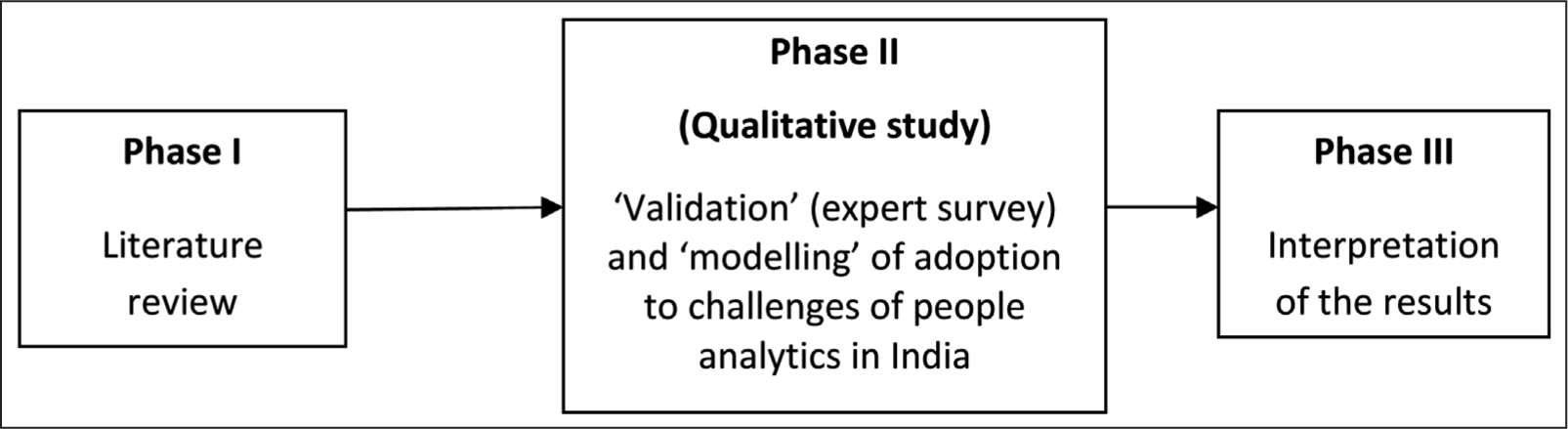
This research study is conducted in three phases. During the first phase of this study, 12 challenges are identified from the literature and a discussion with people analytics professionals of India. During the second stage, the challenges are validated using a questionnaire-based survey through the opinions of experts. One challenge, ‘Fusion of old data is time-consuming’, is dropped based on t-statistics result of the opinion survey. During the final phase of this study, the ISM methodology is used to develop a framework of the 10 validated challenges to identify the interrelationships among them and to rank them into levels. ISM is completed in five steps. It is a unique, general-purpose analysis and decision support technique that provides a structured method for dealing with complex situations. It generates a visual map of a situation (or problem) which is used to obtain new insights and construct new approaches to the problem at hand. ISM is a proven relationship modelling process that select consultants and organizations have used successfully. It incorporates pair-wise comparison, transitive logic and concept synthesis to construct a visual map of the situation. Contextual relationship signifies how a challenge supports/influences another challenge. ‘Leveraging existing enterprise resources’ is found to be the most important challenge in this study. Employee life cycle can be handled properly once this challenge is addressed. During the MICMAC analysis, no challenge was found to be autonomous, dependent or independent. All the challenges were found to be linkage challenges. Linkage challenges have both high driving and dependence power. Thus, they are related, and any change in one will affect the others.
Introduction
Technological innovations are released in quick succession for usage among societal members. Thus, business practices are also changing very fast in synchronism with the advancement of technology. In this sense, the emergence of people analytics is not an exception. Technological advancement is a driver for identifying opportunities and challenges in the culture, structure, processes and objectives of human resources (HR) firms. In the current context, people analytics experts congregate and use data for effective decision-making and provide solutions to people issues in firms. As a consequence, organizations grow along with their people. Based on a report, recruiting efficiency, business productivity and attrition rates have improved due to the application of people analytics. Based on a study, 78% of large corporations endorse people analytics as ‘urgent’ or ‘important’, and only 7% of their firms have ‘strong’ analytics capabilities. Of big data investments, 5% go to HR, the group that manages people analytics (Boudreau & Cascio, 2017). Based on a research study of LinkedIn, 92% of talent professionals believe people analytics will pave the way for the future of HR in India. However, HR analytics measures the impact of the HR metrics of firms.
A data-centric approach is followed by firms to understand skill gaps, evaluate channels of recruitment and access the supply and demand of talent. In the current context, Indian companies have already started applying people analytics to measure performance and strategic manpower planning. At the same time, quality of data, pulling data from varied sources and converting data into meaningful insights still remain as challenges (Bhattcharyya, 2020; Deoras, 2019). People analytics uses statistics, mathematics and computing skills with descriptive, predictive and prescriptive tools to gain insights. Though people analytics is being highlighted, only 9% of firms think they have a good understanding of which talent dimensions drive performance in their firms. (A Deloitte Human Capital Trend Report, 2017; Walsh & Volini, 2017). However, it is also true that firms are facing challenges in implementing people analytics in India (Leonardi & Contractor, 2018).
In this study, the interpretive structural modelling (ISM) approach (Warfield, 1974) is followed to interpret the challenges affecting the adoption of people analytics in India. ISM modelling is a widely used decision support technique that provides a structure method for dealing with a complex situation (Mandal & Deshmukh, 1994; Poduval & Pramod, 2015; Ravi & Shankar, 2005; Singh & Sushil, 2013). A visual map of the situation is constructed based on pair-wise comparison, transitive logic and concept synthesis. Thirteen challenges are elicited from a review of the literature and tested through an online questionnaire-based survey based on the opinions of HR analytics industry experts and academia. Then, the validated challenges are applied to ISM methodology to develop a relationship matrix that facilitated the model construction. The following sections comprise identification of challenges of small and medium enterprises (SMEs) in India through the literature review, expert survey methodology, use of ISM, MICMAC analysis, concluding remarks, limitations and future research directions.
Review of Literature
People analytics as an HR technology disruption is about to change the way we perform HR practices (Bersin, 2017). Due to the emergence of people analytics practices, a new way of job role is slowly adopted in the Indian context. People analytics can improve employee experience, satisfaction and efficiency, enhancing the competitive strength of organizations (Angrave et al., 2016). Initially, HR data warehouses were maintained by information technology experts for measuring the effectiveness of HR management (HRM) programmes. Basically, HR analytics uses the measurement of past performance accomplished by HR metrics to predict future patterns. Usually, HR professionals describe and orient HR analytics as a conventional HRM practice and people analytics with a wide range as tactical level and enterprise analytics (Van Vulpen, 2016). People analytics research is at a nascent stage (Tursunbayeva et al., 2018), and more research studies are required to build an evidence base.
Quality of data, pulling data from varied sources and converting data into meaningful insights still remain as challenges in India (Bhattcharyya, 2020; Deoras, 2019). There is a dearth of academic literature on people analytics. The current knowledge is focused on business communities and is among HR innovators. Challenges to adopt people analytics practices in India sound more than the enablers for adoption. (Marler & Boundreau, 2017; Minbaeva, 2018).
Improvement of Talent Management and Talent Acquisition Process
Talent shortage, selection of right kind of talents and retaining them are always challenges for HR firms. Tailoring and aligning organizational strategy with business issues and the unique operating environment of firms can generate a positive impact at the bottom line. Businesses usually run into issues when strategies lack transparency, are not quantifiable and are communicated improperly. Creation of hiring strategy, employer branding, candidate relationship management, recruitment and onboarding strategy and strategy for continuous improvement are challenges for forward-thinking organizations (Babcock, 2013; Bhardwaj & Patnaik, 2019; Writer, 2019).
Streamlining and Maintaining Big Data
Setting key performance indicators (KPI) as per relevant data based on business goals is always a challenge. Streamlining and maintaining big data through the application of right data mining, machine learning algorithm and strategic management tools are vital for strategic value addition, employee retention, requirement of talent, employee performance and searching of better prospects for firms (Bhardwaj & Patnaik, 2019; Newell, 2017).
Forgetting the ‘Human’ Element in People Analytics
The chief analytics officer of Ernst & Young emphasizes investment on employees to bring in benefits of people analytics. People are the central element in translating data into business values. In the current context, organizational processes should be adaptable so as to use real-time data. A people analytics culture can only be achieved once firms invest in people. Ultimately, human beings are responsible for final decisions. Only depending on computers may endanger decision-making. Collection of proper and relevant data is not possible without human involvement, which is vital for the generation and usage of insights in people analytics (Sim, 2017; Lee, 2015).
Organizational Support
In many firms, employees are engaged in performing some tasks relating to the domain of analytics after directives from the top management. Mostly, employees are concerned about the impact of their existing job role and workload. So, there are challenges to improve processes in the organization. Further, organizational support is lacking to access data from a single source (Sclater, 2017).
Maintaining Human Resources Hygiene
Employees are happy and perform well in the workplace when remuneration, proper privacy policies, a good environment, a supportive organizational culture, sponsored leaves, job security and other fringe benefits are provided by the employer. These HR hygiene factors motivate employees to work at ease and pay attention to performing their duty properly. Providing these basic amenities to employees at the workplace is a concern in the Indian context. At the same time, data hygiene is quite important to produce output with accuracy. Dirty data is the primary obstacle to HR hygiene. (Bhardwaj & Patnaik, 2019; MSG, 2019; Tadlock, 2020).
Fusion of Old Data is Time-Consuming
Generating HR dashboards and reports is an uphill task, as the pulling of data occurs through multiple sources. Recruitment data, employee performance data and payroll data are extracted from different sources. The formats of the data sets are also different, and converting data from multiple sources to a single format for further processing for insights is also difficult. Self-service reporting tools are required in India to automate the procedure of data fusion (Bhardwaj & Patnaik, 2019; Wielki, 2015).
Measuring and Optimizing Process Automation
Redefinition of workflow, process redefinition, forward-thinking HR policies and implementation of a data-driven culture through measurement and optimization of process automation can drastically improve employee engagement and productivity. These efforts will facilitate democratization of analytics, ease of use and intuition for HR employees (Bhardwaj & Patnaik, 2019).
Data Governance
Data is the life blood of people analytics. Data collection, data access strategy, data preservation, data privacy, data security and presentation of data are challenges of data governance in people analytics. Proper governance of data helps incur lower costs, build trust and provide transparency (Bailie, 2018).
Leveraging Existing Enterprise Resources
In order to digitize HR functions, it is essential to leverage the existing enterprise resources. Deciphering new hire that is fit to work, employee attrition and effect of changes in salary budget are vital issues which produce excellent result once leveraged properly (Bailie, 2018)
Integration of Talent Management Data into the DNA of the Organization
Many times, organizations do not look into the entire life cycle of employees and only concentrate on their hiring practices. Exclusion of selection, development and promotion processes with hiring creates issues in integrating talent management data into the DNA of an organization. As a consequence, optimum utilization of talent acquisition strategy is not possible (Hess, 2016).
Translating Feedback into Actionable Insights
The voice of employees on employee experience is quite vital for improving organizational performance. The voice of employees is collected through multiple channels. Many firms are unable to apply proper analytics, speech analytics, recommendation engines and digital dashboards to generate insights from the useful feedback of employees (Dykes, 2016).
Insufficient Information Technology Resources for People Analytics
In the current context, few SMEs depend on a public cloud for people analytics solution. However, organizations lacking expertise, infrastructure and time can utilize the Software as a Service (SaaS) solution from companies that have already analysed unstructured data, because many of these firms cannot afford Hadoop and other advanced analytics solutions (Lee, 2015).
Objective
The objective of this study is to validate the identified challenges of adoption to people analytics in India. Subsequently, ISM is applied to decipher the relationship between the challenges and to rank them into multiple levels. The process is divided into three phases (Figure 1).
Validation of the Challenges
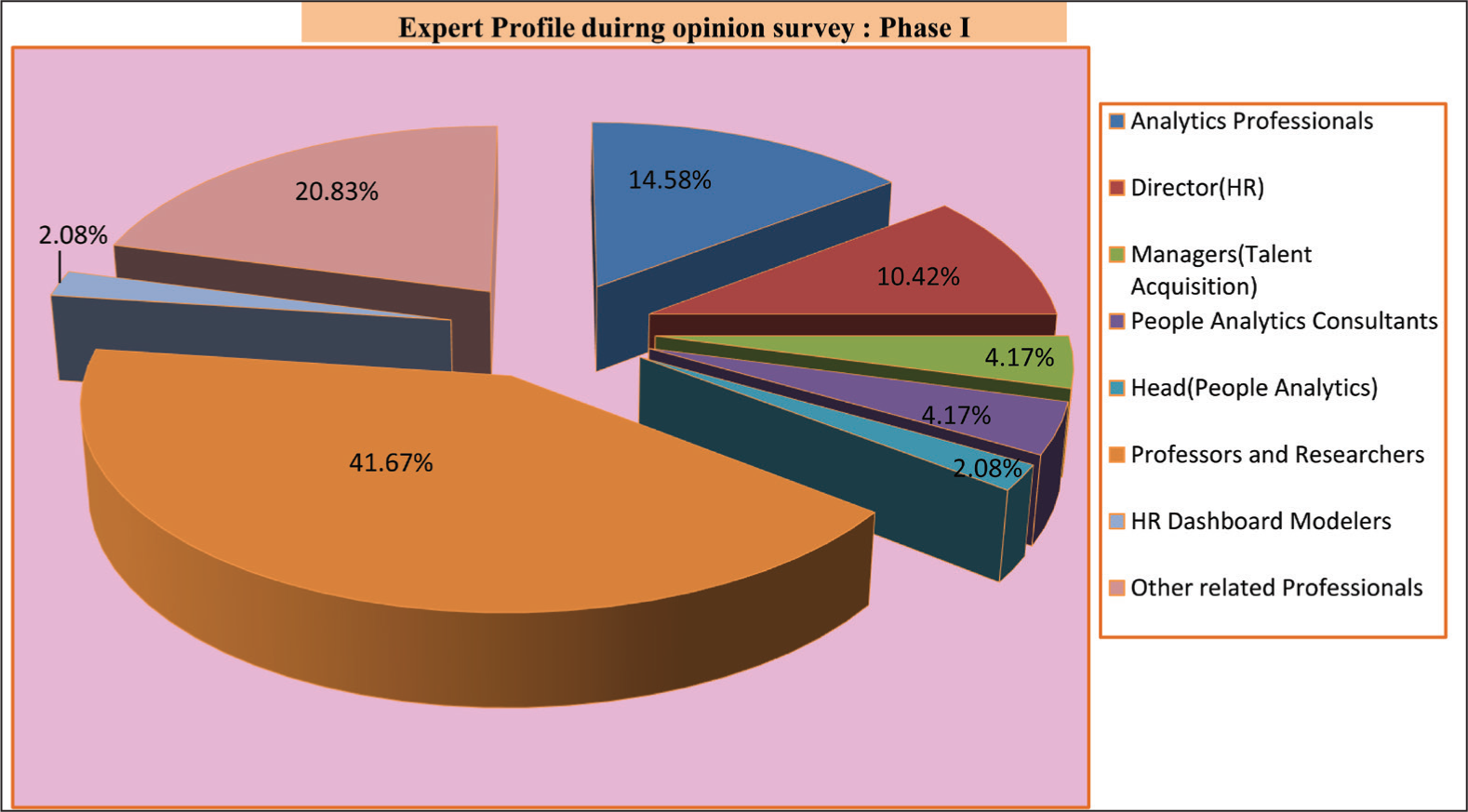
In order to validate the challenges affecting the adoption of people analytics in India, an online survey based on a structured questionnaire was administered to subject matter experts. The questionnaire prepared using SurveyMonkey was sent to the experts. Based on purposive sampling of online questionnaire, forty six experts responded to the challenges affecting adoption of people analytics in India.
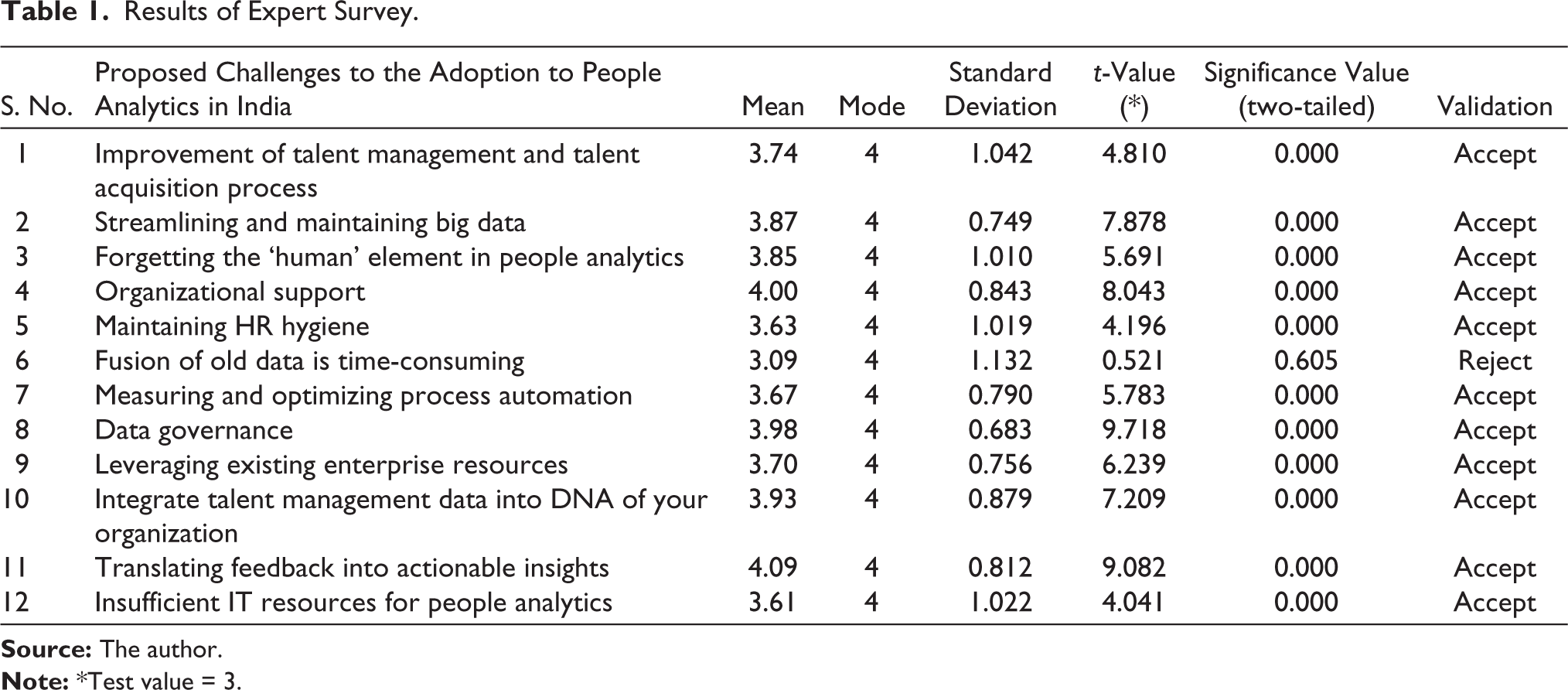
The results of the t-statistics test based on the opinions of HR industry professionals and academia are presented in Table 1.
The ‘Fusion of old data is time-consuming’ challenge was rejected based on expert endorsement (Table 1). The mean is highest for ‘Translating feedback into actionable insights’ and lowest for ‘Insufficient IT resources for people analytics’. The value of significance implies strong endorsement of the challenges of people analytics by the HR experts in the Indian context. The importance of the challenges is found to be quite high (mode = 4).
Results of Expert Survey
Modelling of Challenges to Adoption Using Interpretive Structural Modelling
After validation of the challenges that influence people analytics adoption, these challenges in India are hierarchically modelled using the ISM approach. A preface to the methodology is discussed in the following sub-sections (Warfield, 1974).
Methodology Adopted for Modelling
The group comprises 11 experts based on judgemental sampling of people analytics in India with considerable knowledge and expertise. The steps of ISM are as follows.
Step I: Structural Self-interaction Matrix
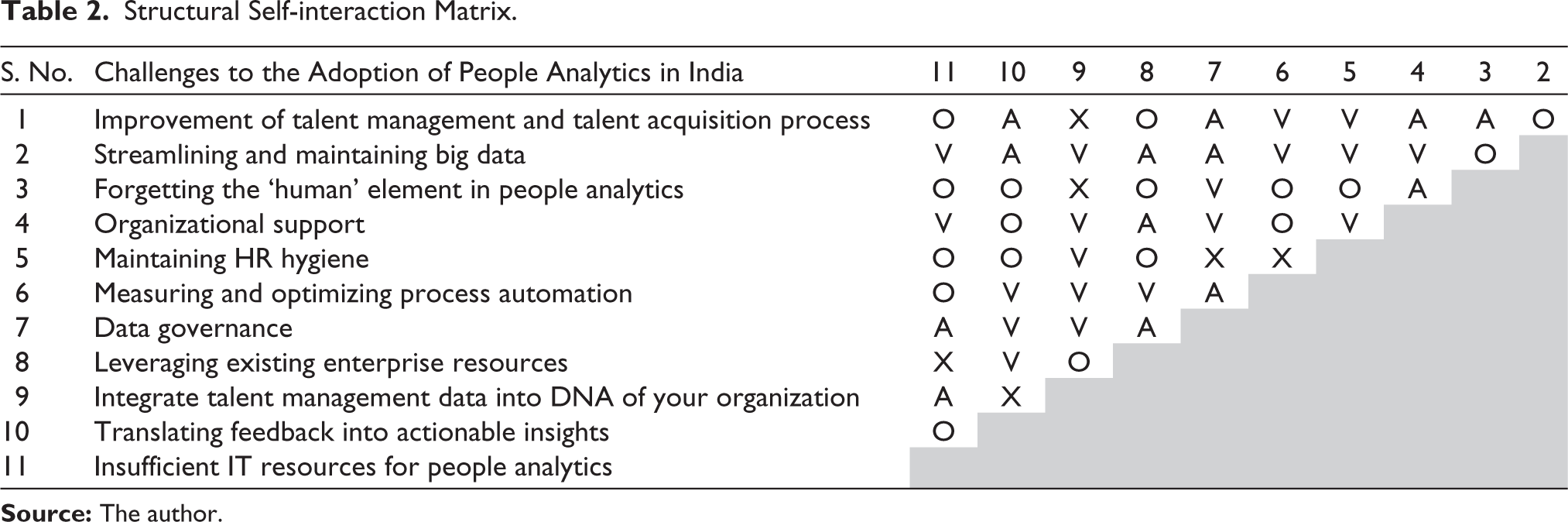
Experts were consulted in identifying the nature of contextual relationships among the challenges (Table 2). For analysing the challenges in developing the structural self-interaction matrix (SSIM), the following four symbols have been used to denote the direction of relationship between challenges (i and j):
V—Challenge i will support/influence challenge j; A—Challenge j will support/influence challenge i; X—Challenges i and j will support/influence each other; and O—Challenges i and j are not related.
Structural Self-interaction Matrix
Step II: Reachability Matrix
The SSIM is transformed into an initial reachability matrix (see Table 3) by replacing V, A, X and O by 1 and 0. The replacements with 1s and 0s are as per the following rules:
If the (i, j) input in the SSIM is V, the (i, j) input in the reachability matrix is 1 and the (j, i) input is 0; If the (i, j) input in the SSIM is A, the (i, j) input in the reachability matrix is 0 and the (j, i) input is 1; If the (i, j) input in the SSIM is X, the (i, j) input in the reachability matrix is 1 and the (j, i) input is also 1; and If the (i, j) input in the SSIM is O, the (i, j) input in the reachability matrix is 0 and the (j, i) input is also 0.
Initial Reachability Matrix
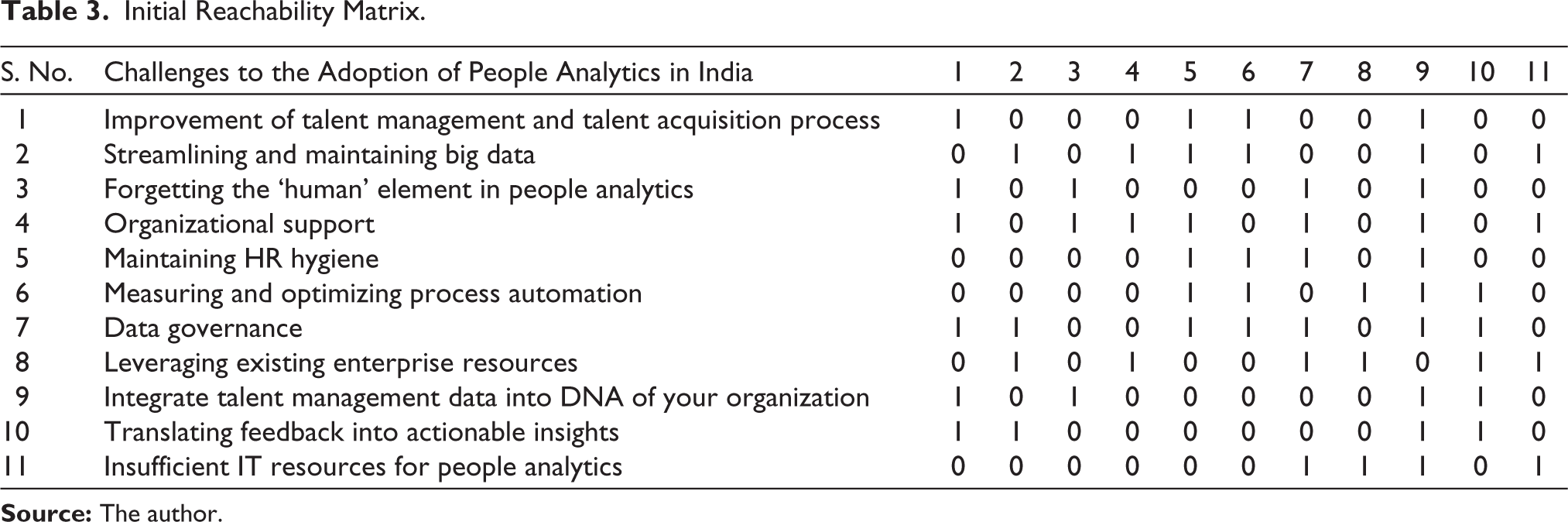
ISM Package available in R software prepares the final reachability matrix and level partitioning table. We can also follow a manual procedure based on the graph theory to develop both final reachability matrix and a level partitioning, which is more time consuming (Appendix B).
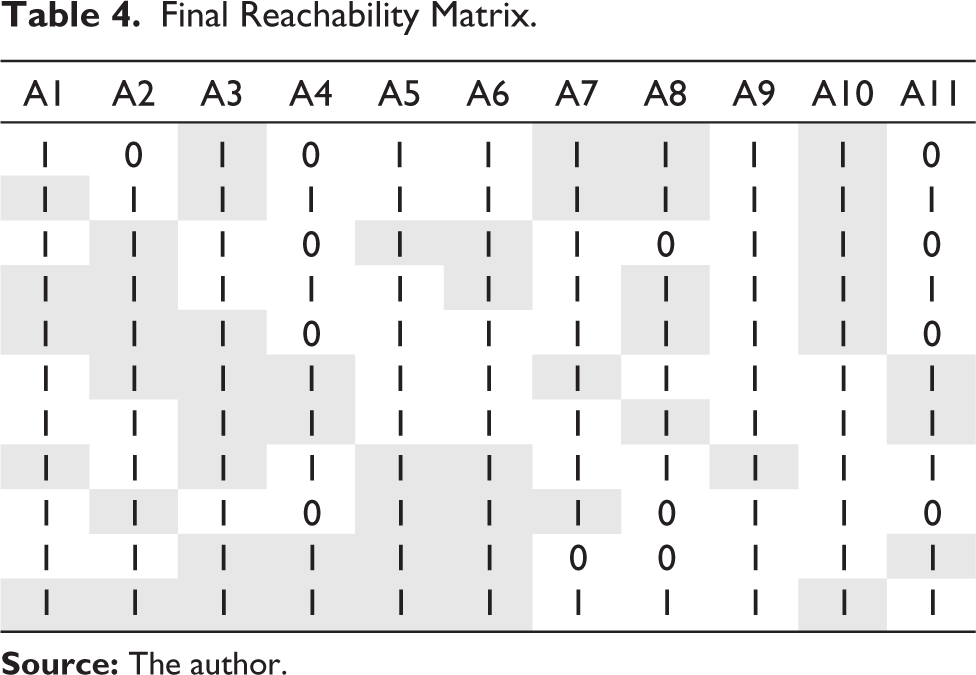
The initial reachability matrix is fed to the R software, which produces the final reachability matrix (Table 4), where the 1s in green color are worked out by applying transitivity law in mathematics.
Final Reachability Matrix
Step III: Partitioning the Reachability Matrix into Different Levels
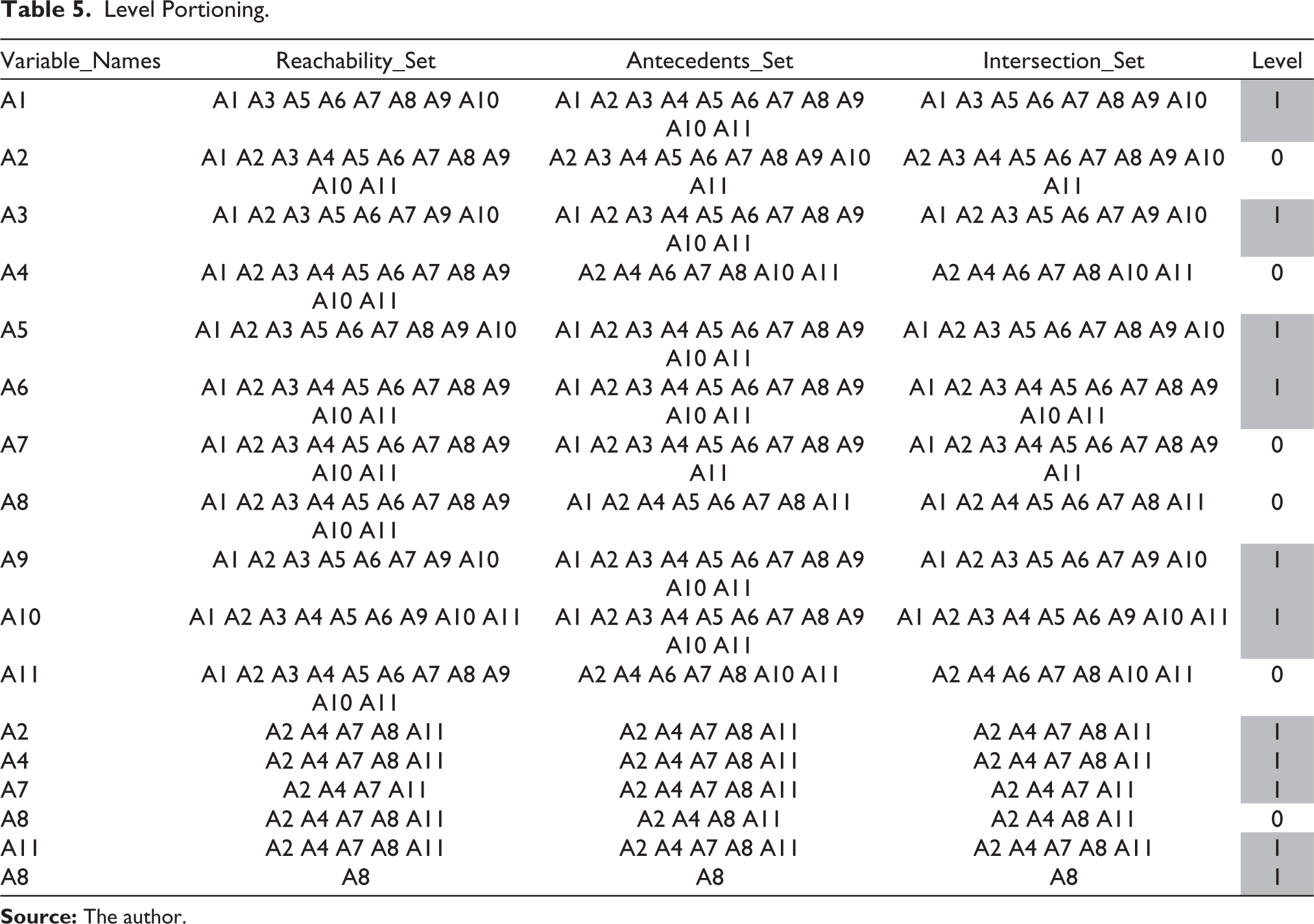
The reachability and antecedent sets for each challenge are derived from the final reachability matrix. The challenges for which the reachability and antecedent sets are equal take up the top level in the hierarchy of the ISM model. Once the top-level challenge is identified, it is removed from other challenges. Subsequently, the same process is repeated to find out challenges of the next level. This process is repeated till all the levels for all challenges are found out. This study takes assistance of the R software to avoid generation of levels manually. Based on the use of the ISM package developed using R programming, an ‘ISM_Output’ Excel file is produced which comprises all reachability, antecedent and intersection sets with level partitioning (Table 5). Here, levels are marked in green.
Level Portioning
Step IV: Diagraph
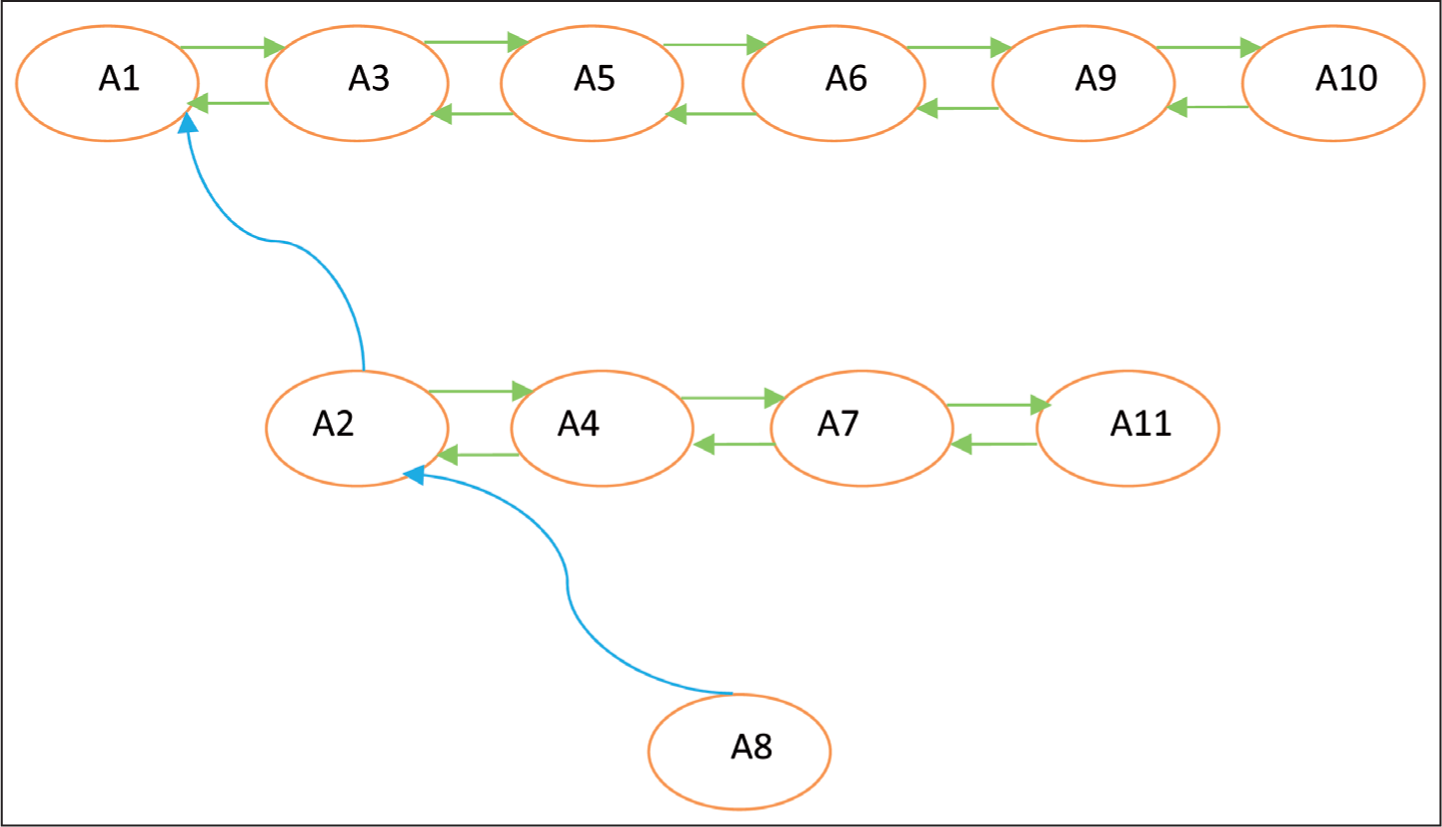
A diagraph (Figure 3) is sketched based on the final reachability matrix.
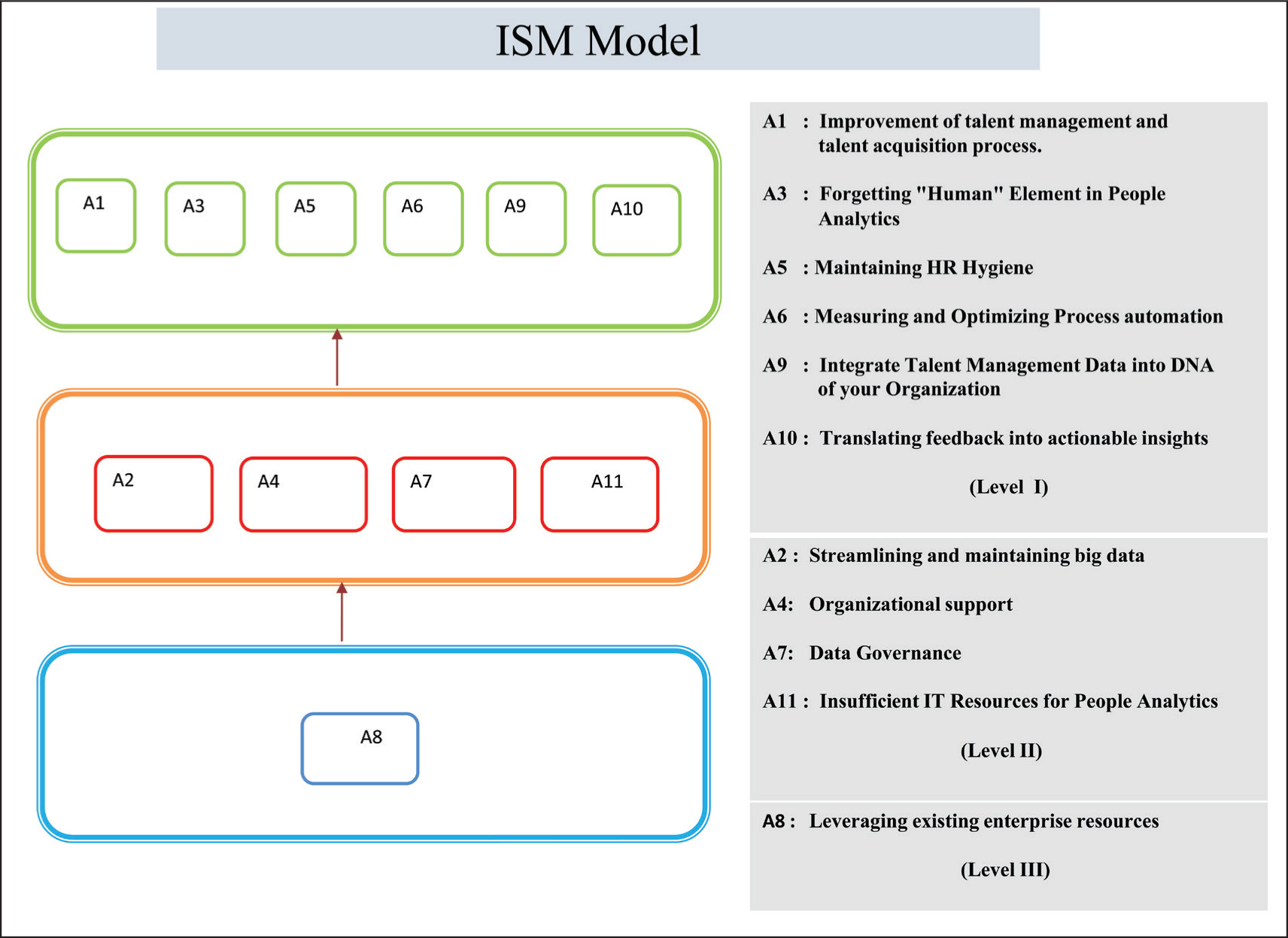
Step V: Interpretative Structural Modelling Model
MICMAC Analysis
This method involves development of a graph that classifies challenges based on driving and dependence power (Duperrin & Godet, 1973). The interpretation also validates the ISM model factors in the study to arrive at the result and conclusion. In this research work, MICMAC analysis is used to interpret the dependence and driving power of factors affecting people analytics in India based on a canonical matrix (Table 6). It also elicits the relative importance and interdependence between these 11 factors that are categorized into four clusters (Figure 5).
Canonical Matrix
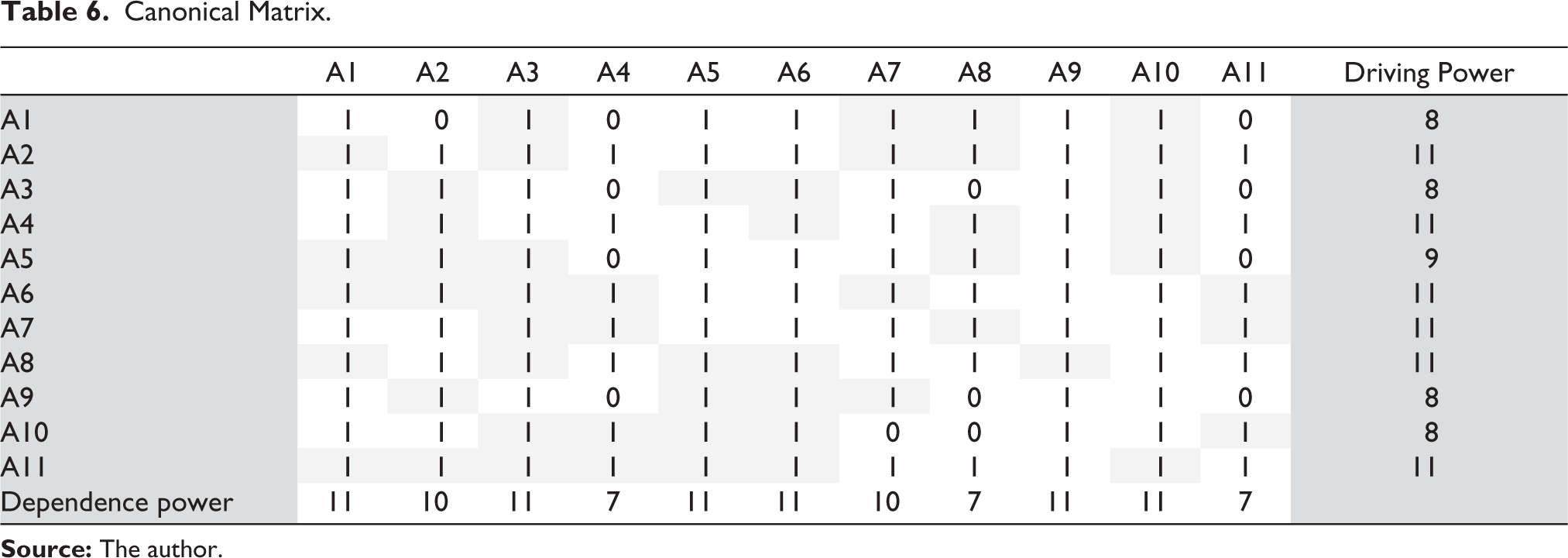
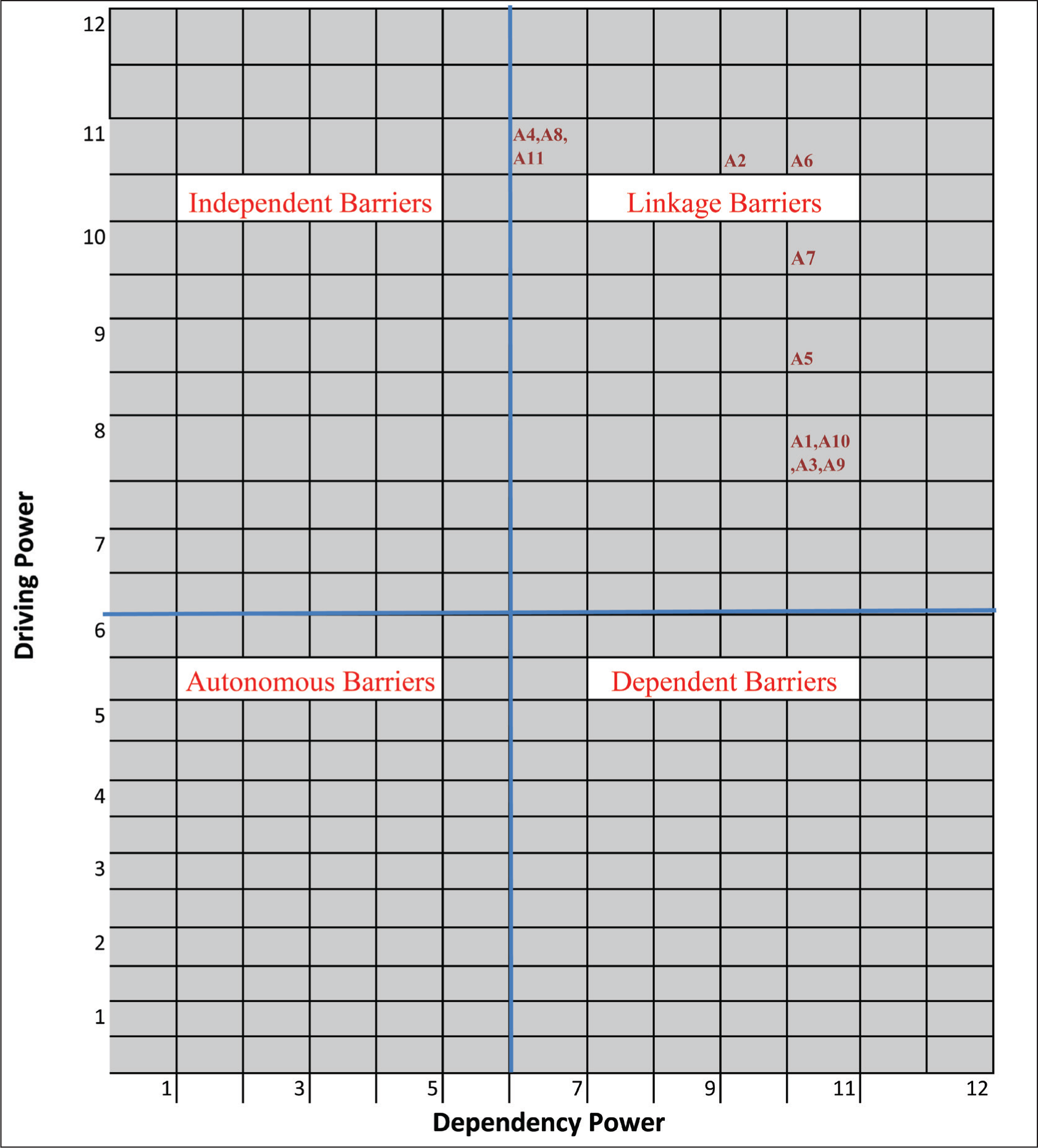
Based on the canonical matrix, the driving and dependence power are obtained by adding the total number of 1s in the rows and columns. The factors are subsequently plotted on a two-dimensional graph with the driving power plotted on the Y-axis and dependence power plotted on the X-axis as four categories.
These challenges have low driving power and very high dependence. Here, no challenge was found to be dependent.
These challenges have strong driving power and weak dependence. In this study, no challenge was found to independent.
These challenges have neither enough driving power nor enough dependence. These challenges are usually disconnected from other challenges. In this research work, no challenge was found to be autonomous.
These challenges have both high driving power and also high dependence, with an impact on other challenges, besides getting affected by others. They are also unstable in nature, because any action on them will have an impact on other challenges, as well as themselves. In this study, all the 11 challenges were found to be linkage challenges.
Model Results and Concluding Remarks
During the initial phase, challenges affecting the people analytics in India are derived from the literature and further validated through the opinions of experts using a t-test. Here, the ‘Fusion of old data is time-consuming’ challenge is rejected as per expert validation. During the second phase, 11 validated challenges are modelled using ISM. The challenges are grouped into three levels in modelling. The challenge ‘Leveraging existing enterprise resources’ is found to be the most important challenge in this study. Once this challenge is addressed, the entire employee life cycle can be well taken care of. Similarly, the challenges ‘Improvement of talent management and talent acquisition process’, ‘Forgetting the “human element” in people analytics’, ‘Maintaining HR hygiene’, ‘Measuring and optimizing Process automation’, ‘Integrate talent management data into DNA of your organization’ and ‘Translating feedback into actionable insights’ are found to be the basic elementary challenges appearing at the top level. The ‘Streamlining and maintaining big data’, ‘Organizational support’, ‘Data governance’ and ‘Insufficient IT resources for people analytics’ challenges appear at the middle level, which establish relationships with elementary challenges at the top level and the most important challenge at the bottom level. Leveraging enterprise resources can pull right kind of talent to the firm as per requirements and a chance of retaining them is enhanced. Even though the exiting enterprise resource is solving other functional requirements. People analytics will require further level of access as an additional functionality. Once enterprise resources are leveraged properly, proper people analytics tools can streamline big data to produce KPIs as per the business objectives of firms. Streamlining and maintaining of big data will also be influenced by IT infrastructure, top management and data governance at the same level, further influencing all the six elementary challenges determined after modelling.
Significant Theoretical Contribution
This research study is a first of its kind in understanding challenges of people analytics in India. This work deciphers and interrelates factors affecting people analytics in India. The application of ISM as a qualitative tool in this context is a methodological contribution in this research. The findings of this study will be a key learning for human resources practitioners of India.
Limitations
Based on prior literature, ISM has strong relevance. However, subjectivity in expert opinions might be there in this study.
Future Research Directions
Further research may be conducted to construct a qualitative model using ISM, and further statistical validation is possible using structural equation modelling as a quantitative tool. To understand the causal relationships, the decision making trial and evaluation laboratory (DEMATEL) technique can be used. Similar studies can also be conducted in other developing countries similar to India. Total interpretive structural modelling (Sushil, 2005a, 2005b, 2009, 2012) can be applied to interpret the links in the ISM model using the tool of the interpretive matrix (Sushil, 2005a).
Footnotes
Declaration of Conflicting Interests
The author declared no potential conflicts of interest with respect to the research, authorship and/or publication of this article.
Funding
The author received no financial support for the research, authorship and/or publication of this article.
Appendix A
Dear Respondents,
I am sending a small questionnaire to people analytics professionals and Business School Professors with knowledge and expertise in people analytics who can rate the challenges of people analytics in India. I have identified twelve challenges as per literature review. Subsequently, I will conduct a small personal interaction with few subject matter experts in the second phase of this research. Please click the following link to express your personal opinion to complete the survey. The entire process may take 2 minutes to complete.
Thanks and Regards,
Appendix B
R Code
> install.packages(“ISM”)
> Library(ISM)
>ISM(fname=matrix(c(1,0,0,0,1,1,0,0,1,0,0,0,1,0,1,1,1,0,0,1,0,1,1,0,1,0,0,0,1,0,1,0,0,1,0,1,1,1,0,1,0,1,0,1,0,0,0,0,1,1,1,0,1,0,0,0,0,0,0,1,1,0,1,1,1,0,1,1,0,0,1,1,1,0,1,1,0,0,1,0,1,0,0,1,1,0,1,1,1,0,1,0,0,0,0,0,1,1,0,1,1,0,0,0,0,0,0,1,1,0,0,0,0,0,0,0,1,1,1,0,1), 11,11, byrow= TRUE), Dir =“ D:\\People_Analytics”)
[1] “D:\\ People_Analytics /ISM_Matrix.xlsx”
[1] “D:\\ People_Analytics /ISM_Output.xlsx”
[1] “Outputs have been created”