




Abstract
Employer branding has fascinated human resources (HR) managers and establishments over the last two decades. This is attributed to its practical business implications and being a strong predictor of many favourable organizational outcomes. Due to the fierce business rivalry and market saturation in recent times, businesses are increasingly looking to engage their workforce in order to induce employer commitment among them. Employer brand is one factor that can help organizations keep their employees involved in the job. Employee engagement is critical for service brands, such as the banking industry, for delivering better customer service and maintaining a motivated workforce. An engaged workforce is also more committed towards the organization, which also leads to many desirable business outcomes. This study targeted 485 employees from two banks (one a public sector bank and the other a private bank), which resulted in 409 functional responses. The work objective was to examine the influence of employer brand on employee engagement, which may lead to organizational commitment. This article also examined the mediating role of employee engagement with respect to the five dimensions of employer brand and organizational commitment. The regression analysis using structural equation modelling (SEM) revealed that all five dimensions of employer brand influence employee engagement. Employee engagement also shares a positive and significant association with organizational commitment. Moreover, the mediation analysis also revealed that employee engagement partially mediates the relationship between employee engagement and organizational commitment. These study findings have important implications for business managers, HR managers and academicians.
Introduction
The prospects of a good employer brand are well documented and acknowledged in the research domain (Benraiss-Noailles & Viot, 2020; Dineen et al., 2019; Theurer et al., 2018), as it can help businesses deal with the possibility of a volatile future (Jiang & Iles, 2011). There has been increasing consideration towards employer branding by establishments, which can be attributed to the deficiencies in the superior workforce skills required for running business operations (Dögl & Holtbrügge, 2014) and aggressive recruitment activities by businesses (Baum & Kabst, 2013). Organizations in present times consider employer branding as an essential human resources (HR) means for managing and attracting the workforce (Benraiss-Noailles & Viot, 2020; Martin et al., 2011). Additionally, the unstable employment avenues and retention strategies existing in the current work environment have made employment branding more critical than ever (Dineen et al., 2019; Lievens & Slaughter, 2016). Employer branding actively supports the realization of workers’ desires and aspirations, and thus employees exhibit commitment towards their employer in return for the organizational help and support (Arasanmi & Krishna, 2019). This reciprocity implies that the employers must satisfy the workers’ aspiration for fostering of employee engagement (Arasanmi & Krishna, 2019), because an engaged workforce is an essential factor to gain a business advantage (Bhasin et al., 2019; Hogreve et al., 2017). However, despite the growing research into the realm of employer brand (Backhaus, 2016; Backhaus & Tikoo, 2004), there are limited studies that show its impact on the existing workforce in organizations (Theurer et al., 2018). Benraiss-Noailles and Viot (2020) believe that employer brand needs further exploration and examination concerning different factors in diverse settings. There has been a recent surge in the studies exploring the association between employer brand and retention in recent times (Ahmad et al., 2020; Gilani & Cunningham, 2017; Hadi & Ahmed, 2018). However, one of the employer brand’s important outcomes, that is, employee engagement, seems to be under-researched (Rana & Sharma, 2019). Employee engagement needs to be further researched concerning employer brands, because it is an essential factor for predicting business success compared to employee retention (Richman et al., 2008). The contemporary trade environment also demands firms to effectively strategize their employer branding activities for augmenting employees’ engagement (Heger, 2007). This change in perspective is because workforce engagement is considered as an essential antecedent for many positive outcomes in an organization, like organizational commitment (Buckingham & Coffman, 1999), which then leads to enhanced organizational performance (Rameshkumar, 2020). Besides, both employee engagement and commitment are considered as essential factors in HR studies. They are both associated with workforce behaviour, which ultimately enhances firms’ performance and employee retention (Chalofsky & Krishna, 2009).
Moreover, creating and managing a good brand is vital in the service sector, as the competition in services has become intense (Lee et al., 2014). Engaged employees play a critical role in the service delivery process by effectively acting as the business emissaries (Bhasin et al., 2019). Employee commitment is also vital in an establishment’s achieving its service goals and building customer trust (Wallace et al., 2013). Banking establishments have a highly stressed organizational environment globally (Abdullah & Ramay, 2012; Ebiringa, 2011). Even in the Indian context, banks have to compete for talented employees because of the increasing demand for skilled employees in other sectors (Rana & Sharma, 2019). This challenge makes it essential to keep the employees engaged and, hence, committed to their job. Moreover, the development of Indian banks is vital to counter the growing competition in this sector and to meet the increasing customer expectations (Rana & Sharma, 2019). Employer brand is an essential factor for such development. The brand of business establishments is also increasingly in the spotlight since employer commitment can be induced among workers through the engagement route. Employer branding is being exhaustively explored in developing economies (Backhaus, 2016), but most of its groundwork has been laid in the Western regions (Baum & Kabst, 2013). This fact warrants further explorations and investigations in developing regions, like India (Backhaus, 2016), for confirming the generalizability of the concept (Baum & Kabst, 2013).
Hence, based on the above discussion, this work attempts to examine the influence of employer brand on employee engagement in India’s banking industry. The role of employee engagement in predicting organization commitment is also investigated. Additionally, the mediating character of employee engagement in the relationship between employer brand and organizational commitment is examined as well. The next section discusses the literature review based on the study’s variables, followed by a section on the research methodology. The data analysis segment is the subsequent section, followed by the last research work section, which includes the research discussions, implications and conclusion and future-work recommendations.
Theoretical Foundation
The contemporary organizational behaviour practices are closely associated with the SET (social exchange theory) (Andrew & Sofian, 2012; Blau, 1964), which is fundamentally based on forming a close and reciprocal relationship between employers and workers. Tsarenko et al. (2018) assume that the exchange mechanism requires an investment on the behalf of the entities concerning a specific process. The social exchange procedure entails investing resources, dedication, self (entity), affection and ardour for some gains (Arasanmi & Krishna, 2019). The employee–organization exchange process is based on the employees’ perception of the fairness of and conviction about their working establishments (Cropanzano & Mitchell, 2005). Some studies imply that employees exhibit an optimistic attitude and affection for their establishments when they believe that their employers value their dedication and efforts on the job (Tsarenko et al., 2018). The development of favourable attitudes and emotions towards their employer makes them more involved in the firm and its goals. Reciprocal employee behaviour in the form of enhanced engagement levels would occur when workers are content with the support provided by their employers. The employee engagement framework has also been explained alternatively by Andrew and Sofian (2012) through the lens of the SET. They postulate that an individual primarily makes her/his decision in relation to her/his perception of the advantages and costs in a given situation. This perspective also applies to the social relations concerning the employees’ engagement towards their employer, which in essence is a manner of repaying the establishment by the employee (Saks, 2006). Thus, whether employees involve/engage with the establishment or not depends on the resources they get from the employer (Andrew & Sofian, 2012; Ibrahim & Al Falasi, 2014). Employees feel the need to return the favours provided by their employers in the form of enhanced commitment towards the establishment (Cropanzano & Mitchell, 2005). The SET also states that employees can exhibit affirmative and engaged work behaviour and express employer loyalty if they share an optimistic relationship with their employers (Cole et al., 2002). When organizations provide their employees with appropriate monetary, psychological and group support, the latter desire to return that support (Saks, 2006). Thus, employee engagement is intricately dependent on the organizational support and the organizational benefits (Arasanmi & Krishna, 2019), which then leads to organizational commitment (Cole et al., 2002).
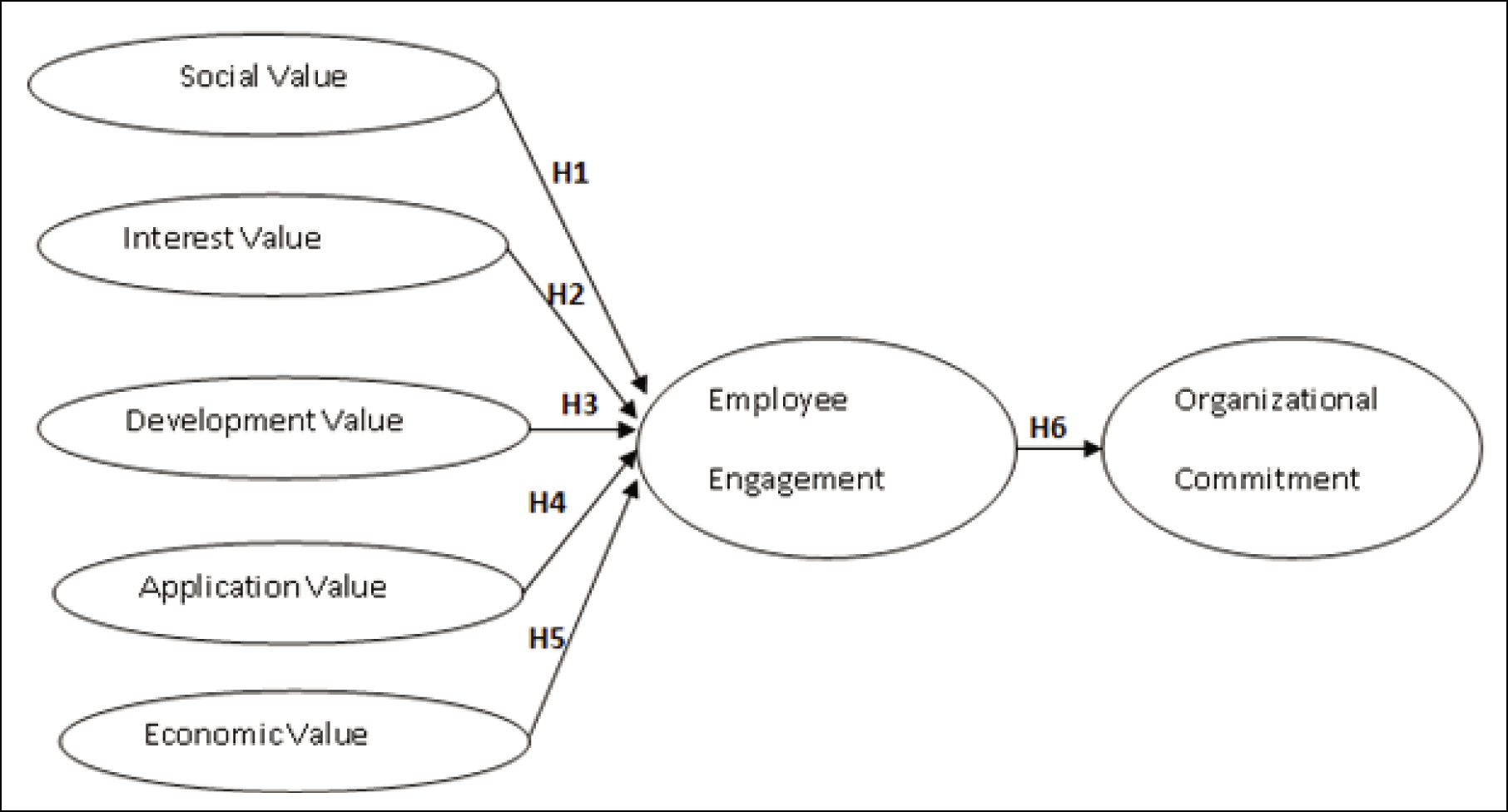
From a psychological perspective, employee engagement could be described as the worker–employer bond that results in either optimistic or unconstructive employee behaviours on the job (Andrew & Sofian, 2012). Studies have further shown that employee engagement behaviour could lead to other outcomes, like employee commitment and fewer turnover intentions (Andrew & Sofian, 2012). This optimistic worker behaviour occurs because employees feel connected with their work, assign more significance to their job, perceive more resources at their command for finishing their work and, as a consequence, remain devoted to their organization (Andrew & Sofian, 2012; Gruman & Saks, 2011). Hence, it can be inferred from the above discussions that the SET is pertinent in the current study, which states that employer branding efforts can lead to employee engagement and, finally, to the inducement of organizational commitment (see Figure 1).
Literature Review
Employer Branding
Studies suggest that employer branding is still evolving and that there is a necessity for understanding the approach needed for acquiring and managing talent (Maheshwari et al., 2017). Academicians have also been fascinated with employer branding, as there is an increasing business requirement for a proficient and skilled workforce (Arasanmi & Krishna, 2019). From a strategic standpoint, employer branding is an important area to work on (Edwards, 2010). It aims to create and present a salient employer identity and representation (Ahmad & Daud, 2016). Thus, organizations are putting their efforts into branding themselves as being focused towards and involved with their employees (Jones et al., 2014). Employer brand attracts the skilled and proficient workforce, which augments the operational efficiency of business establishments (Keefe, 2007). Employer brand also induces more commitment in the employees working for the business entity (Burack et al., 1994). An employer brand’s affirmative outcomes include enhanced employee retention, employee engagement and employee commitment (Barrow & Mosley, 2011), which are all essential for achieving a firm’s business goals.
‘Employer branding’ can be described as ‘the set of functional, economic and psychological assistances provided by employment, and recognised with the employing company’ (Ambler & Barrow, 1996). Another perspective illustrates employer brand as the course of forming a specific and exclusive employer quality, and the employer (organizational) brand is associated with the business entity, which makes it different from other establishments (Backhaus & Tikoo, 2004). It is a multi-factor construct (Berthon et al., 2005) and includes the following factors:
Employee Engagement
For a substantial time, the business establishment has considered the employee engagement concept a challenge (Men et al., 2020). Engagement has been illustrated as how ‘people employ and express themselves physically, cognitively and emotionally during role performance’ (Kahn, 1990; p. 694). The cognitive aspect relates to the feelings of the workforce concerning the establishment and other co-workers. Emotional expression divulges the emotional attachment of the personnel to the work environment and includes their pessimistic and affirmative views. The third aspect is associated with the employees’ physical activities for finishing their work assignments (Men et al., 2020). Also, describes the ‘engagement concept’ from the perspective of a cognitive function, but some academicians explain it as an employee’s optimistic attitude concerning the establishment. Employee engagement can also be illustrated as the employees’ degree of dedication and attachment towards the firm and its principles (Andrew & Sofian, 2012). Alternatively, employee engagement has been explained as the connection of employees with the organizational mission (intent) and its values, and in the presence of such connection, employees experience empowerment, feel excitement and zeal, make greater efforts on their job and also act as advocates for the firm (Ewing et al., 2019). Since the emergence of employee engagement as a significant concept, many academicians have hinted at the possibility of an affirmative relationship between workforce performance and employee engagement towards the work, which in turn would result in firm performance (Andrew & Sofian, 2012). An engaged workforce provides business establishments with higher work productivity and lower worker turnover, ultimately putting the firm in a better and competitive market position (Vance, 2006). This efficiency can be attributed to the fact that the engaged workers have more energy and eagerness and are more engrossed in their work. Involved personnel have been described as a critical force in achieving business competitiveness, especially in the service sector (Bhasin et al., 2019). This aspect has gained significant consideration by service brands, because an engaged workforce displays better behaviour and attitude than unengaged personnel (Lee et al., 2014). Hence, companies should attempt to foster engagement based on a two-way relationship and interactions between them (employer) and their employees (Ibrahim & Al Falasi, 2014).
Employer Commitment
Employer (organizational) commitment can be illustrated as the workers’ dedication and devotion towards a particular establishment (Angle & Perry, 1981; Arasanmi & Krishna, 2019). It can also be referred to as an employee’s state of mind, which demonstrates his/her affiliation with a particular employer and, consequently, influences his/her decision to continue or quit an organization. Committed employees exhibit higher motivation levels and more likely to stay with their companies (Arasanmi & Krishna, 2019; Morgan & Hunt, 1994). A committed workforce is more likely to disseminate the brand message by essentially living the brand (Boyd & Sutherland, 2006). Organizations also desire employer commitment, as a committed workforce is more dedicated in achieving the brand goals (Thomson et al., 1999). Employee commitment is believed to be greater in those establishments where the workforce is more involved and emotionally attached to the brand (King & Grace, 2012; Piehler, 2018). A committed workforce is a valuable and essential organizational asset, because dedicated employees enhance work productivity and thus create business advantage. Committed personnel are also beneficial for a service organization as they deliver a pleasing service experience to the customers during customer–service interactions (King & Grace, 2008). It is also essential for bank employees to display commitment towards their establishment, especially in the wake of rising economic volatility and consumer dissatisfaction (Wallace et al., 2013). Employees’ organizational commitment is also essential for building successful brands, especially service brands (e.g., banks) (Balmer, 2001).
Relationship between Employer Branding and Employee Engagement
If a business establishment can cultivate a harmonious relationship with its employees, it may result in good employer behaviour in return (Chawla, 2020). Studies have suggested that employer branding influences employee behaviour (Angelopoulou, 2015) and may also enhance employee engagement (Sartain & Schumman, 2008). When an organization provides workers with adequate resources and other amenities, employees tend to be engaged with the establishment and oriented towards their business goals (Tsai & Wu, 2010). The presence of a favourable working environment makes employees involved in the job and elicits productive employee behaviours (Kunerth & Mosley, 2011). Thus, based on the above discussions, the following hypotheses can be proposed:
Relationship between Employee Engagement and Organizational Commitment
An organizational setting that employees consider lively and safe can lead to the enhancement of their job contribution and work devotion, through the investment of their additional time and psychological resources (Brown & Leigh, 1996). Schaufeli and Salanova (2007) also found an optimistic association between employee engagement and organizational commitment. Other studies have also confirmed this relationship in different situations (Little & Little, 2006). Workers who are more involved in the administrative tasks feel obliged to repay their establishment (Cohen, 2000) by exhibiting more commitment towards the firm (Cropanzano & Mitchell, 2005). Sundaray (2011) is also of the opinion that employee engagement is closely linked with employee commitment. However, additional research is required to determine the impact of employee engagement on employer (organizational) commitment (Rasheed et al., 2013). Thus, based on the above discussions, the following hypothesis can be proposed:
Employee Engagement as a Mediating Variable
The direct path between the employee branding variables and organizational commitment has been established in many studies (Kimpakorn & Tocquer, 2009; Storsten & Ampuero, 2013; Tanwar, 2017). Studies have also provided evidence about the constructive association between employer branding and employee engagement (Bhasin et al., 2019; Sartain & Schumman, 2008). In addition, studies have established an association between employee engagement and organizational commitment (Rameshkumar, 2020). A study conducted by Maslach et al. (2001) shows the mediating role of employee engagement in the relationship between the work environment and commitment towards the employer. Similarly, in a study conducted by Lee et al. (2014) shows that the internal branding is related to to employee-associated outcomes likes job satisfaction through engagement. Even the SET states that employer branding activities makes employees’ involved in the employer establishment, leading to employer commitment (Brunetto et al., 2013; Cole et al., 2002). In another critical study, engagement was also found to mediate the association between employees’ perceived contract fulfilment and its outcome variable, that is, commitment (Parzefall & Hakanen, 2010). Thus, based on the above discussions, the following hypotheses can be proposed:
Research Method
This work employed a causal research design based on a survey method. It involved the use of questionnaires as the research instrument for getting responses from the study subjects. The responses were obtained from selected employees in two banks (one a private bank and the other a public sector bank) in one region of India. The sampling technique used in this work was convenience sampling. A total of 433 responses were collected after targeting 485 employees. However, after data cleaning, only 409 functional responses were left for the study’s data analysis.
Respondents’ Profile
The study consisted of 224 (54.7%) male respondents and 185 (45.2%) female respondents; 127 (31.05%) of the employees belonged to the earning category of less than ₹500,000, 192 (46.9%) of the employees had earnings in the range of ₹500,000–₹1,000,000, and the remaining employees (90) had earnings of more than ₹1,000,000. Of the employees, 98 (23.9%) had a work experience of fewer than 3 years, 201 (49.1%) had a work experience in the range of 3–5 years, and the rest (110) had a work experience of more than 5 years. Of the employees, 139 (33.9%) were in the age group of 21–30 years, 172 (42.05%) belonged to the 30–35 age group, and the rest (98) were above 35 years of age.
Measures
Seven items of employee engagement were adapted from the work of Schaufeli et al. (2002), six items of organizational commitment were adapted from the work conducted by Saks (2006), and 25 items of employer branding (five items for each of the five factors) were adapted from the work of Berthon et al. (2005). The independent and dependent variables were measured using a 5-point Likert scale.
Factor Analysis
The first step in SEM (structural equation modelling) is running the CFA (confirmatory factor analysis), which was performed on the data set in Amos 23.0. CFA’s objective is to confirm whether the items load on their respective latent factors based on the proposed theory or not. The results from the CFA revealed satisfactory results.
Results
Measurement Model
The results obtained from the covariate model (Figure 2) show an acceptable data fit (Hair et al., 2010) as:
Validity and Reliability
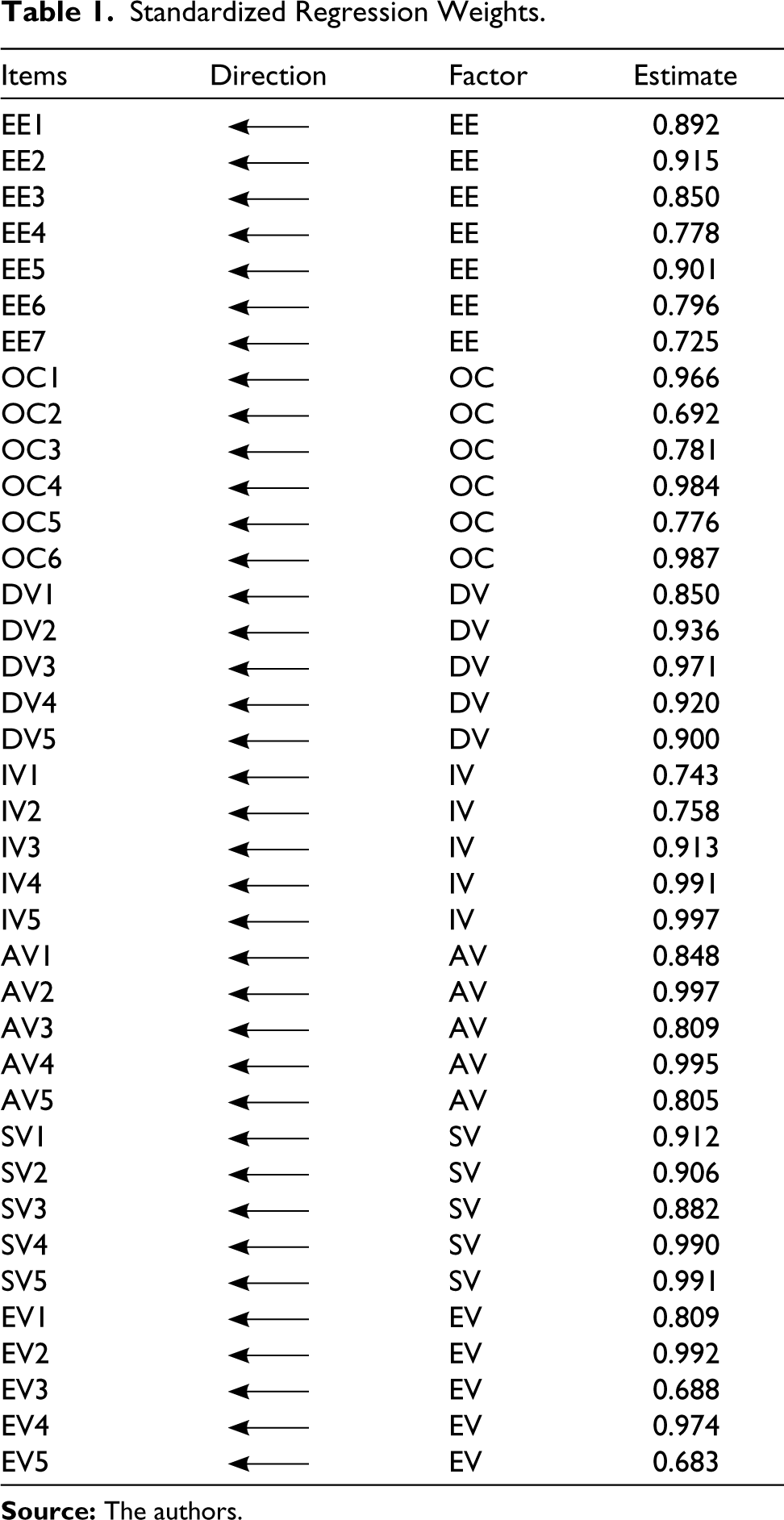
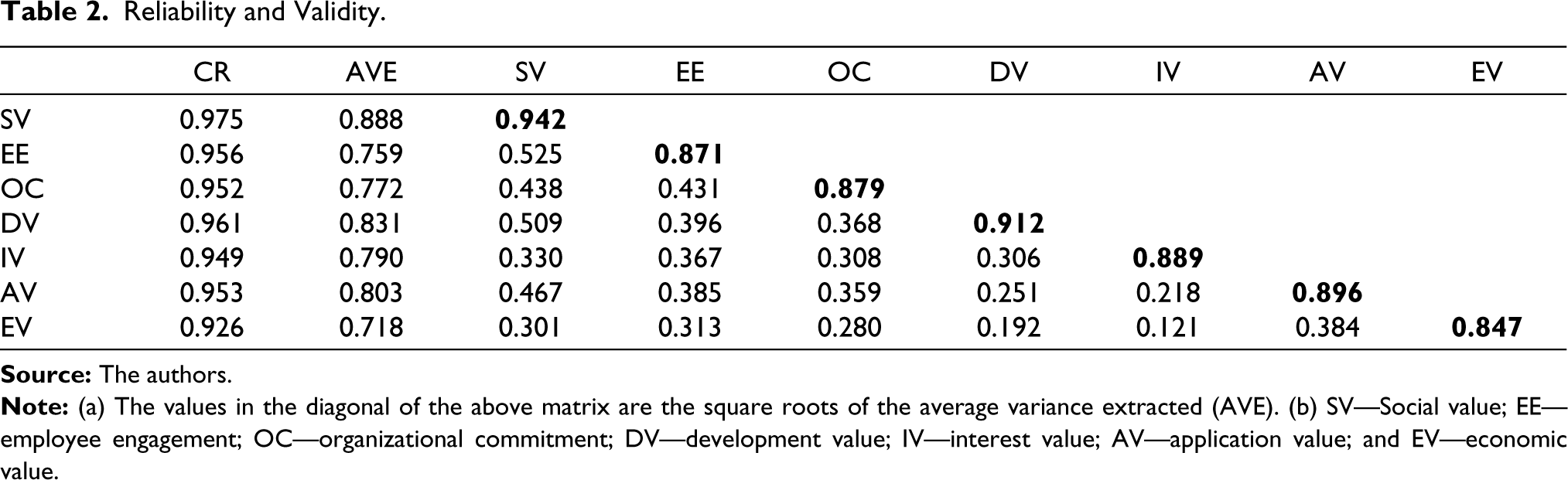
Table 1 shows that all the factor loadings are above 0.70 and all average variance extracted (AVE) scores are greater than 0.50 (Table 2), which suggests convergent validity of the scale (Fornell & Larcker, 1981; Hair et al., 2010). Moreover, Table 2 shows that all the values of inter-factor correlations are less than the AVE’s square root (Table 2), which implies that the measures’ discriminant validity is well established (Anderson & Gerbing, 1988). The values of CR (composite reliability) are greater than the threshold value of 0.60 (Table 2), which confirms that the instrument is reliable (Anderson & Gerbing, 1988).
Standardized Regression Weights

Structural Model
The structural model shows a moderate fit for the data structure, which is as follows:
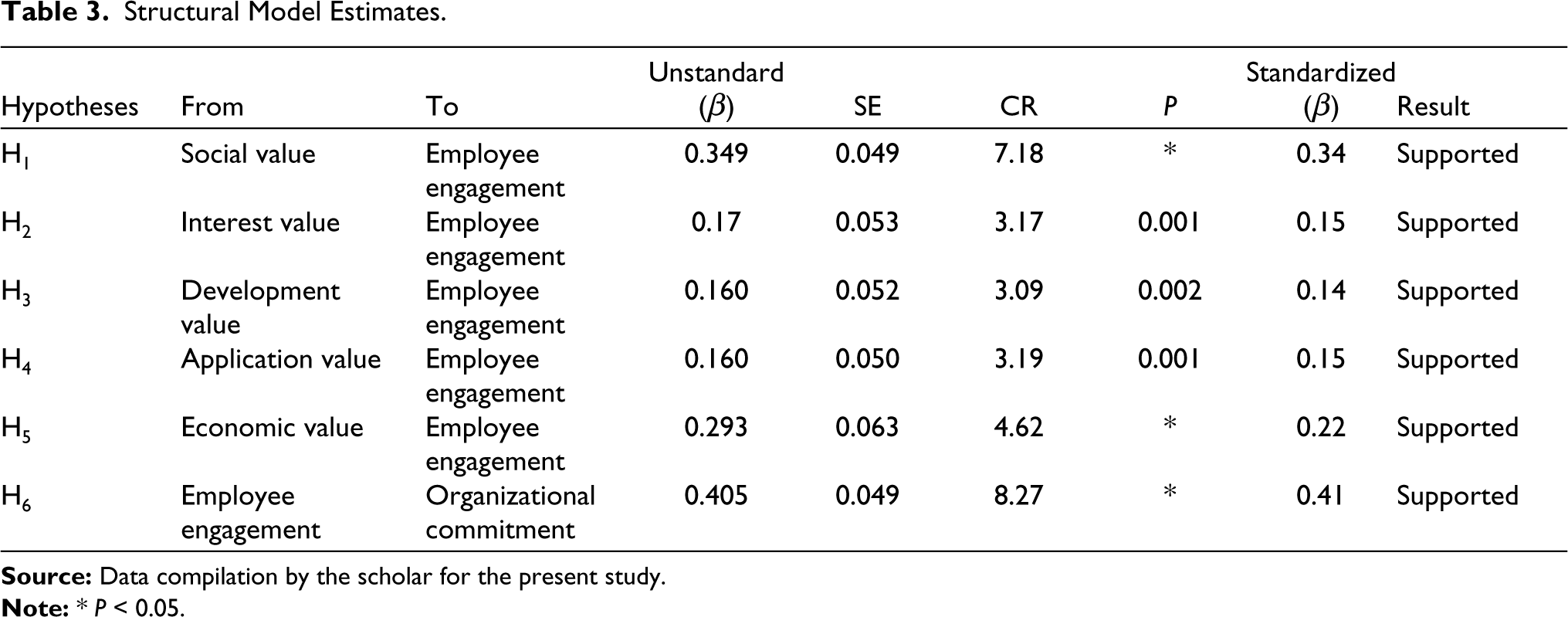
The results obtained from the path analysis show that all the study hypotheses are supported (Table 3). A positive and statistically significant association exists between the outcome variable, that is, employee engagement, and the five independent factors, that is, development value (b = 0.14, p = 0.001), interest value (b = 0.15, p = 0.001), application value (b = 0.15, p = 0.002), social value (b = 0.34, p = 0.003) and economic value (b = 0.22, p = 0.001). Similarly, the associative relationship between employee engagement and organizational commitment is constructive and significant (b = 0.41, p = 0.001) (see Table 3).
Mediation
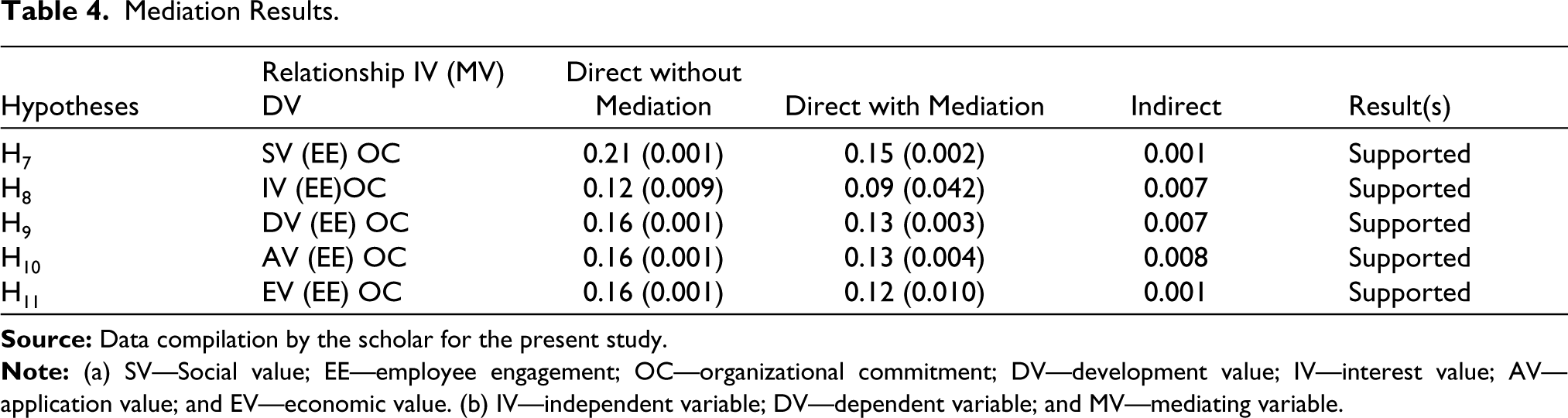
The bootstrapping method was used to explore the indirect path between the five factors of employer branding (independent variable) and organizational commitment (outcome variable) through employee engagement (mediator; see Table 4). The results reveal that the path coefficient from development value to organizational commitment decreased from 0.16 (direct path) to 0.13 (mediating path), which implies that this relationship is partially mediated by employee engagement. The influence of interest value on organizational commitment also reduced from 0.12 (direct path) to 0.09 (mediating path), which implies that this association is partially mediated through employee engagement. The impact of application value on organizational commitment decreased from 0.16 (direct path) to 0.13 (mediating path), which implies that this association is partially mediated through employee engagement. The influence of social value on organizational commitment reduced from 0.21 (direct path) to 0.15 (mediating path), which implies that this association is partially mediated through employee engagement. Lastly, the influence of economic value on organizational commitment reduced from 0.16 (direct path) to 0.12 (mediating path), which implies that this associative relationship is partially mediated through employee engagement.
Reliability and Validity
Structural Model Estimates
Mediation Results
Discussion
The results show that all the five dimensions of employer brand are vital in significantly predicting employee engagement. These results are similar to those of previous studies examining the association between employer branding and worker engagement (Bhasin et al., 2019). Establishments thus need to induce and sustain employee engagement for achieving their business objectives. When establishments provide their employees with values and benefits concerning the social, economic, application, interest and development dimensions, it can lead to employee engagement behaviours within the organizations. The social value has the most substantial influence in influencing employee engagement, followed by economic value, interest value, application value and development value. These are exciting results, as banking employees consider social values to be more important than any other factor in the employer brand. These findings could be attributed to the dynamic and stressful banking work environment. The results also show that employee engagement strongly influences organizational commitment, which has also been corroborated by other studies in different contexts (Rameshkumar, 2020; Schaufeli & Salanova, 2007). The mediation analysis provided interesting results, suggesting that the path from employer brand dimensions (application value, social value, interest value, development value and economic value) to organizational commitment passes through employee engagement. The relationship between employer branding factors and organizational commitment is thus partially mediated by employee engagement. Moreover, the influence of social value on organizational commitment shows the most significant drop when mediated by employee engagement compared to the other dimensions of employer branding. Again, this is an interesting result that suggests that social value plays a vital role in predicting organizational commitment directly and indirectly through employee engagement. A study conducted by Biswas and Bhatnagar (2013) shows the mediating role of employee engagement in the relationship between perceived organizational support and organizational commitment. Another research shows the mediating role of employee engagement in the relationship between internal branding and job satisfaction (Lee et al., 2014). However, the mediating role of employee engagement in the relationship between employer branding elements and organizational commitment has not been studied so far, to the authors’ best knowledge. This contribution makes this research framework unique and also has valuable practical and theoretical implications.
Theoretical Implications
This framework is based on the established research in the domain of employee branding and its outcomes. However, this work provides a different perspective on the relationship between employer brand and employee commitment through the path mediated by employee engagement. Earlier studies mainly studied both organizational commitment and employee commitment as the consequences of the employer brand. Incorporating employee engagement as a mediator in the research framework helps in comprehending the employer brand’s role in producing favourable business outcomes.
Practical Implications
Employer branding is an emerging and critical aspect in HR studies, because it provides insights into the formation of employees’ perceptions, which may result in favourable outcomes for organizations (Alshathry et al., 2017). When workers view an employer as attractive, they are more likely be engaged and involved in their work roles and assignments. This means that organizations must strategize to maintain a strong employer brand to keep their employees engaged with the job. Engaged employees are an invaluable asset for an organization, as they are highly committed towards the firm and, therefore, its goals. Thus, business entities should ensure to promote and develop a positive employer brand. The current work has revealed that employer brand dimensions are important predictors of work engagement. These findings would assist business planners and managers in directing their endeavours towards employer brand dimensions for effectively engaging their personnel. Managers should create an organizational environment that would result in a pleasing worker experience, which would then lead to the enhancement of employee engagement. The current research endeavour seeks to help organizations understand the workers’ perception of the employer branding elements that ultimately influence their engagement levels. Social value has the strongest influence on employee engagement, which implies that co-worker support, recognition, teamwork and supervisor support are critical factors in enhancing employee engagement. Thus, these factors need to be at the centre of employer branding strategies. The second strongest influence on employee engagement is that of economic value, which suggests that when workers are suitably compensated for their work efforts, they exhibit a higher degree of engagement (Rana, 2019). This means establishments need to design an appropriate compensation structure (both financial and non-financial perks) that is flexible and suitably rewards employees for their efforts. However, the other three factors of employer branding, that is, interest value, application value and development value, had a lower effect. This means managers should also invest in these factors for enhancing employee branding. The results have revealed a strong association between employee engagement and organizational commitment. This means organizations need to actively seek to engage the employees through various programmes and activities at work. Employee engagement can also be enhanced by building and sustaining empathetic and emotional relationships between co-workers, team leaders and higher managerial personnel. Managers need to design programmes for their workers which would effectively coach and mentor them. The end objective must be to make employees committed to the organization in order for them to be successful.
Conclusion
The current framework provides a comprehensive understanding of employer branding’s role in forming employee engagement, which may then lead to organizational commitment among workers. Previous studies have shown the relationship between the three variables without the mediating role of employee engagement in the relationship between the other two variables. These studies have limited business applications. However, the current research overcomes the previous gaps and limitations by examining the role of employee engagement in the relationship between employer branding and organizational commitment.
Limitations and Future Research
Forthcoming studies may include the influence of employer brand on more outcome factors, such as employee involvement, employee affect, employee attitude, etc. The framework used in this study could be further enhanced by examining moderating factors, such as co-worker support, work environment and supervisor support. Future works in this domain can include larger samples and apply triangulated research approaches to understand the concepts better.
Footnotes
Declaration of Conflicting Interests
The authors declared no potential conflicts of interest with respect to the research, authorship, and/or publication of this article.
Funding
The authors received no financial support for the research, authorship, and/or publication of this article.