



Abstract
This article explores the potential of blockchain technology (BCT) and digital twins (DTs) to revolutionize the management of distributed telecom infrastructure assets in developing countries. By addressing the electricity supply challenge and enhancing asset maintenance, these technologies provide opportunities for the future of telecom infrastructure in these regions. Based on an empirical review using data from quantitative and qualitative approaches, including semi-structured interviews and survey questions, the results show that blockchain and DT technologies are not only promising but also significantly enhance the efficiency of optimizing distributed telecoms asset maintenance practices. These technologies enable predictive maintenance activities, real-time visibility, and escalation of asset functionality and faults, providing reassurance about their effectiveness.
Keywords
Introduction
The telecoms sector faces unique challenges in maintaining and managing its fast-growing network of distributed assets and infrastructure. As the number of subscribers grows due to the deployment of infrastructure for broader coverage, traditional maintenance strategies are becoming ineffective in ensuring optimal asset performance, functionality and cost efficiency. This study explores a digitized approach to transforming telecom asset maintenance practices through the strategic use of blockchain technology (BCT) and digital twin (DT). Blockchain provides secure and immutable systems necessary to maintain trusted records of asset maintenance activities (Paramesha et al., 2024). A DT creates detailed virtual replicas of physical assets, enabling real-time tracking, monitoring, simulation and predictive capabilities that transform maintenance scheduling and planning (Iranshahi et al., 2025; Rojas et al., 2025). Therefore, the integration of these technologies provides an efficient system to achieve unprecedented levels of operational efficiency, asset performance, reliability and compliance with regulatory maintenance standards.
Given the deficiency and unavailability of public electricity from the grid in the study context, approximately 16,396 telecom base transceiver stations operate on diesel generators and other power solutions for redundancies (IHS, 2024). Around 85% of these sites are completely off-grid, relying on diesel generators and battery-hybrid power systems. This situation requires extensive asset maintenance activities (Okeyia & Almeida, 2024), including manual reporting of maintenance tasks, scheduling, fault identification and resolution, and root cause analysis (RCA). Additionally, issues such as diesel theft, pilferage, tampering with asset metering devices, and security system breaches are common, emphasizing the urgent need for effective solutions.
Consequently, the study aims to transform reactive or traditional maintenance practices into a proactive or predictive, data-driven strategy that utilizes digitized technologies to deliver measurable operational improvements.
Policy Statement
With the persistent challenges of energy and sustainability in telecom asset maintenance, effective and efficient resolutions are more crucial than ever. Key performance indicators (KPIs), including network performance, power consumption, network availability and service quality, must be continuously monitored and evaluated. This need has provoked telecom organizations and network providers to seek innovative approaches, making this research particularly timely and significant. Consequently, understanding how to manage assets to harness their likely benefits is significant (Campbell & Nasser, 2024; Tang et al., 2024). Developments in intelligent and digital technologies have enabled organizations to develop effective support systems for decision-making (Ravinder, 2019), thereby reducing operational expenditure, improving overall asset functionality and performance, and enhancing network service availability and quality.
Supporting Theoretical Underpinning
Chen et al. (2021) proposed a maintenance optimization model for planning and inspection of maintenance activities that addresses issues related to replacement decisions. Patidar et al. (2019) supported this optimization model with a planned preventive maintenance (PPM) strategy that focuses on optimizing monitoring, spare parts replacement, repairs and resource needs. In contrast, De Jonge and Scarf (2020) employ a genetic algorithm that aligns with BCT and DT to determine the optimal PPM interval and the number of preventive outages and repairs following the implementation of replacement or asset maintenance.
Kang et al. (2021) and Geng and Du (2021) argued that organizations can predict when to plan maintenance for their assets, making more sustainable use of each asset. Resources are applied to their optimum capacity without being detrimental to other assets or compromising performance and functionality. This proposition aligns with the research’s intention to have assets performing at their design level, based on the expected performance indicators, thereby providing financial reassurance to the audience.
Identified Gaps in the Extant Literature
Notwithstanding the capabilities and benefits of integrating BCT and DT in transforming asset management maintenance practice (AMMP), substantial research gaps persist that hinder the application and optimization. The telecom sector faces unique challenges in integrating these technologies due to the complex nature of its passive assets and infrastructure, operating environment and regulatory needs (Li et al., 2022). For instance, interoperability with existing assets (legacy operating systems) requires a seamless interface and integration (Abdelmaboud et al., 2022; Paramesha et al., 2024). Additionally, scalability limitations and challenges to real-time visibility of asset maintenance activities were identified as a gap in the existing literature reviewed.
Addressing Gaps from the Reviewed Extant Literature
Farinha (2020) proposed a disruptive paradigm in asset maintenance that reduce operating costs caused by intermittent asset outages because of poor PPM activities by integrating the maintenance strategy with the KPIs to align with real-time monitoring and fault escalation. Reactive maintenance (RM) prompts asset outages or downtime through unprepared or unplanned maintenance tasks, as this action is an expensive maintenance method that carries a high risk of disastrous outages affecting the entire asset’s functionality. However, preventive and corrective maintenance strategies are the primary interventions in asset maintenance management practices. The reliability-centred maintenance (RCM) approach optimally integrates condition-based, corrective and interval-based maintenance (Sun et al., 2022). RCM is centred around asset reliability through asset outage analysis, defect eradication or reduction (Sun et al., 2022), which results in performance, security, and the advantages of PPM.
Accordingly, Chen et al. (2019) argued that not all collected data samples are helpful and valid for implementing intelligent technologies. In particular, better asset management processes in digitalized predictive maintenance (PdM) have led to excessive data difficulties, potentially establishing poor-performing concepts with low human-machine trust, thereby compromising organizations’ performance. However, the identified problem of adopting BCT and DT systems in conjunction with transitioning to predictive maintenance practices within asset management in the Nigerian telecoms sector represents the central insight for this study.
Theoretical Underpinning and Literature Review
Distributed telecom infrastructure assets include passive, active or separable components that can independently create value (Hobday, 2023; Sacco, 2020). In this research context, distributed telecom infrastructure assets encompass diesel generators, cooling systems, towers, hybrid systems, diesel tanks, cables and lighting systems. However, the reviewed literature on managing distributed telecom infrastructure assets using conventional technologies and tools highlights a gap stemming from unpredictable factors such as automation, real-time monitoring, tracking, diagnosing, and processing asset functionality and behaviours.
Additionally, applying Venkatesh and Davis (2000) technology acceptance model (TAM) and Tornatzky et al. (1990) technology organizations environmental (TOE) frameworks in this context which could enable field specific features influencing field technicians’ adoption of digital AMMP, including perceived usefulness in challenging operating environment, compatibility with existing work structure and flow, and consideration of job security.
Accordingly, telecom operations and maintenance activities encompass not only the components necessary for passive infrastructure assets, such as research focus and content (Rha & Lee, 2022), but also the active infrastructure assets required for digital data and voice access, as well as transmission channels that interconnect with the passive infrastructure assets.
Asset Maintenance Management Strategies
There is an inevitable need for efficient asset maintenance management strategies that incorporate planning and scheduling actions, as well as the promising role of intelligent digital technologies—such as 4IR industrial technology—in an unstable environment, such as the research context. The adoption of 4IR technologies, including BCT and DT, not only presents an opportunity for real-time tracking, prediction, monitoring and escalation of physical assets (Tortorella et al., 2021) but also enables quick and efficient decision-making processes regarding functionality.
However, asset maintenance strategies may vary based on the type of assets to be maintained (Alabdulkarim et al., 2015); thus, Errandonea et al. (2020) suggest the following maintenance methods that align with the research focus and objectives.
PPM focuses on maintenance at a set time. This action is determined based on the lifetime of each asset component or spare part, as the maintenance activity is performed before asset outages occur. This method of asset maintenance practice is used in the context of research.
RM aims to perform maintenance when the asset’s spare parts or elements fail. This method is frequently used for spare parts or mechanisms that are low-cost and pose a risk of unsafe circumstances. This method is similar to the corrective maintenance approach, which involves fixing faults when an asset fails (Kumral, 2009). In the context of this research, intermittent outages are primarily attributed to inadequate PPM implementation, resulting in high operating costs.
Condition-based maintenance (CMB) includes predicting maintenance based on degradation and variation from the standard asset behaviour (Nixon & Pena, 2019). However, with the adoption and innovation of intelligent technologies, there is significant potential to enhance CBM by leveraging the monitoring of asset conditions, which enables the detection of these defects or faults. Rojas et al. (2025) argued that intelligent technologies, such as BCT and DT systems and applications, could address and enhance CBM by identifying, detecting, and collecting accurate and significant data, thereby offering a hopeful outlook on the future of this strategy to the audience.
Prescriptive maintenance (PrM) suggests digitalized PdM with a component to prescribe an action plan (Giacotto et al., 2025). However, the PPM is replaced with a proactive and intelligent approach (Molęda et al., 2023), as the effects on maintenance activities, operating costs and safety are projected to be optional due to the complexity of implementing this method.
Digitalized PdM aims to proactively reduce operating costs and increase asset uptime and performance, as adopting BCT and DT are essential to this study and the focus point of embracing the BCT and DT systems. PdM focuses on asset behaviours using a forecasting model (Al Mamun et al., 2020), predicting when an asset component or element will no longer attain its intended functionality (Van Dinter et al., 2022) through the identification of potential outages in real-time (Lambán et al., 2022). This evaluation is quantified through the residual helpful degradation of the asset’s performance or effectiveness.
Typology of BCT
Generally, technology develops through various development phases with different design processes and forms to confirm individual and organizational needs. This insight is also applied to BCT, as technology continues to evolve and improve. The literature suggests that the emergence of BCT has progressed through various stages. Bertino et al. (2019) proposed that BCT 4.0 is an emerging combination of BCT with intelligent technology such as artificial intelligence (AI).
In comparison, Pieroni et al. (2018) noted the application of BCT 3.0 as an evolution in culture, arts, health, government and science. However, BCT 4.0 is suitable in this research context due to its features aligning with the research problem. This understanding stems from the fact that BCT systems are resilient to defects and faults, as they may encounter crash nodes on the network or within systems (Correia, 2019).
For instance, BCT enables direct transactions of activities without a central verification authority, and stores and preserves records in blocks. Figure 1 describes how each block encapsulates the various maintenance activities or transactions. A blockchain begins with an opening block, known as the genesis block (or asset management block), with each succeeding block linked to the preceding one through a hash value. This process provides provenance control for tracking and monitoring asset activities, as it is always connected, available, and replicated across the blockchain network.
Connected Block in the Blockchain Technology Process.
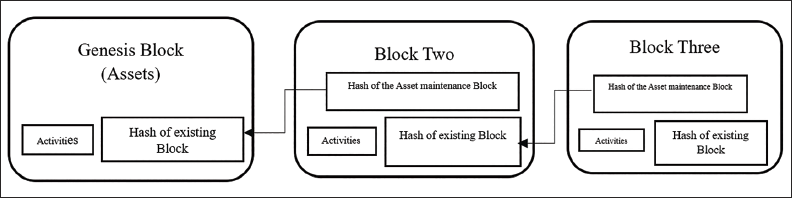
Connected Block in the Blockchain Technology Process.
BCT’s distinctive features include enhanced trust and integrity, as well as increased transparency through collaboration on distributed blockchain systems. The applications of BCT are changing, and technology is disrupting operations and businesses worldwide.
Deloitte (2019) noted that BCT is evolving globally in every business and organizational domain, from physical asset traceability to trading and financial transactions, procurement and supply chain management, and digital identity. Thus, Table 1 describes BCT applications based on various areas of interest, such as organizational activities and industrial use, the Internet of Things, operational governance, and data and information management. Blockchain systems serve as transformative and revolutionary systems.
Blockchain Technology Application.
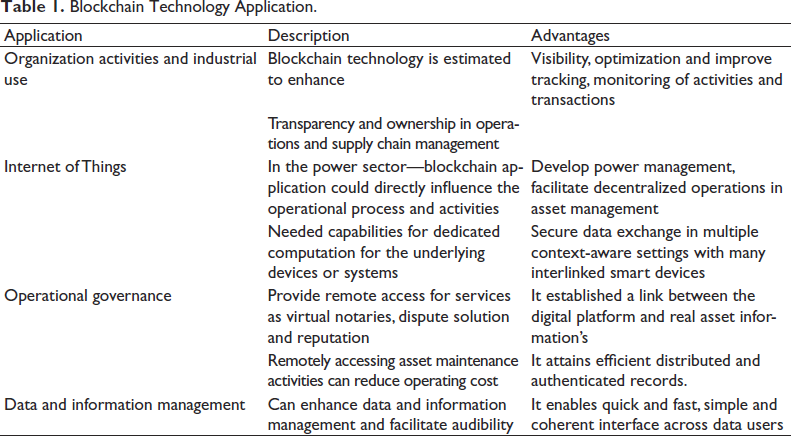
Blockchain Technology Application.
Additionally, Paramesha et al. (2024) posit that the functionality of BCT has evolved into many applications, including finance, transportation, power, building, insurance, government, oil and gas, telecoms and network services. Figure 1 explains how BCT is decentralized and distributed in the block process because every node has equal influence and control over the network.
Blockchain Technology Characteristics.
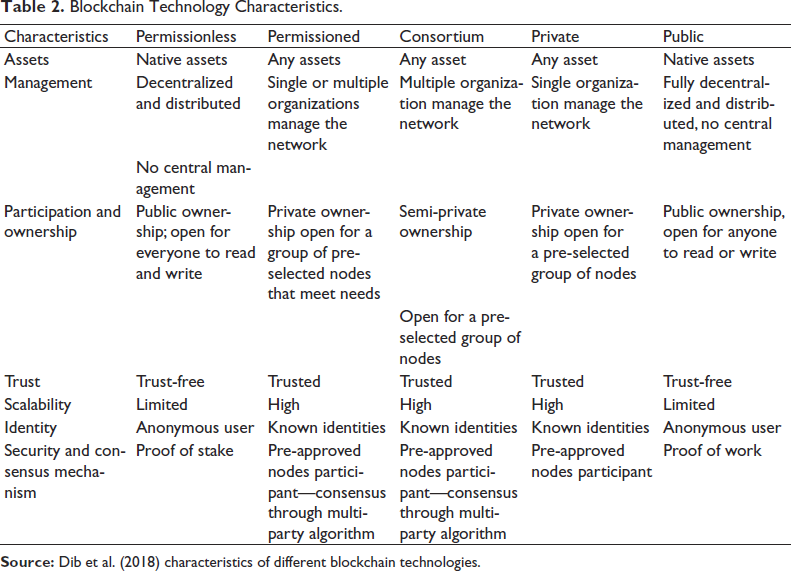
BCT presents several opportunities for asset management across various fields, with increased transparency being a critical advantage and benefit facilitated by the immutability of BCT, which enhances security, trust and accountability (Aziz and Khan, 2020). Additionally, the adoption of BCT offers privacy, traceability and security for data asset management (Al-Dhlan et al., 2022; Lu et al., 2020), including the tokenization of assets (Wendy, 2022), which creates new business and operational opportunities for moving assets without intermediaries.
Real-time settlement is facilitated by BCT, allowing quick transactions and enhanced liquidity (Raja Santhi & Muthuswamy, 2022) by leveraging the inherent efficiencies in infrastructure assets functionality (Tian et al., 2022). Additionally, adopting BCT in telecom infrastructure asset maintenance management creates new opportunities for asset management operating costs and brings fundamental changes to asset maintenance activities (Xue et al., 2021). The adoption of maintenance scheduling and operational processes with registries is essential for effective asset maintenance management on BCT (Lu et al., 2020), as it extends beyond storing asset maintenance activity records to encompass the comprehensive management of assets.
Issues in Implementing BCT in Asset Maintenance Management
BCT can transform asset maintenance management, but its adoption is challenging due to interoperability issues, regulatory uncertainties, scalability concerns, and security concerns that need to be addressed for effective adoption in asset maintenance management. Li et al. (2019) supported this concern by noting that compliance and the evolving regulatory landscape pose challenges based on the nascence of the technology, which adds complexity to navigating the regulatory environment.
Standardization challenges and integration with legacy (existing systems) are significant hurdles in the adoption of BCT in asset management. Abdelmaboud et al. (2022) noted that the lack of standardization and the need to integrate BCT with legacy assets and systems present interoperability challenges. Additionally, scalability is a fundamental concern, particularly in terms of network performance and managing the increased workload (Milne et al., 2020). The performance analysis driven by BCT for infrastructure asset maintenance management highlights the need to address network performance issues in this research context. Lastly, the challenges in adopting BCT in asset maintenance management are complex, encompassing regulatory, security, interoperability and scalability concerns; thus, addressing these challenges is critical for attaining the complete potential of BCT in revolutionizing asset maintenance management practices.
DT in Asset Maintenance Management
The critical advantages of the DT in asset management are real-time monitoring and digitalized PdM (Van Dinter et al., 2022). This insight explains the working process by applying devices, sensors and other data sources that enable DT to provide data on asset conditions and performance. With predictive-based maintenance, asset management practitioners can decrease asset downtime and increase asset lifecycle, resulting in substantial operating cost savings.
In asset management and maintenance, the DT integrates various assets and their data in one position, enhancing operational efficiency. This operational efficiency is achieved through central and visual asset data, which enable quick access to information and ensures it is always available to team members. Chen et al. (2022) noted that with DT it is feasible to simulate operations and maintenance activities from historical information to recent data to predict unforeseen faults and make changes.
In this research context, a DT could reflect and mirror the entire asset lifecycle, from base station design through build, operations and maintenance to the asset’s lifecycle. Liu et al. (2022) noted the enhanced decision-making in asset maintenance, spare demand, quick prediction, escalation and reliability modelling of physical systems. Dias Canedo and Cordeiro Mendes (2020) and Chen et al. (2022) posit the functionalities of using DT from a system lifecycle mirroring perspective, supporting decision-making in various approaches that predict asset system performance and behaviour throughout the lifecycle.
Implementation of Blockchain and DT Technologies in Asset Management
BCT and DTs should be applied in tandem to enhance transparency, trust and security, which will help organizations reduce inefficiency in their operations and maintenance activities, as well as duplication of their component models. Integrating blockchain technologies with DT systems involves creating a digital representation of physical assets, objects or systems on the blockchain, which serves as a DT (Hemdan et al., 2023).
This twin can then be used to track asset performance, maintenance activities, and other outage-related data in real time. This assertion is constructive in conjunction with the DT, which can be used to optimize maintenance activities and processes, as well as identify potential problems before they occur (Hemdan et al., 2023; Sun et al., 2022). The existing literature on BCT and DT systems suggests a trend indicating that these two intelligent technologies could complement each other to enhance real-time decision-making in asset maintenance management activities.
Integrating BCT and DT could enhance data transparency, integrity, trust, asset visibility and functionalities. Several businesses are beginning to personalize their services and operations based on the predictive abilities driven by the functionality of these BCT and DT systems to improve performance and change customers’ perceptions. Tang et al. (2024) noted that most studies on BCT and DT are conceptual or descriptive (Toufaily et al., 2021), which is logical and usual for studies performed during the preliminary phases of innovative technology development.
Data and Methodology
The research approach involves data collection processes and plans that determine the general research procedures. Creswell and Poth (2018) noted that the research approach determines the research methods or design for data collection, analysis, presentation and interpretation. Additionally, the methodology draws on the TAM (Davis, 1989) and the Technology Organization Environment (TOM) framework (Tomczak & Fleischer, 1990) to strengthen the research approach, as these frameworks provide complementary insights into the influences of technology adoption.
Statistical correlation between maternal education and KMC duration was checked by Spearman’s rank correlation was not suggestive of any significant correlation (p=0.42). Implies that the kangaroo mother care practice and duration are not related to the mother’s education level (Figure 2). Figure 3 shows that primiparous mothers offered a longer duration of KMC (average 7.75 h/day) as compared to multiparous mothers (7.3 h/day).
The methodology instrument of the survey design aligns with the TAM connection of perceived usefulness items, and TOE relates to technology context measures. In contrast, the sampling strategy is based on the field technicians’ experience levels, which are under TAM, and environmental diversity related to the TOE.
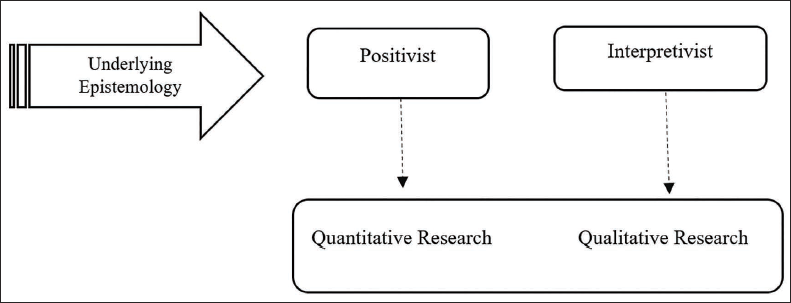
This insight clarifies that the research approach is applied throughout the entire research process. Thus, a research approach is developed through a combination of deductive and inductive reasoning. The research process comprises three key components: ontology, epistemology and methodology (Durrheim & Terre Blanche, 1999; Easterby-Smith et al., 2018). These authors claimed that the research paradigm is an inclusive structure of interconnected practice and thinking that describes the nature of investigation alongside these viewpoints.
As indicated in Figure 2, the research paradigm was categorized into positivism and interpretivism philosophy classifications (Burrell & Morgan, 2019; Crotty, 1998). For example, Kuhn (1962) and Kuhn et al. (1996) used the term ‘paradigm’, meaning pattern, to represent a conceptual framework shared by researchers and scientists that offered a valuable model for assessing problems and seeking explanations and answers. This twofold classification is ideal for this research because it could be used to appropriately pinpoint the psychological and sociological principles applied in the telecommunication infrastructure and asset management domain.
The primary data sources for this research include the employees (field technicians and managers) involved in telecommunication activities. The primary data collection methods in this study included structured questionnaires and semi-structured interviews, while the secondary data consisted of a systematic review of existing literature. The evaluation involves systematic data collection that indicates the views and experiences of its participants. The data collection stage for this research begins with the development of research instruments to gather raw data (Creswell and Poth, 2018). The research inquiry technique adopted by Creswell and Plano Clark (2018) inspires the design of research instruments.
For instance, the data collection techniques are surveys and interviews (Creswell & Plano Clark, 2018). Thus, the design of the questionnaire and the interviewing methods were crucial stages in this research. The sequence of the interviews, the content and structure of the questions, and the techniques applied to answer them are structurally consistent. Thus, the questionnaire consisted of structured questions.
The participants answered the questionnaire questions through e-mail correspondence and in-person face-to-face interviews. The research applied direct contact with participants through organized interviews and indirect connection with participants via telephone interviews using internet-assisted technology channels. The error encountered with the technology channel was primarily due to time and connection instability caused by network quality and connectivity issues.
Research Participants
The subject-matters in this study are the stakeholders responsible for the provision, planning, maintenance and management of passive telecoms infrastructures in Nigeria. The participants conform to certain conditions to which the study findings could be generalized (McMillan, 2010). The research participants are selected from internal and external stakeholders, including employees of telecommunication organizations responsible for operating and managing telecom services, and the regulatory agency responsible for creating an enabling operating environment, regulating services and facilities, and promoting competition among operators.
The selection was based on the research objective and the participants’ ability to contribute to the research (Aziz & Khan, 2020). The target population for this research was determined by assessing employees who had worked for more than 2 years in their respective organizations. At the time of this research, each participating organization had over 50 qualified employees. This population figure is based on the number of field technicians managing a cluster of sites.
Methodology
A research design refers to the data collection techniques, analysis, interpretation and presentation of a research project, which assists in answering the research questions. Bryman and Bell (2011) noted that the two fundamental approaches to conducting a research project are the quantitative research design, rooted in positivist research philosophy, and the deductive approach; typically, numeric data are generated through quantitative techniques (Creswell and Poth, 2018). The qualitative research design is also grounded in an interpretivist research philosophy, employing an inductive approach, and typically involves the collection of non-numeric data using qualitative techniques.
Given these insights on mixed-methods, the qualitative insights and quantitative findings fundamentally alter how the research results are understood, as they are viewed through the lens of synthesizing the mixed-method interpretation, which creates a more detailed and contextually grounded insight (Creswell and Poth, 2018). Thus, enhancing the validity and reliability of the research results, offering robust details for practical application and theory development.
Quantitative and qualitative approaches describe the differences in the nature of knowledge, how one approach views the world, and the vital research aim (Easterby-Smith et al., 2018). Conversely, one method focuses on the approach used to collect and analyze data, as well as the generalizations and interpretations derived from the data. This understanding suggests that neither of these mixed methods is inherently superior to the other. The reason is suitability, which needs to be determined by the research aims, context and nature of the study questions.
Denzin and Lincoln (2011) noted that quantitative methods focus on studying natural phenomena, whereas qualitative methods are employed in the social sciences, allowing for research into cultural and social phenomena. In this research context, the quantitative approach utilizes survey questionnaires to collect data, which is then reviewed and presented in figures and quantifiable tables. This process enables data to be described using statistical analysis. Additionally, the integration of these two methods addresses the various complex aspects of this study by providing in-depth insight (Creswell and Poth, 2018), context and meaning, including correctness and statistical rigour, thereby leveraging each other’s strengths and mitigating each limitation.
Empirical Data Analysis and Results
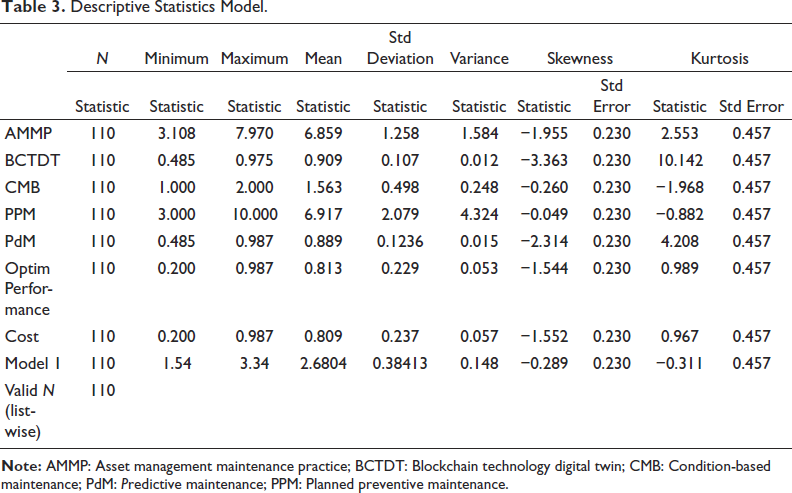
According to Table 3, the descriptive statistics on 4IR technologies, including BCT and DTs, in asset maintenance management practices indicate a strong and positive relationship with predictive maintenance approaches.
Descriptive Statistics Model.
Descriptive Statistics Model.
BCT and DT integration in asset maintenance management practices address optimization, performance and operating costs. These two independent variables significantly impact asset maintenance management practices, with optimization and performance having a mean of 0.813 (SD = 0.229) and variance of 0.053, and cost having a mean of 0.809 (SD = 0.237) and variance of 0.057.
The descriptive statistics for the Model, as indicated in Table 3, reveal an overall mean score of 2.680 (SD = 0.384). This standard deviation indicates that the data points group is close to the mean, comparatively reliable and consistent, and has a good observation of the Model between the independent variables. However, the PPM variable had the highest mean value, indicating that the PPM strategy has a significant impact on asset maintenance management practices.
The outcome from the descriptive statistics for the Model can be argued to align with the assertion by Gargari et al. (2021) and Babaeimorad et al. (2024) regarding the impact of preventive maintenance scheduling on 4IR capabilities in optimizing production and improving the resiliency of multi-energy microgrid systems.
It can be observed from these variables in Table 3 that the skewness is near the zero (0) value, signifying that the distribution of the scores is not skewed. These skewness scores are consistent with the proposition by Field (2018) that when the skewness is less than ±1.0, the distribution’s skewness is not outside the range of normality; thus, the distribution can be considered normal. Therefore, the skewness value is less than −1.0, indicating a left-skewed distribution.
Likewise, the kurtosis scores are close to zero (0), except for two variables of BCTDT and PdM, the values are greater than + or = 1.0 value, making the distribution slightly outside the range of normality, making the distribution a positive value of kurtosis called leptokurtic, while the other variables with values less than −1.0, the distribution is platykurtic.
Understanding the Correlation Relationship
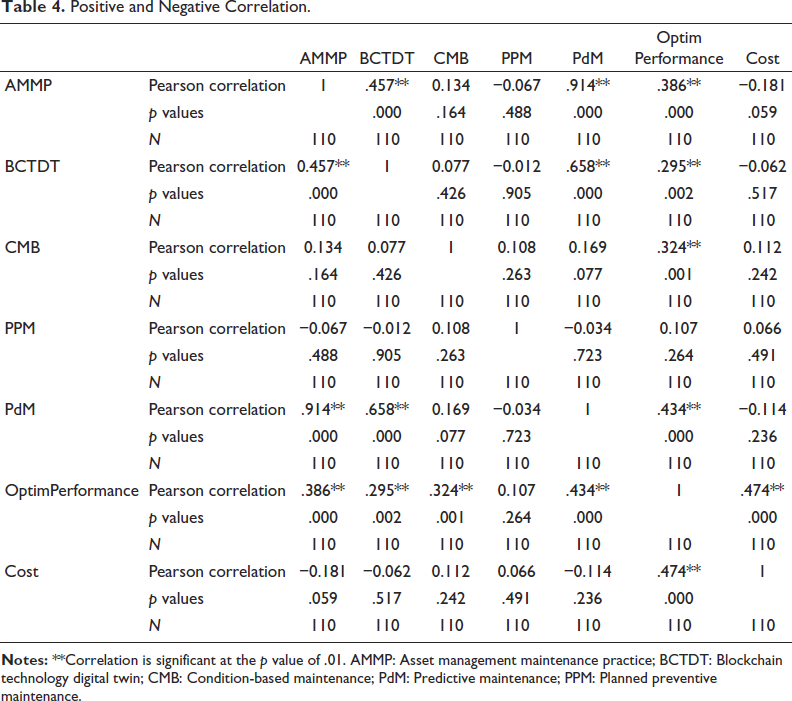
The regression analysis predicted the dependent variable based on various independent variables, quantifying the significance, direction and strength of the relationship between the dependent and independent variables. For instance, the findings from Table 4, which present the correlation matrix, provide insight into the interrelationships between the various variables. A Pearson correlation coefficient was calculated to determine the correlation between BCT and DT, optimization and performance, cost, PPM, CMB, and predictive maintenance approaches in asset maintenance management practice.
Positive and Negative Correlation.
Positive and Negative Correlation.
The numerical values from the analysis measure the significance, direction and strength of the linear relationship between the dependent and independent variables; thus, the findings indicate a strong positive relationship between the predictive maintenance approach and asset maintenance management practice [r(110) = 0.914, p < .001].
These results suggest a very high statistical significance of p < .001, thus accepting the alternative hypothesis and rejecting the null hypothesis (H0) that integrating BCT and DTs does not affect asset maintenance management practices, based on the findings that predictive maintenance approaches are positively and linearly related to asset maintenance management practice. Additionally, a medium-sized, significant positive relationship exists between BCT and DT and asset maintenance management practices [r(110) = 0.457, p < .001]. Moreover, a significant and moderately positive relationship exists between optimization and performance, as well as asset maintenance management practices [r(110) = 0.386, p < .001]. Thus, the research can accept the alternative hypotheses and variables that influence asset maintenance management practices.
In contrast, the results from the cost analysis [r(110) = −0.181, p < .059] indicate a non-significant positive relationship between asset maintenance management practice, even with a positive p value that falls within an accepted range .05. Other variables in this category are the variables of PPM approach and asset maintenance management practice [r(110) = 0.067, p < .488], and CMB approach and asset maintenance management practices (110) = −134, p < .164 were not significantly and positively correlated because their p values were about the .05 threshold.
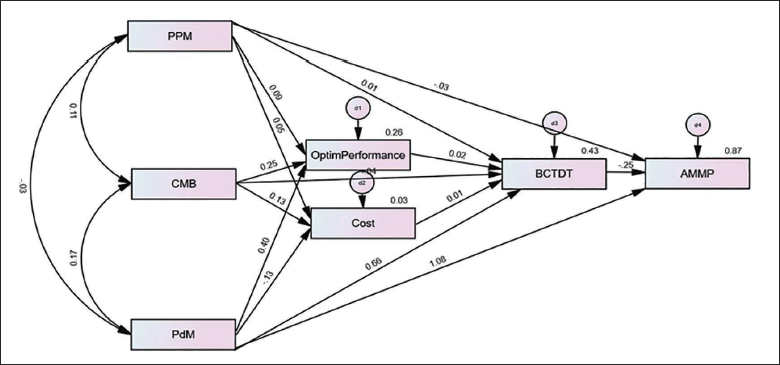
Furthermore, from the standardized estimate loadings in Figure 3, the correlations between the indicator variables are represented in box forms, where the double-headed arrows between the boxes signify the correlation between each pair of boxes. In this standardized estimate, the correlation between CMB and PPM is r = 0.11.
Standardized Estimate.
Standardized Estimate.
However, the correlation between PPM and PdM is r = −0.03. The correlation between CMB and PdM is r = 0.17. This outcome indicates that r is positive, as CMB and PPM, as well as CMB and PdM, increase and decrease together. Also, r is fairly close to 1, meaning the direction relationship is fairly strong.
Therefore, the relationship between PPM and PdM is characterized by a perfect negative correlation, whereby the two independent variables are always closely opposite, as indicated in Figure 2. Since the AMMP, BCTDT, PdM, optima performance and cost are included as a predictor of positive coping, it can be established that the model accounted for approximately 0.005 × 100% = 0.5% of the variance in positive coping; thus, the syntax for the standardized estimate is—AMMP = (0.46) BCTDT + d4; BCTDT = (−0.04) CMB + (0.66) PdM + (0.02) PPM + d3; cost = (0.13) CMB + (−0.13) PdM + (0.05) PPM + d2; optimization and performance = (0.25) CMB + (0.40) PdM + (0.09) PPM + (d1; PdM <> PPM (−0.03); PdM <> CMB (0.17); CMB <> PPM (0.11).
These outcomes align with the assertion by Chicco et al. (2021) that a correlation coefficient greater than zero (0) signifies a positive relationship, while less than zero (0) indicates a negative relationship. Therefore, both positive and negative coping were independent variable predictors of AMMP; the model can say that these predictors jointly describe 0.874 × 100% = 87.4% of the variation in AMMP.
Standardized residuals can be managed by identifying the likely address of model misspecification. According to Byrne (2010), this description of standardized residuals posits that these residuals can be considered analogous to z-scores, noting that larger standardized residuals can indicate the likely misspecification of the model between two variables. This assertion by Byrne (2010) regarding standardized residuals was supported by Whittaker (2020), suggesting further investigation of standardized residuals with an absolute value greater than 1.96, as well as those with an absolute value greater than 2.58, which are considered significant (Byrne, 2010).
The research indicates that the managed service organizations are key determinants of the adoption of BCT and DT. The explanation for this finding could be based on the insight that they utilize third-party contractors for the maintenance of their assets, which presents challenges with contract sums and costs. However, effective PPM, CBM and PdM are key determinants of the implementation accomplishment of integrating BCT and DT technologies.
From the Model as shown in Table 5, the research analysis interprets the coefficient of determination—R2, which provides information and results on the model fit, indicating how well the independent variables relate to the dependent variable. The R2 value provided in Table 5 appears satisfactory and falls within or exceeds the standard threshold of 0.30 for cross-sectional research, depending on the research context. 95% confidence intervals were used to analyze the hypotheses, with an R2 of 0.881 (88.1%) representing a good proportion of the variance in the dependent variable explained by the independent variables. This outcome is consistent with Cameron and Windmeijer (1997) proposition on an R2 measure of goodness of fit.
Coefficient of Determination.

Coefficient of Determination.
Accordingly, when considered as a set, the R2 is 88.1%, indicating that the independent variables or predictors—BCTDT, CBM, PPM, PdM, optimal performance and cost—account for 88% of the variance in AMMP. This percentage is based on the assertion that the R2 is a measure of the amount of variance in the dependent (outcome) variable that the independent (predictor) variables account for when taken as a group (Pardoe, 2020). This assertion is significant because R2 does not measure the proportion of variation accounted for by a specified individual predictor, but rather when the predictors are grouped. Generally, the R2 and adjusted R2 are similar to those in this research analysis. The adjusted R2 value of 0.874 indicates the percentage of variance in BCT and DTs’ impact on asset maintenance management practices that the model explains.
In addition, the research considered the significance of the F-test, as it compares the variance of the samples and the ratio of variance between the multiple samples. Table 5 indicates that the regression model is significant, based on the finding of a good model fit: F (6, 103) = 127.230, p < .001. Additionally, testing using alpha = 0.05, the overall regression model was significant, as F (6, 103), which is the df for regression and residual, = 127.230, p < .001, R2 = 0.881, which also signifies the F value of 127.230 and the p value, which is less than .001. Overall, this Model regression analysis was statistically significant, and when compared with the independent variables combined as a group, it predicted AMMP significantly. These findings indicate that the scope of change resulting from the independent variables has a strong, significant relationship with asset management practices that utilize BCT and DTs to enhance asset maintenance activities.
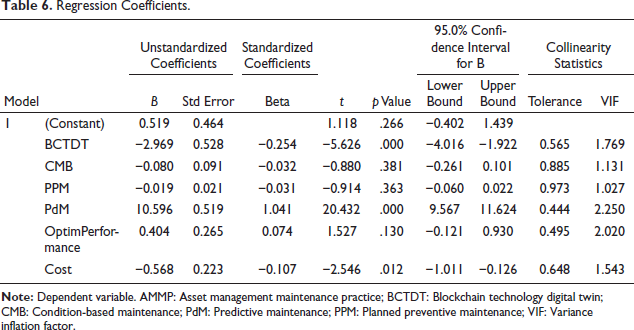
For the regression coefficient Table 6, testing each independent variable or predictor at alpha = 0.05. The BCTDT p value (p < .001) and PdM p value (p < .001). These two predictors are significant because their p values are not greater than .05. In contrast, the p values for cost (p < .012), optimal performance (p < .130), PPM (p < .363) and CMB (p < .381) are not significant. After all, their p value is greater than .05, as indicated in Table 6.
Regression Coefficients.
Regression Coefficients.
These results are consistent with the propositions by Field (2018) regarding the interpretation of statistical test values, including p values and confidence intervals. This assertion means that BCTDT and PdM uniquely explain a significant contribution and amount of variance in AMMP, as indicated by the coefficients in Table 6.
Looking at the standardized coefficients column, the predictive maintenance approach value (10.596) has the strongest relationship with the overall asset maintenance management practice. Thus, this might be the first variable that this research aims to focus on through asset maintenance activities if I seek to improve asset maintenance management practices.
However, standardized βs cannot be fully compared when an independent variable is binary, which is not the case in this research that involves categorical random variables (numeric, ordinal, nominal and scale variables) such as cost and BCT and a DT, which provides the research with knowledge about the relative strengths of the independent variables’ impacts on the dependent variable.
In addition, Table 6 unstandardized coefficients indicate what would occur if we increased one of the independent variables by exactly one unit. For this analysis, if optimization and performance were to increase by one unit, the findings expect the asset maintenance management practice to increase by 0.404. This output is because the standard errors are used to calculate the t-values, whereby we take the unstandardized coefficient of BCT and DT (−0.2.969) and divide the value with the standard error (0.528); we obtain a value that is approximately the t-value of −5.626, the same with calculating the optimization and performance (0.404), and divide this value by its standard error (0.265), the research obtains a value that is around the t-value of the 1.527, as indicated in Table 6. As indicated, BCT, DT, optimization and performance, along with a predictive maintenance approach, utilize numeric and ordinal variables.
Contrarily, condition-based and security values of 1 or 2 were used for this observation. Therefore, the corresponding coefficient of −0.080 represents the difference in how much technicians perform spot checks on asset conditions. Generally, the findings indicate that the research has found a useful model that satisfies the regression analysis assumptions.
The key takeaway of this article is that the research has obtained relevant facts and useful evidence to support the article’s untested claim that the combination of blockchain and DT technologies can be applied to enhance the predictive maintenance of base station assets in distributed telecoms infrastructure. Moreover, it comprises a mixed-method for integrating operational data from asset functionality and maintenance activities to support the development of an efficient asset maintenance strategy framework.
The integration of blockchain with DT simulations offers transformative opportunities for telecom infrastructure and asset management, while also introducing new challenges for regulation, industry values and standards. This analysis examines the strategic and policy implications, as well as future directions, for the telecom sector as it adopts these emerging technologies. For example, digital technological synergy creates virtual replicas of physical assets, such as generators, air-conditioning units, towers and battery backups, allowing field teams to monitor asset performance, simulate operations and maintenance activities, plan schedules, and predict outages with precision.
When integrated with BCT and distributed ledger architecture, these digital representations acquire immutable and tamper-proof recording capabilities in asset maintenance activities, thereby fostering trust and the integrity of work across distributed assets (Alothman et al., 2022). The integration of these digital technologies delivers numerous operational and maintenance benefits, including predictive maintenance strategies that reduce network degradation and downtime; enhanced asset management with complete maintenance histories; and improved regulatory compliance through transparent, optimized resource allocation based on real-time data and records.
Conversely, by proactively critiquing the implications of these policies, the telecom industry can capitalize on the transformative potential and characteristics of these digitized BCT and DT technologies, while ensuring their development aligns with regulatory objectives and enhances customer satisfaction. Thus, the future focus should be on these interconnected areas: transparent maintenance procedures that support universal service obligations and connectivity targets in underserved regions, as well as interoperability solutions permitting seamless integration between various DT platforms and BCT networks. Therefore, particular emphasis should be on establishing a comprehensive framework for automated asset maintenance decision-making, driven by an AI-powered DT combined with blockchain authentication.
Research Limitations
It is essential to acknowledge the research limitations, beginning with the fact that this study focuses on telecom asset management in developing countries, with a particular emphasis on Nigeria’s Telecom network operations and maintenance. Thus, the research can only be generalized in developing countries. Additionally, 4IR technologies rely mainly on the Internet of Things due to the significant amount of data involved, which presents challenges in efficiently managing large data volumes in this research context, primarily stemming from infrastructure deficiencies. However, to address and resolve this limitation, on-chain and off-chain databases can be used, enabling the telecom tower organization to process and store data on the blockchain and external databases. This assertion aligns with Sadri et al. (2023), who claim that it allows adequate storage, retrieval and processing mechanisms to manage the increasing data load, representing asset incidents and activities.
Footnotes
Acknowledgement
The authors are indebted to the editor and reviewers for constructive comments.
Authors’ Contribution
C.O contributed in the writing and proofreading of the manuscript. N.M.A contributed in the writing and proofreading of the manuscript. J. A-E contributed in the writing and proofreading of the manuscript. S.A.A contributed in the writing and proofreading of the manuscript. All authors approved the final version of the manuscript.
Declaration of Conflicting Interests
The authors declared no potential conflicts of interest with respect to the research, authorship and/or publication of this article.
Ethical Declaration
The authors abide by all the ethics involved in this academic work and have not submitted it to any other journal.
Funding
The authors disclosed receipt of the following financial support for the research, authorship, and/or publication of this article: The authors acknowledge the financial support of the Foundation for Science and Technology (FCT) through the project UIDB/04625/2025 of the research unit CERIS.
