



Abstract
This study introduces the Digital Immediacy Adoption Framework (DiIA-F), a novel theoretical framework that explains the rapid adoption of quick commerce (Q-commerce) services in Indian urban markets. DiIA-F overcomes the critical limitation of technology adoption models that neglect immediacy-based digital products and services by integrating technological-temporal psychology, digital identity economics, algorithmic decision-making theory, instant gratification mechanics, and digital sustainability study. We uncover three mediating mechanisms—temporal value perceptions (TVPs), algorithmic shopping dependence (ASD) and digital authenticity perceptions (DAPs)—through structural equation modelling (SEM) of survey data from 487 consumers in urban Indian metropolitan cities. The study demonstrates paradoxical relationships such as the sustainability-immediacy paradox and the anxiety-based value-creating effects. The findings validate that cognitive-temporal and digital-psychological factors exert strong influences on Q-commerce adoption through complex psychological mechanisms that are not captured by conventional models. This framework has actionable implications for platform design, marketing, urban planning and sustainability efforts in rapidly digitalizing emerging markets.
Introduction
The rise of quick commerce (Q-commerce) is a radical transformation in online retail, providing lightning-speed delivery services that complete orders in 10–30 min (Heinemann, 2023). In contrast to the gradual evolution of traditional e-commerce over decades, Q-commerce has grown exponentially in high-density urban locations, especially in emerging markets such as India (Andreas, 2024; IBEF, 2024). Large platforms, such as Blinkit, Zepto and Swiggy Instamart, have quickly gained significant market share, revolutionizing customer expectations regarding delivery times and commercial convenience (Bain & Company, 2025; Sanghi et al., 2024).
The sudden growth of Q-commerce occurs against a backdrop of vast infrastructural adversity and rising sustainability problems; thus, its uptake is a complex phenomenon needing novel conceptual tools (Chen et al., 2024; Haneefa, 2025). The urgency of Q-commerce transactions in time, coupled with their algorithmic mediation and identity-expressive function, creates adoption processes beyond the full explanatory purview of existing technology acceptance theories (Dholakia et al., 2021; Guerra-Tamez et al., 2024).
Current technology adoption models possess three major limitations when applied within the context of Q-commerce. First, they do not capture the psychological changes due to temporal compression, thus limiting time savings to utilitarian benefits only, and excluding the way that quick fulfilment warps temporal perception and impinges on decision-making processes (Sohn, 2024; Zimmermann et al., 2016). Emerging advancements in autonomous retail technology adoption show that consumers’ risk perceptions experience a radical shift under the conditions of temporal compression, creating new psychological value propositions that go beyond the traditional considerations of convenience (Sohn, 2024). Second, these theoretical models exclude the implications of algorithmic mediation on consumer preferences, especially where time pressure is extreme and algorithmic recommendations have a more critical role (Jain et al., 2024; Starke et al., 2022). The introduction of artificial intelligence (AI) in retail environments has created new types of consumer dependency that existing adoption models cannot capture (Grewal et al., 2023; Jain et al., 2024). Third, they do not capture the aspects of digital identity expression (DIE) that are particularly relevant in status-driven emerging markets, where technology adoption has important social signalling functions to fulfil (Berger & Ward, 2010; Strauss et al., 2024). The introduction of emerging information technologies enables new affordances that revolutionize the way consumers build and communicate their digital identities through their consumption behaviour (Strauss et al., 2024).
This study seeks to (a) establish and empirically test a theoretical model accounting for Q-commerce adoption in urban emerging markets; (b) discover and explore mediating processes accounting for how consumer psychological traits are transferred to adoption behaviours; (c) investigate relationships such as sustainability-immediacy paradoxes and anxiety-value transformations and (d) offer actionable recommendations to platform designers, marketers, urban planners, and policymakers struggling with the growth of Q-commerce.
Our study builds on recent developments in digital transformation research (Paul et al., 2024) and AI consumer behaviour studies (Jain et al., 2024; Mogaji & Jain, 2024), both of which have emphasized the need to create more advanced theoretical frameworks to explain technology-mediated consumption. The ever-accelerating development of generative AI and its influence on consumer behaviour patterns (Mogaji & Jain, 2024) require creative theoretical perspectives capable of embracing the intricate psychological mechanisms behind immediacy-oriented digital services. Our study contributes to the nascent literature on store technology and AI use (Grewal et al., 2023) by addressing specifically the distinctive challenges of ultra-fast delivery services in the context of emerging markets.
The study makes four important theoretical contributions through an expansion of technology adoption theory to include more than the standard utilitarian-hedonic models, an explanation of paradoxical mediating mechanisms that illustrate complex psychological processes, the revelation of paradoxical relationships challenging linear assumptions, and the demonstration of the important role of contextual influences in emerging markets. The practical contributions include giving concrete advice on platform design, marketing strategy development, urban planning considerations and sustainability policy development.
The rest of this article is structured as follows: Section 2 provides theoretical background and literature review; Section 3 explains the research methodology; Section 4 presents results and discussions and Section 5 concludes with key contributions, theoretical and practical implications, limitations and future research directions.
Literature Review
The new digital commerce paradigm of Q-commerce has tested current technology adoption theories. Theoretical frameworks such as the technology acceptance model (TAM), unified theory of acceptance and use of technology (UTAUT), and innovation diffusion theory are essential to research on technology adoption, but they reveal significant limitations when applied to the study of ultra-fast delivery businesses that fundamentally change temporal awareness and consumer behaviour patterns. Q-commerce differs significantly from traditional e-commerce through hyperlocal fulfilment networks and dramatically shrinking delivery windows, having initially emerged in dense Asian markets and expanded to global markets with India as a growth market (Bain & Company, 2025; IBEF, 2024). Existing research, however, has largely addressed operational logistics and business model viability over the psychological and temporal dimensions that differentiate Q-commerce adoption from traditional e-commerce conduct.
The literature identifies five major theory domains relevant to the explanation of Q-commerce adoption: tech-temporal psychology examines how digital technologies reorganize subjective time experience (Dholakia et al., 2021; Rosa, 2013); digital identity economics examines how consumption practices enable identity construction and signalling (Belk, 2013; Hamdani et al., 2023); algorithmic decision-making theory examines to what degree consumers are delegating decisions to AI (Fan & Liu, 2022; Taddeo & Floridi, 2018); instant gratification mechanics apply neuropsychological findings on delay discounting to explain preference for immediate reward (Hofmann et al., 2017; Mischel et al., 1989); and digital sustainability paradox theory examines the tension between environmental concern and convenience-led consumption (White et al., 2019).
The literature synthesis reveals three theoretical gaps that are crucial: existing adoption theories cannot account for why ultrafast delivery creates new psychological value propositions beyond convenience; traditional models lack in dealing with algorithmic mediation and consumer delegation to AI systems; and not much is understood regarding how Q-commerce adoption functions as DIE and social signalling.
Digital Immediacy Adoption Framework (DiIA-F)
In response to the indicated limitations, this research proposes the DiIA-F, synthesizing knowledge from five theoretical frameworks to offer a detailed explanation of Q-commerce adoption behaviour (Baron & Kenny, 1986; Venkatesh et al., 2003). Building on multi-factor adoption models and mediation theory (Hayes, 2017), the DiIA-F predicts that the adoption intention of Q-commerce is shaped by four antecedent sets through three distinct mediating mechanisms. The cognitive-temporal set consists of time urgency perceptions (TUPs) and instant gratification orientation (IGO), and therefore measures individual differences in temporal sensitivity and instant reward orientation (Mischel et al., 1989; Rosa, 2013). The digital-psychological set consists of algorithmic trust propensity (ATP) and DIE, showing how consumers interact with AI-mediated technologies and use technology for identity formation (Belk, 2013). The experiential set consists of delivery anxiety threshold (DAT) and interface friction tolerance (IFT), showing consumer sensitivity to uncertainty and complexity when experiencing digital technologies (Davis, 1989). The socio-economic set consists of values for sustainable consumption and social status signalling (SSS), integrating environmental sustainability values and status-seeking motivations (Berger & Ward, 2010; White et al., 2019).
These antecedent variables influence the adoption process through three mediating mechanisms (Baron & Kenny, 1986; Preacher & Hayes, 2008): TVP, which refers to consumers’ evaluation and value of time saved through Q-commerce (Rosa, 2013); ASD, which refers to reliance on AI-based systems and recommendations (Taddeo & Floridi, 2018); and DAP, which refers to the degree to which Q-commerce is in alignment with people’s digital lives and selves (Belk, 2013).
Research Hypotheses
Based on the DiIA-F and identified literature gaps, the following hypotheses are proposed for empirical testing:
Subjective time urgency is the value and perception of time saved by consumers through Q-commerce services. Empirical evidence from tech-temporal psychology studies validates that more time-urgent consumers receive more temporal value from the temporal convenience of Q-commerce (Dholakia et al., 2021; Rosa, 2013). Higher urgency leads to greater TVP because urgent consumers feel that quick delivery caters to significant temporal requirements.
H1a: TUP positively influences Q-commerce adoption intention (QAI) through TVPs.
IGO is utilized to measure individual differences in preferring immediate rewards and the capacity for delayed satisfaction. Neuropsychological research on delay discounting finds that those with greater IGO prefer immediate rewards and prefer more immediate delivery (Hofmann et al., 2017; Mischel et al., 1989). The prospect of virtual instant gratification provided by Q-commerce is most attractive to them.
H1b: IGO positively influences QAI through TVP.
Algorithmic shopping trust propensity refers to people’s inclination to trust AI-curated and recommended systems. Research in algorithmic decision-making indicates that people with higher algorithmic shopping trust propensity prefer to use AI systems to relieve themselves of decision-making, hence encouraging ASD (André et al., 2018; Taddeo & Floridi, 2018). The widespread use of algorithmic curation through Q-commerce platforms emphasizes the importance of such a relationship.
H2a: ATP positively influences QAI through ASD.
DIE illustrates how Q-commerce facilitates digital self-presentation and social signalling. Digital identity economics theory reveals that technology use performs identity-construction roles, particularly in emerging economies (Belk, 2013; Rogova & Matta, 2023). Q-commerce uses can signal digital sophistication and adoption of new lifestyles and influence adoption by both growing dependency on algorithmic systems and improved perceptions of digital authenticity.
H2b: DIE positively influences QAI through both ASD and DAP.
Traditional consumer behaviour theory would expect anxiety to cause avoidance behaviours and lower adoptions (Forsythe & Shi, 2003). Regulatory focus theory would, therefore, postulate that anxiety triggers prevention-focused motivation, with consumers looking for anxiety-reducing solutions (Higgins, 1997). Research on consumer technology anxiety shows that moderate anxiety actually boosts technology dependency through coping (Meuter et al., 2003). Q-commerce delivery anxiety increases time sensitivity, where speedy delivery is prized more as an anxiety management factor than convenience. This phenomenon generates an anxiety-value reformation, where negative emotion increases perceived benefits.
H3a: DAT negatively influences QAI directly, but this relationship is positively mediated by TVP (anxiety-value transformation effect).
IFT quantifies consumer acceptance of digital interface complexity. Digital authenticity literature indicates that consumers with greater IFT regard advanced digital experiences as genuine expressions of technological innovations (Belk, 2013). Greater IFT results in experiencing Q-commerce experiences as genuine digital experiences.
H3b: IFT positively influences QAI through DAP.
Traditional theories anticipate that sustainability norms will reduce adoption of resource-intensive services like Q-commerce (White et al., 2019). Cognitive dissonance theory anticipates, however, that consumers mitigate value conflict by using rationalization mechanisms (Festinger, 1957). Green consumption paradox literature suggests that green consumers justify unsustainable behaviour when stories of technological efficiency are presented (Carrington et al., 2010). Algorithmic systems provide robust rationalization by presenting individual convenience as a contribution to optimized systems, reducing collective environmental footprints. This allows sustainability-orientated consumers to mitigate cognitive dissonance by increasing dependence on algorithmic efficiency-based explanations.
H4a: Sustainable consumption values (SCV) negatively influence QAI directly, but positively influence adoption when mediated by ASD (sustainability-immediacy paradox).
Status signalling theory predicts that consumers embrace technologies as signals of social standing and cultural refinement (Berger & Ward, 2010). Nonetheless, digital identity creation is not the same as conventional conspicuous consumption, which works through lifestyle consistency and not through conspicuous display (Belk, 2013). Technology uptake is more of a signal of digital sophistication and contemporary lifestyle engagement in emerging markets (Rogova & Matta, 2023). The adoption of Q-commerce signals both a pioneering spirit and the digital lifestyle of a city; however, its impact is determined by consumers’ perceptions of digital authenticity, as they evaluate whether the service genuinely reflects their desired identity rather than merely serving as a means for fake status seeking.
H4b: SSS positively influences QAI through DAP.
Based on the theoretical development and hypotheses presented above, Figure 1 presents the comprehensive DiIA-F. The conceptual model demonstrates how the four sets of antecedent factors influence QAI through the three mediating mechanisms, including the counterintuitive relationships of anxiety-value transformation (H3a) and sustainability-immediacy paradox (H4a).
Conceptual Model.
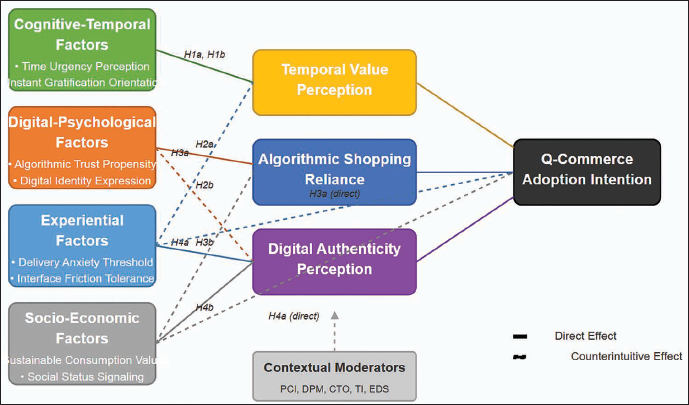
Conceptual Model.
Research Design and Sampling
The study applies a quantitative cross-sectional survey design to empirically examine the theoretical propositions of the DiIA-F. The design is appropriate for the measurement of latent constructs and mediated complex relationships among large populations, the measurement of psychological antecedents before habitual use is formed, and the measurement of established practice in technology adoption studies (Venkatesh et al., 2003).
Given the specialized target segment that is linked with Q-commerce and the practical limits of accessing the complete sampling frame of the target segment, a non-probability quota sampling method was utilized through a professional research agency with the help of a national consumer panel. The sample was broken down along three dimensions: (a) geography (i.e., six big metro cities in India: Delhi NCR, Mumbai, Bangalore, Hyderabad, Chennai and Kolkata), (b) socio-economic status (broken down on the basis of monthly household income) and (c) frequency of use of Q-commerce (broken down as light, moderate and heavy users). The recruitment was limited to those who had used at least one of the top Q-commerce platforms (such as Blinkit, Zepto or Swiggy Instamart) in the last 90 days so that recent and relevant service experiences are achieved.
Data Collection
The designed online questionnaire was distributed via the research agency’s panel management platform in February–March 2025. A total of 612 responses were received, out of which 487 were complete and usable after data screening and removal of outliers, and hence the effective response rate was 79.6%. The final sample provides a balanced representation of the key demographic dimensions: 52% male respondents, 69% in the 18–34 years age group, 87% educated up to undergraduate and above, and 73% with a monthly household income of ₹25,000–₹100,000. Geographic representativeness was fairly uniform across the six cities, and usage frequency of Q-commerce ranged from light (42%) to heavy (20%) frequency of use. Table 1 presents a comprehensive synthesis of the theoretical frameworks underpinning Q-commerce adoption research, highlighting key contributions and research gaps across nine theoretical domains. Table 2 presents demographic characteristics of the study sample, indicating balanced representation of gender, age, education, income, city and usage frequency dimensions.
Literature Synthesis.
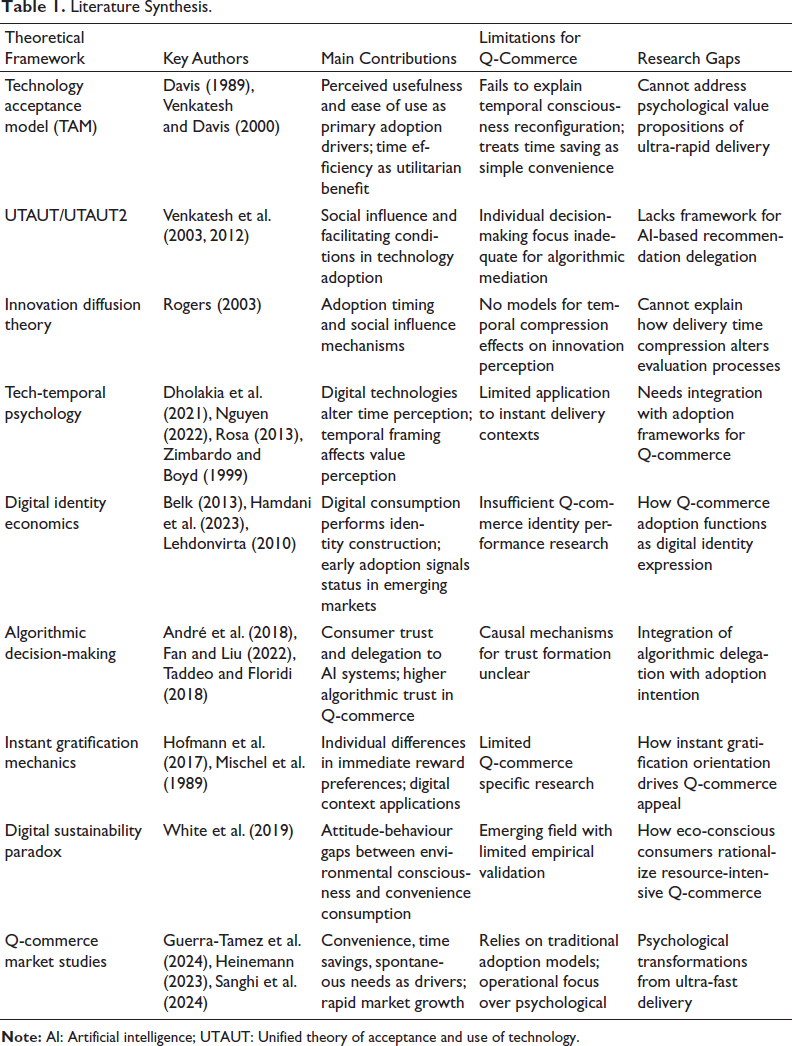
Literature Synthesis.
Sample Characteristics (N = 487).
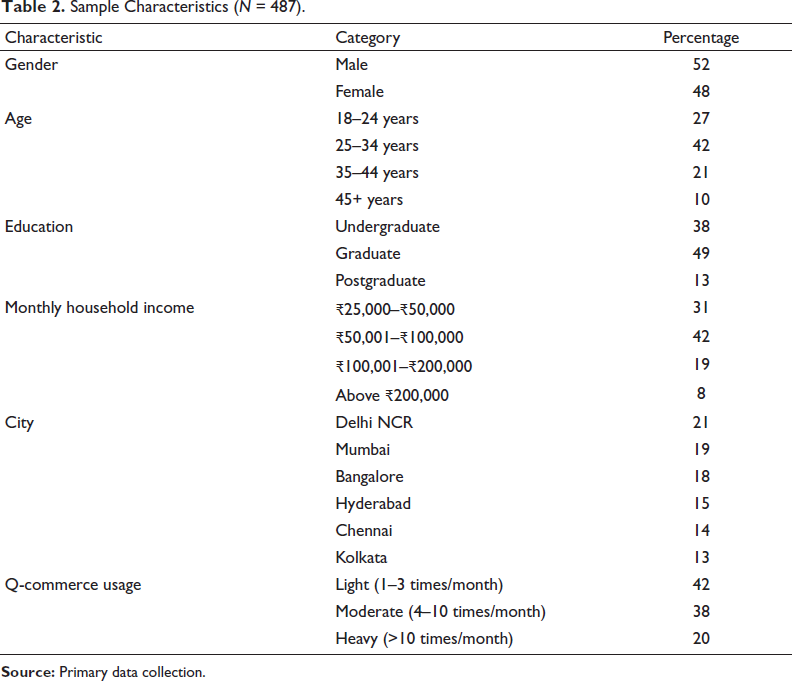
Because of the new nature of some DiIA-F measures, we developed new scales following Churchill’s (1979) rigorous scale development process, which involves three steps.
Phase 1: Item generation consisted of developing preliminary item pools from conceptual knowledge relevant to the pertinent theoretical frameworks, and led to the development of 80 original items for all constructs under exhaustive literature review and subject matter expert consultations. Phase 2: Content validation involved six academic researchers with field experience in digital consumer behaviour and three Q-commerce professionals who assessed content validity, clarity and theoretical appropriateness. New items were developed based on their recommendations, and 48 items were selected for further pilot testing. Phase 3: Pilot testing consisted of administering the measure to 78 Q-commerce users to determine its psychometric properties through exploratory factor analysis. Items with low factor loadings (<0.60), unclear wording, or redundancy were excluded or rewritten, and 44 final items were retained.
All constructs were assessed with multi-item scales of five-point Likert items (1 = strongly disagree to 5 = strongly agree), except for two single-item measures for infrastructure variables. The survey instrument, in its final version, contained 12 constructs that assessed all the dimensions of DiIA-F, as presented in Appendix A.
Analytical Approach
We applied structural equation modelling (SEM) with the help of analysis of moment structures (AMOS) 28.0, employing Anderson and Gerbing’s (1988) two-step procedure. Step one was the measurement of the measurement model through confirmatory factor analysis (CFA) to ascertain factor structure, convergent validity and discriminant validity. Step two established the structural model to test hypothesized relationships using maximum likelihood estimation. Mediation processes were tested with bias-corrected bootstrapping on 5,000 resamples as recommended by Preacher and Hayes (2008). Indirect effect significance testing was conducted with 95% confidence intervals, and mediation types were ascertained by examining direct and indirect effect significance patterns. Model fit was ascertained using recommended indices with Hu and Bentler’s (1999) threshold values: comparative fit index (CFI) and Tucker–Lewis index (TLI) ≥ 0.90, root mean square error of approximation (RMSEA) ≤ 0.06 and standardized root mean square residual (SRMR) ≤ 0.08.
Ethical Considerations
Voluntary and confidential participation was ensured, with informed consent prior to the administration of the survey, as per standard ethical procedures in research on human subjects. Participant confidentiality was ensured throughout the research process.
Results and Discussions
Measurement Model Assessment
CFA revealed a satisfactory model fit: χ2/df = 2.34, CFI = 0.943, TLI = 0.938, RMSEA = 0.052 and SRMR = 0.048. All constructs also showed acceptable reliability with Cronbach’s alpha between 0.79 and 0.92 and composite reliability (CR) between 0.81 and 0.94 (Appendix A). Convergent validity was revealed through average variance extracted (AVE) values of more than 0.50 for all constructs. Discriminant validity was revealed using the Fornell–Larcker criterion, wherein the square root of AVE of each construct was larger than its correlations with other constructs, as shown in Table 3.
Discriminant Validity Assessment—Correlations and Square Root of Average Variance Extracted (AVE).
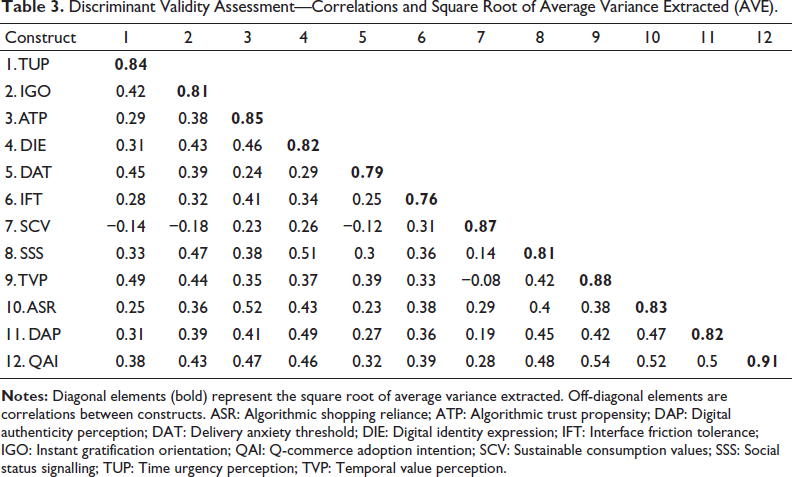
Discriminant Validity Assessment—Correlations and Square Root of Average Variance Extracted (AVE).
The structural model fit well (χ2/df = 2.67, CFI = 0.921, TLI = 0.914, RMSEA = 0.058 and SRMR = 0.062). All hypotheses were empirically supported, as shown in Table 4. H1a and H1b were supported, with TUP (β = 0.31, p < .001) and IGO (β = 0.28, p < .001) having direct significant effects on adoption intention through TVP, as hypothesized for the central role of tech-temporal psychology in Q-commerce adoption. H2a was supported, with ATP having the strongest total effect (β = 0.37, p < .001) through ASD. H2b was supported, with DIE having direct significant effects on adoption through both ASD (β = 0.26, p < .001) and DAP (β = 0.34, p < .001). H3a evidenced the hypothesized anxiety-value transformation effect, with DAT having negative direct effects (β = −0.17, p < .01) but positive indirect effects through TVP (β = 0.14, p < .01). H3b was supported, with IFT having a direct significant effect on adoption through DAP (β = 0.22, p < .001). H4 confirmed the sustainability-immediacy paradox, with SCV having negative direct effects (β = −0.19, p < .001), but positive indirect effects through ASD (β = 0.15, p < .01). H4b was supported by SSS having direct, significant effects on adoption through DAP (β = 0.29, p < .001).
Results of Hypothesis Testing.
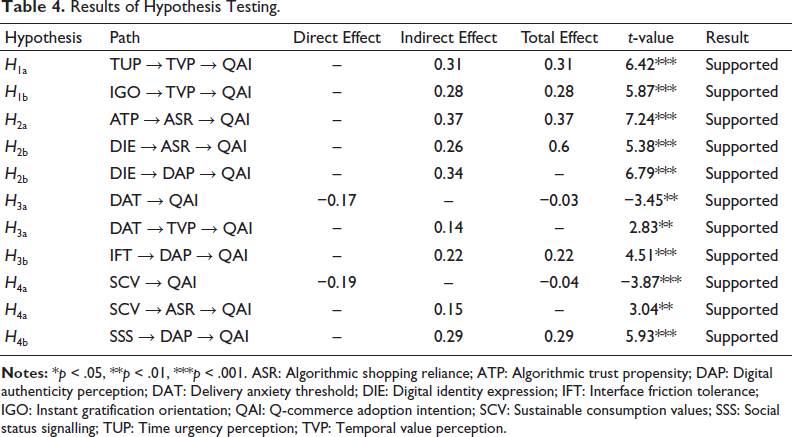
Results of Hypothesis Testing.
Bootstrapped mediation analysis (5,000 samples) validated the statistical significance of each of the three conceptualized mediating mechanisms as presented in Table 5. Cognitive-temporal factor effects were fully mediated by TVP; ATP effects were fully mediated by algorithmic shopping dependency; and IFT and SSS effects were fully mediated by DAP. Partial mediation occurred in the case of DIE, DAT and SCV.
Bootstrapped Mediation Analysis (5,000 Samples).
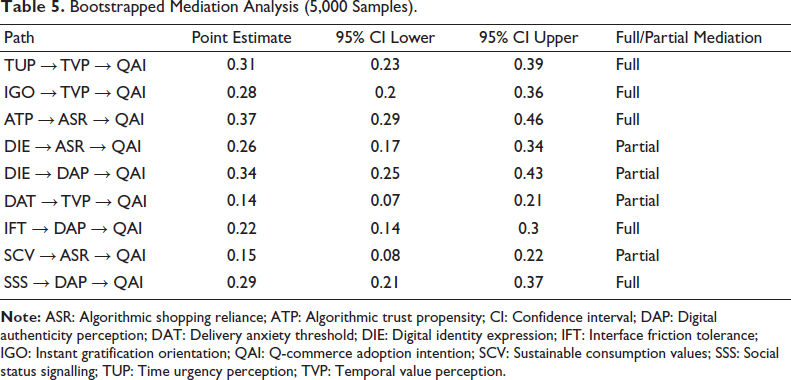
Bootstrapped Mediation Analysis (5,000 Samples).
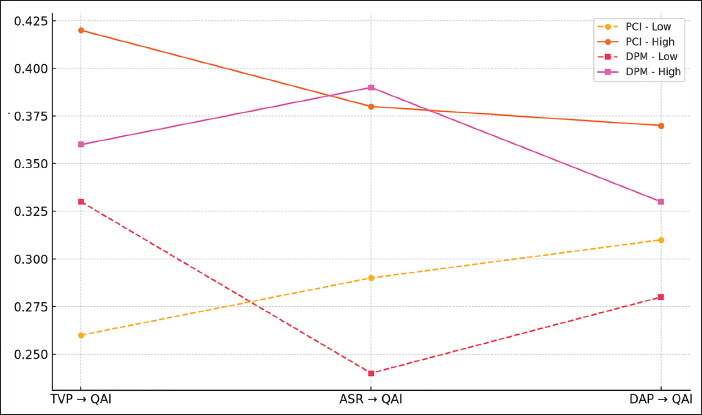
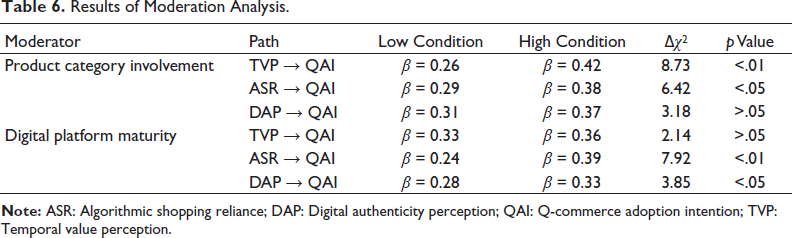
Multigroup analysis revealed significant moderation effects with product category involvement and digital platform maturity, as shown in Table 6. The results suggest that the effect of TVP on adoption intention is considerably stronger in cases of high product involvement (β = 0.42) than in low involvement cases (β = 0.26), while algorithmic shopping dependency has a stronger effect in cases of high digital platform maturity (β = 0.39) than in low maturity cases (β = 0.24). These moderation effects are also shown in Figure 2, which shows how product category involvement and digital platform maturity moderate the strength of relationships between variables in the DiIA-F model.
Moderation Effects of Perceived Cognitive Impact (PCI) and Digital Personalization Mechanism (DPM) on Digital Immediacy Adoption Framework (DiIA-F) Model Paths.
Results of Moderation Analysis.
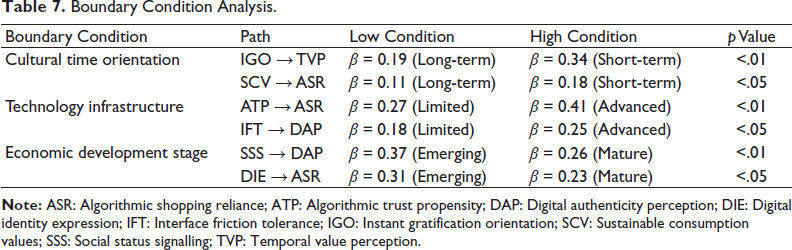
Boundary condition analysis uncovered several intriguing contextual effects, as indicated in Table 7. Cultural time orientation effectively moderates the IGO-TVP relationship, with short-term orientated contexts yielding more significant relations (β = 0.34) than long-term orientated contexts (β = 0.19). Technology infrastructure reinforces the role of ATP in ASD, and the economic development stage detects SSS with more significant effects in emerging market contexts (β = 0.37) than in advanced markets (β = 0.26).
Boundary Condition Analysis.
Our research into the adoption of Q-commerce among urban Indian consumers yields six primary findings. First, cognitive-temporal drivers significantly shape adoption, as evidenced by TUP (β = 0.31, p < .001) and IGO (β = .28, p < .001), both mediated through the lens of TVP, thus affirming the pivotal role of temporal psychology in immediacy-orientated digital services. Second, ATP is revealed to have the largest total effect (β = 0.37, p < .001) through ASD, affirming the pivotal role of AI-enabled decision-making in modern digital commerce. Third, DIE acts through two distinct channels, significantly affecting both ASD (β = 0.26, p <.001) and DAPs (β = 0.34, p < .001), reflecting the multi-faceted nature of identity construction in technology adoption domains. Fourth, empirical evidence is uncovered for the hypothesized transformation effect between anxiety and value, such that the threshold of delivery anxiety exhibits negative direct effects (β = −0.17, p < .01), while simultaneously uncovering positive indirect effects mediated through TVP (β = 0.14, p < .01). Fifth, the sustainability-immediacy paradox is validated, such that SCV exhibit negative direct effects (β = −0.19, p < .001) and positive indirect effects mediated by ASD (β = 0.15, p < .01). Sixth, finally, the analysis reveals significant moderating effects, such that involvement in product categories and the maturity of digital platforms significantly affect the strength of key relationships in the DiIA-F model.
This research’s results make a number of significant theoretical contributions to the existing literature on technology adoption and offer new insights into the urban Indian market context. The significant mediation effects of TVP, ASD and DAP confirm the argument that traditional models of adoption fall short of encompassing immediacy-orientated digital services, particularly in high-density urban contexts like Indian metropolitan cities, where the importance of time scarcity and digital identity signalling is further magnified.
The strong cognitive-temporal drivers’ impact concurs with Rosa’s (2013) social acceleration theory but goes beyond Western contexts to demonstrate that Indian urban consumers are under significant time compression owing to infrastructural shortages, vehicular traffic and high population densities. Unlike Western literature, where saving time is commonly depicted as a convenience, our results indicate that TVP among Indian metropolitans is a real coping strategy for urban living pressures. Our finding is best illustrated in the anxiety-value change effect, where the uncertainty of delivery raises the perceived value of fast delivery services as anxiety-reducing agents in themselves and not as conveniences.
ATP (β = 0.37) plays a significant role as the most predictive variable, reversing earlier work on technology adoption that emphasized human-control preferences (Davis, 1989; Venkatesh et al., 2003). The result is in line with that of Guerra-Tamez et al. (2024) for AI-enabled shopping, but it extends their study to demonstrate how trust in algorithms is a rationalization mechanism for sustainability-oriented consumers in emerging economies. Within the context of India’s urban setting, this is a cultural transition towards the outsourcing of tasks to AI that may capture both aspirations for digital refinement and the utilitarian need to reduce cognitive load in complex urban settings.
The two-pathway effect of digital identity presentation portrays India’s fast-changing urban digital culture in which technology uptake performs multiple identity-construction roles concurrently. This result extends Belk’s (2013) theory of digital identity by describing the manner in which the adoption of Q-commerce is utilized by consumers in emerging economies to communicate both technological savvy and participation in the modern lifestyle, especially in Indian urban centres where digital adoption is a marker of cultural capital and social mobility desire (Rogova & Matta, 2023).
The immediacy paradox of sustainability reveals the complex rationalization processes of consumers that are certain to be particularly strong in urban Indian contexts where there are coexisting traditional environmental values and modern convenience pressures. The trajectory of algorithmic efficiency rationalization facilitates the bridging of cultural ideals of environmental responsibility and lifestyle modernization pressures, suggesting that sustainability communications in emerging markets must be finely nuanced in recognizing these psychological dilemmas.
Key Contributions and Future Directions
Theoretical Contributions
The study yields four significant theoretical contributions that enrich technological adoption literature and digital consumer behaviour knowledge.
First, this research applies technology adoption theory beyond conventional utilitarian-hedonic paradigms by combining temporal psychology, algorithmic mediation and identity economics with a general adoption model. Since established models such as TAM (Davis, 1989) and UTAUT (Venkatesh et al., 2003) concentrate on perceived ease of use and usefulness, the DiIA-F illustrates that immediacy-led digital services necessitate radically different theoretical models. Our research indicates that cognitive-temporal constructs function through different psychological processes that are not accounted for in established adoption models, responding to the significant limitation brought up by Dholakia et al. (2021) regarding the insufficiency of current frameworks for hyperdigital marketspaces. This theoretical extension offers a more sophisticated explanation of how temporal compression transforms consumer-technology relationships (Rosa, 2013; Zimmermann et al., 2016).
Second, the empirical finding and identification of three new mediating mechanisms—TVP, ASD and DAP—introduce new theoretical frameworks for explaining adoption processes. The mediators extend the cognitive-affective processes traditionally investigated in technology adoption research (Venkatesh & Davis, 2000) by outlining how individual psychological characteristics manifest themselves as adoption behaviours through complex value evaluation processes. The TVP concept directly addresses the theoretical gap proposed by Kondo et al. (2024) for how digital technologies transform subjective time experiences. The ASD mechanism addresses the challenges posed by Starke et al. (2022) for further theoretical frameworks explaining consumer dependence on AI systems, while DAP complements Belk’s (2013) digital identity theory for the adoption context.
Third, this research opposes linear assumptions of technology adoption theory by revealing counterintuitive relationships that depict sophisticated consumer psychological processes. The anxiety-value transformation effect opposes traditional stress-avoidance theories (Lazarus & Folkman, 1984) by showing how negative affect can increase perceived benefits through prevention-focused coping, thus extending the regulatory focus theory applications to digital adoption models (Crowe & Higgins, 1997; Higgins, 1997). The sustainability-immediacy paradox expands understanding of green consumption attitude-behaviour gaps (Carrington et al., 2010; White et al., 2019) by showing how narratives of algorithmic efficiency enable sophisticated rationalization processes. These findings add to the emerging consumer paradox literature (Mick & Fournier, 1998) by showing that technology adoption involves sophisticated psychological reconciliation processes and not just benefit-cost calculations.
Fourth, this study emphasizes the contextual role of factors in shaping adoption patterns, a conclusion most pertinent to research concerned with emerging economies. Strong moderating roles of involvement in product categories and maturity in digital platforms complement contingency theories in technology adoption theory (Venkatesh et al., 2012) by showing the way contextual variables strongly condition the strength of psychological mechanisms as opposed to merely influencing direct effects. Boundary condition analysis demonstrates that cultural time orientation is a moderator of instant gratification effects and thus adds to cross-cultural research on technology adoption (Hofstede, 2001) and answers to the call of developing more culturally sensitive adoption models (Straub et al., 1997). Contextual results of this type are most relevant to technology adoption studies in emerging economies, where infrastructure, cultural and economic contexts create adoption topographies (Andreas, 2024).
Collectively, these theoretical contributions place the DiIA-F as a comprehensive model for comprehending immediacy-driven digital service adoption. The model successfully addresses some of the voids in existing scholarship and adds novel insights to digitalizing economies’ technology-consumer interactions.
Practical Contributions
Q-commerce platforms have to focus on creating temporal experiences that go beyond the mere speeding-up of service, thus highlighting the importance of time saved. User interfaces need to tell consumers how rapid delivery enables people to spend their time on higher-value activities, thus alleviating the general sense of time-induced anxiety. Algorithmic recommendation engines likewise need to be developed to build trust through openness while also helping ecologically conscious consumers justify their choices by offering narratives of efficiency through optimized routing and demand forecasting. Platforms need to include features that enable digital expression of identity through customizable profiles, social sharing and product recommendations that appeal to the individual lifestyle. Interface design also needs to acknowledge that there will be consumers who will tolerate advanced features, even if it implies added complexity, thus enabling an allowance of interface friction without usability loss for the mass consumer market.
Marketing communications need to appeal to different segments of consumers’ distinctive psychological drivers. Anxiety-sensitive consumers need to be treated to communications acknowledging the uncertainties of delivery with a concentration on temporal value benefits and anxiety relief through the reliability of speedy delivery. Sustainability-conscious consumers need an emphasis on algorithmic efficiency and environmental optimization to offset environmental sensitivities against convenience requirements. Identity marketing needs to place Q-commerce as a metaphor for digital innovation and for embracing new lifestyles, especially in urban markets with status awareness. Campaigns should highlight early adopter, technologically advanced, and lifestyle upgrade themes appealing to drives for DIEs.
Urban planners must be proactive in integrating Q-commerce logistics infrastructure, ensuring that it aligns with the overall objectives of urban development. This involves reimagining zoning rules for dark stores, simplifying traffic management for delivery vans, and improving last-mile connectivity. As Q-commerce becomes more entrenched in the urban landscape, building digital access policies that ensure equal availability to all socio-economic strata is crucial. Integrated sustainability frameworks that encourage green fast commerce practices while offsetting consumer demands for speed need to incorporate incentives for electric vehicle delivery fleets, sustainable packaging mandates, and carbon footprint reporting mandates. These are critical in addressing the sustainability-immediacy trade-off that we found in our study.
Industry stakeholders need to consider collective measures of sustainability in the interest of environmental efficiency without sacrificing service speed. Joint logistics frameworks, joint delivery centres, and common sustainability standards can allow platforms to address consumers’ environmental concerns without sacrificing their competitiveness. Sustained investment in connectivity, payments infrastructure, and logistics technology is key to the development of Q-commerce, especially in tier-2 and tier-3 cities, where infrastructural constraints can be a spoiler. The rich psychological determinants uncovered by our survey suggest the necessity of top-level regulatory intervention based on the sophistication of consumer behaviour rather than imposing excessively reductionist bans.
Limitations
This study identifies several constraints that need to be appreciated. The use of a non-probability quota sampling method limits the statistical generalizability of the results, although its use is justified by practical considerations. We appreciate the severe constraints inherent with this method towards statistical representativeness since quota sampling does not involve the random selection principle necessary to produce inferences from the population. Use of online panels can lead to over-representation of digitally literate consumers and an under-representation of significant portions of the population with limited internet penetration. Self-selection bias may privilege consumers more digitally advanced and willing to participate in online surveys. While the quota sampling method provides ease of interaction with targeted Q-commerce user segments, it does not have the statistical representativeness of probability sampling methods like simple random sampling or stratified random sampling. Such sampling-based constraints affect the generalizability of our results to the overall urban Indian population and should be kept in perspective in arriving at conclusions on overall consumer behaviour patterns.
The cross-sectional design employed places constraints on making causal inferences regarding observed associations, and our concentration on six large Indian metropolitan cities may not necessarily be representative of the experiences of urban Indian Q-commerce. Focusing on adoption intention rather than real observed adoption behaviour can lead to intention-behaviour discrepancies, hence limiting practical utility in applied settings. The highly dynamic nature of Q-commerce platforms guarantees that some findings will be contingent on particular interface settings, provided services or marketplaces, which change as the market further evolves.
Future Research Directions
Follow-up studies need to overcome these limitations by examining a number of routes. Cross-cultural validation studies need to be carried out to determine universal versus culture-dependent adoption mechanisms across various emerging markets. Longitudinal studies of how TVP, ASD and DAP change as users form Q-commerce habits would be informative about the adoption process dynamics.
Extension research on service categories would cross-validate the applicability of DiIA-F to other immediacy-based digital services such as food ordering. Neuropsychological research could uncover the neural processes of anxiety-value conversion and sustainability-immediacy reconciliation. Other streams of research are examining how different levels of algorithmic transparency influence shopping dependence and trust development, and experimental research on the impact of different sustainability messaging and platform functionalities on the sustainability-immediacy paradox.
Concluding Remarks
This study expands and extends some of the most important areas of current research. This study’s contribution also extends Sohn’s (2024) study on autonomous retail technology by demonstrating how temporal compression creates value beyond risk mitigation, especially through anxiety-value transformation mechanisms. The DiIA-F framework advances Jain et al.’s (2024) hybrid review of AI consumer behaviour by providing empirical evidence for ASD as a distinct psychological construct. Determining DAP as a mediating mechanism responds to Strauss et al.’s (2024) call for more insight into how new technologies enable new avenues for identity expression. Finally, our findings align with Paul et al.’s (2024) interdisciplinarity perspective on digital transformation by emphasizing the necessity of holistic theoretical frameworks that involve technological, psychological and cultural aspects.
Based on Mogaji and Jain’s (2024) study on the transformative power of generative AI, policymakers must develop regulatory regimes that acknowledge the psychological dependencies created by AI businesses while promoting sustainable consumption patterns. The recognized sustainability-immediacy paradox means that traditional environmental policy could be found to be insufficient in countering the advanced rationalization mechanisms applied by customers in AI-facilitated shopping contexts. Future research must examine the cross-cultural generalizability of the results and must investigate how knowledge from in-store technology research (Grewal et al., 2023) can be successfully transferred to hyperlocal delivery contexts. Longitudinal research is also critical to investigate the development of ASD as customers become increasingly experienced with AI-mediated platforms.
As immediacy-orientated digital technology-backed digital services come to shape urban consumption habits globally, DiIA-F provides key theoretical tools to understand these changes. The emphasis of the framework on the psychology of time, algorithmic mediation and digital identity articulation identifies broader trends in the refiguration of consumer experience and social relationships facilitated by digital technologies. The meteoric growth of Q-commerce in India’s urban cities is more than a speeding up of existing e-commerce trends; it is an intensified shift in the way digital technologies refigure temporal experience, reconfigure consumer-technology relations, and create new modes of digital identity articulation.
The surprising outcomes of sustainability and concern suggest that consumers are developing sophisticated means of addressing the complexities of modern digital life, which require new theoretical perspectives. Future studies that adopt DiIA-F can facilitate deeper understanding of the impact of digital immediacy on consumerism, urbanization and sustainability in an increasingly networked world.
Authors’ Contribution
Elamurugan Balasundaram: Conceptualization, methodology, investigation, writing—original draft, writing—review and editing, supervision, project administration.
A. Krishna Sudheer: Data curation, formal analysis, validation, visualization, writing—review and editing.
D. Sethuraman: Literature review, methodology, writing—original draft, writing—review and editing.
S. Vijayakumar: Writing—review and editing.
Sonali V. Patil: Writing—review and editing.
Deepali V. Patil: Writing—review and editing.
Footnotes
Declaration of Conflicting Interests
The authors declared no potential conflicts of interest with respect to the research, authorship and/or publication of this article.
Ethical Declaration
The authors abide by all the ethics involved in this academic work and have not submitted it to any other journal.
Funding
The authors received no financial support for the research, authorship and/or publication of this article.

Appendix A. Measurement Scales.
All items were measured using five-point Likert scales (1 = strongly disagree, 5 = strongly agree).